Part One
       INTRODUCTION TO
      BUSINESS RESEARCH


2-1
Chapter Two
       APPLYING SCIENTIFIC
          THINKING TO
      MANAGEMENT PROBLEMS


2-2
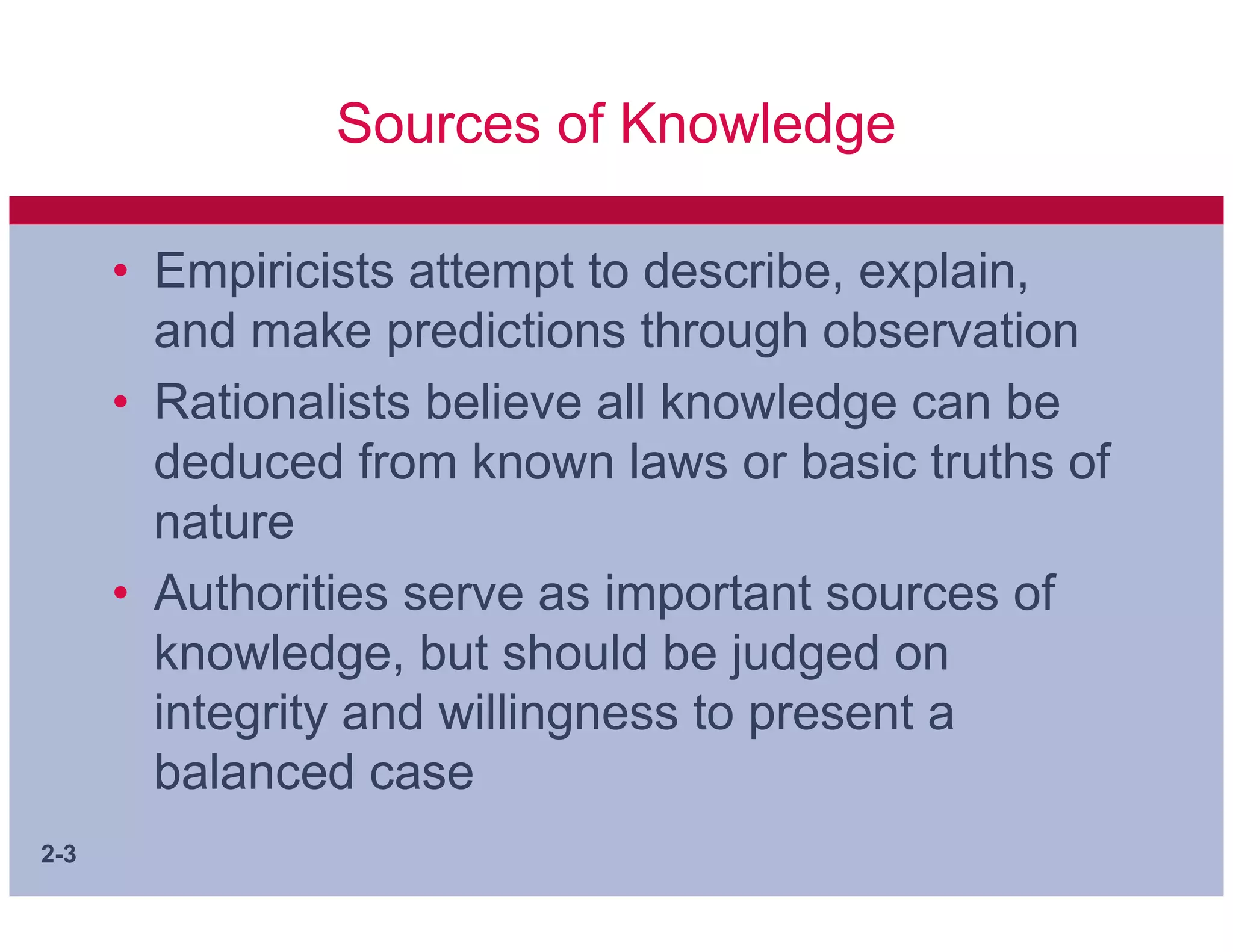
Sources of Knowledge

      • Empiricists attempt to describe, explain,
        and make predictions through observation
      • Rationalists believe all knowledge can be
        deduced from known laws or basic truths of
        nature
      • Authorities serve as important sources of
        knowledge, but should be judged on
        integrity and willingness to present a
        balanced case
2-3
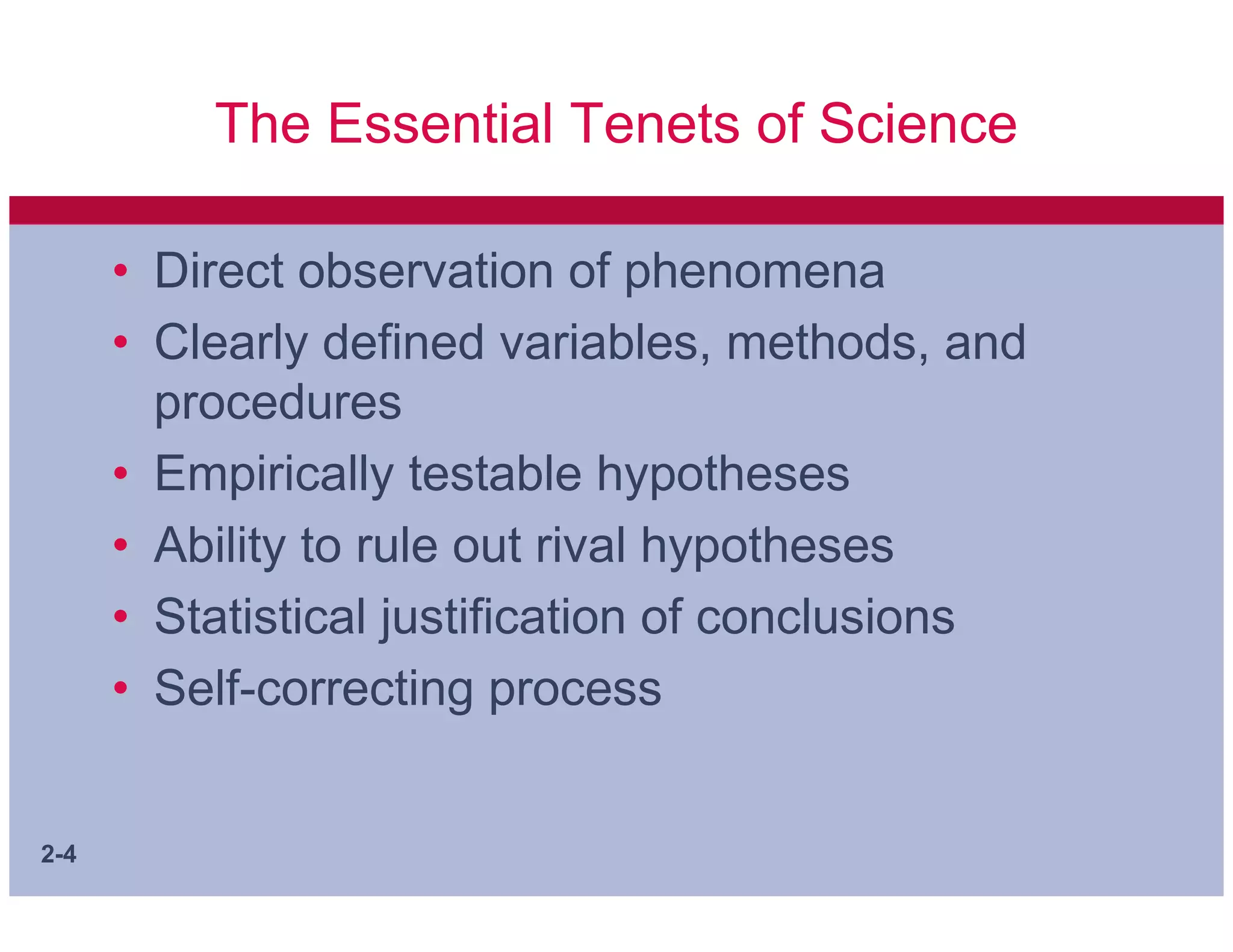
The Essential Tenets of Science

      • Direct observation of phenomena
      • Clearly defined variables, methods, and
        procedures
      • Empirically testable hypotheses
      • Ability to rule out rival hypotheses
      • Statistical justification of conclusions
      • Self-correcting process


2-4
Ways to Communicate

      • Exposition
        – descriptive statements that merely state and do
          not give reason
      • Argument
        – allows us to explain, interpret, defend,
          challenge, and explore meaning


2-5
Important Arguments in Research

      • Deduction is a form of inference that
        purports to be conclusive
      • Induction draws conclusions from one or
        more particular facts


2-6
The Building Blocks of Theory

      •   Concepts
      •   Constructs
      •   Definitions
      •   Variables
      •   Propositions and Hypotheses
      •   Theories
      •   Models

2-7
Understanding Concepts

      • A concept is a bundle of meanings or
        characteristics associated with certain
        events, objects, conditions, situations, and
        behaviors
      • Concepts have been developed over time
        through shared usage


2-8
Understanding Concepts

      • The success of research hinges on:
        – how clearly we conceptualize
        – how well others understand the concepts
          we use


2-9
What is a Construct?

       • A construct is an image or idea specifically
         invented for a given research and/or theory-
         building purpose.


2-10
Types of Variables

       •   Independent
       •   Dependent
       •   Moderating
       •   Extraneous
       •   Intervening


2-11
The Role of the Hypothesis

       • Guides the direction of the study
       • Identifies facts that are relevant
       • Suggests which form of research design is
         appropriate
       • Provides a framework for organizing the
         conclusions that result


2-12
What is a Good Hypothesis?

       • A good hypothesis should fulfill three
         conditions:
         – Must be adequate for its purpose
         – Must be testable
         – Must be better than its rivals


2-13
The Value of a Theory

       • Narrows the range of facts we need to
         study
       • Suggests which research approaches will
         yield the greatest meaning
       • Suggests a data classification system
       • Summarizes what is known about an object
         of study
       • Predicts further facts that should be found

2-14

Rm2 scientific thinking

  • 1.
    Part One INTRODUCTION TO BUSINESS RESEARCH 2-1
  • 2.
    Chapter Two APPLYING SCIENTIFIC THINKING TO MANAGEMENT PROBLEMS 2-2
  • 3.
    Sources of Knowledge • Empiricists attempt to describe, explain, and make predictions through observation • Rationalists believe all knowledge can be deduced from known laws or basic truths of nature • Authorities serve as important sources of knowledge, but should be judged on integrity and willingness to present a balanced case 2-3
  • 4.
    The Essential Tenetsof Science • Direct observation of phenomena • Clearly defined variables, methods, and procedures • Empirically testable hypotheses • Ability to rule out rival hypotheses • Statistical justification of conclusions • Self-correcting process 2-4
  • 5.
    Ways to Communicate • Exposition – descriptive statements that merely state and do not give reason • Argument – allows us to explain, interpret, defend, challenge, and explore meaning 2-5
  • 6.
    Important Arguments inResearch • Deduction is a form of inference that purports to be conclusive • Induction draws conclusions from one or more particular facts 2-6
  • 7.
    The Building Blocksof Theory • Concepts • Constructs • Definitions • Variables • Propositions and Hypotheses • Theories • Models 2-7
  • 8.
    Understanding Concepts • A concept is a bundle of meanings or characteristics associated with certain events, objects, conditions, situations, and behaviors • Concepts have been developed over time through shared usage 2-8
  • 9.
    Understanding Concepts • The success of research hinges on: – how clearly we conceptualize – how well others understand the concepts we use 2-9
  • 10.
    What is aConstruct? • A construct is an image or idea specifically invented for a given research and/or theory- building purpose. 2-10
  • 11.
    Types of Variables • Independent • Dependent • Moderating • Extraneous • Intervening 2-11
  • 12.
    The Role ofthe Hypothesis • Guides the direction of the study • Identifies facts that are relevant • Suggests which form of research design is appropriate • Provides a framework for organizing the conclusions that result 2-12
  • 13.
    What is aGood Hypothesis? • A good hypothesis should fulfill three conditions: – Must be adequate for its purpose – Must be testable – Must be better than its rivals 2-13
  • 14.
    The Value ofa Theory • Narrows the range of facts we need to study • Suggests which research approaches will yield the greatest meaning • Suggests a data classification system • Summarizes what is known about an object of study • Predicts further facts that should be found 2-14