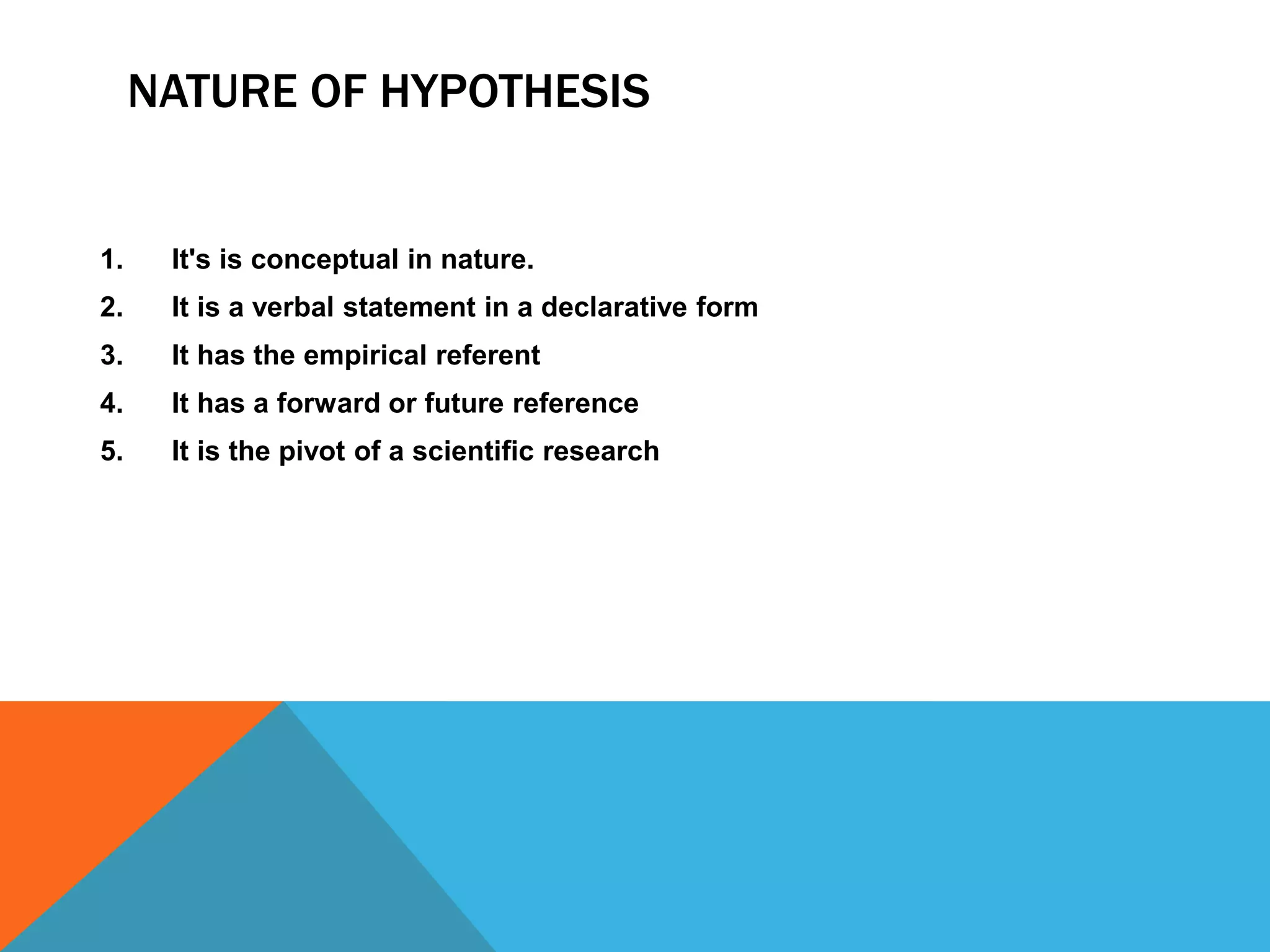
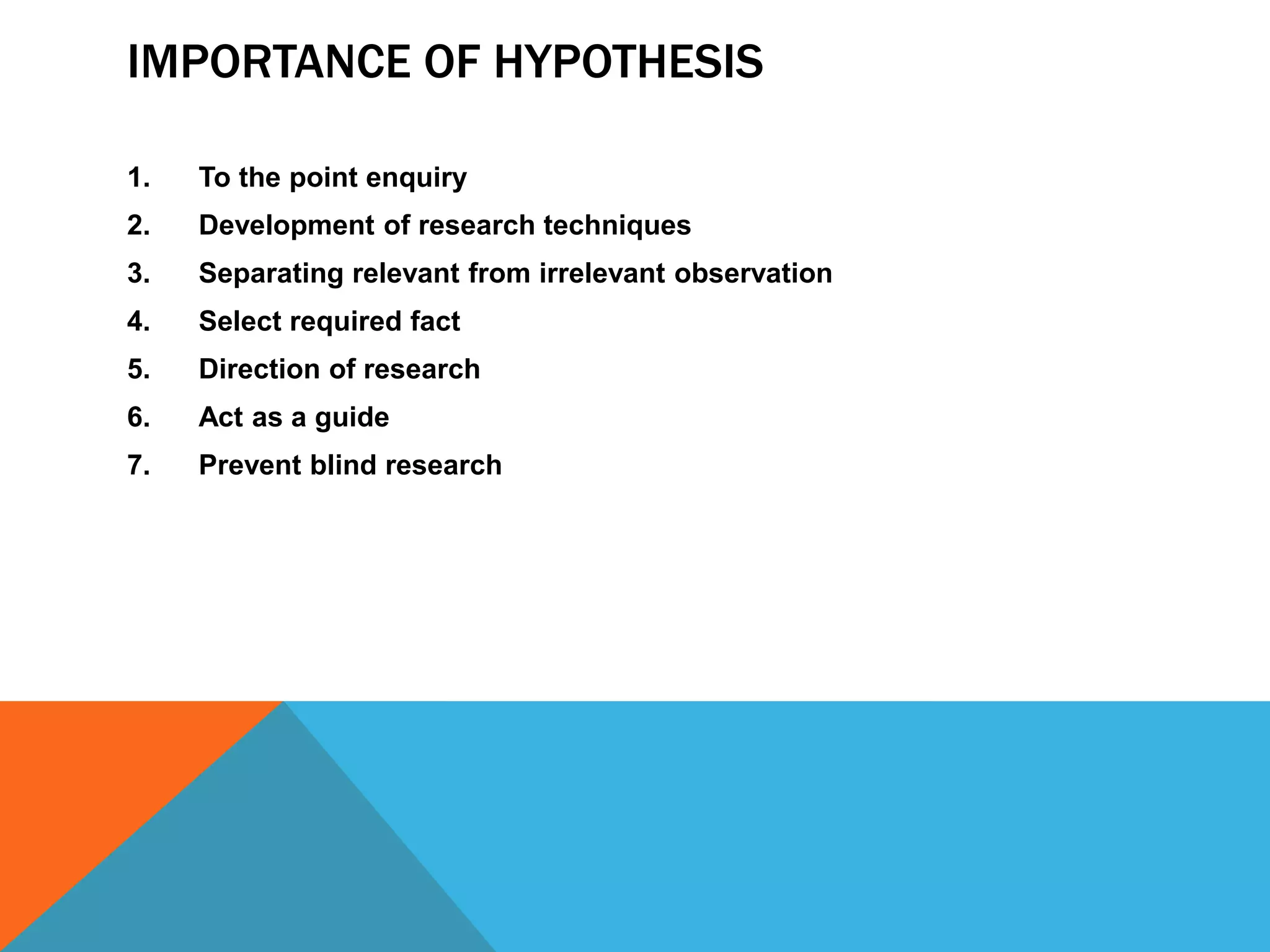
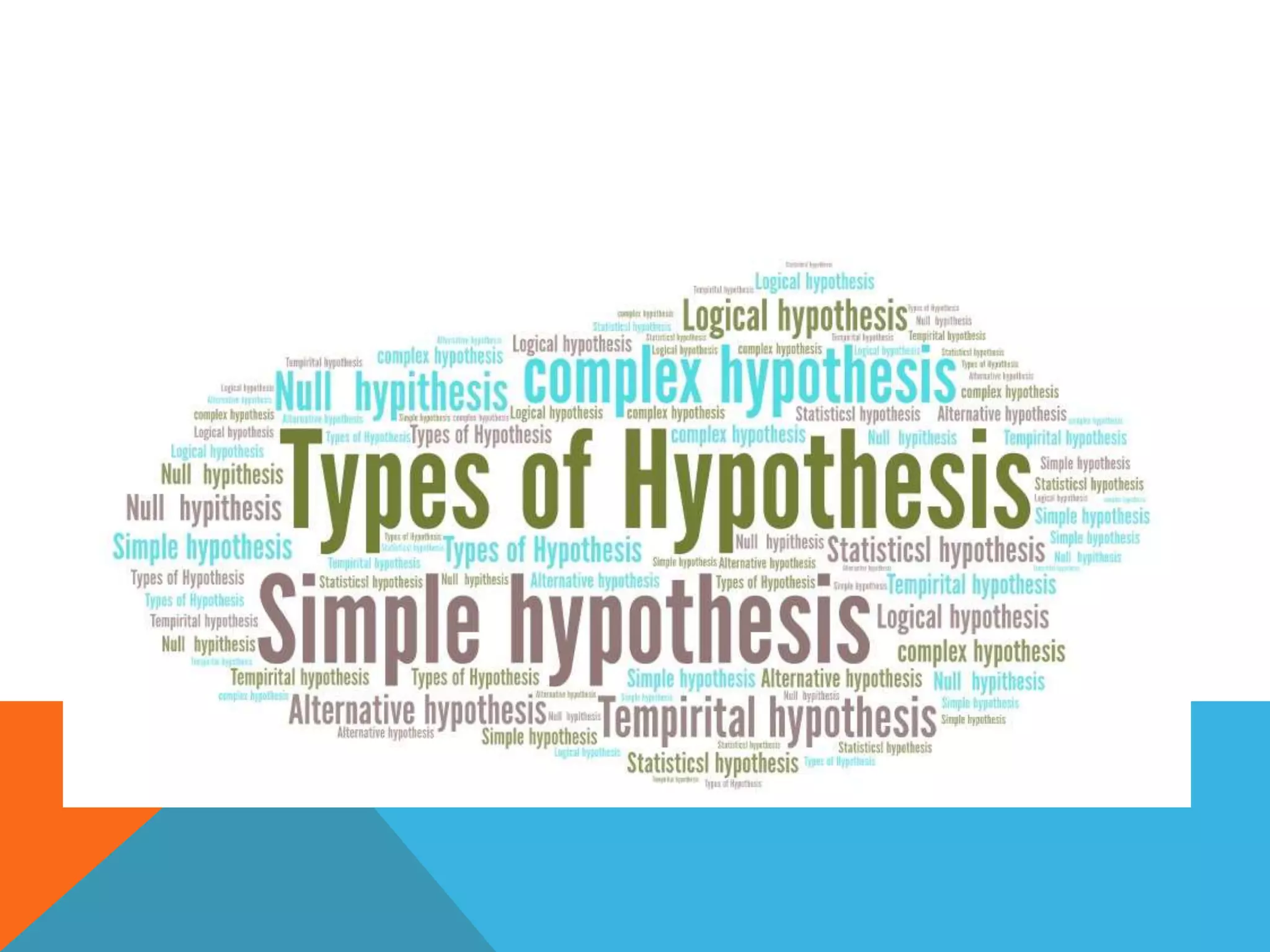
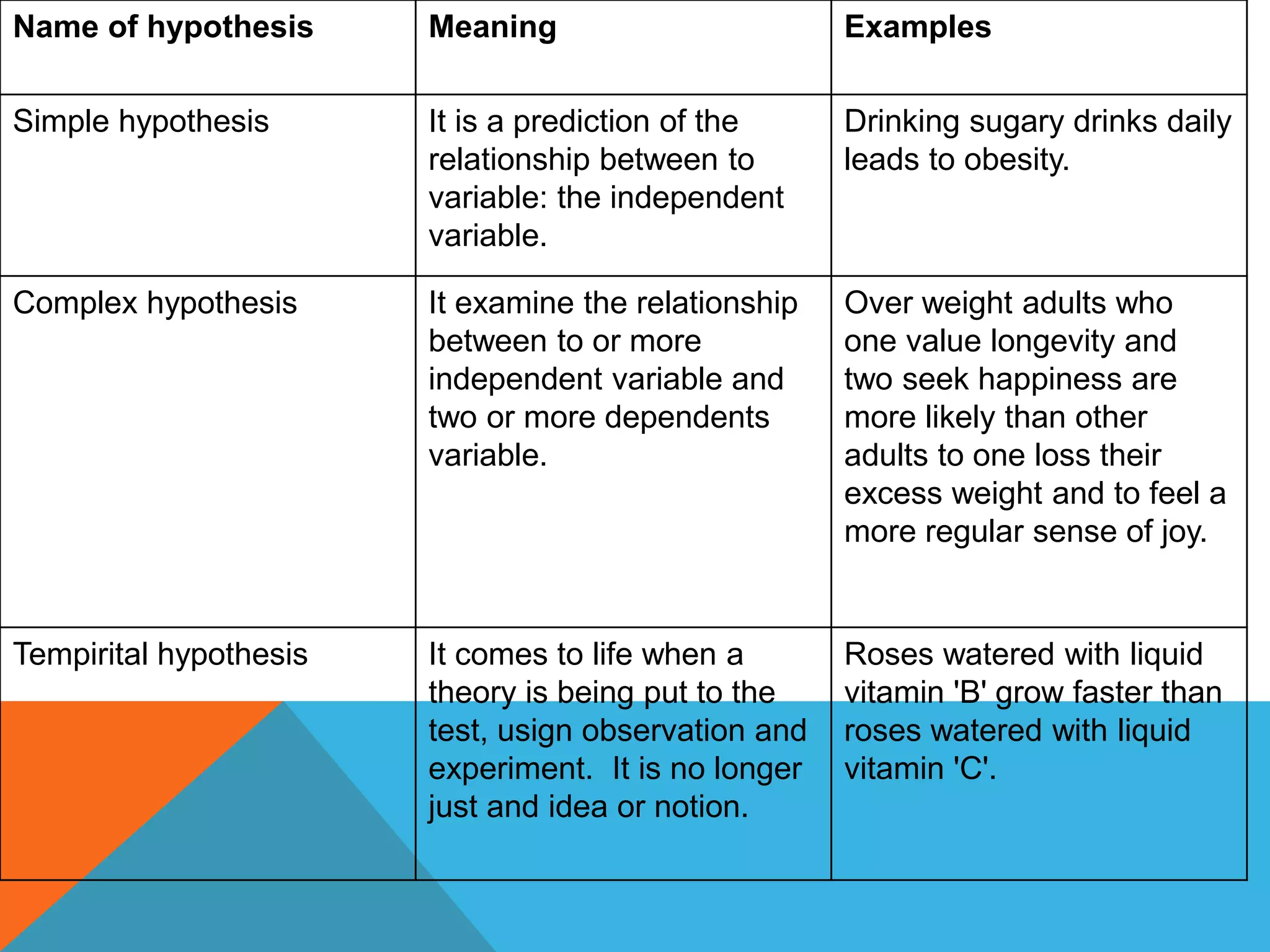
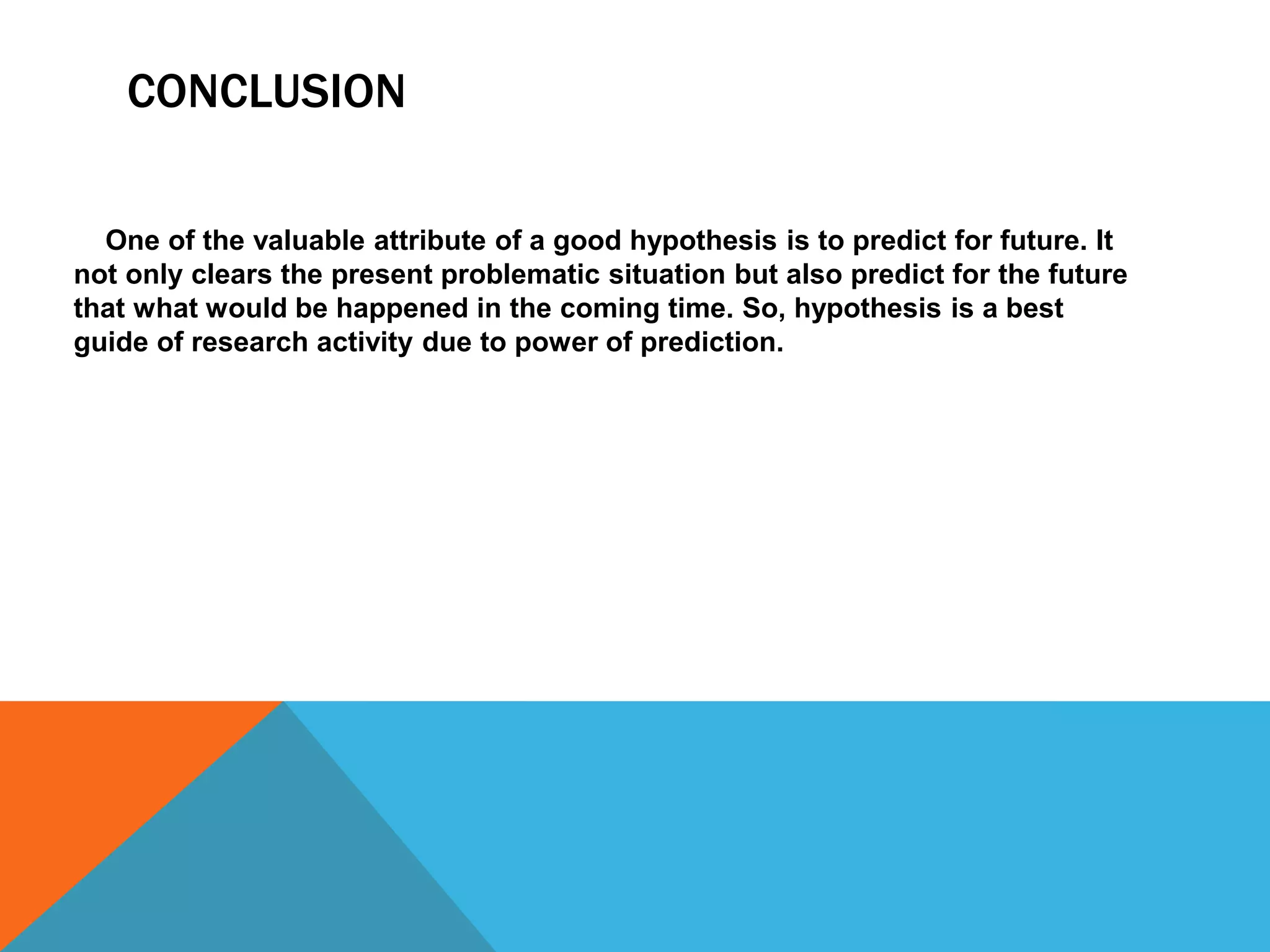
This document discusses the criteria for a good hypothesis. It defines a hypothesis as a tentative statement about a problem that can be tested. A good hypothesis is conceptual in nature, stated declaratively, has empirical reference, and provides future direction for research. Developing a strong hypothesis is important as it helps focus an inquiry, develop research techniques, separate relevant observations, guide the research process, and prevent blind research. There are different types of hypotheses, such as simple hypotheses about a single relationship, complex hypotheses about multiple variables, and temporal hypotheses that are tested through observation and experimentation. In conclusion, one valuable aspect of a good hypothesis is its ability to predict future outcomes and guide research.