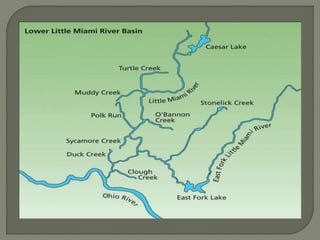
-consists of many small streams. These 
streams flow 
together into slightly larger streams, which 
flow into larger streams, 
and then into even larger streams. Tributary 
systems are 
commonly found in mountainous areas.
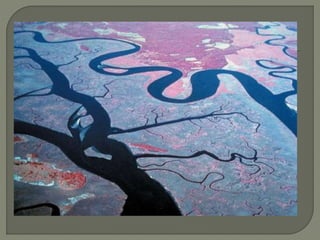
-It is a major river fed by a small number of 
fairly large 
tributaries. (See I n the Next Picture.) The 
word “trunk” is used because of the 
tree-like drainage pattern.
trunk stream: a major river, fed by a 
number of fairly large tributaries; the main 
stream in a river system. 
distributary system: an outflowing branch 
of a river, such as what characteristically 
occurs on a delta (a landform that forms at 
the mouth of a river)
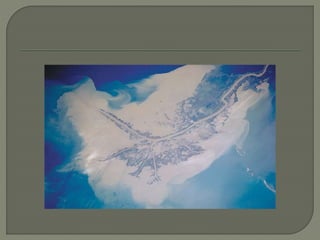
-It is found near the end of a main river. It 
consists 
of a number of small channels that branch  
off from the main river. 
Distributaries deposit undissolved  
materials in the ocean. They also 
carry dissolved materials into the ocean.  
(See Figure 3.)
drainage divide: the boundary between  
adjacent drainage basins.
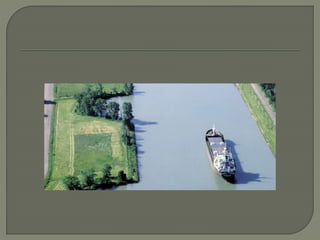
People use river systems for transportation. River transportation is 
relatively cheap. Barges that carry materials, such as gravel and coal, 
move up and down the river systems of the United States. This is the 
case in the eastern and midwestern parts of the United States. In 
the northern United States, the St. Lawrence River flows from Lake 
Ontario into the Atlantic Ocean. A system of canals connects the Great 
Lakes to the St. Lawrence River. This makes it possible for goods to be 
shipped from inland ports like Duluth, Minnesota, Chicago, Illinois, and 
Detroit, Michigan, to the Atlantic Ocean. From there the goods can be 
transported to ports worldwide.
to wear away soil and rock by the action of  
streams, glaciers, waves, wind, and 
underground water.
Why are river systems important? Humans use river systems in many ways. 
Rivers provide a source of drinking water. They are used for domestic 
and industrial purposes, and for irrigation of farmlands. They are also 
used to wash away waste product. For example, chemicals from industrial 
processes and treated sewage are dumped into rivers. Throughout history, 
rivers have served as both giant water faucets and giant sewers. This is not 
a good combination. As recently as the late 1960s, several major cities in 
the United States allowed human waste to enter large rivers. This was part 
of their waste-disposal system. From local to national scales, communities 
have recognized the problems with this. They have worked to limit the use 
of rivers as waste-disposal systems. However, accidental spills of industrial 
and human waste continue to happen every year.
Rivers also provide recreation. People are 
awed by waterfalls. They 
love the sound of rushing mountain streams, 
and they can go rafting, 
canoeing, or kayaking in a swift-flowing river. 
They can also enjoy a boat 
ride or a picnic on a riverbank. Millions of 
Americans swim, fish, and boat 
in rivers and in the lakes created by dams 
along rivers.
River system

River system

  • 2.
    -consists of manysmall streams. These streams flow together into slightly larger streams, which flow into larger streams, and then into even larger streams. Tributary systems are commonly found in mountainous areas.
  • 4.
    -It is amajor river fed by a small number of fairly large tributaries. (See I n the Next Picture.) The word “trunk” is used because of the tree-like drainage pattern.
  • 6.
    trunk stream: amajor river, fed by a number of fairly large tributaries; the main stream in a river system. distributary system: an outflowing branch of a river, such as what characteristically occurs on a delta (a landform that forms at the mouth of a river)
  • 7.
    -It is foundnear the end of a main river. It consists of a number of small channels that branch  off from the main river. Distributaries deposit undissolved  materials in the ocean. They also carry dissolved materials into the ocean.  (See Figure 3.)
  • 9.
    drainage divide: theboundary between  adjacent drainage basins.
  • 10.
    People use riversystems for transportation. River transportation is relatively cheap. Barges that carry materials, such as gravel and coal, move up and down the river systems of the United States. This is the case in the eastern and midwestern parts of the United States. In the northern United States, the St. Lawrence River flows from Lake Ontario into the Atlantic Ocean. A system of canals connects the Great Lakes to the St. Lawrence River. This makes it possible for goods to be shipped from inland ports like Duluth, Minnesota, Chicago, Illinois, and Detroit, Michigan, to the Atlantic Ocean. From there the goods can be transported to ports worldwide.
  • 11.
    to wear awaysoil and rock by the action of  streams, glaciers, waves, wind, and underground water.
  • 13.
    Why are riversystems important? Humans use river systems in many ways. Rivers provide a source of drinking water. They are used for domestic and industrial purposes, and for irrigation of farmlands. They are also used to wash away waste product. For example, chemicals from industrial processes and treated sewage are dumped into rivers. Throughout history, rivers have served as both giant water faucets and giant sewers. This is not a good combination. As recently as the late 1960s, several major cities in the United States allowed human waste to enter large rivers. This was part of their waste-disposal system. From local to national scales, communities have recognized the problems with this. They have worked to limit the use of rivers as waste-disposal systems. However, accidental spills of industrial and human waste continue to happen every year.
  • 15.
    Rivers also providerecreation. People are awed by waterfalls. They love the sound of rushing mountain streams, and they can go rafting, canoeing, or kayaking in a swift-flowing river. They can also enjoy a boat ride or a picnic on a riverbank. Millions of Americans swim, fish, and boat in rivers and in the lakes created by dams along rivers.