Digital Libraries, Digital Archives,
Digital Humanities, Digital
Scholarship:
What's the Difference? Prioritizing,
Strategizing, and Executing
Jenn Riley
Head, Carolina Digital Library and
Archives
UNC Library
A STORY…
12/13/2011 Scholarly Communication Working Group 2
Evolution of the “digital library”
Item-level
digitization/presentation
with non-MARC
metadata
Curated online exhibits
Addition of contextual
materials: essays, lesson
plans, etc
Application of MPLP
ideas from archives and
special collections
Rise of mass digitization
12/13/2011 Scholarly Communication Working Group 3
“Digital humanities” evolved in
parallel
12/13/2011 Scholarly Communication Working Group 4
Early
• “Humanities computing”
• Text encoding
• Scholarly editions
Now
• Expansive, inclusive
• Interactive
• Digital collections
• Text mining
• Computational
linguistics
• Scholar-driven
•Spatial & temporal
•Online reference works
•Collaborative
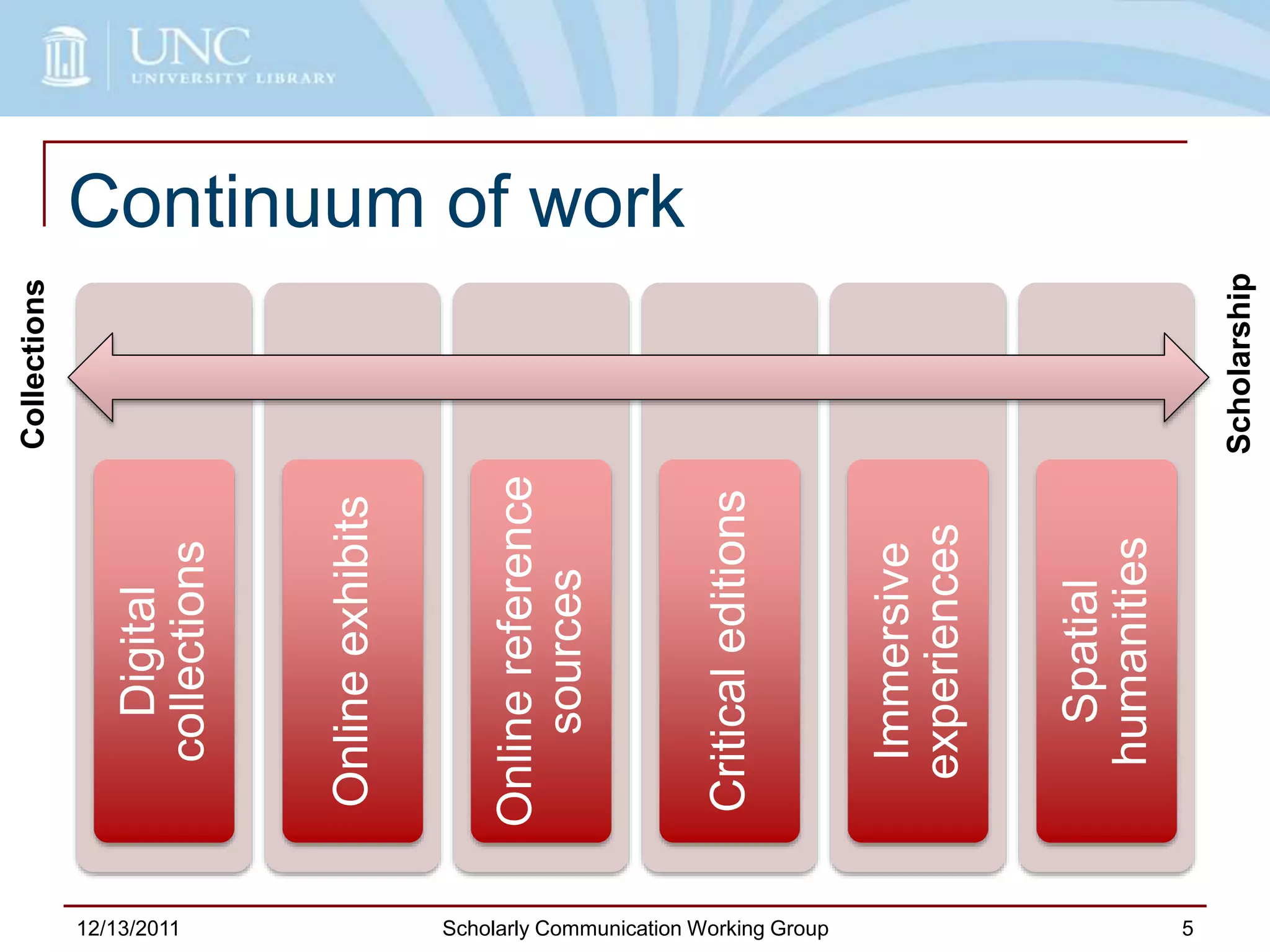
Continuum of work
12/13/2011 Scholarly Communication Working Group 5
Digital
collections
Onlineexhibits
Onlinereference
sources
Criticaleditions
Immersive
experiences
Spatial
humanities
Collections
Scholarship
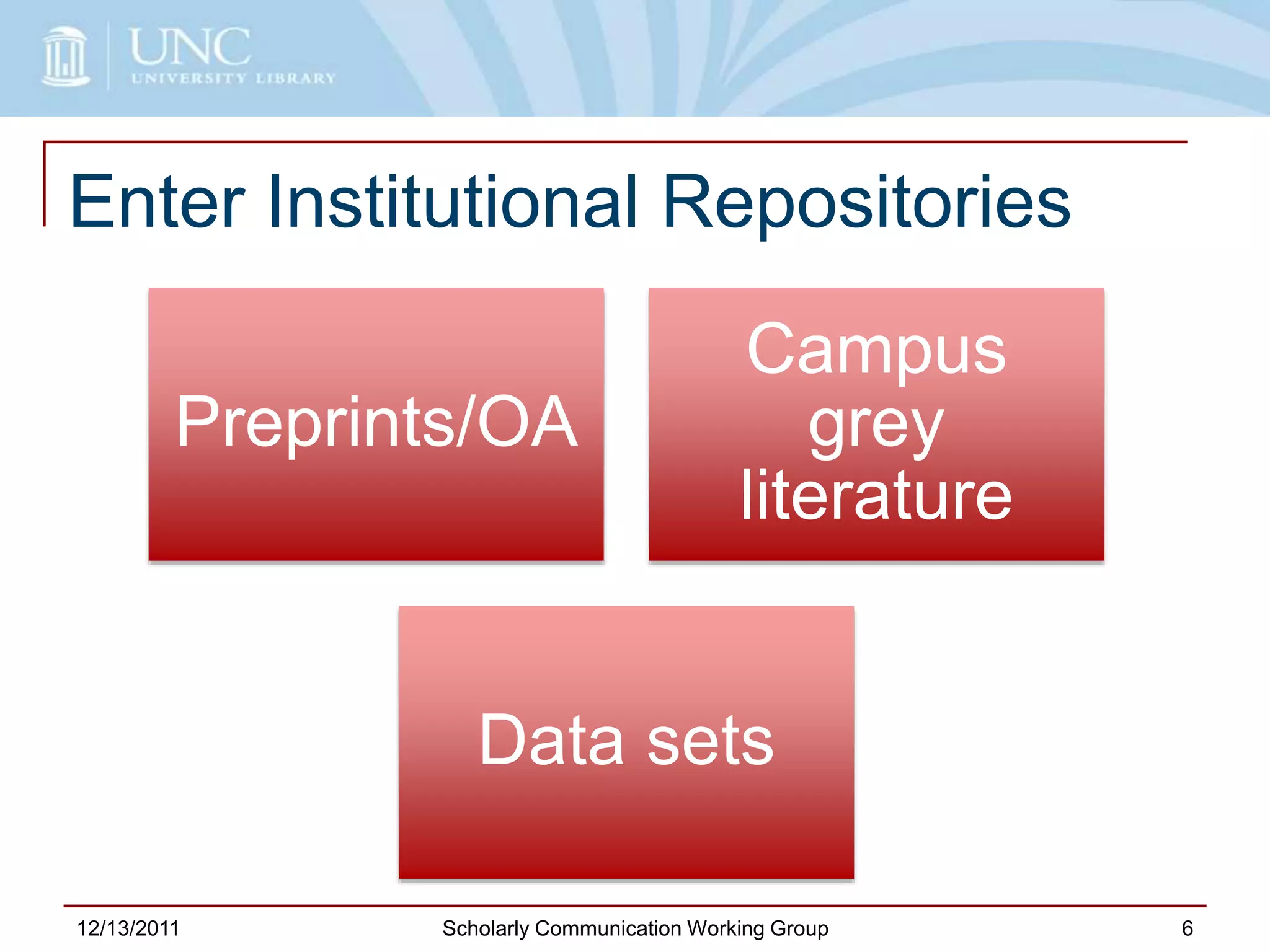
Enter Institutional Repositories
Preprints/OA
Campus
grey
literature
Data sets
12/13/2011 Scholarly Communication Working Group 6
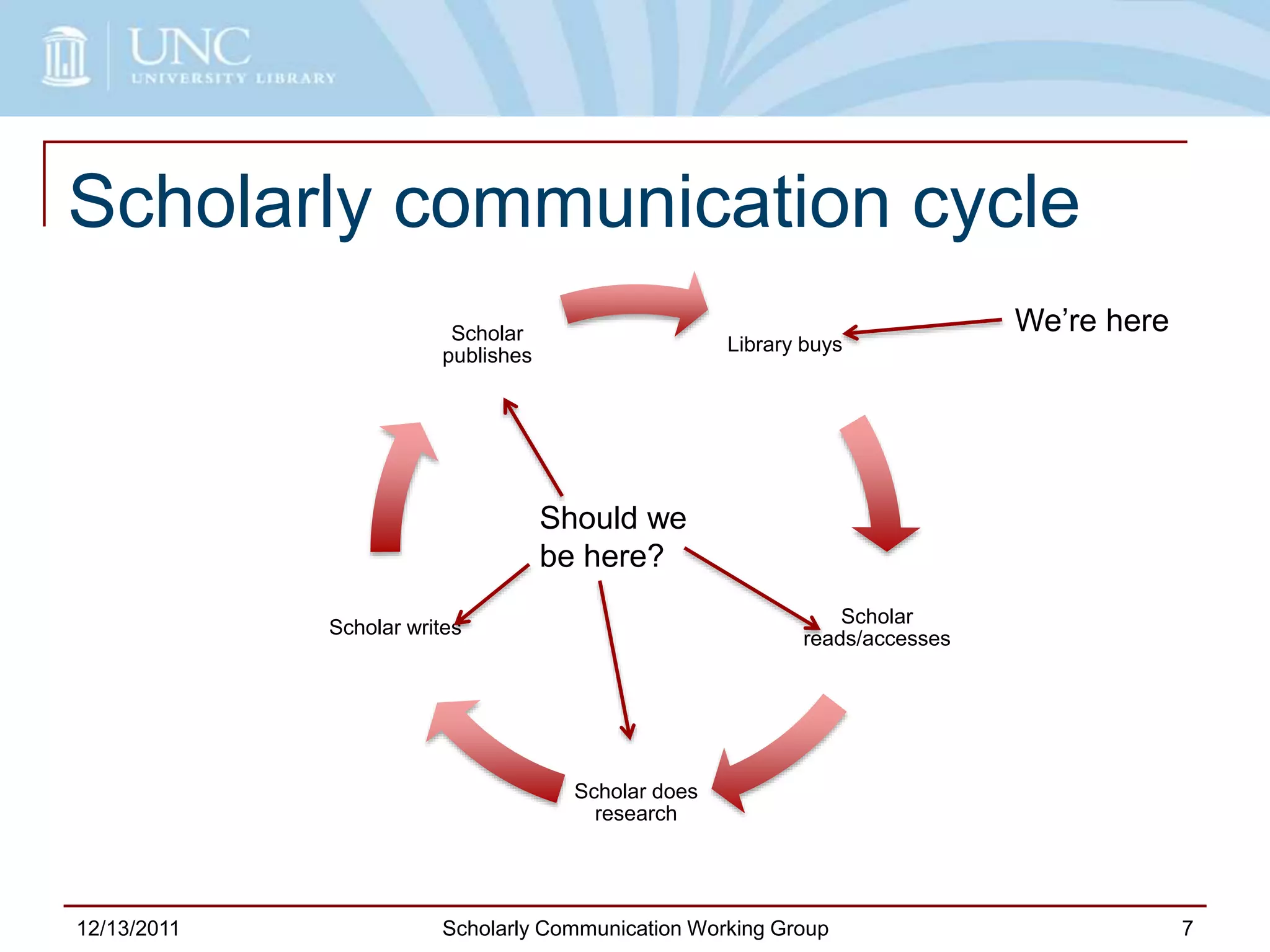
Scholarly communication cycle
12/13/2011 Scholarly Communication Working Group 7
Library buys
Scholar
reads/accesses
Scholar does
research
Scholar writes
Scholar
publishes
We’re here
Should we
be here?
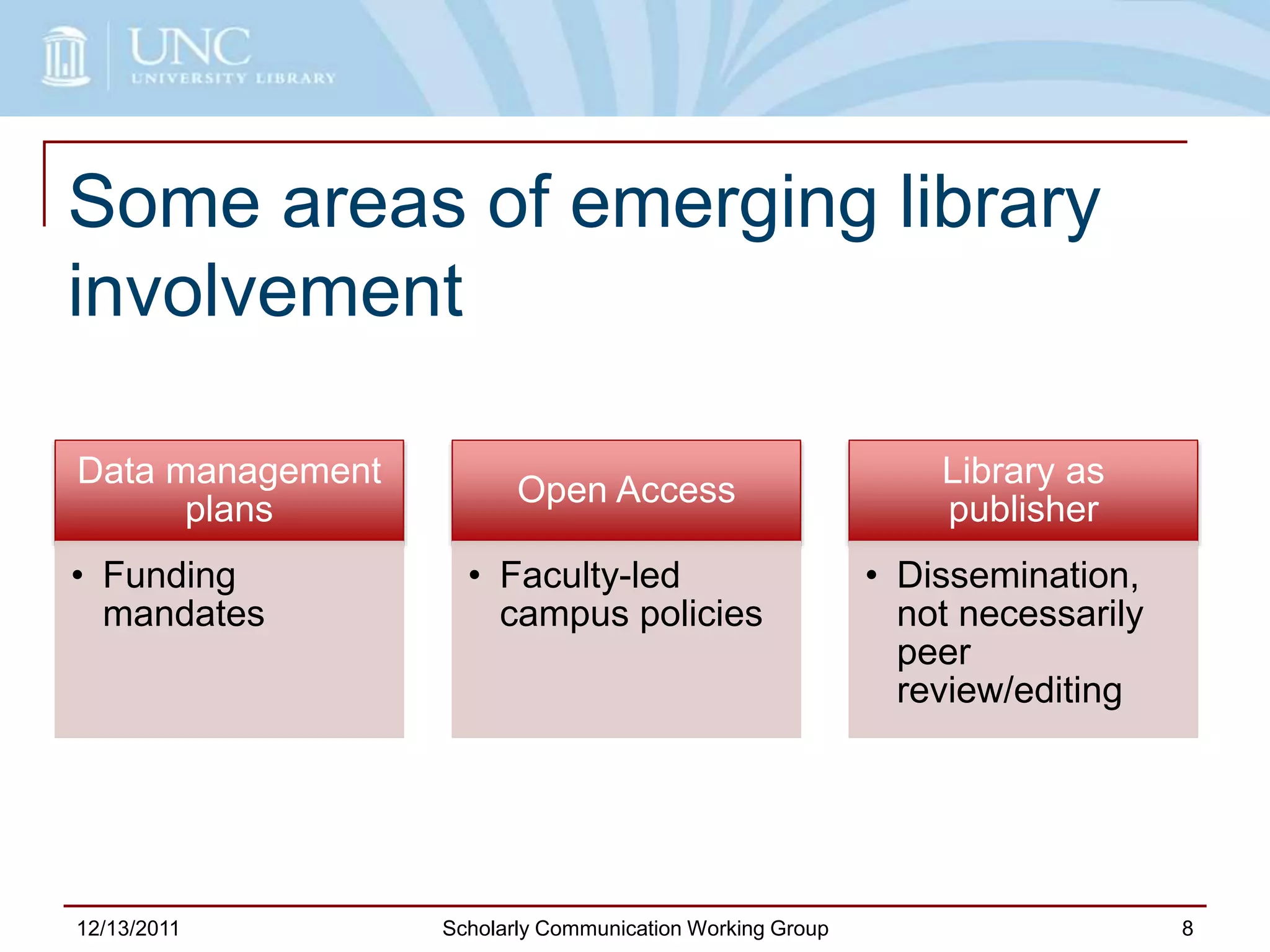
Some areas of emerging library
involvement
Data management
plans
• Funding
mandates
Open Access
• Faculty-led
campus policies
Library as
publisher
• Dissemination,
not necessarily
peer
review/editing
12/13/2011 Scholarly Communication Working Group 8
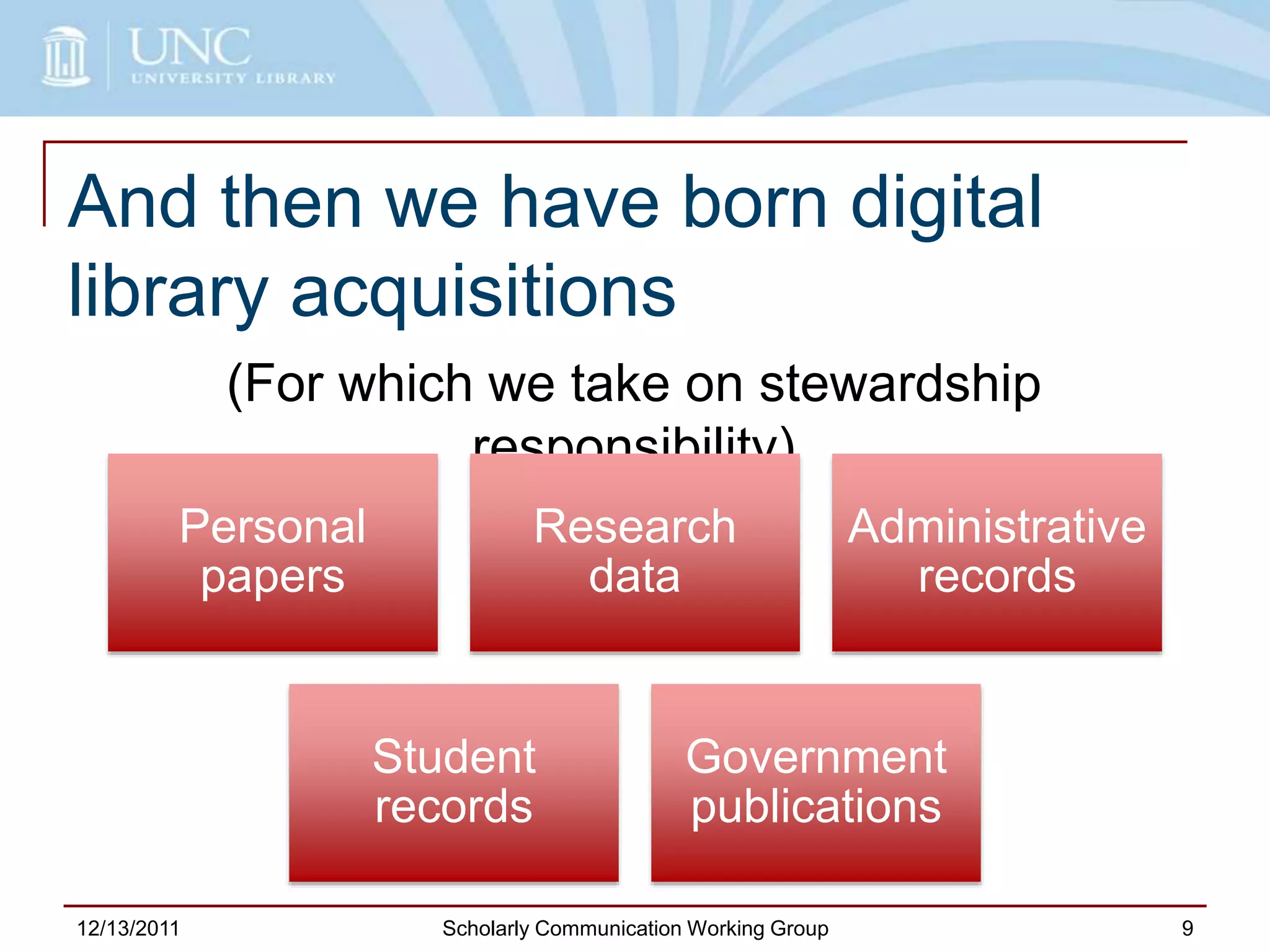
And then we have born digital
library acquisitions
(For which we take on stewardship
responsibility)
12/13/2011 Scholarly Communication Working Group 9
Personal
papers
Research
data
Administrative
records
Student
records
Government
publications
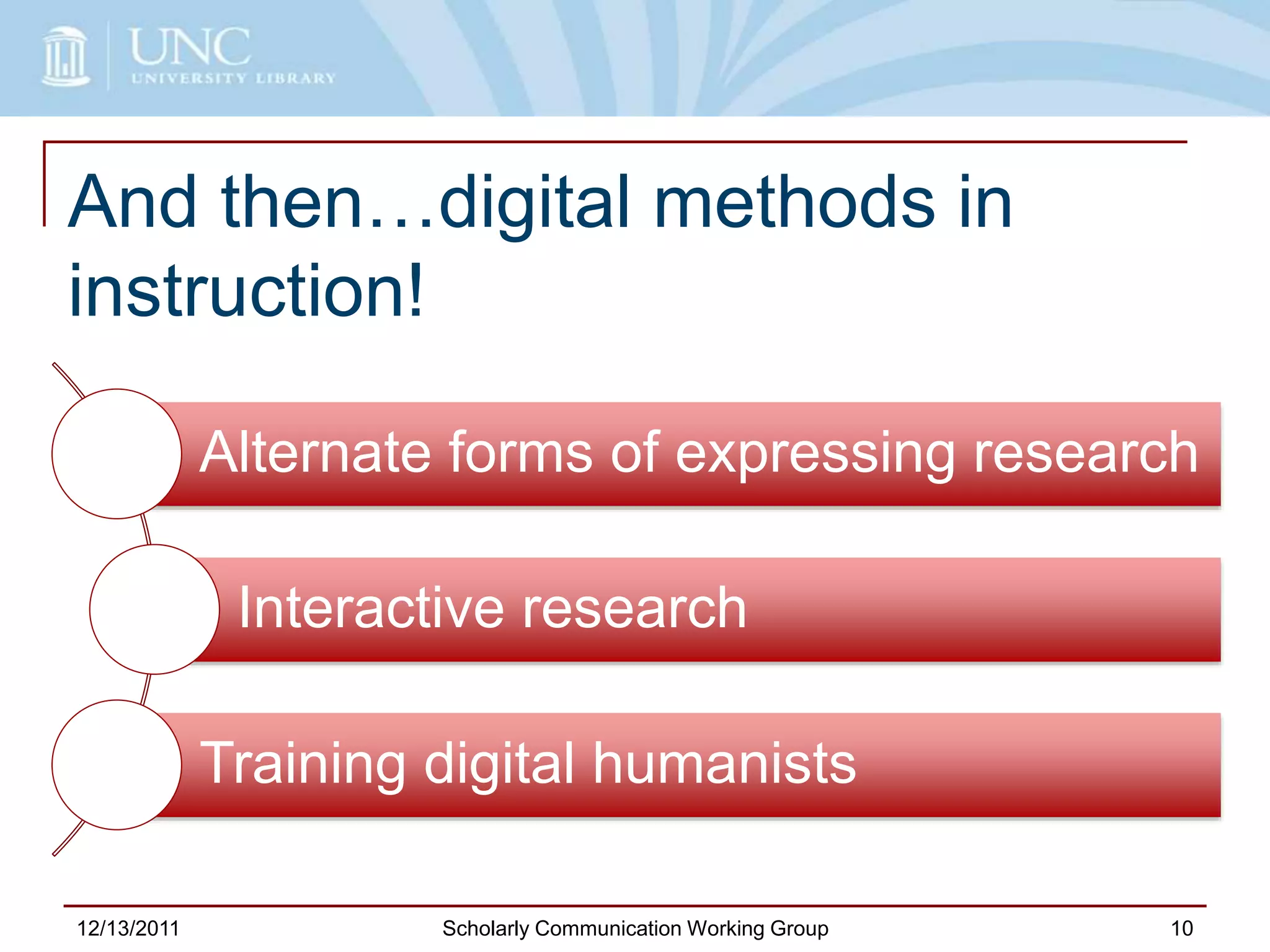
And then…digital methods in
instruction!
12/13/2011 Scholarly Communication Working Group 10
Alternate forms of expressing research
Interactive research
Training digital humanists
SO WHAT’S AN ACADEMIC
LIBRARY TO DO?
12/13/2011 Scholarly Communication Working Group 11
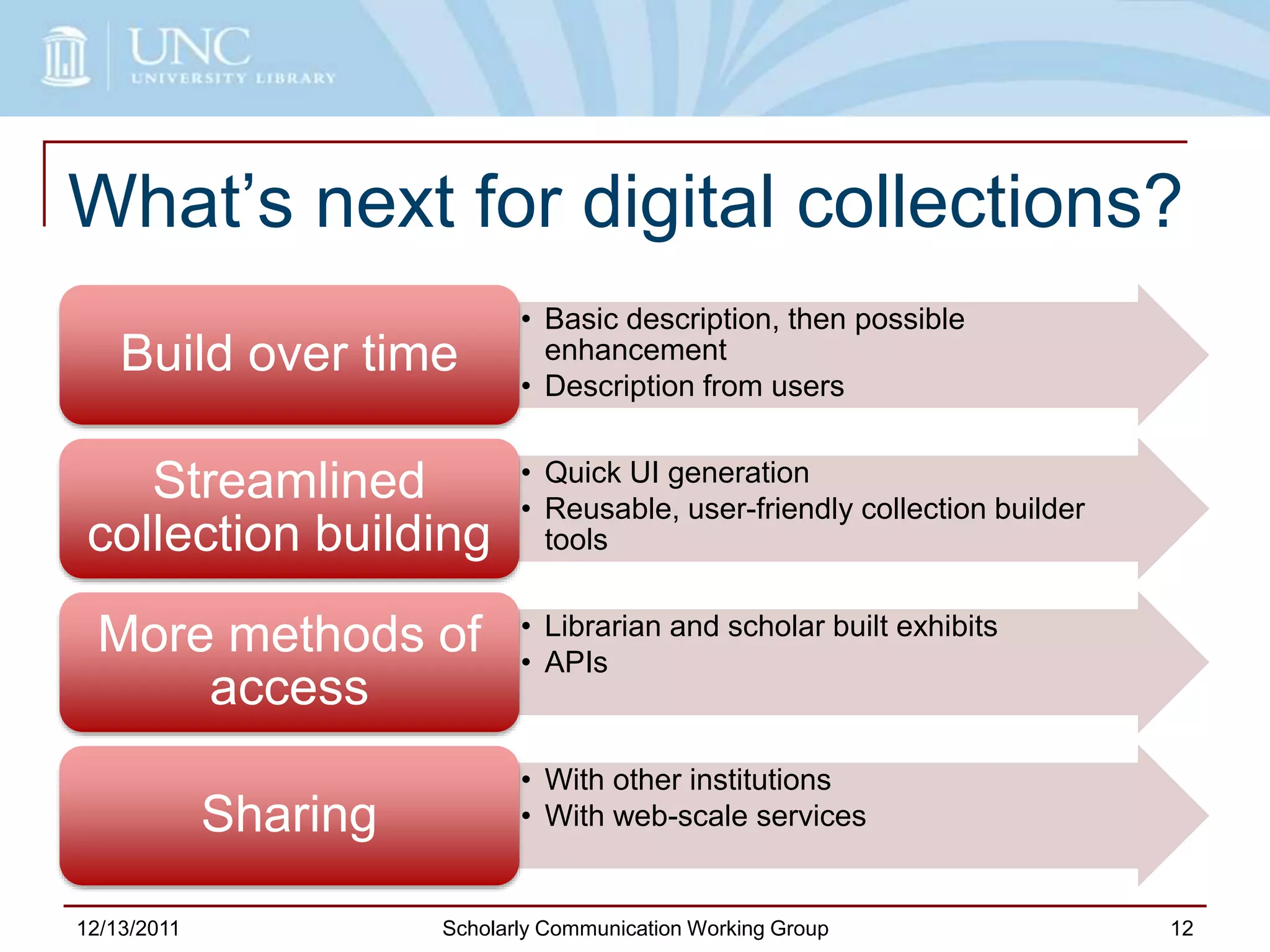
What’s next for digital collections?
12/13/2011 Scholarly Communication Working Group 12
• Basic description, then possible
enhancement
• Description from users
Build over time
• Quick UI generation
• Reusable, user-friendly collection builder
tools
Streamlined
collection building
• Librarian and scholar built exhibits
• APIs
More methods of
access
• With other institutions
• With web-scale servicesSharing
EXPAND KNOWLEDGE,
SPREAD THE
RESPONSIBILITY
12/13/2011 Scholarly Communication Working Group 13
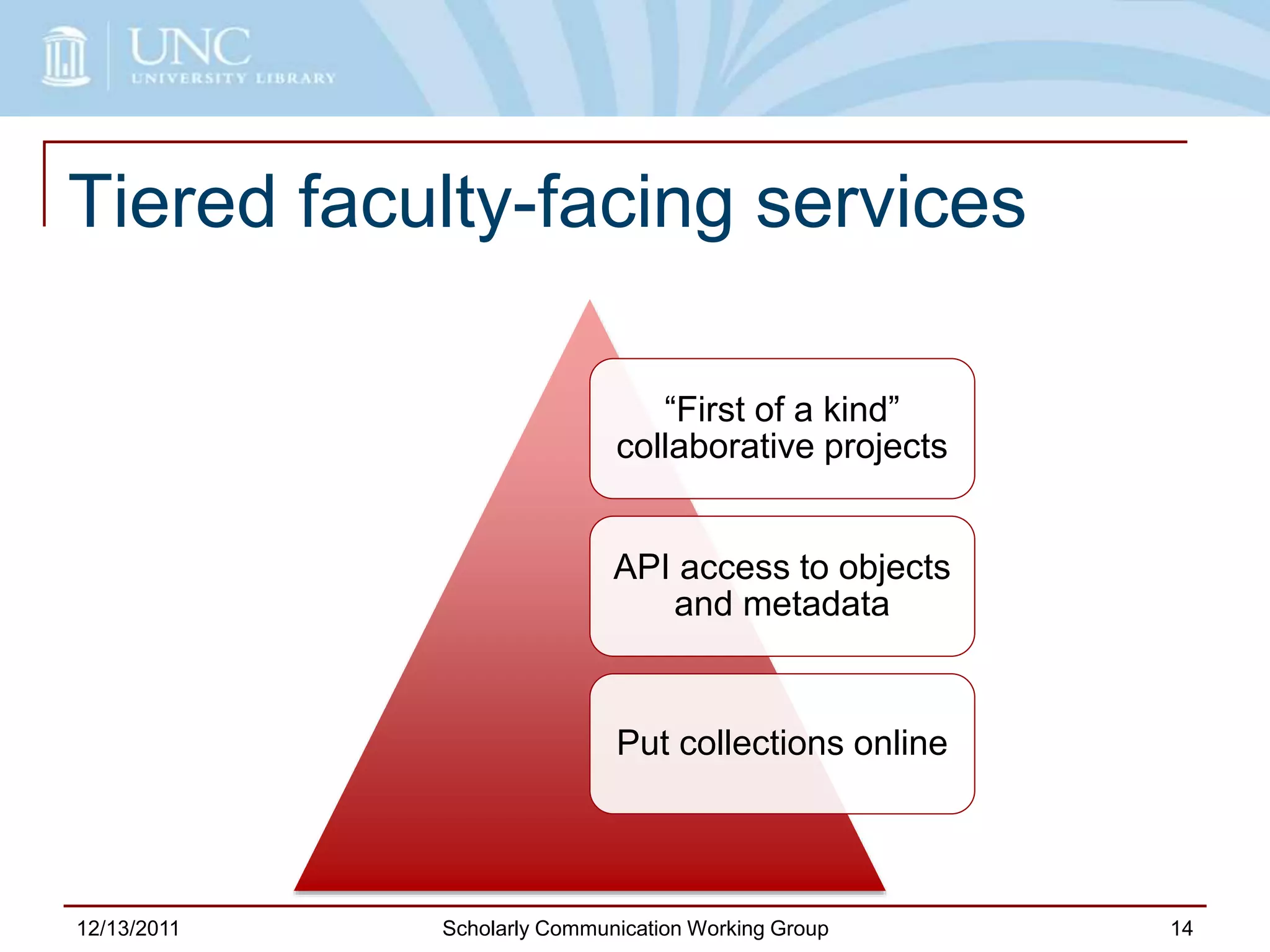
Tiered faculty-facing services
“First of a kind”
collaborative projects
API access to objects
and metadata
Put collections online
12/13/2011 Scholarly Communication Working Group 14
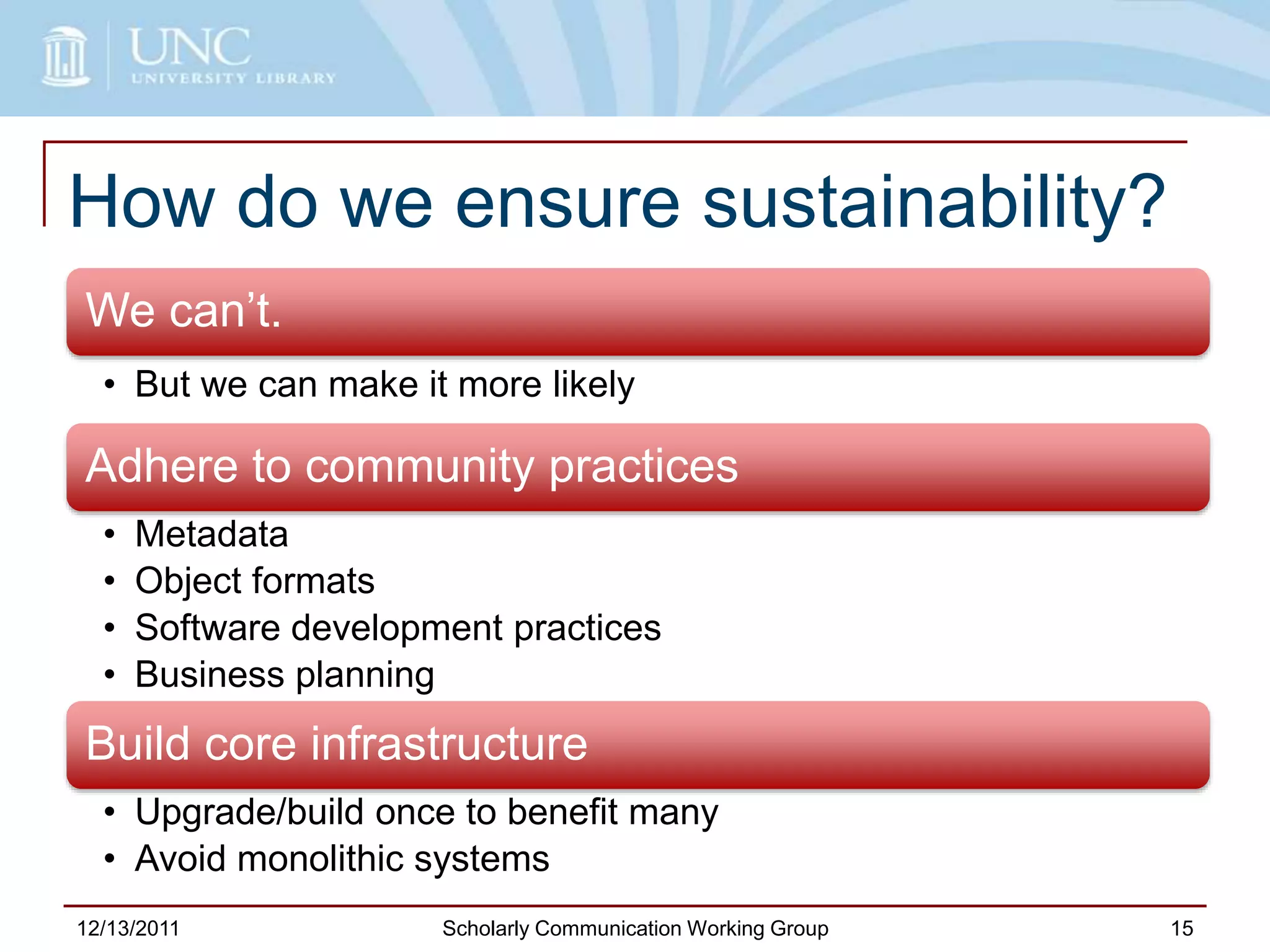
How do we ensure sustainability?
We can’t.
• But we can make it more likely
Adhere to community practices
• Metadata
• Object formats
• Software development practices
• Business planning
Build core infrastructure
• Upgrade/build once to benefit many
• Avoid monolithic systems
12/13/2011 Scholarly Communication Working Group 15
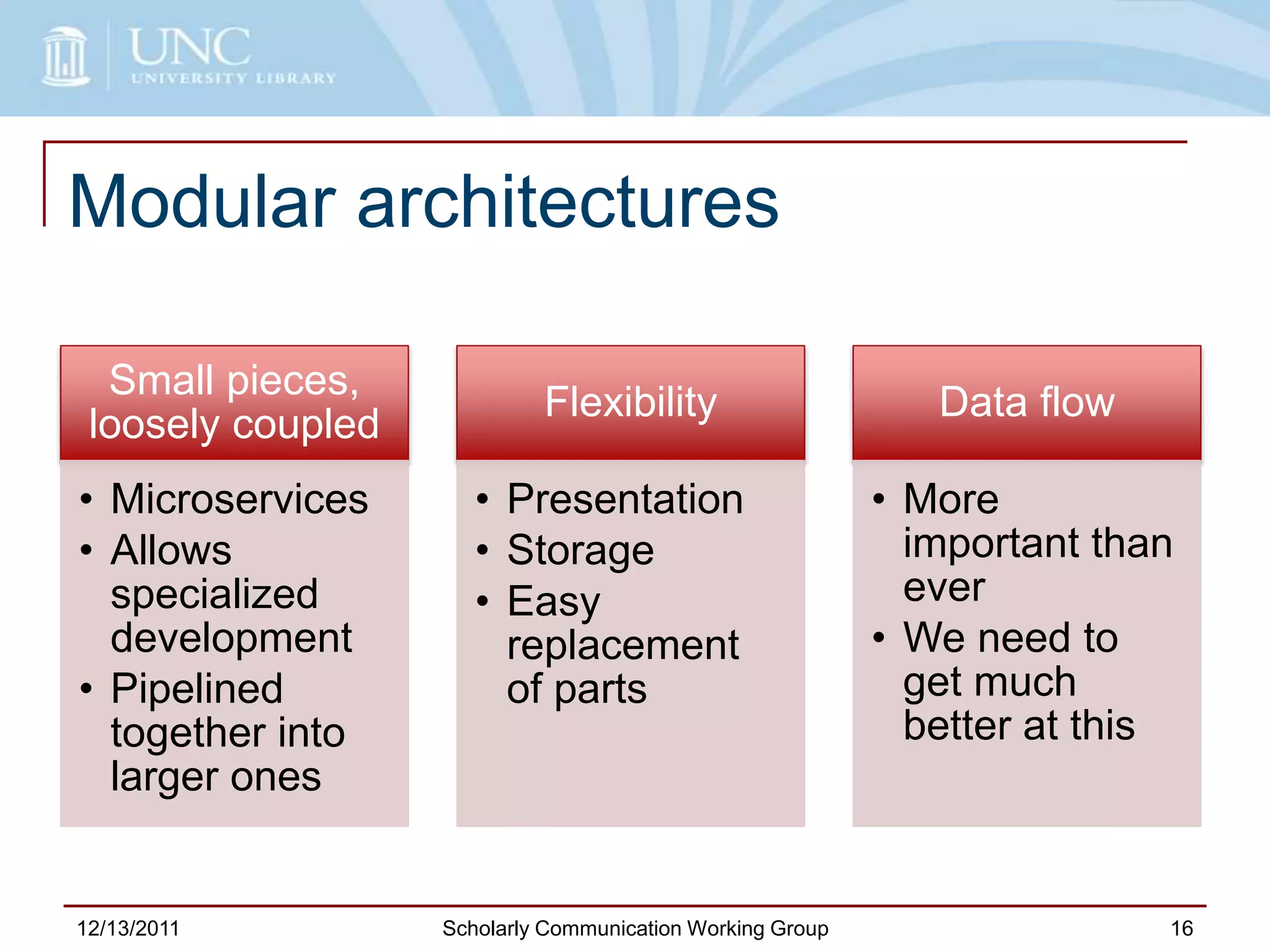
Modular architectures
12/13/2011 Scholarly Communication Working Group 16
Small pieces,
loosely coupled
• Microservices
• Allows
specialized
development
• Pipelined
together into
larger ones
Flexibility
• Presentation
• Storage
• Easy
replacement
of parts
Data flow
• More
important than
ever
• We need to
get much
better at this
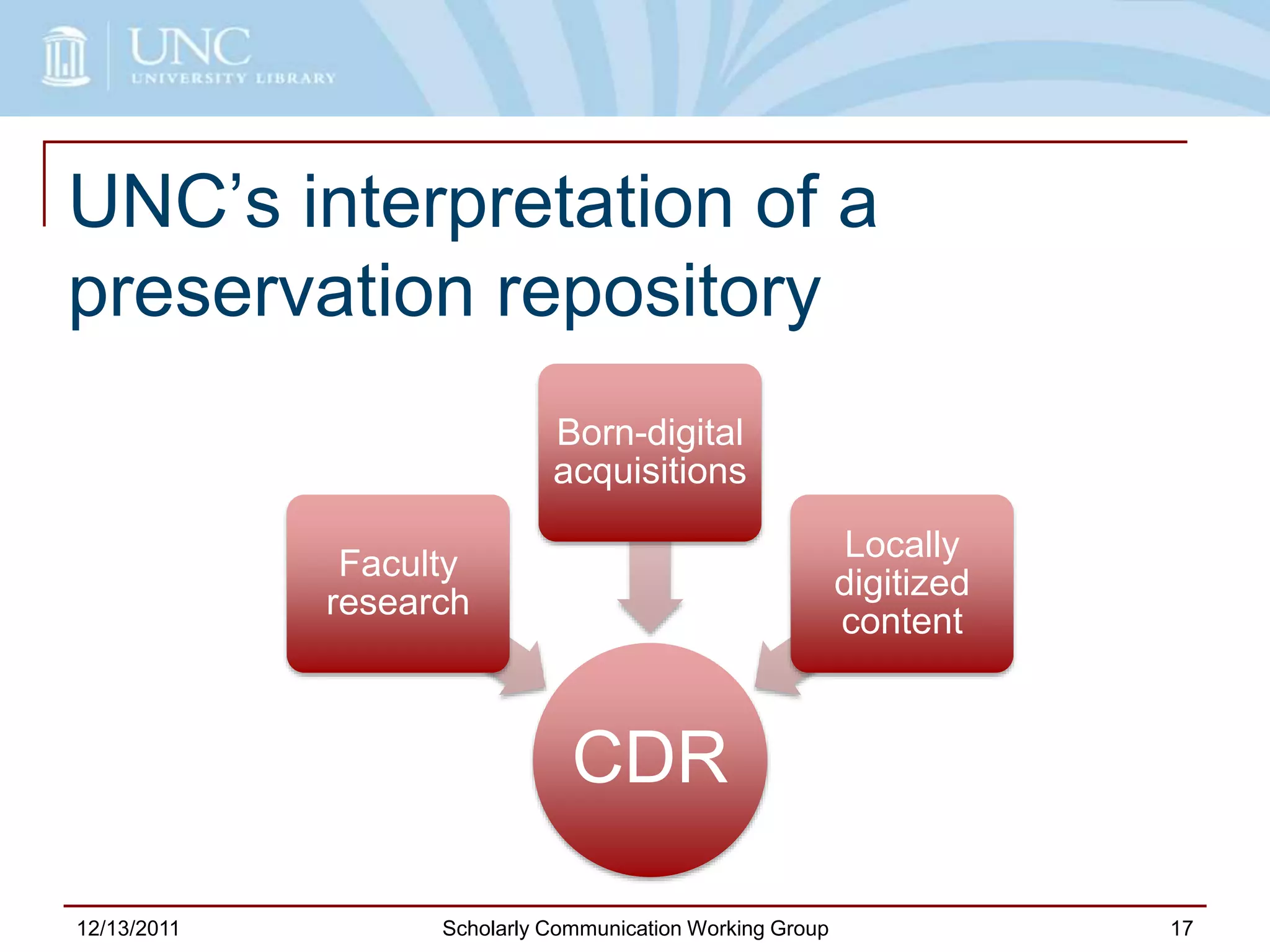
UNC’s interpretation of a
preservation repository
12/13/2011 Scholarly Communication Working Group 17
CDR
Faculty
research
Born-digital
acquisitions
Locally
digitized
content
SAVE A PLACE FOR
EXPERIMENTATION
(especially in scholarly communication)
(we’re not all comfortable with this yet)
12/13/2011 Scholarly Communication Working Group 18
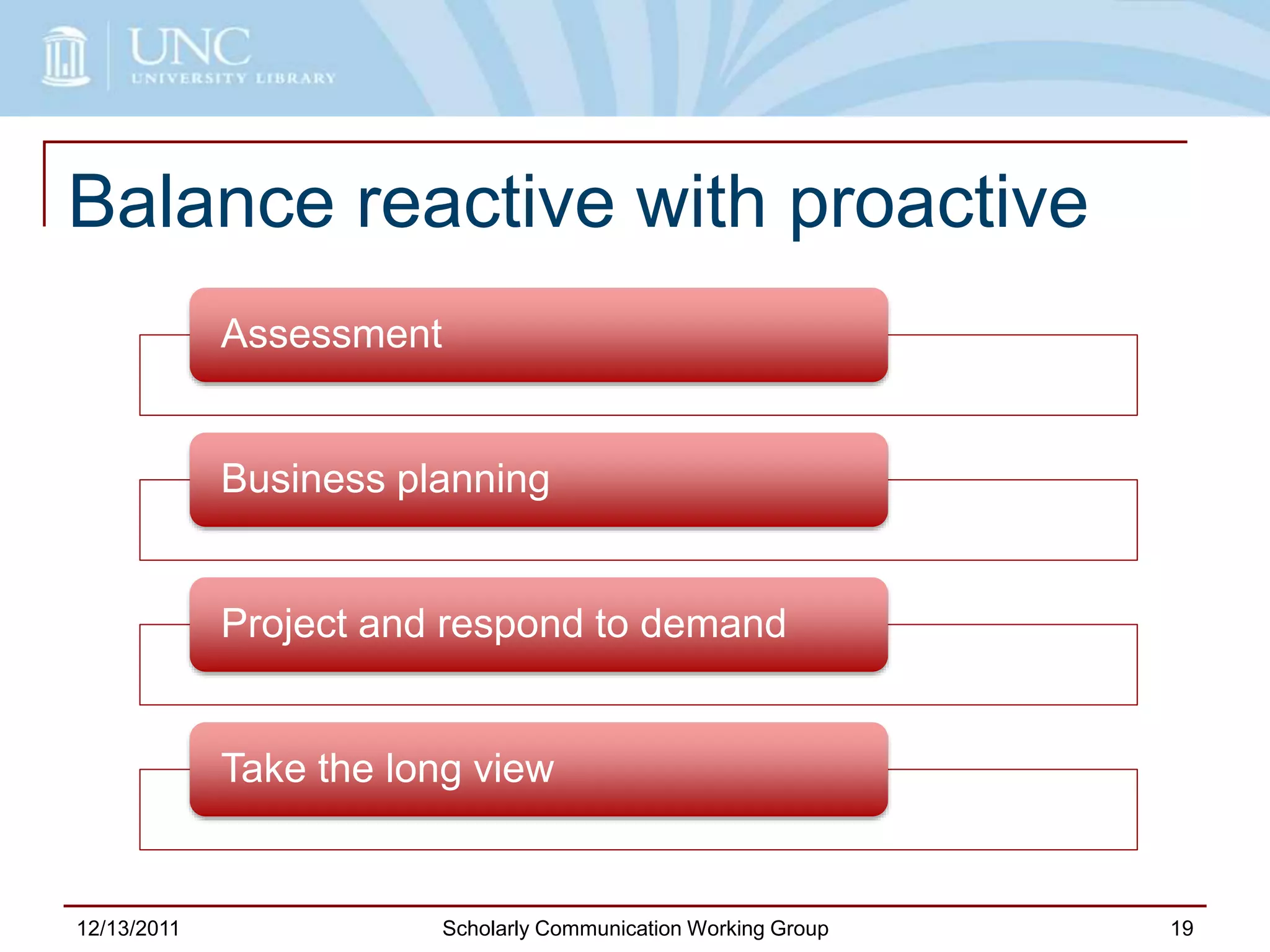
Balance reactive with proactive
12/13/2011 Scholarly Communication Working Group 19
Assessment
Business planning
Project and respond to demand
Take the long view
COLLABORATE
12/13/2011 Scholarly Communication Working Group 20
Thank you!
 jennriley@unc.edu
12/13/2011 Scholarly Communication Working Group 21

Digital Libraries, Digital Archives, Digital Humanities, Digital Scholarship: What’s the Difference? Prioritizing, Strategizing, and Executing

  • 1.
    Digital Libraries, DigitalArchives, Digital Humanities, Digital Scholarship: What's the Difference? Prioritizing, Strategizing, and Executing Jenn Riley Head, Carolina Digital Library and Archives UNC Library
  • 2.
    A STORY… 12/13/2011 ScholarlyCommunication Working Group 2
  • 3.
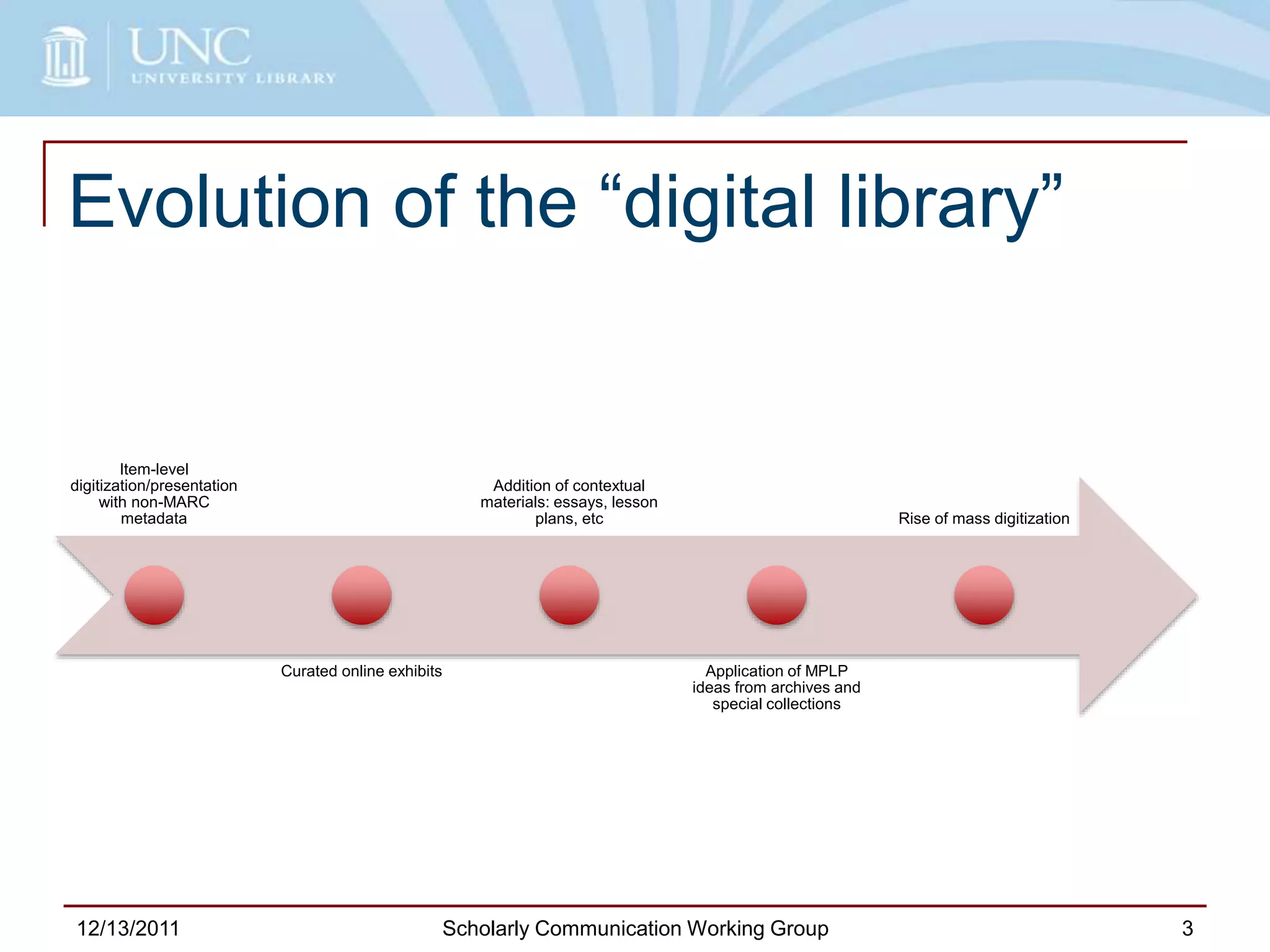
    Evolution of the“digital library” Item-level digitization/presentation with non-MARC metadata Curated online exhibits Addition of contextual materials: essays, lesson plans, etc Application of MPLP ideas from archives and special collections Rise of mass digitization 12/13/2011 Scholarly Communication Working Group 3
  • 4.
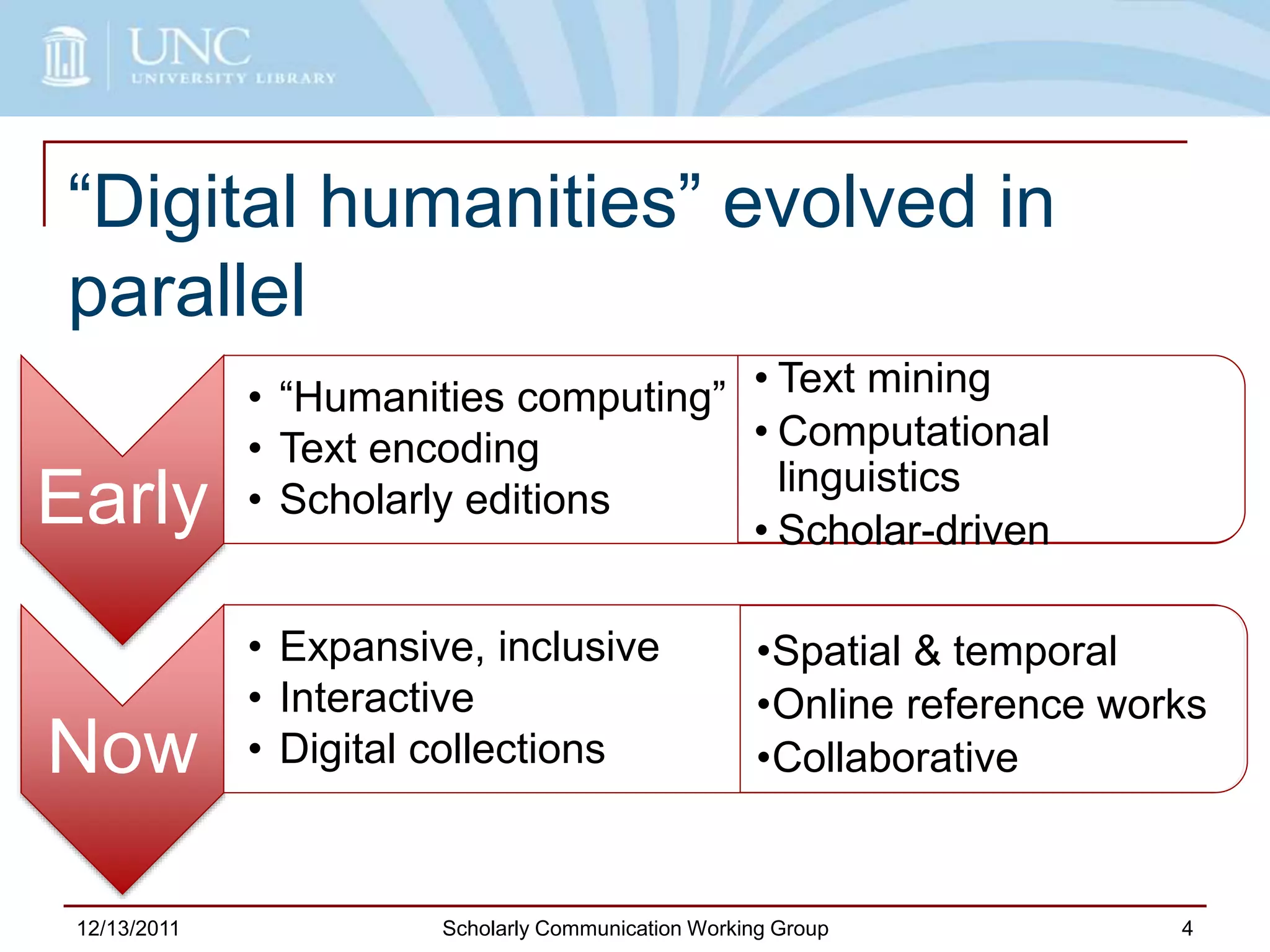
    “Digital humanities” evolvedin parallel 12/13/2011 Scholarly Communication Working Group 4 Early • “Humanities computing” • Text encoding • Scholarly editions Now • Expansive, inclusive • Interactive • Digital collections • Text mining • Computational linguistics • Scholar-driven •Spatial & temporal •Online reference works •Collaborative
  • 5.
    Continuum of work 12/13/2011Scholarly Communication Working Group 5 Digital collections Onlineexhibits Onlinereference sources Criticaleditions Immersive experiences Spatial humanities Collections Scholarship
  • 6.
    Enter Institutional Repositories Preprints/OA Campus grey literature Datasets 12/13/2011 Scholarly Communication Working Group 6
  • 7.
    Scholarly communication cycle 12/13/2011Scholarly Communication Working Group 7 Library buys Scholar reads/accesses Scholar does research Scholar writes Scholar publishes We’re here Should we be here?
  • 8.
    Some areas ofemerging library involvement Data management plans • Funding mandates Open Access • Faculty-led campus policies Library as publisher • Dissemination, not necessarily peer review/editing 12/13/2011 Scholarly Communication Working Group 8
  • 9.
    And then wehave born digital library acquisitions (For which we take on stewardship responsibility) 12/13/2011 Scholarly Communication Working Group 9 Personal papers Research data Administrative records Student records Government publications
  • 10.
    And then…digital methodsin instruction! 12/13/2011 Scholarly Communication Working Group 10 Alternate forms of expressing research Interactive research Training digital humanists
  • 11.
    SO WHAT’S ANACADEMIC LIBRARY TO DO? 12/13/2011 Scholarly Communication Working Group 11
  • 12.
    What’s next fordigital collections? 12/13/2011 Scholarly Communication Working Group 12 • Basic description, then possible enhancement • Description from users Build over time • Quick UI generation • Reusable, user-friendly collection builder tools Streamlined collection building • Librarian and scholar built exhibits • APIs More methods of access • With other institutions • With web-scale servicesSharing
  • 13.
    EXPAND KNOWLEDGE, SPREAD THE RESPONSIBILITY 12/13/2011Scholarly Communication Working Group 13
  • 14.
    Tiered faculty-facing services “Firstof a kind” collaborative projects API access to objects and metadata Put collections online 12/13/2011 Scholarly Communication Working Group 14
  • 15.
    How do weensure sustainability? We can’t. • But we can make it more likely Adhere to community practices • Metadata • Object formats • Software development practices • Business planning Build core infrastructure • Upgrade/build once to benefit many • Avoid monolithic systems 12/13/2011 Scholarly Communication Working Group 15
  • 16.
    Modular architectures 12/13/2011 ScholarlyCommunication Working Group 16 Small pieces, loosely coupled • Microservices • Allows specialized development • Pipelined together into larger ones Flexibility • Presentation • Storage • Easy replacement of parts Data flow • More important than ever • We need to get much better at this
  • 17.
    UNC’s interpretation ofa preservation repository 12/13/2011 Scholarly Communication Working Group 17 CDR Faculty research Born-digital acquisitions Locally digitized content
  • 18.
    SAVE A PLACEFOR EXPERIMENTATION (especially in scholarly communication) (we’re not all comfortable with this yet) 12/13/2011 Scholarly Communication Working Group 18
  • 19.
    Balance reactive withproactive 12/13/2011 Scholarly Communication Working Group 19 Assessment Business planning Project and respond to demand Take the long view
  • 20.
  • 21.
    Thank you!  jennriley@unc.edu 12/13/2011Scholarly Communication Working Group 21

Editor's Notes

  • #5 Distinctive feature of DH – process is as important (or more) than product “Humanities computing” Text encoding Scholarly editions Text mining Computational linguistics Scholar-driven Expansive, inclusive, interactive Digital collections Online reference works Spatial & temporal visualizations Collaborative: library connections
  • #8 And then think about how scholarship is changing
  • #13 Joyce/NCSU study
  • #14 Within the library To scholars themselves
  • #21 Disciplinary repositories rather than institutional repositories Cloud, consortial storage “Centers of excellence”