Joan K. Lippincott, Coalition for Networked Information
                                     Columbia University
                                         February 21,2012
Coalition for Networked
Information (CNI)
 Joint program of ARL and EDUCAUSE
 Founded in 1990 to bridge library and IT communities
  in the Internet environment
 Focus on scholarship, teaching & learning
 Program areas:
   Content
   Individuals, Professions, Teaching & Learning
   Technology
 www.cni.org
Why E-Research?
E-Science     E-Social Sciences
Why Digital Humanities?
ACLS Report    HATHI Trust
E-Research – New Questions
 Technologies enable:
    Bringing together dispersed resources
    Combining resources in new ways
    Data-mining of very large collections of resources
    Linking resources and geographical places
    Visualizing information in new ways
 A personal story
Large data sets in sciences lead to
new discoveries
New information from many combined
datasets provides new insights
http://www.slavevoyages.org/tast/index.f   Trans-Atlantic Slave Trade
aces                                       Database
                                            Earlier datasets focused on
                                             slave trade in one city or of
                                             one ship
                                            Patterns emerged when data
                                             was combined
                                            Visual representations
                                             assisted in discerning
                                             patterns
Manuscripts from different
locations


           http://romandelarose.org/#home
Manuscripts from different
locations
Studies of bibliography and
biography
My story: Undergraduate scholarship –
traditional style
Google Books
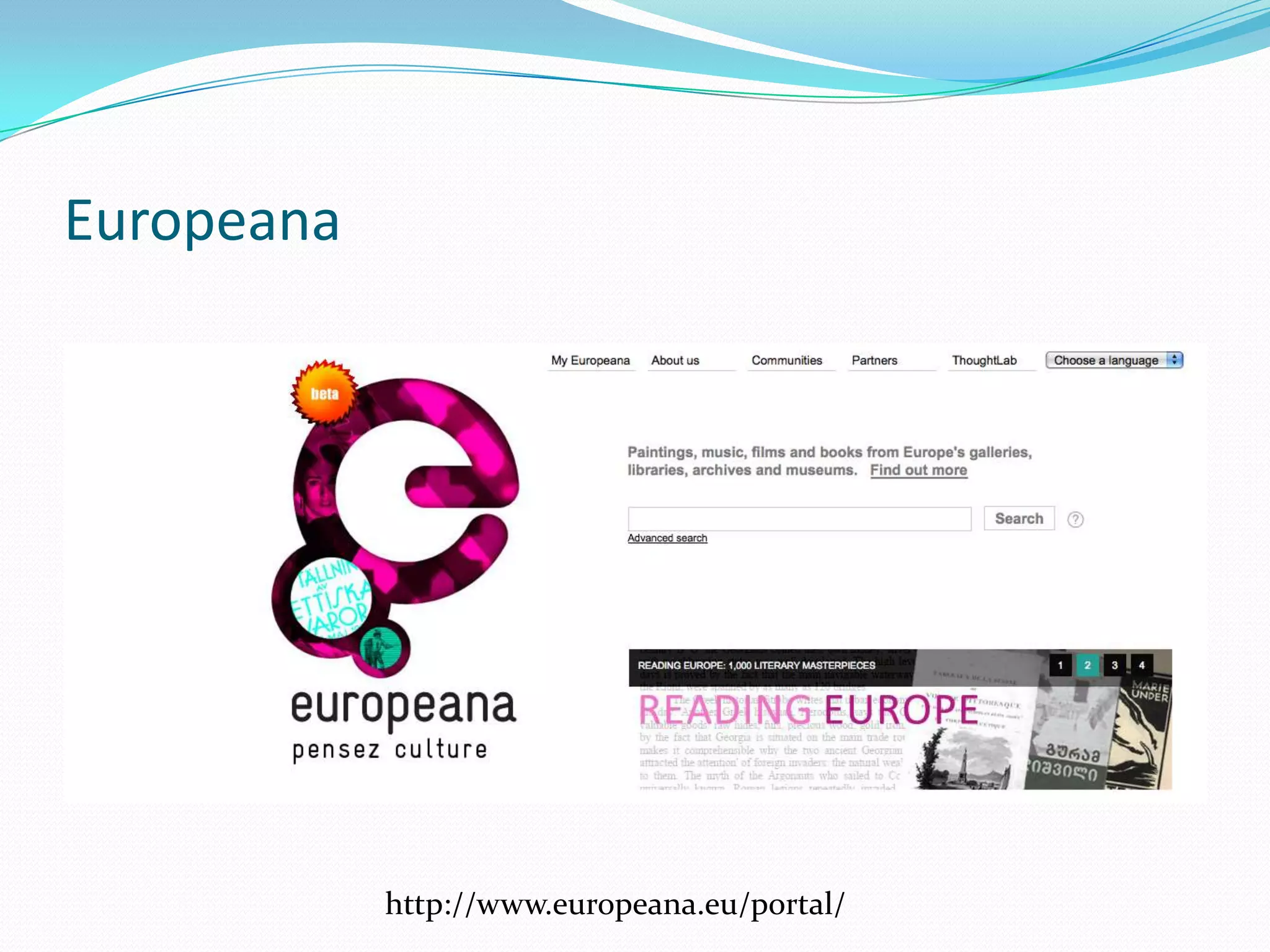
Europeana


            http://www.europeana.eu/portal/
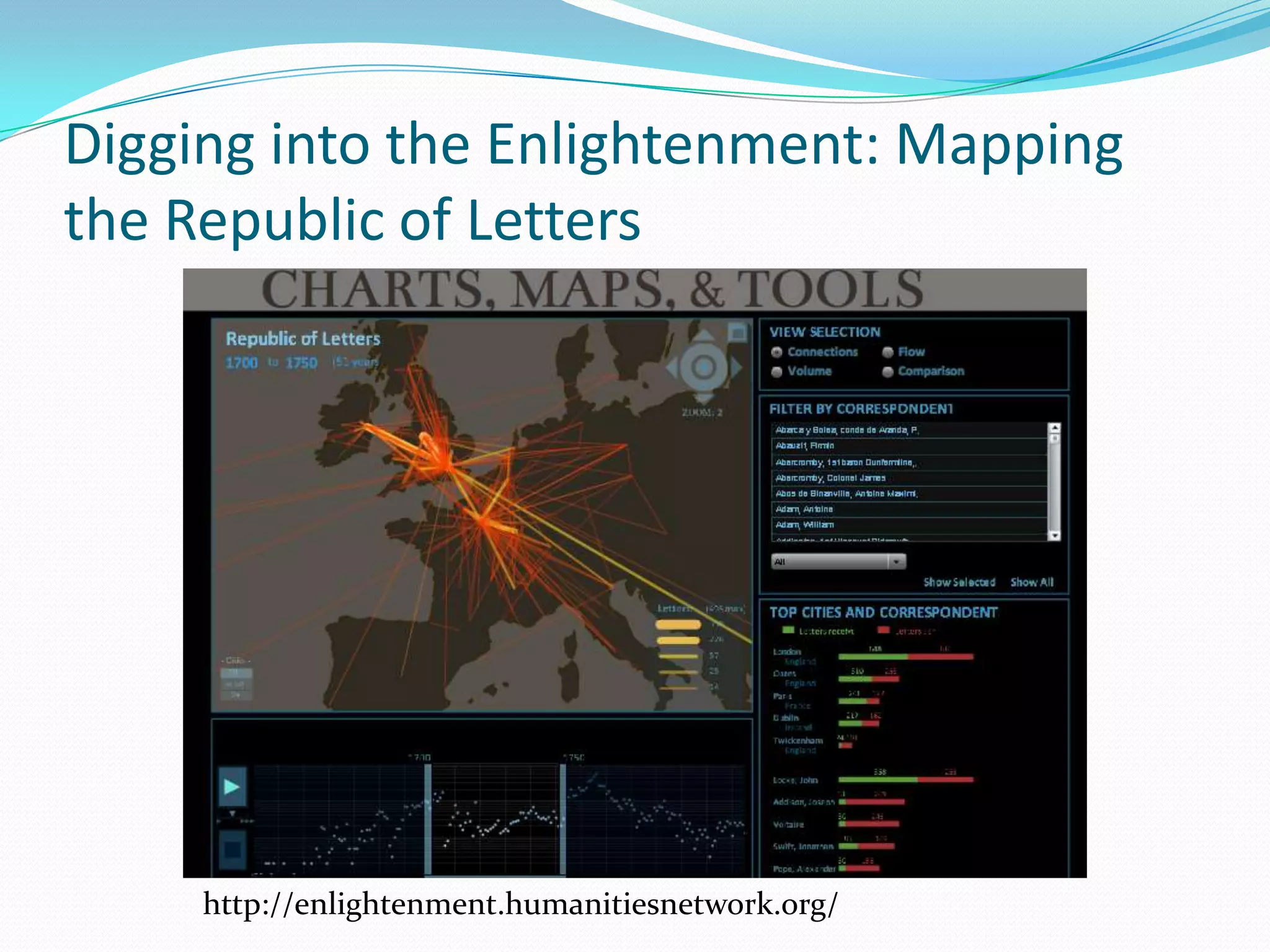
Digging into the Enlightenment: Mapping
the Republic of Letters


     http://enlightenment.humanitiesnetwork.org/
New representations
3-D Visualizations                 Rome Reborn – B. Frischer
                                   http://www.romereborn.virginia.edu
 Use of large data sets
 Institutionally affiliated and
  curated
 Geo-location and 3-D
  visualization
 Implications for research and
  teaching & learning
Digging into Data 2011 Awardee
New representations
www.vectorsjournal.org   USC-based
                          New forms of scholarship
                          Authors supported by multi-
                           media team
New representations
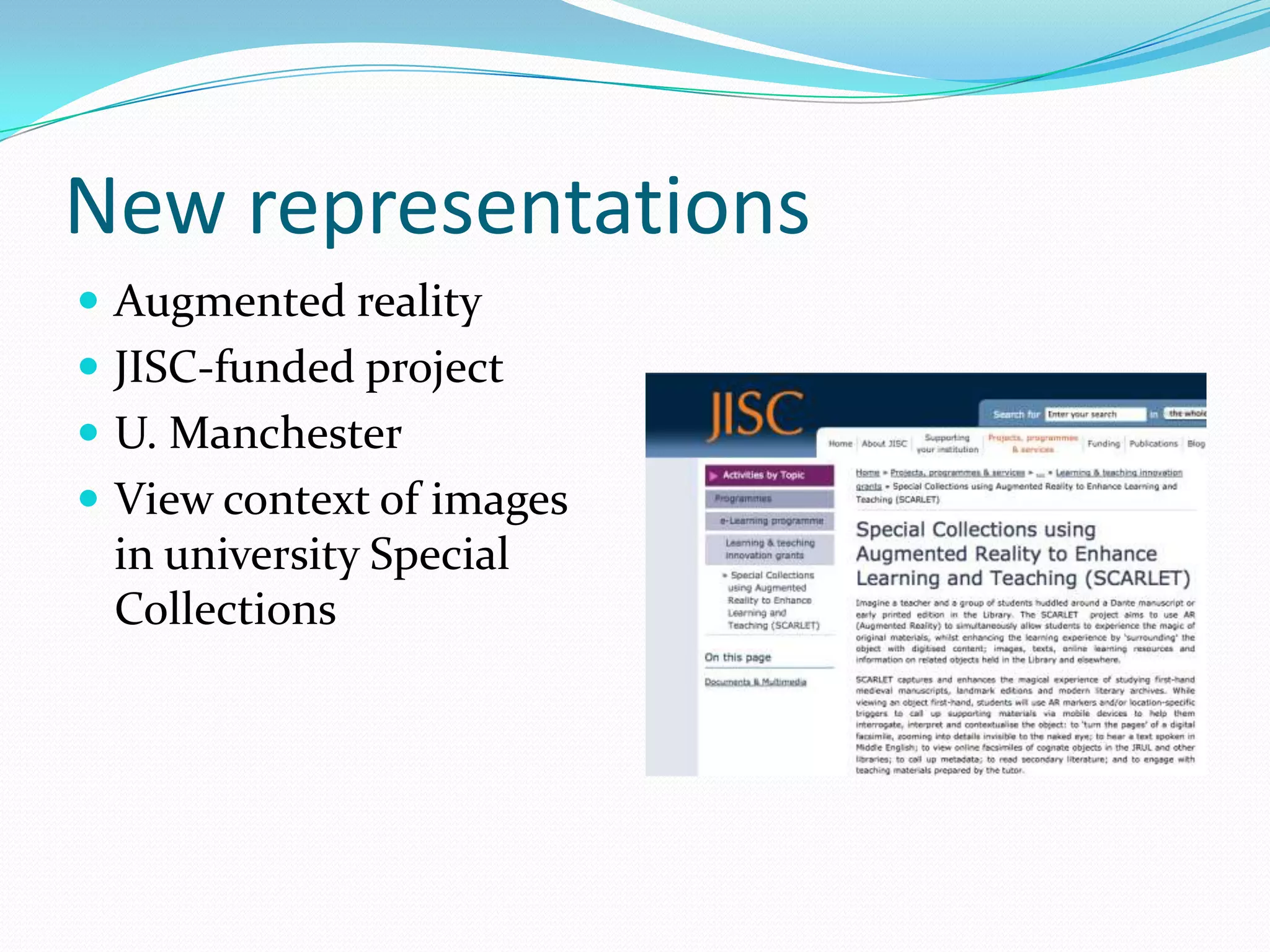
 Augmented reality
 JISC-funded project
 U. Manchester
 View context of images
 in university Special
 Collections
My inspiration: Undergrads create
3-D fly-through of the City of Troy


         http://www.youtube.com/watch?v=E0qOzjT2BSY
New collaborations
 Digital humanities is a collaborative enterprise
   Humanists working with other humanists, including
    grad students
   Humanists working with faculty from other disciplines,
    especially Computer Science
   Humanists working with information professionals
New collaborations
 Funding agencies from
    several countries
   Collaborative projects
   Very large data sets
   New types of research
    questions
   New modes of scholarly
    communication
 http://www.diggingintodata.org
New collaborations
 Project Bamboo
 Multi-institutional
 Researchers, IT, and
  digital library
  professionals
 Infrastructure and tools
New collaborations
 Scholars creating
  community
 Sharing research
  products
 Providing peer review
 Promoting an open
  environment
New partnerships with the
community
http://www.bl.uk/maps/   Help place maps
                          Citizen science model
                          Exposes non-experts to
                           digital source materials
                          Engages them in the process
                           of developing digital libraries
Digital Scholarship Centers
 Relatively new area of focus for libraries
 Specialized services and spaces for faculty and
  graduate students
 High-end hardware and software
 Staff expertise for consultation
 Emphasis on humanities and social sciences
Recently featured at CNI meetings
Brown U. & U. Nebraska   UCLA
Recently featured at CNI meetings
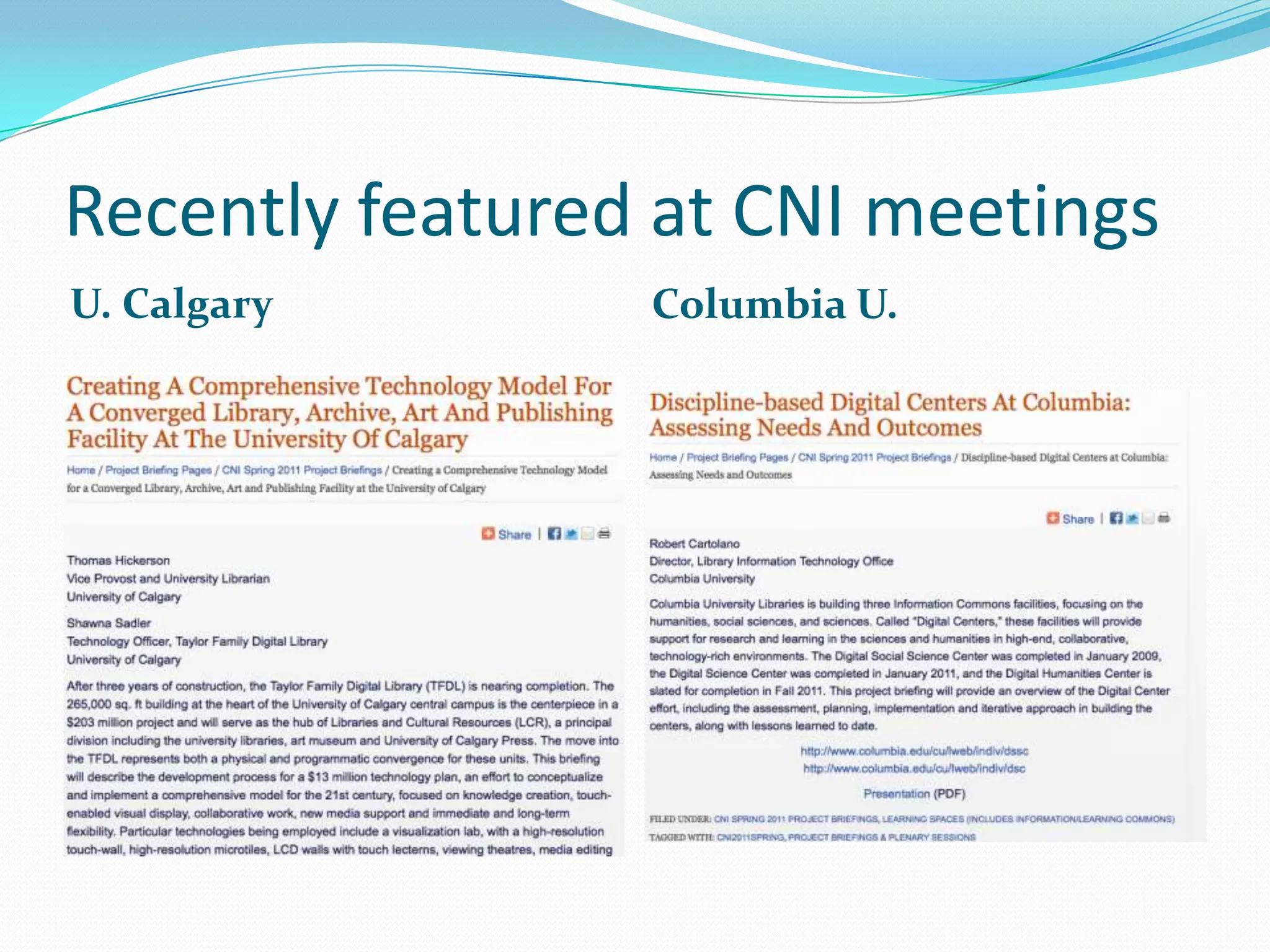
U. Calgary       Columbia U.
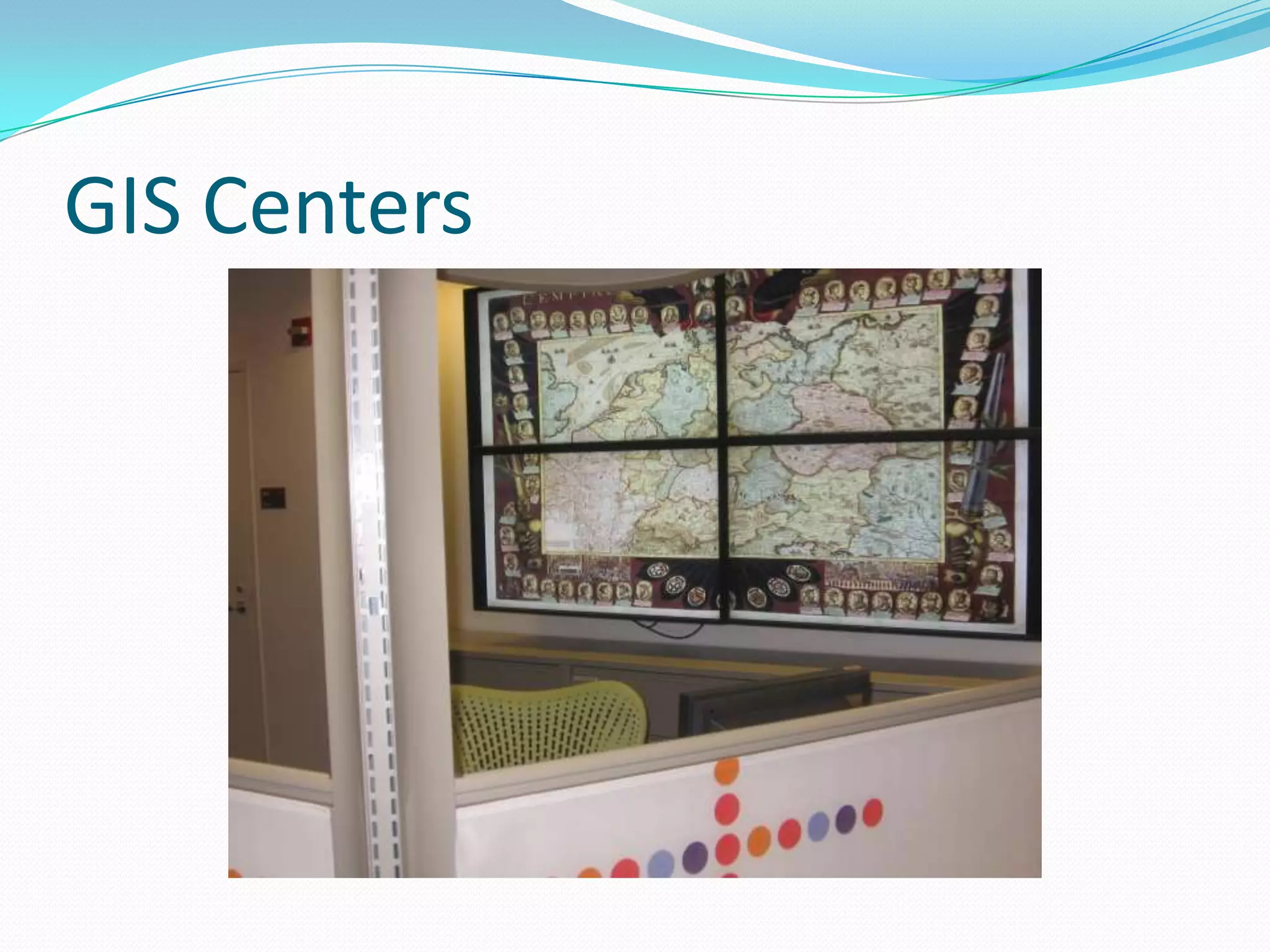
Visualization centers
GIS Centers
Involving students in data-intensive
work
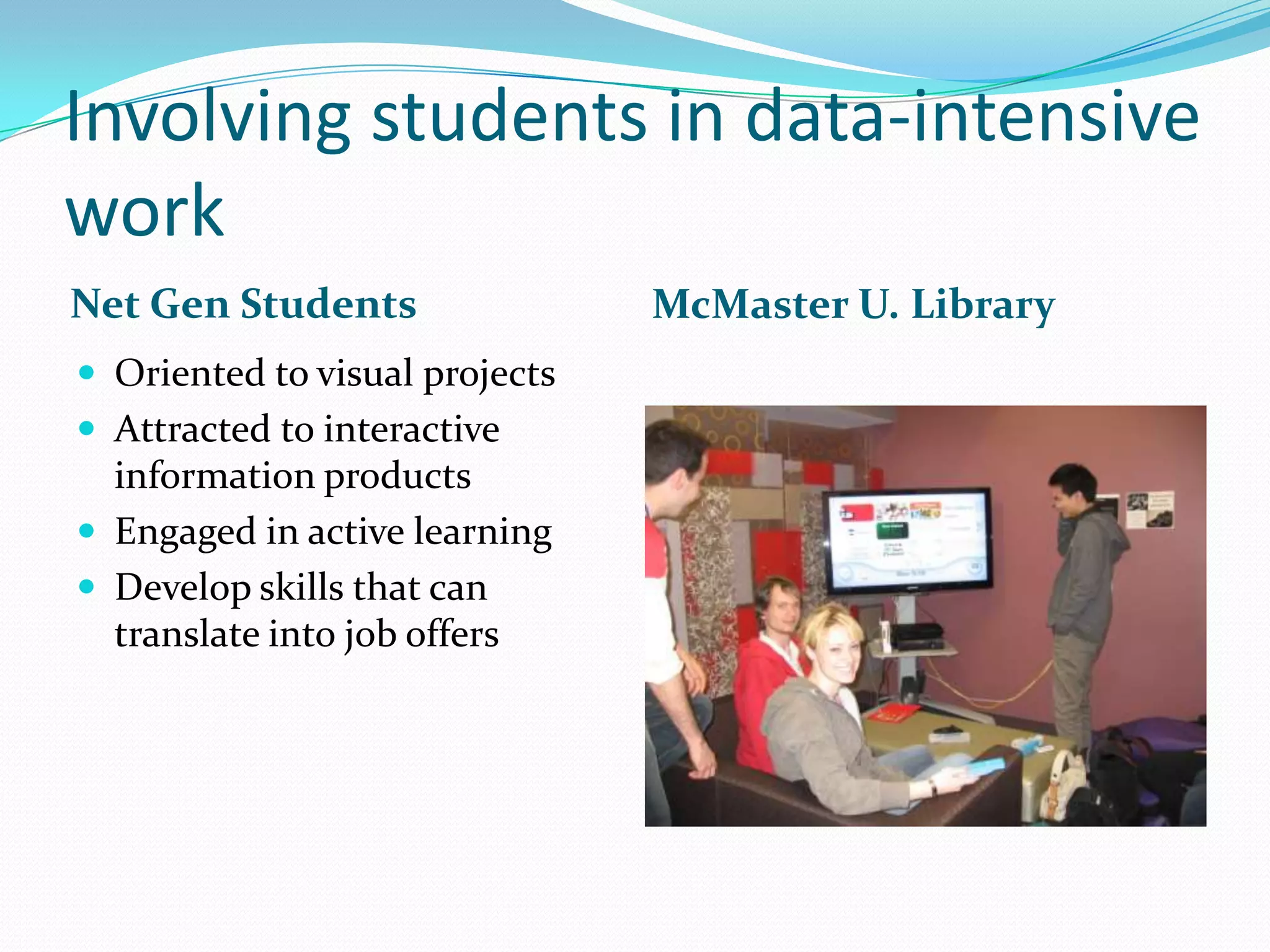
Net Gen Students                McMaster U. Library
 Oriented to visual projects
 Attracted to interactive
  information products
 Engaged in active learning
 Develop skills that can
  translate into job offers
Assignments to involve students –
citizen science
My current work
 Intersection of interests
    Graduate students
    ETDs
    Digital humanities
    Learning spaces
 Understand current models of digital scholarship
  centers services
 Identify good practice
 Initial interviews – faculty and librarians
How do Digital Scholarship Centers
support graduate work?
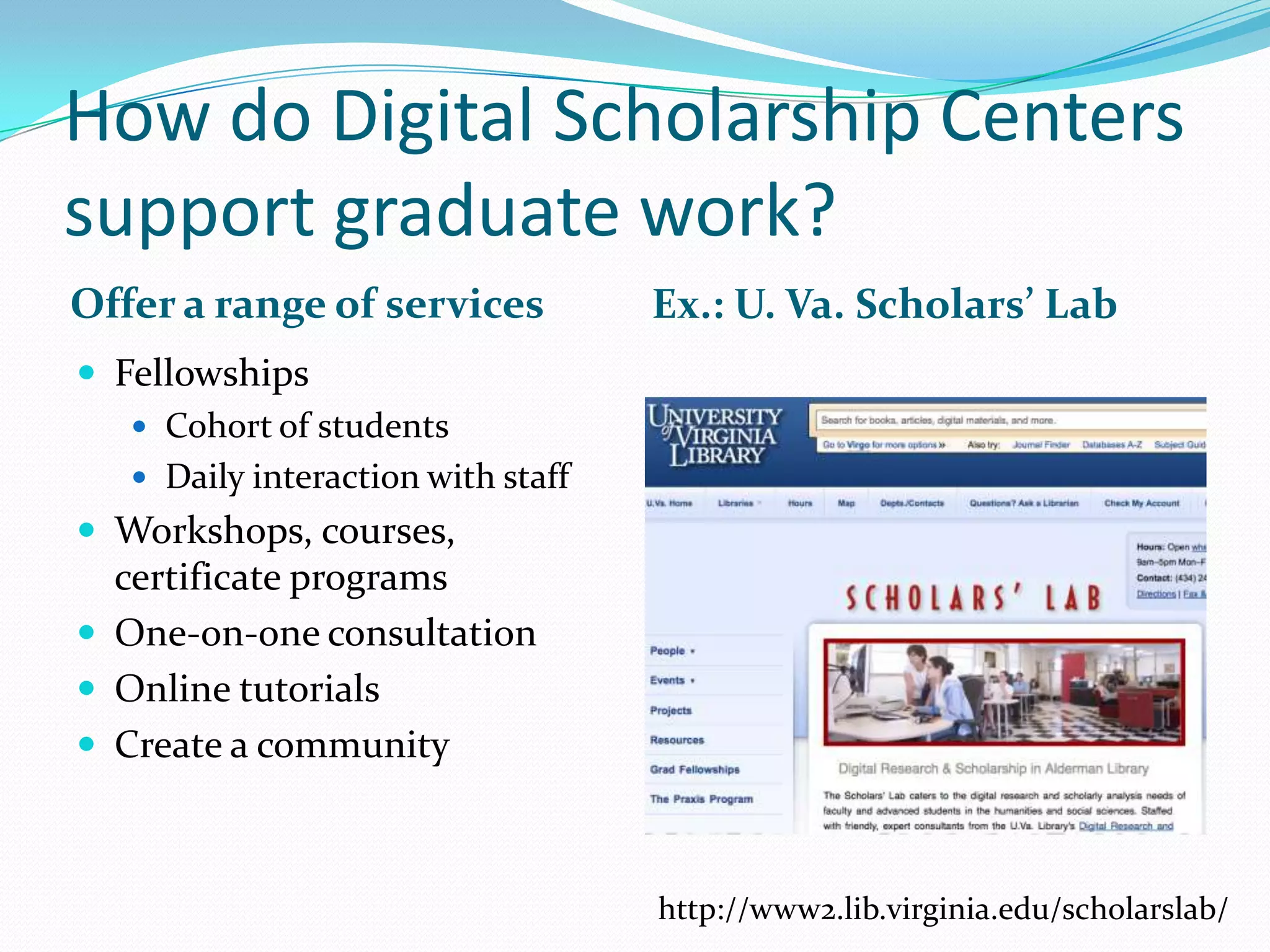
Offer a range of services           Ex.: U. Va. Scholars’ Lab
 Fellowships
    Cohort of students
    Daily interaction with staff
 Workshops, courses,
  certificate programs
 One-on-one consultation
 Online tutorials
 Create a community


                                    http://www2.lib.virginia.edu/scholarslab/
What skills do students need?
A variety of views                   U. North Texas
 Ability to ask new types of
    questions and link to
    technologies
   Project management skills
   Understand how computer
    systems work
   Database structure
   A range of literacies
   [Digital preservation]
   [Intellectual property issues]
What are the challenges?
 Articulating and promoting the goals and services of
  centers
 Providing staff with appropriate skills
 Developing scalable projects and services
 Developing a sustainable funding model
What are the challenges?
 Acceptance of new forms
 of scholarship by
 academic departments
 and disciplinary societies
What are the challenges?
 Promoting information professionals’ skills to faculty
 Engaging in genuine collaboration (faculty, student,
 information professional)
Thank you!
Contact:
Joan Lippincott
joan@cni.org
http://www.cni.org/
about-
cni/staff/joan-k-
lippincott/

Photos are my own


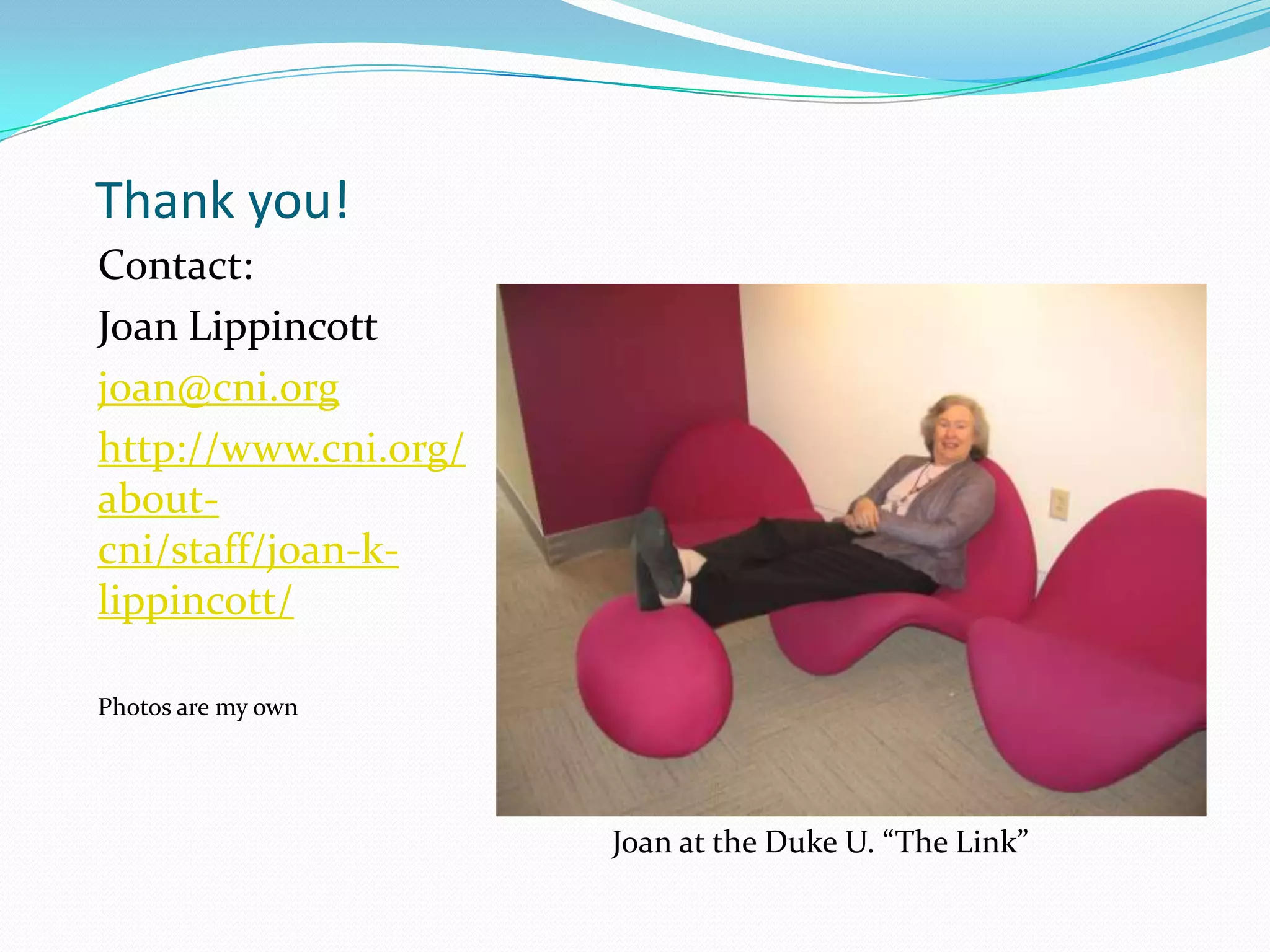
                      Joan at the Duke U. “The Link”

Columbia.lippincott.2012

  • 1.
    Joan K. Lippincott,Coalition for Networked Information Columbia University February 21,2012
  • 2.
    Coalition for Networked Information(CNI)  Joint program of ARL and EDUCAUSE  Founded in 1990 to bridge library and IT communities in the Internet environment  Focus on scholarship, teaching & learning  Program areas:  Content  Individuals, Professions, Teaching & Learning  Technology  www.cni.org
  • 3.
    Why E-Research? E-Science E-Social Sciences
  • 4.
    Why Digital Humanities? ACLSReport HATHI Trust
  • 5.
    E-Research – NewQuestions  Technologies enable:  Bringing together dispersed resources  Combining resources in new ways  Data-mining of very large collections of resources  Linking resources and geographical places  Visualizing information in new ways  A personal story
  • 6.
    Large data setsin sciences lead to new discoveries
  • 7.
    New information frommany combined datasets provides new insights http://www.slavevoyages.org/tast/index.f Trans-Atlantic Slave Trade aces Database  Earlier datasets focused on slave trade in one city or of one ship  Patterns emerged when data was combined  Visual representations assisted in discerning patterns
  • 8.
    Manuscripts from different locations http://romandelarose.org/#home
  • 9.
  • 10.
  • 11.
    My story: Undergraduatescholarship – traditional style
  • 12.
  • 13.
    Europeana http://www.europeana.eu/portal/
  • 14.
    Digging into theEnlightenment: Mapping the Republic of Letters http://enlightenment.humanitiesnetwork.org/
  • 15.
    New representations 3-D Visualizations Rome Reborn – B. Frischer http://www.romereborn.virginia.edu  Use of large data sets  Institutionally affiliated and curated  Geo-location and 3-D visualization  Implications for research and teaching & learning
  • 16.
    Digging into Data2011 Awardee
  • 17.
    New representations www.vectorsjournal.org USC-based  New forms of scholarship  Authors supported by multi- media team
  • 18.
    New representations  Augmentedreality  JISC-funded project  U. Manchester  View context of images in university Special Collections
  • 19.
    My inspiration: Undergradscreate 3-D fly-through of the City of Troy http://www.youtube.com/watch?v=E0qOzjT2BSY
  • 20.
    New collaborations  Digitalhumanities is a collaborative enterprise  Humanists working with other humanists, including grad students  Humanists working with faculty from other disciplines, especially Computer Science  Humanists working with information professionals
  • 21.
    New collaborations  Fundingagencies from several countries  Collaborative projects  Very large data sets  New types of research questions  New modes of scholarly communication  http://www.diggingintodata.org
  • 22.
    New collaborations  ProjectBamboo  Multi-institutional  Researchers, IT, and digital library professionals  Infrastructure and tools
  • 23.
    New collaborations  Scholarscreating community  Sharing research products  Providing peer review  Promoting an open environment
  • 24.
    New partnerships withthe community http://www.bl.uk/maps/ Help place maps  Citizen science model  Exposes non-experts to digital source materials  Engages them in the process of developing digital libraries
  • 25.
    Digital Scholarship Centers Relatively new area of focus for libraries  Specialized services and spaces for faculty and graduate students  High-end hardware and software  Staff expertise for consultation  Emphasis on humanities and social sciences
  • 26.
    Recently featured atCNI meetings Brown U. & U. Nebraska UCLA
  • 27.
    Recently featured atCNI meetings U. Calgary Columbia U.
  • 28.
  • 29.
  • 30.
    Involving students indata-intensive work Net Gen Students McMaster U. Library  Oriented to visual projects  Attracted to interactive information products  Engaged in active learning  Develop skills that can translate into job offers
  • 31.
    Assignments to involvestudents – citizen science
  • 32.
    My current work Intersection of interests  Graduate students  ETDs  Digital humanities  Learning spaces  Understand current models of digital scholarship centers services  Identify good practice  Initial interviews – faculty and librarians
  • 33.
    How do DigitalScholarship Centers support graduate work? Offer a range of services Ex.: U. Va. Scholars’ Lab  Fellowships  Cohort of students  Daily interaction with staff  Workshops, courses, certificate programs  One-on-one consultation  Online tutorials  Create a community http://www2.lib.virginia.edu/scholarslab/
  • 34.
    What skills dostudents need? A variety of views U. North Texas  Ability to ask new types of questions and link to technologies  Project management skills  Understand how computer systems work  Database structure  A range of literacies  [Digital preservation]  [Intellectual property issues]
  • 35.
    What are thechallenges?  Articulating and promoting the goals and services of centers  Providing staff with appropriate skills  Developing scalable projects and services  Developing a sustainable funding model
  • 36.
    What are thechallenges?  Acceptance of new forms of scholarship by academic departments and disciplinary societies
  • 37.
    What are thechallenges?  Promoting information professionals’ skills to faculty  Engaging in genuine collaboration (faculty, student, information professional)
  • 38.