The Future of Cataloguing? Future
Cataloguers!
Jenn Riley
Associate Dean, Digital Initiatives, McGill University
jenn.riley@mcgill.ca
@jenlrile
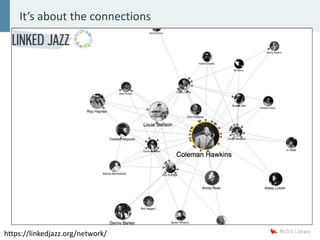
It’s about the connections
https://linkedjazz.org/network/
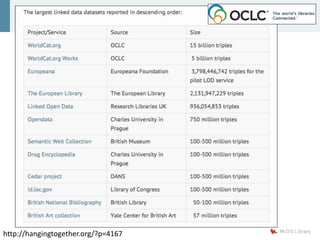
http://hangingtogether.org/?p=4167
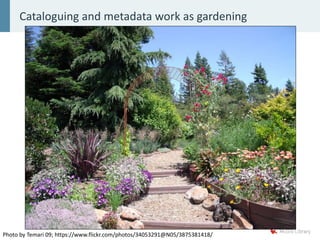
Cataloguing and metadata work as gardening
Photo by Temari 09; https://www.flickr.com/photos/34053291@N05/3875381418/
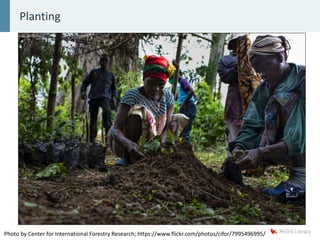
Planting
Photo by Center for International Forestry Research; https://www.flickr.com/photos/cifor/7995496995/
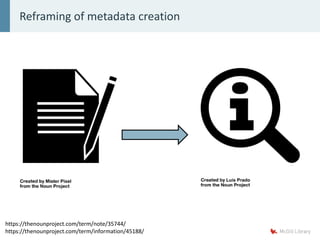
Reframing of metadata creation
https://thenounproject.com/term/note/35744/
https://thenounproject.com/term/information/45188/
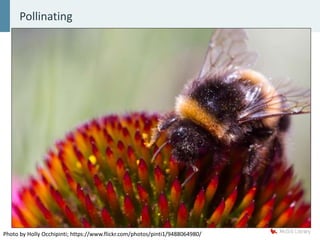
Pollinating
Photo by Holly Occhipinti; https://www.flickr.com/photos/pinti1/9488064980/
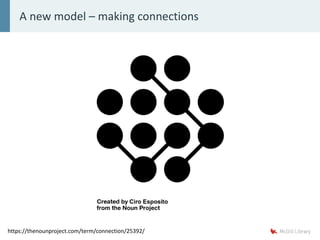
A new model – making connections
https://thenounproject.com/term/connection/25392/
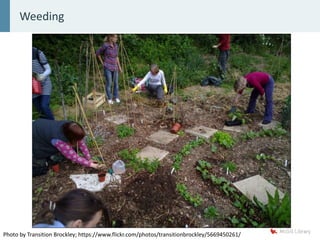
Weeding
Photo by Transition Brockley; https://www.flickr.com/photos/transitionbrockley/5669450261/
Keep it growing
https://thenounproject.com/term/community-
garden/6396/https://thenounproject.com/term/construction/
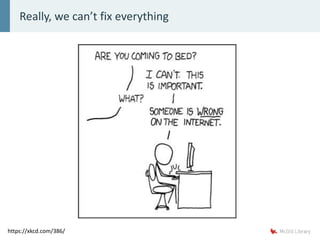
Really, we can’t fix everything
https://xkcd.com/386/
 For facts and for meaning
 Domain experts and enthusiasts know more than we do
 And have more resources to devote to understanding of specific resources
 Our value is in connections and curation
 And facilitating new knowledge by others
 We don’t “own” the information ecosystem
 We must do what it takes to scale up to current and future
volumes of data
We will be increasingly reliant on others
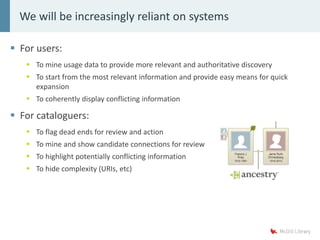
 For users:
 To mine usage data to provide more relevant and authoritative discovery
 To start from the most relevant information and provide easy means for quick
expansion
 To coherently display conflicting information
 For cataloguers:
 To flag dead ends for review and action
 To mine and show candidate connections for review
 To highlight potentially conflicting information
 To hide complexity (URIs, etc)
We will be increasingly reliant on systems
 The data and systems are all in the cloud
 Library-based discovery less important but likely still around for a
while
 Several ways systems can navigate the graph
 Crawling
 Dereferencing
 Query federation
 (See http://linkeddatabook.com/editions/1.0/#htoc84)
So how will Linked Data systems work?
 Creativity
 Judgment
 Quick analysis
 Ability to see patterns
 Good technical instincts
 Trust
What skills are needed in the future for cataloguers?
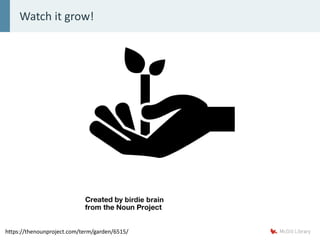
Watch it grow!
https://thenounproject.com/term/garden/6515/
 jenn.riley@mcgill.ca
 @jenlrile
 These presentation slides:
http://www.jennriley.com/presentations/dbt2015/nurnberg.pptx
Vielen dank!

The future of cataloguing? Future cataloguers!

  • 1.
    The Future ofCataloguing? Future Cataloguers! Jenn Riley Associate Dean, Digital Initiatives, McGill University jenn.riley@mcgill.ca @jenlrile
  • 2.
    It’s about theconnections https://linkedjazz.org/network/
  • 3.
  • 4.
    Cataloguing and metadatawork as gardening Photo by Temari 09; https://www.flickr.com/photos/34053291@N05/3875381418/
  • 5.
    Planting Photo by Centerfor International Forestry Research; https://www.flickr.com/photos/cifor/7995496995/
  • 6.
    Reframing of metadatacreation https://thenounproject.com/term/note/35744/ https://thenounproject.com/term/information/45188/
  • 7.
    Pollinating Photo by HollyOcchipinti; https://www.flickr.com/photos/pinti1/9488064980/
  • 8.
    A new model– making connections https://thenounproject.com/term/connection/25392/
  • 9.
    Weeding Photo by TransitionBrockley; https://www.flickr.com/photos/transitionbrockley/5669450261/
  • 10.
  • 11.
    Really, we can’tfix everything https://xkcd.com/386/
  • 12.
     For factsand for meaning  Domain experts and enthusiasts know more than we do  And have more resources to devote to understanding of specific resources  Our value is in connections and curation  And facilitating new knowledge by others  We don’t “own” the information ecosystem  We must do what it takes to scale up to current and future volumes of data We will be increasingly reliant on others
  • 13.
     For users: To mine usage data to provide more relevant and authoritative discovery  To start from the most relevant information and provide easy means for quick expansion  To coherently display conflicting information  For cataloguers:  To flag dead ends for review and action  To mine and show candidate connections for review  To highlight potentially conflicting information  To hide complexity (URIs, etc) We will be increasingly reliant on systems
  • 14.
     The dataand systems are all in the cloud  Library-based discovery less important but likely still around for a while  Several ways systems can navigate the graph  Crawling  Dereferencing  Query federation  (See http://linkeddatabook.com/editions/1.0/#htoc84) So how will Linked Data systems work?
  • 15.
     Creativity  Judgment Quick analysis  Ability to see patterns  Good technical instincts  Trust What skills are needed in the future for cataloguers?
  • 16.
  • 17.
     jenn.riley@mcgill.ca  @jenlrile These presentation slides: http://www.jennriley.com/presentations/dbt2015/nurnberg.pptx Vielen dank!

Editor's Notes

  • #3 Connecting lots of different sources of data Creating new connections Adding value by bringing together This is what the bibliographic universe of the future will look like Not just bibliographic information but everything anyone would want to know Why shouldn’t the library catalogue be an encyclopedia? Graph thinking
  • #4 These are astonishing numbers Need maintenance/caretaking But also a different way of thinking Can’t manually manage Have to let the ecosystem (technology) keep things going, only intervene at key points Be pragmatic, can’t lovingly curate as we did This volume helps us get over Not Invented Here
  • #5 Metadata creation and maintenance as gardening Lots of variety Needs upkeep But never perfect Things are introduced, grow, and die Gardener as an overseer not a creator Sun, soil, rain all occur out of our control – the system does a lot to maintain itself We just poke at it from time to time
  • #6 We will do some metadata creation, however Prepare the soil (design/build systems) Take seeds from elsewhere (do research, create new data – think author research, not necessarily subject analysis) Give them some TLC and get them into the ground They grow, change, interact with the environment and give rise to new things Relationships (Sequel, influenced by, etc)
  • #7 What we imagine is factual info about a new publication coming from the source, so we don’t have to create it And copy cataloguing actually working – not lots of different copies everywhere For rare, unique, archival – research is more important (higher level skill). Context of the resource more important than factual information Finding other sources – more about this in a minute Stop: Transcribing Subject analysis on mainstream works you haven’t read Tweaking records to make them look nice or meet local standards Start: Focusing more on rare/unique material with little information available Filling in gaps where no information exists Getting enough information out there to allow experts to do their job
  • #8 Find data out there Evaluate it Massage it to make connections, make additional connections in the graph Be part of the LD world
  • #9 Change in thinking – not OUR data and THEIRS Not bringing in vs pushing out data You’re creating hybrids Merging things to make new things that others will continue to build on Not “is this good enough” but “how can this be most useful?” You’re enhancing the graph Eg sameAs for both classes and properties Find and connect good sources of topical/analytical data Find good vocabularies and integrate them into library managed and external vocabularies And flagging/processing/marking importance of data for use in library run discovery Poke a bit to make things more machine readable (Eg make a template to parse some data) Cataloguers as part of LD world, not just library world
  • #10 Needs maintenance NOT perfect, though Just keep the ecosystem healthy
  • #11 Stop: Tweaking records for consistency (systems will take care of this) Making local copies of records Complaining about data quality Probably stop: Performing searches for common typos (fewer strings, remember!) Delegate: - Maintaining holdings Do: Research people to determine if they’re the same (don’t call it authority work) Follow up on system or colleague suggested leads Address truly incorrect data, and leave a trail We are NOT the gatekeepers of all good metadata
  • #13 role of expert is changing - And in many ways has not been as strong as we imagine - Think of the bitter disagreements in academia Importance of crowdsourcing MPLP – get it out there Esp rare and unique materials We must give up this idea of libraries as gatekeepers – that’s an outdated model that doesn’t work with info flood A la Kathleen Fitzpatrick Instead rely on in time filters
  • #14 Volume of data makes this necessary For users: Wisdom of the crowd Don’t have to predetermine what they care about For catalogers: Lots of system intelligence suggesting things that need human expertise Don’t have to interact directly with the data model for all thingss
  • #15 Distinction between local and external data minimized or gone No local copies of records that we edit directly To the degree libraries run discovery systems will need design and effective use of data But we can’t write all this intelligence ourselves Will utilize software written elsewhere Patterns: Crawling -> local index (all automated – doesn’t get out of sync easily!) Dereferencing – on the fly go grab a URI to learn about it; can be slow Query federation – complex queries to predetermined data sources This is going to get better
  • #16 Reprofessionalization of cataloging NOT transcribing Soft skills Quick thinking Know what the system can do for you and where it needs help Value others’ expertise