MINISTÉRIO DA ADMINISTRAÇÃO ESTATAL
  INSTITUTO NACIONAL DE GESTAO DE
            CALAMIDADES

An effective early warning system in
    the rural and urban context


                     By: João Ribeiro, General Director
                            INGC- Mozambique


                           Davos, 28th August, 2012
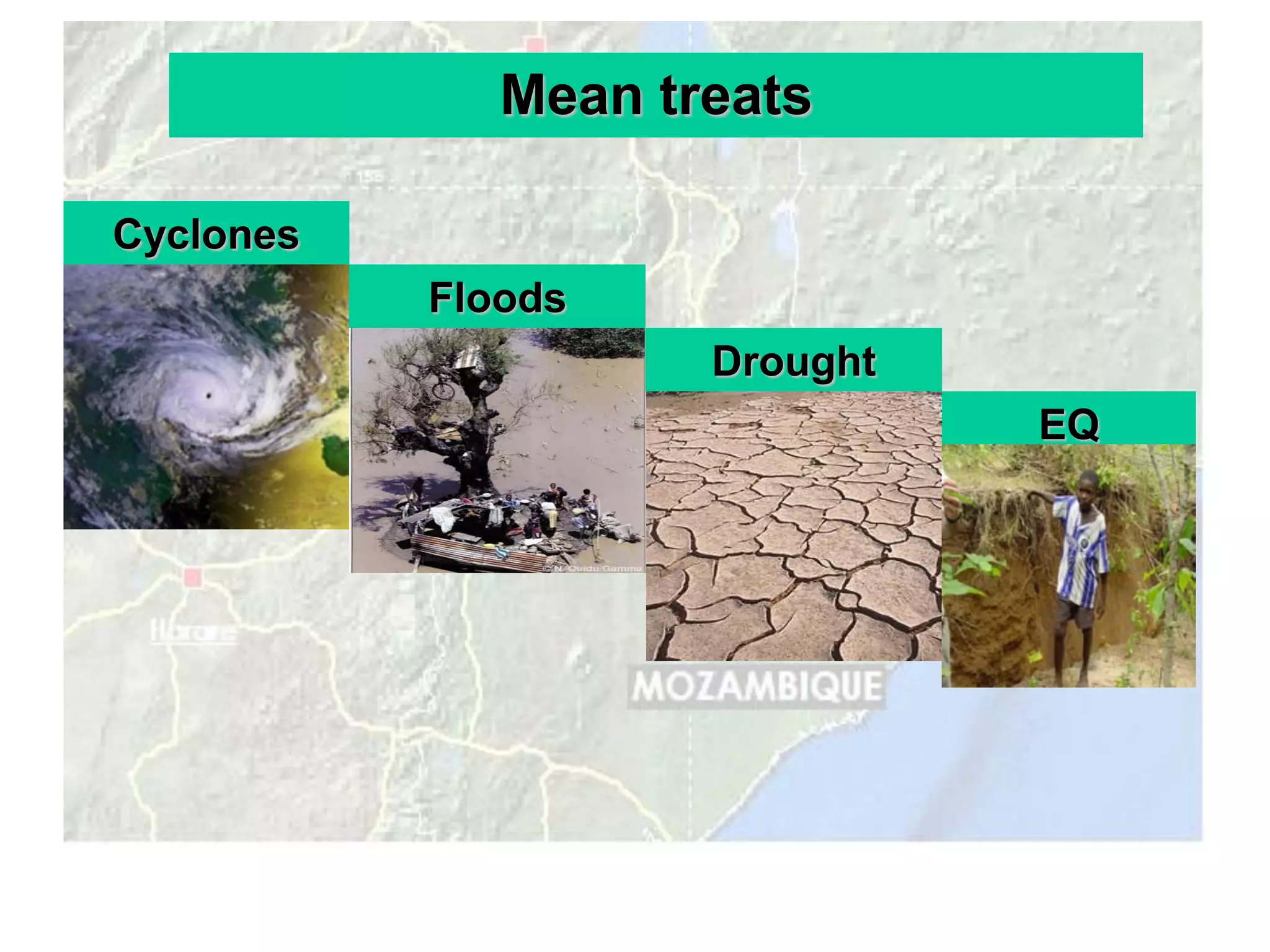
Mean treats

Cyclones
           Floods
                     Drought
                               EQ
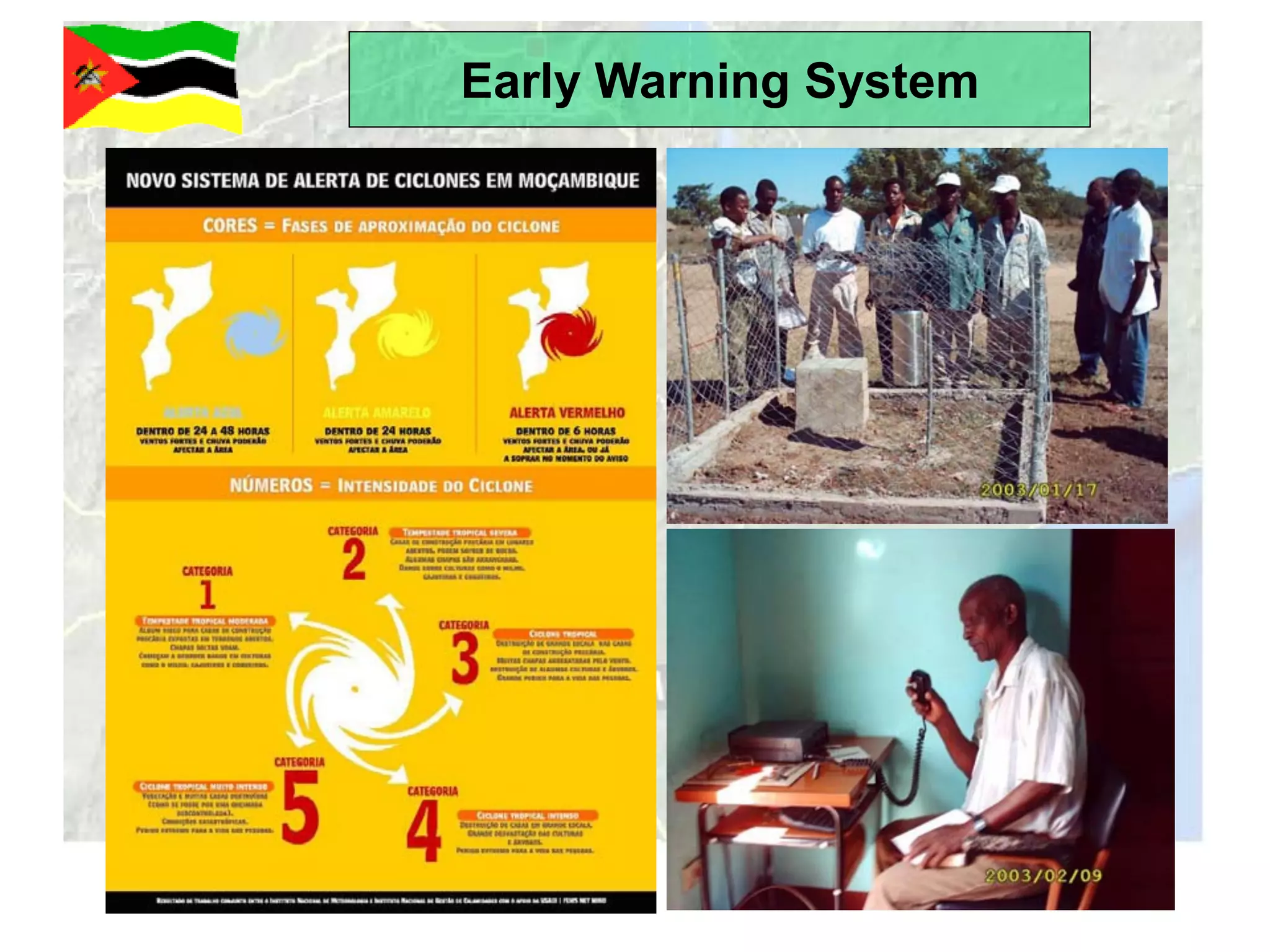
Early Warning System
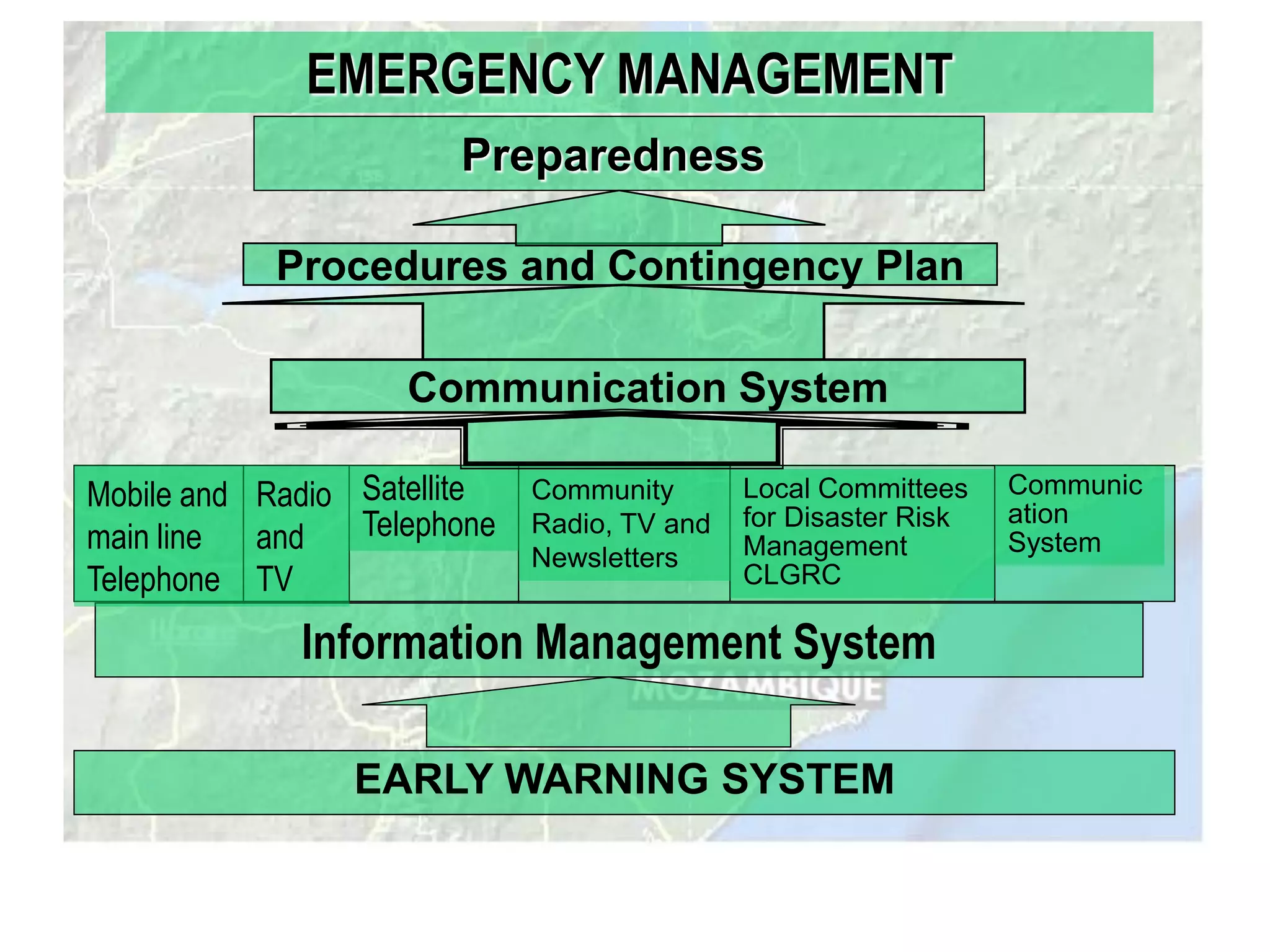
EMERGENCY MANAGEMENT
                       Preparedness

            Procedures and Contingency Plan

                    Communication System

Mobile and Radio Satellite   Community       Local Committees    Communic
                 Telephone   Radio, TV and   for Disaster Risk   ation
main line  and                               Management          System
                             Newsletters
Telephone TV                                 CLGRC

             Information Management System

                EARLY WARNING SYSTEM
The Mandate of INGC

• Coordination authority of emergency actions;

• Coordination authority of development of arid
  and semi-arid zones;

• Coordination authority for         prevention   and
  mitigation of natural disasters;

• Coordination authority for reconstruction after
  disasters .
Local Committees for Disaster Risk
          Management (CLGRC)

The CLGRC is a group of 15 to 18 volunteer people
  from the same location, village, city or school,
  who are dedicate to prevention mitigation and
  response activities for disasters that are treating
  its own community.

The CLGRC main mission is to lead the local
  community to develop prevention, mitigation and
  preparedness activities to face any disaster at
  community level.
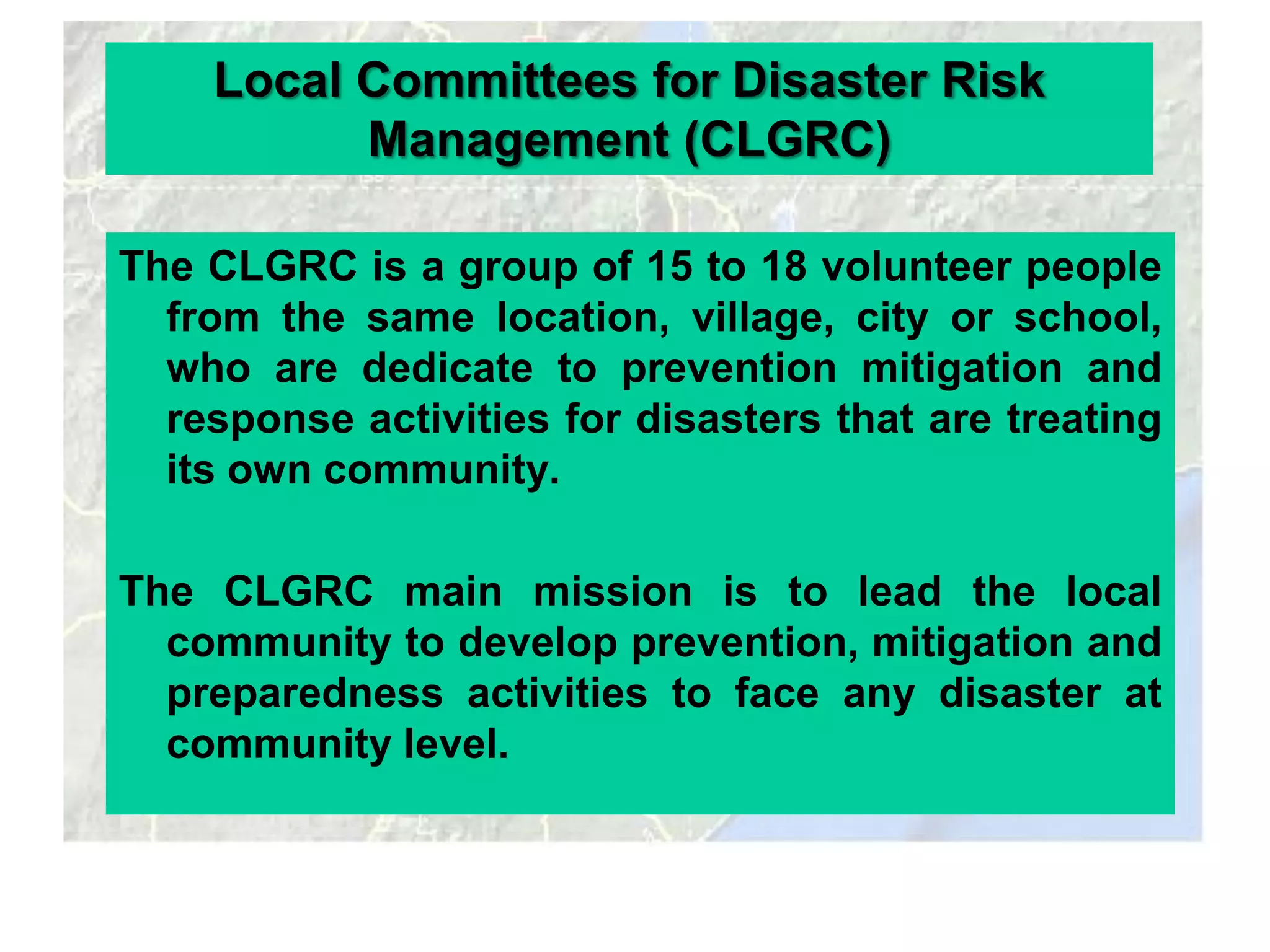
Profile of the Members CLGRC
• Volunteer people who are
ready to work without
remuneration;

• Responsible and very
respectable peoples at
community level;

• Dynamic, creative, motivated
and pro-active peoples with
capacity to make decision and
have vision to develop their own
community.
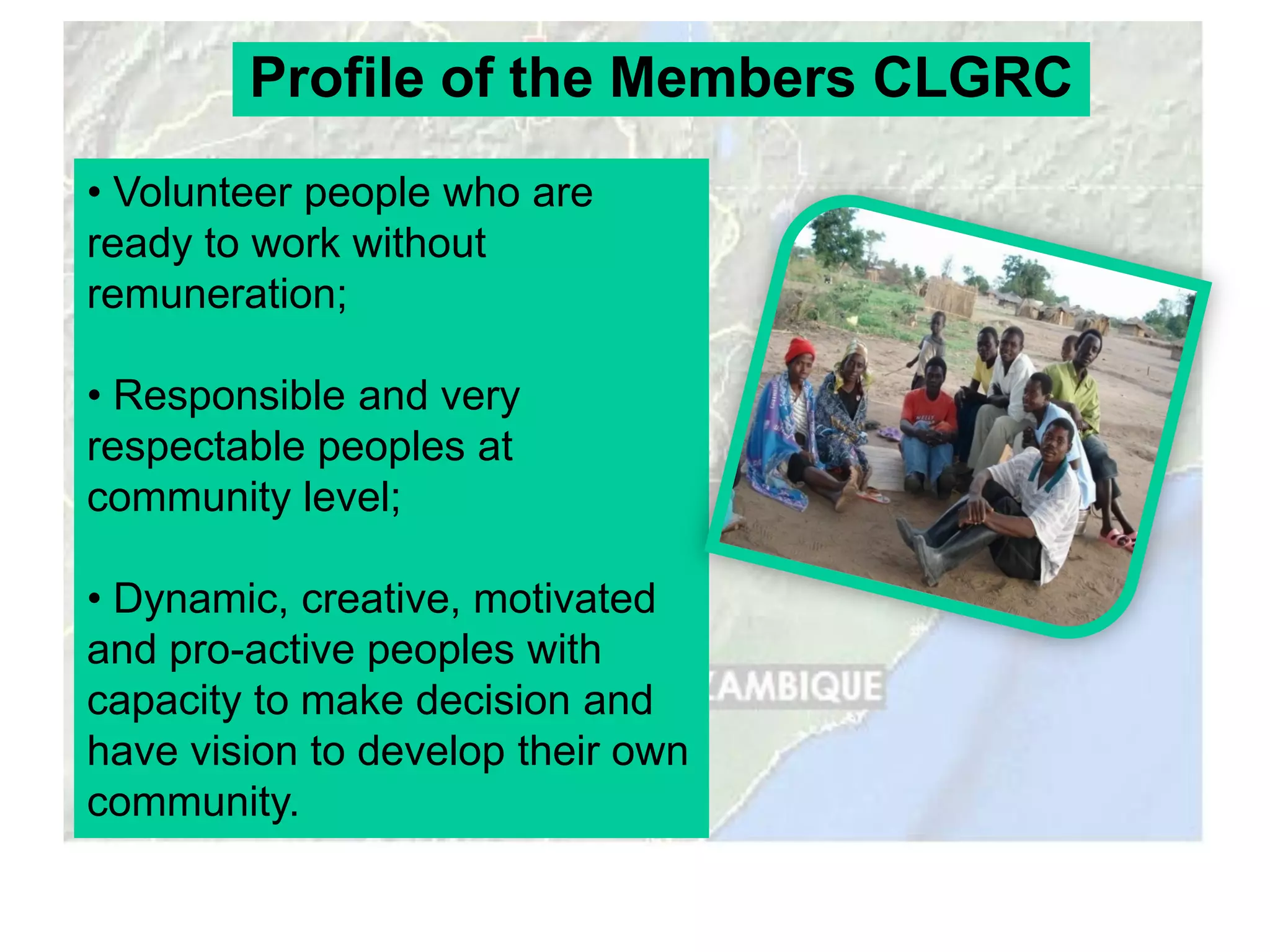
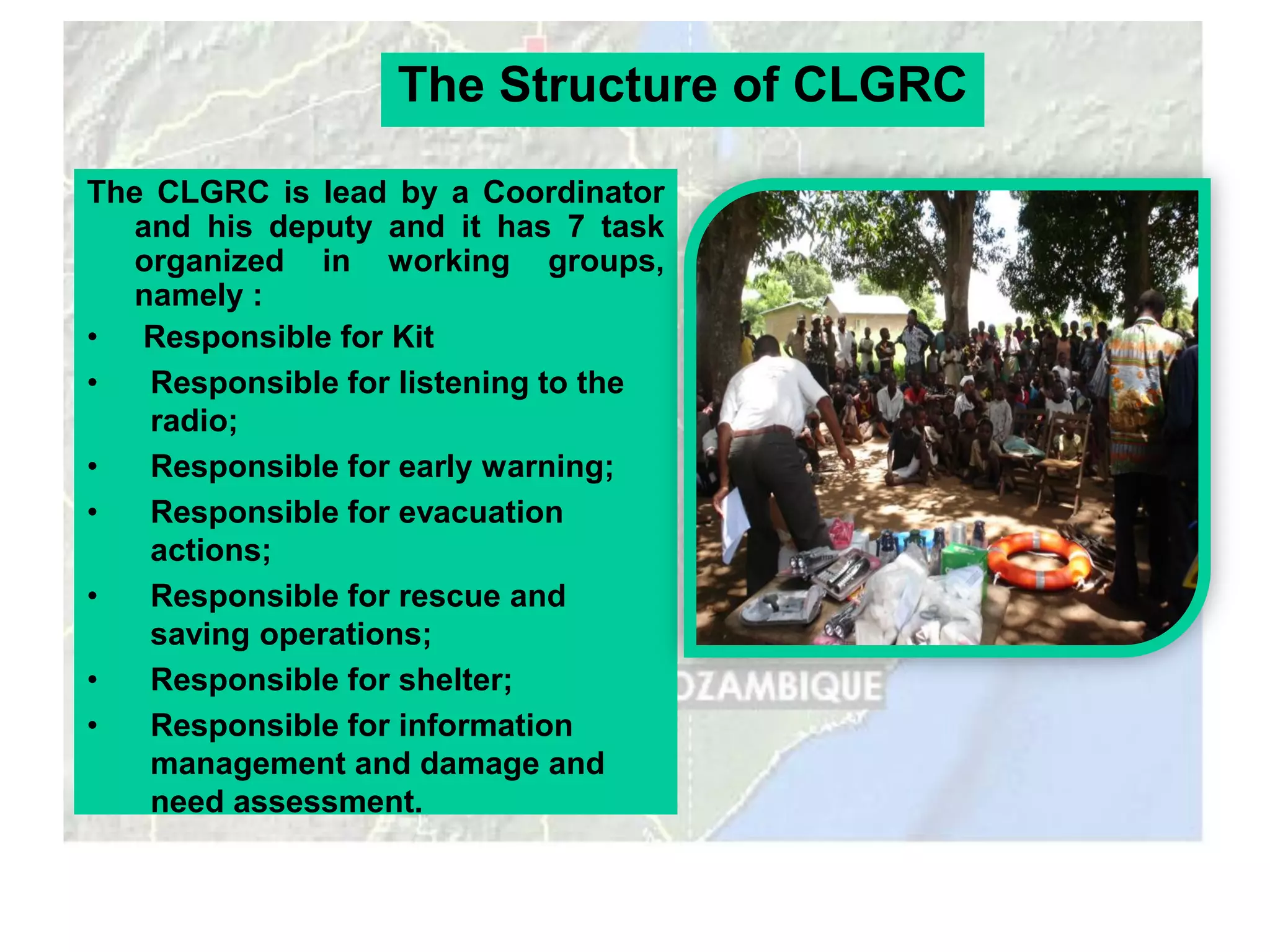
The Structure of CLGRC

The CLGRC is lead by a Coordinator
  and his deputy and it has 7 task
  organized in working groups,
  namely :
• Responsible for Kit
•   Responsible for listening to the
    radio;
•   Responsible for early warning;
•   Responsible for evacuation
    actions;
•   Responsible for rescue and
    saving operations;
•   Responsible for shelter;
•   Responsible for information
    management and damage and
    need assessment.
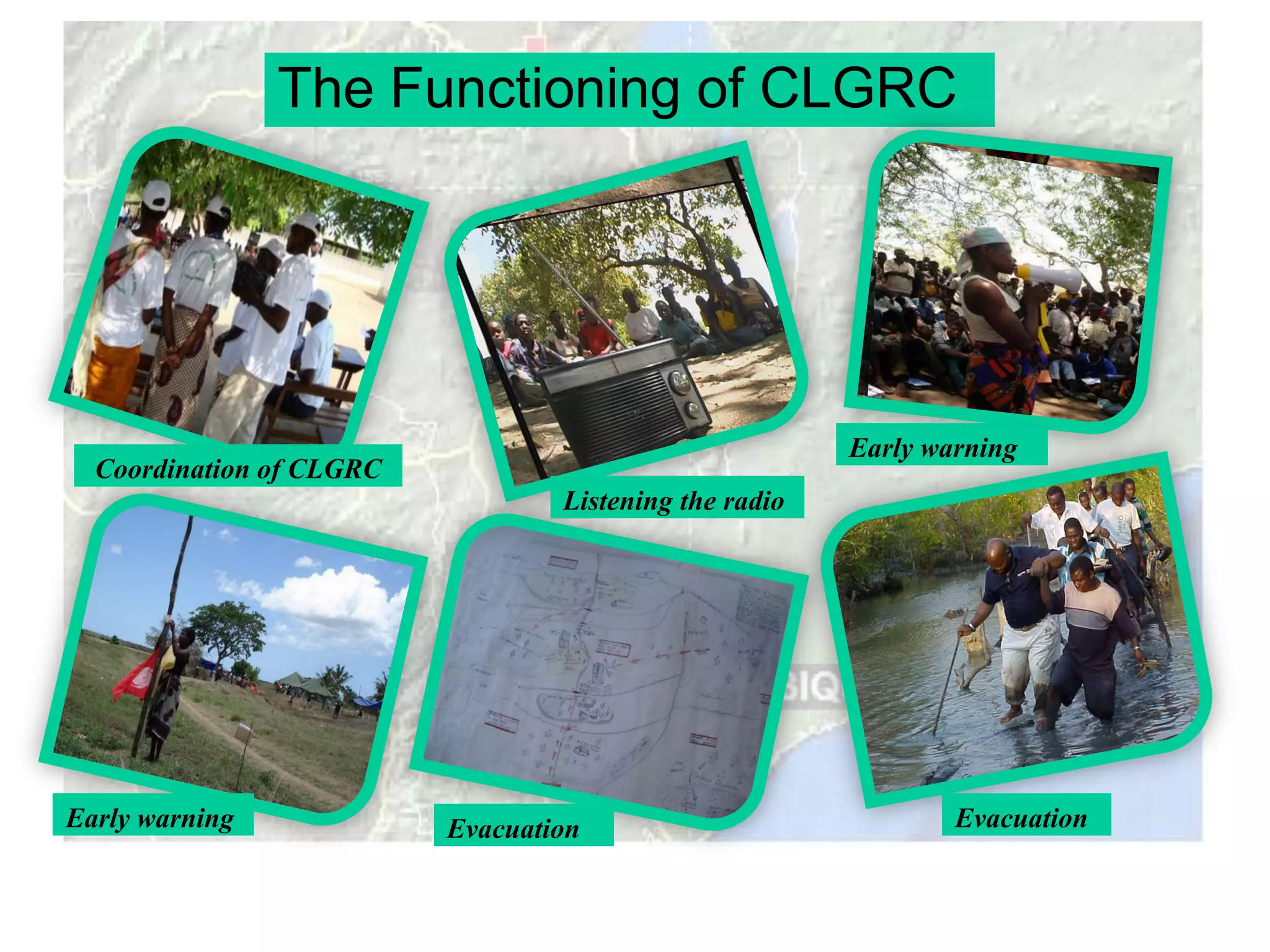
The Functioning of CLGRC


                                                        Early warning
  Coordination of CLGRC
                                  Listening the radio


Early warning             Evacuation                            Evacuation
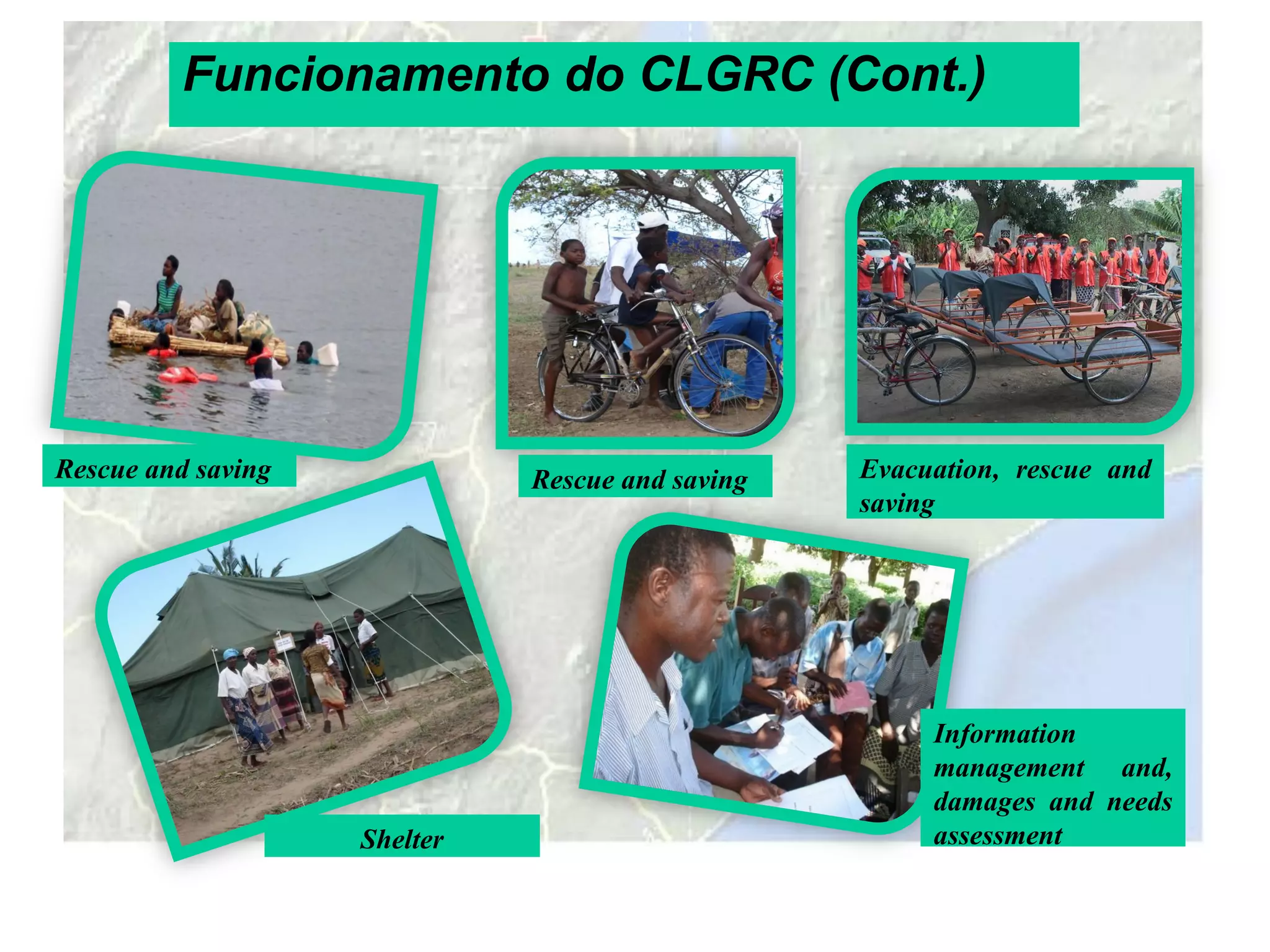
Funcionamento do CLGRC (Cont.)


Rescue and saving             Rescue and saving   Evacuation, rescue and
                                                  saving


                                                       Information
                                                       management and,
                                                       damages and needs
                    Shelter                            assessment
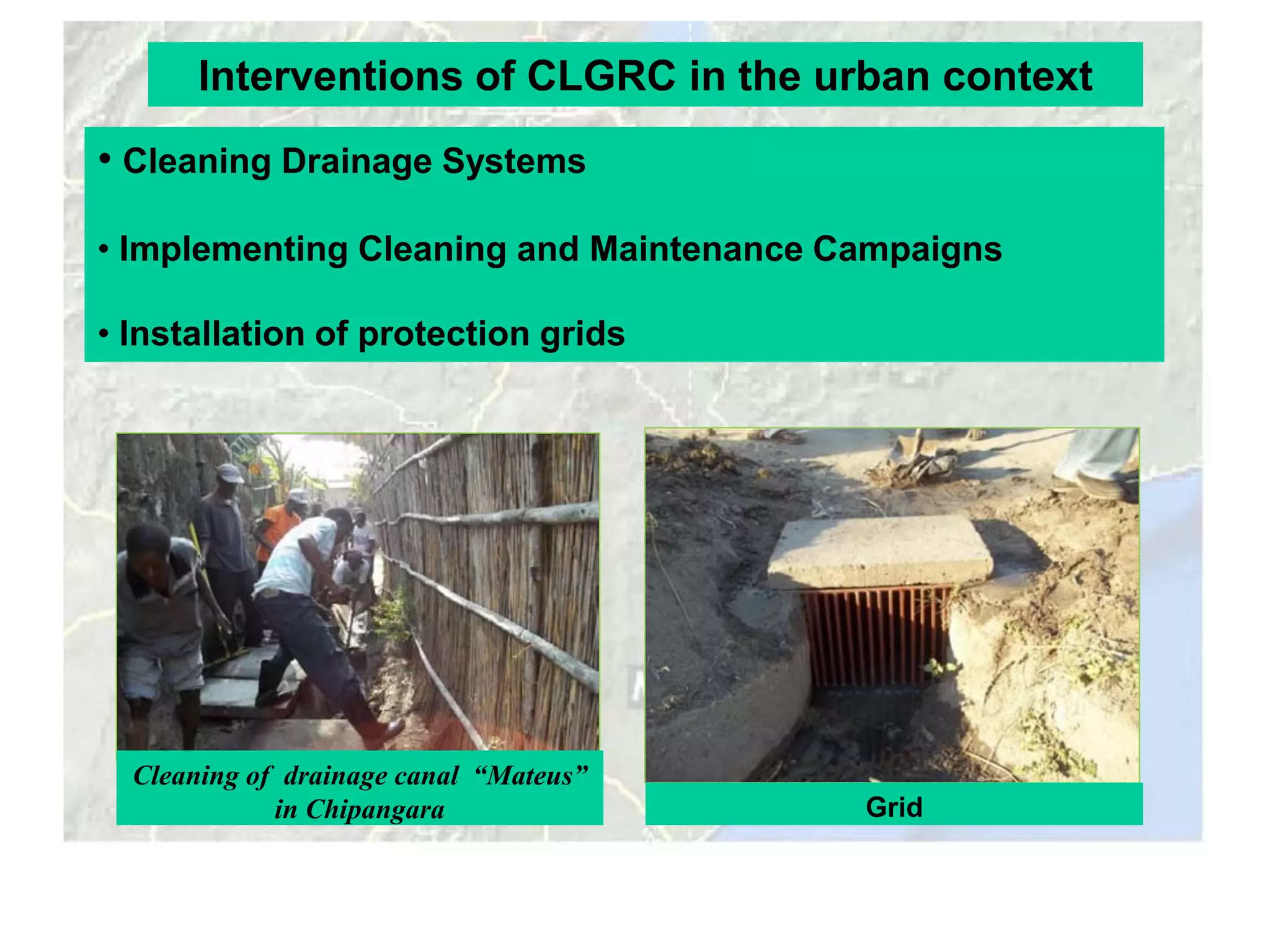
Interventions of CLGRC in the urban context
• Cleaning Drainage Systems

• Implementing Cleaning and Maintenance Campaigns

• Installation of protection grids


  Cleaning of drainage canal “Mateus”
             in Chipangara               Grid
Interventions of CLGRC in the urban context

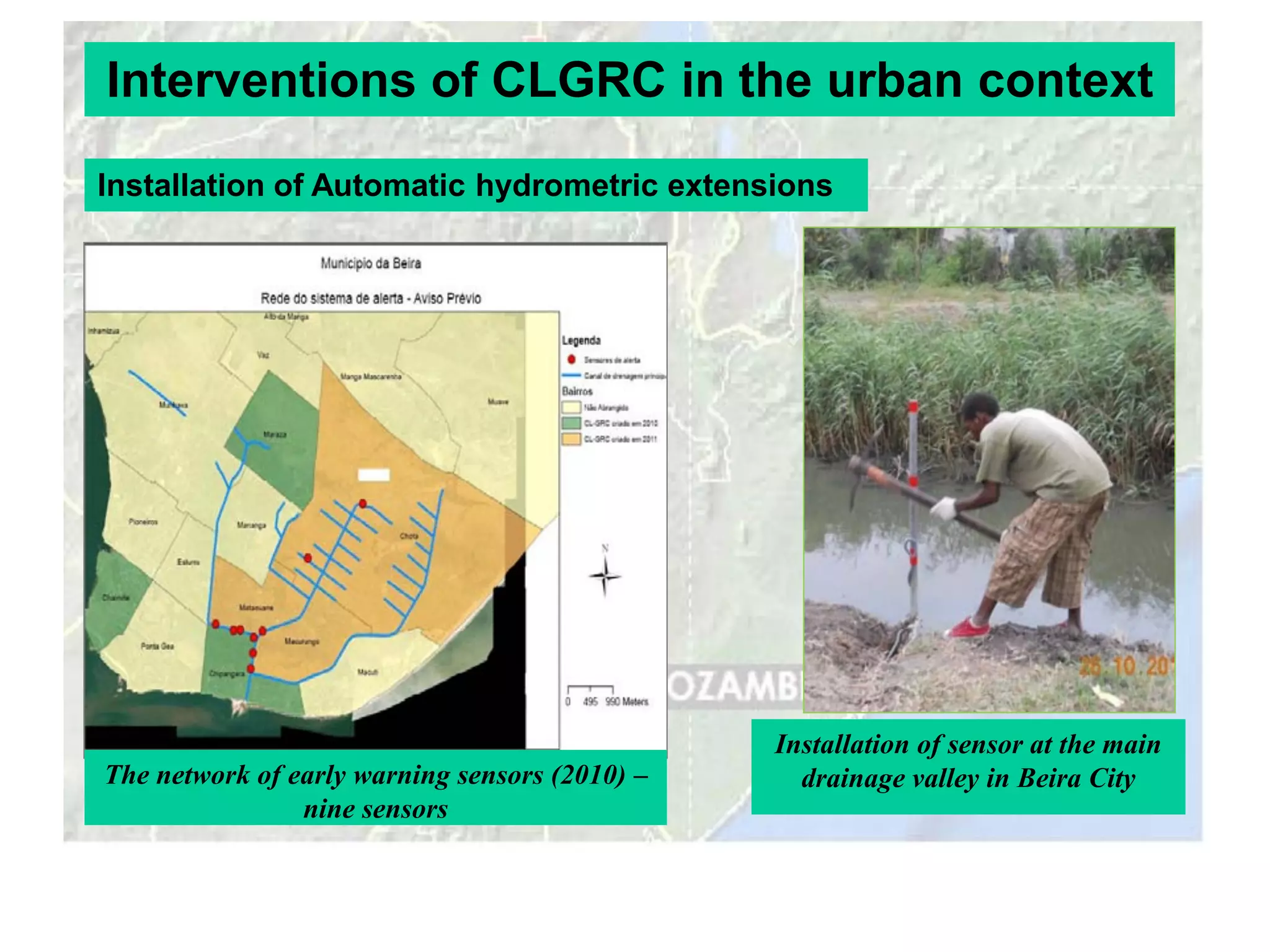
Installation of Automatic hydrometric extensions


                                                Installation of sensor at the main
The network of early warning sensors (2010) –     drainage valley in Beira City
                nine sensors
Interventions of CLGRC in rural and urban contexts
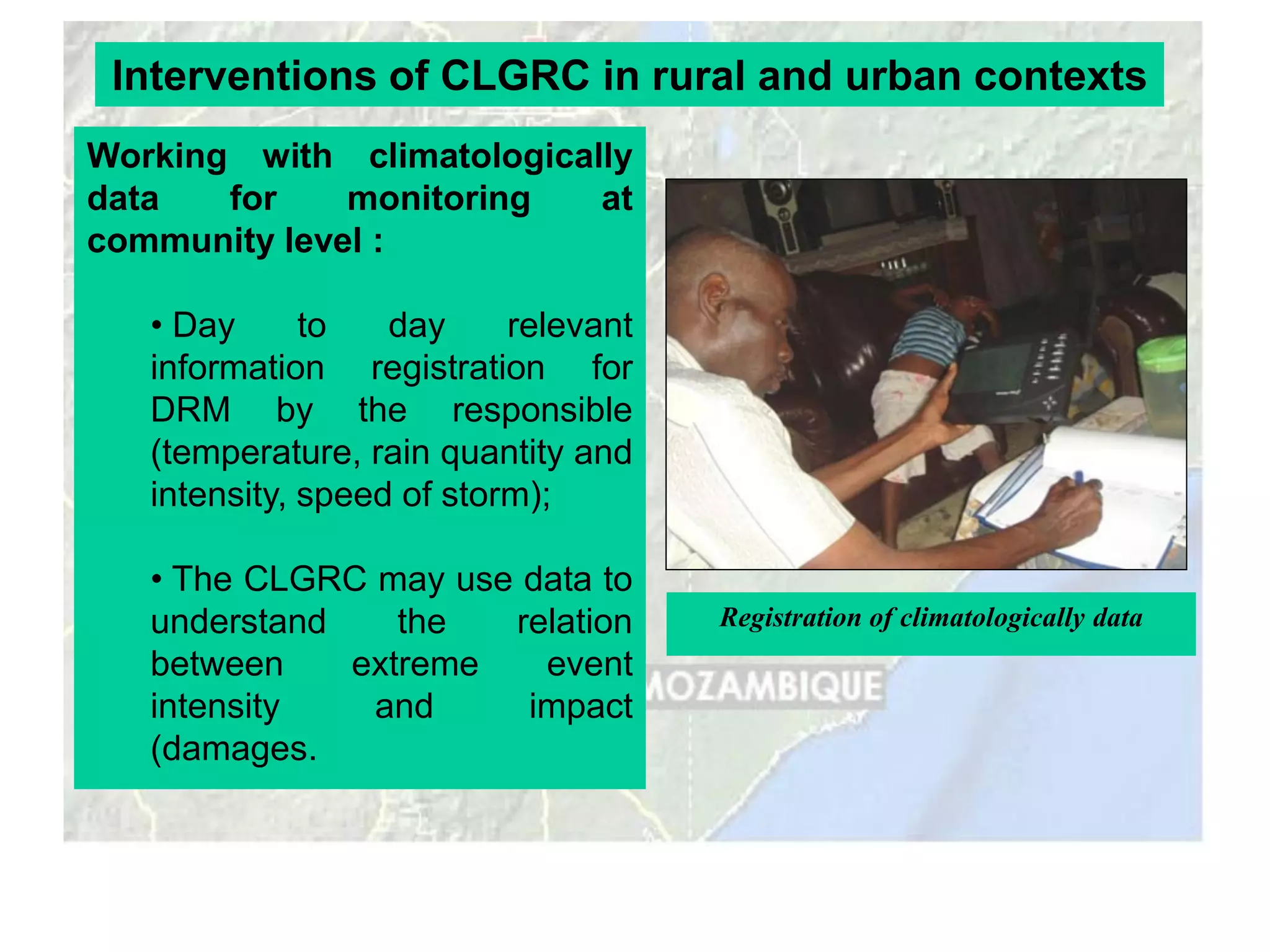
Working with climatologically
data   for    monitoring   at
community level :

   • Day      to   day     relevant
   information registration for
   DRM by the responsible
   (temperature, rain quantity and
   intensity, speed of storm);

   • The CLGRC may use data to
   understand    the  relation        Registration of climatologically data
   between    extreme   event
   intensity   and     impact
   (damages.
Interventions of CLGRC in rural and urban contexts

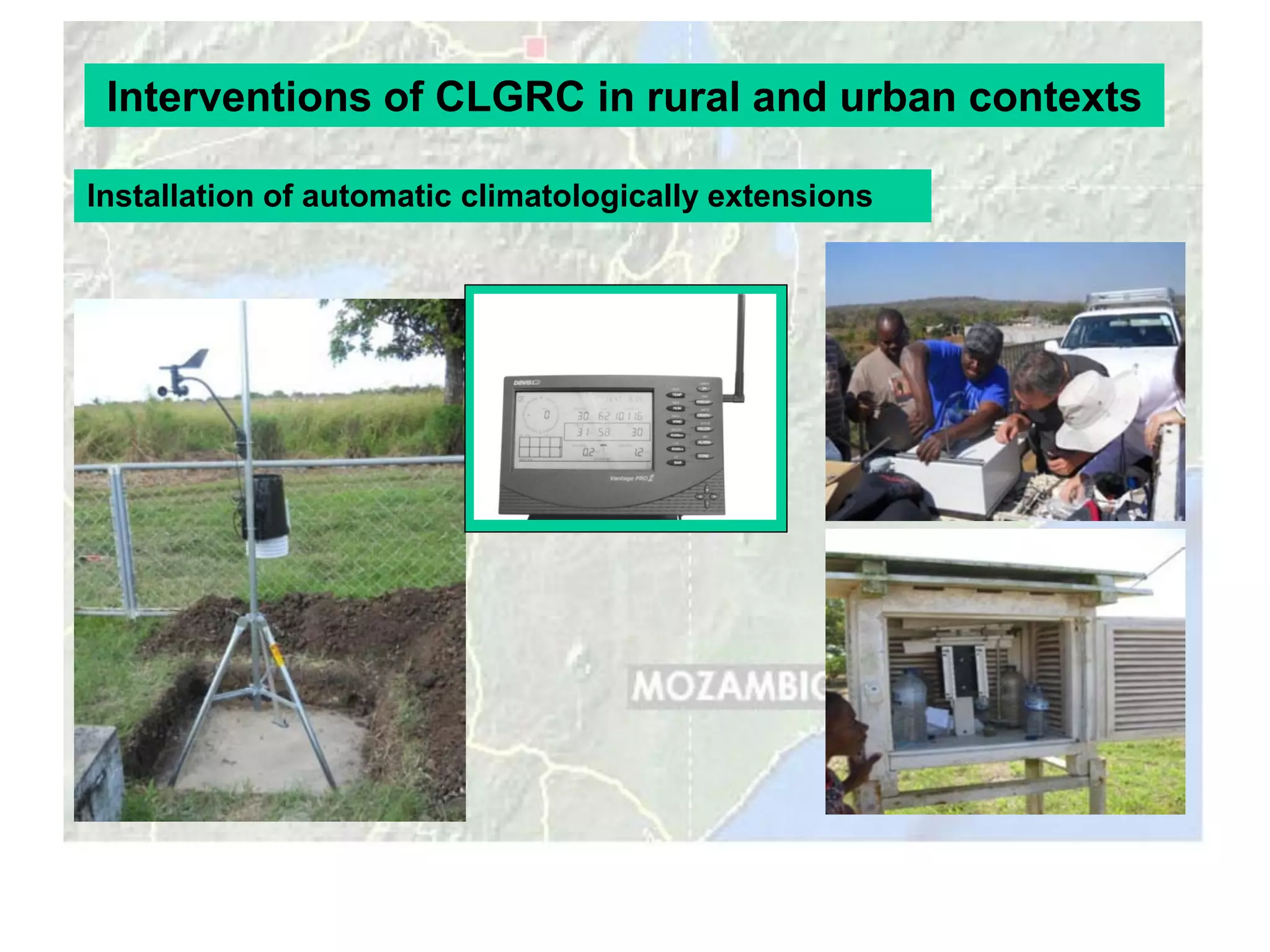
Installation of automatic climatologically extensions
Interventions of CLGRC in the urban context

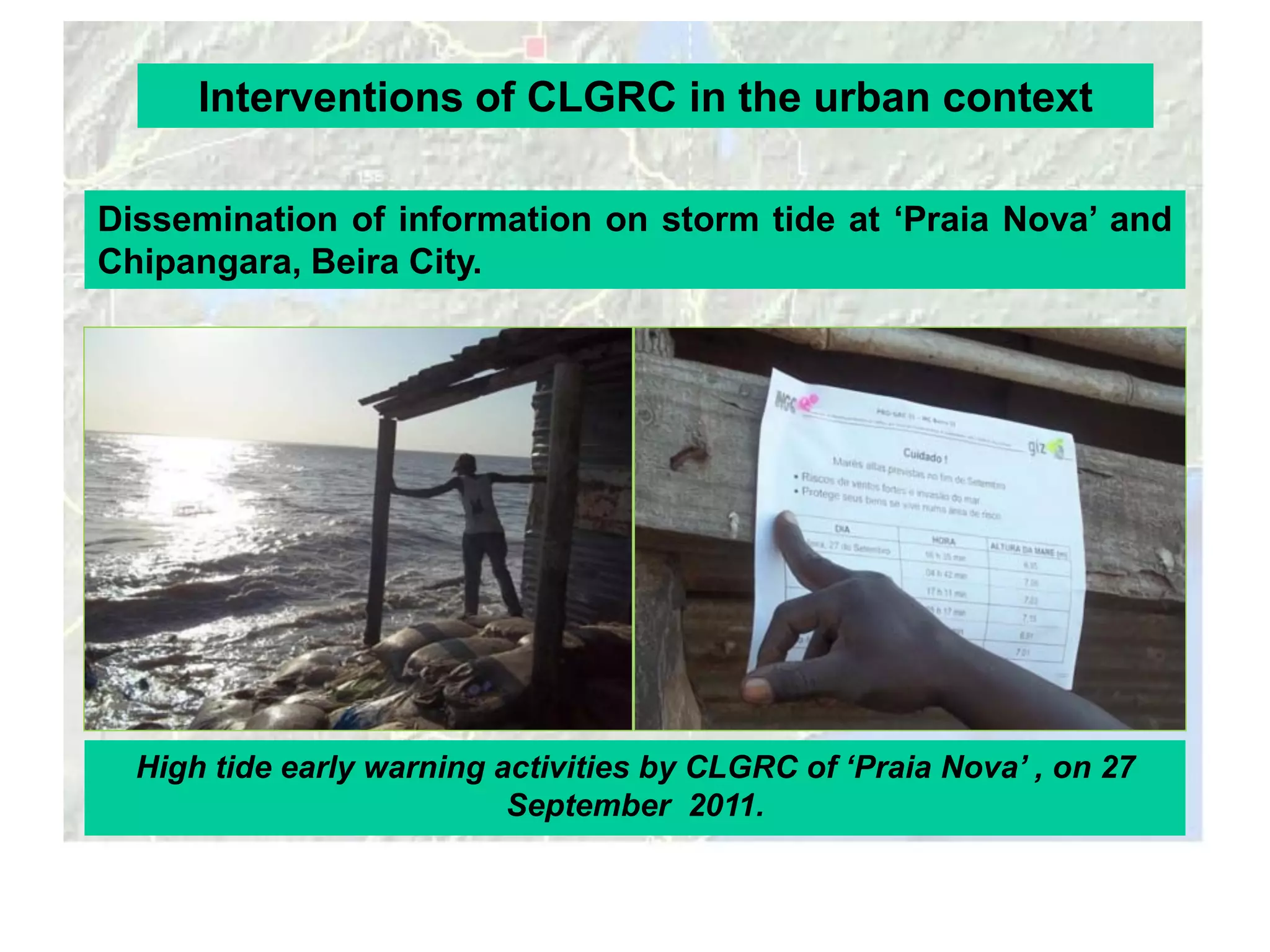
Dissemination of information on storm tide at ‘Praia Nova’ and
Chipangara, Beira City.


  High tide early warning activities by CLGRC of ‘Praia Nova’ , on 27
                           September 2011.
Interventions of CLGRC in the rural and
       urban contexts (challenges)


•To train and equip the CLGRC in the more
vulnerable areas both rural and urban,

•To build sustainability of CLGRC trough
promotion of income generation activities.

•The partner should respect the INGC standards
(training and equipment).
Thank you

An effective early warning system in the rural and urban context

  • 1.
    MINISTÉRIO DA ADMINISTRAÇÃOESTATAL INSTITUTO NACIONAL DE GESTAO DE CALAMIDADES An effective early warning system in the rural and urban context By: João Ribeiro, General Director INGC- Mozambique Davos, 28th August, 2012
  • 2.
    Mean treats Cyclones Floods Drought EQ
  • 3.
  • 4.
    EMERGENCY MANAGEMENT Preparedness Procedures and Contingency Plan Communication System Mobile and Radio Satellite Community Local Committees Communic Telephone Radio, TV and for Disaster Risk ation main line and Management System Newsletters Telephone TV CLGRC Information Management System EARLY WARNING SYSTEM
  • 5.
    The Mandate ofINGC • Coordination authority of emergency actions; • Coordination authority of development of arid and semi-arid zones; • Coordination authority for prevention and mitigation of natural disasters; • Coordination authority for reconstruction after disasters .
  • 6.
    Local Committees forDisaster Risk Management (CLGRC) The CLGRC is a group of 15 to 18 volunteer people from the same location, village, city or school, who are dedicate to prevention mitigation and response activities for disasters that are treating its own community. The CLGRC main mission is to lead the local community to develop prevention, mitigation and preparedness activities to face any disaster at community level.
  • 7.
    Profile of theMembers CLGRC • Volunteer people who are ready to work without remuneration; • Responsible and very respectable peoples at community level; • Dynamic, creative, motivated and pro-active peoples with capacity to make decision and have vision to develop their own community.
  • 8.
  • 9.
    The Structure ofCLGRC The CLGRC is lead by a Coordinator and his deputy and it has 7 task organized in working groups, namely : • Responsible for Kit • Responsible for listening to the radio; • Responsible for early warning; • Responsible for evacuation actions; • Responsible for rescue and saving operations; • Responsible for shelter; • Responsible for information management and damage and need assessment.
  • 10.
    The Functioning ofCLGRC Early warning Coordination of CLGRC Listening the radio Early warning Evacuation Evacuation
  • 11.
    Funcionamento do CLGRC(Cont.) Rescue and saving Rescue and saving Evacuation, rescue and saving Information management and, damages and needs Shelter assessment
  • 12.
    Interventions of CLGRCin the urban context • Cleaning Drainage Systems • Implementing Cleaning and Maintenance Campaigns • Installation of protection grids Cleaning of drainage canal “Mateus” in Chipangara Grid
  • 13.
    Interventions of CLGRCin the urban context Installation of Automatic hydrometric extensions Installation of sensor at the main The network of early warning sensors (2010) – drainage valley in Beira City nine sensors
  • 14.
    Interventions of CLGRCin rural and urban contexts Working with climatologically data for monitoring at community level : • Day to day relevant information registration for DRM by the responsible (temperature, rain quantity and intensity, speed of storm); • The CLGRC may use data to understand the relation Registration of climatologically data between extreme event intensity and impact (damages.
  • 15.
    Interventions of CLGRCin rural and urban contexts Installation of automatic climatologically extensions
  • 16.
    Interventions of CLGRCin the urban context Dissemination of information on storm tide at ‘Praia Nova’ and Chipangara, Beira City. High tide early warning activities by CLGRC of ‘Praia Nova’ , on 27 September 2011.
  • 17.
    Interventions of CLGRCin the rural and urban contexts (challenges) •To train and equip the CLGRC in the more vulnerable areas both rural and urban, •To build sustainability of CLGRC trough promotion of income generation activities. •The partner should respect the INGC standards (training and equipment).
  • 18.