Context, Achievements, Challenges and the Way Forward
 The June 2013 disaster
 Combination of various factors like
o Eco-fragile zone,
o Un-precedented pre monsoon shower
(between 64 to 250 mm),
o Land slides
o Glacial lake outburst,
o Debris from the hydro-electric projects,
o Climate change etc.
 The consequences were devastating
 Around a million people affected
 6,000 reported dead or missing
 4,200 villages affected
 10,000 cattle/ livestock lost
 3,500 houses totally or partially
damaged
 80% of the people in the productive age
(shop owners, laborers working in petty
shops, mule owners, laborers,
palanquin bearers)
 Unofficial 50,000 people dead or
missing
 RRF Partners: ActionAid International, CARE and
ChristianAid
 Proposal through joint planning and approved by
the government
 No of household reached: 2900 (RRF), 4909 (total)
 Focusing on the first and the second phase of
response
 Standardization of the package
 Coordination at the field level within themselves
and with other agencies to avoid duplication and
ensure that relief reaches the most in need.
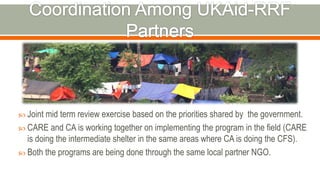
 Joint mid term review exercise based on the priorities shared by the government.
 CARE and CA is working together on implementing the program in the field (CARE
is doing the intermediate shelter in the same areas where CA is doing the CFS).
 Both the programs are being done through the same local partner NGO.
 Coordination being done by two agencies Viz. IAG (Inter
Agency Group) and UNDMT (United Nations Disaster
Management Team). Different mandate. Full time team
 Around 15-20 Inter Agency Group meetings (Delhi and
Dehradun) till date.
 Coordinated preliminary assessment and studies through Inter
Agency Group.
 Studies done through formation of a team comprising of IAG
members, INGOs, local partners, community and government
officials
 Shelter (CARE), Livelihoods and Market (ChristianAid),
Education (Plan, Save, Aid et Action), Food Security (DCA).
 Focuses on intermediate and long term
rehabilitation. Shared with larger audience.
 One meeting with the chief minister
(nomination of focal person) for GO-NGO
coordination.
 All the projects implemented has to have
prior approval from the government. In
some of the cases government order (GO)
is also issued.
 District level coordination for reconstruction
process has also started with once a month
meeting called by the DM
 Efforts are on to have a focal point for block
level coordination for high impact blocks
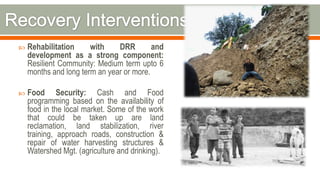
 Rehabilitation with DRR and
development as a strong component:
Resilient Community: Medium term upto 6
months and long term an year or more.
 Food Security: Cash and Food
programming based on the availability of
food in the local market. Some of the work
that could be taken up are land
reclamation, land stabilization, river
training, approach roads, construction &
repair of water harvesting structures &
Watershed Mgt. (agriculture and drinking).
 For community unable to do manual work:
Unconditional and conditional cash transfer
through capacity building on disaster
management, skill up gradation for
livelihoods, psycho-social care etc.
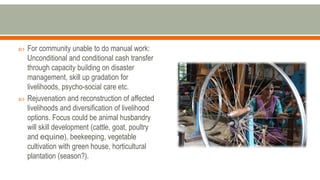
 Rejuvenation and reconstruction of affected
livelihoods and diversification of livelihood
options. Focus could be animal husbandry
will skill development (cattle, goat, poultry
and equine), beekeeping, vegetable
cultivation with green house, horticultural
plantation (season?).
 Pre School and primary school programs: Through provision of
infrastructure, kits and capacity building: From protection
perspective also.
 Capacity building of the local health functionaries (ASHA,
ANM).
 Advocacy with government for pro-poor policy on rehabilitation.
 Intermediate and Permanent shelter
 Strengthening of the community radio as a tool for
empowerment
 Village contingency planning for better preparedness
 Targeting the most vulnerable and the marginalized, expected
to be left out from the government program
 Inhospitable terrain and approachability of cut off areas.
 Government Policy on Rehabilitation: infrastructure, tourism.
 Strengthening and permanency of inter agency coordination
 Land issues
 Exploring diversified livelihood options (equine, laborers, petty
traders)
 Multi stakeholders approach.
 Liaison mechanism with CSR, religious institutions and other donors
(The World Bank, ADB, JAICA): How to convert it into an opportunity
Your Queries and Comments Please
nabi.shakeb@gmail.com

Uttarakhand Flood Response and Reconstruction

  • 1.
  • 2.
     The June2013 disaster  Combination of various factors like o Eco-fragile zone, o Un-precedented pre monsoon shower (between 64 to 250 mm), o Land slides o Glacial lake outburst, o Debris from the hydro-electric projects, o Climate change etc.  The consequences were devastating
  • 3.
     Around amillion people affected  6,000 reported dead or missing  4,200 villages affected  10,000 cattle/ livestock lost  3,500 houses totally or partially damaged  80% of the people in the productive age (shop owners, laborers working in petty shops, mule owners, laborers, palanquin bearers)  Unofficial 50,000 people dead or missing
  • 4.
     RRF Partners:ActionAid International, CARE and ChristianAid  Proposal through joint planning and approved by the government  No of household reached: 2900 (RRF), 4909 (total)  Focusing on the first and the second phase of response  Standardization of the package  Coordination at the field level within themselves and with other agencies to avoid duplication and ensure that relief reaches the most in need.
  • 5.
     Joint midterm review exercise based on the priorities shared by the government.  CARE and CA is working together on implementing the program in the field (CARE is doing the intermediate shelter in the same areas where CA is doing the CFS).  Both the programs are being done through the same local partner NGO.
  • 6.
     Coordination beingdone by two agencies Viz. IAG (Inter Agency Group) and UNDMT (United Nations Disaster Management Team). Different mandate. Full time team  Around 15-20 Inter Agency Group meetings (Delhi and Dehradun) till date.  Coordinated preliminary assessment and studies through Inter Agency Group.  Studies done through formation of a team comprising of IAG members, INGOs, local partners, community and government officials  Shelter (CARE), Livelihoods and Market (ChristianAid), Education (Plan, Save, Aid et Action), Food Security (DCA).
  • 7.
     Focuses onintermediate and long term rehabilitation. Shared with larger audience.  One meeting with the chief minister (nomination of focal person) for GO-NGO coordination.  All the projects implemented has to have prior approval from the government. In some of the cases government order (GO) is also issued.  District level coordination for reconstruction process has also started with once a month meeting called by the DM  Efforts are on to have a focal point for block level coordination for high impact blocks
  • 8.
     Rehabilitation withDRR and development as a strong component: Resilient Community: Medium term upto 6 months and long term an year or more.  Food Security: Cash and Food programming based on the availability of food in the local market. Some of the work that could be taken up are land reclamation, land stabilization, river training, approach roads, construction & repair of water harvesting structures & Watershed Mgt. (agriculture and drinking).
  • 9.
     For communityunable to do manual work: Unconditional and conditional cash transfer through capacity building on disaster management, skill up gradation for livelihoods, psycho-social care etc.  Rejuvenation and reconstruction of affected livelihoods and diversification of livelihood options. Focus could be animal husbandry will skill development (cattle, goat, poultry and equine), beekeeping, vegetable cultivation with green house, horticultural plantation (season?).
  • 10.
     Pre Schooland primary school programs: Through provision of infrastructure, kits and capacity building: From protection perspective also.  Capacity building of the local health functionaries (ASHA, ANM).  Advocacy with government for pro-poor policy on rehabilitation.  Intermediate and Permanent shelter  Strengthening of the community radio as a tool for empowerment  Village contingency planning for better preparedness  Targeting the most vulnerable and the marginalized, expected to be left out from the government program
  • 11.
     Inhospitable terrainand approachability of cut off areas.  Government Policy on Rehabilitation: infrastructure, tourism.  Strengthening and permanency of inter agency coordination  Land issues  Exploring diversified livelihood options (equine, laborers, petty traders)  Multi stakeholders approach.  Liaison mechanism with CSR, religious institutions and other donors (The World Bank, ADB, JAICA): How to convert it into an opportunity
  • 12.
    Your Queries andComments Please nabi.shakeb@gmail.com