AIPS
IMRAN KHAN
 When radioisotopes instead of enzymes are
used as labels to be conjugated with antigens
or antibodies, the technique of detection of
the antigen-antibody complex is called
radioimmunoassay (RIA). Radioimmunoassay
(RIA) is an in vitro assay that measures the
presence of an antigen with very high
sensitivity. RIA was first described in 1960 for
the measurement of endogenous plasma
insulin by Solomon Berson and Rosalyn
Yalow of the Veterans Administration Hospital
in New York.
 classical RIA methods are based on the
principle of competitive binding. In this
method, an unlabeled antigen competes with
a radio labeled antigen for binding to an
antibody with the appropriate specificity.
Thus, when mixtures of radio labeled and
unlabeled antigen are incubated with the
corresponding antibody, the amount of free
(not bound to antibody) radio labeled antigen
is directly proportional to the quantity of
unlabeled antigen in the mixture.
 Principle of Radioimmunoassay
 It involves a combination of three principles.
 An immune reaction i.e. antigen antibody
binding.
 A competitive binding or competitive
displacement reaction. (It gives specificity)
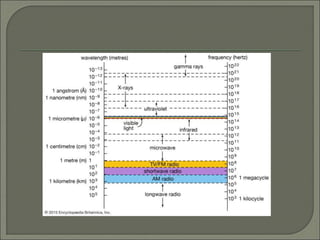
 Measurement of radio emission. (It gives
sensitivity)
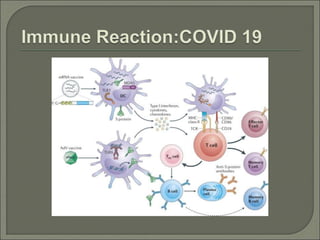
 When a foreign biological substance enters into
the body bloodstream through a non-oral route, the
body recognizes the specific chemistry on the
surface of foreign substance as antigen and
produces specific antibodies against the antigen so
as nullify the effects and keep the body safe. The
antibodies are produced by the body’s immune
system so, it is an immune reaction. Here the
antibodies or antigens bind move due to chemical
influence. This is different from principle of
electrophoresis where proteins are separated due
to charge.
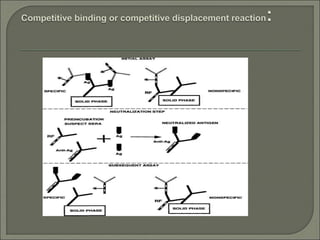
 This is a phenomenon wherein when there
are two antigens that can bind to the same
antibody, the antigen with more concentration
binds extensively with the limited antibody
displacing others. So here in the experiment,
a radiolabel led antigen is allowed to bind to
high-affinity antibody. Then when the patient
serum is added unlabeled antigens in it start
binding to the antibody displacing the labeled
antigen.

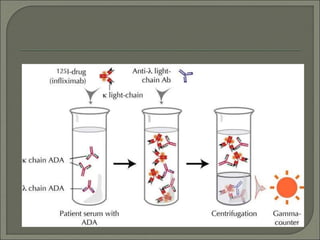
 Once the incubation is over, then washings are done to remove any
unbound antigens. Then radio emission of the antigen-antibody complex is
taken, the gamma rays from radiolabeled antigen are measured.
 The target antigen is labeled radioactively and bound to its specific
antibodies (a limited and known amount of the specific antibody has to be
added). A sample, for e.g. blood-serum, is added in order to initiate a
competitive reaction of the labeled antigens from the preparation, and the
unlabeled antigens from the serum-sample, with the specific antibodies. The
competition for the antibodies will release a certain amount of labeled
antigen. This amount is proportional to the ratio of labeled to an unlabeled
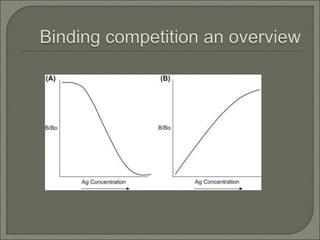
antigen. A binding curve can then be generated which allows the amount of
antigen in the patient’s serum to be derived. That means as the
concentration of unlabeled antigen is increased, more of it binds to the
antibody, displacing the labeled variant. The bound antigens are then
separated from the unbound ones, and the radioactivity of the free antigens
remaining in the supernatant is measured.
 Antigen-antibody complexes are precipitated either
by crosslinking with a second antibody or by
means of the addition of reagents that promote the
precipitation of antigen-antibody complexes.
Counting radioactivity in the precipitates allows the
determination of the amount of radiolabeled
antigen precipitated with the antibody. A standard
curve is constructed by plotting the percentage of
antibody-bound radiolabeled antigen against
known concentrations of a standardized unlabeled
antigen, and the concentrations of antigen in
patient samples are extrapolated from that curve.
 The test can be used to determine very small
quantities (e.g. nanogram) of antigens and
antibodies in the serum.
 The test is used for quantization of hormones,
drugs, HBs Ag, and other viral antigens.
 Analyze nanomolar and picomolar
concentrations of hormones in biological
fluids.

Aips
Imran khan

Ria

  • 1.
  • 2.
     When radioisotopesinstead of enzymes are used as labels to be conjugated with antigens or antibodies, the technique of detection of the antigen-antibody complex is called radioimmunoassay (RIA). Radioimmunoassay (RIA) is an in vitro assay that measures the presence of an antigen with very high sensitivity. RIA was first described in 1960 for the measurement of endogenous plasma insulin by Solomon Berson and Rosalyn Yalow of the Veterans Administration Hospital in New York.
  • 4.
     classical RIAmethods are based on the principle of competitive binding. In this method, an unlabeled antigen competes with a radio labeled antigen for binding to an antibody with the appropriate specificity. Thus, when mixtures of radio labeled and unlabeled antigen are incubated with the corresponding antibody, the amount of free (not bound to antibody) radio labeled antigen is directly proportional to the quantity of unlabeled antigen in the mixture.
  • 5.
     Principle ofRadioimmunoassay  It involves a combination of three principles.  An immune reaction i.e. antigen antibody binding.  A competitive binding or competitive displacement reaction. (It gives specificity)  Measurement of radio emission. (It gives sensitivity)
  • 6.
     When aforeign biological substance enters into the body bloodstream through a non-oral route, the body recognizes the specific chemistry on the surface of foreign substance as antigen and produces specific antibodies against the antigen so as nullify the effects and keep the body safe. The antibodies are produced by the body’s immune system so, it is an immune reaction. Here the antibodies or antigens bind move due to chemical influence. This is different from principle of electrophoresis where proteins are separated due to charge.
  • 8.
     This isa phenomenon wherein when there are two antigens that can bind to the same antibody, the antigen with more concentration binds extensively with the limited antibody displacing others. So here in the experiment, a radiolabel led antigen is allowed to bind to high-affinity antibody. Then when the patient serum is added unlabeled antigens in it start binding to the antibody displacing the labeled antigen. 
  • 11.
     Once theincubation is over, then washings are done to remove any unbound antigens. Then radio emission of the antigen-antibody complex is taken, the gamma rays from radiolabeled antigen are measured.  The target antigen is labeled radioactively and bound to its specific antibodies (a limited and known amount of the specific antibody has to be added). A sample, for e.g. blood-serum, is added in order to initiate a competitive reaction of the labeled antigens from the preparation, and the unlabeled antigens from the serum-sample, with the specific antibodies. The competition for the antibodies will release a certain amount of labeled antigen. This amount is proportional to the ratio of labeled to an unlabeled antigen. A binding curve can then be generated which allows the amount of antigen in the patient’s serum to be derived. That means as the concentration of unlabeled antigen is increased, more of it binds to the antibody, displacing the labeled variant. The bound antigens are then separated from the unbound ones, and the radioactivity of the free antigens remaining in the supernatant is measured.
  • 12.
     Antigen-antibody complexesare precipitated either by crosslinking with a second antibody or by means of the addition of reagents that promote the precipitation of antigen-antibody complexes. Counting radioactivity in the precipitates allows the determination of the amount of radiolabeled antigen precipitated with the antibody. A standard curve is constructed by plotting the percentage of antibody-bound radiolabeled antigen against known concentrations of a standardized unlabeled antigen, and the concentrations of antigen in patient samples are extrapolated from that curve.
  • 18.
     The testcan be used to determine very small quantities (e.g. nanogram) of antigens and antibodies in the serum.  The test is used for quantization of hormones, drugs, HBs Ag, and other viral antigens.  Analyze nanomolar and picomolar concentrations of hormones in biological fluids. 
  • 19.