AIPS
IMRAN KHAN
 Enzyme system of ELISA consists enzyme which is labeled to
a specific antibody or antigen and a chromogenic substrate
which is added after antigen-antibody reaction. The substrate
is hydrolysed by the enzyme attached to antigen-antibody
complexes. An ELISA test uses components of the immune
system (such as IgG or IgM antibodies) and chemicals for the
detection of immune responses in the body. The ELISA test
involves an enzyme (a protein that catalyzes a biochemical
reaction). It also involves an antibody or antigen (immunologic
molecules). Examples of the uses of an ELISA test includes to
diagnose infections such as HIV (human immunodeficiency
virus) and some allergic diseases like food allergies. ELISA
tests are also known as an immunosorbent assay.
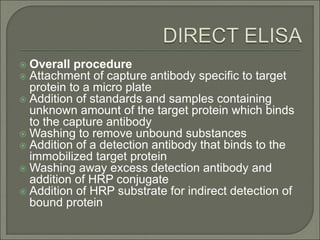
 Overall procedure
 Attachment of capture antibody specific to target
protein to a micro plate
 Addition of standards and samples containing
unknown amount of the target protein which binds
to the capture antibody
 Washing to remove unbound substances
 Addition of a detection antibody that binds to the
immobilized target protein
 Washing away excess detection antibody and
addition of HRP conjugate
 Addition of HRP substrate for indirect detection of
bound protein
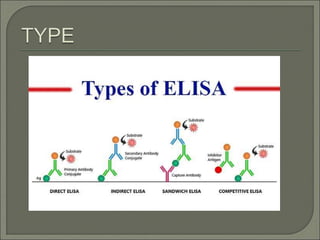
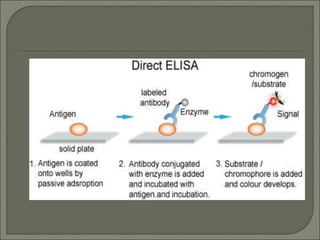
In a direct ELISA, an antigen or sample
is immobilized directly on the plate and
a conjugated detection antibody binds to
the target protein. Substrate is then added,
producing a signal that is proportional to
the amount of analyte in the sample.
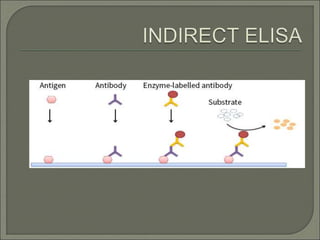
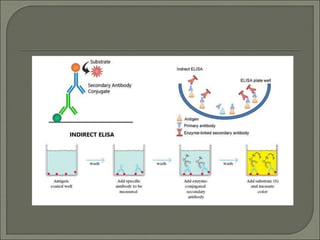
Indirect ELISA is a technique that uses
a two-step process for detection,
whereby a primary antibody specific for the
antigen binds to the target, and a labeled
secondary antibody against the host
species of the primary antibody binds to
the primary antibody for detection.
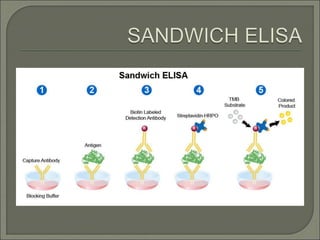
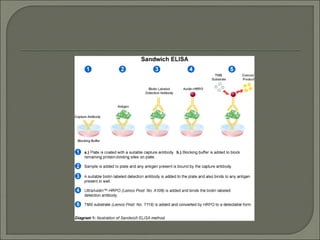
 Sandwich ELISA is used for the detection of antigen. In this
test, the known antibody is coated and immobilized onto the
wells of microtiter plates. The test sample containing the
suspected antigen is added to the wells and is allowed to react
with the antibodies in the wells. After the step of washing the
well, a second enzyme-conjugated antibody specific for a
different epitope of the antigen is added and allowed to
incubate. After removing any free secondary antibody by
rewashing, the specific substrate is added, and the ensuing
chromogenic reaction is measured. The chromogenic reaction
is then compared with a standard curve to determine the exact
amount of the antigen present in the test sample. In a positive
test, an enzyme acts on the substrate to produce a color, and
its intensity can be measured by spectrophotometer or ELISA
reader. The change of color can also be observed by the
naked eye.
 The steps are as follows:
 Prepare a surface to which a known quantity of capture antibody is
bound.
 Block any nonspecific binding sites on the surface.
 Add antigen-containing sample to the plate.
 Wash the plate, so that unbound antigen is removed.
 A specific antibody is added, and binds to antigen (hence the
‘sandwich’: the Ag is stuck between two antibodies);
 Add enzyme-linked secondary antibodies as detection antibodies
that also bind specifically to the antibody’s Fc region (non-specific).
 Wash the plate, so that the unbound antibody-enzyme conjugates
are removed.
 Add substrate that is converted by the enzyme into a color or
fluorescent or electrochemical signal.
 Measure the absorbance or fluorescence or electrochemical signal
(e.g., current) of the plate wells to determine the presence and
quantity of antigen.
 Principle of the test is that two specific antibodies, one
conjugated with enzyme and the other present in test
serum (if serum is positive for antibodies), are used.
 Competition occurs between the two antibodies for the
same antigen.
 Appearance of color indicates a negative test (absence
of antibodies), while the absence of color indicates a
positive test (presence of antibodies).
 The central event of competitive ELISA is a competitive
binding process executed by original antigen (sample
antigen) and add-in antigen.
 The procedures of competitive ELISA are different in
some respects compared with other forms of ELISA
 Primary antibody (unlabeled) is incubated
with sample antigen.
 Antibody-antigen complexes are then added
to well plates which are pre-coated with the
same antigen.
 Unbound antibody is removed by washing the
plate. (The more antigen in the sample, the
less antibody will be able to bind to the
antigen in the well, hence “competition.”)
 The secondary antibody that is specific to
the primary antibody and conjugated with an
enzyme is added.
 A substrate is added, and remaining enzymes elicit a chromogenic or
fluorescent signal.
 In this test, microtiter wells are coated with antigen.
 The sera to be tested are added to these wells and incubated at 37°C and
then washed.
 If antibodies are present in the test serum, antigen–antibody reaction occurs.
 The antigen– antibody reaction is detected by adding enzyme-labeled-
specific antibodies.
 In a positive test, no antigen is left for these antibodies to act.
 Hence, the antibodies remain free and are washed away during the process
of washing.
 When substrate is added, no enzyme is available to act on it.
 Therefore, positive result is indicated by absence of color reaction.
 In a negative test, in which no antibodies are present in the serum, antigen
in the coated wells is available to combine with enzyme-conjugated
antibodies and the enzyme acts on the substrate to produce color.

Application of radioimmunoassay
Radioimmunoassay allows for the
measurement of wide range of materials of
clinical and biological importance. This
technique has a significant impact on medical
diagnosis due to the ease with which the tests
can be carried out, while assuring precision,
specificity and sensitivity
 A cut-off point may be determined by
comparing it with a known standard. If an
ELISA test is used for drug screening at
workplace, a cut-off concentration, 50 ng/ml,
for example, is established, and a sample
containing the standard concentration of
analyte will be prepared. Unknowns that
generate a stronger signal than the known
sample are "positive." Those that generate
weaker signal are "negative".
AIPS
IMRAN KHAN

Elisa

  • 1.
  • 2.
     Enzyme systemof ELISA consists enzyme which is labeled to a specific antibody or antigen and a chromogenic substrate which is added after antigen-antibody reaction. The substrate is hydrolysed by the enzyme attached to antigen-antibody complexes. An ELISA test uses components of the immune system (such as IgG or IgM antibodies) and chemicals for the detection of immune responses in the body. The ELISA test involves an enzyme (a protein that catalyzes a biochemical reaction). It also involves an antibody or antigen (immunologic molecules). Examples of the uses of an ELISA test includes to diagnose infections such as HIV (human immunodeficiency virus) and some allergic diseases like food allergies. ELISA tests are also known as an immunosorbent assay.
  • 4.
     Overall procedure Attachment of capture antibody specific to target protein to a micro plate  Addition of standards and samples containing unknown amount of the target protein which binds to the capture antibody  Washing to remove unbound substances  Addition of a detection antibody that binds to the immobilized target protein  Washing away excess detection antibody and addition of HRP conjugate  Addition of HRP substrate for indirect detection of bound protein
  • 5.
    In a directELISA, an antigen or sample is immobilized directly on the plate and a conjugated detection antibody binds to the target protein. Substrate is then added, producing a signal that is proportional to the amount of analyte in the sample.
  • 9.
    Indirect ELISA isa technique that uses a two-step process for detection, whereby a primary antibody specific for the antigen binds to the target, and a labeled secondary antibody against the host species of the primary antibody binds to the primary antibody for detection.
  • 12.
     Sandwich ELISAis used for the detection of antigen. In this test, the known antibody is coated and immobilized onto the wells of microtiter plates. The test sample containing the suspected antigen is added to the wells and is allowed to react with the antibodies in the wells. After the step of washing the well, a second enzyme-conjugated antibody specific for a different epitope of the antigen is added and allowed to incubate. After removing any free secondary antibody by rewashing, the specific substrate is added, and the ensuing chromogenic reaction is measured. The chromogenic reaction is then compared with a standard curve to determine the exact amount of the antigen present in the test sample. In a positive test, an enzyme acts on the substrate to produce a color, and its intensity can be measured by spectrophotometer or ELISA reader. The change of color can also be observed by the naked eye.
  • 13.
     The stepsare as follows:  Prepare a surface to which a known quantity of capture antibody is bound.  Block any nonspecific binding sites on the surface.  Add antigen-containing sample to the plate.  Wash the plate, so that unbound antigen is removed.  A specific antibody is added, and binds to antigen (hence the ‘sandwich’: the Ag is stuck between two antibodies);  Add enzyme-linked secondary antibodies as detection antibodies that also bind specifically to the antibody’s Fc region (non-specific).  Wash the plate, so that the unbound antibody-enzyme conjugates are removed.  Add substrate that is converted by the enzyme into a color or fluorescent or electrochemical signal.  Measure the absorbance or fluorescence or electrochemical signal (e.g., current) of the plate wells to determine the presence and quantity of antigen.
  • 14.
     Principle ofthe test is that two specific antibodies, one conjugated with enzyme and the other present in test serum (if serum is positive for antibodies), are used.  Competition occurs between the two antibodies for the same antigen.  Appearance of color indicates a negative test (absence of antibodies), while the absence of color indicates a positive test (presence of antibodies).  The central event of competitive ELISA is a competitive binding process executed by original antigen (sample antigen) and add-in antigen.  The procedures of competitive ELISA are different in some respects compared with other forms of ELISA
  • 16.
     Primary antibody(unlabeled) is incubated with sample antigen.  Antibody-antigen complexes are then added to well plates which are pre-coated with the same antigen.  Unbound antibody is removed by washing the plate. (The more antigen in the sample, the less antibody will be able to bind to the antigen in the well, hence “competition.”)  The secondary antibody that is specific to the primary antibody and conjugated with an enzyme is added.
  • 17.
     A substrateis added, and remaining enzymes elicit a chromogenic or fluorescent signal.  In this test, microtiter wells are coated with antigen.  The sera to be tested are added to these wells and incubated at 37°C and then washed.  If antibodies are present in the test serum, antigen–antibody reaction occurs.  The antigen– antibody reaction is detected by adding enzyme-labeled- specific antibodies.  In a positive test, no antigen is left for these antibodies to act.  Hence, the antibodies remain free and are washed away during the process of washing.  When substrate is added, no enzyme is available to act on it.  Therefore, positive result is indicated by absence of color reaction.  In a negative test, in which no antibodies are present in the serum, antigen in the coated wells is available to combine with enzyme-conjugated antibodies and the enzyme acts on the substrate to produce color. 
  • 18.
    Application of radioimmunoassay Radioimmunoassayallows for the measurement of wide range of materials of clinical and biological importance. This technique has a significant impact on medical diagnosis due to the ease with which the tests can be carried out, while assuring precision, specificity and sensitivity
  • 19.
     A cut-offpoint may be determined by comparing it with a known standard. If an ELISA test is used for drug screening at workplace, a cut-off concentration, 50 ng/ml, for example, is established, and a sample containing the standard concentration of analyte will be prepared. Unknowns that generate a stronger signal than the known sample are "positive." Those that generate weaker signal are "negative".
  • 20.