Professional Practices


    RFID APPLICATION
           IN
SUPPLY CHAIN MANAGEMENT
          AND
  VISUAL MERCHANDISING


                Presented By:
                Mohnish Madkaikar
                Deeshikha Parashar
                MFT - 1
WHAT IS RFID?
   Radio-frequency identification (RFID) is the use of an object
    applied to or incorporated into a product for the purpose of
    identification and tracking using radio waves. It is one of the AIDC (
    Automated Identification and Data Collection ) system

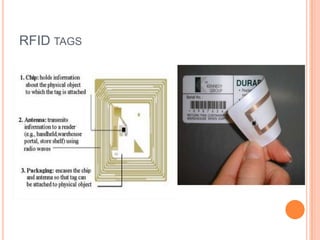
    RFID tags contain following parts:
   One is an integrated circuit for storing and processing information,
    modulating and demodulating a radio-frequency signal.
   The second is an antenna for receiving and transmitting the signal.
RFID TAGS
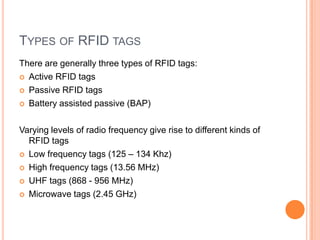
TYPES OF RFID TAGS
There are generally three types of RFID tags:
 Active RFID tags

 Passive RFID tags

 Battery assisted passive (BAP)


Varying levels of radio frequency give rise to different kinds of
  RFID tags
 Low frequency tags (125 – 134 Khz)

 High frequency tags (13.56 MHz)

 UHF tags (868 - 956 MHz)

 Microwave tags (2.45 GHz)
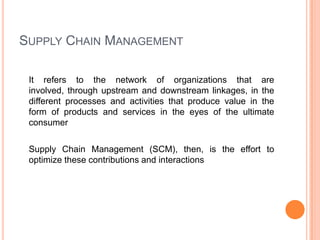
SUPPLY CHAIN MANAGEMENT

 It refers to the network of organizations that are
 involved, through upstream and downstream linkages, in the
 different processes and activities that produce value in the
 form of products and services in the eyes of the ultimate
 consumer

 Supply Chain Management (SCM), then, is the effort to
 optimize these contributions and interactions
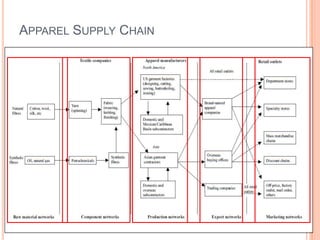
APPAREL SUPPLY CHAIN
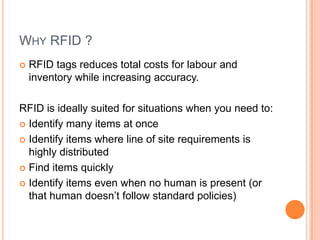
WHY RFID ?
   RFID tags reduces total costs for labour and
    inventory while increasing accuracy.

RFID is ideally suited for situations when you need to:
 Identify many items at once

 Identify items where line of site requirements is
  highly distributed
 Find items quickly

 Identify items even when no human is present (or
  that human doesn’t follow standard policies)
WHAT CAN RFID DO ?
   Improve Supply Chain Visibility

   End-to-End Process Integration

   Eliminate Artificial Uncertainty and Reduce Natural
    Uncertainty

   Improve Supply Chain Measurement and Benchmarking
    Capabilities

   Enhance Collaboration with Trading Partners

   Optimize Reverse Logistics
RFID AND INVENTORY MANAGEMENT
   Automatic Product Receiving
                                     Automatic Self-Checkout
   Directed Put-away
                                     Anti-theft/Shrink Systems
   Automated Shipping
    Operations                       Returns/Warranty
                                      Authentication
   Smart Shelves
                                     Product Recall Management
   Product Freshness
    Management                       Continuous/Real-Time On-
                                      Hand Inventory Counts
   Enhanced Point-of-Sale
    Processing                       Intelligent Products
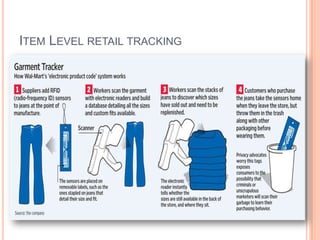
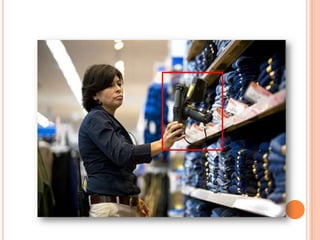
ITEM LEVEL RETAIL TRACKING
RFID INCORPORATED VISUAL MERCHANDISING

   Visual Merchandising is a very
    powerful tool that can be effectively
    used to program, channel, and lure
    customer into impulsive buying.

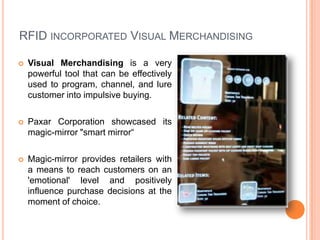
   Paxar Corporation showcased its
    magic-mirror "smart mirror“

   Magic-mirror provides retailers with
    a means to reach customers on an
    'emotional' level and positively
    influence purchase decisions at the
    moment of choice.
PRIVACY RELATED ISSUES

   Privacy related issues associated with the use of RFID
    technology were identified by FTC , which should come under
    Fair Information Practices

   As technology to enable large-scale collection and use of
    personal information has evolved, and awareness of the
    potential for misuse of that information has grown
PRIVACY RELATED ISSUES
   Consumers may not be aware that their product or its packaging are
    tagged

   Tags, even if disclosed, may be non-removable

   Consumers may not be aware of locations of readers

   Item-level tags may be used to establish an individual’s presence at
    a specific place and time, or track a person’s movements

   Tags may be read by those other than intended, i.e. hackers

   Combinations of tags could be used to uniquely identify individuals
PRIVACY RELATED ISSUES
   Tags and loyalty programs could be combined to embed
    personal identify information in tags

   Marketers may target individuals based on tagged items not
    necessarily purchased but merely carried into range of a
    reader

   There are no privacy regulations in place to guide RFID tag
    use
CONCLUSION
   Globalization, competition, and increasingly sophisticated and
    informed customers are creating ever greater supply chain
    challenges for today’s businesses

   RFID provides clear benefits throughout a supply chain, with
    distinct implications at different level.

   Better availability and management of inventory provides
    immediate efficiencies and the ability to streamline
REFERENCES
 •   www.fibre2fashion.com
 •   www.rfidjournal.com
 •   www.scmnews.com
 •   www.infosys.com
 •   www.apparelmag.com

 • Landt, Jerry (2001). "Shrouds of Time: The history of
     RFID
 •   Rahman, Rohisyam (2007-07-23). “Case Study:
     Malaysian Smart Shelf”
 •   Fashion Retail – Curtis
 •   Inside fashion Business – Kitty G. Dickerson
 •   Fashion Retailing - Ellen Diamond

RFID application in scm and vm

  • 1.
    Professional Practices RFID APPLICATION IN SUPPLY CHAIN MANAGEMENT AND VISUAL MERCHANDISING Presented By: Mohnish Madkaikar Deeshikha Parashar MFT - 1
  • 2.
    WHAT IS RFID?  Radio-frequency identification (RFID) is the use of an object applied to or incorporated into a product for the purpose of identification and tracking using radio waves. It is one of the AIDC ( Automated Identification and Data Collection ) system RFID tags contain following parts:  One is an integrated circuit for storing and processing information, modulating and demodulating a radio-frequency signal.  The second is an antenna for receiving and transmitting the signal.
  • 3.
  • 4.
    TYPES OF RFIDTAGS There are generally three types of RFID tags:  Active RFID tags  Passive RFID tags  Battery assisted passive (BAP) Varying levels of radio frequency give rise to different kinds of RFID tags  Low frequency tags (125 – 134 Khz)  High frequency tags (13.56 MHz)  UHF tags (868 - 956 MHz)  Microwave tags (2.45 GHz)
  • 5.
    SUPPLY CHAIN MANAGEMENT It refers to the network of organizations that are involved, through upstream and downstream linkages, in the different processes and activities that produce value in the form of products and services in the eyes of the ultimate consumer Supply Chain Management (SCM), then, is the effort to optimize these contributions and interactions
  • 6.
  • 7.
    WHY RFID ?  RFID tags reduces total costs for labour and inventory while increasing accuracy. RFID is ideally suited for situations when you need to:  Identify many items at once  Identify items where line of site requirements is highly distributed  Find items quickly  Identify items even when no human is present (or that human doesn’t follow standard policies)
  • 8.
    WHAT CAN RFIDDO ?  Improve Supply Chain Visibility  End-to-End Process Integration  Eliminate Artificial Uncertainty and Reduce Natural Uncertainty  Improve Supply Chain Measurement and Benchmarking Capabilities  Enhance Collaboration with Trading Partners  Optimize Reverse Logistics
  • 9.
    RFID AND INVENTORYMANAGEMENT  Automatic Product Receiving  Automatic Self-Checkout  Directed Put-away  Anti-theft/Shrink Systems  Automated Shipping Operations  Returns/Warranty Authentication  Smart Shelves  Product Recall Management  Product Freshness Management  Continuous/Real-Time On- Hand Inventory Counts  Enhanced Point-of-Sale Processing  Intelligent Products
  • 10.
  • 12.
    RFID INCORPORATED VISUALMERCHANDISING  Visual Merchandising is a very powerful tool that can be effectively used to program, channel, and lure customer into impulsive buying.  Paxar Corporation showcased its magic-mirror "smart mirror“  Magic-mirror provides retailers with a means to reach customers on an 'emotional' level and positively influence purchase decisions at the moment of choice.
  • 13.
    PRIVACY RELATED ISSUES  Privacy related issues associated with the use of RFID technology were identified by FTC , which should come under Fair Information Practices  As technology to enable large-scale collection and use of personal information has evolved, and awareness of the potential for misuse of that information has grown
  • 14.
    PRIVACY RELATED ISSUES  Consumers may not be aware that their product or its packaging are tagged  Tags, even if disclosed, may be non-removable  Consumers may not be aware of locations of readers  Item-level tags may be used to establish an individual’s presence at a specific place and time, or track a person’s movements  Tags may be read by those other than intended, i.e. hackers  Combinations of tags could be used to uniquely identify individuals
  • 15.
    PRIVACY RELATED ISSUES  Tags and loyalty programs could be combined to embed personal identify information in tags  Marketers may target individuals based on tagged items not necessarily purchased but merely carried into range of a reader  There are no privacy regulations in place to guide RFID tag use
  • 16.
    CONCLUSION  Globalization, competition, and increasingly sophisticated and informed customers are creating ever greater supply chain challenges for today’s businesses  RFID provides clear benefits throughout a supply chain, with distinct implications at different level.  Better availability and management of inventory provides immediate efficiencies and the ability to streamline
  • 17.
    REFERENCES • www.fibre2fashion.com • www.rfidjournal.com • www.scmnews.com • www.infosys.com • www.apparelmag.com • Landt, Jerry (2001). "Shrouds of Time: The history of RFID • Rahman, Rohisyam (2007-07-23). “Case Study: Malaysian Smart Shelf” • Fashion Retail – Curtis • Inside fashion Business – Kitty G. Dickerson • Fashion Retailing - Ellen Diamond