WHAT IS RFID? 
• Radio frequency identification, or RFID, is a generic term for 
technologies that use radio waves to automatically identify 
people or objects.
HISTORY 
• RFID technology has been around for decades, with its use 
traced back to World War II, when it was used in a rudimentary 
form to track aircraft. Six decades later, the technology is going 
mainstream
WHAT IS THE USE OF RFID? 
• RFID is the wireless use of electromagnetic fields to transfer 
data, for the purposes of automatically identifying and tracking 
tags attached to objects
HOW DOES AN RFID SYSTEM WORK? 
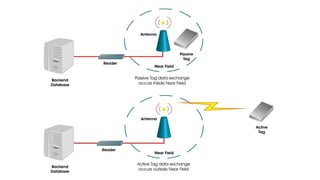
• An RFID system consists of a tag, which is made up of a microchip 
with an antenna, and an interrogator or reader with an antenna. 
• The reader sends out electromagnetic waves. The tag antenna is 
tuned to receive these waves. A passive RFID tag draws power 
from field created by the reader and uses it to power the 
microchip’s circuits. 
• The chip then modulates the waves that the tag sends back to the 
reader and the reader converts the new waves into digital data
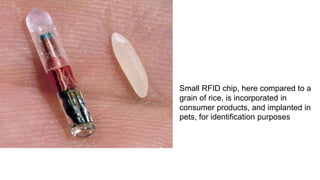
Small RFID chip, here compared to a 
grain of rice, is incorporated in 
consumer products, and implanted in 
pets, for identification purposes
TYPES OF RFID TAGS? 
• ACTIVE RFID TAG 
• PASSIVE RFID TAG
Industries/Applications 
ACTIVE RFID PASSIVE RFID 
 Auto dealerships 
 Auto Manufacturing 
Hospitals – asset 
tracking 
 Construction 
 Mining 
 Laboratories 
 Remote monitoring 
 IT asset 
management 
 Supply chain 
 High volume 
manufacturing 
 Libraries/book stores 
 Pharmaceuticals 
 Passports 
 Electronic tolls 
 Item level tracking
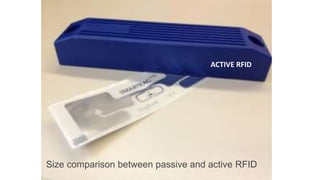
ACTIVE RFID 
Size comparison between passive and active RFID
Benefits of implementing RFID in Supply Chain 
Management 
• RFID technology has risen to become a revolutionary element in 
supply chain management. 
• It is not just a replacement for barcodes. 
• RFID ensures that the right goods are available in the right place with 
no discrepancies and zero errors.
BENEFITS OF RFID IN MANUFACTURING PROCESSES 
• In the FMCG industry, products have to be counted several times already in 
the manufacturing process: during the stages of production, washing, and 
packing. 
• Traditionally, these operations are performed manually. 
• By utilizing RFID tags and readers, products can be counted in seconds. 
• This is due to the fact that RFID tags can be automatically scanned without 
being in the line-of-sight of an RFID scanner and multiple tags can be 
scanned simultaneously
• In addition to faster authentication of produced goods, manufacturers can also 
benefit from increased information gathered with the help of RFID technology. 
• RFID tags can store far more information than conventional barcode labels. This 
information can be used to optimize production processes. 
• With the help of RFID, manufacturers can also benefit from increased information in 
regards to repair and maintenance of their machines and equipment. 
• This allows manufacturers to have visibility into valuable data such as: which 
machine has been repaired or undergone maintenance and when has this been 
done? This information helps to plan maintenance schedules
RFID in manufacturing processes means: 
• less manual work 
• less costs 
• improved visibility 
• improved planning
RFID BENEFITS IN WAREHOUSE MANAGEMENT 
• Keeping track of the large number of cartons is a very complex as well as time and labour 
consuming process. 
• However, RFID can be implemented to ease the situation as it can improve information 
management concerning cargo flow. 
• Usually, read-write equipment is installed at the entry to a warehouse. Every cargo unit is 
equipped with RFID tags and all the information relating to the tags is stored in the central 
computer of the warehouse. 
• When the cargo is moved in or out of the warehouse, the read-write equipment registers it 
and forwards the data to the backend system. 
• This allows the management center to manage the vast amounts of products going into and 
leaving the storage, recognize cargo and help with placement of the cargo in the warehouse
RFID in warehouse processes offers: 
• visibility of accurate real-time information 
• fast locating of products 
• possibility to record losses 
• ability to plan product locations strategically
RFID BENEFITS IN TRACKING AND MANAGING OF SHIPPING CONTAINERS 
• Container transports are oftentimes chosen as they ensure safe and secured 
transportation, low costs, standard packaging and high transport density. 
• Companies that use RFID in tracking and managing of shipping containers are 
able to track containers in each link of the supply chain. 
• Active RFID Tags can be used to track containers in real-time in yards and docks. 
• Ultra-high frequency RFID technology has long identification distance and speeds 
up identification.
RFID in container management and tracking: 
• offers visibility of real-time cargo movement 
• improves efficiency 
• increase accuracy
BENEFITS IN DISTRIBUTION PROCESSES 
• Usage of RFID will greatly accelerate the speed of delivery management, 
improve efficiency, and increase accuracy in selection and distribution 
processes. 
• It will also reduce distribution costs. When products embedded with RFID tags 
enter a distribution center, the RFID read-write equipment at the entry gate 
can register the RFID tags, and send the information to the distribution centers' 
backend system. 
• This information can be used to put the cartons in proper places, sort them 
quickly and efficiently, and dispatch the cartons to the retailing centers in less 
time with improved accuracy
RFID in distribution processes: 
• accelerates the speed of delivery 
• improves efficiency 
• increases accuracy 
• reduces distribution costs
USAGE OF RFID IN SUPPLY CHAIN MANAGEMENT 
https://www.youtube.com/watch?v=4Zj7txoDxbE
FUTURE RFID STORES 
• https://www.youtube.com/watch?v=rBXJ9Razofw
RFID

RFID

  • 2.
    WHAT IS RFID? • Radio frequency identification, or RFID, is a generic term for technologies that use radio waves to automatically identify people or objects.
  • 3.
    HISTORY • RFIDtechnology has been around for decades, with its use traced back to World War II, when it was used in a rudimentary form to track aircraft. Six decades later, the technology is going mainstream
  • 4.
    WHAT IS THEUSE OF RFID? • RFID is the wireless use of electromagnetic fields to transfer data, for the purposes of automatically identifying and tracking tags attached to objects
  • 5.
    HOW DOES ANRFID SYSTEM WORK? • An RFID system consists of a tag, which is made up of a microchip with an antenna, and an interrogator or reader with an antenna. • The reader sends out electromagnetic waves. The tag antenna is tuned to receive these waves. A passive RFID tag draws power from field created by the reader and uses it to power the microchip’s circuits. • The chip then modulates the waves that the tag sends back to the reader and the reader converts the new waves into digital data
  • 6.
    Small RFID chip,here compared to a grain of rice, is incorporated in consumer products, and implanted in pets, for identification purposes
  • 7.
    TYPES OF RFIDTAGS? • ACTIVE RFID TAG • PASSIVE RFID TAG
  • 9.
    Industries/Applications ACTIVE RFIDPASSIVE RFID  Auto dealerships  Auto Manufacturing Hospitals – asset tracking  Construction  Mining  Laboratories  Remote monitoring  IT asset management  Supply chain  High volume manufacturing  Libraries/book stores  Pharmaceuticals  Passports  Electronic tolls  Item level tracking
  • 11.
    ACTIVE RFID Sizecomparison between passive and active RFID
  • 12.
    Benefits of implementingRFID in Supply Chain Management • RFID technology has risen to become a revolutionary element in supply chain management. • It is not just a replacement for barcodes. • RFID ensures that the right goods are available in the right place with no discrepancies and zero errors.
  • 14.
    BENEFITS OF RFIDIN MANUFACTURING PROCESSES • In the FMCG industry, products have to be counted several times already in the manufacturing process: during the stages of production, washing, and packing. • Traditionally, these operations are performed manually. • By utilizing RFID tags and readers, products can be counted in seconds. • This is due to the fact that RFID tags can be automatically scanned without being in the line-of-sight of an RFID scanner and multiple tags can be scanned simultaneously
  • 15.
    • In additionto faster authentication of produced goods, manufacturers can also benefit from increased information gathered with the help of RFID technology. • RFID tags can store far more information than conventional barcode labels. This information can be used to optimize production processes. • With the help of RFID, manufacturers can also benefit from increased information in regards to repair and maintenance of their machines and equipment. • This allows manufacturers to have visibility into valuable data such as: which machine has been repaired or undergone maintenance and when has this been done? This information helps to plan maintenance schedules
  • 16.
    RFID in manufacturingprocesses means: • less manual work • less costs • improved visibility • improved planning
  • 17.
    RFID BENEFITS INWAREHOUSE MANAGEMENT • Keeping track of the large number of cartons is a very complex as well as time and labour consuming process. • However, RFID can be implemented to ease the situation as it can improve information management concerning cargo flow. • Usually, read-write equipment is installed at the entry to a warehouse. Every cargo unit is equipped with RFID tags and all the information relating to the tags is stored in the central computer of the warehouse. • When the cargo is moved in or out of the warehouse, the read-write equipment registers it and forwards the data to the backend system. • This allows the management center to manage the vast amounts of products going into and leaving the storage, recognize cargo and help with placement of the cargo in the warehouse
  • 18.
    RFID in warehouseprocesses offers: • visibility of accurate real-time information • fast locating of products • possibility to record losses • ability to plan product locations strategically
  • 19.
    RFID BENEFITS INTRACKING AND MANAGING OF SHIPPING CONTAINERS • Container transports are oftentimes chosen as they ensure safe and secured transportation, low costs, standard packaging and high transport density. • Companies that use RFID in tracking and managing of shipping containers are able to track containers in each link of the supply chain. • Active RFID Tags can be used to track containers in real-time in yards and docks. • Ultra-high frequency RFID technology has long identification distance and speeds up identification.
  • 20.
    RFID in containermanagement and tracking: • offers visibility of real-time cargo movement • improves efficiency • increase accuracy
  • 21.
    BENEFITS IN DISTRIBUTIONPROCESSES • Usage of RFID will greatly accelerate the speed of delivery management, improve efficiency, and increase accuracy in selection and distribution processes. • It will also reduce distribution costs. When products embedded with RFID tags enter a distribution center, the RFID read-write equipment at the entry gate can register the RFID tags, and send the information to the distribution centers' backend system. • This information can be used to put the cartons in proper places, sort them quickly and efficiently, and dispatch the cartons to the retailing centers in less time with improved accuracy
  • 22.
    RFID in distributionprocesses: • accelerates the speed of delivery • improves efficiency • increases accuracy • reduces distribution costs
  • 23.
    USAGE OF RFIDIN SUPPLY CHAIN MANAGEMENT https://www.youtube.com/watch?v=4Zj7txoDxbE
  • 24.
    FUTURE RFID STORES • https://www.youtube.com/watch?v=rBXJ9Razofw