Continuing the Class Profile
Conversation: growing our
practice
RETSD
November 7 & 8, 2018
Faye Brownlie
Slideshare.net/fayebrownlie.retsd.MY.2018
Learning Intentions
• I have reviewed the class profile process and better understand how
to make our class profiles more effective
• I have an action plan to use the information gathered from our class
profiles
• I have begun to formulate a co-planning, co-teaching plan for my
class/school
• I better understand how to move to school profiles from class profiles
• Inclusion is not a special education initiative, rather it belongs to
general education and is a reflection of the society we want.
Reviewing our reviewsJ
• What worked?
• What didn’t work as well? How did you make it
better?
• What’s next? What do you wonder?
Goal
to support students in working effectively in
the classroom environment
Goal
to work together to better meet the needs of
all students
Rationale
By sharing our collective knowledge about
our classes of students and developing a
plan of action based on this, we can better
meet the needs of all students.
A Key Belief
Intervention is focused on classroom support. Classroom-based
intervention does NOT mean that all specialists have to be in the
classroom all the time. Instead, the RESULTS of their work have to
show up in the classroom.
Even more
goals
More goals
Goals
Access
Challenge
Planning for the RANGE: Extending for further access and challenge
I want to focus on …
• Each learner as an individual and a community member
• Tasks that are worthwhile and meaningful
• Individual, personalized feedback during the learning
• Balance in the programming:
• Whole class, small group, individual
• Multiple ways of learning
• Time for collaboration:
• Co-planning
• Co-teaching
• Maintaining a firm, research-based, pedagogical foundation
The key words …
• Access
• Low floor, high ceiling
The Class Review
What are the strengths
of the class?
What are your concerns
about the class as a whole?
What are your main goals
for the class this year?
What are the individual
needs in your class?
No plan, No point
• It is critical to focus on the class plan, aiming for the active inclusion
of ALL students.
• Who are our students?
• What is the goal?
• How will we work together to achieve this goal?
• Who has what role?
• How will we know that what we are doing is working?
• What are the range of supports we are providing for the students in this
class?
Identify desired results.
Determine acceptable evidence.
Plan learning experiences & instruction.
Three Stages of
Backward Design
Designing Inclusive Activities
Does every student have an entry point?
Can every student
access the curriculum in some way?
stretch themselves?
help others?
experience success?
Example: Dave Dunnigan (Gr 6/7)
At the beginning of the year, Dave
and his students go through a
visioning process to create their
learning community.
He asks students:
what makes a great classroom?
How are the students learning?
How is the teacher teaching?
How does everyone treat each
other and interact with each other?
What routines and expectations
help us in our learning?
Questions to Guide Co-Teaching
• What are the strengths of your class?
• What areas are you wanting to strengthen?
• What is the curriculum/topic/skill/strategy goal for this lesson?
• What students will need to be specifically considered for inclusion in
this lesson?
• What roles shall we each play?
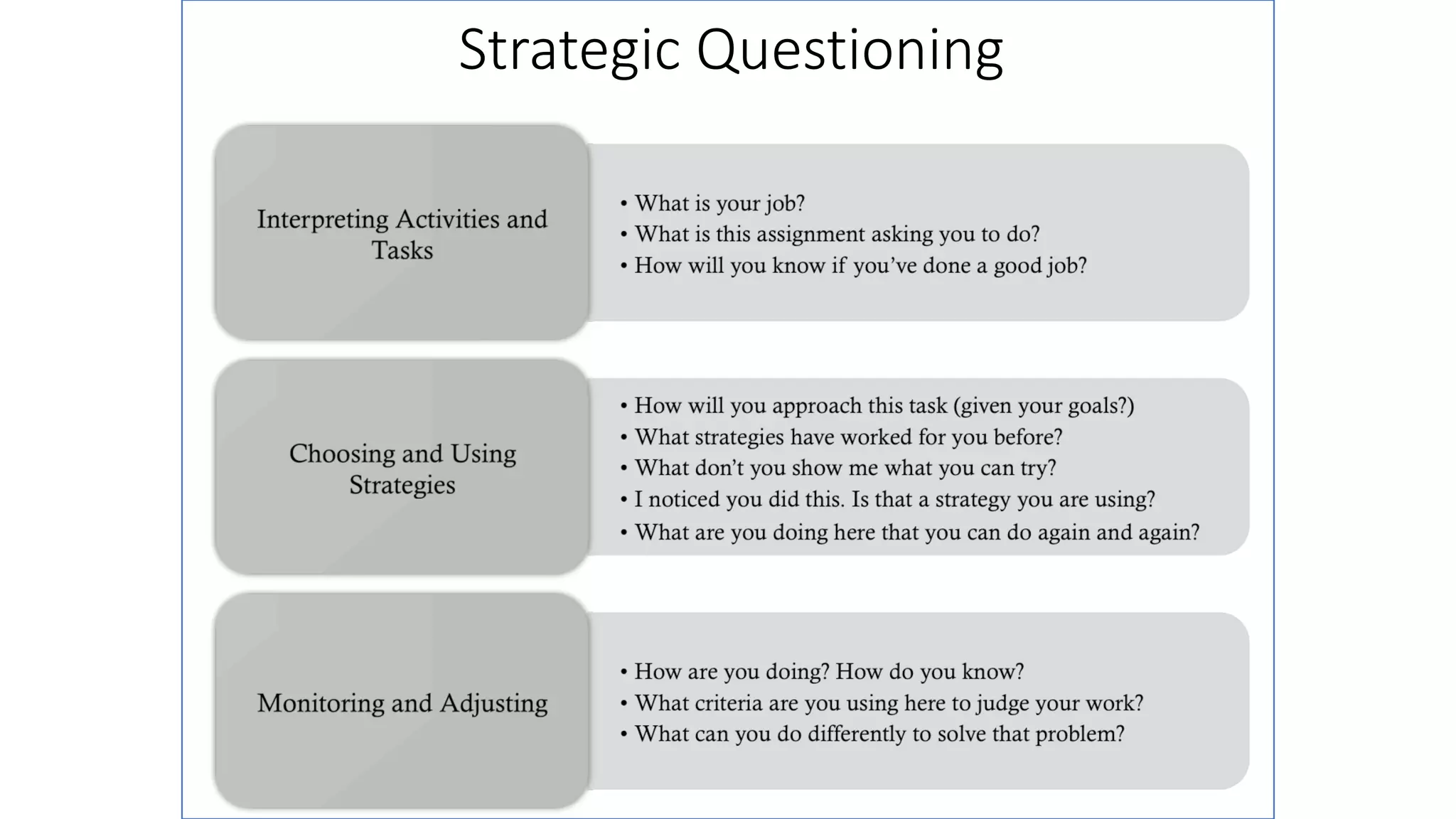
Strategic Questioning
!
Participation Structures:
What kinds of
routines and
expectations do
we set up in
classrooms?
Do students
"own"
them?
Do all
students know
what they are?
Do all students know how
to participate effectively?

RETSD.MY.2018

  • 1.
    Continuing the ClassProfile Conversation: growing our practice RETSD November 7 & 8, 2018 Faye Brownlie Slideshare.net/fayebrownlie.retsd.MY.2018
  • 2.
    Learning Intentions • Ihave reviewed the class profile process and better understand how to make our class profiles more effective • I have an action plan to use the information gathered from our class profiles • I have begun to formulate a co-planning, co-teaching plan for my class/school • I better understand how to move to school profiles from class profiles
  • 3.
    • Inclusion isnot a special education initiative, rather it belongs to general education and is a reflection of the society we want.
  • 4.
    Reviewing our reviewsJ •What worked? • What didn’t work as well? How did you make it better? • What’s next? What do you wonder?
  • 5.
    Goal to support studentsin working effectively in the classroom environment
  • 6.
    Goal to work togetherto better meet the needs of all students
  • 7.
    Rationale By sharing ourcollective knowledge about our classes of students and developing a plan of action based on this, we can better meet the needs of all students.
  • 8.
    A Key Belief Interventionis focused on classroom support. Classroom-based intervention does NOT mean that all specialists have to be in the classroom all the time. Instead, the RESULTS of their work have to show up in the classroom.
  • 10.
    Even more goals More goals Goals Access Challenge Planningfor the RANGE: Extending for further access and challenge
  • 11.
    I want tofocus on … • Each learner as an individual and a community member • Tasks that are worthwhile and meaningful • Individual, personalized feedback during the learning • Balance in the programming: • Whole class, small group, individual • Multiple ways of learning • Time for collaboration: • Co-planning • Co-teaching • Maintaining a firm, research-based, pedagogical foundation
  • 12.
    The key words… • Access • Low floor, high ceiling
  • 13.
    The Class Review Whatare the strengths of the class? What are your concerns about the class as a whole? What are your main goals for the class this year? What are the individual needs in your class?
  • 14.
  • 15.
    • It iscritical to focus on the class plan, aiming for the active inclusion of ALL students. • Who are our students? • What is the goal? • How will we work together to achieve this goal? • Who has what role? • How will we know that what we are doing is working? • What are the range of supports we are providing for the students in this class?
  • 16.
    Identify desired results. Determineacceptable evidence. Plan learning experiences & instruction. Three Stages of Backward Design
  • 17.
    Designing Inclusive Activities Doesevery student have an entry point? Can every student access the curriculum in some way? stretch themselves? help others? experience success?
  • 18.
    Example: Dave Dunnigan(Gr 6/7) At the beginning of the year, Dave and his students go through a visioning process to create their learning community. He asks students: what makes a great classroom? How are the students learning? How is the teacher teaching? How does everyone treat each other and interact with each other? What routines and expectations help us in our learning?
  • 19.
    Questions to GuideCo-Teaching • What are the strengths of your class? • What areas are you wanting to strengthen? • What is the curriculum/topic/skill/strategy goal for this lesson? • What students will need to be specifically considered for inclusion in this lesson? • What roles shall we each play?
  • 20.
  • 21.
    Participation Structures: What kindsof routines and expectations do we set up in classrooms? Do students "own" them? Do all students know what they are? Do all students know how to participate effectively?