SUPPLY CHAIN MANAGEMENT
 Supply chain management spans all movement
  and storage of raw materials, work-in-process
  inventory, and finished goods from point-of-origin
  to point-of-consumption
 Supply Chain Management encompasses the
  planning and management of all activities
  involved in sourcing, procurement, conversion,
  and logistics management activities.
 Parties involved.
STRATEGIC ALLIANCES
 An alliance is cooperation or collaboration which
  aims for a synergy where each partner hopes that
  the benefits from the alliance will be greater than
  those from individual efforts
TYPES OF STRATEGIC ALLIANCES
 Third Party Logistic: 3PL is the use of an outside
  company to perform all or part of the firm’s material
  management and product distribution functions.
 Retailer-Supplier Partnerships: It’s the formation of
  strategic alliances between the retailers and their suppliers.
 Distributor Integration: This appreciates the value of the
  distributors and their relationship with the end users and
  provides them with the necessary support to be successful.
RETAILER SUPPLIER PARTNERSHIPS
 Types of Retailer-Supplier Partnerships
   Quick Response Strategy
   Continuous Replenishment Strategy Or Rapid
    Replenishment
   Advanced continuous replenishment strategy
   Vendor-managed Inventory System.
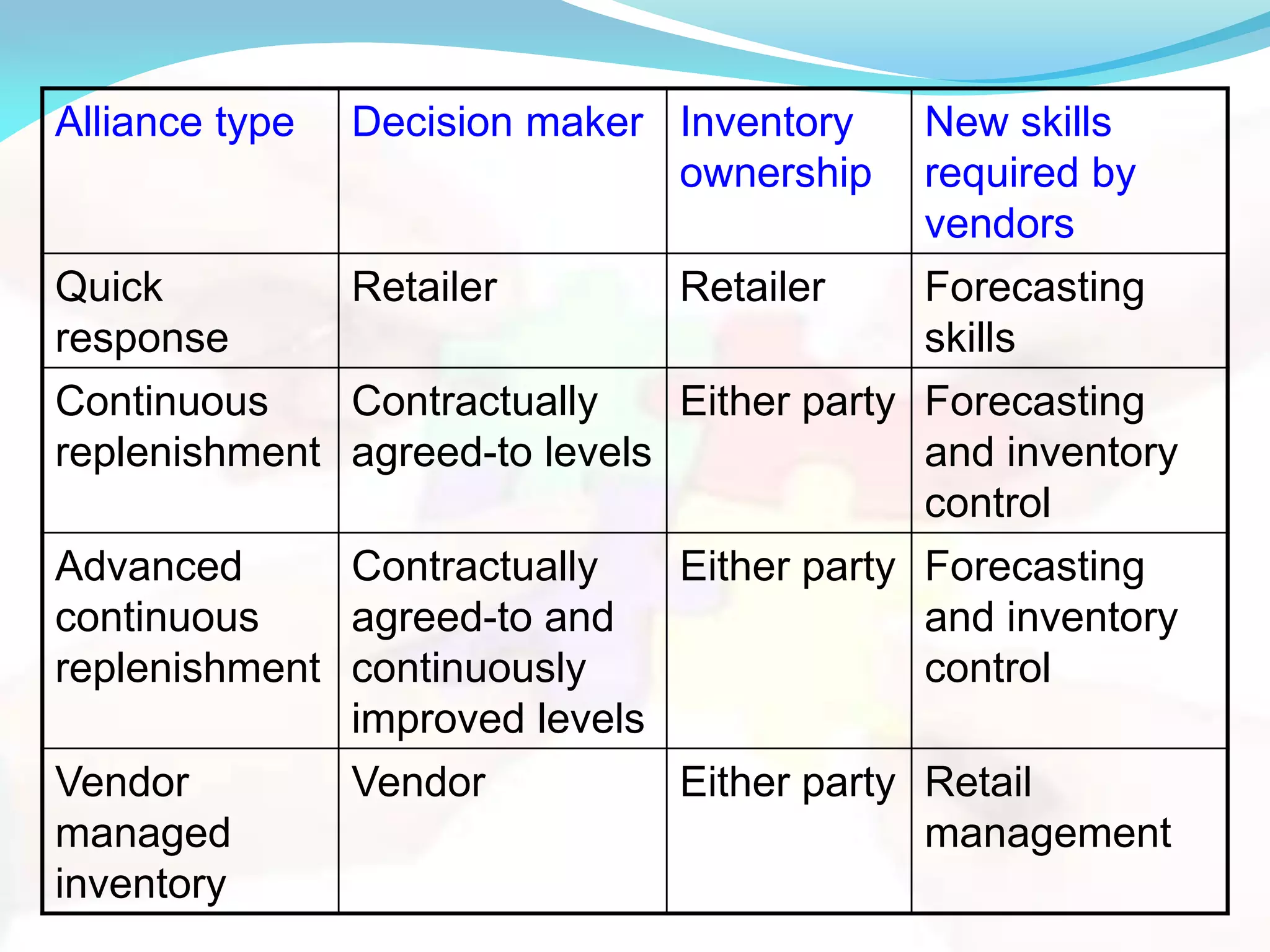
Alliance type   Decision maker Inventory    New skills
                               ownership    required by
                                            vendors
Quick         Retailer         Retailer     Forecasting
response                                    skills
Continuous    Contractually    Either party Forecasting
replenishment agreed-to levels              and inventory
                                            control
Advanced      Contractually    Either party Forecasting
continuous    agreed-to and                 and inventory
replenishment continuously                  control
              improved levels
Vendor        Vendor           Either party Retail
managed                                     management
inventory
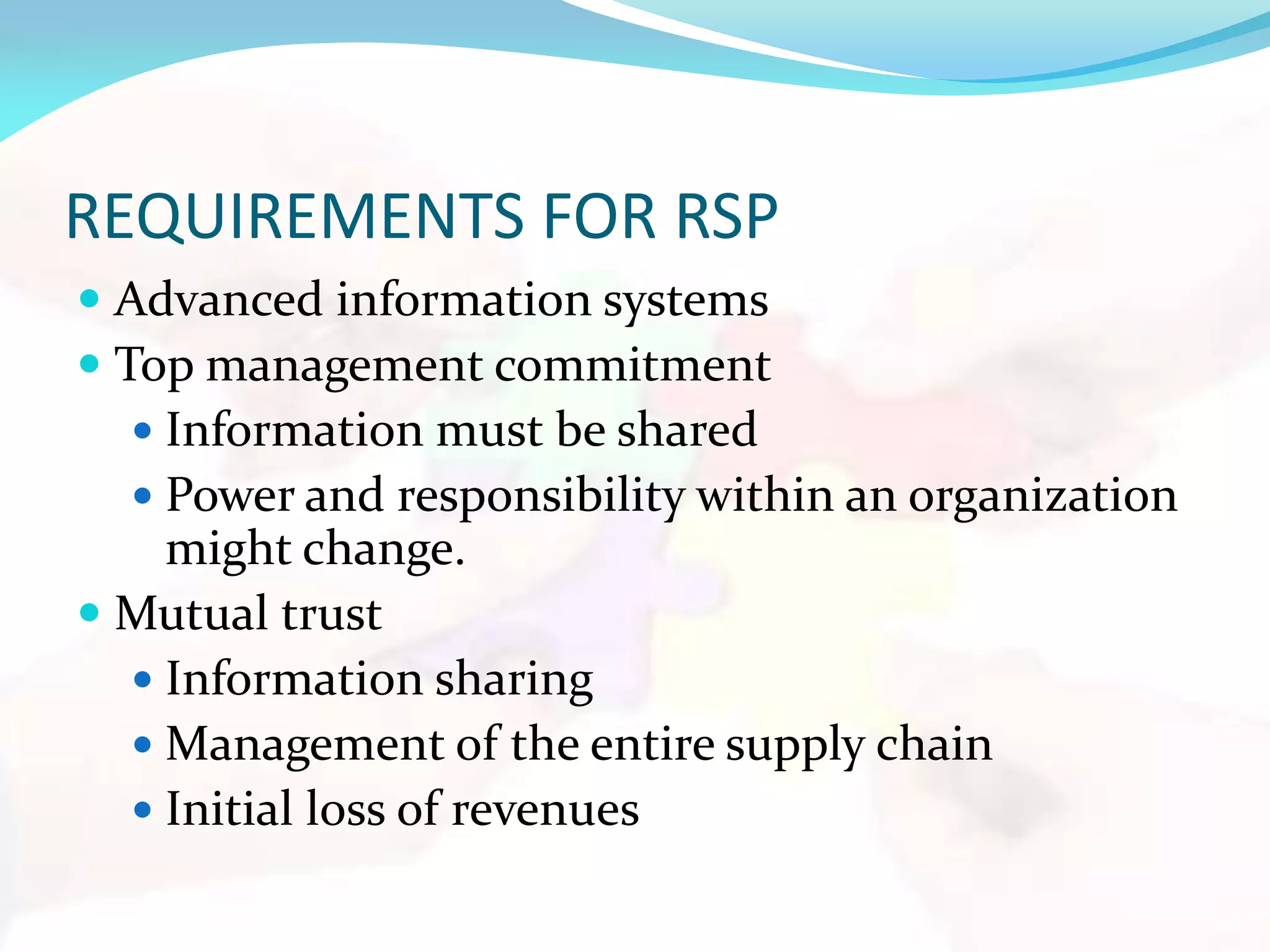
REQUIREMENTS FOR RSP
 Advanced information systems
 Top management commitment
    Information must be shared
    Power and responsibility within an organization
    might change.
 Mutual trust
   Information sharing
   Management of the entire supply chain
   Initial loss of revenues
ISSUES IN RSP IMPLEMENTATION
 Inventory ownership
 Performance measures: Fill rate, inventory level,
  inventory turns
 Confidentiality
 Communication and cooperation
ADVANTAGES OF RSP
  Fully utilize system knowledge (retailer)
    Manufacturer may predict demand better

  Focus on retailing rather than logistics.
  Reduce bullwhip effect (vendor)
    Reduced inventory and/or increased service level

  Ability to coordinate replenishments to different
  retailers.
DISADVANTAGES OF RSP
  Expensive advanced information technology is
   required.
  Supplier/retailer trust must be developed.
  Supplier responsibility increases.
  Expenses at the supplier often increase.
EXAMPLE
 In 2003, Maruti produced 359,960 vehicles,
  operating at a capacity utilization of 103%, against
  the industry average of 57.8%.
 Vendor management became an important area as
  Maruti attempted to improve operational
  efficiency.
 Maruti procured components worth about
  Rs.5,000 crores every year.
 The company's top 10 vendors accounted for about
  34 % of its aggregate purchases of components
  from vendors in India.
 Maruti was working on a 3.5% per annum
  reduction in vendor prices by 2004-2005.
 Maruti streamlined the sourcing and stocking of
  materials and components through its Delivery
  Instruction system, one of Suzuki's best practices.
 This system provided details of Maruti's
  component requirements for every 15 days, across
  the different variants of the various models, to its
  vendors.
 Web initiatives helped Maruti to bring down
 procurement time and costs.
Retailer supplier partnerships final ppt

Retailer supplier partnerships final ppt

  • 2.
    SUPPLY CHAIN MANAGEMENT Supply chain management spans all movement and storage of raw materials, work-in-process inventory, and finished goods from point-of-origin to point-of-consumption  Supply Chain Management encompasses the planning and management of all activities involved in sourcing, procurement, conversion, and logistics management activities.  Parties involved.
  • 3.
    STRATEGIC ALLIANCES  Analliance is cooperation or collaboration which aims for a synergy where each partner hopes that the benefits from the alliance will be greater than those from individual efforts
  • 4.
    TYPES OF STRATEGICALLIANCES  Third Party Logistic: 3PL is the use of an outside company to perform all or part of the firm’s material management and product distribution functions.  Retailer-Supplier Partnerships: It’s the formation of strategic alliances between the retailers and their suppliers.  Distributor Integration: This appreciates the value of the distributors and their relationship with the end users and provides them with the necessary support to be successful.
  • 5.
    RETAILER SUPPLIER PARTNERSHIPS Types of Retailer-Supplier Partnerships  Quick Response Strategy  Continuous Replenishment Strategy Or Rapid Replenishment  Advanced continuous replenishment strategy  Vendor-managed Inventory System.
  • 6.
    Alliance type Decision maker Inventory New skills ownership required by vendors Quick Retailer Retailer Forecasting response skills Continuous Contractually Either party Forecasting replenishment agreed-to levels and inventory control Advanced Contractually Either party Forecasting continuous agreed-to and and inventory replenishment continuously control improved levels Vendor Vendor Either party Retail managed management inventory
  • 7.
    REQUIREMENTS FOR RSP Advanced information systems  Top management commitment  Information must be shared  Power and responsibility within an organization might change.  Mutual trust  Information sharing  Management of the entire supply chain  Initial loss of revenues
  • 8.
    ISSUES IN RSPIMPLEMENTATION  Inventory ownership  Performance measures: Fill rate, inventory level, inventory turns  Confidentiality  Communication and cooperation
  • 9.
    ADVANTAGES OF RSP  Fully utilize system knowledge (retailer)  Manufacturer may predict demand better  Focus on retailing rather than logistics.  Reduce bullwhip effect (vendor)  Reduced inventory and/or increased service level  Ability to coordinate replenishments to different retailers.
  • 10.
    DISADVANTAGES OF RSP  Expensive advanced information technology is required.  Supplier/retailer trust must be developed.  Supplier responsibility increases.  Expenses at the supplier often increase.
  • 11.
    EXAMPLE  In 2003,Maruti produced 359,960 vehicles, operating at a capacity utilization of 103%, against the industry average of 57.8%.  Vendor management became an important area as Maruti attempted to improve operational efficiency.  Maruti procured components worth about Rs.5,000 crores every year.
  • 12.
     The company'stop 10 vendors accounted for about 34 % of its aggregate purchases of components from vendors in India.  Maruti was working on a 3.5% per annum reduction in vendor prices by 2004-2005.  Maruti streamlined the sourcing and stocking of materials and components through its Delivery Instruction system, one of Suzuki's best practices.
  • 13.
     This systemprovided details of Maruti's component requirements for every 15 days, across the different variants of the various models, to its vendors.  Web initiatives helped Maruti to bring down procurement time and costs.