PRESENTED BY:
 JUNAID JAFFREY (2012133)
MAHAVEER MEHTA (2012150)
 MOHIT PALIWAL (2012166)
 NAYAN SHARMA (2012182)
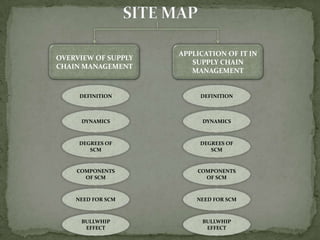
APPLICATION OF IT IN
OVERVIEW OF SUPPLY
                        SUPPLY CHAIN
CHAIN MANAGEMENT
                        MANAGEMENT


     DEFINITION           DEFINITION


     DYNAMICS              DYNAMICS


     DEGREES OF           DEGREES OF
        SCM                  SCM


    COMPONENTS           COMPONENTS
      OF SCM               OF SCM


    NEED FOR SCM         NEED FOR SCM


     BULLWHIP              BULLWHIP
      EFFECT                EFFECT
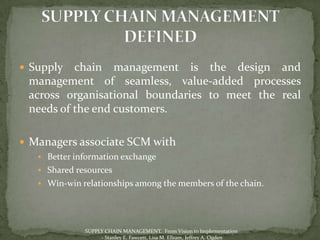
 Supply  chain management is the design and
 management of seamless, value-added processes
 across organisational boundaries to meet the real
 needs of the end customers.

 Managers associate SCM with
    Better information exchange
    Shared resources
    Win-win relationships among the members of the chain.


              SUPPLY CHAIN MANAGEMENT, From Vision to Implementation
                   - Stanley E. Fawcett, Lisa M. Ellram, Jeffrey A. Ogden
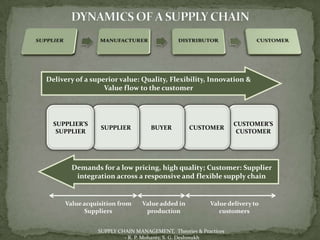
Delivery of a superior value: Quality, Flexibility, Innovation &
                  Value flow to the customer


  SUPPLIER’S                                                    CUSTOMER’S
                 SUPPLIER         BUYER         CUSTOMER
   SUPPLIER                                                      CUSTOMER


       Demands for a low pricing, high quality; Customer: Supplier
        integration across a responsive and flexible supply chain


     Value acquisition from    Value added in          Value delivery to
           Suppliers            production                customers


                SUPPLY CHAIN MANAGEMENT, Theories & Practices
                         - R. P. Mohanty, S. G. Deshmukh
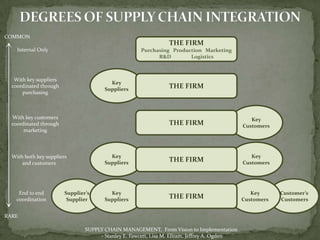
COMMON
                                                                THE FIRM
    Internal Only                                    Purchasing Production Marketing
                                                           R&D        Logistics


   With key suppliers
                                         Key
  coordinated through
                                       Suppliers                THE FIRM
      purchasing


  With key customers                                                                             Key
  coordinated through                                           THE FIRM                      Customers
       marketing


  With both key suppliers                Key                                                     Key
      and customers                    Suppliers                THE FIRM                      Customers


     End to end         Supplier’s       Key                                                     Key      Customer’s
    coordination         Supplier      Suppliers                THE FIRM                      Customers   Customers


RARE

                                SUPPLY CHAIN MANAGEMENT, From Vision to Implementation
                                     - Stanley E. Fawcett, Lisa M. Ellram, Jeffrey A. Ogden
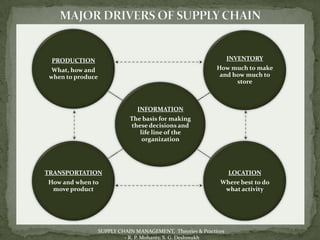
PRODUCTION                                                        INVENTORY
  What, how and                                              How much to make
 when to produce                                              and how much to
                                                                   store


                                INFORMATION
                              The basis for making
                              these decisions and
                                 life line of the
                                  organization


TRANSPORTATION                                                     LOCATION
How and when to                                               Where best to do
 move product                                                  what activity


                   SUPPLY CHAIN MANAGEMENT, Theories & Practices
                            - R. P. Mohanty, S. G. Deshmukh
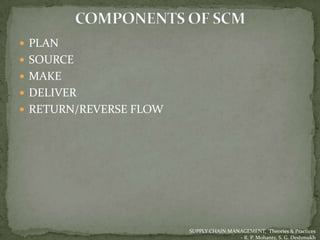
 PLAN
 SOURCE
 MAKE
 DELIVER
 RETURN/REVERSE FLOW


                        SUPPLY CHAIN MANAGEMENT, Theories & Practices
                                        - R. P. Mohanty, S. G. Deshmukh
   QUALITY
     The quality of products and services should be virtually defect-free line.


   COST
      For reducing the total cost of acquiring, moving, holding, converting and supporting
       products containing purchased materials and services.

   TIME
      Meticulously eliminating all redundant or non-value-added, but time consuming
       activities.

   TECHNOLOGY
      To ensure that the firm’s supply base provides appropriate technology in a timely
       manner.
      It must ensure that technology which affects the firm’s core competencies is carefully
       controlled when dealing with outside suppliers and customers.

   CONTINUITY OF SUPPLY
      To reduce the risk of supply disruptions
          - Monitoring trends
          - Developing appropriate supplier alliances
                                                        SUPPLY CHAIN MANAGEMENT, Theories & Practices
                                                                        - R. P. Mohanty, S. G. Deshmukh
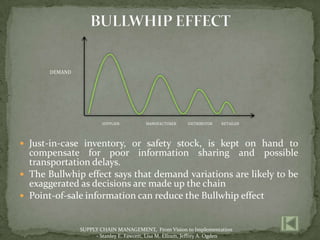
DEMAND


                        SUPPLIER         MANUFACTURER    DISTRIBUTOR   RETAILER


 Just-in-case inventory, or safety stock, is kept on hand to
  compensate for poor information sharing and possible
  transportation delays.
 The Bullwhip effect says that demand variations are likely to be
  exaggerated as decisions are made up the chain
 Point-of-sale information can reduce the Bullwhip effect


                SUPPLY CHAIN MANAGEMENT, From Vision to Implementation
                     - Stanley E. Fawcett, Lisa M. Ellram, Jeffrey A. Ogden
Need for IT in business

 To manage the complexity of business effectively on a
 real time basis.

 To address the following business concerns: Flexibility
 and variety; Quality, Responsiveness and Edging
 towards agility
 Intranet/Extranet
 Data Warehouse/ Data mining/ Data marts
 e- commerce/ e-procurement
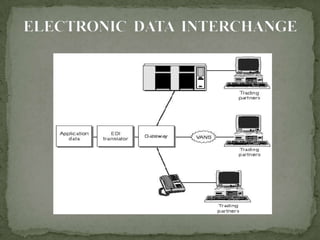
 Electronic Data Interchange (EDI)
 Bar Coding Technology
 Other technologies (such as Smart cards, Radio
 Frequency Identification Device (RFID), etc)
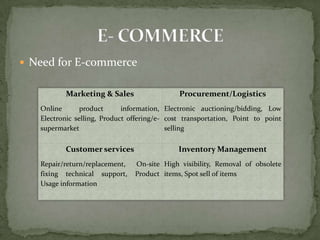
 Need for E-commerce


          Marketing & Sales                   Procurement/Logistics
   Online       product      information, Electronic auctioning/bidding, Low
   Electronic selling, Product offering/e- cost transportation, Point to point
   supermarket                             selling

          Customer services                   Inventory Management
   Repair/return/replacement,   On-site High visibility, Removal of obsolete
   fixing technical support,    Product items, Spot sell of items
   Usage information
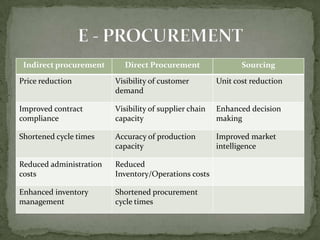
Indirect procurement      Direct Procurement                  Sourcing

Price reduction          Visibility of customer         Unit cost reduction
                         demand

Improved contract        Visibility of supplier chain   Enhanced decision
compliance               capacity                       making

Shortened cycle times    Accuracy of production         Improved market
                         capacity                       intelligence

Reduced administration   Reduced
costs                    Inventory/Operations costs

Enhanced inventory       Shortened procurement
management               cycle times
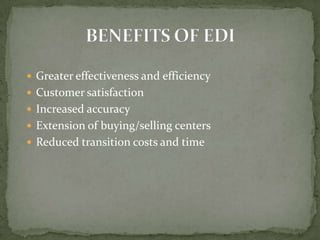
 Greater effectiveness and efficiency
 Customer satisfaction
 Increased accuracy
 Extension of buying/selling centers
 Reduced transition costs and time
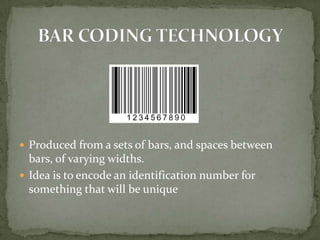
 Produced from a sets of bars, and spaces between
  bars, of varying widths.
 Idea is to encode an identification number for
  something that will be unique
 Improved Operational efficiency


 Reduce Errors


 Cut costs
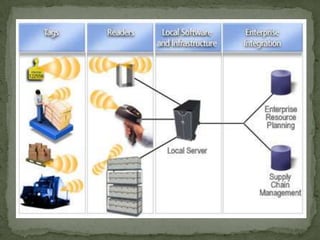
 Electronic  labels are programmed with unique
  information and attached to objects

 Consist of two parts: a tag and a reader


 Tag (transceiver) is activated by reader which transmit
  a signal using radio frequency waves, tag in return
  transmit encoded data back to the reader.
 Remote sensing


 Mobility


 High accuracy


 Cluster reading


 All weather capability

Supply chain management presentation

  • 1.
    PRESENTED BY: JUNAIDJAFFREY (2012133) MAHAVEER MEHTA (2012150) MOHIT PALIWAL (2012166) NAYAN SHARMA (2012182)
  • 2.
    APPLICATION OF ITIN OVERVIEW OF SUPPLY SUPPLY CHAIN CHAIN MANAGEMENT MANAGEMENT DEFINITION DEFINITION DYNAMICS DYNAMICS DEGREES OF DEGREES OF SCM SCM COMPONENTS COMPONENTS OF SCM OF SCM NEED FOR SCM NEED FOR SCM BULLWHIP BULLWHIP EFFECT EFFECT
  • 3.
     Supply chain management is the design and management of seamless, value-added processes across organisational boundaries to meet the real needs of the end customers.  Managers associate SCM with  Better information exchange  Shared resources  Win-win relationships among the members of the chain. SUPPLY CHAIN MANAGEMENT, From Vision to Implementation - Stanley E. Fawcett, Lisa M. Ellram, Jeffrey A. Ogden
  • 4.
    Delivery of asuperior value: Quality, Flexibility, Innovation & Value flow to the customer SUPPLIER’S CUSTOMER’S SUPPLIER BUYER CUSTOMER SUPPLIER CUSTOMER Demands for a low pricing, high quality; Customer: Supplier integration across a responsive and flexible supply chain Value acquisition from Value added in Value delivery to Suppliers production customers SUPPLY CHAIN MANAGEMENT, Theories & Practices - R. P. Mohanty, S. G. Deshmukh
  • 5.
    COMMON THE FIRM Internal Only Purchasing Production Marketing R&D Logistics With key suppliers Key coordinated through Suppliers THE FIRM purchasing With key customers Key coordinated through THE FIRM Customers marketing With both key suppliers Key Key and customers Suppliers THE FIRM Customers End to end Supplier’s Key Key Customer’s coordination Supplier Suppliers THE FIRM Customers Customers RARE SUPPLY CHAIN MANAGEMENT, From Vision to Implementation - Stanley E. Fawcett, Lisa M. Ellram, Jeffrey A. Ogden
  • 6.
    PRODUCTION INVENTORY What, how and How much to make when to produce and how much to store INFORMATION The basis for making these decisions and life line of the organization TRANSPORTATION LOCATION How and when to Where best to do move product what activity SUPPLY CHAIN MANAGEMENT, Theories & Practices - R. P. Mohanty, S. G. Deshmukh
  • 7.
     PLAN  SOURCE MAKE  DELIVER  RETURN/REVERSE FLOW SUPPLY CHAIN MANAGEMENT, Theories & Practices - R. P. Mohanty, S. G. Deshmukh
  • 8.
    QUALITY  The quality of products and services should be virtually defect-free line.  COST  For reducing the total cost of acquiring, moving, holding, converting and supporting products containing purchased materials and services.  TIME  Meticulously eliminating all redundant or non-value-added, but time consuming activities.  TECHNOLOGY  To ensure that the firm’s supply base provides appropriate technology in a timely manner.  It must ensure that technology which affects the firm’s core competencies is carefully controlled when dealing with outside suppliers and customers.  CONTINUITY OF SUPPLY  To reduce the risk of supply disruptions - Monitoring trends - Developing appropriate supplier alliances SUPPLY CHAIN MANAGEMENT, Theories & Practices - R. P. Mohanty, S. G. Deshmukh
  • 9.
    DEMAND SUPPLIER MANUFACTURER DISTRIBUTOR RETAILER  Just-in-case inventory, or safety stock, is kept on hand to compensate for poor information sharing and possible transportation delays.  The Bullwhip effect says that demand variations are likely to be exaggerated as decisions are made up the chain  Point-of-sale information can reduce the Bullwhip effect SUPPLY CHAIN MANAGEMENT, From Vision to Implementation - Stanley E. Fawcett, Lisa M. Ellram, Jeffrey A. Ogden
  • 10.
    Need for ITin business  To manage the complexity of business effectively on a real time basis.  To address the following business concerns: Flexibility and variety; Quality, Responsiveness and Edging towards agility
  • 11.
     Intranet/Extranet  DataWarehouse/ Data mining/ Data marts  e- commerce/ e-procurement  Electronic Data Interchange (EDI)  Bar Coding Technology  Other technologies (such as Smart cards, Radio Frequency Identification Device (RFID), etc)
  • 12.
     Need forE-commerce Marketing & Sales Procurement/Logistics Online product information, Electronic auctioning/bidding, Low Electronic selling, Product offering/e- cost transportation, Point to point supermarket selling Customer services Inventory Management Repair/return/replacement, On-site High visibility, Removal of obsolete fixing technical support, Product items, Spot sell of items Usage information
  • 13.
    Indirect procurement Direct Procurement Sourcing Price reduction Visibility of customer Unit cost reduction demand Improved contract Visibility of supplier chain Enhanced decision compliance capacity making Shortened cycle times Accuracy of production Improved market capacity intelligence Reduced administration Reduced costs Inventory/Operations costs Enhanced inventory Shortened procurement management cycle times
  • 15.
     Greater effectivenessand efficiency  Customer satisfaction  Increased accuracy  Extension of buying/selling centers  Reduced transition costs and time
  • 16.
     Produced froma sets of bars, and spaces between bars, of varying widths.  Idea is to encode an identification number for something that will be unique
  • 17.
     Improved Operationalefficiency  Reduce Errors  Cut costs
  • 18.
     Electronic labels are programmed with unique information and attached to objects  Consist of two parts: a tag and a reader  Tag (transceiver) is activated by reader which transmit a signal using radio frequency waves, tag in return transmit encoded data back to the reader.
  • 20.
     Remote sensing Mobility  High accuracy  Cluster reading  All weather capability