Prepared by
Prof. Srinivas H N
Apoorva Institute of Management Studies,
Bangalore
 Consumers are "actors" on the marketplace.
 Customers are the most important people for any organization. The
success of any organization is dependent on its satisfied customers.
 The satisfied customers remains loyal to the organization and bring
repeat business.
 Consumers can be made happy only if their needs are met.
 The organizations should treat their customer’s service as an
investment and not a cost. They should also remember that
customer’s satisfaction is at heart of the selling process.
 Consumer behaviour is the study of individuals or groups and
organizations on how they select, purchase, use or dispose of
products services, ideas or experiences to satisfy needs and desires.
 “Consumer behaviour is the study of how people buy, what they buy,
when they buy and why they buy.” - Kotler
 It plays a vital role in identifying customers need.
 It provides possible ways to meet the customer needs.
 It is useful to provide solution for specific problem.
 It enhances marketing performance.
 It helps in achieving the sales target.
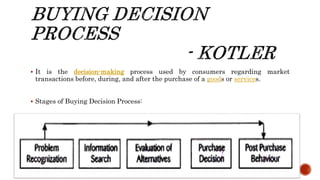
 It is the decision-making process used by consumers regarding market
transactions before, during, and after the purchase of a goods or services.
 Stages of Buying Decision Process:
 1. Brand experience
 2. Price experience.
 3. Promotion experience
 4. Supply Chain Management experience
 5. Location experience
 6. Advertising experience
 7. Packaging & Labelling experience.
 8. Service mix experience
 9. Atmosphere experience
 Cultural Factors: Cultural factors comprise of set of values and ideologies of a
particular community or group of individuals. It is the culture of an individual
which decides the way he/she behaves.
 Psychological Factors: Among the factors influencing consumer behavior,
psychological factors can be divided into 4 categories: motivation, perception,
learning as well as beliefs and attitudes
 1. Motivation:
 2. Perception:
 3. Learning:
 4. Beliefs and attitudes:
 Social Factors: Social factors are among the factors influencing consumer behavior
significantly. They fall into three categories: reference groups, family and social
roles and status.
 1. Reference groups and membership groups
 2. Family
 3. Social roles and status
 Personal factors:
 Decisions and buying behavior are obviously also influenced by the characteristics
of each consumer.
 1. Age and way of life:
 2. Purchasing power and revenue:
 3. Lifestyle:
 4. Personality and self-concept:
Situational Factors:
 Situational factors are the factors override or influence, psychological and social issues. These factors
are related to the purchase or shopping situation, as well as to temporal states.
1. Purchase Situation
2. Shopping Situation
 Customers might be ready to purchase a product or service but completely derailed once they arrive in
the store. Marketers use several techniques to influence consumers at this choice stage of the decision
process. The following techniques are considered for shopping situation,
a. Store Atmosphere:
b. Sales people:
c. Crowding:
d. Promotions:
e. Packaging:
 The simple and cheap purchase requires less buyer deliberation and participation
and vice & versa. Therefore based on the degree of buyer’s involvement and the
degree of difference among brands, buying behaviour can be classified into four
types, namely-
 Complex buying behaviour
 Dissonance reducing buying behaviour
 Habitual buying behaviour
 Variety seeking buying behaviour
Customer service is a key to bring customers back. Good customer service is the Life
Blood of any business.
If you truly want to have good customer service, all you have to do is ensure that your
business consistently does these things:
 Answer your phone
 Don’t make promises unless you will keep them
 Listen to your customers
 Deal with complaints
 Be helpful even if there’s no immediate profit in it.
 Train your staff to be always helpful, courteous and knowledgeable
 Take the extra step
 Give in something extra
 Satisfied Customers
 Customer Loyalty
 Less Cost required to attract new customers
 Edge on Competitors
 Key to survival of success
How Customers can be Satisfied?
 First element of customer satisfaction is a perfect product, designed to be as
defect-free.
 Second, product delivered must be by caring people.
 Third, product should be delivered “on time”.
 Final element of customer satisfaction is an effective problem resolution process
 Merchandise
 Price
 Physical Surroundings
 Promotional Schemes
 Employees Interaction
 After Sales Services
 Service Support
 Other miscellaneous factors
Step 1: Listen to Customer feedback.
Step 2: Fix the individual Customer problem.
Step 3: Analyze the Data.
Step 4: Take action to resolve or prevent customer issues.
Step 5: Management Systems.
Step 6: Feedback to Customers on improvements.
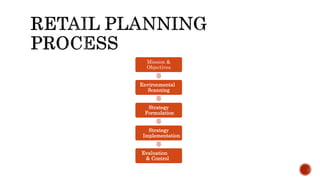
Mission &
Objectives
Environmental
Scanning
Strategy
Formulation
Strategy
Implementation
Evaluation
& Control

Consumer behaviour in retail business

  • 1.
    Prepared by Prof. SrinivasH N Apoorva Institute of Management Studies, Bangalore
  • 2.
     Consumers are"actors" on the marketplace.  Customers are the most important people for any organization. The success of any organization is dependent on its satisfied customers.  The satisfied customers remains loyal to the organization and bring repeat business.  Consumers can be made happy only if their needs are met.  The organizations should treat their customer’s service as an investment and not a cost. They should also remember that customer’s satisfaction is at heart of the selling process.
  • 3.
     Consumer behaviouris the study of individuals or groups and organizations on how they select, purchase, use or dispose of products services, ideas or experiences to satisfy needs and desires.  “Consumer behaviour is the study of how people buy, what they buy, when they buy and why they buy.” - Kotler
  • 4.
     It playsa vital role in identifying customers need.  It provides possible ways to meet the customer needs.  It is useful to provide solution for specific problem.  It enhances marketing performance.  It helps in achieving the sales target.
  • 5.
     It isthe decision-making process used by consumers regarding market transactions before, during, and after the purchase of a goods or services.  Stages of Buying Decision Process:
  • 6.
     1. Brandexperience  2. Price experience.  3. Promotion experience  4. Supply Chain Management experience  5. Location experience  6. Advertising experience  7. Packaging & Labelling experience.  8. Service mix experience  9. Atmosphere experience
  • 7.
     Cultural Factors:Cultural factors comprise of set of values and ideologies of a particular community or group of individuals. It is the culture of an individual which decides the way he/she behaves.  Psychological Factors: Among the factors influencing consumer behavior, psychological factors can be divided into 4 categories: motivation, perception, learning as well as beliefs and attitudes  1. Motivation:  2. Perception:  3. Learning:  4. Beliefs and attitudes:
  • 8.
     Social Factors:Social factors are among the factors influencing consumer behavior significantly. They fall into three categories: reference groups, family and social roles and status.  1. Reference groups and membership groups  2. Family  3. Social roles and status
  • 9.
     Personal factors: Decisions and buying behavior are obviously also influenced by the characteristics of each consumer.  1. Age and way of life:  2. Purchasing power and revenue:  3. Lifestyle:  4. Personality and self-concept:
  • 10.
    Situational Factors:  Situationalfactors are the factors override or influence, psychological and social issues. These factors are related to the purchase or shopping situation, as well as to temporal states. 1. Purchase Situation 2. Shopping Situation  Customers might be ready to purchase a product or service but completely derailed once they arrive in the store. Marketers use several techniques to influence consumers at this choice stage of the decision process. The following techniques are considered for shopping situation, a. Store Atmosphere: b. Sales people: c. Crowding: d. Promotions: e. Packaging:
  • 11.
     The simpleand cheap purchase requires less buyer deliberation and participation and vice & versa. Therefore based on the degree of buyer’s involvement and the degree of difference among brands, buying behaviour can be classified into four types, namely-  Complex buying behaviour  Dissonance reducing buying behaviour  Habitual buying behaviour  Variety seeking buying behaviour
  • 12.
    Customer service isa key to bring customers back. Good customer service is the Life Blood of any business. If you truly want to have good customer service, all you have to do is ensure that your business consistently does these things:  Answer your phone  Don’t make promises unless you will keep them  Listen to your customers  Deal with complaints  Be helpful even if there’s no immediate profit in it.  Train your staff to be always helpful, courteous and knowledgeable  Take the extra step  Give in something extra
  • 13.
     Satisfied Customers Customer Loyalty  Less Cost required to attract new customers  Edge on Competitors  Key to survival of success
  • 14.
    How Customers canbe Satisfied?  First element of customer satisfaction is a perfect product, designed to be as defect-free.  Second, product delivered must be by caring people.  Third, product should be delivered “on time”.  Final element of customer satisfaction is an effective problem resolution process
  • 15.
     Merchandise  Price Physical Surroundings  Promotional Schemes  Employees Interaction  After Sales Services  Service Support  Other miscellaneous factors
  • 16.
    Step 1: Listento Customer feedback. Step 2: Fix the individual Customer problem. Step 3: Analyze the Data. Step 4: Take action to resolve or prevent customer issues. Step 5: Management Systems. Step 6: Feedback to Customers on improvements.
  • 17.