ANXIETY DISORDERS
DEFINITION:
Anxiety disorders include a constellation of disorders in which anxiety
and associated symptoms are experienced at level of severity that impairs
functioning.
Types of Anxiety Disorder
 1.Generalised Anxiety Disorder.
 2.Social Anxiety Disorder.
 3.Post Trauma Stress Disorder
PATHOPHYSIOLOGY:
Noradrenergic model :
 The locus ceruleus may have a role in regulating anxiety, as it activates
norepinephrine (NE) release and stimulates the sympathetic and
parasympathetic nervous systems.
 Chronic noradrenergic overactivity downregulates
α2 adrenoreceptors in patients with generalized anxiety disorder (GAD) and
posttraumatic stress disorder (PTSD).
 Patients with social anxiety disorder (SAD) appear to have a
hyperresponsive adrenocortical response to psychological stress.
γ- aminobutyric acid (GABA) receptor model:
 Anxiety symptoms may be linked to underactivity of GABA systems or
downregulated central BZ receptors.
 Abnormalities of GABA inhibition may lead to increased response to stress
in PTSD patients.
Serotonin (5-HT) model:
 The 5-HT and 5-HT2 antagonist meta-chlorophenylpiperazine (m-CPP)
causes increased anxiety in PTSD patients.
 Dysregulation of the hypothalamic-pituitary-adrenal axis may be a risk
factor for eventual development of PTSD.
Symptoms:
Generalized Anxiety disorders:
Psychological and congnitive :
 Excessive anxiety, Poor concentration or mind going blank.
Physical symptoms
 Restlessness, Fatigue, Sleep disturbance, Irritability
Social Anxiety Disorder
Some feared situations
 Eating or writing in front of others, Interacting with authority
figures, Speaking in public,
Physical symptoms
 Diarrhea, Sweating, Tachycardia
Posttraumatic stress disorder:
 Decreased concentration
 Insomnia
DIAGNOSIS:
 Physical and mental status examination.
 Patients with GAD have irritable bowel syndrome.
 Anxiety symptoms may associated with medical illness
Cardiovascular
Respiratory system
 Anxiety symptoms may psychiatric illnesses
mood disorders
Schizophrenia
Non drug Treatment:
 Short –term counseling
 Stress management
 exercise
Drug management:
Benzodiazepines - Diazepam - 2-40 mg/day
Oxazepam - 30-120mg/day
Lorazepam - 0.5-10 mg/day
Azapirones - Buspirone - 15-60 mg/day
Gepirone
Antihistamines - Hydroxyzine 200-400mg/day
β blocker - propranolol
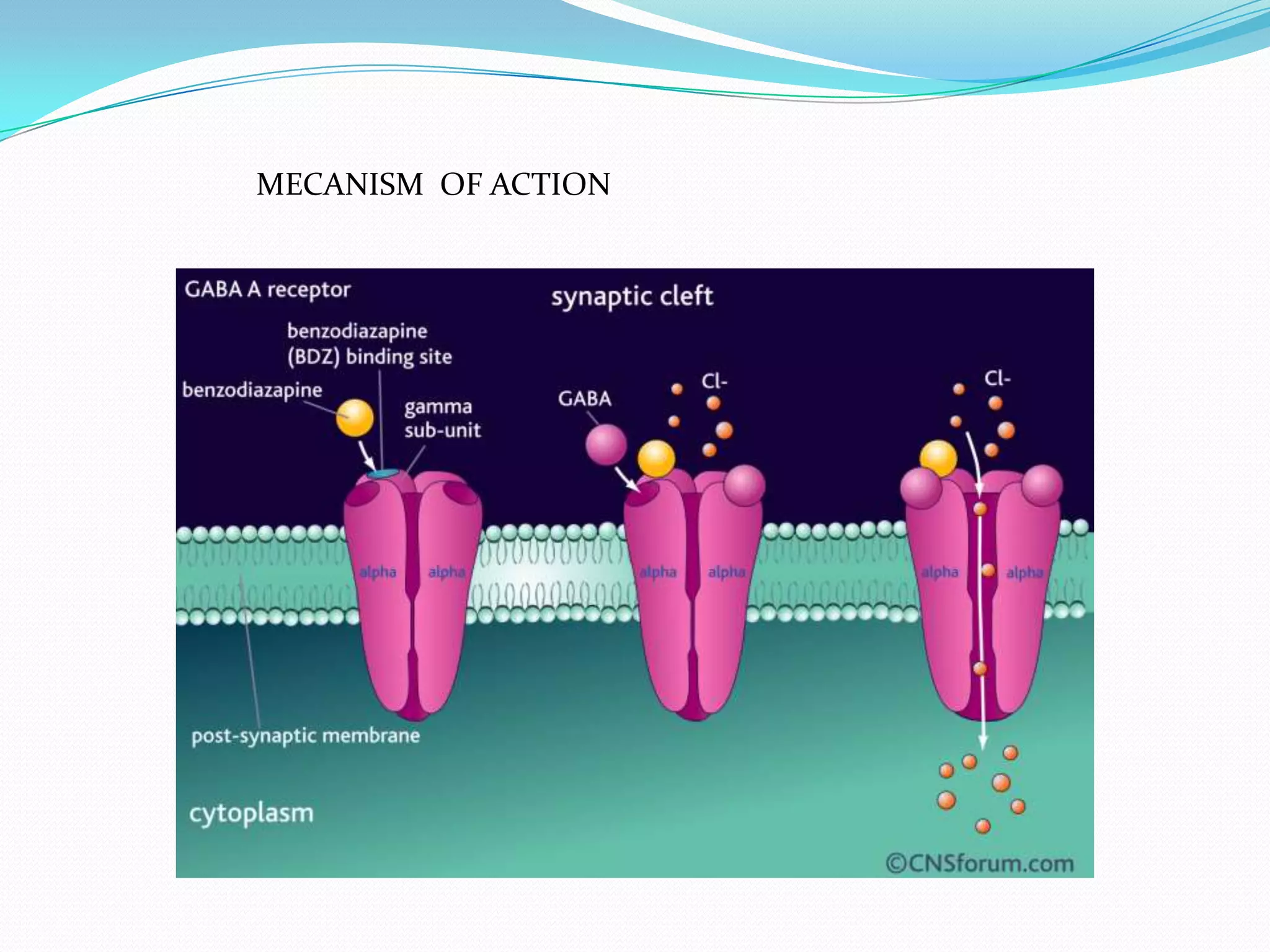
MECANISM OF ACTION
Pharmacological Treatment for Generalized Anxiety Disorder
Pharmacological Treatment for Social Anxiety Disorder
Pharmacological Treatment of Post Trauma Stress Disorder
Adverse effect:
Benzodiazepines: sedation, vertigo , increased appetite weight gain.
Azapirone: dizziness,nausea,headache.
Antihistamines: confusion,nausea, constipation.
β- blockers - bradycardia,wheezing
Drug intractions:
BZs : The combination of BZs with alcohol or other CNS depressants
may be fatal.
Antacids - decreased rate of benzodiazepine absorption
β blocker :combination with cimitidine increase metabolism of propranolol.
THANK YOU

ANXIETY DISORDERS

  • 1.
  • 2.
    DEFINITION: Anxiety disorders includea constellation of disorders in which anxiety and associated symptoms are experienced at level of severity that impairs functioning. Types of Anxiety Disorder  1.Generalised Anxiety Disorder.  2.Social Anxiety Disorder.  3.Post Trauma Stress Disorder
  • 3.
    PATHOPHYSIOLOGY: Noradrenergic model : The locus ceruleus may have a role in regulating anxiety, as it activates norepinephrine (NE) release and stimulates the sympathetic and parasympathetic nervous systems.  Chronic noradrenergic overactivity downregulates α2 adrenoreceptors in patients with generalized anxiety disorder (GAD) and posttraumatic stress disorder (PTSD).  Patients with social anxiety disorder (SAD) appear to have a hyperresponsive adrenocortical response to psychological stress. γ- aminobutyric acid (GABA) receptor model:  Anxiety symptoms may be linked to underactivity of GABA systems or downregulated central BZ receptors.  Abnormalities of GABA inhibition may lead to increased response to stress in PTSD patients.
  • 4.
    Serotonin (5-HT) model: The 5-HT and 5-HT2 antagonist meta-chlorophenylpiperazine (m-CPP) causes increased anxiety in PTSD patients.  Dysregulation of the hypothalamic-pituitary-adrenal axis may be a risk factor for eventual development of PTSD.
  • 5.
    Symptoms: Generalized Anxiety disorders: Psychologicaland congnitive :  Excessive anxiety, Poor concentration or mind going blank. Physical symptoms  Restlessness, Fatigue, Sleep disturbance, Irritability Social Anxiety Disorder Some feared situations  Eating or writing in front of others, Interacting with authority figures, Speaking in public, Physical symptoms  Diarrhea, Sweating, Tachycardia Posttraumatic stress disorder:  Decreased concentration  Insomnia
  • 6.
    DIAGNOSIS:  Physical andmental status examination.  Patients with GAD have irritable bowel syndrome.  Anxiety symptoms may associated with medical illness Cardiovascular Respiratory system  Anxiety symptoms may psychiatric illnesses mood disorders Schizophrenia
  • 7.
    Non drug Treatment: Short –term counseling  Stress management  exercise
  • 8.
    Drug management: Benzodiazepines -Diazepam - 2-40 mg/day Oxazepam - 30-120mg/day Lorazepam - 0.5-10 mg/day Azapirones - Buspirone - 15-60 mg/day Gepirone Antihistamines - Hydroxyzine 200-400mg/day β blocker - propranolol
  • 9.
  • 10.
    Pharmacological Treatment forGeneralized Anxiety Disorder
  • 11.
    Pharmacological Treatment forSocial Anxiety Disorder
  • 12.
    Pharmacological Treatment ofPost Trauma Stress Disorder
  • 13.
    Adverse effect: Benzodiazepines: sedation,vertigo , increased appetite weight gain. Azapirone: dizziness,nausea,headache. Antihistamines: confusion,nausea, constipation. β- blockers - bradycardia,wheezing Drug intractions: BZs : The combination of BZs with alcohol or other CNS depressants may be fatal. Antacids - decreased rate of benzodiazepine absorption β blocker :combination with cimitidine increase metabolism of propranolol.
  • 14.