- definition of the respiratory system

- Respiratory terms 

- Most and commonly diseases 

- Exercise   

                                         
The main role of the Respiratory System is the 
inhalation of fresh oxygen (O2) needed by the
body's cells and the exhalation of waste carbon
dioxide (CO2). It also helps maintain body
temperature and eliminate excess water from
the body. The Respiratory system is dependent
on the proper functioning of the circulatory
system as the O2 and waste CO2 are carried in
the blood stream.
-Oxia
         -Capnia


     level of carbon
                                  level of oxygen
        dioxide


      hypercapnia                      hypoxia


increased carbon dioxide in   decreased amount of oxygen
        the tissues                  in the tissues
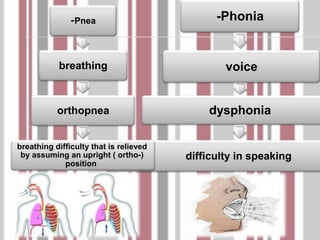
-Pnea                          -Phonia


           breathing                            voice


           orthopnea                        dysphonia

breathing difficulty that is relieved
 by assuming an upright ( ortho-)       difficulty in speaking
             position
-Nas/o             -Rhin/o


  nose               nose

paranasal
                  rhinorrhea

- near the
   nose      discharge from the nose
Paranasal sinuses are a group of four   
paired air-filled spaces
Pharyng/o                 Laryng/o


     pharynx                   larynx


 pharyngospasm               laryngeal


 spasm ( sudden
contraction ) of the   pertaining to the larynx
     pharynx
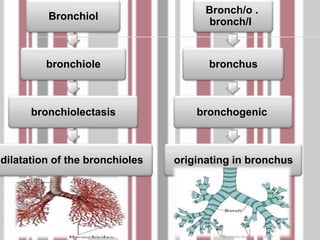
Bronch/o .
         Bronchiol
                                       bronch/I


         bronchiole                   bronchus


      bronchiolectasis              bronchogenic


dilatation of the bronchioles   originating in bronchus
NORMAL VS ASTHMATIC BRONCHIOLE
Phren/o        Trache/o


 diaphragm         trachea


   phrenic       tracheotome

                 instrument
 pertaining to     used to
the diaphragm     incise the
                   trachea
Phrenic/o                 Pleur/o


     phrenic nerve              pleura


    phrenicotripsy           pleurodesis


crushing of the phrenic
                          fusion of the pleura
        nerve
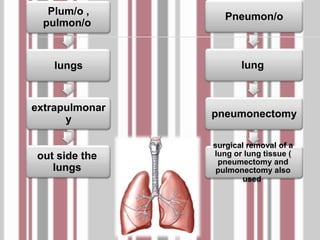
Plum/o ,        Pneumon/o
  pulmon/o


    lungs              lung


extrapulmonar
                pneumonectomy
      y

                surgical removal of a
out side the    lung or lung tissue (
                 pneumectomy and
   lungs         pulmonectomy also
                        used
Pneum/o pneumat/o                  Spir/o


    air – gas – also
   respiration - lung             breathing


    pneumothorax                 spirometer


 presence of air in the    instrument for measuring
thorax ( pleural space )      breathing volumes
:
How do doctors diagnose lungs ailments such   
as Cystic Fibrosis and Asthma with a
spirometer?
::

     :: 
- cystic fibrosis 
- Sudden infant death syndrome 
- Emphysema 
- Asthma 
- Tuberculosis 
- Pneumonia 
Cystic fibrosis (CF) is the most common fatal    
hereditary disease among white children.
that affects the lungs and digestive system


- persistent coughing, at times with phlegm; 
- very salty-tasting skin; 
- wheezing or shortness of breath; 
- frequent lung infections 
A fatal syndrome that affects sleeping infants     
under a year old, characterized by a sudden
cessation of breathing and thought to be
caused by a defect in the central nervous
system. Also called crib death
The exact cause is unknown, but sudden 
infant death syndrome may be associated
with abnormalities in the portion of an infant's
brain that controls breathing and arousal
from sleep.
( SIDS)
- place your baby on his or her back to sleep,   
on a firm crib mattress covered by a fitted
sheet. Nothing else should go in the crib with
your baby — no blanket, pillow, bumper pads
or toys
chronic disease characterized by 
overexpansion and destruction of the alveoli;
commonly
associated with cigarette smoking
 and it’s making breathing very difficult 
is a common chronic inflammatory disease of 
the airways characterized by variable and
recurring symptoms, reversible airflow
obstruction, and bronchospasm.[2] Common
symptoms include wheezing, coughing, chest
tightness, and shortness of breath.[3]
bacterial infection in the lungs that is spread by   
airborne droplets with coughing, sneezing,
speaking & singing
•a persistent cough of more than three weeks   
that brings up phlegm, which may be bloody
•breathlessness, which is usually mild to 
begin with and gradually gets worse
•lack of appetite and weight loss 
•a high temperature of 38C (100.4F) or 
above
•night sweats 
•extreme tiredness or fatigue 
Pneumonia is a lung infection that can make     
you very sick. You may cough, run a fever,
and have a hard time breathing. For most
people, pneumonia can be treated at home.
It often clears up in 2 to 3 weeks. But older
adults, babies, and people with other
diseases can become very ill. They may
need to be in the hospital
Germs called bacteria or viruses usually cause       
pneumonia.

Pneumonia usually starts when you breathe the        
germs into your lungs. You may be more likely
to get the disease after having a cold or the flu.
These illnesses make it hard for your lungs to
fight infection, so it is easier to get pneumonia.
Having a long-term, or chronic, disease like
asthma, heart disease, cancer, or diabetes also
makes you more likely to get pneumonia
- test that measures breathing capactiy of the lungs   
 (spirometry) 
- condition characterized by attacks of difficult 
breathing and wheezing caused by spasms of the
bronchial tubes
 ( asthma ) 
- a membrane that covers the lungs 
(pleura ) 
- chronic disease characterized by overexpansion 
and destruction of the alveoli
 (emphysema) 
- when a person has difficulty breathing in any 
position except in a sitting or standing position
root     Meaning
nas/o                 Nose
Spir/o - pnea       breathing
Pneum/o          Air – gas - .. etc
oxia             Level of oxygen
-phonia               voice
Pneumon/o              lung
By 

  
Eman
alfif

Respiratory system

  • 2.
    - definition ofthe respiratory system - Respiratory terms  - Most and commonly diseases  - Exercise  
  • 4.
    The main roleof the Respiratory System is the  inhalation of fresh oxygen (O2) needed by the body's cells and the exhalation of waste carbon dioxide (CO2). It also helps maintain body temperature and eliminate excess water from the body. The Respiratory system is dependent on the proper functioning of the circulatory system as the O2 and waste CO2 are carried in the blood stream.
  • 5.
    -Oxia -Capnia level of carbon level of oxygen dioxide hypercapnia hypoxia increased carbon dioxide in decreased amount of oxygen the tissues in the tissues
  • 6.
    -Pnea -Phonia breathing voice orthopnea dysphonia breathing difficulty that is relieved by assuming an upright ( ortho-) difficulty in speaking position
  • 7.
    -Nas/o -Rhin/o nose nose paranasal rhinorrhea - near the nose discharge from the nose
  • 8.
    Paranasal sinuses area group of four  paired air-filled spaces
  • 9.
    Pharyng/o Laryng/o pharynx larynx pharyngospasm laryngeal spasm ( sudden contraction ) of the pertaining to the larynx pharynx
  • 11.
    Bronch/o . Bronchiol bronch/I bronchiole bronchus bronchiolectasis bronchogenic dilatation of the bronchioles originating in bronchus
  • 12.
  • 13.
    Phren/o Trache/o diaphragm trachea phrenic tracheotome instrument pertaining to used to the diaphragm incise the trachea
  • 15.
    Phrenic/o Pleur/o phrenic nerve pleura phrenicotripsy pleurodesis crushing of the phrenic fusion of the pleura nerve
  • 16.
    Plum/o , Pneumon/o pulmon/o lungs lung extrapulmonar pneumonectomy y surgical removal of a out side the lung or lung tissue ( pneumectomy and lungs pulmonectomy also used
  • 21.
    Pneum/o pneumat/o Spir/o air – gas – also respiration - lung breathing pneumothorax spirometer presence of air in the instrument for measuring thorax ( pleural space ) breathing volumes
  • 22.
    : How do doctorsdiagnose lungs ailments such  as Cystic Fibrosis and Asthma with a spirometer?
  • 23.
    :: :: 
  • 24.
    - cystic fibrosis - Sudden infant death syndrome  - Emphysema  - Asthma  - Tuberculosis  - Pneumonia 
  • 25.
    Cystic fibrosis (CF)is the most common fatal  hereditary disease among white children. that affects the lungs and digestive system - persistent coughing, at times with phlegm;  - very salty-tasting skin;  - wheezing or shortness of breath;  - frequent lung infections 
  • 26.
    A fatal syndromethat affects sleeping infants  under a year old, characterized by a sudden cessation of breathing and thought to be caused by a defect in the central nervous system. Also called crib death The exact cause is unknown, but sudden  infant death syndrome may be associated with abnormalities in the portion of an infant's brain that controls breathing and arousal from sleep.
  • 27.
    ( SIDS) - placeyour baby on his or her back to sleep,  on a firm crib mattress covered by a fitted sheet. Nothing else should go in the crib with your baby — no blanket, pillow, bumper pads or toys
  • 28.
    chronic disease characterizedby  overexpansion and destruction of the alveoli; commonly associated with cigarette smoking and it’s making breathing very difficult 
  • 29.
    is a commonchronic inflammatory disease of  the airways characterized by variable and recurring symptoms, reversible airflow obstruction, and bronchospasm.[2] Common symptoms include wheezing, coughing, chest tightness, and shortness of breath.[3]
  • 32.
    bacterial infection inthe lungs that is spread by  airborne droplets with coughing, sneezing, speaking & singing
  • 33.
    •a persistent coughof more than three weeks  that brings up phlegm, which may be bloody •breathlessness, which is usually mild to  begin with and gradually gets worse •lack of appetite and weight loss  •a high temperature of 38C (100.4F) or  above •night sweats  •extreme tiredness or fatigue 
  • 34.
    Pneumonia is alung infection that can make  you very sick. You may cough, run a fever, and have a hard time breathing. For most people, pneumonia can be treated at home. It often clears up in 2 to 3 weeks. But older adults, babies, and people with other diseases can become very ill. They may need to be in the hospital
  • 35.
    Germs called bacteriaor viruses usually cause  pneumonia. Pneumonia usually starts when you breathe the  germs into your lungs. You may be more likely to get the disease after having a cold or the flu. These illnesses make it hard for your lungs to fight infection, so it is easier to get pneumonia. Having a long-term, or chronic, disease like asthma, heart disease, cancer, or diabetes also makes you more likely to get pneumonia
  • 36.
    - test thatmeasures breathing capactiy of the lungs  (spirometry)  - condition characterized by attacks of difficult  breathing and wheezing caused by spasms of the bronchial tubes ( asthma )  - a membrane that covers the lungs  (pleura )  - chronic disease characterized by overexpansion  and destruction of the alveoli (emphysema)  - when a person has difficulty breathing in any  position except in a sitting or standing position
  • 37.
    root Meaning nas/o Nose Spir/o - pnea breathing Pneum/o Air – gas - .. etc oxia Level of oxygen -phonia voice Pneumon/o lung
  • 38.
    By   Eman alfif

Editor's Notes

  • #7 Watch the video on https://www.youtube.com/watch?v=yaAGfBLRw1I to see the dysphonia