Respiratory IllnessesRespiratory Illnesses
Jennifer Alix PA-C
Riverbend Medical Group
Primary Care
Terms to KnowTerms to Know
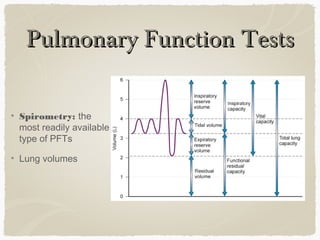
Lung volume: the various measurements used to test lung functions
Total lung capacity: Vital capacity + residual volume; the entire volume of a
lung
Residual volume: Remains after a maximal expiratory effort; cannot be exhaled
Functional residual capacity: Volume remaining in the lungs at end-expiration;
decreases as tidal volume increases
Minute ventilation (volume): the total volume of gas in liters expelled from the
lungs per minute
Tidal volume: Volume of inspired/expired air moving in and out with each
breath
Alveolar volume: the volume of gas expired from the alveoli to the outside of
the body per minute; calculated as the respiratory frequency (f) multiplied by
the difference between tidal volume and the dead space (VT − VD)
Terms to KnowTerms to Know
Dead space volume: is the volume of air which is inhaled that does not take part in the gas
exchange, either because it (1) remains in the conducting airways, or (2) reaches alveoli
that are not perfused or poorly perfused
Hypoxemia: insufficient oxgenation of arterial blood
Hypercapnia: excessive carbon dioxide in the bloodstream, typically caused by
inadequate respiration.
Arterial blood gas: the sampling of the blood levels of oxygen and carbon dioxide within
the arteries
VCO2: the volume of carbon dioxide. eliminated or excreted through the lungs
Respiratory quotient: the ratio of the volume of carbon dioxide evolved to that of oxygen
consumed by an organism, tissue, or cell in a given time
Respiratory zone: is the site of O2 and CO2 exchange with the blood. The respiratory
bronchioles and the alveolar ducts are responsible for 10% of the gas exchange. The
alveoli are responsible for the other 90%
PIO2: Partial pressure of inspired oxygen
Pulmonary Function TestsPulmonary Function Tests
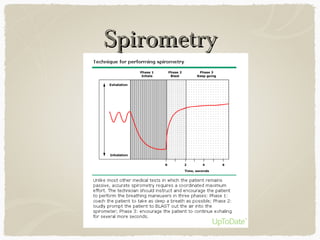
Spirometry: the
most readily available
type of PFTs
Lung volumes
SpirometrySpirometry
Lung VolumesLung Volumes
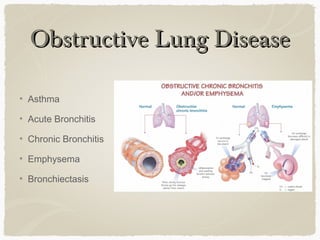
Obstructive Lung DiseaseObstructive Lung Disease
Asthma
Acute Bronchitis
Chronic Bronchitis
Emphysema
Bronchiectasis
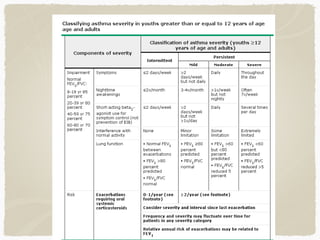
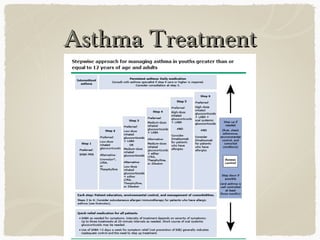
AsthmaAsthma
Asthma affects 8-10% of the population
Slightly more common in male children and in female adults
Chronic inflammatory disorder of the airways
Common precipitants: allergens (dust, animals, pollens, etc), exercise,
URI, rhinosinusitis, post nasal drip, aspiration, GERD, weather, stress
Exercise induced: begins during exercise or within 3 minutes of its end,
peaks within 10-15 minutes, and resolves by 60 minutes
thought to occur in an attempt to warm and humidify an increased
volume of expired air during exercise
Cardiac asthma: wheezing that is precipitated by heart failure
AsthmaAsthma
Signs and symptoms:
episodic wheezing, difficulty in breathing, chest
tightness, and cough
excessive sputum productive is common
symptoms may spontaneously occur or they may be
precipitated
frequently worsen at nighttime
Physical symptoms that increase the probability:
nasal mucosal swelling, secretion increases,
polyps
Spirometry may be used to diagnose:
a positive bronchodilator response strongly
confirms the diagnosis of asthma, but a lack
of responsiveness on PFTs does not
preclude the diagnosis of asthma
Asthma TreatmentAsthma Treatment
Acute BronchitisAcute Bronchitis
one of the most common conditions encountered in clinical practice
self-limited inflammation of the bronchi due to upper airway infection
present with a cough lasting more than five days (typically one to three
weeks), which may be associated with sputum production
Exam: may reveal wheezing consistent with bronchospasm
CXR: generally non-specific, though subtle changes consistent with
thickening of the bronchial walls in the lower lobes are occasionally reported
Treatment: Most patient require only reassurance and symptomatic
treatment
DOES NOT REQUIRE AN ANTIBIOTIC
COPDCOPD
Things to know:
history of cigarette smoking is common
Chronic cough, dyspnea, and sputum productive
Rhonchi, decreased intensity of breath sounds, and
prolonged expiration on physical exam
Airflow limitation on PFTs that is not fully reversible and
is often progressive
COPDCOPD
Chronic BronchitisChronic Bronchitis“Blue bloater”
Frequently are frequently over weight and cyanotic (but are comfortable at rest)
Chronic productive cough for three months in each of two successive years in a
patient in whom other causes of chronic cough (bronchiectasis) have been
excluded
Clinically diagnosed by excessive secretion of bronchial mucus and is manifested
as daily productive cough
Presents in the late 30s and 40s
H & P: major compliant is usually chronic cough (productive) with mucopurulent
sputum, with frequent exacerbations due to chest infections
Dyspnea is usually mild (many patients note limitations due to exercise)
Chest is noisy (rhonchi invariably present), wheezes are common
EmphysemaEmphysema
“Pink puffer”
Patients are thin with recent weight loss
A pathologic diagnosis that denotes abnormal permanent enlargement of air
spaces distal to the terminal bronchiole (with destruction of their walls but
without obvious fibrosis)
Usually presents after 50
H & P: major complaint is also dyspnea, cough is rare with scant clear,
mucoid sputum, these patient’s appear uncomfortable at rest (use of
accessory muscles of respiration)
Chest is very quiet without adventitious sounds
No peripheral edema
BronchiectasisBronchiectasisCongenital or acquired disorder of the large bronchi characterized by permanent, abnormal
dilation and destruction of bronchial walls
May be caused by recurrent inflammation or infection of the airways
may be localized or diffuse
Cystic fibrosis causes about half of the cases
Symptoms: chronic cough with copious amounts of sputum, dyspnea, wheezing
Common: weight loss, anemia, persistent crackles at the lung bases
Radiographic findings: dilated, thickened airways and scattered, irregular opacities; tram
tracks or ring like markings. Scattered opacities, atelectasis, focal consolidation may be present
High resolution CT is the diagnostic study of choice
Treatment: Acute: antibiotics, daily chest physiology, and inhaled bronchodilators (augmentin,
bactrim, ciprofloxacin) Preventive: sometimes given to stable patients that have copious
amounts of sputum (azithromycin TID for 12 months or amoxicillin)
Restrictive Lung DiseasesRestrictive Lung Diseases
Idiopathic pulmonary
fibrosis
Hypersensitivity
pneumonitis
Pulmonary
eosinophilia
Idiopathic PulmonaryIdiopathic Pulmonary
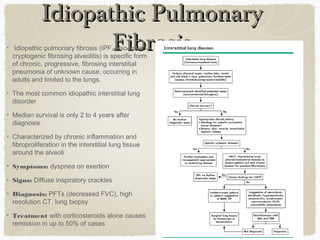
FibrosisFibrosisIdiopathic pulmonary fibrosis (IPF, also called
cryptogenic fibrosing alveolitis) is specific form
of chronic, progressive, fibrosing interstitial
pneumonia of unknown cause, occurring in
adults and limited to the lungs.
The most common idiopathic interstitial lung
disorder
Median survival is only 2 to 4 years after
diagnosis
Characterized by chronic inflammation and
fibroproliferation in the interstitial lung tissue
around the alveoli
Symptoms: dyspnea on exertion
Signs: Diffuse inspiratory crackles
Diagnosis: PFTs (decreased FVC), high
resolution CT, lung biopsy
Treatment with corticosteroids alone causes
remission in up to 50% of cases
HypersensitivityHypersensitivity
PneumonitisPneumonitisAlso called extrinsic allergic alveolitis
A nonatopic, nonasthmatic inflammatory pulmonary disease
Mainly manifested by occupational disease
Farmer’s lung, “humidifier lung,” pidgeon breeder’s lung, bagassosis, sequoiosis, maple bark stripper’s
disease, mushroom picker’s disease, suberosis, detergent worker’s lung
Acute: characterized by sudden onset of malaise, chills, fever, cough, dyspnea, and nausea 4-8 hours after
the exposure to the offending antigen.
usually when the patient is home after work, sometimes with paroxysmal nocturnal dyspnea
Bibasilar crackles, tachypnea, tachycardia, and cyanosis are noted
CXR: small nodular densities sparing the apices and based of the lungs
Labs: elevated WBC with left shift
Treatment: identification of the offending agent and avoidance of further exposure. Oral corticosteroids may
be warranted
Pulmonary EosinophiliaPulmonary Eosinophilia
A diverse group of disorders characterized by eosinophilic pulmonary infiltrates, dyspnea, and
cough
Some patients also often have fever
Common causes: medications (nitrofurantoin, phenytoin, ampicillin, acetaminophen, rantidine)
or infection
Löffler syndrome refers to acute eosinophilic pulmonary infiltrates in response to
transpulmonary passage of helminth larvae
1/3 of cases are idiopathic
Chronic eosinophilic pneumonia: predominantly seen in women and characterized by
fever, night sweats, weight loss and dyspnea
Acute eosinophilic pneumonia: an acute, febrile illness characterized by cough and
dyspnea, sometimes rapidly progressing to pulmonary failure
Respiratory InfectionsRespiratory Infections
Empyema
Pneumonia
Necrotizing Pneumonia
Lung Abscess
Pleural Effusion
EmpyemaEmpyema
An infected pleural effusion
a condition in which purulent fluid is persistently discharged into the pleural space as a result of bacterial
infections
Thought to develop when pulmonary lymphatics become blocked, leading to an outpouring of contaminated
lymphatic fluid into the pleural space
Most commonly occurs in adults and in children and usually develops as a complication to pneumonia,
surgery, trauma, or bronchial obstruction from a tumor
Infectious organisms: S. aureus, E. coli, K. pneumoniae
Symptoms: dyspnea, decreased breath sound and dullness to percussion on the affected side
Patients look quite will and may have cyanosis, fever, tachycardia, cough, and pleural pain
Diagnosis: CXR and thoracentesis
Treatment: use of the appropriate antimicrobial medication after thoracentesis, continous drainage with a
chest tube, surgical debridement in rare cases
Re-accumulation of an empyema may indicate malignancy
Community AcquiredCommunity Acquired
PneumoniaPneumoniaThe most deadly infectious disease in the US and the 8th leading cause of death
Diagnosed outside of the hospital setting (not residents of nursing homes or other long-term care facilities)
May also be diagnosed in a previously ambulatory patient within 48 hours after admission to the hospital
Pathogens: S. pneumoniae, H. influenzae, M. pneumoniae, C. pneumoniae, S. aureus, N. meningitidis, M. catarrhalis, K.
pneumoinae
Symptoms and signs: acute or subacute onset of fever, cough (with or without sputum productive)
Sweats, chills, rigor, chest discomfort, pleurisy, hemoptysis, fatigue, myalgias, anorexia, headache
Fever or hypothermia, tachypnea, tachycardia; many appear acutely ill
Inspiratory crackles and bronchial breath sounds. Dullness to percussion may be observed
Diagnosis: physical exam is only about 50% effective, CXR
Treatment: azithromycin, clarithromycin, doxycycline
Patients with co morbidities: levaquin/moxifloxacin
Necrotizing pneumonia: distinguished by multiple areas of cavitation within an area of
consolidation
Lung AbscessLung Abscess
In most cases of lung abscess multiple
species of anaerobic bacteria
Signs and symptoms: same symptoms
of pneumonia, but cough with expectorant
of foul-smelling purulent sputum
Dentition is often poor
Abscess often appears as a thick walled
solitary cavity surrounded by
consolidation
Air fluid level is usually present
Treatment: clindamycin 600 mg IV q 8
hours then 300 mg orally, penicillin +
metronidazole
Pleural EffusionPleural EffusionThe presence of fluid in the pleural space
The source of the fluid is usually blood vessels or lymphatic vessels lying beneath under the pleura
occasionally there is an abscess present
The most common mechanism of pleural effusion is migration of fluids and other body components through the walls of intact
capillaries bordering the pleura
Transudative: the fluid (transudate) is watery and diffuses out of the capillaries as a result of disorder that increase intravascular
hydrostatic pressure or decrease capillary oncotic pressure
Examples: CHF (venous or left atrial pressures increased), liver or kidney disease (disorders that cause hypoproteinuria)
Exudative: less concentrated and contains high concentrations of white blood cells and plasma proteins. Occurs in response to
inflammation, infection, or malignancy
Inflammatory processes cause increase capillary permeability
Small effusions may go undetected
most will be removed by the lymphatic system once the underlying condition is resolved
Most common symptom is dyspnea
pleuritic chest pain may also occur
Exam: diminished breath sounds throughout and dullness to precession
occasionally a friction rub
Diagnosis: CXR and thoracentesis
Treatment: supportive for small and chest tube for large
Sleep Apnea TermsSleep Apnea Terms
Hypersomnolence: excessive sleepiness evidenced by prolonged sleep episodes or
excessive daytime sleep that occurs almost daily
Hypopnea: abnormally slow or shallow breathing
REM sleep: a kind of sleep that occurs at intervals during the night and is characterized by
rapid eye movements, more dreaming and bodily movement, and faster pulse and
breathing
Upper airways resistance syndrome: a sleep disorder characterized by airway resistance
to breathing during sleep. The primary symptoms include daytime sleepiness and
excessive fatigue
CPAP: continuous positive airway pressure, is a treatment that uses mild air pressure to
keep the airways open
BiPAP: pressure support with two different strengths of continuous positive airway
pressure (CPAP). It is used during noninvasive positive pressure ventilation
Sleep ApneaSleep Apnea
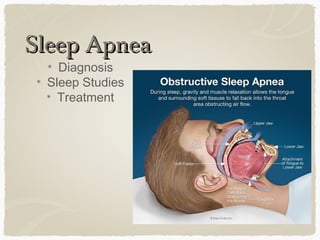
Upper airway obstruction during sleep occurs when loss of normal pharyngeal muscle tone allows the
pharynx to collapse passively during inspiration
Most patients are obese, middle aged man
Signs and symptoms: excessive daytime somnolence, morning sluggishness and headaches, daytime
fatigue, cognitive impairment, recent weight gain, and impotence
Bed partners usually report loud cyclical snoring, breath cessation, witnessed apneas, restlessness, and
thrashing movements of the extremities during sleep
Personality changes, poor judgement, work related problems, depression, and intellectual deterioration
Exam: may be normal or may reveal cor pulmonale or pulmonary hypertension
oropharynx often found to be narrowed by excessive soft tissue folds, large tonsils, pendulous uvula, or
prominent tongue; deviated nasal septum
Diagnosis: polysomnography
Treatment: Weight loss, avoid alcohol, CPAP
only about 75% of patient remain compliant after the first year
Sleep ApneaSleep Apnea
Diagnosis
Sleep Studies
Treatment
Sleep StudiesSleep Studies
Sleep studies measure the number of
movements, apneas, duration, and
movements
also measures the duration of the
different sleep stages (based on
these movements)
patients able to find out how long it
takes them to fall asleep
OSA: 15 or more predominantly
obstructive respiratory events (apneas,
hypopneas, or respiratory effort related
arousals) per hour of sleep (for
polysomnography) or
CPAPCPAP
CasesCases
Case #1Case #1
1. To assist in the decision whether to hospitalize a patient with
community acquired pneumonia, each of the following may be a
factor in favor of hospitalization except for which one?
A. Respiratory rate > 30
B. Serum creatinine > 2.0 mg/dL
C. The patient is confused
D. Age > 64 years
E. Blood pressure < 90 mm Hg
Answer #1Answer #1
B. Serum creatinine > 2.0 mg/dL is not a criterion for
hospitalization of a patient with community acquired
pneumonia. The laid out guidelines for hospitalization
are is the patient confused, elevated BUN, elevated
respiratory rate, blood pressure < 90 mm Hg, and age
64 years.
Case #2Case #2
2. A 19-year-old man has asthma. He is a non-smoker, and there are no
smokers in his home. He has attacks 3 to 4 times per week and takes the
short acting Beta2 agonist albuterol, and held two sprays every six hours
for symptoms when they occur. What is the best next regiment to institute
for this patient?
A. Low dose inhaled corticosteroids
B. Systemic corticosteroids
C. Long acting beta2 agonist
D. High dose inhaled corticosteroids
E. Increase the frequency of the short acting inhaled beta2 agonist
Answer #2Answer #2
A. The category of low dose inhaled corticosteroids
would be appropriate for this patient who has asthma
in the mild persistent stage.
Case #3Case #3
3. A 45-year-old male, 30 pack your smoker complains of exertional dyspnea and dry
cough increasing over the past year. He denies orthopnea. He has been a
schoolteacher all his adult life, was athletic in his 20s and 30s, and has lived in
homes built after 1975. You order spirometry testing. The results are forced vital
capacity, 40% of expected forced vital capacity for age and weight, forced expiratory
volume in one second 90%, and FEV1/FVC 95%. Which of the following conditions
accounts for these findings?
A. Restrictive lung disease
B. Pneumonia
C. Chronic obstructive pulmonary disease
D. Mesothelioma
E. Acute asthma
Answer #3Answer #3
A. Restrictive lung disease. The reduced forced vital
capacity, the amount one can exhale in one breath
after full inspiration, defines restrictive lung disease.
Forced expiratory volume in one second is the
proportion of forced vital capacity Andy exhaled in one
second and can be normal and restrictive lung
disease. FEV1/FVC is 95% of the predicted ratio is
achieved
Case #4Case #4
4. A 58-year-old man who has smoked all his adult life at a rate of one pack per day and 38
pack yours complains of acute dyspnea. He has had a cough, producing half a cup of sputum
each morning. After the onset of a bout of coryza come on the third day he became shorter
breath. Physical examination reveals no definitive wheezes, but rather a reduced percussible
diaphragmatic excursion and the patient versus his lips during expiration. FVC 90% of
expected for the age, FVC1 50% of expected, FEV1/FVC 50% of the predicted ratio. Which
of the following conditions best explains these spirometer findings?
A. COPD
B. Mesothelioma
C. Acute asthma
D. Restrictive lung disease
E. Pneumonia
Answer #4Answer #4
A. The reduced FEV1 and FEV1/FVC Brayshore
indicative of COPD. Actually the spirometry findings
are also compatible with acute asthma as both
conditions are characterized by reduced capacity to
exhale air. Clinical information allows you to rule out
against asthma based on the chronicity. The absence
of wheezing also rules out asthma
Case #5Case #5
5. A 19-year-old male college student has experienced a gradual onset of dry cough
over a period of one week. He complains of headache. The white blood cell count
is 11,500 with a normal differential except for three band forms. Chest
examination is negative for rails and percussible dullness. The chest x-ray shows
patchy bronchopneumonic infiltrates. Which of the following is the most likely
cause of this condition?
A. K. pneumoniae
B. S. pneumoniae
C. S. aureus
D. M. pneumoniae
E. Gram-negative sepsis
Answer #5Answer #5
D. M. pneumoniae has been names one of the
atypical pneumonia is, based on the x-ray findings out
of proportion to clinical findings. Headache is hallmark
of mycoplasmal respiratory infection. The course is
slow and symptoms fairly mild, although mycoplasmal
infections may be associated with a multitude of extra
pulmonary involvement.

Respiratory lecture

  • 1.
    Respiratory IllnessesRespiratory Illnesses JenniferAlix PA-C Riverbend Medical Group Primary Care
  • 2.
    Terms to KnowTermsto Know Lung volume: the various measurements used to test lung functions Total lung capacity: Vital capacity + residual volume; the entire volume of a lung Residual volume: Remains after a maximal expiratory effort; cannot be exhaled Functional residual capacity: Volume remaining in the lungs at end-expiration; decreases as tidal volume increases Minute ventilation (volume): the total volume of gas in liters expelled from the lungs per minute Tidal volume: Volume of inspired/expired air moving in and out with each breath Alveolar volume: the volume of gas expired from the alveoli to the outside of the body per minute; calculated as the respiratory frequency (f) multiplied by the difference between tidal volume and the dead space (VT − VD)
  • 3.
    Terms to KnowTermsto Know Dead space volume: is the volume of air which is inhaled that does not take part in the gas exchange, either because it (1) remains in the conducting airways, or (2) reaches alveoli that are not perfused or poorly perfused Hypoxemia: insufficient oxgenation of arterial blood Hypercapnia: excessive carbon dioxide in the bloodstream, typically caused by inadequate respiration. Arterial blood gas: the sampling of the blood levels of oxygen and carbon dioxide within the arteries VCO2: the volume of carbon dioxide. eliminated or excreted through the lungs Respiratory quotient: the ratio of the volume of carbon dioxide evolved to that of oxygen consumed by an organism, tissue, or cell in a given time Respiratory zone: is the site of O2 and CO2 exchange with the blood. The respiratory bronchioles and the alveolar ducts are responsible for 10% of the gas exchange. The alveoli are responsible for the other 90% PIO2: Partial pressure of inspired oxygen
  • 4.
    Pulmonary Function TestsPulmonaryFunction Tests Spirometry: the most readily available type of PFTs Lung volumes
  • 5.
  • 6.
  • 8.
    Obstructive Lung DiseaseObstructiveLung Disease Asthma Acute Bronchitis Chronic Bronchitis Emphysema Bronchiectasis
  • 9.
    AsthmaAsthma Asthma affects 8-10%of the population Slightly more common in male children and in female adults Chronic inflammatory disorder of the airways Common precipitants: allergens (dust, animals, pollens, etc), exercise, URI, rhinosinusitis, post nasal drip, aspiration, GERD, weather, stress Exercise induced: begins during exercise or within 3 minutes of its end, peaks within 10-15 minutes, and resolves by 60 minutes thought to occur in an attempt to warm and humidify an increased volume of expired air during exercise Cardiac asthma: wheezing that is precipitated by heart failure
  • 10.
    AsthmaAsthma Signs and symptoms: episodicwheezing, difficulty in breathing, chest tightness, and cough excessive sputum productive is common symptoms may spontaneously occur or they may be precipitated frequently worsen at nighttime Physical symptoms that increase the probability: nasal mucosal swelling, secretion increases, polyps Spirometry may be used to diagnose: a positive bronchodilator response strongly confirms the diagnosis of asthma, but a lack of responsiveness on PFTs does not preclude the diagnosis of asthma
  • 12.
  • 13.
    Acute BronchitisAcute Bronchitis oneof the most common conditions encountered in clinical practice self-limited inflammation of the bronchi due to upper airway infection present with a cough lasting more than five days (typically one to three weeks), which may be associated with sputum production Exam: may reveal wheezing consistent with bronchospasm CXR: generally non-specific, though subtle changes consistent with thickening of the bronchial walls in the lower lobes are occasionally reported Treatment: Most patient require only reassurance and symptomatic treatment DOES NOT REQUIRE AN ANTIBIOTIC
  • 14.
    COPDCOPD Things to know: historyof cigarette smoking is common Chronic cough, dyspnea, and sputum productive Rhonchi, decreased intensity of breath sounds, and prolonged expiration on physical exam Airflow limitation on PFTs that is not fully reversible and is often progressive
  • 15.
  • 16.
    Chronic BronchitisChronic Bronchitis“Bluebloater” Frequently are frequently over weight and cyanotic (but are comfortable at rest) Chronic productive cough for three months in each of two successive years in a patient in whom other causes of chronic cough (bronchiectasis) have been excluded Clinically diagnosed by excessive secretion of bronchial mucus and is manifested as daily productive cough Presents in the late 30s and 40s H & P: major compliant is usually chronic cough (productive) with mucopurulent sputum, with frequent exacerbations due to chest infections Dyspnea is usually mild (many patients note limitations due to exercise) Chest is noisy (rhonchi invariably present), wheezes are common
  • 17.
    EmphysemaEmphysema “Pink puffer” Patients arethin with recent weight loss A pathologic diagnosis that denotes abnormal permanent enlargement of air spaces distal to the terminal bronchiole (with destruction of their walls but without obvious fibrosis) Usually presents after 50 H & P: major complaint is also dyspnea, cough is rare with scant clear, mucoid sputum, these patient’s appear uncomfortable at rest (use of accessory muscles of respiration) Chest is very quiet without adventitious sounds No peripheral edema
  • 19.
    BronchiectasisBronchiectasisCongenital or acquireddisorder of the large bronchi characterized by permanent, abnormal dilation and destruction of bronchial walls May be caused by recurrent inflammation or infection of the airways may be localized or diffuse Cystic fibrosis causes about half of the cases Symptoms: chronic cough with copious amounts of sputum, dyspnea, wheezing Common: weight loss, anemia, persistent crackles at the lung bases Radiographic findings: dilated, thickened airways and scattered, irregular opacities; tram tracks or ring like markings. Scattered opacities, atelectasis, focal consolidation may be present High resolution CT is the diagnostic study of choice Treatment: Acute: antibiotics, daily chest physiology, and inhaled bronchodilators (augmentin, bactrim, ciprofloxacin) Preventive: sometimes given to stable patients that have copious amounts of sputum (azithromycin TID for 12 months or amoxicillin)
  • 20.
    Restrictive Lung DiseasesRestrictiveLung Diseases Idiopathic pulmonary fibrosis Hypersensitivity pneumonitis Pulmonary eosinophilia
  • 21.
    Idiopathic PulmonaryIdiopathic Pulmonary FibrosisFibrosisIdiopathicpulmonary fibrosis (IPF, also called cryptogenic fibrosing alveolitis) is specific form of chronic, progressive, fibrosing interstitial pneumonia of unknown cause, occurring in adults and limited to the lungs. The most common idiopathic interstitial lung disorder Median survival is only 2 to 4 years after diagnosis Characterized by chronic inflammation and fibroproliferation in the interstitial lung tissue around the alveoli Symptoms: dyspnea on exertion Signs: Diffuse inspiratory crackles Diagnosis: PFTs (decreased FVC), high resolution CT, lung biopsy Treatment with corticosteroids alone causes remission in up to 50% of cases
  • 22.
    HypersensitivityHypersensitivity PneumonitisPneumonitisAlso called extrinsicallergic alveolitis A nonatopic, nonasthmatic inflammatory pulmonary disease Mainly manifested by occupational disease Farmer’s lung, “humidifier lung,” pidgeon breeder’s lung, bagassosis, sequoiosis, maple bark stripper’s disease, mushroom picker’s disease, suberosis, detergent worker’s lung Acute: characterized by sudden onset of malaise, chills, fever, cough, dyspnea, and nausea 4-8 hours after the exposure to the offending antigen. usually when the patient is home after work, sometimes with paroxysmal nocturnal dyspnea Bibasilar crackles, tachypnea, tachycardia, and cyanosis are noted CXR: small nodular densities sparing the apices and based of the lungs Labs: elevated WBC with left shift Treatment: identification of the offending agent and avoidance of further exposure. Oral corticosteroids may be warranted
  • 23.
    Pulmonary EosinophiliaPulmonary Eosinophilia Adiverse group of disorders characterized by eosinophilic pulmonary infiltrates, dyspnea, and cough Some patients also often have fever Common causes: medications (nitrofurantoin, phenytoin, ampicillin, acetaminophen, rantidine) or infection Löffler syndrome refers to acute eosinophilic pulmonary infiltrates in response to transpulmonary passage of helminth larvae 1/3 of cases are idiopathic Chronic eosinophilic pneumonia: predominantly seen in women and characterized by fever, night sweats, weight loss and dyspnea Acute eosinophilic pneumonia: an acute, febrile illness characterized by cough and dyspnea, sometimes rapidly progressing to pulmonary failure
  • 24.
  • 25.
    EmpyemaEmpyema An infected pleuraleffusion a condition in which purulent fluid is persistently discharged into the pleural space as a result of bacterial infections Thought to develop when pulmonary lymphatics become blocked, leading to an outpouring of contaminated lymphatic fluid into the pleural space Most commonly occurs in adults and in children and usually develops as a complication to pneumonia, surgery, trauma, or bronchial obstruction from a tumor Infectious organisms: S. aureus, E. coli, K. pneumoniae Symptoms: dyspnea, decreased breath sound and dullness to percussion on the affected side Patients look quite will and may have cyanosis, fever, tachycardia, cough, and pleural pain Diagnosis: CXR and thoracentesis Treatment: use of the appropriate antimicrobial medication after thoracentesis, continous drainage with a chest tube, surgical debridement in rare cases Re-accumulation of an empyema may indicate malignancy
  • 26.
    Community AcquiredCommunity Acquired PneumoniaPneumoniaThemost deadly infectious disease in the US and the 8th leading cause of death Diagnosed outside of the hospital setting (not residents of nursing homes or other long-term care facilities) May also be diagnosed in a previously ambulatory patient within 48 hours after admission to the hospital Pathogens: S. pneumoniae, H. influenzae, M. pneumoniae, C. pneumoniae, S. aureus, N. meningitidis, M. catarrhalis, K. pneumoinae Symptoms and signs: acute or subacute onset of fever, cough (with or without sputum productive) Sweats, chills, rigor, chest discomfort, pleurisy, hemoptysis, fatigue, myalgias, anorexia, headache Fever or hypothermia, tachypnea, tachycardia; many appear acutely ill Inspiratory crackles and bronchial breath sounds. Dullness to percussion may be observed Diagnosis: physical exam is only about 50% effective, CXR Treatment: azithromycin, clarithromycin, doxycycline Patients with co morbidities: levaquin/moxifloxacin Necrotizing pneumonia: distinguished by multiple areas of cavitation within an area of consolidation
  • 27.
    Lung AbscessLung Abscess Inmost cases of lung abscess multiple species of anaerobic bacteria Signs and symptoms: same symptoms of pneumonia, but cough with expectorant of foul-smelling purulent sputum Dentition is often poor Abscess often appears as a thick walled solitary cavity surrounded by consolidation Air fluid level is usually present Treatment: clindamycin 600 mg IV q 8 hours then 300 mg orally, penicillin + metronidazole
  • 28.
    Pleural EffusionPleural EffusionThepresence of fluid in the pleural space The source of the fluid is usually blood vessels or lymphatic vessels lying beneath under the pleura occasionally there is an abscess present The most common mechanism of pleural effusion is migration of fluids and other body components through the walls of intact capillaries bordering the pleura Transudative: the fluid (transudate) is watery and diffuses out of the capillaries as a result of disorder that increase intravascular hydrostatic pressure or decrease capillary oncotic pressure Examples: CHF (venous or left atrial pressures increased), liver or kidney disease (disorders that cause hypoproteinuria) Exudative: less concentrated and contains high concentrations of white blood cells and plasma proteins. Occurs in response to inflammation, infection, or malignancy Inflammatory processes cause increase capillary permeability Small effusions may go undetected most will be removed by the lymphatic system once the underlying condition is resolved Most common symptom is dyspnea pleuritic chest pain may also occur Exam: diminished breath sounds throughout and dullness to precession occasionally a friction rub Diagnosis: CXR and thoracentesis Treatment: supportive for small and chest tube for large
  • 29.
    Sleep Apnea TermsSleepApnea Terms Hypersomnolence: excessive sleepiness evidenced by prolonged sleep episodes or excessive daytime sleep that occurs almost daily Hypopnea: abnormally slow or shallow breathing REM sleep: a kind of sleep that occurs at intervals during the night and is characterized by rapid eye movements, more dreaming and bodily movement, and faster pulse and breathing Upper airways resistance syndrome: a sleep disorder characterized by airway resistance to breathing during sleep. The primary symptoms include daytime sleepiness and excessive fatigue CPAP: continuous positive airway pressure, is a treatment that uses mild air pressure to keep the airways open BiPAP: pressure support with two different strengths of continuous positive airway pressure (CPAP). It is used during noninvasive positive pressure ventilation
  • 30.
    Sleep ApneaSleep Apnea Upperairway obstruction during sleep occurs when loss of normal pharyngeal muscle tone allows the pharynx to collapse passively during inspiration Most patients are obese, middle aged man Signs and symptoms: excessive daytime somnolence, morning sluggishness and headaches, daytime fatigue, cognitive impairment, recent weight gain, and impotence Bed partners usually report loud cyclical snoring, breath cessation, witnessed apneas, restlessness, and thrashing movements of the extremities during sleep Personality changes, poor judgement, work related problems, depression, and intellectual deterioration Exam: may be normal or may reveal cor pulmonale or pulmonary hypertension oropharynx often found to be narrowed by excessive soft tissue folds, large tonsils, pendulous uvula, or prominent tongue; deviated nasal septum Diagnosis: polysomnography Treatment: Weight loss, avoid alcohol, CPAP only about 75% of patient remain compliant after the first year
  • 31.
  • 32.
    Sleep StudiesSleep Studies Sleepstudies measure the number of movements, apneas, duration, and movements also measures the duration of the different sleep stages (based on these movements) patients able to find out how long it takes them to fall asleep OSA: 15 or more predominantly obstructive respiratory events (apneas, hypopneas, or respiratory effort related arousals) per hour of sleep (for polysomnography) or
  • 33.
  • 34.
  • 35.
    Case #1Case #1 1.To assist in the decision whether to hospitalize a patient with community acquired pneumonia, each of the following may be a factor in favor of hospitalization except for which one? A. Respiratory rate > 30 B. Serum creatinine > 2.0 mg/dL C. The patient is confused D. Age > 64 years E. Blood pressure < 90 mm Hg
  • 36.
    Answer #1Answer #1 B.Serum creatinine > 2.0 mg/dL is not a criterion for hospitalization of a patient with community acquired pneumonia. The laid out guidelines for hospitalization are is the patient confused, elevated BUN, elevated respiratory rate, blood pressure < 90 mm Hg, and age 64 years.
  • 37.
    Case #2Case #2 2.A 19-year-old man has asthma. He is a non-smoker, and there are no smokers in his home. He has attacks 3 to 4 times per week and takes the short acting Beta2 agonist albuterol, and held two sprays every six hours for symptoms when they occur. What is the best next regiment to institute for this patient? A. Low dose inhaled corticosteroids B. Systemic corticosteroids C. Long acting beta2 agonist D. High dose inhaled corticosteroids E. Increase the frequency of the short acting inhaled beta2 agonist
  • 38.
    Answer #2Answer #2 A.The category of low dose inhaled corticosteroids would be appropriate for this patient who has asthma in the mild persistent stage.
  • 39.
    Case #3Case #3 3.A 45-year-old male, 30 pack your smoker complains of exertional dyspnea and dry cough increasing over the past year. He denies orthopnea. He has been a schoolteacher all his adult life, was athletic in his 20s and 30s, and has lived in homes built after 1975. You order spirometry testing. The results are forced vital capacity, 40% of expected forced vital capacity for age and weight, forced expiratory volume in one second 90%, and FEV1/FVC 95%. Which of the following conditions accounts for these findings? A. Restrictive lung disease B. Pneumonia C. Chronic obstructive pulmonary disease D. Mesothelioma E. Acute asthma
  • 40.
    Answer #3Answer #3 A.Restrictive lung disease. The reduced forced vital capacity, the amount one can exhale in one breath after full inspiration, defines restrictive lung disease. Forced expiratory volume in one second is the proportion of forced vital capacity Andy exhaled in one second and can be normal and restrictive lung disease. FEV1/FVC is 95% of the predicted ratio is achieved
  • 41.
    Case #4Case #4 4.A 58-year-old man who has smoked all his adult life at a rate of one pack per day and 38 pack yours complains of acute dyspnea. He has had a cough, producing half a cup of sputum each morning. After the onset of a bout of coryza come on the third day he became shorter breath. Physical examination reveals no definitive wheezes, but rather a reduced percussible diaphragmatic excursion and the patient versus his lips during expiration. FVC 90% of expected for the age, FVC1 50% of expected, FEV1/FVC 50% of the predicted ratio. Which of the following conditions best explains these spirometer findings? A. COPD B. Mesothelioma C. Acute asthma D. Restrictive lung disease E. Pneumonia
  • 42.
    Answer #4Answer #4 A.The reduced FEV1 and FEV1/FVC Brayshore indicative of COPD. Actually the spirometry findings are also compatible with acute asthma as both conditions are characterized by reduced capacity to exhale air. Clinical information allows you to rule out against asthma based on the chronicity. The absence of wheezing also rules out asthma
  • 43.
    Case #5Case #5 5.A 19-year-old male college student has experienced a gradual onset of dry cough over a period of one week. He complains of headache. The white blood cell count is 11,500 with a normal differential except for three band forms. Chest examination is negative for rails and percussible dullness. The chest x-ray shows patchy bronchopneumonic infiltrates. Which of the following is the most likely cause of this condition? A. K. pneumoniae B. S. pneumoniae C. S. aureus D. M. pneumoniae E. Gram-negative sepsis
  • 44.
    Answer #5Answer #5 D.M. pneumoniae has been names one of the atypical pneumonia is, based on the x-ray findings out of proportion to clinical findings. Headache is hallmark of mycoplasmal respiratory infection. The course is slow and symptoms fairly mild, although mycoplasmal infections may be associated with a multitude of extra pulmonary involvement.