SUDEEP AULAKH, MD
September 14, 2015
ASTHMA
Objectives
Prevalence
Definition
Pathophysiology
Triggers
Diagnosis
Treatment
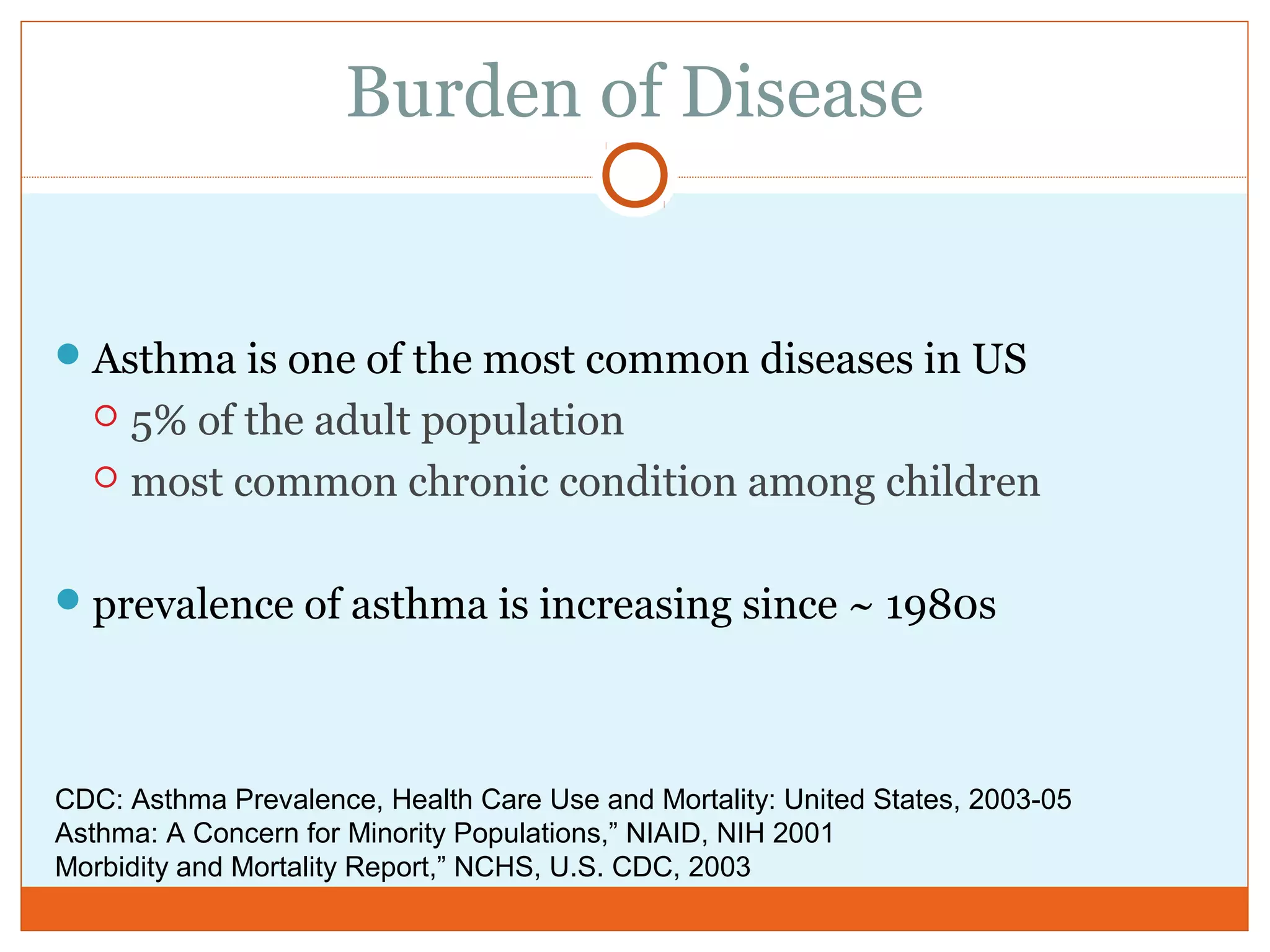
Burden of Disease
Asthma is one of the most common diseases in US
 5% of the adult population
 most common chronic condition among children
prevalence of asthma is increasing since ~ 1980s
CDC: Asthma Prevalence, Health Care Use and Mortality: United States, 2003-05
Asthma: A Concern for Minority Populations,” NIAID, NIH 2001
Morbidity and Mortality Report,” NCHS, U.S. CDC, 2003
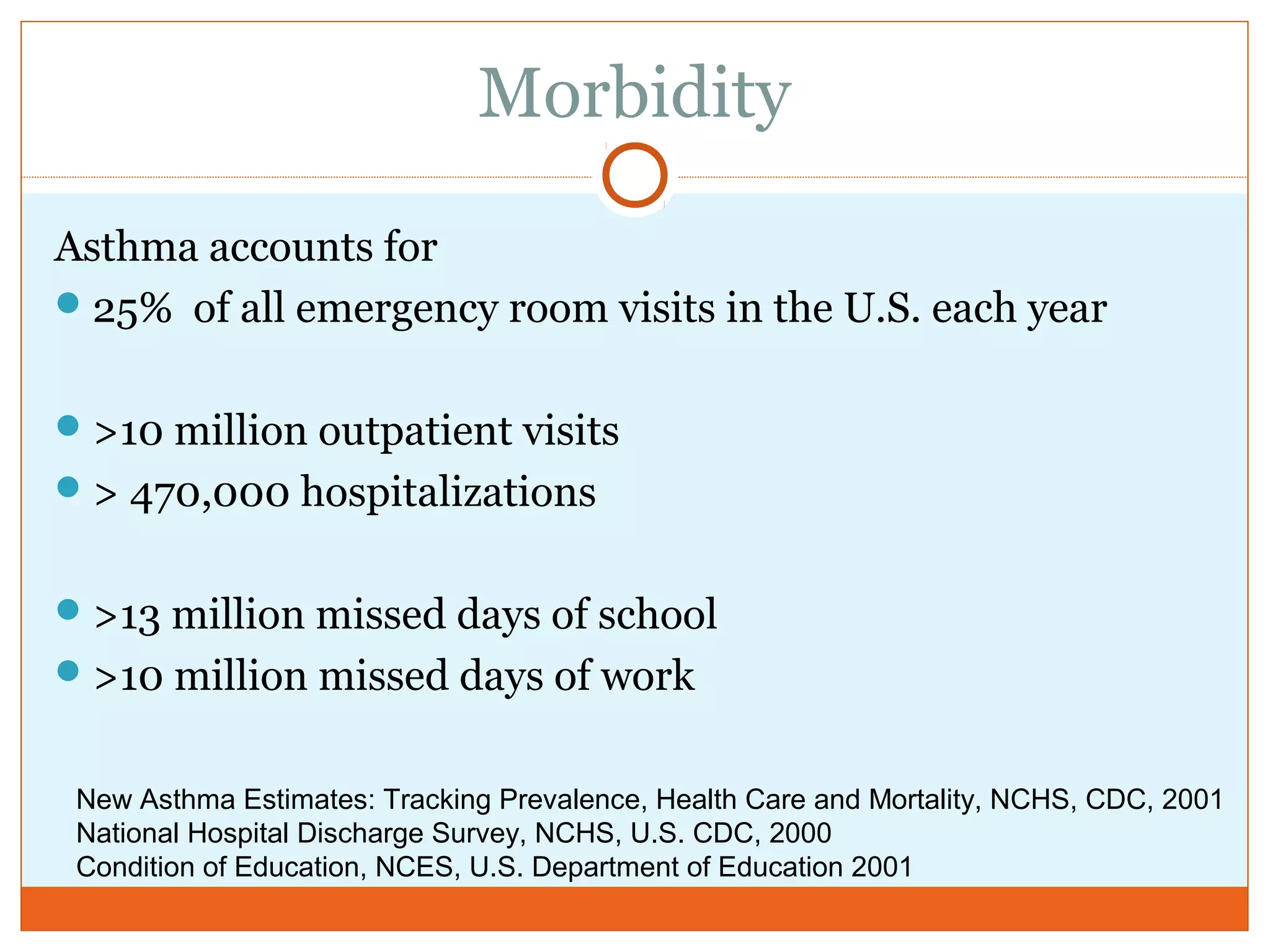
Morbidity
Asthma accounts for
25% of all emergency room visits in the U.S. each year
>10 million outpatient visits
> 470,000 hospitalizations
>13 million missed days of school
>10 million missed days of work
New Asthma Estimates: Tracking Prevalence, Health Care and Mortality, NCHS, CDC, 2001
National Hospital Discharge Survey, NCHS, U.S. CDC, 2000
Condition of Education, NCES, U.S. Department of Education 2001
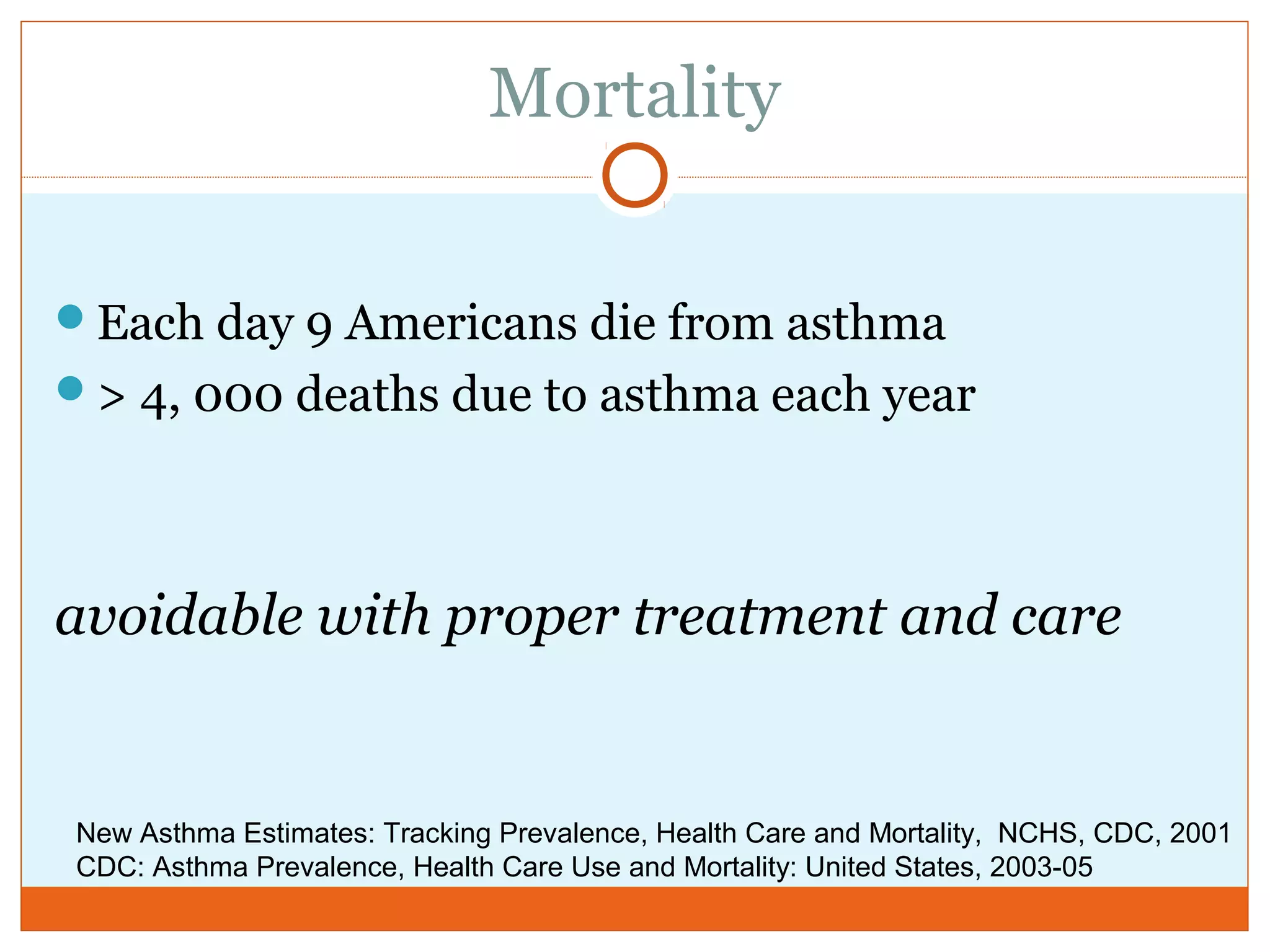
Mortality
Each day 9 Americans die from asthma
> 4, 000 deaths due to asthma each year
avoidable with proper treatment and care
New Asthma Estimates: Tracking Prevalence, Health Care and Mortality, NCHS, CDC, 2001
CDC: Asthma Prevalence, Health Care Use and Mortality: United States, 2003-05
Asthma is….
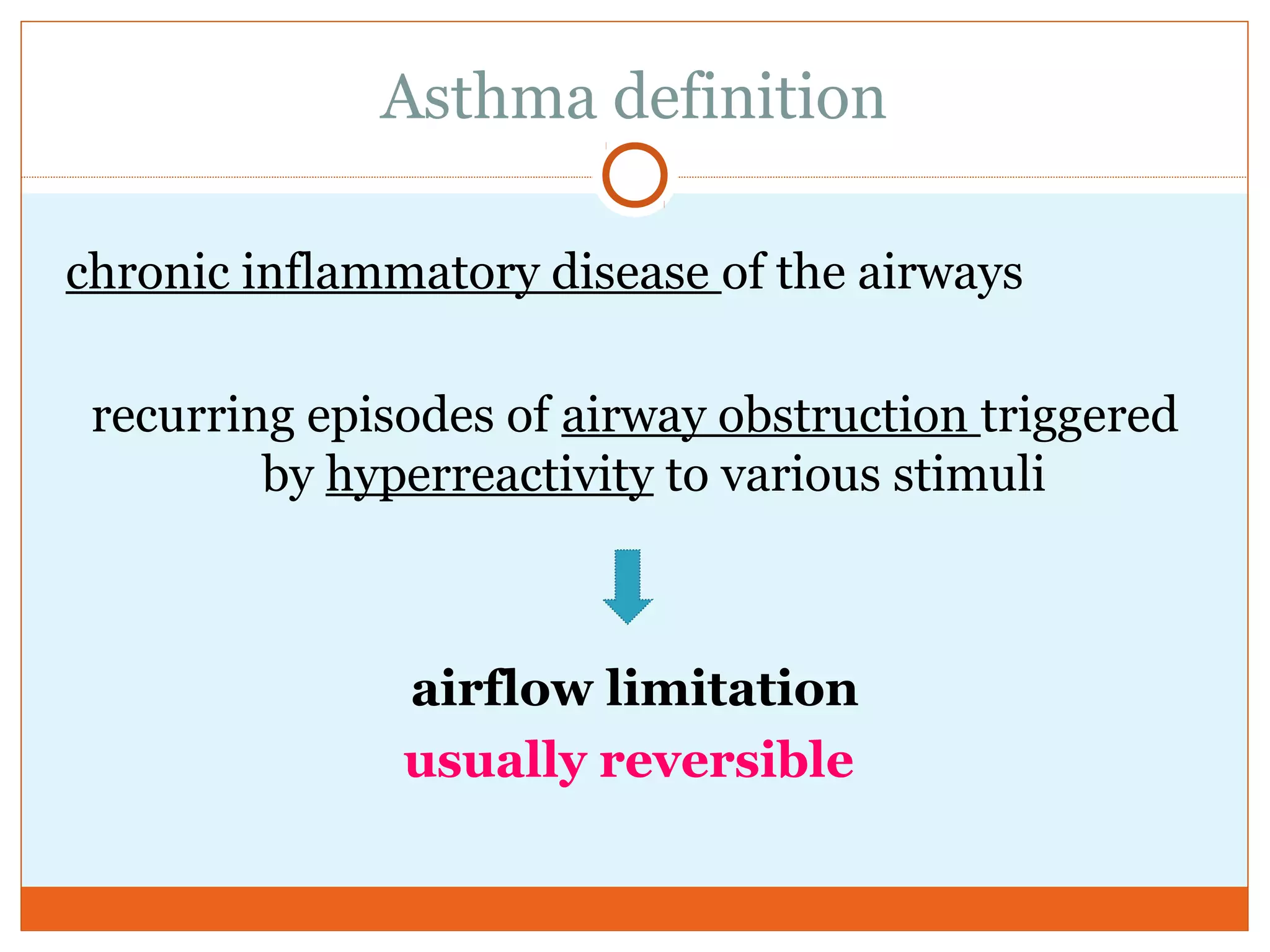
Asthma definition
chronic inflammatory disease of the airways
recurring episodes of airway obstruction triggered
by hyperreactivity to various stimuli
airflow limitation
usually reversible
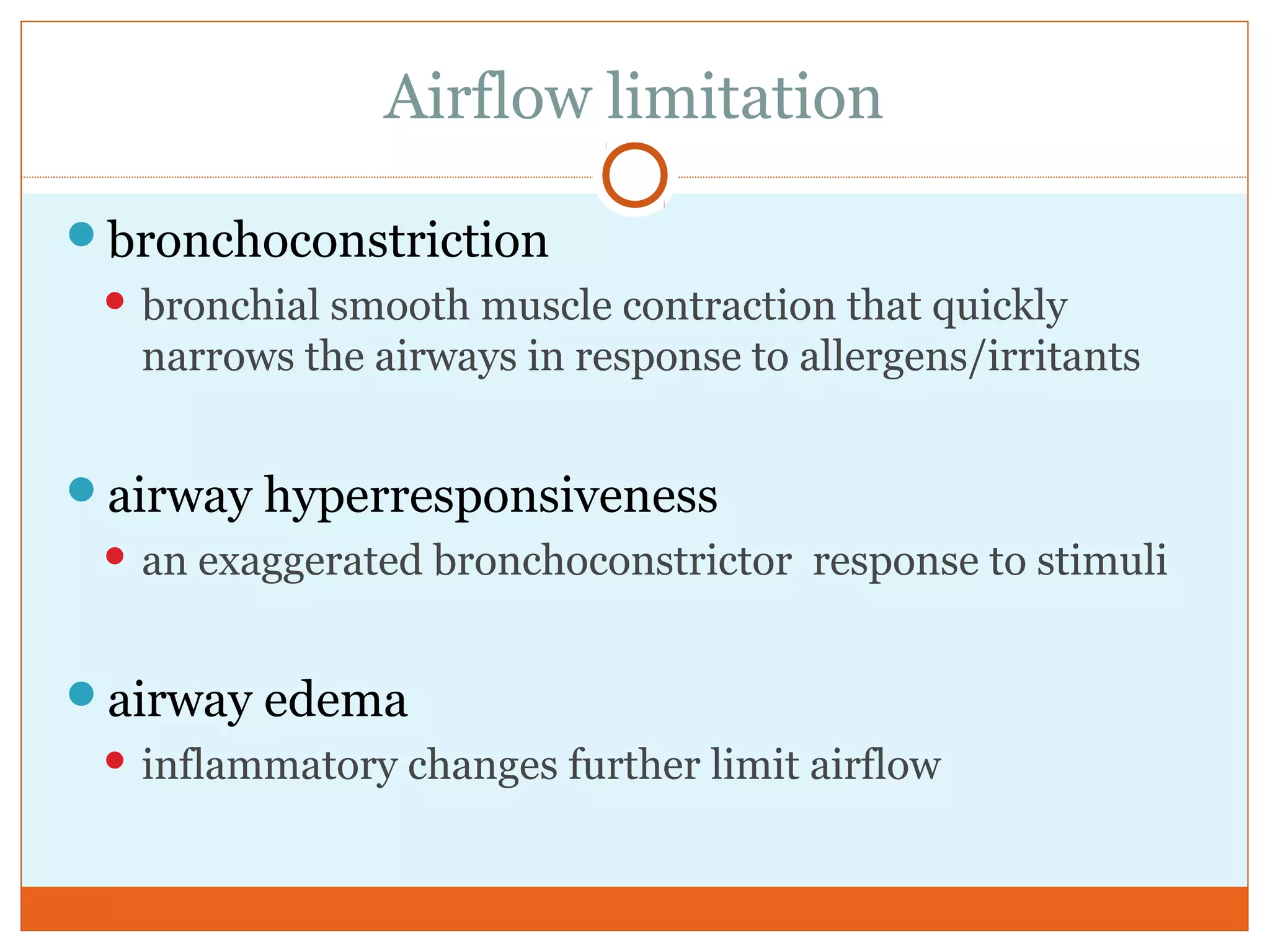
Airflow limitation
bronchoconstriction
 bronchial smooth muscle contraction that quickly
narrows the airways in response to allergens/irritants
airway hyperresponsiveness
 an exaggerated bronchoconstrictor response to stimuli
airway edema
 inflammatory changes further limit airflow
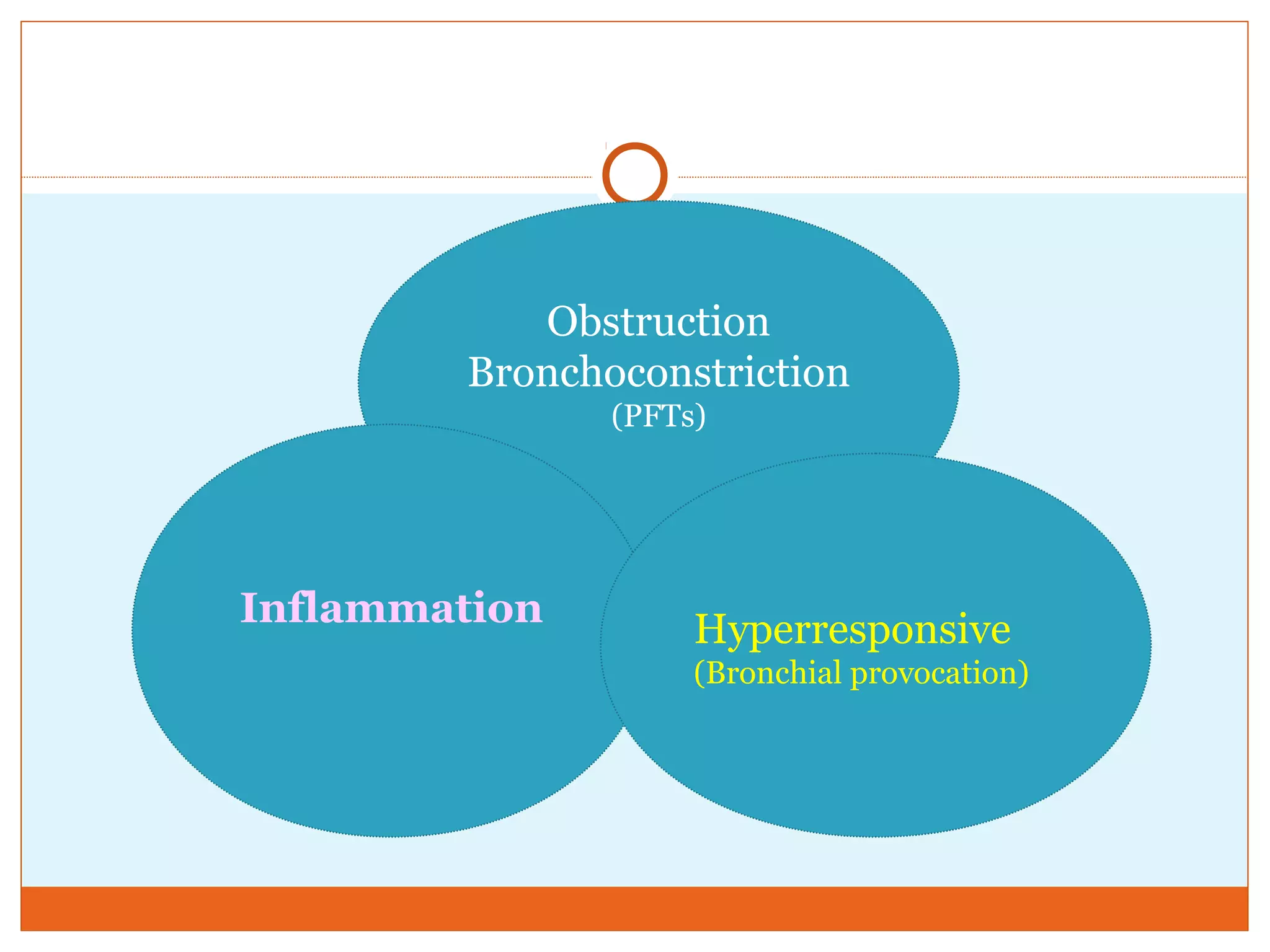
Obstruction
Bronchoconstriction
(PFTs)
Inflammation Hyperresponsive
(Bronchial provocation)
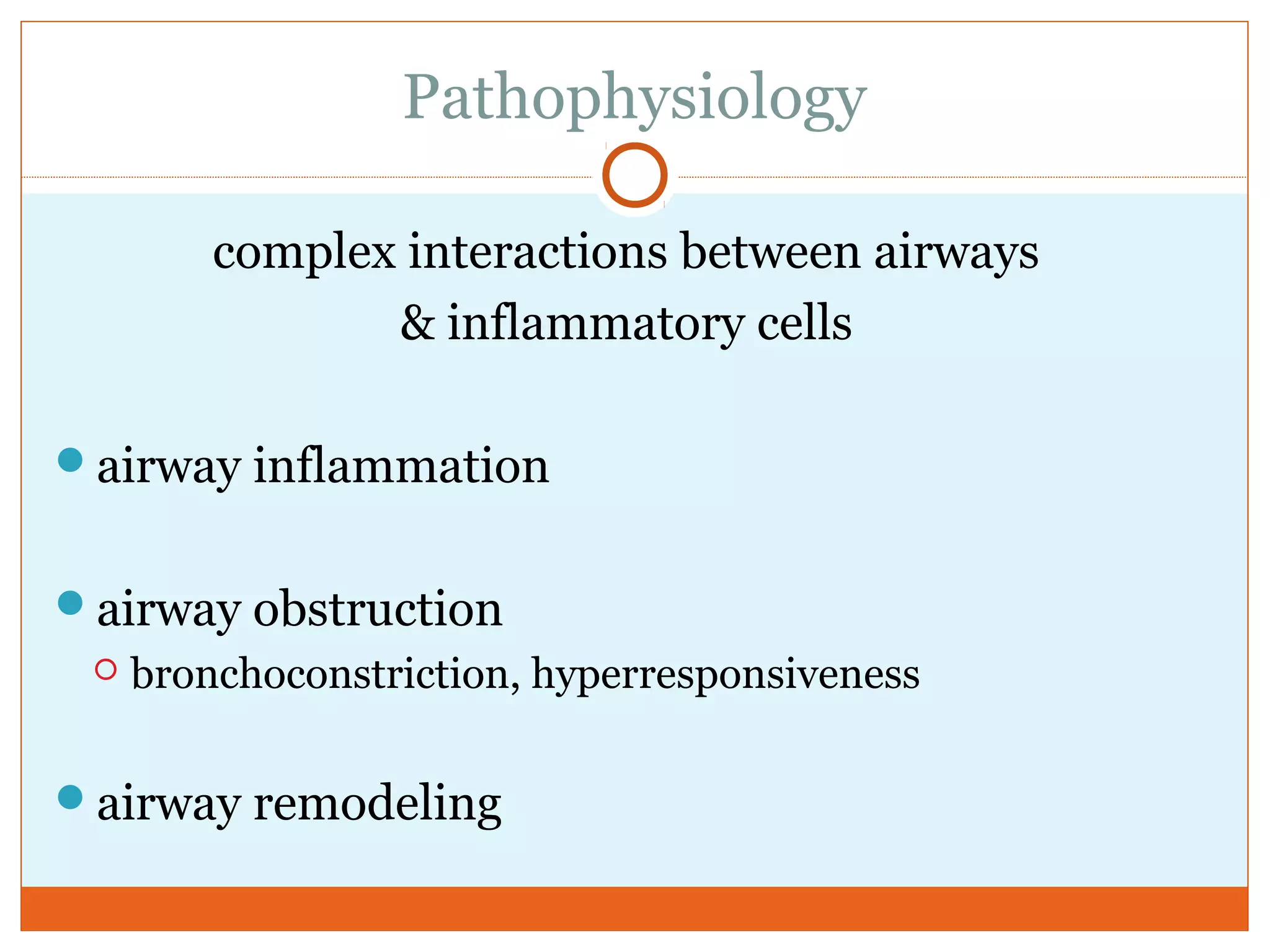
Pathophysiology
complex interactions between airways
& inflammatory cells
airway inflammation
airway obstruction
 bronchoconstriction, hyperresponsiveness
airway remodeling
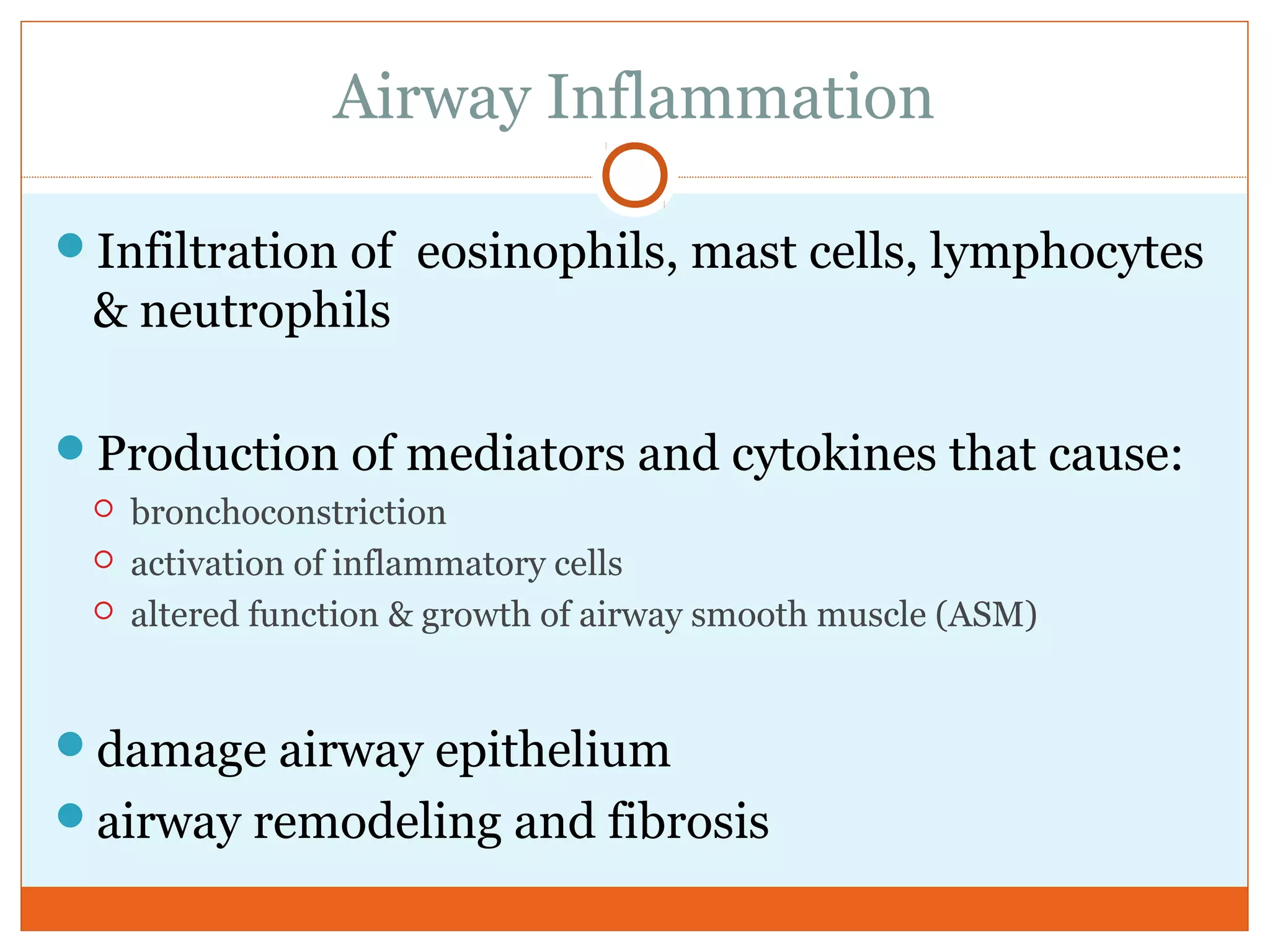
Airway Inflammation
Infiltration of eosinophils, mast cells, lymphocytes
& neutrophils
Production of mediators and cytokines that cause:
 bronchoconstriction
 activation of inflammatory cells
 altered function & growth of airway smooth muscle (ASM)
damage airway epithelium
airway remodeling and fibrosis
Airway Inflammation
Early and late phase reactions
Early- minutes
Late- hours
Airway Inflammation: early phase reaction
manifests 15 to 30 minutes after the exposure
resolves in 1 to 2 hours
allergen inhalation by a sensitized individual
 bronchoconstriction within minutes
mast cells activation and mediator release
Airway Inflammation: late phase reaction
half of pts develop late-phase response 3- 8 hrs later
recurrence of bronchoconstriction
influx of inflammatory and immune cells
 mediators released
 airway inflammation and ASM contraction
 largely reversible by beta-agonist administration
Bronchoconstriction
airway smooth muscle contraction
due to contractile agonists released from
inflammatory cells or reflex neural mechanisms
 mast cell and eosinophil mediators are potent
bronchoconstrictors
 contraction and relaxation of ASM accounts for
much of the rapid changes in airflow limitation
 basis for beta-agonist therapy that directly relaxes ASM
Bronchial hyperresponsiveness
exaggerated bronchoconstrictor response to a variety
of physical, chemical or environmental stimuli
consequence of airway remodeling and structural
abnormalities of the airway
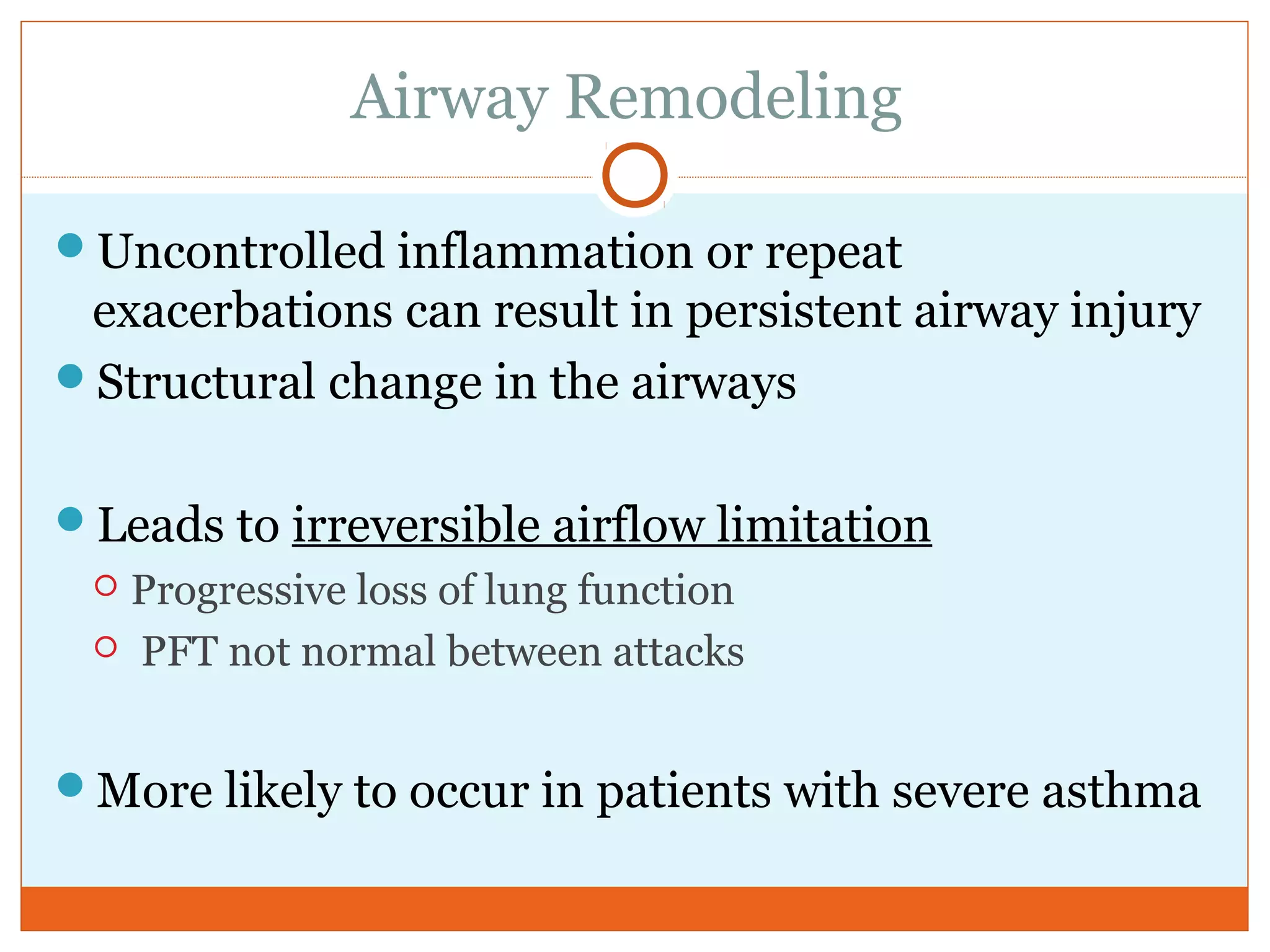
Airway Remodeling
Uncontrolled inflammation or repeat
exacerbations can result in persistent airway injury
Structural change in the airways
Leads to irreversible airflow limitation
 Progressive loss of lung function
 PFT not normal between attacks
More likely to occur in patients with severe asthma
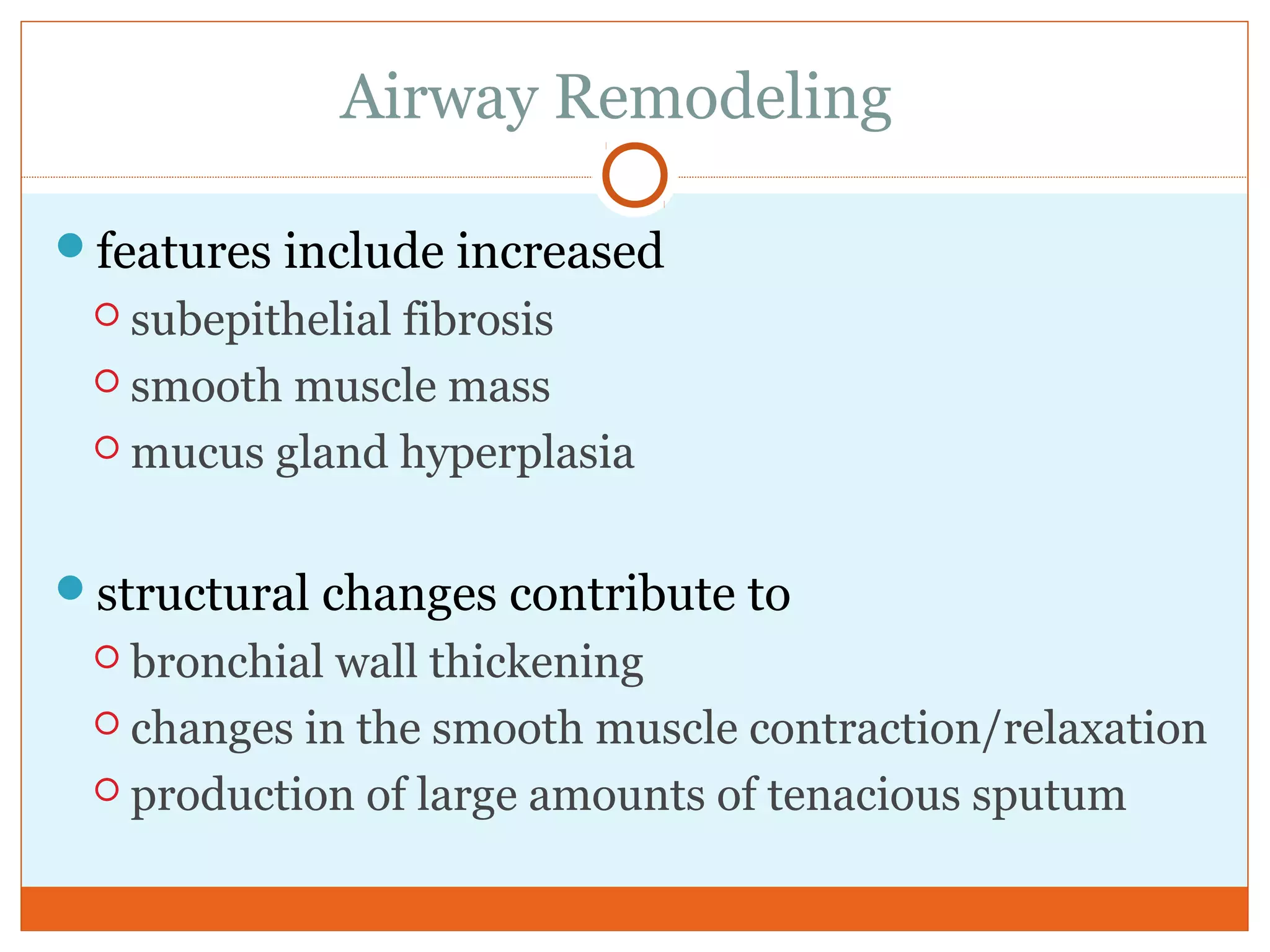
Airway Remodeling
features include increased
 subepithelial fibrosis
 smooth muscle mass
 mucus gland hyperplasia
structural changes contribute to
 bronchial wall thickening
 changes in the smooth muscle contraction/relaxation
 production of large amounts of tenacious sputum
Modulating factors
A variety of
- genetic
-environmental
-infectious factors
determine whether susceptible individuals
develop asthma
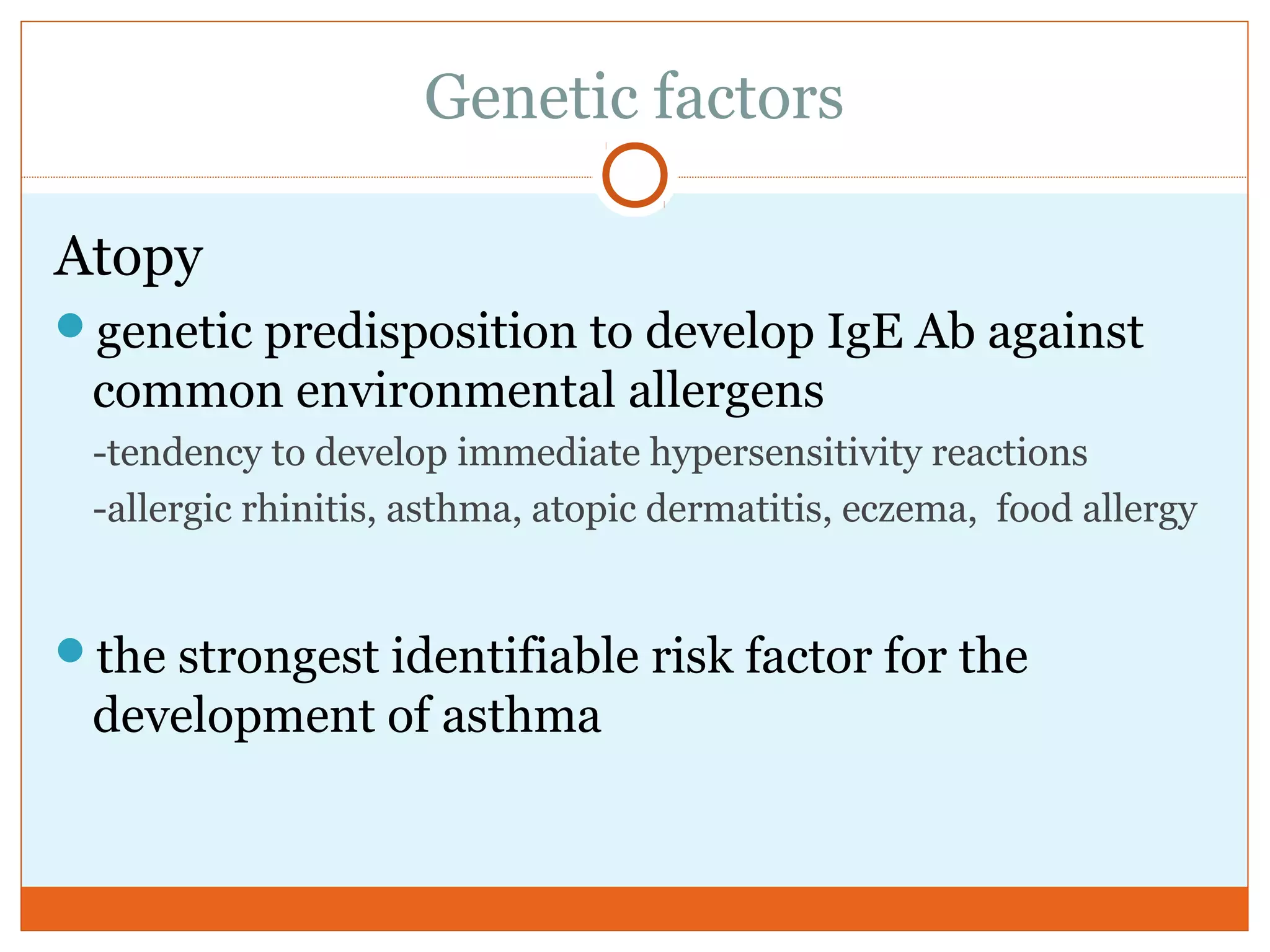
Genetic factors
Atopy
genetic predisposition to develop IgE Ab against
common environmental allergens
-tendency to develop immediate hypersensitivity reactions
-allergic rhinitis, asthma, atopic dermatitis, eczema, food allergy
the strongest identifiable risk factor for the
development of asthma
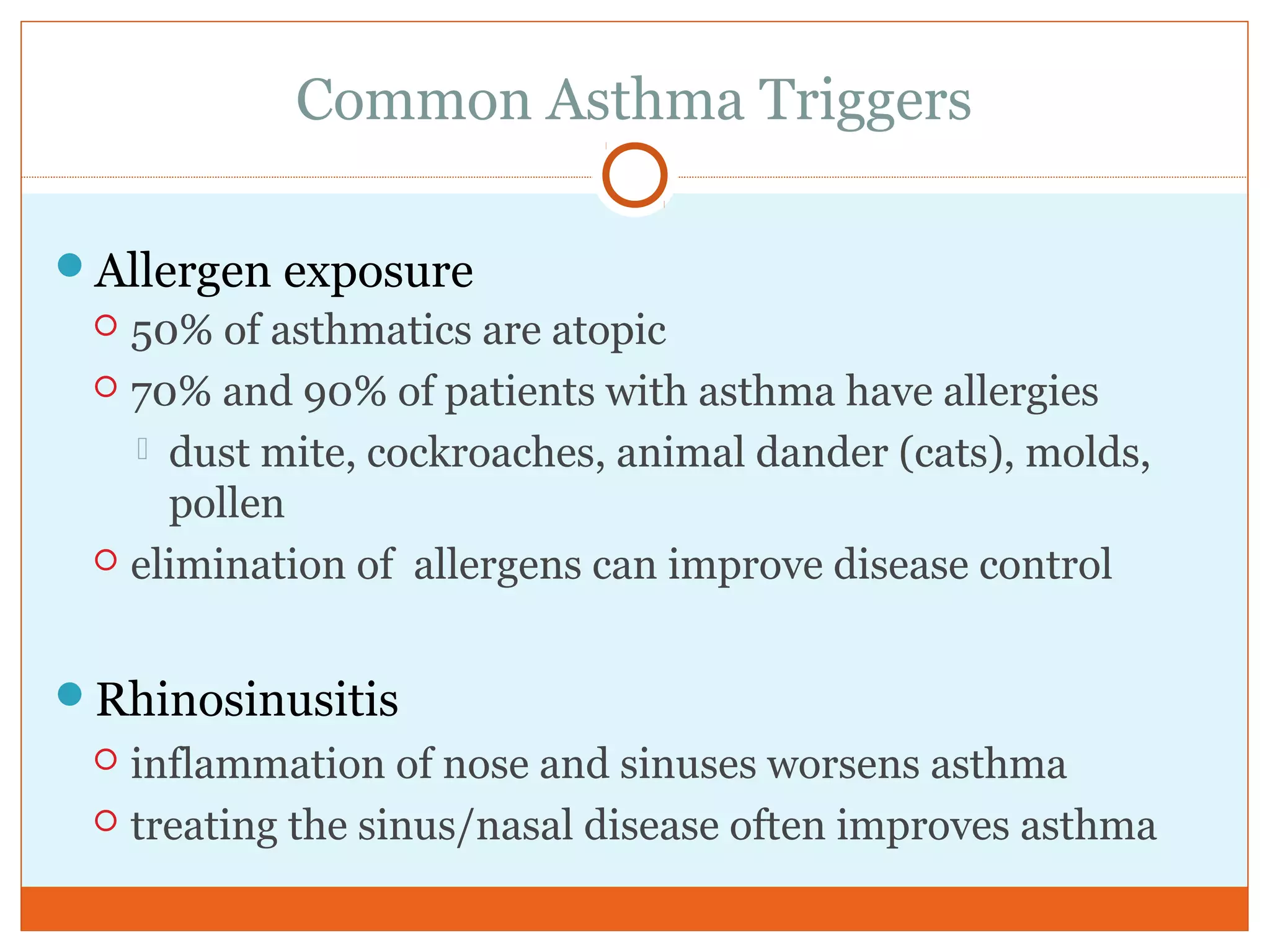
Common Asthma Triggers
Allergen exposure
 50% of asthmatics are atopic
 70% and 90% of patients with asthma have allergies
 dust mite, cockroaches, animal dander (cats), molds,
pollen
 elimination of allergens can improve disease control
Rhinosinusitis
 inflammation of nose and sinuses worsens asthma
 treating the sinus/nasal disease often improves asthma
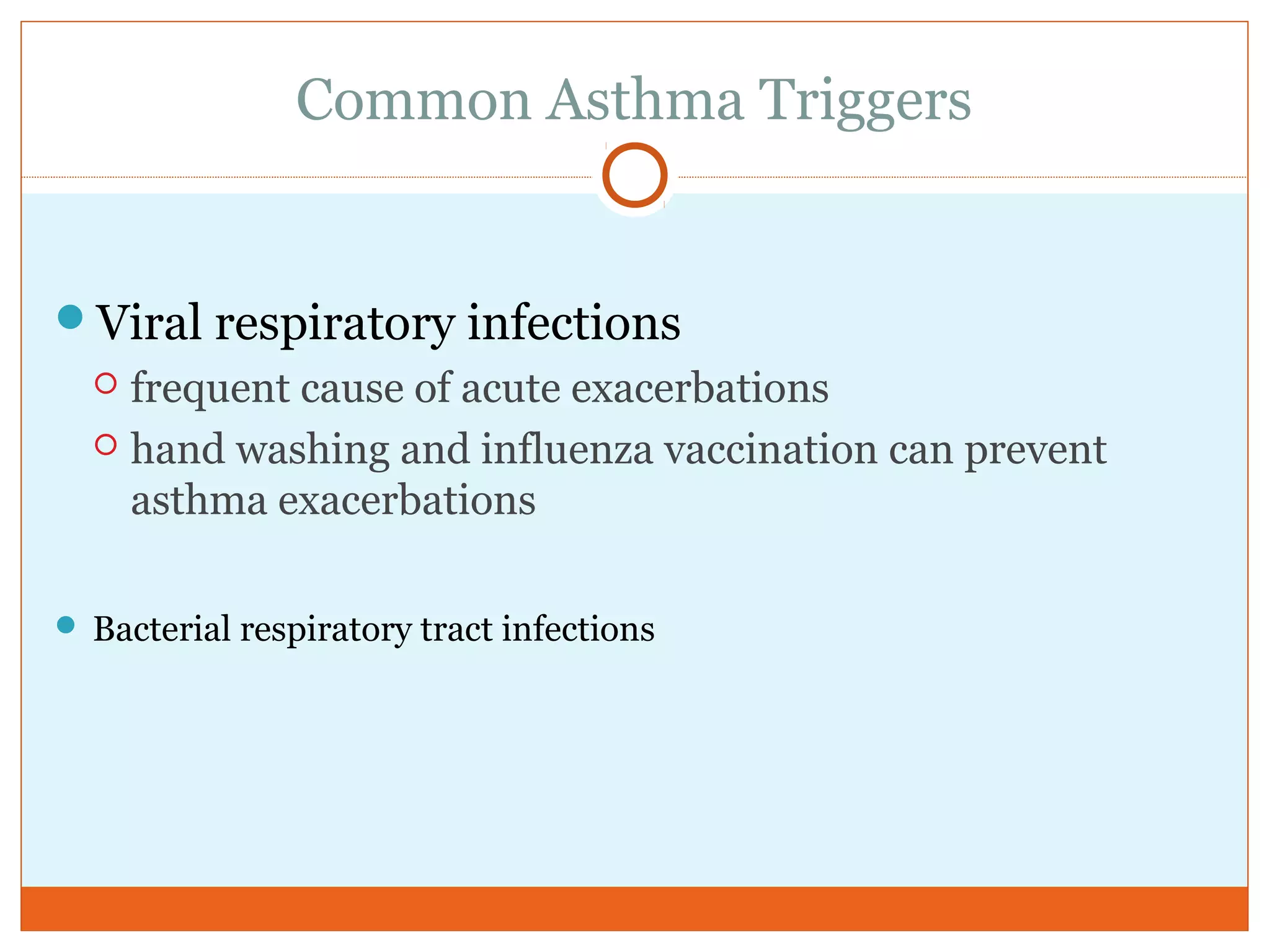
Common Asthma Triggers
Viral respiratory infections
 frequent cause of acute exacerbations
 hand washing and influenza vaccination can prevent
asthma exacerbations
 Bacterial respiratory tract infections
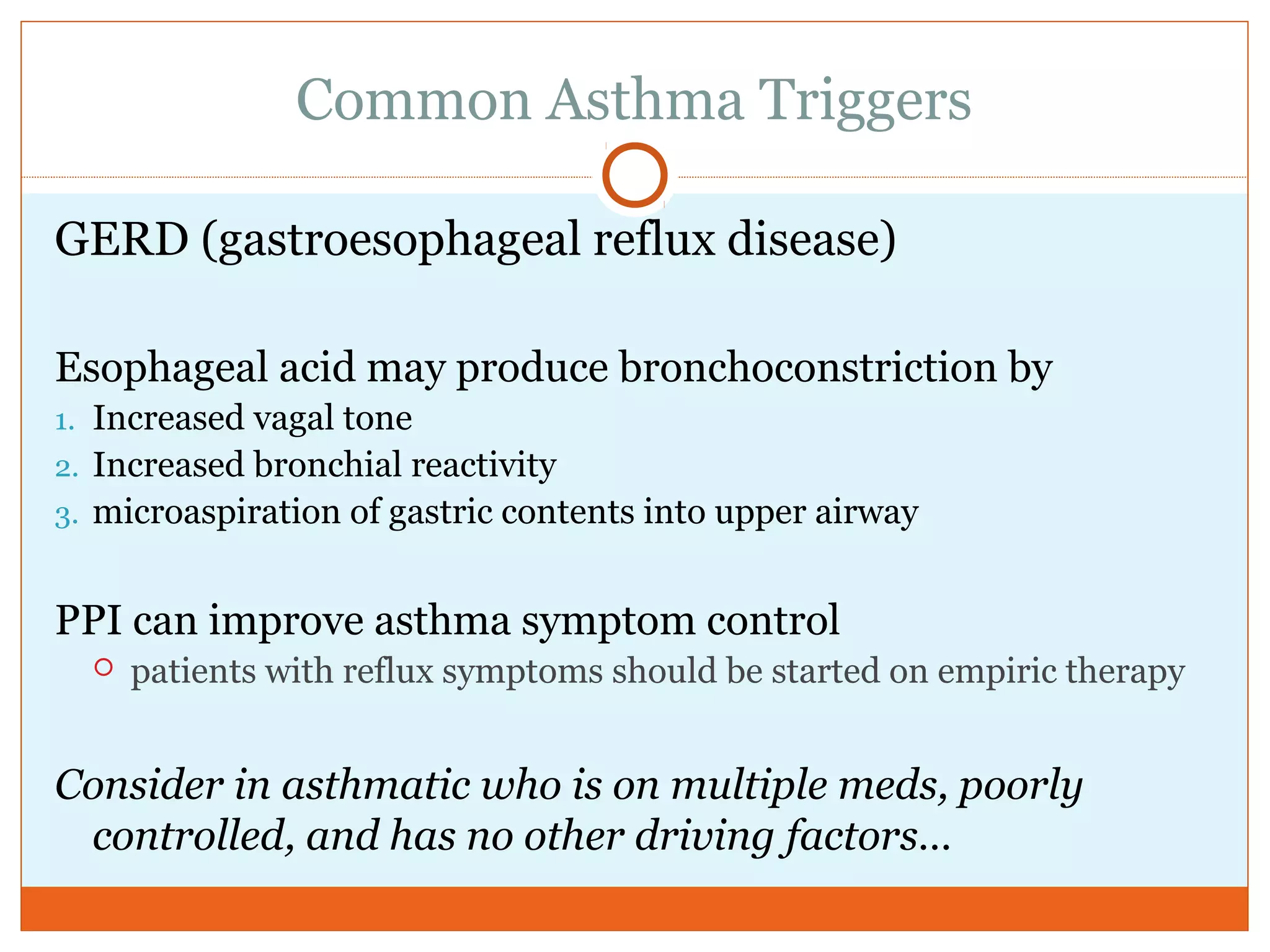
Common Asthma Triggers
GERD (gastroesophageal reflux disease)
Esophageal acid may produce bronchoconstriction by
1. Increased vagal tone
2. Increased bronchial reactivity
3. microaspiration of gastric contents into upper airway
PPI can improve asthma symptom control
 patients with reflux symptoms should be started on empiric therapy
Consider in asthmatic who is on multiple meds, poorly
controlled, and has no other driving factors…
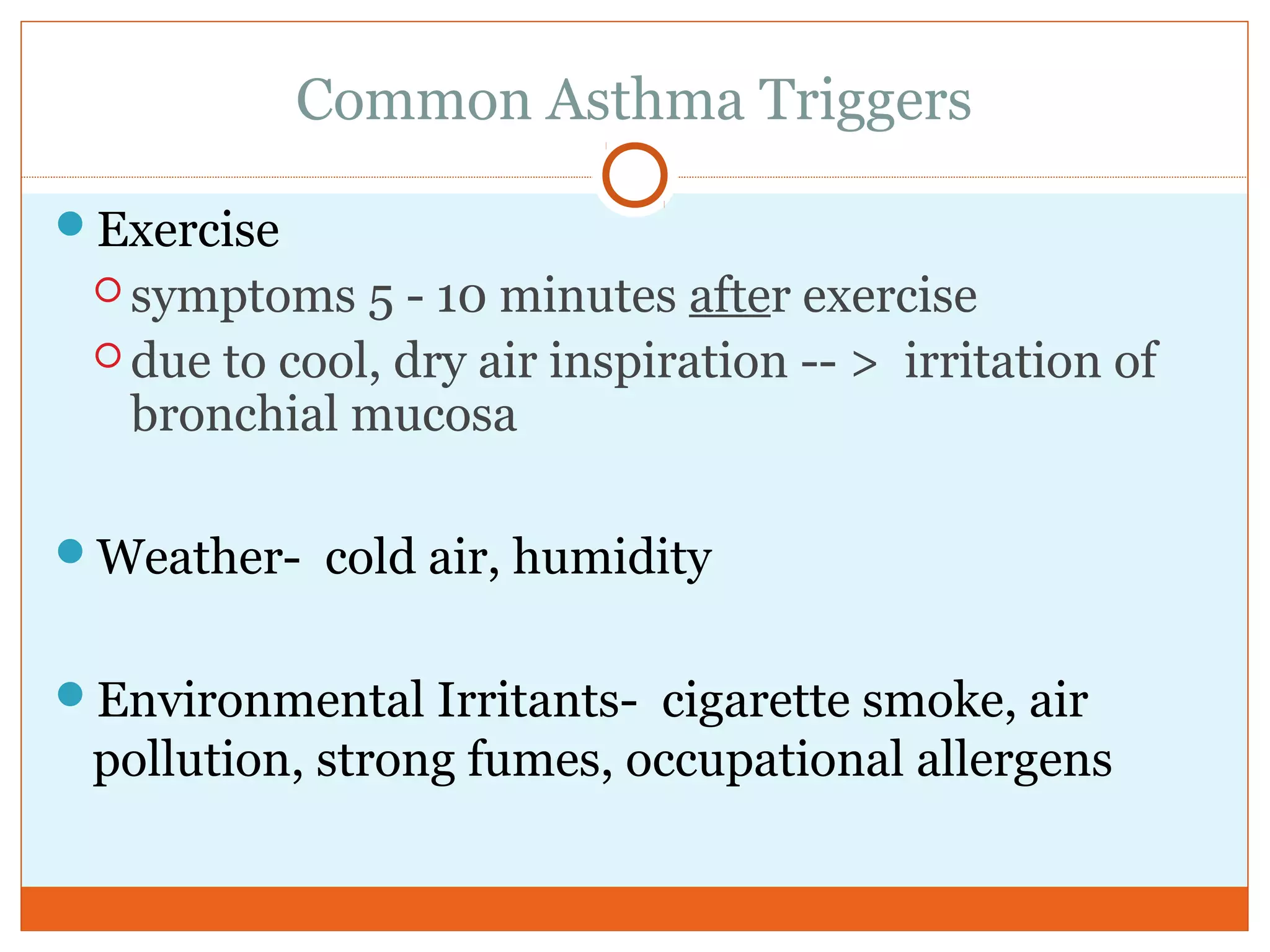
Common Asthma Triggers
Exercise
 symptoms 5 - 10 minutes after exercise
 due to cool, dry air inspiration -- > irritation of
bronchial mucosa
Weather- cold air, humidity
Environmental Irritants- cigarette smoke, air
pollution, strong fumes, occupational allergens
Common Asthma Triggers
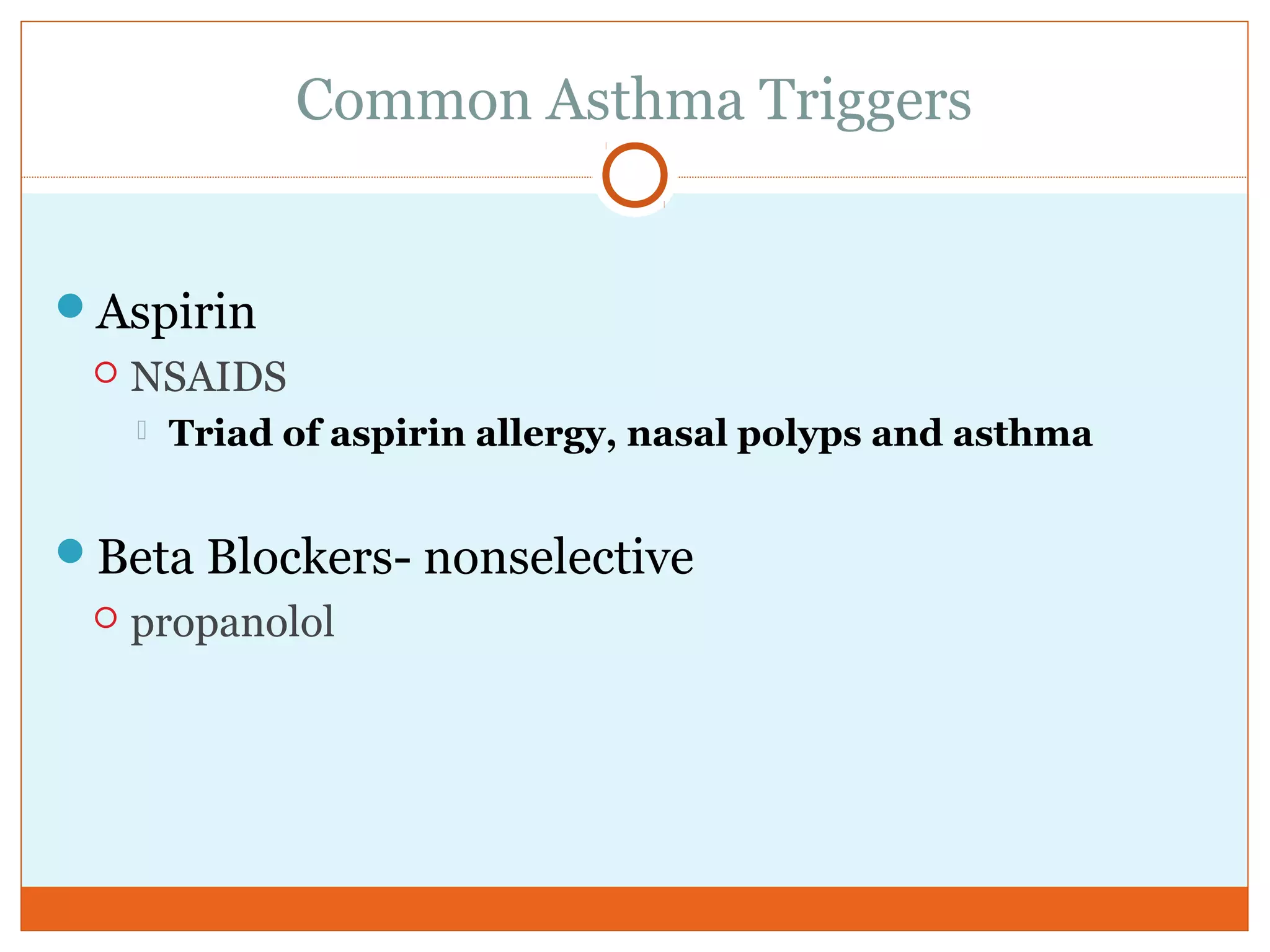
Aspirin
 NSAIDS
 Triad of aspirin allergy, nasal polyps and asthma
Beta Blockers- nonselective
 propanolol
Common Asthma Triggers
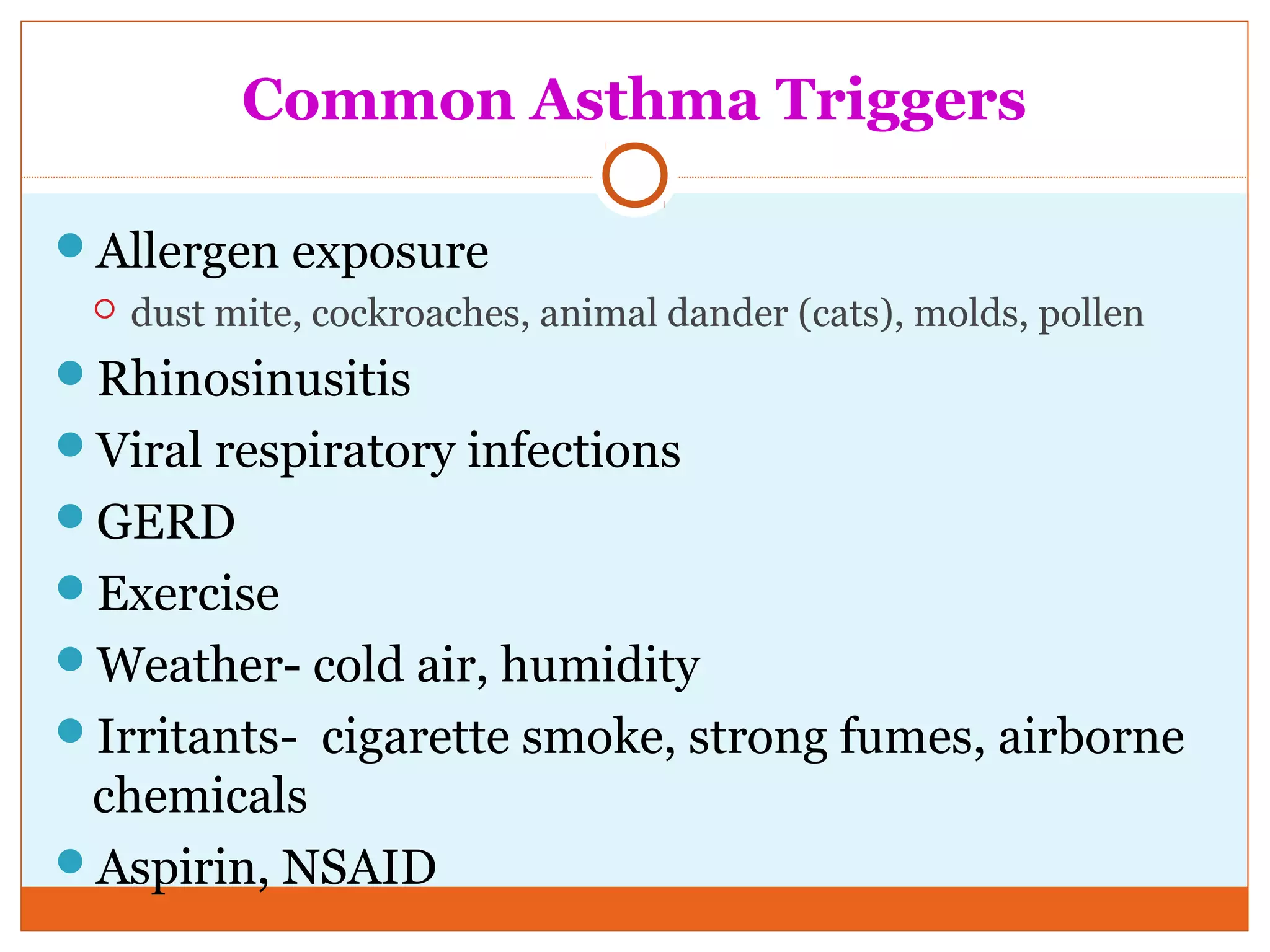
Allergen exposure
 dust mite, cockroaches, animal dander (cats), molds, pollen
Rhinosinusitis
Viral respiratory infections
GERD
Exercise
Weather- cold air, humidity
Irritants- cigarette smoke, strong fumes, airborne
chemicals
Aspirin, NSAID
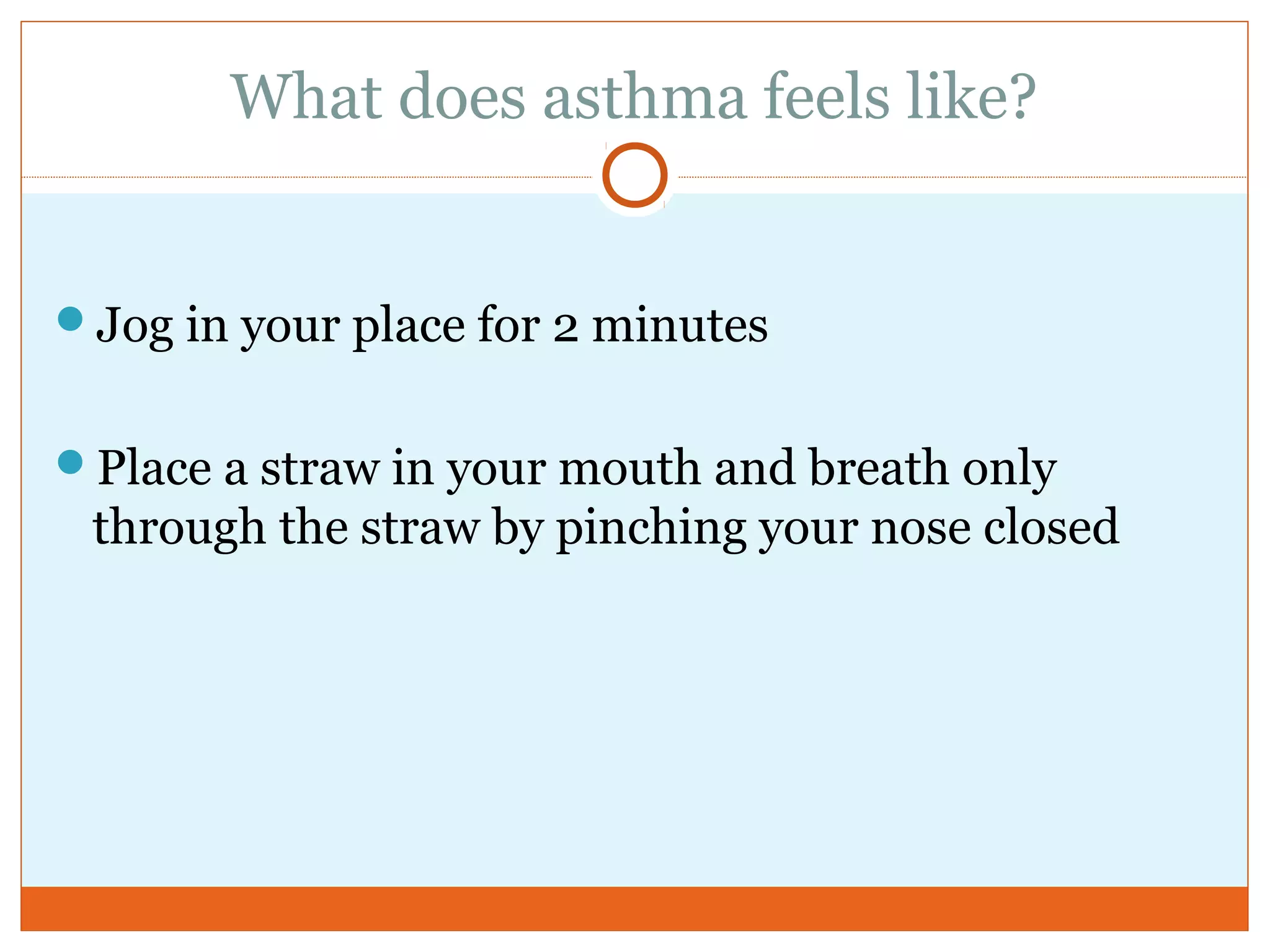
What does asthma feels like?
Jog in your place for 2 minutes
Place a straw in your mouth and breath only
through the straw by pinching your nose closed
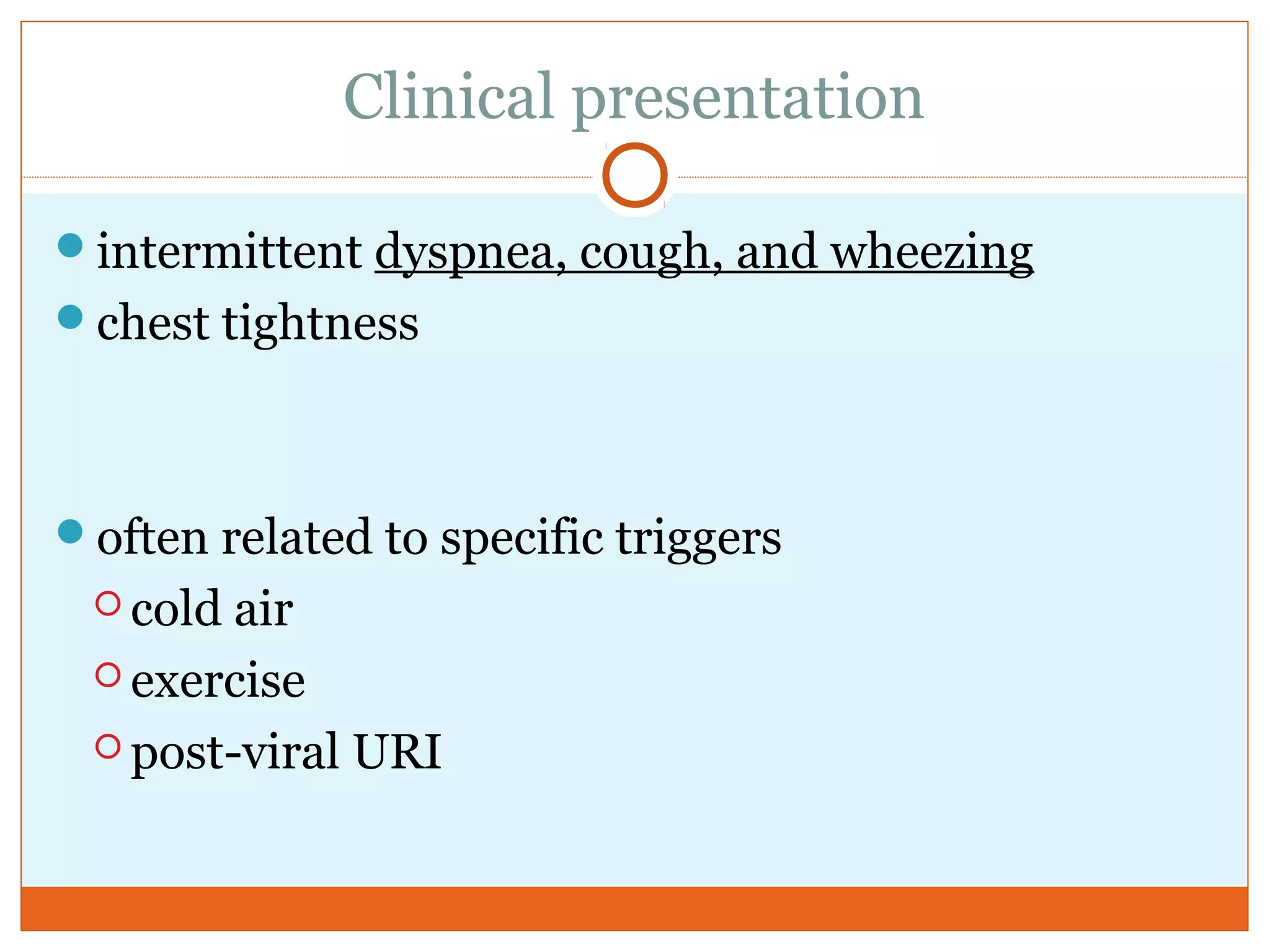
Clinical presentation
intermittent dyspnea, cough, and wheezing
chest tightness
often related to specific triggers
 cold air
 exercise
 post-viral URI
Diagnosing Asthma
presence of
respiratory symptoms consistent with asthma
reversible airflow obstruction
history
physical examination
pulmonary function testing
Diagnosing Asthma: History
Dyspnea, cough, wheeze, chest tightness
Episodic symptoms
 Often have symptoms at night
 Last for hours-days
 Resolve if remove trigger or with treatment
 Asymptomatic for periods
Characteristic triggers
 exercise, cold air, and exposure to allergens or pollutants
Personal or family history of allergic disease
 asthma, seasonal allergic rhinitis , eczema
Diagnosing Asthma: History
historic features that decrease the probability of
asthma
no improvement following anti-asthmatic
medications
onset age >50 yo
cigarette smoking- >20 pack-years
Diagnosing Asthma: Physical exam
Wheezing
widespread, high-pitched whistling sound
most commonly on expiration, but can occur
during inspiration
usually present with symptoms and absent when
symptoms resolve
Diagnosing Asthma: Physical exam
presence or absence of wheezing
on exam
is a poor predictor of the
severity of airflow obstruction
Diagnosing Asthma: Physical exam
severe airflow obstruction
tachypnea, tachycardia
accessory muscles use- sternocleidomastoid
unable to speak in complete sentences
prolonged expiratory phase of respiration
(decreased I:E ratio)
"tripod position"- seated position with use of
extended arms to support the upper chest
Diagnosing Asthma: Physical exam
• nasal polyp- glistening, gray, mucoid masses in the
nasal cavity
• ask about aspirin sensitivity
• Triad -asthma, nasal polyps, and aspirin
sensitivity
• clubbing is not a feature of asthma
• interstitial lung disease, lung cancer, cystic
fibrosis
Pulmonary function tests
demonstrate reversible airflow obstruction
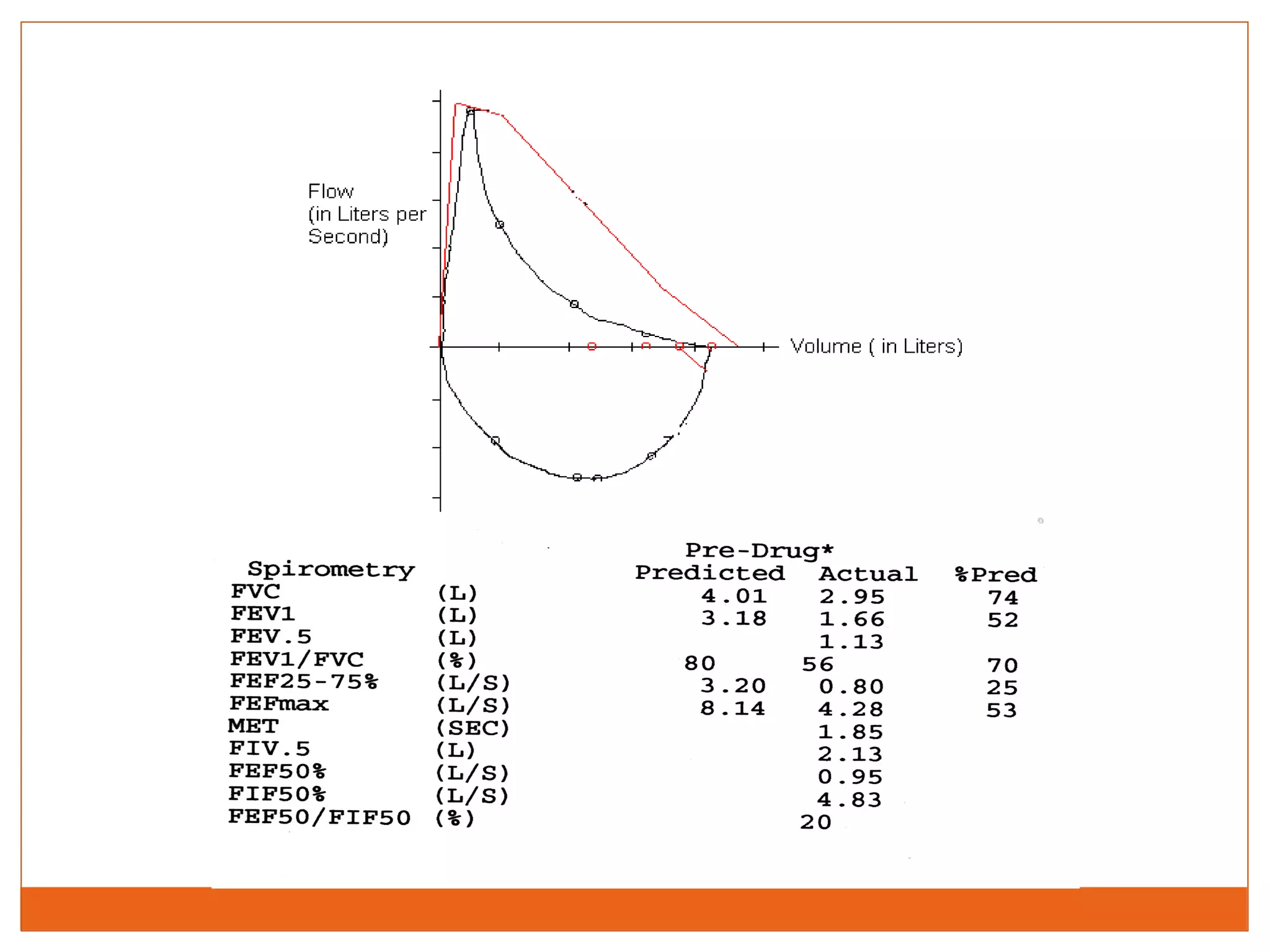
spirometry
 reversible reduction in FEV1 and FEV1/FVC
bronchoprovocation testing (methacholine)
 heightened sensitivity to bronchoprovocation
peak expiratory flow rate (PEF)
 variability of >20%
Spirometry
Spirometry
Measures air volume and flow rate
 how much air patient can inhale and exhale
 how fast patient can exhale
Spirometry
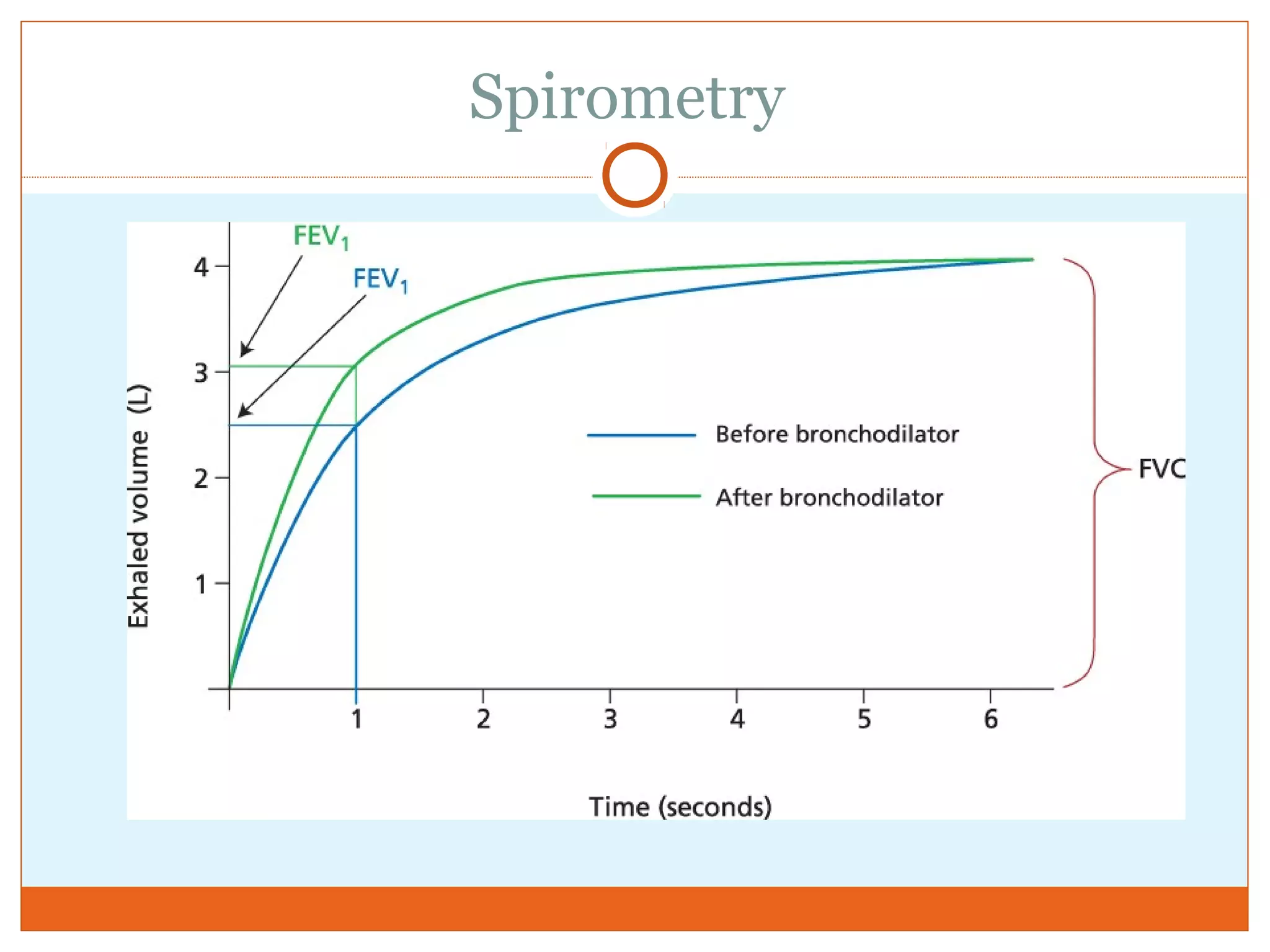
Low FEV1
 FEV1-forced expiratory volume: amount of air expired in
one second with maximal effort
Decreased FEV1/FVC ratio
 FVC- forced vital capacity: volume of air exhaled with
maximal speed and effort
Spirometry
Spirometry
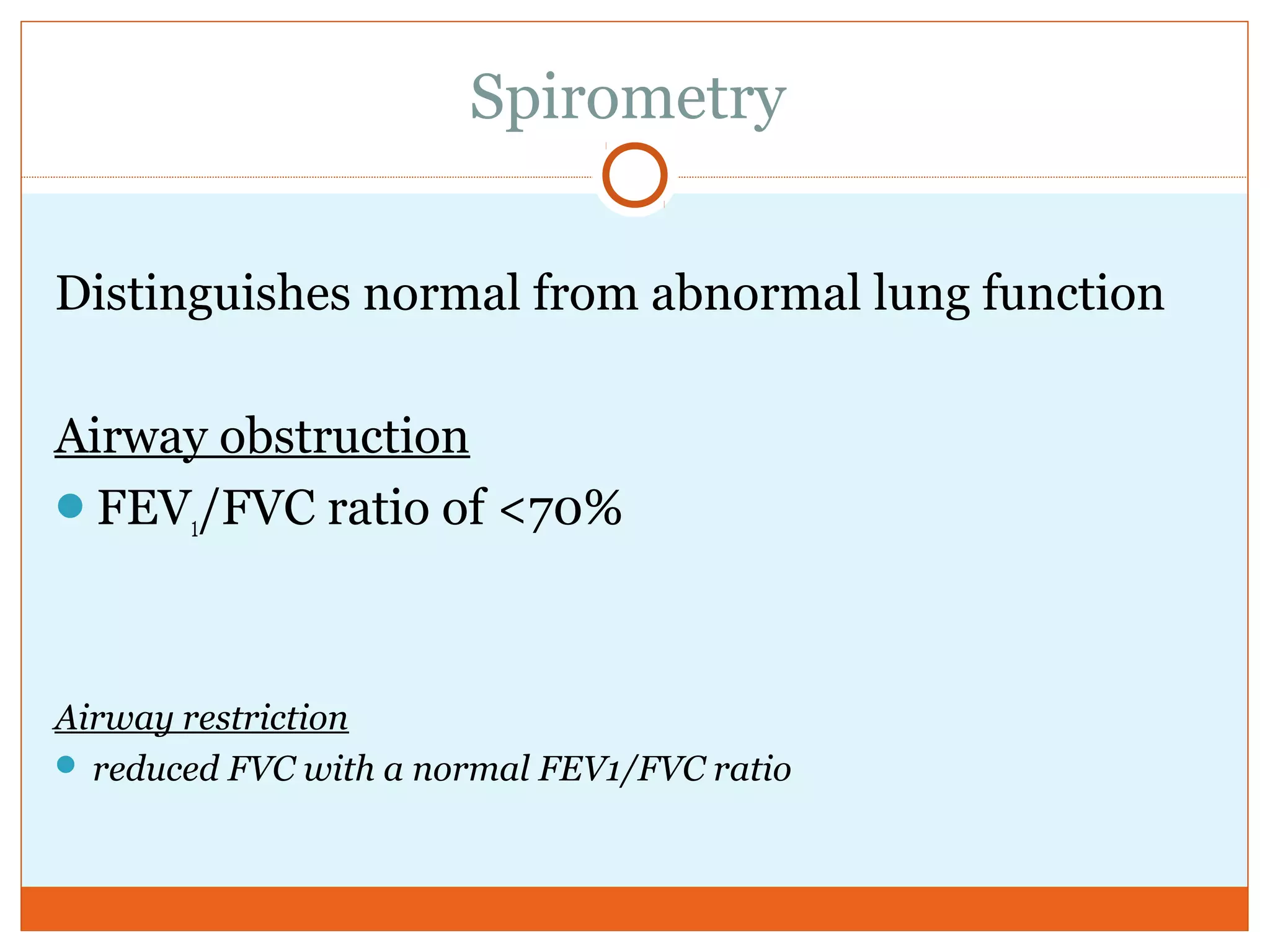
Distinguishes normal from abnormal lung function
Airway obstruction
FEV1/FVC ratio of <70%
Airway restriction
 reduced FVC with a normal FEV1/FVC ratio
Spirometry
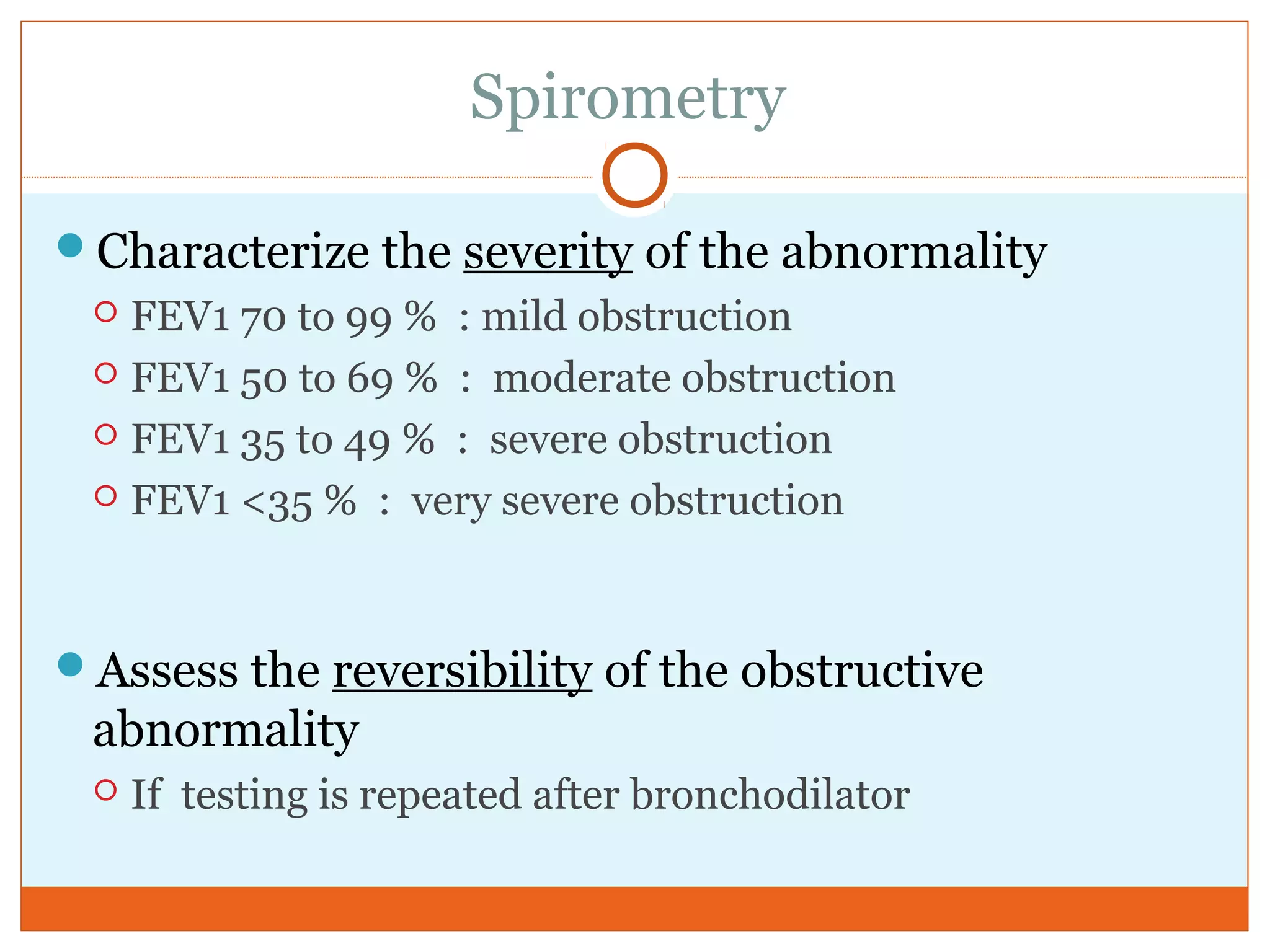
Characterize the severity of the abnormality
 FEV1 70 to 99 % : mild obstruction
 FEV1 50 to 69 % : moderate obstruction
 FEV1 35 to 49 % : severe obstruction
 FEV1 <35 % : very severe obstruction
Assess the reversibility of the obstructive
abnormality
 If testing is repeated after bronchodilator
Spirometry
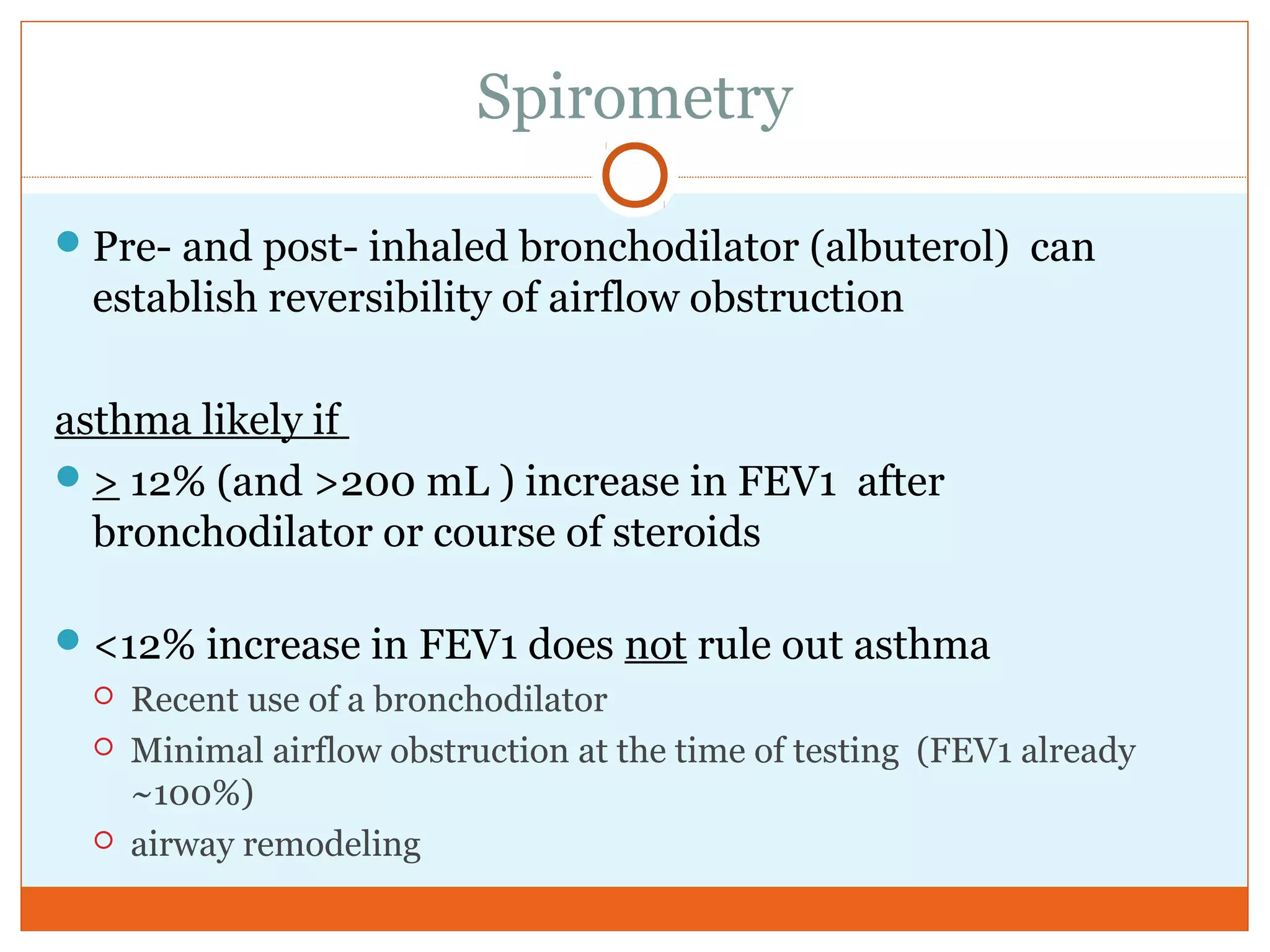
Pre- and post- inhaled bronchodilator (albuterol) can
establish reversibility of airflow obstruction
asthma likely if
> 12% (and >200 mL ) increase in FEV1 after
bronchodilator or course of steroids
<12% increase in FEV1 does not rule out asthma
 Recent use of a bronchodilator
 Minimal airflow obstruction at the time of testing (FEV1 already
~100%)
 airway remodeling
Spirometry
Normal lung function when asymptomatic
Spirometry
National Asthma Education and Prevention Program
(NAEPP) recommends spirometry:
 For initial assessment
 Evaluation of response to treatment
 Assess airway function every 1-2 years
Bronchoprovocation testing
attempts to provoke airflow obstruction using a
stimulus known to elicit airway narrowing
 people with asthma are more sensitive to such stimuli
than those without asthma
provocative stimulus usually inhaled methacholine
 alternatives include exercise, hyperventilation of cold air,
inhaled histamine, mannitol
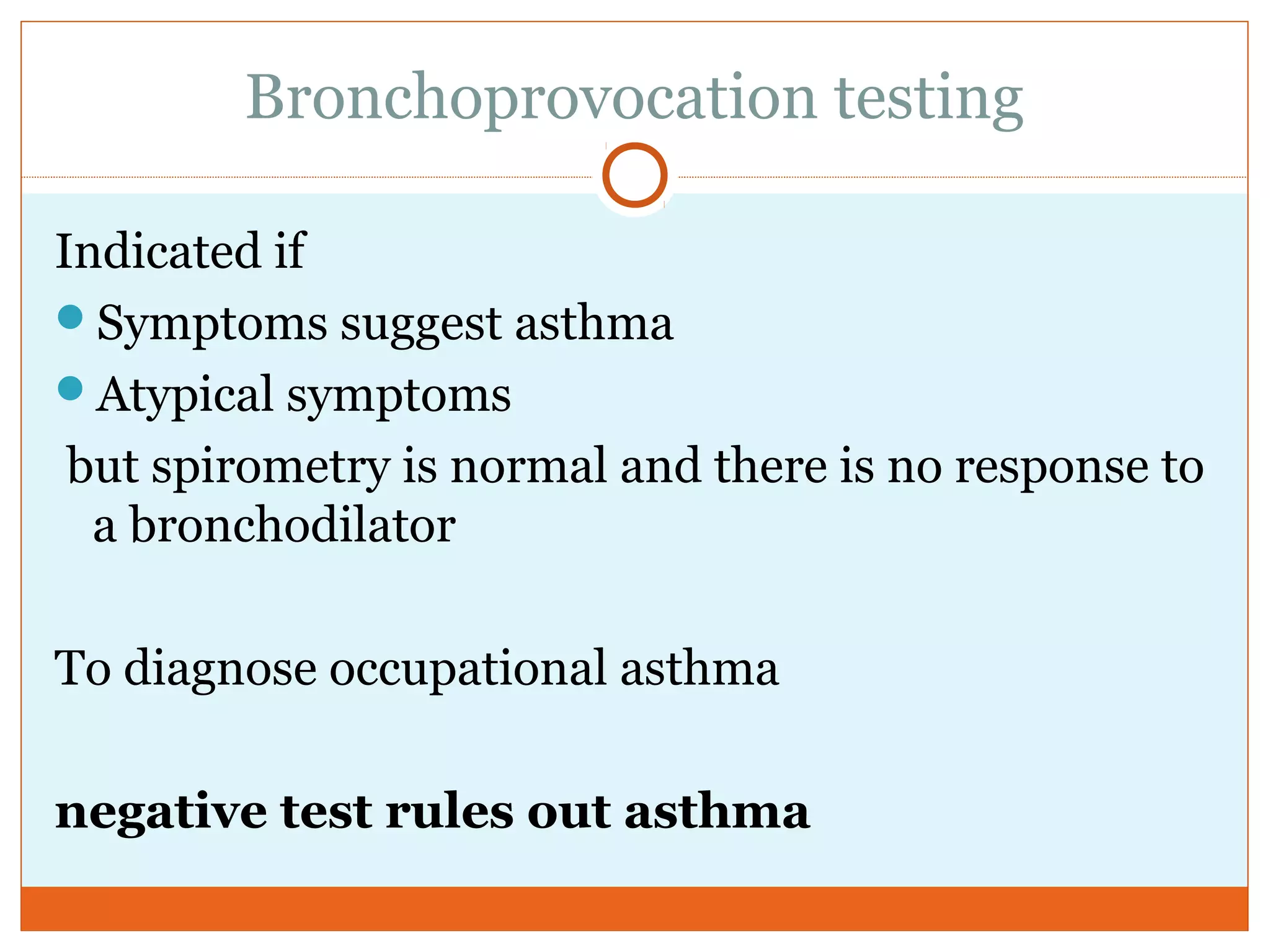
Bronchoprovocation testing
Indicated if
Symptoms suggest asthma
Atypical symptoms
but spirometry is normal and there is no response to
a bronchodilator
To diagnose occupational asthma
negative test rules out asthma
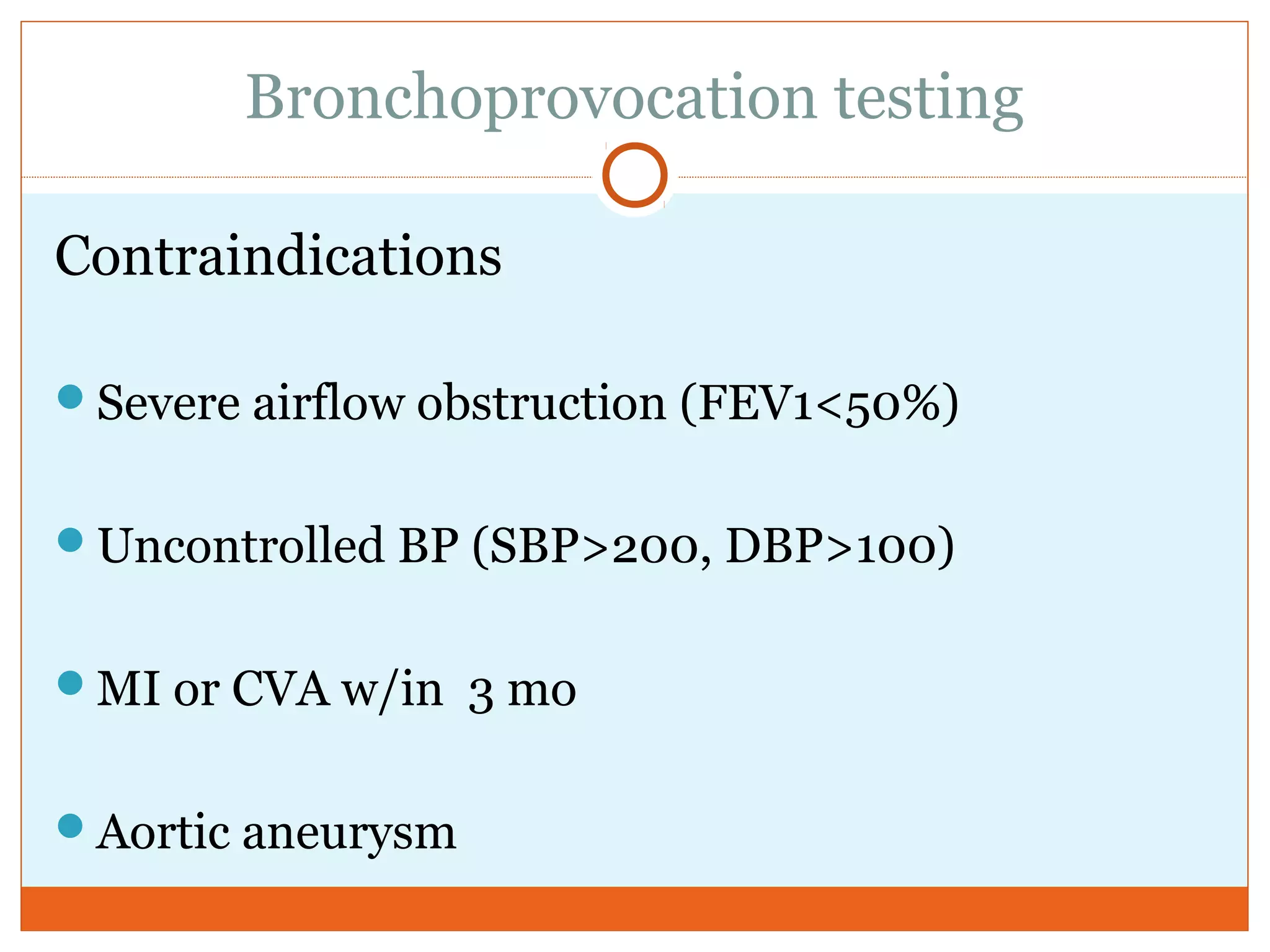
Bronchoprovocation testing
Contraindications
Severe airflow obstruction (FEV1<50%)
Uncontrolled BP (SBP>200, DBP>100)
MI or CVA w/in 3 mo
Aortic aneurysm
Peak Expiratory Flow Meters
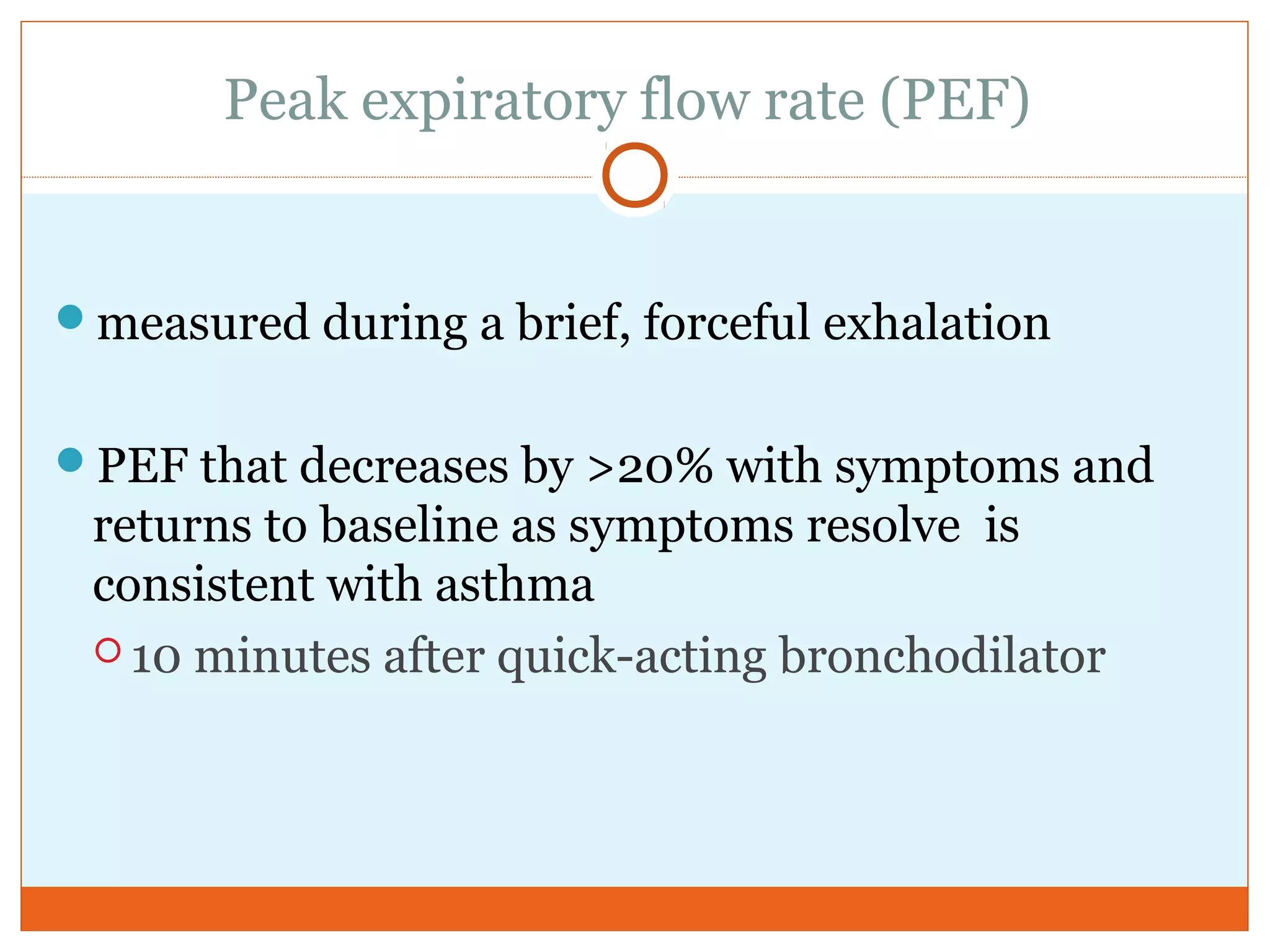
Peak expiratory flow rate (PEF)
measured during a brief, forceful exhalation
PEF that decreases by >20% with symptoms and
returns to baseline as symptoms resolve is
consistent with asthma
 10 minutes after quick-acting bronchodilator
Peak expiratory flow rate (PEF)
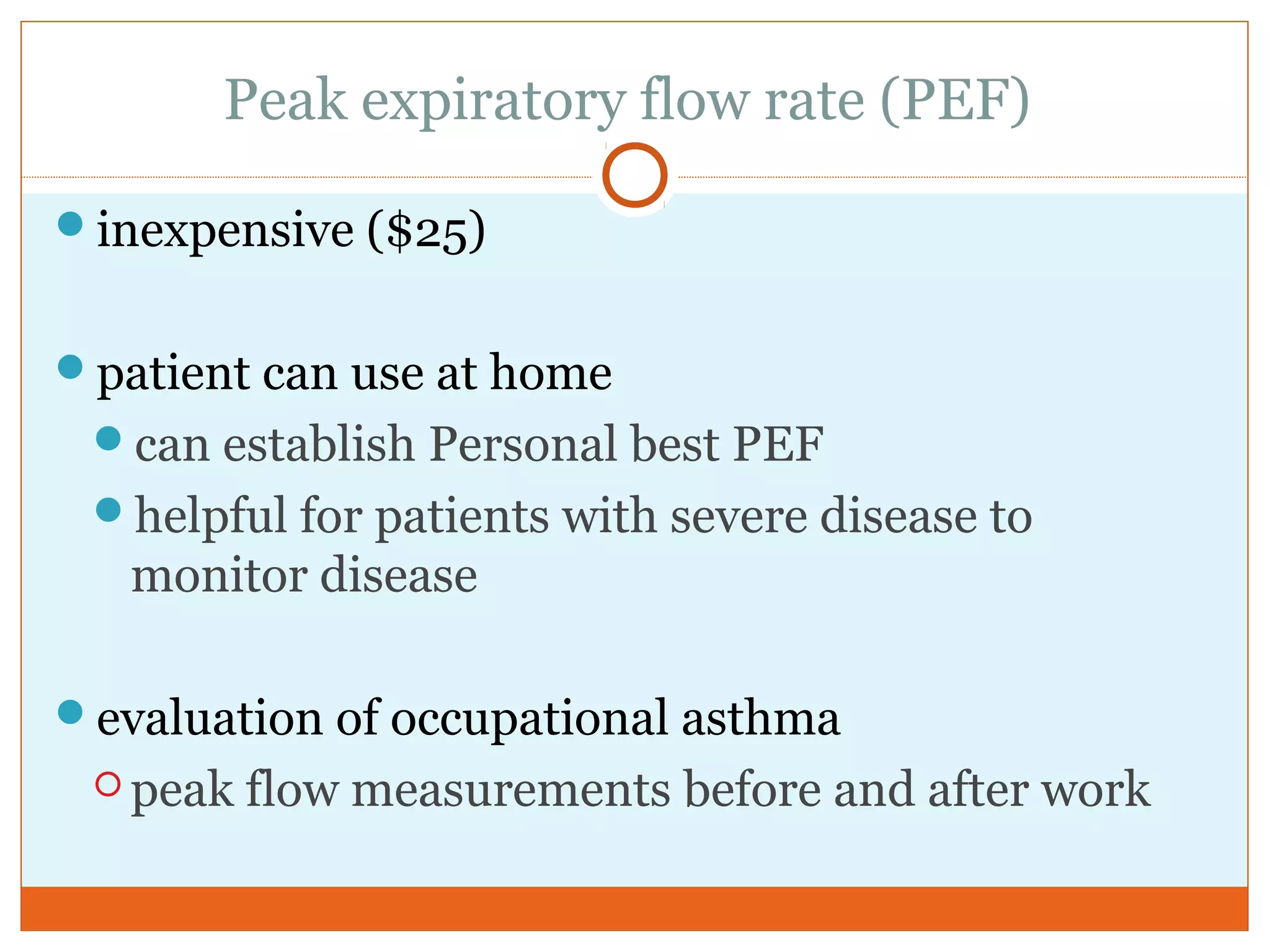
inexpensive ($25)
patient can use at home
can establish Personal best PEF
helpful for patients with severe disease to
monitor disease
evaluation of occupational asthma
 peak flow measurements before and after work
Peak expiratory flow rate (PEF)
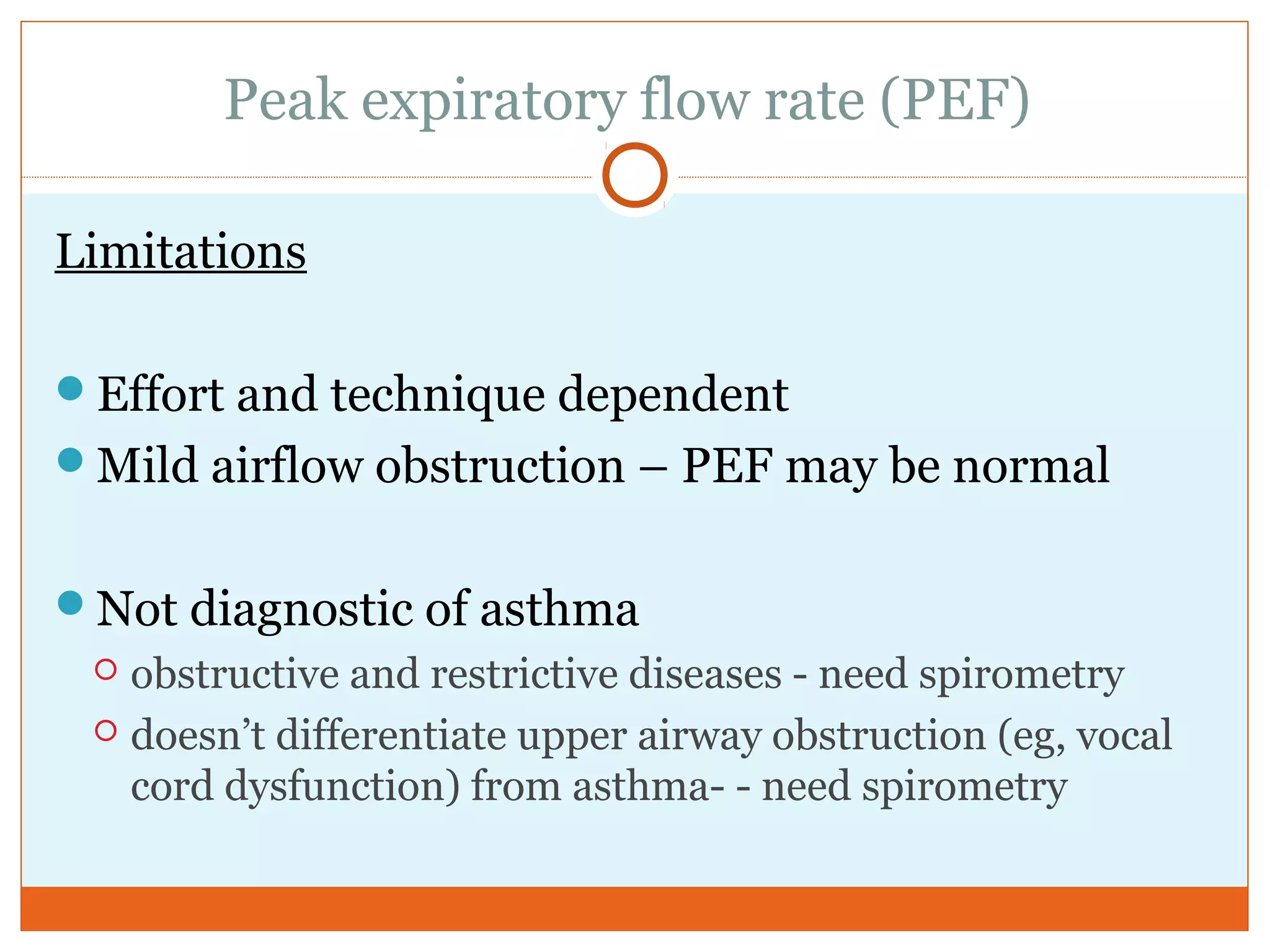
Limitations
Effort and technique dependent
Mild airflow obstruction – PEF may be normal
Not diagnostic of asthma
 obstructive and restrictive diseases - need spirometry
 doesn’t differentiate upper airway obstruction (eg, vocal
cord dysfunction) from asthma- - need spirometry
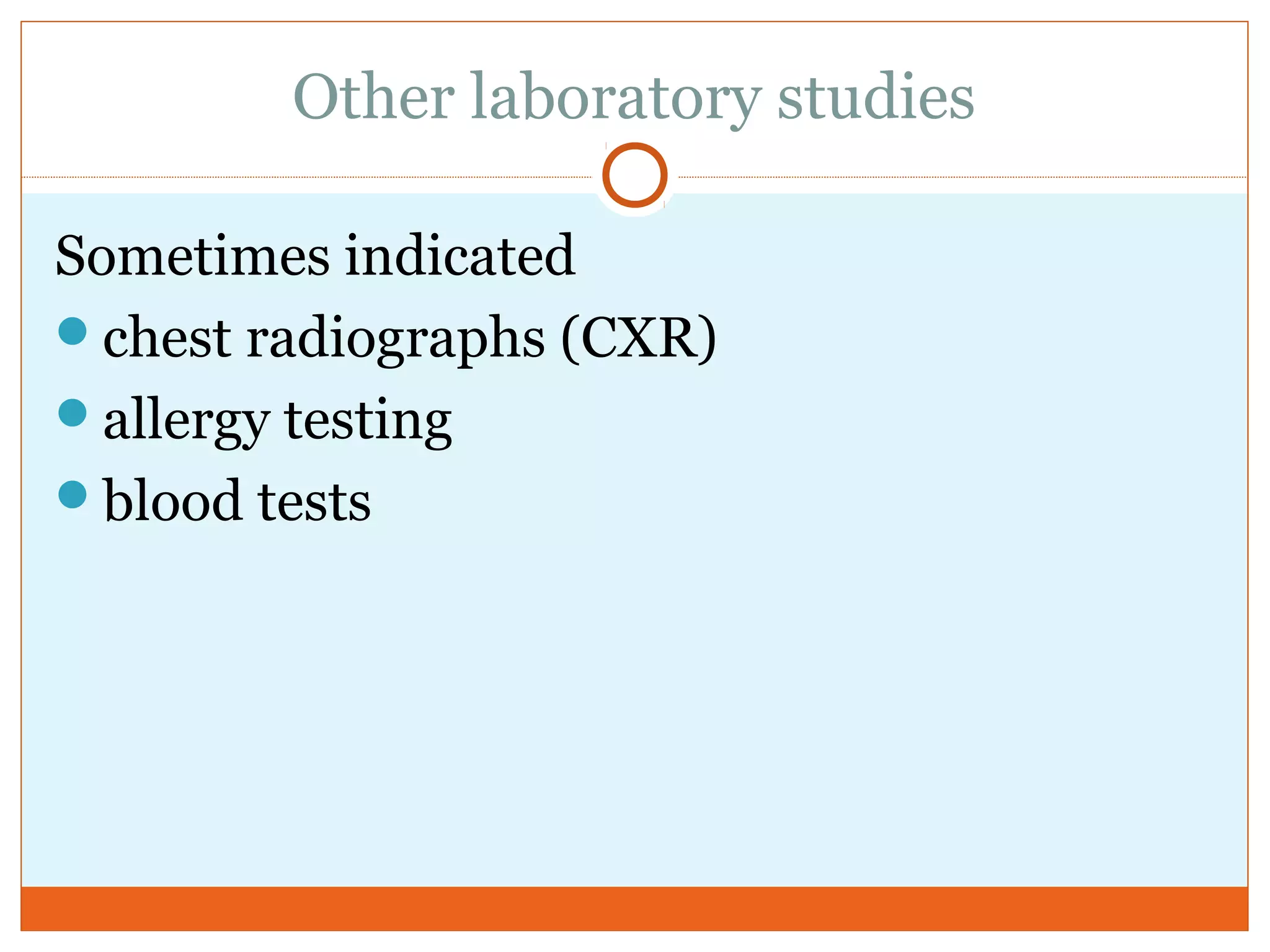
Other laboratory studies
Sometimes indicated
chest radiographs (CXR)
allergy testing
blood tests
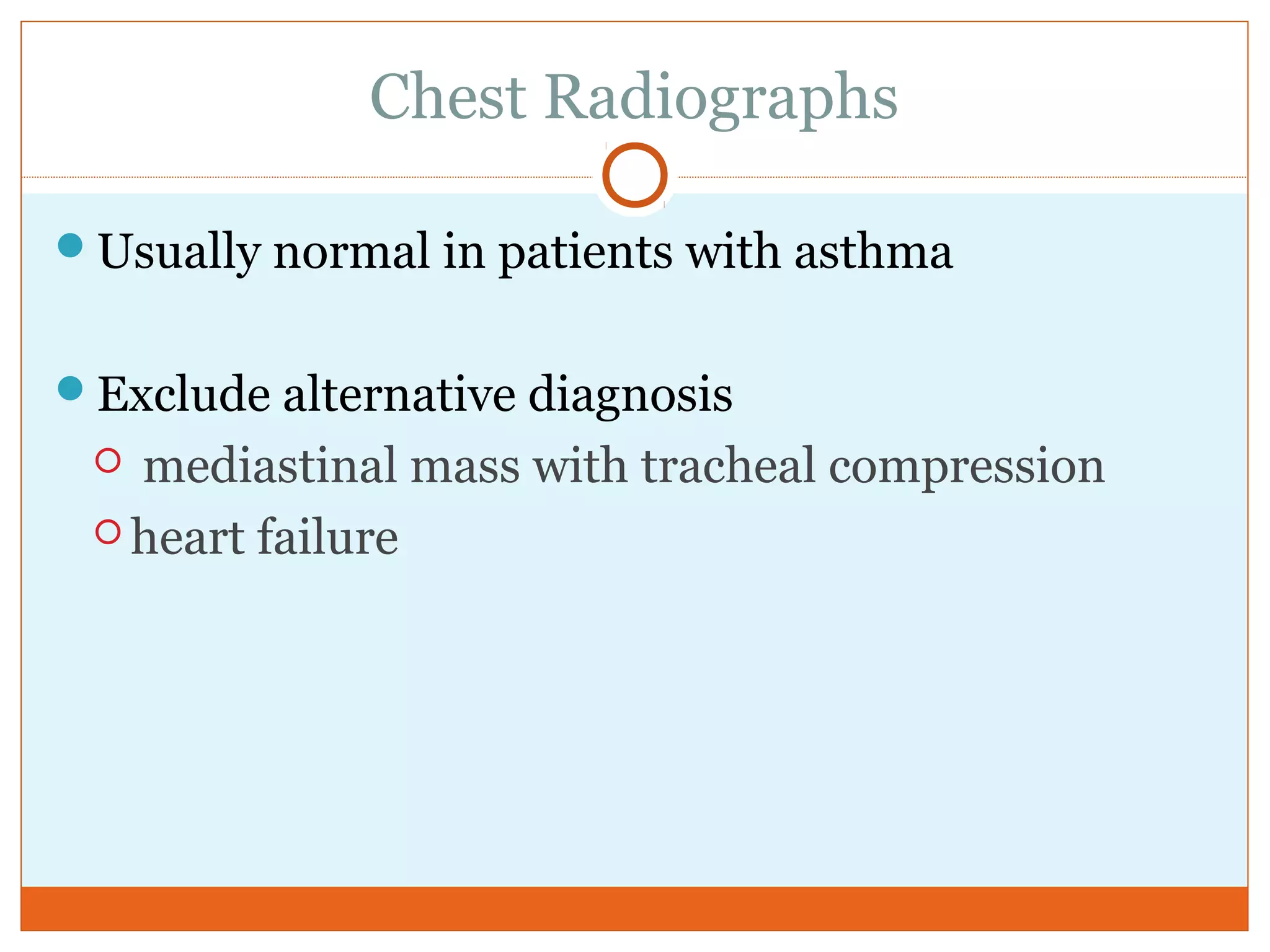
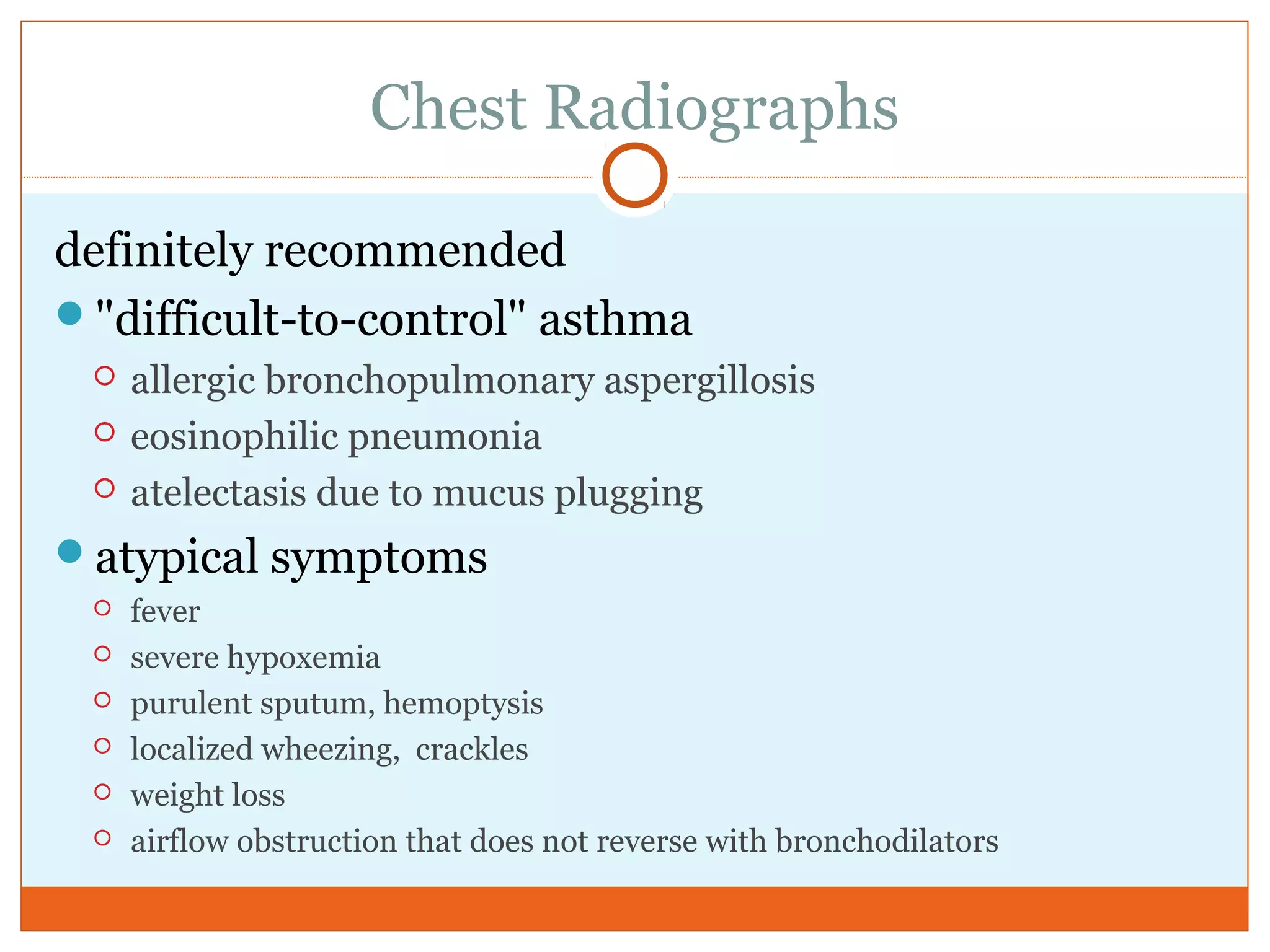
Chest Radiographs
Usually normal in patients with asthma
Exclude alternative diagnosis
 mediastinal mass with tracheal compression
 heart failure
Chest Radiographs
definitely recommended
"difficult-to-control" asthma
 allergic bronchopulmonary aspergillosis
 eosinophilic pneumonia
 atelectasis due to mucus plugging
atypical symptoms
 fever
 severe hypoxemia
 purulent sputum, hemoptysis
 localized wheezing, crackles
 weight loss
 airflow obstruction that does not reverse with bronchodilators
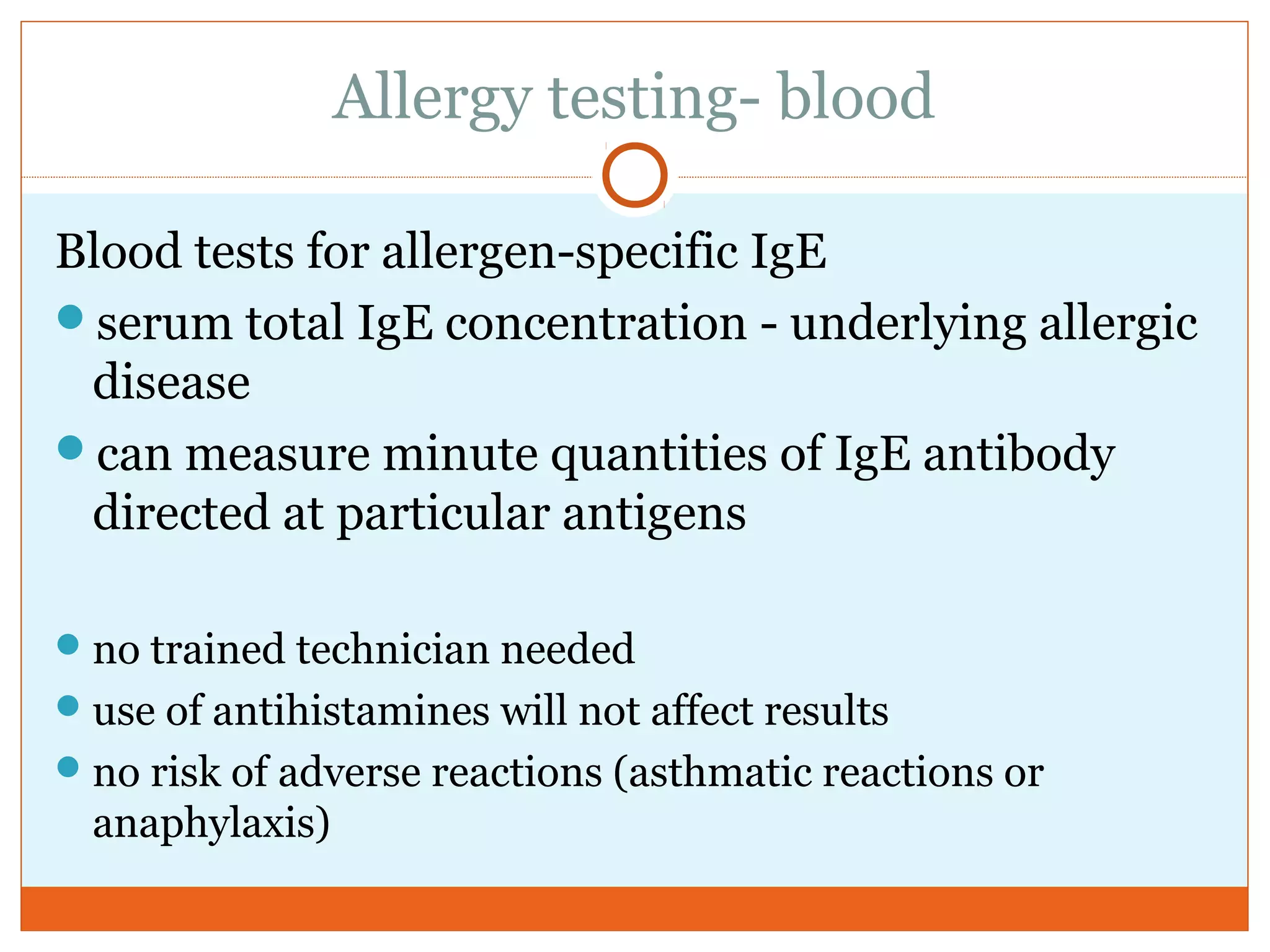
Allergy testing- blood
Blood tests for allergen-specific IgE
serum total IgE concentration - underlying allergic
disease
can measure minute quantities of IgE antibody
directed at particular antigens
no trained technician needed
use of antihistamines will not affect results
no risk of adverse reactions (asthmatic reactions or
anaphylaxis)
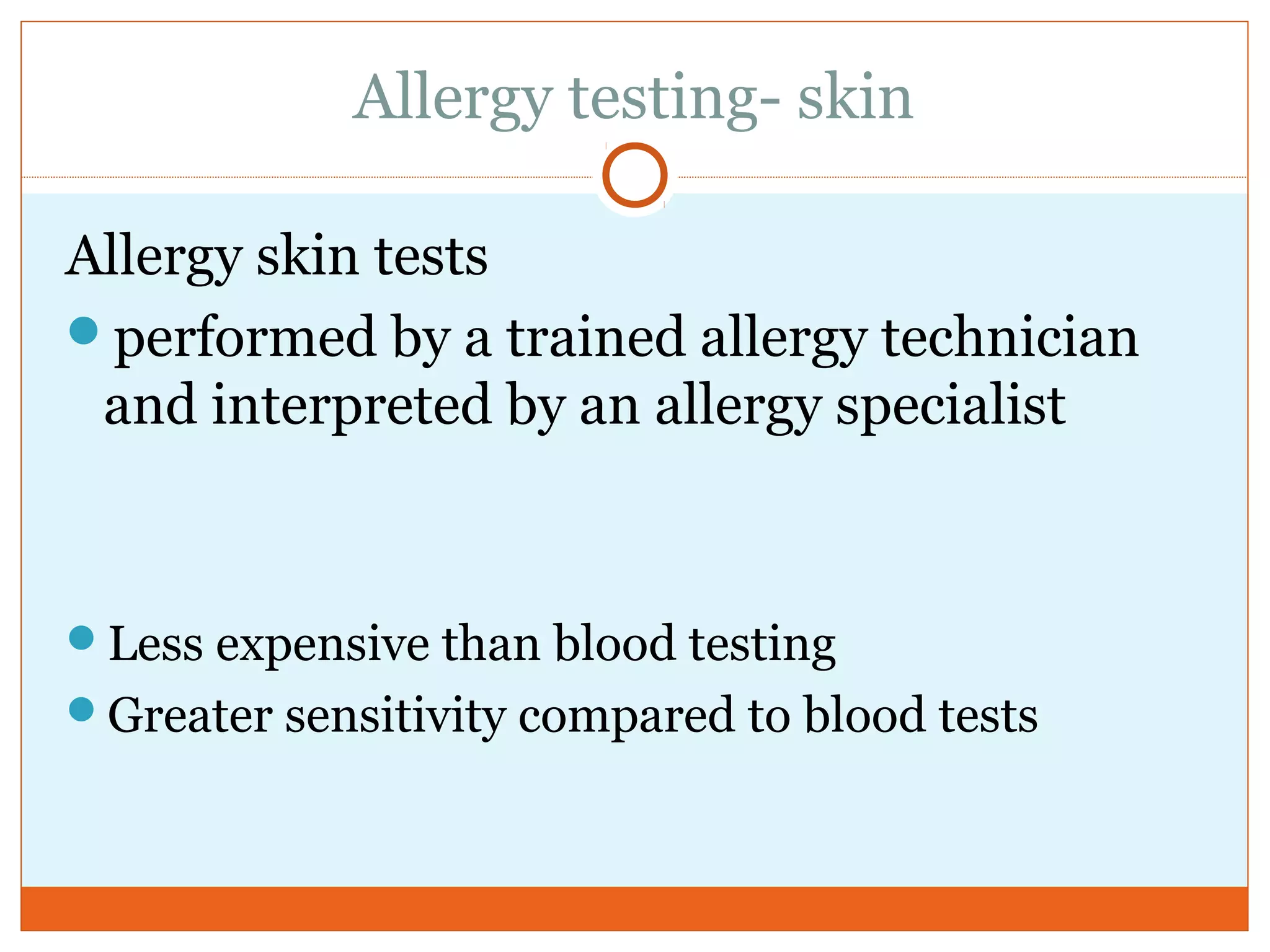
Allergy testing- skin
Allergy skin tests
performed by a trained allergy technician
and interpreted by an allergy specialist
Less expensive than blood testing
Greater sensitivity compared to blood tests
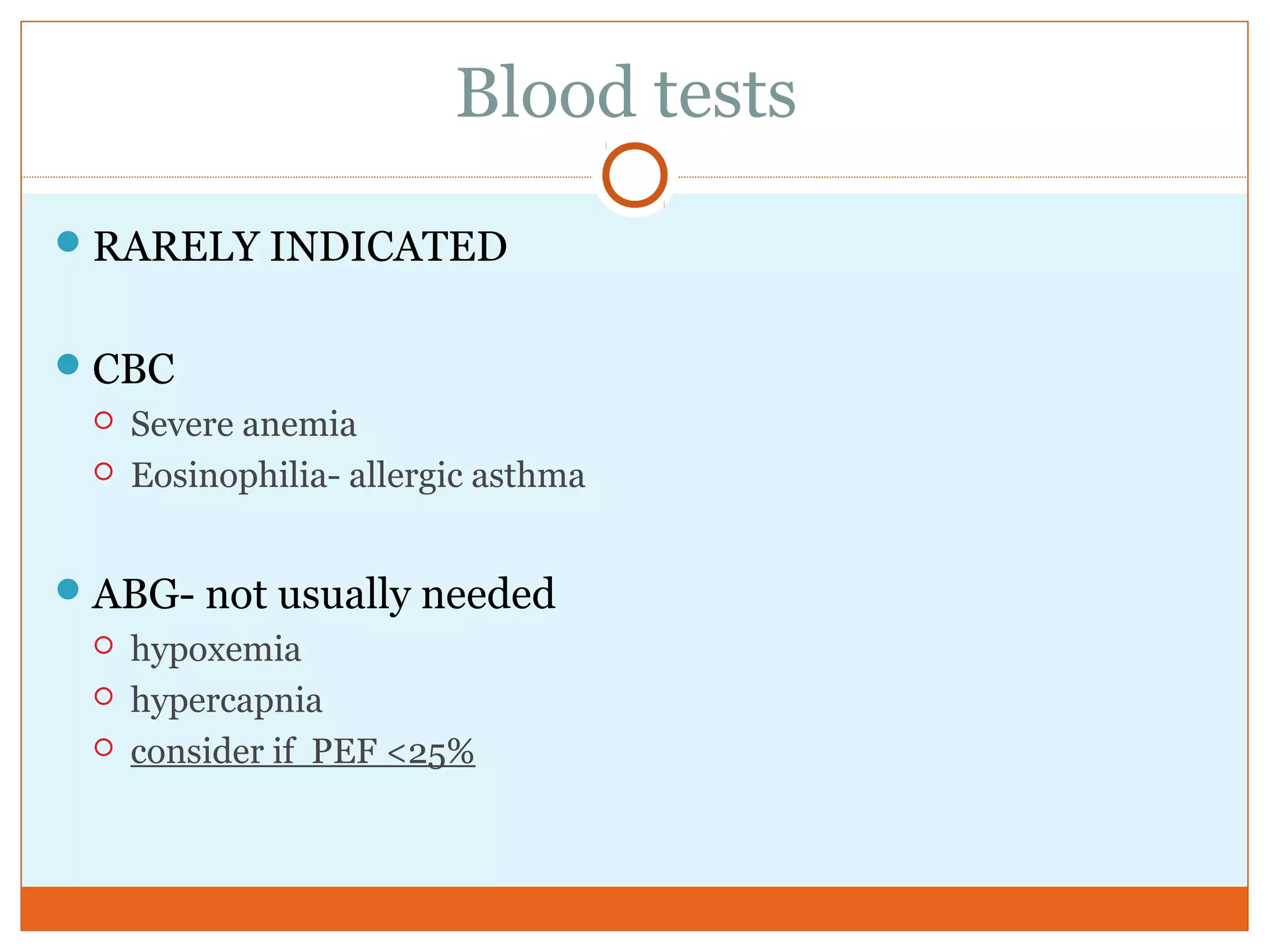
Blood tests
RARELY INDICATED
CBC
 Severe anemia
 Eosinophilia- allergic asthma
ABG- not usually needed
 hypoxemia
 hypercapnia
 consider if PEF <25%
Differential diagnosis:
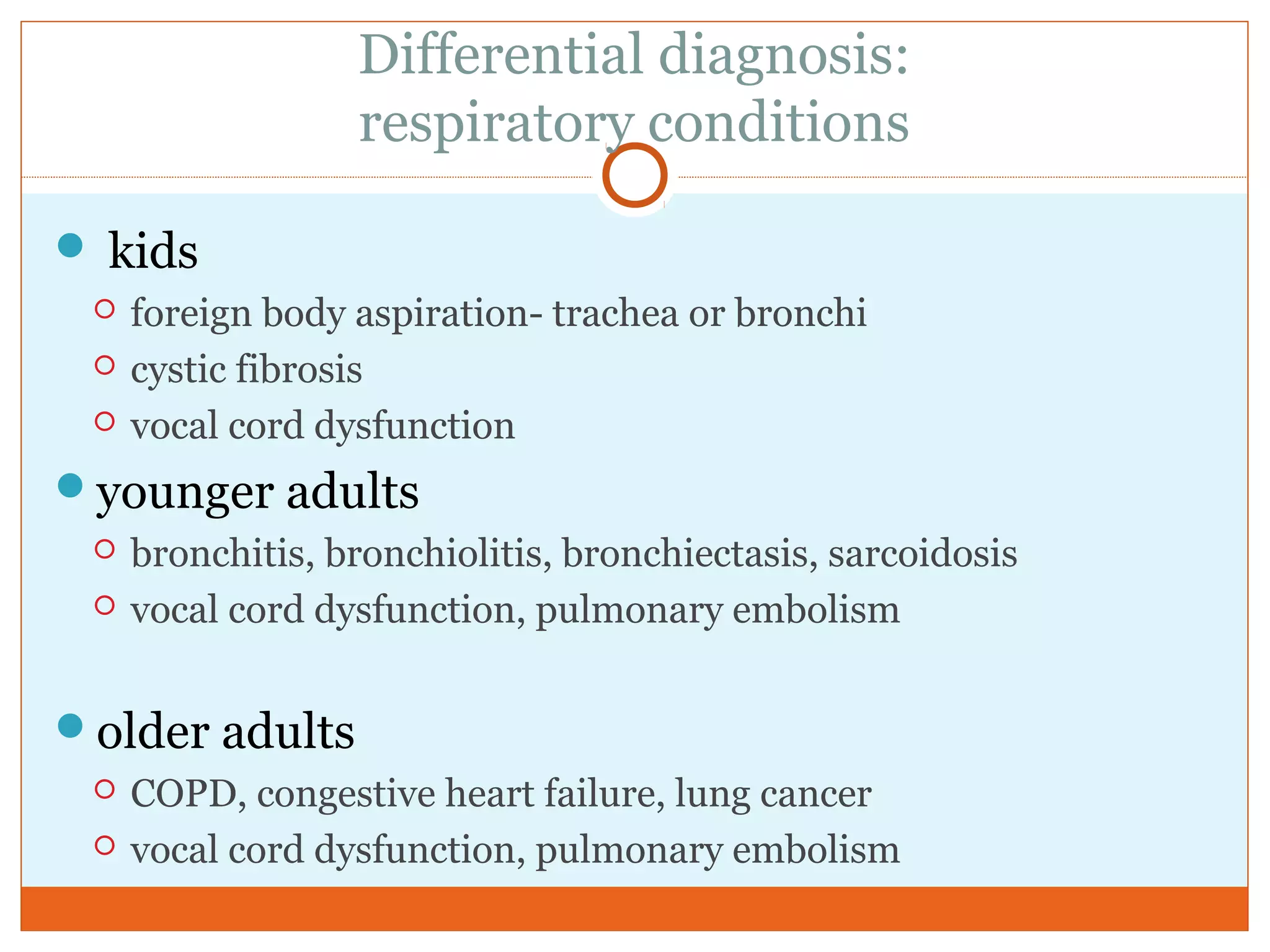
respiratory conditions
 kids
 foreign body aspiration- trachea or bronchi
 cystic fibrosis
 vocal cord dysfunction
younger adults
 bronchitis, bronchiolitis, bronchiectasis, sarcoidosis
 vocal cord dysfunction, pulmonary embolism
older adults
 COPD, congestive heart failure, lung cancer
 vocal cord dysfunction, pulmonary embolism
Differential diagnosis:
respiratory conditions
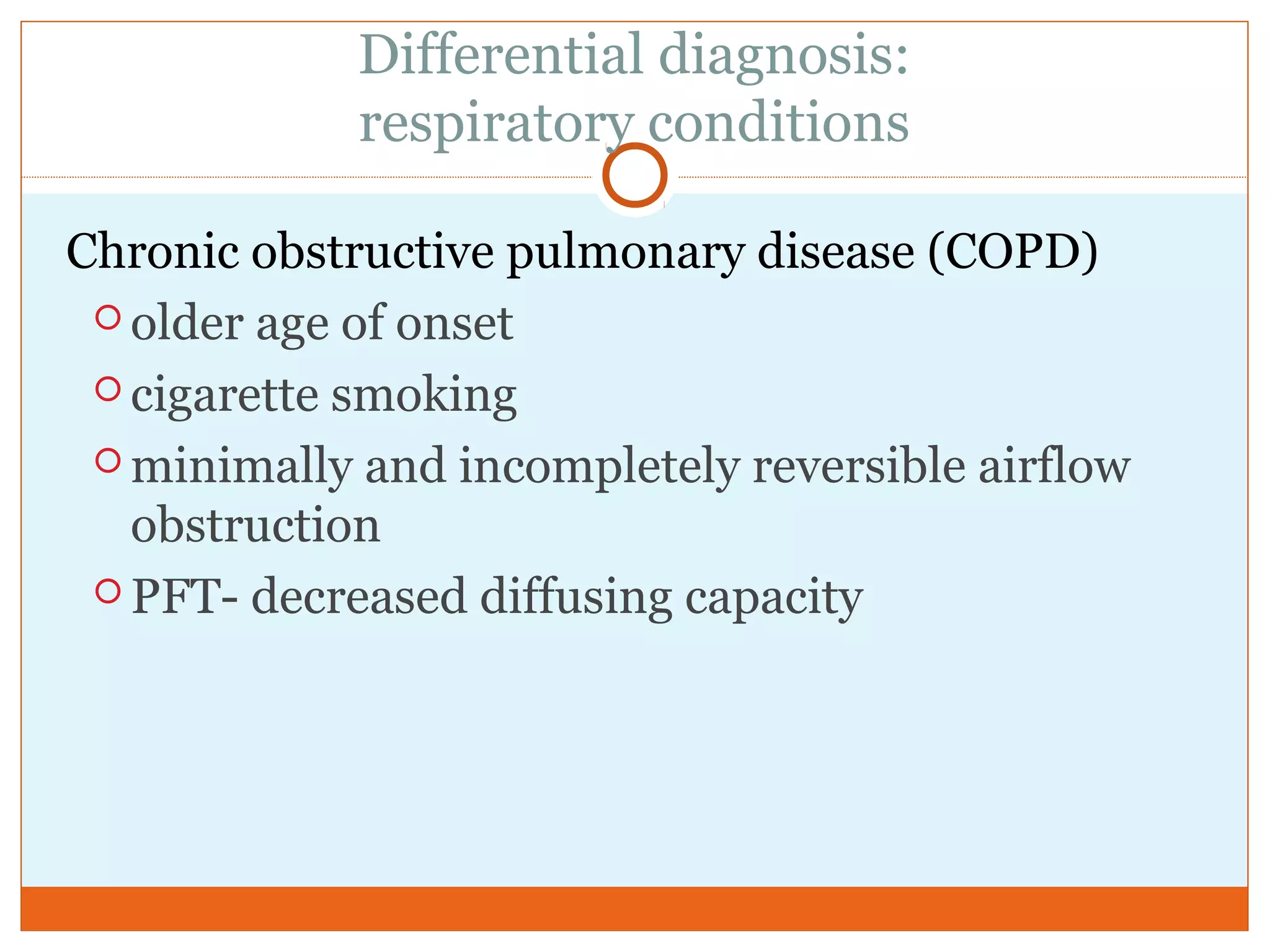
Chronic obstructive pulmonary disease (COPD)
 older age of onset
 cigarette smoking
 minimally and incompletely reversible airflow
obstruction
 PFT- decreased diffusing capacity
Differential diagnosis:
non-respiratory conditions
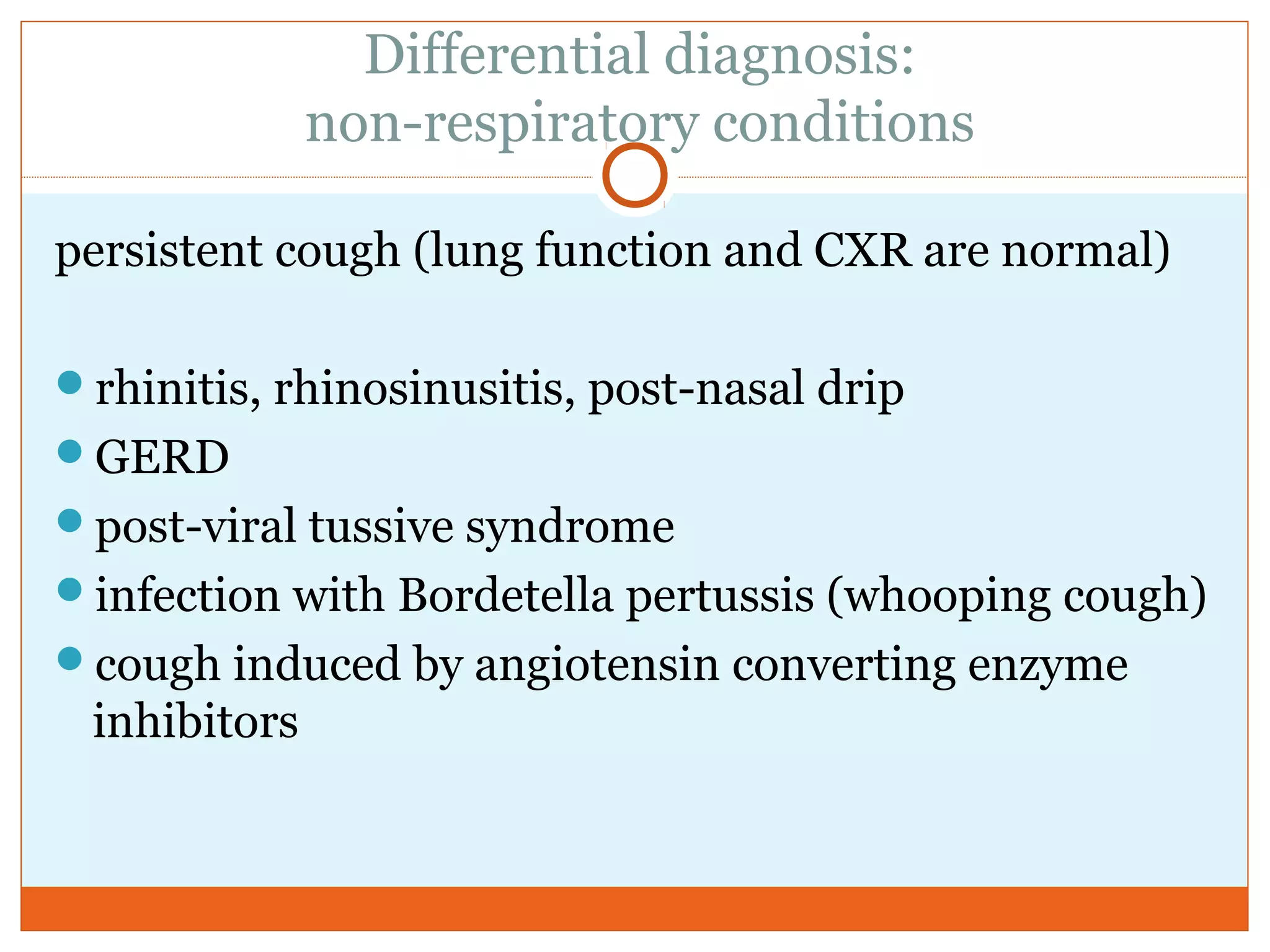
persistent cough (lung function and CXR are normal)
rhinitis, rhinosinusitis, post-nasal drip
GERD
post-viral tussive syndrome
infection with Bordetella pertussis (whooping cough)
cough induced by angiotensin converting enzyme
inhibitors
Asthma severity-intensity of disease process
Asthma control- degree to which symptoms are
minimized by therapy
Asthma severity
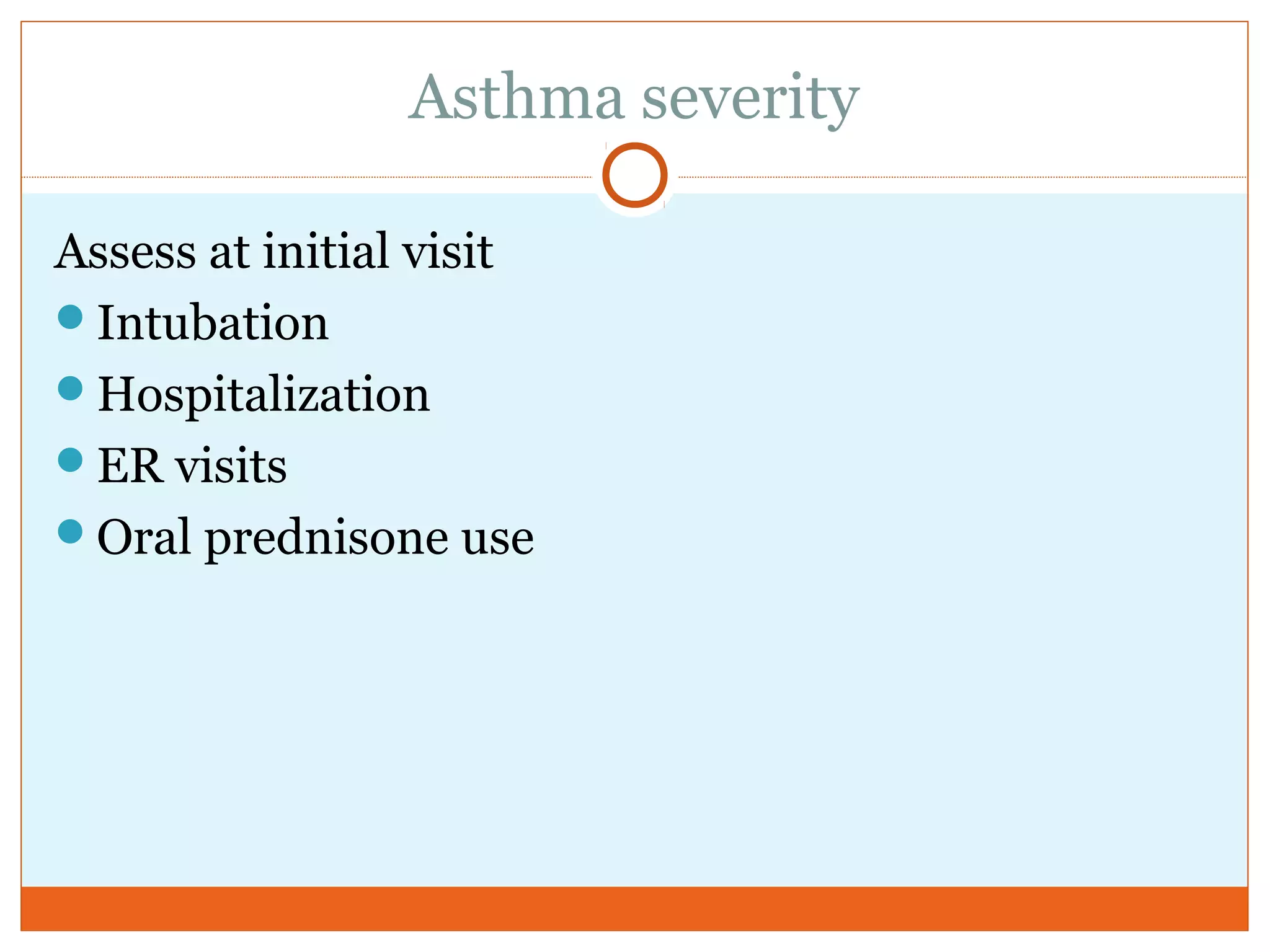
Assess at initial visit
Intubation
Hospitalization
ER visits
Oral prednisone use
Asthma severity
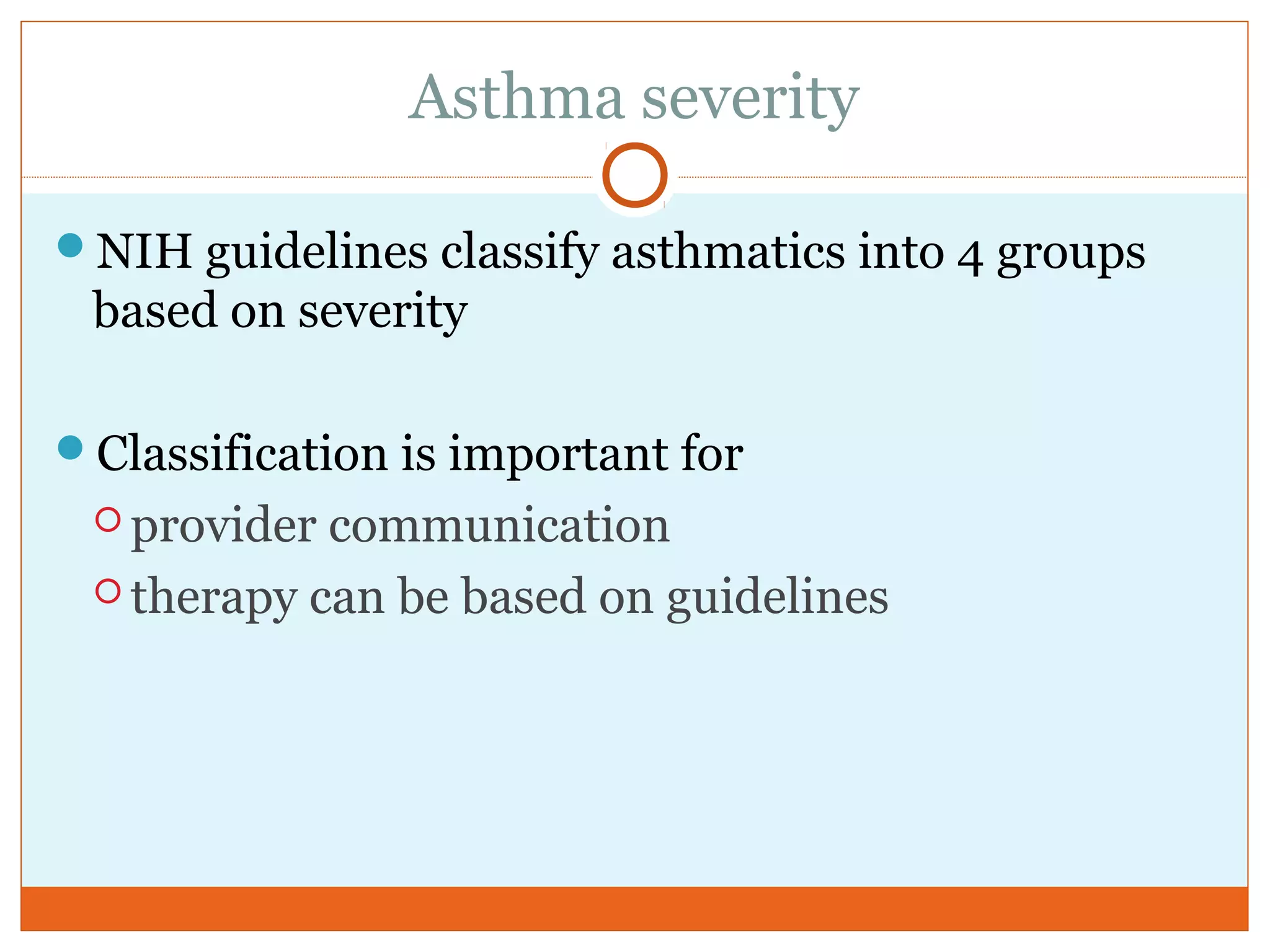
NIH guidelines classify asthmatics into 4 groups
based on severity
Classification is important for
 provider communication
 therapy can be based on guidelines
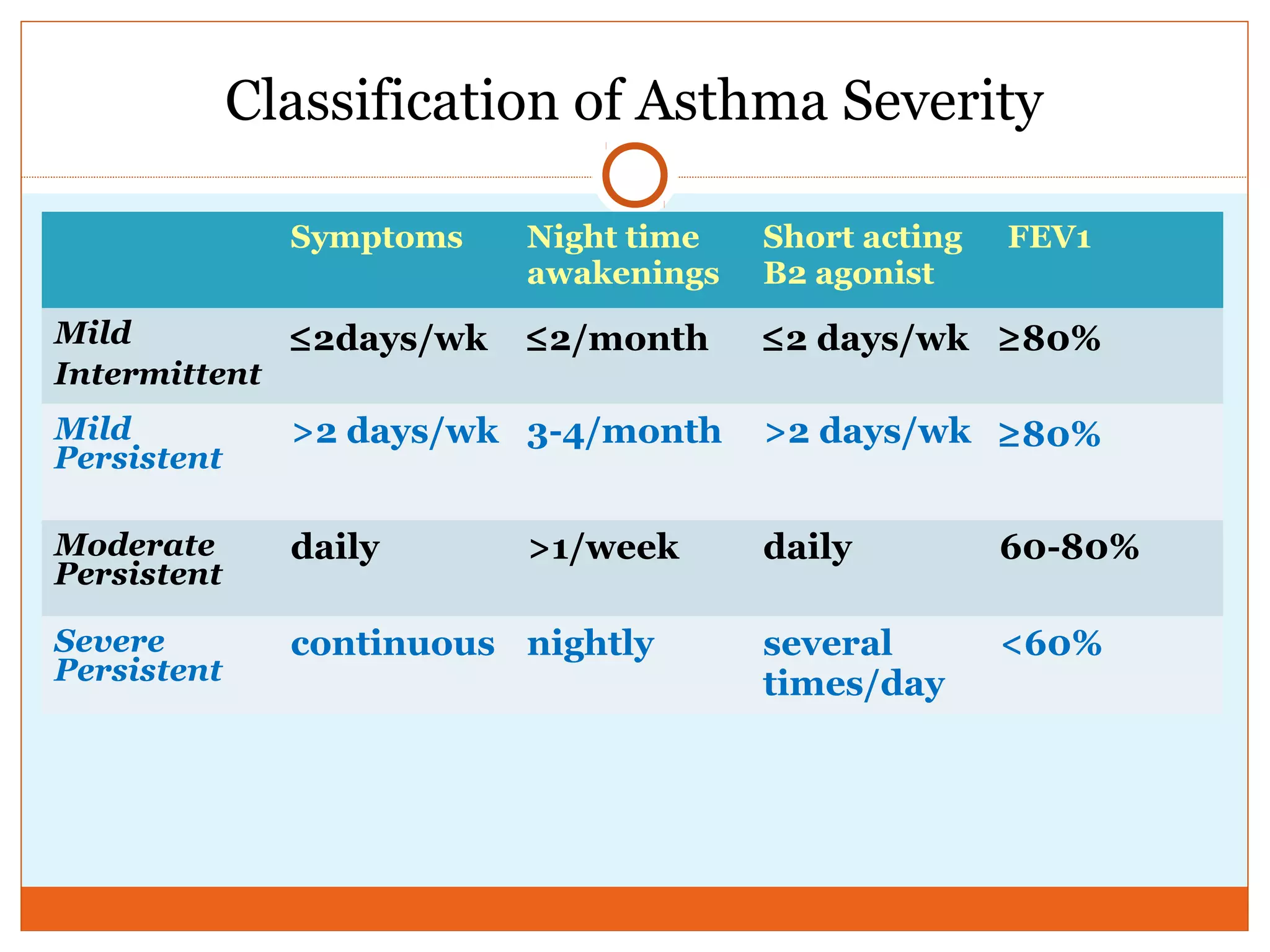
Classification of Asthma Severity
Symptoms Night time
awakenings
Short acting
B2 agonist
FEV1
Mild
Intermittent
≤2days/wk ≤2/month ≤2 days/wk ≥80%
Mild
Persistent
>2 days/wk 3-4/month >2 days/wk ≥80%
Moderate
Persistent
daily >1/week daily 60-80%
Severe
Persistent
continuous nightly several
times/day
<60%
Asthma control
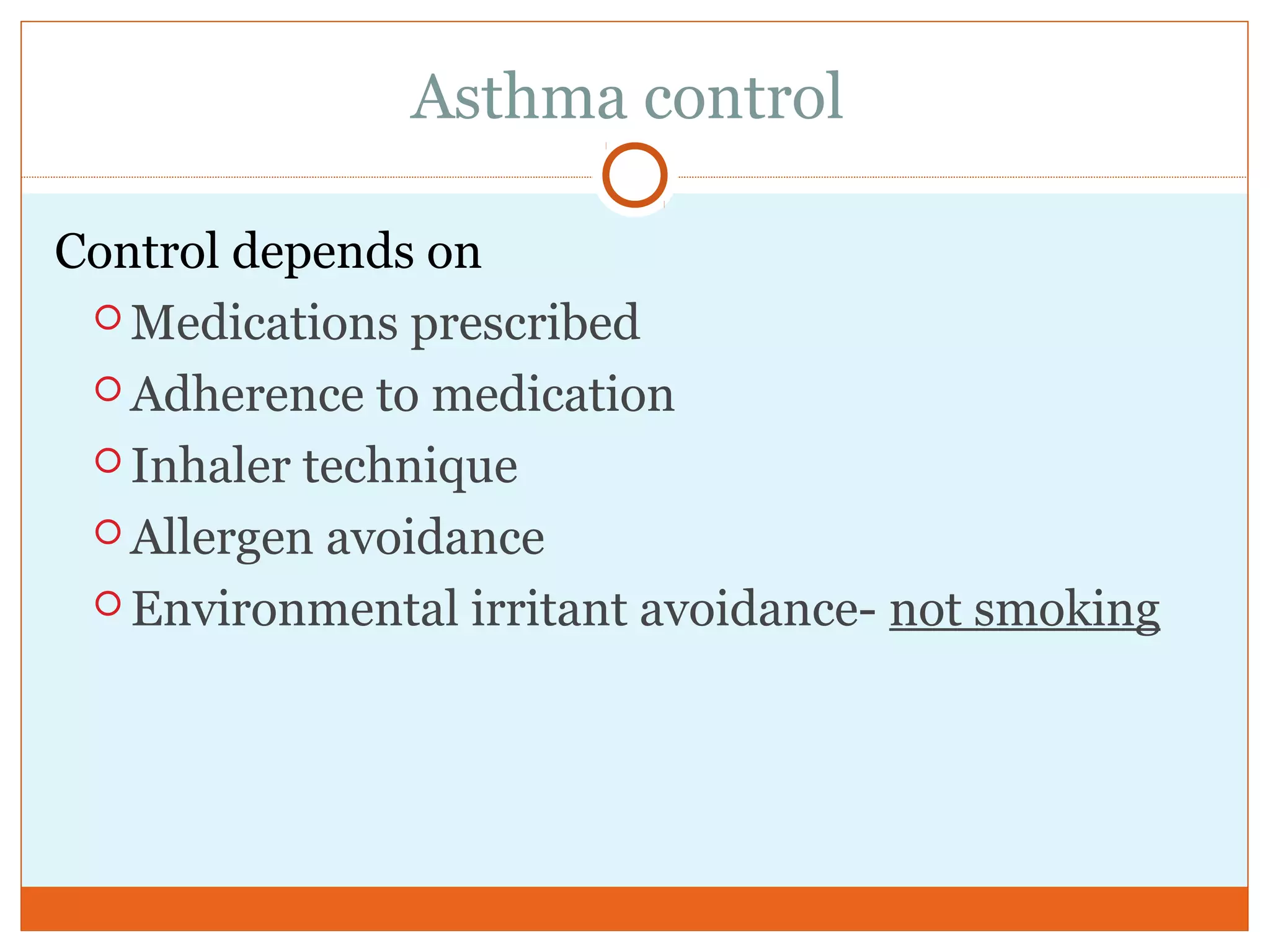
Control depends on
 Medications prescribed
 Adherence to medication
 Inhaler technique
 Allergen avoidance
 Environmental irritant avoidance- not smoking
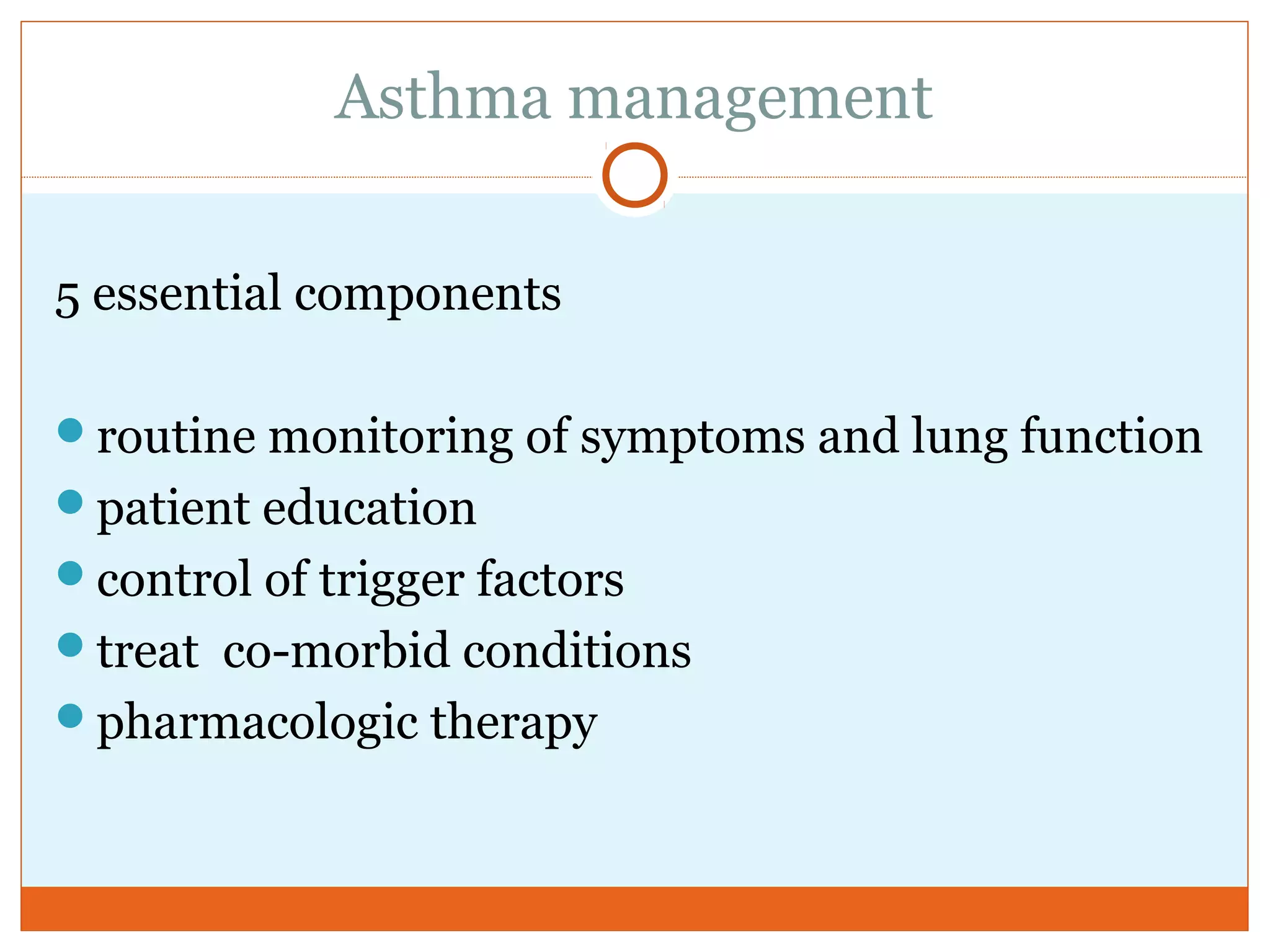
Asthma management
5 essential components
routine monitoring of symptoms and lung function
patient education
control of trigger factors
treat co-morbid conditions
pharmacologic therapy
Pharmacotherapy
Two major categories of medications
Rescue: quick relief
Controller: long-term control
Pharmacotherapy: quick relief meds
Relax airway muscles and provide rapid relief of symptoms
Taken as needed
Used in acute episodes
short-acting beta2agonists (SABA)
 bronchodilators that relax smooth muscle
 albuterol
anticholinergics
 inhibit cholinergic receptors & decrease vagal tone in
airway
 ipratropium bromide - atrovent
Pharmacotherapy
long-term control medications
Taken daily
Corticosteroids - inhaled & oral
 Reduce airway hyperresponsiveness
 Inhibit inflammatory cell migration and activation
 Enhance effectiveness of β2-agonists
 Block late phase reaction to allergens
 Rinse mouth and spit
 AE- cataracts, decrease bone density
Long-acting beta2-agonists (LABA) - Serevent
 NEVER MONOTHERAPY; only in conjunction with an anti-
inflammatory medication
 AE- increase rates of death
Pharmacotherapy
long-term control medications
Leukotriene receptor antagonist
 interfere with leukotriene mediators released from
mast cells, eosinophils
 Montelukast- Singulair
Theophylline
 mild anti-inflammatory effect
 AE- monitor serum levels
Cromolyn sodium
 stabilize mast cells
 can be used to prevent exercise induced asthma
Pharmacotherapy
long-term control medications
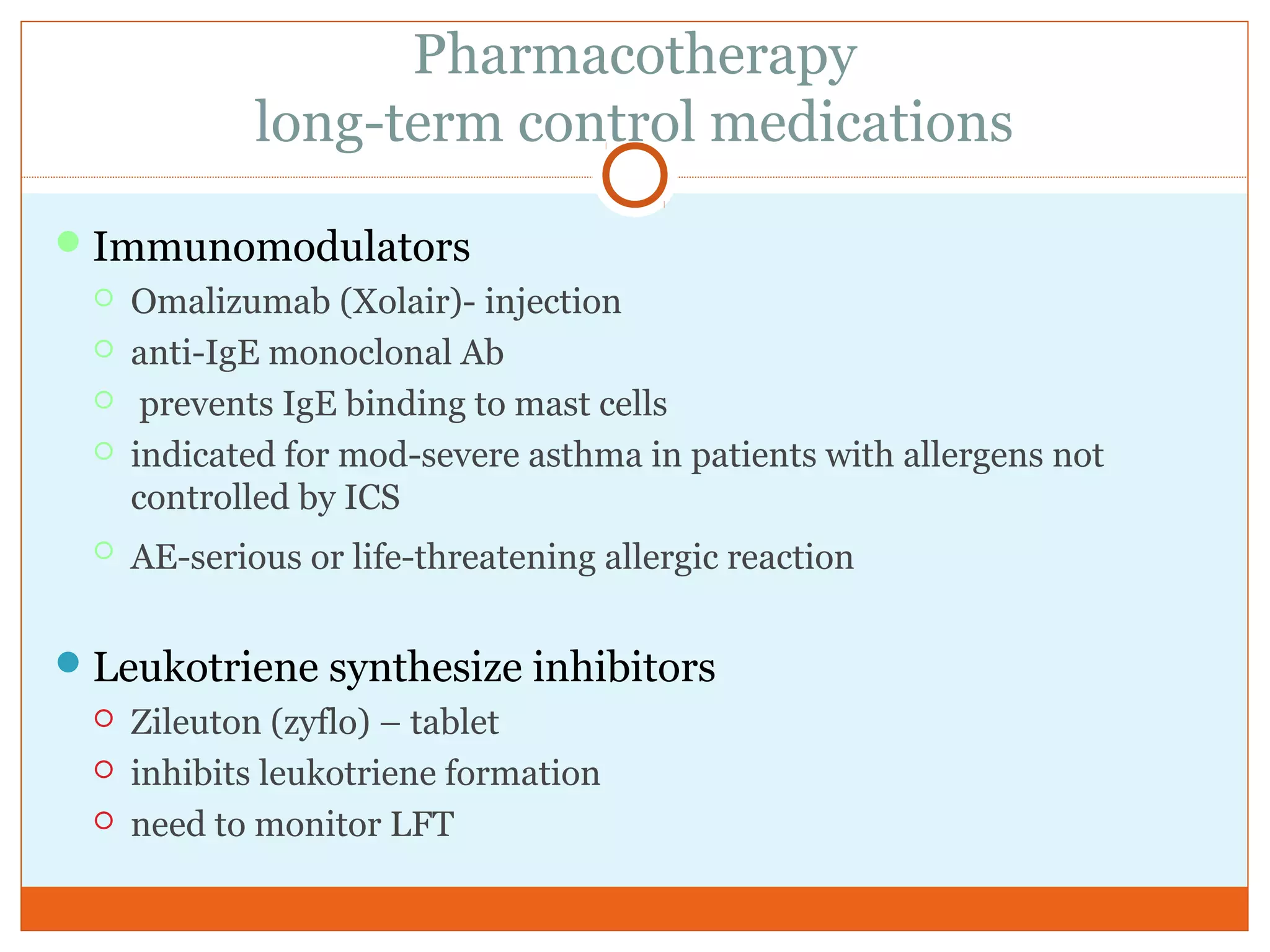
Immunomodulators
 Omalizumab (Xolair)- injection
 anti-IgE monoclonal Ab
 prevents IgE binding to mast cells
 indicated for mod-severe asthma in patients with allergens not
controlled by ICS
 AE-serious or life-threatening allergic reaction
Leukotriene synthesize inhibitors
 Zileuton (zyflo) – tablet
 inhibits leukotriene formation
 need to monitor LFT
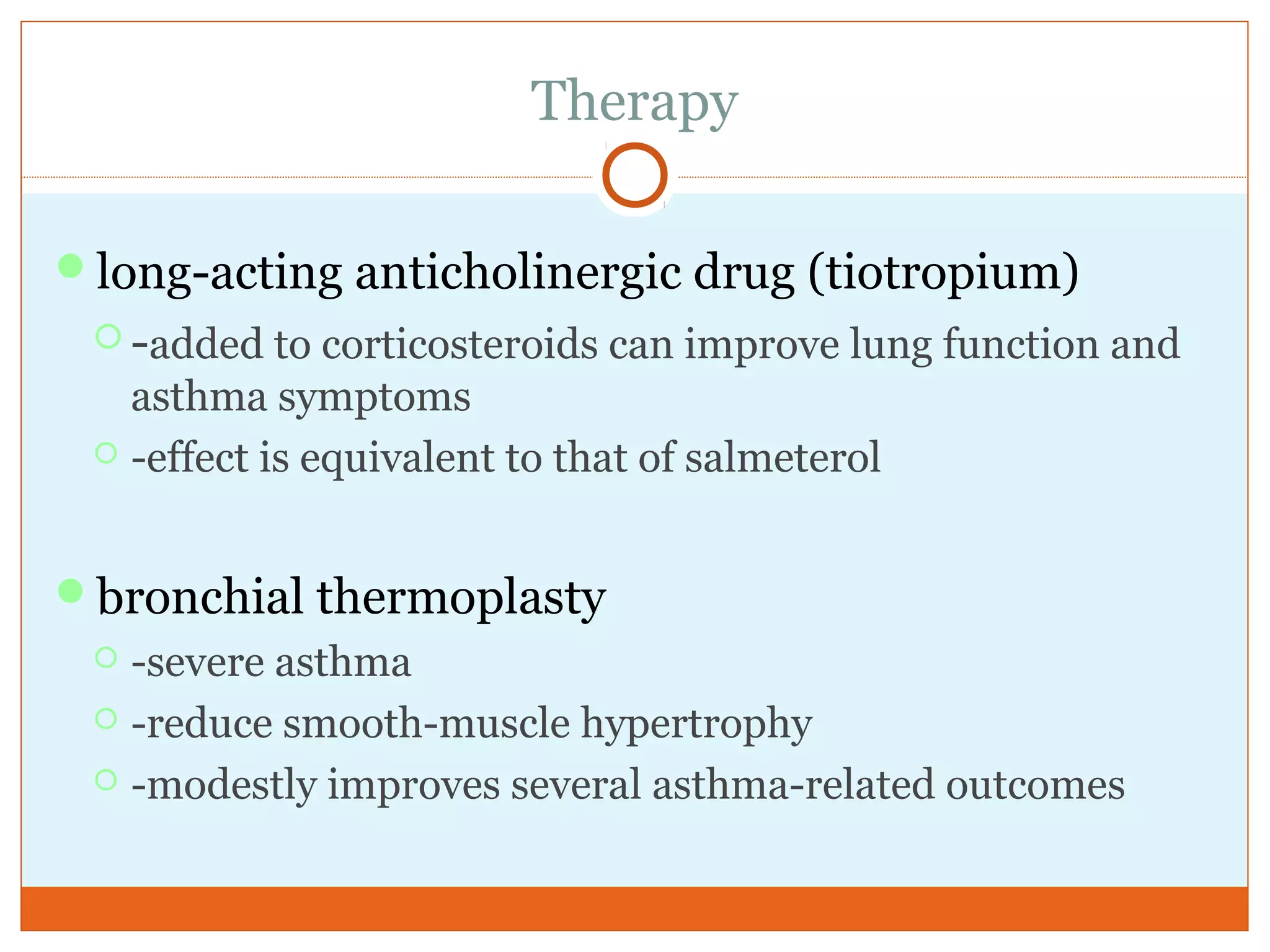
Therapy
long-acting anticholinergic drug (tiotropium)
 -added to corticosteroids can improve lung function and
asthma symptoms
 -effect is equivalent to that of salmeterol
bronchial thermoplasty
 -severe asthma
 -reduce smooth-muscle hypertrophy
 -modestly improves several asthma-related outcomes
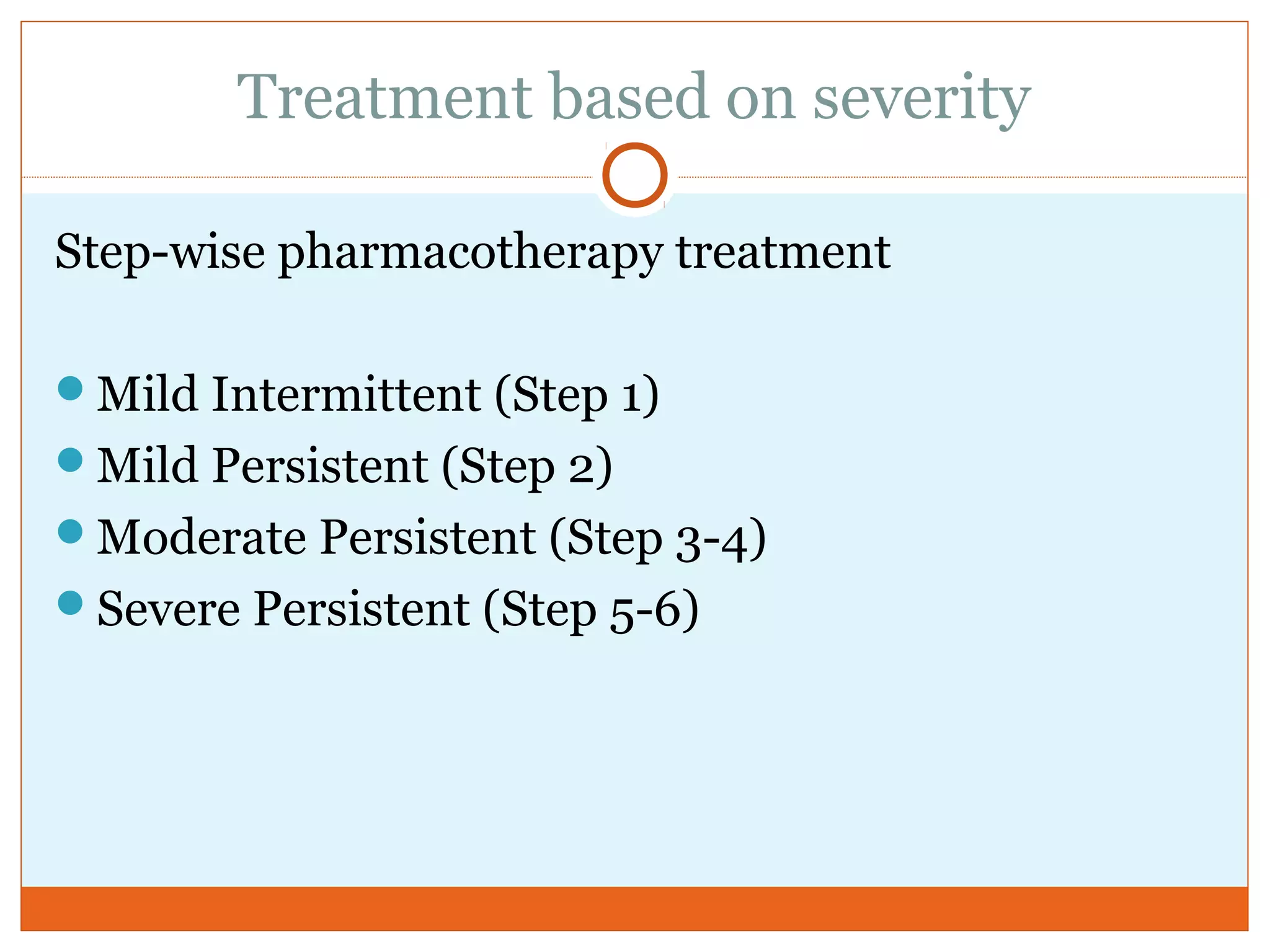
Treatment based on severity
Step-wise pharmacotherapy treatment
Mild Intermittent (Step 1)
Mild Persistent (Step 2)
Moderate Persistent (Step 3-4)
Severe Persistent (Step 5-6)
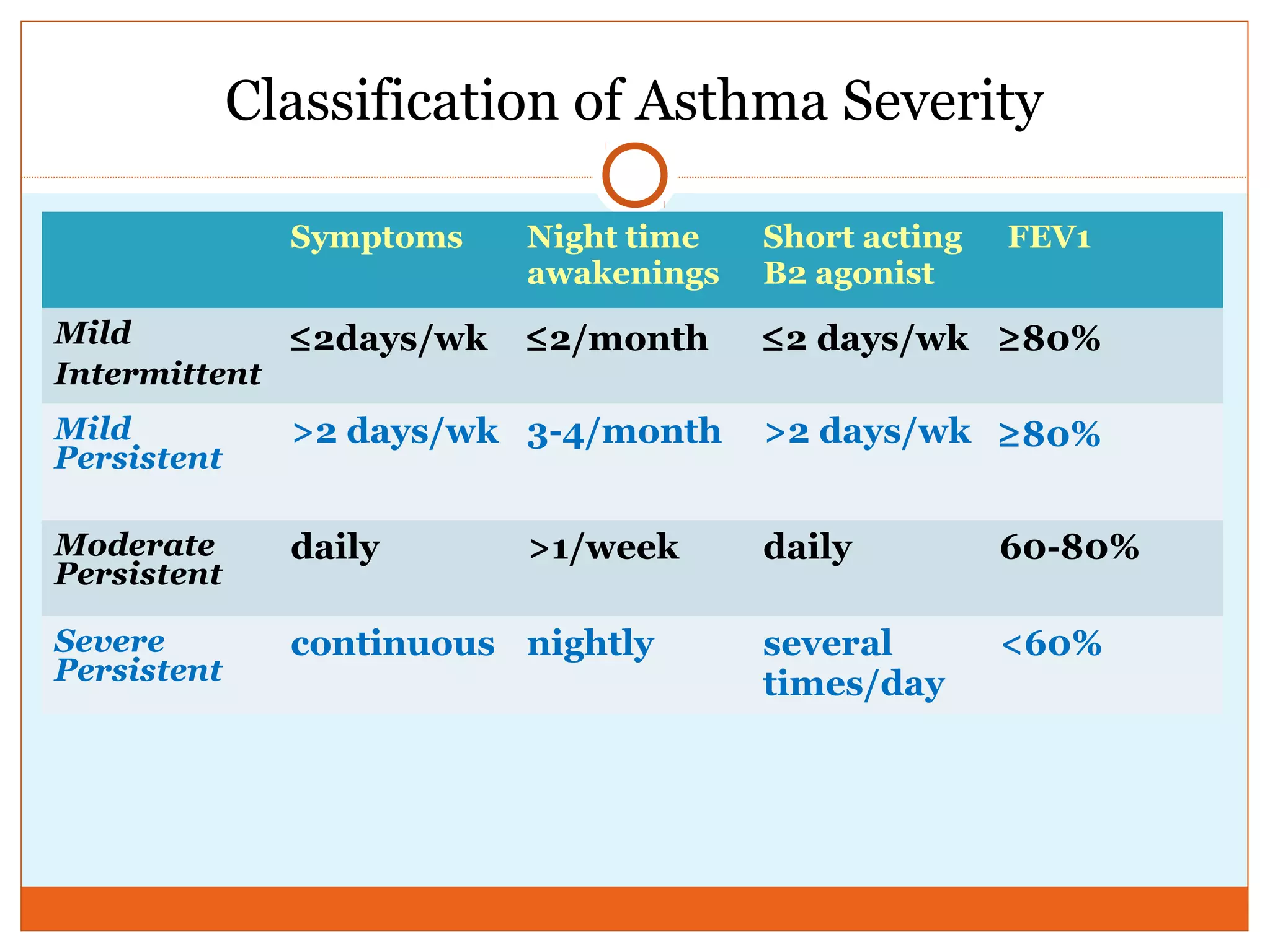
Classification of Asthma Severity
Symptoms Night time
awakenings
Short acting
B2 agonist
FEV1
Mild
Intermittent
≤2days/wk ≤2/month ≤2 days/wk ≥80%
Mild
Persistent
>2 days/wk 3-4/month >2 days/wk ≥80%
Moderate
Persistent
daily >1/week daily 60-80%
Severe
Persistent
continuous nightly several
times/day
<60%
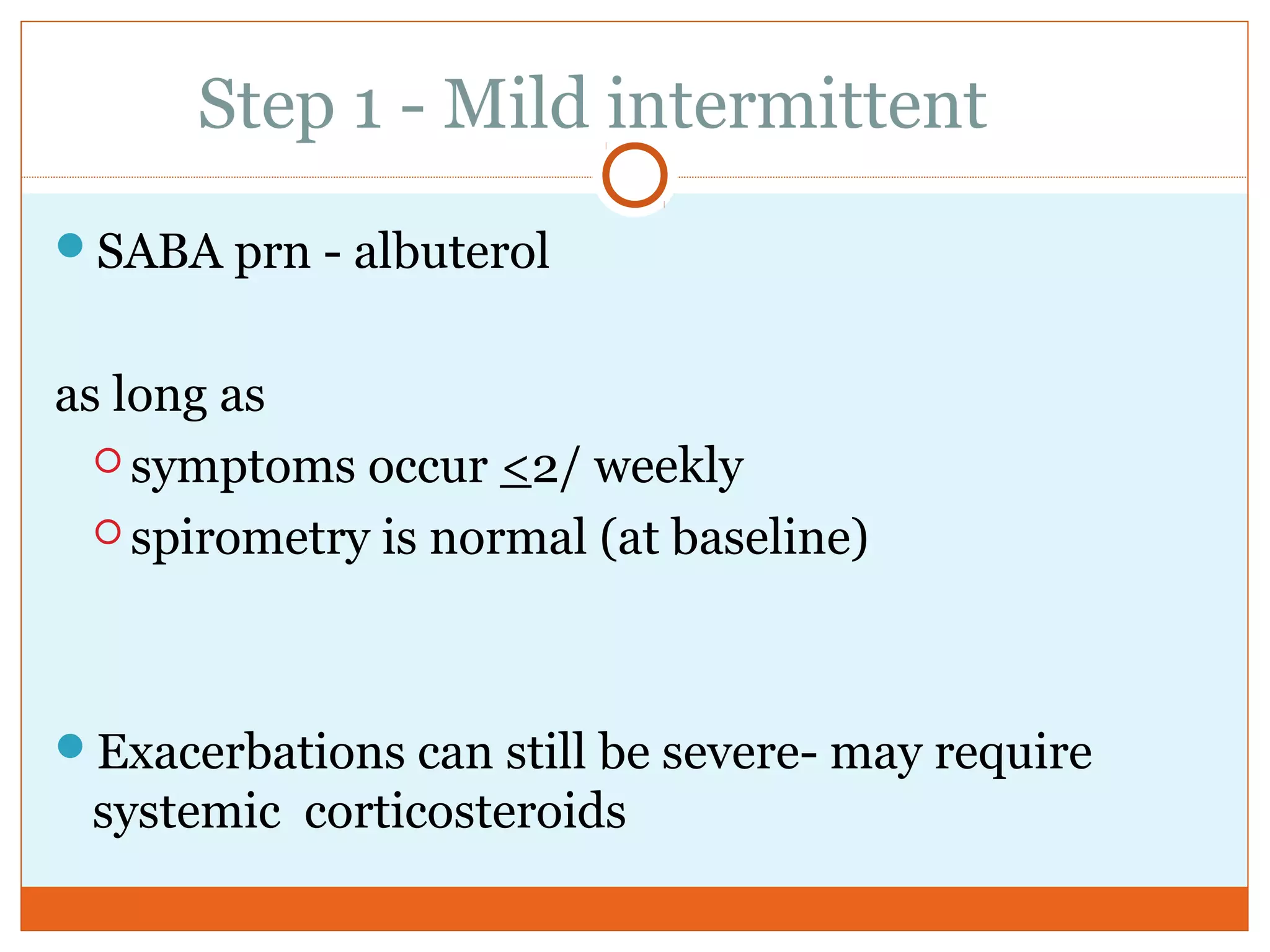
Step 1 - Mild intermittent
SABA prn - albuterol
as long as
 symptoms occur <2/ weekly
 spirometry is normal (at baseline)
Exacerbations can still be severe- may require
systemic corticosteroids
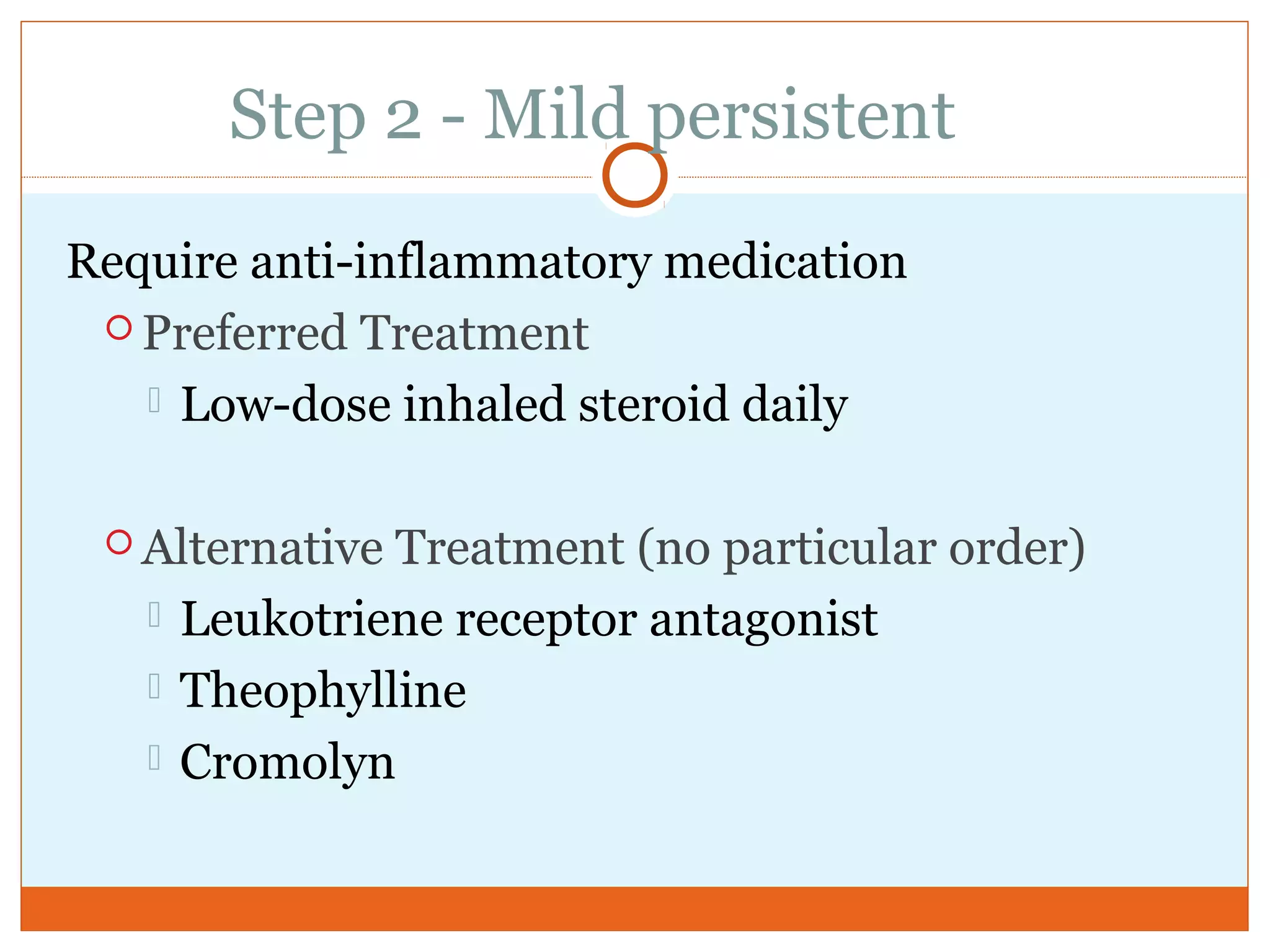
Step 2 - Mild persistent
Require anti-inflammatory medication
 Preferred Treatment
 Low-dose inhaled steroid daily
 Alternative Treatment (no particular order)
 Leukotriene receptor antagonist
 Theophylline
 Cromolyn
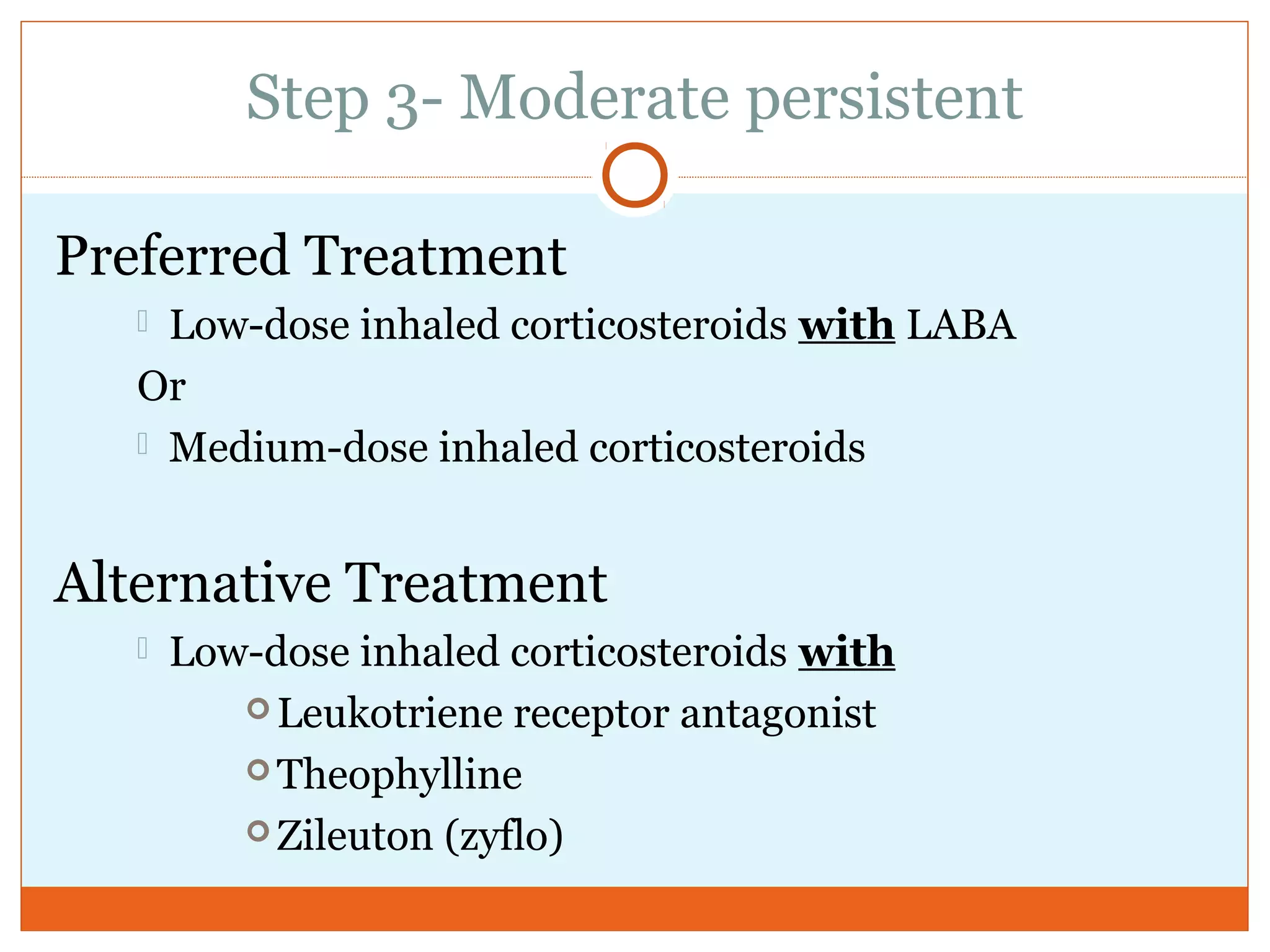
Step 3- Moderate persistent
Preferred Treatment
 Low-dose inhaled corticosteroids with LABA
Or
 Medium-dose inhaled corticosteroids
Alternative Treatment
 Low-dose inhaled corticosteroids with
 Leukotriene receptor antagonist
 Theophylline
 Zileuton (zyflo)
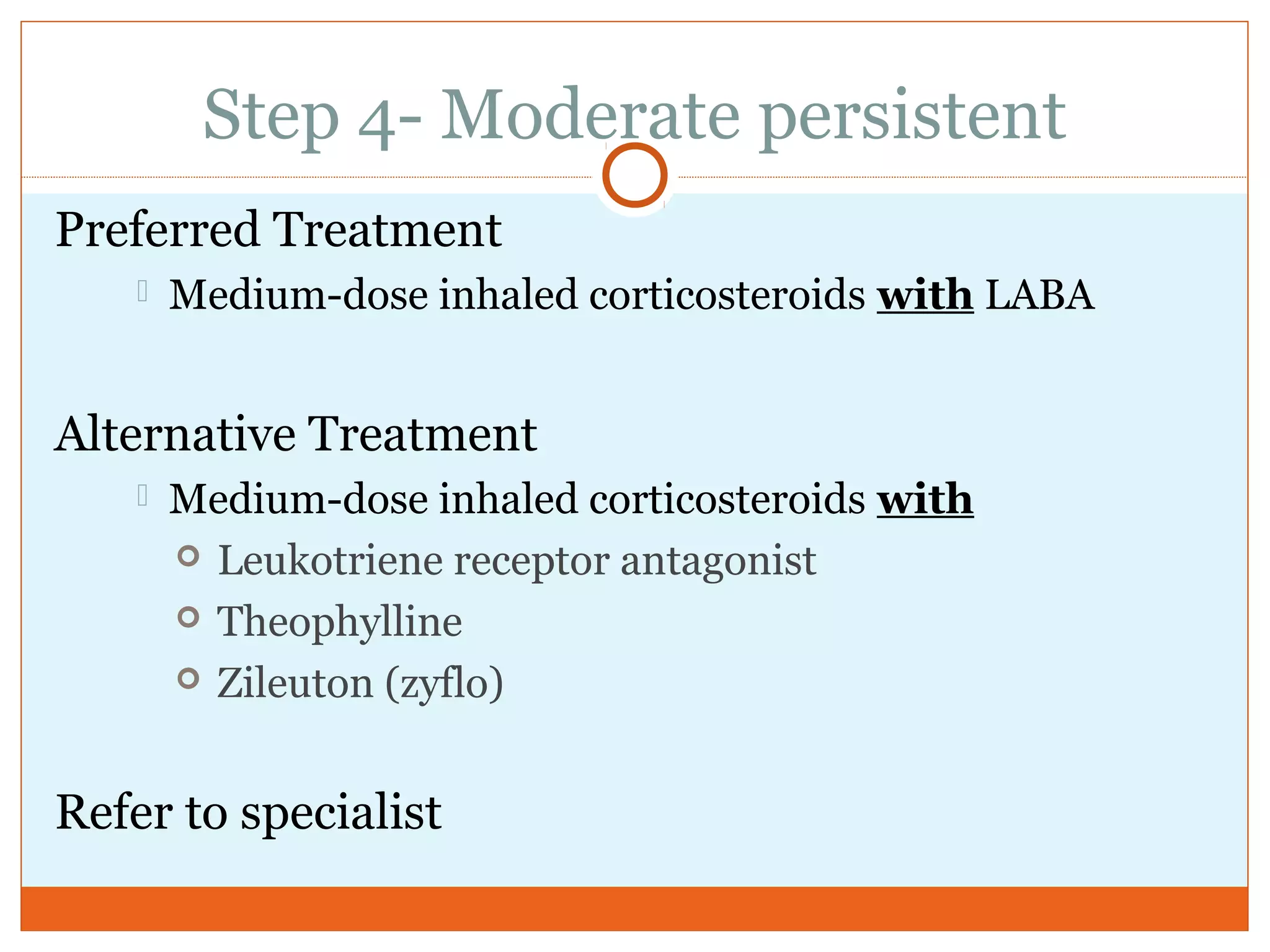
Step 4- Moderate persistent
Preferred Treatment
 Medium-dose inhaled corticosteroids with LABA
Alternative Treatment
 Medium-dose inhaled corticosteroids with
 Leukotriene receptor antagonist
 Theophylline
 Zileuton (zyflo)
Refer to specialist
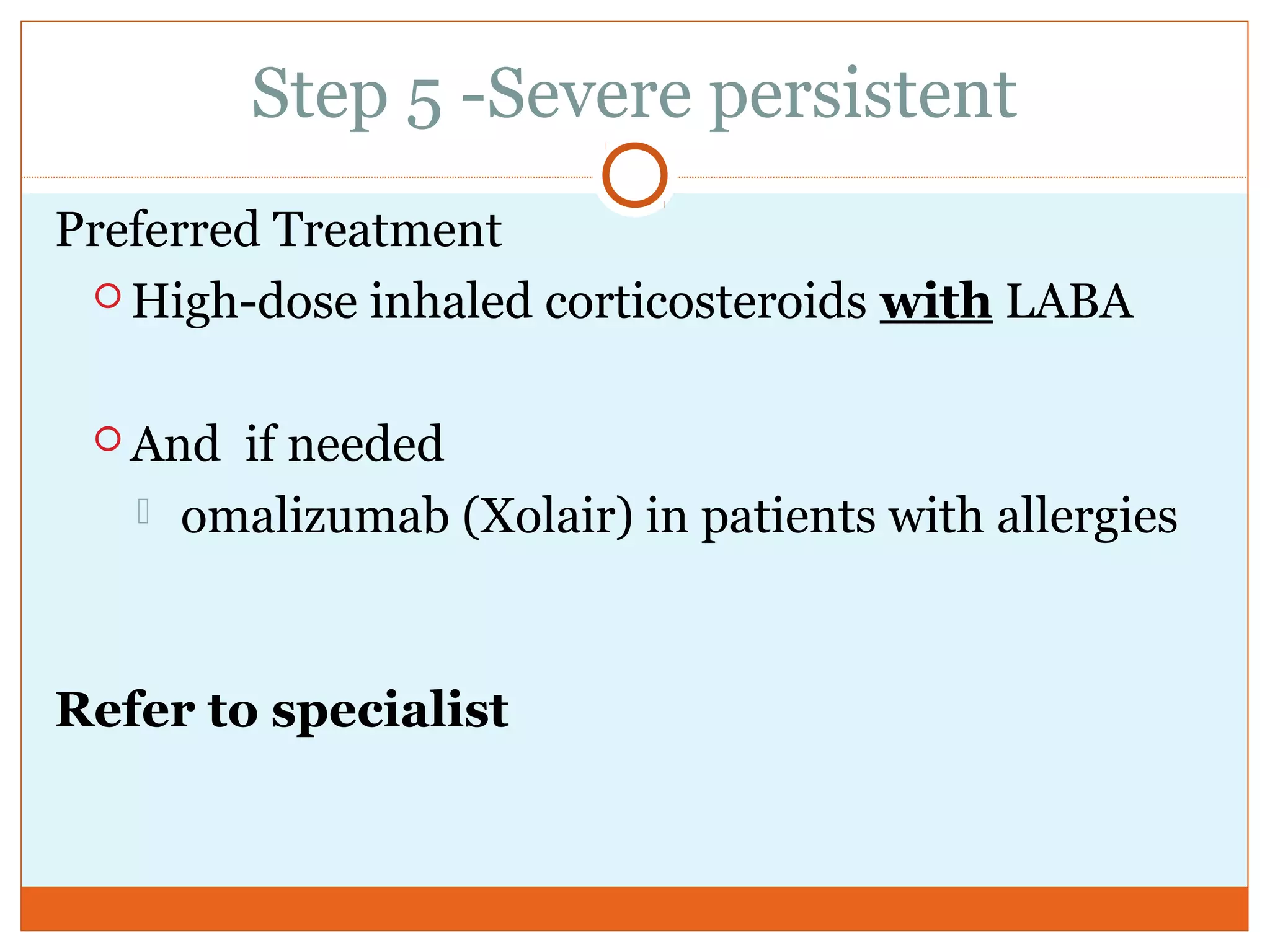
Step 5 -Severe persistent
Preferred Treatment
 High-dose inhaled corticosteroids with LABA
 And if needed
 omalizumab (Xolair) in patients with allergies
Refer to specialist
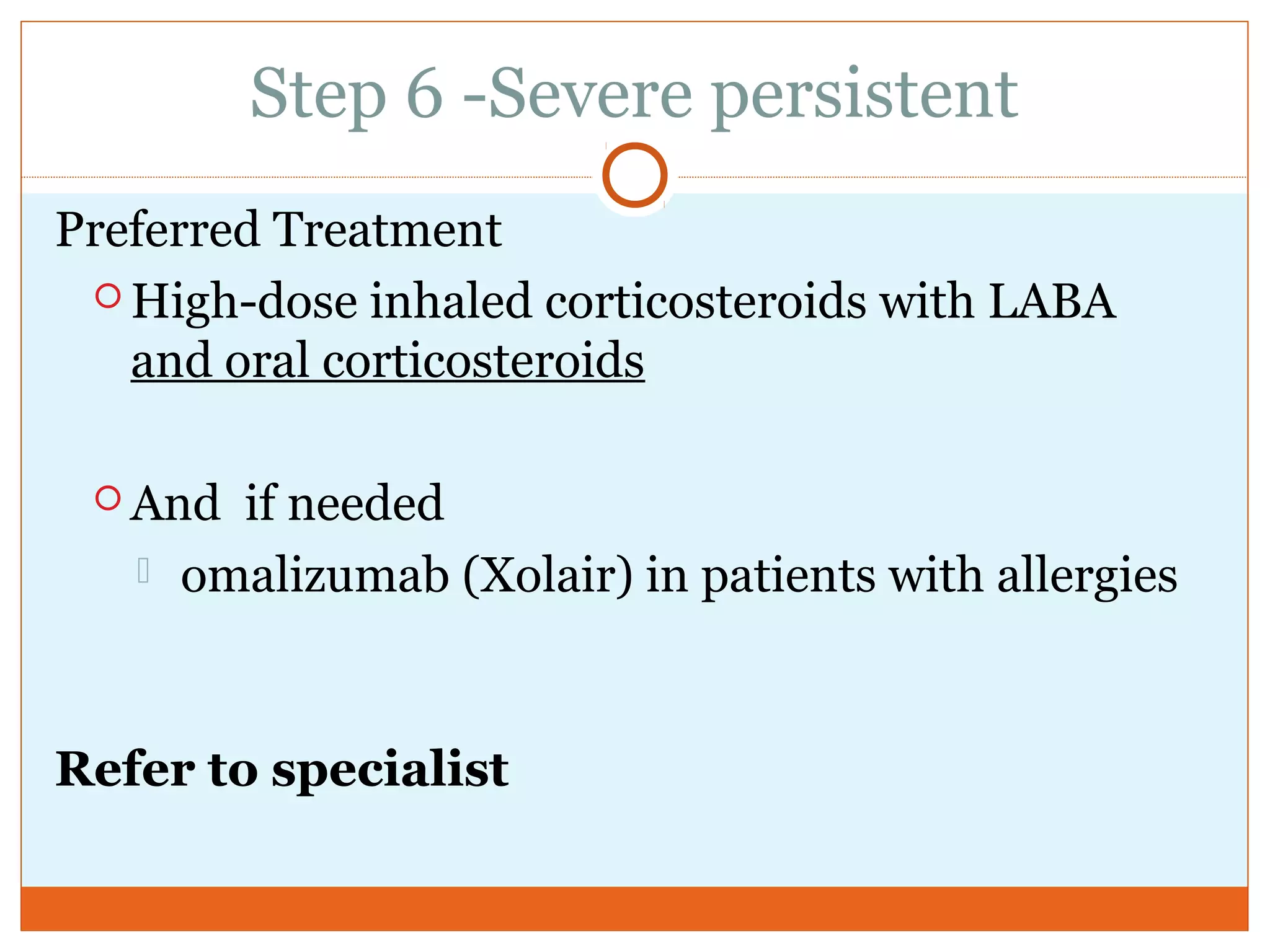
Step 6 -Severe persistent
Preferred Treatment
 High-dose inhaled corticosteroids with LABA
and oral corticosteroids
 And if needed
 omalizumab (Xolair) in patients with allergies
Refer to specialist
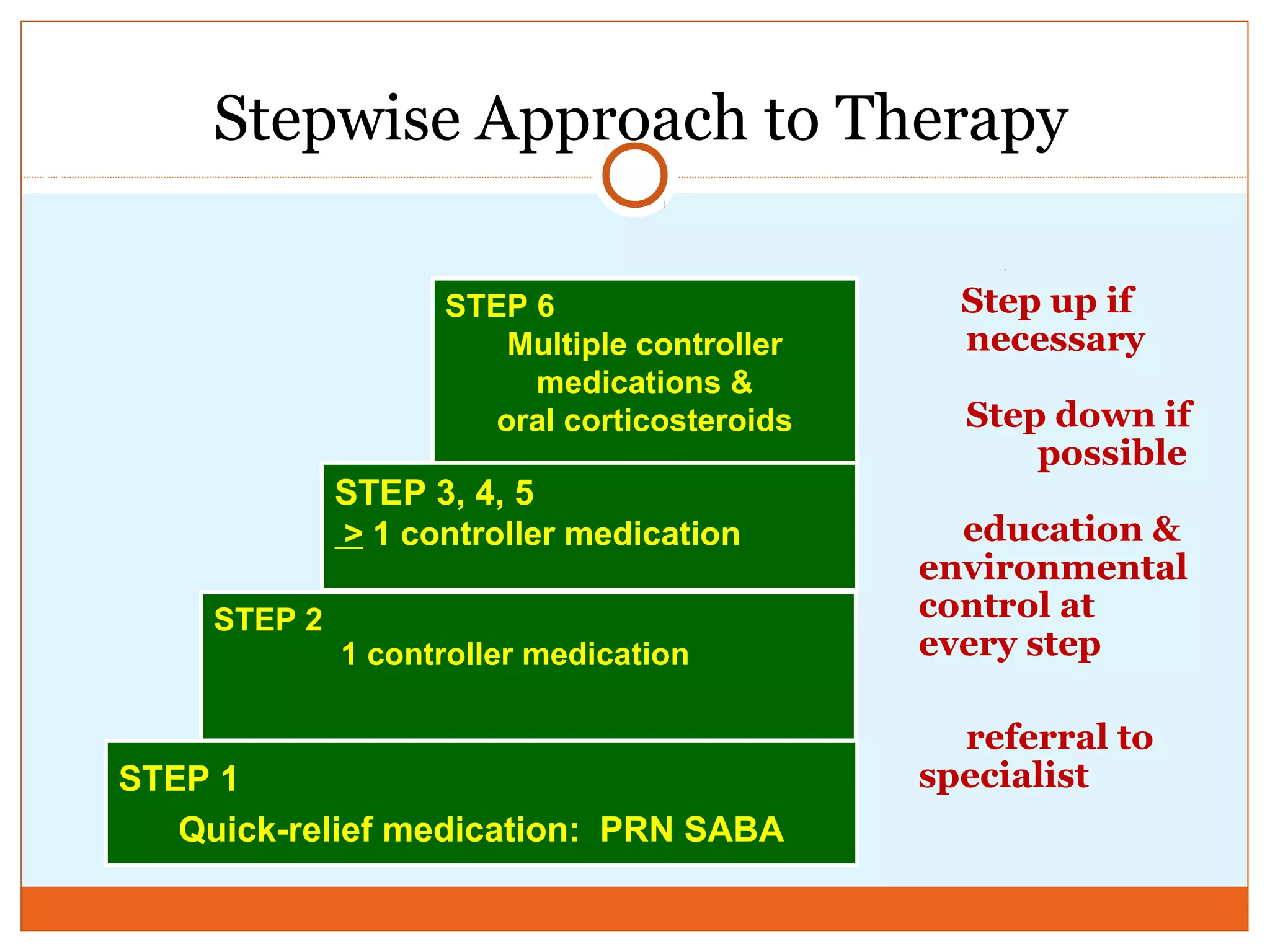
Stepwise Approach to Therapy
Step up if
necessary
Step down if
possible
education &
environmental
control at
every step
referral to
specialist
STEP 6
Multiple controller
medications &
oral corticosteroids
STEP 3, 4, 5
> 1 controller medication
STEP 2
1 controller medication
STEP 1
Quick-relief medication: PRN SABA
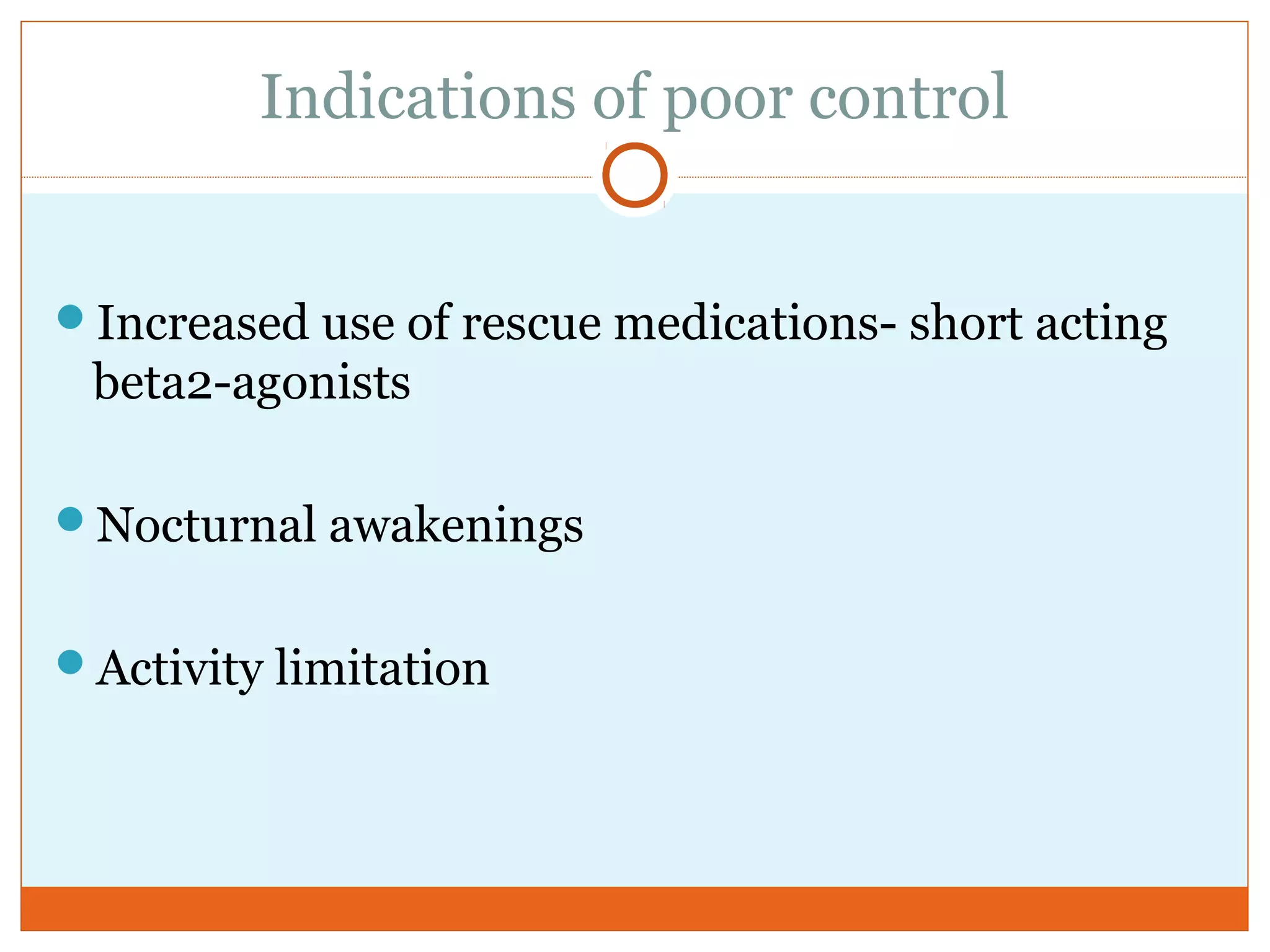
Indications of poor control
Increased use of rescue medications- short acting
beta2-agonists
Nocturnal awakenings
Activity limitation
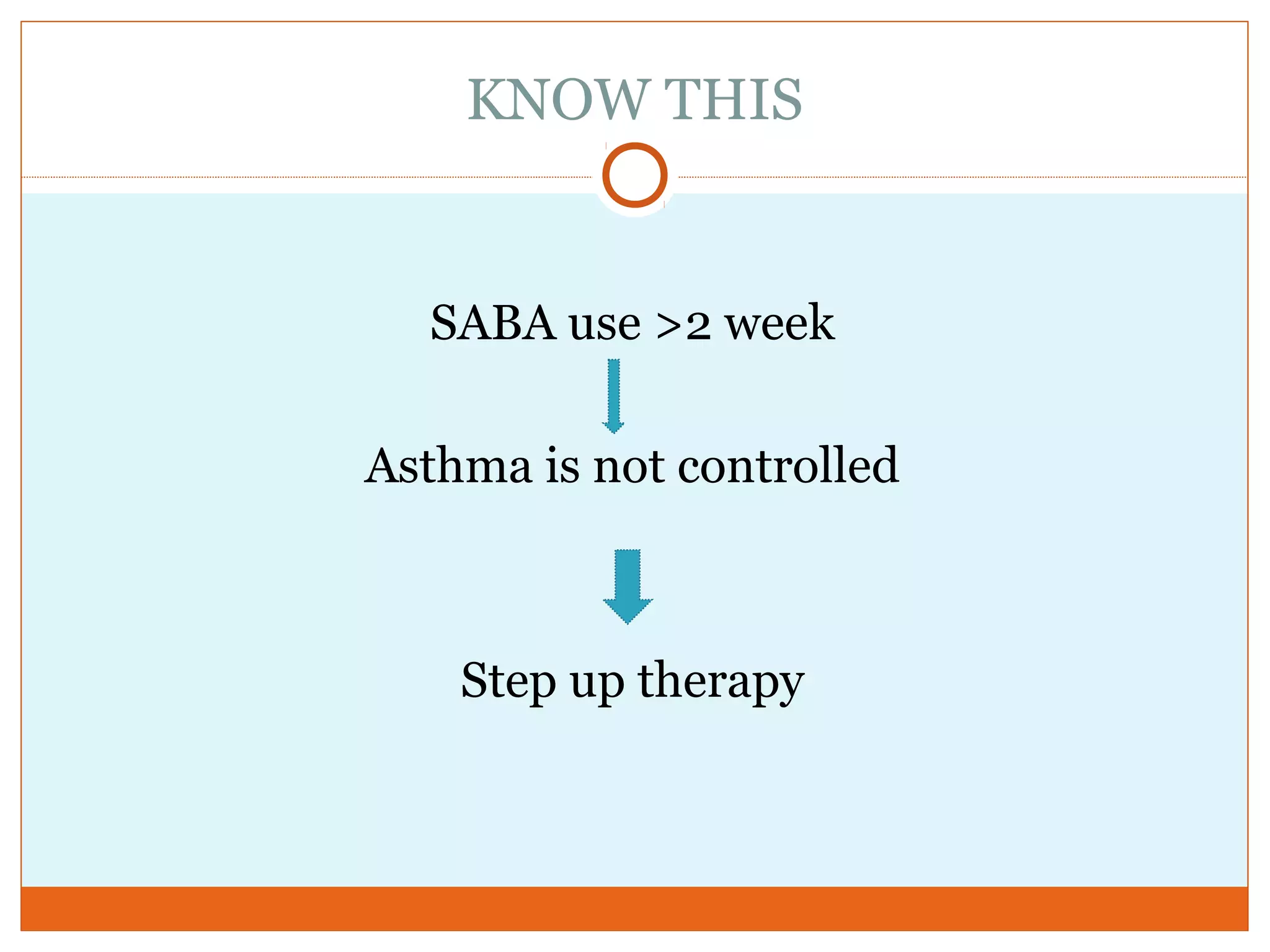
KNOW THIS
SABA use >2 week
Asthma is not controlled
Step up therapy
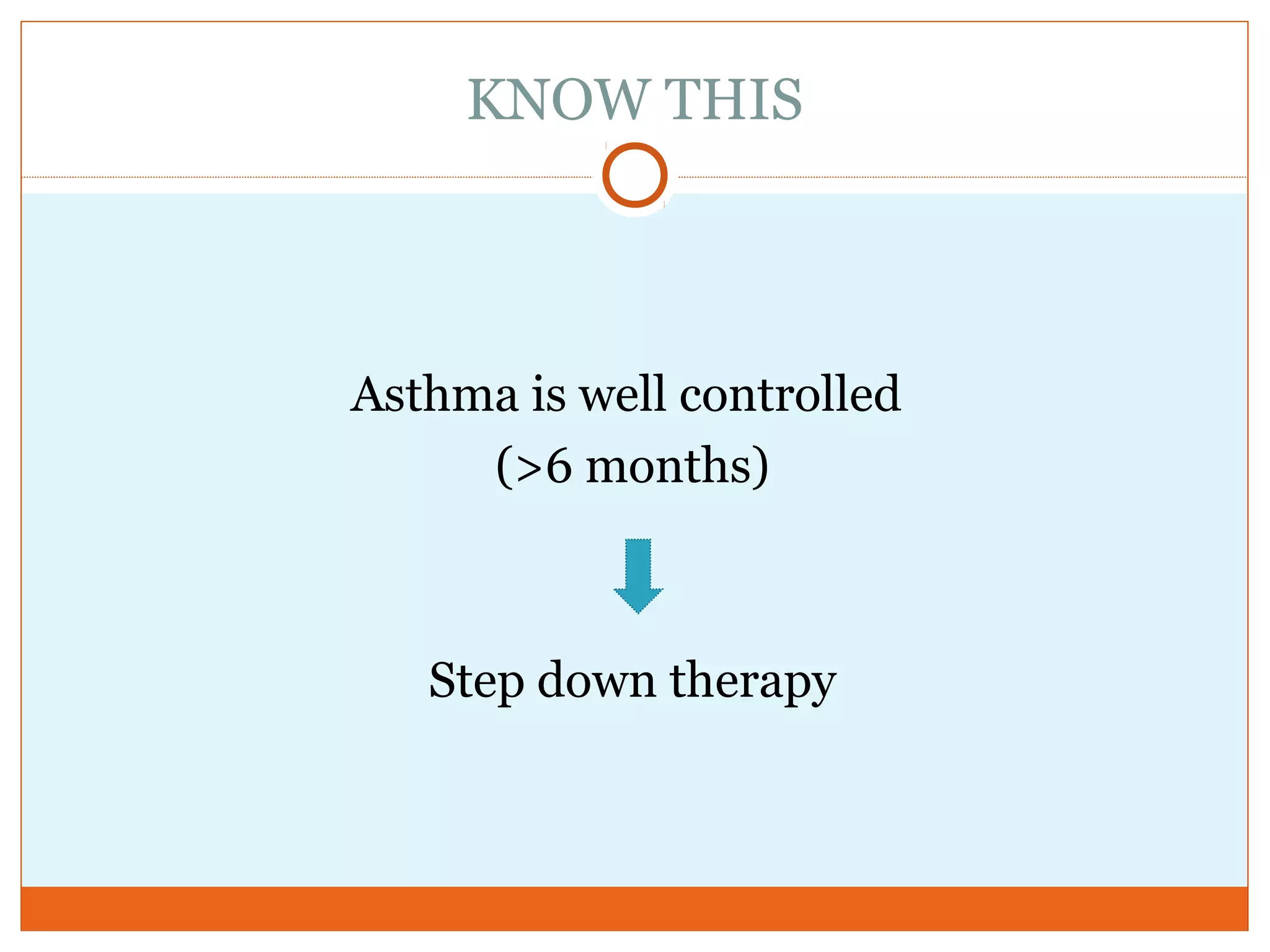
KNOW THIS
Asthma is well controlled
(>6 months)
Step down therapy
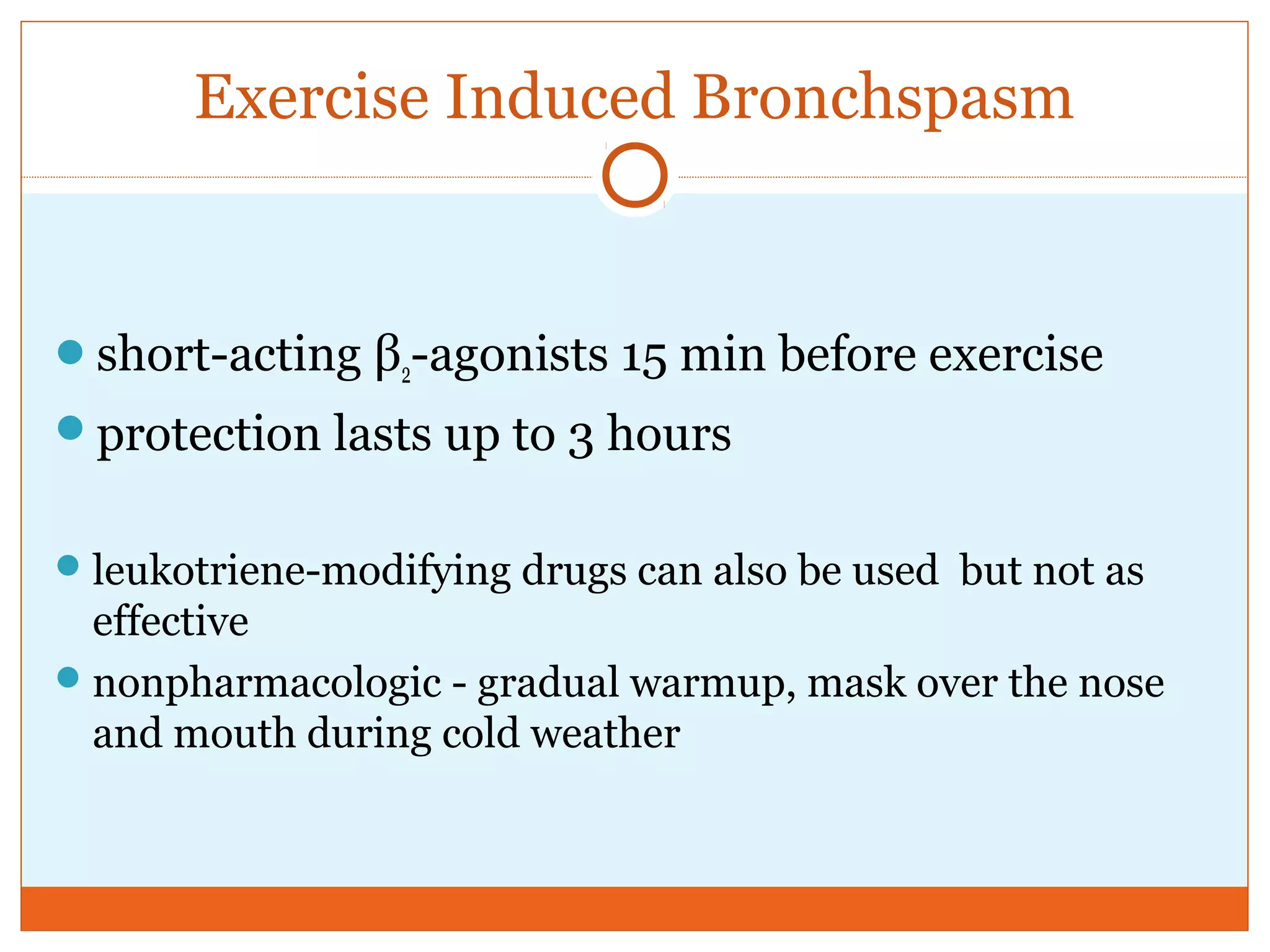
Exercise Induced Bronchspasm
short-acting β2-agonists 15 min before exercise
protection lasts up to 3 hours
leukotriene-modifying drugs can also be used but not as
effective
nonpharmacologic - gradual warmup, mask over the nose
and mouth during cold weather
Treat co-morbid conditions
Allergies
GERD
Allergic bronchopulmonary aspergillosis (ABPA)
 hypersensitivity reaction to Aspergillus fumigatus in patients with
asthma (less commonly cystic fibrosis)
 Immune response to Aspergillus Ag causes airway obstruction and if
untreated bronchiectasis and pulmonary fibrosis
 Presents as asthma with productive cough and fever
 Diagnosis - Aspergillus skin testing , serum IgE levels, eosinophilia
 Treatment - corticosteroids
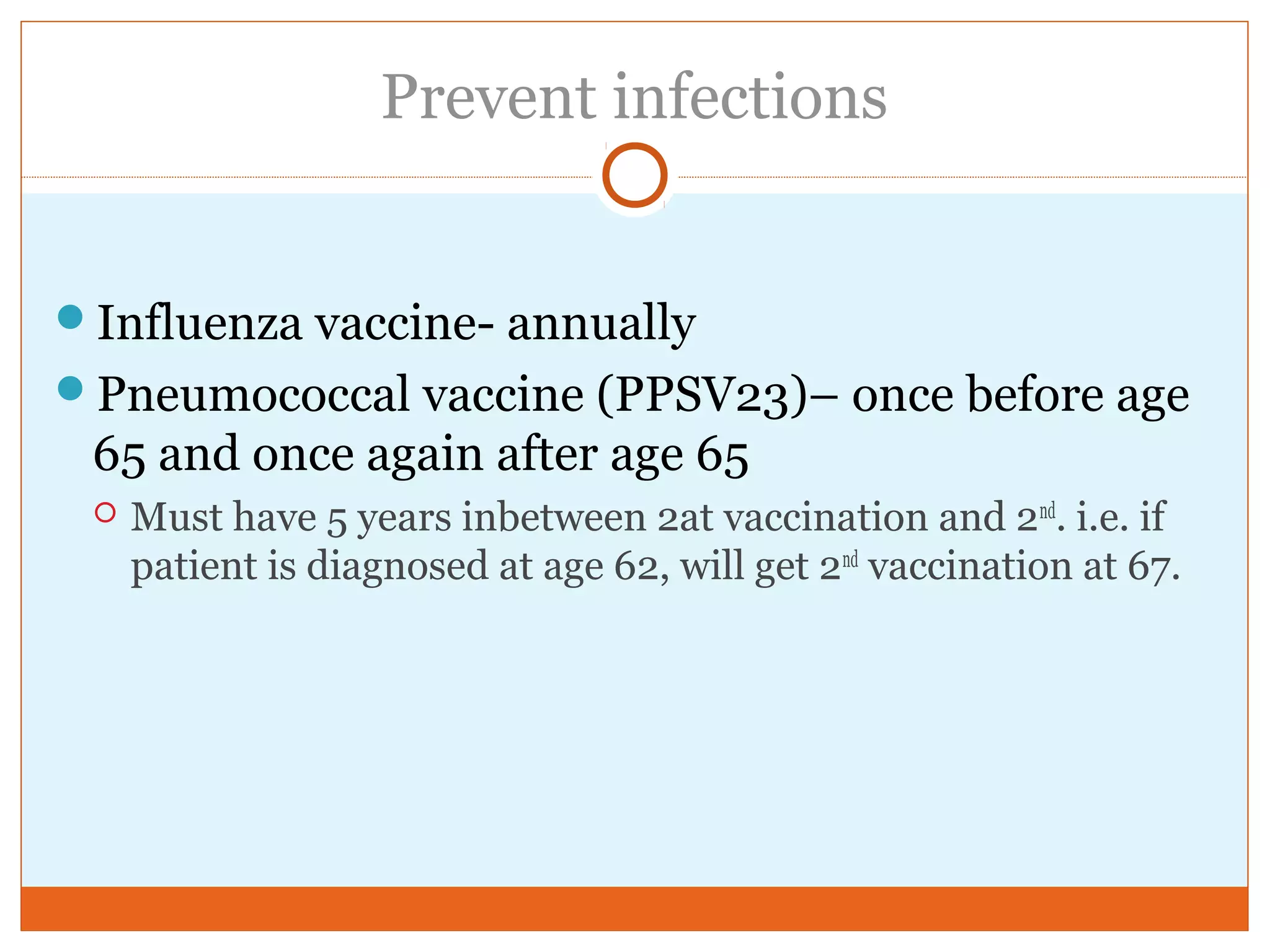
Prevent infections
Influenza vaccine- annually
Pneumococcal vaccine (PPSV23)– once before age
65 and once again after age 65
 Must have 5 years inbetween 2at vaccination and 2nd
. i.e. if
patient is diagnosed at age 62, will get 2nd
vaccination at 67.
Avoid triggers
Counsel patients to avoid triggers
 No pets
 No carpets
 No smoking
 Decrease mold- control humidity
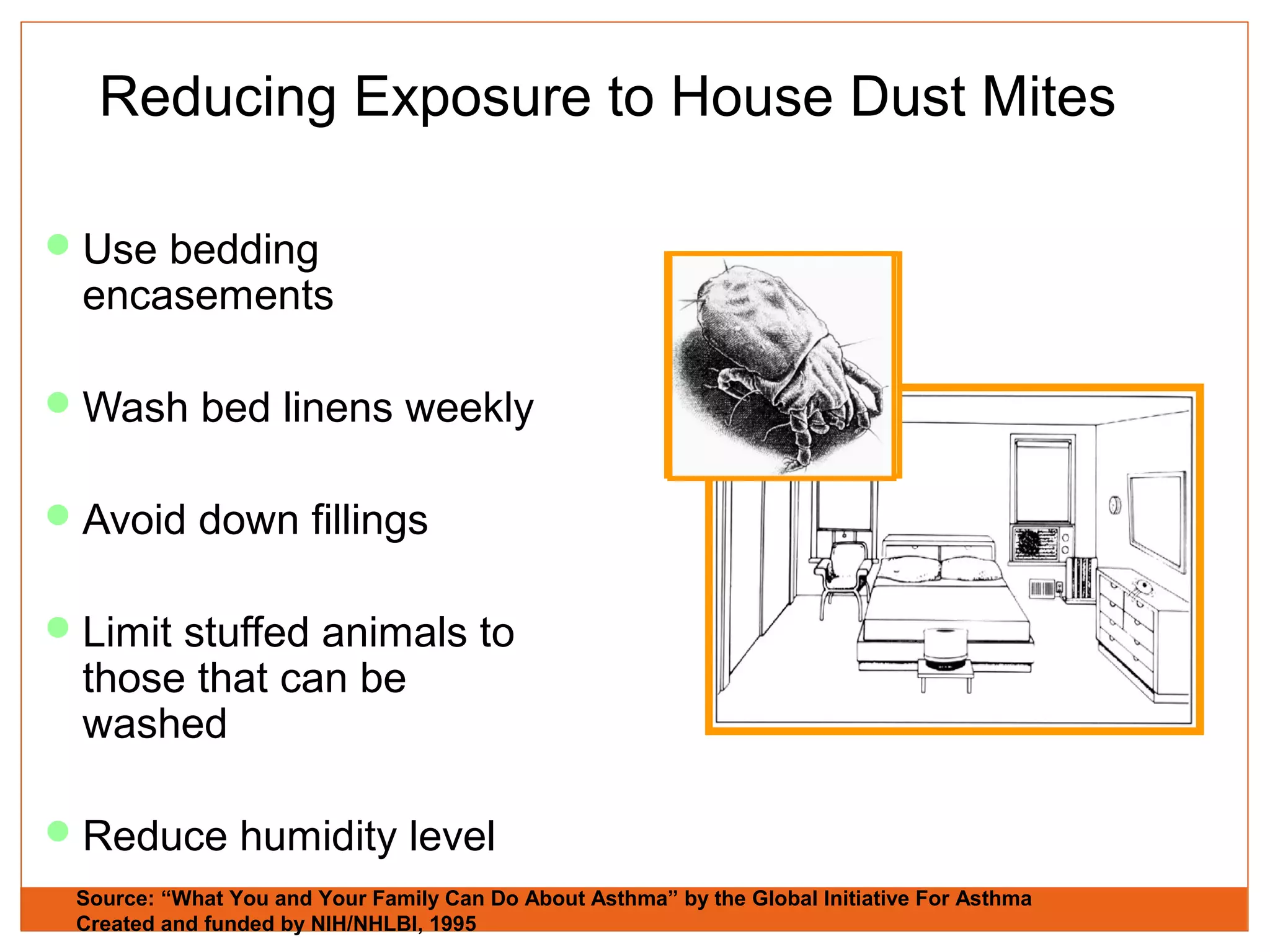
Reducing Exposure to House Dust Mites
Use bedding
encasements
Wash bed linens weekly
Avoid down fillings
Limit stuffed animals to
those that can be
washed
Reduce humidity level
Source: “What You and Your Family Can Do About Asthma” by the Global Initiative For Asthma
Created and funded by NIH/NHLBI, 1995
Patient education
Recognize symptoms
Avoid triggers
Understand medication
Controller medications
Rescue medications
Seek help if symptoms worsening
Patient education
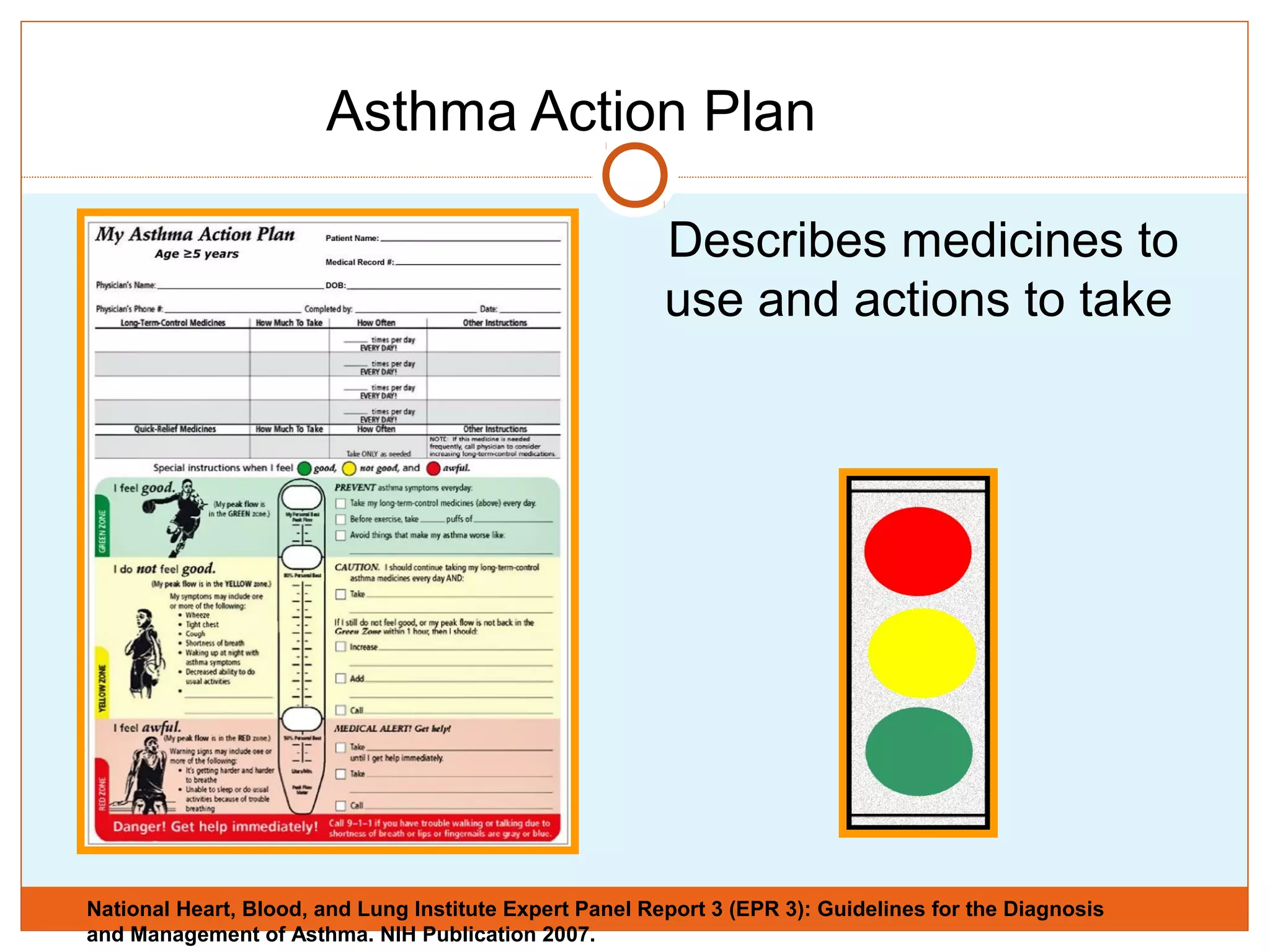
Asthma action plan
 written instructions on what to do based on
peak flow results
 shown to improve outcomes
Asthma Action Plan
Describes medicines to
use and actions to take
National Heart, Blood, and Lung Institute Expert Panel Report 3 (EPR 3): Guidelines for the Diagnosis
and Management of Asthma. NIH Publication 2007.
Monitoring asthma
Assess asthma control to monitor and adjust
therapy at f/up visits
Peak flow meter - for moderate and severe
asthmatics
Spirometry - every 1 to 2 years to assess airway
function
Exacerbations
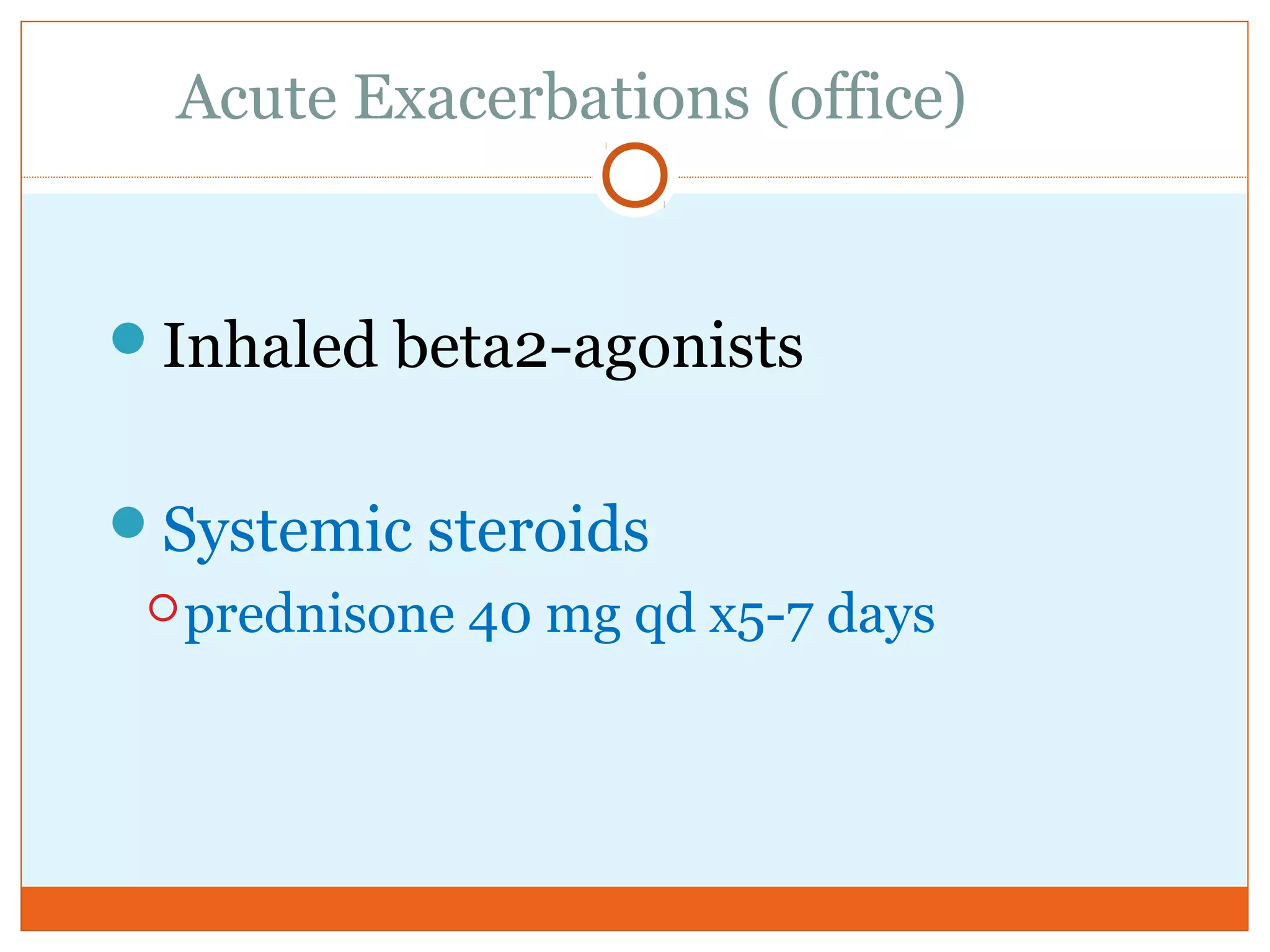
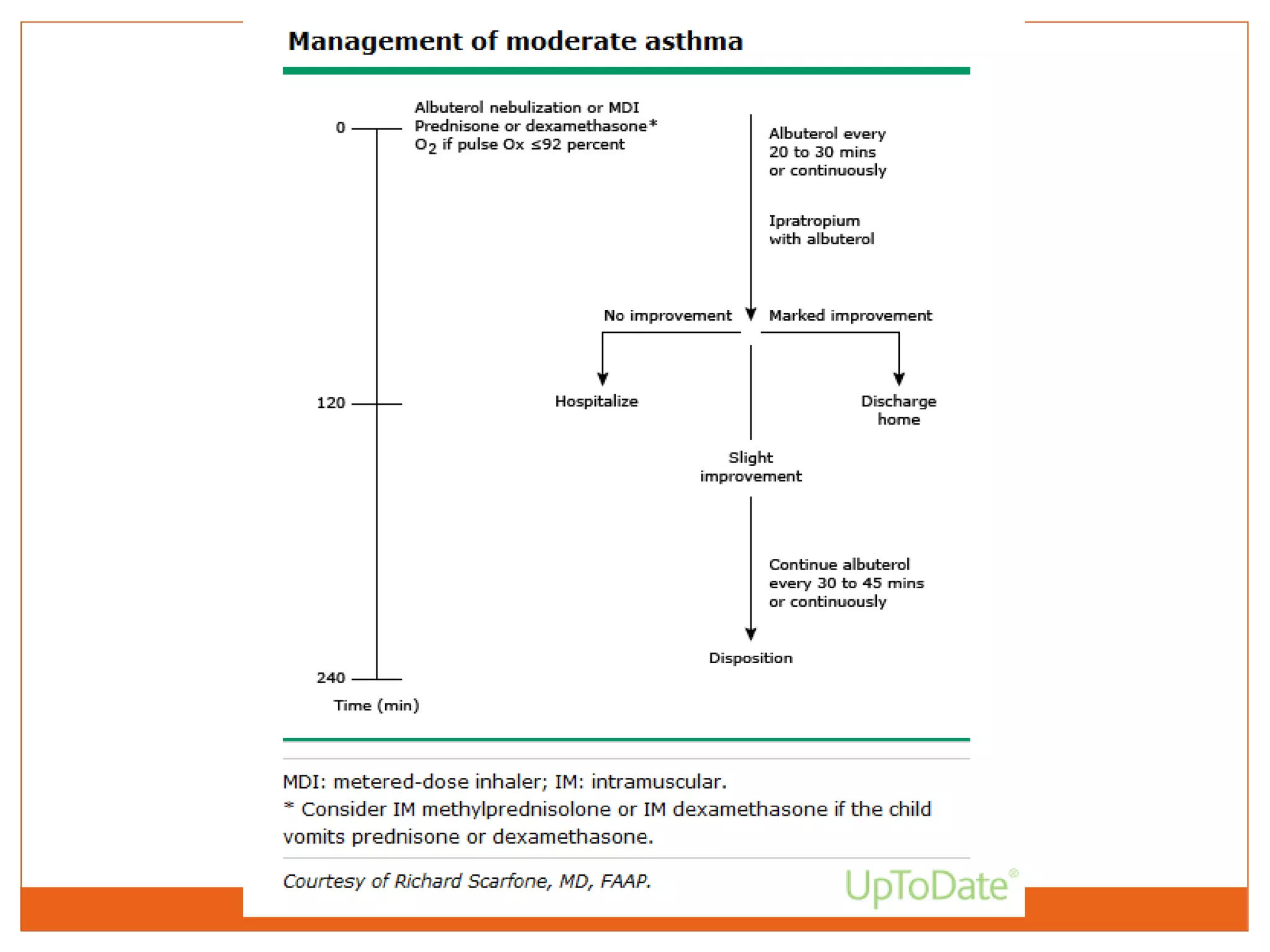
Acute Exacerbations (office)
Inhaled beta2-agonists
Systemic steroids
prednisone 40 mg qd x5-7 days
ER Assessment
indicators of severe obstruction
Peak expiratory flow (PEF)
 <40% predicted or <200 L/minute
 pulse oximetry - oxygen saturation [SaO2]
 SaO2 <90%
impending respiratory failure
Arterial blood gas (ABG) –hypercapnia
PEF <25% of normal (<100 to 150 L/min)
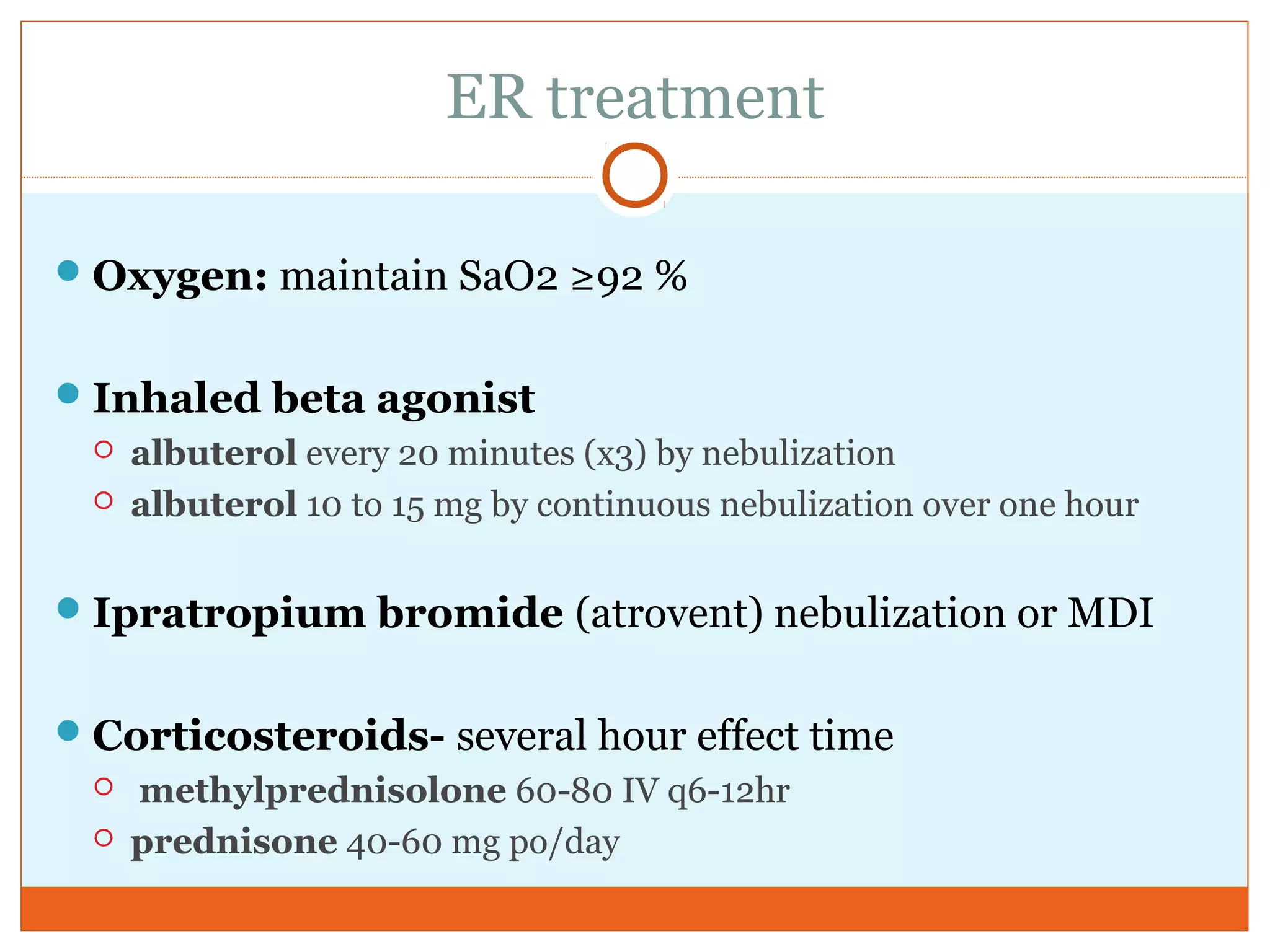
ER treatment
Oxygen: maintain SaO2 ≥92 %
Inhaled beta agonist
 albuterol every 20 minutes (x3) by nebulization
 albuterol 10 to 15 mg by continuous nebulization over one hour
Ipratropium bromide (atrovent) nebulization or MDI
Corticosteroids- several hour effect time
 methylprednisolone 60-80 IV q6-12hr
 prednisone 40-60 mg po/day
ER treatment
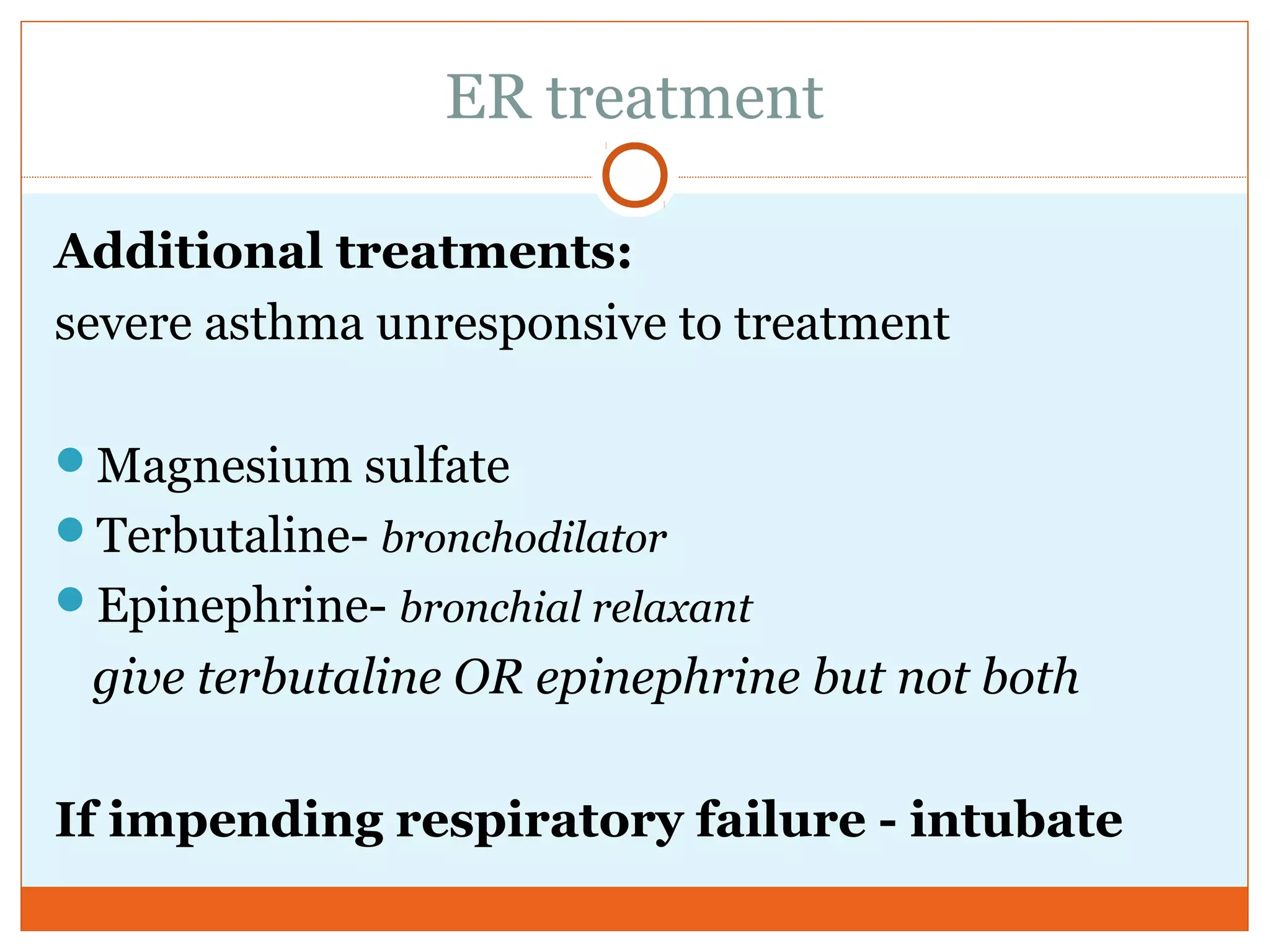
Additional treatments:
severe asthma unresponsive to treatment
Magnesium sulfate
Terbutaline- bronchodilator
Epinephrine- bronchial relaxant
give terbutaline OR epinephrine but not both
If impending respiratory failure - intubate
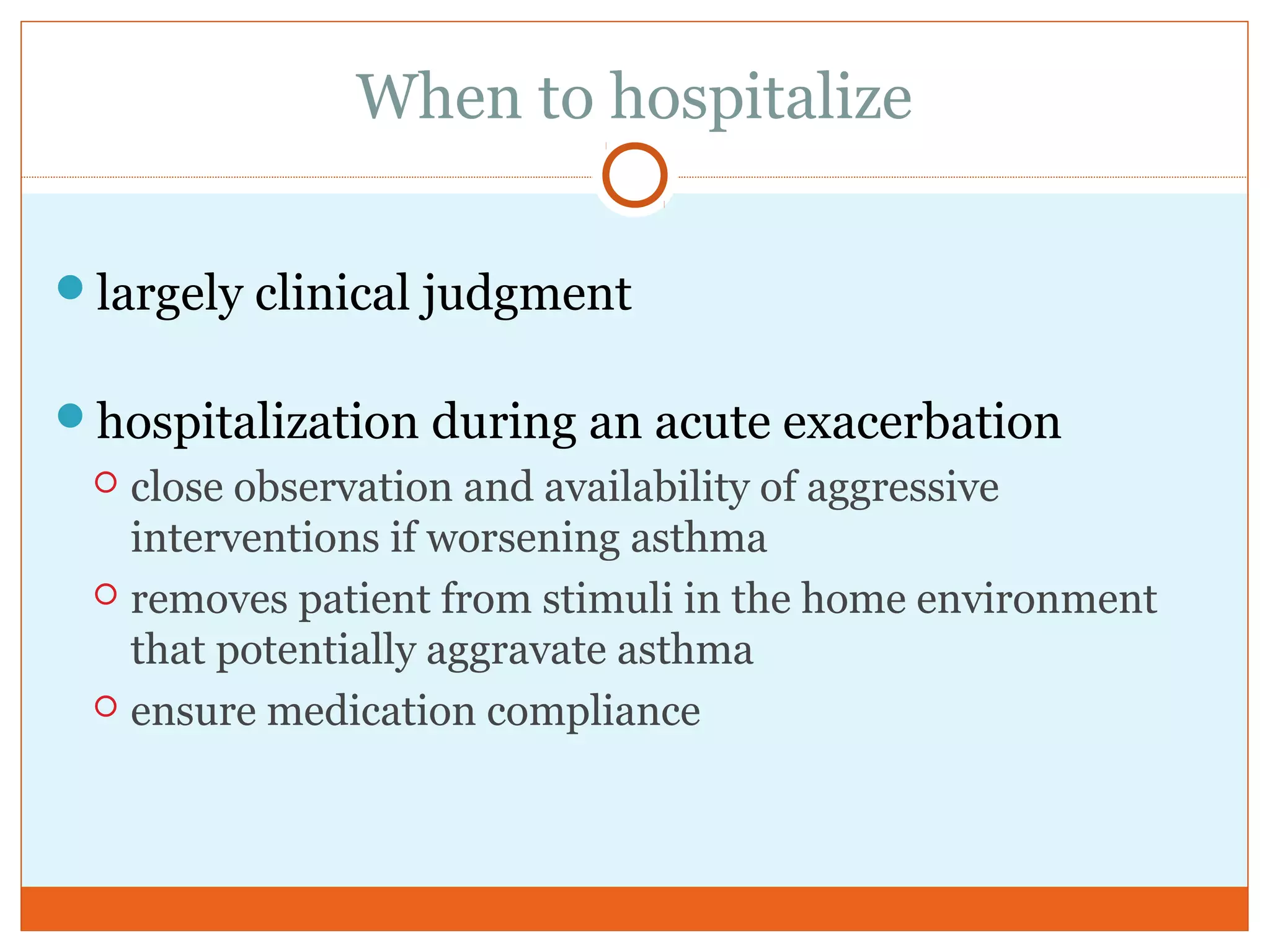
When to hospitalize
largely clinical judgment
hospitalization during an acute exacerbation
 close observation and availability of aggressive
interventions if worsening asthma
 removes patient from stimuli in the home environment
that potentially aggravate asthma
 ensure medication compliance
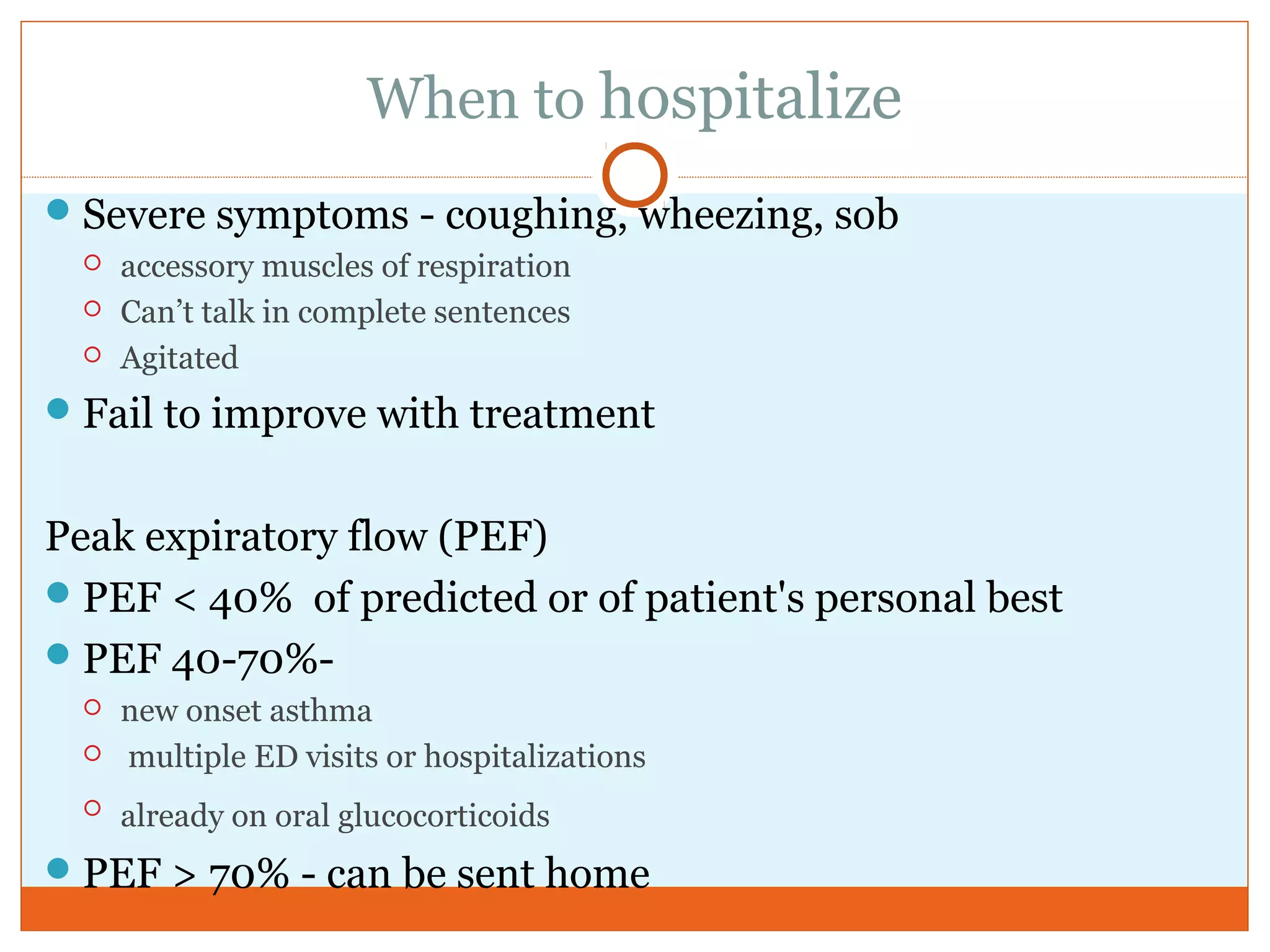
When to hospitalize
Severe symptoms - coughing, wheezing, sob
 accessory muscles of respiration
 Can’t talk in complete sentences
 Agitated
Fail to improve with treatment
Peak expiratory flow (PEF)
PEF < 40% of predicted or of patient's personal best
PEF 40-70%-
 new onset asthma
 multiple ED visits or hospitalizations
 already on oral glucocorticoids
PEF > 70% - can be sent home
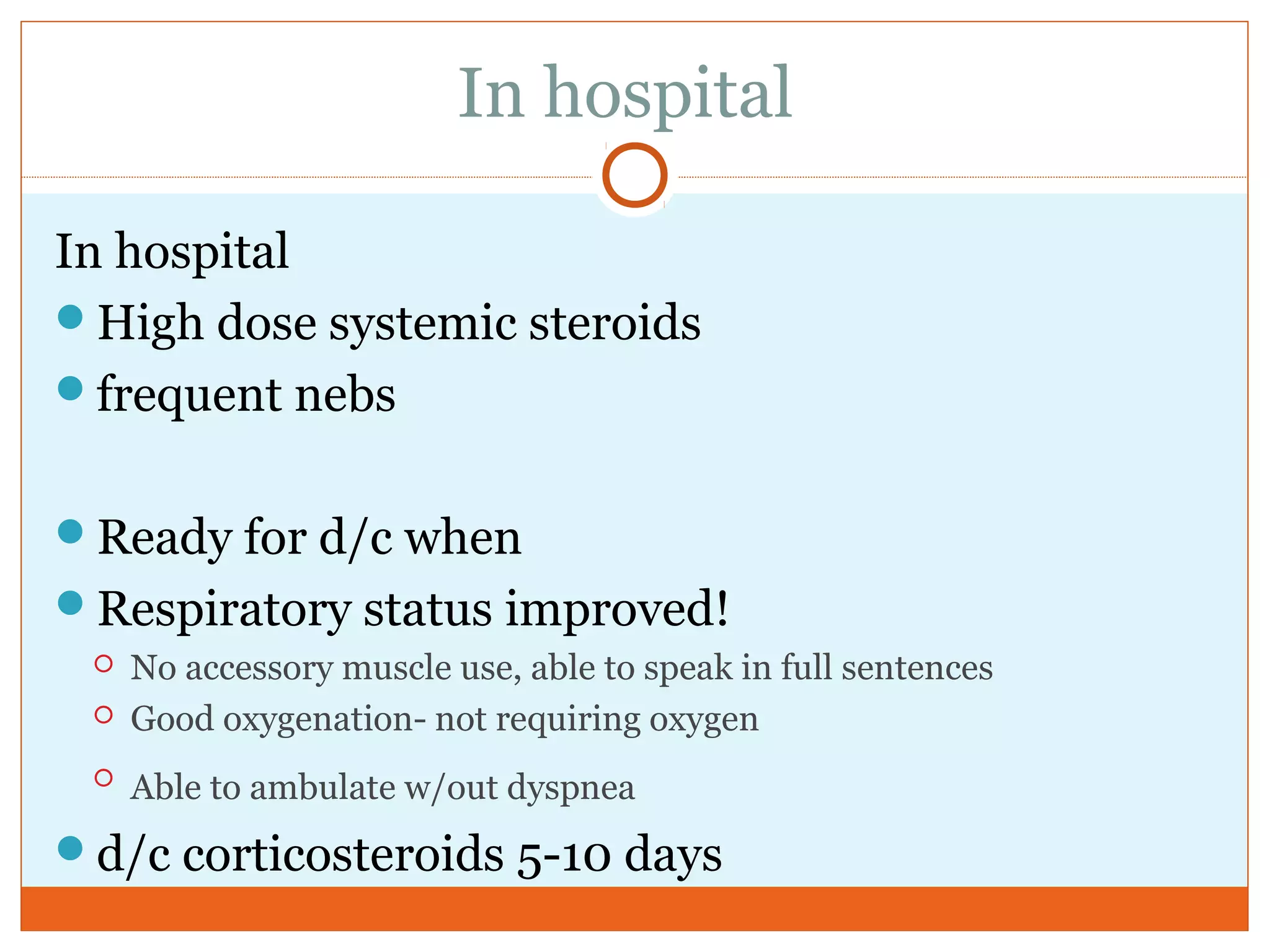
In hospital
In hospital
High dose systemic steroids
frequent nebs
Ready for d/c when
Respiratory status improved!
 No accessory muscle use, able to speak in full sentences
 Good oxygenation- not requiring oxygen

Able to ambulate w/out dyspnea
d/c corticosteroids 5-10 days
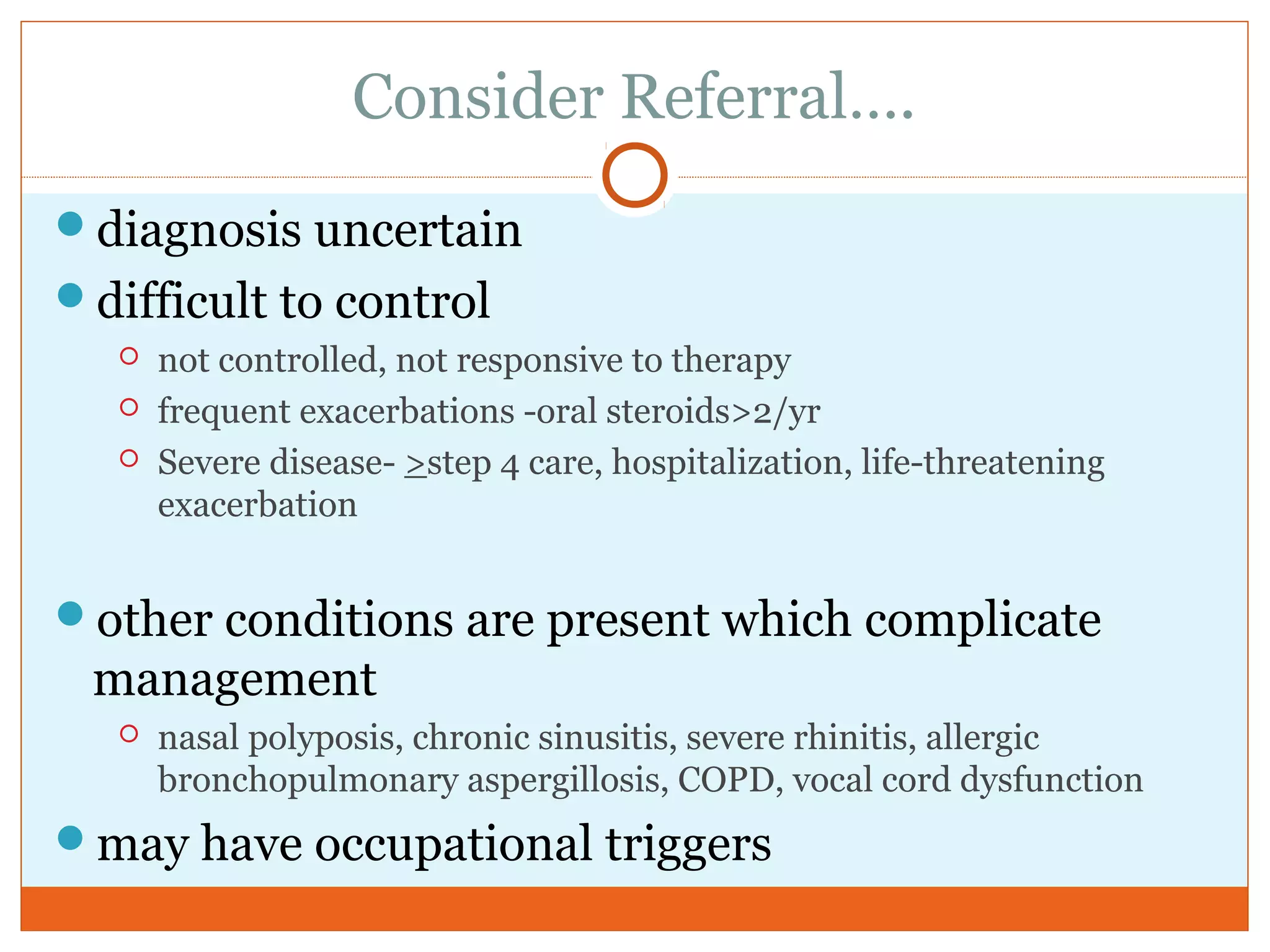
Consider Referral….
diagnosis uncertain
difficult to control
 not controlled, not responsive to therapy
 frequent exacerbations -oral steroids>2/yr
 Severe disease- >step 4 care, hospitalization, life-threatening
exacerbation
other conditions are present which complicate
management
 nasal polyposis, chronic sinusitis, severe rhinitis, allergic
bronchopulmonary aspergillosis, COPD, vocal cord dysfunction
may have occupational triggers
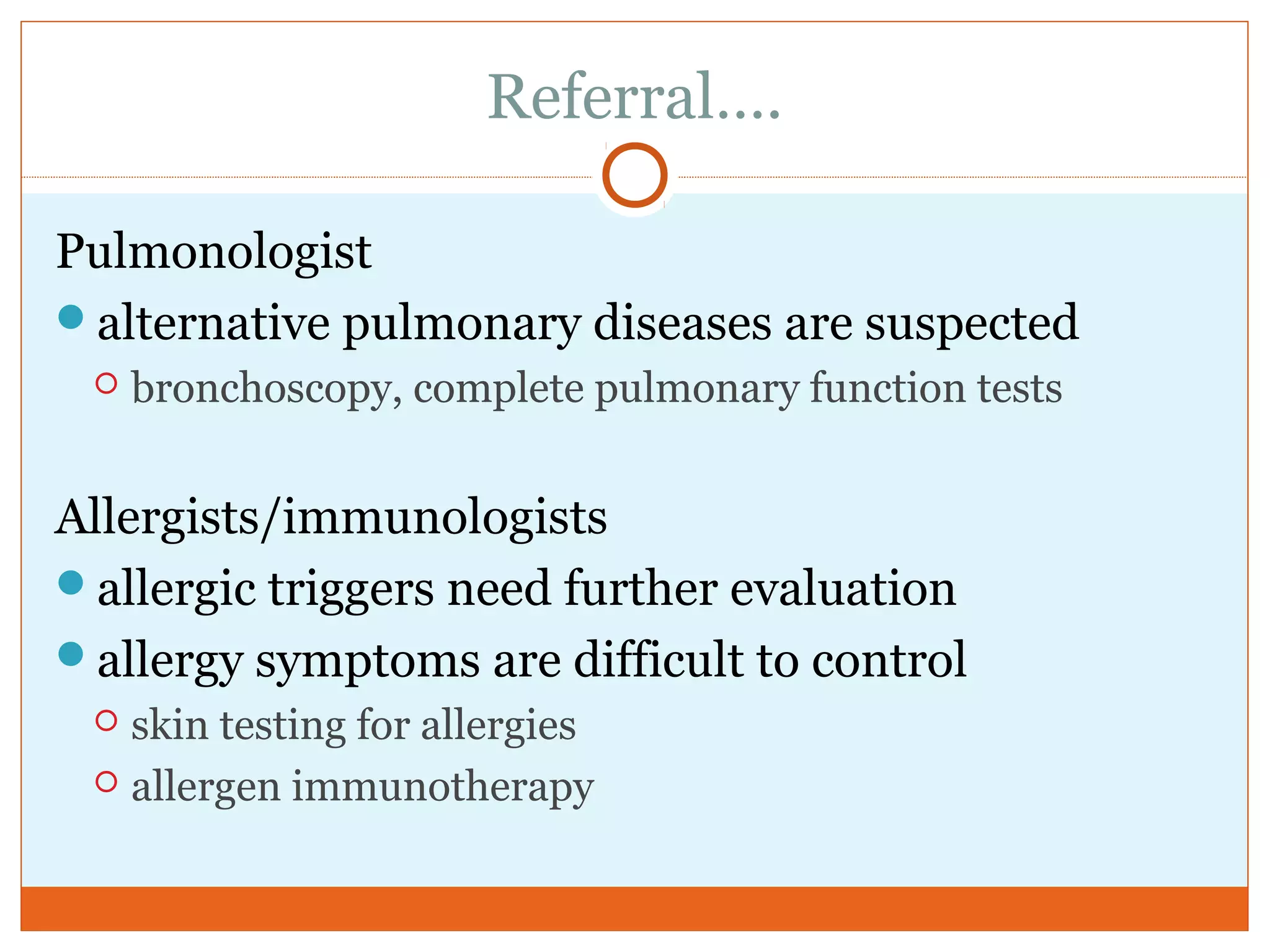
Referral….
Pulmonologist
alternative pulmonary diseases are suspected
 bronchoscopy, complete pulmonary function tests
Allergists/immunologists
allergic triggers need further evaluation
allergy symptoms are difficult to control
 skin testing for allergies
 allergen immunotherapy
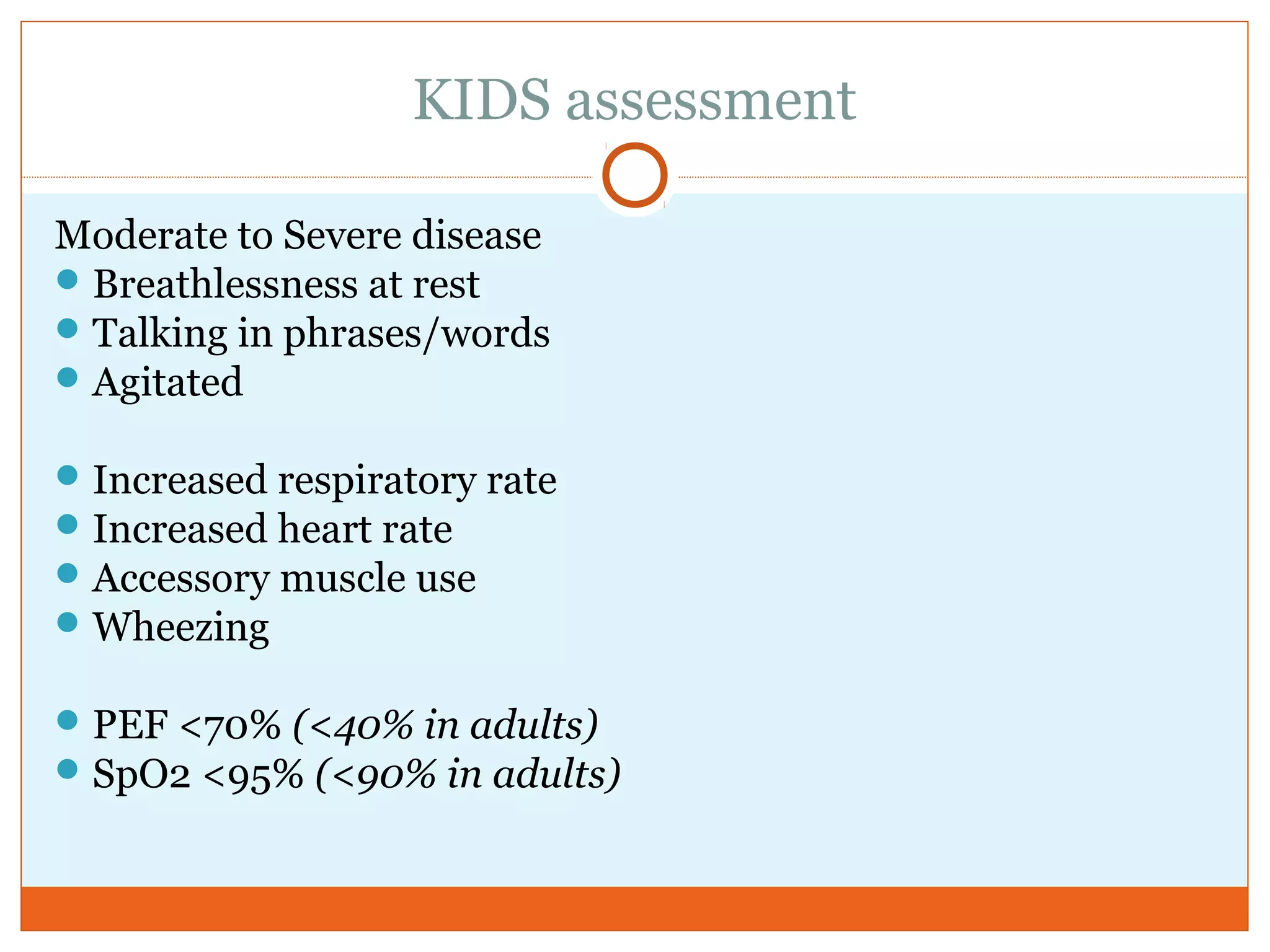
KIDS assessment
Moderate to Severe disease
Breathlessness at rest
Talking in phrases/words
Agitated
Increased respiratory rate
Increased heart rate
Accessory muscle use
Wheezing
PEF <70% (<40% in adults)
SpO2 <95% (<90% in adults)
KIDS assessment
Imminent respiratory arrest
Drowsy or confused
No Wheezing
PEF <25%
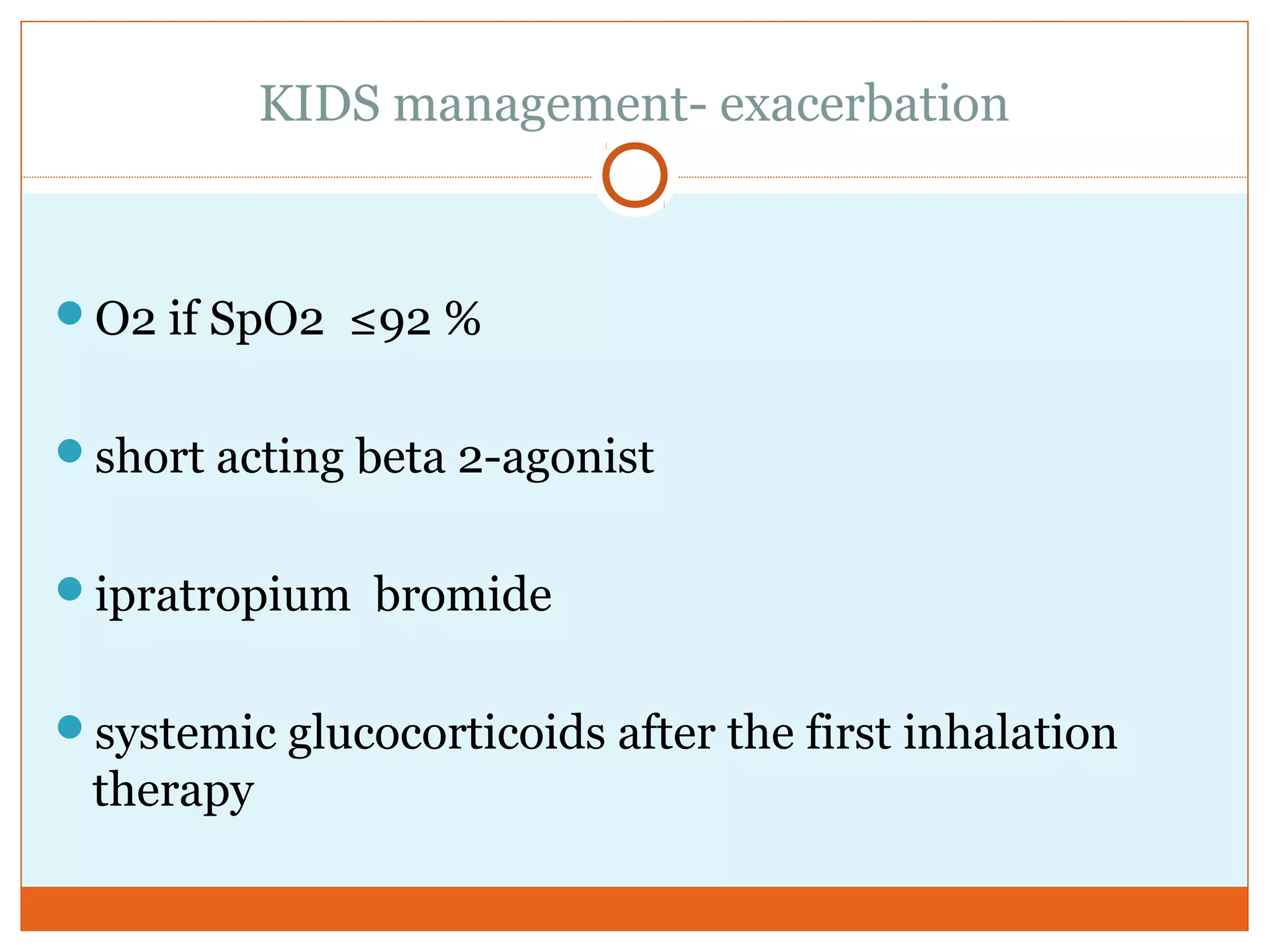
KIDS management- exacerbation
O2 if SpO2 ≤92 %
short acting beta 2-agonist
ipratropium bromide
systemic glucocorticoids after the first inhalation
therapy
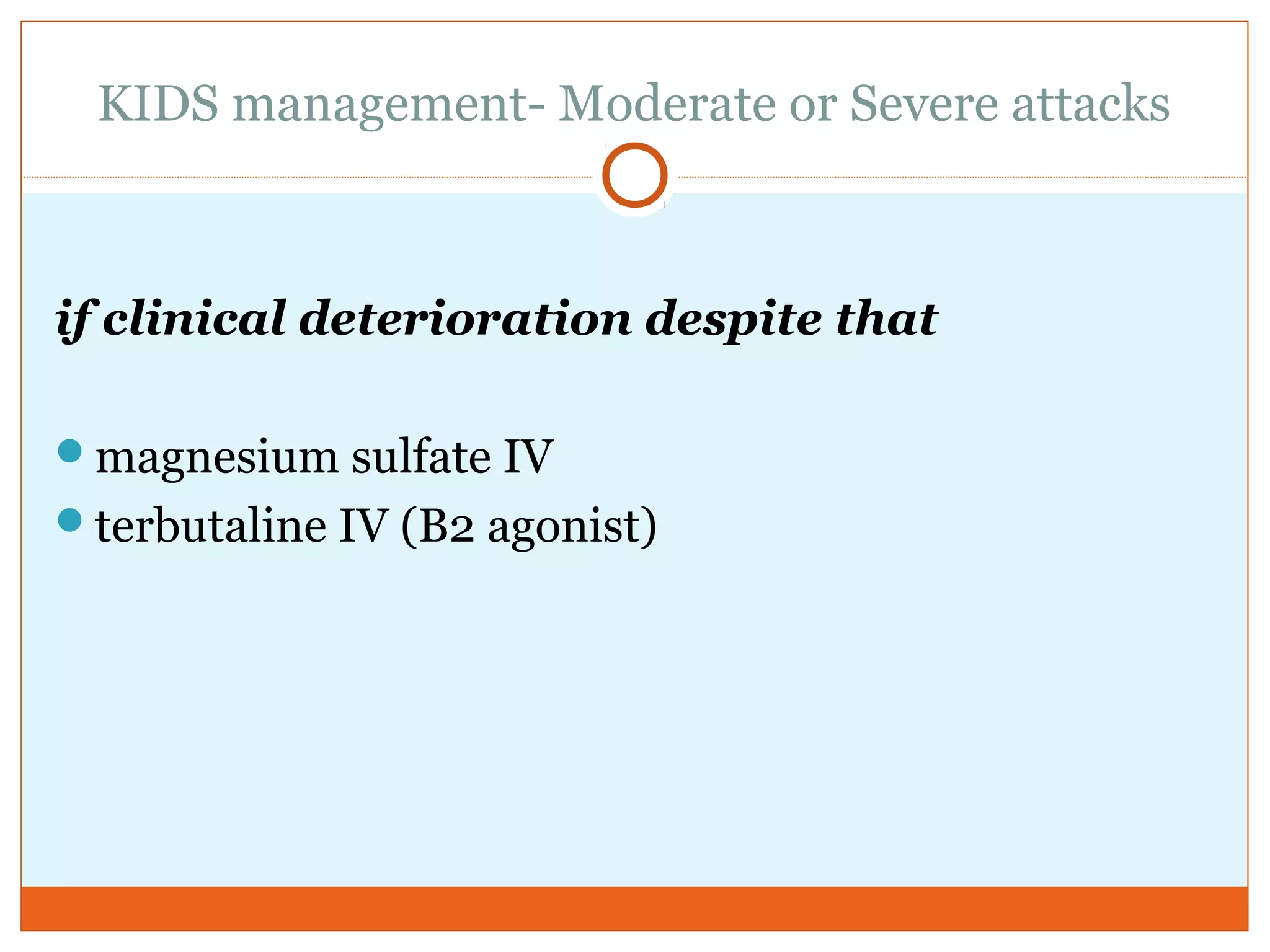
KIDS management- Moderate or Severe attacks
 
if clinical deterioration despite that
magnesium sulfate IV
terbutaline IV (B2 agonist)
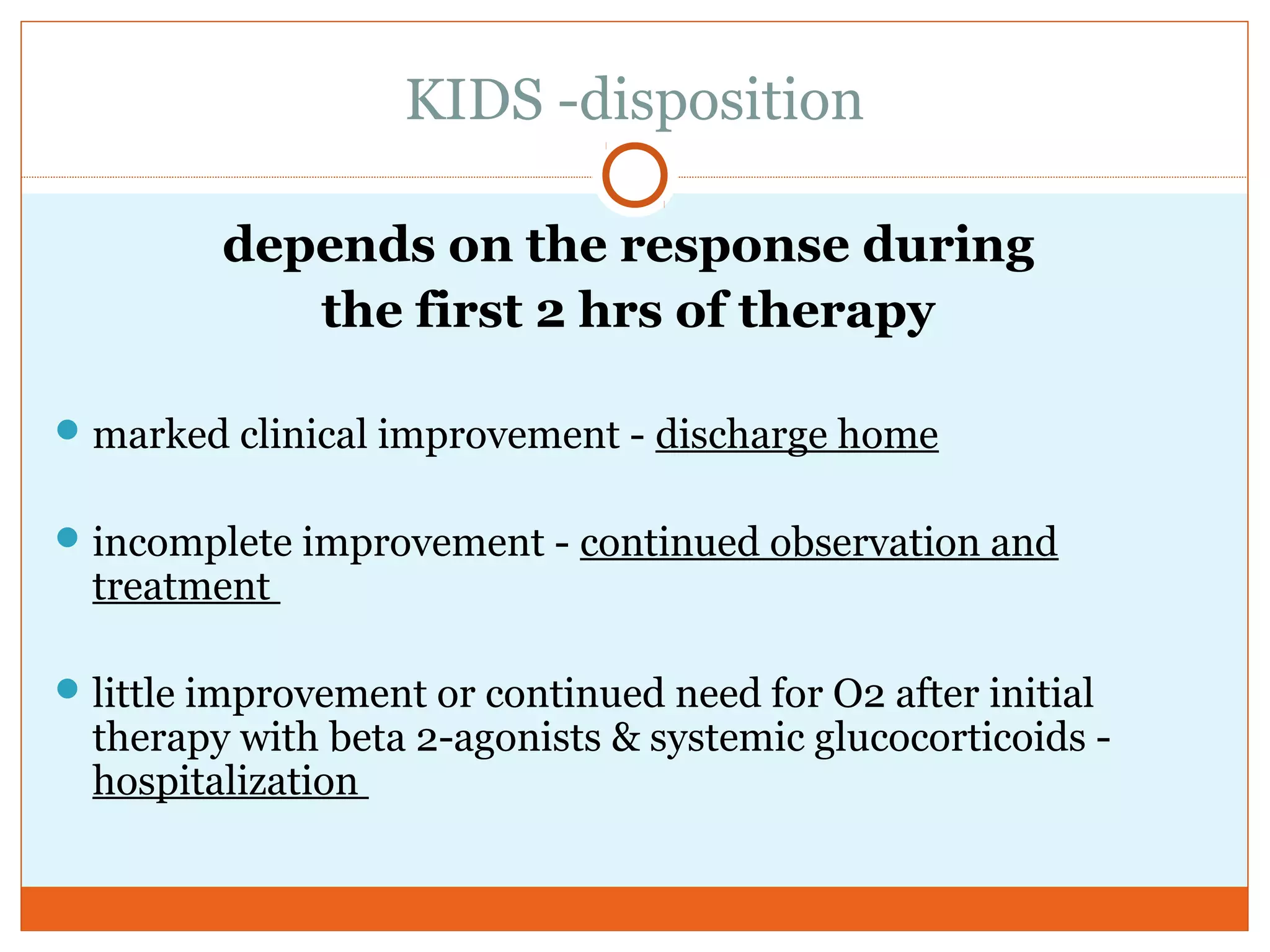
KIDS -disposition
depends on the response during
the first 2 hrs of therapy
marked clinical improvement - discharge home
incomplete improvement - continued observation and
treatment
little improvement or continued need for O2 after initial
therapy with beta 2-agonists & systemic glucocorticoids -
hospitalization
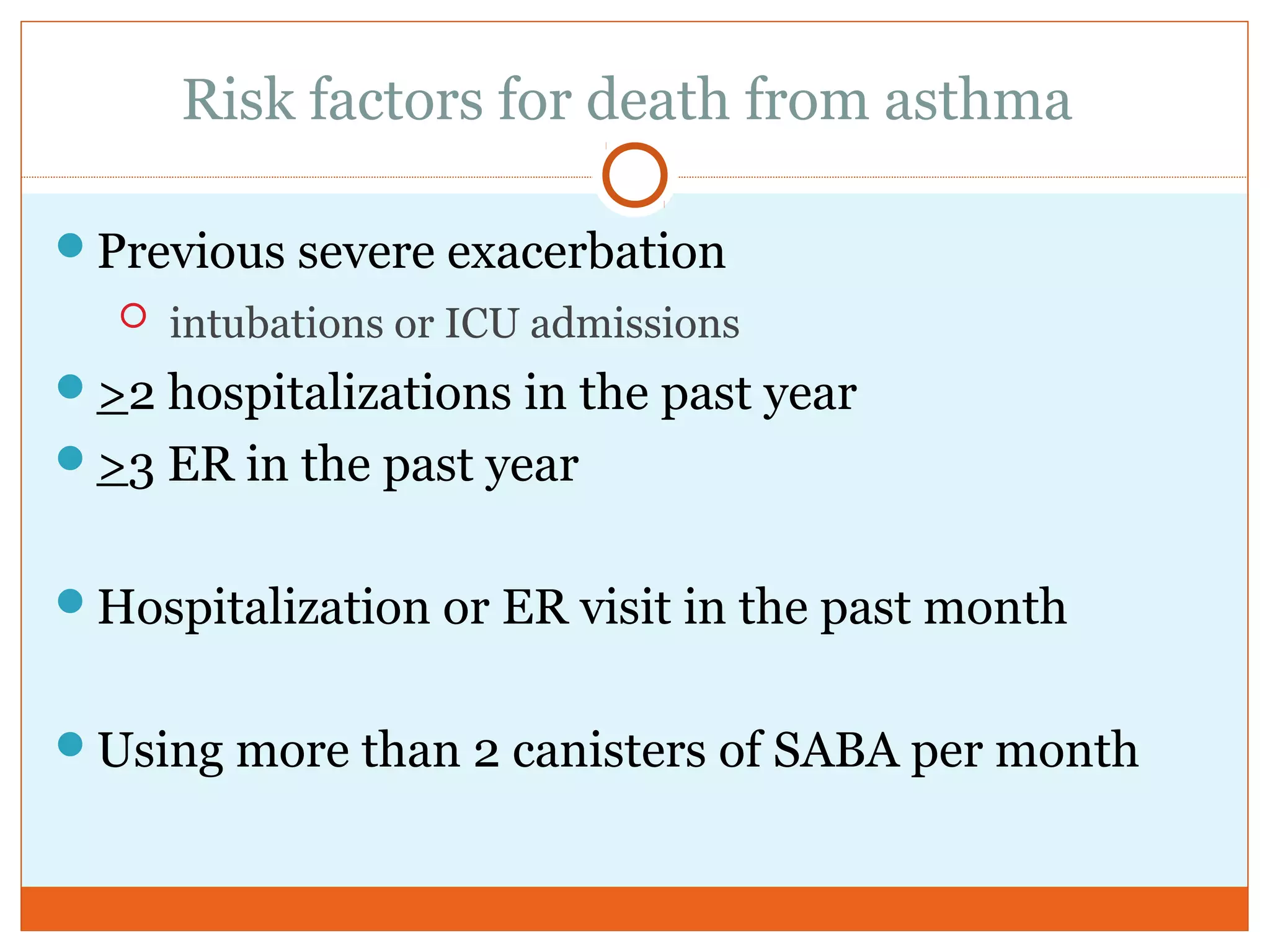
Risk factors for death from asthma
Previous severe exacerbation
 intubations or ICU admissions
>2 hospitalizations in the past year
>3 ER in the past year
Hospitalization or ER visit in the past month
Using more than 2 canisters of SABA per month
Other risk factors
Lack of a written asthma action plan
Social history:
 low socioeconomic status or inner-city residence
 illicit drug use
 psychosocial problems
Co morbidities:
 cardiovascular disease
 other chronic lung disease
 chronic psychiatric disease
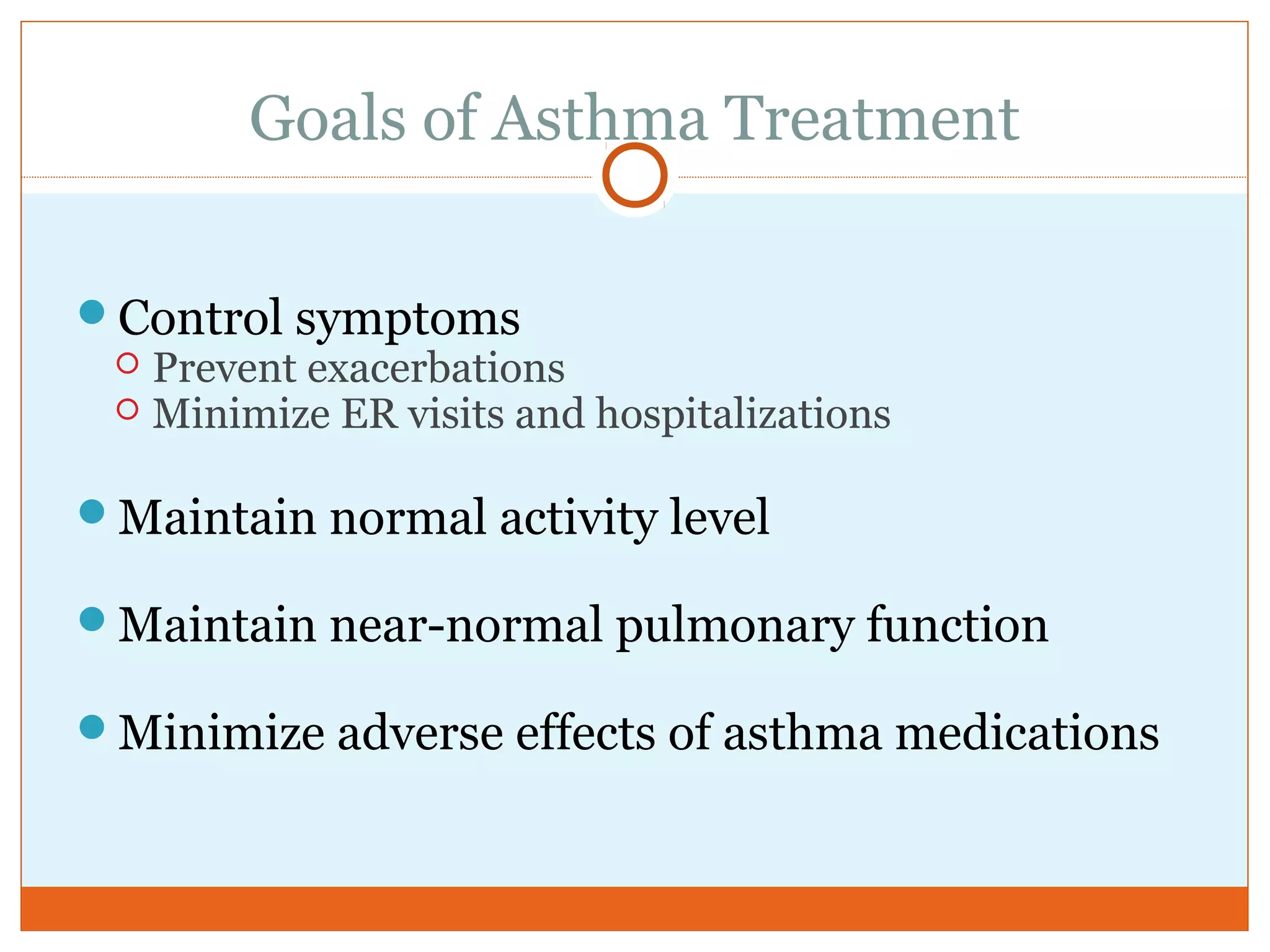
Goals of Asthma Treatment
Control symptoms
 Prevent exacerbations
 Minimize ER visits and hospitalizations
Maintain normal activity level
Maintain near-normal pulmonary function
Minimize adverse effects of asthma medications
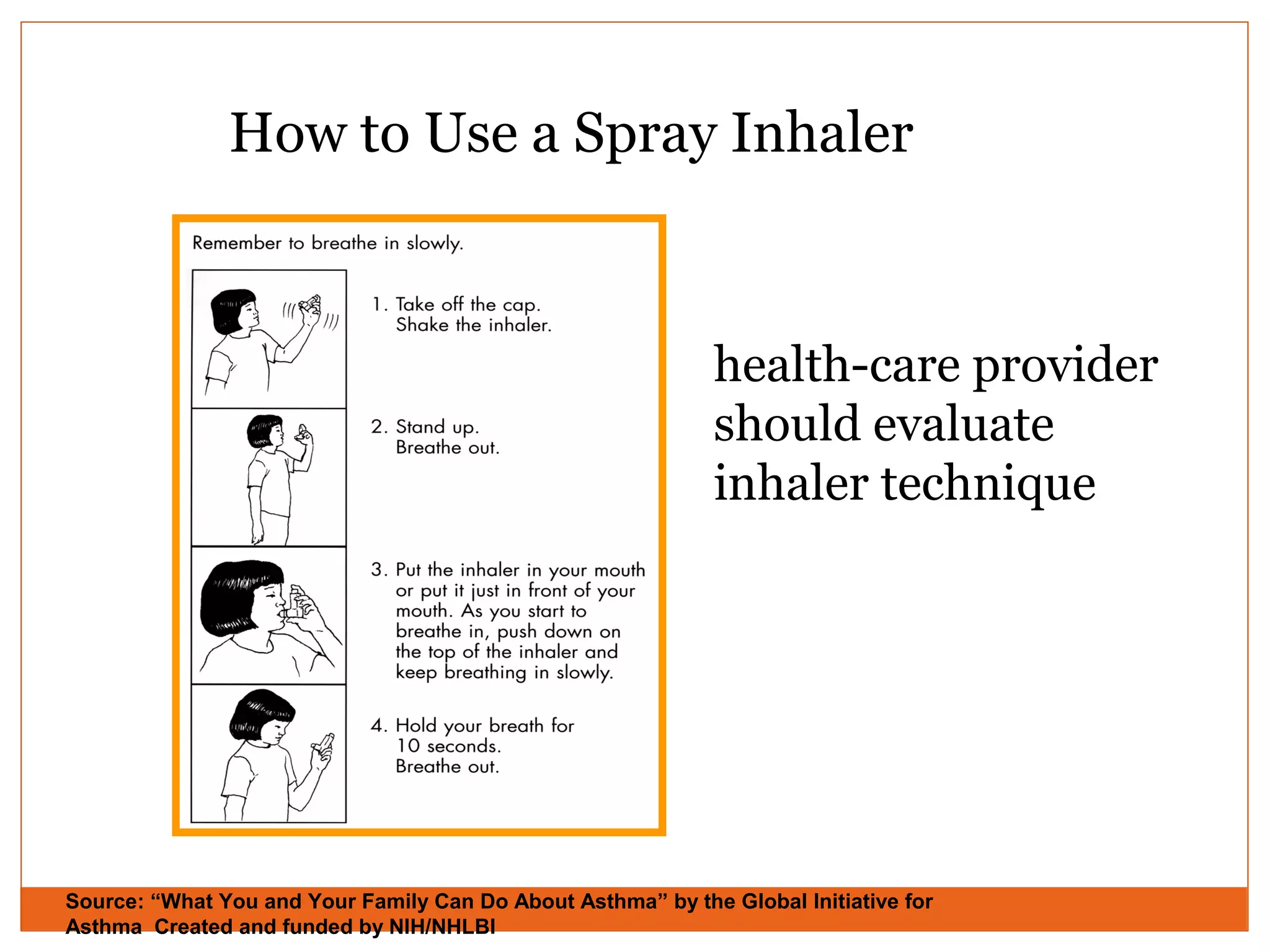
How to Use a Spray Inhaler
health-care provider
should evaluate
inhaler technique
Source: “What You and Your Family Can Do About Asthma” by the Global Initiative for
Asthma Created and funded by NIH/NHLBI
Inhalers and Spacers
Spacers can help
patients who have
difficulty with
inhaler use and can
reduce potential for
adverse effects from
medication.
Nebulizer
Machine produces a
mist of the medication
Used for small children
or for severe asthma
episodes
No evidence that it is
more effective than an
inhaler used with a
spacer
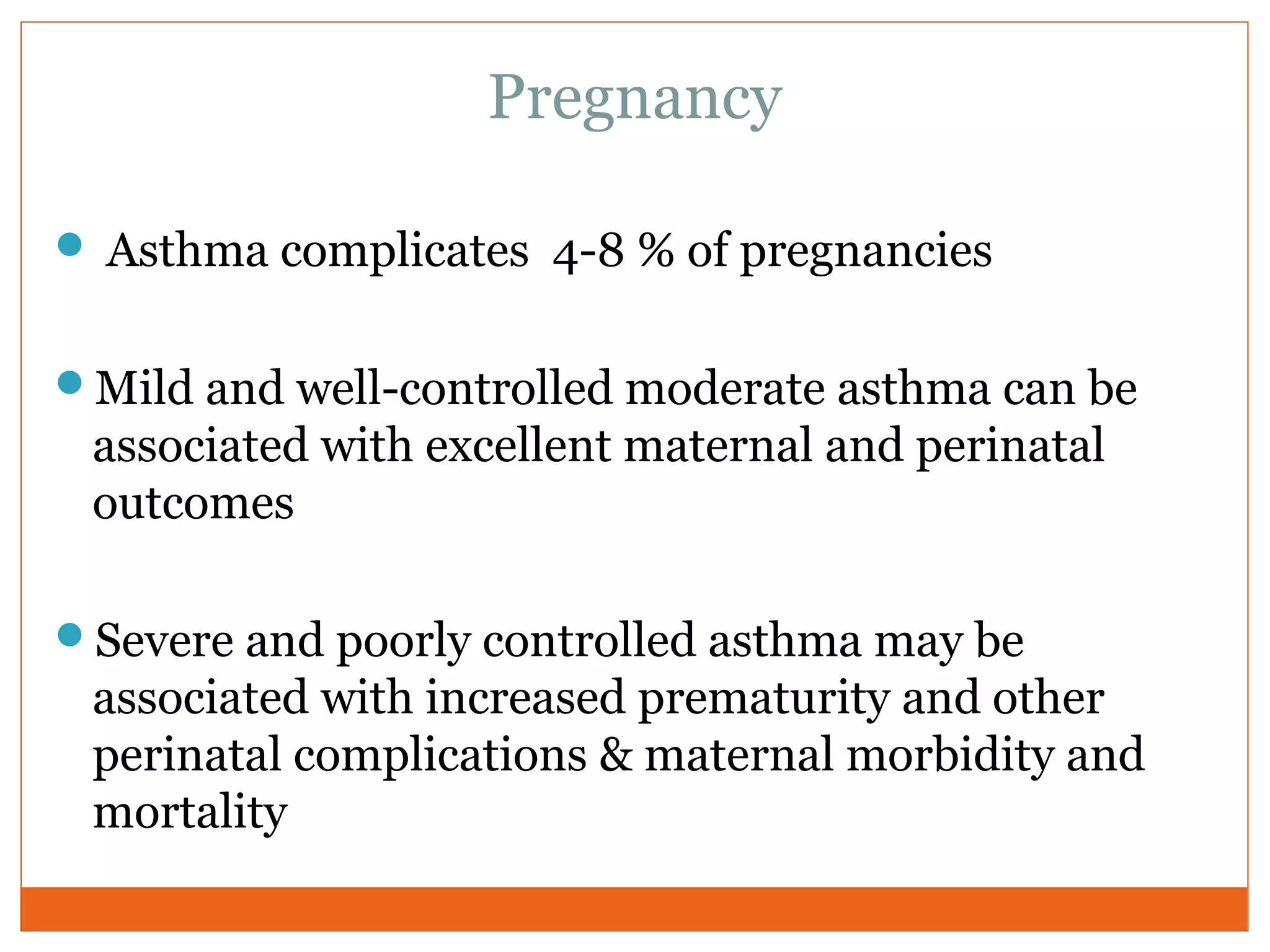
Pregnancy
 Asthma complicates 4-8 % of pregnancies
Mild and well-controlled moderate asthma can be
associated with excellent maternal and perinatal
outcomes
Severe and poorly controlled asthma may be
associated with increased prematurity and other
perinatal complications & maternal morbidity and
mortality
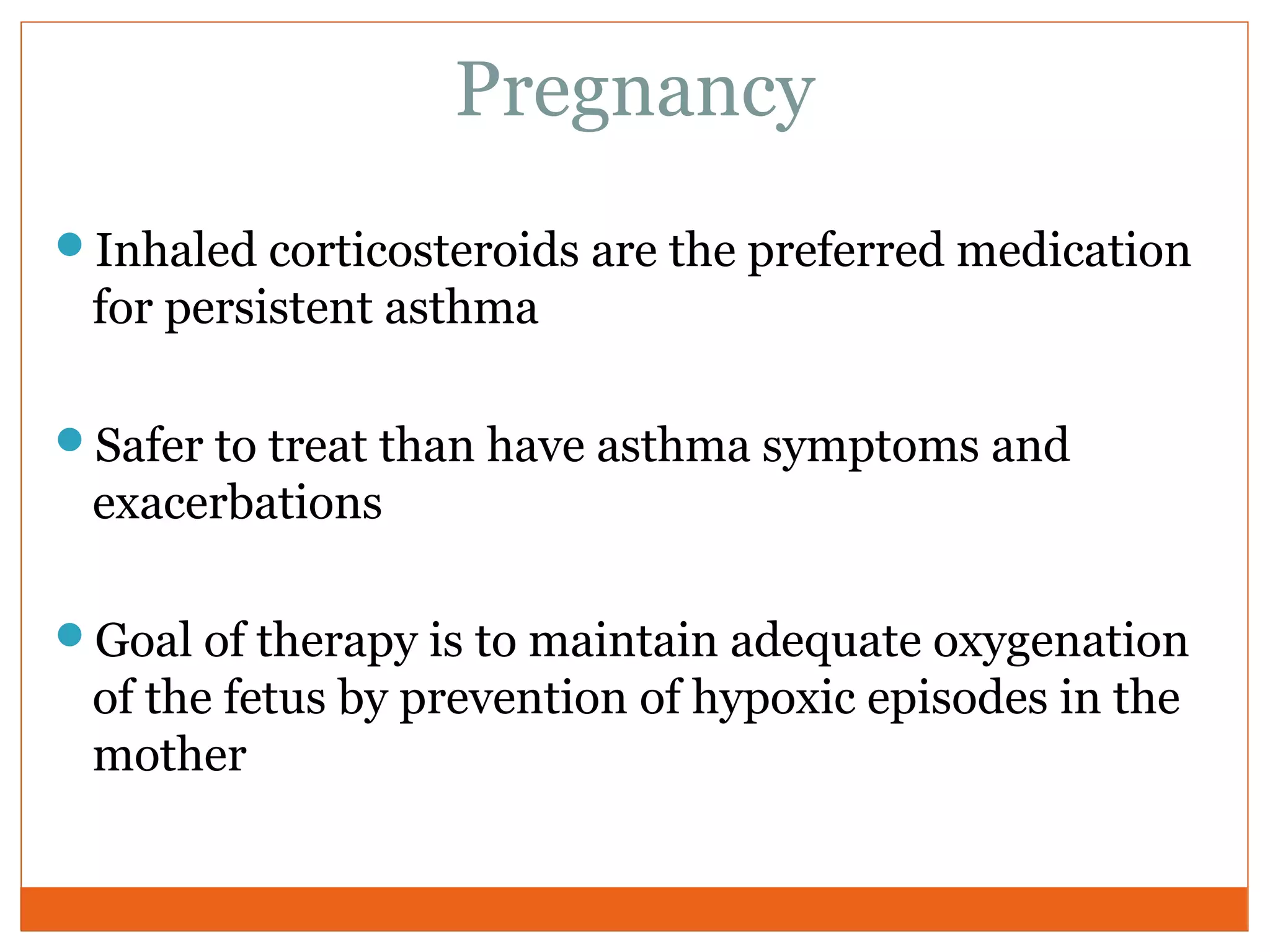
Pregnancy
Inhaled corticosteroids are the preferred medication
for persistent asthma
Safer to treat than have asthma symptoms and
exacerbations
Goal of therapy is to maintain adequate oxygenation
of the fetus by prevention of hypoxic episodes in the
mother
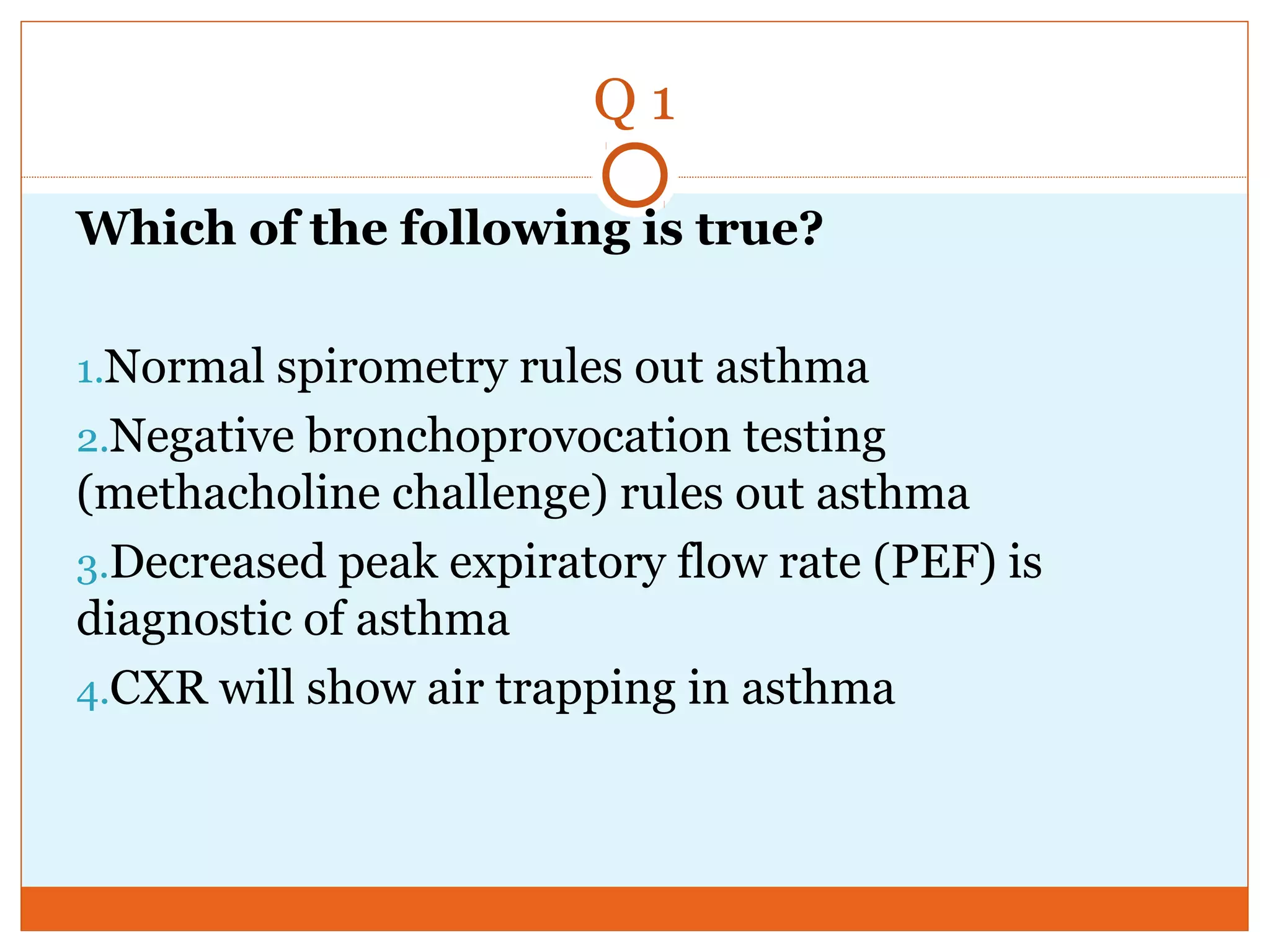
Q 1
Which of the following is true?
1.Normal spirometry rules out asthma
2.Negative bronchoprovocation testing
(methacholine challenge) rules out asthma
3.Decreased peak expiratory flow rate (PEF) is
diagnostic of asthma
4.CXR will show air trapping in asthma
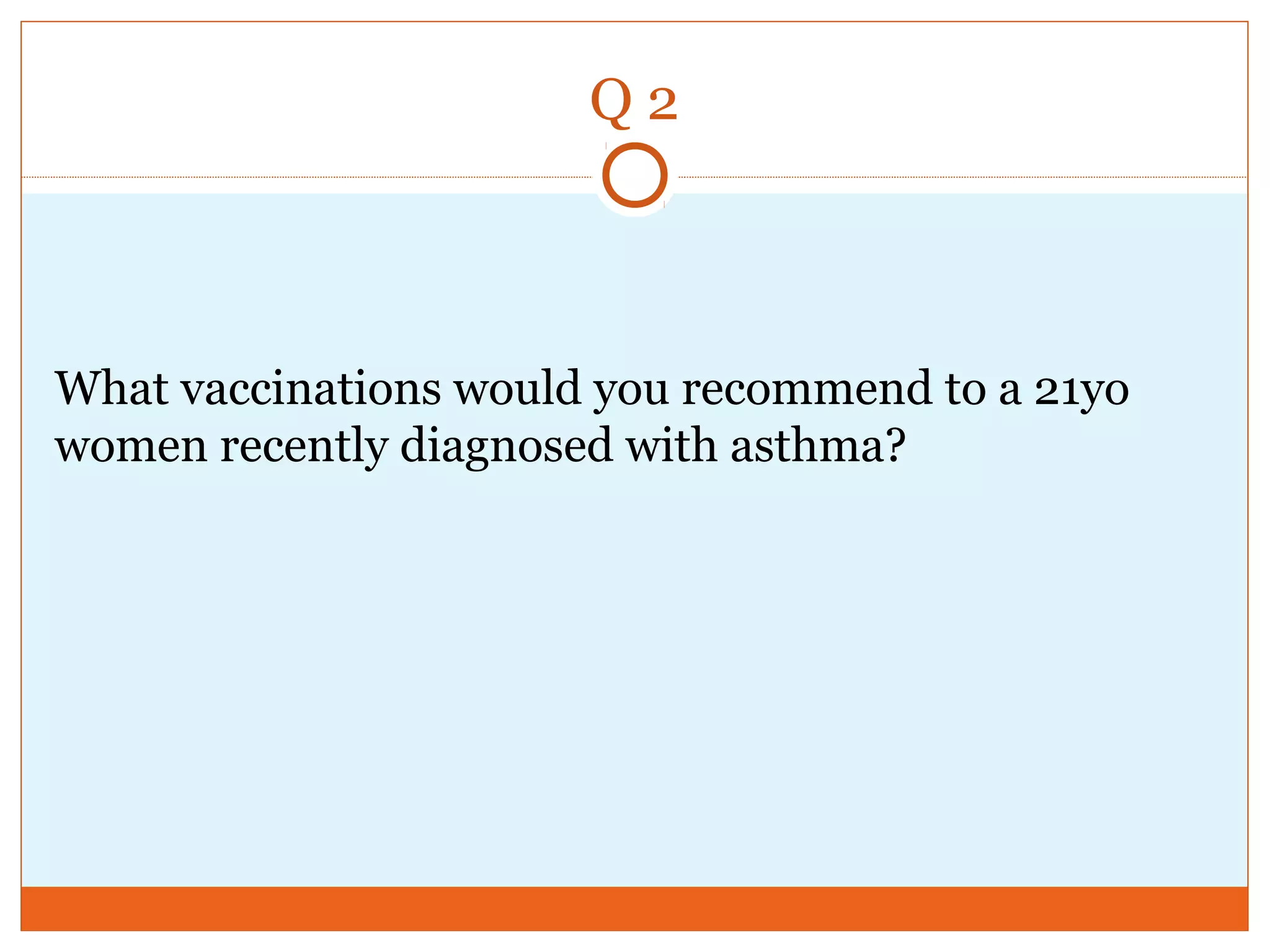
Q 2
What vaccinations would you recommend to a 21yo
women recently diagnosed with asthma?

Bp asthma canvas 2015

  • 1.
  • 2.
  • 3.
    Burden of Disease Asthmais one of the most common diseases in US  5% of the adult population  most common chronic condition among children prevalence of asthma is increasing since ~ 1980s CDC: Asthma Prevalence, Health Care Use and Mortality: United States, 2003-05 Asthma: A Concern for Minority Populations,” NIAID, NIH 2001 Morbidity and Mortality Report,” NCHS, U.S. CDC, 2003
  • 4.
    Morbidity Asthma accounts for 25%of all emergency room visits in the U.S. each year >10 million outpatient visits > 470,000 hospitalizations >13 million missed days of school >10 million missed days of work New Asthma Estimates: Tracking Prevalence, Health Care and Mortality, NCHS, CDC, 2001 National Hospital Discharge Survey, NCHS, U.S. CDC, 2000 Condition of Education, NCES, U.S. Department of Education 2001
  • 5.
    Mortality Each day 9Americans die from asthma > 4, 000 deaths due to asthma each year avoidable with proper treatment and care New Asthma Estimates: Tracking Prevalence, Health Care and Mortality, NCHS, CDC, 2001 CDC: Asthma Prevalence, Health Care Use and Mortality: United States, 2003-05
  • 6.
  • 7.
    Asthma definition chronic inflammatorydisease of the airways recurring episodes of airway obstruction triggered by hyperreactivity to various stimuli airflow limitation usually reversible
  • 8.
    Airflow limitation bronchoconstriction  bronchialsmooth muscle contraction that quickly narrows the airways in response to allergens/irritants airway hyperresponsiveness  an exaggerated bronchoconstrictor response to stimuli airway edema  inflammatory changes further limit airflow
  • 9.
  • 10.
    Pathophysiology complex interactions betweenairways & inflammatory cells airway inflammation airway obstruction  bronchoconstriction, hyperresponsiveness airway remodeling
  • 11.
    Airway Inflammation Infiltration ofeosinophils, mast cells, lymphocytes & neutrophils Production of mediators and cytokines that cause:  bronchoconstriction  activation of inflammatory cells  altered function & growth of airway smooth muscle (ASM) damage airway epithelium airway remodeling and fibrosis
  • 12.
    Airway Inflammation Early andlate phase reactions Early- minutes Late- hours
  • 13.
    Airway Inflammation: earlyphase reaction manifests 15 to 30 minutes after the exposure resolves in 1 to 2 hours allergen inhalation by a sensitized individual  bronchoconstriction within minutes mast cells activation and mediator release
  • 14.
    Airway Inflammation: latephase reaction half of pts develop late-phase response 3- 8 hrs later recurrence of bronchoconstriction influx of inflammatory and immune cells  mediators released  airway inflammation and ASM contraction  largely reversible by beta-agonist administration
  • 15.
    Bronchoconstriction airway smooth musclecontraction due to contractile agonists released from inflammatory cells or reflex neural mechanisms  mast cell and eosinophil mediators are potent bronchoconstrictors  contraction and relaxation of ASM accounts for much of the rapid changes in airflow limitation  basis for beta-agonist therapy that directly relaxes ASM
  • 16.
    Bronchial hyperresponsiveness exaggerated bronchoconstrictorresponse to a variety of physical, chemical or environmental stimuli consequence of airway remodeling and structural abnormalities of the airway
  • 17.
    Airway Remodeling Uncontrolled inflammationor repeat exacerbations can result in persistent airway injury Structural change in the airways Leads to irreversible airflow limitation  Progressive loss of lung function  PFT not normal between attacks More likely to occur in patients with severe asthma
  • 18.
    Airway Remodeling features includeincreased  subepithelial fibrosis  smooth muscle mass  mucus gland hyperplasia structural changes contribute to  bronchial wall thickening  changes in the smooth muscle contraction/relaxation  production of large amounts of tenacious sputum
  • 19.
    Modulating factors A varietyof - genetic -environmental -infectious factors determine whether susceptible individuals develop asthma
  • 20.
    Genetic factors Atopy genetic predispositionto develop IgE Ab against common environmental allergens -tendency to develop immediate hypersensitivity reactions -allergic rhinitis, asthma, atopic dermatitis, eczema, food allergy the strongest identifiable risk factor for the development of asthma
  • 21.
    Common Asthma Triggers Allergenexposure  50% of asthmatics are atopic  70% and 90% of patients with asthma have allergies  dust mite, cockroaches, animal dander (cats), molds, pollen  elimination of allergens can improve disease control Rhinosinusitis  inflammation of nose and sinuses worsens asthma  treating the sinus/nasal disease often improves asthma
  • 22.
    Common Asthma Triggers Viralrespiratory infections  frequent cause of acute exacerbations  hand washing and influenza vaccination can prevent asthma exacerbations  Bacterial respiratory tract infections
  • 23.
    Common Asthma Triggers GERD(gastroesophageal reflux disease) Esophageal acid may produce bronchoconstriction by 1. Increased vagal tone 2. Increased bronchial reactivity 3. microaspiration of gastric contents into upper airway PPI can improve asthma symptom control  patients with reflux symptoms should be started on empiric therapy Consider in asthmatic who is on multiple meds, poorly controlled, and has no other driving factors…
  • 24.
    Common Asthma Triggers Exercise symptoms 5 - 10 minutes after exercise  due to cool, dry air inspiration -- > irritation of bronchial mucosa Weather- cold air, humidity Environmental Irritants- cigarette smoke, air pollution, strong fumes, occupational allergens
  • 25.
    Common Asthma Triggers Aspirin NSAIDS  Triad of aspirin allergy, nasal polyps and asthma Beta Blockers- nonselective  propanolol
  • 26.
    Common Asthma Triggers Allergenexposure  dust mite, cockroaches, animal dander (cats), molds, pollen Rhinosinusitis Viral respiratory infections GERD Exercise Weather- cold air, humidity Irritants- cigarette smoke, strong fumes, airborne chemicals Aspirin, NSAID
  • 27.
    What does asthmafeels like? Jog in your place for 2 minutes Place a straw in your mouth and breath only through the straw by pinching your nose closed
  • 28.
    Clinical presentation intermittent dyspnea,cough, and wheezing chest tightness often related to specific triggers  cold air  exercise  post-viral URI
  • 29.
    Diagnosing Asthma presence of respiratorysymptoms consistent with asthma reversible airflow obstruction history physical examination pulmonary function testing
  • 30.
    Diagnosing Asthma: History Dyspnea,cough, wheeze, chest tightness Episodic symptoms  Often have symptoms at night  Last for hours-days  Resolve if remove trigger or with treatment  Asymptomatic for periods Characteristic triggers  exercise, cold air, and exposure to allergens or pollutants Personal or family history of allergic disease  asthma, seasonal allergic rhinitis , eczema
  • 31.
    Diagnosing Asthma: History historicfeatures that decrease the probability of asthma no improvement following anti-asthmatic medications onset age >50 yo cigarette smoking- >20 pack-years
  • 32.
    Diagnosing Asthma: Physicalexam Wheezing widespread, high-pitched whistling sound most commonly on expiration, but can occur during inspiration usually present with symptoms and absent when symptoms resolve
  • 33.
    Diagnosing Asthma: Physicalexam presence or absence of wheezing on exam is a poor predictor of the severity of airflow obstruction
  • 34.
    Diagnosing Asthma: Physicalexam severe airflow obstruction tachypnea, tachycardia accessory muscles use- sternocleidomastoid unable to speak in complete sentences prolonged expiratory phase of respiration (decreased I:E ratio) "tripod position"- seated position with use of extended arms to support the upper chest
  • 35.
    Diagnosing Asthma: Physicalexam • nasal polyp- glistening, gray, mucoid masses in the nasal cavity • ask about aspirin sensitivity • Triad -asthma, nasal polyps, and aspirin sensitivity • clubbing is not a feature of asthma • interstitial lung disease, lung cancer, cystic fibrosis
  • 36.
    Pulmonary function tests demonstratereversible airflow obstruction spirometry  reversible reduction in FEV1 and FEV1/FVC bronchoprovocation testing (methacholine)  heightened sensitivity to bronchoprovocation peak expiratory flow rate (PEF)  variability of >20%
  • 37.
  • 38.
    Spirometry Measures air volumeand flow rate  how much air patient can inhale and exhale  how fast patient can exhale
  • 39.
    Spirometry Low FEV1  FEV1-forcedexpiratory volume: amount of air expired in one second with maximal effort Decreased FEV1/FVC ratio  FVC- forced vital capacity: volume of air exhaled with maximal speed and effort
  • 40.
  • 41.
    Spirometry Distinguishes normal fromabnormal lung function Airway obstruction FEV1/FVC ratio of <70% Airway restriction  reduced FVC with a normal FEV1/FVC ratio
  • 42.
    Spirometry Characterize the severityof the abnormality  FEV1 70 to 99 % : mild obstruction  FEV1 50 to 69 % : moderate obstruction  FEV1 35 to 49 % : severe obstruction  FEV1 <35 % : very severe obstruction Assess the reversibility of the obstructive abnormality  If testing is repeated after bronchodilator
  • 44.
    Spirometry Pre- and post-inhaled bronchodilator (albuterol) can establish reversibility of airflow obstruction asthma likely if > 12% (and >200 mL ) increase in FEV1 after bronchodilator or course of steroids <12% increase in FEV1 does not rule out asthma  Recent use of a bronchodilator  Minimal airflow obstruction at the time of testing (FEV1 already ~100%)  airway remodeling
  • 45.
  • 46.
    Spirometry National Asthma Educationand Prevention Program (NAEPP) recommends spirometry:  For initial assessment  Evaluation of response to treatment  Assess airway function every 1-2 years
  • 47.
    Bronchoprovocation testing attempts toprovoke airflow obstruction using a stimulus known to elicit airway narrowing  people with asthma are more sensitive to such stimuli than those without asthma provocative stimulus usually inhaled methacholine  alternatives include exercise, hyperventilation of cold air, inhaled histamine, mannitol
  • 48.
    Bronchoprovocation testing Indicated if Symptomssuggest asthma Atypical symptoms but spirometry is normal and there is no response to a bronchodilator To diagnose occupational asthma negative test rules out asthma
  • 49.
    Bronchoprovocation testing Contraindications Severe airflowobstruction (FEV1<50%) Uncontrolled BP (SBP>200, DBP>100) MI or CVA w/in 3 mo Aortic aneurysm
  • 50.
  • 51.
    Peak expiratory flowrate (PEF) measured during a brief, forceful exhalation PEF that decreases by >20% with symptoms and returns to baseline as symptoms resolve is consistent with asthma  10 minutes after quick-acting bronchodilator
  • 52.
    Peak expiratory flowrate (PEF) inexpensive ($25) patient can use at home can establish Personal best PEF helpful for patients with severe disease to monitor disease evaluation of occupational asthma  peak flow measurements before and after work
  • 53.
    Peak expiratory flowrate (PEF) Limitations Effort and technique dependent Mild airflow obstruction – PEF may be normal Not diagnostic of asthma  obstructive and restrictive diseases - need spirometry  doesn’t differentiate upper airway obstruction (eg, vocal cord dysfunction) from asthma- - need spirometry
  • 54.
    Other laboratory studies Sometimesindicated chest radiographs (CXR) allergy testing blood tests
  • 55.
    Chest Radiographs Usually normalin patients with asthma Exclude alternative diagnosis  mediastinal mass with tracheal compression  heart failure
  • 56.
    Chest Radiographs definitely recommended "difficult-to-control"asthma  allergic bronchopulmonary aspergillosis  eosinophilic pneumonia  atelectasis due to mucus plugging atypical symptoms  fever  severe hypoxemia  purulent sputum, hemoptysis  localized wheezing, crackles  weight loss  airflow obstruction that does not reverse with bronchodilators
  • 57.
    Allergy testing- blood Bloodtests for allergen-specific IgE serum total IgE concentration - underlying allergic disease can measure minute quantities of IgE antibody directed at particular antigens no trained technician needed use of antihistamines will not affect results no risk of adverse reactions (asthmatic reactions or anaphylaxis)
  • 58.
    Allergy testing- skin Allergyskin tests performed by a trained allergy technician and interpreted by an allergy specialist Less expensive than blood testing Greater sensitivity compared to blood tests
  • 59.
    Blood tests RARELY INDICATED CBC Severe anemia  Eosinophilia- allergic asthma ABG- not usually needed  hypoxemia  hypercapnia  consider if PEF <25%
  • 60.
    Differential diagnosis: respiratory conditions kids  foreign body aspiration- trachea or bronchi  cystic fibrosis  vocal cord dysfunction younger adults  bronchitis, bronchiolitis, bronchiectasis, sarcoidosis  vocal cord dysfunction, pulmonary embolism older adults  COPD, congestive heart failure, lung cancer  vocal cord dysfunction, pulmonary embolism
  • 61.
    Differential diagnosis: respiratory conditions Chronicobstructive pulmonary disease (COPD)  older age of onset  cigarette smoking  minimally and incompletely reversible airflow obstruction  PFT- decreased diffusing capacity
  • 62.
    Differential diagnosis: non-respiratory conditions persistentcough (lung function and CXR are normal) rhinitis, rhinosinusitis, post-nasal drip GERD post-viral tussive syndrome infection with Bordetella pertussis (whooping cough) cough induced by angiotensin converting enzyme inhibitors
  • 63.
    Asthma severity-intensity ofdisease process Asthma control- degree to which symptoms are minimized by therapy
  • 64.
    Asthma severity Assess atinitial visit Intubation Hospitalization ER visits Oral prednisone use
  • 65.
    Asthma severity NIH guidelinesclassify asthmatics into 4 groups based on severity Classification is important for  provider communication  therapy can be based on guidelines
  • 66.
    Classification of AsthmaSeverity Symptoms Night time awakenings Short acting B2 agonist FEV1 Mild Intermittent ≤2days/wk ≤2/month ≤2 days/wk ≥80% Mild Persistent >2 days/wk 3-4/month >2 days/wk ≥80% Moderate Persistent daily >1/week daily 60-80% Severe Persistent continuous nightly several times/day <60%
  • 67.
    Asthma control Control dependson  Medications prescribed  Adherence to medication  Inhaler technique  Allergen avoidance  Environmental irritant avoidance- not smoking
  • 68.
    Asthma management 5 essentialcomponents routine monitoring of symptoms and lung function patient education control of trigger factors treat co-morbid conditions pharmacologic therapy
  • 69.
    Pharmacotherapy Two major categoriesof medications Rescue: quick relief Controller: long-term control
  • 70.
    Pharmacotherapy: quick reliefmeds Relax airway muscles and provide rapid relief of symptoms Taken as needed Used in acute episodes short-acting beta2agonists (SABA)  bronchodilators that relax smooth muscle  albuterol anticholinergics  inhibit cholinergic receptors & decrease vagal tone in airway  ipratropium bromide - atrovent
  • 71.
    Pharmacotherapy long-term control medications Takendaily Corticosteroids - inhaled & oral  Reduce airway hyperresponsiveness  Inhibit inflammatory cell migration and activation  Enhance effectiveness of β2-agonists  Block late phase reaction to allergens  Rinse mouth and spit  AE- cataracts, decrease bone density Long-acting beta2-agonists (LABA) - Serevent  NEVER MONOTHERAPY; only in conjunction with an anti- inflammatory medication  AE- increase rates of death
  • 72.
    Pharmacotherapy long-term control medications Leukotrienereceptor antagonist  interfere with leukotriene mediators released from mast cells, eosinophils  Montelukast- Singulair Theophylline  mild anti-inflammatory effect  AE- monitor serum levels Cromolyn sodium  stabilize mast cells  can be used to prevent exercise induced asthma
  • 73.
    Pharmacotherapy long-term control medications Immunomodulators Omalizumab (Xolair)- injection  anti-IgE monoclonal Ab  prevents IgE binding to mast cells  indicated for mod-severe asthma in patients with allergens not controlled by ICS  AE-serious or life-threatening allergic reaction Leukotriene synthesize inhibitors  Zileuton (zyflo) – tablet  inhibits leukotriene formation  need to monitor LFT
  • 74.
    Therapy long-acting anticholinergic drug(tiotropium)  -added to corticosteroids can improve lung function and asthma symptoms  -effect is equivalent to that of salmeterol bronchial thermoplasty  -severe asthma  -reduce smooth-muscle hypertrophy  -modestly improves several asthma-related outcomes
  • 75.
    Treatment based onseverity Step-wise pharmacotherapy treatment Mild Intermittent (Step 1) Mild Persistent (Step 2) Moderate Persistent (Step 3-4) Severe Persistent (Step 5-6)
  • 76.
    Classification of AsthmaSeverity Symptoms Night time awakenings Short acting B2 agonist FEV1 Mild Intermittent ≤2days/wk ≤2/month ≤2 days/wk ≥80% Mild Persistent >2 days/wk 3-4/month >2 days/wk ≥80% Moderate Persistent daily >1/week daily 60-80% Severe Persistent continuous nightly several times/day <60%
  • 77.
    Step 1 -Mild intermittent SABA prn - albuterol as long as  symptoms occur <2/ weekly  spirometry is normal (at baseline) Exacerbations can still be severe- may require systemic corticosteroids
  • 78.
    Step 2 -Mild persistent Require anti-inflammatory medication  Preferred Treatment  Low-dose inhaled steroid daily  Alternative Treatment (no particular order)  Leukotriene receptor antagonist  Theophylline  Cromolyn
  • 79.
    Step 3- Moderatepersistent Preferred Treatment  Low-dose inhaled corticosteroids with LABA Or  Medium-dose inhaled corticosteroids Alternative Treatment  Low-dose inhaled corticosteroids with  Leukotriene receptor antagonist  Theophylline  Zileuton (zyflo)
  • 80.
    Step 4- Moderatepersistent Preferred Treatment  Medium-dose inhaled corticosteroids with LABA Alternative Treatment  Medium-dose inhaled corticosteroids with  Leukotriene receptor antagonist  Theophylline  Zileuton (zyflo) Refer to specialist
  • 81.
    Step 5 -Severepersistent Preferred Treatment  High-dose inhaled corticosteroids with LABA  And if needed  omalizumab (Xolair) in patients with allergies Refer to specialist
  • 82.
    Step 6 -Severepersistent Preferred Treatment  High-dose inhaled corticosteroids with LABA and oral corticosteroids  And if needed  omalizumab (Xolair) in patients with allergies Refer to specialist
  • 83.
    Stepwise Approach toTherapy Step up if necessary Step down if possible education & environmental control at every step referral to specialist STEP 6 Multiple controller medications & oral corticosteroids STEP 3, 4, 5 > 1 controller medication STEP 2 1 controller medication STEP 1 Quick-relief medication: PRN SABA
  • 84.
    Indications of poorcontrol Increased use of rescue medications- short acting beta2-agonists Nocturnal awakenings Activity limitation
  • 85.
    KNOW THIS SABA use>2 week Asthma is not controlled Step up therapy
  • 86.
    KNOW THIS Asthma iswell controlled (>6 months) Step down therapy
  • 87.
    Exercise Induced Bronchspasm short-actingβ2-agonists 15 min before exercise protection lasts up to 3 hours leukotriene-modifying drugs can also be used but not as effective nonpharmacologic - gradual warmup, mask over the nose and mouth during cold weather
  • 88.
    Treat co-morbid conditions Allergies GERD Allergicbronchopulmonary aspergillosis (ABPA)  hypersensitivity reaction to Aspergillus fumigatus in patients with asthma (less commonly cystic fibrosis)  Immune response to Aspergillus Ag causes airway obstruction and if untreated bronchiectasis and pulmonary fibrosis  Presents as asthma with productive cough and fever  Diagnosis - Aspergillus skin testing , serum IgE levels, eosinophilia  Treatment - corticosteroids
  • 89.
    Prevent infections Influenza vaccine-annually Pneumococcal vaccine (PPSV23)– once before age 65 and once again after age 65  Must have 5 years inbetween 2at vaccination and 2nd . i.e. if patient is diagnosed at age 62, will get 2nd vaccination at 67.
  • 90.
    Avoid triggers Counsel patientsto avoid triggers  No pets  No carpets  No smoking  Decrease mold- control humidity
  • 91.
    Reducing Exposure toHouse Dust Mites Use bedding encasements Wash bed linens weekly Avoid down fillings Limit stuffed animals to those that can be washed Reduce humidity level Source: “What You and Your Family Can Do About Asthma” by the Global Initiative For Asthma Created and funded by NIH/NHLBI, 1995
  • 92.
    Patient education Recognize symptoms Avoidtriggers Understand medication Controller medications Rescue medications Seek help if symptoms worsening
  • 93.
    Patient education Asthma actionplan  written instructions on what to do based on peak flow results  shown to improve outcomes
  • 94.
    Asthma Action Plan Describesmedicines to use and actions to take National Heart, Blood, and Lung Institute Expert Panel Report 3 (EPR 3): Guidelines for the Diagnosis and Management of Asthma. NIH Publication 2007.
  • 95.
    Monitoring asthma Assess asthmacontrol to monitor and adjust therapy at f/up visits Peak flow meter - for moderate and severe asthmatics Spirometry - every 1 to 2 years to assess airway function
  • 96.
  • 97.
    Acute Exacerbations (office) Inhaledbeta2-agonists Systemic steroids prednisone 40 mg qd x5-7 days
  • 98.
    ER Assessment indicators ofsevere obstruction Peak expiratory flow (PEF)  <40% predicted or <200 L/minute  pulse oximetry - oxygen saturation [SaO2]  SaO2 <90% impending respiratory failure Arterial blood gas (ABG) –hypercapnia PEF <25% of normal (<100 to 150 L/min)
  • 99.
    ER treatment Oxygen: maintainSaO2 ≥92 % Inhaled beta agonist  albuterol every 20 minutes (x3) by nebulization  albuterol 10 to 15 mg by continuous nebulization over one hour Ipratropium bromide (atrovent) nebulization or MDI Corticosteroids- several hour effect time  methylprednisolone 60-80 IV q6-12hr  prednisone 40-60 mg po/day
  • 100.
    ER treatment Additional treatments: severeasthma unresponsive to treatment Magnesium sulfate Terbutaline- bronchodilator Epinephrine- bronchial relaxant give terbutaline OR epinephrine but not both If impending respiratory failure - intubate
  • 101.
    When to hospitalize largelyclinical judgment hospitalization during an acute exacerbation  close observation and availability of aggressive interventions if worsening asthma  removes patient from stimuli in the home environment that potentially aggravate asthma  ensure medication compliance
  • 102.
    When to hospitalize Severesymptoms - coughing, wheezing, sob  accessory muscles of respiration  Can’t talk in complete sentences  Agitated Fail to improve with treatment Peak expiratory flow (PEF) PEF < 40% of predicted or of patient's personal best PEF 40-70%-  new onset asthma  multiple ED visits or hospitalizations  already on oral glucocorticoids PEF > 70% - can be sent home
  • 103.
    In hospital In hospital Highdose systemic steroids frequent nebs Ready for d/c when Respiratory status improved!  No accessory muscle use, able to speak in full sentences  Good oxygenation- not requiring oxygen  Able to ambulate w/out dyspnea d/c corticosteroids 5-10 days
  • 104.
    Consider Referral…. diagnosis uncertain difficultto control  not controlled, not responsive to therapy  frequent exacerbations -oral steroids>2/yr  Severe disease- >step 4 care, hospitalization, life-threatening exacerbation other conditions are present which complicate management  nasal polyposis, chronic sinusitis, severe rhinitis, allergic bronchopulmonary aspergillosis, COPD, vocal cord dysfunction may have occupational triggers
  • 105.
    Referral…. Pulmonologist alternative pulmonary diseasesare suspected  bronchoscopy, complete pulmonary function tests Allergists/immunologists allergic triggers need further evaluation allergy symptoms are difficult to control  skin testing for allergies  allergen immunotherapy
  • 106.
    KIDS assessment Moderate toSevere disease Breathlessness at rest Talking in phrases/words Agitated Increased respiratory rate Increased heart rate Accessory muscle use Wheezing PEF <70% (<40% in adults) SpO2 <95% (<90% in adults)
  • 107.
    KIDS assessment Imminent respiratoryarrest Drowsy or confused No Wheezing PEF <25%
  • 108.
    KIDS management- exacerbation O2if SpO2 ≤92 % short acting beta 2-agonist ipratropium bromide systemic glucocorticoids after the first inhalation therapy
  • 109.
    KIDS management- Moderateor Severe attacks   if clinical deterioration despite that magnesium sulfate IV terbutaline IV (B2 agonist)
  • 112.
    KIDS -disposition depends onthe response during the first 2 hrs of therapy marked clinical improvement - discharge home incomplete improvement - continued observation and treatment little improvement or continued need for O2 after initial therapy with beta 2-agonists & systemic glucocorticoids - hospitalization
  • 113.
    Risk factors fordeath from asthma Previous severe exacerbation  intubations or ICU admissions >2 hospitalizations in the past year >3 ER in the past year Hospitalization or ER visit in the past month Using more than 2 canisters of SABA per month
  • 114.
    Other risk factors Lackof a written asthma action plan Social history:  low socioeconomic status or inner-city residence  illicit drug use  psychosocial problems Co morbidities:  cardiovascular disease  other chronic lung disease  chronic psychiatric disease
  • 115.
    Goals of AsthmaTreatment Control symptoms  Prevent exacerbations  Minimize ER visits and hospitalizations Maintain normal activity level Maintain near-normal pulmonary function Minimize adverse effects of asthma medications
  • 116.
    How to Usea Spray Inhaler health-care provider should evaluate inhaler technique Source: “What You and Your Family Can Do About Asthma” by the Global Initiative for Asthma Created and funded by NIH/NHLBI
  • 117.
    Inhalers and Spacers Spacerscan help patients who have difficulty with inhaler use and can reduce potential for adverse effects from medication.
  • 118.
    Nebulizer Machine produces a mistof the medication Used for small children or for severe asthma episodes No evidence that it is more effective than an inhaler used with a spacer
  • 119.
    Pregnancy  Asthma complicates4-8 % of pregnancies Mild and well-controlled moderate asthma can be associated with excellent maternal and perinatal outcomes Severe and poorly controlled asthma may be associated with increased prematurity and other perinatal complications & maternal morbidity and mortality
  • 120.
    Pregnancy Inhaled corticosteroids arethe preferred medication for persistent asthma Safer to treat than have asthma symptoms and exacerbations Goal of therapy is to maintain adequate oxygenation of the fetus by prevention of hypoxic episodes in the mother
  • 121.
    Q 1 Which ofthe following is true? 1.Normal spirometry rules out asthma 2.Negative bronchoprovocation testing (methacholine challenge) rules out asthma 3.Decreased peak expiratory flow rate (PEF) is diagnostic of asthma 4.CXR will show air trapping in asthma
  • 122.
    Q 2 What vaccinationswould you recommend to a 21yo women recently diagnosed with asthma?

Editor's Notes

  • #122 Answer: B  
  • #123 Answers: influenza and pneumococcal PPSV23