Respirationand PhotosynthesisOCS Biology
We’ll start this presentation with a review of photosynthesis and chloroplasts. Then, we will go on to review respiration.Photosynthesis and respiration are closely related: photosynthesis produces energy, and respiration uses energy.
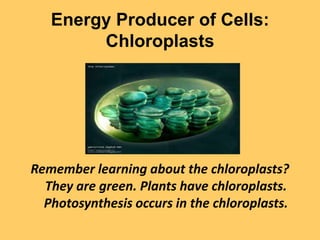
Energy Producer of Cells: ChloroplastsRemember learning about the chloroplasts? They are green. Plants have chloroplasts. Photosynthesis occurs in the chloroplasts.
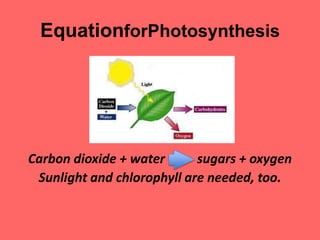
EquationforPhotosynthesisCarbon dioxide + water          sugars + oxygenSunlight and chlorophyll are needed, too.
Importance of RespirationRespiration is a very important process for living things. It is how the energy we need for our daily lives is released from the food we eat. Red blood cells take the oxygen we breathe from our lungs to our cells, and the mitochondria use the oxygen to “burn” our digested food for energy.
Two Types of RespirationAerobic respiration is respiration that requires oxygen.Anaerobic respiration is respiration that does not require oxygen.
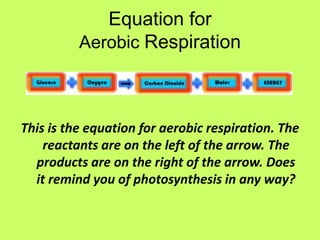
Equation for Aerobic RespirationThis is the equation for aerobic respiration. The reactants are on the left of the arrow. The products are on the right of the arrow. Does it remind you of photosynthesis in any way?
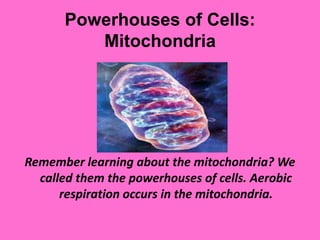
Powerhouses of Cells: MitochondriaRemember learning about the mitochondria? We called them the powerhouses of cells. Aerobic respiration occurs in the mitochondria.
What about anaerobic respiration?There are two types of anaerobic respiration. They are both called fermentation:Lactic acid fermentation andAlcohol fermentation
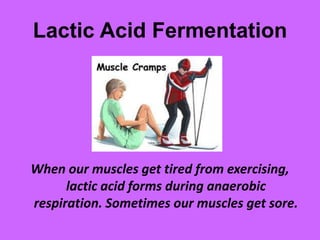
Lactic Acid FermentationWhen our muscles get tired from exercising, lactic acid forms during anaerobic respiration. Sometimes our muscles get sore.
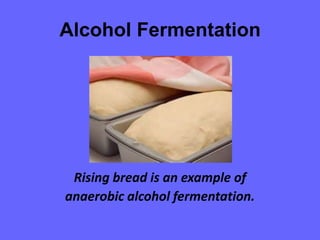
Alcohol FermentationRising bread is an example of anaerobic alcohol fermentation.
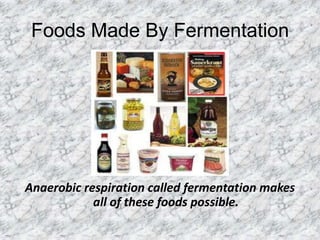
Foods Made By FermentationAnaerobic respiration called fermentation makes all of these foods possible.
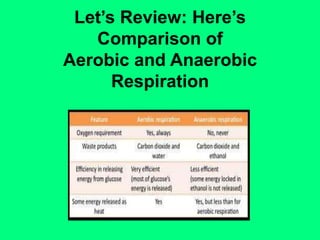
Let’s Review: Here’sComparison ofAerobic and Anaerobic Respiration
That’s Enoughabout respiration!Now, breathe! Your respiration is aerobic . . .The End

Respiration (includingFermentation)

  • 1.
  • 2.
    We’ll start thispresentation with a review of photosynthesis and chloroplasts. Then, we will go on to review respiration.Photosynthesis and respiration are closely related: photosynthesis produces energy, and respiration uses energy.
  • 3.
    Energy Producer ofCells: ChloroplastsRemember learning about the chloroplasts? They are green. Plants have chloroplasts. Photosynthesis occurs in the chloroplasts.
  • 4.
    EquationforPhotosynthesisCarbon dioxide +water sugars + oxygenSunlight and chlorophyll are needed, too.
  • 5.
    Importance of RespirationRespirationis a very important process for living things. It is how the energy we need for our daily lives is released from the food we eat. Red blood cells take the oxygen we breathe from our lungs to our cells, and the mitochondria use the oxygen to “burn” our digested food for energy.
  • 6.
    Two Types ofRespirationAerobic respiration is respiration that requires oxygen.Anaerobic respiration is respiration that does not require oxygen.
  • 7.
    Equation for AerobicRespirationThis is the equation for aerobic respiration. The reactants are on the left of the arrow. The products are on the right of the arrow. Does it remind you of photosynthesis in any way?
  • 8.
    Powerhouses of Cells:MitochondriaRemember learning about the mitochondria? We called them the powerhouses of cells. Aerobic respiration occurs in the mitochondria.
  • 9.
    What about anaerobicrespiration?There are two types of anaerobic respiration. They are both called fermentation:Lactic acid fermentation andAlcohol fermentation
  • 10.
    Lactic Acid FermentationWhenour muscles get tired from exercising, lactic acid forms during anaerobic respiration. Sometimes our muscles get sore.
  • 11.
    Alcohol FermentationRising breadis an example of anaerobic alcohol fermentation.
  • 12.
    Foods Made ByFermentationAnaerobic respiration called fermentation makes all of these foods possible.
  • 13.
    Let’s Review: Here’sComparisonofAerobic and Anaerobic Respiration
  • 14.
    That’s Enoughabout respiration!Now,breathe! Your respiration is aerobic . . .The End