L.18.9 – Photosynthesis and Cellular Respiration
Explain the interrelated nature of photosynthesis and cellular respiration.
1. Explain how reactants and products of photosynthesis are used as reactants for
cellular respiration and vice versa.
2. Explain how photosynthesis stores energy and cellular respiration releases energy.
3. Identify the reactants, products and/or the basic function of photosynthesis.
4. Identify the reactants, products, and/or the basic functions of aerobic and anaerobic
cellular respiration.
5. Connect the role of ATP to energy transfers within the cell.
6. Discuss the role of anaerobic respiration in living things.
Key Vocabulary: ATP, aerobic, anaerobic, cellular respiration, centriole, chloroplasts, photosynthesis,
products, reactants
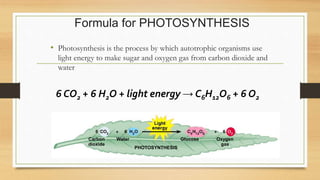
• Photosynthesis is the process by which autotrophic organisms use
light energy to make sugar and oxygen gas from carbon dioxide and
water
Formula for PHOTOSYNTHESIS
Carbon
dioxide
Water Glucose Oxygen
gas
PHOTOSYNTHESIS
6 CO2 + 6 H2O + light energy → C6H12O6 + 6 O2
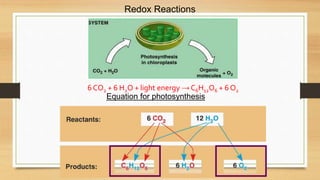
Redox Reactions
Equation for photosynthesis
6 CO2 + 6 H2O + light energy → C6H12O6 + 6 O2
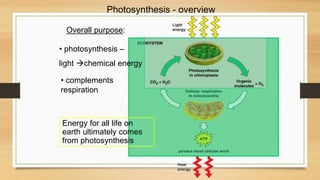
Overall purpose:
Photosynthesis - overview
• photosynthesis –
light chemical energy
• complements
respiration
Energy for all life on
earth ultimately comes
from photosynthesis
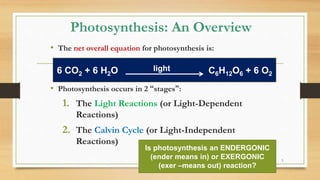
Photosynthesis: An Overview
• The net overall equation for photosynthesis is:
• Photosynthesis occurs in 2 “stages”:
1. The Light Reactions (or Light-Dependent
Reactions)
2. The Calvin Cycle (or Light-Independent
Reactions)
5
6 CO2 + 6 H2O C6H12O6 + 6 O2
light
Is photosynthesis an ENDERGONIC
(ender means in) or EXERGONIC
(exer –means out) reaction?
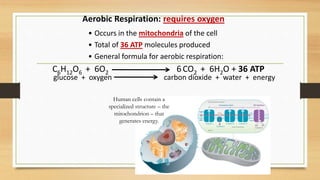
Aerobic Respiration: requires oxygen
• Occurs in the mitochondria of the cell
• Total of 36 ATP molecules produced
• General formula for aerobic respiration:
C6H12O6 + 6O2 6 CO2 + 6H2O + 36 ATP
glucose + oxygen carbon dioxide + water + energy
Human cells contain a
specialized structure – the
mitochondrion – that
generates energy.
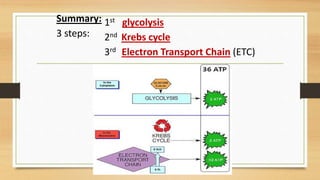
Summary:
3 steps:
1st glycolysis
2nd Krebs cycle
3rd Electron Transport Chain (ETC)
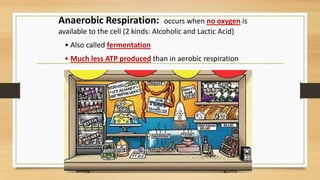
Anaerobic Respiration: occurs when no oxygen is
available to the cell (2 kinds: Alcoholic and Lactic Acid)
• Also called fermentation
• Much less ATP produced than in aerobic respiration
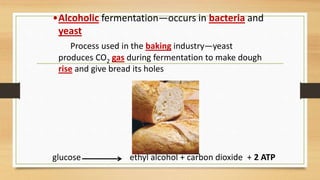
•Alcoholic fermentation—occurs in bacteria and
yeast
Process used in the baking industry—yeast
produces CO2 gas during fermentation to make dough
rise and give bread its holes
glucose ethyl alcohol + carbon dioxide + 2 ATP
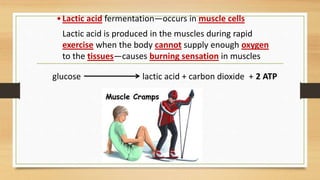
•Lactic acid fermentation—occurs in muscle cells
Lactic acid is produced in the muscles during rapid
exercise when the body cannot supply enough oxygen
to the tissues—causes burning sensation in muscles
glucose lactic acid + carbon dioxide + 2 ATP
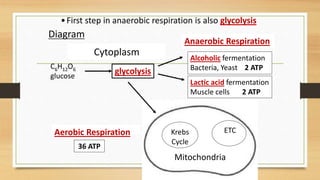
glycolysis
Anaerobic Respiration
Alcoholic fermentation
Bacteria, Yeast 2 ATP
Lactic acid fermentation
Muscle cells 2 ATP
Aerobic Respiration
36 ATP
ETC
Mitochondria
Krebs
Cycle
Cytoplasm
•First step in anaerobic respiration is also glycolysis
Diagram
C6H12O6
glucose
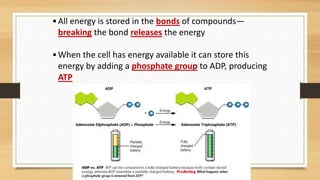
•All energy is stored in the bonds of compounds—
breaking the bond releases the energy
•When the cell has energy available it can store this
energy by adding a phosphate group to ADP, producing
ATP
Videos
• Ted Ed- Photosynthesis
• https://youtu.be/eo5XndJaz-Y
• https://www.youtube.com/watch?v=Py4R_Up2uBc
Task Cards
Complete Standard break down
Answer task cards with your table mates!
L.14.7 – Plant Structures and Functions
• Relate the structure of each of the major plant organs and tissues to
physiological processes.
1. Explain how the structures of plant tissues and organs are directly related
to their roles in physiological processes.
• Key Vocabulary: roots, stem, leaves, photosynthesis, transpiration,
reproduction, flower, cones, phloem, pollen, stomata, xylem, meristematic,
ground tissue, dermal tissue, vascular tissue
Plant Structure
https://www.youtube.com/watch?v=DGpPHrLF-5M
You DO
You will use the reteach packets to fill in the information in your packet
Rotations will begin to play one of the matching vocab games
Either on your desk or at the smartboard 
https://quizlet.com/142863994/plant-structures-and-function-review-flash-
cards/

Resp part 2.pptx

  • 1.
    L.18.9 – Photosynthesisand Cellular Respiration Explain the interrelated nature of photosynthesis and cellular respiration. 1. Explain how reactants and products of photosynthesis are used as reactants for cellular respiration and vice versa. 2. Explain how photosynthesis stores energy and cellular respiration releases energy. 3. Identify the reactants, products and/or the basic function of photosynthesis. 4. Identify the reactants, products, and/or the basic functions of aerobic and anaerobic cellular respiration. 5. Connect the role of ATP to energy transfers within the cell. 6. Discuss the role of anaerobic respiration in living things. Key Vocabulary: ATP, aerobic, anaerobic, cellular respiration, centriole, chloroplasts, photosynthesis, products, reactants
  • 2.
    • Photosynthesis isthe process by which autotrophic organisms use light energy to make sugar and oxygen gas from carbon dioxide and water Formula for PHOTOSYNTHESIS Carbon dioxide Water Glucose Oxygen gas PHOTOSYNTHESIS 6 CO2 + 6 H2O + light energy → C6H12O6 + 6 O2
  • 3.
    Redox Reactions Equation forphotosynthesis 6 CO2 + 6 H2O + light energy → C6H12O6 + 6 O2
  • 4.
    Overall purpose: Photosynthesis -overview • photosynthesis – light chemical energy • complements respiration Energy for all life on earth ultimately comes from photosynthesis
  • 5.
    Photosynthesis: An Overview •The net overall equation for photosynthesis is: • Photosynthesis occurs in 2 “stages”: 1. The Light Reactions (or Light-Dependent Reactions) 2. The Calvin Cycle (or Light-Independent Reactions) 5 6 CO2 + 6 H2O C6H12O6 + 6 O2 light Is photosynthesis an ENDERGONIC (ender means in) or EXERGONIC (exer –means out) reaction?
  • 6.
    Aerobic Respiration: requiresoxygen • Occurs in the mitochondria of the cell • Total of 36 ATP molecules produced • General formula for aerobic respiration: C6H12O6 + 6O2 6 CO2 + 6H2O + 36 ATP glucose + oxygen carbon dioxide + water + energy Human cells contain a specialized structure – the mitochondrion – that generates energy.
  • 7.
    Summary: 3 steps: 1st glycolysis 2ndKrebs cycle 3rd Electron Transport Chain (ETC)
  • 8.
    Anaerobic Respiration: occurswhen no oxygen is available to the cell (2 kinds: Alcoholic and Lactic Acid) • Also called fermentation • Much less ATP produced than in aerobic respiration
  • 9.
    •Alcoholic fermentation—occurs inbacteria and yeast Process used in the baking industry—yeast produces CO2 gas during fermentation to make dough rise and give bread its holes glucose ethyl alcohol + carbon dioxide + 2 ATP
  • 10.
    •Lactic acid fermentation—occursin muscle cells Lactic acid is produced in the muscles during rapid exercise when the body cannot supply enough oxygen to the tissues—causes burning sensation in muscles glucose lactic acid + carbon dioxide + 2 ATP
  • 11.
    glycolysis Anaerobic Respiration Alcoholic fermentation Bacteria,Yeast 2 ATP Lactic acid fermentation Muscle cells 2 ATP Aerobic Respiration 36 ATP ETC Mitochondria Krebs Cycle Cytoplasm •First step in anaerobic respiration is also glycolysis Diagram C6H12O6 glucose
  • 12.
    •All energy isstored in the bonds of compounds— breaking the bond releases the energy •When the cell has energy available it can store this energy by adding a phosphate group to ADP, producing ATP
  • 13.
    Videos • Ted Ed-Photosynthesis • https://youtu.be/eo5XndJaz-Y • https://www.youtube.com/watch?v=Py4R_Up2uBc
  • 14.
    Task Cards Complete Standardbreak down Answer task cards with your table mates!
  • 15.
    L.14.7 – PlantStructures and Functions • Relate the structure of each of the major plant organs and tissues to physiological processes. 1. Explain how the structures of plant tissues and organs are directly related to their roles in physiological processes. • Key Vocabulary: roots, stem, leaves, photosynthesis, transpiration, reproduction, flower, cones, phloem, pollen, stomata, xylem, meristematic, ground tissue, dermal tissue, vascular tissue
  • 16.
  • 17.
    You DO You willuse the reteach packets to fill in the information in your packet Rotations will begin to play one of the matching vocab games Either on your desk or at the smartboard  https://quizlet.com/142863994/plant-structures-and-function-review-flash- cards/