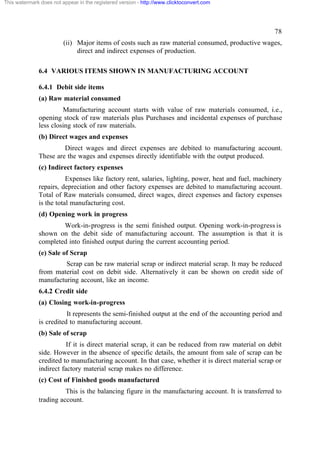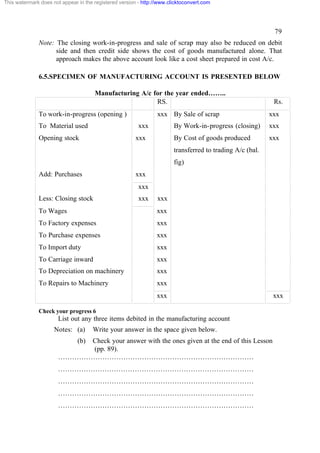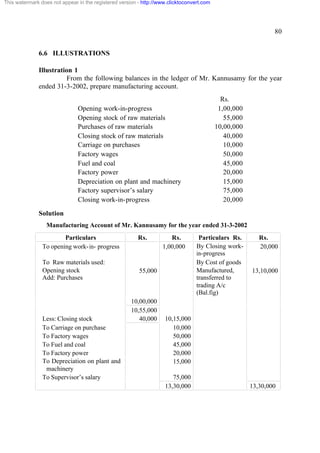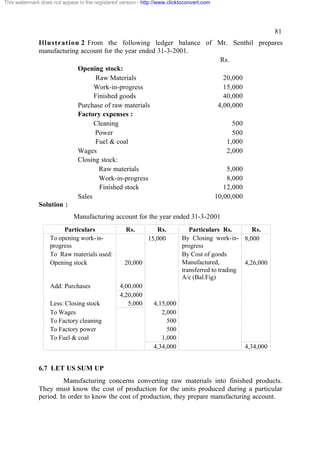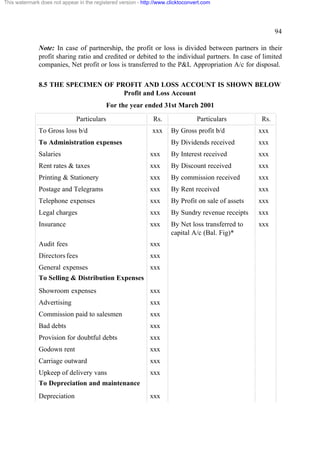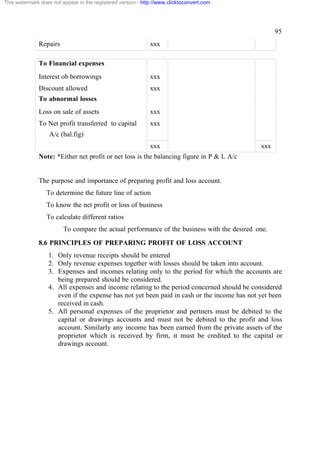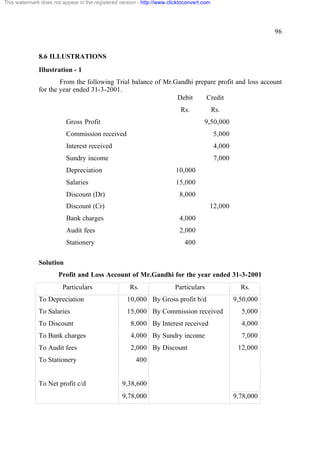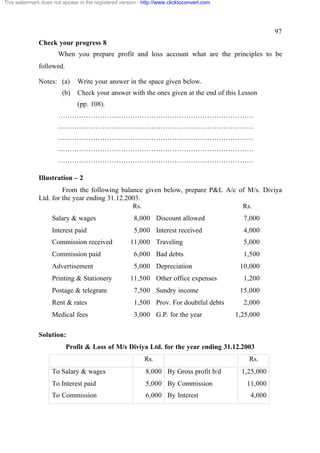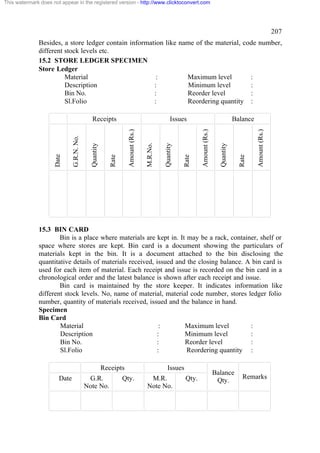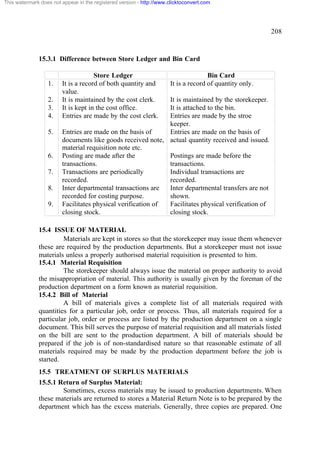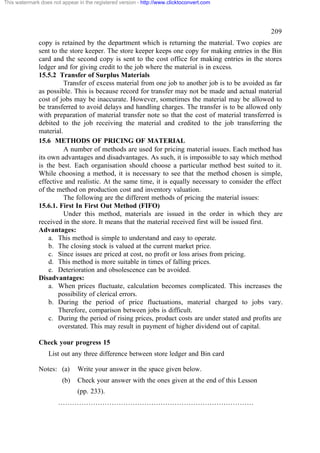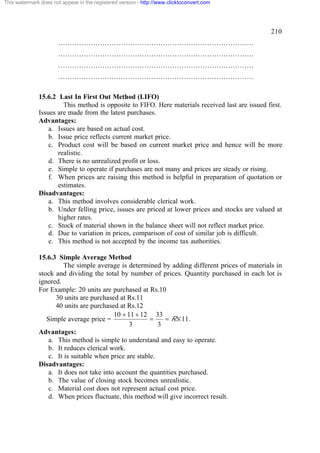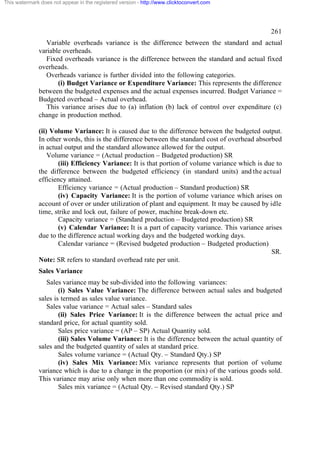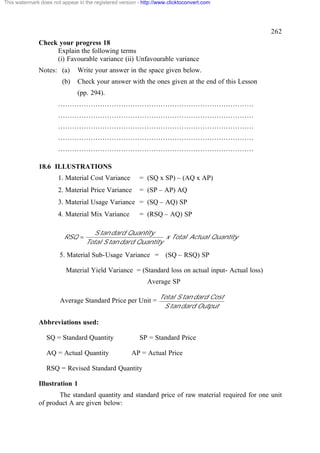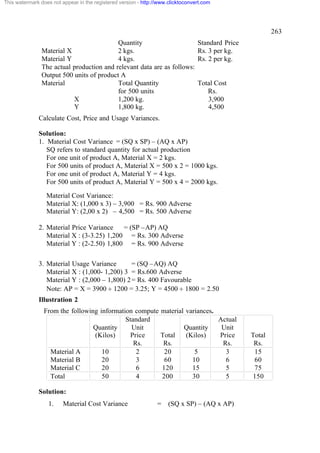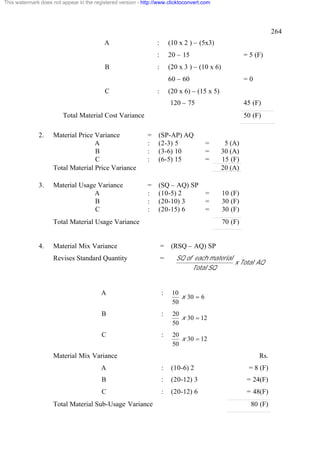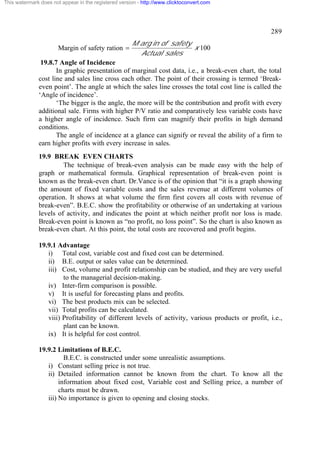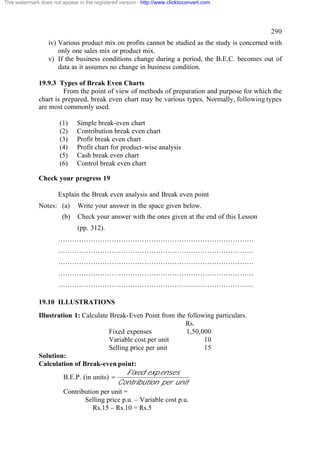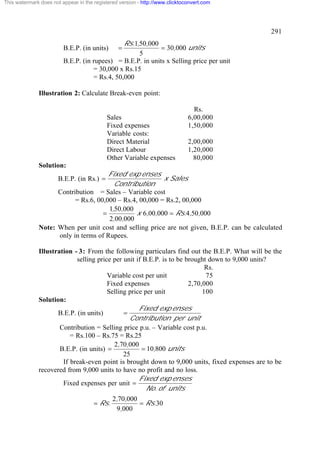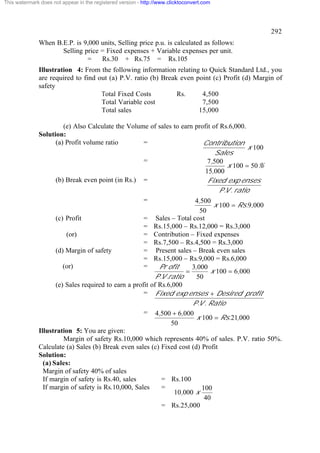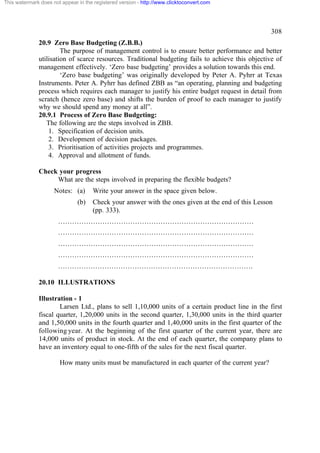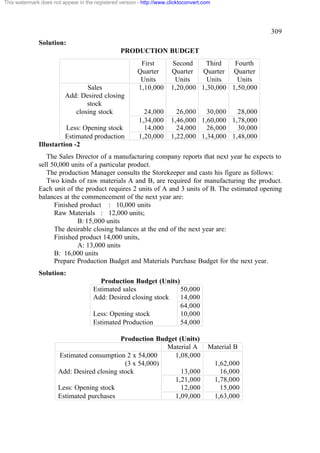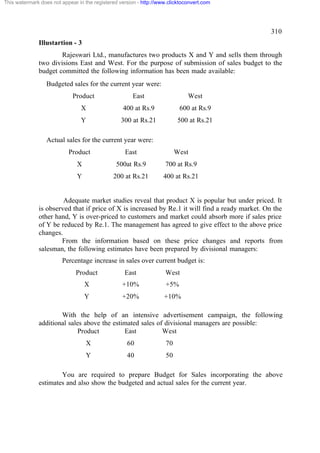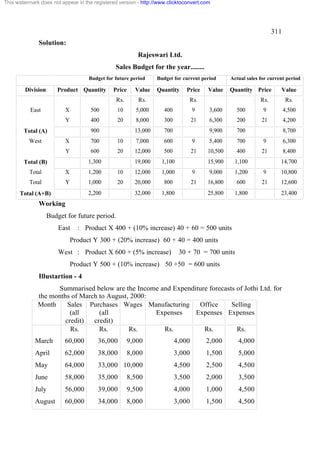
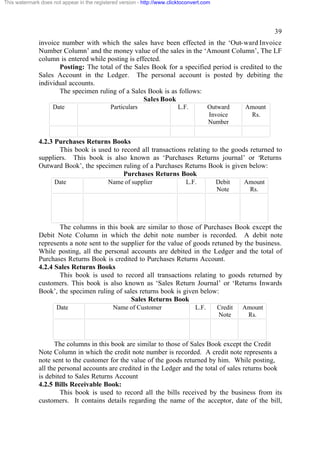
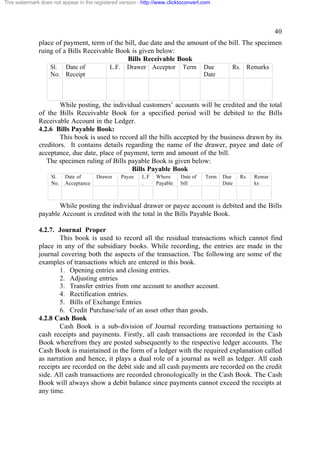
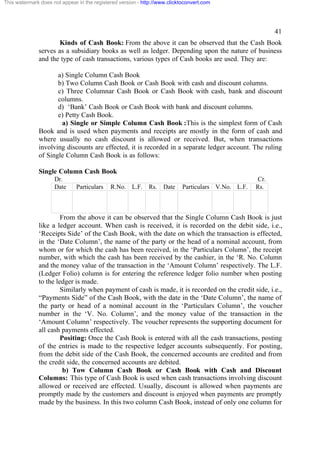
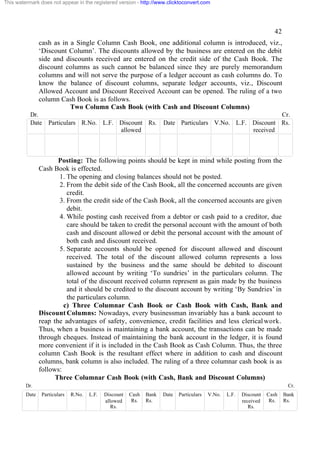
This watermark does not appear in the registered version - http://www.clicktoconvert.com


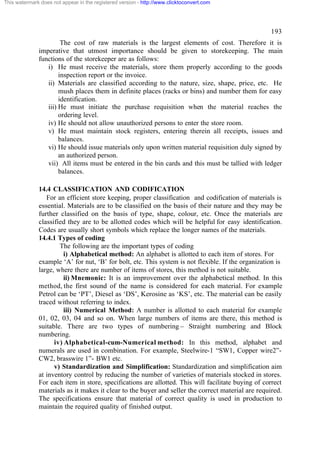
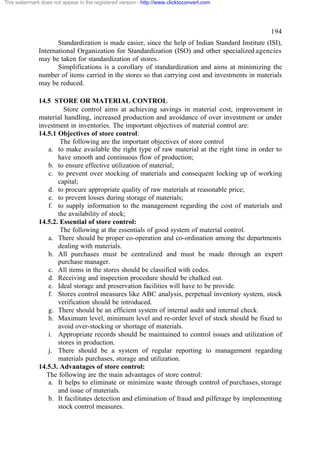
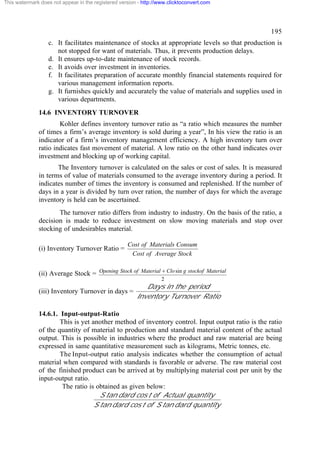
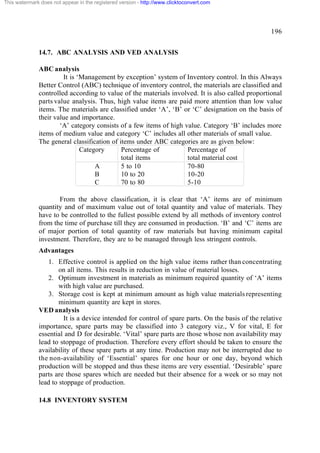
              LESSON 1 INTRODUCTION TO ACCOUNTING
              Contents
              1.0 Aims and Objectives
              1.1 Introduction
              1.2 Book- Keeping
                   1.2.1 Meaning
                   1.2.2 Definition
                   1.2.3 Objectives
              1.3 Accounting
                   1.3.1 Meaning
                   1.3.2 Definition
                   1.3.3 Objectives
                   1.3.4 Importance
                   1.3.5 Functions
                   1.3.6 Advantages
                   1.3.7 Limitations
              1.4 Methods of Accounting
                   1.4.1 Single Entry
                   1.4.2 Double Entry
                   1.4.3 Steps involved in double entry system
                   1.4.4 Advantages of double entry system
              1.5 Meaning of Debit and Credit
              1.6 Types of Accounts and its rules
                   1.6.1 Personal Accounts
                   1.6.2 Real Accounts
                   1.6.3 Nominal Accounts
              1.7 Distinction between Book Keeping and Accounting
              1.8 Branches of Accounting
                   1.8.1 Financial Accounting
                   1.8.2 Cost Accounting
                   1.8.3 Management Accounting
              1.9 Let us Sum Up
              1.10 Lesson-End Activities
              1.11 Check your Progress
              1.12 Points for Discussion
              1.13 References
              1.0 AIMS AND OBJECTIVES
                      i)    To know the Meaning ,Definition and objective of Book- Keeping
                      ii)   To study the objectives, functions, importance and limitations of
                            Accounting
                      iii) To understand the methods of Accounting, kinds of Accounts and
                           Accounting rules.
This watermark does not appear in the registered version - http://www.clicktoconvert.com


                                                                                                          1
                        iv) To study the difference between Book- keeping and Accounting
                        v)     To study the various branches of Accounting


              1.1 INTRODUCTION
                       In all activities (whether business activities or non-business activities) and in
              all organizations (whether business organizations like a manufacturing entity or
              trading entity or non-business organizations like schools, colleges, hospitals, libraries,
              clubs, temples, political parties) which require money and other economic resources,
              accounting is required to account for these resources. In other words, wherever money
              is involved, accounting is required to account for it. Accounting is often called the
              language of business. The basic function of any language is to serve as a means of
              communication. Accounting also serves this function.
              1.2. MEANING AND DEFINITION OF BOOK- KEEPING
              1.2.1 Meaning
                      Book- keeping includes recording of journal, posting in ledgers and balancing
              of accounts. All the records before the preparation of trail balance is the whole subject
              matter of book- keeping. Thus, book- keeping many be defined as the science and art
              of recording transactions in money or money’s worth so accurately and systematically,
              in a certain set of books, regularly that the true state of businessman’s affairs can be
              correctly ascertained. Here it is important to note that only those transactions related
              to business are recorded which can be expressed in terms of money.
              1.2.2 Definition
                     “Book- keeping is the art of recording business transactions in a systematic
              manner”. A.H.Rosenkamph.
                      “Book- keeping is the science and art of correctly recording in books of
              account all those business transactions that result in the transfer of money or money’s
              worth”. R.N.Carter
              1.2.3 Objectives of Book- keeping
                  i)         Book- keeping provides a permanent record of each transactions.
                  ii)        Soundness of a firm can be assessed from the records of assets and abilities
                             on a particular date.
                  iii)       Entries related to incomes and expenditures of a concern facilitate to know
                             the profit and loss for a given period.
                  iv)        It enables to prepare a list of customers and suppliers to ascertain the amount
                             to be received or paid.
                  v)         It is a method gives opportunities to review the business policies in the light
                             of the past records.
                  vi)        Amendment of business laws, provision of licenses, assessment of taxes etc.,
                             are based on records.
This watermark does not appear in the registered version - http://www.clicktoconvert.com


                                                                                                     2


              1.3 ACCOUNTING
              1.3.1 Meaning of Accounting
                      Accounting, as an information system is the process of identifying, measuring
              and communicating the economic information of an organization to its users who need
              the information for decision making. It identifies transactions and events of a specific
              entity. A transaction is an exchange in which each participant receives or sacrifices
              value (e.g. purchase of raw material). An event (whether internal or external) is a
              happening of consequence to an entity (e.g. use of raw material for production). An
              entity means an economic unit that performs economic activities.
              1.3.2 Definition of Accounting
                      American Institute of Certified Public Accountants (AICPA) which defines
              accounting as “the art of recording, classifying and summarizing in a significant
              manner and in terms of money, transactions and events, which are, in part at least, of a
              financial character and interpreting the results thereof”.
              1.3.3 Objective of Accounting
                      Objective of accounting may differ from business to business depending upon
              their specific requirements. However, the following are the general objectives of
              accounting.
                     i) To keeping systematic record: It is very difficult to remember all the
              business transactions that take place. Accounting serves this purpose of record
              keeping by promptly recording all the business transactions in the books of account.
                      ii) To ascertain the results of the operation: Accounting         helps       in
              ascertaining result i.e., profit earned or loss suffered in business during a particular
              period. For this purpose, a business entity prepares either a Trading and Profit and
              Loss account or an Income and Expenditure account which shows the profit or loss of
              the business by matching the items of revenue and expenditure of the some period.
                      iii) To ascertain the financial position of the business: In addition to profit,
              a businessman must know his financial position i.e., availability of cash, position of
              assets and liabilities etc. This helps the businessman to know his financial strength.
              Financial statements are barometers of health of a business entity.
                      iv) To portray the liquidity position: Financial reporting should provide
              information about how an enterprise obtains and spends cash, about its borrowing and
              repayment of borrowing, about its capital transactions, cash dividends and other
              distributions of resources by the enterprise to owners and about other factors that may
              affect an enterprise’s liquidity and solvency.
                     v) To protect business properties: Accounting provides upto date
              information about the various assets that the firm possesses and the liabilities the firm
              owes, so that nobody can claim a payment which is not due to him.
This watermark does not appear in the registered version - http://www.clicktoconvert.com


                                                                                                     3
                      vi) To facilitate rational decision – making: Accounting          records     and
              financial statements provide financial information which help the business in making
              rational decisions about the steps to be taken in respect of various aspects of business.
                      vii) To satisfy the requirements of law: Entities such as companies, societies,
              public trusts are compulsorily required to maintain accounts as per the law governing
              their operations such as the Companies Act, Societies Act, and Public Trust Act etc.
              Maintenance of accounts is also compulsory under the Sales Tax Act and Income Tax
              Act.
              1.3.4 Importance of Accounting
                     i) Owners: The owners provide funds or capital for the organization. They
              possess curiosity in knowing whether the business is being conducted on sound lines
              or not and whether the capital is being employed properly or not. Owners, being
              businessmen, always keep an eye on the returns from the investment. Comparing the
              accounts of various years helps in getting good pieces of information.
                      ii) Management: The management of the business is greatly interested in
              knowing the position of the firm. The accounts are the basis, the management can
              study the merits and demerits of the business activity. Thus, the management is
              interested in financial accounting to find whether the business carried on is profitable
              or not. The financial accounting is the “eyes and ears of management and facilitates
              in drawing future course of action, further expansion etc.”
                     iii) Creditors: Creditors are the persons who supply goods on credit, or
              bankers or lenders of money. It is usual that these groups are interested to know the
              financial soundness before granting credit. The progress and prosperity of the firm,
              two which credits are extended, are largely watched by creditors from the point of
              view of security and further credit. Profit and Loss Account and Balance Sheet are
              nerve centres to know the soundness of the firm.
                      iv) Employees: Payment of bonus depends upon the size of profit earned by
              the firm. The more important point is that the workers expect regular income for the
              bread. The demand for wage rise, bonus, better working conditions etc. depend upon
              the profitability of the firm and in turn depends upon financial position. For these
              reasons, this group is interested in accounting.
                     v) Investors: The prospective investors, who want to invest their money in a
              firm, of course wish to see the progress and prosperity of the firm, before investing
              their amount, by going through the financial statements of the firm. This is to
              safeguard the investment. For this, this group is eager to go through the accounting
              which enables them to know the safety of investment.
                     vi) Government: Government keeps a close watch on the firms which yield
              good amount of profits. The state and central Governments are interested in the
              financial statements to know the earnings for the purpose of taxation. To compile
              national accounting is essential.
                     vii) Consumers: These groups are interested in getting the goods at reduced
              price. Therefore, they wish to know the establishment of a proper accounting control,
This watermark does not appear in the registered version - http://www.clicktoconvert.com


                                                                                                        4
              which in turn will reduce to cost of production, in turn less price to be paid by the
              consumers. Researchers are also interested in accounting for interpretation.
                      viii) Research Scholars: Accounting information, being a mirror of the
              financial performance of a business organization, is of immense value to the research
              scholar who wants to make a study into the financial operations of a particular firm.
              To make a study into the financial operations of a particular firm, the research scholar
              needs detailed accounting information relating to purchases, sales, expenses, cost of
              materials used, current assets, current liabilities, fixed assets, long-term liabilities and
              share-holders funds which is available in the accounting record maintained by the
              firm.
              Check Your Progress 1
                       List out five objectives of Accounting.
              Notes: (a)       Write your answer in the space given below.
                        (b)    Check your answer with the ones given at the end of this Lesson
                               (pp. 13).
                        …………………………………………………………………………
                        …………………………………………………………………………
                        …………………………………………………………………………
                        …………………………………………………………………………
                        …………………………………………………………………………
              1.3.5 Functions of Accounting
                      i) Record Keeping Function: The primary function of accounting relates to
              recording, classification and summary of financial transactions-journalisation, posting,
              and preparation of final statements. These facilitate to know operating results and
              financial positions. The purpose of this function is to report regularly to the interested
              parties by means of financial statements. Thus accounting performs historical
              function i.e., attention on the past performance of a business; and this facilitates
              decision making programme for future activities.
                     ii) Managerial Function:Decision making programme is greatly assisted by
              accounting. The managerial function and decision making programmes, without
              accounting, may mislead. The day-to-day operations are compared with some pre-
              determined standard. The variations of actual operations with pre-determined
              standards and their analysis is possible only with the help of accounting.
                      iii) Legal Requirement function: Auditing is compulsory in ca s e o f
              registered firms. Auditing is not possible without accounting. Thus accounting
              becomes compulsory to comply with legal requirements. Accounting is a base and
              with its help various returns, documents, statements etc., are prepared.
                      iv) Language of Business: Accounting is the language of business. Various
              transactions are communicated through accounting. There are many parties-owners,
              creditors, government, employees etc., who are interested in knowing the results of the
This watermark does not appear in the registered version - http://www.clicktoconvert.com


                                                                                                          5
              firm and this can be communicated only through accounting. The accounting shows a
              real and true position of the firm or the business.


              1.3.6 Advantages of Accounting
                      The following are the advantages of accounting to a business:
                       i)      It helps in having complete record of business transactions.
                       ii)     It gives information about the profit or loss made by the business at the
                               close of a year and its financial conditions. The basic function of
                               accounting is to supply meaningful information about the financial
                               activities of the business to the owners and the managers.
                       iii)    It provides useful information form making economic decisions,
                       iv)     It facilitates comparative study of current year’s profit, sales, expenses
                               etc., with those of the previous years.
                       v)      It supplies information useful in judging the management’s ability to
                               utilise enterprise resources effectively in achieving primary enterprise
                               goals.
                       vi)     It provides users with factual and interpretive information about
                               transactions and other events which are useful for predicting, comparing
                               and evaluation the enterprise’s earning power.
                       vii)    It helps in complying with certain legal formalities like filing of income-
                               tax and sales-tax returns. If the accounts are properly maintained, the
                               assessment of taxes is greatly facilitated.
              1.3.7 Limitations of Accounting
                       i)      Accounting is historical in nature: It does not reflect the current financial
                               position or worth of a business.
                       ii)     Transactions of non-monetary mature do not find place in accounting.
                               Accounting is limited to monetary transactions only. It excludes
                               qualitative elements like management, reputation, employee morale,
                               labour strike etc.
                       iii)    Facts recorded in financial statements are greatly influenced by
                               accounting conventions and personal judgements of the Accountant or
                               Management. Valuation of inventory, provision for doubtful debts and
                               assumption about useful life of an asset may, therefore, differ from one
                               business house to another.
                       iv)     Accounting principles are not static or unchanging-alternative
                               accounting procedures are often equally acceptable.         Therefore,
                               accounting statements do not always present comparable data
                       v)      Cost concept is found in accounting. Price changes are not considered.
                               Money value is bound to change often from time to time. This is a
                               strong limitation of accounting.
This watermark does not appear in the registered version - http://www.clicktoconvert.com


                                                                                                      6
                       vi)     Accounting statements do not show the impact of inflation.
                       vii)    The accounting statements do not reflect those increase in net asset
                               values that are not considered realized.
              1.4 Methods of Accounting
                       Business transactions are recorded in two different ways.
              1.4.1 Single Entry
              1.4.2 Double Entry
              1.4.1. Single Entry: It is incomplete system of recording business transactions. The
              business organization maintains only cash book and personal accounts of debtors and
              creditors. So the complete recording of transactions cannot be made and trail balance
              cannot be prepared.
              1.4.2 Double Entry: It this system every business transaction is having a two fold
              effect of benefits giving and benefit receiving aspects. The recording is made on the
              basis of both these aspects. Double Entry is an accounting system that records the
              effects of transactions and other events in atleast two accounts with equal debits and
              credits.
              1.4.3 Steps involved in Double entry system
                     (a) Preparation of Journal: Journal is called the book of original entry. It
              records the effect of all transactions for the first time. Here the job of recording takes
              place.
                     (b) Preparation of Ledger: Ledger is the collection of all accounts used by a
              business. Here the grouping of accounts is performed. Journal is posted to ledger.
                     (c) Trial Balance preparation: Summarizing. It is a summary of ledge
              balances prepared in the form of a list.
                     (d) Preparation of Final Account: At the end of the accounting period to
              know the achievements of the organization and its financial state of affairs, the final
              accounts are prepared.
              1.4.4 Advantages of Double Entry System
                     i) Scientific system: This system is the only scientific system of recording
              business transactions in a set of accounting records. It helps to attain the objectives of
              accounting.
                     ii) Complete record of transactions: This system maintains a complete
              record of all business transactions.
                     iii) A check on the accuracy of accounts: By use of this system the accuracy
              of accounting book can be established through the device called a Trail balance.
                     iv) Ascertainment of profit or loss: The profit earned or loss suffered during
              a period can be ascertained together with details by the preparation of Profit and Loss
              Account.
This watermark does not appear in the registered version - http://www.clicktoconvert.com


                                                                                                               7
                      v) Knowledge of the financial position of the business: The financial
              position of the firm can be ascertained at the end of each period, through the
              preparation of balance sheet.
                     vi) Full details for purposes of control: This system permits accounts to be
              prepared or kept in as much detail as necessary and, therefore, affords significant
              information for purposes of control etc.
                     vii) Comparative study is possible: Results of one year may be compared
              with those of the precious year and reasons for the change may be ascertained.
                      viii) Helps management in decision making: The management may be also
              to obtain good information for its work, specially for making decisions.
                      ix) No scope for fraud: The firm is saved from frauds and misappropriations
              since full information about all assets and liabilities will be available.
              1.5 Meaning of Debit and Credit
                 The term ‘debit’ is supposed to have derived from ‘debit’ and the term ‘credit’ from
              ‘creditable’. For convenience ‘Dr’ is used for debit and ‘Cr’ is used for credit.
              Recording of transactions require a thorough understanding of the rules of debit and
              credit relating to accounts. Both debit and credit may represent either increase or
              decrease, depending upon the nature of account.
              1.6 Types of Accounting
              Types of Accounts
                      The object of book-keeping is to keep a complete record of all the transactions
              that place in the business. To achieve this object, business transactions have been
              classified into three categories:
                      (i)     Transactions relating to persons.
                      (ii) Transactions relating to properties and assets
                      (iii) Transactions relating to incomes and expenses.
                     The accounts falling under the first heading are known as ‘personal Accounts’.
              The accounts falling under the second heading are known as ‘Real Accounts’, The
              accounts falling under the third heading are called ‘Nominal Accounts’. The accounts
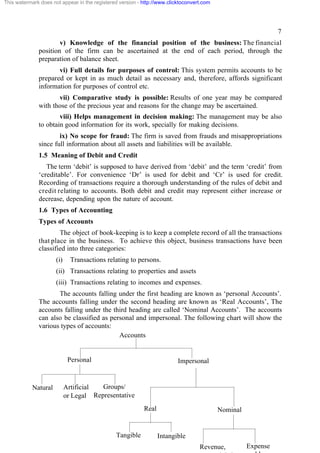
              can also be classified as personal and impersonal. The following chart will show the
              various types of accounts:
                                           Accounts


                             Personal                                     Impersonal
                              Accounts

                             nal
            Natural         Artificial  Groups/
                            or Legal Representative
                                                           Real                            Nominal


                                               Tangible           Intangible
                                                                                   Revenue,          Expense
This watermark does not appear in the registered version - http://www.clicktoconvert.com


                                                                                                    8


              1.6.1 Personal Accounts: Accounts recording transactions with a person or group of
              persons are known as personal accounts. These accounts are necessary, in particular,
              to record credit transactions. Personal accounts are of the following types:
                   (a) Natural persons: An account recording transactions with an individual
              human being is termed as a natural persons’ personal account. eg., Kamal’s account,
              Mala’s account, Sharma’s accounts. Both males and females are included in it
                     (b) Artificial or legal persons: An account recording financial transactions
              with an artificial person created by law or otherwise is termed as an artificial person,
              personal account, e.g. Firms’ accounts, limited companies’ accounts, educational
              institutions’ accounts, Co-operative society account.
                    (c) Groups/Representative personal Accounts: An account indirectly
              representing a person or persons is known as representative personal account. When
              accounts are of a similar nature and their number is large, it is better tot group them
              under one head and open a representative personal accounts. e.g., prepaid insurance,
              outstanding salaries, rent, wages etc.
                    When a person starts a business, he is known as proprietor. This proprietor is
              represented by capital account for all that he invests in business and by drawings
              accounts for all that which he withdraws from business. So, capital accounts and
              drawings account are also personal accounts.
                      The rule for personal accounts is: Debit the receiver
                                                                Credit the giver
              1.6.2 Real Accounts
                     Accounts relating to properties or assets are known as ‘Real Accounts’, A
              separate account is maintained for each asset e.g., Cash Machinery, Building, etc.,
              Real accounts can be further classified into tangible and intangible.
                     (a) Tangible Real Accounts: These accounts represent assets and properties
              which can be seen, touched, felt, measured, purchased and sold. e.g. Machinery
              account Cash account, Furniture account, stock account etc.
                     (b) Intangible Real Accounts: These accounts represent assets and properties
              which cannot be seen, touched or felt but they can be measured in terms of money.
              e.g., Goodwill accounts, patents account, Trademarks account, Copyrights account,
              etc.
                       The rule for Real accounts is: Debit what comes in
                                                            Credit what goes out
              1.6.3 Nominal Accounts
                     Accounts relating to income, revenue, gain expenses and losses are termed as
              nominal accounts. These accounts are also known as fictitious accounts as they do not
              represent any tangible asset. A separate account is maintained for each head or
This watermark does not appear in the registered version - http://www.clicktoconvert.com


                                                                                                              9
              expense or loss and gain or income. Wages account, Rent account Commission
              account, Interest received account are some examples of nominal account
                       The rule for Nominal accounts is:           Debit all expenses and losses
                                                                   Credit all incomes and gains


              1.7 DISTINCTION BETWEEN BOOK-KEEPING AND ACCOUNTING
                      The difference between book-keeping and accounting can be summarized in a
              tabular from as under:
                           Basis of
                                                      Book-keeping                         Accounting
                          difference
                     Transactions             Recording of transactions To      examine      these
                                              in books of original entry. recorded transactions in
                                                                          order to find out their
                                                                          accuracy.
                     Posting                  To make posting in ledger           To      examine      this
                                                                                  posting in order to
                                                                                  ascertain its accuracy.
                     Total and Balance        To make total of the                To prepare trial balance
                                              amount in journal and               with the help of
                                              accounts of ledger. To              balances of ledger
                                              ascertain balance in all the        accounts.
                                              accounts.
                     Income Statement Preparation of trading,                     Preparation of trading,
                     and Balance Sheet Profit & loss account and                  profits and loss account
                                       balance sheet is not book                  and balance sheet is
                                       keeping                                    included in it.
                     Rectification of         These are not included in These are included in
                     errors                   book-keeping              accounting.
                     Special skill and It does not require any It requires special skill
                     knowledge         special skill and knowledge and knowledge.
                                       as in advanced countries
                                       this work is done by
                                       machines.
                     Liability                A book-keeper is not liable An accountant is liable
                                              for accountancy work.       for the work of book-
                                                                          keeper.
This watermark does not appear in the registered version - http://www.clicktoconvert.com


                                                                                                     10


              1.8 BRANCHES OF ACCOUNTING
                     The changing business scenario over the centuries gave rise to specialized
              branches of accounting which could cater to the changing requirements. The branches
              of accounting are;
                       i)    Financial accounting;
                       ii)   Cost accounting; and
                       iii) Management accounting.
                       Now, let us understand these terms.
              1.8.1 Financial Accounting
                      The accounting system concerned only with the financial state of affairs and
              financial results of operations is known as Financial Accounting. It is the original
              from of accounting. It is mainly concerned with the preparation of financial
              statements for the use of outsiders like creditors, debenture holders, investors and
              financial institutions. The financial statements i.e., the profit and loss account and the
              balance sheet, show them the manner in which operations of the business have been
              conducted during a specified period.
              1.8.2 Cost Accounting
                      In view of the limitations of financial accounting in respect of information
              relating to the cost of individual products, cost accounting was developed. It is that
              branch of accounting which is concerned with the accumulation and assignment of
              historical costs to units of product and department, primarily for the purpose of
              valuation of stock and measurement of profits. Cost accounting seeks to ascertain the
              cost of unit produced and sold or the services rendered by the business unit with a
              view to exercising control over these costs to assess profitability and efficiency of the
              enterprise. It generally relates to the future and involves an estimation of future costs
              to be incurred. The process of cost accounting based on the data provided by the
              financial accounting.
              1.8.3 Management Accounting
                      It is an accounting for the management i.e., accounting which provides
              necessary information to the management for discharging its functions. According to
              the Anglo-American Council on productivity, “Management accounting is the
              presentation of accounting information is such a way as to assist management in the
              creation of policy and the day-to-day operation of an undertaking.” It covers all
              arrangements and combinations or adjustments of the orthodox information to provide
              the Chief Executive with the information from which he can control the business e.g.
              Information about funds, costs, profits etc. Management accounting is not only
              confined to the area of cost accounting but also covers other areas (such as capital
              expenditure decisions, capital structure decisions, and dividend decisions) as well.
This watermark does not appear in the registered version - http://www.clicktoconvert.com


                                                                                                    11
              1.9 Let us Sum Ups
                     Accounting plays a vital role in the field of commerce and business. One
              should know the basic purpose of accounting, its merits, kinds of accounting and rules
              of accounting. By studying this lesion one can understand the above said things and
              need of double entry system. The next lesion will deal with principles of accounting.
              1.10 Lesson-End Activities.
                         1.    Define Accounting.
                         2     Explain the primary objectives of accounting?
                         3.    What is Double entry system?
                         4.    What is meaning of Debit and Credit?
                         5.    Explain the different methods of accounting.
                         6.    Explain the various types of accounts.
                         7.    Discuss the limitations of accounting.
                         8.    Distinguish between book-keeping and accounting.
                         9.    Explain the accounting rules.
              1.11 Check your Progress
              1. Your answer may include any five of the following.
                    1. To keeping systematic record
                    2. To ascertain the results of the operation
                    3. To ascertain the financial position of the business
                    4. To portray the liquidity position
                    5. To product business properties
              1.12 Points for Discussion
                  1. Explain the accounting rules.
                  2. Discuss the objectives; functions; importance and limitations of accounting.
              1.13 References
                  1. Grewal, T.B, Double Entry Book Keeping.
                  2. Jain & Narang, Advanced Accountancy.
                  3. R.L. Gupta, Advanced Accountancy.
This watermark does not appear in the registered version - http://www.clicktoconvert.com


                                                                                           12


              LESSON – 2 PRINCIPLES OF ACCOUNTING
              Contents:
              2.0 Aims and Objectives
              2.1 Introduction
              2.2 Accounting concepts and Conventions
                   2.2.1 Accounting concepts
                   2.2.2. Accounting Conventions
              2.3 Bases of Accounting
                   2.3.1 Accounting on Cash basis
                   2.3.2 Accrual Basis of Accounting or Mercantile System
                   2.3.3 Mixed or Hybrid Basis of Accounting
              2.4 Accounting Terminology
                   2.4.1 Transaction
                   2.4.2 Debtor
                   2.4.3 Creditor
                   2.4.4 Capital
                   2.4.5 Liability
                   2.4.6 Asset
                   2.4.7 Goods
                   2.4.8 Revenue
                   2.4.9 Expense
                   2.4.10 Expenditure
                   2.4.11 Purchases
                   2.4.12 Sales
                   2.4.13 Stock
                   2.4.14 Drawings
                   2.4.15 Losses
                   2.4.16 Account
                   2.4.17 Invoice
                   2.4.18 Voucher
                   2.4.19 Proprietor
                   2.4.20 Discount
                   2.4.21 Solvent
                   2.4.22 Insolvent
              2.5 Accounting equation
                   2.5.1 Rules of Accounting
              2.6 Let us Sum Up
              2.7 Lesson-End Activities
              2.8 Check your Progress
              2.9 Points for Discussion
              2.10 References
This watermark does not appear in the registered version - http://www.clicktoconvert.com


                                                                                                        13
              2.0 AIMS AND OBJECTIVES
                 1. To understand the meaning and definition of Accounting.
                 2. To study the basic accounting principles.
                 3. To know the bases of accounting.
                 4. To understand the accounting terminology and equation.

              2.1 INTRODUCTION
                     The word ‘Principle’ has been differently viewed by different schools of
              thought. The American Institute of Certified Public Accountants (AICPA) has viewed
              the word ‘principle’ as a general law of rule adopted or professed as a guide to action;
              a settled ground or basis of conduct of practice”
                     Accounting principles refer, to certain rules, procedures and conventions which
              represent a consensus view by those indulging in good accounting practices and
              procedures. Canadian Institute of Chartered Accountants defined accounting principle
              as “the body of doctrines commonly associated with the theory and procedure of
              accounting, serving as an explanation of current practices as a guide for the selection
              of conventions or procedures where alternatives exist. Rules governing the formation
              of accounting axioms and the principles derived from them have arisen from common
              experiences, historical precedent, statements by individuals and professional bodies
              and regulations of Governmental agencies”. To be more reliable, accounting
              statements are prepared in conformity with these principles. If not, chaotic conditions
              would result. But in reality as all the businesses are not alike, each one has its own
              method of accounting. However, to be more acceptable, the accounting principles
              should satisfy the following three basic qualities, viz., relevance, objectivity and
              feasibility. The accounting principle is considered to be relevant and useful to the
              extent that it increases the utility of the records to its readers. It is said to be objective
              to the extent that it is supported by the facts and free from personal bias. It is
              considered to be feasible to the extent that it is practicable with the least complication
              or cost. Though accounting principles are denoted by various terms such as concepts,
              conventions, doctrines, tenets, assumptions, axioms, postulates, etc., it can be
              classified into two groups, viz., accounting concepts and accounting conventions.
              2.2 ACCOUNTING CONCEPTS AND CONVENTIONS
              2.2.1 Accounting concepts:
                     T h e term ‘concept’ is used to denote accounting postulates, i.e., basic
              assumptions or conditions upon the edifice of which the accounting super-structure is
              based. The following are the common accounting concepts adopted by many business
              concerns.
                       1. Business Entity Concept                  2. Money Measurement Concept
                       3. Going Concern Concept                    4. Dual Aspect Concept
                       5. Periodicity Concept                      6. Historical Cost Concept
                       7. Matching Concept                         8. Realisation Concept
                       9. Accrual Concept                         10. Objective Evidence Concept
This watermark does not appear in the registered version - http://www.clicktoconvert.com


                                                                                                        14
                      i) Business Entity Concept: A business unit is an organization of persons
              established to accomplish an economic goal. Business entity concept implies that the
              business unit is separate and distinct from the persons who provide the required
              capital to it. This concept can be expressed through an accounting equation, viz.,
              Assets = Liabilities + Capital. The equation clearly shows that the business itself
              owns the assets and in turn owes to various claimants. It is worth mentioning here that
              the business entity concept as applied in accounting for sole trading units is different
              from the legal concept. The expenses, income, assets and liabilities not related to the
              sole proprietorship business are excluded from accounting. However, a sole
              proprietor is personally liable and required to utilize non-business assets or private
              assets also to settle the business creditors as per law. Thus, in the case of sole
              proprietorship, business and non-business assets and liabilities are treated alike in the
              eyes of law. In the case of a partnership, firm, for paying the business liabilities the
              business assets are used first and it any surplus remains thereafter, it can be used for
              paying off the private liabilities of each partner. Similarly, the private assets are first
              used to pay off the private liabilities of partners and if any surplus remains, it is
              treated as part of the firm’s property and is used for paying the firm’s liabilities. In the
              case of a company, its existence does not depend on the life span of any shareholder.
                      ii) Money Measurement Concept: In accounting all events and transactions
              are recode in terms of money. Money is considered as a common denominator, by
              means of which various facts, events and transactions about a business can be
              expressed in terms of numbers. In other words, facts, events and transactions which
              cannot be expressed in monetary terms are not recorded in accounting. Hence, the
              accounting does not give a complete picture of all the transactions of a business unit.
              This concept does not also take care of the effects of inflation because it assumes a
              stable value for measuring.
                      iii) Going Concern Concept: Under this concept, the transactions are
              recorded assuming that the business will exist for a longer period of time, i.e., a
              business unit is considered to be a going concern and not a liquidated one. Keeping
              this in view, the suppliers and other companies enter into business transactions with
              the business unit. This assumption supports the concept of valuing the assets at
              historical cost or replacement cost. This concept also supports the treatment of
              prepaid expenses as assets, although they may be practically unsaleable.
                      iv) Dual Aspect Concept: According to this basic concept of accounting,
              every transaction has a two-fold aspect, Viz., 1.giving certain benefits and 2.
              Receiving certain benefits. The basic principle of double entry system is that every
              debit has a corresponding and equal amount of credit. This is the underlying
              assumption of this concept. The accounting equation viz., Assets = Capital +
              Liabilities or Capital = Assets – Liabilities, will further clarify this concept, i.e., at any
              point of time the total assets of the business unit are equal to its total liabilities.
              Liabilities here relate both to the outsiders and the owners. Liabilities to the owners
              are considered as capital.
                      V) Periodicity Concept: Under this concept, the life of the business is
              segmented into different periods and accordingly the result of each period is
              ascertained. Though the business is assumed to be continuing in future (as per going
This watermark does not appear in the registered version - http://www.clicktoconvert.com


                                                                                                    15
              concern concept), the measurement of income and studying the financial position of
              the business for a shorter and definite period will help in taking corrective steps at the
              appropriate time. Each segmented period is called “accounting period” and the same
              is normally a year. The businessman has to analyse and evaluate the results
              ascertained periodically. At the end of an accounting period, an Income Statement is
              prepared to ascertain the profit or loss made during that accounting period and
              Balance Sheet is prepared which depicts the financial position of the business as on
              the last day of that period. During the course of preparation of these statements
              capital revenue items are to be necessarily distinguished.
                      vi) Historical Cost Concept: According to this concept, the transactions are
              recorded in the books of account with the respective amounts involved. For example,
              if an asset is purchases, it is entered in the accounting record at the price paid to
              acquire the same and that cost is considered to be the base for all future accounting. It
              means that the asset is recorded at cost at the time of purchase but it may be
              methodically reduced in its value by way of charging depreciation. However, in the
              light of inflationary conditions, the application of this concept is considered highly
              irrelevant for judging the financial position of the business.
                       vii) Matching Concept: The essence of the matching concept lies in the view
              that all costs which are associated to a particular period should be compared with the
              revenues associated to the same period to obtain the net income of the business.
              Under this concept, the accounting period concept is relevant and it is this concept
              (matching concept) which necessitated the provisions of different adjustments for
              recording outstanding expenses, prepaid expenses, outstanding incomes, incomes
              received in advance, etc., during the course of preparing the financial statements at the
              end of the accounting period.
                       viii) Realisation Concept: This concept assumes or recognizes revenue when
              a sale is made. Sale is considered to be complete when the ownership and property
              are transferred from the seller to the buyer and the consideration is paid in full.
              However, there are two exceptions to this concept, viz., 1. Hire purchase system
              where the ownership is transferred to the buyer when the last instalment is paid and 2.
              Contract accounts, in which the contractor is liable to pay only when the whole
              contract is completed, the profit is calculated on the basis of work certified each year.
                        ix) Accrual Concept: According to this concept the revenue is recognized on
              its realization and not on its actual receipt. Similarly the costs are recognized when
              they are incurred and not when payment is made. This assumption makes it necessary
              to give certain adjustments in the preparation of income statement regarding revenues
              and costs. But under cash accounting system, the revenues and costs are recognized
              only when they are actually received or paid. Hence, the combination of both cash
              and accrual system is preferable to get rid of the limitations of each system.
                       x) Objective Evidence Concept: This concept ensures that all accounting
              must be based on objective evidence, i.e., every transaction recorded in the books of
              account must have a verifiable document in support of its, existence. Only then, the
              transactions can be verified by the auditors and declared as true or otherwise. The
              verifiable evidence for the transactions should be free from the personal bias, i.e., it
This watermark does not appear in the registered version - http://www.clicktoconvert.com


                                                                                                      16
              should be objective in nature and not subjective. However, in reality the subjectivity
              cannot be avoided in the aspects like provision for bad and doubtful debts, provision
              for depreciation, valuation of inventory, etc., and the accountants are required to
              disclose the regulations followed.
              2.2.2 Accounting Conventions
                     The following conventions are to be followed to have a clear and meaningful
              information and data in accounting:
                      i) Consistency: The convention of consistency refers to the state of accounting
              rules, concepts, principles, practices and conventions being observed and applied
              constantly, i.e., from one year to another there should not be any change. If
              consistency is there, the results and performance of one period can he compared easily
              and meaningfully with the other. It also prevents personal bias as the persons involved
              have to follow the consistent rules, principles, concepts and conventions. This
              convention, however, does not completely ignore changes. It admits changes wherever
              indispensable and adds to the improved and modern techniques of accounting.
                       ii) Disclosure: The convention of disclosure stresses the importance of
              providing accurate, full and reliable information and data in the financial statements
              which is of material interest to the users and readers of such statements. This
              convention is given due legal emphasis by the Companies Act, 1956 by prescribing
              formats for the preparation of financial statements. However, the term disclosure does
              not mean all information that one desires to get should be included in accounting
              statements. It is enough if sufficient information, which is of material interest to the
              users, is included.
                      iii) Conservatism: In the prevailing present day uncertainties, the convention
              of conservatism has its own importance. This convention follows the policy of caution
              or playing safe. It takes into account all possible losses but not the possible profits or
              gains. A view opposed to this convention is that there is the possibility of creation of
              secret reserves when conservatism is excessively applied, which is directly opposed to
              the convention of full disclosure. Thus, the convention of conservatism should be
              applied very cautiously.
              2.3 BASES OF ACCOUNTING
                     There are three bases of accounting in common usage.                  Any one of the
              following bases may be used to finalise accounts.
                      1. Cash basis
                      2. Accrual or Mercantile basis
                      3. Mixed or Hybrid basis.
              2.3.1 Accounting on ‘Cash basis
                     Under cash basis accounting, entries are recorded only when cash is received
              or paid. No entry is passed when a payment or receipt becomes due. Income under
              cash basis of accounting, therefore, represents excess of receipts over payments during
              an accounting period. Government system of accounting is mostly on cash basis.
This watermark does not appear in the registered version - http://www.clicktoconvert.com


                                                                                                     17
              Certain professional people record their income on cash basis, but while recording
              expenses they take into account the outstanding expenses also. In such a case, the
              financial statements prepared by them for determination of their income is termed as
              Receipts and Expenditure Account.
              2.3.2 Accrual Basis of Accounting or Mercantile System
                     Under accrual basis of accounting, accounting entries are made on the basis of
              amounts having become due for payment or receipt. Incomes are credited to the period
              in which they are earned whether cash is received or not. Similarly, expenses and
              losses ere detailed to the period in which, they arc incurred, whether cash is paid or
              not. The profit or loss of any accounting period is the difference between incomes
              earned and expenses incurred, irrespective of cash payment or receipt. All
              outstanding expenses and prepaid expenses, accrued incomes and incomes received in
              advance are adjusted while finalising the accounts. Under the Companies Act 1956, all
              companies are required to maintain the books of accounts according to accrual basis
              of accounting.
              2.3.3 Mixed or Hybrid Basis of Accounting
                       When certain items of revenue or expenditure are recorded in the books of
              account on cash basis and certain items on mercantile basis, the basis of accounting so
              employed is called ‘hybrid basis of accounting’. For example, a company may follow
              mercantile system of accounting in respect of its export business. However,
              government subsidies and duty drawbacks on exports to be received from government
              are recorded only when they are actually received i.e., on cash basis. Such a method
              could be adopted because of uncertainty with respect of quantum, amount and time of
              receipt of such incentives and drawbacks. Such a method of accounting followed by
              the company is called the hybrid basis of accounting. In practice, the profit or loss
              shown under this basis will not be realistic. Conservative people who prefer
              recognising income when received but cautious to provide for all expenses, whether
              paid or not prefer this system. It is not widely practised due to the inconsistency.
              2.4 ACCOUNTING TERMINOLOGY
                     It is necessary to understand some basic accounting terms which are daily in
              business world. These terms are called accounting terminology.
              2.4.1 Transaction
                     “An event the recognition of which gives rise to an entry in accounting
              records. It is an event which results in change in the balance sheet equation. That is,
              which changes the value of assets and equity. In a simple statement, transaction means
              the exchange of money or moneys worth from one account to another account Events
              like purchase and sale of goods, receipt and payment of cash for services or on
              personal accounts, loss or profit in dealings etc., are the transactions”.Cash transaction
              is one where cash receipt or payment is involved in the exchange.
                     Credit transaction, on the other hand, will not have ‘cash’ either received or
              paid, for something given or received respectively, but gives rise to debtor and
This watermark does not appear in the registered version - http://www.clicktoconvert.com


                                                                                                      18
              creditor relationship. Non-cash transaction is one where the question of receipt or
              payment of cash does not at all arise, e.g. Depreciation, return of goods etc.,
              2.4.2 Debtor
                      A person who owes money to the firm mostly on account of credit sales of
              goods is called a debtor. For example, when goods are sold to a person on credit that
              person pays the price in future, he is called a debtor because he owes the amount to
              the firm.
              2.4.3 Creditor
                    A person to whom money is owing by the firm is called creditor. For example,
              Madan is a creditor of the firm when goods are purchased on credit from him
              2.4.4 Capital
                       It means the amount (in terms of money or assets having money value) which
              the proprietor has invested in the firm or can claim from the firm. It is also known as
              owner’s equity or net worth. Owner’s equity means owner’s claim against the assets.
              It will always be equal to assets less liabilities, say:
                                                 Capital = Assets - Liabilities.
              2.4.5 Liability
                      It means the amount which the firm owes to outsiders that is, excepting the
              proprietors. In the words of Finny and Miller, “Liabilities are debts; they are amounts
              owed to creditors; thus the claims of those who ate not owners are called liabilities”.
              In simple terms, debts repayable to outsiders by the business are known as liabilities.
              2.4.6 Asset
                      Any physical thing or right owned that has a money value is an asset. In other
              words, an asset is that expenditure which results in acquiring of some property or
              benefits of a lasting nature.
              2.4.7 Goods
                     It is a general term used for the articles in which the business deals; that is,
              only those articles which are bought for resale for profit are known as Goods.
              2.4.8 Revenue
                      It means the amount which, as a result of operations, is added to the capital. It
              is defined as the inflow of assets which result in an increase in the owner’s equity. It
              includes all incomes like sales receipts, interest, commission, brokerage etc.,
              However, receipts of capital nature like additional capital, sale of assets etc., are not a
              pant of revenue.
              2.4.9 Expense
                     The terms ‘expense’ refers to the amount incurred in the process of earning
              revenue. If the benefit of an expenditure is limited to one year, it is treated as an
              expense (also know is as revenue expenditure) such as payment of salaries and rent.
This watermark does not appear in the registered version - http://www.clicktoconvert.com


                                                                                                        19
              2.4.10 Expenditure
                       Expenditure takes place when an asset or service is acquired. The purchase of
              goods is expenditure, where as cost of goods sold is an expense. Similarly, if an asset
              is acquired during the year, it is expenditure, if it is consumed during the same year, it
              is also an expense of the year.
              2.4.11 Purchases
                     Buying of goods by the trader for selling them to his customers is known as
              purchases. As the trade is buying and selling of commodities purchase is the main
              function of a trade. Here, the trader gets possession of the goods which are not for
              own use but for resale. Purchases can be of two types. viz, cash purchases and credit
              purchases. If cash is paid immediately for the purchase, it is cash purchases, If the
              payment is postponed, it is credit purchases.
              2.4.12 Sales
                     When the goods purchased are sold out, it is known as sales. Here, the
              possession and the ownership right over the goods are transferred to the buyer. It is
              known as. 'Business Turnover’ or sales proceeds. It can be of two types, viz.,, cash
              sales and credit sales. If the sale is for immediate cash payment, it is cash sales. If
              payment for sales is postponed, it is credit sales.
              2.4.13 Stock
                      The goods purchased are for selling, if the goods are not sold out fully, a part
              of the total goods purchased is kept with the trader unlit it is sold out, it is said to be a
              stock. If there is stock at the end of the accounting year, it is said to be a closing stock.
              This closing stock at the year end will be the opening stock for the subsequent year.
              2.4.14 Drawings
                     It is the amount of money or the value of goods which the proprietor takes for
              his domestic or personal use. It is usually subtracted from capital.
              2.4.15 Losses
                     Loss really means something against which the firm receives no benefit. It
              represents money given up without any return. It may be noted that expense leads to
              revenue but losses do not. (e.g.) loss due to fire, theft and damages payable to others,
              2.4.16 Account
                      It is a statement of the various dealings which occur between a customer and
              the firm. It can also be expressed as a clear and concise record of the transaction
              relating to a person or a firm or a property (or assets) or a liability or an expense or an
              income.
              2.4.17 Invoice
                     While making a sale, the seller prepares a statement giving the particulars such
              as the quantity, price per unit, the total amount payable, any deductions made and
              shows the net amount payable by the buyer. Such a statement is called an invoice.
This watermark does not appear in the registered version - http://www.clicktoconvert.com


                                                                                                    20
              2.4.18 Voucher
                      A voucher is a written document in support of a transaction. It is a proof that a
              particular transaction has taken place for the value stated in the voucher. Voucher is
              necessary to audit the accounts.
              2.5.19 Proprietor
                      The person who makes the investment and bears all the risks connected with
              the business is known as proprietor.
              2.4.20 Discount
                     When customers are allowed any type of deduction in the prices of goods by
              the businessman that is called discount. When some discount is allowed in prices of
              goods on the basis of sales of the items, that is termed as trade discount, but when
              debtors are allowed some discount in prices of the goods for quick payment, that is
              termed as cash discount.
              2.4.21 Solvent
                     A person who has assets with realizable values which exceeds his liabilities is
              insolvent.
              2.4.22 Insolvent
                      A person whose liabilities are more than the realizable values of his assets is
              called an insolvent.
              2.5 ACCOUNTING EQUATION
                     As indicated earlier, every business transaction has two aspects. One aspect is
              debited other aspect is credited. Both the aspects have to be recorded in accounts
              appropriately. American Accountants have derived the rules of debit and credit
              through a ‘novel’ medium, i.e., accounting equation. The equation is as follows:
                                                        Assets = Equities
                      The equation is based on the principle that accounting deals with property and
              rights to property and the sum of the properties owned is equal to the sum of the rights
              to the properties. The properties owned by a business are called assets and the rights
              to properties are known as liabilities or equities of the business. Equities can be
              subdivided into equity of the owners which is known as capital and equity of creditors
              who represent the debts of the business know as liabilities. These equities may also be
              called internal equity and external equity. Internal equity represents the owner’s
              equity in the assets and external represents he outsider’s interest in the asset. Based
              on the bifurcation of equity, the accounting equation can be restated as follows:
                                                Assets = Liabilities + Capital
                                                              (Or)
                                                Capital = Assets – Liabilities
                                                              (Or)
                                                Liabilities = Assets – Capital.
This watermark does not appear in the registered version - http://www.clicktoconvert.com


                                                                                                   21
                      The equation is fundamental in the sense that it gives a foundation to the
              double entry book-keeping system. This equation holds good for all transaction and
              events and at all periods of time since every transaction and events has two aspects.
              Check your progress 2
                     What you understand about the following terminology
                     (i) Liabilities (ii) Assets (iii) Stock (iv) Losses
                       List out five objectives of Accounting.
              Notes: (a)       Write your answer in the space given below.
                        (b)    Check your answer with the ones given at the end of this Lesson
                               (pp. 25).
                        …………………………………………………………………………
                        …………………………………………………………………………
                        …………………………………………………………………………
                        …………………………………………………………………………
                        …………………………………………………………………………
              2.5.1 Rules for accounting equation:
                      Following rules help in making the accounting equation:
                     (i) Assets: If there is increase in assets, this increase is debited in assets
                           account. If there is decrease in assets, this decrease credited in assets
                           account.
                     (ii) Liabilities: When liabilities are increase, outsider’s equities are credited
                           and when liabilities are decreased, outsider’s equities are debited.
                     (iii) Capital: When capital is increased, it is credited and when capital is
                           withdrawn, it is debited.
                     (iv) Expenses: Owner’s equity is decreased by the amount of revenue
                           expenses.
                     (v) Income or profits: Owner’s equity is increased by the amount of revenue
                           income.
              2.6 LET US SUM UP
                      While recording business transaction, one should know the principals of
              accounting, concepts and conventions. This chapter elaborately explains the principles
              which are needed for consistency in accounting throughout the lifetime of the concern.
              Accounting terminologies needed for preparing accounts that also explained clearly.
              Next lesion will cover the basic journal and ledger preparation.
              2.7 LESSON END ACTIVITIES
                    1. Discuss the accounting concepts and conventions.
                    2. What is dual aspect concept?
                    3. What do your understand by convention of materiality?
                    4. What is an accounting equation?
This watermark does not appear in the registered version - http://www.clicktoconvert.com


                                                                                                         22
              2.8 CHECK YOUR PROGRESS

                       (i) Liability: It means the amount which the firm owes to outsiders that is,
              excepting the proprietors. In the words of Finny and Miller, “Liabilities are debts; they
              are amounts owed to creditors; thus the claims of those who ate not owners are called
              liabilities”. In simple terms, debts repayable to outsiders by the business are known as
              liabilities.
                      (ii) Asset: Any physical thing or right owned that has a money value is an
              asset. In other words, an asset is that expenditure which results in acquiring of some
              property or benefits of a lasting nature.
                      (iii) Stock: The goods purchased are for selling, if the goods are not sold out
              fully, a part of the total goods purchased is kept with the trader unlit it is sold out, it is
              said to be a stock. If there is stock at the end of the accounting year, it is said to be a
              closing stock. This closing stock at the year end will be the opening stock for the
              subsequent year.
                      (iv) Losses: Loss really means something against which the firm receives no
              benefit. It represents money given up without any return. It may be noted that expense
              leads to revenue but losses do not. (e.g.) loss due to fire, theft and damages payable to
              others.
              2.9 POINTS FOR DISCUSSION
                   1. Explain the following terms
                      a) Assets b) Liabilities c) Capital d) Revenue e) Expenses
                   2. Explain the various types of accounting conventions.

              2.10 REFERENCES
                       1. Gneval, T.B. Double Entry Book Keeping.
               2. Jain & Navang – Advanced Accountancy.
This watermark does not appear in the registered version - http://www.clicktoconvert.com


                                                                                                  23


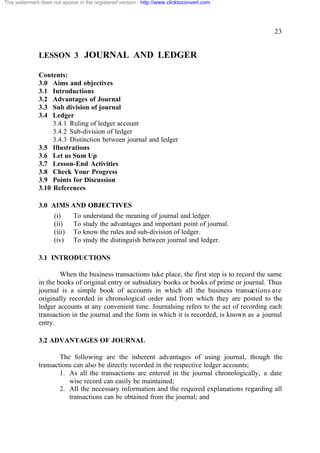
              LESSON 3 JOURNAL AND LEDGER

              Contents:
              3.0 Aims and objectives
              3.1 Introductions
              3.2 Advantages of Journal
              3.3 Sub division of journal
              3.4 Ledger
                   3.4.1 Ruling of ledger account
                   3.4.2 Sub-division of ledger
                   3.4.3 Distinction between journal and ledger
              3.5 Illustrations
              3.6 Let us Sum Up
              3.7 Lesson-End Activities
              3.8 Check Your Progress
              3.9 Points for Discussion
              3.10 References

              3.0 AIMS AND OBJECTIVES
                     (i)     To understand the meaning of journal and ledger.
                     (ii)    To study the advantages and important point of journal.
                     (iii)   To know the rules and sub-division of ledger.
                     (iv)    To study the distinguish between journal and ledger.

              3.1 INTRODUCTIONS

                      When the business transactions take place, the first step is to record the same
              in the books of original entry or subsidiary books or books of prime or journal. Thus
              journal is a simple book of accounts in which all the business transactions are
              originally recorded in chronological order and from which they are posted to the
              ledger accounts at any convenient time. Journalsing refers to the act of recording each
              transaction in the journal and the form in which it is recorded, is known as a journal
              entry.

              3.2 ADVANTAGES OF JOURNAL

                      The following are the inherent advantages of using journal, though the
              transactions can also be directly recorded in the respective ledger accounts;
                      1. As all the transactions are entered in the journal chronologically, a date
                         wise record can easily be maintained;
                      2. All the necessary information and the required explanations regarding all
                         transactions can be obtained from the journal; and
This watermark does not appear in the registered version - http://www.clicktoconvert.com


                                                                                                            24
                       3. Errors can be easily located and prevented by the use of journal or book of
                          prime entry.
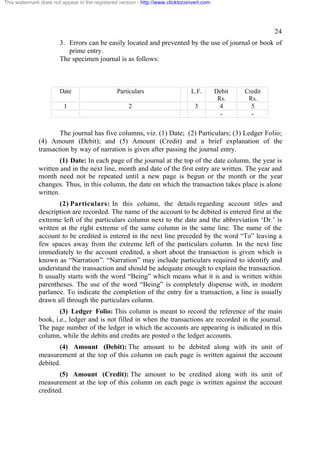
                       The specimen journal is as follows:


                       Date                     Particulars                    L.F.        Debit   Credit
                                                                                            Rs.     Rs.
                         1                           2                           3           4       5
                                                                                             -       -

                      The journal has five columns, viz. (1) Date; (2) Particulars; (3) Ledger Folio;
              (4) Amount (Debit); and (5) Amount (Credit) and a brief explanation of the
              transaction by way of narration is given after passing the journal entry.
                      (1) Date: In each page of the journal at the top of the date column, the year is
              written and in the next line, month and date of the first entry are written. The year and
              month need not be repeated until a new page is begun or the month or the year
              changes. Thus, in this column, the date on which the transaction takes place is alone
              written.
                      (2) Particulars: In this column, the details regarding account titles and
              description are recorded. The name of the account to be debited is entered first at the
              extreme left of the particulars column next to the date and the abbreviation ‘Dr.’ is
              written at the right extreme of the same column in the same line. The name of the
              account to be credited is entered in the next line preceded by the word “To” leaving a
              few spaces away from the extreme left of the particulars column. In the next line
              immediately to the account credited, a short about the transaction is given which is
              known as “Narration”. “Narration” may include particulars required to identify and
              understand the transaction and should be adequate enough to explain the transaction.
              It usually starts with the word “Being” which means what it is and is written within
              parentheses. The use of the word “Being” is completely dispense with, in modern
              parlance. To indicate the completion of the entry for a transaction, a line is usually
              drawn all through the particulars column.
                      (3) Ledger Folio: This column is meant to record the reference of the main
              book, i.e., ledger and is not filled in when the transactions are recorded in the journal.
              The page number of the ledger in which the accounts are appearing is indicated in this
              column, while the debits and credits are posted o the ledger accounts.
                      (4) Amount (Debit): The amount to be debited along with its unit of
              measurement at the top of this column on each page is written against the account
              debited.
                      (5) Amount (Credit): The amount to be credited along with its unit of
              measurement at the top of this column on each page is written against the account
              credited.
This watermark does not appear in the registered version - http://www.clicktoconvert.com


                                                                                                           25
              3.3 SUB-DIVISION OF JOURNAL
                       When innumerable number of transactions takes place, the journal, as the sole
              book of the original entry becomes inadequate. Thus, the number and the number and
              type of journals required are determined by the nature of operations and the volume of
              transactions in a particular business. There are many types of journals and the
              following are the important ones:
                      1. Sales Day Book- to record all credit sales.
                      2. Purchases Day Book- to record all credit purchases.
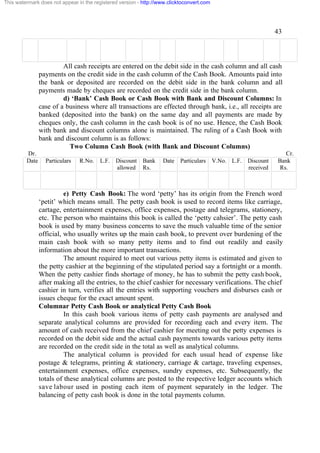
                      3. Cash Book- to record all cash transactions of receipts as well as payments.
                      4. Sales Returns Day Book- to record the return of goods sold to customers
                         on credit.
                      5. Purchases Returns Day Book- to record the return of goods purchased from
                         suppliers on credit.
                      6. Bills Receivable Book- to record the details of all the bills received.
                      7. Bills Payable Book- to record the details of all the bills accepted.
                      8. Journal Proper-to record all residual transactions which do not find place in
                         any of the aforementioned books of original entry.

              3.4 LEDGER
                      Ledger is a main book of account in which various accounts of personal, real
              and nominal nature, are opened and maintained. In journal, as all the business
              transactions are recorded chronologically, it is very difficult to obtain all the
              transactions pertaining to one head of account together at one place. But, the
              preparation of different ledger accounts helps to get a consolidated picture of the
              transactions pertaining to one ledger account at a time. Thus, a ledger account may be
              defined as a summary statement of all the transactions relating to a person, asset,
              expense, or income or gain or loss which have taken place during a specified period
              and shows their net effect ultimately. From the above definition, it is clear that when
              transactions take place, they are first entered in the journal and subsequently posted to
              the concerned accounts in the ledger. Posting refers to the process of entering in the
              ledger the information given in the journal. In the past, the ledgers were kept in bound
              books. But with the passage of time, they became loose-leaf ones and the advantages
              of the same lie in the removal of completed accounts, insertion of new accounts and
              arrangement of accounts in any required manner.

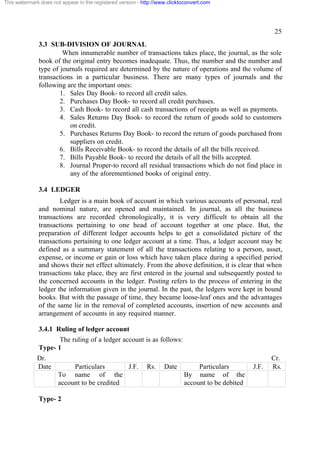
              3.4.1 Ruling of ledger account
                     The ruling of a ledger account is as follows:
              Type- 1
              Dr.                                                                                          Cr.
              Date          Particulars       J.F.          Rs.     Date         Particulars        J.F.   Rs.
                       To name of the                                       By name of the
                       account to be credited                               account to be debited

              Type- 2
This watermark does not appear in the registered version - http://www.clicktoconvert.com


                                                                                                                  26
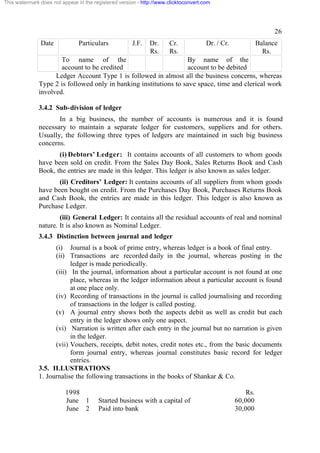
               Date            Particulars            J.F.    Dr.     Cr.             Dr. / Cr.             Balance
                                                              Rs.     Rs.                                     Rs.
                      To name of the                               By name of the
                      account to be credited                       account to be debited
                    Ledger Account Type 1 is followed in almost all the business concerns, whereas
              Type 2 is followed only in banking institutions to save space, time and clerical work
              involved.

              3.4.2 Sub-division of ledger
                     In a big business, the number of accounts is numerous and it is found
              necessary to maintain a separate ledger for customers, suppliers and for others.
              Usually, the following three types of ledgers are maintained in such big business
              concerns.
                     (i) Debtors’ Ledger: It contains accounts of all customers to whom goods
              have been sold on credit. From the Sales Day Book, Sales Returns Book and Cash
              Book, the entries are made in this ledger. This ledger is also known as sales ledger.
                     (ii) Creditors’ Ledger: It contains accounts of all suppliers from whom goods
              have been bought on credit. From the Purchases Day Book, Purchases Returns Book
              and Cash Book, the entries are made in this ledger. This ledger is also known as
              Purchase Ledger.
                      (iii) General Ledger: It contains all the residual accounts of real and nominal
              nature. It is also known as Nominal Ledger.
              3.4.3 Distinction between journal and ledger
                    (i) Journal is a book of prime entry, whereas ledger is a book of final entry.
                    (ii) Transactions are recorded daily in the journal, whereas posting in the
                          ledger is made periodically.
                    (iii) In the journal, information about a particular account is not found at one
                          place, whereas in the ledger information about a particular account is found
                          at one place only.
                    (iv) Recording of transactions in the journal is called journalising and recording
                          of transactions in the ledger is called posting.
                    (v) A journal entry shows both the aspects debit as well as credit but each
                          entry in the ledger shows only one aspect.
                    (vi) Narration is written after each entry in the journal but no narration is given
                          in the ledger.
                    (vii) Vouchers, receipts, debit notes, credit notes etc., from the basic documents
                          form journal entry, whereas journal constitutes basic record for ledger
                          entries.
              3.5. ILLUSTRATIONS
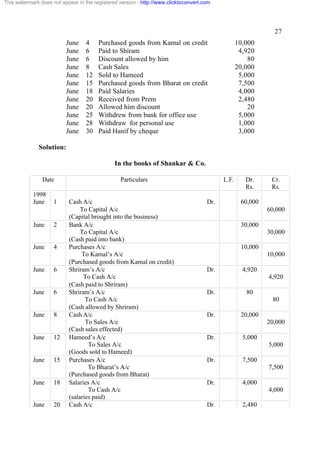
              1. Journalise the following transactions in the books of Shankar & Co.

                          1998                                                                        Rs.
                          June 1        Started business with a capital of                        60,000
                          June 2        Paid into bank                                            30,000
This watermark does not appear in the registered version - http://www.clicktoconvert.com


                                                                                                               27
                          June    4     Purchased goods from Kamal on credit                       10,000
                          June    6     Paid to Shiram                                              4,920
                          June    6     Discount allowed by him                                        80
                          June    8     Cash Sales                                                 20,000
                          June    12    Sold to Hameed                                              5,000
                          June    15    Purchased goods from Bharat on credit                       7,500
                          June    18    Paid Salaries                                               4,000
                          June    20    Received from Prem                                          2,480
                          June    20    Allowed him discount                                           20
                          June    25    Withdrew from bank for office use                           5,000
                          June    28    Withdraw for personal use                                   1,000
                          June    30    Paid Hanif by cheque                                        3,000

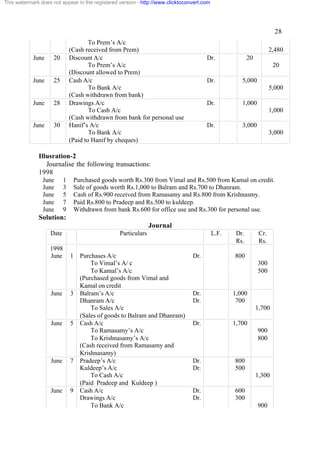
              Solution:

                                               In the books of Shankar & Co.

                Date                             Particulars                                L.F.      Dr.     Cr.
                                                                                                      Rs.     Rs.
            1998
            June     1     Cash A/c                                                   Dr.           60,000
                                To Capital A/c                                                               60,000
                           (Capital brought into the business)
            June     2     Bank A/c                                                                 30,000
                                To Capital A/c                                                               30,000
                           (Cash paid into bank)
            June     4     Purchases A/c                                                            10,000
                                To Kamal’s A/c                                                               10,000
                           (Purchased goods from Kamal on credit)
            June     6     Shriram’s A/c                                              Dr.            4,920
                                 To Cash A/c                                                                 4,920
                           (Cash paid to Shriram)
            June     6     Shriram’s A/c                                              Dr.             80
                                  To Cash A/c                                                                 80
                           (Cash allowed by Shriram)
            June     8     Cash A/c                                                   Dr.           20,000
                                  To Sales A/c                                                               20,000
                           (Cash sales effected)
            June     12    Hameed’s A/c                                               Dr.            5,000
                                   To Sales A/c                                                              5,000
                           (Goods sold to Hameed)
            June     15    Purchases A/c                                              Dr.            7,500
                                   To Bharat’s A/c                                                           7,500
                           (Purchased goods from Bharat)
            June     18    Salaries A/c                                               Dr.            4,000
                                   To Cash A/c                                                               4,000
                           (salaries paid)
            June     20    Cash A/c                                                   Dr.            2,480
This watermark does not appear in the registered version - http://www.clicktoconvert.com


                                                                                                                       28
                                      To Prem’s A/c
                              (Cash received from Prem)                                                              2,480
            June     20       Discount A/c                                            Dr.                20
                                      To Prem’s A/c                                                                   20
                              (Discount allowed to Prem)
            June     25       Cash A/c                                                Dr.            5,000
                                      To Bank A/c                                                                    5,000
                              (Cash withdrawn from bank)
            June     28       Drawings A/c                                            Dr.            1,000
                                      To Cash A/c                                                                    1,000
                              (Cash withdrawn from bank for personal use
            June     30       Hanif’s A/c                                             Dr.            3,000
                                      To Bank A/c                                                                    3,000
                              (Paid to Hanif by cheques)

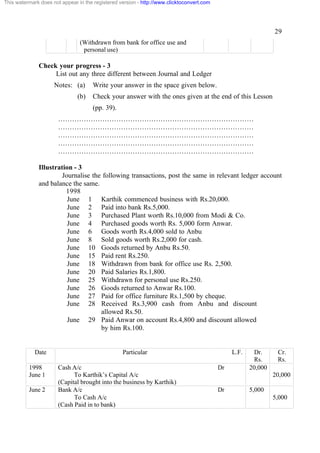
              Illusration-2
                 Journalise the following transactions:
              1998
                June      1    Purchased goods worth Rs.300 from Vimal and Rs.500 from Kamal on credit.
                June      3    Sale of goods worth Rs.1,000 to Balram and Rs.700 to Dhanram.
                June      5    Cash of Rs.900 received from Ramasamy and Rs.800 from Krishnasmy.
                June      7    Paid Rs.800 to Pradeep and Rs.500 to kuldeep.
                June      9    Withdrawn from bank Rs.600 for office use and Rs.300 for personal use.
              Solution:
                                                               Journal
                   Date                          Particulars                               L.F.    Dr.         Cr.
                                                                                                   Rs.         Rs.
                   1998
                   June       1 Purchases A/c                                   Dr.               800
                                    To Vimal’s A/ c                                                           300
                                    To Kamal’s A/c                                                            500
                                (Purchased goods from Vimal and
                                Kamal on credit
                   June       3 Balram’s A/c                                    Dr.               1,000
                                Dhanram A/c                                     Dr.                700
                                    To Sales A/c                                                              1,700
                                (Sales of goods to Balram and Dhanram)
                   June       5 Cash A/c                                        Dr.               1,700
                                    To Ramasamy’s A/c                                                         900
                                    To Krishnasamy’s A/c                                                      800
                                (Cash received from Ramasamy and
                                Krishnasamy)
                   June       7 Pradeep’s A/c                                   Dr.               800
                                Kuldeep’s A/c                                   Dr.               500
                                    To Cash A/c                                                               1,300
                                (Paid Pradeep and Kuldeep )
                   June       9 Cash A/c                                        Dr.               600
                                Drawings A/c                                    Dr.               300
                                    To Bank A/c                                                               900
This watermark does not appear in the registered version - http://www.clicktoconvert.com


                                                                                                                29
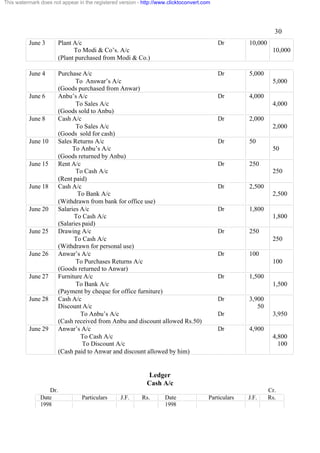
                                (Withdrawn from bank for office use and
                                 personal use)

              Check your progress - 3
                   List out any three different between Journal and Ledger
                     Notes: (a)      Write your answer in the space given below.
                               (b)   Check your answer with the ones given at the end of this Lesson
                                     (pp. 39).
                       …………………………………………………………………………
                       …………………………………………………………………………
                       …………………………………………………………………………
                       …………………………………………………………………………
                       …………………………………………………………………………

              Illustration - 3
                       Journalise the following transactions, post the same in relevant ledger account
              and balance the same.
                        1998
                         June 1 Karthik commenced business with Rs.20,000.
                         June 2 Paid into bank Rs.5,000.
                         June 3 Purchased Plant worth Rs.10,000 from Modi & Co.
                         June 4 Purchased goods worth Rs. 5,000 form Anwar.
                         June 6 Goods worth Rs.4,000 sold to Anbu
                         June 8 Sold goods worth Rs.2,000 for cash.
                         June 10 Goods returned by Anbu Rs.50.
                         June 15 Paid rent Rs.250.
                         June 18 Withdrawn from bank for office use Rs. 2,500.
                         June 20 Paid Salaries Rs.1,800.
                         June 25 Withdrawn for personal use Rs.250.
                         June 26 Goods returned to Anwar Rs.100.
                         June 27 Paid for office furniture Rs.1,500 by cheque.
                         June 28 Received Rs.3,900 cash from Anbu and discount
                                     allowed Rs.50.
                         June 29 Paid Anwar on account Rs.4,800 and discount allowed
                                     by him Rs.100.


             Date                                 Particular                                    L.F.     Dr.     Cr.
                                                                                                         Rs.     Rs.
          1998         Cash A/c                                                            Dr          20,000
          June 1             To Karthik’s Capital A/c                                                           20,000
                       (Capital brought into the business by Karthik)
          June 2       Bank A/c                                                            Dr          5,000
                             To Cash A/c                                                                        5,000
                       (Cash Paid in to bank)
This watermark does not appear in the registered version - http://www.clicktoconvert.com


                                                                                                                30
          June 3        Plant A/c                                                          Dr        10,000
                              To Modi & Co’s. A/c                                                              10,000
                        (Plant purchased from Modi & Co.)

          June 4        Purchase A/c                                                       Dr        5,000
                               To Answar’s A/c                                                                 5,000
                        (Goods purchased from Anwar)
          June 6        Anbu’s A/c                                                         Dr        4,000
                               To Sales A/c                                                                    4,000
                        (Goods sold to Anbu)
          June 8        Cash A/c                                                           Dr        2,000
                               To Sales A/c                                                                    2,000
                        (Goods sold for cash)
          June 10       Sales Returns A/c                                                  Dr        50
                              To Anbu’s A/c                                                                    50
                        (Goods returned by Anbu)
          June 15       Rent A/c                                                           Dr        250
                               To Cash A/c                                                                     250
                        (Rent paid)
          June 18       Cash A/c                                                           Dr        2,500
                                To Bank A/c                                                                    2,500
                        (Withdrawn from bank for office use)
          June 20       Salaries A/c                                                       Dr        1,800
                              To Cash A/c                                                                      1,800
                        (Salaries paid)
          June 25       Drawing A/c                                                        Dr        250
                              To Cash A/c                                                                      250
                        (Withdrawn for personal use)
          June 26       Anwar’s A/c                                                        Dr        100
                               To Purchases Returns A/c                                                        100
                        (Goods returned to Anwar)
          June 27       Furniture A/c                                                      Dr        1,500
                               To Bank A/c                                                                     1,500
                        (Payment by cheque for office furniture)
          June 28       Cash A/c                                                           Dr        3,900
                        Discount A/c                                                                    50
                                 To Anbu’s A/c                                             Dr                  3,950
                        (Cash received from Anbu and discount allowed Rs.50)
          June 29       Anwar’s A/c                                                        Dr        4,900
                                 To Cash A/c                                                                   4,800
                                  To Discount A/c                                                                100
                        (Cash paid to Anwar and discount allowed by him)


                                                            Ledger
                                                            Cash A/c
                  Dr.                                                                                         Cr.
               Date              Particulars     J.F.     Rs.       Date               Particulars   J.F.     Rs.
               1998                                                 1998
This watermark does not appear in the registered version - http://www.clicktoconvert.com


                                                                                                                31
               June      1    To Karthik’s               20,000     June      2    By Bank A/c                5,000
                              Capital A/c
               June     8     To Sales A/c                2,000.    June      15   By Rent A/c                  250
               June     18    To Bank A/ c                 2,500    June      20   By Salaries A/c            1,800

               June     28    To Anbu’s A/c                3,900    June      25   By Drawings A/c              250
                                                                    June      29   By Anwar’s A/c             4,800
                                                                    June      30   By Balance c/d            16,300
                                                         28,400                                              28,400
                July     1    To Balance b/d             16,300

                                                                Bank
                  Dr.                                                                                        Cr.
               Date              Particulars     J.F.     Rs.       Date               Particulars    J.F.   Rs.
               1998                                                 1998
               June      2    To Cash A/c                  5,000    June      18   By Cash A/c                2,500
                                                                    June      27   By Furniture A/c           1,500
                                                                    June      30   By Balance c/d             1,000
                                                           5,000                                              5,000
                July     1    To Balance b/d               1,000

                                                    Karthik’s Capital A/c
                  Dr.                                                                                        Cr.
               Date              Particulars     J.F.     Rs.       Date               Particulars    J.F.   Rs.
               1998                                                 1998
               June     30    To Balance c/d             20,000     June      1    By Cash A/c               20,000
                                                         20,000                                              20,000
                                                                     July     1     By Balance b/d           20,000

                                                            Plant A/c
                  Dr.                                                                                        Cr.
               Date              Particulars     J.F.     Rs.       Date               Particulars    J.F.   Rs.
               1998                                                 1998
               June      3    To Modi &                  10,000     June      30   By Balance c/d            10,000
                              Co’s. A/c
                                                         10,000                                              10,000
                July     1     To Balance c/d            10,000

                                                        Modi & Co’s. A/c
                  Dr.                                                                                        Cr.
               Date              Particulars     J.F.     Rs.       Date               Particulars    J.F.   Rs.
               1998                                                 1998
               June     30    To Balance c/d             10,000     June      3    By Plant A/c              10,000
                                                         10,000                                              10,000
                                                                     July     1     By Balance b/d           10,000

                                                          Purchase A/c
                  Dr.                                                                                        Cr.
               Date              Particulars     J.F.     Rs.       Date               Particulars    J.F.   Rs.
               1998                                                 1998
This watermark does not appear in the registered version - http://www.clicktoconvert.com


                                                                                                                      32
               June      4     To Anwar’s                   5,000       June    30      By Balance C/d              5,000
                               A/c
                                                            5,000                                                   5,000
                July     1     To Balance b/d               5,000


                                                            Anwar’s A/c
                 Dr.                                                                                                 Cr.
              Date               Particulars       J.F.      Rs.         Date               Particulars      J.F.    Rs.
              1998                                                       1998
              June      26    To Purchases                        100    June       4    By Purchases A/c            5,000
                              Returns A/c
              June      29    To Cash A/c                    4,800
              June      29    To Discount A/c                  100
                                                             5,000                                                   5,000
                                                              Sales A/c
                  Dr.                                                                                               Cr.
               Date              Particulars     J.F.       Rs.         Date               Particulars      J.F.    Rs.
               1998                                                     1998
               June      30    To Balance c/d               6,000       June    6       By Anbu’s A/c               4,000
                                                                        June    8       By Cash A/c                 2,000
                                                            6,000                                                   6,000
                                                                        July    1       To Balance b/d              6,000
                                                             Anbu’s A/c
                  Dr.                                                                                               Cr.
               Date              Particulars     J.F.       Rs.         Date               Particulars      J.F.    Rs.
               1998                                                     1998
               June      6     To Sales A/c                 4,000       June    10      By Sales Returns              50
                                                                                        A/c
                                                                        June    28      By Cash A/c                 3,900
                                                                        June    28      By Discount A/c                50

                                                            4,000                                                   4,000
                                                    Purchases Returns A/c
                  Dr.                                                                                               Cr.
               Date              Particulars     J.F.       Rs.         Date               Particulars      J.F.    Rs.
               1998                                                     1998
               June      30    To Balance c/d                 100       June    26      By Anwar’s A/c               100
                                                              100                                                    100
                                                                        July    1        By Balance b/d              100
                                                          Sales Returns A/c
                  Dr.                                                                                               Cr.
               Date              Particulars     J.F.       Rs.         Date               Particulars      J.F.    Rs.
               1998                                                     1998
               June      10    To Anbu’s A/c                   50       June    30      By Balance c/d                50
                                                               50                                                     50
                July     1     To Balance b/d                  50
                                                           Furniture A/c
                  Dr.                                                                                               Cr.
               Date              Particulars     J.F.       Rs.         Date               Particulars      J.F.    Rs.
               1998                                                     1998
This watermark does not appear in the registered version - http://www.clicktoconvert.com


                                                                                                               33
               June     27    To Bank A/c                  1,500    June      30   By Balance c/d            1,500
                                                           1,500                                             1,500
                July     1    To Balance b/d               1,500


                                                          Discount A/c
                  Dr.                                                                                       Cr.
               Date              Particulars     J.F.     Rs.       Date               Particulars   J.F.   Rs.
               1998                                                 1998
               June     28    To Anbu’s A/c                  50     June      29   By Anwar’s A/c              100
               June     30    To Balance c/d                 50                                             10,000
                                                            100      July     1     By Balance b/d             100
                                                                                                                50
                                                          Drawings A/c
                  Dr.                                                                                       Cr.
               Date              Particulars     J.F.     Rs.       Date               Particulars   J.F.   Rs.
               1998                                                 1998
               June     25    To Cash A/c                   250     June      30   By Balance c/d             250
                                                            250                                               250
                July     1    To Balance b/d                250
                                                             Rent A/c
                  Dr.                                                                                       Cr.
               Date              Particulars     J.F.     Rs.       Date               Particulars   J.F.   Rs.
               1998                                                 1998
               June     15    To Cash A/c                   250     June      30   By Balance c/d             250
                                                            250                                               250
                July     1    To Balance b/d                250
                                                           Salaries A/c
                  Dr.                                                                                       Cr.
               Date              Particulars     J.F.     Rs.       Date               Particulars   J.F.   Rs.
               1998                                                 1998
               June     20    To Cash A/c                  1,800    June      30   By Balance c/d            1,800
                                                           1,800                                             1,800
                July     1    To Balance b/d               1,800                                             1,800

              3.6. LET US SUM UP
                      Business transactions are first entered in the records in the form of journal. As
              per the double entry system of accounting we have to classify the accounts and apply
              the double accounting rule accordingly. Then in order to summaries the accounts,
              posting should be done through ledger.

              3.7 Lesson-End Activities
                  1. What is journal?
                  2. What is ledger?
                  3. Distinguish between journal and ledger?
                  4. What are the advantages of journal?
                  5. Journalize the following transactions
This watermark does not appear in the registered version - http://www.clicktoconvert.com


                                                                                                       34

                              2000
                              Jan. 1.          Mohan started business with Rs.25,000
                                   2.          Bought goods from B Rs.20,000
                                   3.          Paid into bank Rs.10,000
                                   4.          Returned goods to B Rs.1000
                                   5.          Sold goods to R Rs.2500
                                   6.          Paid cartage Rs.20
                                   7.          Received dividend on investment Rs.100
                                   8.          Paid salary Rs.250

              3.8 Check your progress answer
                         Your answer may include any five following
                (i)      Journal is a book of prime entry, whereas ledger is a book of final entry.
                (ii)     Transactions are recorded daily in the journal, whereas posting in the ledger is
                         made periodically.
                (iii)    In the journal, information about a particular account is not found at one place,
                         whereas in the ledger information about a particular account is found at one
                         place only.
                (iv)     Recording of transactions in the journal is called journalising and recording of
                         transactions in the ledger is called posting.
                (v)      A journal entry shows both the aspects debit as well as credit but each entry in
                         the ledger shows only one aspect.

              3.9 Points for Discussion
              1. Journalize the following transactions in the books of Mr.Chandran:

                        2001
                        Apr. 1       Started business with cash Rs.40,000 and furniture Rs.10,000.
                             5       Paid tuition fee of the son Rs.1,000
                             8       Paid household expenses Rs.1,400.
                             10      Sold personal car for Rs.18,000 and the amount is brought into
                                     the business.
                              15     Withdrew goods for personal use Rs.2,000.
                              16     Sold goods to Navin on credit Rs.8,000.
                              18     Sold old typewriter Rs.1,000.
                              19     Purchase goods on credit from Ramesh Rs.20,000
                              20     Received interest on investment Rs.6,000.
                              22     Received commission from Manohar Rs.2,000.
                              23     Receive a cheque from Navin Rs.5,000.
                              25     Issued a cheque to Ramesh Rs.12,000
                              26     Received cash from Anand on account Rs.4,000
                              27     Paid cash to Bhagwan on account Rs.1,000.
                              28     Returned goods to Ramesh Rs.1,000.
This watermark does not appear in the registered version - http://www.clicktoconvert.com


                                                                                                    35
                             29      Navin returned goods Rs.500.
                             30      Paid rent Rs.1,000.
                                     Paid salaries Rs.12,000.

              2. Journalise the following transactions in the books of Sabitha and post them in
                 the Ledger:
                        2000
                        Apr. 1 Bought goods for cash                        Rs. 15,000
                                 3 Sold goods for cash                      Rs. 19,000
                                 5 Bought goods on credit from Perara Rs. 12,000
                                 6 Sold goods on credit to Ravindar         Rs. 16,000
                                 8 Received from Ravindar                   Rs. 12,000
                                 10 Paid to Perara                          Rs.     7,500
                                 25 Bought furniture for cash               Rs.     4,500

              3. Enter the following transactions in the journal and ledger of Murali of New Delhi:
                  2001                                                                        Rs.
                  Mar. 1        Murali commenced business with cash                       90,000
                          4     Purchased goods for cash                                   6,000
                          5     Deposited into bank                                       40,000
                          6     Withdrew from bank for office use                          4,500
                          8     Sold goods to Raja                                         4,800
                          12 Purchased goods on credit from Kathar                         1,380
                          15 Received from Raj Rs.4,650 and allowed him discount             150
                          20 Cash sales                                                    7,200
                          28 Paid to Kathar in full settlement                             1,300
                          30 Paid rent                                                       300
                                Paid salary                                                1,600
                                                           st
                                Accounts are closed on 31 March 2001.

              4. Journalise the following transactions and Post them in relevant ledger accounts:
                            1991                                                      Rs.
                             Jan. 1. Bought from Das                               1,000
                             Jan. 2. Sold to Sen                                     400
                             Jan. 3. Sold to Ramesh                                  250
                             Jan. 4. Purchased from Suresh                           200
                             Jan. 5. Sales returns by Sen                             50
                             Jan. 10. Bought from Shyam                              600
                             Jan. 12. Returned to Suresh                             100
                             Jan. 15. Sold to Roy                                    800
                             Jan. 16. Roy returned goods                             200
                             Jan. 17. Sold goods to Ram                              300
                             Jan. 19. Bough from Naresh                              650
                             Jan. 21. Sold to Bhatanger                              750
                             Jan. 22. Returned to Naresh                              50
                             Jan. 25. Bought from Khatju                             850
This watermark does not appear in the registered version - http://www.clicktoconvert.com


                                                                                                 36
                               Jan.    27.   Sold to Dheeran                               260
                               Jan.    29.   Returns from Bhatanger                        100
                               Jan.    30.   Dheeran Returned                               60
                               Jan.    31.   Returns to Khatju                             150
              3.10 References
                         1) Grewal, T.B., Double Entry Book Keeping.
                         2) Gupta & Radhasway – Advanced Accountancy.
This watermark does not appear in the registered version - http://www.clicktoconvert.com


                                                                                           37

              LESSON 4 SUBSIDIARY BOOKS
              Contents:
              4.0 Aims and Objectives
              4.1 Introduction
              4.2 Kinds of subsidiary books
                   4.2.1 Purchases Books
                   4.2.2 Sales Books
                   4.2.3 Purchases Returns Books
                   4.2.4 Sales Returns Books
                   4.2.5 Bills Receivable Books
                   4.2.6 Bills payable Book
                   4.2.7 Journal proper
                   4.2.8 Cash book
              4.3 Basic Document for subsidiary Books
                   4.3.1 Inward Invoice
                   4.3.2 Outward Invoice
                   4.3.3 Debit Note
                   4.3.4 Credit Note
                   4.3.5 Cash Receipts and Vouchers
              4.4 Advantage of subsidiary
                   4.4.1 Division of work
                   4.4.2 Facilitate posting
                   4.4.3 Time Saving
                   4.4.4 Minimum frauds and errors
                   4.4.5 Better information
                   4.4.6 Management decisions facilitated
                   4.4.7 Specialisation and efficiency
              4.5 Imprest system
              4.6 Discounts
                   4.6.1 Trade discount
                   4.6.2 Cash discount
                   4.6.3 Difference between Trade discount and Cash discount
              4.7 Illustrations
              4.8 Let us Sum Up
              4.9 Lesson-End Activities
              4.10 Check your Progress
              4.11 Points for Discussion
              4.12 References

              4.0 AIMS AND OBJECTIVES
                     i.     To know the Meaning of subsidiary books,
                     ii.    To understand the kinds of subsidiary books
This watermark does not appear in the registered version - http://www.clicktoconvert.com


                                                                                                              38
                     iii.   To know the meaning of Trade and Cash discount and also to
                            understand the difference between these two discounts.

              4.1 INTRODUCTION
                      Journal is subdivided into various parts known as subsidiary books or sub-
              divisions of journal. Each one of the subsidiary books is a special journal and a book
              of original or prime entry. There are no journal entries when records are made in
              these books. Recording the transactions in a special journal and then in the ledger
              accounts is the practical system of accounting which is also referred to as English
              System. Though the usual type of journal entries are not passed in these sub-divided
              journals, the double entry principles of accounting are strictly followed.

              4.2 KINDS OF SUBSIDIARY BOOKS

                     There are different types of subsidiary          books which are commonly used in any
              big business concern. They are:
                     4.2.1 Purchases Book                             4.2.2       Sales Book
                     4.2.3 Purchases Returns Books                    4.2.4       Sales Returns Books
                     4.2.5 Bills Receivable Books                     4.2.6       Bills Payable Books
                     4.2.7 Journal Proper                             4.2.8       Cash Book

              4.2.1 Purchases Book
                      This book is used to record all credit purchases made by the business concern
              from its suppliers. This book is also known as ‘Purchases Books’, ‘Purchases Journal’
              or ‘Invoice Book’. It contains five columns, viz., Date, Particulars, Ledger Folio,
              Inward Invoice Number and Amount. Whenever any credit purchase is made, the date
              on which the transaction has taken place is entered in the ‘Date Column’, the name of
              the party from whom the purchase has been made the particulars column, the inward
              invoice number with which the purchase has been made in the ‘inward Invoice
              Number Column’ and the money value of the purchase in the ‘Amount Column’. The
              ‘L.F. Column’ is to record the ledger folio number while posting is made.
                       Posting: The total of purchases book for a specified period is debited to the
              purchases account in the Ledger. The personal accounts are posted by crediting the
              individual accounts.
                                                 Purchases Book
                    Date                     Particulars                   L.F.            Inward    Amount
                                                                                           Invoice    Rs.
                                                                                           Number


              4.2.2 Sales books
                     This book is used to record all credit sales effected by the business to its
              customers. This book is also called as ‘Sales Book’, ‘sales Journal’ or ‘Sold Book’. It
              contains five columns, viz., Date, Particulars, L.F., Outward Invoice Number and
              Amount. When any credit sales is effected, the date is entered in the ‘Date Column’,
              the name of the party to whom the sale is made in the ‘Particulars Column’, the
This watermark does not appear in the registered version - http://www.clicktoconvert.com


                                                                                                             39
              invoice number with which the sales have been effected in the ‘Out-ward Invoice
              Number Column’ and the money value of the sales in the ‘Amount Column’, The LF
              column is entered while posting is effected.
                     Posting: The total of the Sales Book for a specified period is credited to the
              Sales Account in the Ledger. The personal account is posted by debiting the
              individual accounts.
                     The specimen ruling of a Sales Book is as follows:
                                                    Sales Book
                    Date                     Particulars                  L.F.          Outward     Amount
                                                                                        Invoice      Rs.
                                                                                        Number


              4.2.3 Purchases Returns Books
                     This book is used to record all transactions relating to the goods returned to
              suppliers. This book is also known as ‘Purchases Returns journal’ or ‘Returns
              Outward Book’, the specimen ruling of a Purchases Returns Book is given below:
                                           Purchases Returns Book
                     Date                   Name of supplier                 L.F.          Debit    Amount
                                                                                           Note      Rs.


                     The columns in this book are similar to those of Purchases Book except the
              Debit Note Column in which the debit note number is recorded. A debit note
              represents a note sent to the supplier for the value of goods retuned by the business.
              While posting, all the personal accounts are debited in the Ledger and the total of
              Purchases Returns Book is credited to Purchases Returns Account.
              4.2.4 Sales Returns Books
                     This book is used to record all transactions relating to goods returned by
              customers. This book is also known as ‘Sales Return Journal’ or ‘Returns Inwards
              Book’, the specimen ruling of sales returns book is given below:
                                               Sales Returns Book
                      Date                    Name of Customer                   L.F.      Credit   Amount
                                                                                           Note      Rs.


                    The columns in this book are similar to those of Sales Book except the Credit
              Note Column in which the credit note number is recorded. A credit note represents a
              note sent to the customer for the value of the goods returned by him. While posting,
              all the personal accounts are credited in the Ledger and the total of sales returns book
              is debited to Sales Returns Account
              4.2.5 Bills Receivable Book:
                       This book is used to record all the bills received by the business from its
              customers. It contains details regarding the name of the acceptor, date of the bill,
This watermark does not appear in the registered version - http://www.clicktoconvert.com


                                                                                                                  40
              place of payment, term of the bill, due date and the amount of the bill. The specimen
              ruing of a Bills Receivable Book is given below:
                                             Bills Receivable Book
                   Sl. Date of               L.F.     Drawer Acceptor       Term      Due       Rs. Remarks
                   No. Receipt                                                        Date


                     While posting, the individual customers’ accounts will be credited and the total
              of the Bills Receivable Book for a specified period will be debited to the Bills
              Receivable Account in the Ledger.
              4.2.6 Bills Payable Book:
                     This book is used to record all the bills accepted by the business drawn by its
              creditors. It contains details regarding the name of the drawer, payee and date of
              acceptance, due date, place of payment, term and amount of the bill.
                 The specimen ruling of Bills payable Book is given below:
                                               Bills Payable Book
                    Sl.   Date of      Drawer       Payee   L.F   Where     Date of   Term   Due    Rs.   Remar
                    No.   Acceptance                        .     Payable   bill             Date         ks


                     While posting the individual drawer or payee account is debited and the Bills
              payable Account is credited with the total in the Bills Payable Book.

              4.2.7. Journal Proper
                      This book is used to record all the residual transactions which cannot find
              place in any of the subsidiary books. While recording, the entries are made in the
              journal covering both the aspects of the transaction. The following are some of the
              examples of transactions which are entered in this book.
                      1. Opening entries and closing entries.
                      2. Adjusting entries
                      3. Transfer entries from one account to another account.
                      4. Rectification entries.
                      5. Bills of Exchange Entries
                      6. Credit Purchase/sale of an asset other than goods.
              4.2.8 Cash Book
                      Cash Book is a sub-division of Journal recording transactions pertaining to
              cash receipts and payments. Firstly, all cash transactions are recorded in the Cash
              Book wherefrom they are posted subsequently to the respective ledger accounts. The
              Cash Book is maintained in the form of a ledger with the required explanation called
              as narration and hence, it plays a dual role of a journal as well as ledger. All cash
              receipts are recorded on the debit side and all cash payments are recorded on the credit
              side. All cash transactions are recorded chronologically in the Cash Book. The Cash
              Book will always show a debit balance since payments cannot exceed the receipts at
              any time.
This watermark does not appear in the registered version - http://www.clicktoconvert.com


                                                                                                           41
                      Kinds of Cash Book: From the above it can be observed that the Cash Book
              serves as a subsidiary books as well as ledger. Depending upon the nature of business
              and the type of cash transactions, various types of Cash books are used. They are:

                     a) Single Column Cash Book
                     b) Two Column Cash Book or Cash Book with cash and discount columns.
                     c) Three Columnar Cash Book or Cash Book with cash, bank and discount
                     columns.
                     d) ‘Bank’ Cash Book or Cash Book with bank and discount columns.
                     e) Petty Cash Book.
                      a) Single or Simple Column Cash Book :This is the simplest form of Cash
              Book and is used when payments and receipts are mostly in the form of cash and
              where usually no cash discount is allowed or received. But, when transactions
              involving discounts are effected, it is recorded in a separate ledger account. The ruling
              of Single Column Cash Book is as follows:

              Single Column Cash Book
                     Dr.                                                                             Cr.
                     Date     Particulars    R.No. L.F. Rs. Date            Particulars V.No. L.F.   Rs.


                       From the above it can be observed that the Single Column Cash Book is just
              like a ledger account. When cash is received, it is recorded on the debit side, i.e.,
              ‘Receipts Side’ of the Cash Book, with the date on which the transaction is effected,
              in the ‘Date Column’, the name of the party or the head of a nominal account, from
              whom or for which the cash has been received, in the ‘Particulars Column’, the receipt
              number, with which the cash has been received by the cashier, in the ‘R. No. Column
              and the money value of the transaction in the ‘Amount Column’ respectively. The L.F.
              (Ledger Folio) column is for entering the reference ledger folio number when posting
              to the ledger is made.
                       Similarly when payment of cash is made, it is recorded on the credit side, i.e.,
              “Payments Side” of the Cash Book, with the date in the ‘Date Column’, the name of
              the party or head of a nominal account in the ‘Particulars Column’, the voucher
              number in the ‘V. No. Column’, and the money value of the transaction in the
              ‘Amount Column’ respectively. The voucher represents the supporting document for
              all cash payments effected.
                       Positing: Once the Cash Book is entered with all the cash transactions, posting
              of the entries is made to the respective ledger accounts subsequently. For posting,
              from the debit side of the Cash Book, the concerned accounts are credited and from
              the credit side, the concerned accounts are debited.
                        b) Tow Column Cash Book or Cash Book with Cash and Discount
              Columns: This type of Cash Book is used when cash transactions involving discount
              allowed or received are effected. Usually, discount is allowed when payments are
              promptly made by the customers and discount is enjoyed when payments are promptly
              made by the business. In this two column Cash Book, instead of only one column for
This watermark does not appear in the registered version - http://www.clicktoconvert.com


                                                                                                                         42
                cash as in a Single Column Cash Book, one additional column is introduced, viz.,
                ‘Discount Column’. The discounts allowed by the business are entered on the debit
                side and discounts received are entered on the credit side of the Cash Book. The
                discount columns as such cannot be balanced since they are purely memorandum
                columns and will not serve the purpose of a ledger account as cash columns do. To
                know the balance of discount columns, separate ledger accounts, viz., Discount
                Allowed Account and Discount Received Account can be opened. The ruling of a two
                column Cash Book is as follows.
                           Two Column Cash Book (with Cash and Discount Columns)
           Dr.                                                                                              Cr.
           Date     Particulars R.No. L.F. Discount Rs.                Date Particulars V.No. L.F. Discount Rs.
                                           allowed                                                 received


                       Posting: The following points should be kept in mind while posting from the
                Cash Book is effected.
                       1. The opening and closing balances should not be posted.
                       2. From the debit side of the Cash Book, all the concerned accounts are given
                          credit.
                       3. From the credit side of the Cash Book, all the concerned accounts are given
                          debit.
                       4. While posting cash received from a debtor or cash paid to a creditor, due
                          care should be taken to credit the personal account with the amount of both
                          cash and discount allowed or debit the personal account with the amount of
                          both cash and discount received.
                       5. Separate accounts should be opened for discount allowed and discount
                          received. The total of the discount allowed column represents a loss
                          sustained by the business and the same should be debited to discount
                          allowed account by writing ‘To sundries’ in the particulars column. The
                          total of the discount received column represent as gain made by the business
                          and it should be credited to the discount account by writing ‘By Sundries’ in
                          the particulars column.
                         c) Three Columnar Cash Book or Cash Book with Cash, Bank and
                Discount Columns: Nowadays, every businessman invariably has a bank account to
                reap the advantages of safety, convenience, credit facilities and less clerical work.
                Thus, when a business is maintaining a bank account, the transactions can be made
                through cheques. Instead of maintaining the bank account in the ledger, it is found
                more convenient if it is included in the Cash Book as Cash Column. Thus, the three
                column Cash Book is the resultant effect where in addition to cash and discount
                columns, bank column is also included. The ruling of a three columnar cash book is as
                follows:
                      Three Columnar Cash Book (with Cash, Bank and Discount Columns)
         Dr.                                                                                                                   Cr.
         Date    Particulars   R.No.   L.F.   Discount   Cash   Bank   Date   Particulars   V.No.   L.F.   Discount   Cash    Bank
                                              allowed     Rs.   Rs.                                        received    Rs.    Rs.
                                                 Rs.                                                          Rs.
This watermark does not appear in the registered version - http://www.clicktoconvert.com


                                                                                                          43


                         All cash receipts are entered on the debit side in the cash column and all cash
                payments on the credit side in the cash column of the Cash Book. Amounts paid into
                the bank or deposited are recorded on the debit side in the bank column and all
                payments made by cheques are recorded on the credit side in the bank column.
                         d) ‘Bank’ Cash Book or Cash Book with Bank and Discount Columns: In
                case of a business where all transactions are effected through bank, i.e., all receipts are
                banked (deposited into the bank) on the same day and all payments are made by
                cheques only, the cash column in the cash book is of no use. Hence, the Cash Book
                with bank and discount columns alone is maintained. The ruling of a Cash Book with
                bank and discount column is as follows:
                           Two Column Cash Book (with Bank and Discount Columns)
         Dr.                                                                                                 Cr.
         Date     Particulars   R.No.   L.F. Discount      Bank    Date Particulars V.No. L.F. Discount   Bank
                                             allowed       Rs.                                 received    Rs.


                          e) Petty Cash Book: The word ‘petty’ has its origin from the French word
                ‘petit’ which means small. The petty cash book is used to record items like carriage,
                cartage, entertainment expenses, office expenses, postage and telegrams, stationery,
                etc. The person who maintains this book is called the ‘petty cahsier’. The petty cash
                book is used by many business concerns to save the much valuable time of the senior
                official, who usually writes up the main cash book, to prevent over burdening of the
                main cash book with so many petty items and to find out readily and easily
                information about the more important transactions.
                          The amount required to meet out various petty items is estimated and given to
                the petty cashier at the beginning of the stipulated period say a fortnight or a month.
                When the petty cashier finds shortage of money, he has to submit the petty cash book,
                after making all the entries, to the chief cashier for necessary verifications. The chief
                cashier in turn, verifies all the entries with supporting vouchers and disburses cash or
                issues cheque for the exact amount spent.
                Columnar Petty Cash Book or analytical Petty Cash Book
                          In this cash book various items of petty cash payments are analysed and
                separate analytical columns are provided for recording each and every item. The
                amount of cash received from the chief cashier for meeting out the petty expenses is
                recorded on the debit side and the actual cash payments towards various petty items
                are recorded on the credit side in the total as well as analytical columns.
                          The analytical column is provided for each usual head of expense like
                postage & telegrams, printing & stationery, carriage & cartage, traveling expenses,
                entertainment expenses, office expenses, sundry expenses, etc. Subsequently, the
                totals of these analytical columns are posted to the respective ledger accounts which
                save labour used in posting each item of payment separately in the ledger. The
                balancing of petty cash book is done in the total payments column.
This watermark does not appear in the registered version - http://www.clicktoconvert.com


                                                                                                   44
                       Where the debit side (Receipts) exceeds that of the credit side (in the totals
              column-Payments), it represents the unspent balance of cash remaining with the petty
              cashier.


              4.3 BASIC DOCUMENT FOR SUBSIDIARY BOOKS

              4.3.1 Inward Invoice:
                      This is the document sent by the suppliers of goods giving details of goods
              sent, price, value, discount etc. It is the basis for entries in purchases book.
              4.3.2 Outward Invoice:
                      This is a document sent by the firm to the customers, showing the details of
              goods supplied, their price and value, discounts etc., it is the basis for writing sales
              book.
              4.3.3 Debit Note:
                      It is a simple statement sent by a person to another person showing the amount
              debited to the account of the latter along with a brief explanation. The debit notes are
              issued by a trader relating to purchase returns in order to put up his claim for
              abatement of his dues to the other party. Debit notes are serially numbered and are
              similar to invoices although they are usually printed in red ink.
              4.3.4 Credit Note:
                      It is nothing but a statement sent by one person to another person showing the
              amount credited to the account of the latter along with a brief explanation. The credit
              notes are used for sales return in order to intimate related abatement and are similar to
              invoice although they are usually printed in red ink.
              4.3.5Cash Receipts and Vouchers:
                      These are the vouchers and receipts for cash received and paid. Entries in cash
              book are made on the strength of the vouchers and receipts. They are also useful for
              auditing purpose.
              Contra Entries
                        For any single transaction the same account cannot be debited and credited.
              But since cash and bank accounts are maintained in the cash book, the debit and credit
              may be found in the two different accounts in the Cash Book. They are transactions
              which affect both the sides of the Cash Book. For instance, when cash is deposited
              into the bank, bank account should be debited and cash account should be credited.
              Hence, on the debit side of the Cash Book. ‘To Cash’ is written in the particulars
              column and the amount is entered in the bank column. Similarly, on the credit side of
              the Cash Book, ‘By Bank’ is written in the particulars column and the amount is
              entered in the cash column.
                        When cash is withdrawn from the bank, on the debit side of the Cash Book,
              ‘To Bank’ is written in the particulars column and the amount is written in the cash
              column. Likewise, on the credit side of the Cash Book, ‘By
              Cash’ is written in the particulars column and amount is entered in the bank column.
              Therefore, those entries which appear on both the sides of the Cash Book are called
              Contra Entries and they are identified and denoted in the Cash Book itself by writing
              the letter ‘C’ in the Ledger Folio Columns on either side. For these transactions, as
This watermark does not appear in the registered version - http://www.clicktoconvert.com


                                                                                                     45
              double entry procedure is completed in the cash book itself, no further positing is
              made in the ledger.
                       In a three columnar Cash Book, cash and bank columns are balanced as any
              other ledger account and discount columns are imply totaled. To know the balance of
              the discount columns, a separate account, viz., discount account is opened in the
              ledger. While the cash column will always show a debit balance, the bank column
              may show a credit balance at times. The credit balance in the bank column represents
              nothing but bank overdraft.

              4.4 ADVANTAGE OF SUBSIDIARY BOOKS
                    The advantages of maintaining special journals can be summarized as under:
              4.4.1 Division of work
                      The division of journal resulting in division of work ensures more clerks
              working independently in recording original entries in day books.
              4.4.2 Facilitate posting
                      Because the transactions of one nature are recorded at one place, the posting of
              real account is highly facilitated.
              4.4.3 Time Saving
                      Due to division of work, it is possible to perform various accounting processes
              simultaneously. Thus, lesser time is required to complete accounting records.
              4.4.4 Minimum frauds and errors
                      Systematic recording of business transactions in special journals reduces the
              possibility of frauds and errors. It also helps in location of errors, if any.
              4.4.5 Better information
                      A lot of useful data like credit sales, credit purchases, returns etc., is made
              available which is not possible in journal system.
              4.4.6 Management decisions facilitated
                      Since transactions of a similar nature are recorded at one place, the
              management can have the benefit of the trend and distributional pattern in planning
              and making decisions.
              4.4.7 Specialisation and efficiency
                      When the same work is allotted to a particular person over a period of time, he
              acquires full knowledge of it and becomes efficient in handling it. Thus, the
              accounting work will be done efficiently

              4.5 IMPREST SYSTEM
                       In this system, the petty cashier is provided with a sum of cash which is
              termed as ‘float’ after taking into consideration the possible kinds of expenses which
              would be incurred for a specific period, viz., a week or a month. The petty cashier, at
              the end of such period, submits the petty cash book, with all entries passed, to the
              chief cashier. The chief cashier, in turn, will verify all the entries with the supporting
              vouchers and gives the actual amount spent on various petty items. This would bring
              the petty cash balance to the original amount with which he has begun. This system of
              maintaining the original amount of cash as such is known as ‘Imprest System of
              maintaining Petty Cash Book’.
This watermark does not appear in the registered version - http://www.clicktoconvert.com


                                                                                                         46


              4.6. DISCOUNTS
              4.6.1 Trade discount
                      When a customer buys goods regularly or buys large quantity or buys for a
              large amount, the seller is usually inclined to allow a concession in price. He will
              calculate the total price according to the list of catalogue. But after the total is arrived
              at, he will make a deduction 5% or 10% depending upon his business policy. This
              deduction is known as Trade discount.
              4.6.2 Cash Discount
                      An amount which is allowed for the prompt settlement of debt arising out of a
              sale within a specified time and calculated on a percentage basis is known as cash
              discount, i.e., it is always associated with actual payment.

              4.6.3 Difference Between Trade Discount and Cash Discount

                                  Trade discount                            Cash discount

                         It    is    given   by    the It may be allowed by seller to any
                         manufacturer      or     the debtor.
                         wholesaler to a retailer and
                         not to others.

                         It is allowed on a certain It is allowed on payment being
                         quantity being purchased.  made before a certain date.

                         It is a reduction in the It is a reduction in the amount due
                         catalogue price of an article. by a debtor.

                         It is not usually accounted for        This discount must have to be
                         in the books since the net             accounted for in the books since it
                         amount (i.e. after deducting           is deducted from the gross selling
                         discount) is shown.                    price.

                         It is allowed only when there It is allowed only when there is
                         is a sale either cash or credit. cash receipt or cash payment
                                                          including cheques.

                         It is usually given at the same It varies from customer to customer
                         rate which is applicable to all depending on the time and period
                         customers.                      of payment.

                         It is allowed or not allowed           It is allowed only on condition. The
                         according to sales policy              dues should be paid within the
                         followed by a business                 stipulated time. If not, the debtor is
                         concern.                               not eligible for cash discount.
This watermark does not appear in the registered version - http://www.clicktoconvert.com


                                                                                                                       47


              4.7 ILLUSTRATIONS
              Illustration 1
                      Enter the following transactions in the Purchases Book and post the same in
              the relevant ledger accounts.
                          2001                                                                           Rs.
                          Aug.     1      Bought goods from Sivika                                    1,500
                          Aug.     4      Bought goods from Nithi                                     1,000
                          Aug.     8      Bought goods from Abi                                         500


              Solution:
                                                           Purchases Books
                 Date                       Particulars                 L.F.        Inward           Amount
                                                                                    Invoice           Rs.
                                                                                    Number
                 2001
                 Aug. 1          Sivika                                                              1,500
                 Aug. 4          Nithi                                                               1,000
                 Aug. 8          Abi                                                                  500

                                                                                                     3,000

                                                               Ledger
                                                            Purchases A/c
                   Dr.                                                                                          Cr.
                   Date                      Particulars          Rs.      Date        Particulars       Rs.
                   2001                                                    2001
                   Aug. 12          To Sundries                   3,000

              Sivika’s A/c
                  Dr.                                                                                            Cr.
                  Date                     Particulars           Rs.    Date          Particulars            Rs.
                  2001                                                  2001
                                                                        Aug. 1    By Purchase A/c              1,500
              Nithi’s A/c
                   Dr.                                                                                          Cr.
                   Date                   Particulars           Rs. Date              Particulars               Rs.
                   2001                                                2001
                                                                       Aug. 4     By Purchase A/c            1,000
This watermark does not appear in the registered version - http://www.clicktoconvert.com


                                                                                                                           48
              Abi’s A/c
                    Dr.                                                                                              Cr.
                    Date                  Particulars               Rs.       Date            Particulars            Rs.
                    2001                                                     2001
                                                                             Aug. 8        By Purchase A/c           500

              Illustration 2
                       Enter the following transactions in sales Book and post the same in the
              relevant ledger accounts.
                   2002                                                                                        Rs.
                   Aug.     15   Sold goods to Prabu                                                         2,000
                   Aug.     18   Sold goods to Bala                                                          1,500
                   Aug.     22   Sold goods to Mano                                                          1,000


              Solution:
                                                           Sales Book
                     Date                       Particulars                         L.F.      Inward        Amount
                                                                                              Invoice        Rs.
                                                                                              Number
                     2002
                     Aug. 15      Prabu                                                                        2,000
                     Aug. 18      Bala                                                                         1,500
                     Aug. 22      Mano                                                                         1,000


                                                                                                               4,500

              Ledger
                                                              Sales A/c
             Dr.                                                                                                           Cr.
             Date                    Particulars              Rs.          Date               Particulars                  Rs.
             2002                                                         2002
                                                                          Aug. 31     By Sundries                      4,500
                                                           Prabu’s A/c
             Dr.                                                                                                           Cr.
             Date                     Particulars              Rs.         Date               Particulars                  Rs.
             2002                                                         2002
             Aug.15           To Sales A/c                    2,000
This watermark does not appear in the registered version - http://www.clicktoconvert.com


                                                                                                                   49
                                                            Bala’s A/c
              Dr.                                                                                               Cr.
              Date                     Particulars             Rs.     Date                Particulars          Rs.
              2002                                                    2002
              Aug. 18           To Sales A/c                  1,500

                                                          Mano’s A/c
              Dr.                                                                                               Cr.
              Date                     Particulars             Rs.     Date                Particulars          Rs.
              2002                                                    2002
              Aug. 22           To Sales A/c                  1,000

              Illustration 3
                       Enter the following transactions in proper Subsidiary Books and post the
              same in the relevant ledger accounts.
                 2003                                                                                        Rs.
                 Aug.      1      Bought goods from Ganga                                                 2,500
                 Aug.      2      Sold goods to Kaveri                                                    1,500
                 Aug.      5      Yamuna sold goods to us                                                 1,500
                 Aug.      8      Krishna purchased goods from us                                         1,200
                 Aug.      11     Received goods returned by Kaveri                                         150
                 Aug.      13     Returned goods to Ganga                                                   100
                 Aug.      17     Sold goods to Ponni                                                       800
                 Aug.      22     Purchased goods from Sindhu                                               900
                 Aug.      27     Returned goods to Yamuna                                                  150


              Solution:
                                                        Purchases Book
                 Date                           Particulars                        L.F.         Inward    Rs.
                                                                                                Invoice
                                                                                                Number
                 2003
                 Aug. 1         Ganga                                                                     2,500
                 Aug. 5         Yamuna                                                                    1,500
                 Aug. 22        Sindhu                                                                      900
                                                                                                          4,900
                                                           Sales Book
                 Date                           Particulars                        L.F.        Outward    Rs.
                                                                                               Invoice
                                                                                               Number
                 2003
                 Aug. 2         Kavari                                                                    1,500
                 Aug. 8         Krishna                                                                   1,200
                 Aug. 17        Ponni                                                                       800

                                                                                                          3,500
This watermark does not appear in the registered version - http://www.clicktoconvert.com


                                                                                                                50
                                                   Purchases Returns Books
                 Date                       Name of Supplier                       L.F.          Debit    Rs.
                                                                                                 Note
                 2003
                 Aug. 13      Ganga                                                                         100
                 Aug. 27      Yamuna                                                                        150

                                                                                                            250
                                                      Sales Returns Book
                 Date                       Name of Customer                       L.F.          Credit   Rs.
                                                                                                 Note
                 2003
                 Aug. 11      Kaveri                                                                        150
                                                                                                            150
                                                            Ledger
                                                         Purchases A/c
              Dr.                                                                                               Cr.
              Date                     Particulars             Rs.     Date                Particulars          Rs.
              2003                                                    2003
              Aug. 31         To Sundries A/c                4,900
                                                            Sales A/c
              Dr.                                                                                               Cr.
              Date                     Particulars             Rs.     Date                Particulars          Rs.
              2003
                                                                      Aug.31 By Sundries                    3,500
                                                     Purchases Returns A/c
             Dr.                                                                                                  Cr.
             Date                    Particulars              Rs.      Date                Particulars            Rs.
             2003
                                                                     Aug. 31      By Sundries                   250
                                                       Sales Returns A/c
              Dr.                                                                                               Cr.
              Date                     Particulars             Rs.     Date                Particulars          Rs.
              2003
              Aug. 31         To Sundries                      150
                                                          Kaveri’s A/c
            Dr.                                                                                                   Cr.
            Date                     Particulars             Rs.   Date                    Particulars            Rs.
            2003                                                 2003
            Aug. 2          To Sales A/c                   1,500 Aug. 11         By Sales Returns A/c             150
                                                                                 By Balance c/d                 1350
                                                           1,500                                                1,500
            Sept. 1         To Balance b/d                 1,350
This watermark does not appear in the registered version - http://www.clicktoconvert.com


                                                                                                         51
                                                         Krishna’s A/c
            Dr.                                                                                            Cr.
            Date                     Particulars             Rs.   Date                    Particulars     Rs.
            2003                                                 2003
            Aug. 8          To Sales A/c                   1,200 Aug. 31         By Balance c/d          1,200
                                                           1,200                                         1,200
            Sept. 1         To Balance b/d                 1,200
                                                           Ponni’s A/c
            Dr.                                                                                            Cr.
            Date                     Particulars             Rs.   Date                    Particulars     Rs.
            2003                                                 2003
            Aug. 17         To Sales A/c                     800 Aug. 31         By Balance c/d           800
                                                             800                                          800
            Sept. 1         To Balance b/d                   800
                                                          Ganaga’s A/c
            Dr.                                                                                            Cr.
            Date                     Particulars             Rs.   Date                    Particulars     Rs.
            2003                                                 2003
            Aug. 13         To Purchases Returns A/c         100 Aug. 1          By Purchases A/c        2,500
            Aug. 31         To Balance c/d                 2,400
                                                           2,500                                         2,500
                                                                 Sept. 1         By Balance b/d          2,400
                                                         Yamuna’s A/c
            Dr.                                                                                            Cr.
            Date                     Particulars             Rs.   Date                    Particulars     Rs.
            2003                                                 2003
            Aug. 27         To Purchases Returns A/c       1,500 Aug. 5          By Purchases A/c        1,500
            Aug. 31         To Balance c/d                 1,350
                                                           1,500                                         1,500
                                                           1,350 Sept. 1         To Balance b/d          1,350
                                                          Sindhu’s A/c
            Dr.                                                                                            Cr.
            Date                     Particulars             Rs.   Date                    Particulars     Rs.
            2003                                                 2003
            Aug. 31         To Balance c/d                   900 Aug. 22         By Purchases A/c         900
                                                             900                                          900
                                                           1,350 Sept. 1         To Balance b/d           900
              Illustration 4
                 Enter the following transactions in the Bills Receivable Book and post the same in
              the relevant ledger accounts.
                  1998
                  Aug. 1 Received from Kandan a bill duly accepted for Rs.1,500 Payable 3
                               month after date.
                  Aug. 9 Drew a 2 months bills on Velan for Rs.1,200 which was duly
                               accepted and has been discounted.
                  Aug. 19 Kumaran accepted a 3 month bill drawn by us for Rs.1,100
                               payable at Canara Bank, Salem.
This watermark does not appear in the registered version - http://www.clicktoconvert.com


                                                                                                                  52
              Solution:
                                                      Bills Receivable Book
             Sl.    Date of            L.F.    Drawer Acceptor             Term      Due Date       Rs.     Remarks
             No.    Receipt
             1.     Aug. 1, 1998               Self         Kandan         3 mths.   Nov. 4,’98     1,500        -
             2.     Aug. 9,1998                Self         Velan          2 mths.   Oct.12,’98     1,200   Discounted
             3.     Aug. 19,1998               Self         Kumaran        3 mths.   Nov.           1,100        -
                                                                                     22,’98
                                                                                                    3,800
                                                              Ledger
                                                       Bills Receivable A/c
               Dr.                                                                                                Cr.
              Date                 Particulars              Rs.       Date            Particulars                 Rs.
              1998
              Aug. 31        To Sundries                    3,800 Aug. 31         By Balance c/d                3,800

                                                            3,800                                               3,800
              Sept. 1        To Balance b/d                 3,800
                                                            Kandan’s A/c
               Dr.                                                                                               Cr
               Date            Particulars            Rs.          Date               Particulars                Rs.
               1998                                                1998
                                                                  Aug. 1     By Bills Receivable A/c          1,500
                                                             Velan’s A/c
               Dr.                                                                                               Cr
               Date            Particulars            Rs.          Date               Particulars                Rs.
               1998                                                1998
                                                                  Aug. 9     By Bills Receivable A/c          1,200
                                                            Kumaran’s A/c
               Dr.                                                                                               Cr
               Date            Particulars            Rs.      Date                   Particulars                Rs.
               1998                                            1998
                                                              Aug. 19        By Bills Receivable A/c          1,100

              Illustration 5
                 Enter the following in the Bills Payable Book and post them in the ledger.
                   1998
                   Sept. 1      We accept Sundar & Co’s. bill for Rs.1,000,2 months duration
                                payable at Bank of India.
                   Sept. 21 Maduri & Co. drew on us a 3 months bill for Rs.2,050 which we
                                accepted and returned.
                   Sept. 28 Swami’s bill for Rs.1,200 accepted by us, the bill being due
                                after 3 months
This watermark does not appear in the registered version - http://www.clicktoconvert.com


                                                                                                                            53
                                                              Bill Payable Book
        Sl.      Date of            Drawer    Payee    L.F.     Where      Date of bill    Term       Due Date       Rs.     Remarks
       No.     Acceptance                                      Payable
       1.     Sept. 1, 1998     Sundar       Sundar            Bank of    Sept. 1, 1998    2 mth.   Nov. 4, 1998    1,000    -
                                & Co.        & Co.             India
       2.     Sept. 21, 1998    Maduri       Maduri            Bank of    Sept. 21, 1998   3 mth.   Dec. 24, 1998   2,050    Returned
                                & Co.        & Co              India
       3.     Sept. 28, 1998    Swami        Swami             Bank of    Sept. 28, 1998   3 mth.   Dec. 31, 1998   1,200    -
                                                               India
                                                                                                                    4,250
                                                                    Ledger
                                                              Bills Payable A/c
                  Dr                                                                                                  Cr.
                  Date                   Particulars             Rs.     Date                 Particulars             Rs.
                  1998
                  Sept.        30      To Balance c/d          4,250     Sept.      30       By Sundries            4,250
                                                               4,250                                                4,250
                                                                     Oct.     1            By Balance b/d           4,250
                                                            Sundar & Co’s A/c
                    Dr                                                                                               Cr.
                    Date                      Particulars                  Rs.    Date        Particulars            Rs.
                    1998                                                          1998
                    Sept.      1 To Bills Payable A/c      1,000
                                                   Maduri & Co’s A/c
                    Dr                                                                                               Cr.
                    Date            Particulars                            Rs.     Date        Particulars           Rs.
                    1998                                                           1998
                    Sept. 21 To Bills Payable A/c                   2,050
                                                                Swami’s A/c
                    Dr                                                                                               Cr.
                    Date            Particulars                            Rs.     Date        Particulars           Rs.
                    1998                                                           1998
                    Sept. 28 To Bills Payable A/c                        1,200

               Illustration 6
                        Enter the following transactions in a Single Column Cash Book and post the
               same in the relevant ledger accounts.
                      1998                                                                Rs.
                      July       1     Cash on hand                                    2,000
                      July       2     Goods purchased for cash                          700
                      July       3     Paid Carriage Inwards                              70
                      July       4     Cash Sales                                        600
                      July       5     Paid Salaries                                   1,100
                      July       6     Cash received from Shankar                      1,100
                      July      10 Sale of old machinery                                 800
                      July      12 Cash Sales                                            700
This watermark does not appear in the registered version - http://www.clicktoconvert.com


                                                                                                                    54
                        July         14   Goods purchased from Kamal & Co. on credit                     600
                        July         16   Goods sold to Sathyan on credit                                500
                        July         18   Stationery purchased                                           400
                        July         19   Lent to Vignesh                                                120
                        July         20   Received from Dinesh                                           150
                        July         22   Withdrawn from business for private use                        140
                        July         23   Cash Sales                                                     150
                        July         24   Paid fro repairs                                                60
                        July         25   Paid Rent                                                      150
                        July         31   Vignesh repaid his loan                                        120

                Solution
                                                   Single Column Cash Book
        Dr.                                                                                                                Cr.
           Date            Particulars     R.No.    L.F.     Rs.       Date            Particulars   V.No.   L.F.        Rs.
            1998                                                        1998
         July    1    To Balance b/d                        2,000    July    2   By Purchases                             700
                                                                                 A/c(Cash sales
                                                                                 effected)
         July    4    To Sales A/c                            600    July
                      (Cash sales
                      effected)
         July    6    To Shankar’s A/c                      1,100    July    3   By Carriage                               70
                      (Received from                                             Inwards A/c
                      Shankar)                                                   (Carriage
                                                                                 Inwards paid)
         July    10   To Machinery                            800    July    5   By Salaries A/c                         1,100
                      A/c (Sale of old                                           (Salaries padi)
                      machinery)
         July    12   To Sales A/c                            700    July   18   By Stationery                            400
                      (Cash sales                                                A/c (Stationery
                      effected)                                                  bought)
         July    20   To Dinesh’s A/c                         150    July   19   By Vignesh’s                             120
                      (Received from                                             A/c (Lent to
                      Dinesh)                                                    Vignesh)
         July    23   To Sales A/C                            150    July   22   By Drawings                              140
                      (Cash sales                                                A/c (Withdrawn
                      effected)                                                  from business
                                                                                 for private use)
         July    31   To Vignesh;s A/c                        120
                      (Vignesh repaid
                      his loan)
This watermark does not appear in the registered version - http://www.clicktoconvert.com


                                                                                                                  55

                                                                      July    24     By Repairs A/c                       60
                                                                                     (Paid for
                                                                                     repairs)
                                                                      July    25     By Rent A/c                         150
                                                                                     (Rent Paid)
                                                                      July    31     By Balance c/d                     2,880
                                                            5,602                                                       5,620
        Aug.     1 To Balance b/d                          2,880
               Note: The transactions effected on July 14 & 16 represent credit transactions and hence not entered in
                    the Cash Book.
                                                             Ledger
                                                            Sales A/c
                      Dr.                                                                                 Cr.
                      Date              Particulars        Rs.   Date                   Particulars       Rs.
                      1998                                          1998
                      July     31   To Balance c/d       1,450      July      4    By Cash A/c           600
                                                                    July     12    By Cash A/c           700
                                                                    July     23    By Cash A/c           150
                                                         1,450                                          1,450
                                                                Aug. 1             By Balance b/d       1,450
                                                          Purchases A/c
                      Dr.                                                                                 Cr.
                      Date              Particulars        Rs.   Date                   Particulars       Rs.
                      1998                                          1998
                      July      2   To Cash A/c            700      July     31    By Balance c/d        700
                                                           700                                           700
                      Aug.      1   To Balance b/d         700
                                                          Carriage A/c
                      Dr.                                                                                 Cr.
                      Date              Particulars        Rs.   Date                   Particulars       Rs.
                      1998                                          1998
                      July      3   To Cash A/c             70      July     31    By Balance c/d          70
                                                            70                                             70
                      Aug.      1   To Balance b/d          70
                                                           Salaries A/c
                      Dr.                                                                                 Cr.
                      Date              Particulars        Rs.   Date                   Particulars       Rs.
                      1998                                          1998
                      July      5   To Cash A/c          1,100      July     31    By Balance c/d       1,100
                                                         1,100                                          1,100
                      Aug.      1   To Balance b/d       1,100
This watermark does not appear in the registered version - http://www.clicktoconvert.com


                                                                                                         56
                                                         Stationery A/c
                      Dr.                                                                          Cr.
                      Date              Particulars        Rs.   Date                Particulars   Rs.
                      1998                                        1998
                      July     18   To Cash A/c            400    July    31   By Balance c/d      400
                                                           400                                     400
                      Aug.      1   To Balance b/d         400
                                                           Repairs A/c
                      Dr.                                                                          Cr.
                      Date              Particulars        Rs.   Date                Particulars   Rs.
                      1998                                        1998
                      July     24   To Cash A/c             60    July    31   By Balance c/d       60
                                                            60                                      60
                      Aug.      1   To Balance b/d          60
                                                             Rent A/c
                      Dr.                                                                          Cr.
                      Date              Particulars        Rs.   Date                Particulars   Rs.
                      1998                                        1998
                      July     25   To Cash A/c            150    July    31   By Balance c/d      150
                                                           150                                     150
                      Aug.      1   To Balance b/d         150
                                                          Drawings A/c
                      Dr.                                                                          Cr.
                      Date              Particulars        Rs.   Date                Particulars   Rs.
                      1998                                        1998
                      July     22   To Cash A/c            140    July    31   By Balance c/d      140
                                                           140                                     140
                      Aug.      1   To Balance b/d         140
                                                         Machinery A/c
                      Dr.                                                                          Cr.
                      Date              Particulars        Rs.   Date                Particulars   Rs.
                      1998                                        1998
                      July     31   To balance c/d         800    July    10   By Cash A/c         800
                                                           800                                     800
                                                                  Aug.     1   To Balance b/d      800
This watermark does not appear in the registered version - http://www.clicktoconvert.com


                                                                                                            57
                                                         Shankar’s A/c
                      Dr.                                                                             Cr.
                      Date              Particulars        Rs. Date                  Particulars     Rs.
                      1998                                        1998
                      July     31    To Balance c/d      1,100    July     6   By Cash A/c          1,100
                                                         1,100                                     1,1000
                                                                  Aug.     1   By Balance b/d       1,100
                                                         Vignesh’s A/c
                      Dr.                                                                            Cr.
                      Date              Particulars        Rs.   Date                Particulars     Rs.
                      1998                                        1998
                      July     19    To Cash A/c           120    July    31   By Cash A/c           120
                                                           120                                       120
                                                          Dinesh’s A/c
                      Dr.                                                                            Cr.
                      Date              Particulars        Rs.   Date                Particulars     Rs.
                      1998                                       1998
                      July     31    To Balance c/d        150    July    20   By Cash A/c           150
                                                           150                                       150
                                                                 Aug.      1   By Balance b/d        150
              Check your progress 4
                   List out any three different between Trade discount and Cash discount
                     Notes: (a)       Write your answer in the space given below.
                               (b)
                            Check your answer with the ones given at the end of this Lesson
                            (pp. 68).
                       …………………………………………………………………………
                       …………………………………………………………………………
                       …………………………………………………………………………
                       …………………………………………………………………………
                       …………………………………………………………………………
              Illustration 7
                       Enter the following transactions in a two column Cash Book and prepare
              discount account in the ledger
                     1998                                                            Rs.
                     July       1     Cash on Hand                                1,200
                     July       2     Received from X                             3,900
                                      Allowed him discount                          100
                     July       5     Purchased goods for cash                    4,100
                     July       7     Paid to M                                     850
                                      Discount allowed by him                        50
                     July       9     Cash Sales                                  4,900
This watermark does not appear in the registered version - http://www.clicktoconvert.com


                                                                                                                                  58
                               July        11      Withdrew from bank                                                  5,500
                               July        15      Credit purchase from Y                                              3,000
                               July        21      Paid to Y in full settlement                                        2,800
                               July        22      Received from K                                                     1,250
                                                   Allowed him discount                                                   50
                               July        23      Drew Cheque for office use                                            200
                               July        25      Paid office rent                                                      800
                               July        28      Received interest on investments                                    3,000
                               July        31      Paid into bank                                                      3,150

                      Solution
                                     Two Column Cash Book (with Cash and Discount Columns)
    Dr.                                                                                                                                      Cr.
          Date            Particulars    R.No.   L.F.   Discount    Rs.        Date           Particulars      V.No.    L.F.   Discount    Rs.
                                                        allowed                                                                allowed
          1998                                                                 1998
     July        1      To Balance                                  1,200   July      5    By Purchases A/c                                4,100
                        b/d                                                                (Cash Purchases
                                                                                           Made)
     July        2      ToX’s A/c                         100       3,900   July      7    By M’s A/c                            50         850
                        (Amount                                                            (Amount paid to
                        received from                                                      M and discount
                        X and                                                              received)
                        discount
                        allowed)
     July        9      To Sales A/c                                4,900   July      21   By Y’s A/c                            200       2,800
                        (Cash Sales                                                        (Amount paid to
                        effected)                                                          Y and discount
                                                                                           received)
     July        11     To Bank A/c                                 5,500   July      25   By Office Rent                                   800
                        (Withdrawn                                                         A/c (Office rent
                        from bank)                                                         paid)
     July        22     To K A/c                          50        1,250   July      31   By Bank A/c                                     3,150
                        (Amount                                                            (Amount paid into
                        received from                                                      the bank)
                        K and
                        discount
                        allowed)
     July        23     To Bank A/c                                  200    July      31   By Balance c/d                                  8,250
                        (Withdrawn
                        from bank for
                        office use)
     July        28     To Interest on                              3,000
                        investment
                        A/c (Interest
                        received on
                        investments)
                                                          150      19,950                                                        250      19,950

    Aug.         1      To Balance                                  8,250
                        b/d
This watermark does not appear in the registered version - http://www.clicktoconvert.com


                                                                                                             59
                                                              Ledger
                                                           Discount A/c
                      Dr.                                                                             Cr.
                      Date              Particulars        Rs.   Date                Particulars      Rs.
                      1998                                        1998
                      July     30   To Sundries            150    July    31   By Sundries            250
                      July     31   To Balance c/d         100
                                                           250                                        250
                                                                  Aug.     1   By Balance b/d         100
              Illustration 8
                       From the following transactions given below you are require to              prepare three
              columnar Cash Book.
                      1998                                                                             Rs.
                      July     1     Cash on hand                                                     600
                                     Cash at bank                                                   9,670
                      July     2     Received cash from Arul                                        1,900
                                     Allowed him discount                                             100
                      July     4     Paid Azar by cheque                                              800
                                     Discount received                                                 30
                      July     6     Purchased Goods and paid by cheque                             2,100
                      July     8     Deposited with bank                                            2,100
                      July     10 Sold goods to Anil on credit                                      1,100
                      July     12 Sold goods & received payment by cheque                             900
                      July     15 Received a cheque from Anil in full settlement                    1,050
                                     of his account
                      July     17 Withdrawn from bank for office use                                  900
                      July     19 Purchased goods from K& Co.                                       3,000
                      July     19 Paid K & Co. by cheque                                            2,900
                                     Discount received                                                100
                      July     20 Paid telephone charges                                              100
                      July     23 Paid.Ahmad by cheque                                                684
                                     Discount received                                                 16
                      July     24 Cash Sales                                                        1,900
                      July     26 Received cheque from Antony and sent to the                         480
                                     bank
                                     Discount allowed                                                  20
                      July     27 Purchased a new machinery for office use by                       4,000
                                     cehque
                      July     28 Bank intimated that.Antony’s cheque has been
                                     dishonored
                               31 Deposited with bank                                                 600
                      July     31 Bank charges as shown in the pass book                               26
This watermark does not appear in the registered version - http://www.clicktoconvert.com


                                                                                                                                   60
                    Solution:
                                                        Three Columnar Cash Book
              Dr.                                                                                                                          Cr.
       Date              Particulars   L.F.   Discount     Cash      Bank     Date         Particulars R.No.   L.F.   Discount     Cash         Bank
                              R.No.            allowed                                                                received
       1998                                    Rs.         Rs.       Rs.      1998                                      Rs.        Rs.       Rs.

    July       1     To Balance                             600    9,670    July      4   By Azar’s A/c                       30           800
                     b/d
    July       2     To.Arul’s A/c                   100   1,900            July      6   By Purchases A/c                                 2,100
    July       8     To Cash A/c         C                         2,100    July      8   By Bank A/c            C                 2,100
    July      12     To Sales A/c                                  900      July     17   By Cash A/c            C                         900
    July      15     To.Anil’s A/c                    50           1,050    July     19   By Purchase A/c                 100              2,900
    July      17     To Bank A/c         C                  900             July     20   By Telephone                              100
                                                                                          Charges A/c
    July      24     To Sales A/c                          1,900            July     23   By.Ahmad’s A/c                      16           684
    July      26     To.Antony’s                      20           480      July     27           By New                                   4,000
                     A/c                                                                     Machinery A/c
    July      31     To Cash A/c         C                         600      July     28   By.Antony’s A/c                     20           480
                                                                            July     31   By Bank A/c            C                  600
                                                                            July     31   By Bank Charges                                  26
                                                                                          A/c
                                                                            July     31   By Balance c/d                           2,500   2,510
                                                     170   5,300   14,800                                                 166      5,300   14,800

    Aug.       1     To Balance                            2,500   2,510
                     b/d


                    Illustration 9
                             Enter the following transactions is Cash Book with bank and discount
                    columns only, assuming all receipts are banked on the same day and that all payments
                    are made by means of cheques only.
                            1998                                                                Rs.
                            July     1     Bank Balance                                      5,000
                            July     4     Purchased goods for each                          1,600
                            July     5     Sold goods to ‘A’ for cash                        1,300
                            July     10 Received cheque from ‘W’ (in full settlement           378
                                           of Rs.400)
                            July     12 Paid ‘H’                                               375
                                           Discount allowed by him                               25
                            July     13 Received Commission from ‘G ‘                          231
                            July     15 Paid Traveling Expenses to ‘J’                           45
                            July     18 Received for Cash Sales                                245
                            July     19 Paid to ‘S’ for office furniture                       185
                            July     20 Paid Electricity Charges                                 35
                            July     21 Paid Office Rent                                       100
This watermark does not appear in the registered version - http://www.clicktoconvert.com


                                                                                                                               61
                              July       24       Drew self cheque for personal use                                   300
                              July       25       Received from ‘N’                                                   245
                              July                Discount allowed                                                     25
                              July       29       Drew cheque for petty cash                                          190
                              July       30       Drew cheque for salaries                                            360
                              July       31       Paid to ‘M’ (in full settlement of Rs.485)                          450

                     Solution:
                                              Cash Book with Bank and Discount Columns
   Dr.                                                                                                                                    Cr.
         Date           Particulars   R.No.    L.F.   Discounts   Bank        Date           Particulars      V.No.   L.F.   Discount   Bank
                                                         Rs.       Rs.                                                         Rs.       Rs.
   1998                                                                       1998
   July         1     To Balance                                   5,000   July      4    By Purchases A/c                              1,600
                      b/d
   July         5     To Sales A/c                                 1,300   July      12   By ‘H’ A/c                           25         375
   July         10    To ‘W’ A/c                         22         378    July      15   By Travelling                                    45
                                                                                          Expenses A/c
   July         13    To                                            231    July      19   By Office                                       185
                      commission                                                          Furniture A/c
                      A/c
   July         18    To Sales A/c                                  245                   By Electricity                                   35
                                                                                          Charges A/c
   July         25    To ‘N’ A/c                         25         245    July      20   By Office rent                                  100
                                                                                          A/c
                                                                           July      21   By Drawings A/c                                 300
                                                                           July      24   By Petty Cash A/c                               190
                                                                           July      29   By Salaries A/c                                 360
                                                                           July      30   By ‘M’ A/c                           35         450
                                                                           July      31   By Balance c/d                                3,759
                                                                           July      31
                                                         47       7,399                                                        35       7,399

    Aug.        1     To Balance
                      b/d
                     Illustration 10
                              Enter the following transactions in a petty cash book maintained on Imprest
                     System with analytical columns:
                             1998                                                                Rs.
                             July     15 Received from the chief cashier                        250
                             July     16 Bought stamps                                           10
                             July     17 Paid cartage                                            25
                             July     18 Tea and Lunch expenses to customers                     35
                             July     19 Telegram sent                                             5
                             July     20 Paid Taxi Hire                                            8
                             July     21 Purchased envelopes                                       6
                             July     22 Paid for repairs of typewriter                          21
This watermark does not appear in the registered version - http://www.clicktoconvert.com


                                                                                                                             62
                      July             23      Purchased one bottle of ink                                          10
                      July             25      Purchased Clips                                                      10
                      July             27      Paid Railway far to manager                                          30
                      July             31      Paid to Coolie                                                        5
               Solution:
                                                         Analytical Petty Cash Book
   Dr.                                                                                                                                      Cr.
    Cash       Cash        Date        Cr. Particulars    V.No.    Total   Carriage &   Stationery   Travelling    Office    Enter   Postage
   Received    Book                                               Payme     Cartage                  Expenses     Expenses   tainm     &
               Folio                                                nts                                                        ent    Tele-
                                                                                                                             Exps.
                       1998                                        Rs.          Rs.        Rs.          Rs.         Rs.       Rs.


   250                  July      15   To Cash A/c
                       July       16   By Stamps                    10                                                                 10
                                       A/c
                       July       17   By Cartage                   25     25
                                       A/g
                       July       18   By                           35                                                        35
                                       Entertainment
                                       Exps. A/c
                       July       19   By Telegram                  5                                                                   5
                       July       20   By Taxi Hire                 8                                    8
                       July       21   By Envelopes                 6                       6
                       July       22   By Typewriter                21                                               21
                                       Repairs
                       July       23   By Bottle of                 10                     10
                                       ink
                       July       25   By clips                     10                     10
                       July       27   By Railways                  30                                  30
                                       Fare
                       July       31   By Coolie hire               5       5
                                                                   165     30              26           38           21       35       15
                       July       31   By Balance                   85
                                       c/d
         250                                                       250
         85            Aug.       1    To Balance
                                       b/d
         165           Agu.       1    To Cahs A/c


               4.10 LET US SUM UPS
                      Subsidiary books reduce clerical work considerably. Credit purchases, credit
               sales and cash details are frequently needed items which can be known at any time
               with the help of Subsidiary books. Cash discount, importance of cash discount, cash
               bank details can be known at any time with the help of Subsidiary books
This watermark does not appear in the registered version - http://www.clicktoconvert.com


                                                                                                    63
              4.11 Lesson-End Activities:
                   1    What do you understand by Subsidiary books?
                   2    What are the advantages of Subsidiary books?
                   3    Define purchases book and sales book.
                   4    What is journal proper?
                   5    What is petty cash book?
                   6    What are the different kinds of Subsidiary books?
                   7    What do you mean by Cash book?
                   8    What are the kinds of Cash books?
                   9    Define trade discount and cash discounts.
                   10 Distinguish between trade discount and cash discount
                   11 Write short notes on
                        a) Inward invoice b) Outward invoice c) Debit and Credit note
                        d) Contra Entries e) Imprest system.

              4.12 Check your Progress
                       Your answer may include any five the following:

                  1. Trade discount is given by the manufacturer or the wholesaler to a retailer and
                     not to others. Cash discount may be allowed by seller to any debtor.
                  2. Trade discount is allowed on a certain quantity being purchased. Cash discount
                     is allowed on payment being made before a certain date.
                  3. Trade discount is a reduction in the catalogue price of an article. Cash discount
                     is a reduction in the amount due by a debtor.
                  4. Trade discount is not usually accounted for in the books since the net amount
                     (i.e. after deducting discount) is shown. Cash discount must have to b e
                     accounted for in the books since it is deducted from the gross selling price.
                  5. Trade discount is allowed only when there is a sale either cash or credit. Cash
                     discount is allowed only when there is cash receipt or cash payment including
                     cheques.


              4.13 Points for Discussion
                     1. From the following transaction you are require to prepare suitable subsidiary
                           books and post them in the relevant ledger account.

                       2002                                                                  Rs.
                      March         1     Purchased goods from Senthil                     4000
                      March         2     Sold goods to Selvi                              1500
                      March         4     Return goods to Senthil                          1000
                      March         5     Sold goods to Sivika                              500
                      March         6     Goods return by Selvi                             500
                      March         8     Sold goods from Aruna                             400
This watermark does not appear in the registered version - http://www.clicktoconvert.com


                                                                                                    64
                      March        10     Bought goods from Mano                            2500
                      March        12     Bought goods from Sethu                           2800
                      March        15     Goods return to Mano                               500

                     2. From the following transaction you are require to prepare Three    Column
                          Cash book.
                       2000                                                                   Rs.
                     Jan.       1     Cash balance                                          4000
                                      Bank balance                                         25000
                     Jan.       2     Cash sales                                           31000
                     Jan.       8     Cash purchases                                       22000
                     Jan.       15 Purchases of machinery by issue of cheque               10000
                     Jan.       20 Paid into bank                                          15000
                     Jan.       25 Rent paid by the cheque                                  1500
                     Jan.       30 Salary paid                                              2500

              4.14 References
                     1. Gupta R.L. – Advanced Accountancy
                     2. Grwal T.B. – Double Entry Book Keeping.
This watermark does not appear in the registered version - http://www.clicktoconvert.com


                                                                                                     65


              LESSON 5 TRIAL BALANCE

              Contents:
              5.0 Aims and objectives
              5.1 Introduction
              5.2 Meaning and Definition of Trial balance
                   5.2.1 Meaning
                   5.2.2 Definition
              5.3 Objectives of preparing Trial balance
              5.4 Features of Trial balance
              5.5 Limitations of Trial balance
              5.6 Methods of preparing trial balance
                   5.6.1 Total method
                   5.6.2 Balance method
              5.12 Illustrations
              5.13 Let us Sum Up
              5.14 Lesson-End Activities
              5.15 Check Your Progress
              5.16 Points for Discussion
              5.17 References

              5.0 AIMS AND OBJECTIVES
                         i) To study the meaning and definition of Trial balance.
                         ii) To know the objectives, features and limitations of Trail balance.
                         iii) To understand the methods of preparing Trial balance.

              5.1 INTRODUCTION
                       According to the dual aspect concept, the total of debit balance must be equal
              to the credit balance. It is a must that the correctness of posting to the ledger accounts
              and their balances be verified. This is done by preparing a trail balance.

              5.2 MEANING AND DEFINITION
              5.2.1 Meaning
                        Trial balance is a statement prepared with the balances or total of debits and
              credits of all the accounts in the ledger to test the arithmetical accuracy of the ledger
              accounts. As the name indicates it is prepared to check the ledger balances. If the total
              of the debit and credit amount columns of the trail balance are equal, it is assumed that
              the posting to the ledger in terms of debit and credit amounts is accurate. The
              agreement of a trail balance ensure arithmetical accuracy only, A concern can prepare
              trail balance at any time, but its preparation as on the closing date of an accounting
              year is compulsory.
This watermark does not appear in the registered version - http://www.clicktoconvert.com


                                                                                                         66


              5.2.2 Definition
                       According to M.S. Gosav “Trail balance is a statement containing the
              balances of all ledger accounts, as at any given date, arranged in the form of debit and
              credit columns placed side by side and prepared with the object of checking the
              arithmetical accuracy of ledger postings”.

              5.3 OBJECTIVES OF PREPARING A TRAIL BALANCE
                  (i)      It gives the balances of all the accounts of the ledger. The balance of any
                           account can be found from a glance from the trail balance without going
                           through the pages of the ledger.
                  (ii)     It is a check on the accuracy of posting. If the trail balance agrees, it proves:
                           (a) That both the aspects of each transaction are recorded and
                           (b) That the books are arithmetically accurate.
                  (iii)    It facilitates the preparation of profit and loss account and the balance sheet.
                  (iv)     Important conclusions can be derived by comparing the balances of two or
                           more than two years with the help of trail balances of those years.

              5.4 FEATURES OF TRAIL BALANCES

                         The following are the important features of a trail balances:
                   (i)   A trail balance is prepared as on a specified date.
                   (ii) It contains a list of all ledger account including cash account.
                   (iii) It may be prepared with the balances or totals of Ledger accounts.
                   (iv) Total of the debit and credit amount columns of the trail balance must tally.
                   (v) It the debit and credit amounts are equal, we assume that ledger accounts are
                         arithmetically accurate.
                   (vi) Difference in the debit and credit columns points out that some mistakes
                         have been committed.
                   (vii) Tallying of trail balance is not a conclusive profit of accuracy of accounts.

              5.5 LIMITATIONS OF TRAIL BALANCE

                           The following are the important limitations of trail balances:
                   (i)     The trail balance can be prepared only in those concerns where double entry
                           system of book- keeping is adopted. This system is too costly.
                   (ii)    A trail balance is not a conclusive proof of the arithmetical accuracy of the
                           books of account. It the trail balance agrees, it does not mean that now there
                           are absolutely no errors in books. On the other hand, some errors are not
                           disclosed by the trail balance.
                   (iii)   It the trail balance is wrong, the subsequent preparation of Trading, P&L
                           Account and Balance Sheet will not reflect the true picture of the concern.
This watermark does not appear in the registered version - http://www.clicktoconvert.com


                                                                                                       67
              5.6 METHODS OF PREPARING TRAIL BALANCE
                       A trail balance refers to a list of the ledger balances as on a particular date. It
              can be prepared in the following manner:
              5.6.1. Total Method
                       According to this method, debit total and credit total of each account of ledger
              are recorded in the trail balance.
              5.6.2. Balance Method
                       According to this method, only balance of each account of ledger is recorded
              in trail balance. Some accounts may have debit balance and the other may have credit
              balance. All these debit and credit balances are recorded in it. This method is widely
              used.
              Ruling of a trail balance:
                        The following is the form of a trail balance
              Method I: Total Method
                                                        ST’s Books
                                               Trail Balance as on……..
                                                                      Debit Total      Credit Total
                    S.No.         Name of Account            L.F       Amount            Account
                                                                          Rs.                Rs.

              Method II: Balance Method:
                                                    MT’s Books
                                             Trail Balance as on……..
                                                                  Debit                     Credit
                     S.No.         Name of Account      L.F      balance                   balance
                                                                   Rs.                       Rs.

              Note: Accounts of all assets, expenses, losses and drawings are debit balances.
              Accounts of incomes, gains, liabilities and capital are credit balances.
                       Trial balance disclosed some of the errors and does not disclosed some other
              errors. This is given below.
                    A) Trial Balance disclosed by the Errors
                        i) Wrong totaling of subsidiary books
                        ii) Posting of an amount on the wrong side
                        iii) Omission to post an amount into ledger
                        iv) Double posting or omission of posting
                        v) Posting wrong amount
                        vi) Error in balancing
                    B) Trail Balance not disclosed by the Errors
                        i) Error of principle
                        ii) Error of omission
                        iii) Errors of Commission
                        iv) Recording wrong amount in the books of original entry
                        v) Compensating errors
This watermark does not appear in the registered version - http://www.clicktoconvert.com


                                                                                                       68
              Check your progress 5
                   List out any three features of trial balance
                     Notes: (a)      Write your answer in the space given below.
                               (b)   Check your answer with the ones given at the end of this Lesson
                                     (pp. ___ ).
                       …………………………………………………………………………
                       …………………………………………………………………………
                       …………………………………………………………………………
                       …………………………………………………………………………
                       …………………………………………………………………………

              5.7 ILLUSTRATIONS
              Illustration 1
                        From the following transactions, pass journal entries, prepare ledger accounts
              and also prepare Trial Balance under (i) Balance method (ii) Total method.
                                                                            Rs.
                                  1. Anil started business with              8,000
                                  2. Purchased furniture                     1,000
                                  3. Purchased goods                         6,000
                                  4. Sold goods                              7,000
                                  5. Purchased from Raja                     4,000
                                  6. Sold to Somu                            5,000
                                  7. Paid to Raja                            2,500
                                  8. Received from Somu                      3,000
                                  9. Paid rent                                 200
                                  10. Received commission                      100
              Solution
              Journal Entries
                                       Particulars                      L.F       Dr.     Cr.
                      Cash A/c                                   Dr.             8,000 8,000
                          To Capital A/c
                      [Started business]
                      Furniture A/c                              Dr.             1,000
                          To Cash A/c                                                    1,000
                      [Purchased furniture]
                      Purchases A/c                              Dr.             6,000
                                                                                         6,000
                          To Cash A/c
                      [Purchased goods]
                      Cash A/c                                   Dr.             7,000
                          To Sales A/c                                                   7,000
                      [Sold goods for cash]
This watermark does not appear in the registered version - http://www.clicktoconvert.com


                                                                                                            69

                       Purchases A/c                          Dr.                          4,000
                                                                                                    4,000
                           To Raja A/c
                       [Purchased goods]
                       Somu A/c                               Dr.                          5,000
                                                                                                    5,000
                           To Sales A/c
                       [Sold goods on credit]
                       Raja A/c                               Dr.                          2,500
                           To Cash A/c                                                              2,500
                       [Paid cash]
                       Cash A/c                               Dr.                          3,000
                           To Somu A/c                                                              3,000
                       [Received from Somu]
                       Rent A/c                               Dr.                            200
                           To Cash A/c                                                               200
                       [Paid rent]
                       Cash A/c                               Dr.                            100
                           To Commission received A/c                                                100
                       [Received commission]
                                                 Cash Account
                                                  Rs.                                       Rs.
                               To Capital       8,000 By Furniture                         1,000
                               To Sales         7,000 By Purchases                         6,000
                               To Somu          3,000 By Raja                              2,500
                               To Commission     100    By Rent                             200
                                                        By Balance c/d                     8,400
                                                18,100                                     18,100
                               To Balance b/d   8,400
                                                Capital Account
                                                  Rs.                                       Rs.
                               To Balance c/d   8,000 By Cash                              8,000
                                                8,000                                      8,000
                                                        By Balance b/d                     8,000
                                               Furniture Account
                                                  Rs.                                       Rs.
                               To Cash          1,000 By Balance c/d                       1,000
                                                1,000                                      1,000
                               By Balance b/d   1,000
                                               Purchase Account
                                                  Rs.                                       Rs.
                               To Cash          6,000 By Balance c/d                       10,000
                               To Raja          4,000
                                                10,000                                     10,000
                               To Balance b/d   10,000
This watermark does not appear in the registered version - http://www.clicktoconvert.com


                                                                                                      70
                                                         Sales Account
                                                          Rs.                                 Rs.
                                To Balance c/d          12,000 To Cash                       7,000
                                                                To Somu                      5,000
                                                        12,000                               12,000
                                                                By Balance b/d               12,000
                                                         Raja Account
                                                          Rs.                                 Rs.
                                To Cash                 2,500 By Purchase                    4,000
                                To Balance c/d          1,500
                                                        4,000                                4,000
                                                                By Balance b/d               1,500
                                                         Somu Account
                                                          Rs.                                 Rs.
                                To Sales                5,000 By Cash                        3,000
                                                                By Balance c/d               2,000
                                                        5,000                                5,000
                                By Balance b/d          2,000
                                                         Rent Account
                                                          Rs.                                 Rs.
                                To Cash                   200   By Balance c/d                200
                                                          200                                 200
                                To Balance b/d            200

                                       Commission received Account
                                               Rs.                                            Rs.
                           To Balance c/d     100     By Cash                                 100
                                              100                                             100
                                                      By Balance b/d                          100
              I. Balance Method
                                          Trail balance as on…..
                                                         Dr.                           Cr.
                               Cash                        8,400
                               Capital                         -                       8,000
                               Furniture                   1,000                           -
                               Purchases                 10,000                            -
                               Sales                           -                      12,000
                               Raja                            -                       1,500
                               Somu                        2,000                           -
                               Rent                          200                           -
                               Commission received                                       100
                                                         21,600                        21600
This watermark does not appear in the registered version - http://www.clicktoconvert.com


                                                                                                    71
              II. Total Method
                                                Trial balance as on…..
                                                            Dr. (Rs.)   Cr. (Rs.)
                                      Cash                     18,100       9,700
                                      Capital                         -     8,000
                                      Furniture                  1,000            -
                                      Purchases                10,000             -
                                      Sales                           -   12,000
                                      Raja                       2,500      4,000
                                      Somu                       5,000      3,000
                                      Rent                         200            -
                                      Commission received             -       100
                                                               36,800     36,800
              Illustration 2
                       The following Trail balance has been prepared wrongly. You are asked to
              prepare the Trail balance correctly.
                                                              Dr.        Cr.
                                                              Rs.        Rs.
                              Capital                         22,000
                              Stock                                     10,000
                              Debtors                          8,000
                              Creditors                                 12,000
                              Machinery                                 20,000
                              Cash in hand                                2,000
                              Bank overdraft                  14,000
                              Sales returns                               8,000
                              Purchases returns                4,000
                              Misc. expenses                  12,000
                              Sales                                     44,000
                              Purchases                       26,000
                              Wages                           10,000
                              Salaries                                  12,000
                              Prepaid insurances                            200
                              Bills payable                   10,800
                              Outstanding salaries             1,400
                                                    Total   1,08,200 1,08,200
              Solution
                                             Corrected Trial Balance as at….
                                                                   Dr.                     Cr.
                                                                   Rs.                     Rs.
                                  Capital                                                  22,000
                                  Stock                                     10,000
                                  Debtors                                    8,000
                                  Creditors                                                12,000
                                  Machinery                                 20,000
This watermark does not appear in the registered version - http://www.clicktoconvert.com


                                                                                                      72
                                  Cash in hand                               2,000
                                  Bank overdraft                                            14,000
                                  Sales returns                              8,000
                                  Purchases returns                                          4,000
                                  Misc. expenses                            12,000
                                  Sales                                                     44,000
                                  Purchases                                 26,000
                                  Wages                                     10,000
                                  Salaries                                  12,000
                                  Prepaid insurances                           200
                                  Bills payable                                              10,800
                                  Outstanding salaries                                        1,400
                                                       Total   1,08,200                    1,08,200
              Illustration 3
                       A book-keeper submitted to you the following Trail Balance, which he has
              not been able to agree. Rewrite the Trial Balance, correcting the mistakes committed
              by him.
                                                                  Dr.          Cr.
                                                                  Rs.          Rs.
                             Capital                                           15,000
                             Drawings                               3,250
                             Stock (1-1-80)                       17,445
                             Return inwards                                       554
                             Carriage inwards                       1,240
                             Deposit with Anand Gupta                           1,375
                             Return outwards                          840
                             Carriage outwards                                    725
                             Loan to Ashok @ 5% given on                        1,000
                             1-1-80
                             Interest on the above                                 25
                             Rent                                     820
                             Rent outstanding                         130
                             Stock (31-12-1980)                                18,792
                             Purchases                            12,970
                             Debtors                                4,000
                             Goodwill                               1,730
                             Creditors                                          3,000
                             Advertisement expenses                   954
                             Provision for doubtful debts                       1,200
                             Bad debts                                400
                             Patents and patterns                     500
                             Cash                                      62
                             Sales                                             27,914
                             Discount allowed                                     330
                             Wages                                    754
                                                         Total    45,095       69,915
This watermark does not appear in the registered version - http://www.clicktoconvert.com


                                                                                                     73
              Solution
                                   Corrected Trail Balance as at 31st December             1980
                                                                      Dr.                   Cr.
                                                                      Rs.                  Rs.
                                Capital                                                    15,000
                                Drawings                               3,250
                                Stock (1-1-1980)                      17,445
                                Return inwards                            554
                                Carriage inwards                       1,240
                                Deposit with Anand Gupta               1,375
                                Return outwards                                              840
                                Carriage outwards                         725
                                Loan to Ashok @ 5% given on            1,000
                                1-1-80
                                Interest on the above                                         25
                                Rent                                      820
                                Rent outstanding                                             130
                                Purchases                             12,970
                                Debtors                                4,000
                                Goodwill                               1,730
                                Creditors                                                   3,000
                                Advertisement expenses                    954
                                Provision for doubtful debts                                1,200
                                Bad debts                                 400
                                Patents and patterns                      500
                                Cash                                       62
                                Sales                                                      27,914
                                Discount allowed                          330
                                Wages                                     754

                                                                 Total        48,109       48,109
              Note: Closing stock is an adjustment, so it has not been taken in the Trial balance.

              5.8 LET US SUM UP
                       In business, monetary transaction is prepared on the basis of double entry
              system. In double entry system, we find two aspects (Debit and Credit) in each and
              every business transaction. After preparing the ledger account, in order to know the
              arithmetical accuracy trial balance will be prepared. Ledger accounts balances will be
              transferred and finally it should be totaled. The debit and credit balances should be
              equal. If it is equal our accounting is correct. If not, some mistake has been made.
              With the help of trial balance we can find the arithmetical accuracy of accounts
              preparation.
This watermark does not appear in the registered version - http://www.clicktoconvert.com


                                                                                                     74
              5.9 Lesson-End Activities
                   1. What is Trail Balance?
                   2. Explain the meaning and objectives of Trail Balance
                   3. What are the different methods of preparing Trail Balance?
                   4. What are the errors disclosed by Trail Balance?
                   5. Name the errors which do not affect the Tail Balance.
                   6. Draw up a Trail Balance with imaginary figures.

              5.10 Check your progress
              Your answer may include any five of the following:
                  1. A trail balance is prepared as on a specified date.
                  2. It contains a list of all ledger account including cash account.
                  3. It may be prepared with the balances or totals of Ledger accounts.
                  4. Total of the debit and credit amount columns of the trail balance must tally.
                  5. It the debit and credit amounts are equal, we assume that ledger accounts are
                     arithmetically accurate.

              5.11 Points for Discussion
              1. From the following ledger accounts of Sathiya, draw Trail Balance as on 31st
              December 2004.
                                                Rs.                                  Rs.
                    House Property                     45,000 Repairs                       1,200
                    Furniture                            5,000 Rent Received                4,800
                    Utensils                             6,000 Medical Expenses             1,200
                    Ornaments                          25,000 School Free                   1,800
                    Cash                                   630 Conveyance                   1,350
                    Bank Balance:                                 Cosmetics                 1,150
                    Fixed Deposits                     20,000 Interest Received             3,000
                    Savings Bank                         3,500 House Building Loan         20,000
                                                               from Govt.
                    Shares & Govt. Securities          12,000 Interest paid                 1,870
                    Claims against persons               1,500 Municipal Taxes              3,000
                    Salary (Income)                    24,000 Income-tax                    2,500
                    Servants wages                       1,200 Accumulated Fund            88,300
                    Food and Drink                       3,750
                    Dress and Clothing’s                 2,450
This watermark does not appear in the registered version - http://www.clicktoconvert.com


                                                                                                    75
                      2. The following Trail Balance was extracted from the books of a Merchant,
                         although the columns are agreed, yet they are incorrect. You are required to
                         correct and redraft it.
                                                        Dr.                               Cr.
                        Premises                    30,000 Capital                    36,800
                        Machinery                    8,500 Fixtures                    2,800
                        Bad Debts                    1,400 Sales                      52,000
                        Returns Outwards             1,300 Debtors                    30,000
                        Cash                           200 Interest Received           1,300
                        Discount Received            1,500
                        Bank Overdraft               5,000
                        Creditors                   25,000
                        Purchases                   50,000
                                                  1,22,900                          1,22,900
                       3. Mr. Blank, a client of your with whom book-keeping is not a strong point,
                          ask you to audit his accounts for the year ended 31st December 2004, upon
                          which data his Closing Stock was values at Rs.574.

                         As a basis for your audit Blank furnishes you with the following statements:
                                                                    Dr.           Cr.
                                                                    Rs.           Rs.
                               Blank Capital                         -           1,556
                               Blank Drawings                       564             -
                               Leasehold Premises                   741             -
                               Sales                                 -           2,756
                               Due from Customers                    -            530
                               Purchases                           1,268            -
                               Purchases Return                     264             -
                               Loan form Bank                        -            250
                               Creditors                            528             -
                               Trade Expenses                       784             -
                               Cash at Bank                         142             -
                               Bills Payable                        100             -
                               Salaries & Wages                     598             -
                               Stock (1st January)                   -            264
                               Rent, Rates, etc.                    465             -
                               Sales Return                          -             98
                                                                   5,454         5,454
                           If you do not approve this statement, amend it.

                     4. The under mentioned balances were extracted from the books of Mahesh as on
                         31st March 2005. You are asked to prepare a Trail Balance as on that date.
                                                                                  Rs.
                                Capital                                      78,000
                                Stock 1.4.2004                                 5,000
This watermark does not appear in the registered version - http://www.clicktoconvert.com


                                                                                                    76
                                   Leasehold Premises                                      46,000
                                   Furniture & Fittings                                    13,500
                                   Plant & Machinery                                     35,000
                                   Purchases                                             78,900
                                   Sales                                               1,30,620
                                   Discount Received                                        470
                                   Discount Allowed                                           540
                                   Carriage Inwards                                           120
                                   Carriage Outwards                                          230
                                   Returns Inward                                           1,500
                                   Returns Outward                                           380

                                   Wages and Salaries                                      17,680
                                   Rates and Taxes                                          1,370
                                   Rent Received                                              530
                                   Sundry Expenses                                          1,660
                                   Trade Creditors                                         22,760
                                   Book Debts                                              34,000
                                   Drawings                                                 3,000
                                   Bills Payable                                            1,140
                                   Cash in hand                                             1,200
                                   Bank Loan                                                5,800
                                   Closing Stock                                            3,900


              5.12 References
                   1. Grewal T.B. – Double Entry Book Keeping
                   2. Jain & Navamy – Advanced Accountancy.
This watermark does not appear in the registered version - http://www.clicktoconvert.com


                                                                                                  77

                           LESSON 6 MANUFACTURING ACCOUNT
              Contents:
              6.0 Aims and objectives
              6.1 Introduction
              6.2 Meaning of Manufacturing Account
              6.3 Purpose of Manufacturing Account
              6.4 Various items shown in manufacturing account
                   6.4.1 Debit side items
                   6.4.2 Credit side items
              6.5 Specimen of manufacturing account
              6.6 Illustrations
              6.7 Let us Sum Up
              6.8 Lesson-End Activities
              6.9 Check your Progress
              6.10 Points for Discussion
              6.11 References


              6.0 AIMS AND OBJECTIVES
                       i) To know the purpose of preparing Manufacturing account.
                       ii) To identify the items debited and credited in Manufacturing account.
                       iii) To understand the method of preparing Manufacturing account.

              6.1 INTRODUCTION
                       ‘Final Statements’ generally refer to two statement prepared by a business
              concern at the end of every accounting year. They are (I) Income statement and (2)
              Balance sheet. In case of trading concerns these statements are prepared under the
              headings ‘Trading and profit and loss account’ and ‘Balance sheet.’ In case of
              manufacturing concerns these statements are titled ‘Manufacturing, Trading, and
              Profit and Loss Account’ and ‘Balance Sheet.’ In case of Limited companies they are
              called ‘Profit and Loss Account’, ‘Profit and Loss appropriation account’ and ‘Balance
              sheet’.
              6.2 MEANING OF MANUFACTURING ACCOUNT
                       Manufacturing concerns which convert raw material into finished product is
              required to prepare manufacturing account and then prepare trading and profit and loss
              account. This is necessary because they have to ascertain cost of goods manufactured,
              gross profit and net profit.
              6.3 PURPOSE OF MANUFACTURING ACCOUNT
                         The main purpose of manufacturing account is to show:
                         (i)   Cost of goods manufactured; and
This watermark does not appear in the registered version - http://www.clicktoconvert.com


                                                                                                     78
                         (ii) Major items of costs such as raw material consumed, productive wages,
                              direct and indirect expenses of production.

              6.4 VARIOUS ITEMS SHOWN IN MANUFACTURING ACCOUNT

              6.4.1 Debit side items
              (a) Raw material consumed
                       Manufacturing account starts with value of raw materials consumed, i.e.,
              opening stock of raw materials plus Purchases and incidental expenses of purchase
              less closing stock of raw materials.
              (b) Direct wages and expenses
                       Direct wages and direct expenses are debited to manufacturing account.
              These are the wages and expenses directly identifiable with the output produced.
              (c) Indirect factory expenses
                         Expenses like factory rent, salaries, lighting, power, heat and fuel, machinery
              repairs, depreciation and other factory expenses are debited to manufacturing account.
              Total of Raw materials consumed, direct wages, direct expenses and factory expenses
              is the total manufacturing cost.
              (d) Opening work in progress
                      Work-in-progress is the semi finished output. Opening work-in-progress is
              shown on the debit side of manufacturing account. The assumption is that it is
              completed into finished output during the current accounting period.
              (e) Sale of Scrap
                       Scrap can be raw material scrap or indirect material scrap. It may be reduced
              from material cost on debit side. Alternatively it can be shown on credit side of
              manufacturing account, like an income.
              6.4.2 Credit side
              (a) Closing work-in-progress
                         It represents the semi-finished output at the end of the accounting period and
              is credited to manufacturing account.
              (b) Sale of scrap
                         If it is direct material scrap, it can be reduced from raw material on debit
              side. However in the absence of specific details, the amount from sale of scrap can be
              credited to manufacturing account. In that case, whether it is direct material scrap or
              indirect factory material scrap makes no difference.
              (c) Cost of Finished goods manufactured
                        This is the balancing figure in the manufacturing account. It is transferred to
              trading account.
This watermark does not appear in the registered version - http://www.clicktoconvert.com


                                                                                                            79
              Note: The closing work-in-progress and sale of scrap may also be reduced on debit
                    side and then credit side shows the cost of goods manufactured alone. That
                    approach makes the above account look like a cost sheet prepared in cost A/c.

              6.5.SPECIMEN OF MANUFACTURING ACCOUNT IS PRESENTED BELOW

                                      Manufacturing A/c for the year ended……..
                                                         RS.                                                Rs.
              To work-in-progress (opening )                     xxx By Sale of scrap                      xxx
              To Material used                           xxx            By Work-in-progress (closing)      xxx
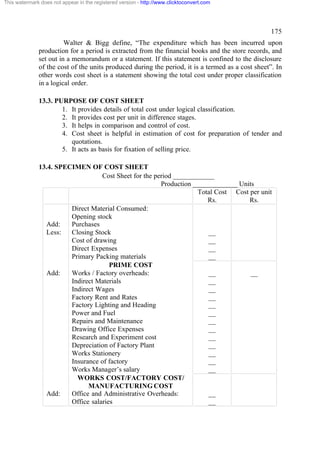
              Opening stock                             xxx             By Cost of goods produced          xxx
                                                                        transferred to trading A/c (bal.
                                                                        fig)
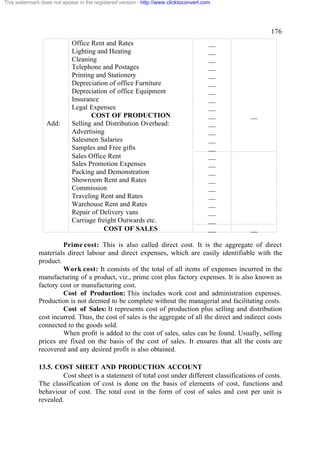
              Add: Purchases                            xxx
                                                         xxx
              Less: Closing stock                        xxx     xxx
              To Wages                                           xxx
              To Factory expenses                                xxx
              To Purchase expenses                               xxx
              To Import duty                                     xxx
              To Carriage inward                                 xxx
              To Depreciation on machinery                       xxx
              To Repairs to Machinery                            xxx
                                                                 xxx                                        xxx

              Check your progress 6
                       List out any three items debited in the manufacturing account
                     Notes: (a)      Write your answer in the space given below.
                               (b)
                            Check your answer with the ones given at the end of this Lesson
                            (pp. 89).
                       …………………………………………………………………………
                       …………………………………………………………………………
                       …………………………………………………………………………
                       …………………………………………………………………………
                       …………………………………………………………………………
This watermark does not appear in the registered version - http://www.clicktoconvert.com


                                                                                                               80


              6.6 ILLUSTRATIONS

              Illustration 1
                         From the following balances in the ledger of Mr. Kannusamy for the year
              ended 31-3-2002, prepare manufacturing account.
                                                                                             Rs.
                               Opening work-in-progress                                     1,00,000
                               Opening stock of raw materials                                 55,000
                               Purchases of raw materials                                  10,00,000
                               Closing stock of raw materials                                 40,000
                               Carriage on purchases                                          10,000
                               Factory wages                                                  50,000
                               Fuel and coal                                                  45,000
                               Factory power                                                  20,000
                               Depreciation on plant and machinery                            15,000
                               Factory supervisor’s salary                                    75,000
                               Closing work-in-progress                                       20,000
              Solution
                  Manufacturing Account of Mr. Kannusamy for the year ended 31-3-2002
                        Particulars                      Rs.          Rs.          Particulars Rs.        Rs.
                To opening work- in- progress                      1,00,000       By Closing work-        20,000
                                                                                  in-progress
                To Raw materials used:                                            By Cost of goods
                Opening stock                            55,000                   Manufactured,        13,10,000
                Add: Purchases                                                    transferred to
                                                                                  trading A/c
                                                                                  (Bal.fig)
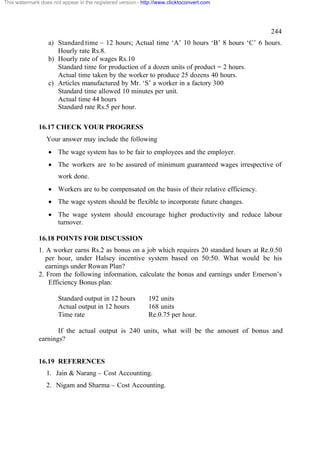
                                                      10,00,000
                                                      10,55,000
                Less: Closing stock                      40,000     10,15,000
                To Carriage on purchase                                10,000
                To Factory wages                                       50,000
                To Fuel and coal                                       45,000
                To Factory power                                       20,000
                To Depreciation on plant and                           15,000
                 machinery
                To Supervisor’s salary                                 75,000
                                                                    13,30,000                          13,30,000
This watermark does not appear in the registered version - http://www.clicktoconvert.com


                                                                                                             81
              Illustration 2 From the following ledger balance of Mr. Senthil prepares
              manufacturing account for the year ended 31-3-2001.
                                                                    Rs.
                           Opening stock:
                                  Raw Materials                      20,000
                                 Work-in-progress                    15,000
                                 Finished goods                      40,000
                           Purchase of raw materials               4,00,000
                           Factory expenses :
                                 Cleaning                               500
                                 Power                                  500
                                 Fuel & coal                          1,000
                           Wages                                      2,000
                           Closing stock:
                                   Raw materials                      5,000
                                   Work-in-progress                   8,000
                                   Finished stock                    12,000
                           Sales                                  10,00,000
              Solution :
                             Manufacturing account for the year ended 31-3-2001
                        Particulars                 Rs.         Rs.           Particulars Rs.        Rs.
                   To opening work- in-                      15,000        By Closing work-in- 8,000
                   progress                                                progress
                   To Raw materials used:                                  By Cost of goods
                   Opening stock                   20,000                  Manufactured,          4,26,000
                                                                           transferred to trading
                                                                           A/c (Bal.Fig)
                   Add: Purchases                4,00,000
                                                 4,20,000
                   Less: Closing stock              5,000      4,15,000
                   To Wages                                       2,000
                   To Factory cleaning                              500
                   To Factory power                                 500
                   To Fuel & coal                                 1,000
                                                               4,34,000                          4,34,000


              6.7 LET US SUM UP
                       Manufacturing concerns converting raw materials into finished products.
              They must know the cost of production for the units produced during a particular
              period. In order to know the cost of production, they prepare manufacturing account.
This watermark does not appear in the registered version - http://www.clicktoconvert.com


                                                                                                    82
              6.8 LESSON – END ACTIVITIES
                 1. Describe to steps involved in to preparation of financial statement of accounts
                    of a firm.
                 2. Describe the contents of manufacturing account.
                 3. Explain to various financial statements.
                 4. What is material consumed?

              6.9 Check your progress
              Your answer may include five of the following
                    1. Raw material consumed
                    2. Direct wages and expenses
                    3. Indirect factory expenses
                    4. Opening work in progress
                    5. Sale of Scrap

              6.10 Points for Discussion
                  1. Following are the ledger balances of M/s.Seetha on 31-12-1999. Prepare her
                  manufacturing account for the year 1999.
                                                                         Rs.
                               Opening stock of raw materials            10,000
                                   Closing stock of raw materials                        15,000
                                   Purchase of raw materials                           1,50,000
                                   Freight on purchases                                     500
                                   Wages (Productive)                                      75,000
                                   Factory cleaning                                         2,000
                                   Factory rent                                             4,000
                                   Factory lighting                                         5,000
                                   Power                                                   20,000
                                   Depreciation: On plant and machinery                    15,000
                                                 On Factory vehicles                        5,000
                                   Factory managers salary                                  2,000
                     2. Following are the ledger balances of Mr. Karthik as on 31-3-2000. Prepare
                        manufacturing account for the year ending on that date.
                                                                             Rs.
                                   Stock of Materials on 1-4-1999                        20,000
                                   Purchase of raw materials                           3,00,000
                                   Stock of raw materials on 31-3-2000                   10,000
                                   Carriage inwards                                       1,500
                                   Factory wages                                           20,000
This watermark does not appear in the registered version - http://www.clicktoconvert.com


                                                                                                   83
                                   Fuel and coal                                           5,000
                                   Factory cleaning                                        4,000
                                   Factory lighting                                        2,000
                                   Depreciation: Factory machinery                         4,000
                                                  Factory building                         2,000
                                   Factory watchman’s salary                               2,000
                                   Stores consumed                                           200
                                   Opening work-in-progress                                5,000
                                   Closing work-in-progress                                2,000


              6.11 References
                   1. Grewal T.B. – Double Entry Book Keeping
                   2. Jain & Navamy – Advanced Accountancy.
This watermark does not appear in the registered version - http://www.clicktoconvert.com


                                                                                                     84

                                    LESSON 7 TRADING ACCOUNT
              Contents:
              7.0 Aims and objectives
              7.1 Introduction
              7.2 Preparation of Trading Account
                   7.2.1 Items shown in trading account: (A) Debit side
                   7.2.1 Items shown in trading account: (B) Credit side
              7.3 Closing entries relating to trading account
              7.4 Specimen of Trading account
              7.5 Illustrations
              7.6 Let us Sum Up
              7.7 Lesson-End Activities
              7.8 Check your Progress
              7.9 Points for Discussion
              7.10 References


              7.0 AIMS AND OBJECTIVES
                         (i) To understand the meaning of trading account
                         (ii) To know the items shown in trading account Debit side and Credit side
                         (iii) To study the Closing entries relating to trading account.

              7.1 INTRODUCTION
                       Trading account is prepared for an accounting period to find the trading
              results or gross margin of the business i.e., the amount of gross profit the concern has
              made from buying and selling during the accounting period. The difference between
              the sales and cost of sales is gross profit. For the purpose of computing cost of sales,
              value of opening stock of finished goods, purchases, direct expenses on purchasing
              and manufacturing are added up and closing stock of finished goods is reduced. The
              balance of this account shows gross profit or loss which is transferred to the profit and
              loss account.

              7.2 PREPARATION OF TRADING ACCOUNT
                     Trading account is a ledger account. It has to be prepared in conformity with
              double entry principles of debit and credit.
              7.2.1 Items shown in trading account: (A) Debit side
                       i) Opening stock: The stock at the beginning of an accounting period is
              called opening stock. This is the closing stock as per the last balance sheet. It includes
              stock of raw materials, work in progress, (where manufacturing account is not
              separately prepared) and finished goods. Trading account starts with opening stock on
              the debit side.
This watermark does not appear in the registered version - http://www.clicktoconvert.com


                                                                                                     85
                       ii) Purchases: The total value of goods purchased after deducting purchase
              returns is debited to trading a/c. Purchases comprise of cash purchases am credit
              purchases.
                       iii) Direct expenses: Direct expenses are incurred to make the goods sale
              able. They include wages, carriage and freight on purchases, import duty, customs
              duty, clearing and forwarding charges manufacturing expenses or factor. Expenses
              (where manufacturing account is not separately prepared). All direct expenses are
              extracted from trial balance.
              7.2.2 Items shown in trading account :(B) Credit side:
                      i) Sales: It includes both credit and cash sales. Sales returns are reduced from
              sales and net sales are shown on the credit side of trading account. The sales and
              returns are extracted from the trial balance.
                      ii) Closing stock: Closing stock is the value of goods remaining at the end of
              the accounting period. It includes closing stock of raw materials, work progress
              (where manufacturing account is not separately prepared) and finished stock. The
              opening stock is ascertained from trial balance but closing stock is not a part of ledger.
              It is separately valued and given as an adjustment. If it is given in trial balance, it is
              after adjustment of opening and closing stocks in purchases. If closing stock is given
              in trial balance it is shown only as current asset in balance sheet. If closing stock is
              given outside trial balance, it is shown on credit side of trading account and also as
              current asset in the balance sheet

              7.3 CLOSING ENTRIES RELATING TO TRADING ACCOUNT
                      The Journal entries given below are passed to transfer the relevant ledger
              account balances to trading account.
              (i) For opening stock, purchases and direct expenses.

                    Trading A/c                                      Dr         xxx
                         To Opening Stock A/c                                              xxx
                        To Purchases (Net) A/c                                             xxx
                          To Direct expenses A/c                                           xxx
                    [Being transfer of trading a/c debit
                    side items]


              (ii) For transfer of sales (after reducing sales returns)

                    Sales (net) A/c                                        Dr     xxx
                        To Trading A/c                                                     xxx
                    [Being transfer of sales to Trading A/c]
This watermark does not appear in the registered version - http://www.clicktoconvert.com


                                                                                                                  86
              (iii) For transferring gross profit
                    Trading A/c                                            Dr     xxx
                         To Profit & Loss A/c                                              xxx
                    [Being transfer of gross profit to P&L A/c]


              (iv) For Gross Loss

                    Profit & Loss A/c                                    Dr       xxx
                         To Trading A/c                                                    xxx
                    [Being transfer of gross loss to P&L A/c]
              Note: Closing stock is taken into account by an adjustment journal entry along with
                      other adjustments.
              7.4 A SPECIMEN OF TRADING ACCOUNT IS SHOWN BELOW
                                    Trading account for the year ended ……………

                       Particulars               Rs.       Rs.             Particulars            Rs.     Rs.

              To Opening stock                             xxx      By Sales                     Xxx
              To purchases                      xxx                 Less: Returns inwards
                                                                              (or)
                                                                                                  xxx
                                                                    Sales Returns
              Less: purchase returns            xxx        xxx                                   -----   xxx
              To Direct expenses:
              Wages                                        xxx      By closing stock
              Fuel & Power                                 xxx      By Gross loss c/d *                  xxx
              Carriage inwards                             xxx      (transferred to profit               xxx
                                                                    and loss A/c)
              Royalty on production                   xxx
              Power                                   xxx
              Coal water, Gas                         xxx
              Import duty                             xxx
              Consumable stores                       xxx
              Factory expenses                        xxx
              To Gross profit c/d                     xxx
               (transferred to profit and            ------                                              ------
                       loss A/c)
                  * Balancing figure will be either gross profit or loss in Trading A/c
              Check your progress 7
              List out closing entries to be passed to transfer relevant ledger balances to trading
              account.
This watermark does not appear in the registered version - http://www.clicktoconvert.com


                                                                                                            87
              Notes:         (a)   Write your answer in the space given below.
                             (b)   Check your answer with the ones given at the end of this Lesson
                                   (pp. 98).
                       …………………………………………………………………………
                       …………………………………………………………………………
                       …………………………………………………………………………
                       …………………………………………………………………………
                       …………………………………………………………………………


              7.5 ILLUSTRATIONS


              Illustration 1
                  Prepare trading account of Sivika for the year ending 31-3-2001.
                                                                                   Rs.
                                         Opening stock                          4,00,000
                                         Purchases                             43,00,000
                                         Carriage inward                        2,60,000
                                         Wages                                  1,20,000
                                         Credit sales                          72,00,000
                                         Cash sales                            18,00,000
                                         Sales returns                         15,80,000
                                         Purchase returns                         50,000
                                         Closing stock                          5,00,000
              Solution:
                               Trading account of Sivika for the year ending 31-3-2001
                 Particulars                Rs.            Rs.        Particulars            Rs.          Rs.
           To Opening Stock                              4,00,000 By Sales;
           To purchase                   43,00,000                Cash sales               18,00,000
           Less: Purchase returns           50,000                Credit sales             72,00,000
                                                        42,50,000
           To wages                                      1,20,000 Less: Sales returns      90,00,000
           To carriage inward                            2,60,000                          15,80,000 74,20,000
           To gross profit                             28,90,000     By Closing stock                   5,00,000
                                                       79,20,000                                       79,20,000
              Illustration-2
This watermark does not appear in the registered version - http://www.clicktoconvert.com


                                                                                                                88
              Prepare Trading Account of Lakshmi for the year ending 31-12-96 from the following
              information:
                                                                                                 Rs.
                                  Opening Stock                                              80,000
                                  Purchases                                                8,60,000
                                  Freight Inward                                           52,000
                                  Wages                                                    24,000
                                  Sales                                                 14,40,000
                                  Purchase Returns                                         10,000
                                  Sales Returns                                            3,16,000
                                  Closing Stock                                            1,00,000
                                  Import duty                                                30,000
              Solution :
                            Trading Account of Lakshmi for the year ending 31-12-1996
                  Particulars               Rs.            Rs.            Particulars              Rs.        Rs.
           To Opening Stock                                80,000 By Sales;                     14,40,000
           To purchase                    8,60,000                Less: Sales returns             3,16,000 11,24,000
           Less: Purchase returns           10,000       8,50,000     By Closing Stock                     1,00,000
           To Freight Inward                               52,000
           To Wages                                        24,000
           To Import duty                                  30,000
           To Gross Profit c/d                          1,88,000
                                                       12,24,000                                           12,24,000
              Illustration -3
                  The following are the balances in the Ledger of Mr. Suresh for the year ended 31st
              March 1996.
                                  Opening Stock:                                                Rs.
                                           Raw materials                                    20,000
                                          Work-in-progress                                   3,000
                                          Finished goods                                    10,800
                                  Purchase of raw materials                                  50,000
                                  Sales                                                    2,40,000
                                  Fuel and coal                                               1,000
                                  Wages                                                      32,000
                                  Factory                                                   40,000
This watermark does not appear in the registered version - http://www.clicktoconvert.com


                                                                                                               89
                                  Office expenses                                          30,000
                                  Depreciation on Plant & Machinery                          3,00
                                  Closing stock:
                                            Raw materials                                  20,000
                                            Work-in-progress                                4,000
                                            Finished goods                                  8,000


              Prepare manufacturing and Trading Account for the year ended 31 March 1996.
              Solution:
                  Manufacturing Trading Account of Mr. Suresh for the year ending 31.3.96
                           Particulars                    Rs.         Rs.              Particulars       Rs.
              To Opening work- in-progress                        3,000         By Closing work- in-   4,000
                                                                                   progress
              To Cost of Materials consumed:                                    By cost of goods
                                                                                  Manufactured
                                                                                   transferred to
                                                                                   Trading A/c         1,25,000
              Opening                                  20,000
              Add: Purchases                           50,000
                                                       70,000
              Less: Closing Stock                      20,000
                                                                  50,000
              To Wages                                            32,000
              To Fuel & Coal                                      1,000
              To Factory expenses                                 40,000
              To Depreciation on plant &                          3,000
                  Machinery
                                                                  1,29,000                             1,29,000
              To Opening Stock of finished                        10,800        BY Sales               2,40,000
                  goods
              To Cost of goods manufacture                        1,25,000      By Closing Stock of    8,000
                                                                                finished goods
              To Gross Profit c/d                                 1,12,200
                                                                  2,48,000                             2,48,000
This watermark does not appear in the registered version - http://www.clicktoconvert.com


                                                                                                   90
              7.6 LET US SUM UP
                      At the end of the year, trading account is prepared to know the trading results.
              Trade expenses like wages, carriage inward are considered. Cost of goods sold is
              compared with sales in order to know gross profit / gross loss.

              7.7 LESSON – END ACTIVITIES
              1. What is trading account? Why it is prepared?
              2. Distinguish between trading and manufacturing account?

              7.8 Check your progress answer
                 Your answer may include the following :
               (i) For opening stock, purchases and direct expenses.
                    Trading A/c                                      Dr         xxx
                          To Opening Stock A/c                                             xxx
                          To Purchases (Net) A/c                                           xxx
                          To Direct expenses A/c                                           xxx
                    [Being transfer of trading a/c debit
                    side items]
              (ii) For transfer of sales (after reducing sales returns)

                    Sales (net) A/c                                        Dr     xxx
                        To Trading A/c                                                     xxx
                    [Being transfer of sales to Trading A/c]

              (iii) For transferring gross profit

                    Trading A/c                                            Dr     xxx
                         To Profit & Loss A/c                                              xxx
                    [Being transfer of gross profit to P&L A/c]
              (iv) For Gross Loss

                    Profit & Loss A/c                                     Dr      xxx
                          To Trading A/c                                                   xxx
                    [Being transfer of gross loss to P&L A/c]
This watermark does not appear in the registered version - http://www.clicktoconvert.com


                                                                                                      91
              7.9 Points for Discussion
                 1. From the under mentioned balances obtained at the end of 31-March 1999,
              prepare Trading account.
                                                                     RS.
                                  Stock of goods on 1-4-98                            12,50,000
                                  Stock of goods on 31-3-99                           23,75,000
                                  Purchases – Cash                                    18,50,000
                                          - Credit                                    41,25,000
                                  Sales – Cash                                        25,50,000
                                          -Credit                                     57,50,000
                                  Returns to suppliers                                      25,000
                                  Returns by customers                                      30,000
                                  Duty and clearing charges                                 50,000

                  2. Prepare trading and manufacturing account of M/s Senthil & Bros from their
                  ledger balances as on 31-3-2000.
                                  Stock as on 1-4-99.                                      RS.
                                  Raw materials                                              10,000
                                  Work-in-progress                                            5,000
                                  Finished goods                                             30,000
                                  Purchase of Raw materials                                2,00,000
                                  Purchase returns                                           10,000
                                  Sales of finished goods                                  5,00,000
                                  Factory lighting                                            5,000
                                  Power                                                       6,000
                                  Coal & Fuel                                                 4,000
                                  Wages                                                      50,000
                                  Depreciation of plant & Machinery                           1,000
                                  Stock as on 31-3-2000
                                  Raw materials                                              5,000
                                  Work-in-progress                                          10,000
                                  Finished goods                                            50,000

              7.10 References
                  1. Jain & Narang – Advanced Accountancy.
                  2. Gupta R.L. – Advanced Accountancy.
This watermark does not appear in the registered version - http://www.clicktoconvert.com


                                                                                                    92

                           LESSON 8 PROFIT AND LOSS ACCOUNT

              Contents:
              8.0 Aims and objectives
              8.1 Introduction
              8.2 Definition
              8.3 Preparation of profit and loss account
                   8.3.1 Debit side
                   8.3.2 Credit side
              8.4 Closing entries for profit and loss account
              8.5 Specimen of profit and loss account
              8.6 Principles of preparing profit of loss Account
              8.6 Illustrations
              8.7 Let us Sum Up
              8.8 Lesson-End Activities
              8.9 Check your Progress
              8.10 Points for Discussion
              8.11 References

              8.0 AIMS AND OBJECTIVES

                         i) To study the definition of profit and loss account.
                         ii) To learn how to prepare the profit and loss account.
                         iii) To understand the Principles of preparing profit of loss Account

              8.1 INTRODUCTIONS
                     Profit and loss account is prepared to ascertain the net profit of the business
              concern for an accounting period

              8.2 DEFINITION
                      In the words of Prof. Carter “Profit and loss account is an account into which
              all gains and losses are collected in order to ascertain the excess of gains over the
              losses or vice versa.”
              8.3 PREPARATION OF PROFIT AND LOSS ACCOUNT
                       Profit and loss account starts with gross profit brought down from trading
              account on the credit side. (If gross loss, on the debit side). All the indirect expenses
              are debited and all the revenue incomes are credited to the profit and loss account and
              then net profit or loss is calculated. If incomes or credit is more, than the expenses or
              debit, the difference is net profit. On the other hand if the expenses or debit side is
              more, the difference is net loss.
              8.3.1Debit side:
                      Expenses shown on the debit side of profit and loss account are classified into
              two categories
                    1. Operating expenses and 2. Non operating expenses
This watermark does not appear in the registered version - http://www.clicktoconvert.com


                                                                                                       93
              (1) Operating expenses: These expenses are incurred to operate the business
              efficiently. They are incurred in running the organisation. Operating expenses include
              administration, selling, distribution, finance, depreciation and maintenance expenses.
              (2) Non operating expenses: These expenses are not directly associate with day today
              operations of the business concern. They include loss on sale of assets, extraordinary
              losses, etc.
              8.3.2 Credit side
                       Gross profit is the first item appearing on the credit side of profit and loss
              account. Other revenue incomes also appear on the credit side of profit and to account.
              The other incomes are classified as operating incomes and non operating incomes.
                      (1) Operating incomes: These incomes are incidental to business and earned
              from usual business carried on by the concern. Examples: discount received,
              commission earned, interest received etc.
                      (2) Non operating incomes: These incomes are not related to the business
              carried on by the firm. Examples are profit on sale of fixed assets, refund of tax etc.

              8.4 CLOSING ENTRIES FOR PROFIT AND LOSS ACCOUNT

              1. For transferring expenses to profit and loss account:

                    Profit and Loss A/c                              Dr         xxx
                          To expenses A/c                                                  xxx
                    [Being transfer of all P&L A/c debit
                    side items]

              2. For transfer of incomes to profit and loss account

                    Incomes A/c                                         Dr      xxx
                         To Profit and Loss A/c                                            xxx
                    [Being transfer of Incomes to P&L A/c]

              3. For net profit:

                     P&L A/c                                         Dr               xxx
                        To Capital A/                                                            xxx
                    [Being net profit credited to capital]


              4. For transfer of Net Loss

                    Capital A/c                                      Dr         xxx
                          To P&L A/c                                                       xxx
                    [Being net loss transferred to capital]
This watermark does not appear in the registered version - http://www.clicktoconvert.com


                                                                                                           94

              Note: In case of partnership, the profit or loss is divided between partners in their
              profit sharing ratio and credited or debited to the individual partners. In case of limited
              companies, Net profit or loss is transferred to the P&L Appropriation A/c for disposal.

              8.5 THE SPECIMEN OF PROFIT AND LOSS ACCOUNT IS SHOWN BELOW
                                    Profit and Loss Account
                                            For the year ended 31st March 2001
                              Particulars                      Rs.                Particulars        Rs.
              To Gross loss b/d                                xxx     By Gross profit b/d           xxx
              To Administration expenses                               By Dividends received         xxx
              Salaries                                        xxx      By Interest received          xxx
              Rent rates & taxes                              xxx      By Discount received          xxx
              Printing & Stationery                           xxx      By commission received        xxx
              Postage and Telegrams                           xxx      By Rent received              xxx
              Telephone expenses                              xxx      By Profit on sale of assets   xxx
              Legal charges                                   xxx      By Sundry revenue receipts    xxx
              Insurance                                       xxx      By Net loss transferred to    xxx
                                                                       capital A/c (Bal. Fig)*
              Audit fees                                      xxx
              Directors fees                                  xxx
              General expenses                                xxx
              To Selling & Distribution Expenses
              Showroom expenses                               xxx
              Advertising                                     xxx
              Commission paid to salesmen                     xxx
              Bad debts                                       xxx
              Provision for doubtful debts                    xxx
              Godown rent                                     xxx
              Carriage outward                                xxx
              Upkeep of delivery vans                         xxx
              To Depreciation and maintenance
              Depreciation                                    xxx
This watermark does not appear in the registered version - http://www.clicktoconvert.com


                                                                                                   95
              Repairs                                         xxx

              To Financial expenses
              Interest ob borrowings                          xxx
              Discount allowed                                xxx
              To abnormal losses
              Loss on sale of assets                          xxx
              To Net profit transferred to capital            xxx
                   A/c (bal.fig)
                                                              xxx                            xxx
              Note: *Either net profit or net loss is the balancing figure in P & L A/c


              The purpose and importance of preparing profit and loss account.
                  To determine the future line of action
                  To know the net profit or loss of business
                  To calculate different ratios
                         To compare the actual performance of the business with the desired one.
              8.6 PRINCIPLES OF PREPARING PROFIT OF LOSS ACCOUNT
                  1. Only revenue receipts should be entered
                  2. Only revenue expenses together with losses should be taken into account.
                  3. Expenses and incomes relating only to the period for which the accounts are
                     being prepared should be considered.
                  4. All expenses and income relating to the period concerned should be considered
                     even if the expense has not yet been paid in cash or the income has not yet been
                     received in cash.
                  5. All personal expenses of the proprietor and pertners must be debited to the
                     capital or drawings accounts and must not be debited to the profit and loss
                     account. Similarly any income has been earned from the private assets of the
                     proprietor which is received by firm, it must be credited to the capital or
                     drawings account.
This watermark does not appear in the registered version - http://www.clicktoconvert.com


                                                                                                              96


              8.6 ILLUSTRATIONS
              Illustration - 1
                      From the following Trial balance of Mr.Gandhi prepare profit and loss account
              for the year ended 31-3-2001.
                                                              Debit     Credit
                                                                           Rs.             Rs.
                          Gross Profit                                               9,50,000
                          Commission received                                              5,000
                          Interest received                                                4,000
                          Sundry income                                                    7,000
                          Depreciation                                   10,000
                          Salaries                                       15,000
                          Discount (Dr)                                   8,000
                          Discount (Cr)                                                12,000
                          Bank charges                                    4,000
                          Audit fees                                      2,000
                          Stationery                                         400

              Solution
                       Profit and Loss Account of Mr.Gandhi for the year ended 31-3-2001
                        Particulars                  Rs.                 Particulars                 Rs.
              To Depreciation                       10,000 By Gross profit b/d                     9,50,000
              To Salaries                           15,000 By Commission received                    5,000
              To Discount                             8,000 By Interest received                     4,000
              To Bank charges                         4,000 By Sundry income                         7,000
              To Audit fees                           2,000 By Discount                             12,000
              To Stationery                             400


              To Net profit c/d                   9,38,600
                                                  9,78,000                                         9,78,000
This watermark does not appear in the registered version - http://www.clicktoconvert.com


                                                                                                        97
              Check your progress 8
                       When you prepare profit and loss account what are the principles to be
              followed.

              Notes: (a)       Write your answer in the space given below.
                        (b)    Check your answer with the ones given at the end of this Lesson
                               (pp. 108).
                       …………………………………………………………………………
                       …………………………………………………………………………
                       …………………………………………………………………………
                       …………………………………………………………………………
                       …………………………………………………………………………

              Illustration – 2
                       From the following balance given below, prepare P&L A/c of M/s. Diviya
              Ltd. for the year ending 31.12.2003.
                                               Rs.                              Rs.
                    Salary & wages                     8,000 Discount allowed                7,000
                    Interest paid                      5,000 Interest received               4,000
                    Commission received              11,000 Traveling                        5,000
                    Commission paid                    6,000 Bad debts                       1,500
                    Advertisement                      5,000 Depreciation                   10,000
                    Printing & Stationery            11,500 Other office expenses            1,200
                    Postage & telegram                 7,500 Sundry income                  15,000
                    Rent & rates                       1,500 Prov. For doubtful debts        2,000
                    Medical fees                       3,000 G.P. for the year             1,25,000

              Solution:
                          Profit & Loss of M/s Diviya Ltd. for the year ending 31.12.2003
                                                           Rs.                                 Rs.
                    To Salary & wages                       8,000 By Gross profit b/d        1,25,000
                    To Interest paid                        5,000 By Commission               11,000
                    To Commission                           6,000 By Interest                  4,000
This watermark does not appear in the registered version - http://www.clicktoconvert.com


                                                                                                         98

                    To Advertisement                        5,000 By Sundry income           15,000
                    To Discount                             7,000 By Prov. for doubtful          2,000
                                                                     debts
                    To Traveling expenses                   5,000
                    To Bad debts                            1,500
                    To Depreciation                        10,000
                    To Printing & Stationery               11,500
                    To Postage & rates                      7,500
                    To Rent & rates                         1,500
                    To Medical fees                         3,000
                    To Other office expenses                1,200
                    To Net profit                          84,800
                                                        1,57,000                            1,57,000

              Illustration 3
                    From the following balance extracted at the close of the year ended 31 Dec.
              1996. Prepare Profit and Loss account of Mr.Santha Kumar as at that date:

                                                     Rs.                                   Rs.
                  Gross profit                      55,000     Repairs                      500
                  Carriage on sales                    500     Telephone expenses           520
                  Office Rent                          500     Interest (Dr.)               480
                  General expenses                     900     Fire insurance premium       900
                  Discount to customers                 360    Bad debts                   2,100
                  Interest from Bank                    200    Apprentice Premium (Cr.)    1,500
                  Traveling expenses                    700    Printing & Stationary       2,500
                  Salaries                              900    Trade expenses                300
                  Commission                            300
This watermark does not appear in the registered version - http://www.clicktoconvert.com


                                                                                                    99
              Solution

                  Profit & Loss Account of Mr. Santha Kumar for the year ending 31-12-1996
                                                         Rs.                                Rs.
                  To Carriage on Sales                      500 By Gross profit b/d        55,000
                  To Office Rent                            500 By Bank Interest              200
                  To General                                900 By Apprentice Premium       1,500
                  To Discount to customers                  360
                  To Traveling expenses                     700
                  To Salaries                               900
                  To Commission                             300
                  To Repairs                                500
                  To Telephone expenses                     520
                  To Interest paid                          480
                  To Fire Insurance Premium                 900
                  To Bad debts                            2,100
                  To Printing & Stationery               2,500
                  To Trade expenses                        300
                  To Net Profit transferred to          45,240
                  Capital A/c
                                                        56,700                             56,700


              8.7 LET US SUM UP
                       Net results of an organisation can be know by preparing profit and loss
              account. All the revenue expenses related to the year whatever it is paid or not and all
              revenue income related to the current year, whatever it is received are not must be take
              into consideration in order to know the exact net result.

              8.8 POINTS FOR DISCUSSION
                       1. What is profit and loss account? What purpose does if serve?
                       2. Distinguish between balance sheet and trial balance?
                       3. What is Profit and Loss account? What purpose does it serve?

                       4. The following are the balance extracted from the Books of Mr.Mano.
                          Prepare Profit and Loss Account for the year ending 31-3-2007.
                                                  Rs.                              Rs.
                       Gross profit              50,000 Commission earned           200
                       Stationery                   150 Taxes                       300
                       Rent                       1,300 Printing charges            750
                       Repairs                      250 Interest on loan            450
This watermark does not appear in the registered version - http://www.clicktoconvert.com


                                                                                                       100

                       General expenses                1,750    Office lighting                  110
                       Salaries                       11,200    Postage expenses                 350
                       Discount allowed                  800    Insurance                        400
                       Travelling expenses             1,000    Discount received                600
                                                                Advertisement                    900
                  5. From the following balance, ascertained from the books of M/r.Senthil and Bros.
                    Prepare profit and Loss account.
                                                                             Rs.           Rs.
                                       Gross Profit                                    75,00
                                       Carriage outwards                  2,000
                                       Interest received                               4,000
                                       Salaries                           5,000
                                       Depreciation                       7,000
                                       Audit fees                         3,000
                                       Discount (Cr)                                   8,000
                                       Discount (Dr)                      6,000
                                       Insurance                          2,000
                                       General expenses                  10,000
                                       Advertisement                     12,000


              8.9 Check your progress answer
                  Your answer may include the following
                  1. Only revenue receipts should be entered
                  2. Only revenue expenses together with losses should be taken into account.
                  3. Expenses and incomes relating only to the period for which the accounts are
                     being prepared should be considered.
                  4. All expenses and income relating to the period concerned should be considered
                     even if the expense has not yet been paid in cash or the income has not yet
                     been received in cash.

              8.10 Points for Discussion
                  1. Explain the principles to be followed for preparatory the Profit & Losses A/c.
                  2. What are the closing entries for Profit & Loss A/c.
This watermark does not appear in the registered version - http://www.clicktoconvert.com


                                                                                           101
              8.11 References
                  1. Gupta R.L. – Advanced Accountancy
                  2. Gupta & Rhasamy – Advanced Accountancy.
This watermark does not appear in the registered version - http://www.clicktoconvert.com


                                                                                                  102


              LESSON 9 BALANCE SHEET


              Contents:
              9.1    Aims and objectives
              9.2    Introduction
              9.3    Title
              9.4    Definitions of Balance sheet
              9.5    Classification of assets and liabilities
                     9.5.1 Assets
                     9.5.2 Liabilities
              9.6    Performa of Balance Sheet
              9.7    Illustrations
              9.8    Adjustments
              9.9    Preparation of Final Accounts
              9.10   Let us Sum Up
              9.11   Lesson-End Activities
              9.12   Check your Progress
              9.13   Points for Discussion
              9.14   References

              9.1 AIMS AND OBJECTIVES
                         i)     To study the meaning and definition of Balance sheet
                         ii)    To study the Classification of assets and liabilities
                         iii)   To know the adjustment of Balance sheet
                         iv)    To learn how to prepare the Balance sheet

              9.2 INTRODUCTION
                      The Balance sheet comprises of lists of assets, liabilities and capital fund on a
              given date. It presents the financial position of a concern as revealed by the
              accounting records. It reflects the assets owned by the concern and the sources of
              funds used in the acquisition of those assets. In simple language it is prepared in such
              a way that true financial position is revealed in a form easily readable and more
              rapidly understood than would be possible from a view of the detailed information
              contained in the accounting records prepared during the currency of the accounting
              period. Balance sheet may be called a ‘statement of equality’ in which equality is
              established by representing values of assets on one side and values of liabilities and
              owners' funds on the other side.
This watermark does not appear in the registered version - http://www.clicktoconvert.com


                                                                                                 103
              9.3 TITLE
                       A Balance sheet is called by different names probably due to lack of
              uniformity in accounting systems. Generally, the following titles are used in respect of
              balance sheet:
                    (i) Balance sheet or General Balance sheet;
                    (ii) Statement of Financial position or condition;
                    (iii) Statement of assets and liabilities;
                    (iv) Statement of assets and liabilities and owners’ fund etc.

                     Of the above, the title 'Balance sheet" is mostly used. The use of this title
              implies that data presented in it have been taken from the balances of accounts,

              9.4 DEFINITIONS OF BALANCE SHEET:
                      “Balance sheet is a ‘Classified summary’ of the ledger balances remaining
              after closing all revenue items into the profit and loss account.” - Cropper.
                     “Balance sheet is a screen picture of the financial position of a going business
              concern at a certain moment” - Francis.
              9.5 CLASSIFICATION OF ASSETS AND LIABILITIES
                        A clear and correct understanding of the basic divisions of the assets and
              liabilities and the meanings which they signify and the amounts which they represent
              is very essential for a proper perspective of financial position of a business concern.
              Assets and liabilities are classified under the following major headings.
              9.5.1 Assets:
                      Assets are properties of business. They are classified on the basis of their
              nature. Different types of assets are as under:
                       (i) Fixed assets: Fixed assets are the assets which are acquired and held
              permanently and used in the business with the objective of making profits. Land and
              building, Plant and machinery, Furniture and Fixtures are examples of fixed assets.
                       (ii) Current assets: The assets of the business in the form of cash, debtors
              bank balances, bill receivable and stock are called current assets as they can be
              realised within an operating cycle of one year to discharge liabilities.
                      (iii) Tangible assets: Tangible assets have definite physical shape or identity
              and existence; they can be seen, felt and have volume such as land, cash, stock etc.
              Thus tangible assets can be both fixed assets and current assets.
                       (iv) Intangible assets: The assets which have no physical shape which
              cannot be seen or felt but have value are called intangible assets. Goodwill, patents,
              trade marks and licences are examples of intangible assets. They are usually classified
              under fixed assets.
                       (v) Fictitious assets: Fictitious assets are not real assets. Past accumulated
              losses or expenses which are capitalised for the time being, expenses for promotion of
This watermark does not appear in the registered version - http://www.clicktoconvert.com


                                                                                                     104
              organisations (preliminary expenses), discount on issue of shares, debit balance of
              profit and loss account etc. are the examples of fictitious assets.
                       (vi) Wasting assets: These assets are also called depleting assets. Assets such
              as mines, Timber forests, quarries etc. which become exhausted in value by way of
              excavation of the minerals, cutting of wood etc. are known as wasting assets. Such
              assets are usually natural resources with physical limitations.
                           (vii) Contingent assets: Contingent assets are assets, the existence, value
              possession of which is based on happening or otherwise of specific events. For
              example, if a business firm has filed a suit for a particular property now in possession
              of other persons, the firm will get the property if the suit is decided in its favour. Till
              the suit is decided, it is a contingent asset.
              9.5.2 Liabilities
                        A liability is an amount which a business firm is ‘liable to pay’ legally. All
              the amounts which are claims by outsiders on the assets of the business are known as
              liabilities. They are credit balances in the ledger. Liabilities are classified into bur
              categories as given below.
                       (1) Owner's capital: Capital is the amount contributed by the owners of the
              business. In addition to initial capital introduced, proprietors may introduce additional
              capital and withdraw some amounts from business over a period of time. Owner’s
              capital is also called ‘net worth’. Net worth is the total fund of proprietors on a
              particulars date. It consists of capital, profits and interest on capital subject to
              reduction of drawings and interest on drawings.
                      In case of limited companies, capital refers to capital subscribed by
              shareholders. Net worth refers to paid up equity capital plus reserves and profits,
              minus losses.
                      (2) Long term Liabilities: Liabilities repayable after specific duration of
              long period of time are called long term liabilities. They do not become due for
              payment in the ordinary ‘operating cycle’ of business or within a short period of lime.
              Examples are long term loans and debentures. Long term liabilities may be secured or
              unsecured, though usually they are secured.
                         (3) Current liabilities: Liabilities which are repayable during the operating
              cycle of business, usually within a year, are called short term liabilities or current
              liabilities. They are paid out of current assets or by the creation of other current
              liabilities. Examples of current liabilities are trade creditors, bills payable, outstanding
              expenses, bank overdraft, taxes payable and dividends payable.
                       (4) Contingent liabilities: Contingent liabilities will result into liabilities
              only if certain events happen. Examples are:
                      Bills discounted and endorsed which may be dishonoured, unpaid calls on
              investments.
This watermark does not appear in the registered version - http://www.clicktoconvert.com


                                                                                                        105

              9.6 PRFORMA OF BALANCE SHEET
                                                 Balance Sheet as on ………

                          Liabilities                            Rs.             Assets           Rs.
              Capital                                  xxx              Fixed assets              xxx
              Add: Net profit                        xxx                Goodwill                  xxx
              Add: Interest on capital               xxx                Land & Buildings          xxx
                                                      ------            Loose tools               xxx
              Less: Drawing                          xxx                Furniture & fixtures      xxx
              Less: Int. on drawings                 xxx                Vehicles                  xxx
              Less: Loss if any                      xxx                Patents                   xxx
                                                     -------    xxx     Trade marks               xxx
              Long term liabilities                                     Long term loans           xxx
                                                                        (advances )
              Loan on mortgage                                 xxx      Investments
                                                                        Current assets
              Bank loan                                        xxx      Closing stock             xxx
              Current liabilities                                       Sundry debtors            xxx
              Sundry creditors                                 xxx      Bills receivable          xxx
              Bills payable                                    xxx      Prepaid expenses          xxx
              Bank overdraft                                   xxx      Accrued incomes           xxx
              Creditors for outstanding exp.                   xxx      Cash at bank              xxx
              Income received in advance                       xxx      Cash in hand              xxx
                                                                        Fictitious assets
                                                                        Preliminary expenses      xxx
                                                                        Advertisement expenses    xxx
                                                                        Underwriting commission   xxx
                                                                        Discount on issue of      xxx
                                                                        shares
                                                                        Discount on issue of      xxx
                                                                        debentures
                                                       xxx                                        xxx
              Check your progress 9
                       List out any five classification of assets
                       Notes:     (a)    Write your answer in the space given below.
                                  (b)    Check your answer with the ones given at the end of this
                                         Lesson (pp. 142).
This watermark does not appear in the registered version - http://www.clicktoconvert.com


                                                                                                             106
                       …………………………………………………………………………
                       …………………………………………………………………………
                       …………………………………………………………………………
                       …………………………………………………………………………
                       …………………………………………………………………………


              9.7 ILLUSTRATIONS

              Illustration 1
                      From the following adjustment Trial Balance, Prepare Balance Sheet of
              Saravanan Traders as at 31st December 2004.
                                                 Trial balance
                                                                              Dr. (Rs.)      Cr. (Rs.)
                    Capital                                                              -     2,50,000
                    Cash in hand                                                    40,000            -
                    Cash at bank                                                    30,000            -
                    Closing stock                                                  20,000                -
                    Fixed assets less depreciation (Rs.20,000)                   1,80,000                -
                    Bills payable                                                  21,000                -
                    Sundry debtors                                                       -        2,000
                    Sundry creditors                                                52,000            -
                    Liabilities for expenses                                             -       25,000
                    Drawings                                                             -       10,000
                    Investments                                                     12,000            -
                    P&L A/c                                                         15,000            -
                    Bank overdraft                                                       -       70,000
                                                                                         -       13,000
                                                                                 3,70,000      3,70,000
This watermark does not appear in the registered version - http://www.clicktoconvert.com


                                                                                                                  107
              Solution
                                                       Saravanan Traders
                                        Balance Sheet as on 31st December 2004
                    Liabilities                              Rs.          Assets                            Rs.
              Capital                       2,50,000                   Fixed assets        2,00,000
              Add : Net profit                70,000                   Less: Depn.         20,000
                                                                                                       1,80,000
              Less: Drawings                3,20,000                   Investments                      15,000
                                              12,000                   Closing stock                    20,000
                                                          3,08,000     Sundry                           52,000
                                                                       debtors
              Bills payable                                   2,000    Bills                            21,000
                                                                       receivable
              Sundry creditors                              25,000     Cash at bank                     30,000
              Liabilities for                               10,000     Cash in hand                     40,000
              expenses
              Bank overdraft                                13,000
                                                          3,58,000                                     3,58,000

              Illustrations 2
                      The reserve for doubtful debts account showed a credit balance of Rs.1,500
              on 1.1.90. During 1990, bad debts amounted to Rs.1,100. The debtors on 31.12.90
              owed Rs.40,000. Maintain a 5% reserve for doubtful debts. During 1991, bad debts
              came to Rs.800. On 31.12.91 the debtors owed Rs.44,000. The bad debts in 1992
              amounted to Rs.400. On 31.12.92, the debtors owed Rs.32,000. The same 5% reserve
              for doubtful debts is maintained in all the years. Pass necessary journals and ledger
              accounts.

              Solution
                                                       Journal Entries
                Date                          Particulars                                  Rs.        Rs.
               1990       Bad debts A/c                                          Dr.       1,100
              Dec.31           To Sundry debtors A/c                                               1,100
                          [Being bad debts written off]
                  ”       Prov. For doubtful debts A/c                           Dr.       1,100
                               To Bad debts A/c                                                    1,100
                          [Being bad debts transferred]
                  ”       Profit & Loss A/c                                      Dr.       1,600
                               To Provision for doubtful debts A/c                                 1,600
                          [Being amount transferred to P&L A/c
                1991      Bad debts A/c                                          Dr.        800
This watermark does not appear in the registered version - http://www.clicktoconvert.com


                                                                                                           108


              Dec.31              To Sundry debtors A/c                                             800
                          [Being bad debts written off]
                  ”       Prov. for doubtful debts A/c                           Dr.        800
                                To Bad debts A/c                                                    800
                          [Being bad debts transferred]
                  ”       Profit & Loss A/c                                      Dr.       1,000
                                 To Provision for doubtful debts A/c                               1,000
                          [Being amount transferred to P & L A/c
                1992      Bad debts A/c                                          Dr.        400
              Dec.31              To Sundry debtors A/c                                             400
                          [Being bad debts written off]
                  ”       Prov. for doubtful debts A/c                           Dr.        400
                                To Bad debts A/c                                                    400
                          [Being bad debts A/c]
                  ”       Prov. for doubtful debts A/c                           Dr.        300
                                  To Profit & Loss A/c                                              300
                          [Being excess reserve credited to P&L A/c]


                                                           Bad debts A/c
                                                     Rs.                                            Rs.
              1990                                            1990
              Dec.31 To Sundry Debtors             1,100      Dec.31 By Prov. for doubtful         1,100
                                                              debts


              1991                                            1991
              Dec.31 To Sundry Debtors              800       Dec.31 By Prov. for doubtful          800
                                                              debts


              1992                                            1992
              Dec.31 To Sundry Debtors              400       Jan 1 Balance b/d                     400
This watermark does not appear in the registered version - http://www.clicktoconvert.com


                                                                                                          109

                                              Provision for doubtful debts A/c
                                                     Rs.                                           Rs.
              1990 To Bad debts                    1,100      1990 By Balance b/d                 1,500
              Dec.31 To Balance c/d                2,000      Dec.31 By P&L A/c                   1,600
                                                   3,100                                          3,100
              1991                                            1991
              Dec.31 To Bad debts                   800       Jan.31 By Balance b/d               2,000
                     To Balance c/d                2,200             By P&L A/c                   1,000
                                                   3,000                                          3,000
              1992                                            1992
              Dec.31 To Bad debts                   400       Jan 1 Balance b/d                   2,200
                     To P&L A/c                     300
                     To Balance c/d                1,500
                                                   2,200                                          2,200

              Illustration -3
                      The sundry debtors of a firm on 1st December 1987 were Rs.40,000. On that
              date it was decided to create a provision for discount at 2% on debtors . During 1988
              the actual amount of discount allowed was Rs.400. The debtors on 31st December
              1988 were Rs30,000 and it is again decided to create a provision for discount on
              debtors at 2%. Show the journal entries, discount A/c and provision for discount A/c
              for both the year.

              Solution
                                                        Journal Entries

                Date                          Particulars                                  Rs.    Rs.
               1987       Profit & loss                                          Dr.        800
              Dec.31           To Res. For discount on debtors A/c                                800
                          [Being 2% reserve created on Rs.40,000]
               1988       Discount A/c                                           Dr.        400
              Dec.31          To Sundry debtors A/c                                               400
                          [Being the discount allowed to debtors]
                  ”       Reserve for discount on debtors A/c                    Dr.        400
                               To Discount A/c                                                    400
                          [Being the transfer made]
                  ”       Profit & Loss A/c                                      Dr.        200
                              To Res. For discount on debtors A/c                                 200
                          [Being the provision created]
This watermark does not appear in the registered version - http://www.clicktoconvert.com


                                                                                                             110

                                           Reserve for discount on debtors A/c
                                                    Rs.                                    Rs.
                 1987                                        1987
               Dec. 31      To Balance c/d           800 Dec.31         By P&L A/c          800
                                                     800                                    800
                 1998                                        1988
               Dec.31       To Discount              400 Jan 1          By Balance b/d      800
                   ”        To Balance c/d           600 Dec.31         By P&L A/c          200
                                                   1,000                                   1,000
                                                           Discount A/c
                                                       Rs.                                             Rs.
                1998                                            1988
              Dec.31       To Sundry Debtors              400 Dec.31 By Res. For doubtful              400
                                                                debts
                                                          400                                          400

              Illustration – 4
                       A from maintains a reserve for discount on creditors at 2%. The balance of
              reserve for discount on creditors stood at Rs.300 on 1st January 1987. Total creditors
              at the end of 1987 and 1988 were Rs.10,000 and Rs 9,000 respectively. Discount
              received during each of the years amounted to Rs.250 and Rs.100 respectively. Write
              up the reserve a/c for the two years.
              Solution
                                          Reserve for discount on creditors A/c
                                                     Rs.                                     Rs.
              1987
              Jan.1 To Balance b/d                    300         Dec.31 By Discount             250
                                                                       received
              Dec.31 To P&L A/c                       150        Dec.31 By Balance c/d           200
                                                      450                                        450
              1988                                        1988
              Jan.1 To Balance b/d                    200 Jan 1 By Discount received             100
              Dec.31 To P&L A/c                        80 Dec.31 By Balance c/d                  180
                                                      280                                        280
This watermark does not appear in the registered version - http://www.clicktoconvert.com


                                                                                                                111
              Illustration -5
                      From the following adjusted Trial Balance, prepared after Trading and Profit
              & Loss Accounts are drafted, prepare Balance Sheet of Ramagopalan as at 31st
              December 1996. Under.
                     (a) Permanency order and (b) Liquidity order.

                                                                                    Dr.            Cr.
                                                                                    Rs.            Rs.
                       Capital                                                             -      1,00,000
                       Closing Stock                                                 40,000               -
                       Fixed Assets less depreciation Rs.16,000                      72,000               -
                       Sundry Debtors                                              1,00,000               -
                       Provision for Bad debts                                             -         5,000
                       Profit & Loss Account                                               -        42,000
                       Sundry Creditors                                                    -        80,000
                       Liabilities for expenses                                            -        11,000
                       Drawings                                                       6,000
                       Cash & Bank                                                   20,000
                                                                                   2,38,000       2,38,000

              Solution
                  (a) Permanency Order:-
                                        Balance Sheet of Ramagopalan as on 31-12-96
                    Liabilities                           Rs.       Assets                                    Rs.
             Capital opening bal.         1,00,000                  Fixed Assets                 88,00
             Add: Net Profit                42,000                  Less: Depreciation          16,000
                                          1,42,000                  Stock
             Less: Drawing                    6,000      1,36,00 Debtors                       1,00,000
             Sundry Creditors                             80,000 Less: Provision for             5,000        95,000
                                                                    Bad debts
             Liabilities for expenses                     11,000 Cash & Bank                                  20,000
                                                        2,27,000                                          2,27,000
This watermark does not appear in the registered version - http://www.clicktoconvert.com


                                                                                                               112
              (b) Liquidity Order:
                                     Balance Sheet of Ramagopalan as on 31-12-96
                    Liabilities                           Rs.       Assets                                  Rs.
             Liabilities for expenses                     11,000 Cash & Bank                                20,000
             Sundry Creditors                             80,000 Debtors                        1,00,000
             Capital A/c                                            Less: Provision for
                                                                    Bad debts                     5,000     95,000
             Opening Balance:             1,00,000                  Stock                                   40,000
             Add: Net Profit                42,000                  Fixed Assets                 88,000
                                          1,42,000                  Less: Depreciation           16,000     72,000
             Less: Drawings                   6,000     1,36,000
                                                        2,27,000                                           2,27,000


              9.8 ADJUSTMENTS
                     On preparing Trading and profit and Loss Account, adjustments re necessary
              when accrual basis of accounting is followed. The following are the items for which
              adjustments are usually required.
              1. Closing Stock
                       This is the stock which remained unsold in the preceding accounting period.
                  Closing stock A/c       Dr.
                           To Trading A/c
                                  Trading A/c                                 Balance Sheet

                                     By Closing stock                                      Closing stock


              2. Outstanding Expenses
                     Outstanding expenses refer to those expenses which have become due during
              the accounting period for which the final accounts have been preared, but have not yet
              been paid.

                       Expenses A/c Dr
                        To Outstanding expenses A/c
                            Trading A/c                                 Balance Sheet
                   To Wages                                           O/S wages
                   (+) O/s wages
This watermark does not appear in the registered version - http://www.clicktoconvert.com


                                                                                                               113


                                P & L A/c                                        Balance Sheet
                   To Salary                                          O/S wages
                   (+) O/s wages


              3. Prepaid Expenses
                     Prepaid expenses are the expenses the benefit of which has not been fully
              enjoyed before the end of the accounting year. They are expenses paid in advance or
              unexpired expenses.
                       Prepaid expense A/c Dr
                                To Expenses A/c
                                 P & L A/c                                      Balance Sheet
                   To Insurance                                                            Prepaid insurance
                   (-) Prepaid Ins.


              4. Income Earned but not received (Outstanding or accrued income)
                     It may often happen that certain items of income such s interest on
              investments, commission etc. are earned during the current accounting year, but have
              not been actually received by the end of the same year. Such incomes are known as
              outstanding or accrued incomes.
                 Accrued Income A/c Dr
                     To Income A/c
                         P&L A/c                                       Balance Sheet
                                        By interest                                        Accrued interest
                                        (+) Accrued int.

              5. Income received in advance
                      Sometimes a portion of income received during the current year relate to the
              future period. Such portion of the income which belong to the next accounting period
              is income received in advance and is known as unexpired income.
                  Income A/c Dr
                               To Income received in advance A/c
                                   P & L A/c                                    Balance Sheet

                                         By Rent received             Rent received
                                         (-) Received in                in advance
                                            advance
This watermark does not appear in the registered version - http://www.clicktoconvert.com


                                                                                                               114
              6. Depreciation
                      Depreciation is the decreased in the value of an asset due to wear and tear,
              passage of time, obsolescence etc. It is a business expenses, though it is not paid in
              cash every year. It is to be debited to profit and loss account and the amount be
              deducted from the relevant asset in the Balance Sheet.
                      If depreciation is given in the Trial Balance, it is taken only on the debit side
              of Profit and Loss Account as its adjustment is over.
                 Depreciation A/c Dr.
                     To Concerned Assets A/c
                          P&L A/c                                            Balance Sheet
                   To Dep. On                                                         Machinery
                       machinery                                                      (-) Depreciation


              7. Bad Debts
                      Any irrecoverable portion of sundry debtors is termed as bad debt. Bad debt is
              a loss to the business. If is given in the Trial Balance, it should be shown on the debit
              side of Profit and Loss Account. Bad debts given in the adjustment is to be deducted
              from sundry debtors in the Balance Sheet and the same is debited to the Profit and
              Loss Account.
                  Bad debts A/c Dr.
                     To Sundry Debtors A/c
                             P&L A/c                                        Balance Sheet
                   To Bad debts                                                            Debtors
                                                                                           (-) Bad debts


              8. Provision for doubtful debts
                      It is a provision created to meet any loss, if the debtors fail to pay the whole or
              part of the debt owed by them. The amount required for doubtful debt is kept by
              changing the amount to the profit and loss account.
                Profit and Loss A/c Dr
                      To Provision for doubtful debts A/c
                                 P&L A/c                                        Balance Sheet
                   To Provision for                                                        Debtors
                   doubtful debts                                                          (-) Bad debts
                                                                                           (-) Provision for
                                                                                           double debts
This watermark does not appear in the registered version - http://www.clicktoconvert.com


                                                                                                               115
              9. Provision for discount on debtors
                     Sometimes the goods are sold on credit to customers in one accounting period
              whereas the payment of the same is received in the next accounting period and
              discount is to be allowed.
                       Profit and Loss A/c Dr.
                     To Provision for discount on debtors A/c
                               P&L A/c                                        Balance Sheet
                  To Provision for                                                         Debtors
                  discount on                                                              (-) Bad debts
                  debtors                                                                  (-) Provision for
                                                                                           double debts
                                                                                           (-) Discount on
                                                                                           debtors

              10. Reserve for discount on creditors
                      Prompt payment, if made, enables a business man to receive discount. So on
              last day of accounting period if some amount is still payable to creditors, a provision
              should be created for such probable income and the amount should be credited to the
              profit and loss account of that year in which purchases are made.
                 Reserve for discount on creditors A/c Dr.
                            To Profit and Loss A/c
                                     P & L A/c                             Balance Sheet
                                          By Provision              Creditors
                                          for discount              (-) Provision
                                          creditors                 for discount
                                                                    on creditors

              11. Interest on capital
                     Sometimes interest is paid on the proprietor’s capital. Such interest is an
              expense to the business and is debited to profit and Loss Account.

                  Interest on capital A/c Dr
                     To Capital A/c
                                P&L A/c                                      Balance Sheet
                   To Interest on                                     Capital
                     capital                                          (+) Interest
                                                                       on Capital


              12. Interest on Drawings
                      Often, interest is charged on drawings made by the proprietor. It is a gain to
              the business.
This watermark does not appear in the registered version - http://www.clicktoconvert.com


                                                                                                116
                       Drawings A/c Dr
                               To Interest on drawings A/c

                                       P&L A/c                                  Balance sheet
                                          To Interest                  Capital
                                          on drawings                  (+) Interest on
                                                                         Capital
                                                                       (-) Interest on
              13. Transfer to Reserve                                    drawings
                       Reserves save a business from future losses and meet the losses without
              reduction in capital. The reserves are appropriation of profits and are created only in
              the year when there are profits.
                       Profit and A/c Dr
                                To Reserve A/c
                                     P&L A/c                                    Balance Sheet
                     To New reserve                                     Reserve
                                                                        (+) New
                                                                         reserve

              14. Commission on Profit
                     The Commission as a percentage of the net profit may be ‘before’ or ‘after’
              charging such commission. In the absence of any special instruction, it is assumed
              that commission is allowed as a percentage of the net profit before charging such
              commission.
                      a) If the commission is on the net profit before charging such commission, the
              formula is.

                  Profit before x        Rate of commission
                                                  100

                     For example, if profit is Rs.22,000 and rate of commission is 10% on the profit
              before charging such commission, the calculation is as follow:
                                                10
                  Commission = 22,000 x            = 2,200
                                               100

                  b) If the commission is on the net profit after charging such commission, the
              amount is calculated as follows:
                                                         Rate
                  Commission = Profit x
                                                      (100+rate)

              Commission as per above example = 22,000 x 10
                                                         110
                                              = Rs.2,000
This watermark does not appear in the registered version - http://www.clicktoconvert.com


                                                                                                              117
                       Manager’s Commission A/c              Dr.
                        To Outstanding commission A/c
                               P & L A/c                                     Balance Sheet
                   To Outstanding                                     Outstanding
                   commission                                         Commission


              15. Loss of goods by fire or accidents
                       a) Such losses are abnormal losses. Stock destroyed by fire or accidents is
              credited to the Trading Account.
                      Loss of stock A/c Dr
                        To Trading A/c
                                Trading A/c                                    Balance Sheet
                                        By Loss by fire                                    Insurance claims


                       The loss of stock is closed by transferring the amount to Profit and Loss
              Account.
                       b) If the loss is fully covered by insurance, no portion of the loss is debiting to
              the Profit and Loss Account. The amount due by Insurance Company is shown as an
              asset in the Balance Sheet.
                 Insurance Company A/c Dr
                     To Loss of Stock A/c
                       c) If the Insurance Company agree to pay only a part of the loss, the position
              of loss not covered by insurance is debited to Profit and Loss Account and the amount
              due by the Insurance Company is shown as an assets in the Balance Sheet.
                  Insurance Company A/c Dr
                   Profit and Loss A/c              Dr
                        To Loss of stock A/c
              16. Goods drawn for personal use
                      If goods are drawn by the proprietor for the personal use or domestic purpose,
              the cost of such goods drawn is deducted from purchase account and the same is
              added to his drawings.
This watermark does not appear in the registered version - http://www.clicktoconvert.com


                                                                                                 118
              Drawing A/c        Dr
                            To Purchase A/c
                                 Trading A/c                                   Balance Sheet
                    To Purchases                                       Capital
                    (-) Drawings                                       (-) Drawings


                      The amount of such drawings can not be treated as sales, as the goods are not
              drawn at selling price.

              17. Goods used in office from purchases
                       In certain trading concern, good bought for trading purpose are used in the
              office. The cost of such goods used is to be deducted form purchases and added to
              printing and stationery or office expense.
                 Printing and Stationery A/c Dr
                                  or
                        Office expenses A/c         Dr
                     To Purchases A/c
              18. Goods sent on sale or return basis
                      The sales value of such goods if included in the total sales should be deducted
              from sales and debtors. The entry for the same is:
                            Sale Return A/c Dr
                                  or
                            Sale A/c Dr
                                       To Debtors
              19. Goods distributed as free samples
                      It may be debited in the goods sent as free samples or Advertisement account
              and credited to Purchases Account.
                Goods sent as free sample A/c Dr
                     To Purchases A/c

              9.9 Preparation of Final Accounts

              (Trading and Profit & loss a/c and Balance sheet)
This watermark does not appear in the registered version - http://www.clicktoconvert.com


                                                                                                               119
                Illustration 6
                        The following balances are drawn from the books of M/s Arvind Mills as on
                31-12-1997.
                          Account         Amount        Account        Amount
                                                      Rs                                      Rs.
                    Land                       1,00,000 Sales                         3,00,000
                    Building                   2,00,000 Purchases                     1,75,000
                    Sales returns                10,000 Stock (1-1-97)                     25,000
                    Purchase returns              5,000 Debtors                            50,000
                    Bank overdraft               15,000 Cash in hand                        5,000
                    Creditors                    20,000 Salaries                           10,000
                    Wages                        12,000 Goodwill                           15,000
                    General expenses              5,000 Selling expenses                   12,000
                    Bad debts                     1,000 Insurance                           1,000
                    Capital                    2,81,000

                Adjustments:
                   (a) Closing stock is Rs.30,000
                   (b) Provide for depreciation @ 10 % on buildings.
                   (c) Write off further bad debts – Rs. 1,000
                   (d) Salaries yet to be paid- Rs. 3,000
                      You are required to prepare a trading and profit & loss a/c and balance sheet of
                M/s Arvind Mills.

                Solution:
                  Trading and Profit and Loss account of M/s. Arvind Mills for the year ended
                                                  31-012-97.
          Dr.                                                                                                          Cr.
                     Particulars                               Rs.             Particulars                        Rs
          To Opening stock                                   25,000      By Sales                   3,00,000
          To Purchases                         1,75,000                  Less: Returns               10,000     2,90,000
          Less: Returns                           5,000      1,70,000 By Closing stock                           30,000
          To Wages                                             12,000
This watermark does not appear in the registered version - http://www.clicktoconvert.com


                                                                                                         120

          To Gross profit c/d                                1,13,000
                                                             3,20,000                                     3,20,000
          To General expenses                                    5,000 By Gross Profit b/d                1,13,000
          To Bad debts: Old                       1,000
          New                                     1,000          2,000
          To Salaries                            10,000
          Add: Outstanding                        3,000        13,000
          To Insurance                                           1,000
          To Depreciation on Building                          20,000
          (2,00,000 x 10 %)
          To Selling expenses                                  12,000
          To Net profit, transferred to                        60,000
          capital A/c
                                                             1,13,000                                     1,13,000


                                 Balance sheet of M/s. Arvind Mills as on 31-12-1997.
                Liabilities             Rs.           Rs.                  Assets              Rs.        Rs
          Bank overdraft                             15,000 Cash on hand                                  5,000
          Creditors                                  20,000 Debtors                           50,000
          Outstanding salaries                        3,000 Less: Bad debts written            1,000     49,000
                                                               off.
          Capital                    2,81,000                  Closing stock                             30,000
          Add: Net profit              60,000 3,41,000 Building                              2,00,000
                                                               Less: Depreciation at 10%      20,000 1,80,000
                                                               Land                                     1,00,000
                                                               Goodwill                                  15,000
                                                  3,79,000                                              3,79,000
This watermark does not appear in the registered version - http://www.clicktoconvert.com


                                                                                                        121
              Illustration -7
                     The following is the Trial balance as on 31st December 1992 extracted from
              the books of Mr. Shanthi

                       Particulars                                     Debit               Credit
                                                                        Rs.                 Rs.
                       Freehold Land                                     35,000
                       Mortgage Loan                                                         20,000
                       Plant and Machinery                               45,500
                       Loose tools 1.1.92                                  5,600
                       Bills payable                                                          3,400
                       Book debts                                        18,200
                       Sales                                                               1,21,500
                       Cash at bank                                      11,000
                       Stock 1.1.1992                                    10,500
                       Insurance                                              300
                       Bad debts                                              560
                       Sundry creditors                                                      15,600
                       Bills Receivable                                    5,400
                       Purchases                                         50,000
                       Cash on hand                                           640
                       Rent, Rates, etc.                                   1,300
                       Interest                                               250
                       Wages                                             10,700
                       Trade expenses                                         150
                       Salary                                              1,560
                       Repairs to plant                                       875
                       Carriage Inwards                                       350
                       Discount                                               290                 175
                       Satish’s capital                                                      40,000
                       Drawings                                            2,500
                                                                       2,00,675            2,00,675
This watermark does not appear in the registered version - http://www.clicktoconvert.com


                                                                                                      122
                        Prepare trading and profit and loss account and balance sheet after making the
                following adjustment: Provision for doubtful debts at 5% on book debts; Interest on
                capital at 5% unexpired insurance premium Rs.90; Rent outstanding on 31-12-92 Rs.
                300; Loose tools revalued at Rs.4,500, Closing stock Rs.30,000.

                Solution
                                     Trading and Profit and Loss A/c of Mr.Satish
                                        For the year ended 31st December 1992
          Dr.                                                                                        Cr.
                     Particulars                                    Rs.       Particulars          Rs.
          To Opening stock                                         10,500 By Sales              1,21,500
          To Purchases                                             50,000 By Closing stock        30,000
          To Wages                                                 10,700
          To Carriage inwards                                         350
          To Gross profit c/d                                      79,950
                                                                 1,51,500                       1,51,500
          To Insurance                                   300              By Gross profit b/d     79,950
          Less: Unexpired                                 90          210 By Discount                175
          To Bad debts                                   560
          Add: Provision for doubtful debts              910         1470
          To Rent & Rates                              1,300
          Add: Outstanding                               300        1,600
          To Interest                                                 250
          To Trade expenses                                           150
          To Salary                                                 1,560
          To Repairs to plant                                         875
          To Discount                                                 290
          To Interest on capital                                    2,000
          (40,00 x 5%)
          To Depreciation on Loose tools                            1,100
          To Net profit, transferred to                            70,620
             capital A/c
                                                                   80,125                        80,125

                Note : Loose tools are generally revalued at the end of accounting year. They are the
                low value tools and implements like spanners, screw drivers etc. The difference
                between closing value of loose tools and their opening value is to be treated as
                depreciation. (Revaluation method of depreciation)
This watermark does not appear in the registered version - http://www.clicktoconvert.com


                                                                                                              123
                                      Balance sheet of Mr. Satish as on 31-12-1992
                  Liabilities                             Rs.                Assets
          Bills payable                                   3,400     Cash at Bank                             11,000
          Sundry creditors                               15,600     Cash on hand                                640
          Outstanding rent                                  300     Book debts                 18,200
          Mortgage loan                                  20,000     Less: Provision for
                                                                    doubtful debts                   910     17,290
          Capital                           40,000                  Bills receivable                          5,400
          Add: Net profit                   70,620                  Closing stock                            30,000
          Add: Interest on capital           2,000                  Prepaid insurance                            90
                                         1,12,620          Loose tools                              5,600
          Less: Drawings                    2,500 1,10,120 Less: Depreciation                       1,100     4,500
                                                                    Plant and machinery                      45,500
                                                                    Freehold land                            35,000
                                               1,49,420                                                     1,49,420
              Note : Prepaid Insurance and unexpired insurance are both one and the same.
              Illustration 8
                   The following Trial Balance is extracted from the books of a merchant on 31st
              December 1989.
                                                          Debit         Credit
                               Particulars
                                                           Rs.           Rs.
                   Furniture and fittings                      640
                       Motor vehicles                                      6,250
                       Buildings                                           7,500
                       Capital                                                             12,500
                       Bad debts                                             125
                       Provision for bad debts                                               200
                       Sundry debtors and creditors                        3,800            2,500
                       Stock on January 1, 1989                            3,460
                       Purchases and sales                                 5,475           15,450
                       Bank overdraft                                                       2,850
                       Sales and purchase returns                            200             125
                       Advertising                                           450
This watermark does not appear in the registered version - http://www.clicktoconvert.com


                                                                                                    124
                       Interest                                              118
                       Commission                                                            375
                       Cash                                                  650
                       Taxes and insurance                                 1,250
                       General expenses                                      782
                       Salaries                                            3,300
                                                                         34,000            34,000
              The following adjustment are to be made:
                         (a) Stock in hand on 31st December 1989 was Rs.3,250.
                         (b) Depreciate buildings @ 5%, furniture and fittings @ 10% and motor
                             vehicles @ 20%.
                         (c) Rs.85 is due for interest on bank overdraft.
                         (d) Salaries Rs.300 and taxes Rs.120 are outstanding.
                         (e) Insurance amounting to Rs.100 is prepaid.
                         (f) One-third of the commission received is in respect of work to be done
                             next year.
                         (g) Write off a further Rs.100 as bad debts and provision for bad debts is to
                             be made at 5% on sundry debtors.
                         (h) Purchases included purchase of furniture Rs.200, on January 1, 1989.

                     Prepare a trading and profit and loss A/c for the year ending 31st December
              1989 and a balance sheet as on that date.
This watermark does not appear in the registered version - http://www.clicktoconvert.com


                                                                                                      125
              Solution:
                        Trading and profit and Loss A/c for the year ended 31st December1989.
                     Particulars                           Rs.               Particulars               Rs.
          To Opening stock                                 3,460 By Sales                    15,450
          To Purchases                         5,475             Less: Sales returns            200    15,250
          Less: Purchase returns                 125                By Closing stock                    3,250
                                               5,350
          Less: Purchase of furniture            200       5,150
          To Gross profit c/d                              9,890
                                                          18,500                                       18,500
          To Advertising                                     450 By Gross profit b/d                    9,890
          To Interest                            118             By Commission                 375
          Add: Outstanding                        85         203 Less: Received in advance     125           250
          To Bad debts                           125
          Add: New Bad debts                     100
          Add: Provision required                185
          (3,800 – 100) x 5%
                                                 410
          Less: Existing provision               200         210
          To Taxes and insurance               1,250
          Less: Insurance prepaid                100
                                               1,150
          Add: Taxes outstanding                 120       1,270
          To Depreciation:
          Buildings (7,500 x 5%)                 375
          Furniture x (640+200)10%                84
          Motor vehicles (6,250x20%)           1,250       1,709
          To General expenses                                782
          To Salaries                          3,300
          Add: Outstanding                       300       3,600
          To Net profit, transferred to                    1,916
          Capital account
                                                          10,140                                       10,140
This watermark does not appear in the registered version - http://www.clicktoconvert.com


                                                                                                      126

                                           Balance sheet as on 31st December 1989

                  Liabilities               Rs.         Rs.                  Assets         Rs.      Rs.
          Creditors                                    2,500 Cash                                     650
          Bank overdraft                               2,850 Sundry debtors                3,800
          Outstanding expenses :                             Less: Bad debts                 100
          Interest due                         85                                          3,700
          Salaries                            300                Less: Provision for bad     185     3,515
                                                                 debts
          Taxes                               120         505 Closing stock                          3,250
          Commission received                             125 Insurance prepaid                        100
          in advance
          Capital                         12,500                 Furniture                   640
          Add: Net profit                   1,916     14,416 Add: Purchases                  200
                                                                                             840
                                                                 Less: Depreciation           84      756
                                                                 Motor vehicles            6,250
                                                                 Less: Depreciation        1,.250    5,000
                                                                 Building                  7,500
                                                                 Less: Depreciation          375     7,125
                                                      20,396                                        20,396
              Illustration 9
                  From the following data, prepare a profit and loss a/c and a balance sheet as on 31-
              3-1996.
                         Particulars                   Rs.            Particulars             Rs.
                Drawings                            10,000 Capital                         30,000
                Purchases                           30,000 Purchase returns                 1,000
                Sales Returns                        5,000 Sales                           60,000
                Carriage in                          2,000 Wages outstanding                2,000
                Carriage out                         3,000 Rent received                    1,000
                Depreciation on Plant                4,000 Reserve for doubtful             1,000
                                                              debts
                Plant account                       20,000 Interest (Cr)                    5,000
                Salaries & wages                     3,000 Sundry creditors                 6,000
This watermark does not appear in the registered version - http://www.clicktoconvert.com


                                                                                                           127
                Bad debts                            2,000 Loans                               38,000
                Premises                           20,000
                Interest                             5,000
                Stock 1.4.95                       25,000
                Sundry debtors                     15,000
                                                1,44,000                                   1,44,000
              Adjustment:
                  (a) Stock on 31-3-96 was Rs.40,000. A fire broke-out in the godown and destroyed
                       stock worth Rs.5,000. Insurance company had accepted the claim in full.
                  (b) Provide for bad debts @ 10% and provide for discount on debtors @ 5% and
                       on creditors @ 10%
                  (c) Depreciate buildings at the rate of 15% p.a.
                  (d) Rent outstanding amounted to Rs.1,000
                  (e) Closing stock includes samples worth of Rs.2,000.
                  (f) Provide interest on drawings @ 10% and on capital @ 10%.
              Solution:
                    Trading and profit and loss account for the year ending 31st March 1996
                  Particulars                Rs.         Rs.                Particulars            Rs.       Rs.
          To Opening stock                             25,000 By Sales                            60,000
          To purchases                     30,000             Less: Returns                        5,000   55,000
          Less: purchase returns             1,000                By Closing stock                         38,000
                                           29,000                 By Stock destroyed by fire                5,000
          Less: Sample                      2,000      27,000
          To Carriage inwards                           2,000
          To Gross Profit C/d                          44,000
                                                       98,000                                              98,000
          To Salaries & Wages                            3,000 By Gross profit b/d                         44,000
          To Rent outstanding                            1,000 By Rent received                             1,000
          To Carriage outwards                           3,000 By Interest                                  5,000
          To Bad debts                       2,000             By Provision of discount
                                                               creditors 6,000 x 10%                             600
This watermark does not appear in the registered version - http://www.clicktoconvert.com


                                                                                                128


          Add: New provision for                                  By Interest on drawings
              bad debts (15,000 x                                 (10,000 x 10%)                  1,000
              10%)                           1,500
                                             3,500
          Less: Existing provision
          for bad bets                       1,000       2,500
          To Provision for
          discount on debtors
          (15,000-1,500) x 5%                              675
          Interest                                       5,000
          To Depreciation:
          Plant                              4,000
          Building (20,000x15%)              3,000       7,000
          To Interest on capital                         3,000
          To Net profit,
          transferred to capital
          account.                                     26,425
                                                       51,600                                    51,600
              Note:
                (1) Premises include Land and Buildings, So, depreciation on Buildings applies to
                    premises.
                (2) Stock destroyed by fire is credited to trading a/c and claim is shown as an
                    asset.
                (3) Depreciation on plant given in Trial balance is assumed to be current year’s
                    depreciation.
                (4) Samples included in closing stock should be separated from stock by reducing
                    from stock. So, effective closing stock is only Rs.38,000.

                      The samples should be reduced from purchases because they are not meant for
              sale. Since they are not yet distributed, they appear on assets side of balance sheet.
              Adjustment entry is:
                  Samples A/c               Dr 2,200
                     To purchases A/c                 2000
This watermark does not appear in the registered version - http://www.clicktoconvert.com


                                                                                                            129
                                               Balance sheet as on 31.3.1996
                       Liabilities                           Rs.              Assets                         Rs.
              Sundry creditors                  6,000              Debtors                       15,000
              Less: Provision for                                  Less: Provision for bad
                    discount                      600                    debts                    1,500
                                                          5,400                                  13,500
              Loans                                      38,000
              Wages outstanding                           2,000       Less: Provision for
                                                                                                  675
              Rent outstanding                            1,000          discount on debtors              12,825
              Capital                         30,000               Closing stock                          38,000
              Add: Net profit                 26,425               Samples in stock                        2,000
              Add: Interest on capital         3,000               Insurance claim                         5,000
                                                                         Receivable
                                              59,425               Plant                                  20,000
              Less: Interest on drawings       1,000               Premises                      20,000
                                              58,425               Less: Depreciation             3,000   17,000
              Less: Drawings                  10,000
                                                         48,425
                                                         94,825                                           94,825


              Illustration - 10
                       The following is the Trial balance of B.Gopal on 30th June 1981:
                                                                             Debit             Credit
                                                                              Rs.               Rs.
                       Cash in hand                                                540
                       Cash at bank                                              2,630
                       Purchases account                                        40,675
                       Sales account                                                             98,780
                       Returns inward account                                        680
                       Returns outward account                                                      500
                       Wages account                                            10,480
                       Fuel and Power A/c                                        4,730
                       Carriage on Sales A/c                                     3,200
                       Carriage on Purchases A/c                                 2,040
                       Stock Account (1st July, 1980)                            5,760
                       Buildings Account                                        30,000
                       Freehold Land A/c                                        10,000
                       Machinery A/c                                            20,000
                       Patents A/c                                                7,500
This watermark does not appear in the registered version - http://www.clicktoconvert.com


                                                                                                          130


                       Salaries Account                                         15,000
                       General expenses A/c                                       3,000
                       Insurance Account                                            600
                       Drawings Account                                           5,245
                       Capital account                                                      71,000
                       Sundry debtors A/c                                       14,500
                       Sundry creditors A/c                                                  6,300
                                                                              1,76,580     1,76,580

                       Taking into account the following adjustments prepare Trading and Profit &
              Loss account and the balance sheet:
                 (a) Stock on hand 30th June, 1981 is Rs.6,800.Machinery is to be depreciated at the
                     rate of 10% and patents at the rate of 20%.
                 (b) Salaries for the month of June 1981 amount to Rs.1,500 were unpaid.
                 (c) Insurance includes a premium of Rs. 170 on a policy expiring on 31st
                     December, 1981.
                 (d) Wages include a sum of Rs.2,000 spent on the creation of a cycle shed for
                     employees and customers.
                 (e) A provision for bad and doubtful debts is to be created to the extent of 5% on
                     sundry debtors.

              Solution:
                                     Trading and profit and Loss Account of Gopal
                                           for the year ended 30th June 1981.
              Dr.                                                                                          Cr.
                       Particulars                            Rs.           Particulars                    Rs.
              To Opening stock                             5,760 By Sales                   98,780
              To Purchase                     40,675             Less: Sales returns           680
              Less: Purchase returns             500      40,175 By Closing stock                      98,100
              To Carriage on purchases                     2,040                                        6,800
              To Wage                         10,480
              Less: Wages for erection
              of cycle shed                    2,000       8,480
              To Fuel and power                            4,730
              To Gross profit b/d                         43,715
                                                        1,04,900                                      1,04,900
              To Carriage on sales                         3,200 By Gross profit b/d                   43,715
This watermark does not appear in the registered version - http://www.clicktoconvert.com


                                                                                                                131

              To Salaries                      15,000
              Add: Outstanding                  1,500     16,500
              To General expenses                          3,000
              To Insurance                       600
              Less: Prepaid 170 x 6/12            85         515
              To Depreciation:
                Machinery
              20,000 x 10%                      2,000
              Patents 7.500 x 20%               1,500      3,500
              To Provision for doubtful                      725
              debts (14,500 x 5%)
              To Net profit transferred                   16,275
              to capital A/c
                                                          43,715                                              43,715
              Note:
                  1. Carriage on Purchased is carriage inward;
                      Carriage on Sales is carriage outward.
                  2. Wages for erecting cycleshed is a capital expenditure. It should be reduced
                     from wages and added to the asset i.e., cycleshed (or) Buildings.
                  3. Out of insurance Rs.600. Rs.170 is paid on a policy which is upto Dec. 81. So,
                             6
                     170 x        = Rs.85 it’s the insurance prepaid.
                            12
                                       Balance sheet of B. Gopal as on 30th June 1981
                Liabilities              Rs.         Rs.          Assets                    Rs.         Rs.
       Sundry creditors                           6,300 Cash in hand                                   540
       Salaries unpaid                            1,500 Cash at bank                                 2,630
       Capital                         71,000            Sundry debtors                    14,500
       Add: Net profit                 16,275            Less: Provision for                  725
                                                               doubtful dents
                                       87,275                                                       13,775
       Less: Drawings                   5,245           Closing stock                                6,800
                                                 82,030 Prepaid insurance                               85
                                                        Machinery                          20,000
                                                        Less: Depreciation                  2,000   18,000
                                                        Patents                             7,500
                                                        Less: Written off                   1,500    6,000
                                                        Freehold land                               10,000
                                                        Building                           30,000
                                                        Add: Wages incurred
                                                        for cycleshed erection              2,000
                                                                                                    32,000
                                                 89,830                                             89,830
This watermark does not appear in the registered version - http://www.clicktoconvert.com


                                                                                                  132
              9.10 LET US SUM UP
                         Balance sheet is the last financial statement. It helps to know the financial
              position of an organisation. Not only that one can find the different kinds of assets and
              liabilities. By seeing the balance sheet we can say the concern solvent are not.
              9.11 LESSON END ACTIVITIES
                  1. What is Balance sheet? Why is it prepared?
                  2. Explain the classification of assets Liabilities?
                  3. From the following Trial Balance of Mr.Annadurai, prepare Trading and
                     Profit & Loss account for the year ended 30-6-2001 and a Balance Sheet as on
                     that date:
                                                                   Debit Credit
                                                                             Rs.           Rs.
                              Drawings                                    5,000              -
                              Insurance                                     600              -
                              General expenses                            3,000              -
                              Debtors and Creditors                     14,500         6,300
                              Furniture                                   7,500              -
                              Plant & machinery                         20,000               -
                              Building                                  40,000               -
                              Stock (1-7-2000)                            5,800              -
                              Carriage inwards                            2,000              -
                              Carriage outwards                           3,200              -
                              Salary & wages                            15,000               -
                              Power & fuel                                4,000              -
                              Productive wages                          10,500               -
                              Returns                                       600            500
                              Purchases and Sales                       41,000       98,800
                              Cash in hand & at bank                      3,900              -
                              Ganesh’s capital                                  -    71,000
                                                                      1,76,600 1,76,600
              Adjustment:
                  (i)      Stock on 30-6-2001 was valued at Rs.7,000.
                  (ii)     Charge 5% interest on drawings.
This watermark does not appear in the registered version - http://www.clicktoconvert.com


                                                                                                    133
                  (iii)    Goods purchased worth Rs.5,000 were received and included in closing
                           stock but were not entered in purchases book.
                  (iv)     Prepaid insurance amounted to Rs.170.
                  (v)      Salaries and advertisement bill are outstanding to the extent of Rs.500 and
                           Rs.1,000 respectively.
                  (vi)     Building, Machinery and Furniture are to be depreciated by Rs.2,000,
                           Rs.3,000 and Rs.1,500 respectively.
                  4.       The following is the trial balance of Mr.Palani as on 31-3-95, prepare final
                           accounts as on that date.
                                              Trial Balance as on 31-12-2000
                                                                       Dr       Cr
                                                                       Rs.      Rs.
                        Capital                                            - 1,00,000
                        Building                                      15,000        -
                        Drawing                                       18,000        -
                        Furniture                                      7,500        -
                        Motor car                                            25,000        -
                        Loan from Y @ 12% interest                                -   15,000
                        Interest paid on above                                  900        -
                        Sales                                                     - 1,00,000
                        Purchase                                             75,000
                        Opening stock                                        25,000
                        Sundry expenses                                      15,000
                        Wages                                                 2,000
                        Insurance                                             1,000
                        Commission received                                       -         7,500
                        Debtors                                              28,100             -
                        Bank balance                                         20,000             -
                        Creditors                                                   -      10,000
                                                                           2,32,500 2,32,500
              Adjustment:
                (i)     Closing stock Rs.32,000;
                (ii)    Outstanding wages Rs.500;
                (iii)   Prepaid insurance Rs.300;
                (iv)    Commission received in advance Rs.800;
                (v)     Interest on capital 10%;
                (vi)    Depreciate; buildings 21/ 2; furniture and fittings 10%; motor van 10%;
                (vii)   Interest on drawings Rs.500.
This watermark does not appear in the registered version - http://www.clicktoconvert.com


                                                                                                    134
                       5.   The following balance were taken from the books of Shri. Ram Prasas on
                            31-3-1996.
                                                       Rs.                                    Rs.
              Capital                           1,00,000 Rent (Cr)                          2,100
              Drawings                             17,600 Railway freight and other
                                                          expenses on good sold            16,940
              Purchases                            80,000 Carriage inwards                  2,310
              Sales                             1,40,370 Office expenses                    1,340
              Purchase returns                      2,820 Printing & stationery              660
              Opening stock                        11,460 Postage & telegrams                820
              Bad debts                             1,400 Sundry debtors                   62,070
              Bad debts provision                             Sundry creditors             18,920
              (1-4-95)                              3,240
              Rates & insurance                     1,300 Cash at bank                     12,400
              Discount (Cr)                           190 Cash in hand                      2,210
              Bills receivable                      1,240 Office furniture                  3,500
              Sales returns                         4,240 Salaries & commission             9,870
              Wages                                 6,280 Additions to buildings            7,000
              Buildings                            25,000
                      Prepare Trading and Profit and Loss Account and Balance Sheet as on 31st
              March 1996, after keeping in view the following adjustment:
                (i)     Depreciate old buildings at 2.5% and new additions to buildings at 2% and
                        office furniture at 5%.
                (ii)    Write off further bad debts at Rs.570.
                (iii) Increase the bad debts provision at 6% of debtors.
                (iv) Rs.570 are outstanding salary.
                (v)     Rent receivable Rs.200.
                (vi) Interest on capital at 5%.
                (vii) Stock on 31-3-96 is valued at Rs.14,290.
                (viii) Unexpired insurance Rs.240.

              9.12 CHECK YOUR PROGRESS ANSWER
                 Your answer may include any six of the following
                  1. Assets 2. Fixed assets 3.Current assets 4.Tangible assets
                  5. Intangible assets 6. Fictitious assets

              9.13 POINTS FOR DISCUSSION
                 1. What are the classification of assets & liabilities.
This watermark does not appear in the registered version - http://www.clicktoconvert.com


                                                                                           135
              2. Give the Proforma of Balance Sheet.

              9.14 REFERENCES
                 1. Gupta & Radhaswamy – Advanced Accountancy.
                 2. Jain & Naway – Advanced Accountancy.
                 3. Shukla & Grewal – Advanced Accountancy.
This watermark does not appear in the registered version - http://www.clicktoconvert.com


                                                                                               136


              LESSON 10 COST ACCOUNTING
              Contents:
              10.0      Objectives
              10.1      Introduction
              10.2      Definition of Cost, Costing, Cost Accounting and Cost Accountancy
              10.3      Scope of Cost Accounting
              10.4      Objectives of Cost Accounting
                        10.4.1 Ascertainment of Cost
                        10.4.2 Fixation of Selling Price
                        10.4.3 Cost Control
                        10.4.4 Matching Cost with Revenue
                        10.4.5 Special Cost Studies and Investigations
                        10.4.6 Preparation of Financial Statements, Profit and Loss Account,
                                Balance Sheet
              10.5      Functions of Cost Accounting
              10.6      Advantages of Cost Accounting
                        10.6.1 Helps in decision making
                        10.6.2 Helps in fixing prices
                        10.6.3 Formulation of future plans
                        10.6.4 Avoidance of wastage
                        10.6.5 Highlights causes
                        10.6.6 Reward to efficiency
                        10.6.7 Prevention of frauds
                        10.6.8 Improvement in profitability
                        10.6.9 Preparation of final accounts
                        10.6.10 Facilitates control
              10.7      Objections of Cost Accounting
                        10.7.1 Cost Accounting is costly to operate
                        10.7.2 Cost Accounting is unnecessary
                        10.7.3 Cost Accounting involves many forms and statements
                        10.7.4 Costing may not be applicable in all types of Industries
                        10.7.5 It is based on Estimations
              10.8      Characteristics of a good costing system
                        10.8.1 Simplicity
                        10.8.2 Flexibility and Adaptability:
                        10.8.3 Economy
                        10.8.4 Comparability
                        10.8.5 Suitability to the Firms
                        10.8.6 Minimum Changes to the Existing one
                        10.8.7 Uniformity of Forms
                        10.8.8 Less Clerical Work
                        10.8.9 Efficient Material Control and Wage System
                        10.8.10 A Sound Plan
This watermark does not appear in the registered version - http://www.clicktoconvert.com


                                                                                                       137
                            10.8.11 Reconciliation
                            10.8.12 Overall Efficiency of Cost Accountant
              10.9          Installation of a costing system
                            10.9.1 Determination of objectives
                            10.9.2 Study of the nature of business
                            10.9.3 Study of the nature of the organization
                            10.9.4 Deciding the structure of cost accounts
                            10.9.5 Determination of cost rates
                            10.9.6 Organization of the cost office
                            10.9.7 Introducing the system
              10.10         Cost concepts
                            10.10.1 Cost Unit
                            10.10.2 Cost Centre
                            10.10.3 Profit Centre
                            10.10.4 Distinguish between cost centre and profit centre
              10.11         Cost control
              10.12         Cost reduction
              10.13         Difference between cost control and cost reduction
              10.14         Let us Sum Up
              10.15         Lesson-End Activities
              10.16         Check your Progress
              10.17         Points for Discussion]
              10.18         References

              10.0. AIMS AND OBJECTIVES
                     i)       To know the Meaning and Definition of cost, costing and cost Accounting
                     ii)      To study the objectives and functions of cost Accounting
                     iii)      To study the importance of cost Accounting
                     iv)      To know the Characteristics of a good costing system
                     v)       To study the cost control and cost reduction
                     vi)      To understand the meaning of cost unit, cost centre and profit centre.

              10.1 INTRODUCTION
                     Industrialization and advent of factory system during the second half of 19th
              Century necessitating accurate cost information have led to the development of cost
              accounting. The growth of cost accounting was slow. To quote Eldons Handristen
              “Not until the last 20 years of the 19th Century was there much literature on the subject
              of cost accounting in England and even very little was found in the United States.
              Most of the literature until this time emphasized the procedure for the calculation of
              prime costs only”.
This watermark does not appear in the registered version - http://www.clicktoconvert.com


                                                                                                 138
                     Rapid development in cost accounting has taken place after 1914 with the
              growth of heavy industry and large scale production as a consequence of First World
              War when cost other than material and labour (overhead) constituted a significant
              portion of total cost.
                     The development of cost accounting in India is of recent origin and it is given
              importance after independence, when provision for Cost Audit under Sec.233 B of
              Companies Act was made. Vivian Bose Enquiry Committee revealed the malpractices
              of manufacturing companies. It was felt that the financial audit falls short of
              expectations to reveal the malpractices. Therefore, under the Companies Act, the
              government was given the power to order for cost audit. This has given impetus to the
              development of cost accounting in India.
              10.2 DEFINITION OF COST, COSTING, COST ACCOUNTING AND COST
                   ACCOUNTANCY
                      Cost: The term ‘cost’ has to be studied in relation to its purpose and
              conditions. As per the definition by Institute of Cost and Management Accountants
              (I.C.M.A.), now known as Chartered Institute of Management Accountants
              (C.I.M.A.), London ‘cost’ is the amount of: actual expenditure incurred on a given
              thing.
                       Costing: The I.C.M.A., London has defined costing as the ascertainment of
              costs. “It refers to the techniques and processes of ascertaining costs and studies the
              principles and rules concerning the determination of cost of products and services”.
                       Cost Accounting: It is the method of accounting for cost. The process of
              recording and accounting for all the elements of cost is called cost accounting.
              I.C.M.A. has defined cost accounting as follows: “The process of accounting for cost
              from the point at which expenditure is incurred or committed to the establishment of
              its ultimate relationship with cost centers and cost units. In its widest usage it
              embraces the preparation of statistical data, the application of cost control methods
              and the ascertainment of the profitability of activities carried out or planned”.
                       Cost Accountancy: It is an aid to management for decision making.
              I.C.M.A., has defined cost accountancy as follows: “The application of costing and
              cost accounting principles, methods and techniques to the science, art and practice of
              cost control and the ascertainment of profitability. It includes the presentation of
              information derived there from for the purpose of managerial decision making”.
              10.3 SCOPE OF COST ACCOUNTING
                      The term scope here refers to filed of activity. Cost accounting is concerned
              with ascertainment and control of costs. The information provided to the management
              is helpful for cost control and cost reduction through functions of planning, decision
              making and control.
                      In the initial stages of evolution, cost accounting confined itself to cost
              ascertainment and presentation of the same with the main objective of finding the
              product cost. With the development of business activity and introduction of large scale
              production, the scope of cost accounting was broadened and providing information for
This watermark does not appear in the registered version - http://www.clicktoconvert.com


                                                                                                  139
              cost control and cost reduction has assumed equal significance along with finding out
              cost of production.
                      In addition to enlargement of scope, the area of application of cost accounting
              has also widened. Initially cost accounting was applied in manufacturing activities
              only. Now, it is applied in service organizations, government organizations, local
              authorities, farms, extractive industries, etc.
              10.4 OBJECTIVES OF COST ACCOUNTING
              10.4.1 Ascertainment of Cost
                      It enables the management to ascertain the cost of product, job, contract,
              service or unit of production so as to develop cost standard. Costs may be ascertained,
              under different circumstances, using one or more types of costing principles-standard
              costing, marginal costing, uniform costing etc.
              10.4.2 Fixation of Selling Price
                        Cost data are useful in the determination of selling price or quotations.
              Apart from cost ascertainment, the cost accountant analyses the total cost into fixed
              and variable costs. This will help the management to fix the selling price; sometimes,
              below the total cost but above the variable cost. This will increase the volume of sales-
              more sales than previously, thus leading to maximum profit.
              10.4.3 Cost Control
                     The object is to minimize the cost of manufacturing. Comparison of actual cost
              with standards reveals the discrepancies- variances. It the variances are adverse, the
              management enters into investigation so as to adopt corrective action immediately.
              10.4.4 Matching Cost with Revenue
                     The determination of profitability of each product, process, department etc. is
              the important object of costing.
              10.4.5 Special Cost Studies and Investigations
                     It undertakes special cost studies and investigations and these are the basis for
              the management in decision-making or policies. This will also include pricing of new
              products, contraction or expansion programmes, closing down or continuing a
              department, product mix, price reduction in depression etc.
              10.4.6 Preparation of Financial Statements, Profit and Loss Account, Balance
              Sheet
                       To prepare these statements, the value of stock, work-in-progress, finished
              goods etc., are essential; in the absence of the costing department, when we have to
              close the accounts it rather takes too much time. But a good system of costing
              facilitates the preparation of the statements, as the figures are easily available; they
              can be prepared monthly or even weekly.
              10.5. FUNCTIONS OF COST ACCOUNTING
This watermark does not appear in the registered version - http://www.clicktoconvert.com


                                                                                                  140
                        According to Blocker and Weltemer, “Cost Accounting is to serve
              management in the execution of polices and in comparison of actual and estimated
              results in order that the value of each policy may be appraised and changed to meet
              the future conditions”. The main functions of cost accounting are:


                         i)    To serve as a guide to price fixing of products.
                         ii)   To disclose sources of wastage in process of production.
                         iii) To reveal sources of economy in production process.
                         iv) To provide for an effective system of stores, materials etc.
                         v)    To exercise effective control on factors of production.
                         vi) To ascertain the profitability of each product.
                         vii) To suggest management of future expansion policies.
                         viii) To present and interpret data for management decisions.
                         ix) To organize cost reduction programmes.
                         x)    To facilitate planning and control of business activity.
                         xi) To supply timely information for various decisions.
                         xii) To organize the internal audit systems etc.


              10.6. ADVANTAGES OF COST ACCOUNTING
              10.6.1 Helps in Decision Making
                     Cost accounting helps in decision making. It provides vital information
              necessary for decision making. For instance, cost accounting helps in deciding:
                          a. Whether to make a product buy a product?
                          b. Whether to accept or reject an export order?
                          c. How to utilize the scarce materials profitably?
              10.6.2 Helps in fixing prices
                     Cost accounting helps in fixing prices. It provides detailed cost data of each
              product (both on the aggregate and unit basis) which enables fixation of selling price.
              Cost accounting provides basis information for the preparation of tenders, estimates
              and quotations.
              10.6.3 Formulation of future plans
                      Cost accounting is not a post-mortem examination. It is a system of foresight.
              On the basis of past experience, it helps in the formulation of definite future plans in
              quantitive terms. Budgets are prepared and they give direction to the enterprise.
              10.6.4 Avoidance of wastage
This watermark does not appear in the registered version - http://www.clicktoconvert.com


                                                                                                  141
                     Cost accounting reveals the sources of losses or inefficiencies such as spoilage,
              leakage, pilferage, inadequate utilization of plant etc. By appropriate control
              measures, these wastages can be avoided or minimized.


              10.6.5 Highlights causes
                     The exact cause of an increase or decrease in profit or loss can be found with
              the aid of cost accounting. For instance, it is possible for the management to know
              whether the profits have decreased due to an increase in labour cost or material cost or
              both.
              10.6.6 Reward to efficiency
                    Cost accounting introduces bonus plans and incentive wage systems to suit the
              needs of the organization. These plans and systems reward efficient workers and
              improve productivity as well improve the morale of the work -force.
              10.6.7 Prevention of frauds
                      Cost accounting envisages sound systems of inventory control, budgetary
              control and standard costing. Scope for manipulation and fraud is minimized.
              10.6.8 Improvement in profitability
                     Cost accounting reveals unprofitable products and activities. Management can
              drop those products and eliminate unprofitable activities. The resources released from
              unprofitable products can be used to improve the profitability of the business.
              10.6.9 Preparation of final accounts
                      Cost accounting provides for perpetual inventory system. It helps in the
              preparation of interim profit and loss account and balance sheet without physical stock
              verification.
              10.6.10 Facilitates control
                      Cost accounting includes effective tools such as inventory control, budgetary
              control and variance analysis. By adopting them, the management can notice the
              deviation from the plans. Remedial action can be taken quickly.
              10.7 OBJECTIONS OF COST ACCOUNTING
                       Cost accounting has become indispensable tool to management for exercising
              effective decisions. However, the following are the usual objections raised against
              cost accounting:
              10.7.1 Cost Accounting is costly to operate
                      One of the objections against cost accounting is that it involves heavy
              expenditure to operate.No doubt, expenses are involved in introduction and operation
              of cost accounting system. This is the case with any accounting system; the benefits
              derived by operating the system are more than the cost. Therefore an organization
              need not hesitate to install and operate the system.
This watermark does not appear in the registered version - http://www.clicktoconvert.com


                                                                                                  142
              10.7.2 Cost Accounting is unnecessary
                     It is felt by a few that cost accounting is of recent origin and an enterprise can
              survive without cost accounting.No doubt financial accounting may be helpful to draw
              P & L Account and Balance Sheet but an enterprise can work efficiently with the help
              of cost accounting and it is necessary to increase efficiency and profitability in the
              long run.
              10.7.3 Cost Accounting involves many forms and statements
                       It is pointed against cost accounting that it involves usage of many forms and
              statements which leads to monotony in filling up of forms and increase of paper work.
              It is true that cost accounting is operated by introducing many forms and preparation
              of statements. This will become routine and as time passes the utility of forms is
              realized and the forms can be reviewed, revised, simplified and minimized.
              10.7.4 Costing may not be applicable in all types of Industries
                      Existing methods of cost accounting may not be applicable in all types of
              industries. Cost accounting methods can be devised for all types of industries, and
              services.
              10.7.5 It is based on Estimations
                      Some people claim that costing system relies on predetermined data and
              therefore it is not reliable. Costing system estimates costs scientifically based on past
              and present situations and with suitable modifications for the future. This leads to
              accurate cost figures based on which management can initiate decisions. But for the
              predetermined costs, cost accounting also becomes another ‘Historical Accounting’.
              10.8. CHARACTERISTICS OF A GOOD COSTING SYSTEM
                      An ideal system of cost accounting must possess some characteristics which
              bring all the advantages, discussed above; to the business, in order to be ideal and
              objective. The main characteristics are:
              10.8.1 Simplicity
                     It must be simple, flexible and adaptable to the changing conditions. And it
              must be easily understandable to the personnel. The information provided must be in
              the proper order, in right time and to the right persons so as to be utilized fully.
              10.8.2 Flexibility and Adaptability
                      The costing system must be flexible to accommodate the changing conditions
              and circumstances. The expansion, contraction of changes must be adopted in the
              existing system with minimum changes.
              10.8.3 Economy
                      The costing system must suit the finance available. The expenditure must be
              less than the benefits derived from the system adopted.
This watermark does not appear in the registered version - http://www.clicktoconvert.com


                                                                                                  143


              10.8.4 Comparability
                     The management must be able to make comparison of the facts and figures
              with the past figures, figures of other concerns, or other departments of the same
              concern.


              10.8.5 Suitability to the Firms
                     Before accepting a costing system, the nature, requirements, size, conditions of
              the business etc., must be carefully considered. The system must be capable of prompt
              and accurate reporting to different levels of management according to their
              requirements.
              10.8.6 Minimum Changes to the Existing one
                      When introducing a costing system, it may cause minimum disturbance to the
              existing set up of the business.
              10.8.7 Uniformity of Forms
                     Forms of different colours can be used to distinguish them. Forms must be
              uniform in size and quality. Form should contain instructions to fill, to use and for
              disposal.
              10.8.8 Less Clerical Work
                     Printed forms will involve less labour to fill in, as the workers may be a little
              educated. They may not like to spend much time in filling the forms.
              10.8.9 Efficient Material Control and Wage System
                      There must be a proper procedure for recording the time spent on different
              jobs, by workers for the payment of wages. A systematic method of wage system will
              help in the control of labour cost. Since the cost of material forms a great proportion
              to the total cost, there must be an efficient system of stores control.
              10.8.10 A Sound Plan
                     There must be proper and sound plans to collect, to allocate and to apportion
              overhead expenses on each job or each product in order to find out the cost accurately.
              10.8.11 Reconciliation
                     The systems of costing and financial accounting must be facilitated to
              reconcile in the easiest manner.
              10.8.12 Overall Efficiency of Cost Accountant
                      The work of the cost accountant under a good system of costing must be
              clearly defined as to his duties and responsibilities to the firm are very essential.
This watermark does not appear in the registered version - http://www.clicktoconvert.com


                                                                                                    144
              10.9 INSTALLATION OF A COSTING SYSTEM
                     The costing system of an organization should be carefully planned in order to
              achieve its objectives. The important steps for the installation of a costing system are
              discussed below:
              10.9.1 Determination of objectives
                      The first and foremost stop is to clearly lay down the objectives of the costing
              system. If the objective is only to ascertain the cost, a simple system will be sufficient.
              However, if the objective is to get information for decision making, planning and
              control, a more elaborate system of costing is necessary.
              10.9.2 Study of the nature of business
                     The nature of the business and other technical aspects like nature of the
              products, methods and stages of production cycle should be carefully analyzed. Such
              an analysis is necessary to decide the method of costing to be adopted. For example,
              contract costing is suitable for large construction projects. Operating costing is
              adopted by service industries like transport.
              10.9.3 Study of the nature of the organization
                     The costing system should be designed to meet the requirements of the
              organization. Hence, it is necessary to study the nature, size and layout of the
              organization. The factors to be considered are:
                          a. Size of the organization and the size of the departments.
                          b. The physical layout of the organization.
                          c. The different levels of management.
                          d. The extent of decentralization of authority.
                          e. The nature of authority relationships.
              10.9.4 Deciding the structure of cost accounts
                     A suitable costing system can be developed on the basis of the study of the
              nature of business and organization. The structure of cost accounts should be simple
              and in accordance with the natural production process.
              10.9.5 Determination of cost rates
                      This step involves a thorough study of the following points for developing an
              integrated costing system.
                          a. Classification of costs into direct and indirect cots.
                          b. Grouping of indirect costs (overheads) into production, administration,
                             selling and distribution etc.
                          c. Methods of pricing issues.
                          d. Treatment of wastes of all types.
                          e. Absorption of overheads.
This watermark does not appear in the registered version - http://www.clicktoconvert.com


                                                                                                  145
                          f.   Calculation of overhead rates.
              10.9.6 Organization of the cost office
                     The cost office is responsible for the efficient operation of the costing system.
              The cost office, with adequate staff must be located a close as possible to the factory.
              The following are the major functions of the cots office.
                          a.   Stores accounts.
                          b.   Labour accounting
                          c.   Recording of cost data and
                          d.   Cost control.
                      Further, the role and duties and responsibilities of the cost accountant must be
              clearly defined. He must have the necessary authority to discharge his duties
              effectively.
              10.9.7 Introducing the system
                     After completion of the above steps, the costing system may be formally
              introduced. Introduction of the system in an existing organization should be done
              gradually. Before introduction, the feature of the systems, its working and advantages
              must be explained to the concerned employees to secure their co-operation.

              Check Your Progress 10
                       List out any three functions of cost accounting

              Notes: (a)       Write your answer in the space given below.
                        (b)    Check your answer with the ones given at the end of this Lesson
                               (pp. 158).
                       …………………………………………………………………………
                       …………………………………………………………………………
                       …………………………………………………………………………
                       …………………………………………………………………………
                       …………………………………………………………………………
              10.10     COST CONCEPTS
                        10.10.1 Cost Unit
                        10.10.2 Cost Centre
                        10.10.3 Profit Centre
              10.10.1 Cost Unit:
                        A cost unit refers to a unit of product, service or time in relation to which
              costs may be ascertained or expressed. In other words, cost unit is the unit of output
              for which cost is ascertained. For examples, the cost of air-conditioner is ascertained
              per unit.
This watermark does not appear in the registered version - http://www.clicktoconvert.com


                                                                                                   146
                       The selection of cost unit is important in cost accounting. It should be
              carefully selected to suit the nature of business operation. The selected unit should be
              neither too small nor too big, but ideal for cost ascertainment. Cost unit may be
              expressed in terms of number (units), weight, area, length etc. The following are the
              cost units in various industries.


                                           Industry                            Cost Unit
                              Refrigerators, Cars, Scooters          Per unit
                              Television sets, Motor Cycles          Per unit
                              Watches, Radios                        Per unit
                              Sugar                                  Per quintal
                              Cement, Steel, Coal                    Per tonne
                              Paper                                  Per tonne
                              Textiles                               Per metre
                              Chemicals                              Per kg/tonne/litre
                              Electricity                            Per kilowatt hour (kwh.)
                              Passenger transport                    Per passenger k.m.
                              Goods transport                        Per tonne k.m.
                              Ceramic tiles                          Per square foot or per unit
                              Bricks                                 Per 1,000 Nos.
                              Road contract                          Per. k.m.
              Thus, cost units may vary from industry to industry. An enterprise which produces
              more than one type of product may have more than one cost unit.
              10.10.2 Cost Centre
                      A large business is divided into a number of functional departments (such as
              production, marketing and finance) for administrative convenience. These
              departments are further divided into smaller divisions for cost ascertainment and
              control. These smaller divisions are called cost centers.
                       A cost centre is a location, person or item of equipment (or group of these) in
              relation to which cost can be ascertained and controlled. In simple words, it is a sub-
              division of the organization to which cost can be charged.
                      A cost centre can be: (a) a location i.e. an area such as works department,
              store yard (b) a person such as supervisor, sales man (c) an item of equipment e.g.
              delivery van, or a particular machine.
This watermark does not appear in the registered version - http://www.clicktoconvert.com


                                                                                                    147
                      The determination of suitable cost centre is very important for the purpose of
              cost ascertainment and control. The manager of a cost centre is held responsible for
              control of cost of his cost centre. The number and size of cost centers vary from
              organization to organization. The selection of a suitable cost centre depends on the
              following factors:
                                a. Nature and size of the business.
                                b. Layout and organization of the factory.
                                c. Availability of various cost data and information.
                                d. Management policy regarding cost ascertainment and control.
                       Types of cost centres: Cost centres may be of the following types.
                    Production cost centre: A cost centre is which production is carried on is
              known as production cost centre. e.g., machine shop, welding shop, assembly shop,
              etc.
                      Service cost centre: A cost centre which renders service to production cost
              centre is known as service centre e.g. power house, stores department, maintenance
              department etc.
                    Personal cost centre: It consists of a person or a group of persons e.g. Sales
              manager, Works manager etc.
                    Impersonal cost centre: It consists of a location or a machine or a group of
              machines. e.g. canteen.
                      Operation cost centre: It consists of machines and / or persons carrying out
              similar operations. e.g. machines and operators engaged in welding or turning.
              10.10.3 Profit Centre
                      A profit centre is a responsibility centre which accumulates revenues as well as
              costs. In other words, it is a department or segment of the organization which has been
              assigned control over both revenues and cost. For instance, if there are two divisions
              in a textile company, say readymade and clothing, each one may be regarded as a
              profit centre.
              10.10.4 Distinguish between cost centre and profit centre
                         Important differences between cost centre and profit centre are:
                       i) Cost centre is created by the cost accountant. On the other hand, a profit
                          centre is created by the top management.
                       ii) Cost centre is created for the purpose of cot ascertainment and control. But
                           the profit centre is created for the purpose of evaluation of performance.
                       iii) Cost centre is a small segment, whereas profit centre is a large segment.
                       iv) Cost centres do not enjoy autonomy. But, profit centres enjoy autonomy.
                       v) Cost centre does not have a target of costs. But a profit centre has a target
                          of profit for performance evaluation.
This watermark does not appear in the registered version - http://www.clicktoconvert.com


                                                                                                  148
              10.11 COST CONTROL
                      Cost control can be defined as the comparative analysis of actual costs with
              appropriate standards of budgets to facilitate performance evaluation and formulation
              of corrective measures. It aims at accomplishing conformity between actual result and
              standards or budgets. Cost control is keeping expenditures within prescribed limits.
              Cost control has the following features:
                      i) Creation of responsibility centres with defined authority and
                           responsibility for cost incurrence.
                      ii) Formulation of standards and budgets that incorporate objectives and
                           goals to be achieved.
                      iii) Timely cost control reports (responsibility reporting) describing the
                           variances between budgets and standards and actual performance.
                      iv) Formulation of corrective measures to eliminate and reduce unfavourable
                           variances.
                      v) A systematic and fair plan or motivation to encourage workers to
                           accomplish budgetary goals.
                      vi) Follow-up to ensure that corrective measures are being effectively
                           applied.
                      Cost control does not necessarily mean reducing the cost but its aim is to have
              the maximum utility of the cost incurred. In other words, the objective of cost control
              is the performance of the same job at a lower cost or a better performance for the same
              cost.
              10.12 COST REDUCTION
                      Cost reduction may be defined as an attempt to bring costs down. Cost
              reduction implies real and permanent reduction in the unit cost of goods manufactured
              or services rendered without impairing their (product or goods) suitability for the use
              intended. The goal of cost reduction is achieved in two says: (i) by reducing the cost
              per unit and (ii) by increasing productivity. The steps for cost reduction include
              elimination of waste, improving operations, increasing productivity, search for
              cheaper materials, improved standards of quality, finding other means to reduce unit
              costs.
                      Cost reduction has to be achieved using internal factors within the
              organisation. Reduction of costs due to external factors such as reduction in taxes,
              government subsidies, grants etc. do not come under the concept of cost reduction.

              10.13 DIFFERENCE BETWEEN COST CONTROL AND COST REDUCTION
                      Cost reduction is a much wider concept than cost control. As stated earlier,
              cost control aims at controlling costs within prescribed limits with the help of budgets
              and standards. The following are the differences between the two:
                               Cost Control                              Cost Reduction
                1. Cost control process involves (a) setting 1. Cost reduction is not concerned
                   targets and standards (b) ascertaining         with setting targets and standards
                   actual performance (c) comparing               and maintaining performance
                   actual performance with targets (d)            according to standards.        Cost
                   investigating the variances and (e)            reduction is the final result in the
This watermark does not appear in the registered version - http://www.clicktoconvert.com


                                                                                                    149
                    taking corrective action.                       cost control process.
                2. Cost control aims at achieving standards, 2. Cost reduction aims at improving
                    i.e. cost targets. It assumes existence of    the standards.         It challenges
                    standards.                                    standards and assumes existence
                                                                  of concealed potential savings in
                                                                  the standards.
                 3. It follows a conservative procedure and 3. It is continuous, dynamic and
                    lacks dynamic approach.                         innovative in nature, looking
                                                                    always      for    measures    and
                                                                    alternative to reduce costs.
                 4. It is a preventive function.               4. It is a corrective function.
                5. In cost control, costs are optimised 5. In cost reduction, there is always
                    before they are incurred.                     assumed a scope for reducing the
                                                                  incurred costs under controlled
                                                                  conditions.
                 6. It is generally applicable to items which 6. This is applicable to every activity
                    have standards.                               of the business.
                 7. It contains guidelines and directive of 7. It adds thinking and analysis to
                    management as to how to do a thing.           action at all levels of management.


              10.14 LET US SUM UP
                       Cost is the expenditure incurred on product/services. Costing is the
              method/techniques of ascertaining cost. The process of accounting for cost is called
              cost accounting. Cost accounting is helpful to reduce cost and for cost control. Cost
              accounting is helpful in decision making, production, marketing and administrative
              areas require cost reduction programmes.

              10.15 LESSON END ACTIVITIES
                     1 Define ‘Cost’,’Costing’’Cost Accounting’ and “Cost Accountancy’.
                     2 Briefly explain the objectives and scope of cost accounting.
                     3 What are the advantages of cost accounting?
                     4 What is cost control?
                     5 What is cost reduction?
                     6 What are the differences between cost control and cost reduction?

              10.16 CHECK YOUR PROGRESS

                         Your answer may include any six of the following:
                        1. To serve as a guide to price fixing of products.
                        2. To disclose sources of wastage in process of production.
                        3. To reveal sources of economy in production process.
                        4. To provide for an effective system of stores, materials etc.
                        5. To exercise effective control on factors of production.
This watermark does not appear in the registered version - http://www.clicktoconvert.com


                                                                                                150
                        6. To ascertain the profitability of each product.


              10.17 POINTS FOR DISCUSSION
                     1. What are the requisites of a good costing system?
                     2. What are the methods and techniques of costing? Describe each of them
                        briefly.


              10.18 REFERENCES
                   1. Jain & Narang – Cost Accountancy.
                   2. S.N. Maheswari – Management Accounting.
This watermark does not appear in the registered version - http://www.clicktoconvert.com


                                                                                           151


              LESSON- 11 MANAGEMENT ACCOUNTING
              Contents:
              11.0 Aims and objectives
              11.1 Introduction
              11.2 Definitions
              11.3 Objectives of Management According
              11.4 Scope of Management According
                   11.4.1 Financial Accounting
                   11.4.2 Cost Accounting
                   11.4.3 Budgeting and Forecasting
                   11.4.4 Inventory Control
                   11.4.5 Statistical Analysis
                   11.4.6 Analysis of Data
                   11.4.7 Internal Audit
                   11.4.8 Tax Accounting
                   11.4.9 Methods and Procedures
              11.5 Functions of Management Accounting
                   11.5.1 Presentation of Data
                   11.5.2 Aid to Planning and Forecasting
                   11.5.3 Decision Making
                   11.5.4 Communication of Management Policies
                   11.5.5 Effective Control
                   11.5.6 Incorporation of non-financial information
                   11.5.7 Co-ordination
              11.6 Advantages of Management Accounting
                   11.6.1 Helps in Decision Making
                   11.6.2 Helps in Planning
                   11.6.3 Helps in Organizing
                   11.6.4 Facilitates Communication
                   11.6.5 Helps in Coordinating
                   11.6.6 Evaluation and Control of Performance
                   11.6.7 Interpretation of Financial Information
                   11.6.8 Economic Appraisal
              11.7 Limitations of Management Accounting
                   11.7.1 Based on Accounting Information
                   11.7.2 Wide scope
                   11.7.3 Costly
                   11.7.4 Evolutionary Stage
                   11.7.5 Opposition to Change
                   11.7.6 Intuitive Decisions
                   11.7.7 Not an Alternative to Management
This watermark does not appear in the registered version - http://www.clicktoconvert.com


                                                                                                  152
              11.8 Distinguish between Management Accounting and cost accounting
                   11.8.1 Purpose
                   11.8.2 Emphasis
                   11.8.3 Principles and Procedures
                   11.8.4 Data Used
                   11.8.5 Scope
              11.9 Distinguish between management accounting and financial accounting
                   11.9.1 Objectives
                   11.9.2 Performance Analysis
                   11.9.3 Data Used
                   11.9.4 Nature
                   11.9.5 Accuracy
                   11.9.6 Legal Compulsion
                   11.9.7 Monetary Transactions
                   11.9.8 Control
              11.10 Distinguish between cost accounting and financial accounting.
                   11.10.1 Objective
                   11.10.2 Legal requirement
                   11.10.3 Classification of transactions
                   11.10.4 Stock valuation
                   11.10.5 Analysis of Profit and cost
                   11.10.6 Accounting period
                   11.10.7 Emphasis
                   11.10.8 Nature
              11.11 Let us Sum Up
              11.12 Lesson-End Activities
              11.13 Check your Progress
              11.14 Points for Discussion
              11.15 References


              11.0 AIMS AND OBJECTIVES
                       (i)     To study the definition, objectives and scope of management
                               accounting.
                       (ii)    To understand the functions, advantages and limitations of management
                               accounting.
                       (iii)   To study the distinction between management, cost and financial
                               accounting.
              11.1 INTRODUCTION
                        The term management accounting refers to accounting for the management.
              Management accounting provides necessary information to assist the management in
              the creation of policy and in the day-to-day operations. It enables the management to
              discharge all its functions i.e. planning, organization, staffing, direction and control
              efficiently with the help of accounting information.
This watermark does not appear in the registered version - http://www.clicktoconvert.com


                                                                                                      153

              11.2 DEFINITIONS
                       “Management accounting is concerned with accounting information that is
              useful to management”. – R.N. Anthony.
                       “Management accounting is the presentation of accounting information is
              such a way as to assist management in the creation of policy and in the day-to-day
              operations of an undertaking”.- Anglo American Council of Productivity.
              11.3 OBJECTIVES OF MANAGEMENT ACCOUNTING
                             The objectives of management accounting are:
                       (1) to assist the management in promoting efficiency. Efficiency includes
                           best possible services to the customers, investors and employees.
                       (2) to prepare budget covering all functions of a business (i.e. production,
                           sales, research and finance).
                       (3) to analysis monetary and non-monetary transactions.
                       (4) to compare the actual performance with plan for identifying deviations
                           and their causes.
                       (5) to interpret financial statements to enable the management to formulate
                           future policies.
                       (6) to submit to the management at frequent intervals operating statements
                           and short-term financial statements.
                       (7) to arrange for the systematic allocation of responsibilities.
                       (8) to provide a suitable organization for discharging the responsibilities.
                    In short, the objective of management accounting is to help the management in
              making decisions and implementing them efficiently.
              11.4 SCOPE OF MANAGEMENT ACCORDING
                       Management accounting has various facets. The field of management
              accounting is very wide. The main purpose of management accounting is to provide
              information to the management to perform its functions of planning directing and
              controlling. Management accounting includes various areas of specialization to render
              effective service to the management.
              11.4.1 Financial Accounting
                      Financial Accounting deals with financial aspects by preparation of Profit and
              Loss Account and Balance Sheet. Management accounting rearranges and uses the
              financial statements. Therefore management accounting does not exclusively maintain
              factual data for itself. It is closely related and connected with financial accounting.
              thus, management accounting is dependent on financial accounting which limits its
              scope.
This watermark does not appear in the registered version - http://www.clicktoconvert.com


                                                                                               154
              11.4.2 Cost Accounting
                      Cost accounting is an essential part of management accounting. Cost
              accounting, through its various techniques, reveals efficiency of various divisions,
              departments and products. It also provides information regarding cost of products
              process and jobs through different methods of costing. Management accounting makes
              use of all this data by focusing it towards managerial decisions.
              11.4.3 Budgeting and Forecasting
                     Budgeting is setting targets by estimating expenditure and revenue for a given
              period. Forecasting is prediction of what will happen as a result of a given set of
              circumstances. Targets are fixed for various departments and responsibility is
              pinpointed for achieving the targets. Actual results are compared with preset targets
              and performance is evaluated.
              11.4.4 Inventory Control
                     This includes, planning, coordinating and control of inventory from the time of
              acquisition to the stage of disposal. This is done through various techniques of
              inventory control like stock levels, ABC and VED analysis physical stock verification,
              etc.
              11.4.5 Statistical Analysis
                     In order to make the information more useful statistical tools are applied.
              These tools include charts, graphs, diagrams index numbers, etc. For the purpose of
              forecasting, other tools such as time series regression analysis and sampling
              techniques are used.
              11.4.6 Analysis of Data
                      Financial statements are analysed and compared with past statements,
              compared with those of other firms and with standards set. The analysis and
              interpretation results in drawing reports and presentation to the management.
              11.4.7 Internal Audit
                      Internal audit helps the management in fixing individual responsibility for
              internal control.
              11.4.8 Tax Accounting:
                     Tax liability is ascertained from income statements. Tax planning in done by
              following the various tax incentives offered by the Central and State Governments.
              Knowledge of tax provisions helps the management in meeting the tax liabilities and
              complying with other legislations like Sales tax, Companies Act and MRTP Act.
              11.4.9 Methods and Procedures:
                      In includes keeping of efficient system for data processing and effective
              reporting of required data in time.
This watermark does not appear in the registered version - http://www.clicktoconvert.com


                                                                                               155

              11.5 FUNCTIONS OF MANAGEMENT ACCOUNTING
                      Main objective of management accounting is to help the management in
              performing its functions efficiently. The major functions of management are planning,
              organizing, directing and controlling. Management accounting helps the management
              in performing these functions effectively.
              11.5.1 Presentation of Data
                      Traditional Profit and Loss Account and the Balance Sheet are not analytical
              for decision making. Management accounting modifies and rearranges data as per the
              requirements for decision making through various techniques.
              11.5.2 Aid to Planning and Forecasting
                     Management accounting is helpful to the management in the process of
              planning through the techniques of budgetary control and standard costing.
              Forecasting is extensively used in preparing budgets and setting standards.
              11.5.3 Decision Making
                      Management accounting provides comparative data for analysis and
              interpretation for effective decision making and policy formulation.
              11.5.4 Communication of Management Policies
                      Management accounting conveys the polices of the management downward to
              the personnel effectively for proper implementation.
              11.5.5 Effective Control
                     Standard costing and budgetary control are integral part of management
              accounting. These techniques lay down targets, compare actual with standards and
              budgets to evaluate the performance and control the deviations.
              11.5.6 Incorporation of non-financial information
                     Management accounting considers both financial and non-financial
              information for developing alternative courses of action which leads to effective and
              accurate decisions.
              11.5.7 Co ordination
                      The targets of different departments are communicated to them and their
              performance is reported to the management from time to time. This continual
              reporting helps the management in coordinating various activities to improve the
              overall performance.
This watermark does not appear in the registered version - http://www.clicktoconvert.com


                                                                                                 156
              11.6 ADVANTAGES OF MANAGEMENT ACCOUNTING
                       The advantages of management accounting are summarized below:
              11.6.1 Helps in Decision Making
                     Management accounting helps in decision making such as pricing, make or
              buy, acceptance of additional orders, selection of suitable product mix etc. These
              important decision are taken with the help of marginal costing technique.
              11.6.2 Helps in Planning
                      Planning includes profit planning, preparation of budgets, programmes of
              capital investment and financing. Management accounting assists in planning through
              budgetary control, capital budgeting and cost-volume-profit analysis.
              11.6.3 Helps in Organizing
                     Management accounting uses various tools and techniques like budgeting,
              responsibility accounting and standard costing. A sound organizational structure is
              developed to facilitate the use of these techniques.
              11.6.4 Facilitates Communication
                      Management is provided with up-to-date information through periodical
              reports. These reports assist the management in the evaluation of performance and
              control.
              11.6.5 Helps in Co-ordinating
                      The functional budgets (purchase budget, sales budget, and overhead budget
              etc.) are integrated into one known as master budget. This facilitates clear definition
              of department goals and coordination of their activities.
              11.6.6 Evaluation and Control of Performance
                      Management accounting is a convenient tool for evaluation of performance.
              With the help of ratios and variance analysis, the efficiency of departments can be
              measured. Management accounting assists the management in the location of weak
              spots and in taking corrective actions.
              11.6.7 Interpretation of Financial Information
                    Management accounting presents information in a simple and purposeful
              manner. This facilitates quick decision making.
              11.6.8 Economic Appraisal
                      Management accounting includes appraisal of social and economic forces and
              government polices. This appraisal helps the management in assessing their impact on
              the business.
This watermark does not appear in the registered version - http://www.clicktoconvert.com


                                                                                                       157


              11.7 LIMITATIONS OF MANAGEMENT ACCOUNTING
                       Management accounting suffers from the following limitations:
              11.7.1 Based on Accounting Information
                      Management accounting derives information from past financial accounting
              and cost accounting records. If the past records are not reliable, it will affect the
              effectiveness of management accounting.
              11.7.2 Wide scope
                      Management accounting has a very wide scope incorporating many
              disciplines. This results in inaccuracy and other practical difficulties.
              11.7.3 Costly
                     The installation of management accounting system requires a large
              organization. Hence, it is very costly and only big concerns can afford to adopt it.
              11.7.4 Evolutionary Stage
                      Management accounting is still in its initial stages. Tools and techniques are
              not fully developed. This creates doubts about the utility of management accounting.
              11.7.5 Opposition to Change
                     Introduction of management accounting system requires a number of changes
              in the organization structure, rules and regulations. This rearrangement is not
              generally liked by the people involved.
              11.7.6 Intuitive Decisions
                      Management accounting helps in scientific decision making. Yet, because of
              simplicity and personal factors the management has a tendency to arrive at decisions
              by intuition.
              11.7.7 Not an Alternative to Management
                      Management accounting will not replace the management and administration.
              It is a tool of the management. Decisions are of the management and not of the
              management accountant.
              11.8 DISTINGUISH BETWEEN                         MANAGEMENT                  ACCOUNTING AND
                   COST ACCOUNTING
                      Cost accounting and Management accounting are tow modern branches of
              accounting. Both the systems involve presentation of accounting data for the purpose
              of decision making and control of day-to-day activities. Cost accounting is concerned
              not only with cost ascertainment, but also cost control and managerial decision
              making. Management accounting makes use of the cost accounting concepts,
              techniques and data. The functions of cost accounting and management accounting are
              complimentary. In cost accounting the emphasis is on cost determination while
              management accounting considers both the cost and revenue. Though it appears that
This watermark does not appear in the registered version - http://www.clicktoconvert.com


                                                                                                158
              there is overlapping of areas between cost and management accounting, the following
              are the differences between the two systems.
              11.8.1 Purpose
                      The main objective of cost accounting is to ascertain and control the cost of
              products or services. The function of management accounting is to provide
              information to management for efficiently performing the functions of planning,
              directing, and controlling.
              11.8.2 Emphasis
                      Cost accounting is based on both historical and present data, whereas
              management according deals with future projections on the basis of historical and
              present cost data.
              11.8.3 Principles and Procedures
                     Established procedures and practices are followed in cost accounting. No such
              prescribed practices are followed in Management accounting. The analysis is made
              and the resulting conclusions are presented in reports as per the requirements of the
              management.
              11.8.4 Data Used
                     Cost accounting uses only quantitative information whereas management
              accounting uses both qualitative and quantitative information.
              11.8.5 Scope
                     Management accounting includes, financial accounting, cost accounting,
              budgeting, tax planning and reporting to management, whereas Cost accounting is
              concerned mainly with cost ascertainment and control.
              11.9 DISTINGUISH BETWEEN MANAGEMENT ACCOUNTING AND
                   FINANCIAL ACCOUNTING
                    The following are the main differences between financial accounting and
              management accounting.
              11.9.1 Objectives
                     The main objective of financial accounting is to supply information in the form
              of profit and loss account and balance sheet to outside parties like shareholders,
              creditors, government etc. But the objective of management accounting is to provide
              information for the internal use of management.
              11.9.2 Performance Analysis
                     Financial accounting is concerned with the overall performance of the
              business. On the other hand management accounting is concerned with the
              departments or divisions. It report about the performance and profitability of each of
              them.
This watermark does not appear in the registered version - http://www.clicktoconvert.com


                                                                                                 159
              11.9.3 Data Used
                    Financial accounting is mainly concerned with the recording of past events
              whereas management accounting is concerned with future plans and policies.
              11.9.4 Nature
                     Financial accounting is based on measurement while management accounting
              is based on judgement. Because of this, financial accounting is more objective and
              management accounting is more subjective.
              11.9.5 Accuracy
                      Accuracy is an important factor in financial accounting. But approximations
              are widely used in management accounting. This is because most of the information is
              related to the future and intended for internal use.
              11.9.6 Legal Compulsion
                    Financial accounting is compulsory for all joint stock companies but
              management accounting is only optional .
              11.9.7 Monetary Transactions
                    Financial accounting records only those transactions which can be expressed in
              terms of money. On the other hand, management accounting records not only
              monetary transactions but also non- monetary events, namely technical changes,
              government polices etc.
              11.9.8 Control
                       Financial accounting will not reveal whether plans are properly implemented.
              Management accounting will reveal the deviations of actual performance from plans.
              It will also indicate the causes for such deviations.
              Check your progress 11
                  What are the advantages of the management accounting.

              Notes: (a)       Write your answer in the space given below.
                        (b)    Check your answer with the ones given at the end of this Lesson
                               (pp.171).
                       …………………………………………………………………………
                       …………………………………………………………………………
                       …………………………………………………………………………
                       …………………………………………………………………………
                       …………………………………………………………………………
This watermark does not appear in the registered version - http://www.clicktoconvert.com


                                                                                                     160

              11.10      DISTINGUISH BETWEEN COST ACCOUNTING AND FINANCIAL
                         ACCOUNTING
                        Differences between Cost Accounts and Financial Accounts are listed below:
              11.10.1 Objective
                     The main objective of cost accounting is to provide cost information to
              management for decision making. The main objective of financial accounting is to
              prepare Profit and Loss A/c and Balance Sheet to report to owners and outsiders.
              11.10.2 Legal Requirement
                      Cost accounts are maintained to fulfil the internal requirements of the
              management as per conventional guideline. Financial records are maintained as per
              the requirement of Companies Act and Income Tax Act.
              11.10.3 Classification of Transactions
                     Cost accounting records and analyses expenditure in an objective manner viz.,
              according to purpose for which costs are incurred. Financial accounting classifies
              records and analyses transactions in a subjective manner i.e., according to nature of
              expenses.
              11.10.4 Stock Valuation
                     In cost accounts stocks are valued at cost. In financial accounts, stocks are
              valued at cost or realisable value, whichever is lesser.
              11.10.5 Analysis of Profit and Cost
                      Cost accounts reveal Profit of Loss of different products, departments
              separately. In financial accounts, the Profit or Loss of the entire enterprise is disclosed
              into.
              11.10.6 Accounting period
                      Cost report are continuous process and are prepared as per the requirements of
              managements, may be daily, weekly, monthly, quarterly, or annually. Financial
              reports are prepared annually.
              11.10.7 Emphasis
                      Cost accounting lays emphasis on ascertainment of cost and cost control.
              Financial accounts emphasis is laid on the recording of transactions and control aspect
              is not given importance.
              11.10.8 Nature
                     Cost accounts lay emphasis on both historical and predetermined costs.
              Financial accounts are maintained on the basis of historical records.
              11.11 LET US SUM UPS
                    Accounting relating to management called as management accounting.
              Management has to take decision on day-to–day basis or long-term basis based on
This watermark does not appear in the registered version - http://www.clicktoconvert.com


                                                                                              161
              some information. Management accounting provides this information to management.
              Cost accounts provide information relating to cost but management accounting
              includes both cost and revenue. Financial accounting provides accounting information
              to the outsiders where as management accounting provides accounting information to
              the internal management.
              11.12 POINTS FOR DISCUSSION
                       1.   Define ‘Management accounting’.
                       2.   Briefly explain the objectives of Management accounting.
                       3.   Explain the scope and advantages of Management accounting.
                       4.   Describe the limitations of Management accounting.
                       5.   What are the functions of Management accounting?

              11.13 CHECK YOUR PROGRESS ANSWER
                        Your answer may include the following:
                       1. Helps in Decision Making
                       2. Helps in Planning
                       3. Helps in Organizing
                       4. Facilitates Communication
                       5. Helps in Coordinating
                       6. Evaluation and Control of Performance
                       7. Interpretation of Financial Information
              11.14 POINTS FOR DISCUSSION
                       1. Distinguish between Management accounting and cost accounting.
                       2. Distinguish between cost accounting and financial accounting.
              11.15 REFERENCES
                        1. S.N. Maheswari – Management Accounting.
                        2. R.K. Sharma and K. Gupta – Management Accounting.
This watermark does not appear in the registered version - http://www.clicktoconvert.com


                                                                                           162

              LESSON - 12 ELEMENTS OF COST
              Contents:
              12.0   Aims and Objectives
              12.1   Introduction
              12.2   Elements of cost
              12.3   Classification of cost
                     12.3.1 By Nature or Elements
                     12.3.2 By Functions
                     12.3.3 As Direct and Indirect
                     12.3.4 By Variability
                     12.3.5 By Controllability
                     12.3.6 By Normality
                     12.3.7 By Capital or Revenue
                     12.3.8 By Time
                     12.3.9 According to Planning and Control
                     12.3.10 For Managerial Decisions
              12.4   Methods of Costing
                     12.4.1 Job costing
                     12.4.2 Contract costing
                     12.4.3 Batch costing
                     12.4.4 Process costing
                     12.4.5 Unit costing
                     12.4.6 Operating costing
                     12.4.7 Operation costing
                     12.4.8 Multiple Costing
              12.5   Techniques of costing
                     12.5.1 Historical costing
                     12.5.2 Direct costing
                     12.5.3 Absorption costing
                     12.5.4 Uniform costing
                     12.5.5 Marginal costing
                     12.5.6 Standard costing
              12.6   Let us Sum Up
              12.7   Lesson-End Activities
              12.8   Check your Progress
              12.9   Points for Discussion
              12.10 References

              12.0. AIMS AND OBJECTIVES
                      i)   To understand the elements of cost.
                      ii) To study the classification of cost.
                      iii) To study the methods and techniques of costing.
This watermark does not appear in the registered version - http://www.clicktoconvert.com


                                                                                                          163
              12.1. Introduction
                       A classification has to be made to arrive at the detailed costs of departments,
              production orders, jobs or other cost units. The total cost of production can be found
              with out such analysis, and in many instances an average unit cost could be obtained
              but none of the advantages of an analysed cost would be available.
              12.2. Elements of Cost
                       Simple ascertainment of total cost cannot satisfy the various requirements of
              decision making. For effective control and managerial decision making, data is to be
              provided on the basis of analysed and classified costs. In order to satisfy this
              objective, the cost is analysed by elements of cost i.e., by nature of expenditure. The
              elements of cost are:
                               1. Materials
                               2. Labour and
                               3. Expenses
                     The above elements of cost are analysed in the chart given below:

                                                Elements of Cost


                      Materials                       Labour                  Expenses


            Direct             Indirect      Direct          Indirect Direct                Indirect
           materials           materials     labour           labour expenses              expenses


                                             Prime

                                                   Overheads


                             Production                    Administration                  Selling and
                             overheads                       overheads                     Distribution
                                                                                            overheads

                      Materials: The substances from which the products are made are known as
              materials. They can be direct or indirect.
                      Direct materials: Direct materials are those materials which form a part of
              finished product. These materials cost can be conveniently identified with and
              allocated to a particular product, process or job. It is a part of a prime cost, e.g. Timber
              in furniture making, cloth the dress making, leather in shoe making, bricks in building
              a house etc.
                      Indirect materials: Indirect materials are those materials which do not form a
              part of a financial product. Cost of indirect materials cannot be identified with and
This watermark does not appear in the registered version - http://www.clicktoconvert.com


                                                                                                   164
              allocated but can be apportioned to a particular product, process or job,e,g Cotton
              waste, lubricant, grease, etc.
                      Labour: For conversion of raw materials into finished product human effort is
              needed. Such human effort is called labour. Labour can be direct as well as indirect.
                      Direct Labour: Direct labour is that labour which is directly engaged in the
              production of goods or services. The wages of such labour are known as direct wages.
              These labour cost or direct wages can be identified with and allocated to a particular
              product, process or job. It is a part of the prime cost, e.g Wages of spinners and
              weavers in a textiles factory.
                      Indirect labour: Indirect labour is that labour which is not directly engaged in
              production of goods or services. In indirectly helps the direct labour engaged in
              production. The wages paid for indirect labour is known as indirect wages. Indirect
              wages cannot be identified with and allocated but can be apportioned to a particular
              product, process or job e.g. wages of machines, supervisors, watchman, sweepers,
              time-keeper etc.
                      Expenses: Expenses may be direct expenses or indirect expenses.
                      Direct Expenses: All expenses (other than direct material cost or direct
              wages) that are directly charged to production are direct expenses. It is parts of the
              prime cost e.g. excise duty, royalty on production, cost of special drawings and
              designs, architect’s fees or equipment for a particular job etc.
                      Indirect Expenses: Expense (other than indirect material and indirect labour)
              that are not directly charged to production are indirect expenses. It can be classified as
              follows.
                      a) Factory overheads: These are also called manufacturing overhead or works
              overhead or work on cost. Factory overheads cover all indirect expenses incurred from
              the stage of raw materials to finished goods. It includes indirect material, indirect
              wages and indirect expenses e.g. factory rent, supervisors salary, power and fuel,
              heating and lighting, depreciation of factory building etc.
                      b) Administrative overheads: These are expenses incurred for running
              administrative office e.g. office rent and salaries, printing and stationary, legal
              expenses, telephone expenses etc.
                      c) Selling overheads: These are expenses incurred for actual sales and
              promotion of sales e.g. salaries of sales manager, commission, traveling expenses of
              salesman and promotion expenses like advertising and publicity, after sales service
              etc.
                      d) Distribution overheads: These are expenses concerned with the packing
              and delivery of goods to the customers e.g. packing charges, warehouse expenses,
              depreciation of delivery van, loading charges etc.

              12.3. CLASSIFICATION OF COST
                      Cost classification is the process of grouping costs according to their common
              characteristics. It is the placement of like items together according to their common
              characteristics. A suitable classification of costs is of vital importance in order to
              identify the cost with cost centres or cost units. Costs may be classified according to
              their nature, i.e. material, labour and expenses and a number of other characteristics.
              The same cost figures are classified according to different ways of costing depending
This watermark does not appear in the registered version - http://www.clicktoconvert.com


                                                                                                   165
              upon the purpose to be achieved and requirements of a particular concern. The
              important ways of classification are:


                       12.3.1 By Nature or Elements              12.3.2 By Functions
                       12.3.3 As Direct and Indirect             12.3.4 By Variability
                       12.3.5 By Controllability                 12.3.6 By Normality
                       12.3.7 By Capital or Revenue              12.3.8 By Time
                       12.3.9 According to Planning and Control
                       12.3.10 For Managerial Decisions.
                        Now each classification will be discussed in detail.

              12.3.1 By Nature or Element or Analytical Classification
                      According to this classification, the costs are divided into three categories i.e.
              Materials, Labour and Expenses. There can be further sub classification of each
              element; for example, material into raw material components, and spare parts,
              consumable stores, packing material etc. This classification is important as it helps to
              find out the total cost, how such total cost is constituted and valuation of work in
              progress.
              12.3.2 By Functions
                      According to this classification costs are divided in the light of the different
              aspects of basics managerial activities involved in the operation of a business
              undertaking. It leads to grouping of cost according to the broad divisions or functions
              of a business undertaking i.e., production, administration selling and distribution.
              According to this classification costs are divided as follows:
                       Manufacturing and Production Cost: This is the total of costs involved in
              manufacture, construction and fabrication of units of production.
                       Commercial Cost: This is the total of costs incurred in the operation of a
              business undertaking other than the cost of manufacturing and production.
              Commercial cost may further be sub-divided into (a) administrative cost and (b)
              selling and distribution cost. These terms will be explained in a subsequent chapter.
              12.3.3 As Direct and Indirect
                      According to this classification, total cost is divided into direct costs and
              indirect costs. Direct costs are those which are incurred for and may be conveniently
              identified with a particular cost centre or cost unit. Materials used and labour
              employed in manufacturing an article or in a particular process of production are
              common examples of direct costs. Indirect costs are those cost which are incurred for
              the benefit of number of cost centres or cost units and cannot be conveniently
              identified with a particular cost centre or cost unit. Examples of indirect cost include
              rent of building, management salaries, machinery depreciation etc. The nature of the
              business and the cost unit chosen will determine which costs are direct and which are
              indirect. For example, the hire of a mobile crane for use by a contractor at site would
              be regarded as a direct cost but if the crane is used as a part of the services of a
              factory, the hire charges would be regarded as indirect cost because it will probably
              benefit more than one cost centre. The importance of the distinction of costs into
              direct and indirect lies in the fact that direct costs of a product or activity can be
This watermark does not appear in the registered version - http://www.clicktoconvert.com


                                                                                                   166
              accurately determined while indirect costs have to be apportioned on certain
              assumptions as regards their incidence.


              12.3.4 By Variability
                      According to this classification, costs are classified according to their
              behaviour in relation to changes in the level of activity or volume of production. On
              this basis, costs are classified into three groups viz. fixed, variable and semi-variable.
                      (i) Fixed or period costs are commonly described as those which remain fixed
              in total amount with increase or decrease in the volume of output or productive
              activity for a given period of time. Fixed cost per unit decreases as production
              increases and increases as production declines. Examples of fixed costs are rent,
              insurance of factory building, factory manager’s salary etc. These fixed costs are
              constant in total amount but fluctuate per unit as production changes. These costs are
              known as period costs because these are dependent on time rather than on output.
              Such costs remain constant per unit of time such as factory rent of Rs.10,000 per
              month remaining same for every month irrespective of output of every month.
                      (ii) Variable or product costs are those which vary in total in direct proportion
              to the volume of output. These costs per unit remain relatively constant with changes
              in production. Thus, variable costs fluctuate in total amount but tend to remain
              constant per unit as production activity changes. Examples are direct material costs,
              direct labour costs, power, repairs etc. Such costs are known as product costs because
              they depend on the quantum of output rather than on time.
                      (iii) Semi-variable costs are those which are partly fixed and partly variable.
              For example, telephone expenses included a fixed portion of annual charge plus
              variable charge according to calls; thus total telephone expenses are semi-variable.
              Other examples of such costs are depreciation, repairs and maintenance of building
              and plant etc.
              12.3.5 By Controllability
                        Under this, costs are classified according to whether or not they are
              influenced by the actions of a given member of the undertaking. On this basis it is
              classified into two categories:
                      (i) Controllable costs are those which can be influenced by the action of a
              specified member of an undertaking, that is to say, costs which are at least partly
              within the control of management. An organization is divided into a number of
              responsibility centres and controllable costs incurred in a particular cost centre can be
              influenced by the action of the manager responsible for the centre. Generally
              speaking, all direct costs including direct material, direct labour and some of the
              overhead expenses are controllable by lower level of management.
                      (ii) Uncontrollable costs are those which cannot be influenced by the action of
              a specified member of an undertaking that it is to say, which are within the control of
              management. Most of the fixed costs are uncontrollable. For example, rent of the
              building is not controllable and so are managerial salaries. Overhead cost, which is
              incurred by one service section and is apportioned to another which receives the
              service, is also not controllable by the latter.
This watermark does not appear in the registered version - http://www.clicktoconvert.com


                                                                                                    167
                       The distinction between controllable and uncontrollable is sometimes left to
              individual judgment and is not sharply maintained. It is only in relation to a particular
              level of management or an individual manager that we may say whether a cost is
              controllable or uncontrollable. A particular item of cost which may be controllable
              from the point of view of one level of management may be uncontrollable from
              another point of view. Moreover, there may be an item of cost which is controllable
              from long term point of view and uncontrollable from short term point of view. This is
              partly so in the case of fixed costs.
              12.3.6 By Normality
                       Under this, costs are classified according to whether these are cost which are
              normally incurred as a given level of output in the conditions in which that level of
              activity is normally attained. On this basis, it is classified into two categories:
                       (a) Normal cost: It is the cost which is normally incurred at a given level of
              output in the conditions in which that level of output is normally attained. It is a part
              of cost of production.
                       (b) Abnormal cost: It is the cost which is not normally incurred at a given level
              of output in the conditions in which that level of output is normally attained. It is not a
              part of cost of production and charged to Costing Profit and Loss Account.
              12.3.7 By Capital and Revenue or Financial Accounting Classification
                       The cost which is incurred in purchasing assets either to earn income or
              increasing the earning capacity of the business is called capital cost. For example, the
              cost of a rolling machine in case of steel plan. Such cost is incurred at one point of
              time but the benefits accruing from it are spread over a number of accounting years. It
              any expenditure is done in order to maintain the earning capacity of the concern such
              as cost of maintaining an asset or running a business it is revenue expenditure e.g. cost
              of materials used in production, labour charges paid to convert the material into
              production, salaries, depreciation, repairs and maintenance charges, selling and
              distribution charges etc. The distinction between capital and revenue items is
              important in costing as all items of revenue expenditure are taken into consideration
              while calculating cost whereas capital items are completely ignored.
              12.3.8 By Time
                       Cost can be classified as (i) Historical costs and (ii) Predetermined costs.
                        i) Historical costs: The cost which is ascertained after their incurrence is
              called historical costs. Such costs are available only when the production of a
              particular thing has already been done. Such costs are only of historical value and not
              at all helpful for cost control purposes. Basic characteristics of such costs are:
                       (a) They are based on recorded facts.
                       (b) They can be verified because they are always supported by the evidence of
                           their occurrence.
                       (c) They are mostly objective because they relate to happenings which have
                           already taken place.
                        ii) Predetermined costs: Such costs are estimated costs i.e. computed in
              advance of production taking into consideration the previous period’s costs and the
              factors affecting such costs. Predetermined cost determined on scientific basis
              becomes standard cost. Such costs when compared with actual costs will give the
This watermark does not appear in the registered version - http://www.clicktoconvert.com


                                                                                                    168
              reasons of variance and will help the management to fix the responsibility and to take
              remedial action to avoid its recurrence in future.
                      Historical costs and predetermined costs are not mutually exclusive but they
              work together in the accounting system of an organization. In competitive age, it is
              better to lay down standards, so that after comparison with the actual, the management
              may be able to take stock of the situation to find out as to how far the standards fixed
              by it have been achieved and take suitable action in the light of such information.
              Therefore, even in a system when historical costs are used, predetermined costs have a
              very important role to play because a figure of historical cost by itself has no meaning
              unless it is related to some other standard figure to give meaningful information to the
              management.
              12.3.9 According to Planning and Control
                      Planning and control are two important functions of management. Cost
              accounting furnishes information to the management which is helpful is the due
              discharge of theses two functions. According to this, costs can be classified as
              budgeted costs and standard costs.
                       i) Budgeted costs: Budgeted costs represent an estimate of expenditure for
              different phases of business operations such as manufacturing, administration, sales,
              research and development etc. coordinated in a well conceived framework for a period
              of time in future which subsequently becomes the written expression of managerial
              targets to be achieved. Various budgets are prepared for various phases, such as raw
              material cost budget, labour cost budget, cost of production budget, manufacturing
              overhead budget, office and administration overhead budget etc, Continuous
              comparison of actual performance (i.e. actual cost) with that of the budgeted cost is
              made so as to report the variations from the budgeted cost to the management for
              corrective action.
                       ii) Standard Cost: Budgeted costs are translated into actual operation
              through the instrument of standard costs. The Institute of Cost and Management
              Accountants, London defines standard cost as follows: “Standard cost is the
              predetermined cost based on a technical estimate for materials, labour and overhead
              for a selected period of time and for a prescribed set of working conditions”. Thus,
              standard cost is a determination, in advance of production of what should be the cost.
                      Budgeted costs and standard costs are similar to each other to the extend that
              both of them represent estimates for cost for a period of time in future. In spite of this,
              they differ in the following aspects:
                      1. Standard costs are scientifically predetermined costs of every aspect of
              business activity whereas budgeted costs are mere estimates made on the basis of past
              actual financial accounting data adjusted to future trends. Thus, budgeted costs are
              projection of financial accounts whereas standard costs are projection of cost
              accounts.
                      2. The primary emphasis of budgeted costs is on the planning function of
              management whereas the main thrust of standard costs is on control because standard
              costs lay emphasis on what should be the costs.
                      3. Budgeted costs are extensive whereas standard costs are intensive in their
              application. Budgeted costs represent a macro approach of business operations
              because they are estimated in respect of the operations of a department. Contrary to
This watermark does not appear in the registered version - http://www.clicktoconvert.com


                                                                                                   169
              this, standard costs are concerned with each and every aspect of business operation
              carried in a department. Thus, budgeted costs deal with aggregates whereas standard
              costs deal with individual parts which make the aggregate. For example, budgeted
              costs are calculated for different functions of the business i.e. production, sales,
              purchases etc. whereas standard costs are compiled for various elements of costs i.e.
              materials, labour and overhead.
                       12.3.10 For Managerial Decisions
                       On this basis, costs may be classified into the following costs:
                        i) Marginal cost: Marginal cost is the total of variable costs i.e. prime cost
              plus variable overheads. It is based on the distinction between fixed and variable
              costs. Fixed costs are ignored and only variable costs are taken into consideration for
              determining the cost of products and value of work in progress and finished goods.
                        ii) Out of pocket costs: This is that portion of the cost which involves
              payment to outsiders i.e., gives rise to cash expenditure as opposed to such costs as
              depreciation, which do not involve any cash expenditure. Such costs are relevant for
              price fixation during recession or when make or buy decision is to be made.
                        iii) Differential costs: The change in costs due to change in the level of
              activity or pattern or method of production is known as differential costs. It the change
              increases the cost, it will be called incremental cost. If there is decrease in cost
              resulting from decrease of output, the difference is known as decremental cost.
                        iv) Sunk costs: A sunk cost is an irrecoverable cost and is caused by
              complete abandonment of a plant. It is the written down value of the abandoned plant
              less its salvage value. Such costs are not relevant for decision making and are not
              affected by increase or decrease in volume.
                        v) Imputed costs: These costs are those costs which appear in cost accounts
              only e.g. national rent charged on business premises owned by the proprietor, interest
              on capital for which no interest has been paid. These costs are also known as notional
              costs. When alternative capital investment projects are being evaluated it is necessary
              to consider the imputed interest on capital before a decision is arrived as to which is
              the most profitable project.
                        vi) Opportunity cost: It is the maximum possible alternative earning that
              might have been earned if the productive capacity or services had been put to some
              alternative use. In simple words, it is the advantage, in measurable terms, which has
              been foregone due to not using the facility in the manner originally planned. For
              example, if an owned building is proposed to be used for a project, the likely rent of
              the building is the opportunity cost which should be taken into consideration while
              evaluating the profitability of the project.
                        vii) Replacement cost: It is the cost at which there could be purchased an
              asset or material identical to that which is being replaced or revalued. It is the cost of
              replacement at current market price.
                        viii) Avoidable and unavoidable cost: Avoidable costs are those which can
              be eliminated if a particular product or department, with which they are directly
              related, is discontinued. For example, salary of the clerks employed in a particular
              department can be eliminated, if the department is discontinued. Unavoidable cost is
              that cost which will not be eliminated with the discontinuation of a product or
This watermark does not appear in the registered version - http://www.clicktoconvert.com


                                                                                                      170
              department. For example, salary of factory manager or factory rent cannot be
              eliminated even if a product is eliminated.

              12.4. METHODS OF COSTING
                        The method of costing refers to a system of cost ascertainment and cost
              accounting. Industries differ in their nature, in the products they produce and the
              services they offer. Hence, different methods of costing are used by different
              industries. For example, the method of costing employed by a building contractor is
              different from that of a transport company.
                        Job costing and process costing are the two basic methods of costing. Job
              costing is suitable to industries which manufacture or execute the work according to
              the specifications of the customers. Process costing is suitable to industries where
              production is continuous and the units produced are identical. All other methods are
              combinations, extensions or improvements of these basic methods. The methods of
              costing are explained in detail.
              12.4.1 Job costing
                       It is also called specific order costing. It is adopted by industries where there is
              no standard product and each job or work order is different from the others. The job is
              done strictly according to the specifications given by the customer and usually the job
              takes only a short time for completion. The purpose of job costing is to ascertain the
              cost of each job separately. Job costing is used by printing presses, motor repair shops,
              automobile garages, film studios, engineering industries etc.
              12.4.2 Contract costing
                       It is also known as terminal costing. Basically, this method is similar to job
              costing. However, it is used where the job is big and spread over a long period of time.
              The work is done according to the specifications of the customer. The purpose of
              contract costing is to ascertain the cost incurred on each contract separately. Hence a
              separate account is prepared for each contract. This method is used by firms engaged
              in ship building, construction of buildings, bridges, dams and roads.
              12.4.3 Batch costing
                       It is an extension of job costing. A batch is a group of identical products. All
              the units in a particular batch are uniform in nature and size. Hence each batch is
              treated as a cost unit and costed separately. The total cost of a batch is ascertained and
              it is divided by the number of units in the batch to determine the cost per unit. Batch
              costing is adopted by manufacturers of biscuits, ready made garments, spare parts
              medicines etc.
              12.4.4 Process costing
                       It is called continuous costing. In certain industries, the raw material passes
              through different processes before it takes the shape of a final product. In other words,
              the finished product of one process becomes the raw material for the subsequent
              process. Process costing is used in such industries.
                        A separate account is opened for each process to find out the total cost as well
              as cost per unit at the end of each process. Process costing is applied to continuous
              process industries such as chemicals, textiles, paper, soap, lather etc.
This watermark does not appear in the registered version - http://www.clicktoconvert.com


                                                                                                 171
              12.4.5 Unit costing
                      This method is also known as single or output costing. It is suitable to
              industries where production is continuous and units are identical. The objective of this
              method is to ascertain the total cost as well as the cost per unit. A cost sheet is
              prepared taking into account the cost of material, labour and overheads, Unit costing
              is applicable in the case of mines, oil drilling units, cement works, brick works and
              units manufacturing cycles, radios, washing machines etc.


              12.4.6 Operating costing
                      This method is followed by industries which render services. To ascertain the
              cost of such services, composite units like passenger kilometers and tone kilometers
              are used for ascertaining costs. For example, in the case of a bus company, operating
              costing indicates the cost of carrying a passenger per kilometer. Operating costing is
              adopted by airways railways, road transport companies (goods as well as passengers)
              hotels, cinema halls, power houses etc.
              12.4.7 Operation costing
                      This is a more detailed application of process costing. It involves costing by
              every operation. This method is used where there is mass production of repetitive
              nature involving a number of operations. The main purpose of this method is to
              ascertain the cost of each operation. For instance, the manufacture of handles for bi-
              cycles involves a number of operations such as cutting steel sheets into proper strips,
              moulding, machining and finally polishing. The cost of these operations may be found
              out separately. Operation costing provides a minute analysis of costs to achieve
              accuracy and it is applied in industries such as spare parts, toy making and
              engineering.
              12.4.8 Multiple Costing
                      It is also known as composite costing. It refers to a combination of two or
              more of the above methods of costing. It is adopted in industries where several parts
              are produced separately and assembled to a single product.

              12.5 TECHNIQUES OF COSTING
                       In addition to different methods of costing, the following techniques are used
              for the purpose of ascertaining costs.

              12.5.1 Historical costing
                      In this, actual costs are ascertained after they have been incurred. This is a
              conventional method of cost ascertainment.
              12.5.2 Direct costing
                      The ascertainment of direct costs in respect of department, product or process.
              This is the aggregate of marginal cost and a portion of fixed cost that are identifiable
              with the product or process. Direct costs are, therefore, traceable costs.
              12.5.3 Absorption costing
                      It is also known as total cost approach. Under this technique, all costs, both
              fixed and variable are charged to product, process or operations. It is useful in
              submitting tenders, preparing job estimates etc.
This watermark does not appear in the registered version - http://www.clicktoconvert.com


                                                                                                    172
              12.5.4 Uniform costing
                     It is the use of some costing principles and methods by several concerns for
              common control or comparison of costs.
              12.5.5 Marginal costing
                     It classifies cost into fixed and variable and only variable costs are charged to
              product. This type of costing is useful in taking important decisions such as price
              decisions in time of competition make or buy decisions, selecting profitable product
              mix etc.

              12.5.6 Standard costing
                      Standard cot is predetermined cost. The costs are determined in advance of
              production. Standard performance is set in terms of costs. Actual costs are compared
              with the standards and variations are found. Then, reasons for variations are
              investigated and remedial actions are taken. This system enables control of costs and
              also measurement of efficiency of operations.

              Check your progress 12
                       Explain the three methods of costing

                       Notes:     (a)    Write your answer in the space given below.
                                  (b)    Check your answer with the ones given at the end of this Lesson
                                         (pp. 183-184).
                                …………………………………………………………………………
                                …………………………………………………………………………
                                …………………………………………………………………………
                                …………………………………………………………………………
                               …………………………………………………………………………

              12.6 LET US SUM UP
                      Cost on element can be found at different levels. Cost at factory,
              administrative cost, selling and distribution cost. Direct cost can be calculated in order
              to know the cost at different levels for cost control purpose. Not only that cost can be
              classified into various ways namely cost by time, cost by function, cost by planning
              and control, cost by variability, cost by capital and revenue. Each and every
              classification has its own purpose. Costing method differ from industry to industry
              according to the nature of productive process.

              12.7 LESSON END ACTIVITIES
                    1 Describe the different elements of cost.
                    2 What do you understand by ‘overhead’?
                    3 Write short notes on:
                    a) Cost centre b) profit centre c) material d) labour
This watermark does not appear in the registered version - http://www.clicktoconvert.com


                                                                                                173
              12.8 CHECK YOUR PROGRESS

              Your answer may include in the following:
                      1 Job costing: It is also called specific order costing. It is adopted by
              industries where there is no standard product and each job or work order is different
              from the others.
                       2 Contract costing: It is also known as terminal costing. Basically, this
              method is similar to job costing. However, it is used where the job is big and spread
              over a long period of time.
                       3 Batch costing: It is an extension of job costing. A batch is a group of
              identical products. All the units in a particular batch are uniform in nature and size.
              Hence each batch is treated as a cost unit and costed separately.
                       4 Process costing: It is called continuous costing. In certain industries, the
              raw material passes through different processes before it takes the shape of a final
              product. In other words, the finished product of one process becomes the raw material
              for the subsequent process. Process costing is used in such industries.
                       5 Unit costing: This method is also known as single or output costing. It is
              suitable to industries where production is continuous and units are identical. The
              objective of this method is to ascertain the total cost as well as the cost per unit.

              12.9 POINTS FOR DISCUSSION
                       1 Explain the methods of Costing.
                       2 Explain the different techniques of costing.

              12.10 REFERENCES
                  1. Jain & Narang – Cost Accounting.
                  2. Nigma & Sharma – Cost Accounting.
This watermark does not appear in the registered version - http://www.clicktoconvert.com


                                                                                              174


              LESSON 13 COST SHEET

              Contents:

              13.0      Aims and objectives
              13.1      Introduction
              13.2      Meaning and definition of cost sheet
              13.3      Purpose of cost sheet
              13.4      Specimen of cost sheet
              13.5      Cost sheet and production Account
              13.6      Cost sheet and production statement
              13.7      Treatment of stocks
                        13.7.1 Stocks of raw materials
                        13.7.2 Stocks of work-in-progress
                        13.7.3 Stocks of finished goods
              13.8      Tenders and Quotations
              13.9      Important points to be remembered
                        13.9.1 Alternative terms are used for many items in cost sheet
                        13.9.2 Valuation of Stocks of Finished Goods
                        13.9.3 Sale of Material Scrap
                        13.9.4 Items excluded from cost accounts
                        13.9.5 Profit given as percentage of selling price
                        13.9.6 Standard Assumptions
              13.10     Let us Sum Up
              13.11     Lesson-End Activities
              13.12     Points for Discussion
              13.13     Check your Progress
              13.14     References

              13.0 AIMS AND OBJECTIVES
                      i)   To study the meaning and definition of cost sheet.
                      ii) To understand the treatment of stocks.
                      iii) To learn how to prepare cost sheet.
                      iv) To know the tenders and quotations

              13.1 INTRODUCTION
                      A cost sheet is a statement prepared to show the different elements of cost.
              Preparation of cost sheet is one of the functions of cost accounting.

              13.2. MEANING AND DEFINITION OF COST SHEET
                      The expenses of a product are analysed under different heads in the form of
              statement. This statement is called cost sheet.
This watermark does not appear in the registered version - http://www.clicktoconvert.com


                                                                                                 175
                        Walter & Bigg define, “The expenditure which has been incurred upon
              production for a period is extracted from the financial books and the store records, and
              set out in a memorandum or a statement. If this statement is confined to the disclosure
              of the cost of the units produced during the period, it is a termed as a cost sheet”. In
              other words cost sheet is a statement showing the total cost under proper classification
              in a logical order.

              13.3. PURPOSE OF COST SHEET
                      1. It provides details of total cost under logical classification.
                      2. It provides cost per unit in difference stages.
                      3. It helps in comparison and control of cost.
                      4. Cost sheet is helpful in estimation of cost for preparation of tender and
                         quotations.
                      5. It acts as basis for fixation of selling price.

              13.4. SPECIMEN OF COST SHEET
                                   Cost Sheet for the period ____________
                                                        Production _____________ Units
                                                                    Total Cost Cost per unit
                                                                       Rs.          Rs.
                        Direct Material Consumed:
                        Opening stock
                Add:    Purchases
                Less:   Closing Stock                                   __
                        Cost of drawing                                 __
                        Direct Expenses                                 __
                        Primary Packing materials                       __
                                      PRIME COST
                Add:    Works / Factory overheads:                      __           __
                        Indirect Materials                              __
                        Indirect Wages                                  __
                        Factory Rent and Rates                          __
                        Factory Lighting and Heading                    __
                        Power and Fuel                                  __
                        Repairs and Maintenance                         __
                        Drawing Office Expenses                         __
                        Research and Experiment cost                    __
                        Depreciation of Factory Plant                   __
                        Works Stationery                                __
                        Insurance of factory                            __
                        Works Manager’s salary                          __
                          WORKS COST/FACTORY COST/
                              MANUFACTURING COST
                Add:    Office and Administrative Overheads:            __
                        Office salaries                                 __
This watermark does not appear in the registered version - http://www.clicktoconvert.com


                                                                                                     176
                            Office Rent and Rates                                      __
                            Lighting and Heating                                       __
                            Cleaning                                                   __
                            Telephone and Postages                                     __
                            Printing and Stationery                                    __
                            Depreciation of office Furniture                           __
                            Depreciation of office Equipment                           __
                            Insurance                                                  __
                            Legal Expenses                                             __
                                   COST OF PRODUCTION                                  __    __
                  Add:      Selling and Distribution Overhead:                         __
                            Advertising                                                __
                            Salesmen Salaries                                          __
                            Samples and Free gifts                                     __
                            Sales Office Rent                                          __
                            Sales Promotion Expenses                                   __
                            Packing and Demonstration                                  __
                            Showroom Rent and Rates                                    __
                            Commission                                                 __
                            Traveling Rent and Rates                                   __
                            Warehouse Rent and Rates                                   __
                            Repair of Delivery vans                                    __
                            Carriage freight Outwards etc.                             __
                                       COST OF SALES                                   __    __

                       Prime cost: This is also called direct cost. It is the aggregate of direct
              materials direct labour and direct expenses, which are easily identifiable with the
              product.
                       Work cost: It consists of the total of all items of expenses incurred in the
              manufacturing of a product, viz., prime cost plus factory expenses. It is also known as
              factory cost or manufacturing cost.
                       Cost of Production: This includes work cost and administration expenses.
              Production is not deemed to be complete without the managerial and facilitating costs.
                       Cost of Sales: It represents cost of production plus selling and distribution
              cost incurred. Thus, the cost of sales is the aggregate of all the direct and indirect costs
              connected to the goods sold.
                       When profit is added to the cost of sales, sales can be found. Usually, selling
              prices are fixed on the basis of the cost of sales. It ensures that all the costs are
              recovered and any desired profit is also obtained.

              13.5. COST SHEET AND PRODUCTION ACCOUNT
                       Cost sheet is a statement of total cost under different classifications of costs.
              The classification of cost is done on the basis of elements of cost, functions and
              behaviour of cost. The total cost in the form of cost of sales and cost per unit is
              revealed.
This watermark does not appear in the registered version - http://www.clicktoconvert.com


                                                                                                    177
                       On the other hand, the cost, sales, and profits presented in the form of a ledger
              account is known as production account or manufacturing account. The debit side of
              the account is shown with opening stock, expenses and the credit side is shown with
              closing stock and sales. The balancing figure is either profit or loss.


              13.6 COST SHEET AND PRODUCTION STATEMENT
                       The cost of output can be ascertained from the statement known as cost sheet.
              The items of various costs are extracted from financial books and presented in logical
              order. Thus, total cost of a cost centre or cost unit is shown in the cost sheet.
                       When sales, stocks and profits are included in the cost sheet it is called
              production statement. Bigg has defined it as “The expenditure which has been
              incurred upon production for a period is extracted from the financial books and stores
              records and set out in a memorandum statement. If the statement is confined in the
              disclosure of the cost of the units produced during the period it is termed as cost sheet,
              but where the statement records, cost, sales and profit it is usually known as
              production or output statement or account”. However the modern practice is to extend
              the cost sheet to show profit and sales also and call it “statement of cost and profit”.

              13.7 TREATMENT OF STOCKS
              13.7.1 Stocks of Raw materials
                     When opening stock of raw materials, purchase of raw materials and closing
              stock of raw materials are given, raw materials consumed can be calculated as
              follows:
                                                                                   Rs.
                             Opening stock of raw materials                        xxx
                     Add:    Purchase of raw materials                             xxx
                     Add:    Carriage inwards                                      xxx
                     Add:    Other direct materials used                           xxx
                     Add:    Taxes and duties on the material purchased            xxx
                                                                                   xxx
                     Less :  Closing stock of raw materials               xxx
                     Less :  Sale of unsuitable raw materials             xxx
                     Less :  Sale of scrap of raw materials               xxx      xxx
                             Cost of raw materials consumed                        xxx

              13.7.2 Stock of Work – in – Progress
                      ‘Work-in-progress’ means units of production on which work has been done
              but are not yet completely finished. Work-in-progress is valued on prime cost or
              works cost basis but the latter is preferred. The opening and closing work in-progress
              are adjusted as given below:

                                     Prime cost                                            Xxx
                                Add: Factory overhead                                      Xxx
                                Add: Opening work-in-progress                              Xxx
This watermark does not appear in the registered version - http://www.clicktoconvert.com


                                                                                                 178
                                Less: Closing work-in-progress                             Xxx
                                      Works cost                                           Xxx
This watermark does not appear in the registered version - http://www.clicktoconvert.com


                                                                                                              179
              13.7.3 Stock of Finished Goods
                     If opening and closing stocks of finished goods are given they are to be
              adjusted to find out cost of production of goods sold.
                                                                                            Rs.
                                     Cost of production                                     xxx
                                Add: Opening stock of finished goods                        xxx
                                                                                            xxx
                           Less: Closing stock of finished goods                            xxx
                                  Cost of production of goods sold                          xxx
              Specimen of Cost sheet, with inventories
                                 Statement of Cost and Profit (with stocks)
                                            Particulars                                           Rs.   Rs.
                        Opening stock of direct materials                                         xxx
                  Add: Purchase of direct materials                                               xxx
                        Expenses, taxes and duties on materials purchased                         xxx
                                                                                                  xxx
                     Less: Closing stock of direct materials                               xxx
                           Direct material scrap sold                                      xxx xxx
                           Cost of direct material consumed                                             xxx
                           Direct wages                                                                 xxx
                           Direct or chargeable expenses                                                xxx
                                               Prime cost                                               xxx
                     Add: Factory overhead                                                              xxx
                                                                                                        xxx
                     Add: Opening work-in-progress                                                      xxx
                                                                                                        xxx
                     Less: Closing work-in-progress                                                     xxx
                                    Works cost (or) Factory cost                                        xxx
                     Add: Administration overheads                                                      xxx
                                         Cost of production                                             xxx
                     Add: Opening stock of finished goods                                               xxx
                                                                                                        xxx
                     Less: Closing stock of finished goods                                              xxx
                                Cost of goods sold                                                      xxx
                     Add: Selling and distribution overheads                                            xxx
                                              cost of sales                                             xxx
                     Add: Profit / Less: loss                                                           xxx
                                                  Sales                                                 xxx

              13.8 TENDERS AND QUOTATIONS
                     Frequently the manufacturers of consumer durables and capital goods are
              asked to quote the price at which they can supply their ouput. The price at which the
              items of output are offered for sale is known as ‘tender’ or ‘quotation’ price. The
              tender has to be prepared carefully since it may be accepted and goods have to be
              supplied in future at the quoted rate.
This watermark does not appear in the registered version - http://www.clicktoconvert.com


                                                                                                          180
                  In order to prepare the tender the following items are to be analysed.
                        1. Raw materials                  2. Direct labour.
                        3. Chargeable expenses            4. Works overhead
                        5. Office overhead                6. Selling overhead
                        7. Estimated profits

                      Estimation of different elements of cost has to be made. The following are
              the accepted norms:
                  (A) Direct material and direct labour cost is generally estimated on the basis of
                       ‘cost per unit’ of preceding period, subject to fluctuations in the marked price
                       of materials and labour rates:
                  (B) Overhead is estimated on the basis of past experience as a percentage as
                       given below:
                                                                         Factory Overheads
              1. Percentage of factory overheads to direct wages =                           X 100
                                                                            Direct Wages

                                                                              Office overheads
              2. Percentage of office overheads to works cost =                                  X 100
                                                                                   Works cost


              3. Percentage of selling and distribution overheads to works cost

                                      =             Selling and Distribution overheads
                                                                                                  X 100
                                                                 Works cost
                                                              (Or)

              The percentage may be calculated on cost of production

                                   = Selling and Distribution overheads X 100
                                                 Cost of production
                       The overhead percentages obtained on the basis of preceding period’s cost
              sheet are used for the tender by giving due regard to likely changes anticipated.

              (C) Estimation of Profit for a Tender or Quotation

                      Sometimes profit is given as percentage of cost. In that case profit for the
              tender is ascertained as given below:

                  Profit = Cost of Sales x       Percentage of profit
                                                          100
              If profit is to ascertain as a percentage of selling price of the tender, the profit is to be
              calculated as given below:
                         Cost of Sales x Rate of profit sales
              Profit =
                         100- Rate percentage on sales
This watermark does not appear in the registered version - http://www.clicktoconvert.com


                                                                                                           181

              13.9 IMPORTANT POINTS TO BE REMEMBERED

              13.9.1 Alternative terms are used for many items in cost sheet
                     The following are some of them:
                     a. Direct Labour               - Direct wages, Production wages,
                                                      Productive wages, Productive labour
                     b. Direct expenses             - Chargeable expenses
                     c. Overhead                    - ‘On-cost’, ‘Burden’
                     d. Factory overhead            - Works-overhead, production
                                                      overhead, manufacturing overhead
                     e. Factory cost                - Works cost, Manufacturing cost
                     f. Administrative overhead - Office overhead

              13.9.2 Valuation of Stocks of Finished Goods
                      When details of units produced and sold are available, the closing stock of
              finished units can be valued at ‘current cost of production’.
                                                        Cost of production
                  Value of closing stock units =                                   x Closing stock units
                                                          Units produced
              If value of opening stock units is not given, they can also be valued on the current cost
              basis, assuming that costs in the pervious period were similar to the current period.
              13.9.3 Sale of Material Scrap
                      It can direct material scrap and can be shown as a deduction from direct
              material cost. It may also be indirect material scrap in which case it has to be reduced
              from the factory overhead cost.
                      When there is no indication, either method can be followed by stating the
              assumption.
              13.9.4 Items excluded from cost accounts
                      (a) Purely financial expenses and losses like interest on loans and debentures,
              loss on sale of investments and fixed assets, cash discount.(b) Provisions like
              provision for income tax, provision for doubtful debts.(c) Capital expenses and losses
              written off like goodwill, preliminary expenses, discount on issue of shares, etc.(d)
              Appropriations like dividends paid transfer to reserves.
              13.9.5 Profit given as percentage of selling price
                        Usually profit is added to the cost of sales to ascertain the sale price. If profit
              percentage is given on sales, it must be converted to percentage on cost.
                       For example if profit is 20% on sale.
                       Sales is 100; profit 20 Cost = 100-20 = 80
                                 20         1
                 Profit to cost        =       (or) 25%
                                 80         4
              13.9.6 Standard Assumptions
                      In the context of tenders or quotations, the following assumptions can be made
              if nothing contrary is given in the problem.
                      (a) Factory overhead to direct wages ratio of the previous period holds good
                           for current period also.
This watermark does not appear in the registered version - http://www.clicktoconvert.com


                                                                                                          182
                       (b) Administrative overhead to works cost ratio of the previous period is
                           applicable in current period also.

              Check your progress 13
                  Explain the following terms:

                        (i) Prime cost      (ii) Work cost      (iii) Cost of production (iv) Cost of sales

              Notes:        (a)   Write your answer in the space given below.
                            (b)   Check your answer with the ones given at the end of this Lesson
                                  (pp.200).
                       …………………………………………………………………………
                       …………………………………………………………………………
                       …………………………………………………………………………
                       …………………………………………………………………………
                       …………………………………………………………………………


              13.10 ILLUSTRATIONS

              Illustration 1
                 Calculate Prime Cost, Factory Cost, Cost of Production, Cost of Sales and Profit
              from the following details:
                               Direct Materials                     Rs. 10,000
                               Direct Labour                        Rs. 4,000
                               Direct Expenses                      Rs.     500
                               Factory Expenses                     Rs. 1,500
                               Administrative Expenses              Rs. 1,000
                               Selling Expenses                     Rs.     300
                               Sales                                Rs. 20,000
              Solution:
                  Prime Cost              = Direct Materials + Direct Labour + Direct Expens
                  (Rs.14,500)             = Rs. 10,000 + Rs. 4,000 + Rs.500
                   Works Cost                   = Prime Cost + Factory Expenses
                   (Rs.16,000)                  = Rs. 14,500 + Rs.1,500
                   Cost of Production           = Works Cost + Administrative Expenses
                   (Rs.17,000)                  = Rs. 16,000 + Rs.1,000
                   Total Cost                   = Cost of Production + Selling Expenses
                   (Rs.17,300)                  = Rs.17,000 + Rs.300
                   Profit                       = Sales – Total Cost
                   (Rs.2,700)                   = Rs. 20,000 – Rs.17,300
This watermark does not appear in the registered version - http://www.clicktoconvert.com


                                                                                                               183
              Illustration 2
                 Draw a statement of cost form the following particulars:
                        Opening Stock:                                                        Rs.
                                                       1. Materials                          2,00,000
                                                       2. Work-in-progress                     60,000
                                                       3. Finished goods                        5,000
                        Closing Stock:                 1. Materials                          1,80,000
                                                       2.Work-in-progress                      50,000
                                                       3. Finished goods                       15,000
                        Materials purchased                                                  5,00,000
                        Direct Wages                                                         1,50,000
                        Manufacturing expenses                                               1,00,000
                        Sales                                                                8,00,000
                        Selling and distribution expenses                                      20,000
              Solution
                                                 Statement of Cost
                                                                                        Rs.          Rs.
                              Opening stock of materials                              2,00,000
                     Add:     Purchase of materials                                   5,00,000
                                                                                      7,00,000
                     Less     Closing stock of materials                              1,80,000
                              Materials consumed:                                                   5,20,000
                              Direct Wages                                                          1,50,000
                                             Prime Cost                                             6,70,000
                     Add:     Manufacturing expenses                                                1,00,000
                                                                                                    7,70,000
                     Add:     Opening stock of work-in-progress                                       60,000
                                                                                                    8,30,000
                     Less:    Closing stock of work-in-progress                                       50,000
                              COST OF PRODUCTION (work cost)                                        7,80,000
                                                 Statement of Profit
                                                                                                   Rs.
                                   Good manufacture                                              7,80,000
                          Add:     Opening stock of finished goods                                  5,000
                                                                                                 7,85,000
                         Less:     Closing stock of finished goods                                 15,000
                                                                                                 7,70,000
                          Add:     Selling and distribution expenses                               20,000
                                                Total Cost                                       7,90,000
                                                Net Profit                                         10,000
                                                    Sales                                        8,00,000
              Illustration 3
                      The following data relate to the manufacture of a product during the month of
              January
                 Raw materials consumed Rs.80,000
                 Direct Wages Rs.48, 000
This watermark does not appear in the registered version - http://www.clicktoconvert.com


                                                                                                   184
                 Machine hour worked 8,000
                 Machine hour rate Rs.4
                 Office overhead 10% of works cost
                 Selling overhead Rs.1.50 Per unit
                 Unit produced 4,000
                 Units sold 3,600 at Rs.50 each.
              Prepare cost sheet and show (a) cost per unit and (b) profit for the period.

              Solution:
                                  Cost sheet for January (output: 4,000 Units)
                                                                  Total Cost Cost per Unit
                                                                      Rs.             Rs.
                      Raw Materials                                    80,000           20,00
                      Direct Wages                                     48,000           12,00
                      Prime Cost                                     1,28,000           32,00
                      Factory Overhead (8,000 x Rs.4)                  32,000             8,00
                       Works Cost                                    1,60,000           40.00
                      Office overhead (10% of work cost)               16,000             4.00
                      Cost of production                             1,76,000           44.00
                                      Statement of Profit (3,600 units sold)
                                                                         Rs.        Rs.
                          Cost of Production                          1,58,400      44.00
                          (3,600 x Rs.44)
                          Selling Overhead                               5,400        1.50
                          (3,600 x Rs.1.50)
                          Cost of Goods Sold                          1,63,800      45,50
                          Profit                                        16,200        4.50
                          Sales (3,600 x Rs.50)                       1,80,000      50.00
                    (a) Cost per unit = Rs.44 (b) Total Profit = Rs.16,200
              Note: Cost Sheet discloses the total cost and the cost per unit during the given period.

              Illustration 4
                      From the following particulars prepare a statement showing the components of
              the total sales and the profit for the year ended 31st December.
                                                                               Rs.
                             Stock of finished goods (1st Jan.)                   6,000
                                                        st
                             Stock of raw materials (1 Jan.)                     40,000
                                                     st
                             Work-in-progress (1 Jan.)                           15,000
                             Purchase of raw materials                         4,75,000
                             Carriage inwards                                    12,500
                             Factory rent, taxes                                  7,250
                             Other production expenses                           43,000
                                                  st
                             Stock of goods (31 Dec.)                            15,000
                             Wages                                             1,75,000
                             Work manager’s salary                               30,000
                             Factory employees’ salary                           60,000
This watermark does not appear in the registered version - http://www.clicktoconvert.com


                                                                                                             185
                               Power expenses                                                 9,500
                               General expenses                                              32,500
                               Sales for the year                                          8,60,000
                               Stock for the year                                            50,000
                               Work-in-progress (31st Dec.)                                  10,000
              Solution:
                                       Cost Sheet for the year ending 31st Dec.
                                                                            Rs.                       Rs.
                              Stock of raw materials on 1st Jan.             40,000
                     Add:     Purchase during the year                     4,75,000
                                                                           5,15,000
                                                       st
                     Less:    Stock of materials on 31 Dec.                  50,000
                              Cost of materials consumed                                         4,65,000
                     Add:     Wages                                                               1,75,000
                              Carriage inwards                                                      12,500
                                              Prime Cost                                          6,52,500
                     Add:     Factory on cost:
                              Works manager’s salary                         30,000
                              Factory employees’ salary                      60,000
                              Factory rent, taxes and insurance               7,250
                              Power expenses                                  9,500
                              Other production expenses                      43,000
                     Add:     Works-in-progress 1st Jan.                                         1,49,750
                                                                                                  15,000
                                                                                                 1,64,750
                     Less: Works-in-progress 31st Dec.                                            10,000
                                         Factory Cost                                             1,54,750
                      Add: Office on cost:                                                        8,07,250
                           General expenses                                                         32,500
                                           Total Cost                                             8,39,750
                      Add: Stock of finished goods 1st Jan.                                          6,000
                                                                                                  8,45,750
                      Less: Stock of Finished goods 31st Dec.                                       15,000
                                          Cost of sales                                           8,30,750
                                             Profit                                                 29,250
                                           Total sales                                            8,60,000

              Illustration 5: On August 15, 2003 a manufacturer Sethu desired to quote for a
              contract for the supply of 500 radio sets. From the following details prepare a
              statement showing the price to be quoted to give the same percentage of net profit on
              turnover as was realized during 6 months ending on 30th June 2003:
                                                                                     Rs.
                           Stock of materials as on 1st Jan. 2003                              20,000
                           Stock of materials as on 30th June 2003                             25,000
                           Purchases of materials during 6 months                            1,50,000
This watermark does not appear in the registered version - http://www.clicktoconvert.com


                                                                                                          186
                           Factory wages during 6 months                                       1,20,000
                           Indirect charges during 6 months                                      25,000
                        Opening stock of completed sets                                Nil
                        Closing stock of completed sets                               100
                        Sales during 6 months                                    3,24,000
                       The number of radio sets manufactured during these six months was 1450
              sets including those sold and those stocked at the end of the period. The radios to be
              quoted are of uniform quality and size as were manufactured during the six months to
              30th June 2003. As from August 1, the cost of factory labour has gone up by 10%.

              Solution:
                                   Statement of cost and profit of Radio sets for six month
                                                   ending 30th June 2003
                                          Particulars                     Rs        Per unit
                                                                                       Rs
                           Opening stock of raw material                           20,000
                           (+) Purchases of material                              150,000
                                                                                  170,000
                           (-) Closing stock of material                           25,000
                                     Material consumed                           1,45,000         100
                           Factory wages                                         1,20,000        82.76
                                          Prime cost                             2,65,000       182.76
                           (+) Indirect wages                                      25,000        17.24
                           (+) Opening work-in-progress                                 -
                           (-) Closing work-in-progress                                    -
                                          Work cost                              2,90,000       200.00
                           (+) Administration overhead                                  -
                                      Cost of production                         2,90,000       200.00
                           (+) Opening stock of finished goods                          -
                           (-) Closing stock of finished goods                     20,000
                            (100 x 200)
                                        Cost of goods sold                       2,70,000          200
                           (+) Selling & Distribution overhead                             -
                                            Cost of sales                        2,70,000          200
                                                Profit                              54,000          40
                                          Sales (1450-100)                        324,000          240
This watermark does not appear in the registered version - http://www.clicktoconvert.com


                                                                                                         187
                                                       Working Note
                          1.   Profit on sales       : Pr ofit                  54000          16.66%
                                                               x 100                  x 100
                                                        Sales                  324000
                               Profit on costs       : Pr ofit                  54000           20%
                                                                  x 100               x 100
                                                           Cost                270000
                          2.   Factory wages         :
                                               Per unit                            82.76
                               (+) 10%         æ     :    10 ö                     8.28
                               increase        ç 82.76 x     ÷
                                               è         100 ø
                           Wages per unit for quotation                            91.04
              Statement showing quotation for 500 radio sales

                                             Particulars                             Total    Per unit
                           Materials                                               50,000     100.00
                           Factory wages                                           45,520       91.04
                                             Prime cost                            95,520     191.04
                           (+) Indirect changes                                      8,620      17.24
                                            Cost of sales                        1,04,140     208.28
                                                                20                 20,828       41.66
                           Profit 20% on cost 104140 x
                                                               100
                                                 sales                           1,24,968     249.94

              13.10 LET US SUM UP
                      Cost sheet shows the elements of cost at different levels. Work-in-progress at
              the beginning and at the end adjusted in factory cost. We can take cost as the base for
              preparing quotation foe a job. Overheads are absorbed on the basis of the information
              given in cost sheet. Expenses and losses are purely financial nature, capital, expenses
              and less written off and appropriations are not taken into consideration while
              preparing cost sheet.
              13.11 LESSON END ACTIVITIES
                 1. What is cost sheet?
                 2. What are the purposes of cost sheet?
                 3. What do you understand overhead?
                 4. Write short notes on:
                    (i) Prime cost           (ii) Work cost
                    (iii) Work-in-progress   (iv) Cost of production
                    (v) Cost of sales.
                 5. How are ‘Tenders’ prepared?
                 6. From the following information prepare a cost sheet for the month of January
This watermark does not appear in the registered version - http://www.clicktoconvert.com


                                                                                                     188


                                                                                               Rs.
                                                                 st
                                Stock of raw materials on 1 January                        25,000
                                Stock of raw materials on 31st January                     26,200
                                Purchase of raw materials                                  21,900
                                Carriage on purchases                                       1,100
                                Sale of finished goods                                     72,300
                                Direct wages                                               17,200
                                Non-productive wages                                          800
                                Direct expenses                                             1,200
                                Factory overheads                                           8,300
                                Administrative overheads                                    3,200
                                Selling overheads                                           4,200
                  7. A factory produces 100 units of a commodity. The cost of production is:
                                                                                 Rs.
                                Direct materials                                           10,000
                                Direct wages                                                5,000
                                Direct expenses                                             1,000
                                Factory overheads                                           6,500
                                Administrative overheads                                    3,480
              If profit of 25% on sales is to be realized what would be the selling price of each unit
              of the commodity? Prepare the cost sheet.
              8. The Sivika Co. Ltd. has received an enquiry for supply of 10,000 steel folding
                 chairs. The costs are estimated as under:
                          Raw Materials           - 1,00,000 Kgs. at Rs.1 per Kg.
                          Direct Wages            - 10,000 hours at Rs.4 per hour.
                          Variable Overheads      : Factory Rs.2.40 per labour hour
                                                     Selling and Distribution Rs.16,000.
                          Fixed Overheads         : Factory Rs.6,000
                                                     Selling and Distribution Rs.14,000

              Prepare statement showing the price to be fixed which will result in a profit of 20 per
              cent on selling price.
This watermark does not appear in the registered version - http://www.clicktoconvert.com


                                                                                                      189

              9. The following information has been obtained form the records of Selvi
                 Manufacturing Limited for the period from June 1, 1972 to June 30, 1992;
                                                                                     Rs.
                           Cost of raw materials in stock as on 1st June 1992                30,000
                           Raw materials purchased during the month                        4,50,000
                           Wages paid                                                      2,00,000
                           Wages Outstanding                                                 30,000
                           Factory overheads                                                 92,000
                           Work in progress as on 1.6.1992                                  12,000
                           Raw materials in stock as on 30.6.1992                           25,000
                           Work in progress as on 30.6.1992                                 15,000
                           Opening stock of finished goods                                   60,000
                           Closing stock of finished goods                                   55,000
                           Selling and distribution overheads                                20,000
                           Sales                                                           9,00,000
                           Administration overheads                                         30,000

                    You are required to prepare a statement showing the cost of goods
              manufactured and cost of goods sold.

              13.12 CHECK YOUR PROGRESS
                       Your answer is given below :
                      Prime cost: This is also called direct cost. It is the aggregate of direct
              materials direct labour and direct expenses, which are easily identifiable with the
              product.
                      Work cost: It consists of the total of all items of expenses incurred in the
              manufacturing of a product, viz., prime cost plus factory expenses. It is also known as
              factory cost or manufacturing cost.
                      Cost of Production: This includes work cost and administration expenses.
              Production is not deemed to be complete without the managerial and facilitating costs.
                      Cost of Sales: It represents cost of production plus selling and distribution cost
              incurred. Thus, the cost of sales is the aggregate of all the direct and indirect costs
              connected to the goods sold.

              13.13 POINTS FOR DISCUSSION
                       1. Explain the treatment of stock.
                       2. How to prepare a cost sheet.
This watermark does not appear in the registered version - http://www.clicktoconvert.com


                                                                                           190
              13.14 REFERENCES
                  1. Nigam and Sharma – Cost Accounting.
                  2. Jain & Narang – Cost Accountancy.
This watermark does not appear in the registered version - http://www.clicktoconvert.com


                                                                                           191


              LESSON 14 STORE CONTROL
              Contents:
              14.0   Aims and objectives
              14.1   Introduction
              14.2   Meaning and Types of Store
                     14.2.1 Centralised stores
                     14.2.2 Decentralised stores
                     14.2.3 Central stores with sub stores
              14.3   Store Keeper
                     14.3.1 Functions of stores keeper
              14.4   Classification and Codification
                     14.4.1 Types of Coding
              14.5   Store or Material control
                     14.5.1 Objectives of Store control
                     14.5.2 Essential of Store control
                     14.5.3 Advantages of Store control
              14.6   Inventory turnover
                     14.6.1 Input-output Ratio
              14.7   ABC Analysis and VED Analysis
              14.8   Inventory system
                     14.8.1 Periodical Inventory system
                     14.8.2 Perpetual Inventory system
              14.9   Fixation of store level
                     14.9.1 Re order level
                     14.9.2 Maximum level
                     14.9.3 Minimum level
                     14.9.4 Average stock level
              14.10 Economic Order Quantity
              14.11 Illustrations
              14.12 Let us Sum Up
              14.13 Lesson-End Activities
              14.14 Check your Progress
              14.15 Points for Discussion
              14.16 References


              14.0 AIMS AND OBJECTIVES
                      i)   To study the meaning of stores and types of stores.
                      ii) To know the store keeper, classification and codification.
                      iii) To understand the store control and inventory control.
                      iv) To study inventory turnover, ABC analysis and VED analysis.
                      v) To study the fixation of stock levels and Economic order Quantity.
This watermark does not appear in the registered version - http://www.clicktoconvert.com


                                                                                                   192
              14.1 Introduction
                        Store is a place where the various items of materials are kept safely till they
              are issued for production. Every manufacturing concern maintains a store under the
              control of a person called storekeeper. The store department acts as a link between the
              purchasing department and production department. The materials required for the
              production will be issued from the store as an when it is needed.
              14.2 Meaning and Types of Store
                        Store is a place where the various items of materials are kept safely till they
              are issued for production is called store.
              Types of stores: The following are the three types of stores:
                       i) Centralized stores.
                       ii) Decentralized stores.
                       iii) Central stores with sub-stores.
              14.2.1 Centralised Stores
                        The usual practice in most of the concerns is to have a central store. In case
              of such a store, materials are received by and issued from one stores department. All
              materials are kept at one central store.
              14.2.2 Decentralised Stores
                      Under this type of stores, independent stores are situated in various
              departments. Handling of stores is undertaken by the storekeeper in each department.
              The departments requiring stores can draw from their respective stores situated in their
              department. The disadvantages of centralized stores can be eliminated if there are
              decentralized stores. Such type of stores set up to meet the requirements of materials
              of each production department are not very popular because of the heavy expenditure
              involved.
              14.2.3 Central Stores with Sub-stores
                      In large factories, departments are situated at a distance from the central store;
              so in order to keep the transportation costs and handling charges to minimum, sub-
              stores (in addition to the central stores near the Receiving Department) should be
              situated near production departments. For each item of materials, a quantity is
              determined and this should be kept in stock in sub-store at the beginning of any
              period. At the end of a period the storekeeper of each sub-store will requisition from
              the central stores the quantity of the material consumed to bring the stock upto the
              predetermined quantity. In short, this types of stores operates in a similar way to a
              petty cash system; so this system of stores is also known as the Imprest system of
              stores control.
                      To conclude, the ideal course for a large factory to overcome the
              disadvantages of centralized and decentralized stores is to have central stores with
              sub-stores.
              14.3 STORE KEEPER
                      All manufacturing concerns appoint a person known as the Storekeeper, Chief
              Storekeeper or the Stores Superintendent who is in charge of the stores department
              and is responsible for stores control. The storekeeper should have technical knowledge
              and wide experience in stores routine and ability of organizing the operations of the
              stores. He should be a man of undoubted integrity.
              14.3.1 Functions of Store Keeper
This watermark does not appear in the registered version - http://www.clicktoconvert.com


                                                                                                    193
                       The cost of raw materials is the largest elements of cost. Therefore it is
              imperative that utmost importance should be given to storekeeping. The main
              functions of the storekeeper are as follows:
                 i) He must receive the materials, store them properly according to the goods
                      inspection report or the invoice.
                 ii) Materials are classified according to the nature, size, shape, price, etc. He
                      mush places them in definite places (racks or bins) and number them for easy
                      identification.
                 iii) He must initiate the purchase requisition when the material reaches the
                      ordering level.
                 iv) He should not allow unauthorized persons to enter the store room.
                 v) He must maintain stock registers, entering therein all receipts, issues and
                      balances.
                 vi) He should issue materials only upon written material requisition duly signed by
                      an authorized person.
                 vii) All items must be entered in the bin cards and this must be tallied with ledger
                      balances.

              14.4 CLASSIFICATION AND CODIFICATION
                 For an efficient store keeping, proper classification and codification of materials is
              essential. Materials are to be classified on the basis of their nature and they may be
              further classified on the basis of type, shape, colour, etc. Once the materials are
              classified they are to be allotted codes which will be helpful for easy identification.
              Codes are usually short symbols which replace the longer names of the materials.
              14.4.1 Types of coding
                      The following are the important types of coding
                        i) Alphabetical method: An alphabet is allotted to each item of stores. For
              example ‘A’ for nut, ‘B’ for bolt, etc. This system is not flexible. If the organization is
              large, where there are number of items of stores, this method is not suitable.
                        ii) Mnemonic: It is an improvement over the alphabetical method. In this
              method, the first sound of the name is considered for each material. For example
              Petrol can be ‘PT’, Diesel as ‘DS’, Kerosine as ‘KS’, etc. The material can be easily
              traced without referring to index.
                        iii) Numerical Method: A number is allotted to each material for example
              01, 02, 03, 04 and so on. When large numbers of items are there, this method is
              suitable. There are two types of numbering – Straight numbering and Block
              numbering.
                    iv) Alphabetical-cum-Numerical method: In this method, alphabet and
              numerals are used in combination. For example, Steelwire-1 “SW1, Copper wire2”-
              CW2, brasswire 1”- BW1 etc.
                    v) Standardization and Simplification: Standardization and simplification aim
              at inventory control by reducing the number of varieties of materials stocked in stores.
              For each item in store, specifications are allotted. This will facilitate buying of correct
              materials as it makes it clear to the buyer and seller the correct material are required.
              The specifications ensure that material of correct quality is used in production to
              maintain the required quality of finished output.
This watermark does not appear in the registered version - http://www.clicktoconvert.com


                                                                                                  194
                     Standardization is made easier, since the help of Indian Standard Institute (ISI),
              International Organization for Standardization (ISO) and other specialized agencies
              may be taken for standardization of stores.
                     Simplifications is a corollary of standardization and aims at minimizing the
              number of items carried in the stores so that carrying cost and investments in materials
              may be reduced.

              14.5 STORE OR MATERIAL CONTROL
                       Store control aims at achieving savings in material cost, improvement in
              material handling, increased production and avoidance of over investment or under
              investment in inventories. The important objectives of material control are:
              14.5.1 Objectives of store control:
                      The following are the important objectives of store control
                 a. to make available the right type of raw material at the right time in order to
                     have smooth and continuous flow of production;
                 b. to ensure effective utilization of material;
                 c. to prevent over stocking of materials and consequent locking up of working
                     capital;
                 d. to procure appropriate quality of raw materials at reasonable price;
                 e. to prevent losses during storage of materials;
                 f. to supply information to the management regarding the cost of materials and
                     the availability of stock;
              14.5.2. Essential of store control:
                      The following at the essentials of good system of material control.
                 a. There should be proper co-operation and co-ordination among the departments
                     dealing with materials.
                 b. All purchases must be centralized and must be made through an expert
                     purchase manager.
                 c. All items in the stores should be classified with codes.
                 d. Receiving and inspection procedure should be chalked out.
                 e. Ideal storage and preservation facilities will have to be provide.
                 f. Stores control measures like ABC analysis, perpetual inventory system, stock
                     verification should be introduced.
                 g. There should be an efficient system of internal audit and internal check.
                 h. Maximum level, minimum level and re-order level of stock should be fixed to
                     avoid over-stocking or shortage of materials.
                 i. Appropriate records should be maintained to control issues and utilization of
                     stores in production.
                 j. There should be a system of regular reporting to management regarding
                     materials purchases, storage and utilization.
              14.5.3. Advantages of store control:
                 The following are the main advantages of store control:
                 a. It helps to eliminate or minimize waste through control of purchases, storage
                     and issue of materials.
                 b. It facilitates detection and elimination of fraud and pilferage by implementing
                     stock control measures.
This watermark does not appear in the registered version - http://www.clicktoconvert.com


                                                                                                   195
                  c. It facilitates maintenance of stocks at appropriate levels so that production is
                     not stopped for want of materials. Thus, it prevents production delays.
                  d. It ensures up-to-date maintenance of stock records.
                  e. It avoids over investment in inventories.
                  f. It facilitates preparation of accurate monthly financial statements required for
                     various management information reports.
                  g. It furnishes quickly and accurately the value of materials and supplies used in
                     various departments.
              14.6 INVENTORY TURNOVER
                      Kohler defines inventory turnover ratio as “a ratio which measures the number
              of times a firm’s average inventory is sold during a year”, In his view the ratio is an
              indicator of a firm’s inventory management efficiency. A high inventory turn over
              ratio indicates fast movement of material. A low ratio on the other hand indicates over
              investment and blocking up of working capital.
                     The Inventory turnover is calculated on the sales or cost of sales. It is measured
              in terms of value of materials consumed to the average inventory during a period. It
              indicates number of times the inventory is consumed and replenished. If the number of
              days in a year is divided by turn over ration, the number of days for which the average
              inventory is held can be ascertained.
                     The turnover ratio differs from industry to industry. On the basis of the ratio, a
              decision is made to reduce investment on slow moving materials and stop over
              stocking of undesirables material.

                                                    Cost of Materials Consum
              (i) Inventory Turnover Ratio =
                                                     Cost of Average Stock


              (ii) Average Stock = Opening Stock of Material + Clo sin g stockof Material
                                                                   2
                                                           Days in the period
              (iii) Inventory Turnover in days =
                                                        Inventory Turnover Ratio

              14.6.1. Input-output-Ratio
                      This is yet another method of inventory control. Input output ratio is the ratio
              of the quantity of material to production and standard material content of the actual
              output. This is possible in industries where the product and raw material are being
              expressed in same quantitative measurement such as kilograms, Metric tonnes, etc.
                      The Input-output ratio analysis indicates whether the consumption of actual
              material when compared with standards is favorable or adverse. The raw material cost
              of the finished product can be arrived at by multiplying material cost per unit by the
              input-output ratio.
                       The ratio is obtained as given below:
                                     S tan dard cos t of Actual quantity
                                   S tan dard cos t of S tan dard quantity
This watermark does not appear in the registered version - http://www.clicktoconvert.com


                                                                                                   196


              14.7. ABC ANALYSIS AND VED ANALYSIS

              ABC analysis
                       It is ‘Management by exception’ system of Inventory control. In this Always
              Better Control (ABC) technique of inventory control, the materials are classified and
              controlled according to value of the materials involved. It is also called proportional
              parts value analysis. Thus, high value items are paid more attention than low value
              items. The materials are classified under ‘A’, ‘B’ or ‘C’ designation on the basis of
              their value and importance.
                      ‘A’ category consists of a few items of high value. Category ‘B’ includes more
              items of medium value and category ‘C’ includes all other materials of small value.
              The general classification of items under ABC categories are as given below:
                              Category       Percentage of          Percentage of
                                             total items            total material cost
                                   A         5 to 10                70-80
                                   B         10 to 20               10-20
                                   C         70 to 80               5-10

                     From the above classification, it is clear that ‘A’ items are of minimum
              quantity and of maximum value out of total quantity and value of materials. They
              have to be controlled to the fullest possible extend by all methods of inventory control
              from the time of purchase till they are consumed in production. ‘B’ and ‘C’ items are
              of major portion of total quantity of raw materials but having minimum capital
              investment. Therefore, they are to be managed through less stringent controls.
              Advantages
                 1. Effective control is applied on the high value items rather than concentrating
                      on all items. This results in reduction in value of material losses.
                 2. Optimum investment in materials as minimum required quantity of ‘A’ items
                      with high value are purchased.
                 3. Storage cost is kept at minimum amount as high value materials representing
                      minimum quantity are kept in stores.
              VED analysis
                        It is a device intended for control of spare parts. On the basis of the relative
              importance, spare parts may be classified into 3 category viz., V for vital, E for
              essential and D for desirable. ‘Vital’ spare parts are those whose non availability may
              lead to stoppage of production. Therefore every effort should be taken to ensure the
              availability of these spare parts at any time. Production may not be interrupted due to
              the non-availability of ‘Essential’ spares for one hour or one day, beyond which
              production will be stopped and thus these items are very essential. ‘Desirable’ spare
              parts are those spares which are needed but their absence for a week or so may not
              lead to stoppage of production.

              14.8 INVENTORY SYSTEM
This watermark does not appear in the registered version - http://www.clicktoconvert.com


                                                                                                 197
                       Inventory means stock. Every manufacturing concern has to maintain proper
              and accurate records regarding the quantity and value of inventory in hand. The
              records may be maintained according to any one of the following two systems.
              14.8.1. Periodical inventory system
                      Under this system, stocks are verified only at the end of the accounting period,
              usually a year. Periodic inventory system has the following disadvantages.
                 a. Business or production has to be stopped during the period of stock-taking.
                     This will result in loss of revenue to the firm.
                 b. Physical verification of stock is time consuming and tedious.
                 c. Stock verifiers are not experts in stock-taking. So, verification cannot be
                     perfect.
                 d. The element of surprise check which is essential for effective control is
                     completely absent.
                 e. Stock discrepancies are not detected till the end of the accounting period.

                      The system of continuous stock-taking overcomes the disadvantages of
              periodic stock-taking.
              14.8.2 Perpetual inventory system:
                        This system is also known as “Automatic Inventory System”. It is an
              important aid to material control. Its main object is to make available detail about the
              quantity and value of stock of each item, at all times. It consists of maintaining
              records for each type of material, showing the quantities and value of material
              received, issued and is stock. It also covers continuous stock-taking.
                      Definition: The Institute of Cost and Management Accounts (ICMA) London
              defines the perpetual inventory as, “a system of records maintained by the controlling
              departments, which reflects the physical movements of stocks and their current
              balance”.
              14.9 FIXATION OF STOCK LEVELS
                        The object of fixing stock levels for each item of material is to maintain
              required quantity of materials in the store and thereby the expenses may be reduced.
              The different stock levels are: (1) Minimum stock level (2) Maximum stock level (3)
              Reorder stock level (4) Average stock level.
              14.9.1. Reorder stock level: It is the point at which the storekeeper should initiate
              purchase requisition for fresh supply. This level lies between the maximum level and
              the minimum level. The re-ordering point is fixed slightly higher than the minimum
              stocks in such a way that the difference between minimum level and re-ordering level
              is sufficient to meet the demand for production up to the time of fresh supply. The
              level depends upon the lead time, rate of consumption and Economic order quantity
              (EOQ).
              Formula:
              Re-order level of ordering level = Minimum level + consumption during the time
                                                   required to get fresh supply
                                                          Or
                             Maximum consumption x Maximum re-order period

              14.9.2. Maximum stock level
This watermark does not appear in the registered version - http://www.clicktoconvert.com


                                                                                                  198
                        It is the stock level above which stock should not be allowed to rise. This is
              the maximum quantity of stock of raw materials which can be had in the stock. It is
              goes above, it will be overstocking.
                     The demerits are:
                          1. Capital is blocked
                          2. More space is needed
                          3. Deterioration of stocks is possible
                          4. There will be loss due to obsolescence
                          5. There is the danger of depreciation in value
                    The maximum level is fixed by taking into account the following factors:
                         1. Availability of capital
                         2. Space available in stores
                         3. Rate of consumption
                         4. Re-order level
                         5. Delivery time to obtain fresh stock
                         6. Changes in price
                         7. Cost of maintaining the stock
                         8. Possibility of change in fashion
                         9. Seasonal nature of supply
                         10. Restriction imposed by goods
                         11. Economic order quantity (EOQ)
              Formula:
              Maximum stock level = Re-order level + Re-ordering quantity -
                                              (Minimum consumption x Minimum re-order period)
              14.9.3. Minimum stock level
                        It represents the minimum quantity of an item of material to be kept in the
              store at any time. Material should not be allowed to fall below this level. If the stock
              goes below this level, production may be held up for want of materials. This stock is
              also known as safety stock level or buffer stock. In determining the minimum level the
              following factors are to be considered.
                  1. Lead time ie. Time required for getting fresh delivery of material.
                  2. Rate of consumption of material during the lead time.
                  3. Availability of substitute and re-order level

              Formula:
              Minimum stock level = Reorder level - (Normal consumption x Normal reorder
                                         period
              14.9.4. Average stock level:
                       This stock level shows the average quantity of materials kept in the store.
              This is regarded as the average of maximum and minimum stock levels.

              Formula:
                                                Maximum level + Minimum level
                         Average stock level =
                                                                   2
                          If maximum stock level is not available.
                          Average stock level = Minimum level + ½ Reorder quantity
This watermark does not appear in the registered version - http://www.clicktoconvert.com


                                                                                                 199


              14.10 ECONOMIC ORDER QUANTITY [EOQ]
                     Economic ordering quantity depends on many factors like cost of purchasing
              and receiving, normal consumption, interest on capital, availability of storage
              accommodation, ordering and carrying costs. Economic ordering quantity is the
              reorder quantity, which is the quantity to be purchased each time an order is placed.
                     When the purchase price remains constants, the economic ordering quantity
              will be determined based on the following formula:
                               2 AB
                     EOQ =
                                CS
              Where
                       EOQ = Economic Ordering Quantity
                       A       = Annual consumption or usage of material in units.
                       B = Buying cost per order.
                       C = Cost per unit.
                       S    = Storage and carrying cost per annum.

              Check your progress 14
                  What you understand about ABC analysis

              Notes: (a)       Write your answer in the space given below.
                        (b)    Check your answer with the ones given at the end of this Lesson
                               (pp. 215).
                       …………………………………………………………………………
                       …………………………………………………………………………
                       …………………………………………………………………………
                       …………………………………………………………………………
                       …………………………………………………………………………


              14.11 ILLUSTRATIONS

              Illustration 1
                     The following information is relating to a material for the year ended 1998.
              The value of material is Re.1 per Kg.
                                  Opening Stock        800 Kg.
                                       Purchases                  12,000 Kg.
                                       Closing Stock              400 Kg.
This watermark does not appear in the registered version - http://www.clicktoconvert.com


                                                                                                        200
                     Calculate the material turnover ratio and express in number of days the
              average inventory held.
              Solution:
                                                                    Cost of Material Consumed
              Inventory turnover ratio or Material Turnover Ratio =
                                                                    Average value of Material in sock

              Cost of Material Consumed = Opening Stock of Material + Purchase of Material –
                                                        Closing stock of Material
                                                     = 800 + 12,000-400
                                                     = Rs. 12,400

                                                   Opening Stock of Material + Closing Stock of Material
              Average value of Material =
                                                                                 2
                                                   800 + 400
                                               =             = Rs.600
                                                       2

                                                               12,400
              Material or Inventory turnover ratio =                        = 20.67 times
                                                                600
                                                                         Days during the period
              Inventory of Material Turnover in Days =
                                                                 Material of Inventory turnover ratio
                                                      365 days
                                                    =
                                                       20.67
                                                = 17.65 days (or) 18 days
              Illustration 2
                      Find out the economic order quantity and the number of orders per year from
              the following information:
                 Monthly consumption 3,000 units
                  Cost per unit Rs.54
                  Ordering cost Rs.150 per order.
                  Inventory carrying cost 20 % of the average inventory.
              Solution:
                  Annual consumption = 3,000 x 12 = 36,000 units

                                   2 AB
                       EOQ =
                                    CS
              Where
                  A = Annual usage of Material
This watermark does not appear in the registered version - http://www.clicktoconvert.com


                                                                                                201
                  B = Buying cost per order
                  C = Cost per unit
                  S = Storage and carrying cost per unit

                                   2 x 36,000 x 150 10,00,000
                       EOQ =                       =
                                             20
                                       54 x
                                            100

                    = 1,000 units.
                                                         36,000
                       Number of orders per day =               = 36
                                                         1,000
              Illustration 3
              Two components X and Y are used as follows:
                      Minimum usage              :    50 units per week each.
                      Maximum usage              :    150 units per week each
                      Normal usage               :    100 units per week each
                      Ordering quantities        :    X – 600 units
                                                      Y- 1,000 units
                      Delivery period            :    X – 4 to 6 weeks.
                                                      Y – 2 to weeks.
              Maximum reorder period for emergency purchases X: 2 weeks Y: 2 weeks
              Calculate for each component:
                  a) Recording level
                  b) Maximum level
                  c) Minimum level
              Solution
                  The terms ‘Delivery period’, ‘Reorder period’, ‘Lead time’, ‘Time lag’, etc., are
              used interchangeably. Similar is the case with the terms ‘usage’ and ‘Consumptions’.
              (a) Re-order level = Maximum consumption x Maximum reorder period
                  Component X = 150 units x 6 weeks = 900 units
                  Component Y = 150 units x 4 weeks = 600 units
              (b) Maximum level          = Reorder level + Reorder Quantity – (Minimum
                           Consumption x Minimum reorder period)
This watermark does not appear in the registered version - http://www.clicktoconvert.com


                                                                                                 202
                  Component X = 900 Units + 600 units – (50 units x 4 weeks)
                         = 1,500 – 200 = 1,300 units.
                  Component Y = 600 units + 1,000 units – (50 units x 2 weeks)
                         = 1,600 – 100 = 1,500 units
              (c) Minimum stock level = Reorder level – (Normal consumption x Normal
                                     Reorder period )
                       Component X = 900 units – (100 units x              4+6     weeks)
                                                                            2
                                        = 900 – 500 = 400 units
                       Component Y = 600 units – (100 units x             2+4      weeks)
                                                                           2
                                        = 600 – 300 = 300 units


              Illustration 4
                       Two components A and B are used as follows:
                                Reordering quantity            :   A 1,200 units
                                                                   B 1,000 units
                                Reordering period                  A 2 to 4 weeks
                                                                   B 3 to 6 weeks
                                Normal usage                   -   300 units per week each.
                                Minimum usage                  -   150 units per week each
                                Maximum usage                  -   450 units per week each

                       You are required to calculate the following for each of the components.
              (a) Reordering level (b) Maximum level (c) Minimum level (d) Average stood level.
              Solution:
              Component A:
              (a) Reordering level = Maximum consumption x Maximum reorder period
                                               =        450 x 4 = 1,800 units
              (b) Maximum stock level =Reorder level + Reordering quantity –
                                            (Minimum consumption x minimum reorder period)
                                               =        1,800 + 1,200 – (150 x 2)
                                               =        2,700 units
This watermark does not appear in the registered version - http://www.clicktoconvert.com


                                                                                                          203
              (c) Minimum stock level          =        Reorder level – (Normal consumption x
                                                                             Normal reorder period)
                                               =        1,800 – (300 x 3)
                                               =        900 units
                                                                            1
              (d) Average stock level = Minimum stock level +                       of reorder quantity
                                                                            2


                                               =        900 +       1 x 1,200
                                                                    2
                                               =        900 + 600 = 1,500 units.

                                                       Minimum level + Maximum level
                                                =                    2
                                                =      900 + 2,700
                                                            2

                                               =    1,800 units
              Components B:
              Reordering level = Maximum consumption x Maximum reorder Period
                                               =        450 x 6 = 2.700 units
              Maximum stock level =            Reorder level + Reorder quantity – (Minimum
                                                        Consumption x minimum reorder period)
                                               =        2,700 + 1,000 – (150 x 3)
                                               =        3,400 units
              Minimum stock level = Reorder level – (Normal consumption x Normal
                                                                Reorder period)
                                               =        2700 – (300 x 4.5)
                                               =        1,350 units
              Average stock level              =       Minimum level + Maximum level
                                                                     2

                                                = 3,400 + 1,350
                                                        2

                            =   2,375 Units
                                                                (Or)
                                                                                1
                                                                                2
This watermark does not appear in the registered version - http://www.clicktoconvert.com


                                                                                                        204
                                = Minimum stock level +             of reorder quantity

                                               = 1,350 +        1 x 1,000
                                                                2
                                               = 1,850
              Note: Average stock level differs when the alternative formulae are used.
              14.12 LET US SUM UPS
                       Store is a place where raw materials are presented on order to maintain its
              quality. Under this control of store keeper, materials are kept safely up to utilisation.
              Materials are classified and coded and kept in bins. Excessive investment in inventory
              and shortage of raw materials must be avoided. For that purpose minimum level and
              maximum level of inventory is fixed. In order to reduce carrying and ordering cost,
              economic ordering level is calculated and orders made accordingly. Minimum level of
              stock always to be maintained. So re-order level is fixed that minimum and maximum
              level.

              14.13 LESSON END ACTIVITIES
              1. What is ‘inventory control’? What its importance?
              2. What do you understand by ‘Classification’ and ‘Codification’ of          materials?
              3. What is EOQ? What is its significance?
              4. What is ‘ABC Analysis’?
              5. What is perpetual inventory system? Explain its procedure.
              6. What is inventory turnover ratio?
              7. Write short notes on: i) Maximum level ii) Minimum level
                    iii) Re order level iv) Average stock level.


              14.14 CHECK YOUR PROGRESS
              Your answer the following:
                       ABC analysis is ‘Management by exception’ system of Inventory control. In
              this Always Better Control (ABC) technique of inventory control, the materials are
              classified and controlled according to value of the materials involved. It is also called
              proportional parts value analysis. Thus, high value items are paid more attention than
              low value items. The materials are classified under ‘A’, ‘B’ or ‘C’ designation on the
              basis of their value and importance.
                       ‘A’ category consists of a few items of high value. Category ‘B’ includes more
              items of medium value and category ‘C’ includes all other materials of small value.
This watermark does not appear in the registered version - http://www.clicktoconvert.com


                                                                                                           205
              14.15 POINTS FOR DISCUSSION

              1. From the following figures calculate the inventory turnover ratio.

                                       Stock as on 1st Jan. 2001                     25,000
                                       Stock as on 31st Dec. 2001                    35,000
                                       Purchases during 2001                       2,50,000

              2. Calculate the economic order quantity from the following particulars.

                               Annual usage                                         20,000 units
                               Buying cost per order                                Rs.10
                               Cost per unit                                        Rs.100
                               Cost of carrying inventory 10% of cost
              3. Calculate Minimum stock level, Maximum stock level                and Re-ordering level from
                 the following details:
                            (i) Minimum consumption         -   100                  Units per day
                            (ii) Maximum consumption        -   150                  Units per day
                            (iii) Normal consumption        -   120                  Units per day
                            (iv) Re-order period            -   10-15                days
                            (v) Reorder quantity            -   1,500                Units.
                            (vi) Normal reorder period      -   12                   days
              4. Two components X and Y are used as follows;

                               Normal usage              : 4,500 units per week each
                               Minimum usage             : 2,250 units per week each
                               Maximum usage             : 6,750 units per week each
                               Recorder quantity         :
                                        X = 19,500 units
                                        Y= 21,000 units
                               Record period
                               X= 3 to 5 week
                               Y=2 to 4 week
                               Calculate for each of the components :
                               (a) Reorder level (b) Minimum level (c) Maximum level
                               (d) Average stock level


              14.16 REFERENCES

                           1. Jain & Narang – Cost Accountancy.
                           2. Nigam & Sharma – Cost Accountancy.
This watermark does not appear in the registered version - http://www.clicktoconvert.com


                                                                                                  206


              LESSON 15 STORES LEDGER
              Contents:
              15.0   Aims and objectives
              15.1   Introduction
              15.2   Store ledger Specimen
              15.3   BIN card
                     15.3.1 Difference between store ledger and Bin card
              15.4   Issue of material
                     15.4.1 Material requisition
                     15.4.2 Bill of material
              15.5   Treatment of surplus material
                     15.5.1 Return of surplus Material
                     15.5.2 Transfer of surplus Material
              15.6   Methods of pricing of material
                     15.6.1 First in First out method [FIFO]
                     15.6.2 Last in First out method [LIFO]
                     15.6.3 Simple Average method
                     15.6.4 Weighted Average method
              15.7   Material losses and Types
                     15.7.1 Waste
                     15.7.2 Scrap
                     15.7.3 Spoilage
                     15.7.4 Defectives
                     15.7.5 Obsolete, Slow moving and Dormant Stocks
              15.8   Let us Sum Up
              15.9   Lesson-End Activities
              15.10 Check your Progress
              15.11 Points for Discussion
              15.12 References

              15.0 AIMS AND OBJECTIVES
                     i) To know the store ledger and Bin card
                     ii) To understand the issue of material and treatment of surplus material.
                     iii) To study the different methods of pricing of material and material losses.

              15.1 INTRODUCTION
                      Store ledger is another stores record kept in the costing department. It is a
              document showing the quantity and value of materials received, issued and in balance
              at the end. One stores ledger is allotted to each component of material. Entries are
              made in this ledger by the costing clerk with reference to goods received note,
              material requisition note, material returned note etc. It is very similar to the bin card
              except it contains additional columns showing the prices and value of materials
              received, issued and balance in hand. It gives the value of closing stock at any time.
This watermark does not appear in the registered version - http://www.clicktoconvert.com


                                                                                                                                                                    207
              Besides, a store ledger contain information like name of the material, code number,
              different stock levels etc.
              15.2 STORE LEDGER SPECIMEN
              Store Ledger
                        Material                       :         Maximum level         :
                        Description                   :           Minimum level        :
                        Bin No.                       :          Reorder level         :
                        Sl.Folio                      :          Reordering quantity :

                                             Receipts                                             Issues                                   Balance
                                                                    Amount (Rs.)


                                                                                                               Amount (Rs.)


                                                                                                                                                     Amount (Rs.)
                              G.R.N. No.


                                                                                   M.R.No.


                                                                                                                                Quantity
                                             Quantity


                                                                                             Quantity
                     Date


                                                           Rate


                                                                                                        Rate


                                                                                                                                             Rate
              15.3 BIN CARD
                      Bin is a place where materials are kept in. It may be a rack, container, shelf or
              space where stores are kept. Bin card is a document showing the particulars of
              materials kept in the bin. It is a document attached to the bin disclosing the
              quantitative details of materials received, issued and the closing balance. A bin card is
              used for each item of material. Each receipt and issue is recorded on the bin card in a
              chronological order and the latest balance is shown after each receipt and issue.
                      Bin card is maintained by the store keeper. It indicates information like
              different stock levels. No, name of material, material code number, stores ledger folio
              number, quantity of materials received, issued and the balance in hand.
              Specimen
              Bin Card
                      Material                             :        Maximum level          :
                      Description                         :         Minimum level          :
                      Bin No.                             :         Reorder level          :
                      Sl.Folio                            :          Reordering quantity :

                                                        Receipts                               Issues
                                                                                                                              Balance
                       Date                 G.R.                  Qty.              M.R.                Qty.                                  Remarks
                                                                                                                               Qty.
                                           Note No.                                Note No.
This watermark does not appear in the registered version - http://www.clicktoconvert.com


                                                                                                         208


              15.3.1 Difference between Store Ledger and Bin Card

                                     Store Ledger                                    Bin Card
                  1.    It is a record of both quantity and           It is a record of quantity only.
                        value.
                  2.    It is maintained by the cost clerk.  It is maintained by the storekeeper.
                  3.    It is kept in the cost office.       It is attached to the bin.
                  4.    Entries are made by the cost clerk.  Entries are made by the stroe
                                                             keeper.
                  5.    Entries are made on the basis of     Entries are made on the basis of
                        documents like goods received note, actual quantity received and issued.
                        material requisition note etc.
                  6.    Posting are made after the           Postings are made before the
                        transactions.                        transactions.
                  7.    Transactions are periodically        Individual transactions are
                        recorded.                            recorded.
                  8.    Inter departmental transactions are  Inter departmental transfers are not
                        recorded for costing purpose.        shown.
                  9.    Facilitates physical verification of Facilitates physical verification of
                        closing stock.                       closing stock.

              15.4 ISSUE OF MATERIAL
                       Materials are kept in stores so that the storekeeper may issue them whenever
              these are required by the production departments. But a storekeeper must not issue
              materials unless a properly authorised material requisition is presented to him.
              15.4.1 Material Requisition
                       The storekeeper should always issue the material on proper authority to avoid
              the misappropriation of material. This authority is usually given by the foreman of the
              production department on a form known as material requisition.
              15.4.2 Bill of Material
                       A bill of materials gives a complete list of all materials required with
              quantities for a particular job, order or process. Thus, all materials required for a
              particular job, order or process are listed by the production department on a single
              document. This bill serves the purpose of material requisition and all materials listed
              on the bill are sent to the production department. A bill of materials should be
              prepared if the job is of non-standardised nature so that reasonable estimate of all
              materials required may be made by the production department before the job is
              started.
              15.5 TREATMENT OF SURPLUS MATERIALS
              15.5.1 Return of Surplus Material:
                      Sometimes, excess materials may be issued to production departments. When
              these materials are returned to stores a Material Return Note is to be prepared by the
              department which has the excess materials. Generally, three copies are prepared. One
This watermark does not appear in the registered version - http://www.clicktoconvert.com


                                                                                                  209
              copy is retained by the department which is returning the material. Two copies are
              sent to the store keeper. The store keeper keeps one copy for making entries in the Bin
              card and the second copy is sent to the cost office for making entries in the stores
              ledger and for giving credit to the job where the material is in excess.
              15.5.2 Transfer of Surplus Materials
                        Transfer of excess material from one job to another job is to be avoided as far
              as possible. This is because record for transfer may not be made and actual material
              cost of jobs may be inaccurate. However, sometimes the material may be allowed to
              be transferred to avoid delays and handling charges. The transfer is to be allowed only
              with preparation of material transfer note so that the cost of material transferred is
              debited to the job receiving the material and credited to the job transferring the
              material.
              15.6 METHODS OF PRICING OF MATERIAL
                        A number of methods are used for pricing material issues. Each method has
              its own advantages and disadvantages. As such, it is impossible to say which method
              is the best. Each organisation should choose a particular method best suited to it.
              While choosing a method, it is necessary to see that the method chosen is simple,
              effective and realistic. At the same time, it is equally necessary to consider the effect
              of the method on production cost and inventory valuation.
                        The following are the different methods of pricing the material issues:
              15.6.1. First In First Out Method (FIFO)
                        Under this method, materials are issued in the order in which they are
              received in the store. It means that the material received first will be issued first.
              Advantages:
                  a. This method is simple to understand and easy to operate.
                  b. The closing stock is valued at the current market price.
                  c. Since issues are priced at cost, no profit or loss arises from pricing.
                  d. This method is more suitable in times of falling prices.
                  e. Deterioration and obsolescence can be avoided.
              Disadvantages:
                  a. When prices fluctuate, calculation becomes complicated. This increases the
                      possibility of clerical errors.
                  b. During the period of price fluctuations, material charged to jobs vary.
                      Therefore, comparison between jobs is difficult.
                  c. During the period of rising prices, product costs are under stated and profits are
                      overstated. This may result in payment of higher dividend out of capital.

              Check your progress 15
                  List out any three difference between store ledger and Bin card

              Notes: (a)       Write your answer in the space given below.
                        (b)    Check your answer with the ones given at the end of this Lesson
                               (pp. 233).
                       …………………………………………………………………………
This watermark does not appear in the registered version - http://www.clicktoconvert.com


                                                                                                 210
                       …………………………………………………………………………
                       …………………………………………………………………………
                       …………………………………………………………………………
                       …………………………………………………………………………

              15.6.2 Last In First Out Method (LIFO)
                       This method is opposite to FIFO. Here materials received last are issued first.
              Issues are made from the latest purchases.
              Advantages:
                  a. Issues are based on actual cost.
                  b. Issue price reflects current market price.
                  c. Product cost will be based on current market price and hence will be more
                     realistic.
                  d. There is no unrealized profit or loss.
                  e. Simple to operate if purchases are not many and prices are steady or rising.
                  f. When prices are raising this method is helpful in preparation of quotation or
                     estimates.
              Disadvantages:
                  a. This method involves considerable clerical work.
                  b. Under felling price, issues are priced at lower prices and stocks are valued at
                     higher rates.
                  c. Stock of material shown in the balance sheet will not reflect market price.
                  d. Due to variation in prices, comparison of cost of similar job is difficult.
                  e. This method is not accepted by the income tax authorities.

              15.6.3 Simple Average Method
                        The simple average is determined by adding different prices of materials in
              stock and dividing the total by number of prices. Quantity purchased in each lot is
              ignored.
              For Example: 20 units are purchased at Rs.10
                     30 units are purchased at Rs.11
                     40 units are purchased at Rs.12
                                          10 + 11 + 12 33
                 Simple average price =                 =    = Rs.11.
                                                3          3
              Advantages:
                  a. This method is simple to understand and easy to operate.
                  b. It reduces clerical work.
                  c. It is suitable when price are stable.
              Disadvantages:
                  a. It does not take into account the quantities purchased.
                  b. The value of closing stock becomes unrealistic.
                  c. Material cost does not represent actual cost price.
                  d. When prices fluctuate, this method will give incorrect result.
This watermark does not appear in the registered version - http://www.clicktoconvert.com


                                                                                                  211
              15.6.4 Weighted Average Method:
                       This is an improvement over the simple average method. This method takes
              into account both quantity and price for arriving at the average price. The weighted
              average is obtained by dividing the total cost of material in the stock by total quantity
              of material in the stock.

                        For Example :      20 units are purchased at Rs.10 p.u Rs. 200
                                           30 units are purchased at Rs.20 p.u Rs. 600
                                           50                                        Rs. 800
                Weight average price = Rs. 800 / 50 = Rs. 16
              Advantages:
                 a. It gives more accurate results than simple average price because it considers
                    both quantity as well as price.
                 b. It evens out the effect of price fluctuations. All jobs are charged a average
                    price. So, comparison between jobs is more easy and realistic.
                 c. It is suitable in the case of materials subject to wide price fluctuations.
                 d. It is acceptable to income tax authorities.
              Disadvantages:
                 a. Stock on hand does not represent current market price.
                 b. When large number of purchases are made at different rates, the calculation is
                    tedious. So, there are more chances of clerical error.
                 c. With some approximation in average price, there will be profit or loss due to
                    over or under charging of material cost to jobs.
              15.7 MATERIAL LOSSES AND TYPES
                       The material requirements of production are issued on the basis of material
              requisitions. The output is obtained along with wastage, scrap, spoilages and
              defectives. The accurate cost of output can be computed after taking the losses into
              account.
                       Losses in the form of waste, scraps, spoilage and defectives are inherent and
              inevitable with any manufacturing activity. These losses can be controlled through
              adequate reporting and responsibility accounting. Standard for each type of loss is
              fixed. Actual are compared and action is to be taken by the management to control the
              abnormal losses, based on the variance.

              Types of Material Losses
              15.7.1 Waste:
                       Waste is inherent in any manufacturing activity. Waste is a part of raw
              material lost in the process of production having no recoverable value. Waste occurs
              invisibly in the form of evaporation or shrinkage. It can be visible and solid also.
              Examples of visible wastes are gases, dust, valueless residue, etc. Sometimes disposal
              of waste entails additional expenditure. Example: atomic waste. Loss in the form of
              waste increase with cost of production.
                     Control of Waste: A waste report is prepared periodically. The actual waste is
              compared with standard waste and remedial action is taken to control abnormal waste.
              Accounting Treatment
This watermark does not appear in the registered version - http://www.clicktoconvert.com


                                                                                                212
                       Waste has no value. The accounting treatment differs according to waste
              being normal or abnormal.
                       i) Normal Waste: This is the inherent waste while manufacturing. It is in the
              form of evaporation, deterioration etc. The total cost of normal waste is distributed
              among the good units of output.
                       ii) Abnormal waste: The abnormal waste is transferred to costing profit and
              loss A/c to avoid fluctuation in production cost.
              15.7.2 Scrap:
                       Scrap is the residue from certain manufacturing activities usually having
              disposable value. It can also be the discarded materials which can fetch some income.
              Examples of scrap are outlined material from stamping operations, filings, Saw dust,
              short lengths from wood working operations, sprues and ’flash’ from foundry and
              moulding processes. Scrap may be sold or reused.
              Control of Scrap
                       Scrap is controlled by fixation of standards for scrap, fixation of department
              wise responsibilities for scrap, etc. Keeping up proper records of scrap and periodical
              reporting helps in control of scrap. Actual scrap is compared with standard scrap.
              Suitable action is taken for excessive actual scrap over standard scrap.
              Accounting Treatment
                       i) Sale value of scrap credited to profit and loss A/c: The sale value is
              credited to profit and loss account as other income. The cost of output is inclusive of
              scrap cost. This method of accounting treatment is adopted when the value is
              negligible.
                       ii) The Sale value credited to overhead or material cost: The sale value is
              reduced with selling cost of scrap and the net sale value is deducted from factory
              overhead or from material cost. This method is adopted when several jobs are done
              simultaneously and it is not possible to segregate the scraps job wise.
                       iii) Crediting the sale value to the Job or process in which Scrap arises: The
              sale value of scrap is credited to the job or process concerned from which the scrap
              has arisen. This method is followed when identification of scrap with specific jobs of
              processes is easy.
              15.7.3 Spoilage:
                       Spoilage occurs when goods are damaged beyond rectification. Spoilage is
              disposed off without further processing. Spoilage cost is the cost upto the point of
              rejection less sale value.
                       The method of sale of spoilage depends on the extent of spoilage. Some of
              the spoilage is sold as seconds if the extent of damage is less; rest may be sold as
              scrap or treated as waste.
                      Control of Spoilage: Spoilage is controlled through proper reporting about the
              extent of spoilage. Standards are fixed as a percentage on production. Actual spoilage
              is compared with standard and variance is recorded. If the actual spoilage is more than
              the standard, suitable action is suggested to control it.
              Accounting Treatment of Spoilage
                       Accounting treatment depends on whether the spoilage is normal or
              abnormal. Normal spoilage is borne by good units of output since it is inherent with
              production and it happens even under efficient conditions. Abnormal spoilage is
This watermark does not appear in the registered version - http://www.clicktoconvert.com


                                                                                                      213
              avoidable under efficient conditions. The cost of abnormal spoilage is charged to
              profit and loss account.
              15.7.4 Defectives
                        It is a part of production which can be rectified and made into good units with
              additional cost. The defective work occurs due to raw materials of inferior quality, bad
              planning and poor workmanship. Defective units are rectified with additional cost of
              material, labour and overheads and sold as ‘first quality’ or ‘seconds’.
                        i) Control of Defective: As in the case of other losses, defectives are
              controlled by accurate and periodical reports. Standards are fixed for defectives.
              Actual defective work is compared with standards. If actuals are more than the
              standards remedial action is taken to control it.
                        ii) Accounting Treatment of Defectives: The accounting treatment depends
              on the extent of defective production. If it is normal being inherent with production, it
              is identified with specific jobs. The cost of rectification is charged to specific jobs. If
              the cost is not treated with a job, the cost of rectification is treated as factory overhead.
                        If the defective work is out of abnormal circumstances the cost of
              rectification is transferred to profit and loss account.
                        15.7.5 Obsolete, Slow moving and Dormant Stocks: These items are part of
              inventory. They need suitable and timely action on the part of the management to
              avoid occurrence of loss in due course and to prevent locking up of working capital.
                        i) Obsolete Stocks: They are those stocks in the inventory which have been
              lying unused due to change in product process and design or method of
              manufacturing. They are generally out of date.
                        ii) Slow moving Materials: They are items in stock used at long intervals
              and thus lying idle for long periods.
                        iii) Dormant Stocks: They are items in stock not at all in use for a significant
              period of time.
                        The store keeper should highlight such items in his periodical reports so that
              the management may try (a) to dispose them off at any price or (b) clear them out to
              save space in the stores (c) exercise caution in future purchase of such items of
              materials.

              15.8 ILLUSTRATIONS
              Illustrations-1
                 Draw a stores ledger card recording the following transactions under FIFO method.
             1998 July 1         Opening stock 2,000 units at Rs.10 each.
                          5       Received 1,000 units at Rs.11 each
                          6      Issued 500 units.
                          10     Received 5,000 units at Rs.12 each.
                          12     Received back 50 units out of the issue made on 6th July.
                          14     Issued 600 units.
                          18     Returned to supplier 100 units out of goods received on 5th .
                          19     Received back 100 units out of the issue made on 14th July.
                          20     Issued 150 units.
                          25     Received 500 units at Rs.14 each.
                          28     Issued 300 units.
This watermark does not appear in the registered version - http://www.clicktoconvert.com


                                                                                                                  214
                  The stock verification report reveals that there was a shortage of 10 units on 18th
               July and another shortage of 15 units on 26th July.
               Solution:
               Stores Ledger Account
                                                            (FIFO Method)
           Name: __________                  Maximum level: __________            Folio No. __________
           Code No: __________               Minimum level: __________            Bin. No. __________
           Description: __________           Reorder level: __________            Location code: __________
                                             Reorder quantity: __________


                          Particulars          Receipts                  Issues                    Balance
              Date              or
                                        Qty. Rate Amount Qty.            Rate Amount       Qty.    Rate Amount
                          Reference     Units Rs.P. Rs.  Units           Rs.P. Rs.         Units   Rs.P. Rs.
           1998
            Jul.     1    Balance                                                          2,000     10      20,000
                          b/d
                     5    G.R.N.No. 1,000       11        11,000                           2,000     10      20,000
                                                                                           1,000     11      11,000
                     6    M.R.No.                                  500   10       5,000    1,500     10      15,000
                                                                                           1,000     11      11,000
                     10   G.R.N.No. 5,000       12        60,000                           1,500     10      15,000
                                                                                           1,000     11      11,000
                                                                                           5,000     12      60,000
                     12   Mat. Retd.    50      10         500                             1,500     10      15,000
                          Note No.
                                                                                           1,000     11      11,000
                                                                                           5,000     12      60,000
                                                                                             50      10        500
                     14   M.R.No.                                  600   10       6,000     900      10       9,000
                                                                                           1,000     11      11,000
                                                                                           5,000     12      60,000
                                                                                             50      10        500


                     18   Debit
                          Note. No.                                100   11       1,100     890      10       8,900
                          Shortage                                 10    10        100      900      11       9,900
                                                                                           5,000     12      60,000
This watermark does not appear in the registered version - http://www.clicktoconvert.com


                                                                                                             215
                                                                                             50    10     500
                   19   Mat. Retd.    100      10     1,000                                 890    10    8,900
                        Note No.
                                                                                            900    11    9,900
                                                                                           5,000   12   60,000
                                                                                             50    10     500
                                                                                            100    10    1,000
                   20   M.R.No.                                  150     10      1,500      740    10    7,400
                                                                                            900    11    9,900
                                                                                           5,000   12   60,000
                                                                                             50    10     500
                                                                                            100    10    1,000
                   25   G.R.N.No.     500      14     7,000                                 740    10    7,400
                                                                                            900    11    9,900
                                                                                           5,000   12   60,000
                                                                                             50    10     500
                                                                                            100    10    1,000
                                                                                            500    14    7,000
                   26   Shortage                                 15      10       150       725    10    7,250
                                                                                            900    11    9,900
                                                                                           5,000   12   60,000
                                                                                             50    10     500
                                                                                            100    10    1,000
                                                                                            500    14    7,000
                   28   M.R.No.                                  300     10      3,000      425    10    4,250
                                                                                            900    11    9,900
                                                                                           5,000   12   60,000
                                                                                             50    10     500
                                                                                            100    10    1,000
                                                                                            500    14    7,000


              Closing Stock = 6,975 units, valued at Rs.82,650
              (425 x 10 + 900 x 11 + 5,000 x 12 + 50 x 10 + 100 x 10 + 500 x 14)
              Note:
                        1. G.R.N.No. – Goods Received Note Number.
                        2. M.R.No. – Material Requisition Number. Mat. Retd. Note = Material
                           Returned Note.
This watermark does not appear in the registered version - http://www.clicktoconvert.com


                                                                                                                 216
                       3. Debit Note is sent to suppliers when materials are returned.
                       4. Shortage is treated like an issue and priced as per the method of pricing in
                          operation.
                       5. Returns from departments are treated just like fresh receipts at the price at
                          which the original issue was made. Its reissue will be as per the method
                          followed. An alternative treatment is to issue the returned material as the
                          ‘first out’ (or) irrespective of the method of pricing, issuing it as ‘next issue’
                          whenever an issue is made.
                       6. Returns to supplier are like an issue, at the rate at which the original
                          purchase was made.
              Illustration 2

                      The stock of a material as on 1st April 1998 was 200 units at Rs.2 each. The
              following purchases and issues were made subsequently. Prepare Sores Ledger
              Account showing how the value of the issues would be recorded under (a) FIFO and
              (b) LIFO methods.
                             1998 April 5              Purchases      100 units at Rs.2.20 each.
                                        10             Purchases      150 units at Rs.2.40 each
                                        20             Purchases      180 units at Rs.2.50 each
                                        2              Issues         150 units
                                        7              Issues         100 units
                                        12             Issues         100 units
                                        28             Issues         200 units
              Solution:
                                                STORES LEDGER ACCOUNT
                                                    First In First Out (FIFO)

               Date               Receipts                       Issues                          Balance

               April      Qty.     Rate      Amt.       Qty.      Rate      Amt.      Qty.       Rate      Amt. Rs.
               1998                Rs.        Rs.                 Rs.        Rs.                 Rs.

                 1                                                                         200    2.00           400

                 2                                        150      2.00       300           50    2.00           100

                 5          100      2.20       220                                         50    2.00           100

                                                                                           100    2.20           220

                 7                                         50      2.00       100

                                                           50      2.20       110           50    2.20           110

                10          150      2.40       360                                         50    2.20           110
                                                                                                           360
This watermark does not appear in the registered version - http://www.clicktoconvert.com


                                                                                                                      217
                                                                                      150         2.40
                12                                         50      2.20       110

                                                           50      2.40       120          100         2.40           240

                20          180      2.50       450                                        100         2.40           240

                                                                                           180         2.50           450

                28                                        100      2.40       240

                                                          100      2.50       250           80         2.50           200

                                                STORES LEDGER ACCOUNT
                                                      Last In First Out (LIFO)

               Date               Receipts                          Issues                              Balance

              April       Qty.      Rate       Amt.       Qty.       Rate      Amt.         Qty.         Rate        Amt.
              1998                  Rs.         Rs.                  Rs.        Rs.                      Rs.          Rs.

                 1                                                                               200          2.00     400

                 2                                          150       2.00        300             50          2.00     100

                 5          100       2.20        220                                             50          2.00     100

                                                                                                 100          2.20     220

                 7                                          100       2.00        220             50          2.00     100

                10          150       2.40        360                                             50          2.00     100

                                                                                                 150          2.40     360

                12                                          100       2.40        240             50          2.00     100

                                                                                                  50          2.40     120

                20          180       2.50        450                                             50          2.00     100

                                                                                                  50          2.40     120

                                                                                                 180          2.50     450

                28                                          180       2.50        450

                                                              20      2.40          48            50          2.00     100

                                                                                                  30          2.40      72

                       Stock at the end: 80 units valued at Rs.172
This watermark does not appear in the registered version - http://www.clicktoconvert.com


                                                                                                                 218
               Illustration 3
                        From the following particulars, prepare stores ledger by adopting simple
               average method of pricing of material issues.
                                  Date         Receipts                    Issues
                            1990 Jan. 1        300 units at Rs.10 per unit
                                         10 200 unit at Rs.12 per unit
                                         12 400 units at Rs.11 per unit
                                         15                                250 units
                                         16                                150 units
                                         18 200 units at Rs.14 per unit
                                         20                                300 units
                                         22 300 units at Rs.15 per unit
                                         25 100 units at Rs.16 per unit
                                         27                                200 units
                                         31                                100 units
               Solution:
               Stores Ledger Account
                                            (Simple Average Method)
                 Name: __________               Maximum level: __________             Folio No. __________
                 Code No: __________            Minimum level: __________             Bin. No. __________
                 Description: __________        Reorder level: __________             Location code: __________
                                                Reorder quantity: __________


                      Particulars         Receipts                          Issues                           Balance
          Date              or
                                    Qty. Rate Amount Qty.                                      Amount Qty. Rate Amount
                                                                        Rate Rs.P.
                      Reference     Units Rs.P. Rs.  Units                                      Rs.   Units Rs.P. Rs.
        1990
        Jan.     1    G.R.N.
                      No.           300    10        3,000                                             300     10      3,000
                 10   G.R.N.
                      No.           200    12        2,400                                             500      -      5,400
                 12   G.R.N.
                      No.           400    11        4,400                                             900      -      9,800
                 15   M.R.No.                                250                          11   2;750   650      -      7,050
                                                                       æ 10 + 12 + 11 ö
                                                                       ç              ÷
                                                                       è       3      ø
                 16   M.R.No.                                150                          11   1,650   500      -      5,400
                                                                       æ 10 + 12 + 11 ö
                                                                       ç              ÷
                                                                       è       3      ø
This watermark does not appear in the registered version - http://www.clicktoconvert.com


                                                                                                             219

               18     G.R.N.
                      No.         200      14      2,800                                               700   -     8.200
               20     M.R.No.                                300                   12.33       3,699   400   -     4,501
                                                                       æ 12 + 11 + 14 ö
                                                                       ç              ÷
                                                                       è       3      ø
               22     G.R.N.
                      No.         300      15      4,500                                               700   -     9001
               25     G.R.N.
                      No.         100      16      1,600                                               800   -   10,601
               27     G.R.N.                                 200                          14   2,800   600   -     7,801
                                                                    æ 11 + 14 + 15 + 16 ö
                                                                    ç                   ÷
                                                                    è         4         ø
               31     G.R.N.                                 100                          15   1,500   500   -     6,301
                                                                      æ 14 + 15 + 16 ö
                                                                      ç              ÷
                                                                      è       3      ø
                    Closing stock = 500 units valued at Rs.6,301.
              Note:
                     Though simple average of prices of the lots in stock is taken for issue purpose,
                     for physical stock purpose, “FIFO’ is inherent in simple average method. So,
                     whenever the older stocks are exhausted physically, their prices are also omitted
                     while calculating simple average of prices.
                     For example: With the issue on 16th Jan, the first lot purchased on Jan. 1 is
                     physically exhausted. So, the price of Rs.10 is omitted when issue price is
                     computed next time on Jan.20.
              Illustration-4
                      Prepare as stores ledger account using weighted average method of pricing
              issue of materials.
                       1999
                       March 1          Balance 1,000 units @ Rs.70 per unit.
                             3          Purchased 2,000 units @ Rs.80 per unit.
                             5          Issued 500 units.
                             10         Issued 1,000 units.
                             15         Purchased 2,000 units at Rs.80 per unit.
                             18         Issued 400 units.
                             20         Received back 25 units out of the issue made on 5th March.
                             22         Issued 1,500 units.
                             24         Returned to supplier 30 units out of the purchases made on
                                        15th March.
                                25      Purchased 1,000 units at Rs.75 per unit.
                                30      Issued 1,000 units.
This watermark does not appear in the registered version - http://www.clicktoconvert.com


                                                                                                                   220
                     Physical verification on 21st March revealed a shortage of 15 units and 20 units
              shortage on 30th March.
              Solution:
              Stores Ledger Account
                                                 (Weighted Average Method)
                Name: __________                Maximum level: __________              Folio No. __________
                Code No: __________             Minimum level: __________              Bin. No. __________
                Description: __________         Reorder level: __________              Location code: __________
                                                Reorder quantity: __________

                        Particulars           Receipts                       Issues                      Balance
            Date            or        Qty.    Rate       Amount     Qty.    Rate      Amount    Qty.     Rate      Amount
                        Reference     Units   Rs.P.       Rs.       Units   Rs.P.      Rs.      Units    Rs.P.      Rs.
         1999
         Mar.      1    Balance
                                                                                                1,000   70,000      70,000
                        B/d
                   3    G.R.N.No.     2,000      80      1,60,000                               3,000    76.667    2,30,000
                   5    M.R.No.                                      500    76.667     38,333 2,500      76.667    1,91,667
                   10   M.R.N.No.                                   1,000 76.667       76,667 1,500      76.667    1,15,000
                   15   G.R.N.No.     2,000      80      1,60,000                               3,500    78.571    2,75,000
                   18   M.R.No.                                      400    78.571     31,428 3,100      78.571    2,43,572
                   20   Mat. Retd.
                        Note No.        25    76.667       1,917                                3,125    78.556    2,45,489
                   21   Shortage                                      15    78.556      1,178 3,110      78.556    2,44,311
                   22   M.R.No.                                     1,500 78.556      1,17,834 1,610     78,556    1,26,477
                   24   Debit
                        Note No.                                      30       80       2,400 1,580     78.5297    1,24,077
                   25   G.R.N.No.     1,000      75       75,000                                2,580     77.16    1,99,077
                   30   M.R.No.                                     1,000    77.16     77,160 1,560       77.16 1,20,3744
                        Shortage                                      20     77.16      1,543


              15.9. LET US SUM UP
                      Stores ledger is a ledger where in we records the details of materials stored. In
              addition to that bin card is maintained in which details of materials in a particular bin
              is recorded. As and when the material requisition received from production
              department, the store keeper is need material. Some times Production Company may
              send bill of materials, in that materials required completing a particular job is
              specified. After a particular job is over excess materials may be returned to store, that
This watermark does not appear in the registered version - http://www.clicktoconvert.com


                                                                                                    221
              is recorded in materials return note. Wastage may be classified as normal, abnormal,
              scrap, and spoilage and suitable controlling measures must be taken in order to control
              wastage and properly recorded into accounts.

              15.10 LESSON END ACTIVITIES
                     1 Write short notes on:
                       a) Bin card b) Store ledger c) Bill of material
                     2 What are the different types of material losses?
                     3 What is FIFO and LIFO method?
                     4 Distinguish between store ledger and bin card.
                     5 Prepare a stores ledger account form the following information adopting
                       FIFO method of pricing of issues of materials.
                  1998 March 1         Opening Balance                  500 tonnes at Rs.200
                                3      Issue                            70 tonnes
                                4      Issue                            100 tonnes
                                8      Issue                            80 tonnes
                                13 Received from supplier               200 tonnes at Rs.190
                                14 Returned from department ‘A’ 15 tonnes
                                16 Issue                                180 tonnes
                                20 Received from supplier               240 tonnes at Rs.195
                                24 Issue                                300 tonnes
                                25 Received from supplier               320 tonnes at Rs.200
                                26 Issue                                115 tonnes
                                27 Returned from department ‘B’ 35 tonnes
                                28 Received from supplier               100 tonnes at Rs.200


              15.11 CHECK YOUR PROGRESS

                     Your answer may include any five of the following

                  (i)     Store ledger is a record of both quantity and value. Bin card is a record of
                          quantity only.
                  (ii)    Store ledger is maintained by the cost clerk. Bin card is maintained by the
                          storekeeper.
                  (iii)   Store ledger is kept in the cost office. Bin card is attached to the bin.
                  (iv)    Store ledger entries are made by the cost clerk. Bin card entries are made by
                          the store keeper.
                  (v)     Store ledger entries are made on the basis of documents like goods received
                          note, material requisition note etc. Bin card entries are made on the basis of
                          actual quantity received and issued.
This watermark does not appear in the registered version - http://www.clicktoconvert.com


                                                                                                           222

              15.12 POINTS FOR DISCUSSION

                       1.     Prepare the stores ledger from the following information using LIFO
                              method of material valuation.

                                     Date                                         Units           Unit
                                                                                                 cost
                                                                                                 Rs.

                                    2-1-94         Purchase                       210               2.50

                                   10-1-94         Purchase                       320               2.50

                                   14-1-94         Issue of materials             260                -

                                   17-1-94         Purchase                       220               3.00

                                   22-1-94         Issue of Materials             215                -

                                   25-1-94         Purchase                       225               3.10


                  2. The following transactions took place in respect of an item of Material.

                                                      Receipt          Rate Rs            Issue
                                                      Quantity                           Quantity
                                                        kg.                                kg.

                                       2-3-82            200             2.00               -

                                      10-3-82            300             2.40               -

                                      15-3-82              -               -               250

                                      18-3-82            250             2.60               -

                                      20-3-82              -               -               200

              Record the above transactions in stores Ledger, pricing issues at Simple average rate.

                  3.        The following transactions took place in respect of a material item.

                                          Date           Receipt                Rate         Issue
                                                        Quantity                           Quantity

                                       2-3-1980                300             Rs.3.00           -

                                       10-3-1980               400             Rs.3.40           -
This watermark does not appear in the registered version - http://www.clicktoconvert.com


                                                                                                 223

                                      15-3-1980                -                -          350

                                      18-3-1980              350            Rs.3.60         -

                                      20-3-1980                -                -          300

                  Prepare a price ledger sheet, pricing the issues at weighted average rate.

              15.13 REFERENCES
                   1. Jain & Narang – Cost Accountancy.
                   2. Nigam & Shame – Cost Accountancy.
                   3. S.N. Maheswari – Management Accountancy.


              LESSON 16 LABOUR COST
              Contents:
              16.0   Aims & objectives
              16.1   Introduction
              16.2   Types of Labours
              16.3   Labour cost
              16.4   Rate or Time and Motion study
                     16.4.1 Time study
                     16.4.2 Motion study
              16.5   Job Analysis
              16.6   Job Evaluation
              16.7   Merit Rating
                     16.7.1 Importance of Merit rating:
              16.8   Time-Keeping
                     16.8.1 Essentials of a good Time-keeping System
                     16.8.2 Time Booking
              16.9   Labour Turnover
                     16.9.1 Meaning
                     16.9.2 Methods of Measurement of labour turnover
                     16.9.3 Causes of Labour turnover
              16.10 Idle Time
                     16.10.1 Causes of Idle Time
                     16.10.2 Control of Idle Time
              16.11 Over Time
              16.12 Remuneration & Incentives
                     16.12.1 Essential of a good wage system
                     16.12.2 Methods of Remuneration
                     16.12.3 Premium Bonus schemes
              16.13 Pay roll
              16.14 Illustration
              16.15 Let us Sum Up
This watermark does not appear in the registered version - http://www.clicktoconvert.com


                                                                                                   224
              16.16      Lesson-End Activities
              16.17      Check your Progress
              16.18      Points for Discussion
              16.19      References

              16.0 AIMS AND OBJECTIVES
                      i)   To know the different kinds of Labour
                      ii) To understand the terms motions study and Time study.
                      iii) To understand about job analysis and job evaluation.
                      iv) To know the different methods of remuneration and incentives.
                      v) To understand about labour Turnover.


              16.1 INTRODUCTION
                       Labour cost is an important element of cost. It also forms significant part of
              prime cost and total cost. Labour costs are associated with human beings. This
              association makes it a significant item of cost not only because of huge wage bill of
              modern organization but also because labour cost has certain special features which
              other elements like material do not possess. The human element makes the control of
              labour cost difficult. Labour is the mot perishable commodity. Once unused it cannot
              be recovered and the labour cost is bound to increase cost of production. At the same
              time labour is the only factor which has the unlimited productive capacity. In many
              instances labour can achieve wonders in regard to the amount and quality of work
              performed by them. However, labour is complex and therefore it requires systematic
              planning and control.

              16.2 TYPES OF LABOURS
                       As in the case of materials, labour is also classified into (a) direct labour and
              (b) indirect labour.
                  (a) Direct labour cost is cost of labour expended in altering the construction,
                      composition or condition of the product. Direct labour cost is easily identified
                      and allocated to cost units.
                  (b) Indirect labour cost is the amount of wages paid to workmen who are not
                      directly involved in altering the composition of the product. Direct labour cost
                      forms part of prime cost, whereas indirect labour cost forms part of overheads.

              16.3 LABOUR COST
                      Labour costs represent the various items of expenditure incurred on workers
              by the employer and would include the following:
                      (a) Monetary Benefits e.g.: (i) Basic Wages; (ii) Dearness Allowance; (iii)
              Employer’s Contribution to Provident Fund: (iv) Employer’s Contribution to
This watermark does not appear in the registered version - http://www.clicktoconvert.com


                                                                                                  225
              Employees’ State Insurance (ESI) Scheme; (v) Production Bonus; (vi) Profit Bonus;
              (vii) Old age Pension; (viii) Retirement Gratuity.
                      (b) Fringe Benefits, e.g.: (i) subsidized Food; (ii) Subsidized Housing; (iii)
              Subsidized Education to the children of the workers; (iv) Medical facilities; (v)
              Holidays Pay; (vi) Recreational facilities.

              16.4 RATE OR TIME AND MOTION STUDY
                        This department works in close harmony with the personnel, engineering and
              cost departments. This department performs the following functions:
                       (1) Making of time and motion studies of labour and plant operations.
                       (2) Making job analysis
                       (3) Setting piece rates.
              16.4.1 Time study
                        Time study may be defined primarily as the art of observing and recording
              the time required to do each detailed element of an industrial operation. The main
              object of time study is to determine the proper time required to complete the job.
              Before studying the time required for a job, the job is divided into a number of
              operations which are to be studied separately and the time needed for their completion
              is ascertained. Such study is conducted after the motion study because time is to be
              noted down for the necessary movements, which are decided by motion study. In
              computing the time required (or standard time) to do each operation, it is only fair to
              used average workers rather than exceptionally fast or slow workers. It is also fair to
              allow some time for fatigue and personal requirements of workers like smoking, going
              to urinals, drinking water and the like.
              16.4.2. Motion study
                      There can be several methods of performing an operation; but the
              determination of the best way of performing an operation is made possible by motion
              study. It is a study of the movements of a worker or a machine in performing an
              operation for the purpose of eliminating useless, ill directed and inefficient motions in
              order to improve productivity. Motion study was developed by F.B. Gilbrith, an
              American management expert. The definition given by him in his book “Applied
              Motion Study” is reproduced as below:
                      “Motion study consists in dividing work into most fundamental elements
              possible; studying these elements separately and in relation to one another and from
              these studied elements when timed, building methods of least waste”. Mr.Gilbrith has
              proved that motion study opens up great opportunities for time saving by eliminating
              wasteful motions and making necessary motions less tiring.
                      For conducting motion study, workers are studied at their jobs and all their
              movements and motions are noted. Each movement is known as therblig. Time spent
              on each therblig involved in an operation is collected by the use of a stop- watch. All
              motions are carefully studied to find out the motions which are very much needed to
              perform operation. The purpose of such study is to determine the best way of
              performing an operation involved in a job which every worker is supposed to follow.
                      Motion study is also known as Methods Study because it aims at finding out
              the best methods of completing the work.
This watermark does not appear in the registered version - http://www.clicktoconvert.com


                                                                                                               226
              16.5. JOB ANALYSIS
                       Job analysis is defined as the process of determining, by observation and
              study and reporting pertinent information relating to the nature of a specific job. It is
              the determination of the tasks which comprise the job and the skills, knowledge,
              abilities and responsibilities required of the worker for successful performance and
              which differentiates the job from all others.
                       Job analysis with its two immediate products can be represented briefly as
              follows:


                                                 JOB ANALYSIS

                                        A procedure which discovers and
                                             Identifies the pertinent
                                                   to each job


                      JOB DESCRIPTION                                        JOB SPECIFICATION

                                                                       A     statement of the human
              A statement of the job contents                               qualities required to do the job
                such as:                                                    such as :
                __Job title                                                 __Education
                 __Location                                                 __Skill
                 __Summary of duties                                        __Training
                 __Qualifications                                           __Experience

                 __Detailed statement of                                    __Responsibility
                     work to be done                                        __Initiative
                 __Working conditions                                       __Judgement ability
                 __Tools, equipment,                                        __Quality of leadership
                     machines, materials used                               __Special aptitude
                 __Relation to other jobs                                   __Emotional characteristics


              16.6 JOB EVALUATION
                       Job evaluation is the process of studying and assessing the relative values of
              jobs within an industry, to ascertain their comparative worth. In addition to indicating
              relative wages value, job evaluation serves the following varied purposes:
This watermark does not appear in the registered version - http://www.clicktoconvert.com


                                                                                                 227
                  a) It helps to know whether workers are placed in jobs best suited to them and to
                      the advantage of employers.
                  b) It assists the personnel department in recruitment of workers by indicating the
                      responsibilities, requirements and condition of work and qualities required for
                      each job.
                  c) Job evaluation forms the basis for training schemes.
              16.7 MERIT RATING
                      Merit rating aims at evaluating the performance of workers. Main objective of
              merit rating is to reward employee on the basis of efficiency and merit. Merit rating
              brings out the comparative worth of workers. The traits generally considered for
              determining merit and worth of workers are as under:
                         1) Education Qualification and knowledge
                         2) Skill and experience
                         3) Attitude to the work
                         4) Quality of work done
                         5) Efficiency
                         6) Regularity
                         7) Integrity
                         8) Reliability
                         9) Qualities like leadership, initiative, self confidence and sense of
                             judgment
                         10) Discipline
                         11) Cooperation
                       The above traits are allotted with points and total points scored on all traits
              determine the worth of workers. The employees may be rated individually as per the
              pints they score and they may be put in groups based on their common scores of
              points.
              16.7.1. Importance of Merit rating:
                      Merit is a valuable tool considered to be important for human resource
              measurement. Merit rating has the following advantages:
                         (1) It helps to know the individual worker’s worth and traits; this helps the
                             supervisor to assign the tasks in which the worker is proficient.
                         (2) It points out traits in which the workers are not proficient. The workers
                             will have an opportunity to improve by suitable training.
                         (3) It helps in increasing wages and promotion opportunities.
                         (4) It helps to stimulate the self-confidence of workers as it recognizes the
                             merit and worth of workers.
              16.8 TIME-KEEPING
                       This department is concerned with maintenance of attendance time and job
              time of workers. Attendance time is recorded for wage calculation and job time or
              time booking is considered for computing time spent for each department, job,
              Operation and Process for calculating labour cost department wise, job wise and of
              each process and operation.
              16.8.1 Essentials of a good Time-keeping System
                 1. Good time keeping system prevents ‘proxy’ for one another among workers
This watermark does not appear in the registered version - http://www.clicktoconvert.com


                                                                                                   228
                 2. Time-keeping has to be done for even piece workers to maintain uniformity,
                     regularity and continuous flow of production.
                 3. Both the arrival and exit of workers is to be recorded so that total time spent by
                     workers is available for wage calculations.
                 4. Mechanised methods of time keeping are to be used to avoid disputes.
                 5. Late arrival time and early departure time are to be recorded to maintain
                     discipline.
                 6. The time recording should be simple, quick and smooth.
                 7. Time recording is to be supervised by a responsible officer to eliminate
                     irregularities.
              16.8.2 Time Booking
                      Time spent by the worker on different jobs and works is called time booking.
              This is the productive time of workers. The following are the objectives of time
              booking:
                 1. It ensures that the time paid for, as per time keeping is properly utilized on jobs
                     and orders.
                 2. It enables the cost department to ascertain the labour cost of each job or work
                     order.
                 3. It helps in allocation and apportionment of wages among different departments
                     where labour hour rate method is used as basis.
                 4. It helps to calculate idle time.
                 5. It is helpful when incentive schemes are in operation in the factory by revealing
                     the time spent by the workers on different jobs.
                 6. Time booking also helps in measuring the efficiency of workers by comparing
                     standard time for the jobs with actual time.

              16.9 LABOUR TURNOVER
              16.9.1 Meaning
                     Labour turnover may be defined as change in labour force i.e., percentage
              change in the labour force during a specific period. High labour turnover indicates that
              labour is not stabilised and there are frequent changes by way of workers leaving the
              organization. High labour turnover is to be avoided. At the same time very low labour
              turnover indicates inefficient workers are being retained in the organization.
              16.9.2 Methods of Measurement of labour turnover
                     There are three methods of measuring labour turnover which are explained
              below:
              i) Labour turnover under separation method:
                     The basis of calculating labour turnover under this method is the number of
              employees discharged during a period. It does not consider surplus labour being
              discharged by the firm (retrenchment).
                                        Number of employees left from the organization during a period
              Labour Turnover =
                                                   Average number of employees during a period

              ii) Labour turnover under Replacement Method:
This watermark does not appear in the registered version - http://www.clicktoconvert.com


                                                                                                    229
                      The number of employees recruited during a period is taken as basis for
              calculating labour turnover. This does not consider expansion programmes.

                                                     Number of employees replaced during a period
                       Labour Turnover =
                                            Average number of employees during a period
                 iii) Labour Turnover Under Flux Method: This method takes into account the
              number of employees who left the organization and those recruited by the
              organization during a period.

                              Number of employees left + Number of employees recruited
                                                  during a period
              Labour Turnover =
                                              Average number of employees during a period
              16.9.3 Causes of Labour turnover:
                       The causes for labour turnover can be broadly classified under three heads.
                  (1) Personal Causes
                  (2) Unavoidable Causes
                  (3) Avoidable Causes
                       i) Personal Causes: Some of the employees may leave the organization on
              account of personal reasons as given below:
                     (a) Circumstances of family.
                     (b) Retirement on reaching the prescribed age.
                     (c) Change in material status in case of women employees.
                     (d) Dislike for the job or place;
                     (e) Death of the employee.
                     (f) Employee getting recruited in a better job.
                     (g) Permanent disability due to accidents.
                     (h) Involvement of employee in activities of moral turpitude.
                       ii) Unavoidable Causes: In certain instances the organization may discharge
              the employees due to unavoidable reasons as mentioned below:
                     (a) Termination of workers on account of insubordination or inefficiency
                     (b) Discharge of workers on account of irregularity or long absence.
                     (c) Retrenchment of workers by the company on account of shortage of work.
                         iii) Avoidable Causes: Some of the employees may leave the organization
              account of the following reasons:
                  (a) Non availability of promotion opportunities
                  (b) Dissatisfaction with incentive schemes
                  (c) Unhappy with remuneration
                  (d) Unsuitable to job due to wrong placement
                  (e) Unhappy with working conditions
                  (f) Non availability of accommodation, health and recreational facilities
                  (g) Lack of stability of Tenure.
This watermark does not appear in the registered version - http://www.clicktoconvert.com


                                                                                               230
              16.10 IDLE TIME
                       When workers spent their whole time at different jobs, then the time booked
              for jobs must with the gate time. Ordinarily the time booked for jobs does not agree
              with the gate time. It so happens, because of reasons like, waiting for materials,
              machine breakdown, waiting for instruction, power failure etc. Reconciliation of gate
              time with time booked is facilitated by preparing an idle time card.

              16.10.1 Causes of Idle Time
                     Idle time arises because of:
                      i)    Power failure
                      ii) Waiting for work
                      iii) Waiting for instruction
                      iv) Waiting for tools
                      v) Machine breakdown
                      vi) Bad Planning of work
                      vii) Accidents, strikes etc.
                      viii) Time wasted in changing from one job to another
                      ix) Season nature of industry
                      x) Time taken to reach the department, from gate
              16.10.2 Control of Idle Time
                   Following steps are suggested to control idle time:
                      i)    Vigilance must be exercised to control and eliminate idle time.
                      ii) The instructions to the workers should be given in advance so that
                            workers need not wait.
                      iii) Plant and machine should be maintained properly so that their
                            breakdown can be avoided
                      iv) The causes of the idle time should be found out and the root cause must
                            be removed.
                      v) Regular and timely supply of raw materials must be made available
                            through a good system of storing materials.

              16.11 OVER TIME
                     When a worker works above his normal working hours, he is said to be
              working overtime. And according to Factories Act, 1948, overtime has to be paid at
              double the normal rate. If a worker works more than 9 hours on any day or 48 hours
              is a week, the worker is entitled for overtime payment.
                     A work is asked to do overtime, when he finishes his normal hours. The extra
              amount payable to a worker over and above the normal rate is an overtime premium.
              The factories Act says that a worker is to be paid twice his ordinary rate. If the
              Factory Act does not apply, Establishment Act will apply. This Act follows 11/2 times
              his ordinary rates. However, overtime work may be avoided, because:
                     1. When a worker, after his normal hours of work is asked to do overtime, the
                         quality of the output is affected.
                     2. Double rate has to be given (a loss to the firm).
                     3. Workers are tempted to earn more amounts without completing a job in
                         normal working hours.
This watermark does not appear in the registered version - http://www.clicktoconvert.com


                                                                                               231
                     4. Overhead expenses will also increase.
              At the same time, overtime may be allowed:
                 1. During seasonal rush.
                 2. When there is failure of power or breakdown of machines.
                 3. To finish a job in time.
                 4. When there is more demand for the products.


              16.12 REMUNERATION AND INCENTIVES
                      Total wages earned by the employees is termed as remuneration. Time wages
              or piece wages earned plus other financial incentives constitute the earning of
              employees. Productivity depends mainly on labour and, other things like better
              equipment, production planning are contributory factors to higher productivity Good
              wage system along with effective incentive system will encourage the labour force to
              give their best to the employer. More over attractive ‘pay package’ will reduce labour
              turnover. In addition to monetary incentives non monetary incentives also encourage
              employees to improve their productivity. Non monetary incentives include,
              promotional opportunities training schemes, etc. The remuneration system should
              serve the twin objectives of reducing the labour cost and at the same time the workers
              are to be compensated adequately for their work.

              16.12.1 Essential of a good wage system:
                      The features of good wage system are listed below:
                    i) The wage system has to be fair to employees and the employer.
                    ii) The workers are to be assured of minimum guaranteed wages irrespective
                          of work done.
                    iii) Workers are to be compensated on the basis of their relative efficiency.
                    iv) The wage system should be flexible to incorporate future changes.
                    v) The wage system should encourage higher productivity and reduce labour
                          turnover.
                    vi) The wage system should be as per the labour policy of the government and
                          follow the legislations applicable.
                    vii) The wage system should equate with industry wage levels.
                    viii) The method of computation of wages, wage rates and incentive system
                          should be simple and easy for workers to understand.
              16.12.2. Methods of Remuneration
                          The remuneration paid to employees should reduce labour turnover,
              increase productivity of employees and improve the quality of output. There are two
              basic methods of wage payment:
                    i) Payment made on the basis of time spent by the workers in the factory
                          irrespective of output produced.
                    ii) Payment of wages on the basis of production or work done irrespective of
                          time taken by the worker.
                    The methods of wage payment are respectively called time wages and piece
              wages.
This watermark does not appear in the registered version - http://www.clicktoconvert.com


                                                                                                  232
                 (A) Time Rate System: Under this method the workers are paid on he basis of
              hourly daily, weekly or monthly rate. There are five variations of time wages which
              are as follows:
                      (1) Flat time rate
                      (2) High day rate
                      (3) Measured day rate
                      (4) Graduated time rate
                      (5) Differential time rate

                      (1) Flat time rate: Under this method workers are paid at a single rate on the
              basis of the time they are employed. The flat rate may be per hour, per day or per
              week or on monthly basis. The earnings of employees depend on total time they spend
              in the factory. The flat rate id decided on the basis of rates prevailing in the locality
              where the industry is situated.
                      This flat rate is suitable for highly skilled workers, unskilled workers and
              apprentices. It is suitable is the under mentioned types of work.
                      (1) Where high quality goods are being produced
                      (2) Where production is mechanized and involves high speed.
                      (3) Situations where output cannot be measured.
                      (4) Where effective and close supervision is possible.
                      (5) Where incentive schemes cannot be introduced as the workers may not be
                            directly involved with the final output.
                      To conclude the flat time rate does not recognize effort and it is not helpful in
              increasing output.
                      (2) High day rate: This method is introduced to attract skilled workers by
              offering the highest wages in the industry. This method also intends to remove the
              draw backs of flat time rate which does not provide incentive fro efficiency. High rate
              is paid to employees to achieve present targets of output. The target or standard output
              fixed is at high level which only a skilled worker can achieve. When high rate of
              wages are paid, overtime work is not permitted. High day rate reduces the labour cost
              and over head cost per unit with the help of high output. This method will be
              successful only if efficient workers cooperate in achieving high standards of output.
                      (3) Measured day rate: Under this method of time wages the workers are
              given a particular work to be performed and the rate is fixed on the basis of the level
              of performance of specified work. This gives incentive to workers to get paid at high
              rate for high performance. The main drawback of measured day rate is that the
              workers are not paid any additional remuneration for any improvement in the level of
              performance originally specified.
                      (4) Graduated time rate: Under this method the wage rate is fixed by linking
              it with cost of living index. The rate of wages goes on changing with change in cost of
              living index. During the period of rising prices the workers find it helpful as they are
              compensated for increased prices.
                      (5) Differential time rate: This method recognizes individual efficiency and
              skill. The workers in the same group will be paid at different rates. High rates are paid
              for efficient workers and lower rates are paid for inefficient workers. There is positive
              incentive offered for improvement of performance.
This watermark does not appear in the registered version - http://www.clicktoconvert.com


                                                                                                  233
                      (B) Piece Rate System: This is also called ‘payment by results’. The workers
              are paid on the basis of output produced by them. The earnings of the workers depend
              on the number of units of output produced and the wage rate per unit received by the
              worker. The payment by results system is successful only if the work is of repetitive
              nature. The effect of piece rate is that the remuneration is at constant rate and labour
              cost per unit remains stable throughout the range of output. The total cost per unit
              decreases considerably on account of reduction in the fixed overhead per unit for
              increased volume of production.
              Variation of piece wages
                       There are four variations of piece wages. They are as under:
                             (I)    Straight piece rate
                             (II) Differential piece rate:
                                      (a) Taylor’s differential piece rate system
                                      (b) Merrick’s multiple piece rate system
                                      (c) Gantt’s task and bonus plan
              (I) Straight piece rate system
                      Under straight piece rate system workers are paid according to the number of
              units produced at a fixed rate per unit.

              Check your progress 16

                       Pointed out the essentials of good wages system.
              Notes: (a)       Write your answer in the space given below.
                        (b)    Check your answer with the ones given at the end of this Lesson
                               (pp. 256).
                       …………………………………………………………………………
                       …………………………………………………………………………
                       …………………………………………………………………………
                       …………………………………………………………………………
                       …………………………………………………………………………

              II. Differential Piece Rates
                       This is an improvement over straight piece rate to increase the performance
              of both efficient and inefficient workers. Two or more rates are offered to workers.
              Higher performance is paid at a higher rate and lower performance is paid at lower
              piece rate. In other words the increase in wages is in proportion to increase in
              production.
                       There are three types of differential piece rates.
                      (1) Taylor’s differential piece rate
                      (2) Merrick’s differential piece rate system (Multiple piece rate system)
                      (3) Gantt’s Task and Bonus plan
This watermark does not appear in the registered version - http://www.clicktoconvert.com


                                                                                                 234
              (1) Taylor’s differential piece rate system
                        The ‘Father of Scientific Management’ F.W. Taylor has introduced this
              method. There are tow different piece rates applicable to the workers.
                  (a) Lower piece rate for the workers with below standard performance. The lower
                      piece rate applicable is 80% of straight piece rate.
                  (b) Higher piece rate for the work with performance above the standard or at the
                      standard. The higher piece rate applicable is 120% of straight piece rate.


              (2) Merrick’s Multiple or Differential piece rate system
                        This method is an improvement over Taylors method. This method has three
              rates for different level of performance. Wages are paid at ordinary piece rate to those
              workers whose performance is les than 83% of standard output; 110% of the ordinary
              piece rate is given to workers whose level of performance is between 83% and 100%
              of the standard and 120% of the ordinary piece rate is given to workers who produce
              more than 100% of the standard output.
              (3) Gantt’s Task and Bonus plan
                        Under this method a standard time is fixed for a task to be performed by
              workers. Actual time taken is compared with the standard time and efficiency is
              ascertained (1) Time wage are paid to the workers whose performance is below 100%,
              i.e., those who take more than the standard time. (2) Time wages and 20% of time
              wages as bonus are paid to those workers who take standard time to complete the job
              (whose performance is at 100%) (3) Wages at high piece rate on the whole output are
              paid to the workers who take less than standard time (whose efficiency is above
              100%).
                        Some authors have provided for 20% bonus over and above high piece rate
              for above standard workers. But an overwhelming majority of authorities concur with
              the rates given above and are used here.

              16.12.3. Premium Bonus schemes
                       Premium plans are introduced to enhance the individual performance of
              workers. The workers are induced to show efficiency by performance of job in less
              than the standard time.
                       Under the premium plans, a standard time is fixed for a specific job or
              operation and the worker is paid for the actual time taken by him at hourly rate plus
              wages for a portion of the time saved as bonus. “A premium and bonus plan” is called
              “incentive plan” because the worker is provided incentive to earn more wages by
              completing the work in less time.
                  .
              Premium bonus systems
              i) Monetary bonus:
                       The following are some of the popular monetary premium bonus systems
                  (1) Halsey premium plan
                  (2) Halsey- Weir premium plan
                  (3) Rowan system
                  (4) Barth variable sharing plan
This watermark does not appear in the registered version - http://www.clicktoconvert.com


                                                                                                235
                  (5) Emerson’s efficiency plan
                  (6) Bedaux point premium system
                  (7) Accelerating premium plan, etc.
              (1) The Halsey premium plan: This system is known as fifty fifty plan. It was
              introduced by F.A. Halsey, an American engineer. Under this method a standard time
              is fixed for the performance of each job; worker is paid for actual time taken at an
              hourly rate plus 50% of time saved as bonus:
              Total earnings = Hours worked x Rate per hour
                                       50
                                    +      (Time saved x Rate per hour )
                                      100
                          = T x R + 50% (S-T) R
               (2) Halsey- Weir Scheme: Under this method the worker gets a bonus at 30% of
              time saved unlike 50% under Halsey plan. Except for this change, Halsey and Halsey-
              weir plans are similar.
              (3) Rowan System or Rowan Plan: The scheme was introduced in 1901 by David
              Rowan of Glasgow, England. The wages are calculated on the basis of hours worked
              where as the ‘bonus is that proportion of the wages of time taken which the time saved
              bears to the standard time allowed’.
                       Total Earnings under Rowan plan =
              Hours worked x Rate per hour + Time saved x Hours worked x Rate per hour
                                                        S tan dard time
                                                     S -R
                                        =T x R +          xT xR
                                                       S
               (4) Barth’s Variable Sharing Plan: Under this scheme wages are not guaranteed.
              The earnings in calculated by multiplying the rate per hour by the geometric mean of
              stander hour and actual hours worked. Thus
                       Earnings = Rate per hour S tan dard time x Actual time
              (5) Emerson’s Efficiency Plan: Under this plan, a standard time is fixed for every job
              or work. Worker’s output is measured as a percentage of the standard fixed. When a
              worker’s efficiency reaches 662/3% of the standard, he becomes eligible to get bonus
              at given rate. The rate of bonus increases gradually when efficiency percentage goes
              up form 67% to 100% of the basic time rate. For every additional 1% efficiency
              beyond 100%, additional bonus is 1% of the time rate.
                                                Schedule of bonus
                      Efficiency %                            Bonus
                (A) Below 662/3 %                 No bonus. Only time wages are paid.
                (B) 662/3 % to 100%               Bonus starting from 0.01% for 67%
                                                  efficiency gradually Touches 20% at 100%
                                                  efficiency.
                (C) Above 100%                    Bonus of 20% of time rate + 1% additional
                                                  bonus for each additional 1% efficiency
                                                  beyond the 100%.
This watermark does not appear in the registered version - http://www.clicktoconvert.com


                                                                                                 236
                       Emerson’s plan is beneficial to the workers as they are guaranteed with time
              wages and also are entitled to get bonus. Even average workers can earn bonus since it
              starts at 662/3 % of the standard. When workers attain and cross the standard by
              reaching and surpassing 100% efficiency level, bonus also accelerates.
              (6) Bedeaux’s point premium system: It is a combination of time and bonus
              schemes. Standard tie for a job is determined by time study. Standard production per
              hour is fixed and the unit of measurement is ‘minute’. An hour is taken as sixty
              minutes. Each minute at standard time is called a point-Bedaux point or ‘B’. The
              number of points has to be determined in respect of each job. If actual time is more
              than the standard time the worker is paid on hourly basis. Excess production is
              counted in points, for which a bonus of 75% is allowed to the worker and remaining
              25% goes to the foreman, which itself is a novel feature.
                                                                                 75   BS x RH
                       Earnings = Hours worked x Rate per hour +                    x
                                                                                100      60

              Where
                       B.S. = Number of points saved, i.e., number of points actually earned less the
              standard number of points for the job.
                       R.H. = Basic Rate per hour.
              Accelerating Premium Plan: Under this premium plan bonus increases at a faster
              rate as output increases. The plan offers a higher incentive to the workers. The
              efficiency is determined on the basis of time saved or increased output. The plan is a
              complex one. It goads and forces the workers to increase production. Beyond a limit,
              workers may find the strain is intolerable.
              Group Bonus Systems
                       Premium bonus schemes are meant for individual incentive where their
              output can be measured. In some cases individual output cannot be measured. Under
              such circumstances group bonus schemes take the place of individual bonus plans.
              The total bonus can be shared between workers of different skills in different specified
              proportions, the latter being commonly based on the individual time rates although
              agreed percentage allocations may be used. The main group bonus schemes are as
              under:
                       (1) Budgeted expenses bonus, (2) Cost efficiency bonus, (3) Priest may
              system (4) Towne’s Gain sharing system and (5) Waste reduction scheme.
              Indirect Monetary Incentives
                       The prosperity of business firms depends on employees. The employees are
              given a share in the profits based on the prosperity of the concern. Thus, co-
              partnership and profit sharing schemes fall under the category of indirect monetary
              incentives.
                     (a) Profit sharing: In this scheme there is an agreement between the
              management and employees, whereby the employer pays them a predetermined share
              of the profits of the undertaking in addition to wages.
                      (b) Co-partnership: In co-partnership or co-ownership employees are allotted
              shares of the company and they are to receive profits in proportion to their capital. In
              certain cases employees are given loan to buy the shares of the company and
              minimum period of service to be rendered is prescribed to get the shares allotted. This
This watermark does not appear in the registered version - http://www.clicktoconvert.com


                                                                                                 237
              reduces labour turnover. This scheme increases morale of the employees to a great
              extent if the company is profitable. Example: the stock option schemes in software
              companies.
                      ii) Non-monetary incentives: The employees are provided better facilities,
              instead of additional monetary payments. This is done to attract the efficient workers.
              Non financial incentives include the following:
                  (1) Favourable working conditions
                  (2) Free health care
                  (3) Providing rent free accommodation.
                  (4) Free education facilities for children
                  (5) Free transport facilities
                  (6) Free holiday facility
                  (7) Providing subsidized food
                  (8) Welfare facilities
                  (9) Opportunities for advancement
                 (10) Protective clothing, liveries, uniforms, etc.
              Advantages of non-monetary incentives
                  (1) Attracting efficient and skilled labour force.
                  (2) Increasing the morale of employees
                  (3) Reduction labour turnover
                  (4) Establishment of goodwill for the company
                  (5) Reduction in absenteeism.

              16.13 PAY ROLL
                       The pay roll is detailed information of the gross income and net income of
              each worker. The accuracy of the pay roll should be verified with the relevant records,
              in order to avoid errors of omission. After the preparation of wage sheet, is duly
              verified and sent to the each section, where cash is drawn and disbursed to the
              employees. From the gross income of each employees, certain deductions are made to
              arrive at the net wages payable. For instance, the payment of wages Act 1936
              authorises deductions and some of them are:
                       i) Fines and deductions for absence from duty
                       ii) House rent and supply of amenities
                       iii) Deductions for recovery of advance
                       iv) For damages or loss of goods or money expressly entrusted to the
                       employed person
                       v) Provident Fund contribution, Employees state Insurance
                       contribution
                       vi) Dues to the co operative societies
                       vii) Income Tax deduction etc.

              16.14 ILLUSTRATIONS

              Illustration - 1
                       From the following information calculate the labour turnover rate:
This watermark does not appear in the registered version - http://www.clicktoconvert.com


                                                                                                238
                       Number of workers at the beginning of the period:               3,800
                       Number of workers at the end of the period:              4,200

                     During the year, 40 workers left while 160 workers are discharged. 600
              workers are recruited during the year; of these 150 workers are recruited to fill up
              vacancies and the rest are engaged on account of an expansion scheme.


              Solution:
                  Average number of workers during the period =

                Number of workers at the beginning of the Period + Number of wor ker s at end of the period
                                                             2
                             3,800 + 4,200
                                           = 4,000
                                   2
              (a) Labour turnover by applying replacement method:
                           Number of wor ker s replaced
                       =                                x 100
                           Average number of wor ker s
                        150
                       =      x 100 = 3.75%
                       4,000
              (b) Labour turnover by applying separation method:

                           Number of wor ker s separated
                       =                                 x 100
                           Average number of wor ker s
                       40 + 160     200
                       =        =        x 100 = 5%
                         4000      4000
              (c) Labour turnover by applying flux method

                         Number of wor ker s replaced + No.of wor ker s separated
                       =                                                          x 100
                                      Average number of wor ker s
                         600 + 200
                       =           x 100 = 20%
                           4,000
              Illustrations 2
                 Calculate the earnings of workers X and Y under (A) straight piece rate system and
              (B) Taylor’s differential piece rate system from the following details:
                 Standard time per unit = 12 minutes
                 Standard rate per hour = Rs.60
                 Differentials to be used 80% and 120%
                 In a particular day of 8 hours, worker ‘X’ produced 30 units and worker ‘Y’
              produced 50 units.
This watermark does not appear in the registered version - http://www.clicktoconvert.com


                                                                                                239
              Solution:
              (1) Level of performance of workers
                 Standard production for 12 minutes =1 unit
                                                      60 min utes
                 Standard production per hour       =             = 5 units
                                                      12 min utes
                 Standard production per day of 8 hours =8 hours x 5 units = 40 units
                 Worker ‘X’ who produced 30 units is below standard
                 Worker ‘Y’ who produced 50 units is above standard
              (2) Calculation of piece rates
                 Standard rate per hour = Rs.60
                                                Rs.60
                 Straight piece rate    =                  = Rs.12 per unit
                                          5 units per hour
                 Low piece rate for below standard production
                             = Standard piece rate x Lower differential
                             = Rs.12 x 80% = Rs.9.60 per unit
                 High piece rate for at or above standard production
                             = Straight piece rate x Higher differential
                             = Rs.12 x 120% = Rs.14.40 per unit.
              (A) Earnings of workers under straight piece rate system
                 Earnings = Production of worker x Straight piece rate
                 Worker X: 30 units x Rs.12 per unit = Rs.360
                 Worker Y : 50 units x Rs.12 per unit = Rs.600
              (B) Earnings of workers under Taylor’s differential piece rate system:
                 Earnings = Production of worker x differential piece rate
                 Worker X = 30 units x Rs.9.60 per unit
                       = Rs.288
                 Worker Y = 50 units x Rs.14.40 per unit
                       = Rs.720
              Illustration-3
                 The following are the particulars applicable to a work process:
                 Time rate Rs.5 per hour
                 High task 40 units per week
                 Piece rate above the high task Rs.6.5 per unit
                 In a 40 hour week, the production of the workers was as follows:
                 A 35 units B 40 units
                 C 41 units D 52 units
                 Calculate the wages of the workers under Gantt’s task bonus plan.
              Solution:
              (1) Under Gantt’s task bonus plan, wages are ascertained as follows:
              (a) When output is below standard, guaranteed time wages are paid
              (b) When the output is at standard, time rate + 20% Bonus
              (c) When the output is above standard high piece rate on worker’s whole output.
              (2) Level of performance of workers
                                                Actual output
                    Level of performance =                      x 100
                                              High task output
This watermark does not appear in the registered version - http://www.clicktoconvert.com


                                                                                              240
                            35
                         A-    x 100 = 87.5%
                            40
                                 40
                             B-     x 100 = 100%
                                 40
                                 41
                             C-     x 100 = 102.5%
                                 40
                                 52
                             D-     x 100 = 130%
                                 40
              (3) Earnings of workers
                 A - Below standard performance – Only time wages
                       40 hours x Rs.5 per hour = Rs.200
                 B - Performance at standard – Time wages + 20% bonus
                       40 x 5 + 20% (40 x 5) = 200 + 40 = Rs.240
                     C      - Performance above standard – High piece rate on whole
                               output
                               41 x 6.5 = Rs.266.5
                    D       - Performance above standard – High piece rate on whole
                               output
                               52 x 6.5 = Rs.338
              Note: Some experts provide for 20% bonus in addition to high piece rate for above
                     standard performance. However, an overwhelming majority of authorities on
                     cost accounting state that above standard workers receive ‘High piece rate on
                     whole output’So, the same method is adopted in the above working and also
                     the answer for exercises.
              Illustration 4
                 A worker is paid at 25 paise per hour for completing a work within 8 hours. If he
              completes the work within 6 hours, calculate his wages under Halsey plan when the
              rate of premium is 50%. Also ascertain the effective hourly rate of earning by the
              worker.
              Solution:
                 Wages or earnings under Halsey scheme
                                50
                    =TxR +         (S - T )R
                               100
                       T = Actual time or time taken = 6 hours
                       R = Rate per hour = Rs.0.25
                       S = Standard time = 8 hours
                                                  50
              Earnings (or) wages = 6 x 0.25 +       (8 - 6) 0.25
                                                 100
                         Total earning
                       =
                          Actual time
                         1.75
                        =     = Re .0.292 per hour (approx.)
                           6
              Illustration 5
This watermark does not appear in the registered version - http://www.clicktoconvert.com


                                                                                               241
                 Standard time 10 hours. Number of units to be completed 5. Hourly rate is Re.0.25.
              Time taken 8 hours. Calculate a worker’s total earnings under Rowan plan. Also
              determine the effective rate of earnings per hour.
              Solution:
                 Earnings under Rowan Plan
                                               S-R
                                    =TxR +            xTxR
                                                 S
                    T = Time taken or actual time = 8 hours
                    R = Rate of wages = Re.0.25 per hour
                    S = Standard time or time allowed = 10 hours
                 Total earnings of worker under Rowan plan
                                    10 - 8
                       = 8 x 0.25 +        x 8 x 0.25
                                      10
                       = 2 + 0.40 = Rs.2.40
                 Effective rate of earnings per hour
                                 Total Earnings
                             =
                               Actual time taken

                                           2.40
                                       =        = Re .0.30 per hour
                                            8
              Illustration 6
                 Ascertain wages of a worker under Bedeaux’s point premium system from the
              following details:
                 Standard output per day of 8 hours = 160 units
                 Actual output during a day of 8 hours 200 units
                 Rate per hour is Rs.5.00
              Solution:
                 Standard production points = 8 x 60 = 480 ‘B’s
                                                   480
                 One unit of standard output =             = 3 ‘B’s
                                                   160
                 Actual output         = 200 x 3 = 600 ‘B’s
                 Points saved          = 600-480 = 120 ‘B’s
                 Earnings = Time taken x Hourly rate + 75% of time saved x Hourly rate
                            75 120 x 5
                  =8x5+        x
                           100      60
                 = 40 + 7.5 = Rs.47.5
              Note (1) Each ‘B’ represents one minutes standard work.
              Note (2) 120 is divided with sixty in earnings
                       Calculation because time saved is in ‘B’s or minutes but rate given is hourly
                        rate.
              Illustration 7
                 From the following details, calculate the earnings of a worker under Barth’s
              variable sharing plan:
                 Standard time 25 hours
This watermark does not appear in the registered version - http://www.clicktoconvert.com


                                                                                                242
                Actual time      20 hours
                Standard rate per hour: Rs.12
              Solution:
                Earnings under Barth’s variable sharing plan
                 = Rate per hour x S tan dard Time x Actual Time
                  = 12 x 25 x 20 = 12 x 22.36 = Rs.268.33
              Illustration 8
                       X Ltd., employs Emerson’s efficiency plan in its factory. Standard output per
              day of 8 hours is fixed at 50 units. Normal time wage is Rs.5 per hour.
                 Four workers M, N, O and P produced goods as follows on a specific day.
                 ‘M’ 30 units. ‘N’ 45 units. ‘O’ 50 units. ‘P’ 58 units
                 Ascertain the earnings of workers under Emerson’s efficiency plan. You may
              assume. 6% as bonus for every additional 1% efficiency between 662/3% and 100%.
              Solution:
              (1) Schedule of Bonus under Emerson’s plan
                    1. Below 662/3% efficiency – Only time wages. No bonus
                    2. 662/3% to 100% - Bonus which begins at 662/3% and reaches 20% at 100%
                        efficiency.
                    3. Above 100% efficiency 20% of time wages + 1% bonus for every additional
                        1% efficiency.
                                                      Actual output
              (2) Efficiency level of workers =                       x 100
                                                    S tan dard output
                                              30
                 Efficiency level of ‘M’ =       x 100 = 60%
                                              50
                                              45
                 Efficiency level of ‘N’ =       x 100 = 90%
                                              50
                                              50
                 Efficiency level of ‘O’ =       x 100 = 100%
                                              50
                                              58
                 Efficiency level of ‘P’ =       x 100 = 116%
                                              50
              (3) Earnings of workers      = Time wages + Bonus
                 M – 8 hours at Rs.5 per hour = 8 x 5 = Rs.40
                                      96 - 66.67 x 6
                 N–8x5+8x5x                          = 40 + 5.60 = 45.60
                                           100
                                        20
                 O–8x5+8x5x                   = 40 + 8 = 48
                                       100
                                       36
                 P–8x5+8x5x                = 40 + 14.4 = Rs.54.4
                                      100
              Note: As per instruction given in the problem, bonus for ‘N’ is at.6% for every 1%
                     between 66.67 and 90= 23.33 x 6 = 14% approximately.
This watermark does not appear in the registered version - http://www.clicktoconvert.com


                                                                                                   243
              16.15 LET US SUM UP
                        Labour is the only factor which has unlimited production. Capacity. Due
              consideration is given to labourers, so experts innovate new methods to evaluate the
              performance of labourers. Labour turnover means the percentage change in the labour
              force during a specific period. High labour turnover should be avoided. If the labour
              turnover is high company will find the cause of labour turnover. Idle time is the
              difference between time paid and time worked. If the idle time is more immediately
              the company should analyse the causes of idle time and it should take effort to control
              the idle time.
              16.16 LESSON END ACTIVITIES
              1. What is labour Turnover? How can it be reduced?
              2. What is Merit rating? What are its merits & demerits?
              3. What is idle time? How is it treated in cost accounts?
              4. Explain the different variations of Time Rate system.
              5. Describe various Piece Rate systems and their pros and cons.
              6. From the following particulars supplied by the personnel department of a firm
                 Calculate labour turnover:

                       Total number of employees at the beginning of the month             2,010
                       Number of employees who are recruited during the month                 30
                       Number of employees who left during the month                          50
                       Total number of employees at the end of the month                   1,990

              7. Rajan Ltd. follows Taylor’s differential piece rate system- 80 and 120 being the
                  differentials for below standard and above standard work.
                  From the following ascertain the earnings of workers X and Y.
                    Standard time 15 minutes per unit
                    Time worked 8 hours
                    Unit produced X: 28 Y: 35
                    Normal piece rate per unit Rs.2
              8. Calculate earnings of 3 workers A, B and C under the Merrick’s plan of piece rate
                  system given the following:
                    Standard production 120 units
                    Production of A 90 units
                    Production of B 100 units
                    Production of C 130 units
                    Ordinary piece rate Re.0.10.
              9. From the information given below, calculate the earnings of the three workers, X, Y
                  and Z under gantt’s task bonus plan:
                      a) time rare Rs.15 per hour
                      b) High task per day of 8 hours – 80 hours
                      c) High piece rate Rs.2 per unit
                      d) Day’s output: X 70 units Y 80 units Z 90 units
              10. Calculate the earnings of a worker from the following as per Halsey plan:
This watermark does not appear in the registered version - http://www.clicktoconvert.com


                                                                                               244
                  a) Standard time – 12 hours; Actual time ‘A’ 10 hours ‘B’ 8 hours ‘C’ 6 hours.
                     Hourly rate Rs.8.
                  b) Hourly rate of wages Rs.10
                     Standard time for production of a dozen units of product = 2 hours.
                     Actual time taken by the worker to produce 25 dozens 40 hours.
                  c) Articles manufactured by Mr. ‘S’ a worker in a factory 300
                     Standard time allowed 10 minutes per unit.
                     Actual time 44 hours
                     Standard rate Rs.5 per hour.

              16.17 CHECK YOUR PROGRESS
                  Your answer may include the following
                  · The wage system has to be fair to employees and the employer.
                  · The workers are to be assured of minimum guaranteed wages irrespective of
                       work done.
                  · Workers are to be compensated on the basis of their relative efficiency.
                  · The wage system should be flexible to incorporate future changes.
                  · The wage system should encourage higher productivity and reduce labour
                    turnover.

              16.18 POINTS FOR DISCUSSION
              1. A worker earns Rs.2 as bonus on a job which requires 20 standard hours at Re.0.50
                 per hour, under Halsey incentive system based on 50:50. What would be his
                 earnings under Rowan Plan?
              2. From the following information, calculate the bonus and earnings under Emerson’s
                  Efficiency Bonus plan:

                       Standard output in 12 hours           192 units
                       Actual output in 12 hours             168 units
                       Time rate                             Re.0.75 per hour.

                     If the actual output is 240 units, what will be the amount of bonus and
              earnings?


              16.19 REFERENCES
                  1. Jain & Narang – Cost Accounting.
                  2. Nigam and Sharma – Cost Accounting.
This watermark does not appear in the registered version - http://www.clicktoconvert.com


                                                                                            245

              LESSON 17 STANDARD COSTING
              Contents:
              17.0   Aims and Objectives
              17.1   Introduction
              17.2   Definition: Standard, Standard cost, standard costing
              17.3   Advantages of standard costing
                     17.3.1 Cost control
                     17.3.2 Elimination of wastage and inefficiency
                     17.3.3 Norms
                     17.3.4 Locates sources of inefficiency
                     17.3.5 Fixing responsibility
                     17.3.6 Management by exception
                     17.3.7 Improvement in methods and operations
                     17.3.8 Guidance for production and pricing policies
                     17.3.9 Planning and Budgeting
                     17.3.10 Inventory valuation
              17.4   Limitation of standard costing
              17.5   Applicability of standard costing
              17.6   Setting the Standard
              17.7   Introduction of Standard Costing System
                     17.7.1 Establishment of cost centres
                     17.7.2 Classification and codification of accounts
                     17.7.3 Determining the types of standards and their basis
                     17.7.4 Determining the expected level of activity
                     17.7.5 Setting standards
              17.8   Estimated Costing versus Standard Costing
              17.9   Historical Cost and Standard Cost
              17.10 Budgetary Control and Standard Costing
              17. 11 Standard Costing and Marginal Costing
              17.12 Standard Costing and Standardized Costing
              17.13 Standard Cost card
              17.14 Let us Sum Up
              17.15 Lesson-End Activities
              17.16 Check your Progress
              17.17 Points for Discussion
              17.18 References

              17.0 AIMS AND OBJECTIVES
                        (i) To know the meaning of standard, standard cost and standard costing.
                        (ii) To understand the difference between estimated costing and standard
                              costing and also between budgetary control and standard costing.
                        (iii) To study the advantages and limitation of standard costing.
                        (iv) To learn the determination of standard costs.
This watermark does not appear in the registered version - http://www.clicktoconvert.com


                                                                                                 246

              17.1 INTRODUCTION
                     Cost control is a basic objective of cost accountancy. Standard costing is the
              most powerful system ever invented for cost control.
                        Historical costing or actual costing is nothing but, a record of what happened
              in the past. It does not provide any ‘Norms’ or ‘Yardsticks’ for cost control. The
              actual costs lose their relevance after that particular accounting period. But, it is
              necessary to plan the costs, to determine what should be the cost of a product or
              service. It the actual costs do not conform to what the costs should be, the reasons for
              the change should be assessed and appropriate action should be initiated to eliminate
              the causes.
                       Standard costing fulfills the need to compensate the short comings of
              Historical costing from the point of view of cost control. (a) It provides the norms or
              yardsticks in the form of standards- specifying what costs should be or yardsticks in
              the form of standards- specifying what cost should be (b) comparison of actual costs
              with standards is facilitated to ascertain variances for each element of cost. (c) The
              variances are further analysed for contributory reasons. Responsibility is fixed on the
              basis of the reasons for each variance. (d) Corrective measures are under taken to
              eliminate the unfavourable variances wherever possible.
                      Thus, standard costing is a costing technique specifically evolved to provide
              complete ‘Infrastructure’ and ‘Systematic approach’ for cost control.

              17.2. DEFINITION: STANDARD, STANDARD COST, STANDARD COSTING
                        Standard. According to Prof. Eric L.Kohler, “Standard is a desired attainable
              objective, a performance, a goal, a model”. Standard may be used to a predetermined
              rate or a predetermined amount or a predetermined cost.
                        Standard Cost: Standard cost is predetermined cost or forecast estimate of
              cost. I.C.M.A. Terminology defines Standard Cost as, “a predetermined cost, which is
              calculated from management standards of efficient operations and the relevant
              necessary expenditure. It may be used as a basis for price-fixing and for cost control
              through variance analysis”. The other names for standard costs are predetermined
              costs, budgeted costs, projected costs, model costs, measured costs, specifications
              costs etc. Standard cost is a predetermined estimate of cost to manufacture a single
              unit or a number of units of a product during a future period. Actual costs are
              compared with these standard costs.
                      Standard Costing is defined by I.C.M.A. Terminology as, “The preparation
              and use of standard costs, their comparison with actual costs and the analysis of
              variances to their causes and points of incidence”.
                      “Standard costing is a method of ascertaining the costs whereby statistics are
              prepared to show (a) the standard cost (b) the actual cost (c) the difference between
              these costs, which is termed the variance” says Wheldon. Thus the technique of
              standard cost study comprises of:
                      1. Pre-determination of standard costs;
                      2. Use of standard costs;
This watermark does not appear in the registered version - http://www.clicktoconvert.com


                                                                                                    247
                       3. Comparison of actual cost with the standard costs;
                       4. Find out and analyse reasons for variances;
                       5. Reporting to management for proper action to maximize efficiency.

              17.3. ADVANTAGES OF STANDARD COSTING
              17.3.1 Cost control:
                      Standard costing is universally recognised as a powerful cost control system.
              Controlling and reducing costs becomes a systematic practice under standard costing.
              17.3.2 Elimination of wastage and inefficiency:
                      Wastage and inefficiency in all aspects of the manufacturing process are
              curtailed, reduced and eliminated over a period of time if standard costing is in
              continuous operation.
              17.3.3 Norms:
                      Standard costing provides the norms and yard sticks with which the actual
              performance can be measured and assessed.
              17.3.4 Locates sources of inefficiency:
                      It pin points the areas where operational inefficiency exists. It also measures
              the extent of the inefficiency.
              17.3.5 Fixing responsibility:
                      Variance analysis can determine the persons responsible for each variance.
              Shifting or evading responsibility is not easy under this system.
              17.3.6 Management by exception:
                      The principle of ‘management by exception can be easily followed because
              problem areas are highlighted by negative variances.
              17.3.7 Improvement in methods and operations:
                      Standards are set on the basis of systematic study of the methods and
              operations. As a consequence, cost reduction is possible through improved methods
              and operations.
              17.3.8 Guidance for production and pricing policies:
                      Standards are valuable guides to the management in the formulation of pricing
              policies and production decisions.
              17.3.9 Planning and Budgeting:
                      Budgetary control is far more effective in conjunction with standard costing.
              Being predetermined costs on scientific basis, standard costs are also useful in
              planning the operations.
              17.3.10 Inventory valuation:
                      Valuation of stocks becomes a simple process by valuing them at standard
              cost.
              17.4. LIMITATION OF STANDARD COSTING
                  1. It is costly, as the setting of standards needs high technical skill.
                  2. Keeping of up-to-date standard is a problem. Periodic revision of standard is a
                     costly thing.
                  3. Inefficient staff is incapable of operating this system.
                  4. Since it is difficult to set correct standards, it is difficult to ascertain correct
                     variance.
This watermark does not appear in the registered version - http://www.clicktoconvert.com


                                                                                                 248
                  5. Industries, which are subject to frequent changes in technological process or
                     the quality of material or the character of labour, need a constant revision of
                     standard. But revision of standard is more expensive.
                  6. For small concerns, standard costing is expensive.

              17.5 APPLICABILITY OF STANDARD COSTING
                        Standard Costing is a control device. It is not a separate method of product
              costing. Any activity of recurring nature is susceptible for setting standards. The
              standard-cost process is mostly used to control the operating tasks. Manufacturing
              activities are routine and frequent and therefore easy for establishing standards.
                        Industries where standardized and uniform work of repetitive nature is done
              are suitable for introduction of standard costing. Standard costing system is of little
              use or no use where works vary form job to job or contract to contract.

              17.6 SETTING THE STANDARDS
                        While setting standard cost for operations, process or product, the following
              preliminaries must be gone through:
                 i) There must be Standard Committee, similar to Budget Committee, in which
                      Purchase Manager, Personnel Manger, and Production Manager are
                      represented. The Cost Accountant coordinates the functions of the Standard
                      Committee.
                 ii) Study the existing costing system, cost records and forms in use. If necessary,
                      review the existing system.
                 iii) A technical survey of the existing methods of production should be undertaken
                      so that accurate and reliable standards can be established.
                 iv) Determine the type of standard to be used.
                 v) Fix standard for each element of cost.
                 vi) Determine standard costs for each product.
                 vii) Fix the responsibility for setting standards.
                 viii) Classify the accounts properly so that variances may be accounted for in the
                      manner desired.
                 ix) Comparison of actual costs with pre-determined standards to ascertain the
                      deviations.
                 x) Action to be taken by management to ensure that adverse variances are not
                      repeated.

              17.7 INTRODUCTION OF STANDARD COSTING SYSTEM
                      Introducing standard costing in any establishment requires the fulfillment of
              following preliminaries.
                  1. Establishment of cost centres;
                  2. Classification and codification of accounts;
                  3. Determining the types of standards and their basis;
                  4. Determining the expected level of activity;
                  5. Setting standards
This watermark does not appear in the registered version - http://www.clicktoconvert.com


                                                                                                  249
              17.7.1 Establishment of cost centres
                         A cost centre is a location, person or item of equipment for which costs may
              be ascertained and used for the purpose of cost control. The cost centres divide an
              entire organisation into convenient parts for costing purpose. The nature of production
              and operations, the organisational structure, etc. influence the process of establishing
              cost centres. No hard and fast rule can be laid down in this regard. Establishment of
              the cost centres is essential for pin pointing responsibility for variances.
              17.7.2 Classification and codification of accounts
                         The need for quick collection and analysis of cost information necessitates
              classification and codification. Accounts are to be classified according to different
              items of expenses under suitable headings. Each of the headings is to be given a
              separate code number. The codes and symbols used in the process facilitate
              introduction of computerization.
              17.7.3 Determining the types of standards and their basis
                         Standards can be classified into two broad categories on the basis of the
              length of use.
                  (a) Current standards: These are standards which are related to current
                       conditions, particularly of the budget period. They are for short-term use and
                       are more suitable for control purpose. They are also more amenable for
                       combining with budgeting.
                  (b) Basic standards: These are long-term standards, some of them intended to be
                       in use for even decades. They are helpful for planning long-term operations
                       and growth. Basic standards are established for some base year and are not
                       changed for a long period of time.
                  It is preferable to use both kinds of standards depending on the nature and type of
              activity or cost for which they are fixed. Generally, the number of basic standards may
              be very few and current standards are predominant in number.
              Basic for standards
                         There can be significant difference in the standards set depending on the base
              used for them. The following are the different bases for setting standard, whether they
              are current standards for short-term or basic standards for long-term use.
                  (a) Ideal standards: These standards reflect the best performance in every aspect.
                       They are like 100 marks in a paper for students taking up examinations. What
                       is possible under ideal circumstances in all aspects is reflected in theses
                       standards.
                       They are impractical and unattainable in practice. There utility for control
                       purpose is negligible.
                  (b) Past performance based standards: The actual performance attained in the
                       past may be taken as basis and the same may be retained as standard. Such
                       standards do not provide any incentive or challenge to the employees. They are
                       too easy to attain. Their value from cost control point of view is minimal.
                  (c) Normal standard: It is defined as “the average standard which, it is
                       anticipated can be attained over a future period of time, preferably long enough
                       to cover one trade cycle”. They are average standard reflecting the average
                       performance over a complete trade cycle which may take three to five years.
                       For a specific period, say a budget period, their relevance is negligible.
This watermark does not appear in the registered version - http://www.clicktoconvert.com


                                                                                                    250
                  (d) Attainable high performance standards: They are based on what can be
                      achieved with reasonable hard work and efforts. They are based on the current
                      conditions and capability of the workers. These standards are considered to be
                      of great practical value because they provide sufficient incentive and challenge
                      to the workers to attain them. Any variances from such standard are really
                      significant because the standard which is attainable with effort is not attained.
              17.7.4 Determining the expected level of activity
                        Capacity of operation or level of activity expected over a future period is vital
              in fixing current or short-term standards. When the activity level is decided on the
              basis of sales or production, whichever is the limiting factor, all standard can be
              developed with the activity level as the focal point. The purchase of material, usage of
              material, labour hours to be worked, etc. are solely governed by the planned level of
              activity.
              17.7.5 Setting standards
                        Setting standards may also be called developing standards or establishment of
              standard cost because as a consequence of setting standards for various aspects,
              standard cost can be computed.
                        Setting standards is like laying a building foundation. The success of standard
              costing system depends on the care with which the standards are developed.
                        It is preferable, particularly in large firms, to establish ‘Standard committee’
              which is responsible for determining standards in all aspects of the business and also
              making suitable revisions in due course. The standards committee usually consists of
              all the functional managers like purchase, production and sales, technical experts like
              Production Engineer, the General Manager and the Cost Accountant. It is the Cost
              Accountant’s role which is crucial because he has to assign the monetary values for
              the different standards set by the other experts in each area or function.
                        The following is a brief discussion on the setting of standards for each
              element of cost:
              (1) Standards for Direct Material Cost
                        Direct material standards are broadly divided into standards for usage or
              quantity standards and standards for material price. There may be several materials
              used in the production of a product. It is necessary to set standards for each of the
              important materials.
              Material usage or Quantity standards
                        These standards deal with the quantity of material needed for each unit of
              finished product, the quality specifications and tolerances like length, breadth,
              strength, volume, etc. Based on the past experience, the normal loss to be expected has
              to be determined. Based on the expected or permitted loss, the quantity standard per
              unit is fixed. It two or more materials are mixed in the production, the standard
              proportion of each material has to be fixed.
                        The production manager and technical expert play the most important role in
              setting quantity standards. Their knowledge, experience and the shop floor situation
              are instrumental in deciding upon the quality and quantity of each material. The
              following are the usual quantity standards set.
                  (a) Quantity of material per unit of finished product.
                  (b) Standard loss permitted in the production process.
This watermark does not appear in the registered version - http://www.clicktoconvert.com


                                                                                                   251
                  (c) The proportion of different materials, if more than one material is used.
                  (d) The yield expected from material.
              Material price standards: Price standards for the material are the most difficult to set
              because material prices are subject to the market forces. Usually, current market price
              for each material, the trends observed and the forecasts of the purchasing department
              are the determining factors.
                        While fixing price standards, the other terms like trade discounts, freight,
              credit terms, etc., are also considered.
                        Material price should also include the cost of purchasing and storing
              including the handling costs.
                        It is customary to prepare a standard ‘Bill of Materials’ which is a list of all
              the direct materials to be used and incorporate therein all the standards set for each
              material sot that it acts like a ready reckoner.
              (2) Standards for direct labour cost
                        The two major aspects for which standards are developed relating to labour
              are (A) Labour time and (B) Labour rate.
              (A) Labour Time Standards: These standards represent the time to be taken by the
              direct labour in the production of one unit of product or performing a specific
              operation. It may be determined with the help of (1) Time and Motion study; (2)
              Technical estimates; (3) Trial runs; (4) Past experience; (5) Caliber of the workers; (6)
              Working conditions.
                        Since, human factor is involved, the cooperation of workers should be
              obtained by suitable briefing about the purpose and significance of the exercise.
                        If different kinds of labour have to perform group tasks, standards should also
              be fixed for labour mix or gang.
                        The most ticklish problem in setting the labour time standards is the provision
              for idle time. Idle time includes rest pauses, personal needs of the workers, etc. the
              care with which the idle time standards are fixed determines the level of arguments
              and quarrels on the production lines.
                        The following are the usual labour time standards etc.
                  (a) Standard time to be taken for one unit of output.
                  (b) Idle time permitted
                  (c) Proportion of different kinds of labour where two or more kinds of workers are
                      involved.
              (B) Labour rate standards: Labour rates are generally governed by agreements with
              trade unions, the firm’s wage policy and incentive systems in use. However, the
              following factors influence the labour rate standards: (i) Existing, labour rates; (ii)
              Rates paid by similar firms; (iii) Type or kind of labour needed for production and (iv)
              Labour laws governing the industry.
                        Wage rate standards differ for different grades or kinds of labour. The rate is
              also subject to revision whenever new agreements are concluded with the unions.
              (3) Standards for overhead cost
                        Overheads are usually segregated into fixed and variable. It is necessary to
              fix standard overhead rates separately for fixed overheads and variable overheads.
              Separate rates have to be determined for factory, office, selling and distribution
              overheads- both fixed and variable.
This watermark does not appear in the registered version - http://www.clicktoconvert.com


                                                                                                  252
                       While determining the overhead rates, the factors to be considered are:
              (a) Standard level of activity; (b) Number of units to be produced (c) Labour and
              machine hours to be worked.
                       Standard overhead costs – both fixed and variable should be determined.
              Based upon the standard output and standard hours, the overhead rates are finalized.
              Standard output and its standard cost
                       Once all the cost standards are finalised, it is possible to consolidate them in
              the shape of ‘standard cost for standard output’.
                       The direct material cost per unit, direct wages per unit, fixed and variable
              overheads per unit can be listed out. The total of all of these represents standard cost
              per unit. This can be multiplied with the standard output for the budget period or a
              specified period to ascertain the standard cost of the standard output.
              Standard hour
                       If a single product is produced in a firm, the output can be expressed in terms
              of the units of that product. However, several different products may be produced and
              they may be measured in different units like kgs, Tons, liters, gallons, barrels, etc.
              Though all of these can not be expressed in terms of a single measure, it possible to
              express all of theme in terms of ‘Time’. Time taken to produce is the common factor
              for all output. Production, expressed in terms of hours needed to produce them is
              called ‘Standard hours’.
                       According to I.C.M.A., England, “Standard hours are a hypothetical hour
              which represents the amount of work which should be performed in one hour under
              standard conditions”.
                       The ‘Standard hour’ is very useful is ascertaining overhead variances. The
              total output of a firm comprising different products is expressed in the form of
              standard hours and the fixed and variable overhead rates are set for standard hours.
              Revision of standards
                       Current or short-term standards have to be periodically revised. Long-term or
              basic standards may be used for longer periods. They may also need revision when the
              factors affecting the standard change.
                       Revision may be needed in all the following cases:
                     (a) Change in market price of materials (b) permanent change in labour rates
              (c) Major alterations in products or method of production or materials used (d) Basic
              change in product specifications or design. (e) Errors in setting of the original
              standards.

              Check your progress 17
                   List out the any two advantages and two limitations of standard costing
              Notes: (a)       Write your answer in the space given below.
                        (b)    Check your answer with the ones given at the end of this Lesson
                               (pp. 268).
                       …………………………………………………………………………
                       …………………………………………………………………………
                       …………………………………………………………………………
This watermark does not appear in the registered version - http://www.clicktoconvert.com


                                                                                                        253
                       …………………………………………………………………………
                       …………………………………………………………………………

              17.8 ESTIMATED COSTING AND STANDARD COSTING
                       Both standards costing and estimated costing are predetermined costs. But the
              object of standard costing differs. The differences between these two costs are:
                          Estimated Cost                            Standard Cost
               1. It is used as statistical data, and It is scientifically used, and it is a
                   leads to a lot of guess work.       regular system of account based upon
                                                       estimation and time studies.
               2. Its objects are to ascertain Its object is to ascertain “what the
                   “What the cost will be”.            costs should be”
               3. It gives importance to cost It is used for effective cost control and
                   ascertainment for fixing sale to take proper action to maximise
                   price.                              efficiency.
               4. It is used for a specific use; i.e., It is a continuous process of costing,
                   fixing sale price.                  and takes into account all the
                                                       manufacturing processes.
               5. It can be used where costing is It can be used where standard costing
                   in operation.                       is in operation.
               6. It is not accurate. It is an As it is based on scientific analysis, it
                   approximation based on past is more accurate than the estimated
                   experience.                         cost.

              17.9 HISTORICAL COST AND STANDARD COST

                           Historical Cost                                 Standard Cost
                1. It is an after-production-                 It is a predetermined cost.
                   recorded cost.
                2. It is, actually, incurred cost.            It is an ideal cost.
                3. As it relates to the past, it is not       It is a future cost. It can be used for
                   useful for cost control.                   cost control.
                4. It is used to ascertain the profit         It is used for the measurement of
                   or the loss incurred during a              operational      efficiency   of    the
                   period.                                    enterprises.


              17.10 BUDGETARY CONTROL AND STANDARD COSTING

                           Budgetary Cost                                   Standard Cost
                1. It is extensive in its application, It is intensive, as it is applied to
                   as it deals with the operation of manufacturing of a product or
                   department or business as a providing a service.
                   whole.
This watermark does not appear in the registered version - http://www.clicktoconvert.com


                                                                                                           254
                2. Budgets are prepared for sales, It is determined by classifying
                   production, cash etc.           recording and allocating expenses to
                                                   cost unit.
                3. It is a part of financial account, It is a part of cost account, a projection
                   a projection of all financial of all cost accounts.
                   accounts.
                4. Control is exercised by taking Variances are revealed                        through
                   into account budgets and difference accounts.
                   actuals. Variances are not
                   revealed through accounts.
                5. Budgeting can be applied in It cannot be applied in parts.
                   parts.
                6. It is more expensive and broad It is not expensive because it relates to
                   in nature, as it relates to only elements of cost.
                   production, sales, finance etc.
                7. Budgets can be operated with This system cannot                         be   operated
                   standards.                   without budgets.

              17.11. STANDARD COSTING AND MARGINAL COSTING
                        Standard costing is a system of accounting in which all expense: (fixed and
              variable) are considered for the determination of standard cost for a prescribed set of
              working conditions. On the other hand, marginal costing is a technique in which only
              variable expenses are taken to ascertain the marginal cost. Both standard costing and
              marginal costing are completely independent of each other and may be installed
              jointly. This system of joint installation may be named as Marginal Standard Costing
              or Standard Marginal Costing System. Variances are calculated in the same way as in
              standard costing system with the only difference that volume variances are absent
              because fixed expenses are charged in totals in each period.

              17.12 STANDARD COSTING AND STANDARDISED COSTING
                       The term ‘standardised costing’ is synonymous to inform costing. Uniform
              costing is a system of costing under which several undertakings use the same costing
              principles and practices. With the help of uniform costing, several common processes
              of various industrial units can be standardised which will be helpful in improving the
              performance of inefficient units. Both standard costing and standardized costing (i.e.
              uniform costing) can be used for better management of industrial units.

              17.13 STANDARD COST CARD
                      When all the standard costs have been determined, a Standard Cost Card is
              prepared for each product or service. The process of setting standards for materials,
              labour and overheads results in the establishment of the standard cost for the product.
              Such a cost card shows for a specified unit of production, quantity, quality and price
              of each type of materials to be used, the time and the rate of pay of each type of
This watermark does not appear in the registered version - http://www.clicktoconvert.com


                                                                                                 255
              labour, the various operations the product would pass through, the recovery of
              overhead and the total cost. The build-up of the standard cost of each item is recorded
              in standard cost card. These details serve as a basis to measure the efficiency against
              which actual quantities and costs are compared. The type of standard cost card varies
              with the requirements of individual firm hence no uniform format can be prescribed.

              17.14 LET US SUM UPS
                       Standard costing is a yardstick to measure the performance of a concern.
              Standard performance compared with actual performance and variance is found.
              Standard yard for materials, both in quality and price, labour both rate and hours,
              overheads, sales and profit are fixed. Standard costing gives more emphasis on cost
              than financial information. Budgetary control extensive and deals with the operation
              of department as a whole.

              17.15 LESSON END ACTIVITIES
                   1 Define ‘standard cost’ and ‘standard costing’.
                   2 What are the merits of standard costing?
                   3 Explain the limitations of standard costing.
                   4 What are the difference between ‘standard cost’ and estimated cost’?
                   5 Distinguish between budgetary control and standard costing.
                   6 How do you set standards for different elements of cost?

              17.16 CHECK YOUR PROGRESS
                     Your answer may include the following
              Advantages of standard costing
                     1 Cost control: Standard costing is universally recognised as a powerful cost
              control system. Controlling and reducing costs becomes a systematic practice under
              standard costing.
                     2 Elimination of wastage and inefficiency: Wastage and inefficiency in all
              aspects of the manufacturing process are curtailed, reduced and eliminated over a
              period of time if standard costing is in continuous operation.
                     3 Norms: Standard costing provides the norms and yard sticks with which the
              actual performance can be measured and assessed.

              Limitations of standard costing
                  1. It is costly, as the setting of standards needs high technical skill.
                  2. Keeping of up-to-date standard is a problem. Periodic revision of standard is a
                     costly thing.
                  3. Inefficient staff is incapable of operating this system.

              17.17 CHECK YOUR PROGRESS
                     1. Explain the advantages & Disadvantages of Standard Costing.
                         2. Difference standard costing and marginal costs.
This watermark does not appear in the registered version - http://www.clicktoconvert.com


                                                                                           256
              17.18 REFERENCES

                           1. Jain & Narang – Cost Accounting.
                           2. S.N. Maheswary – Management Accounting.
This watermark does not appear in the registered version - http://www.clicktoconvert.com


                                                                                                  257


              LESSON 18 VARIANCE ANALYSIS

              Contents:
              18.0      Aims and Objective
              18.1      Introduction
              18.2      Definition
              18.3      Favourable and unfavourable Variance
                        18.3.1 Favourable variance
                        18.3.2 Unfavourable variance
              18.4      Utility of variances analysis
              18.5      Types of Variance analysis
              18.6      Illustrations
              18.7      Let us Sum Up
              18.8      Lesson-End Activities
              18.9      Check your Progress
              18.10     Points for Discussion
              18.11     References


              18.0 AIMS AND OBJECTIVE
                    i) To understand the meaning and definition of variance analysis
                    ii) To know to different kinds of material variance
                    iii) To study the different type of labour variance
                    iv) To learn to methods of calculation of material and labour variances

              18.1 INTRODUCTION
                       Variance analysis is the process of analysing variance by sub-dividing the
              total variance in such a way that management can assign responsibility for off-
              standard performance. It, thus, involves the measurement of the deviation of actual
              performance from the intended performance. That is, variance analysis is a tool to
              measure performances and based on the principle of management by exception. In
              variance analysis, the attention of management is drawn not only to the monetary
              value of unfavourable and favourable managerial performance but also to the
              responsibility and causes for the same.
                      After the standard costs have been fixed, the next stage in the operation of
              standard costing is to ascertain the actual cost of each element and compare them with
              the standard already set. Computation and analysis of variances is the main objective
              of standard costing. Actual cost and the standard cost is known as the ‘cost variance’.

              18.2 DEFINITION
                     As per I.C.M.A, Variance Analysis is “the resolution into constituent parts and
              explanation of variances”. The definition indicates two aspects-resolutions into
              constituent parts is the first aspect which is nothing but subdivision of the total cost
This watermark does not appear in the registered version - http://www.clicktoconvert.com


                                                                                                  258
              variance. Explanation of variance includes the probing and inquiry for causes and
              responsible persons.


              18.3 FAVOURABLE AND UNFAVOURABLE VARIANCE
                      Variances may be favourable or unfavourable depending upon whether the
              actual resulting cost is less or more than the standard cost.
              18.3.1 Favourable variance:
                      When the actual cost incurred is less than the standard cost, the deviation is
              known as favourable variance. The effect of the favourable variance increases the
              profit. Again, favourable variance would result when the actual cost is lower than the
              standard cost. It is also known as positive or credit variance and viewed only as
              savings.
              18.3.2 Unfavourable variance:
                      When the actual cost incurred is mote than the standard cost, there is a
              variance, known as unfavourable or adverse variance. unfavourable variance refers to
              deviation to the loss of the business. It is also known as negative or debit variance and
              viewed as additional costs or losses.
                 When the profit is greater than the standard profit, it is known as favourable
              variance. When the profit is less than the standard profit, it is known as unfavourable
              variance. This favourable variance is a sign or efficiency of the organisation and the
              unfacourable variance is a sign of inefficiency of the organisation.

              18.4 UTILITY OF VARIANCES ANALYSIS
                 i)    Variance analysis sub divides the total variance based on difference
                       contributory causes. This gives a clear picture of the different reasons for
                       the overall variance.
                 ii)    The sub division of variance establishes and highlights the interrelationship
                        between different variances.
                 iii)   Variance analysis ‘explains’ the causes for each variance. It paves way for
                        fixing responsibility for all variances.
                 iv)    It highlights all inefficient performances and the extent of inefficiency.
                 v)     It is a powerful tool leading to cost control.
                 vi)    It enables the top management to practice ‘management by exception’ by
                        focusing on the problem areas.
                 vii) It segregates variance into controllable and uncontrollable, thereby
                        indicating where action is warranted.
                 viii) It acts as the basis for profit planning
                 ix)    By revealing each and every deviation, along with the causes, variance
                        analysis creates and nurtures ‘cost consciousness’ among the employees.
              18.5 TYPES OF VARIANCE ANALYSIS
                        The following are the different types of variances.
                     (1) Direct material cost variances (2) Direct labour cost variance (3)
                         Overheads cost variances (4) Sales variances.
This watermark does not appear in the registered version - http://www.clicktoconvert.com


                                                                                                        259
              Material
                     (1) Direct Material Cost Variance (MCV): It is the difference between
              standard materials cost and actual materials cost. If the actual cost is less than the
              standard cost, the variance is favourable and vice versa. MCV arises due to change in
              the price of the materials or a change in the usage of materials,
                 MCV = (SQ x SP) – (AQ x AP)
                 SQ = Standard Quantity AQ = Actual Price
                 SP = Standard Price          AP = Actual Price
                 The following chart show the components of material cost variance:

                                                  Material Cost Variance


                       Material Price Variance                          Material Usage Variance


                                                Material Mix Variance                      Material Yield
                                                                                                    Variance

                     (2) Material Price Variance (MPV): It is that part of material cost variance
              which is due to the difference between the standard price specified and the actual price
              paid.
                                   MPV = (SP – AP) AQ
                 MPV arises due to the following reasons:
                 (a) Changes in the market prices of materials
                 (b) Uneconomical size of purchase orders
                 (c) Uneconomical transport cost
                 (d) Failure to obtain cash discount
                 (e) Failure to purchase materials at proper time.
                  MPV is mainly the responsibility of the purchase manager. However, a general
              increase in prices would be uncontrollable.
                 (3) Material Usage Variance (MUV): It is the difference between the standard
              quantity specified and the actual quantity used.
                  MUV = (SQ – AQ) SP
                 MUV may arise due to (a) carelessness in use of materials (b) loss due to pilferage
              (c) faulty workmanship (d) defect in plant and machinery causing excessive
              consumption of materials. Production manager will be responsible for material usage
              variance.
                 (4) Material Mix Variance (MMV): It is that part of material usage variance
              which arises due to change in standard and actual composition of mix.
                  MMV = (RSQ – AQ) SP; RSQ – Revised Standard Quantity
This watermark does not appear in the registered version - http://www.clicktoconvert.com


                                                                                                 260
                          S tan dard Quantity
                   =                             x Total Actual Quantity
                       Total S tan dard Quantity
                        This variance arises in industries like chemical, rubber etc. where definite
              proportions of different raw materials are mixed to get a product. Variations may arise
              due to general shortage or non purchase of materials at the proper time.
                      (5) Material Yield Variance (MYV): It is a part of material usage variance. It
              is the difference between standard yield specified and actual yield obtained.
                      MYV = (Standard yield – Actual yield) Average standard price p.u.
                                                             Or
                      (Standard loss on actual input - Actual loss) Average standard price p.u.
                                                             Labour
                       (1) Labour Cost Variance (LCV): This is the difference between the
              standard wages specified and the actual wages paid.
                 LCV – (SH x SR) – (AH x AR). This is further divided into the following
              variances.
                      (2) Labour Rate Variance (LRV): It is the difference between the standard
              rate of wage specified and the actual rate paid.
                 LRV = (SR – AR) AH
                 Labour rate variance arises due to (a) changes in the basic wage rates (b) use of
              different methods of wage payment (c) unscheduled overtime.
                      (3) Labour Efficiency Variance (LEV): It is a part of labour cost variance. It
              is the difference between standard labour hours specified and actual labour hours
              spent.
                 LEV = (SH – AH) SR
                 This variance arises due to (a) lack of proper supervision (b) insufficient training
              (c) poor working conditions (d) increase in labour grades utilized
                      (4) Labour Mix Variance (LMV): This is the difference between the standard
              labour grade specified and the actual labour grade utilised.
                 LMV = (RSH – AH) SR
                                   S tan dard Hours
                        RSH =                          x Total Actual Hours
                                Total S tan dard Hours
                 SH = Standard Hour SR = Standard Rate           AH = Actual Hours
                 AR = Actual Rate       RSH = Revised Standard Hour.
                     (5) Labour Yield Variance (LYV): It is a part of labour efficiency variance. It
              arises due to the difference between standard yield and actual yield.
                     LYV = (Standard yield – Actual yield) Average Standard Rate p.u.
                                                            Or
                     (Standard loss on actual input – Actual loss) Average Standard Rate p.u.
              Over head
                 Overhead Cost Variance: This is the difference between the standard overhead
              specified and the actual overhead incurred. Overhead Cost Variance = Standard
              overhead – Actual overhead.
                 Generally, variances in overhead costs are divided into (a) Variable overhead
              variance and (b) Fixed overhead variance.
This watermark does not appear in the registered version - http://www.clicktoconvert.com


                                                                                                  261
                 Variable overheads variance is the difference between the standard and actual
              variable overheads.
                 Fixed overheads variance is the difference between the standard and actual fixed
              overheads.
                 Overheads variance is further divided into the following categories.
                     (i) Budget Variance or Expenditure Variance: This represents the difference
              between the budgeted expenses and the actual expenses incurred. Budget Variance =
              Budgeted overhead – Actual overhead.
                 This variance arises due to (a) inflation (b) lack of control over expenditure (c)
              change in production method.

              (ii) Volume Variance: It is caused due to the difference between the budgeted output.
              In other words, this is the difference between the standard cost of overhead absorbed
              in actual output and the standard allowance allowed for the output.
                  Volume variance = (Actual production – Budgeted production) SR
                     (iii) Efficiency Variance: It is that portion of volume variance which is due to
              the difference between the budgeted efficiency (in standard units) and the actual
              efficiency attained.
                     Efficiency variance = (Actual production – Standard production) SR
                     (iv) Capacity Variance: It is the portion of volume variance which arises on
              account of over or under utilization of plant and equipment. It may be caused by idle
              time, strike and lock out, failure of power, machine break-down etc.
                     Capacity variance = (Standard production – Budgeted production) SR
                     (v) Calendar Variance: It is a part of capacity variance. This variance arises
              due to the difference actual working days and the budgeted working days.
                     Calendar variance = (Revised budgeted production – Budgeted production)
                                                                                                 SR.
              Note: SR refers to standard overhead rate per unit.
              Sales Variance
                 Sales variance may be sub-divided into the following variances:
                      (i) Sales Value Variance: The difference between actual sales and budgeted
              sales is termed as sales value variance.
                 Sales value variance = Actual sales – Standard sales
                      (ii) Sales Price Variance: It is the difference between the actual price and
              standard price, for actual quantity sold.
                      Sales price variance = (AP – SP) Actual Quantity sold.
                      (iii) Sales Volume Variance: It is the difference between the actual quantity of
              sales and the budgeted quantity of sales at standard price.
                      Sales volume variance = (Actual Qty. – Standard Qty.) SP
                      (iv) Sales Mix Variance: Mix variance represents that portion of volume
              variance which is due to a change in the proportion (or mix) of the various goods sold.
              This variance may arise only when more than one commodity is sold.
                      Sales mix variance = (Actual Qty. – Revised standard Qty.) SP
This watermark does not appear in the registered version - http://www.clicktoconvert.com


                                                                                                   262
              Check your progress 18
                   Explain the following terms
                   (i) Favourable variance (ii) Unfavourable variance
              Notes: (a)       Write your answer in the space given below.
                        (b)    Check your answer with the ones given at the end of this Lesson
                               (pp. 294).
                       …………………………………………………………………………
                       …………………………………………………………………………
                       …………………………………………………………………………
                       …………………………………………………………………………
                       …………………………………………………………………………

              18.6 ILLUSTRATIONS
                       1. Material Cost Variance         = (SQ x SP) – (AQ x AP)
                       2. Material Price Variance        = (SP – AP) AQ
                       3. Material Usage Variance = (SQ – AQ) SP
                       4. Material Mix Variance          = (RSQ – AQ) SP

                                     S tan dard Quantity
                         RSQ =                              x Total Actual Quantity
                                  Total S tan dard Quantity

                       5. Material Sub-Usage Variance = (SQ – RSQ) SP

                          Material Yield Variance = (Standard loss on actual input- Actual loss)
                                                             Average SP

                                                                  Total S tan dard Cost
                       Average Standard Price per Unit =
                                                                   S tan dard Output

              Abbreviations used:

                  SQ = Standard Quantity                 SP = Standard Price

                  AQ = Actual Quantity                AP = Actual Price

                  RSQ = Revised Standard Quantity

              Illustration 1
                     The standard quantity and standard price of raw material required for one unit
              of product A are given below:
This watermark does not appear in the registered version - http://www.clicktoconvert.com


                                                                                                           263
                                           Quantity                               Standard Price
                Material X                 2 kgs.                                 Rs. 3 per kg.
                Material Y                 4 kgs.                                 Rs. 2 per kg.
                The actual production and relevant data are as follows:
                Output 500 units of product A
                Material                   Total Quantity                         Total Cost
                                           for 500 units                             Rs.
                           X               1,200 kg.                                 3,900
                           Y               1,800 kg.                                 4,500
              Calculate Cost, Price and Usage Variances.

              Solution:
              1. Material Cost Variance = (SQ x SP) – (AQ x AP)
                 SQ refers to standard quantity for actual production
                 For one unit of product A, Material X = 2 kgs.
                 For 500 units of product A, Material X = 500 x 2 = 1000 kgs.
                 For one unit of product A, Material Y = 4 kgs.
                 For 500 units of product A, Material Y = 500 x 4 = 2000 kgs.
                  Material Cost Variance:
                  Material X: (1,000 x 3) – 3,900 = Rs. 900 Adverse
                  Material Y: (2,00 x 2) – 4,500 = Rs. 500 Adverse

              2. Material Price Variance    = (SP –AP) AQ
                 Material X : (3-3.25) 1,200 = Rs. 300 Adverse
                 Material Y : (2-2.50) 1,800 = Rs. 900 Adverse

              3. Material Usage Variance        = (SQ –AQ) AQ
                 Material X : (1,000- 1,200) 3 = Rs.600 Adverse
                 Material Y : (2,000 – 1,800) 2 = Rs. 400 Favourable
                 Note: AP = X = 3900 ¸ 1200 = 3.25; Y = 4500 ¸ 1800 = 2.50
              Illustration 2
                From the following information compute material variances.
                                            Standard                       Actual
                                 Quantity     Unit             Quantity     Unit
                                 (Kilos)      Price    Total    (Kilos)    Price                   Total
                                               Rs.      Rs.                 Rs.                     Rs.
                  Material A        10          2       20         5         3                      15
                  Material B        20          3       60        10         6                      60
                  Material C        20          6      120        15         5                      75
                  Total             50          4      200        30         5                     150

              Solution:
                  1.     Material Cost Variance                  =    (SQ x SP) – (AQ x AP)
This watermark does not appear in the registered version - http://www.clicktoconvert.com


                                                                                                                    264
                                          A                      :       (10 x 2 ) – (5x3)
                                                                 :       20 – 15                         = 5 (F)
                                           B                     :       (20 x 3 ) – (10 x 6)
                                                                         60 – 60                         =0
                                           C                     :       (20 x 6) – (15 x 5)
                                                                         120 – 75                        45 (F)
                         Total Material Cost Variance                                                    50 (F)

              2.     Material Price Variance                 =   (SP-AP) AQ
                                    A                        :   (2-3) 5                =        5 (A)
                                    B                        :   (3-6) 10               =       30 (A)
                                    C                        :   (6-5) 15               =       15 (F)
                     Total Material Price Variance                                              20 (A)

              3.     Material Usage Variance                 =   (SQ – AQ) SP
                                   A                         :   (10-5) 2               =       10 (F)
                                   B                         :   (20-10) 3              =       30 (F)
                                   C                         :   (20-15) 6              =       30 (F)
                     Total Material Usage Variance                                              70 (F)


              4.     Material Mix Variance                           =    (RSQ – AQ) SP
                     Revises Standard Quantity                       =      SQ of each material
                                                                                                x Total AQ
                                                                                 Total SQ


                                         A                           :    10
                                                                             x 30 = 6
                                                                          50
                                         B                           :    20
                                                                             x 30 = 12
                                                                          50
                                         C                           :    20
                                                                             x 30 = 12
                                                                          50
                     Material Mix Variance                                                                    Rs.
                                         A                           :    (10-6) 2                        = 8 (F)
                                         B                           :    (20-12) 3                       = 24(F)
                                         C                           :    (20-12) 6                       = 48(F)
                     Total Material Sub-Usage Variance                                                     80 (F)
This watermark does not appear in the registered version - http://www.clicktoconvert.com


                                                                                                            265


              Check:       Material Cost Variance                  =    Material Price Variance +
                                                                        Material Usage Variance

                                          50 (F)                   =    20 (A) + 70 (F)

                               Material Usage Variance             =    Material Mix Variance +
                                                                        Material Sub-Usage
                                                                        Variance

                                          70 (F)                   =    10 (A) + 80 (F)
              Illustration 3
               The standard material cost for 100 kg. of chemical D is made up of:
                       Chemical A-30 kg.               @ Rs. 4 per kg.
                       Chemical B-40 kg.               @Rs. 5 per kg.
                       Chemical C-80 kg.               @ Rs. 6 per kg.
                       In a batch, 500 kg. of chemical D were produced from a mix of
                       Chemical A - 140 kg.            at a cost of Rs. 588
                       Chemical B- 220 kg.             at a cost of Rs. 1,056
                       Chemical C - 440 kg.            at a cost of Rs.2,860
                     How do the yield, mix and the price factors contribute to the variance in the
              actual cost per 100 kg.of chemical Dover the standard cost?
              Solution:
                         The variances are to be calculated per 100 kg. of chemical D. The actual data
              are given for production of 500 kg. for production of 100kg. The actual quantity will
              be.
                       Chemical A                        Chemical B                        Chemical C
                      140kg.                            220kg.                             440kg.
                             x 100                             x 100                              x 100
                       500                               500                                500
                          = 28kg.                            44kg.                            88kg.
                                       588                1056                                2860
              Actual price per kg.         = 4.20              = 4.80                              = 6.50
                                       140                 220                                440


              1.     Material Cost Variance            = (SQ x SP) -(AQ x AP)
This watermark does not appear in the registered version - http://www.clicktoconvert.com


                                                                                                             266
                     Chemical A                        :   (30 x 4) - (28 x 4.20)
                                                           120 – 117.60                     =     2.40 (F)
                     Chemical B                        :   (40 x 5) – (44 x 4.80)
                                                           200 – 211.20                     =    11.20 (A)
                     Chemical C                        :   (80 x 6) – (88 x 6.0)
                                                           480 – 572                        =    92.00 (A)
                                     Total Material Cost Variance                               100.80 (A)


              2.     Material Price Variance           =     (SP – AP) AQ
                     Chemical A                        :     (4-4.20) 28          =         5.60 (A)
                     Chemical B                        :     (5-4.80) 44          =         8.80 (F)
                     Chemical C                        :     (6-6.50) 88          =        44.00 (A)
                                            Total Material Price Variance =                40.80 (A)
This watermark does not appear in the registered version - http://www.clicktoconvert.com


                                                                                                            267


              3.     Material Mix Variance                        =    (RSQ – AQ) SP
                     Revised Standard Quantity (RSQ)              =       S tan dard Quantity
                                                                                                 x Total Actual Quantity
                                                                       Total S tan dard Quantity
                     Total standard quantity = 30 + 40 + 80 = 150 kg.
                     Total actual quantity      = 28 + 44 + 88 = 160 kg.
                     RSQ for Chemical A                           =      30
                                                                            x 160 = 32kg.
                                                                        150
                     Chemical B                                   =      40
                                                                            x 160 = 42.67kg.
                                                                        150


                     Chemical C                                   =      80
                                                                            x 160 = 32kg.
                                                                        150
                     Material Mix Variance
                     Chemical A                                    :   (32- 28) 4
                                                                       =4x4                     =                 16 (F)
                     Chemical B                                    :   (42.67 – 44) 5
                                                                       = -1.33 x 5              =              6.65 (A)
                     Chemical C                                    :   (85.33-88) 6
                                                                       = -2.67 x 6              =             16.02 (A)
                     Total Material Mix Variance                                               Rs.             6.67 (A)


              4.     Material Sub-Usage Variance             =     (SQ – RSQ) SP
                     Chemical A                               :    (30-32) 4
                                                                   -2x4                    =    8.00 (A)
                     Chemical B                               :    (40 - 42.67) 5
                                                                   - 2.67 x 5              =   13.35 (A)
                     Chemical C                               :    (80- 85.33) 6
                                                                   - 5.33 x 6              =   31.98 (A)
                     Total Material Sub-Usage Variance                                         53.33 (A)
              Note: Material sub-usage variance is also called mater yield variance.
              Illustration 4
This watermark does not appear in the registered version - http://www.clicktoconvert.com


                                                                                                                     268
                                            Standard                                       Actual
               Material         Qty.          Price          Total          Qty.           Price         Total
                                Kg.            Rs.            Rs.           Kg.             Rs.           Rs.
                   A                500           6.00           3,000          400            6.00          2,400
                   B                400           3.75           1,500          500            3.60          1,800
                   C                300           3.00            900           400            2.80          1,120
                                   1200                                       1300
              Less 10%
               Normal               120                                         220
                               1080                              5,400        1,080                          5,320
              Calculate material variances
              Solution
              1.     Material Cost Variance                  =    (SQ x SP) – (AQ x AP)
                                 Material A                  :    (500 x 6 ) – (400 x 6)
                                                             :    3,000 – 2,400                         = 600 (F)
                                 Material B                  :    (400 x 3.75 ) – (500 x3. 60)
                                                                  1,500 – 1,800                        = 300 (A)
                                 Material C                  :    (300 x 3) – (400 x 2.80)
                                                                  900 – 1,120                          = 220 (A)
                                          Total Material Cost Variance                                   = 80 (F)


              2.     Material Price Variance                 =    (SP-AP) AQ
                                 Material A                  :    (6 – 6) 400              =            0
                                 Material B                  :    (3.75 – 3.60) 500        =        75 (F)
                                 Material C                  :    (3-2.80) 400             =        80 (F)
                     Total Material Price Variance                                         =    155 (F)


              3.     Material Usage Variance                 =    (SQ – AQ) SP
                                 Material A                  :    (500 – 400) 6            =   600 (F)
                                 Material B                  :    (400 – 500) 3.75         =   375 (A)
                                 Material C                  :    (30 – 400) 3             =   300 (A)
This watermark does not appear in the registered version - http://www.clicktoconvert.com


                                                                                                               269
                     Total Material Usage Variance                                         =   75 (A)
              4.     Material Mix Variance                   =   (RSQ – AQ) SP
                     Revises Standard Quantity
                            S tan dard Quantity
                     =                             x Total Acutal Quantity
                         Total S tan dard Quantity
                                 Material A                  :     500
                                                                       x 1,300 = 541.67kg
                                                                  1200
                                 Material B                  :     400
                                                                       x 1,300 = 433.33kg
                                                                  1200
                                 Material C                  :     300
                                                                       x 1,300 = 325.00kg.
                                                                  1200
                     Material Mix Variance
                                 Material A                  :   (541.67- 400) 6                   = 850 (F)
                                 Material B                  :   (433.33 – 500) 3.75               = 250 (A)
                                 Material C                  :   (325-400)3                        = 225 (A)
                                          Total Material Mix Variance                              = 375 (F)


              5.      Material Yield Variance                            =

                      (Standard loss on actual input – Actual loss) Average standard price p.u

                      Standard loss on an input of 1,200kg.              = 120

                      Standard loss on the actual input of 1,300 kg.

                                                                            1300
                                                                        =        x 120 = 130 kg.
                                                                            1200

                                                           Total s tan dard cos t
                      Average standard price p.u. =
                                                            S tan dard output

                                                       = Rs. 5,400 ¸ 1080 = Rs. 5

                      Material Yield Variance = (130 – 220) 5 = Rs. 450 (A)
               Illustration 5
                   The standard cost of a chemical mixture is an under:
                   8 tons of material A at Rs.40 per ton
                   12 tons of material B at Rs. 60 per ton
This watermark does not appear in the registered version - http://www.clicktoconvert.com


                                                                                                         270
                   Standard yield is 90% of input
                   Actual cost for a period is as under:
                     12 tons of material A at Rs.30 per ton
                     20 tons of material B at Rs. 68 per ton
                     Actual yield is 27 tons
                   Compute all material variances.
              Solution:
                   Material Cost Variance = (SQ x SP) – (AQ x AP)
                   SQ for actual production:
                   Standard production = 90% of input = 90% of (8+12) = 18
                   For a standard production of 18, SQ of A = 8 tons
                                                                           27
                   For the actual production of 27, SQ of A = A =             x 8 = 12 tons
                                                                           18
                   For the standard production of 18, SQ of B = 12 tons
                                                                      27
                   For the actual production of 27, SQ of B =            x 12 = 18 tons
                                                                      18
              1.    Material Cost Variance A           = (12 x 40) – (12 x 30)
                                                       = 480 – 360                         =   120 (F)
                                                B      = (18 x 60) – (20 x 68)
                                                       = 1080 – 1360                       =   280 (A)
                                            Total Material Cost Variance                   =   160 (A)


              2.    Material Price Variance            = (SP – AP) AQ
                                   A                   = (40 – 30) 12                      =   120 (F)
                                   B                   = (60 – 68) 20                      =   160 (A)
                                            Total Material Price Variance                  =    40 (A)


              3.    Material Usage Variance            = (SQ – AQ) SP
                                   A                   = (12 – 12) 40                      =     0
                                   B                   = (18 – 20) 40                      =   120 (A)
                                            Total Material Usage Variance                  =   120 (A)
This watermark does not appear in the registered version - http://www.clicktoconvert.com


                                                                                                                271


              4.    Material Mix Variance              = (RSQ – AQ) SP
                    Revised Standard Quantity (RSQ)
                           S tan dard Quantity
                    =                             x Total Actual Quantity
                        Total S tan dard Quantity

                    Total Std Qty = 12 + 18 = 30; Total Actual Qty = 12 + 20 = 32
                                12
                    RSQ for A =    x 32 = 12.8
                                30
                                18
                    RSQ for B =    x 32 = 19.2
                                30
                    Material Mix Variance A                          =      (12.8 – 12) 40         =   32 (F)
                                                B                    =      (19.2 – 20) 60         =   48 (A)
                                                     Total Material Mix Variance                   =   16 (A)
              5. Material Yield Variance:
                 (Standard loss on actual input – Actual loss) Average SP p.u.
                   Standard yield is 90%. That is, standard loss = 10% (100-90)
                   Standard loss on actual input = 10% on 32 = 3.2
                   Actual loss = Input – Output = 32 – 27 = 5
                                                       Total s tan dard cos t *
                   Average standard price p.u. =
                                                        S tan dard output *

                          = 1560 ¸27 =57.78
                Material Yield Variance = (3.2-5) 57.78 = 104 (A)
              *Working
                 Standard cost             = SQ x SP             =
                                 A                     12 x 40                =             480
                                 B                     18 x 60                =            1,080
                                                       30                                  1,560
                    Less Std. loss 10%                 3                                     -
                    Standard output                    27       Standard Cost              1,560
                                                       Labour Variances
              1.    Labour Cost Variance                        =     Standard Cost – Actual Cost (or)
                                                                =     (SH x SR) – (AH x AR)
              2.    Labour Rate Variance                        =     (SR – AR) AH
              3.    Labour Efficiency Variance                  =     (SH – AH) SR
              4.    Labour Mix Variance                         =     (RSH – AH) SR
                    Revised Standard Hours
This watermark does not appear in the registered version - http://www.clicktoconvert.com


                                                                                                               272
                                S tan dard Hours
                    RSH =                           x Total Actual Hours
                             Total S tan dard Hours

              5.    Labour Sub Efficiency Variance              =     (SH – RSH) SR

              6.    Labour Yield Variance                       =     (Standard loss on actual input –
                                                                      Actual loss) Average Standard
                                                                      Labour Rate

                    Average standard rate                       =     S tan dard labour cos t
                                                                         S tan dard output

              Abbreviations used:
                     SH     – Standard Hours              SR    – Standard Rate
                     AH – Actual Hours                    AR – Actual Rate
                     RSH - Revised Standard Hours


              Illustration 6
                      From the following data, calculate 1. Labour cost variance 2. Rate variance 3.
              Efficiency variance 4. Mix variance 5. Labour sub-efficiency variance.

                                                          Standard                         Actual
                                                  Hours             Rate         Hours         Rate
                            Skilled labour          10              3.00         9,000         4.00
                            Semi- skilled            8              1.50         8,400         1.50
                            Un-skilled              16              1.00        20,000         0.90

                                            The actual production was 1000 articles.

              Solution:

              1.    Labour Cost Variance          = (SH x SR) – (AH x AR)

                    SH refers to standard hours for actual production

                    SH for 1000 articles:             Skilled                   10 x 1,000          = 10,000 hrs

                                                      Semi- skilled             8 x 1,000           =   8,000 hrs

                                                      Unskilled                 16 x 1,000          = 16,000 hrs
This watermark does not appear in the registered version - http://www.clicktoconvert.com


                                                                                                                273

                                                                                                       34,000 hrs

                    Labour Cost Variance:

                    Skilled                       =       (10,000 x 3) – (9,000 x 4)

                                                          30,000 – 36,000                          =   6,000 (A)

                    Semi-skilled                  =       (8,000 x 1.50) – (8,400 x 1.50)

                                                          12,000 – 12,600                          =       600 (A)

                    Unskilled                     =       (16,000 x 1.00) – (20,000 x 0.90)

                                                          16,000 – 18,000                          =   2,000 (A)

                                           Total Labour Cost Variance                                  8,600 (A)


              2.    Labour Rate Variance              =     (SR – AR) AH

                    Skilled                           = (3 – 4) 9,000               =      9,000 (A)

                    Semi-skilled                      = (1.50 – 1.50) 8,400         =          0

                    Unskilled                         = (1-0.90) 20,000             =      2,000 (F)

                                    Total Labour Rate Variance                             7,000 (A)

              3.    Labour Efficiency Variance              = (SH – AH) SR

                    Skilled                                 = (10,000 – 9,000) 3           =   3,000 (F)

                    Semi-skilled                            = (8,000 – 8,400) 1.50 =           600 (A)

                    Unskilled                               = (16,000 – 20,000) 1          =   4,000 (A)

                                   Total Labour Efficiency Variance                            1,600 (A)


              4.    Labour Mix Variance                     = (RSH – AH) SR
                    Revised Standard Hours (RSH)
                                            S tan dard Hours
                                     =                          xTotal Actual Hours
                                         Total S tan dard Hours

                    Total standard hours = 10,000 + 8000 + 16,000 = 34,000
                    Total actual hours       = 9000 + 8,400 + 20, 000 = 37,400
This watermark does not appear in the registered version - http://www.clicktoconvert.com


                                                                                                              274
                    RSH: Skilled             = 10,000                                      = 11,000 hrs
                                                           x 37,400
                                                  34,000
                    Semi-Skilled             =    8,000                                    = 8,800 hrs
                                                         x 37,400
                                                  34,000
                    Unskilled                = 16,000                                      = 17,600 hrs
                                                           x 37,400
                                                  34,000


                       Labour Mix Variance

                       Skilled              =     (11,000 – 9,000) 3          =    6000 (F)

                       Semi-skilled         =     (8,800 – 8,400) 1.50        =      600 (F)

                       Unskilled            =     (17,600 – 20,000)1          =    2,400 (F)

                                           Total Labour Mix Variance               4,200 (F)

                       5.       Labour Sub-Efficiency Variance = (SH – RSH) SR
                                Skilled         =    (10,000 – 11,000) 3    =                3,000 (A)
                                Semi-skilled    =    (8,000 – 8,800) 1.50   =                 1,20 (A)
                                Unskilled       =    (16,000 – 17,600) 1    =                1,600 (A)
                                      Total Labour Sub-Efficiency Variance                   5,800 (A)
              Check:

                  LCV = LRV + LEV
                  8,600 (A) = 7,000 (A) + 1,600 (A)
                  LEV = LMV + LSEV
                  1,600 (A) = 4,200 (F) + 5,800 (A)
              Illustration 7
                            The information regarding the composition and hourly wage rates of labour
              force engaged on a job scheduled to be completed in 30 hours are as follows:
                                                Standard                            Actual
                        Category of             No. of           Hourly             No of            Hourly
                         workers                workers         wage rate          workers          wage rate
                                                               per worker                          per worker
                       Skilled                    75          Rs.       6             70          Rs.     7
                       Semi-skilled               45                    4             30                  5
                       Un-skilled                 60                    3             80                  2
This watermark does not appear in the registered version - http://www.clicktoconvert.com


                                                                                                     275
                            The work was completed in 32 hours. Calculate labour variances.
              Solution:
                   Labour Cost Variance = (SH x SR) – (AH x AR)
                   SH here refers to standard man hours.
                                            Standard Man hours           Actual Man Hours
                       Skilled             75 x 30     = 2,250         70 x 32       = 2,240
                       Semi- Skilled       45 x 30     = 1,350         30 x 32       = 960
                       Unskilled           60 x 30     = 1,800         80 x 32       = 2,560
                                                           5400                            5760

                       Labour Cost Variance:
                       Skilled        = (2,250 x 6) –(2,240 x 7)
                                         13,500 – 15,680                         =    2,180 (A)
                       Semi-skilled   = (1,350 x 4) – (960 x 5)
                                         5,400 – 4,800                           =         600 (F)
                       Unskilled      = (1,800 x 3) – (2,560 x 2)
                                         5,400 – 5,120                           =      280 (F)
                                      Total Labour Cost Variance                      1,300 (A)


                       2.    Labour Rate Variance = (SR – AR) AH
                             Skilled         = (6 – 7) 2,240                     =    2,240 (A)
                             Semi-skilled    = (4 – 5) 960                       =      960 (A)
                             Unskilled       = (3 – 2) 2,560                     =    2,560 (F)
                                     Total Labour Rate Variance                         640 (A)


                       3.    Labour Efficiency Variance = (SH – AH) SR
                             Skilled         = (2,250 – 2,240) 6     =                      60 (F)
                             Semi-skilled        = (1,350 – 960) 4               =    1,560 (F)
                             Unskilled           = (1,800 – 2,560) 3             =    2,280 (A)
                                   Total Labour Efficiency Variance                        660 (A)


              4.    Labour Mix Variance                   = (RSH – AH) SR
This watermark does not appear in the registered version - http://www.clicktoconvert.com


                                                                                                            276

                                               S tan dard Hours
                        RSH             =                          xTotal Actual Hours
                                            Total S tan dard Hours

                    Revised Standard Hours (RSH)

                    Skilled                   = 2,250                                          = 2,400
                                                         x 5,760
                                                 5,400

                    Semi-Skilled              = 1,350                                          = 1,440
                                                         x 5,760
                                                 5,400

                    Unskilled                 = 1,800                                          = 1,920
                                                         x 5,760
                                                 5,400


                       Labour Mix Variance =
                       Skilled               =   (2,400 – 2,240) 6            =      960 (F)
                       Semi-skilled          =   (1,440 – 960) 4              =    1,920 (F)
                       Unskilled             =   (1,920-2,560) 3              =   1,920 (A)
                                             Total Labour Mix Variance               960 (F)


                       5.     Labour Sub-Efficiency Variance = (SH – RSH) SR
                              Skilled             =      (2,250 – 2,400) 6                 =     900 (A)
                              Semi-skilled        =      (1,350 – 1,440) 4                 =     360 (A)
                              Unskilled           =      (1,800 – 1,920) 3                 =     360 (A)
                                     Total Labour Sub-Efficiency Variance                       1,620 (A)
              Check:
                        LCV = LRV + LEV
                        1,300 (A) = 640 (A) + 660 (A)
                        LEV = LMV + LSEV
                        660 (A) = 960 (F) + 1,620 (A)


              18.7 LET US SUM UP
This watermark does not appear in the registered version - http://www.clicktoconvert.com


                                                                                                             277
                      Variance is the difference between standard and actual performance. If the
              standard cost is more than the actual cost, then this variance is called favourable
              variance else unfavourable variance. Material cost variance is the difference between
              standard material cost and actual material cost. Material cost variance arise due to
              change in price of material or change in usage of material. Labour variance is the
              difference between standard wage fixed and actual wage paid.
              18.8 LESSON END ACTIVITIES
              1. What is variance Analysis? What is its importance?
              2. Describe to managerial use of variance analysis.
              3. Describe variance analysis significance to the management.
              4. The standard material cost for 100 kg of chemical D is made up of:
                 Chemical A: 30kgs.@ Rs.4.00 per kg.
                 Chemical B: 40kgs.@ Rs.5.00 per kg.
                 Chemical C: 80kgs.@ Rs.6.00 per kg.
                 In a batch of 500 kgs. Of chemical D were produced from a mix of:
                 Chemical A: 140 kgs. at a cost of Rs.588
                 Chemical B: 220 kgs. at a cost of Rs.1,056
                 Chemical C: 440 kgs. at a cost of Rs.2,860
                 How do the yield, mix and the price factors contribute to the variance in the actual
              cost per 100 kg of chemical D over the standard cost?
              5. From the following information calculate the Materials Mixture Variance
                       Materials   Standard         Actual         Standard            Actual
                                   Quantity       Quantity       Price per unit    Price per unit
                         A            100            150             Rs.5             Rs.5.50
                         B            200            250             Rs.6             Rs.6.00
                         C            300            400             Rs.4             Rs.3.50
              6. Calculate the material (a) cost variance (b) price variance and (c) quantity variance
                             Standard                                    Actual
                                                              Amount                                Amount
                                 Qty           Rate                          Qty.          Rate
                                                                Rs.                                   Rs.
                   A               4           100              400           2               350     700
                   B               2           200              400           1               200     200
                   C               2           400              800           3               300     900
                                   8                           1,600          6                      1,800

              7. A company manufactures particular product the standard material cost of which is
              Rs.10per unit. The following information is obtained from the cost records.
              (i) Standard mix
                                Material          Quantity            Rate          Amount
                                                      units            Rs.              Rs.
                            A                    70              10               700
This watermark does not appear in the registered version - http://www.clicktoconvert.com


                                                                                                         278
                            B                    30                5            150
                                                 100                            850
                            Loss 15%             15                             -
                                                 85                             850


              (ii) Actual results for January 1987:
                                Material          Quantity              Rate        Amount
                                                      units             Rs.             Rs.
                            A                    400               11           4,400
                            B                    200               6            1,200
                                                 600                            5,600
                            Loss 15%             60                             -
                                                 540                            5,600
              Calculate: (1) Material price variance (2) Material mix variance (3) Material usage
                           variance (4) Material yield variance (5) Material cost variance
              8. Calculate material price variance in each of the following:


                (a) Standard                                  : 2,740 units at Rs.15 each
                      Actual                                  : 3,000 units at Rs.17 each
                (b) Standard                                  : 5,000 units at Rs.4 each
                      Actual                                  : 2,000 units, purchased at Rs.4.5 each
                                                                2,600 units, purchased at Rs.5 each
                                                                1,300 units, purchased at Rs.5.5. each
                (c) Opening stock                             : Nil
                      Purchase of material                    : 14,600 tons at Rs.15 per ton
                      Closing stock                           : 1,600 tons
                      Standard price                          : Rs.16 per ton
                (d) Standard Price per k.g. of : Rs.400
                      chemical ‘Y’
                      Stock at the beginning of the : 200kgs.
                      period
This watermark does not appear in the registered version - http://www.clicktoconvert.com


                                                                                                                279
                      Purchase during the period           : 800kgs at Rs.425 per kg.
                      Closing stock at the end of : 300kgs.
                      the period


              9. From the following particulars calculate the revised standard quantity for each
                   material and material mix variance:
                      Material     Standard quantity        Actual quantity         Standard price per unit
                                           Kg.                          Kg.                   Rs.
                         X                 500                          460                   10
                         Y                 300                          480                   12
                         Z                 200                          260                    8
              10. From the details given calculate:


                (a)   Material cost variance
                (b)   Material price variance
                (c)   Material usage variance
                      Quantity of material purchased                                         - 3,000 units
                      Value of materials purchased                                                Rs.9,000
                      Standard quantity of material required per ton of output                    30 units
                      Standard rate of materials                                                  Rs.2.50 per unit
                      Opening stock of materials                                                  Nil
                      Closing stock of materials                                                  500 units
                      Output during the period                                                    80 tons

              11. From the following details, calculate the variances specified:
                   (a) Standard material                        :
                                 Material A                         :    1,000 units Rs.10 each
                                 Material B                         :    2,000 units ate Rs.6 each
                                 Standard loss                      :    10%
                         Actual material                            :
                                 Material A                         :    1,200 units at Rs.9 each
This watermark does not appear in the registered version - http://www.clicktoconvert.com


                                                                                                  280
                                 Material B                      :   2,100 units at Rs.7 each
                                 Output,                         :   2,800 units.
                         Calculate material mix and yield variances.
                   (b) Material used                             :
                                 A                               :   10,000kgs at Rs.10 per kg
                                 B                               :   6,000kgs at Rs.20 per kg
                                 Output                          :   14,000kgs.
                                 Standard loss                   :   10% of input
                         Compute material yield variance
                   (c) Standard mix                              :
                                 X                               :   300 units at Rs.4 each
                                 Y                               :   400 units at Rs.3 each
                                 Z                               :   500 units at Rs.2 each
                         Actual mix                              :
                                 X                               :   500 units at Rs.5 each
                                 Y                               :   400 units at Rs.4 each
                                 Z                               :   300 units at Rs.3 each
                         Calculate material mix variance.


              18.9 CHECK YOUR PROGRESS
              Your answer is given below
              1. Favourable variance: When the actual cost incurred is less than the standard cost,
              the deviation is known as favourable variance. The effect of the favourable variance
              increases the profit. Again, favourable variance would result when the actual cost is
              lower than the standard cost. It is also known as positive or credit variance and
              viewed only as savings.
              2. Unfavourable variance: When the actual cost incurred is mote than the standard
              cost, there is a variance, known as unfavourable or adverse variance. unfavourable
              variance refers to deviation to the loss of the business. It is also known as negative or
              debit variance and viewed as additional costs or losses.


              18.10 POINTS FOR DISCUSSION
This watermark does not appear in the registered version - http://www.clicktoconvert.com


                                                                                                              281
                   1. From the following details you are required to compute material usage or
                   quantity variance in each case separately.
                  (a) Standard                                 : 400 units at Rs.10 each
                        Actual                                               :   360 units at Rs.7 each
                  (b) Standard material for one unit of output               :   3-kg at Rs.10 per kg.
                        Production during March 1999                         :   6,000 units of output.
                        Materials consumed                                   :   20,400kgs at Rs.11 per kg.
                  (c) Standard:
                           For production of 100 articles,
                           Material 40kgs at Rs.8 per kg.
                        Actual:
                           Output 25,000 articles
                           Material used 9,200kgs at Rs.9 per kg.
                  (d) Standard:
                        Material A: 40%; Material B 60% at Rs.5 and Rs.10 per unit respectively.
                        Standard loss 10%
                        Actual:
                             5,000 units at Rs.4 per kg.
                             B 5,000 unit at Rs.11 per kg.
                             Output 8, 100 units.
              2. From the following data compute (a) Labour cost variance (b) Labour rate variance
              (c) Labour efficiency variance (d) Labour mix variance.
                     Budgeted labour composition for producing 100 units.
                       20 men at Rs.1.25 per hour for 25 hour
                       30 women at Rs.1.10 per hour for 25 hours
                       Actual labour composition for producing 100 units
                       25 men at Rs. 1.50 per hour for 24 hours.
                       25 women at Rs.1.20 per hour for 25 hours.
              3. Calculate the labour variances from the following
                                  Standard cost            Hours          Rate         Amount
                                                                          Rs.          Rs.
                                  Men                      800            3            2,400
                                  Women                    200            2            400
                                                           1,000                       2,800
This watermark does not appear in the registered version - http://www.clicktoconvert.com


                                                                                                282

                                  Actual cost              Hours          Rate         Amount
                                                                          Rs.          Rs.
                                  Men                      600            2.50         1,500
                                  Women                    500            2.00         1,500
                                                           1,100                       2,500

              18.11 REFERENCES
                   1. Jain & Narang – Cost Accouanting.
                   2. R.K. Sharma & K. Gupta – Management Accounting.
This watermark does not appear in the registered version - http://www.clicktoconvert.com


                                                                                                 283

              LESSON 19 MARGINAL COSTING
              Contents:
              19.0   Aims and objectives
              19.1   Introduction
              19.2   Definition of Marginal cost
              19.3   Definition of Marginal Costing
              19.4   Application of marginal costing
              19.5   Absorption Costing
              19.6   Difference between Absorption Costing and Marginal Costing
              19.7   Costs-Volume Profit Analysis
              19.8   Some important concepts of cost-volume-profit analysis
                     19.8.1 Fixed cost
                     19.8.2 Variable costs
                     19.8.3 Contribution
                         19.8.4 Contribution to Sales æ C ö (or) P/V (Profit Volume) Ratio
                                                      ç ÷
                                                             èS ø
                         19.8.5 Break even Analysis and Break even Point
                         19.8.6 Margin of Safety
                         19.8.7 Angle of Incidence
               19.9      Break Even Charts
                         19.9.1 Advantage
                         19.9.2 Limitations of B.E.C.
                         19.9.3 Types of Break Even Charts
              19.10      Illustrations
              19.11      Let us Sum Up
              19.12      Lesson-End Activities
              19.13      Check your Progress
              19.14      Points for Discussion
              19.15      References

              19.0 AIMS AND OBJECTIVES
                     i)   To study the definition of Marginal cost and marginal costing.
                     ii) To know the cost volume profit analysis and some impotents points.
                     iii) To understand the Break even chart and types of Break even charts.
                     iv) To study the difference between Absorption costing and Marginal costing.

              19.1 INTRODUCTION
                       Marginal costing is not a method of cost ascertainment like job costing or
              contract costing. Marginal costing is a technique of costing, which may be used with
              other methods of costing, viz., job process. For decision-making, it is more helpful to
              the management. The other names for marginal costing are direct costing, differential
              costing, incremental costing and comparative costing.
                       In marginal costing, only variable items of costs are taken into account. These
              variable costs will change in direct relation to the change in the volume of production
              or change in the production by one unit. As such, variable costs are called product
This watermark does not appear in the registered version - http://www.clicktoconvert.com


                                                                                                  284
              costs and are charged to production. Fixed costs are not allocated to cost unit; and
              these are charged directly to profit and loss account during the period and are called as
              period costs or capacity costs.

              19.2 DEFINITION OF MARGINAL COST
                        Marginal cost is the additional cost of producing an additional unit of a
              product.
                        Marginal cost is defined by I.C.M.A, London as ‘the amount at any given
              volume of output by which aggregate costs are changed if the volume of output is
              increased or decreased by one unit. In practice, this is measured by the total variable
              costs attributable to one unit”.
              19.3 DEFINITION OF MARGINAL COSTING
                        Marginal costing is defined by I.C.M.A. as “the ascertainment of marginal
              costs and of the effect on profit of changes in volume or type of output by
              differentiating between fixed costs and variable costs.
              19.4 APPLICATION OF MARGINAL COSTING
                        Marginal costing is the most powerful and popular technique in aid of
              managerial decision making. As already seen, it reveals the cost, volume profit
              relationship in all its ramifications which is useful in profit planning, selling price
              determination, selection of optimum volume of production, etc. Marginal costing, with
              its focus on variability of costs and avoidance of overhead apportionment, is so
              versatile that it is applied in varied circumstances and to tackle divers problems by
              those in charge of such situations.
                        The following are some of the more popular areas of application of marginal
              costing:
                       (1) Key factor (or) Limiting factor
                       (2) Make or buy decision
                       (3) Fixation of selling prices
                       (4) Export decision
                       (5) Sales mix decision
                       (6) Product elimination decision
                       (7) Plant merger decision
                       (8) Plant purchase decision
                       (9) Further processing decision
                      (10) Shut down decision
                     The above list is not exhaustive. There are numerous situations suitable for
              applying the principles of marginal costing and the situations chosen above are only a
              few of the popular areas of application of marginal costing.

              19.5 ABSORPTION COSTING
                     Absorption costing is the practice of charging all costs, both fixed and variable
              to operations, process or products. In marginal costing, only variable costs are charged
              to productions.
                     The Institute of Cost and Management Accountants (U.K.) defines it as, “the
              practice of charging all costs, both variable and fixed to operations, processes or
This watermark does not appear in the registered version - http://www.clicktoconvert.com


                                                                                                  285
              products”. This explains why this technique is also called full costing. Administrative,
              selling and distribution overheads as much form part of total cost as prime cost and
              factory burden.

              19.6 DIFFERENCE BETWEEN ABSORPTION COSTING AND MARGINAL
                   COSTING

                                       Absorption Costing                Marginal Costing
               1.    Charging of Fixed costs form part of Variable costs alone form part of
                     costs        total costs of production cost of production, and sales
                                  and distribution.             whereas fixed cost are charged
                                                                against        contribution       for
                                                                determination of profit.
               2.    Valuation of Stocks        and    work-in- Stocks are valued at variable cost
                     stocks       progress are valued at both only.
                                  fixed and variable costs
                                  i.e., total costs.
               3.    Variation in When there is no sale the If there is no sale, the fixed
                     profits      entire stock is carried overhead will be treated as loss in
                                  forward and there is no the absence of contribution. It is
                                  trading profit or loss.       not carried forward as part of stock
                                                                value.
               4.    Purpose      Absorption costing is more Marginal costing is more useful for
                                  suitable      for   long-term short-term managerial decision
                                  decision making and for making.
                                  pricing policy over long-
                                  term.
               5.    Emphasis     Absorption costing lays Marginal            costing     emphasizes
                                  emphasis on production.       selling and pricing aspects.

              19.7 COSTS-VOLUME PROFIT ANALYSIS
                       As the term itself suggests, the cost-volume-profit (CVP) analysis is the
              analysis of three variables, viz., cost, volume and profit. In CVP analysis, an attempt
              is made to measure variations of costs and profit with volume. Profit as a variable is
              the reflection of a number of internal and external conditions which exert influence on
              sales revenue and costs.
                       The cost volume profit analysis helps or assists the management in profit
              planning. In order to increase the profit, a concern must increase the output. When the
              output is at maximum, within the installed capacity, it adds to the contribution. In the
              words of Heiser, “The most significant single factor in profit planning of the average
              business is the relationship between the volume of business, costs and profit.”
              Thereby, cost volume profit analysis is the relationship among cost, volume and
              profit. When volume of output increases, unit cost of production decreases, and vice
              versa; because the fixed cost remains unaffected. When the output increases, the fixed
              cost per unit decreases. Therefore, profit will be more, when sales price remains
This watermark does not appear in the registered version - http://www.clicktoconvert.com


                                                                                                      286
              constant. Generally, costs may not change in direct proportion to the volume. Thus, a
              small change in the volume will affect the profit.
                       The management is always interested in knowing that which product or
              product mix is most profitable, what effect a change in the volume of output will have
              on the cost of production and profit etc. All these problems are solved with the help of
              the cost-volume-profit analysis.
                       To know the cost volume profit relationship, a study of the following is
              essential:
                       1. Marginal cost analysis;
                       2. Break-even analysis;
                       3. Profit volume ratio;
                       4. Profit graph;
                       5. Key factor; and
                       6. Sales mix. etc.

              19.8 SOME IMPORTANT                       CONCEPTS            OF     COST-VOLUME-PROFIT
                   ANALYSIS
              19.8.1 Fixed cost
                        It is the total of all those costs which are termed ‘period costs’ or ‘Time
              costs’. They do not depend on the volume of production and sales. They must be
              incurred irrespective of the actual activity or operations. Examples: Office rent,
              Factory rent, Manager’s salary, etc. i.e., fixed overheads.
                        The fixed costs do not normally change upto the full capacity of a firm. So
              unless otherwise mentioned, between ‘0’ and 100% of a firm’s capacity, fixed cost
              remain constant. Fixed cost are fixed in total but variable per unit.
              19.8.2 Variable costs
                        These are the costs which increase or decrease in proportion to the output and
              sales. Variable costs are called ‘Product costs’ or ‘Marginal costs. Usually they vary
              in direct proportion to the output. They include all the direct costs, i.e., direct material,
              direct wages, direct expenses and variable overheads. The variable costs vary in total
              but they remain constant per unit Variable costs or marginal costs are the focal point
              in the application of marginal costing as a technique.

              19.8.3 Contribution
                       Contribution is the difference between sales and marginal cost. It is the
              contribution towards fixed costs and profit. In marginal costing technique contribution
              is a very important concept as it is used to find the profitability of products, processes,
              departments and divisions. Practically all decision are based on and oriented towards
              contribution.
                       Contribution is different from the profit which is the net margin remaining
              after reducing fixed expenses from the total contribution. Contribution can be
              ascertained as given below:
                       Contribution = Selling price – Marginal cost
                       Contribution = Fixed expenses + Profit
                     Contribution – Fixed expenses = Profit
This watermark does not appear in the registered version - http://www.clicktoconvert.com


                                                                                                     287


              19.8.4 Contribution to Sales æ C ö (or) P/V (Profit Volume) Ratio
                                           ç ÷
                                                   èS ø
                        This is the ratio of contribution to sales. It is an important ratio analyzing the
              relationship between sales and contribution. A high P/V ratio indicates high
              profitability and low P/V ratio indicates low profitability. This ratio helps in
              comparison of profitability of various products. Since high P/V ratio indicates high
              profits, the objective of every organization should be to improve or increase the P/V
              ratio.
                        P/V Ratio can be improved by:
                  (1) Decreasing the variable cost by efficiently utilizing material, machines and
                      men.
                  (2) Selecting most profitable product mix for production and sales.
                  (3) Increasing the selling price per unit.

              Formula for P/V Ratio
               P/V Ratio =         Contribution                        =        C
                                                Sales                           S
                                             (or)                             (or)
                               =    Sales - Variable cos ts            =      S -V
                                            Sales                               S
                               =             (or)                             (or)
                                       Fixed cos ts + Pr ofit          =      F +P
                                              Sales                             S

                       When two periods’ profits and sales are given, the P/V ratio is calculated as
              given below:
                                           Change in profits
                         P /V Ratio =
                                           Change in sales
                        P/V Ratio is generally expressed as a percentage.
              19.8.5 Break even Analysis and Break even Point
                      Break even analysis is a method of studying relationship between revenue and
              costs in relation to sales volume of a business enterprise and determination of volume
              of sales at which total costs are equal to revenue. According to Matz Curry an Frank
              “a break-even analysis determines at what level cost and revenue are in equilibrium”.
              Thus, break even analysis refers to a system of determination of that level of activity
              where total sales are just equal to total costs. This level of activity is generally termed
              as break-even point (B.E.P.). At the break even point a business man neither earns any
              profit nor incurs any loss. Break even point is also called “No profit, no loss point” or
              “Zero profit & zero loss point”.
              Formula for calculating break even point
                      Break even point (in units)
                                            Fixed exp enses
                      =
                        Selling price per unit - M arg inal cos t per unit
                                           (or)
This watermark does not appear in the registered version - http://www.clicktoconvert.com


                                                                                                  288
                                     Fixed cos t
                              Contribution per unit
                                           (or)
                              Break even sales value
                               Selling price per unit
              Break even point (in rupees)
                             (or)
              Break even sales value
              Break even sales value = Break even point in units x Selling price per unit.
                                                       Fixed cos t        F
                                              (or) =                 =
                                                       P / V Ratio P / V
              Break even ratio: Break even ratio is the ratio between break-even sales and actual
              sales of a business concern. Break even ratio is ascertained by the following formula:
                                              Break even sales
                        Break even ratio = =                          x 100
                                                  Actual sales
              Composite Break even point
                        This is the combined break even point or overall break even point of a
              concern calculated only when a business concern makes two or more products. The
              composite break-even point is calculated by the following formula:
                                                             Total Fixed cos t
              Composite break even point in value =
                                                           Composite P / V Ratio
                     Where total fixed cost is the total fixed cost of the business concern as a whole.
                     Composite P/V ratio = Individual P/V Ratio x % of each product to total sales
              Beak even capacity or Capacity Break even point: This is expression of break even
              point as percentage of capacity.
                                              B .E .P . in units
                     Capacity B.E.P. =                                 x 100
                                         Total capacity in units
                                                   (or)
                                     Break even po int in rupees
                                   =                                       x 100
                                        Total capacity in rupees
              19.8.6 Margin of Safety
                     Break even analysis includes the concept of margin of safety. Margin of safety
              is the difference between actual sales and break even sales. Margin of safety is
              calculated in rupees, units or even in percentage form. Margin of safety indicates the
              value/volume of sales which directly contribute to profit, as fixed costs have already
              been recovered at break even point. Margin of safety is calculated by the following
              formula:
                     Margin of Safety = Actual sales – Break even sales
                                       Pr ofit            P
                        (or)      =                 =
                                     P / V Ratio P / V
                      Margin of safety ratio: Sometimes margin of safety is expressed as a ratio. It is
              the ratio of margin of safety to actual sales.
This watermark does not appear in the registered version - http://www.clicktoconvert.com


                                                                                                  289
                                                      M arg in of safety
                       Margin of safety ration =                         x 100
                                                        Actual sales
               19.8.7 Angle of Incidence
                     In graphic presentation of marginal cost data, i.e., a break-even chart, the total
              cost line and sales line cross each other. The point of their crossing is termed ‘Break-
              even point’. The angle at which the sales line crosses the total cost line is called the
              ‘Angle of incidence’.
                     ‘The bigger is the angle, the more will be the contribution and profit with every
              additional sale. Firms with higher P/V ratio and comparatively less variable costs have
              a higher angle of incidence. Such firm can magnify their profits in high demand
              conditions.
                     The angle of incidence at a glance can signify or reveal the ability of a firm to
              earn higher profits with every increase in sales.
              19.9 BREAK EVEN CHARTS
                       The technique of break-even analysis can be made easy with the help of
              graph or mathematical formula. Graphical representation of break-even point is
              known as the break-even chart. Dr.Vance is of the opinion that “it is a graph showing
              the amount of fixed variable costs and the sales revenue at different volumes of
              operation. It shows at what volume the firm first covers all costs with revenue of
              break-even”. B.E.C. show the profitability or otherwise of an undertaking at various
              levels of activity, and indicates the point at which neither profit nor loss is made.
              Break-even point is known as “no profit, no loss point”. So the chart is also known as
              break-even chart. At this point, the total costs are recovered and profit begins.

              19.9.1 Advantage
                 i) Total cost, variable cost and fixed cost can be determined.
                 ii) B.E. output or sales value can be determined.
                 iii) Cost, volume and profit relationship can be studied, and they are very useful
                       to the managerial decision-making.
                 iv) Inter-firm comparison is possible.
                 v) It is useful for forecasting plans and profits.
                 vi) The best products mix can be selected.
                 vii) Total profits can be calculated.
                 viii) Profitability of different levels of activity, various products or profit, i.e.,
                       plant can be known.
                 ix) It is helpful for cost control.

              19.9.2 Limitations of B.E.C.
                        B.E.C. is constructed under some unrealistic assumptions.
                 i) Constant selling price is not true.
                 ii) Detailed information cannot be known from the chart. To know all the
                      information about fixed cost, Variable cost and Selling price, a number of
                      charts must be drawn.
                 iii) No importance is given to opening and closing stocks.
This watermark does not appear in the registered version - http://www.clicktoconvert.com


                                                                                                 290
                  iv) Various product mix on profits cannot be studied as the study is concerned with
                      only one sales mix or product mix.
                  v) If the business conditions change during a period, the B.E.C. becomes out of
                      data as it assumes no change in business condition.

              19.9.3 Types of Break Even Charts
                       From the point of view of methods of preparation and purpose for which the
              chart is prepared, break even chart may be various types. Normally, following types
              are most commonly used.

                       (1)     Simple break-even chart
                       (2)     Contribution break even chart
                       (3)     Profit break even chart
                       (4)     Profit chart for product-wise analysis
                       (5)     Cash break even chart
                       (6)     Control break even chart

              Check your progress 19

                       Explain the Break even analysis and Break even point
              Notes: (a)       Write your answer in the space given below.
                        (b)    Check your answer with the ones given at the end of this Lesson
                               (pp. 312).
                       …………………………………………………………………………
                       …………………………………………………………………………
                       …………………………………………………………………………
                       …………………………………………………………………………
                       …………………………………………………………………………

              19.10 ILLUSTRATIONS
              Illustration 1: Calculate Break-Even Point from the following particulars.
                                                                     Rs.
                                        Fixed expenses               1,50,000
                                        Variable cost per unit             10
                                        Selling price per unit             15
              Solution:
              Calculation of Break-even point:
                                              Fixed exp enses
                       B.E.P. (in units) =
                                           Contribution per unit
                       Contribution per unit =
                               Selling price p.u. – Variable cost p.u.
                                  Rs.15 – Rs.10 = Rs.5
This watermark does not appear in the registered version - http://www.clicktoconvert.com


                                                                                               291
                                               Rs.1,50,000
                         B.E.P. (in units)      =           = 30,000 units
                                                    5
                         B.E.P. (in rupees) = B.E.P. in units x Selling price per unit
                                    = 30,000 x Rs.15
                                    = Rs.4, 50,000

              Illustration 2: Calculate Break-even point:

                                                                                Rs.
                                           Sales                              6,00,000
                                           Fixed expenses                     1,50,000
                                           Variable costs:
                                           Direct Material                    2,00,000
                                           Direct Labour                      1,20,000
                                           Other Variable expenses              80,000
              Solution:
                                      Fixed exp enses
                       B.E.P. (in Rs.) =                 x Sales
                                        Contribution
                    Contribution = Sales – Variable cost
                          = Rs.6, 00,000 – Rs.4, 00,000 = Rs.2, 00,000
                                      1,50,000
                                    =          x 6,00,000 = Rs.4,50,000
                                      2,00,000
              Note: When per unit cost and selling price are not given, B.E.P. can be calculated
                    only in terms of Rupees.

              Illustration - 3: From the following particulars find out the B.E.P. What will be the
                            selling price per unit if B.E.P. is to be brought down to 9,000 units?
                                                                             Rs.
                                        Variable cost per unit               75
                                        Fixed expenses                 2,70,000
                                        Selling price per unit              100
              Solution:
                                                    Fixed exp enses
                     B.E.P. (in units)        =
                                                Contribution per unit
                      Contribution = Selling price p.u. – Variable cost p.u.
                          = Rs.100 – Rs.75 = Rs.25
                                          2,70,000
                      B.E.P. (in units) =            = 10,800 units
                                              25
                       If break-even point is brought down to 9,000 units, fixed expenses are to be
              recovered from 9,000 units to have no profit and no loss.
                                                    Fixed exp enses
                       Fixed expenses per unit =
                                                       No. of units
                                              2,70,000
                                      = Rs.            = Rs.30
                                               9,000
This watermark does not appear in the registered version - http://www.clicktoconvert.com


                                                                                                 292
              When B.E.P. is 9,000 units, Selling price p.u. is calculated as follows:
                     Selling price = Fixed expenses + Variable expenses per unit.
                              =    Rs.30 + Rs.75 = Rs.105
              Illustration 4: From the following information relating to Quick Standard Ltd., you
              are required to find out (a) P.V. ratio (b) Break even point (c) Profit (d) Margin of
              safety
                                    Total Fixed Costs          Rs.     4,500
                                    Total Variable cost                7,500
                                    Total sales                       15,000

                        (e) Also Calculate the Volume of sales to earn profit of Rs.6,000.
              Solution:
                     (a) Profit volume ratio          =                      Contribution
                                                                                                x 100
                                                                                   Sales
                                                      =                         7,500
                                                                                       x 100 = 50%
                                                                              15,000
                     (b) Break even point (in Rs.) =                            Fixed exp enses
                                                                                    P .V . ratio
                                                      =                   4,500
                                                                                  x 100 = Rs.9,000
                                                                            50
                     (c) Profit                       = Sales – Total cost
                                                      = Rs.15,000 – Rs.12,000 = Rs.3,000
                         (or)                         = Contribution – Fixed expenses
                                                      = Rs.7,500 – Rs.4,500 = Rs.3,000
                     (d) Margin of safety             = Present sales – Break even sales
                                                      = Rs.15,000 – Rs.9,000 = Rs.6,000
                        (or)                          =     Pr ofit      3,000
                                                                       =         x 100 = 6,000
                                                           P .V .ratio     50
                     (e) Sales required to earn a profit of Rs.6,000
                                                      = Fixed exp enses + Desired profit
                                                                         P .V . Ratio
                                                      = 4,500 + 6,000
                                                                           x 100 = Rs.21,000
                                                                  50
              Illustration 5: You are given:
                        Margin of safety Rs.10,000 which represents 40% of sales. P.V. ratio 50%.
              Calculate (a) Sales (b) Break even sales (c) Fixed cost (d) Profit
              Solution:
                (a) Sales:
                Margin of safety 40% of sales
                If margin of safety is Rs.40, sales           = Rs.100
                If margin of safety is Rs.10,000, Sales       =              100
                                                                   10,000 x
                                                                              40
                                                              = Rs.25,000
This watermark does not appear in the registered version - http://www.clicktoconvert.com


                                                                                                 293

                       (b) Break Even Sales:
                       Break Even Sales                    = Sales – Margin of Safety
                                                           = Rs.25,000 – Rs.10,000 = Rs.15,000

                (c) Fixed Cost:
                P.V. ratio                                = 50 %
                It means contribution is Rs.50 when Sales are Rs.100
                 Contribution at break even sales
                                                   =         Break even sales x P.V. ratio
                                                   = Rs. 15,000 x 50%

                Contribution                         = Rs. 7,500
                Less Fixed cost (?)                  = Rs. 7,500
                Profit at B.E.P.                     = Rs.    0
              (d) Profit
                        Contribution = Sales x P.V. ratio
                                = 25,000 x 50%
                                     Contribution           = Rs. 12,500
                                     Less Fixed cost        = Rs. 7,500
                                     Profit                 = Rs. 5,000
              Illustration 6: An analysis of Lalitha Manufacturing Co.Ltd. Led to the following
              information:
                                                            Variable
                                     Cost elements         cost (% of Fixed cost
                                                             sales)
                              Direct Material                 32.8
                              Direct Labour                   28.4
                              Factory Overheads               12.6      1,89,900
                              Distribution Overheads           4.1        58,400
                              Administrative Overheads         1.1        66,700

                      Budgeted sales are Rs.18, 50,000. You are required to determine
                  (i)   the break-even sales volume
                  (ii)  the profit at the budgeted sales volume
                  (iii) the profit, if actual sales
                        (a) drop by 10% (b) increase by 5% from budgeted sales.
              Solution:
                      Percentage of variable cost of sales is 79% calculated as follows:
                                   Direct Material              32.8% of sales
                                   Direct Labour                28.4% of sales
                                   Factory Overheads            12.6% of sales
                                   Distribution overheads       4.1% of sales
                                   Administrative overheads     1.1% of sales
                                   Total Variable Cost          79.0% of Sales
This watermark does not appear in the registered version - http://www.clicktoconvert.com


                                                                                                             294
               Percentage of contribution to Sales = 100 – 79 = 21
                                       Contribution
                       P.V. ratio =                      x 100
                                           Sales
                            21
                         =       x 100 = 21%
                           100
                                                    Fixed Costs
              (i) Break-even Sales Volume =
                                                      P .V . Ratio
                                           Rs.1,89,9000 + Rs.58,400 + Rs.66,700
                                         =
                                                               21%
                                                             100
                                              = 3,15,000 x       = Rs.15,00,000
                                                              21
              (ii) Profit at the budgeted sales of Rs.18,50,000:
                         Percentage of Contribution to Sales = 21
                                                                             21
                         Contribution at the budgetd sales = 18,50,000 x
                                                                            100
                                        = Rs.3,88,500
                         Profit = Contribution – Fixed expenses
                           = Rs.3,88,500 - Rs.3,15,000 = Rs.73,500
              (iii) (a) Profit is actual sales drop by 10%
                                                                                 Rs.
                                  Budgeted Sales                         =    18,50,000
                                  Less : 10% decline                     =      1,85,000
                                       Actual Sales                      =    16,65,000
                                                                                                     Rs.
                                                                        21                 =      3,49,650
                        Contribution 21% of sales 16,65,000 x              = 3,49,650
                                                                       100
                      Less: Fixed expenses                                                  = 3,15,000
                                Profit                                                     Rs.  34,650
              (b) Profit if actual sales increase by 5% from budgeted sales
                                                                                        Rs.
                                  Budgeted Sales                               =      18,50,000
                                  Add: 5% increase                             =         92,500
                                     Actual Sales                              =      19,42,500


                                                           19,42,500 x 21                  =      4,07,925
                        Contribution at 21% of sales
                                                                100
                        Less: Fixed expenses                                                = 3,15,000
                                Profit                                                     Rs.  92,925
This watermark does not appear in the registered version - http://www.clicktoconvert.com


                                                                                                 295
              Illustration 7: Raj Corpn. Ltd. has prepared the following budget estimates for the
              year 1999-2000.
                                        Sales (units)                15,000
                                        Fixed Expenses           Rs. 34,000
                                        Sales                    Rs. 1,50,000
                                        Variable costs           Rs. 6 per unit
              You are required to:
                 (i) Find the P/V ration, break-even point and margin of safety.
                 (ii) Calculate the revised P/V ration, break-even point and margin of safety in each
                      of the following cases:
                           (a) Decrease of 10% in selling price:
                           (b) Increase of 10% in variable costs:
                           (c) Increase of sales volume by 2,000 units:
                           (d) Increase of Rs.6,000 in fixed costs.
              Solution:
              (1) At the existing level:
                                        Contribution
                         P.V. ratio =                    x 100
                                            Sales
                         Sales Value = Rs.1, 50,000
                         Sales Units =          15,000
                                                    1,50,000
                        Selling price per unit =            = Rs.10
                                                     15,000
                       Contribution            = Rs.10 – Rs.6 = Rs.4
                                                  4
                       P.V. ratio           =        x 100 = 40%
                                                 10
                                                         Fixed exp enses
                       B.E.P. (in units)           =
                                                      Contribution per unit
                                       34,000
                                    =          = 8,500 units
                                          4
                       B.E.P. (in Rs.)      = B.E.P. in units x Selling price per unit
                                 8,500 x       Rs.10 = Rs.85,000
                       Margin of safety       = Present Sales – B.E.P. Sales
                                  = Rs.1,50,000 - Rs.85,000 = Rs.65,000

              II. (a) Decrease of 10% in selling price:
                                    Selling price per unit                      Rs.        10
                                    Less : 10% Reduction                                    1
                                    Revised selling price per unit                          9

                        Contribution                  = Rs.9 – Rs.6 = Rs.3
                        P.V. ratio                    = 3             1
                                                          x 100 = 33 %
                                                        9             3
                        B.E.P. (in units)             = 34,000
                                                                = 11,333 units
                                                           3
This watermark does not appear in the registered version - http://www.clicktoconvert.com


                                                                                                296
                        B.E.P. (in Rs.)       = 11,333 x 9 = Rs.1,01,997
                        Margin of safety      = (15,000 x 9) – 1,01,997
                                              = Rs.1,35,000 – Rs.1,01,997 = Rs.33,003
              (b) Increase of 10% in variable costs:
                                Variable cost per unit        =     Rs. 6.00
                                Add : 10% increase            =     Rs. 0.60
                                Revised variable cost         =     Rs. 6.60

                        Contribution           = Rs.10 – Rs.6.60 = Rs.3.40
                        P.V. ratio             = 3.40
                                                         x 100 = 34%
                                                    10
                      B.E.P. (in units)        = 34,000
                                                           = 10,000 units
                                                     3.40
                      B.E.P. (in Rs.)          = 10,000 x 10 = Rs.1,00,000
                      Margin of safety         = Rs.1,50,000 – Rs.1,00,000 = Rs.50,000
              (c) Increase of sales volume by 2,000 units:
                                     Sales                      15,000 units
                                     Add: Increase               2,000 units
                                         Revised sales          17,000 units

                        P.V. ratio                  4 =
                                                       x 100 = 40%
                                                   10
                      B.E.P. (in units)        = 34,000
                                                           = 8,500 units
                                                       4
                      B.E.P. (in Rs.)          = 8,500 x 10 = Rs.85,000
                      Margin of safety         = (17,000 x 10) – Rs.85,000
                                               = Rs.1,70,000 – Rs.85,000 = Rs,85,000
              (d) Increase of Rs.6,000 in fixed costs:
                                       4
                     P.V. ratio =        x 100 = 40%
                                      10
                                 Fixed costs                  =     Rs. 34,000
                                 Add: increase                =     Rs. 6,000
                                     Revised Fixed costs      =     Rs. 40,000

                        B.E.P. (in units)             = 40,000
                                                                = 10,000 units
                                                           4
                        B.E.P. (in Rs.)               = 10,000 x 10 = Rs. 1,00,000
                        Margin of safety              = Rs.1,50,000 – Rs.1,00,000 = Rs.50,000

              19.11 LET US SUM UP
                      Marginal costing techniques is helpful to management to take decision, is in
              which we are considering only variable cost. Cost volume profit analysis, an attempt
              is made to measure variations of cost and profits with volume. Break even point is a
This watermark does not appear in the registered version - http://www.clicktoconvert.com


                                                                                                 297
              point at which sales equal to total cost. For finding BEP, we are considering fixed
              cost. With the help of BEP we can find profit at desired levels.

              19.11 Lesson-End Activities
                1. What are the salient features of marginal costing?
                2. Distinguish between absorption costing and marginal costing by showing their
                    major points of difference.
                3. What do you understand by ‘Cost volume profit’ Analysis? What is its
                    significance?
                4. What is break even point? How do you calculate it?
                5. Explain the meaning and significance of ‘Margin of Safety’.
                6. What are the limitations of break even chart? Mention the assumptions
                    underlying a break even chart.
              7 The following information is obtained from Ravichandran and Co. for 1993:
                              Sales                                           Rs.20,000
                              Variable costs                                  Rs.10,000
                              Fixed costs                                     Rs.6,000
                       (a) Find P/V Ratio
                       (b) Break even point and
                       (c) Margin of safety at the current sales level.

              8 From the following details find out

                                      (a) Profit volume ratio
                                      (b) Break-even sales and
                                      (c) Margin of safety
                                      Sales                                  Rs. 1,00,000
                                      Total cost                             Rs.80,000
                                      Fixed cost                             Rs.20,000
                                      Net profit                             Rs.20,000

              9 From the following information relating to Honest Ltd., you are required to find out:
                                        (a) P.V. Ratio
                                        (b) Break-even point
                                        (c) Profit
                                        (d) Margin of safety
                                                                      Rs.
                                        Total fixed costs          4,500
                                        Total variable costs       7,500
                                        Total sales               15,000

              10 From the following data calculate
              (a) Break even point (in units)
              (b) If sales are 10% and 15% above he break even volume. Determine the net profit.
This watermark does not appear in the registered version - http://www.clicktoconvert.com


                                                                                              298
                                   Selling price per unit            - Rs.10
                                   Direct material per unit          - Rs.3
                                   Fixed overheads                   - Rs.10,000
                                   Variable overhead per unit        - Rs.2
                                   Direct labour cost per unit       - Rs.2
              11 Sales Rs.1, 00,000; Profit Rs.10,000; Variable cost 70%.
                  Find out
                        (e) P/V Ratio
                        (f) Fixed cost
                        (g) Sales to earn a profit of Rs.40,000
              12 From the following information relating to Gowtham Ltd., you are required to find
              out
                             Sales price                       - Rs. 20 per unit
                             Variable manufacturing cost       - Rs. 11 per unit
                             Variable selling cost             - Rs. 3 per unit
                             Fixed factory overheads           - Rs. 5,40,000 per year
                             Fixed selling costs               - Rs. 2,52,000 per year
                             Calculate:
                             (a) Break even point in volume and value;
                             (b) Sales required to earn a profit of Rs. 60,000
                             (c) Sales required to earn a profit of 10% of sales
              13 From the following particulars you are required to determine:
                     (a) Break even sales volume
                     (b) the profit at the budgeted sales volume
                     (c) The profit if actual sales drop by 10% over the budgeted sales.
                        Budgeted sales = Rs.18,50,000.
                                      Particulars               Variable cost Fixed Cost
                                                                % of sales
                         Direct material                             42.8
                         Direct labour                               18.4
                         Factory overhead                            10.6         2,89,900
                         Distribution overhead                        6.1           68,000
                         General administrative overhead              5.1           56,000
              14 The sales and profit for 1996 and 1997 are as follows:
                                                      Sales           Profit
                                                       Rs.              Rs.
                                    1996            1,50,000         20,000
                                    1997            1,70,000         25,000
                                    Find out:
                                    (a) P/V Ratio
                                    (b) BEP
                                    (c) Sales for a profit of Rs.40,000
                                    (d) Profit for sales of Rs.2,50,000 and
                                    (e) Margin of safety at a profit of Rs.50,000
This watermark does not appear in the registered version - http://www.clicktoconvert.com


                                                                                                  299
              19.12 CHECK YOUR PROGRESS
                   Your answer may the following:

                       Break even analysis is a method of studying relationship between revenue
              and costs in relation to sales volume of a business enterprise and determination of
              volume of sales at which total costs are equal to revenue. According to Matz Curry an
              Frank “a break-even analysis determines at what level cost and revenue are in
              equilibrium”. Thus, break even analysis refers to a system of determination of that
              level of activity where total sales are just equal to total costs.
                      This level of activity is generally termed as break-even point (B.E.P.). At the
              break even point a business man neither earns any profit nor incurs any loss. Break
              even point is also called “No profit, no loss point” or “Zero profit & zero loss point”.

              19.13 POINTS FOR DISCUSSION
                  1. Differentiate managerial costing & Absorption costing.
                  2. Explain the managerial costing techniques.

              19.14 REFERENCES

                           1. B.K. Sharma & K. Gupta – Management Accounting.
                           2. S . N . M a h e s w a r i –       Management                 Accounting.
This watermark does not appear in the registered version - http://www.clicktoconvert.com


                                                                                              300

                               LESSON 20 BUDGETING
              Contents:
              20.0      Objectives
              20.1      Introduction
              20.2      Meaning and Definition of Budget
                        20.2.1 Objectives of Budget
              20.3      Budgeting
                        20.3.1 Objectives of Budgeting
              20.4      Control
              20.5      Budgetary Control
                        20.5.1 Objectives of Budgetary Control
              20.6      Forecast and Budget
              20.7      Organisation
                        20.7.1 Budget centre
                        20.7.2 Budget manual
                        20.7.3 Budget Period
              20.8      Classification of Budgets
                        20.8.1 Classification according to time
                        20.8.2 Classification based on functions
                        20.8.3 Classification on the basis of flexibility
              20.9      Zero Base Budgeting (Z.B.B.)
                        20.9.1 Process of Zero Base Budgeting:
              20.10     Illustrations
              20.11     Let us Sum Up
              20.12     Lesson-End Activities
              20.13     Check Your Progress
              20.14     Points for Discussion
              20.15     References

              20.0 OBJECTIVES
                      i)   To know the meaning of budget, budgetary control
                      ii) To understand the difference between forecast and budget
                      iii) To know to different types of budgets

              20.1 INTRODUCTION
                       Modern business world is full of competition, uncertainty and exposed to
              different types of risks. This complexity of managerial problems has led to the
              development of various managerial tools, techniques and procedures useful for the
              management in managing the business successfully. Budgeting is the most common,
              useful and widely used standard device of planning and control. The budgetary
              control has now become an essential tool of the management for controlling costs and
              maximising profit. Costs can be reduced, wastage can be prevented and proper
              relationship between costs and incomes can be established only when the various
              factors of production are combined in profitable way. The resources of a business can
This watermark does not appear in the registered version - http://www.clicktoconvert.com


                                                                                                 301
              be effectively utilised by efficient conduct of its operations. This requires careful
              working out of proper plans in advance, co-ordination and control of activities on the
              part of management.
                       A proper planning and control are essential for an efficient management. A
              good number of tools and devices are available. Of all these, the most important
              device used is budget. Cost accounting aims not only at cost ascertainment, but also
              greatly at cost control and cost reduction. This the management aims at the proper
              and maximum utilization of resources available. It is possible when there is a Pre-
              planning. Modern management aims that all types of operations should be
              predetermined in advance, so that the cost can be controlled at every step. The more
              important point is that the actual programme is compared with the pre-planned
              programme and the variances are analysed and investigated. All are familiar with the
              idea of budget, at every walk of life-state, firm, business etc.,

              20.2 MEANING AND DEFINITION OF BUDGET:
                      A budget is the monetary and / or quantitative expression of business plans
              and policies to be pursued in the future period of time. Budgeting is preparing budgets
              and other procedures for planning, coordination and control or business enterprises.
                      I.C.M.A. defines a budget as “A financial and / or quantitative statement,
              prepared prior to a defined period of time, of the policy to be pursued during that
              period for the purpose of attaining a given objective”.

              20.2.1Objectives of Budget
                 1. It directs the attention of all concerned to the attainment of a common goal.
                 2. It leads to the disclosure of organisational weakness. The budgets are
                    compared with actual performance; and variances, if any, are investigated.
                 3. It aims at careful control over the performance and cost of every function.
                 4. It contributes to co-ordinate efforts of all departments in order to achieve an
                    integrated goal. Budgets grow from bottom and are controlled from top-level.

              20.3 BUDGETING
                      Budgeting refers to the process of preparing the budgets. It involves a detailed
              study of business environment clearly grasping the management objectives, the
              available resources of the enterprise and capacity of the enterprise.
                      Budgeting is defined by J.Batty as under: “The entire process of preparing the
              budgets is known as budgeting”. In the words of Rowland and Harr: “Budgeting may
              be said to be the act of building budgets”.
                      Thus budgeting is a process of making the budget plans. Preparation of
              budgets or budgeting is a planning function and their implementation is a control
              function. ‘Budgetary control’ starts with budgeting and ends with control.

              20.3.1 Objectives of Budgeting
                     The main objectives of budgeting are:
                     1. To obtain more economical use of capital.
                     2. To prevent waste and reduce expenses.
                     3. To facilitate various departments to operate efficiently and economically.
This watermark does not appear in the registered version - http://www.clicktoconvert.com


                                                                                                  302
                       4. To plan and control the income and expenditure of the firm,
                       5. To create a good business practice by planning for future.
                       6. To fix responsibilities on different departments or heads.
                       7. To co-ordinate the activities of various departments.
                       8. To ensure the availability of working capital.
                       9. To smooth out seasonal variations, by developing new products.
                       10. To ensure the matching of sales with productions.

              20.4 CONTROL
                      Control may be defined as “comparing operating results with the plans, and
              taking corrective action when results deviate from the plans”. Control is a mechanism
              according to which something or some one is guided to follow the predetermined
              course.
                      Control requires two things; first that there is a clear-cut and specific plan
              according to which any work is to proceed. Secondly, that it is possible to measure the
              results of operations with a view to detecting deviations. Only then action can be
              taken to prevent or correct deviations.

              20.5 BUDGETARY CONTROL
                      Budgetary control is the process of preparation of budgets for various activities
              and comparing the budgeted figures for arriving at deviations if any, which are to be
              eliminated in future. Thus budget is a means and budgetary control is the end result.
              Budgetary control is a continuous process which helps in planning and coordination. It
              also provides a method of control.
              Definition
                      According to Brown and Howard “Budgetary control is a system of
              coordinating costs which includes the preparation of budgets, coordinating the work of
              departments and establishing responsibilities, comparing the actual performance with
              the budgeted and acting upon results to achieve maximum profitability”.
                      Wheldon characterises budgetary control as planning in advance of the various
              functions of a business so that the business as a whole is controlled.
                      I.C.M.A. define budgetary control as “the establishment of budgets, relating
              the responsibilities of executives to the requirements of a policy, and the continuous
              comparison of actual with budgeted results either to secure by individual actions the
              objectives of that policy or to provide a basis for its revision”.

              20.5.1 Objectives of Budgetary Control
                       Budgetary control is inevitable for policy formulation, planning, control and
              coordination. The essence of budgeting is to plan and control. Following are the main
              objectives of budgetary control.
                 i) Planning: Budgeting ensures effective planning by setting up of budgets.
                 ii) Coordination: Budgets are helpful in coordination of business activities.
                 iii) Efficiency and Economy: Effective budgetary control results in cost control
                      and cost reduction.
                 iv) Increase in Profitability: Cost are controlled with help of budgets and profits
                      targeted are achieved.
This watermark does not appear in the registered version - http://www.clicktoconvert.com


                                                                                                   303
                  v) Anticipation of future capital expenditure: Estimated increase in sales
                      necessitating higher production capacity provides advance warning for the
                      possible capital expenditure in near future.
                  vi) Control: Controlling function is made to be effective as the control is
                      centralised while budgets are prepared and implemented.
                  vii) Deviations: Ascertainments of deviations is essential to fix responsibility and
                      correct the deviations as far as possible.

              20.6 FORECAST AND BUDGET
                 (i) Forecast is mainly concerned with probable events; but budget is concerned
                       with planned events.
                 (ii) Forecast may be done for longer time; but budget is prepared for shorter
                       periods.
                 (iii) Forecast is only a tentative estimate and can be revised; but budget remains
                       unchanged for the budget period.
                 (iv) Forecast results in planning and the planning results in budgeting.
                 (v) Forecast is the base while a budget is the structure built on the base.
                 (vi) Forecast is not used for evaluating the efficiency of performance while a
                       budget is always used for this purpose.
              20.7 ORGANISATION
                The following are the essentials for a sound system of budgetary control

              20.7.1 Budget centre
                     For the purpose of effective budgetary control, budget centres are defined. A
              budge centre may be a department or a section of the undertaking. Separate budgets
              are prepared for each department and the departmental head is responsible for carrying
              out budgets. Departmental heads should have effective control over the execution of
              the budget, to prevent unfavourble variation.
              20.7.2 Budget manual
                      It is a document which sets out the responsibilities of persons engaged in the
              routine work. Budget manual lays down the objectives of the organisation,
              responsibilities of all executives and the procedure to be followed for budgetary
              control. Duties, authorities, powers of each official of the different departments are
              clearly defined, so as to avoid conflicts among the personnel. It also specifies different
              forms and records to be used for the purpose of budgetary control.
              20.7.3 Budget Period
                     This is the period or time for which the budget is prepared and remains in
              operation. The length of period depends on the nature of business, the production
              period, the control aspect etc. There is no definite rule as regards the duration of a
              budget period. Generally, the budget is prepared for a year, which is preferred by most
              concerns. For example manufacturers of consumer goods may prepare budgets for a
              year, whereas in industries like ship-building the period of the budget may be 5 to 10
              years.
This watermark does not appear in the registered version - http://www.clicktoconvert.com


                                                                                                  304
              20.8 CLASSIFICATION OF BUDGETS
                       Budgets are classified according to their nature. The following ae the different
              classifications of budgets.
              20.8.1. Classification according to time
                      1. Long-term budgets
                      2. Short-term budgets
                      3. Current budgets
              20.8.2. Classification based on functions
                 1. Functional or subsidiary budgets
                 2. Master budget
              20.8.3. Classification on the basis of flexibility
                      1. Fixed budget
                      2. Flexible budget
              20.8.1 Classification on the basis of Time
                      (1) Long-term Budgets: Long-term budgets are prepared to reflect long-term
              planning of the business. Generally, the long-term period varies between five to ten
              years. They are prepared by the top level management. Long-term budgets are
              prepared for specialised activities like capital expenditure, research and development,
              long-term finances, etc.
                      (2) Short-term Budgets: These budgets are generally for a duration of one
              year and are expressed in monetary terms.
                      (3) Current Budgets: The duration of current budgets is generally in months
              and weeks. These budgets are prepared for the current operations of the business. As
              per I.C.M.A. London, ‘current budget is a budget which is established for use over a
              short period of time and is related to current conditions”.
              20.8.2 Classification on the basis of functions
                       (1) Functional Budgets: These budgets relate to various functions of the
              concern. Following are the commonly prepared functional budgets:
                              (a) Purchase Budget
                              (b) Cash budget
                              (c) Production budget
                              (d) Sales budget
                              (e) Materials budget
                      (2) Master Budget: This budget is a summary of various functional budgets. It
              encompasses the activities of the whole organisation. According to I.C.M.A., London
              “The master budget is the summary budget incorporating its functional budgets”.
              Master budget is prepared to coordinate the activities of various functional
              departments.
              20.8.3 Classification on the basis of flexibility
                      1. Fixed Budget: it is prepared for a given level of activity and remains same
                           irrespective of change of activity.
                      2 Flexible budget: It is a budget prepared for various levels of activity by
                           classification of expenditure under fixed, variable and semi fixed
                           categories.
              20.8.4 Some Important Budgets
              (1) Sales Budget:
This watermark does not appear in the registered version - http://www.clicktoconvert.com


                                                                                                   305
                      In the budgeting process, sales is a starting point, as sales is the key factor in
              many cases. W.W.Bigg Writes, “This is probably most important budget, as it is
              usually the most difficult of forecast to attain”.
              (2) Production Budget:
                 This budget is based on sales budget, unless production itself is the key-factor. It
              shows the budgeted quantity of output to be produced during a specific period. It has
              two parts, one showing the output for the period and the other showing production
              costs. The following key elements are considered while preparing the production
              budget.
              (3) Materials Budget:
                 This budget is prepared in coordination with production budget. Preparation of
              materials budget is useful and helpful in achieving continuous, uninterrupted
              production as the non-availability of materials at the right time can affect the
              production. Material budget consists of two parts, one is the consumption budget and
              another is materials purchase budget.
              (4) Labour budget:
                 Labour budget is also a part of production budget. Labour budget is prepared by the
              personnel department. This budget consists of the following details:
                  (1) Number of different grades of workers required
                  (2) Rates of wages of workers
                  (3) Labour hours needed for production.
                  (4) Labour cost for the period, etc.
              (5) Overhead budget:
                       (a) Production overhead budget: It is a budget of indirect costs in the form
              of indirect wages, indirect material and indirect expenses to be incurred in the factory.
              It is prepared with the help of production, and labour budgets. It is prepared on the
              basis of past year’s figures and future changes expected.
                       (b) Administration overhead budget: This budget is prepared to estimate the
              expenditure to be incurred for planning, organising, direction and control functions of
              the management. The budget is based on the past year’s expenditure incurred with
              expected future changes.
                      (c) Selling and distribution overhead budget: This budget is prepared to
              estimate expenditure to be incurred to sell the product and is distribution. It is based
              on sales budget. It is generally prepared in consultation with sales managers of each
              territory.
              (6) Research and Development Budget
                       This budget is prepared to estimate the research and development expenditure
              to be incurred during specific period. The budget is prepared in two parts, one is for
              revenue expenditure and another is to estimate the capital expenditure to be incurred.
              (7) Capital Expenditure Budget:
                       This budget is prepared to estimate the capital expenditure on fixed assets-
              Buildings, machinery, plant, furniture, etc. It is generally a long-term budget. It is
              prepared for replacement of assets, expansion of production facilities, adoption of new
              technologies, diversification, etc.
              (8) Cash Budget:
This watermark does not appear in the registered version - http://www.clicktoconvert.com


                                                                                                      306
                       Cash budget is an important budget. It estimates the amount of cash receipts
              and payments and the balance of cash during a specific budget period. The cash
              budget is based on forecasts of cash or estimates of cash showing what funds would
              be available at what times and whether the funds available would meet requirements.
              The objective of cash budget is to provide for all cash requirements in time and avoid
              accumulation of excess cash.
              Methods of preparing cash budget
                  (1) Receipts and payments method
                  (2) Balance Sheet method
                  (3) Adjusted Profit and Loss Account method.
              (9) Master Budget:
                       A comprehensive master budget is prepared for the entire organisation, by
              integrating all the functional budgets of a period. The master budget is an overall plan
              for the guidance of the management. I.C.M.A., England, defines it as “summary
              budget incorporating its component functional budges which is finally approved,
              adopted and employed”.
              Flexible Master Budget
                 I.C.M.A., London defines a flexible budget as “a budget which, by recognising the
              difference between fixed, semi-variable and variable costs is designed to change in
              relation to the level of activity attained”.
                 Flexible budget is prepared to know the costs at different levels of activity. It is also
              termed as ‘variable budget’ or ‘sliding scale budget’.
              Steps involved in preparing the Flexible Budgets
                 After completing the above mentioned preliminary steps, the following are the
              steps in preparing a flexible master budget.
                  1. Classification of cost: The cost is classified according to variability as
                      variable, cost, fixed and semi variable cost.
                  2. Estimation of Variable Cost: Variable cost comprises of all those costs which
                      vary in direct proportion to the level of activity. Usually, all the direct costs and
                      variable portions of the indirect costs are combinedly called ‘variable cost’.
                  3. Estimation of Fixed Costs: All those expenses which remain constant
                      irrespective of the level of activity are fixed costs. They usually include all the
                      fixed portion of the overheads. The total of such expenses has to be estimated.
                  4. Estimation of Semi-variable Cost: It remains fixed upto a particular level of
                      capacity and there after it increases if the activity level goes up further. The
                      semi variable cost should be estimated for the chosen activity levels.
              Presentation of Flexible Budget
                 The flexible budget can be presented in the following forms:
                  1. In Tabular Form: This is the most commonly used method. Under this
                      method costs are classified under fixed variable and semi variable. These costs
                      are estimated for different levels of activity.
                  2. In Graph Form: Here also expenses are classified as under tabular from and
                      presented on a graph sheet.
                  3. In the Form of Rations: This method is used by concerns with standard lines
                      of business and the expenses are uniform. The expenses are expressed in terms
                      of ratios or percentages of production. The ratios are generally expressed in
This watermark does not appear in the registered version - http://www.clicktoconvert.com


                                                                                               307
                       terms of percentages for any level with a variation of 10% say 70%, 80%, 90%
                       and 100% etc.
This watermark does not appear in the registered version - http://www.clicktoconvert.com


                                                                                                   308
              20.9 Zero Base Budgeting (Z.B.B.)
                       The purpose of management control is to ensure better performance and better
              utilisation of scarce resources. Traditional budgeting fails to achieve this objective of
              management effectively. ‘Zero base budgeting’ provides a solution towards this end.
                       ‘Zero base budgeting’ was originally developed by Peter A. Pyhrr at Texas
              Instruments. Peter A. Pyhrr has defined ZBB as “an operating, planning and budgeting
              process which requires each manager to justify his entire budget request in detail from
              scratch (hence zero base) and shifts the burden of proof to each manager to justify
              why we should spend any money at all”.
              20.9.1 Process of Zero Base Budgeting:
                 The following are the steps involved in ZBB.
                  1. Specification of decision units.
                  2. Development of decision packages.
                  3. Prioritisation of activities projects and programmes.
                  4. Approval and allotment of funds.

              Check your progress
                   What are the steps involved in preparing the flexible budgets?
                     Notes: (a)      Write your answer in the space given below.
                               (b)   Check your answer with the ones given at the end of this Lesson
                                     (pp. 333).
                       …………………………………………………………………………
                       …………………………………………………………………………
                       …………………………………………………………………………
                       …………………………………………………………………………
                       …………………………………………………………………………

              20.10 ILLUSTRATIONS

              Illustration - 1
                      Larsen Ltd., plans to sell 1,10,000 units of a certain product line in the first
              fiscal quarter, 1,20,000 units in the second quarter, 1,30,000 units in the third quarter
              and 1,50,000 units in the fourth quarter and 1,40,000 units in the first quarter of the
              following year. At the beginning of the first quarter of the current year, there are
              14,000 units of product in stock. At the end of each quarter, the company plans to
              have an inventory equal to one-fifth of the sales for the next fiscal quarter.

                       How many units must be manufactured in each quarter of the current year?
This watermark does not appear in the registered version - http://www.clicktoconvert.com


                                                                                                      309
              Solution:
                                                 PRODUCTION BUDGET
                                                          First        Second     Third   Fourth
                                                         Quarter       Quarter Quarter Quarter
                                                          Units         Units     Units    Units
                                 Sales                   1,10,000      1,20,000 1,30,000 1,50,000
                          Add: Desired closing
                                 stock
                             closing stock                 24,000        26,000   30,000   28,000
                                                         1,34,000      1,46,000 1,60,000 1,78,000
                        Less: Opening stock                14,000        24,000   26,000   30,000
                        Estimated production             1,20,000      1,22,000 1,34,000 1,48,000
              Illustartion -2
                 The Sales Director of a manufacturing company reports that next year he expects to
              sell 50,000 units of a particular product.
                 The production Manager consults the Storekeeper and casts his figure as follows:
                 Two kinds of raw materials A and B, are required for manufacturing the product.
              Each unit of the product requires 2 units of A and 3 units of B. The estimated opening
              balances at the commencement of the next year are:
                    Finished product : 10,000 units
                    Raw Materials : 12,000 units;
                            B: 15,000 units
                    The desirable closing balances at the end of the next year are:
                    Finished product 14,000 units,
                            A: 13,000 units
                    B: 16,000 units
                    Prepare Production Budget and Materials Purchase Budget for the next year.
              Solution:
                                        Production Budget (Units)
                                      Estimated sales             50,000
                                      Add: Desired closing stock  14,000
                                                                  64,000
                                      Less: Opening stock         10,000
                                      Estimated Production        54,000

                                             Production Budget (Units)
                                                           Material A                 Material B
                       Estimated consumption 2 x 54,000      1,08,000
                                              (3 x 54,000)                                 1,62,000
                       Add: Desired closing stock               13,000                       16,000
                                                             1,21,000                      1,78,000
                       Less: Opening stock                      12,000                       15,000
                       Estimated purchases                   1,09,000                      1,63,000
This watermark does not appear in the registered version - http://www.clicktoconvert.com


                                                                                                310
              Illustartion - 3
                      Rajeswari Ltd., manufactures two products X and Y and sells them through
              two divisions East and West. For the purpose of submission of sales budget to the
              budget committed the following information has been made available:
                  Budgeted sales for the current year were:
                             Product                  East                    West
                                X                 400 at Rs.9              600 at Rs.9
                                Y                300 at Rs.21              500 at Rs.21

                  Actual sales for the current year were:
                           Product                 East                   West
                               X               500at Rs.9           700 at Rs.9
                               Y              200 at Rs.21          400 at Rs.21


                       Adequate market studies reveal that product X is popular but under priced. It
              is observed that if price of X is increased by Re.1 it will find a ready market. On the
              other hand, Y is over-priced to customers and market could absorb more if sales price
              of Y be reduced by Re.1. The management has agreed to give effect to the above price
              changes.
                      From the information based on these price changes and reports from
              salesman, the following estimates have been prepared by divisional managers:
                        Percentage increase in sales over current budget is:
                              Product              East             West
                                   X              +10%               +5%
                                   Y              +20%              +10%

                      With the help of an intensive advertisement campaign, the following
              additional sales above the estimated sales of divisional managers are possible:
                             Product         East          West
                                   X                60               70
                                   Y                40               50

                      You are required to prepare Budget for Sales incorporating the above
              estimates and also show the budgeted and actual sales for the current year.
This watermark does not appear in the registered version - http://www.clicktoconvert.com


                                                                                                                   311
              Solution:
                                                         Rajeswari Ltd.
                                               Sales Budget for the year........
                                    Budget for future period     Budget for current period      Actual sales for current period

        Division      Product Quantity        Price     Value    Quantity     Price    Value    Quantity Price        Value
                                               Rs.       Rs.                   Rs.                           Rs.         Rs.
           East           X          500        10      5,000       400           9     3,600     500         9          4,500
                          Y          400        20      8,000       300           21    6,300     200        21          4,200
        Total (A)                    900                13,000      700                 9,900     700                    8,700
          West            X          700        10      7,000       600           9     5,400     700         9          6,300
                          Y          600        20      12,000      500           21   10,500     400        21          8,400
        Total (B)                   1,300               19,000     1,100               15,900    1,100                14,700
          Total           X         1,200       10      12,000     1,000          9     9,000    1,200        9       10,800
          Total           Y         1,000       20      20,000      800           21   16,800     600        21       12,600
      Total (A+B)                   2,200               32,000     1,800               25,800    1,800                23,400
              Working
                   Budget for future period.
                       East     : Product X 400 + (10% increase) 40 + 60 = 500 units
                              Product Y 300 + (20% increase) 60 + 40 = 400 units
                       West : Product X 600 + (5% increase)                30 + 70 = 700 units
                              Product Y 500 + (10% increase) 50 +50 = 600 units
              Illustartion - 4
                    Summarised below are the Income and Expenditure forecasts of Jothi Ltd. for
              the months of March to August, 2000:
              Month     Sales Purchases Wages Manufacturing     Office      Selling
                         (all     (all             Expenses    Expenses Expenses
                       credit)  credit)
                         Rs.      Rs.       Rs.      Rs.          Rs.         Rs.
             March        60,000        36,000        9,000               4,000        2,000       4,000
             April        62,000        38,000        8,000               3,000        1,500       5,000
             May          64,000        33,000 10,000                     4,500        2,500       4,500
             June         58,000        35,000        8,500               3,500        2,000       3,500
             July         56,000        39,000        9,500               4,000        1,000       4,500
             August       60,000        34,000        8,000               3,000        1,500       4,500
This watermark does not appear in the registered version - http://www.clicktoconvert.com


                                                                                                             312
                  You are given the following further information.
                  (a) Plant costing Rs.16,000 is due for delivery in July payable 10% on delivery
                       and the balance after three months.
                  (b) Advance Tax of Rs.8,000 is payable in March and June each.
                  (c) Period of credit allowed (i) by suppliers 2 months and (ii) to customers 1
                       month.
                  (d) Lag in payment of manufacturing expenses ½ month.
                  (e) Lag in payment of all other expenses 1 month.
                       You are required to prepare a cash budget for three months starting on 1st May,
                       2000 when there was a cash balance of Rs.8,000.
              Solution:
                                                         Jothi Limited
                                   Cash Budget for the quarter ended 31 July, 2000
                                                                              May          June      July
                                                                              Rs.           Rs.      Rs.
                Receipts:
                      Opening Balance                                         8,000        15,750   12,750
                      Debtors                                                62,000        64,000   58,000
                                                            Total (A)        70,000        79,750   70,750
                Payments:
                     Creditors                                               36,000        38,000   33,000
                     Wages                                                    8,000        10,000   8,500
                     Manufacturing Expenses                                   3,750        4,000    3,750
                     Office Expenses                                          1,500        2,500    2,000
                     Selling Expenses                                         5,000        4,500    3,500
                     Advance Tax                                                -          8,000      -
                Delivery of Plant (10% Payment on delivery)                     -            -      1,600
                                                            Total (B)        54,250        67,000   52,350
                                           Closing Balance (A-B)             15,750        12,750   18,400
This watermark does not appear in the registered version - http://www.clicktoconvert.com


                                                                                                               313
              Illustration- 5
                      The expenses for budgeted production of 10,000 units in a factory are
              furnished below:

                                                                                     Per Unit
                                                                                           Rs.
                                      Material                                              70
                                      Labour                                                25
                                      Variable Overheads                                    20
                                      Fixed Overheads (Rs.1,00,000)                         10
                                      Variable Expenses (Direct)                             5
                                      Selling Expenses (10% Fixed)                          13
                                      Distribution Expenses (20% Fixed)                      7
                                      Administration Expenses                                5
                                      Total Cost per unit                                  155

              Prepare a budget for production of:
                            (a) 8,000 units
                            (b) 6,000 units
                            (c) indicate cost per unit at both the levels.
                       Assume that administration expenses are fixed for all levels of production.

              Solution

                                                        Flexible Budget

                                        10,000 Units              8,000 Units               6,000 Units
                                       Per     Total             Per     Total             Per     Total
                                       Unit   Amount             Unit   Amount             Unit   Amount
                                       Rs.      Rs.              Rs.      Rs.              Rs.      Rs.
      Production Expenses:
      Materials                        70.00     7,00,000        70.00       5,60,00        70.00   4,20,000
      Labour                           25.00     2,50,000        25.00      2,00,000        25.00   1,50,000
      Overheads                        20.00     2,00,000        20.00      1,60,000        20.00   1,20,000
      Direct variable                   5.00       50,000         5.00        40,000         5.00     30,000
      expenses
      Fixed Overheads:                 10.00     1,00,000        12.50      1,00,000       16.667   1,00,000
      (Rs.1,00,000)
This watermark does not appear in the registered version - http://www.clicktoconvert.com


                                                                                                                314
      Selling Expenses:
      Fixed                             1.30       13,000        1.625        13,000        2.167      13,000
      Variable                         11.70     1,17,000       11.700        93,600       11.700      70,200
      Distribution Expenses:
      Fixed                             1.40        14,000         1.750      14,000        2.334      14,000
      Variable                          5.60        56,000         5.600      44,800        5.600      33,600
      Administration                    5.00        50,000         6.250      50,000        8.333      50,000
      Expenses
                                      155.00 15,50,000 159.425 12,75,400 166.801 10,00,800
              Working:
                  Fixed expenses remain fixed irrespective of the level of output.
                  Selling expenses Rs.13; Variable expenses per unit is constant.
                                           10
                  Fixed 10% (i.e. 13 x        ) = Rs.1-30.
                                          100
                  For 10,000 units = 10,000 x 1.30 = Rs.13,000
                                                90
                  Variable 90% (i.e. 13 x          ) = Rs.11.70
                                               100
              Illustartion-6
                  Draw up a flexible budget for overhead expenses on the basis of the following data
              and determine the overhead rates at 70%, 80% and 90% plant capacity.

                                                          At 70%            At 80%          At 90%
                                                          Capacity          Capacity        Capacity
                                                            Rs.               Rs.             Rs.

                 Variable Overheads:
                 Indirect labour                               -                  12,000        -
                 Store including spares                        -                   4,000        -
                 Semi-Variable Overheads:
                 Power
                 (30% fixed, 70% variable)                     -                  20,000        -
                 Repairs and maintenance (60%                  -                   2,000        -
                 fixed, 40% variable)
                 Fixed Overheads:
                 Depreciation                                  -                 11,000         -
                 Insurance                                     -                  3,000         -
                 Salaries                                      -                 10,000         -
                                 Total Overheads               -                 62,000         -
                 Estimated direct labour hours:                             1,24,00 hrs.
This watermark does not appear in the registered version - http://www.clicktoconvert.com


                                                                                                      315
              Solution:
                                                Flexible Budget for the period
                                                               At 70%         At 80% At 90%
                                                               Capacity       Capacity Capacity
                                                                 Rs.            Rs.      Rs.
                       Variable Overheads:
                           Indirect labour                         10,500       12,000      13,500
                           Stores including spares                  3,500         4,000      4,500
                       Semi-Variable Overheads:
                           Power- Fixed (30%)                       6,000         6,000      6,000
                           Variable (70%)                          12,250       14,000      15,750
                       Repairs and Maintenance
                           Fixed (60%)                              1,200         1,200      1,200
                           Variable (40%)                             700           800        900
                       Fixed Overheads:
                           Depreciation                            11,000       11,000      11,000
                           Insurance                                3,000         3,000      3,000
                           Salaries                                10,000       10,000      10,000
                       Total Overheads                             58,150       62,000      65,850
                       Estimated direct labour hours            1,08,500      1,24,000     1,39,500
                       Direct labour hour rate                  Rs.0.536      Rs.0.500     Rs.0.472


              Working:
                  Direct labour rates have been computed as follows:
                                                 Rs.58,150
                  At 70% capacity          =                 = Re. 0.536
                                               1,08,500 hrs.

                                               Rs.62,000
                  At 80% capacity        =                      = Re. 0500
                                             1,24,000 hrs.

                                               Rs.65,850
                  At 90% capacity        =                      = Re. 0.472
                                             1,39,500 hrs.
This watermark does not appear in the registered version - http://www.clicktoconvert.com


                                                                                                  316
              20.11 LET US SUM UP
                       Budget is a technique in the hands of management to control costs. Budgeting
              control starts with budgeting and ends with control. Every department heads are asked
              to prepare budget of there own departments. After the budget period the budgeted
              performance is compared with actual performance. It a concern unable to attain the
              budgeted performance, then they analyse the causes of non-attainment of budgeted
              performance.

              20.12 Lesson-End Activities
              1. Define ‘Budget’, ‘Budgeting’ and ‘Budgetary control’.
              2. Describe the objectives of budgetary control.
              3. Distinguish between forecasts and budgets.
              4. What are the essential requisites for successful implementation of a budgetary
                 control system?
              5. Briefly explain the different classifications of budgets.
              6. What is Z.B.B? Describe the process of preparing Z.B.B.
              7 The following figures relating to product ‘Duper’ for the quarter ending 31.3.2001
                  are available:
                 Budgeted sales : January 3,00,000 units
                                            February 2,40,000 units
                                            March 3,60,000 units
                   Stock position       : 1-1-2001 – 50% of January’s budgeted sales.
                                            31.3.2001 – 80,000 units
                                            31.1.2001 – 40% of February’s budgeted sales
                                            28-2-2001 – 60% of March’s budgeted sales.
                     Your are required to prepare a production budget for the quarter ending
              31.3.2001.
              7. Prabu Engg. Co. Ltd. Manufactures 2 product X and Y. An estimate of the number
                 of units to be sold in the first 7 months of 2002 are given below:
                                Month               X              Y
                                 Jan.             5,000         14,000
                                 Feb.             6,000         14,000
                                Mar.              8,000         12,000
                                Apr.             10,000         10,000
                                May              12,000          8,000
                                June             12,000          8,000
                                 July            10,000          9,000

                     It is anticipated that there will be no work-in-progress at the end of any month
              and finished units are equal to half the anticipated sales for the next month will be in
This watermark does not appear in the registered version - http://www.clicktoconvert.com


                                                                                                 317
              stock at the end of each month (including Dec.2001). Your are required to prepare a
              production budget showing the number of units to be manufactured each month.
                 9. Draw a material procurement budget [quantitative] from the following
              information Estimated sales of a product 40,000 units. Each unit of the product
              requires 3 units of material A and 5 units of material B.
                  Estimate opening balances at the commencement of the next year.
                      Finished product                            5,000 units
                             Material A                                       12,000 units
                             Material B                                       20,000 units
                       Materials on order
                             Material A                                         7,000 units
                             Material B                                       11,000 units
                       The desirable closing balances at the end of the next year.
                       Finished product                                         7,000 units
                             Material A                                       15,000 units
                             Material B                                       25,000 units
                       Material on order
                             Material A                                         8,000 units
                             Material B                                       10,000 units


                     10. The sales director of Future Problem & Co. reports that next year he
              expects to sell 1,00,000 units of a particular product. The Production Manager
              consults the store keeper and casts his figures as follows:
                     Two kind of raw materials ‘P’ and ‘Q’ are required for manufacturing the
              product. Each unit of the product requires 2 units of P and 3 units of Q. The estimated
              opening balances at the commencement of next year are
                   Finished product – 20,000 units
                     Raw material ‘P’ – 24,000 units
                     Raw material ‘Q’ – 30,000 units
                     The desirable closing balances at the end of next year are:
                     Finished product – 28,000 units
                     Raw material ‘P’ – 26,000 units
                     Raw material ‘Q’ – 32,000 units
                  Prepare production budget and materials purchase budget for the next year.
This watermark does not appear in the registered version - http://www.clicktoconvert.com


                                                                                                            318
              11. Retail Traders Ltd., manufactures two products ‘S’ and ‘T’ and sells them in tow
                  markets ‘East’ and ‘West’, Normal sales estimates prepared by the marketing
                  department for the year 1999 bases on the reports of regional managers are as
                  follows:
                  Product S: East 12,000 units; West 20,000 units
                  Product T: East 8,000 units; West 6,000 units
                  Selling price: S Rs.100 per unit; T Rs.200 per unit.
                 A special incentive system is proposed by the director of marketing for the
              salesman in east zone which is expected to push up the estimated sales of ‘S’ and ‘T’
              by 20% in that zone. The advertising department has finalised an intensive compaign
              in west zone which is estimated to get additional sales of 2,000 units and 1,500 units
              of products ‘S’ and ‘T’ respectively in the West Zone.

              12. Velavan Bros. sells two products R and P which are manufactured in one
                  plant. During the year 1989 it plant to sell the following quantities of each
                  product.
                                                 Sales Budget units
                                  First quarter      Second quarter       Third quarter    Fourth quarter
                Product R                90,000             2,50,000           3,00,000           80,000
                Product P                80,000               75,000              60,000          90,000

                 Each of these two products is sold on a seasonal basis. Velavan Bros. plans to sell
              product ‘R’ throughout the year at a price of Rs.10 per unit and product ‘P’ at a price
              of Rs.20 per unit.
                 A study of the past experience reveals that Velavan Bros. has lost 3% of its billed
              revenue each year because of returns, (constituting 2% of loss of revenue) allowances
              and bad debts (1% loss).
                 Prepare a sales budget incorporating the above information.
              13. A firm expects to have Rs.30.,000 on 1st May 2002 and requires you to prepare an
                   estimate of the cash position during the 3 months May to July 2002. The
                   following information is supplied to you.
                Month      Sales    Purchases Wages          Factory   Office     Selling
                                                            expenses expenses expenses
                            Rs.        Rs.         Rs.         Rs.       Rs.        Rs.
               March       40,000      24,000       6,000      3,000      4,000     3,000
               April       46,000      28,000       6,500      3,500      4,000     3,500
               May         50,000      32,000       6,500      4,000      4,000     3,500
               June        72,000      36,000       7,000      4,400      4,000     4,000
               July        84,000        4,000      7,250      4,250      4,000     4,000
This watermark does not appear in the registered version - http://www.clicktoconvert.com


                                                                                                               319
              Other information:
                  (i) 25% of the sale is for cash, remaining amount is collected in the month
                        following that of sale.
                  (ii) Suppliers supply goods on two months credit.
                  (iii) Delay in payment of wages and all other expenses: One month
                  (iv) Income tax of Rs.10,000 is due to be paid in July.
                  (v) Preference shares dividend of 10% on Rs.1,00,000 is to be paid in May.
              14. Prepare a cash budget for the months of May, June and July 2003 on the basis of
                  the following information:
              (a) Income and Expenditure forecasts:
                Month        Credit        Credit        Wages      Manufacturing           Office   Selling
                              Sales      purchases                    expenses             expenses expenses
                2003           Rs.          Rs.          Rs.            Rs.                  Rs.      Rs.
                March        60,000       36,000        9,000          4,000                2,000    4,000
                April        62,000       38,000        8,000          3,000                1,500    5,000
                May          64,000       33,000        10,000         4,500                2,500    4,500
                June         58,000       35,000        8,500          3,500                2,000    3,500
                July         56,000       39,000        9,500          4,000                1,000    4,500
                August       60,000       34,000        8,000          3,000                1,500    4,000

              (b) Cash balance on 1st May 2003 Rs.8,000.
              (c) Plant costing Rs.16,000 is due for delivery in July: Payable 10% on delivery and
                  the balance after 3 months.
              (d) Advance tax of Rs.8,000 each is payable in March and June.
              (e) Period of credit allowed (i) by supplier-two months and
                     (ii) to customers- one month.
              (f) Lag in payment of manufacturing expenses – 1/2 month.
              (g) Lag in payment of office and selling expenses – 1 month.

              15. The expenses budgeted for production of 10,000 units in a factory are furnished
                  below:
                                                           Per unit
                                                                 Rs.
                     Materials                                   70
                     Labour                                      25
                     Variable overhead                           20
                     Fixed overhead (Rs.1,00,000)                10
                     Variable expenses (Direct)                    5
                     Selling expenses (10% fixed)                13
                     Distribution expenses (20% fixed)             7
                     Administration expenses (50,000)              5
                     Total cost per unit (to make or sell)      155
This watermark does not appear in the registered version - http://www.clicktoconvert.com


                                                                                                    320
                       Prepare a flexible budget for the production of (a) 8,000 units and (b) 6,000
              units.

              16. On the basis of the following particulars, draw up a flexible budget for overhead
              expenses and determine the overhead rates at 70%, 80% and 90% plant capacity.
                                                         Plant Capacity
                                                               70%         80%        90%
                                                                Rs.         Rs.        Rs.
                       Variable overheads:
                           Indirect labour                       -         12,000          -
                           Indirect materials                    -          4,000          -
                       Semi-variable overheads:
                           Power (30% fixed)                     -         20,000          -
                           Repairs (40% fixed)                   -          2,000          -
                       Fixed overheads:
                           Depreciation                          -         11,000          -
                           Insurance                             -          3,000          -
                           Salaries                              -         10,000          -
                       Total overhead expenses                             62,000
                       Estimated direct labour hours                     1,24,000

              20.13 CHECK YOUR PROGRESS

              Your answer may include the following:

                     1. Classification of cost: The cost is classified according to variability as
              variable, cost, fixed and semi variable cost.
                     2. Estimation of Variable Cost: Variable cost comprises of all those costs
              which vary in direct proportion to the level of activity. Usually, all the direct costs and
              variable portions of the indirect costs are combinedly called ‘variable cost’.
                     3. Estimation of Fixed Costs: All those expenses which remain constant
              irrespective of the level of activity are fixed costs. They usually include all the fixed
              portion of the overheads. The total of such expenses has to be estimated.
                     4. Estimation of Semi-variable Cost: It remains fixed upto a particular level
              of capacity and there after it increases if the activity level goes up further. The semi
              variable cost should be estimated for the chosen activity levels.
This watermark does not appear in the registered version - http://www.clicktoconvert.com


                                                                                                321

              20.14 POINTS FOR DISCUSSION

                           1. What are the essential for a sound system of Budgetary Control.
                           2. Explain the concept of Budget & Budgetary Control.

              20.15 REFERENCES

                     1. B.K. Sharma & K. Gupta – Management Accounting.
                     2. S.N. Maheswari – Management Accounting.

Bbm account

  • 1.
    This watermark doesnot appear in the registered version - http://www.clicktoconvert.com LESSON 1 INTRODUCTION TO ACCOUNTING Contents 1.0 Aims and Objectives 1.1 Introduction 1.2 Book- Keeping 1.2.1 Meaning 1.2.2 Definition 1.2.3 Objectives 1.3 Accounting 1.3.1 Meaning 1.3.2 Definition 1.3.3 Objectives 1.3.4 Importance 1.3.5 Functions 1.3.6 Advantages 1.3.7 Limitations 1.4 Methods of Accounting 1.4.1 Single Entry 1.4.2 Double Entry 1.4.3 Steps involved in double entry system 1.4.4 Advantages of double entry system 1.5 Meaning of Debit and Credit 1.6 Types of Accounts and its rules 1.6.1 Personal Accounts 1.6.2 Real Accounts 1.6.3 Nominal Accounts 1.7 Distinction between Book Keeping and Accounting 1.8 Branches of Accounting 1.8.1 Financial Accounting 1.8.2 Cost Accounting 1.8.3 Management Accounting 1.9 Let us Sum Up 1.10 Lesson-End Activities 1.11 Check your Progress 1.12 Points for Discussion 1.13 References 1.0 AIMS AND OBJECTIVES i) To know the Meaning ,Definition and objective of Book- Keeping ii) To study the objectives, functions, importance and limitations of Accounting iii) To understand the methods of Accounting, kinds of Accounts and Accounting rules.
  • 2.
    This watermark doesnot appear in the registered version - http://www.clicktoconvert.com 1 iv) To study the difference between Book- keeping and Accounting v) To study the various branches of Accounting 1.1 INTRODUCTION In all activities (whether business activities or non-business activities) and in all organizations (whether business organizations like a manufacturing entity or trading entity or non-business organizations like schools, colleges, hospitals, libraries, clubs, temples, political parties) which require money and other economic resources, accounting is required to account for these resources. In other words, wherever money is involved, accounting is required to account for it. Accounting is often called the language of business. The basic function of any language is to serve as a means of communication. Accounting also serves this function. 1.2. MEANING AND DEFINITION OF BOOK- KEEPING 1.2.1 Meaning Book- keeping includes recording of journal, posting in ledgers and balancing of accounts. All the records before the preparation of trail balance is the whole subject matter of book- keeping. Thus, book- keeping many be defined as the science and art of recording transactions in money or money’s worth so accurately and systematically, in a certain set of books, regularly that the true state of businessman’s affairs can be correctly ascertained. Here it is important to note that only those transactions related to business are recorded which can be expressed in terms of money. 1.2.2 Definition “Book- keeping is the art of recording business transactions in a systematic manner”. A.H.Rosenkamph. “Book- keeping is the science and art of correctly recording in books of account all those business transactions that result in the transfer of money or money’s worth”. R.N.Carter 1.2.3 Objectives of Book- keeping i) Book- keeping provides a permanent record of each transactions. ii) Soundness of a firm can be assessed from the records of assets and abilities on a particular date. iii) Entries related to incomes and expenditures of a concern facilitate to know the profit and loss for a given period. iv) It enables to prepare a list of customers and suppliers to ascertain the amount to be received or paid. v) It is a method gives opportunities to review the business policies in the light of the past records. vi) Amendment of business laws, provision of licenses, assessment of taxes etc., are based on records.
  • 3.
    This watermark doesnot appear in the registered version - http://www.clicktoconvert.com 2 1.3 ACCOUNTING 1.3.1 Meaning of Accounting Accounting, as an information system is the process of identifying, measuring and communicating the economic information of an organization to its users who need the information for decision making. It identifies transactions and events of a specific entity. A transaction is an exchange in which each participant receives or sacrifices value (e.g. purchase of raw material). An event (whether internal or external) is a happening of consequence to an entity (e.g. use of raw material for production). An entity means an economic unit that performs economic activities. 1.3.2 Definition of Accounting American Institute of Certified Public Accountants (AICPA) which defines accounting as “the art of recording, classifying and summarizing in a significant manner and in terms of money, transactions and events, which are, in part at least, of a financial character and interpreting the results thereof”. 1.3.3 Objective of Accounting Objective of accounting may differ from business to business depending upon their specific requirements. However, the following are the general objectives of accounting. i) To keeping systematic record: It is very difficult to remember all the business transactions that take place. Accounting serves this purpose of record keeping by promptly recording all the business transactions in the books of account. ii) To ascertain the results of the operation: Accounting helps in ascertaining result i.e., profit earned or loss suffered in business during a particular period. For this purpose, a business entity prepares either a Trading and Profit and Loss account or an Income and Expenditure account which shows the profit or loss of the business by matching the items of revenue and expenditure of the some period. iii) To ascertain the financial position of the business: In addition to profit, a businessman must know his financial position i.e., availability of cash, position of assets and liabilities etc. This helps the businessman to know his financial strength. Financial statements are barometers of health of a business entity. iv) To portray the liquidity position: Financial reporting should provide information about how an enterprise obtains and spends cash, about its borrowing and repayment of borrowing, about its capital transactions, cash dividends and other distributions of resources by the enterprise to owners and about other factors that may affect an enterprise’s liquidity and solvency. v) To protect business properties: Accounting provides upto date information about the various assets that the firm possesses and the liabilities the firm owes, so that nobody can claim a payment which is not due to him.
  • 4.
    This watermark doesnot appear in the registered version - http://www.clicktoconvert.com 3 vi) To facilitate rational decision – making: Accounting records and financial statements provide financial information which help the business in making rational decisions about the steps to be taken in respect of various aspects of business. vii) To satisfy the requirements of law: Entities such as companies, societies, public trusts are compulsorily required to maintain accounts as per the law governing their operations such as the Companies Act, Societies Act, and Public Trust Act etc. Maintenance of accounts is also compulsory under the Sales Tax Act and Income Tax Act. 1.3.4 Importance of Accounting i) Owners: The owners provide funds or capital for the organization. They possess curiosity in knowing whether the business is being conducted on sound lines or not and whether the capital is being employed properly or not. Owners, being businessmen, always keep an eye on the returns from the investment. Comparing the accounts of various years helps in getting good pieces of information. ii) Management: The management of the business is greatly interested in knowing the position of the firm. The accounts are the basis, the management can study the merits and demerits of the business activity. Thus, the management is interested in financial accounting to find whether the business carried on is profitable or not. The financial accounting is the “eyes and ears of management and facilitates in drawing future course of action, further expansion etc.” iii) Creditors: Creditors are the persons who supply goods on credit, or bankers or lenders of money. It is usual that these groups are interested to know the financial soundness before granting credit. The progress and prosperity of the firm, two which credits are extended, are largely watched by creditors from the point of view of security and further credit. Profit and Loss Account and Balance Sheet are nerve centres to know the soundness of the firm. iv) Employees: Payment of bonus depends upon the size of profit earned by the firm. The more important point is that the workers expect regular income for the bread. The demand for wage rise, bonus, better working conditions etc. depend upon the profitability of the firm and in turn depends upon financial position. For these reasons, this group is interested in accounting. v) Investors: The prospective investors, who want to invest their money in a firm, of course wish to see the progress and prosperity of the firm, before investing their amount, by going through the financial statements of the firm. This is to safeguard the investment. For this, this group is eager to go through the accounting which enables them to know the safety of investment. vi) Government: Government keeps a close watch on the firms which yield good amount of profits. The state and central Governments are interested in the financial statements to know the earnings for the purpose of taxation. To compile national accounting is essential. vii) Consumers: These groups are interested in getting the goods at reduced price. Therefore, they wish to know the establishment of a proper accounting control,
  • 5.
    This watermark doesnot appear in the registered version - http://www.clicktoconvert.com 4 which in turn will reduce to cost of production, in turn less price to be paid by the consumers. Researchers are also interested in accounting for interpretation. viii) Research Scholars: Accounting information, being a mirror of the financial performance of a business organization, is of immense value to the research scholar who wants to make a study into the financial operations of a particular firm. To make a study into the financial operations of a particular firm, the research scholar needs detailed accounting information relating to purchases, sales, expenses, cost of materials used, current assets, current liabilities, fixed assets, long-term liabilities and share-holders funds which is available in the accounting record maintained by the firm. Check Your Progress 1 List out five objectives of Accounting. Notes: (a) Write your answer in the space given below. (b) Check your answer with the ones given at the end of this Lesson (pp. 13). ………………………………………………………………………… ………………………………………………………………………… ………………………………………………………………………… ………………………………………………………………………… ………………………………………………………………………… 1.3.5 Functions of Accounting i) Record Keeping Function: The primary function of accounting relates to recording, classification and summary of financial transactions-journalisation, posting, and preparation of final statements. These facilitate to know operating results and financial positions. The purpose of this function is to report regularly to the interested parties by means of financial statements. Thus accounting performs historical function i.e., attention on the past performance of a business; and this facilitates decision making programme for future activities. ii) Managerial Function:Decision making programme is greatly assisted by accounting. The managerial function and decision making programmes, without accounting, may mislead. The day-to-day operations are compared with some pre- determined standard. The variations of actual operations with pre-determined standards and their analysis is possible only with the help of accounting. iii) Legal Requirement function: Auditing is compulsory in ca s e o f registered firms. Auditing is not possible without accounting. Thus accounting becomes compulsory to comply with legal requirements. Accounting is a base and with its help various returns, documents, statements etc., are prepared. iv) Language of Business: Accounting is the language of business. Various transactions are communicated through accounting. There are many parties-owners, creditors, government, employees etc., who are interested in knowing the results of the
  • 6.
    This watermark doesnot appear in the registered version - http://www.clicktoconvert.com 5 firm and this can be communicated only through accounting. The accounting shows a real and true position of the firm or the business. 1.3.6 Advantages of Accounting The following are the advantages of accounting to a business: i) It helps in having complete record of business transactions. ii) It gives information about the profit or loss made by the business at the close of a year and its financial conditions. The basic function of accounting is to supply meaningful information about the financial activities of the business to the owners and the managers. iii) It provides useful information form making economic decisions, iv) It facilitates comparative study of current year’s profit, sales, expenses etc., with those of the previous years. v) It supplies information useful in judging the management’s ability to utilise enterprise resources effectively in achieving primary enterprise goals. vi) It provides users with factual and interpretive information about transactions and other events which are useful for predicting, comparing and evaluation the enterprise’s earning power. vii) It helps in complying with certain legal formalities like filing of income- tax and sales-tax returns. If the accounts are properly maintained, the assessment of taxes is greatly facilitated. 1.3.7 Limitations of Accounting i) Accounting is historical in nature: It does not reflect the current financial position or worth of a business. ii) Transactions of non-monetary mature do not find place in accounting. Accounting is limited to monetary transactions only. It excludes qualitative elements like management, reputation, employee morale, labour strike etc. iii) Facts recorded in financial statements are greatly influenced by accounting conventions and personal judgements of the Accountant or Management. Valuation of inventory, provision for doubtful debts and assumption about useful life of an asset may, therefore, differ from one business house to another. iv) Accounting principles are not static or unchanging-alternative accounting procedures are often equally acceptable. Therefore, accounting statements do not always present comparable data v) Cost concept is found in accounting. Price changes are not considered. Money value is bound to change often from time to time. This is a strong limitation of accounting.
  • 7.
    This watermark doesnot appear in the registered version - http://www.clicktoconvert.com 6 vi) Accounting statements do not show the impact of inflation. vii) The accounting statements do not reflect those increase in net asset values that are not considered realized. 1.4 Methods of Accounting Business transactions are recorded in two different ways. 1.4.1 Single Entry 1.4.2 Double Entry 1.4.1. Single Entry: It is incomplete system of recording business transactions. The business organization maintains only cash book and personal accounts of debtors and creditors. So the complete recording of transactions cannot be made and trail balance cannot be prepared. 1.4.2 Double Entry: It this system every business transaction is having a two fold effect of benefits giving and benefit receiving aspects. The recording is made on the basis of both these aspects. Double Entry is an accounting system that records the effects of transactions and other events in atleast two accounts with equal debits and credits. 1.4.3 Steps involved in Double entry system (a) Preparation of Journal: Journal is called the book of original entry. It records the effect of all transactions for the first time. Here the job of recording takes place. (b) Preparation of Ledger: Ledger is the collection of all accounts used by a business. Here the grouping of accounts is performed. Journal is posted to ledger. (c) Trial Balance preparation: Summarizing. It is a summary of ledge balances prepared in the form of a list. (d) Preparation of Final Account: At the end of the accounting period to know the achievements of the organization and its financial state of affairs, the final accounts are prepared. 1.4.4 Advantages of Double Entry System i) Scientific system: This system is the only scientific system of recording business transactions in a set of accounting records. It helps to attain the objectives of accounting. ii) Complete record of transactions: This system maintains a complete record of all business transactions. iii) A check on the accuracy of accounts: By use of this system the accuracy of accounting book can be established through the device called a Trail balance. iv) Ascertainment of profit or loss: The profit earned or loss suffered during a period can be ascertained together with details by the preparation of Profit and Loss Account.
  • 8.
    This watermark doesnot appear in the registered version - http://www.clicktoconvert.com 7 v) Knowledge of the financial position of the business: The financial position of the firm can be ascertained at the end of each period, through the preparation of balance sheet. vi) Full details for purposes of control: This system permits accounts to be prepared or kept in as much detail as necessary and, therefore, affords significant information for purposes of control etc. vii) Comparative study is possible: Results of one year may be compared with those of the precious year and reasons for the change may be ascertained. viii) Helps management in decision making: The management may be also to obtain good information for its work, specially for making decisions. ix) No scope for fraud: The firm is saved from frauds and misappropriations since full information about all assets and liabilities will be available. 1.5 Meaning of Debit and Credit The term ‘debit’ is supposed to have derived from ‘debit’ and the term ‘credit’ from ‘creditable’. For convenience ‘Dr’ is used for debit and ‘Cr’ is used for credit. Recording of transactions require a thorough understanding of the rules of debit and credit relating to accounts. Both debit and credit may represent either increase or decrease, depending upon the nature of account. 1.6 Types of Accounting Types of Accounts The object of book-keeping is to keep a complete record of all the transactions that place in the business. To achieve this object, business transactions have been classified into three categories: (i) Transactions relating to persons. (ii) Transactions relating to properties and assets (iii) Transactions relating to incomes and expenses. The accounts falling under the first heading are known as ‘personal Accounts’. The accounts falling under the second heading are known as ‘Real Accounts’, The accounts falling under the third heading are called ‘Nominal Accounts’. The accounts can also be classified as personal and impersonal. The following chart will show the various types of accounts: Accounts Personal Impersonal Accounts nal Natural Artificial Groups/ or Legal Representative Real Nominal Tangible Intangible Revenue, Expense
  • 9.
    This watermark doesnot appear in the registered version - http://www.clicktoconvert.com 8 1.6.1 Personal Accounts: Accounts recording transactions with a person or group of persons are known as personal accounts. These accounts are necessary, in particular, to record credit transactions. Personal accounts are of the following types: (a) Natural persons: An account recording transactions with an individual human being is termed as a natural persons’ personal account. eg., Kamal’s account, Mala’s account, Sharma’s accounts. Both males and females are included in it (b) Artificial or legal persons: An account recording financial transactions with an artificial person created by law or otherwise is termed as an artificial person, personal account, e.g. Firms’ accounts, limited companies’ accounts, educational institutions’ accounts, Co-operative society account. (c) Groups/Representative personal Accounts: An account indirectly representing a person or persons is known as representative personal account. When accounts are of a similar nature and their number is large, it is better tot group them under one head and open a representative personal accounts. e.g., prepaid insurance, outstanding salaries, rent, wages etc. When a person starts a business, he is known as proprietor. This proprietor is represented by capital account for all that he invests in business and by drawings accounts for all that which he withdraws from business. So, capital accounts and drawings account are also personal accounts. The rule for personal accounts is: Debit the receiver Credit the giver 1.6.2 Real Accounts Accounts relating to properties or assets are known as ‘Real Accounts’, A separate account is maintained for each asset e.g., Cash Machinery, Building, etc., Real accounts can be further classified into tangible and intangible. (a) Tangible Real Accounts: These accounts represent assets and properties which can be seen, touched, felt, measured, purchased and sold. e.g. Machinery account Cash account, Furniture account, stock account etc. (b) Intangible Real Accounts: These accounts represent assets and properties which cannot be seen, touched or felt but they can be measured in terms of money. e.g., Goodwill accounts, patents account, Trademarks account, Copyrights account, etc. The rule for Real accounts is: Debit what comes in Credit what goes out 1.6.3 Nominal Accounts Accounts relating to income, revenue, gain expenses and losses are termed as nominal accounts. These accounts are also known as fictitious accounts as they do not represent any tangible asset. A separate account is maintained for each head or
  • 10.
    This watermark doesnot appear in the registered version - http://www.clicktoconvert.com 9 expense or loss and gain or income. Wages account, Rent account Commission account, Interest received account are some examples of nominal account The rule for Nominal accounts is: Debit all expenses and losses Credit all incomes and gains 1.7 DISTINCTION BETWEEN BOOK-KEEPING AND ACCOUNTING The difference between book-keeping and accounting can be summarized in a tabular from as under: Basis of Book-keeping Accounting difference Transactions Recording of transactions To examine these in books of original entry. recorded transactions in order to find out their accuracy. Posting To make posting in ledger To examine this posting in order to ascertain its accuracy. Total and Balance To make total of the To prepare trial balance amount in journal and with the help of accounts of ledger. To balances of ledger ascertain balance in all the accounts. accounts. Income Statement Preparation of trading, Preparation of trading, and Balance Sheet Profit & loss account and profits and loss account balance sheet is not book and balance sheet is keeping included in it. Rectification of These are not included in These are included in errors book-keeping accounting. Special skill and It does not require any It requires special skill knowledge special skill and knowledge and knowledge. as in advanced countries this work is done by machines. Liability A book-keeper is not liable An accountant is liable for accountancy work. for the work of book- keeper.
  • 11.
    This watermark doesnot appear in the registered version - http://www.clicktoconvert.com 10 1.8 BRANCHES OF ACCOUNTING The changing business scenario over the centuries gave rise to specialized branches of accounting which could cater to the changing requirements. The branches of accounting are; i) Financial accounting; ii) Cost accounting; and iii) Management accounting. Now, let us understand these terms. 1.8.1 Financial Accounting The accounting system concerned only with the financial state of affairs and financial results of operations is known as Financial Accounting. It is the original from of accounting. It is mainly concerned with the preparation of financial statements for the use of outsiders like creditors, debenture holders, investors and financial institutions. The financial statements i.e., the profit and loss account and the balance sheet, show them the manner in which operations of the business have been conducted during a specified period. 1.8.2 Cost Accounting In view of the limitations of financial accounting in respect of information relating to the cost of individual products, cost accounting was developed. It is that branch of accounting which is concerned with the accumulation and assignment of historical costs to units of product and department, primarily for the purpose of valuation of stock and measurement of profits. Cost accounting seeks to ascertain the cost of unit produced and sold or the services rendered by the business unit with a view to exercising control over these costs to assess profitability and efficiency of the enterprise. It generally relates to the future and involves an estimation of future costs to be incurred. The process of cost accounting based on the data provided by the financial accounting. 1.8.3 Management Accounting It is an accounting for the management i.e., accounting which provides necessary information to the management for discharging its functions. According to the Anglo-American Council on productivity, “Management accounting is the presentation of accounting information is such a way as to assist management in the creation of policy and the day-to-day operation of an undertaking.” It covers all arrangements and combinations or adjustments of the orthodox information to provide the Chief Executive with the information from which he can control the business e.g. Information about funds, costs, profits etc. Management accounting is not only confined to the area of cost accounting but also covers other areas (such as capital expenditure decisions, capital structure decisions, and dividend decisions) as well.
  • 12.
    This watermark doesnot appear in the registered version - http://www.clicktoconvert.com 11 1.9 Let us Sum Ups Accounting plays a vital role in the field of commerce and business. One should know the basic purpose of accounting, its merits, kinds of accounting and rules of accounting. By studying this lesion one can understand the above said things and need of double entry system. The next lesion will deal with principles of accounting. 1.10 Lesson-End Activities. 1. Define Accounting. 2 Explain the primary objectives of accounting? 3. What is Double entry system? 4. What is meaning of Debit and Credit? 5. Explain the different methods of accounting. 6. Explain the various types of accounts. 7. Discuss the limitations of accounting. 8. Distinguish between book-keeping and accounting. 9. Explain the accounting rules. 1.11 Check your Progress 1. Your answer may include any five of the following. 1. To keeping systematic record 2. To ascertain the results of the operation 3. To ascertain the financial position of the business 4. To portray the liquidity position 5. To product business properties 1.12 Points for Discussion 1. Explain the accounting rules. 2. Discuss the objectives; functions; importance and limitations of accounting. 1.13 References 1. Grewal, T.B, Double Entry Book Keeping. 2. Jain & Narang, Advanced Accountancy. 3. R.L. Gupta, Advanced Accountancy.
  • 13.
    This watermark doesnot appear in the registered version - http://www.clicktoconvert.com 12 LESSON – 2 PRINCIPLES OF ACCOUNTING Contents: 2.0 Aims and Objectives 2.1 Introduction 2.2 Accounting concepts and Conventions 2.2.1 Accounting concepts 2.2.2. Accounting Conventions 2.3 Bases of Accounting 2.3.1 Accounting on Cash basis 2.3.2 Accrual Basis of Accounting or Mercantile System 2.3.3 Mixed or Hybrid Basis of Accounting 2.4 Accounting Terminology 2.4.1 Transaction 2.4.2 Debtor 2.4.3 Creditor 2.4.4 Capital 2.4.5 Liability 2.4.6 Asset 2.4.7 Goods 2.4.8 Revenue 2.4.9 Expense 2.4.10 Expenditure 2.4.11 Purchases 2.4.12 Sales 2.4.13 Stock 2.4.14 Drawings 2.4.15 Losses 2.4.16 Account 2.4.17 Invoice 2.4.18 Voucher 2.4.19 Proprietor 2.4.20 Discount 2.4.21 Solvent 2.4.22 Insolvent 2.5 Accounting equation 2.5.1 Rules of Accounting 2.6 Let us Sum Up 2.7 Lesson-End Activities 2.8 Check your Progress 2.9 Points for Discussion 2.10 References
  • 14.
    This watermark doesnot appear in the registered version - http://www.clicktoconvert.com 13 2.0 AIMS AND OBJECTIVES 1. To understand the meaning and definition of Accounting. 2. To study the basic accounting principles. 3. To know the bases of accounting. 4. To understand the accounting terminology and equation. 2.1 INTRODUCTION The word ‘Principle’ has been differently viewed by different schools of thought. The American Institute of Certified Public Accountants (AICPA) has viewed the word ‘principle’ as a general law of rule adopted or professed as a guide to action; a settled ground or basis of conduct of practice” Accounting principles refer, to certain rules, procedures and conventions which represent a consensus view by those indulging in good accounting practices and procedures. Canadian Institute of Chartered Accountants defined accounting principle as “the body of doctrines commonly associated with the theory and procedure of accounting, serving as an explanation of current practices as a guide for the selection of conventions or procedures where alternatives exist. Rules governing the formation of accounting axioms and the principles derived from them have arisen from common experiences, historical precedent, statements by individuals and professional bodies and regulations of Governmental agencies”. To be more reliable, accounting statements are prepared in conformity with these principles. If not, chaotic conditions would result. But in reality as all the businesses are not alike, each one has its own method of accounting. However, to be more acceptable, the accounting principles should satisfy the following three basic qualities, viz., relevance, objectivity and feasibility. The accounting principle is considered to be relevant and useful to the extent that it increases the utility of the records to its readers. It is said to be objective to the extent that it is supported by the facts and free from personal bias. It is considered to be feasible to the extent that it is practicable with the least complication or cost. Though accounting principles are denoted by various terms such as concepts, conventions, doctrines, tenets, assumptions, axioms, postulates, etc., it can be classified into two groups, viz., accounting concepts and accounting conventions. 2.2 ACCOUNTING CONCEPTS AND CONVENTIONS 2.2.1 Accounting concepts: T h e term ‘concept’ is used to denote accounting postulates, i.e., basic assumptions or conditions upon the edifice of which the accounting super-structure is based. The following are the common accounting concepts adopted by many business concerns. 1. Business Entity Concept 2. Money Measurement Concept 3. Going Concern Concept 4. Dual Aspect Concept 5. Periodicity Concept 6. Historical Cost Concept 7. Matching Concept 8. Realisation Concept 9. Accrual Concept 10. Objective Evidence Concept
  • 15.
    This watermark doesnot appear in the registered version - http://www.clicktoconvert.com 14 i) Business Entity Concept: A business unit is an organization of persons established to accomplish an economic goal. Business entity concept implies that the business unit is separate and distinct from the persons who provide the required capital to it. This concept can be expressed through an accounting equation, viz., Assets = Liabilities + Capital. The equation clearly shows that the business itself owns the assets and in turn owes to various claimants. It is worth mentioning here that the business entity concept as applied in accounting for sole trading units is different from the legal concept. The expenses, income, assets and liabilities not related to the sole proprietorship business are excluded from accounting. However, a sole proprietor is personally liable and required to utilize non-business assets or private assets also to settle the business creditors as per law. Thus, in the case of sole proprietorship, business and non-business assets and liabilities are treated alike in the eyes of law. In the case of a partnership, firm, for paying the business liabilities the business assets are used first and it any surplus remains thereafter, it can be used for paying off the private liabilities of each partner. Similarly, the private assets are first used to pay off the private liabilities of partners and if any surplus remains, it is treated as part of the firm’s property and is used for paying the firm’s liabilities. In the case of a company, its existence does not depend on the life span of any shareholder. ii) Money Measurement Concept: In accounting all events and transactions are recode in terms of money. Money is considered as a common denominator, by means of which various facts, events and transactions about a business can be expressed in terms of numbers. In other words, facts, events and transactions which cannot be expressed in monetary terms are not recorded in accounting. Hence, the accounting does not give a complete picture of all the transactions of a business unit. This concept does not also take care of the effects of inflation because it assumes a stable value for measuring. iii) Going Concern Concept: Under this concept, the transactions are recorded assuming that the business will exist for a longer period of time, i.e., a business unit is considered to be a going concern and not a liquidated one. Keeping this in view, the suppliers and other companies enter into business transactions with the business unit. This assumption supports the concept of valuing the assets at historical cost or replacement cost. This concept also supports the treatment of prepaid expenses as assets, although they may be practically unsaleable. iv) Dual Aspect Concept: According to this basic concept of accounting, every transaction has a two-fold aspect, Viz., 1.giving certain benefits and 2. Receiving certain benefits. The basic principle of double entry system is that every debit has a corresponding and equal amount of credit. This is the underlying assumption of this concept. The accounting equation viz., Assets = Capital + Liabilities or Capital = Assets – Liabilities, will further clarify this concept, i.e., at any point of time the total assets of the business unit are equal to its total liabilities. Liabilities here relate both to the outsiders and the owners. Liabilities to the owners are considered as capital. V) Periodicity Concept: Under this concept, the life of the business is segmented into different periods and accordingly the result of each period is ascertained. Though the business is assumed to be continuing in future (as per going
  • 16.
    This watermark doesnot appear in the registered version - http://www.clicktoconvert.com 15 concern concept), the measurement of income and studying the financial position of the business for a shorter and definite period will help in taking corrective steps at the appropriate time. Each segmented period is called “accounting period” and the same is normally a year. The businessman has to analyse and evaluate the results ascertained periodically. At the end of an accounting period, an Income Statement is prepared to ascertain the profit or loss made during that accounting period and Balance Sheet is prepared which depicts the financial position of the business as on the last day of that period. During the course of preparation of these statements capital revenue items are to be necessarily distinguished. vi) Historical Cost Concept: According to this concept, the transactions are recorded in the books of account with the respective amounts involved. For example, if an asset is purchases, it is entered in the accounting record at the price paid to acquire the same and that cost is considered to be the base for all future accounting. It means that the asset is recorded at cost at the time of purchase but it may be methodically reduced in its value by way of charging depreciation. However, in the light of inflationary conditions, the application of this concept is considered highly irrelevant for judging the financial position of the business. vii) Matching Concept: The essence of the matching concept lies in the view that all costs which are associated to a particular period should be compared with the revenues associated to the same period to obtain the net income of the business. Under this concept, the accounting period concept is relevant and it is this concept (matching concept) which necessitated the provisions of different adjustments for recording outstanding expenses, prepaid expenses, outstanding incomes, incomes received in advance, etc., during the course of preparing the financial statements at the end of the accounting period. viii) Realisation Concept: This concept assumes or recognizes revenue when a sale is made. Sale is considered to be complete when the ownership and property are transferred from the seller to the buyer and the consideration is paid in full. However, there are two exceptions to this concept, viz., 1. Hire purchase system where the ownership is transferred to the buyer when the last instalment is paid and 2. Contract accounts, in which the contractor is liable to pay only when the whole contract is completed, the profit is calculated on the basis of work certified each year. ix) Accrual Concept: According to this concept the revenue is recognized on its realization and not on its actual receipt. Similarly the costs are recognized when they are incurred and not when payment is made. This assumption makes it necessary to give certain adjustments in the preparation of income statement regarding revenues and costs. But under cash accounting system, the revenues and costs are recognized only when they are actually received or paid. Hence, the combination of both cash and accrual system is preferable to get rid of the limitations of each system. x) Objective Evidence Concept: This concept ensures that all accounting must be based on objective evidence, i.e., every transaction recorded in the books of account must have a verifiable document in support of its, existence. Only then, the transactions can be verified by the auditors and declared as true or otherwise. The verifiable evidence for the transactions should be free from the personal bias, i.e., it
  • 17.
    This watermark doesnot appear in the registered version - http://www.clicktoconvert.com 16 should be objective in nature and not subjective. However, in reality the subjectivity cannot be avoided in the aspects like provision for bad and doubtful debts, provision for depreciation, valuation of inventory, etc., and the accountants are required to disclose the regulations followed. 2.2.2 Accounting Conventions The following conventions are to be followed to have a clear and meaningful information and data in accounting: i) Consistency: The convention of consistency refers to the state of accounting rules, concepts, principles, practices and conventions being observed and applied constantly, i.e., from one year to another there should not be any change. If consistency is there, the results and performance of one period can he compared easily and meaningfully with the other. It also prevents personal bias as the persons involved have to follow the consistent rules, principles, concepts and conventions. This convention, however, does not completely ignore changes. It admits changes wherever indispensable and adds to the improved and modern techniques of accounting. ii) Disclosure: The convention of disclosure stresses the importance of providing accurate, full and reliable information and data in the financial statements which is of material interest to the users and readers of such statements. This convention is given due legal emphasis by the Companies Act, 1956 by prescribing formats for the preparation of financial statements. However, the term disclosure does not mean all information that one desires to get should be included in accounting statements. It is enough if sufficient information, which is of material interest to the users, is included. iii) Conservatism: In the prevailing present day uncertainties, the convention of conservatism has its own importance. This convention follows the policy of caution or playing safe. It takes into account all possible losses but not the possible profits or gains. A view opposed to this convention is that there is the possibility of creation of secret reserves when conservatism is excessively applied, which is directly opposed to the convention of full disclosure. Thus, the convention of conservatism should be applied very cautiously. 2.3 BASES OF ACCOUNTING There are three bases of accounting in common usage. Any one of the following bases may be used to finalise accounts. 1. Cash basis 2. Accrual or Mercantile basis 3. Mixed or Hybrid basis. 2.3.1 Accounting on ‘Cash basis Under cash basis accounting, entries are recorded only when cash is received or paid. No entry is passed when a payment or receipt becomes due. Income under cash basis of accounting, therefore, represents excess of receipts over payments during an accounting period. Government system of accounting is mostly on cash basis.
  • 18.
    This watermark doesnot appear in the registered version - http://www.clicktoconvert.com 17 Certain professional people record their income on cash basis, but while recording expenses they take into account the outstanding expenses also. In such a case, the financial statements prepared by them for determination of their income is termed as Receipts and Expenditure Account. 2.3.2 Accrual Basis of Accounting or Mercantile System Under accrual basis of accounting, accounting entries are made on the basis of amounts having become due for payment or receipt. Incomes are credited to the period in which they are earned whether cash is received or not. Similarly, expenses and losses ere detailed to the period in which, they arc incurred, whether cash is paid or not. The profit or loss of any accounting period is the difference between incomes earned and expenses incurred, irrespective of cash payment or receipt. All outstanding expenses and prepaid expenses, accrued incomes and incomes received in advance are adjusted while finalising the accounts. Under the Companies Act 1956, all companies are required to maintain the books of accounts according to accrual basis of accounting. 2.3.3 Mixed or Hybrid Basis of Accounting When certain items of revenue or expenditure are recorded in the books of account on cash basis and certain items on mercantile basis, the basis of accounting so employed is called ‘hybrid basis of accounting’. For example, a company may follow mercantile system of accounting in respect of its export business. However, government subsidies and duty drawbacks on exports to be received from government are recorded only when they are actually received i.e., on cash basis. Such a method could be adopted because of uncertainty with respect of quantum, amount and time of receipt of such incentives and drawbacks. Such a method of accounting followed by the company is called the hybrid basis of accounting. In practice, the profit or loss shown under this basis will not be realistic. Conservative people who prefer recognising income when received but cautious to provide for all expenses, whether paid or not prefer this system. It is not widely practised due to the inconsistency. 2.4 ACCOUNTING TERMINOLOGY It is necessary to understand some basic accounting terms which are daily in business world. These terms are called accounting terminology. 2.4.1 Transaction “An event the recognition of which gives rise to an entry in accounting records. It is an event which results in change in the balance sheet equation. That is, which changes the value of assets and equity. In a simple statement, transaction means the exchange of money or moneys worth from one account to another account Events like purchase and sale of goods, receipt and payment of cash for services or on personal accounts, loss or profit in dealings etc., are the transactions”.Cash transaction is one where cash receipt or payment is involved in the exchange. Credit transaction, on the other hand, will not have ‘cash’ either received or paid, for something given or received respectively, but gives rise to debtor and
  • 19.
    This watermark doesnot appear in the registered version - http://www.clicktoconvert.com 18 creditor relationship. Non-cash transaction is one where the question of receipt or payment of cash does not at all arise, e.g. Depreciation, return of goods etc., 2.4.2 Debtor A person who owes money to the firm mostly on account of credit sales of goods is called a debtor. For example, when goods are sold to a person on credit that person pays the price in future, he is called a debtor because he owes the amount to the firm. 2.4.3 Creditor A person to whom money is owing by the firm is called creditor. For example, Madan is a creditor of the firm when goods are purchased on credit from him 2.4.4 Capital It means the amount (in terms of money or assets having money value) which the proprietor has invested in the firm or can claim from the firm. It is also known as owner’s equity or net worth. Owner’s equity means owner’s claim against the assets. It will always be equal to assets less liabilities, say: Capital = Assets - Liabilities. 2.4.5 Liability It means the amount which the firm owes to outsiders that is, excepting the proprietors. In the words of Finny and Miller, “Liabilities are debts; they are amounts owed to creditors; thus the claims of those who ate not owners are called liabilities”. In simple terms, debts repayable to outsiders by the business are known as liabilities. 2.4.6 Asset Any physical thing or right owned that has a money value is an asset. In other words, an asset is that expenditure which results in acquiring of some property or benefits of a lasting nature. 2.4.7 Goods It is a general term used for the articles in which the business deals; that is, only those articles which are bought for resale for profit are known as Goods. 2.4.8 Revenue It means the amount which, as a result of operations, is added to the capital. It is defined as the inflow of assets which result in an increase in the owner’s equity. It includes all incomes like sales receipts, interest, commission, brokerage etc., However, receipts of capital nature like additional capital, sale of assets etc., are not a pant of revenue. 2.4.9 Expense The terms ‘expense’ refers to the amount incurred in the process of earning revenue. If the benefit of an expenditure is limited to one year, it is treated as an expense (also know is as revenue expenditure) such as payment of salaries and rent.
  • 20.
    This watermark doesnot appear in the registered version - http://www.clicktoconvert.com 19 2.4.10 Expenditure Expenditure takes place when an asset or service is acquired. The purchase of goods is expenditure, where as cost of goods sold is an expense. Similarly, if an asset is acquired during the year, it is expenditure, if it is consumed during the same year, it is also an expense of the year. 2.4.11 Purchases Buying of goods by the trader for selling them to his customers is known as purchases. As the trade is buying and selling of commodities purchase is the main function of a trade. Here, the trader gets possession of the goods which are not for own use but for resale. Purchases can be of two types. viz, cash purchases and credit purchases. If cash is paid immediately for the purchase, it is cash purchases, If the payment is postponed, it is credit purchases. 2.4.12 Sales When the goods purchased are sold out, it is known as sales. Here, the possession and the ownership right over the goods are transferred to the buyer. It is known as. 'Business Turnover’ or sales proceeds. It can be of two types, viz.,, cash sales and credit sales. If the sale is for immediate cash payment, it is cash sales. If payment for sales is postponed, it is credit sales. 2.4.13 Stock The goods purchased are for selling, if the goods are not sold out fully, a part of the total goods purchased is kept with the trader unlit it is sold out, it is said to be a stock. If there is stock at the end of the accounting year, it is said to be a closing stock. This closing stock at the year end will be the opening stock for the subsequent year. 2.4.14 Drawings It is the amount of money or the value of goods which the proprietor takes for his domestic or personal use. It is usually subtracted from capital. 2.4.15 Losses Loss really means something against which the firm receives no benefit. It represents money given up without any return. It may be noted that expense leads to revenue but losses do not. (e.g.) loss due to fire, theft and damages payable to others, 2.4.16 Account It is a statement of the various dealings which occur between a customer and the firm. It can also be expressed as a clear and concise record of the transaction relating to a person or a firm or a property (or assets) or a liability or an expense or an income. 2.4.17 Invoice While making a sale, the seller prepares a statement giving the particulars such as the quantity, price per unit, the total amount payable, any deductions made and shows the net amount payable by the buyer. Such a statement is called an invoice.
  • 21.
    This watermark doesnot appear in the registered version - http://www.clicktoconvert.com 20 2.4.18 Voucher A voucher is a written document in support of a transaction. It is a proof that a particular transaction has taken place for the value stated in the voucher. Voucher is necessary to audit the accounts. 2.5.19 Proprietor The person who makes the investment and bears all the risks connected with the business is known as proprietor. 2.4.20 Discount When customers are allowed any type of deduction in the prices of goods by the businessman that is called discount. When some discount is allowed in prices of goods on the basis of sales of the items, that is termed as trade discount, but when debtors are allowed some discount in prices of the goods for quick payment, that is termed as cash discount. 2.4.21 Solvent A person who has assets with realizable values which exceeds his liabilities is insolvent. 2.4.22 Insolvent A person whose liabilities are more than the realizable values of his assets is called an insolvent. 2.5 ACCOUNTING EQUATION As indicated earlier, every business transaction has two aspects. One aspect is debited other aspect is credited. Both the aspects have to be recorded in accounts appropriately. American Accountants have derived the rules of debit and credit through a ‘novel’ medium, i.e., accounting equation. The equation is as follows: Assets = Equities The equation is based on the principle that accounting deals with property and rights to property and the sum of the properties owned is equal to the sum of the rights to the properties. The properties owned by a business are called assets and the rights to properties are known as liabilities or equities of the business. Equities can be subdivided into equity of the owners which is known as capital and equity of creditors who represent the debts of the business know as liabilities. These equities may also be called internal equity and external equity. Internal equity represents the owner’s equity in the assets and external represents he outsider’s interest in the asset. Based on the bifurcation of equity, the accounting equation can be restated as follows: Assets = Liabilities + Capital (Or) Capital = Assets – Liabilities (Or) Liabilities = Assets – Capital.
  • 22.
    This watermark doesnot appear in the registered version - http://www.clicktoconvert.com 21 The equation is fundamental in the sense that it gives a foundation to the double entry book-keeping system. This equation holds good for all transaction and events and at all periods of time since every transaction and events has two aspects. Check your progress 2 What you understand about the following terminology (i) Liabilities (ii) Assets (iii) Stock (iv) Losses List out five objectives of Accounting. Notes: (a) Write your answer in the space given below. (b) Check your answer with the ones given at the end of this Lesson (pp. 25). ………………………………………………………………………… ………………………………………………………………………… ………………………………………………………………………… ………………………………………………………………………… ………………………………………………………………………… 2.5.1 Rules for accounting equation: Following rules help in making the accounting equation: (i) Assets: If there is increase in assets, this increase is debited in assets account. If there is decrease in assets, this decrease credited in assets account. (ii) Liabilities: When liabilities are increase, outsider’s equities are credited and when liabilities are decreased, outsider’s equities are debited. (iii) Capital: When capital is increased, it is credited and when capital is withdrawn, it is debited. (iv) Expenses: Owner’s equity is decreased by the amount of revenue expenses. (v) Income or profits: Owner’s equity is increased by the amount of revenue income. 2.6 LET US SUM UP While recording business transaction, one should know the principals of accounting, concepts and conventions. This chapter elaborately explains the principles which are needed for consistency in accounting throughout the lifetime of the concern. Accounting terminologies needed for preparing accounts that also explained clearly. Next lesion will cover the basic journal and ledger preparation. 2.7 LESSON END ACTIVITIES 1. Discuss the accounting concepts and conventions. 2. What is dual aspect concept? 3. What do your understand by convention of materiality? 4. What is an accounting equation?
  • 23.
    This watermark doesnot appear in the registered version - http://www.clicktoconvert.com 22 2.8 CHECK YOUR PROGRESS (i) Liability: It means the amount which the firm owes to outsiders that is, excepting the proprietors. In the words of Finny and Miller, “Liabilities are debts; they are amounts owed to creditors; thus the claims of those who ate not owners are called liabilities”. In simple terms, debts repayable to outsiders by the business are known as liabilities. (ii) Asset: Any physical thing or right owned that has a money value is an asset. In other words, an asset is that expenditure which results in acquiring of some property or benefits of a lasting nature. (iii) Stock: The goods purchased are for selling, if the goods are not sold out fully, a part of the total goods purchased is kept with the trader unlit it is sold out, it is said to be a stock. If there is stock at the end of the accounting year, it is said to be a closing stock. This closing stock at the year end will be the opening stock for the subsequent year. (iv) Losses: Loss really means something against which the firm receives no benefit. It represents money given up without any return. It may be noted that expense leads to revenue but losses do not. (e.g.) loss due to fire, theft and damages payable to others. 2.9 POINTS FOR DISCUSSION 1. Explain the following terms a) Assets b) Liabilities c) Capital d) Revenue e) Expenses 2. Explain the various types of accounting conventions. 2.10 REFERENCES 1. Gneval, T.B. Double Entry Book Keeping. 2. Jain & Navang – Advanced Accountancy.
  • 24.
    This watermark doesnot appear in the registered version - http://www.clicktoconvert.com 23 LESSON 3 JOURNAL AND LEDGER Contents: 3.0 Aims and objectives 3.1 Introductions 3.2 Advantages of Journal 3.3 Sub division of journal 3.4 Ledger 3.4.1 Ruling of ledger account 3.4.2 Sub-division of ledger 3.4.3 Distinction between journal and ledger 3.5 Illustrations 3.6 Let us Sum Up 3.7 Lesson-End Activities 3.8 Check Your Progress 3.9 Points for Discussion 3.10 References 3.0 AIMS AND OBJECTIVES (i) To understand the meaning of journal and ledger. (ii) To study the advantages and important point of journal. (iii) To know the rules and sub-division of ledger. (iv) To study the distinguish between journal and ledger. 3.1 INTRODUCTIONS When the business transactions take place, the first step is to record the same in the books of original entry or subsidiary books or books of prime or journal. Thus journal is a simple book of accounts in which all the business transactions are originally recorded in chronological order and from which they are posted to the ledger accounts at any convenient time. Journalsing refers to the act of recording each transaction in the journal and the form in which it is recorded, is known as a journal entry. 3.2 ADVANTAGES OF JOURNAL The following are the inherent advantages of using journal, though the transactions can also be directly recorded in the respective ledger accounts; 1. As all the transactions are entered in the journal chronologically, a date wise record can easily be maintained; 2. All the necessary information and the required explanations regarding all transactions can be obtained from the journal; and
  • 25.
    This watermark doesnot appear in the registered version - http://www.clicktoconvert.com 24 3. Errors can be easily located and prevented by the use of journal or book of prime entry. The specimen journal is as follows: Date Particulars L.F. Debit Credit Rs. Rs. 1 2 3 4 5 - - The journal has five columns, viz. (1) Date; (2) Particulars; (3) Ledger Folio; (4) Amount (Debit); and (5) Amount (Credit) and a brief explanation of the transaction by way of narration is given after passing the journal entry. (1) Date: In each page of the journal at the top of the date column, the year is written and in the next line, month and date of the first entry are written. The year and month need not be repeated until a new page is begun or the month or the year changes. Thus, in this column, the date on which the transaction takes place is alone written. (2) Particulars: In this column, the details regarding account titles and description are recorded. The name of the account to be debited is entered first at the extreme left of the particulars column next to the date and the abbreviation ‘Dr.’ is written at the right extreme of the same column in the same line. The name of the account to be credited is entered in the next line preceded by the word “To” leaving a few spaces away from the extreme left of the particulars column. In the next line immediately to the account credited, a short about the transaction is given which is known as “Narration”. “Narration” may include particulars required to identify and understand the transaction and should be adequate enough to explain the transaction. It usually starts with the word “Being” which means what it is and is written within parentheses. The use of the word “Being” is completely dispense with, in modern parlance. To indicate the completion of the entry for a transaction, a line is usually drawn all through the particulars column. (3) Ledger Folio: This column is meant to record the reference of the main book, i.e., ledger and is not filled in when the transactions are recorded in the journal. The page number of the ledger in which the accounts are appearing is indicated in this column, while the debits and credits are posted o the ledger accounts. (4) Amount (Debit): The amount to be debited along with its unit of measurement at the top of this column on each page is written against the account debited. (5) Amount (Credit): The amount to be credited along with its unit of measurement at the top of this column on each page is written against the account credited.
  • 26.
    This watermark doesnot appear in the registered version - http://www.clicktoconvert.com 25 3.3 SUB-DIVISION OF JOURNAL When innumerable number of transactions takes place, the journal, as the sole book of the original entry becomes inadequate. Thus, the number and the number and type of journals required are determined by the nature of operations and the volume of transactions in a particular business. There are many types of journals and the following are the important ones: 1. Sales Day Book- to record all credit sales. 2. Purchases Day Book- to record all credit purchases. 3. Cash Book- to record all cash transactions of receipts as well as payments. 4. Sales Returns Day Book- to record the return of goods sold to customers on credit. 5. Purchases Returns Day Book- to record the return of goods purchased from suppliers on credit. 6. Bills Receivable Book- to record the details of all the bills received. 7. Bills Payable Book- to record the details of all the bills accepted. 8. Journal Proper-to record all residual transactions which do not find place in any of the aforementioned books of original entry. 3.4 LEDGER Ledger is a main book of account in which various accounts of personal, real and nominal nature, are opened and maintained. In journal, as all the business transactions are recorded chronologically, it is very difficult to obtain all the transactions pertaining to one head of account together at one place. But, the preparation of different ledger accounts helps to get a consolidated picture of the transactions pertaining to one ledger account at a time. Thus, a ledger account may be defined as a summary statement of all the transactions relating to a person, asset, expense, or income or gain or loss which have taken place during a specified period and shows their net effect ultimately. From the above definition, it is clear that when transactions take place, they are first entered in the journal and subsequently posted to the concerned accounts in the ledger. Posting refers to the process of entering in the ledger the information given in the journal. In the past, the ledgers were kept in bound books. But with the passage of time, they became loose-leaf ones and the advantages of the same lie in the removal of completed accounts, insertion of new accounts and arrangement of accounts in any required manner. 3.4.1 Ruling of ledger account The ruling of a ledger account is as follows: Type- 1 Dr. Cr. Date Particulars J.F. Rs. Date Particulars J.F. Rs. To name of the By name of the account to be credited account to be debited Type- 2
  • 27.
    This watermark doesnot appear in the registered version - http://www.clicktoconvert.com 26 Date Particulars J.F. Dr. Cr. Dr. / Cr. Balance Rs. Rs. Rs. To name of the By name of the account to be credited account to be debited Ledger Account Type 1 is followed in almost all the business concerns, whereas Type 2 is followed only in banking institutions to save space, time and clerical work involved. 3.4.2 Sub-division of ledger In a big business, the number of accounts is numerous and it is found necessary to maintain a separate ledger for customers, suppliers and for others. Usually, the following three types of ledgers are maintained in such big business concerns. (i) Debtors’ Ledger: It contains accounts of all customers to whom goods have been sold on credit. From the Sales Day Book, Sales Returns Book and Cash Book, the entries are made in this ledger. This ledger is also known as sales ledger. (ii) Creditors’ Ledger: It contains accounts of all suppliers from whom goods have been bought on credit. From the Purchases Day Book, Purchases Returns Book and Cash Book, the entries are made in this ledger. This ledger is also known as Purchase Ledger. (iii) General Ledger: It contains all the residual accounts of real and nominal nature. It is also known as Nominal Ledger. 3.4.3 Distinction between journal and ledger (i) Journal is a book of prime entry, whereas ledger is a book of final entry. (ii) Transactions are recorded daily in the journal, whereas posting in the ledger is made periodically. (iii) In the journal, information about a particular account is not found at one place, whereas in the ledger information about a particular account is found at one place only. (iv) Recording of transactions in the journal is called journalising and recording of transactions in the ledger is called posting. (v) A journal entry shows both the aspects debit as well as credit but each entry in the ledger shows only one aspect. (vi) Narration is written after each entry in the journal but no narration is given in the ledger. (vii) Vouchers, receipts, debit notes, credit notes etc., from the basic documents form journal entry, whereas journal constitutes basic record for ledger entries. 3.5. ILLUSTRATIONS 1. Journalise the following transactions in the books of Shankar & Co. 1998 Rs. June 1 Started business with a capital of 60,000 June 2 Paid into bank 30,000
  • 28.
    This watermark doesnot appear in the registered version - http://www.clicktoconvert.com 27 June 4 Purchased goods from Kamal on credit 10,000 June 6 Paid to Shiram 4,920 June 6 Discount allowed by him 80 June 8 Cash Sales 20,000 June 12 Sold to Hameed 5,000 June 15 Purchased goods from Bharat on credit 7,500 June 18 Paid Salaries 4,000 June 20 Received from Prem 2,480 June 20 Allowed him discount 20 June 25 Withdrew from bank for office use 5,000 June 28 Withdraw for personal use 1,000 June 30 Paid Hanif by cheque 3,000 Solution: In the books of Shankar & Co. Date Particulars L.F. Dr. Cr. Rs. Rs. 1998 June 1 Cash A/c Dr. 60,000 To Capital A/c 60,000 (Capital brought into the business) June 2 Bank A/c 30,000 To Capital A/c 30,000 (Cash paid into bank) June 4 Purchases A/c 10,000 To Kamal’s A/c 10,000 (Purchased goods from Kamal on credit) June 6 Shriram’s A/c Dr. 4,920 To Cash A/c 4,920 (Cash paid to Shriram) June 6 Shriram’s A/c Dr. 80 To Cash A/c 80 (Cash allowed by Shriram) June 8 Cash A/c Dr. 20,000 To Sales A/c 20,000 (Cash sales effected) June 12 Hameed’s A/c Dr. 5,000 To Sales A/c 5,000 (Goods sold to Hameed) June 15 Purchases A/c Dr. 7,500 To Bharat’s A/c 7,500 (Purchased goods from Bharat) June 18 Salaries A/c Dr. 4,000 To Cash A/c 4,000 (salaries paid) June 20 Cash A/c Dr. 2,480
  • 29.
    This watermark doesnot appear in the registered version - http://www.clicktoconvert.com 28 To Prem’s A/c (Cash received from Prem) 2,480 June 20 Discount A/c Dr. 20 To Prem’s A/c 20 (Discount allowed to Prem) June 25 Cash A/c Dr. 5,000 To Bank A/c 5,000 (Cash withdrawn from bank) June 28 Drawings A/c Dr. 1,000 To Cash A/c 1,000 (Cash withdrawn from bank for personal use June 30 Hanif’s A/c Dr. 3,000 To Bank A/c 3,000 (Paid to Hanif by cheques) Illusration-2 Journalise the following transactions: 1998 June 1 Purchased goods worth Rs.300 from Vimal and Rs.500 from Kamal on credit. June 3 Sale of goods worth Rs.1,000 to Balram and Rs.700 to Dhanram. June 5 Cash of Rs.900 received from Ramasamy and Rs.800 from Krishnasmy. June 7 Paid Rs.800 to Pradeep and Rs.500 to kuldeep. June 9 Withdrawn from bank Rs.600 for office use and Rs.300 for personal use. Solution: Journal Date Particulars L.F. Dr. Cr. Rs. Rs. 1998 June 1 Purchases A/c Dr. 800 To Vimal’s A/ c 300 To Kamal’s A/c 500 (Purchased goods from Vimal and Kamal on credit June 3 Balram’s A/c Dr. 1,000 Dhanram A/c Dr. 700 To Sales A/c 1,700 (Sales of goods to Balram and Dhanram) June 5 Cash A/c Dr. 1,700 To Ramasamy’s A/c 900 To Krishnasamy’s A/c 800 (Cash received from Ramasamy and Krishnasamy) June 7 Pradeep’s A/c Dr. 800 Kuldeep’s A/c Dr. 500 To Cash A/c 1,300 (Paid Pradeep and Kuldeep ) June 9 Cash A/c Dr. 600 Drawings A/c Dr. 300 To Bank A/c 900
  • 30.
    This watermark doesnot appear in the registered version - http://www.clicktoconvert.com 29 (Withdrawn from bank for office use and personal use) Check your progress - 3 List out any three different between Journal and Ledger Notes: (a) Write your answer in the space given below. (b) Check your answer with the ones given at the end of this Lesson (pp. 39). ………………………………………………………………………… ………………………………………………………………………… ………………………………………………………………………… ………………………………………………………………………… ………………………………………………………………………… Illustration - 3 Journalise the following transactions, post the same in relevant ledger account and balance the same. 1998 June 1 Karthik commenced business with Rs.20,000. June 2 Paid into bank Rs.5,000. June 3 Purchased Plant worth Rs.10,000 from Modi & Co. June 4 Purchased goods worth Rs. 5,000 form Anwar. June 6 Goods worth Rs.4,000 sold to Anbu June 8 Sold goods worth Rs.2,000 for cash. June 10 Goods returned by Anbu Rs.50. June 15 Paid rent Rs.250. June 18 Withdrawn from bank for office use Rs. 2,500. June 20 Paid Salaries Rs.1,800. June 25 Withdrawn for personal use Rs.250. June 26 Goods returned to Anwar Rs.100. June 27 Paid for office furniture Rs.1,500 by cheque. June 28 Received Rs.3,900 cash from Anbu and discount allowed Rs.50. June 29 Paid Anwar on account Rs.4,800 and discount allowed by him Rs.100. Date Particular L.F. Dr. Cr. Rs. Rs. 1998 Cash A/c Dr 20,000 June 1 To Karthik’s Capital A/c 20,000 (Capital brought into the business by Karthik) June 2 Bank A/c Dr 5,000 To Cash A/c 5,000 (Cash Paid in to bank)
  • 31.
    This watermark doesnot appear in the registered version - http://www.clicktoconvert.com 30 June 3 Plant A/c Dr 10,000 To Modi & Co’s. A/c 10,000 (Plant purchased from Modi & Co.) June 4 Purchase A/c Dr 5,000 To Answar’s A/c 5,000 (Goods purchased from Anwar) June 6 Anbu’s A/c Dr 4,000 To Sales A/c 4,000 (Goods sold to Anbu) June 8 Cash A/c Dr 2,000 To Sales A/c 2,000 (Goods sold for cash) June 10 Sales Returns A/c Dr 50 To Anbu’s A/c 50 (Goods returned by Anbu) June 15 Rent A/c Dr 250 To Cash A/c 250 (Rent paid) June 18 Cash A/c Dr 2,500 To Bank A/c 2,500 (Withdrawn from bank for office use) June 20 Salaries A/c Dr 1,800 To Cash A/c 1,800 (Salaries paid) June 25 Drawing A/c Dr 250 To Cash A/c 250 (Withdrawn for personal use) June 26 Anwar’s A/c Dr 100 To Purchases Returns A/c 100 (Goods returned to Anwar) June 27 Furniture A/c Dr 1,500 To Bank A/c 1,500 (Payment by cheque for office furniture) June 28 Cash A/c Dr 3,900 Discount A/c 50 To Anbu’s A/c Dr 3,950 (Cash received from Anbu and discount allowed Rs.50) June 29 Anwar’s A/c Dr 4,900 To Cash A/c 4,800 To Discount A/c 100 (Cash paid to Anwar and discount allowed by him) Ledger Cash A/c Dr. Cr. Date Particulars J.F. Rs. Date Particulars J.F. Rs. 1998 1998
  • 32.
    This watermark doesnot appear in the registered version - http://www.clicktoconvert.com 31 June 1 To Karthik’s 20,000 June 2 By Bank A/c 5,000 Capital A/c June 8 To Sales A/c 2,000. June 15 By Rent A/c 250 June 18 To Bank A/ c 2,500 June 20 By Salaries A/c 1,800 June 28 To Anbu’s A/c 3,900 June 25 By Drawings A/c 250 June 29 By Anwar’s A/c 4,800 June 30 By Balance c/d 16,300 28,400 28,400 July 1 To Balance b/d 16,300 Bank Dr. Cr. Date Particulars J.F. Rs. Date Particulars J.F. Rs. 1998 1998 June 2 To Cash A/c 5,000 June 18 By Cash A/c 2,500 June 27 By Furniture A/c 1,500 June 30 By Balance c/d 1,000 5,000 5,000 July 1 To Balance b/d 1,000 Karthik’s Capital A/c Dr. Cr. Date Particulars J.F. Rs. Date Particulars J.F. Rs. 1998 1998 June 30 To Balance c/d 20,000 June 1 By Cash A/c 20,000 20,000 20,000 July 1 By Balance b/d 20,000 Plant A/c Dr. Cr. Date Particulars J.F. Rs. Date Particulars J.F. Rs. 1998 1998 June 3 To Modi & 10,000 June 30 By Balance c/d 10,000 Co’s. A/c 10,000 10,000 July 1 To Balance c/d 10,000 Modi & Co’s. A/c Dr. Cr. Date Particulars J.F. Rs. Date Particulars J.F. Rs. 1998 1998 June 30 To Balance c/d 10,000 June 3 By Plant A/c 10,000 10,000 10,000 July 1 By Balance b/d 10,000 Purchase A/c Dr. Cr. Date Particulars J.F. Rs. Date Particulars J.F. Rs. 1998 1998
  • 33.
    This watermark doesnot appear in the registered version - http://www.clicktoconvert.com 32 June 4 To Anwar’s 5,000 June 30 By Balance C/d 5,000 A/c 5,000 5,000 July 1 To Balance b/d 5,000 Anwar’s A/c Dr. Cr. Date Particulars J.F. Rs. Date Particulars J.F. Rs. 1998 1998 June 26 To Purchases 100 June 4 By Purchases A/c 5,000 Returns A/c June 29 To Cash A/c 4,800 June 29 To Discount A/c 100 5,000 5,000 Sales A/c Dr. Cr. Date Particulars J.F. Rs. Date Particulars J.F. Rs. 1998 1998 June 30 To Balance c/d 6,000 June 6 By Anbu’s A/c 4,000 June 8 By Cash A/c 2,000 6,000 6,000 July 1 To Balance b/d 6,000 Anbu’s A/c Dr. Cr. Date Particulars J.F. Rs. Date Particulars J.F. Rs. 1998 1998 June 6 To Sales A/c 4,000 June 10 By Sales Returns 50 A/c June 28 By Cash A/c 3,900 June 28 By Discount A/c 50 4,000 4,000 Purchases Returns A/c Dr. Cr. Date Particulars J.F. Rs. Date Particulars J.F. Rs. 1998 1998 June 30 To Balance c/d 100 June 26 By Anwar’s A/c 100 100 100 July 1 By Balance b/d 100 Sales Returns A/c Dr. Cr. Date Particulars J.F. Rs. Date Particulars J.F. Rs. 1998 1998 June 10 To Anbu’s A/c 50 June 30 By Balance c/d 50 50 50 July 1 To Balance b/d 50 Furniture A/c Dr. Cr. Date Particulars J.F. Rs. Date Particulars J.F. Rs. 1998 1998
  • 34.
    This watermark doesnot appear in the registered version - http://www.clicktoconvert.com 33 June 27 To Bank A/c 1,500 June 30 By Balance c/d 1,500 1,500 1,500 July 1 To Balance b/d 1,500 Discount A/c Dr. Cr. Date Particulars J.F. Rs. Date Particulars J.F. Rs. 1998 1998 June 28 To Anbu’s A/c 50 June 29 By Anwar’s A/c 100 June 30 To Balance c/d 50 10,000 100 July 1 By Balance b/d 100 50 Drawings A/c Dr. Cr. Date Particulars J.F. Rs. Date Particulars J.F. Rs. 1998 1998 June 25 To Cash A/c 250 June 30 By Balance c/d 250 250 250 July 1 To Balance b/d 250 Rent A/c Dr. Cr. Date Particulars J.F. Rs. Date Particulars J.F. Rs. 1998 1998 June 15 To Cash A/c 250 June 30 By Balance c/d 250 250 250 July 1 To Balance b/d 250 Salaries A/c Dr. Cr. Date Particulars J.F. Rs. Date Particulars J.F. Rs. 1998 1998 June 20 To Cash A/c 1,800 June 30 By Balance c/d 1,800 1,800 1,800 July 1 To Balance b/d 1,800 1,800 3.6. LET US SUM UP Business transactions are first entered in the records in the form of journal. As per the double entry system of accounting we have to classify the accounts and apply the double accounting rule accordingly. Then in order to summaries the accounts, posting should be done through ledger. 3.7 Lesson-End Activities 1. What is journal? 2. What is ledger? 3. Distinguish between journal and ledger? 4. What are the advantages of journal? 5. Journalize the following transactions
  • 35.
    This watermark doesnot appear in the registered version - http://www.clicktoconvert.com 34 2000 Jan. 1. Mohan started business with Rs.25,000 2. Bought goods from B Rs.20,000 3. Paid into bank Rs.10,000 4. Returned goods to B Rs.1000 5. Sold goods to R Rs.2500 6. Paid cartage Rs.20 7. Received dividend on investment Rs.100 8. Paid salary Rs.250 3.8 Check your progress answer Your answer may include any five following (i) Journal is a book of prime entry, whereas ledger is a book of final entry. (ii) Transactions are recorded daily in the journal, whereas posting in the ledger is made periodically. (iii) In the journal, information about a particular account is not found at one place, whereas in the ledger information about a particular account is found at one place only. (iv) Recording of transactions in the journal is called journalising and recording of transactions in the ledger is called posting. (v) A journal entry shows both the aspects debit as well as credit but each entry in the ledger shows only one aspect. 3.9 Points for Discussion 1. Journalize the following transactions in the books of Mr.Chandran: 2001 Apr. 1 Started business with cash Rs.40,000 and furniture Rs.10,000. 5 Paid tuition fee of the son Rs.1,000 8 Paid household expenses Rs.1,400. 10 Sold personal car for Rs.18,000 and the amount is brought into the business. 15 Withdrew goods for personal use Rs.2,000. 16 Sold goods to Navin on credit Rs.8,000. 18 Sold old typewriter Rs.1,000. 19 Purchase goods on credit from Ramesh Rs.20,000 20 Received interest on investment Rs.6,000. 22 Received commission from Manohar Rs.2,000. 23 Receive a cheque from Navin Rs.5,000. 25 Issued a cheque to Ramesh Rs.12,000 26 Received cash from Anand on account Rs.4,000 27 Paid cash to Bhagwan on account Rs.1,000. 28 Returned goods to Ramesh Rs.1,000.
  • 36.
    This watermark doesnot appear in the registered version - http://www.clicktoconvert.com 35 29 Navin returned goods Rs.500. 30 Paid rent Rs.1,000. Paid salaries Rs.12,000. 2. Journalise the following transactions in the books of Sabitha and post them in the Ledger: 2000 Apr. 1 Bought goods for cash Rs. 15,000 3 Sold goods for cash Rs. 19,000 5 Bought goods on credit from Perara Rs. 12,000 6 Sold goods on credit to Ravindar Rs. 16,000 8 Received from Ravindar Rs. 12,000 10 Paid to Perara Rs. 7,500 25 Bought furniture for cash Rs. 4,500 3. Enter the following transactions in the journal and ledger of Murali of New Delhi: 2001 Rs. Mar. 1 Murali commenced business with cash 90,000 4 Purchased goods for cash 6,000 5 Deposited into bank 40,000 6 Withdrew from bank for office use 4,500 8 Sold goods to Raja 4,800 12 Purchased goods on credit from Kathar 1,380 15 Received from Raj Rs.4,650 and allowed him discount 150 20 Cash sales 7,200 28 Paid to Kathar in full settlement 1,300 30 Paid rent 300 Paid salary 1,600 st Accounts are closed on 31 March 2001. 4. Journalise the following transactions and Post them in relevant ledger accounts: 1991 Rs. Jan. 1. Bought from Das 1,000 Jan. 2. Sold to Sen 400 Jan. 3. Sold to Ramesh 250 Jan. 4. Purchased from Suresh 200 Jan. 5. Sales returns by Sen 50 Jan. 10. Bought from Shyam 600 Jan. 12. Returned to Suresh 100 Jan. 15. Sold to Roy 800 Jan. 16. Roy returned goods 200 Jan. 17. Sold goods to Ram 300 Jan. 19. Bough from Naresh 650 Jan. 21. Sold to Bhatanger 750 Jan. 22. Returned to Naresh 50 Jan. 25. Bought from Khatju 850
  • 37.
    This watermark doesnot appear in the registered version - http://www.clicktoconvert.com 36 Jan. 27. Sold to Dheeran 260 Jan. 29. Returns from Bhatanger 100 Jan. 30. Dheeran Returned 60 Jan. 31. Returns to Khatju 150 3.10 References 1) Grewal, T.B., Double Entry Book Keeping. 2) Gupta & Radhasway – Advanced Accountancy.
  • 38.
    This watermark doesnot appear in the registered version - http://www.clicktoconvert.com 37 LESSON 4 SUBSIDIARY BOOKS Contents: 4.0 Aims and Objectives 4.1 Introduction 4.2 Kinds of subsidiary books 4.2.1 Purchases Books 4.2.2 Sales Books 4.2.3 Purchases Returns Books 4.2.4 Sales Returns Books 4.2.5 Bills Receivable Books 4.2.6 Bills payable Book 4.2.7 Journal proper 4.2.8 Cash book 4.3 Basic Document for subsidiary Books 4.3.1 Inward Invoice 4.3.2 Outward Invoice 4.3.3 Debit Note 4.3.4 Credit Note 4.3.5 Cash Receipts and Vouchers 4.4 Advantage of subsidiary 4.4.1 Division of work 4.4.2 Facilitate posting 4.4.3 Time Saving 4.4.4 Minimum frauds and errors 4.4.5 Better information 4.4.6 Management decisions facilitated 4.4.7 Specialisation and efficiency 4.5 Imprest system 4.6 Discounts 4.6.1 Trade discount 4.6.2 Cash discount 4.6.3 Difference between Trade discount and Cash discount 4.7 Illustrations 4.8 Let us Sum Up 4.9 Lesson-End Activities 4.10 Check your Progress 4.11 Points for Discussion 4.12 References 4.0 AIMS AND OBJECTIVES i. To know the Meaning of subsidiary books, ii. To understand the kinds of subsidiary books
  • 39.
    This watermark doesnot appear in the registered version - http://www.clicktoconvert.com 38 iii. To know the meaning of Trade and Cash discount and also to understand the difference between these two discounts. 4.1 INTRODUCTION Journal is subdivided into various parts known as subsidiary books or sub- divisions of journal. Each one of the subsidiary books is a special journal and a book of original or prime entry. There are no journal entries when records are made in these books. Recording the transactions in a special journal and then in the ledger accounts is the practical system of accounting which is also referred to as English System. Though the usual type of journal entries are not passed in these sub-divided journals, the double entry principles of accounting are strictly followed. 4.2 KINDS OF SUBSIDIARY BOOKS There are different types of subsidiary books which are commonly used in any big business concern. They are: 4.2.1 Purchases Book 4.2.2 Sales Book 4.2.3 Purchases Returns Books 4.2.4 Sales Returns Books 4.2.5 Bills Receivable Books 4.2.6 Bills Payable Books 4.2.7 Journal Proper 4.2.8 Cash Book 4.2.1 Purchases Book This book is used to record all credit purchases made by the business concern from its suppliers. This book is also known as ‘Purchases Books’, ‘Purchases Journal’ or ‘Invoice Book’. It contains five columns, viz., Date, Particulars, Ledger Folio, Inward Invoice Number and Amount. Whenever any credit purchase is made, the date on which the transaction has taken place is entered in the ‘Date Column’, the name of the party from whom the purchase has been made the particulars column, the inward invoice number with which the purchase has been made in the ‘inward Invoice Number Column’ and the money value of the purchase in the ‘Amount Column’. The ‘L.F. Column’ is to record the ledger folio number while posting is made. Posting: The total of purchases book for a specified period is debited to the purchases account in the Ledger. The personal accounts are posted by crediting the individual accounts. Purchases Book Date Particulars L.F. Inward Amount Invoice Rs. Number 4.2.2 Sales books This book is used to record all credit sales effected by the business to its customers. This book is also called as ‘Sales Book’, ‘sales Journal’ or ‘Sold Book’. It contains five columns, viz., Date, Particulars, L.F., Outward Invoice Number and Amount. When any credit sales is effected, the date is entered in the ‘Date Column’, the name of the party to whom the sale is made in the ‘Particulars Column’, the
  • 40.
    This watermark doesnot appear in the registered version - http://www.clicktoconvert.com 39 invoice number with which the sales have been effected in the ‘Out-ward Invoice Number Column’ and the money value of the sales in the ‘Amount Column’, The LF column is entered while posting is effected. Posting: The total of the Sales Book for a specified period is credited to the Sales Account in the Ledger. The personal account is posted by debiting the individual accounts. The specimen ruling of a Sales Book is as follows: Sales Book Date Particulars L.F. Outward Amount Invoice Rs. Number 4.2.3 Purchases Returns Books This book is used to record all transactions relating to the goods returned to suppliers. This book is also known as ‘Purchases Returns journal’ or ‘Returns Outward Book’, the specimen ruling of a Purchases Returns Book is given below: Purchases Returns Book Date Name of supplier L.F. Debit Amount Note Rs. The columns in this book are similar to those of Purchases Book except the Debit Note Column in which the debit note number is recorded. A debit note represents a note sent to the supplier for the value of goods retuned by the business. While posting, all the personal accounts are debited in the Ledger and the total of Purchases Returns Book is credited to Purchases Returns Account. 4.2.4 Sales Returns Books This book is used to record all transactions relating to goods returned by customers. This book is also known as ‘Sales Return Journal’ or ‘Returns Inwards Book’, the specimen ruling of sales returns book is given below: Sales Returns Book Date Name of Customer L.F. Credit Amount Note Rs. The columns in this book are similar to those of Sales Book except the Credit Note Column in which the credit note number is recorded. A credit note represents a note sent to the customer for the value of the goods returned by him. While posting, all the personal accounts are credited in the Ledger and the total of sales returns book is debited to Sales Returns Account 4.2.5 Bills Receivable Book: This book is used to record all the bills received by the business from its customers. It contains details regarding the name of the acceptor, date of the bill,
  • 41.
    This watermark doesnot appear in the registered version - http://www.clicktoconvert.com 40 place of payment, term of the bill, due date and the amount of the bill. The specimen ruing of a Bills Receivable Book is given below: Bills Receivable Book Sl. Date of L.F. Drawer Acceptor Term Due Rs. Remarks No. Receipt Date While posting, the individual customers’ accounts will be credited and the total of the Bills Receivable Book for a specified period will be debited to the Bills Receivable Account in the Ledger. 4.2.6 Bills Payable Book: This book is used to record all the bills accepted by the business drawn by its creditors. It contains details regarding the name of the drawer, payee and date of acceptance, due date, place of payment, term and amount of the bill. The specimen ruling of Bills payable Book is given below: Bills Payable Book Sl. Date of Drawer Payee L.F Where Date of Term Due Rs. Remar No. Acceptance . Payable bill Date ks While posting the individual drawer or payee account is debited and the Bills payable Account is credited with the total in the Bills Payable Book. 4.2.7. Journal Proper This book is used to record all the residual transactions which cannot find place in any of the subsidiary books. While recording, the entries are made in the journal covering both the aspects of the transaction. The following are some of the examples of transactions which are entered in this book. 1. Opening entries and closing entries. 2. Adjusting entries 3. Transfer entries from one account to another account. 4. Rectification entries. 5. Bills of Exchange Entries 6. Credit Purchase/sale of an asset other than goods. 4.2.8 Cash Book Cash Book is a sub-division of Journal recording transactions pertaining to cash receipts and payments. Firstly, all cash transactions are recorded in the Cash Book wherefrom they are posted subsequently to the respective ledger accounts. The Cash Book is maintained in the form of a ledger with the required explanation called as narration and hence, it plays a dual role of a journal as well as ledger. All cash receipts are recorded on the debit side and all cash payments are recorded on the credit side. All cash transactions are recorded chronologically in the Cash Book. The Cash Book will always show a debit balance since payments cannot exceed the receipts at any time.
  • 42.
    This watermark doesnot appear in the registered version - http://www.clicktoconvert.com 41 Kinds of Cash Book: From the above it can be observed that the Cash Book serves as a subsidiary books as well as ledger. Depending upon the nature of business and the type of cash transactions, various types of Cash books are used. They are: a) Single Column Cash Book b) Two Column Cash Book or Cash Book with cash and discount columns. c) Three Columnar Cash Book or Cash Book with cash, bank and discount columns. d) ‘Bank’ Cash Book or Cash Book with bank and discount columns. e) Petty Cash Book. a) Single or Simple Column Cash Book :This is the simplest form of Cash Book and is used when payments and receipts are mostly in the form of cash and where usually no cash discount is allowed or received. But, when transactions involving discounts are effected, it is recorded in a separate ledger account. The ruling of Single Column Cash Book is as follows: Single Column Cash Book Dr. Cr. Date Particulars R.No. L.F. Rs. Date Particulars V.No. L.F. Rs. From the above it can be observed that the Single Column Cash Book is just like a ledger account. When cash is received, it is recorded on the debit side, i.e., ‘Receipts Side’ of the Cash Book, with the date on which the transaction is effected, in the ‘Date Column’, the name of the party or the head of a nominal account, from whom or for which the cash has been received, in the ‘Particulars Column’, the receipt number, with which the cash has been received by the cashier, in the ‘R. No. Column and the money value of the transaction in the ‘Amount Column’ respectively. The L.F. (Ledger Folio) column is for entering the reference ledger folio number when posting to the ledger is made. Similarly when payment of cash is made, it is recorded on the credit side, i.e., “Payments Side” of the Cash Book, with the date in the ‘Date Column’, the name of the party or head of a nominal account in the ‘Particulars Column’, the voucher number in the ‘V. No. Column’, and the money value of the transaction in the ‘Amount Column’ respectively. The voucher represents the supporting document for all cash payments effected. Positing: Once the Cash Book is entered with all the cash transactions, posting of the entries is made to the respective ledger accounts subsequently. For posting, from the debit side of the Cash Book, the concerned accounts are credited and from the credit side, the concerned accounts are debited. b) Tow Column Cash Book or Cash Book with Cash and Discount Columns: This type of Cash Book is used when cash transactions involving discount allowed or received are effected. Usually, discount is allowed when payments are promptly made by the customers and discount is enjoyed when payments are promptly made by the business. In this two column Cash Book, instead of only one column for
  • 43.
    This watermark doesnot appear in the registered version - http://www.clicktoconvert.com 42 cash as in a Single Column Cash Book, one additional column is introduced, viz., ‘Discount Column’. The discounts allowed by the business are entered on the debit side and discounts received are entered on the credit side of the Cash Book. The discount columns as such cannot be balanced since they are purely memorandum columns and will not serve the purpose of a ledger account as cash columns do. To know the balance of discount columns, separate ledger accounts, viz., Discount Allowed Account and Discount Received Account can be opened. The ruling of a two column Cash Book is as follows. Two Column Cash Book (with Cash and Discount Columns) Dr. Cr. Date Particulars R.No. L.F. Discount Rs. Date Particulars V.No. L.F. Discount Rs. allowed received Posting: The following points should be kept in mind while posting from the Cash Book is effected. 1. The opening and closing balances should not be posted. 2. From the debit side of the Cash Book, all the concerned accounts are given credit. 3. From the credit side of the Cash Book, all the concerned accounts are given debit. 4. While posting cash received from a debtor or cash paid to a creditor, due care should be taken to credit the personal account with the amount of both cash and discount allowed or debit the personal account with the amount of both cash and discount received. 5. Separate accounts should be opened for discount allowed and discount received. The total of the discount allowed column represents a loss sustained by the business and the same should be debited to discount allowed account by writing ‘To sundries’ in the particulars column. The total of the discount received column represent as gain made by the business and it should be credited to the discount account by writing ‘By Sundries’ in the particulars column. c) Three Columnar Cash Book or Cash Book with Cash, Bank and Discount Columns: Nowadays, every businessman invariably has a bank account to reap the advantages of safety, convenience, credit facilities and less clerical work. Thus, when a business is maintaining a bank account, the transactions can be made through cheques. Instead of maintaining the bank account in the ledger, it is found more convenient if it is included in the Cash Book as Cash Column. Thus, the three column Cash Book is the resultant effect where in addition to cash and discount columns, bank column is also included. The ruling of a three columnar cash book is as follows: Three Columnar Cash Book (with Cash, Bank and Discount Columns) Dr. Cr. Date Particulars R.No. L.F. Discount Cash Bank Date Particulars V.No. L.F. Discount Cash Bank allowed Rs. Rs. received Rs. Rs. Rs. Rs.
  • 44.
    This watermark doesnot appear in the registered version - http://www.clicktoconvert.com 43 All cash receipts are entered on the debit side in the cash column and all cash payments on the credit side in the cash column of the Cash Book. Amounts paid into the bank or deposited are recorded on the debit side in the bank column and all payments made by cheques are recorded on the credit side in the bank column. d) ‘Bank’ Cash Book or Cash Book with Bank and Discount Columns: In case of a business where all transactions are effected through bank, i.e., all receipts are banked (deposited into the bank) on the same day and all payments are made by cheques only, the cash column in the cash book is of no use. Hence, the Cash Book with bank and discount columns alone is maintained. The ruling of a Cash Book with bank and discount column is as follows: Two Column Cash Book (with Bank and Discount Columns) Dr. Cr. Date Particulars R.No. L.F. Discount Bank Date Particulars V.No. L.F. Discount Bank allowed Rs. received Rs. e) Petty Cash Book: The word ‘petty’ has its origin from the French word ‘petit’ which means small. The petty cash book is used to record items like carriage, cartage, entertainment expenses, office expenses, postage and telegrams, stationery, etc. The person who maintains this book is called the ‘petty cahsier’. The petty cash book is used by many business concerns to save the much valuable time of the senior official, who usually writes up the main cash book, to prevent over burdening of the main cash book with so many petty items and to find out readily and easily information about the more important transactions. The amount required to meet out various petty items is estimated and given to the petty cashier at the beginning of the stipulated period say a fortnight or a month. When the petty cashier finds shortage of money, he has to submit the petty cash book, after making all the entries, to the chief cashier for necessary verifications. The chief cashier in turn, verifies all the entries with supporting vouchers and disburses cash or issues cheque for the exact amount spent. Columnar Petty Cash Book or analytical Petty Cash Book In this cash book various items of petty cash payments are analysed and separate analytical columns are provided for recording each and every item. The amount of cash received from the chief cashier for meeting out the petty expenses is recorded on the debit side and the actual cash payments towards various petty items are recorded on the credit side in the total as well as analytical columns. The analytical column is provided for each usual head of expense like postage & telegrams, printing & stationery, carriage & cartage, traveling expenses, entertainment expenses, office expenses, sundry expenses, etc. Subsequently, the totals of these analytical columns are posted to the respective ledger accounts which save labour used in posting each item of payment separately in the ledger. The balancing of petty cash book is done in the total payments column.
  • 45.
    This watermark doesnot appear in the registered version - http://www.clicktoconvert.com 44 Where the debit side (Receipts) exceeds that of the credit side (in the totals column-Payments), it represents the unspent balance of cash remaining with the petty cashier. 4.3 BASIC DOCUMENT FOR SUBSIDIARY BOOKS 4.3.1 Inward Invoice: This is the document sent by the suppliers of goods giving details of goods sent, price, value, discount etc. It is the basis for entries in purchases book. 4.3.2 Outward Invoice: This is a document sent by the firm to the customers, showing the details of goods supplied, their price and value, discounts etc., it is the basis for writing sales book. 4.3.3 Debit Note: It is a simple statement sent by a person to another person showing the amount debited to the account of the latter along with a brief explanation. The debit notes are issued by a trader relating to purchase returns in order to put up his claim for abatement of his dues to the other party. Debit notes are serially numbered and are similar to invoices although they are usually printed in red ink. 4.3.4 Credit Note: It is nothing but a statement sent by one person to another person showing the amount credited to the account of the latter along with a brief explanation. The credit notes are used for sales return in order to intimate related abatement and are similar to invoice although they are usually printed in red ink. 4.3.5Cash Receipts and Vouchers: These are the vouchers and receipts for cash received and paid. Entries in cash book are made on the strength of the vouchers and receipts. They are also useful for auditing purpose. Contra Entries For any single transaction the same account cannot be debited and credited. But since cash and bank accounts are maintained in the cash book, the debit and credit may be found in the two different accounts in the Cash Book. They are transactions which affect both the sides of the Cash Book. For instance, when cash is deposited into the bank, bank account should be debited and cash account should be credited. Hence, on the debit side of the Cash Book. ‘To Cash’ is written in the particulars column and the amount is entered in the bank column. Similarly, on the credit side of the Cash Book, ‘By Bank’ is written in the particulars column and the amount is entered in the cash column. When cash is withdrawn from the bank, on the debit side of the Cash Book, ‘To Bank’ is written in the particulars column and the amount is written in the cash column. Likewise, on the credit side of the Cash Book, ‘By Cash’ is written in the particulars column and amount is entered in the bank column. Therefore, those entries which appear on both the sides of the Cash Book are called Contra Entries and they are identified and denoted in the Cash Book itself by writing the letter ‘C’ in the Ledger Folio Columns on either side. For these transactions, as
  • 46.
    This watermark doesnot appear in the registered version - http://www.clicktoconvert.com 45 double entry procedure is completed in the cash book itself, no further positing is made in the ledger. In a three columnar Cash Book, cash and bank columns are balanced as any other ledger account and discount columns are imply totaled. To know the balance of the discount columns, a separate account, viz., discount account is opened in the ledger. While the cash column will always show a debit balance, the bank column may show a credit balance at times. The credit balance in the bank column represents nothing but bank overdraft. 4.4 ADVANTAGE OF SUBSIDIARY BOOKS The advantages of maintaining special journals can be summarized as under: 4.4.1 Division of work The division of journal resulting in division of work ensures more clerks working independently in recording original entries in day books. 4.4.2 Facilitate posting Because the transactions of one nature are recorded at one place, the posting of real account is highly facilitated. 4.4.3 Time Saving Due to division of work, it is possible to perform various accounting processes simultaneously. Thus, lesser time is required to complete accounting records. 4.4.4 Minimum frauds and errors Systematic recording of business transactions in special journals reduces the possibility of frauds and errors. It also helps in location of errors, if any. 4.4.5 Better information A lot of useful data like credit sales, credit purchases, returns etc., is made available which is not possible in journal system. 4.4.6 Management decisions facilitated Since transactions of a similar nature are recorded at one place, the management can have the benefit of the trend and distributional pattern in planning and making decisions. 4.4.7 Specialisation and efficiency When the same work is allotted to a particular person over a period of time, he acquires full knowledge of it and becomes efficient in handling it. Thus, the accounting work will be done efficiently 4.5 IMPREST SYSTEM In this system, the petty cashier is provided with a sum of cash which is termed as ‘float’ after taking into consideration the possible kinds of expenses which would be incurred for a specific period, viz., a week or a month. The petty cashier, at the end of such period, submits the petty cash book, with all entries passed, to the chief cashier. The chief cashier, in turn, will verify all the entries with the supporting vouchers and gives the actual amount spent on various petty items. This would bring the petty cash balance to the original amount with which he has begun. This system of maintaining the original amount of cash as such is known as ‘Imprest System of maintaining Petty Cash Book’.
  • 47.
    This watermark doesnot appear in the registered version - http://www.clicktoconvert.com 46 4.6. DISCOUNTS 4.6.1 Trade discount When a customer buys goods regularly or buys large quantity or buys for a large amount, the seller is usually inclined to allow a concession in price. He will calculate the total price according to the list of catalogue. But after the total is arrived at, he will make a deduction 5% or 10% depending upon his business policy. This deduction is known as Trade discount. 4.6.2 Cash Discount An amount which is allowed for the prompt settlement of debt arising out of a sale within a specified time and calculated on a percentage basis is known as cash discount, i.e., it is always associated with actual payment. 4.6.3 Difference Between Trade Discount and Cash Discount Trade discount Cash discount It is given by the It may be allowed by seller to any manufacturer or the debtor. wholesaler to a retailer and not to others. It is allowed on a certain It is allowed on payment being quantity being purchased. made before a certain date. It is a reduction in the It is a reduction in the amount due catalogue price of an article. by a debtor. It is not usually accounted for This discount must have to be in the books since the net accounted for in the books since it amount (i.e. after deducting is deducted from the gross selling discount) is shown. price. It is allowed only when there It is allowed only when there is is a sale either cash or credit. cash receipt or cash payment including cheques. It is usually given at the same It varies from customer to customer rate which is applicable to all depending on the time and period customers. of payment. It is allowed or not allowed It is allowed only on condition. The according to sales policy dues should be paid within the followed by a business stipulated time. If not, the debtor is concern. not eligible for cash discount.
  • 48.
    This watermark doesnot appear in the registered version - http://www.clicktoconvert.com 47 4.7 ILLUSTRATIONS Illustration 1 Enter the following transactions in the Purchases Book and post the same in the relevant ledger accounts. 2001 Rs. Aug. 1 Bought goods from Sivika 1,500 Aug. 4 Bought goods from Nithi 1,000 Aug. 8 Bought goods from Abi 500 Solution: Purchases Books Date Particulars L.F. Inward Amount Invoice Rs. Number 2001 Aug. 1 Sivika 1,500 Aug. 4 Nithi 1,000 Aug. 8 Abi 500 3,000 Ledger Purchases A/c Dr. Cr. Date Particulars Rs. Date Particulars Rs. 2001 2001 Aug. 12 To Sundries 3,000 Sivika’s A/c Dr. Cr. Date Particulars Rs. Date Particulars Rs. 2001 2001 Aug. 1 By Purchase A/c 1,500 Nithi’s A/c Dr. Cr. Date Particulars Rs. Date Particulars Rs. 2001 2001 Aug. 4 By Purchase A/c 1,000
  • 49.
    This watermark doesnot appear in the registered version - http://www.clicktoconvert.com 48 Abi’s A/c Dr. Cr. Date Particulars Rs. Date Particulars Rs. 2001 2001 Aug. 8 By Purchase A/c 500 Illustration 2 Enter the following transactions in sales Book and post the same in the relevant ledger accounts. 2002 Rs. Aug. 15 Sold goods to Prabu 2,000 Aug. 18 Sold goods to Bala 1,500 Aug. 22 Sold goods to Mano 1,000 Solution: Sales Book Date Particulars L.F. Inward Amount Invoice Rs. Number 2002 Aug. 15 Prabu 2,000 Aug. 18 Bala 1,500 Aug. 22 Mano 1,000 4,500 Ledger Sales A/c Dr. Cr. Date Particulars Rs. Date Particulars Rs. 2002 2002 Aug. 31 By Sundries 4,500 Prabu’s A/c Dr. Cr. Date Particulars Rs. Date Particulars Rs. 2002 2002 Aug.15 To Sales A/c 2,000
  • 50.
    This watermark doesnot appear in the registered version - http://www.clicktoconvert.com 49 Bala’s A/c Dr. Cr. Date Particulars Rs. Date Particulars Rs. 2002 2002 Aug. 18 To Sales A/c 1,500 Mano’s A/c Dr. Cr. Date Particulars Rs. Date Particulars Rs. 2002 2002 Aug. 22 To Sales A/c 1,000 Illustration 3 Enter the following transactions in proper Subsidiary Books and post the same in the relevant ledger accounts. 2003 Rs. Aug. 1 Bought goods from Ganga 2,500 Aug. 2 Sold goods to Kaveri 1,500 Aug. 5 Yamuna sold goods to us 1,500 Aug. 8 Krishna purchased goods from us 1,200 Aug. 11 Received goods returned by Kaveri 150 Aug. 13 Returned goods to Ganga 100 Aug. 17 Sold goods to Ponni 800 Aug. 22 Purchased goods from Sindhu 900 Aug. 27 Returned goods to Yamuna 150 Solution: Purchases Book Date Particulars L.F. Inward Rs. Invoice Number 2003 Aug. 1 Ganga 2,500 Aug. 5 Yamuna 1,500 Aug. 22 Sindhu 900 4,900 Sales Book Date Particulars L.F. Outward Rs. Invoice Number 2003 Aug. 2 Kavari 1,500 Aug. 8 Krishna 1,200 Aug. 17 Ponni 800 3,500
  • 51.
    This watermark doesnot appear in the registered version - http://www.clicktoconvert.com 50 Purchases Returns Books Date Name of Supplier L.F. Debit Rs. Note 2003 Aug. 13 Ganga 100 Aug. 27 Yamuna 150 250 Sales Returns Book Date Name of Customer L.F. Credit Rs. Note 2003 Aug. 11 Kaveri 150 150 Ledger Purchases A/c Dr. Cr. Date Particulars Rs. Date Particulars Rs. 2003 2003 Aug. 31 To Sundries A/c 4,900 Sales A/c Dr. Cr. Date Particulars Rs. Date Particulars Rs. 2003 Aug.31 By Sundries 3,500 Purchases Returns A/c Dr. Cr. Date Particulars Rs. Date Particulars Rs. 2003 Aug. 31 By Sundries 250 Sales Returns A/c Dr. Cr. Date Particulars Rs. Date Particulars Rs. 2003 Aug. 31 To Sundries 150 Kaveri’s A/c Dr. Cr. Date Particulars Rs. Date Particulars Rs. 2003 2003 Aug. 2 To Sales A/c 1,500 Aug. 11 By Sales Returns A/c 150 By Balance c/d 1350 1,500 1,500 Sept. 1 To Balance b/d 1,350
  • 52.
    This watermark doesnot appear in the registered version - http://www.clicktoconvert.com 51 Krishna’s A/c Dr. Cr. Date Particulars Rs. Date Particulars Rs. 2003 2003 Aug. 8 To Sales A/c 1,200 Aug. 31 By Balance c/d 1,200 1,200 1,200 Sept. 1 To Balance b/d 1,200 Ponni’s A/c Dr. Cr. Date Particulars Rs. Date Particulars Rs. 2003 2003 Aug. 17 To Sales A/c 800 Aug. 31 By Balance c/d 800 800 800 Sept. 1 To Balance b/d 800 Ganaga’s A/c Dr. Cr. Date Particulars Rs. Date Particulars Rs. 2003 2003 Aug. 13 To Purchases Returns A/c 100 Aug. 1 By Purchases A/c 2,500 Aug. 31 To Balance c/d 2,400 2,500 2,500 Sept. 1 By Balance b/d 2,400 Yamuna’s A/c Dr. Cr. Date Particulars Rs. Date Particulars Rs. 2003 2003 Aug. 27 To Purchases Returns A/c 1,500 Aug. 5 By Purchases A/c 1,500 Aug. 31 To Balance c/d 1,350 1,500 1,500 1,350 Sept. 1 To Balance b/d 1,350 Sindhu’s A/c Dr. Cr. Date Particulars Rs. Date Particulars Rs. 2003 2003 Aug. 31 To Balance c/d 900 Aug. 22 By Purchases A/c 900 900 900 1,350 Sept. 1 To Balance b/d 900 Illustration 4 Enter the following transactions in the Bills Receivable Book and post the same in the relevant ledger accounts. 1998 Aug. 1 Received from Kandan a bill duly accepted for Rs.1,500 Payable 3 month after date. Aug. 9 Drew a 2 months bills on Velan for Rs.1,200 which was duly accepted and has been discounted. Aug. 19 Kumaran accepted a 3 month bill drawn by us for Rs.1,100 payable at Canara Bank, Salem.
  • 53.
    This watermark doesnot appear in the registered version - http://www.clicktoconvert.com 52 Solution: Bills Receivable Book Sl. Date of L.F. Drawer Acceptor Term Due Date Rs. Remarks No. Receipt 1. Aug. 1, 1998 Self Kandan 3 mths. Nov. 4,’98 1,500 - 2. Aug. 9,1998 Self Velan 2 mths. Oct.12,’98 1,200 Discounted 3. Aug. 19,1998 Self Kumaran 3 mths. Nov. 1,100 - 22,’98 3,800 Ledger Bills Receivable A/c Dr. Cr. Date Particulars Rs. Date Particulars Rs. 1998 Aug. 31 To Sundries 3,800 Aug. 31 By Balance c/d 3,800 3,800 3,800 Sept. 1 To Balance b/d 3,800 Kandan’s A/c Dr. Cr Date Particulars Rs. Date Particulars Rs. 1998 1998 Aug. 1 By Bills Receivable A/c 1,500 Velan’s A/c Dr. Cr Date Particulars Rs. Date Particulars Rs. 1998 1998 Aug. 9 By Bills Receivable A/c 1,200 Kumaran’s A/c Dr. Cr Date Particulars Rs. Date Particulars Rs. 1998 1998 Aug. 19 By Bills Receivable A/c 1,100 Illustration 5 Enter the following in the Bills Payable Book and post them in the ledger. 1998 Sept. 1 We accept Sundar & Co’s. bill for Rs.1,000,2 months duration payable at Bank of India. Sept. 21 Maduri & Co. drew on us a 3 months bill for Rs.2,050 which we accepted and returned. Sept. 28 Swami’s bill for Rs.1,200 accepted by us, the bill being due after 3 months
  • 54.
    This watermark doesnot appear in the registered version - http://www.clicktoconvert.com 53 Bill Payable Book Sl. Date of Drawer Payee L.F. Where Date of bill Term Due Date Rs. Remarks No. Acceptance Payable 1. Sept. 1, 1998 Sundar Sundar Bank of Sept. 1, 1998 2 mth. Nov. 4, 1998 1,000 - & Co. & Co. India 2. Sept. 21, 1998 Maduri Maduri Bank of Sept. 21, 1998 3 mth. Dec. 24, 1998 2,050 Returned & Co. & Co India 3. Sept. 28, 1998 Swami Swami Bank of Sept. 28, 1998 3 mth. Dec. 31, 1998 1,200 - India 4,250 Ledger Bills Payable A/c Dr Cr. Date Particulars Rs. Date Particulars Rs. 1998 Sept. 30 To Balance c/d 4,250 Sept. 30 By Sundries 4,250 4,250 4,250 Oct. 1 By Balance b/d 4,250 Sundar & Co’s A/c Dr Cr. Date Particulars Rs. Date Particulars Rs. 1998 1998 Sept. 1 To Bills Payable A/c 1,000 Maduri & Co’s A/c Dr Cr. Date Particulars Rs. Date Particulars Rs. 1998 1998 Sept. 21 To Bills Payable A/c 2,050 Swami’s A/c Dr Cr. Date Particulars Rs. Date Particulars Rs. 1998 1998 Sept. 28 To Bills Payable A/c 1,200 Illustration 6 Enter the following transactions in a Single Column Cash Book and post the same in the relevant ledger accounts. 1998 Rs. July 1 Cash on hand 2,000 July 2 Goods purchased for cash 700 July 3 Paid Carriage Inwards 70 July 4 Cash Sales 600 July 5 Paid Salaries 1,100 July 6 Cash received from Shankar 1,100 July 10 Sale of old machinery 800 July 12 Cash Sales 700
  • 55.
    This watermark doesnot appear in the registered version - http://www.clicktoconvert.com 54 July 14 Goods purchased from Kamal & Co. on credit 600 July 16 Goods sold to Sathyan on credit 500 July 18 Stationery purchased 400 July 19 Lent to Vignesh 120 July 20 Received from Dinesh 150 July 22 Withdrawn from business for private use 140 July 23 Cash Sales 150 July 24 Paid fro repairs 60 July 25 Paid Rent 150 July 31 Vignesh repaid his loan 120 Solution Single Column Cash Book Dr. Cr. Date Particulars R.No. L.F. Rs. Date Particulars V.No. L.F. Rs. 1998 1998 July 1 To Balance b/d 2,000 July 2 By Purchases 700 A/c(Cash sales effected) July 4 To Sales A/c 600 July (Cash sales effected) July 6 To Shankar’s A/c 1,100 July 3 By Carriage 70 (Received from Inwards A/c Shankar) (Carriage Inwards paid) July 10 To Machinery 800 July 5 By Salaries A/c 1,100 A/c (Sale of old (Salaries padi) machinery) July 12 To Sales A/c 700 July 18 By Stationery 400 (Cash sales A/c (Stationery effected) bought) July 20 To Dinesh’s A/c 150 July 19 By Vignesh’s 120 (Received from A/c (Lent to Dinesh) Vignesh) July 23 To Sales A/C 150 July 22 By Drawings 140 (Cash sales A/c (Withdrawn effected) from business for private use) July 31 To Vignesh;s A/c 120 (Vignesh repaid his loan)
  • 56.
    This watermark doesnot appear in the registered version - http://www.clicktoconvert.com 55 July 24 By Repairs A/c 60 (Paid for repairs) July 25 By Rent A/c 150 (Rent Paid) July 31 By Balance c/d 2,880 5,602 5,620 Aug. 1 To Balance b/d 2,880 Note: The transactions effected on July 14 & 16 represent credit transactions and hence not entered in the Cash Book. Ledger Sales A/c Dr. Cr. Date Particulars Rs. Date Particulars Rs. 1998 1998 July 31 To Balance c/d 1,450 July 4 By Cash A/c 600 July 12 By Cash A/c 700 July 23 By Cash A/c 150 1,450 1,450 Aug. 1 By Balance b/d 1,450 Purchases A/c Dr. Cr. Date Particulars Rs. Date Particulars Rs. 1998 1998 July 2 To Cash A/c 700 July 31 By Balance c/d 700 700 700 Aug. 1 To Balance b/d 700 Carriage A/c Dr. Cr. Date Particulars Rs. Date Particulars Rs. 1998 1998 July 3 To Cash A/c 70 July 31 By Balance c/d 70 70 70 Aug. 1 To Balance b/d 70 Salaries A/c Dr. Cr. Date Particulars Rs. Date Particulars Rs. 1998 1998 July 5 To Cash A/c 1,100 July 31 By Balance c/d 1,100 1,100 1,100 Aug. 1 To Balance b/d 1,100
  • 57.
    This watermark doesnot appear in the registered version - http://www.clicktoconvert.com 56 Stationery A/c Dr. Cr. Date Particulars Rs. Date Particulars Rs. 1998 1998 July 18 To Cash A/c 400 July 31 By Balance c/d 400 400 400 Aug. 1 To Balance b/d 400 Repairs A/c Dr. Cr. Date Particulars Rs. Date Particulars Rs. 1998 1998 July 24 To Cash A/c 60 July 31 By Balance c/d 60 60 60 Aug. 1 To Balance b/d 60 Rent A/c Dr. Cr. Date Particulars Rs. Date Particulars Rs. 1998 1998 July 25 To Cash A/c 150 July 31 By Balance c/d 150 150 150 Aug. 1 To Balance b/d 150 Drawings A/c Dr. Cr. Date Particulars Rs. Date Particulars Rs. 1998 1998 July 22 To Cash A/c 140 July 31 By Balance c/d 140 140 140 Aug. 1 To Balance b/d 140 Machinery A/c Dr. Cr. Date Particulars Rs. Date Particulars Rs. 1998 1998 July 31 To balance c/d 800 July 10 By Cash A/c 800 800 800 Aug. 1 To Balance b/d 800
  • 58.
    This watermark doesnot appear in the registered version - http://www.clicktoconvert.com 57 Shankar’s A/c Dr. Cr. Date Particulars Rs. Date Particulars Rs. 1998 1998 July 31 To Balance c/d 1,100 July 6 By Cash A/c 1,100 1,100 1,1000 Aug. 1 By Balance b/d 1,100 Vignesh’s A/c Dr. Cr. Date Particulars Rs. Date Particulars Rs. 1998 1998 July 19 To Cash A/c 120 July 31 By Cash A/c 120 120 120 Dinesh’s A/c Dr. Cr. Date Particulars Rs. Date Particulars Rs. 1998 1998 July 31 To Balance c/d 150 July 20 By Cash A/c 150 150 150 Aug. 1 By Balance b/d 150 Check your progress 4 List out any three different between Trade discount and Cash discount Notes: (a) Write your answer in the space given below. (b) Check your answer with the ones given at the end of this Lesson (pp. 68). ………………………………………………………………………… ………………………………………………………………………… ………………………………………………………………………… ………………………………………………………………………… ………………………………………………………………………… Illustration 7 Enter the following transactions in a two column Cash Book and prepare discount account in the ledger 1998 Rs. July 1 Cash on Hand 1,200 July 2 Received from X 3,900 Allowed him discount 100 July 5 Purchased goods for cash 4,100 July 7 Paid to M 850 Discount allowed by him 50 July 9 Cash Sales 4,900
  • 59.
    This watermark doesnot appear in the registered version - http://www.clicktoconvert.com 58 July 11 Withdrew from bank 5,500 July 15 Credit purchase from Y 3,000 July 21 Paid to Y in full settlement 2,800 July 22 Received from K 1,250 Allowed him discount 50 July 23 Drew Cheque for office use 200 July 25 Paid office rent 800 July 28 Received interest on investments 3,000 July 31 Paid into bank 3,150 Solution Two Column Cash Book (with Cash and Discount Columns) Dr. Cr. Date Particulars R.No. L.F. Discount Rs. Date Particulars V.No. L.F. Discount Rs. allowed allowed 1998 1998 July 1 To Balance 1,200 July 5 By Purchases A/c 4,100 b/d (Cash Purchases Made) July 2 ToX’s A/c 100 3,900 July 7 By M’s A/c 50 850 (Amount (Amount paid to received from M and discount X and received) discount allowed) July 9 To Sales A/c 4,900 July 21 By Y’s A/c 200 2,800 (Cash Sales (Amount paid to effected) Y and discount received) July 11 To Bank A/c 5,500 July 25 By Office Rent 800 (Withdrawn A/c (Office rent from bank) paid) July 22 To K A/c 50 1,250 July 31 By Bank A/c 3,150 (Amount (Amount paid into received from the bank) K and discount allowed) July 23 To Bank A/c 200 July 31 By Balance c/d 8,250 (Withdrawn from bank for office use) July 28 To Interest on 3,000 investment A/c (Interest received on investments) 150 19,950 250 19,950 Aug. 1 To Balance 8,250 b/d
  • 60.
    This watermark doesnot appear in the registered version - http://www.clicktoconvert.com 59 Ledger Discount A/c Dr. Cr. Date Particulars Rs. Date Particulars Rs. 1998 1998 July 30 To Sundries 150 July 31 By Sundries 250 July 31 To Balance c/d 100 250 250 Aug. 1 By Balance b/d 100 Illustration 8 From the following transactions given below you are require to prepare three columnar Cash Book. 1998 Rs. July 1 Cash on hand 600 Cash at bank 9,670 July 2 Received cash from Arul 1,900 Allowed him discount 100 July 4 Paid Azar by cheque 800 Discount received 30 July 6 Purchased Goods and paid by cheque 2,100 July 8 Deposited with bank 2,100 July 10 Sold goods to Anil on credit 1,100 July 12 Sold goods & received payment by cheque 900 July 15 Received a cheque from Anil in full settlement 1,050 of his account July 17 Withdrawn from bank for office use 900 July 19 Purchased goods from K& Co. 3,000 July 19 Paid K & Co. by cheque 2,900 Discount received 100 July 20 Paid telephone charges 100 July 23 Paid.Ahmad by cheque 684 Discount received 16 July 24 Cash Sales 1,900 July 26 Received cheque from Antony and sent to the 480 bank Discount allowed 20 July 27 Purchased a new machinery for office use by 4,000 cehque July 28 Bank intimated that.Antony’s cheque has been dishonored 31 Deposited with bank 600 July 31 Bank charges as shown in the pass book 26
  • 61.
    This watermark doesnot appear in the registered version - http://www.clicktoconvert.com 60 Solution: Three Columnar Cash Book Dr. Cr. Date Particulars L.F. Discount Cash Bank Date Particulars R.No. L.F. Discount Cash Bank R.No. allowed received 1998 Rs. Rs. Rs. 1998 Rs. Rs. Rs. July 1 To Balance 600 9,670 July 4 By Azar’s A/c 30 800 b/d July 2 To.Arul’s A/c 100 1,900 July 6 By Purchases A/c 2,100 July 8 To Cash A/c C 2,100 July 8 By Bank A/c C 2,100 July 12 To Sales A/c 900 July 17 By Cash A/c C 900 July 15 To.Anil’s A/c 50 1,050 July 19 By Purchase A/c 100 2,900 July 17 To Bank A/c C 900 July 20 By Telephone 100 Charges A/c July 24 To Sales A/c 1,900 July 23 By.Ahmad’s A/c 16 684 July 26 To.Antony’s 20 480 July 27 By New 4,000 A/c Machinery A/c July 31 To Cash A/c C 600 July 28 By.Antony’s A/c 20 480 July 31 By Bank A/c C 600 July 31 By Bank Charges 26 A/c July 31 By Balance c/d 2,500 2,510 170 5,300 14,800 166 5,300 14,800 Aug. 1 To Balance 2,500 2,510 b/d Illustration 9 Enter the following transactions is Cash Book with bank and discount columns only, assuming all receipts are banked on the same day and that all payments are made by means of cheques only. 1998 Rs. July 1 Bank Balance 5,000 July 4 Purchased goods for each 1,600 July 5 Sold goods to ‘A’ for cash 1,300 July 10 Received cheque from ‘W’ (in full settlement 378 of Rs.400) July 12 Paid ‘H’ 375 Discount allowed by him 25 July 13 Received Commission from ‘G ‘ 231 July 15 Paid Traveling Expenses to ‘J’ 45 July 18 Received for Cash Sales 245 July 19 Paid to ‘S’ for office furniture 185 July 20 Paid Electricity Charges 35 July 21 Paid Office Rent 100
  • 62.
    This watermark doesnot appear in the registered version - http://www.clicktoconvert.com 61 July 24 Drew self cheque for personal use 300 July 25 Received from ‘N’ 245 July Discount allowed 25 July 29 Drew cheque for petty cash 190 July 30 Drew cheque for salaries 360 July 31 Paid to ‘M’ (in full settlement of Rs.485) 450 Solution: Cash Book with Bank and Discount Columns Dr. Cr. Date Particulars R.No. L.F. Discounts Bank Date Particulars V.No. L.F. Discount Bank Rs. Rs. Rs. Rs. 1998 1998 July 1 To Balance 5,000 July 4 By Purchases A/c 1,600 b/d July 5 To Sales A/c 1,300 July 12 By ‘H’ A/c 25 375 July 10 To ‘W’ A/c 22 378 July 15 By Travelling 45 Expenses A/c July 13 To 231 July 19 By Office 185 commission Furniture A/c A/c July 18 To Sales A/c 245 By Electricity 35 Charges A/c July 25 To ‘N’ A/c 25 245 July 20 By Office rent 100 A/c July 21 By Drawings A/c 300 July 24 By Petty Cash A/c 190 July 29 By Salaries A/c 360 July 30 By ‘M’ A/c 35 450 July 31 By Balance c/d 3,759 July 31 47 7,399 35 7,399 Aug. 1 To Balance b/d Illustration 10 Enter the following transactions in a petty cash book maintained on Imprest System with analytical columns: 1998 Rs. July 15 Received from the chief cashier 250 July 16 Bought stamps 10 July 17 Paid cartage 25 July 18 Tea and Lunch expenses to customers 35 July 19 Telegram sent 5 July 20 Paid Taxi Hire 8 July 21 Purchased envelopes 6 July 22 Paid for repairs of typewriter 21
  • 63.
    This watermark doesnot appear in the registered version - http://www.clicktoconvert.com 62 July 23 Purchased one bottle of ink 10 July 25 Purchased Clips 10 July 27 Paid Railway far to manager 30 July 31 Paid to Coolie 5 Solution: Analytical Petty Cash Book Dr. Cr. Cash Cash Date Cr. Particulars V.No. Total Carriage & Stationery Travelling Office Enter Postage Received Book Payme Cartage Expenses Expenses tainm & Folio nts ent Tele- Exps. 1998 Rs. Rs. Rs. Rs. Rs. Rs. 250 July 15 To Cash A/c July 16 By Stamps 10 10 A/c July 17 By Cartage 25 25 A/g July 18 By 35 35 Entertainment Exps. A/c July 19 By Telegram 5 5 July 20 By Taxi Hire 8 8 July 21 By Envelopes 6 6 July 22 By Typewriter 21 21 Repairs July 23 By Bottle of 10 10 ink July 25 By clips 10 10 July 27 By Railways 30 30 Fare July 31 By Coolie hire 5 5 165 30 26 38 21 35 15 July 31 By Balance 85 c/d 250 250 85 Aug. 1 To Balance b/d 165 Agu. 1 To Cahs A/c 4.10 LET US SUM UPS Subsidiary books reduce clerical work considerably. Credit purchases, credit sales and cash details are frequently needed items which can be known at any time with the help of Subsidiary books. Cash discount, importance of cash discount, cash bank details can be known at any time with the help of Subsidiary books
  • 64.
    This watermark doesnot appear in the registered version - http://www.clicktoconvert.com 63 4.11 Lesson-End Activities: 1 What do you understand by Subsidiary books? 2 What are the advantages of Subsidiary books? 3 Define purchases book and sales book. 4 What is journal proper? 5 What is petty cash book? 6 What are the different kinds of Subsidiary books? 7 What do you mean by Cash book? 8 What are the kinds of Cash books? 9 Define trade discount and cash discounts. 10 Distinguish between trade discount and cash discount 11 Write short notes on a) Inward invoice b) Outward invoice c) Debit and Credit note d) Contra Entries e) Imprest system. 4.12 Check your Progress Your answer may include any five the following: 1. Trade discount is given by the manufacturer or the wholesaler to a retailer and not to others. Cash discount may be allowed by seller to any debtor. 2. Trade discount is allowed on a certain quantity being purchased. Cash discount is allowed on payment being made before a certain date. 3. Trade discount is a reduction in the catalogue price of an article. Cash discount is a reduction in the amount due by a debtor. 4. Trade discount is not usually accounted for in the books since the net amount (i.e. after deducting discount) is shown. Cash discount must have to b e accounted for in the books since it is deducted from the gross selling price. 5. Trade discount is allowed only when there is a sale either cash or credit. Cash discount is allowed only when there is cash receipt or cash payment including cheques. 4.13 Points for Discussion 1. From the following transaction you are require to prepare suitable subsidiary books and post them in the relevant ledger account. 2002 Rs. March 1 Purchased goods from Senthil 4000 March 2 Sold goods to Selvi 1500 March 4 Return goods to Senthil 1000 March 5 Sold goods to Sivika 500 March 6 Goods return by Selvi 500 March 8 Sold goods from Aruna 400
  • 65.
    This watermark doesnot appear in the registered version - http://www.clicktoconvert.com 64 March 10 Bought goods from Mano 2500 March 12 Bought goods from Sethu 2800 March 15 Goods return to Mano 500 2. From the following transaction you are require to prepare Three Column Cash book. 2000 Rs. Jan. 1 Cash balance 4000 Bank balance 25000 Jan. 2 Cash sales 31000 Jan. 8 Cash purchases 22000 Jan. 15 Purchases of machinery by issue of cheque 10000 Jan. 20 Paid into bank 15000 Jan. 25 Rent paid by the cheque 1500 Jan. 30 Salary paid 2500 4.14 References 1. Gupta R.L. – Advanced Accountancy 2. Grwal T.B. – Double Entry Book Keeping.
  • 66.
    This watermark doesnot appear in the registered version - http://www.clicktoconvert.com 65 LESSON 5 TRIAL BALANCE Contents: 5.0 Aims and objectives 5.1 Introduction 5.2 Meaning and Definition of Trial balance 5.2.1 Meaning 5.2.2 Definition 5.3 Objectives of preparing Trial balance 5.4 Features of Trial balance 5.5 Limitations of Trial balance 5.6 Methods of preparing trial balance 5.6.1 Total method 5.6.2 Balance method 5.12 Illustrations 5.13 Let us Sum Up 5.14 Lesson-End Activities 5.15 Check Your Progress 5.16 Points for Discussion 5.17 References 5.0 AIMS AND OBJECTIVES i) To study the meaning and definition of Trial balance. ii) To know the objectives, features and limitations of Trail balance. iii) To understand the methods of preparing Trial balance. 5.1 INTRODUCTION According to the dual aspect concept, the total of debit balance must be equal to the credit balance. It is a must that the correctness of posting to the ledger accounts and their balances be verified. This is done by preparing a trail balance. 5.2 MEANING AND DEFINITION 5.2.1 Meaning Trial balance is a statement prepared with the balances or total of debits and credits of all the accounts in the ledger to test the arithmetical accuracy of the ledger accounts. As the name indicates it is prepared to check the ledger balances. If the total of the debit and credit amount columns of the trail balance are equal, it is assumed that the posting to the ledger in terms of debit and credit amounts is accurate. The agreement of a trail balance ensure arithmetical accuracy only, A concern can prepare trail balance at any time, but its preparation as on the closing date of an accounting year is compulsory.
  • 67.
    This watermark doesnot appear in the registered version - http://www.clicktoconvert.com 66 5.2.2 Definition According to M.S. Gosav “Trail balance is a statement containing the balances of all ledger accounts, as at any given date, arranged in the form of debit and credit columns placed side by side and prepared with the object of checking the arithmetical accuracy of ledger postings”. 5.3 OBJECTIVES OF PREPARING A TRAIL BALANCE (i) It gives the balances of all the accounts of the ledger. The balance of any account can be found from a glance from the trail balance without going through the pages of the ledger. (ii) It is a check on the accuracy of posting. If the trail balance agrees, it proves: (a) That both the aspects of each transaction are recorded and (b) That the books are arithmetically accurate. (iii) It facilitates the preparation of profit and loss account and the balance sheet. (iv) Important conclusions can be derived by comparing the balances of two or more than two years with the help of trail balances of those years. 5.4 FEATURES OF TRAIL BALANCES The following are the important features of a trail balances: (i) A trail balance is prepared as on a specified date. (ii) It contains a list of all ledger account including cash account. (iii) It may be prepared with the balances or totals of Ledger accounts. (iv) Total of the debit and credit amount columns of the trail balance must tally. (v) It the debit and credit amounts are equal, we assume that ledger accounts are arithmetically accurate. (vi) Difference in the debit and credit columns points out that some mistakes have been committed. (vii) Tallying of trail balance is not a conclusive profit of accuracy of accounts. 5.5 LIMITATIONS OF TRAIL BALANCE The following are the important limitations of trail balances: (i) The trail balance can be prepared only in those concerns where double entry system of book- keeping is adopted. This system is too costly. (ii) A trail balance is not a conclusive proof of the arithmetical accuracy of the books of account. It the trail balance agrees, it does not mean that now there are absolutely no errors in books. On the other hand, some errors are not disclosed by the trail balance. (iii) It the trail balance is wrong, the subsequent preparation of Trading, P&L Account and Balance Sheet will not reflect the true picture of the concern.
  • 68.
    This watermark doesnot appear in the registered version - http://www.clicktoconvert.com 67 5.6 METHODS OF PREPARING TRAIL BALANCE A trail balance refers to a list of the ledger balances as on a particular date. It can be prepared in the following manner: 5.6.1. Total Method According to this method, debit total and credit total of each account of ledger are recorded in the trail balance. 5.6.2. Balance Method According to this method, only balance of each account of ledger is recorded in trail balance. Some accounts may have debit balance and the other may have credit balance. All these debit and credit balances are recorded in it. This method is widely used. Ruling of a trail balance: The following is the form of a trail balance Method I: Total Method ST’s Books Trail Balance as on…….. Debit Total Credit Total S.No. Name of Account L.F Amount Account Rs. Rs. Method II: Balance Method: MT’s Books Trail Balance as on…….. Debit Credit S.No. Name of Account L.F balance balance Rs. Rs. Note: Accounts of all assets, expenses, losses and drawings are debit balances. Accounts of incomes, gains, liabilities and capital are credit balances. Trial balance disclosed some of the errors and does not disclosed some other errors. This is given below. A) Trial Balance disclosed by the Errors i) Wrong totaling of subsidiary books ii) Posting of an amount on the wrong side iii) Omission to post an amount into ledger iv) Double posting or omission of posting v) Posting wrong amount vi) Error in balancing B) Trail Balance not disclosed by the Errors i) Error of principle ii) Error of omission iii) Errors of Commission iv) Recording wrong amount in the books of original entry v) Compensating errors
  • 69.
    This watermark doesnot appear in the registered version - http://www.clicktoconvert.com 68 Check your progress 5 List out any three features of trial balance Notes: (a) Write your answer in the space given below. (b) Check your answer with the ones given at the end of this Lesson (pp. ___ ). ………………………………………………………………………… ………………………………………………………………………… ………………………………………………………………………… ………………………………………………………………………… ………………………………………………………………………… 5.7 ILLUSTRATIONS Illustration 1 From the following transactions, pass journal entries, prepare ledger accounts and also prepare Trial Balance under (i) Balance method (ii) Total method. Rs. 1. Anil started business with 8,000 2. Purchased furniture 1,000 3. Purchased goods 6,000 4. Sold goods 7,000 5. Purchased from Raja 4,000 6. Sold to Somu 5,000 7. Paid to Raja 2,500 8. Received from Somu 3,000 9. Paid rent 200 10. Received commission 100 Solution Journal Entries Particulars L.F Dr. Cr. Cash A/c Dr. 8,000 8,000 To Capital A/c [Started business] Furniture A/c Dr. 1,000 To Cash A/c 1,000 [Purchased furniture] Purchases A/c Dr. 6,000 6,000 To Cash A/c [Purchased goods] Cash A/c Dr. 7,000 To Sales A/c 7,000 [Sold goods for cash]
  • 70.
    This watermark doesnot appear in the registered version - http://www.clicktoconvert.com 69 Purchases A/c Dr. 4,000 4,000 To Raja A/c [Purchased goods] Somu A/c Dr. 5,000 5,000 To Sales A/c [Sold goods on credit] Raja A/c Dr. 2,500 To Cash A/c 2,500 [Paid cash] Cash A/c Dr. 3,000 To Somu A/c 3,000 [Received from Somu] Rent A/c Dr. 200 To Cash A/c 200 [Paid rent] Cash A/c Dr. 100 To Commission received A/c 100 [Received commission] Cash Account Rs. Rs. To Capital 8,000 By Furniture 1,000 To Sales 7,000 By Purchases 6,000 To Somu 3,000 By Raja 2,500 To Commission 100 By Rent 200 By Balance c/d 8,400 18,100 18,100 To Balance b/d 8,400 Capital Account Rs. Rs. To Balance c/d 8,000 By Cash 8,000 8,000 8,000 By Balance b/d 8,000 Furniture Account Rs. Rs. To Cash 1,000 By Balance c/d 1,000 1,000 1,000 By Balance b/d 1,000 Purchase Account Rs. Rs. To Cash 6,000 By Balance c/d 10,000 To Raja 4,000 10,000 10,000 To Balance b/d 10,000
  • 71.
    This watermark doesnot appear in the registered version - http://www.clicktoconvert.com 70 Sales Account Rs. Rs. To Balance c/d 12,000 To Cash 7,000 To Somu 5,000 12,000 12,000 By Balance b/d 12,000 Raja Account Rs. Rs. To Cash 2,500 By Purchase 4,000 To Balance c/d 1,500 4,000 4,000 By Balance b/d 1,500 Somu Account Rs. Rs. To Sales 5,000 By Cash 3,000 By Balance c/d 2,000 5,000 5,000 By Balance b/d 2,000 Rent Account Rs. Rs. To Cash 200 By Balance c/d 200 200 200 To Balance b/d 200 Commission received Account Rs. Rs. To Balance c/d 100 By Cash 100 100 100 By Balance b/d 100 I. Balance Method Trail balance as on….. Dr. Cr. Cash 8,400 Capital - 8,000 Furniture 1,000 - Purchases 10,000 - Sales - 12,000 Raja - 1,500 Somu 2,000 - Rent 200 - Commission received 100 21,600 21600
  • 72.
    This watermark doesnot appear in the registered version - http://www.clicktoconvert.com 71 II. Total Method Trial balance as on….. Dr. (Rs.) Cr. (Rs.) Cash 18,100 9,700 Capital - 8,000 Furniture 1,000 - Purchases 10,000 - Sales - 12,000 Raja 2,500 4,000 Somu 5,000 3,000 Rent 200 - Commission received - 100 36,800 36,800 Illustration 2 The following Trail balance has been prepared wrongly. You are asked to prepare the Trail balance correctly. Dr. Cr. Rs. Rs. Capital 22,000 Stock 10,000 Debtors 8,000 Creditors 12,000 Machinery 20,000 Cash in hand 2,000 Bank overdraft 14,000 Sales returns 8,000 Purchases returns 4,000 Misc. expenses 12,000 Sales 44,000 Purchases 26,000 Wages 10,000 Salaries 12,000 Prepaid insurances 200 Bills payable 10,800 Outstanding salaries 1,400 Total 1,08,200 1,08,200 Solution Corrected Trial Balance as at…. Dr. Cr. Rs. Rs. Capital 22,000 Stock 10,000 Debtors 8,000 Creditors 12,000 Machinery 20,000
  • 73.
    This watermark doesnot appear in the registered version - http://www.clicktoconvert.com 72 Cash in hand 2,000 Bank overdraft 14,000 Sales returns 8,000 Purchases returns 4,000 Misc. expenses 12,000 Sales 44,000 Purchases 26,000 Wages 10,000 Salaries 12,000 Prepaid insurances 200 Bills payable 10,800 Outstanding salaries 1,400 Total 1,08,200 1,08,200 Illustration 3 A book-keeper submitted to you the following Trail Balance, which he has not been able to agree. Rewrite the Trial Balance, correcting the mistakes committed by him. Dr. Cr. Rs. Rs. Capital 15,000 Drawings 3,250 Stock (1-1-80) 17,445 Return inwards 554 Carriage inwards 1,240 Deposit with Anand Gupta 1,375 Return outwards 840 Carriage outwards 725 Loan to Ashok @ 5% given on 1,000 1-1-80 Interest on the above 25 Rent 820 Rent outstanding 130 Stock (31-12-1980) 18,792 Purchases 12,970 Debtors 4,000 Goodwill 1,730 Creditors 3,000 Advertisement expenses 954 Provision for doubtful debts 1,200 Bad debts 400 Patents and patterns 500 Cash 62 Sales 27,914 Discount allowed 330 Wages 754 Total 45,095 69,915
  • 74.
    This watermark doesnot appear in the registered version - http://www.clicktoconvert.com 73 Solution Corrected Trail Balance as at 31st December 1980 Dr. Cr. Rs. Rs. Capital 15,000 Drawings 3,250 Stock (1-1-1980) 17,445 Return inwards 554 Carriage inwards 1,240 Deposit with Anand Gupta 1,375 Return outwards 840 Carriage outwards 725 Loan to Ashok @ 5% given on 1,000 1-1-80 Interest on the above 25 Rent 820 Rent outstanding 130 Purchases 12,970 Debtors 4,000 Goodwill 1,730 Creditors 3,000 Advertisement expenses 954 Provision for doubtful debts 1,200 Bad debts 400 Patents and patterns 500 Cash 62 Sales 27,914 Discount allowed 330 Wages 754 Total 48,109 48,109 Note: Closing stock is an adjustment, so it has not been taken in the Trial balance. 5.8 LET US SUM UP In business, monetary transaction is prepared on the basis of double entry system. In double entry system, we find two aspects (Debit and Credit) in each and every business transaction. After preparing the ledger account, in order to know the arithmetical accuracy trial balance will be prepared. Ledger accounts balances will be transferred and finally it should be totaled. The debit and credit balances should be equal. If it is equal our accounting is correct. If not, some mistake has been made. With the help of trial balance we can find the arithmetical accuracy of accounts preparation.
  • 75.
    This watermark doesnot appear in the registered version - http://www.clicktoconvert.com 74 5.9 Lesson-End Activities 1. What is Trail Balance? 2. Explain the meaning and objectives of Trail Balance 3. What are the different methods of preparing Trail Balance? 4. What are the errors disclosed by Trail Balance? 5. Name the errors which do not affect the Tail Balance. 6. Draw up a Trail Balance with imaginary figures. 5.10 Check your progress Your answer may include any five of the following: 1. A trail balance is prepared as on a specified date. 2. It contains a list of all ledger account including cash account. 3. It may be prepared with the balances or totals of Ledger accounts. 4. Total of the debit and credit amount columns of the trail balance must tally. 5. It the debit and credit amounts are equal, we assume that ledger accounts are arithmetically accurate. 5.11 Points for Discussion 1. From the following ledger accounts of Sathiya, draw Trail Balance as on 31st December 2004. Rs. Rs. House Property 45,000 Repairs 1,200 Furniture 5,000 Rent Received 4,800 Utensils 6,000 Medical Expenses 1,200 Ornaments 25,000 School Free 1,800 Cash 630 Conveyance 1,350 Bank Balance: Cosmetics 1,150 Fixed Deposits 20,000 Interest Received 3,000 Savings Bank 3,500 House Building Loan 20,000 from Govt. Shares & Govt. Securities 12,000 Interest paid 1,870 Claims against persons 1,500 Municipal Taxes 3,000 Salary (Income) 24,000 Income-tax 2,500 Servants wages 1,200 Accumulated Fund 88,300 Food and Drink 3,750 Dress and Clothing’s 2,450
  • 76.
    This watermark doesnot appear in the registered version - http://www.clicktoconvert.com 75 2. The following Trail Balance was extracted from the books of a Merchant, although the columns are agreed, yet they are incorrect. You are required to correct and redraft it. Dr. Cr. Premises 30,000 Capital 36,800 Machinery 8,500 Fixtures 2,800 Bad Debts 1,400 Sales 52,000 Returns Outwards 1,300 Debtors 30,000 Cash 200 Interest Received 1,300 Discount Received 1,500 Bank Overdraft 5,000 Creditors 25,000 Purchases 50,000 1,22,900 1,22,900 3. Mr. Blank, a client of your with whom book-keeping is not a strong point, ask you to audit his accounts for the year ended 31st December 2004, upon which data his Closing Stock was values at Rs.574. As a basis for your audit Blank furnishes you with the following statements: Dr. Cr. Rs. Rs. Blank Capital - 1,556 Blank Drawings 564 - Leasehold Premises 741 - Sales - 2,756 Due from Customers - 530 Purchases 1,268 - Purchases Return 264 - Loan form Bank - 250 Creditors 528 - Trade Expenses 784 - Cash at Bank 142 - Bills Payable 100 - Salaries & Wages 598 - Stock (1st January) - 264 Rent, Rates, etc. 465 - Sales Return - 98 5,454 5,454 If you do not approve this statement, amend it. 4. The under mentioned balances were extracted from the books of Mahesh as on 31st March 2005. You are asked to prepare a Trail Balance as on that date. Rs. Capital 78,000 Stock 1.4.2004 5,000
  • 77.
    This watermark doesnot appear in the registered version - http://www.clicktoconvert.com 76 Leasehold Premises 46,000 Furniture & Fittings 13,500 Plant & Machinery 35,000 Purchases 78,900 Sales 1,30,620 Discount Received 470 Discount Allowed 540 Carriage Inwards 120 Carriage Outwards 230 Returns Inward 1,500 Returns Outward 380 Wages and Salaries 17,680 Rates and Taxes 1,370 Rent Received 530 Sundry Expenses 1,660 Trade Creditors 22,760 Book Debts 34,000 Drawings 3,000 Bills Payable 1,140 Cash in hand 1,200 Bank Loan 5,800 Closing Stock 3,900 5.12 References 1. Grewal T.B. – Double Entry Book Keeping 2. Jain & Navamy – Advanced Accountancy.
  • 78.
    This watermark doesnot appear in the registered version - http://www.clicktoconvert.com 77 LESSON 6 MANUFACTURING ACCOUNT Contents: 6.0 Aims and objectives 6.1 Introduction 6.2 Meaning of Manufacturing Account 6.3 Purpose of Manufacturing Account 6.4 Various items shown in manufacturing account 6.4.1 Debit side items 6.4.2 Credit side items 6.5 Specimen of manufacturing account 6.6 Illustrations 6.7 Let us Sum Up 6.8 Lesson-End Activities 6.9 Check your Progress 6.10 Points for Discussion 6.11 References 6.0 AIMS AND OBJECTIVES i) To know the purpose of preparing Manufacturing account. ii) To identify the items debited and credited in Manufacturing account. iii) To understand the method of preparing Manufacturing account. 6.1 INTRODUCTION ‘Final Statements’ generally refer to two statement prepared by a business concern at the end of every accounting year. They are (I) Income statement and (2) Balance sheet. In case of trading concerns these statements are prepared under the headings ‘Trading and profit and loss account’ and ‘Balance sheet.’ In case of manufacturing concerns these statements are titled ‘Manufacturing, Trading, and Profit and Loss Account’ and ‘Balance Sheet.’ In case of Limited companies they are called ‘Profit and Loss Account’, ‘Profit and Loss appropriation account’ and ‘Balance sheet’. 6.2 MEANING OF MANUFACTURING ACCOUNT Manufacturing concerns which convert raw material into finished product is required to prepare manufacturing account and then prepare trading and profit and loss account. This is necessary because they have to ascertain cost of goods manufactured, gross profit and net profit. 6.3 PURPOSE OF MANUFACTURING ACCOUNT The main purpose of manufacturing account is to show: (i) Cost of goods manufactured; and
  • 79.
    This watermark doesnot appear in the registered version - http://www.clicktoconvert.com 78 (ii) Major items of costs such as raw material consumed, productive wages, direct and indirect expenses of production. 6.4 VARIOUS ITEMS SHOWN IN MANUFACTURING ACCOUNT 6.4.1 Debit side items (a) Raw material consumed Manufacturing account starts with value of raw materials consumed, i.e., opening stock of raw materials plus Purchases and incidental expenses of purchase less closing stock of raw materials. (b) Direct wages and expenses Direct wages and direct expenses are debited to manufacturing account. These are the wages and expenses directly identifiable with the output produced. (c) Indirect factory expenses Expenses like factory rent, salaries, lighting, power, heat and fuel, machinery repairs, depreciation and other factory expenses are debited to manufacturing account. Total of Raw materials consumed, direct wages, direct expenses and factory expenses is the total manufacturing cost. (d) Opening work in progress Work-in-progress is the semi finished output. Opening work-in-progress is shown on the debit side of manufacturing account. The assumption is that it is completed into finished output during the current accounting period. (e) Sale of Scrap Scrap can be raw material scrap or indirect material scrap. It may be reduced from material cost on debit side. Alternatively it can be shown on credit side of manufacturing account, like an income. 6.4.2 Credit side (a) Closing work-in-progress It represents the semi-finished output at the end of the accounting period and is credited to manufacturing account. (b) Sale of scrap If it is direct material scrap, it can be reduced from raw material on debit side. However in the absence of specific details, the amount from sale of scrap can be credited to manufacturing account. In that case, whether it is direct material scrap or indirect factory material scrap makes no difference. (c) Cost of Finished goods manufactured This is the balancing figure in the manufacturing account. It is transferred to trading account.
  • 80.
    This watermark doesnot appear in the registered version - http://www.clicktoconvert.com 79 Note: The closing work-in-progress and sale of scrap may also be reduced on debit side and then credit side shows the cost of goods manufactured alone. That approach makes the above account look like a cost sheet prepared in cost A/c. 6.5.SPECIMEN OF MANUFACTURING ACCOUNT IS PRESENTED BELOW Manufacturing A/c for the year ended…….. RS. Rs. To work-in-progress (opening ) xxx By Sale of scrap xxx To Material used xxx By Work-in-progress (closing) xxx Opening stock xxx By Cost of goods produced xxx transferred to trading A/c (bal. fig) Add: Purchases xxx xxx Less: Closing stock xxx xxx To Wages xxx To Factory expenses xxx To Purchase expenses xxx To Import duty xxx To Carriage inward xxx To Depreciation on machinery xxx To Repairs to Machinery xxx xxx xxx Check your progress 6 List out any three items debited in the manufacturing account Notes: (a) Write your answer in the space given below. (b) Check your answer with the ones given at the end of this Lesson (pp. 89). ………………………………………………………………………… ………………………………………………………………………… ………………………………………………………………………… ………………………………………………………………………… …………………………………………………………………………
  • 81.
    This watermark doesnot appear in the registered version - http://www.clicktoconvert.com 80 6.6 ILLUSTRATIONS Illustration 1 From the following balances in the ledger of Mr. Kannusamy for the year ended 31-3-2002, prepare manufacturing account. Rs. Opening work-in-progress 1,00,000 Opening stock of raw materials 55,000 Purchases of raw materials 10,00,000 Closing stock of raw materials 40,000 Carriage on purchases 10,000 Factory wages 50,000 Fuel and coal 45,000 Factory power 20,000 Depreciation on plant and machinery 15,000 Factory supervisor’s salary 75,000 Closing work-in-progress 20,000 Solution Manufacturing Account of Mr. Kannusamy for the year ended 31-3-2002 Particulars Rs. Rs. Particulars Rs. Rs. To opening work- in- progress 1,00,000 By Closing work- 20,000 in-progress To Raw materials used: By Cost of goods Opening stock 55,000 Manufactured, 13,10,000 Add: Purchases transferred to trading A/c (Bal.fig) 10,00,000 10,55,000 Less: Closing stock 40,000 10,15,000 To Carriage on purchase 10,000 To Factory wages 50,000 To Fuel and coal 45,000 To Factory power 20,000 To Depreciation on plant and 15,000 machinery To Supervisor’s salary 75,000 13,30,000 13,30,000
  • 82.
    This watermark doesnot appear in the registered version - http://www.clicktoconvert.com 81 Illustration 2 From the following ledger balance of Mr. Senthil prepares manufacturing account for the year ended 31-3-2001. Rs. Opening stock: Raw Materials 20,000 Work-in-progress 15,000 Finished goods 40,000 Purchase of raw materials 4,00,000 Factory expenses : Cleaning 500 Power 500 Fuel & coal 1,000 Wages 2,000 Closing stock: Raw materials 5,000 Work-in-progress 8,000 Finished stock 12,000 Sales 10,00,000 Solution : Manufacturing account for the year ended 31-3-2001 Particulars Rs. Rs. Particulars Rs. Rs. To opening work- in- 15,000 By Closing work-in- 8,000 progress progress To Raw materials used: By Cost of goods Opening stock 20,000 Manufactured, 4,26,000 transferred to trading A/c (Bal.Fig) Add: Purchases 4,00,000 4,20,000 Less: Closing stock 5,000 4,15,000 To Wages 2,000 To Factory cleaning 500 To Factory power 500 To Fuel & coal 1,000 4,34,000 4,34,000 6.7 LET US SUM UP Manufacturing concerns converting raw materials into finished products. They must know the cost of production for the units produced during a particular period. In order to know the cost of production, they prepare manufacturing account.
  • 83.
    This watermark doesnot appear in the registered version - http://www.clicktoconvert.com 82 6.8 LESSON – END ACTIVITIES 1. Describe to steps involved in to preparation of financial statement of accounts of a firm. 2. Describe the contents of manufacturing account. 3. Explain to various financial statements. 4. What is material consumed? 6.9 Check your progress Your answer may include five of the following 1. Raw material consumed 2. Direct wages and expenses 3. Indirect factory expenses 4. Opening work in progress 5. Sale of Scrap 6.10 Points for Discussion 1. Following are the ledger balances of M/s.Seetha on 31-12-1999. Prepare her manufacturing account for the year 1999. Rs. Opening stock of raw materials 10,000 Closing stock of raw materials 15,000 Purchase of raw materials 1,50,000 Freight on purchases 500 Wages (Productive) 75,000 Factory cleaning 2,000 Factory rent 4,000 Factory lighting 5,000 Power 20,000 Depreciation: On plant and machinery 15,000 On Factory vehicles 5,000 Factory managers salary 2,000 2. Following are the ledger balances of Mr. Karthik as on 31-3-2000. Prepare manufacturing account for the year ending on that date. Rs. Stock of Materials on 1-4-1999 20,000 Purchase of raw materials 3,00,000 Stock of raw materials on 31-3-2000 10,000 Carriage inwards 1,500 Factory wages 20,000
  • 84.
    This watermark doesnot appear in the registered version - http://www.clicktoconvert.com 83 Fuel and coal 5,000 Factory cleaning 4,000 Factory lighting 2,000 Depreciation: Factory machinery 4,000 Factory building 2,000 Factory watchman’s salary 2,000 Stores consumed 200 Opening work-in-progress 5,000 Closing work-in-progress 2,000 6.11 References 1. Grewal T.B. – Double Entry Book Keeping 2. Jain & Navamy – Advanced Accountancy.
  • 85.
    This watermark doesnot appear in the registered version - http://www.clicktoconvert.com 84 LESSON 7 TRADING ACCOUNT Contents: 7.0 Aims and objectives 7.1 Introduction 7.2 Preparation of Trading Account 7.2.1 Items shown in trading account: (A) Debit side 7.2.1 Items shown in trading account: (B) Credit side 7.3 Closing entries relating to trading account 7.4 Specimen of Trading account 7.5 Illustrations 7.6 Let us Sum Up 7.7 Lesson-End Activities 7.8 Check your Progress 7.9 Points for Discussion 7.10 References 7.0 AIMS AND OBJECTIVES (i) To understand the meaning of trading account (ii) To know the items shown in trading account Debit side and Credit side (iii) To study the Closing entries relating to trading account. 7.1 INTRODUCTION Trading account is prepared for an accounting period to find the trading results or gross margin of the business i.e., the amount of gross profit the concern has made from buying and selling during the accounting period. The difference between the sales and cost of sales is gross profit. For the purpose of computing cost of sales, value of opening stock of finished goods, purchases, direct expenses on purchasing and manufacturing are added up and closing stock of finished goods is reduced. The balance of this account shows gross profit or loss which is transferred to the profit and loss account. 7.2 PREPARATION OF TRADING ACCOUNT Trading account is a ledger account. It has to be prepared in conformity with double entry principles of debit and credit. 7.2.1 Items shown in trading account: (A) Debit side i) Opening stock: The stock at the beginning of an accounting period is called opening stock. This is the closing stock as per the last balance sheet. It includes stock of raw materials, work in progress, (where manufacturing account is not separately prepared) and finished goods. Trading account starts with opening stock on the debit side.
  • 86.
    This watermark doesnot appear in the registered version - http://www.clicktoconvert.com 85 ii) Purchases: The total value of goods purchased after deducting purchase returns is debited to trading a/c. Purchases comprise of cash purchases am credit purchases. iii) Direct expenses: Direct expenses are incurred to make the goods sale able. They include wages, carriage and freight on purchases, import duty, customs duty, clearing and forwarding charges manufacturing expenses or factor. Expenses (where manufacturing account is not separately prepared). All direct expenses are extracted from trial balance. 7.2.2 Items shown in trading account :(B) Credit side: i) Sales: It includes both credit and cash sales. Sales returns are reduced from sales and net sales are shown on the credit side of trading account. The sales and returns are extracted from the trial balance. ii) Closing stock: Closing stock is the value of goods remaining at the end of the accounting period. It includes closing stock of raw materials, work progress (where manufacturing account is not separately prepared) and finished stock. The opening stock is ascertained from trial balance but closing stock is not a part of ledger. It is separately valued and given as an adjustment. If it is given in trial balance, it is after adjustment of opening and closing stocks in purchases. If closing stock is given in trial balance it is shown only as current asset in balance sheet. If closing stock is given outside trial balance, it is shown on credit side of trading account and also as current asset in the balance sheet 7.3 CLOSING ENTRIES RELATING TO TRADING ACCOUNT The Journal entries given below are passed to transfer the relevant ledger account balances to trading account. (i) For opening stock, purchases and direct expenses. Trading A/c Dr xxx To Opening Stock A/c xxx To Purchases (Net) A/c xxx To Direct expenses A/c xxx [Being transfer of trading a/c debit side items] (ii) For transfer of sales (after reducing sales returns) Sales (net) A/c Dr xxx To Trading A/c xxx [Being transfer of sales to Trading A/c]
  • 87.
    This watermark doesnot appear in the registered version - http://www.clicktoconvert.com 86 (iii) For transferring gross profit Trading A/c Dr xxx To Profit & Loss A/c xxx [Being transfer of gross profit to P&L A/c] (iv) For Gross Loss Profit & Loss A/c Dr xxx To Trading A/c xxx [Being transfer of gross loss to P&L A/c] Note: Closing stock is taken into account by an adjustment journal entry along with other adjustments. 7.4 A SPECIMEN OF TRADING ACCOUNT IS SHOWN BELOW Trading account for the year ended …………… Particulars Rs. Rs. Particulars Rs. Rs. To Opening stock xxx By Sales Xxx To purchases xxx Less: Returns inwards (or) xxx Sales Returns Less: purchase returns xxx xxx ----- xxx To Direct expenses: Wages xxx By closing stock Fuel & Power xxx By Gross loss c/d * xxx Carriage inwards xxx (transferred to profit xxx and loss A/c) Royalty on production xxx Power xxx Coal water, Gas xxx Import duty xxx Consumable stores xxx Factory expenses xxx To Gross profit c/d xxx (transferred to profit and ------ ------ loss A/c) * Balancing figure will be either gross profit or loss in Trading A/c Check your progress 7 List out closing entries to be passed to transfer relevant ledger balances to trading account.
  • 88.
    This watermark doesnot appear in the registered version - http://www.clicktoconvert.com 87 Notes: (a) Write your answer in the space given below. (b) Check your answer with the ones given at the end of this Lesson (pp. 98). ………………………………………………………………………… ………………………………………………………………………… ………………………………………………………………………… ………………………………………………………………………… ………………………………………………………………………… 7.5 ILLUSTRATIONS Illustration 1 Prepare trading account of Sivika for the year ending 31-3-2001. Rs. Opening stock 4,00,000 Purchases 43,00,000 Carriage inward 2,60,000 Wages 1,20,000 Credit sales 72,00,000 Cash sales 18,00,000 Sales returns 15,80,000 Purchase returns 50,000 Closing stock 5,00,000 Solution: Trading account of Sivika for the year ending 31-3-2001 Particulars Rs. Rs. Particulars Rs. Rs. To Opening Stock 4,00,000 By Sales; To purchase 43,00,000 Cash sales 18,00,000 Less: Purchase returns 50,000 Credit sales 72,00,000 42,50,000 To wages 1,20,000 Less: Sales returns 90,00,000 To carriage inward 2,60,000 15,80,000 74,20,000 To gross profit 28,90,000 By Closing stock 5,00,000 79,20,000 79,20,000 Illustration-2
  • 89.
    This watermark doesnot appear in the registered version - http://www.clicktoconvert.com 88 Prepare Trading Account of Lakshmi for the year ending 31-12-96 from the following information: Rs. Opening Stock 80,000 Purchases 8,60,000 Freight Inward 52,000 Wages 24,000 Sales 14,40,000 Purchase Returns 10,000 Sales Returns 3,16,000 Closing Stock 1,00,000 Import duty 30,000 Solution : Trading Account of Lakshmi for the year ending 31-12-1996 Particulars Rs. Rs. Particulars Rs. Rs. To Opening Stock 80,000 By Sales; 14,40,000 To purchase 8,60,000 Less: Sales returns 3,16,000 11,24,000 Less: Purchase returns 10,000 8,50,000 By Closing Stock 1,00,000 To Freight Inward 52,000 To Wages 24,000 To Import duty 30,000 To Gross Profit c/d 1,88,000 12,24,000 12,24,000 Illustration -3 The following are the balances in the Ledger of Mr. Suresh for the year ended 31st March 1996. Opening Stock: Rs. Raw materials 20,000 Work-in-progress 3,000 Finished goods 10,800 Purchase of raw materials 50,000 Sales 2,40,000 Fuel and coal 1,000 Wages 32,000 Factory 40,000
  • 90.
    This watermark doesnot appear in the registered version - http://www.clicktoconvert.com 89 Office expenses 30,000 Depreciation on Plant & Machinery 3,00 Closing stock: Raw materials 20,000 Work-in-progress 4,000 Finished goods 8,000 Prepare manufacturing and Trading Account for the year ended 31 March 1996. Solution: Manufacturing Trading Account of Mr. Suresh for the year ending 31.3.96 Particulars Rs. Rs. Particulars Rs. To Opening work- in-progress 3,000 By Closing work- in- 4,000 progress To Cost of Materials consumed: By cost of goods Manufactured transferred to Trading A/c 1,25,000 Opening 20,000 Add: Purchases 50,000 70,000 Less: Closing Stock 20,000 50,000 To Wages 32,000 To Fuel & Coal 1,000 To Factory expenses 40,000 To Depreciation on plant & 3,000 Machinery 1,29,000 1,29,000 To Opening Stock of finished 10,800 BY Sales 2,40,000 goods To Cost of goods manufacture 1,25,000 By Closing Stock of 8,000 finished goods To Gross Profit c/d 1,12,200 2,48,000 2,48,000
  • 91.
    This watermark doesnot appear in the registered version - http://www.clicktoconvert.com 90 7.6 LET US SUM UP At the end of the year, trading account is prepared to know the trading results. Trade expenses like wages, carriage inward are considered. Cost of goods sold is compared with sales in order to know gross profit / gross loss. 7.7 LESSON – END ACTIVITIES 1. What is trading account? Why it is prepared? 2. Distinguish between trading and manufacturing account? 7.8 Check your progress answer Your answer may include the following : (i) For opening stock, purchases and direct expenses. Trading A/c Dr xxx To Opening Stock A/c xxx To Purchases (Net) A/c xxx To Direct expenses A/c xxx [Being transfer of trading a/c debit side items] (ii) For transfer of sales (after reducing sales returns) Sales (net) A/c Dr xxx To Trading A/c xxx [Being transfer of sales to Trading A/c] (iii) For transferring gross profit Trading A/c Dr xxx To Profit & Loss A/c xxx [Being transfer of gross profit to P&L A/c] (iv) For Gross Loss Profit & Loss A/c Dr xxx To Trading A/c xxx [Being transfer of gross loss to P&L A/c]
  • 92.
    This watermark doesnot appear in the registered version - http://www.clicktoconvert.com 91 7.9 Points for Discussion 1. From the under mentioned balances obtained at the end of 31-March 1999, prepare Trading account. RS. Stock of goods on 1-4-98 12,50,000 Stock of goods on 31-3-99 23,75,000 Purchases – Cash 18,50,000 - Credit 41,25,000 Sales – Cash 25,50,000 -Credit 57,50,000 Returns to suppliers 25,000 Returns by customers 30,000 Duty and clearing charges 50,000 2. Prepare trading and manufacturing account of M/s Senthil & Bros from their ledger balances as on 31-3-2000. Stock as on 1-4-99. RS. Raw materials 10,000 Work-in-progress 5,000 Finished goods 30,000 Purchase of Raw materials 2,00,000 Purchase returns 10,000 Sales of finished goods 5,00,000 Factory lighting 5,000 Power 6,000 Coal & Fuel 4,000 Wages 50,000 Depreciation of plant & Machinery 1,000 Stock as on 31-3-2000 Raw materials 5,000 Work-in-progress 10,000 Finished goods 50,000 7.10 References 1. Jain & Narang – Advanced Accountancy. 2. Gupta R.L. – Advanced Accountancy.
  • 93.
    This watermark doesnot appear in the registered version - http://www.clicktoconvert.com 92 LESSON 8 PROFIT AND LOSS ACCOUNT Contents: 8.0 Aims and objectives 8.1 Introduction 8.2 Definition 8.3 Preparation of profit and loss account 8.3.1 Debit side 8.3.2 Credit side 8.4 Closing entries for profit and loss account 8.5 Specimen of profit and loss account 8.6 Principles of preparing profit of loss Account 8.6 Illustrations 8.7 Let us Sum Up 8.8 Lesson-End Activities 8.9 Check your Progress 8.10 Points for Discussion 8.11 References 8.0 AIMS AND OBJECTIVES i) To study the definition of profit and loss account. ii) To learn how to prepare the profit and loss account. iii) To understand the Principles of preparing profit of loss Account 8.1 INTRODUCTIONS Profit and loss account is prepared to ascertain the net profit of the business concern for an accounting period 8.2 DEFINITION In the words of Prof. Carter “Profit and loss account is an account into which all gains and losses are collected in order to ascertain the excess of gains over the losses or vice versa.” 8.3 PREPARATION OF PROFIT AND LOSS ACCOUNT Profit and loss account starts with gross profit brought down from trading account on the credit side. (If gross loss, on the debit side). All the indirect expenses are debited and all the revenue incomes are credited to the profit and loss account and then net profit or loss is calculated. If incomes or credit is more, than the expenses or debit, the difference is net profit. On the other hand if the expenses or debit side is more, the difference is net loss. 8.3.1Debit side: Expenses shown on the debit side of profit and loss account are classified into two categories 1. Operating expenses and 2. Non operating expenses
  • 94.
    This watermark doesnot appear in the registered version - http://www.clicktoconvert.com 93 (1) Operating expenses: These expenses are incurred to operate the business efficiently. They are incurred in running the organisation. Operating expenses include administration, selling, distribution, finance, depreciation and maintenance expenses. (2) Non operating expenses: These expenses are not directly associate with day today operations of the business concern. They include loss on sale of assets, extraordinary losses, etc. 8.3.2 Credit side Gross profit is the first item appearing on the credit side of profit and loss account. Other revenue incomes also appear on the credit side of profit and to account. The other incomes are classified as operating incomes and non operating incomes. (1) Operating incomes: These incomes are incidental to business and earned from usual business carried on by the concern. Examples: discount received, commission earned, interest received etc. (2) Non operating incomes: These incomes are not related to the business carried on by the firm. Examples are profit on sale of fixed assets, refund of tax etc. 8.4 CLOSING ENTRIES FOR PROFIT AND LOSS ACCOUNT 1. For transferring expenses to profit and loss account: Profit and Loss A/c Dr xxx To expenses A/c xxx [Being transfer of all P&L A/c debit side items] 2. For transfer of incomes to profit and loss account Incomes A/c Dr xxx To Profit and Loss A/c xxx [Being transfer of Incomes to P&L A/c] 3. For net profit: P&L A/c Dr xxx To Capital A/ xxx [Being net profit credited to capital] 4. For transfer of Net Loss Capital A/c Dr xxx To P&L A/c xxx [Being net loss transferred to capital]
  • 95.
    This watermark doesnot appear in the registered version - http://www.clicktoconvert.com 94 Note: In case of partnership, the profit or loss is divided between partners in their profit sharing ratio and credited or debited to the individual partners. In case of limited companies, Net profit or loss is transferred to the P&L Appropriation A/c for disposal. 8.5 THE SPECIMEN OF PROFIT AND LOSS ACCOUNT IS SHOWN BELOW Profit and Loss Account For the year ended 31st March 2001 Particulars Rs. Particulars Rs. To Gross loss b/d xxx By Gross profit b/d xxx To Administration expenses By Dividends received xxx Salaries xxx By Interest received xxx Rent rates & taxes xxx By Discount received xxx Printing & Stationery xxx By commission received xxx Postage and Telegrams xxx By Rent received xxx Telephone expenses xxx By Profit on sale of assets xxx Legal charges xxx By Sundry revenue receipts xxx Insurance xxx By Net loss transferred to xxx capital A/c (Bal. Fig)* Audit fees xxx Directors fees xxx General expenses xxx To Selling & Distribution Expenses Showroom expenses xxx Advertising xxx Commission paid to salesmen xxx Bad debts xxx Provision for doubtful debts xxx Godown rent xxx Carriage outward xxx Upkeep of delivery vans xxx To Depreciation and maintenance Depreciation xxx
  • 96.
    This watermark doesnot appear in the registered version - http://www.clicktoconvert.com 95 Repairs xxx To Financial expenses Interest ob borrowings xxx Discount allowed xxx To abnormal losses Loss on sale of assets xxx To Net profit transferred to capital xxx A/c (bal.fig) xxx xxx Note: *Either net profit or net loss is the balancing figure in P & L A/c The purpose and importance of preparing profit and loss account. To determine the future line of action To know the net profit or loss of business To calculate different ratios To compare the actual performance of the business with the desired one. 8.6 PRINCIPLES OF PREPARING PROFIT OF LOSS ACCOUNT 1. Only revenue receipts should be entered 2. Only revenue expenses together with losses should be taken into account. 3. Expenses and incomes relating only to the period for which the accounts are being prepared should be considered. 4. All expenses and income relating to the period concerned should be considered even if the expense has not yet been paid in cash or the income has not yet been received in cash. 5. All personal expenses of the proprietor and pertners must be debited to the capital or drawings accounts and must not be debited to the profit and loss account. Similarly any income has been earned from the private assets of the proprietor which is received by firm, it must be credited to the capital or drawings account.
  • 97.
    This watermark doesnot appear in the registered version - http://www.clicktoconvert.com 96 8.6 ILLUSTRATIONS Illustration - 1 From the following Trial balance of Mr.Gandhi prepare profit and loss account for the year ended 31-3-2001. Debit Credit Rs. Rs. Gross Profit 9,50,000 Commission received 5,000 Interest received 4,000 Sundry income 7,000 Depreciation 10,000 Salaries 15,000 Discount (Dr) 8,000 Discount (Cr) 12,000 Bank charges 4,000 Audit fees 2,000 Stationery 400 Solution Profit and Loss Account of Mr.Gandhi for the year ended 31-3-2001 Particulars Rs. Particulars Rs. To Depreciation 10,000 By Gross profit b/d 9,50,000 To Salaries 15,000 By Commission received 5,000 To Discount 8,000 By Interest received 4,000 To Bank charges 4,000 By Sundry income 7,000 To Audit fees 2,000 By Discount 12,000 To Stationery 400 To Net profit c/d 9,38,600 9,78,000 9,78,000
  • 98.
    This watermark doesnot appear in the registered version - http://www.clicktoconvert.com 97 Check your progress 8 When you prepare profit and loss account what are the principles to be followed. Notes: (a) Write your answer in the space given below. (b) Check your answer with the ones given at the end of this Lesson (pp. 108). ………………………………………………………………………… ………………………………………………………………………… ………………………………………………………………………… ………………………………………………………………………… ………………………………………………………………………… Illustration – 2 From the following balance given below, prepare P&L A/c of M/s. Diviya Ltd. for the year ending 31.12.2003. Rs. Rs. Salary & wages 8,000 Discount allowed 7,000 Interest paid 5,000 Interest received 4,000 Commission received 11,000 Traveling 5,000 Commission paid 6,000 Bad debts 1,500 Advertisement 5,000 Depreciation 10,000 Printing & Stationery 11,500 Other office expenses 1,200 Postage & telegram 7,500 Sundry income 15,000 Rent & rates 1,500 Prov. For doubtful debts 2,000 Medical fees 3,000 G.P. for the year 1,25,000 Solution: Profit & Loss of M/s Diviya Ltd. for the year ending 31.12.2003 Rs. Rs. To Salary & wages 8,000 By Gross profit b/d 1,25,000 To Interest paid 5,000 By Commission 11,000 To Commission 6,000 By Interest 4,000
  • 99.
    This watermark doesnot appear in the registered version - http://www.clicktoconvert.com 98 To Advertisement 5,000 By Sundry income 15,000 To Discount 7,000 By Prov. for doubtful 2,000 debts To Traveling expenses 5,000 To Bad debts 1,500 To Depreciation 10,000 To Printing & Stationery 11,500 To Postage & rates 7,500 To Rent & rates 1,500 To Medical fees 3,000 To Other office expenses 1,200 To Net profit 84,800 1,57,000 1,57,000 Illustration 3 From the following balance extracted at the close of the year ended 31 Dec. 1996. Prepare Profit and Loss account of Mr.Santha Kumar as at that date: Rs. Rs. Gross profit 55,000 Repairs 500 Carriage on sales 500 Telephone expenses 520 Office Rent 500 Interest (Dr.) 480 General expenses 900 Fire insurance premium 900 Discount to customers 360 Bad debts 2,100 Interest from Bank 200 Apprentice Premium (Cr.) 1,500 Traveling expenses 700 Printing & Stationary 2,500 Salaries 900 Trade expenses 300 Commission 300
  • 100.
    This watermark doesnot appear in the registered version - http://www.clicktoconvert.com 99 Solution Profit & Loss Account of Mr. Santha Kumar for the year ending 31-12-1996 Rs. Rs. To Carriage on Sales 500 By Gross profit b/d 55,000 To Office Rent 500 By Bank Interest 200 To General 900 By Apprentice Premium 1,500 To Discount to customers 360 To Traveling expenses 700 To Salaries 900 To Commission 300 To Repairs 500 To Telephone expenses 520 To Interest paid 480 To Fire Insurance Premium 900 To Bad debts 2,100 To Printing & Stationery 2,500 To Trade expenses 300 To Net Profit transferred to 45,240 Capital A/c 56,700 56,700 8.7 LET US SUM UP Net results of an organisation can be know by preparing profit and loss account. All the revenue expenses related to the year whatever it is paid or not and all revenue income related to the current year, whatever it is received are not must be take into consideration in order to know the exact net result. 8.8 POINTS FOR DISCUSSION 1. What is profit and loss account? What purpose does if serve? 2. Distinguish between balance sheet and trial balance? 3. What is Profit and Loss account? What purpose does it serve? 4. The following are the balance extracted from the Books of Mr.Mano. Prepare Profit and Loss Account for the year ending 31-3-2007. Rs. Rs. Gross profit 50,000 Commission earned 200 Stationery 150 Taxes 300 Rent 1,300 Printing charges 750 Repairs 250 Interest on loan 450
  • 101.
    This watermark doesnot appear in the registered version - http://www.clicktoconvert.com 100 General expenses 1,750 Office lighting 110 Salaries 11,200 Postage expenses 350 Discount allowed 800 Insurance 400 Travelling expenses 1,000 Discount received 600 Advertisement 900 5. From the following balance, ascertained from the books of M/r.Senthil and Bros. Prepare profit and Loss account. Rs. Rs. Gross Profit 75,00 Carriage outwards 2,000 Interest received 4,000 Salaries 5,000 Depreciation 7,000 Audit fees 3,000 Discount (Cr) 8,000 Discount (Dr) 6,000 Insurance 2,000 General expenses 10,000 Advertisement 12,000 8.9 Check your progress answer Your answer may include the following 1. Only revenue receipts should be entered 2. Only revenue expenses together with losses should be taken into account. 3. Expenses and incomes relating only to the period for which the accounts are being prepared should be considered. 4. All expenses and income relating to the period concerned should be considered even if the expense has not yet been paid in cash or the income has not yet been received in cash. 8.10 Points for Discussion 1. Explain the principles to be followed for preparatory the Profit & Losses A/c. 2. What are the closing entries for Profit & Loss A/c.
  • 102.
    This watermark doesnot appear in the registered version - http://www.clicktoconvert.com 101 8.11 References 1. Gupta R.L. – Advanced Accountancy 2. Gupta & Rhasamy – Advanced Accountancy.
  • 103.
    This watermark doesnot appear in the registered version - http://www.clicktoconvert.com 102 LESSON 9 BALANCE SHEET Contents: 9.1 Aims and objectives 9.2 Introduction 9.3 Title 9.4 Definitions of Balance sheet 9.5 Classification of assets and liabilities 9.5.1 Assets 9.5.2 Liabilities 9.6 Performa of Balance Sheet 9.7 Illustrations 9.8 Adjustments 9.9 Preparation of Final Accounts 9.10 Let us Sum Up 9.11 Lesson-End Activities 9.12 Check your Progress 9.13 Points for Discussion 9.14 References 9.1 AIMS AND OBJECTIVES i) To study the meaning and definition of Balance sheet ii) To study the Classification of assets and liabilities iii) To know the adjustment of Balance sheet iv) To learn how to prepare the Balance sheet 9.2 INTRODUCTION The Balance sheet comprises of lists of assets, liabilities and capital fund on a given date. It presents the financial position of a concern as revealed by the accounting records. It reflects the assets owned by the concern and the sources of funds used in the acquisition of those assets. In simple language it is prepared in such a way that true financial position is revealed in a form easily readable and more rapidly understood than would be possible from a view of the detailed information contained in the accounting records prepared during the currency of the accounting period. Balance sheet may be called a ‘statement of equality’ in which equality is established by representing values of assets on one side and values of liabilities and owners' funds on the other side.
  • 104.
    This watermark doesnot appear in the registered version - http://www.clicktoconvert.com 103 9.3 TITLE A Balance sheet is called by different names probably due to lack of uniformity in accounting systems. Generally, the following titles are used in respect of balance sheet: (i) Balance sheet or General Balance sheet; (ii) Statement of Financial position or condition; (iii) Statement of assets and liabilities; (iv) Statement of assets and liabilities and owners’ fund etc. Of the above, the title 'Balance sheet" is mostly used. The use of this title implies that data presented in it have been taken from the balances of accounts, 9.4 DEFINITIONS OF BALANCE SHEET: “Balance sheet is a ‘Classified summary’ of the ledger balances remaining after closing all revenue items into the profit and loss account.” - Cropper. “Balance sheet is a screen picture of the financial position of a going business concern at a certain moment” - Francis. 9.5 CLASSIFICATION OF ASSETS AND LIABILITIES A clear and correct understanding of the basic divisions of the assets and liabilities and the meanings which they signify and the amounts which they represent is very essential for a proper perspective of financial position of a business concern. Assets and liabilities are classified under the following major headings. 9.5.1 Assets: Assets are properties of business. They are classified on the basis of their nature. Different types of assets are as under: (i) Fixed assets: Fixed assets are the assets which are acquired and held permanently and used in the business with the objective of making profits. Land and building, Plant and machinery, Furniture and Fixtures are examples of fixed assets. (ii) Current assets: The assets of the business in the form of cash, debtors bank balances, bill receivable and stock are called current assets as they can be realised within an operating cycle of one year to discharge liabilities. (iii) Tangible assets: Tangible assets have definite physical shape or identity and existence; they can be seen, felt and have volume such as land, cash, stock etc. Thus tangible assets can be both fixed assets and current assets. (iv) Intangible assets: The assets which have no physical shape which cannot be seen or felt but have value are called intangible assets. Goodwill, patents, trade marks and licences are examples of intangible assets. They are usually classified under fixed assets. (v) Fictitious assets: Fictitious assets are not real assets. Past accumulated losses or expenses which are capitalised for the time being, expenses for promotion of
  • 105.
    This watermark doesnot appear in the registered version - http://www.clicktoconvert.com 104 organisations (preliminary expenses), discount on issue of shares, debit balance of profit and loss account etc. are the examples of fictitious assets. (vi) Wasting assets: These assets are also called depleting assets. Assets such as mines, Timber forests, quarries etc. which become exhausted in value by way of excavation of the minerals, cutting of wood etc. are known as wasting assets. Such assets are usually natural resources with physical limitations. (vii) Contingent assets: Contingent assets are assets, the existence, value possession of which is based on happening or otherwise of specific events. For example, if a business firm has filed a suit for a particular property now in possession of other persons, the firm will get the property if the suit is decided in its favour. Till the suit is decided, it is a contingent asset. 9.5.2 Liabilities A liability is an amount which a business firm is ‘liable to pay’ legally. All the amounts which are claims by outsiders on the assets of the business are known as liabilities. They are credit balances in the ledger. Liabilities are classified into bur categories as given below. (1) Owner's capital: Capital is the amount contributed by the owners of the business. In addition to initial capital introduced, proprietors may introduce additional capital and withdraw some amounts from business over a period of time. Owner’s capital is also called ‘net worth’. Net worth is the total fund of proprietors on a particulars date. It consists of capital, profits and interest on capital subject to reduction of drawings and interest on drawings. In case of limited companies, capital refers to capital subscribed by shareholders. Net worth refers to paid up equity capital plus reserves and profits, minus losses. (2) Long term Liabilities: Liabilities repayable after specific duration of long period of time are called long term liabilities. They do not become due for payment in the ordinary ‘operating cycle’ of business or within a short period of lime. Examples are long term loans and debentures. Long term liabilities may be secured or unsecured, though usually they are secured. (3) Current liabilities: Liabilities which are repayable during the operating cycle of business, usually within a year, are called short term liabilities or current liabilities. They are paid out of current assets or by the creation of other current liabilities. Examples of current liabilities are trade creditors, bills payable, outstanding expenses, bank overdraft, taxes payable and dividends payable. (4) Contingent liabilities: Contingent liabilities will result into liabilities only if certain events happen. Examples are: Bills discounted and endorsed which may be dishonoured, unpaid calls on investments.
  • 106.
    This watermark doesnot appear in the registered version - http://www.clicktoconvert.com 105 9.6 PRFORMA OF BALANCE SHEET Balance Sheet as on ……… Liabilities Rs. Assets Rs. Capital xxx Fixed assets xxx Add: Net profit xxx Goodwill xxx Add: Interest on capital xxx Land & Buildings xxx ------ Loose tools xxx Less: Drawing xxx Furniture & fixtures xxx Less: Int. on drawings xxx Vehicles xxx Less: Loss if any xxx Patents xxx ------- xxx Trade marks xxx Long term liabilities Long term loans xxx (advances ) Loan on mortgage xxx Investments Current assets Bank loan xxx Closing stock xxx Current liabilities Sundry debtors xxx Sundry creditors xxx Bills receivable xxx Bills payable xxx Prepaid expenses xxx Bank overdraft xxx Accrued incomes xxx Creditors for outstanding exp. xxx Cash at bank xxx Income received in advance xxx Cash in hand xxx Fictitious assets Preliminary expenses xxx Advertisement expenses xxx Underwriting commission xxx Discount on issue of xxx shares Discount on issue of xxx debentures xxx xxx Check your progress 9 List out any five classification of assets Notes: (a) Write your answer in the space given below. (b) Check your answer with the ones given at the end of this Lesson (pp. 142).
  • 107.
    This watermark doesnot appear in the registered version - http://www.clicktoconvert.com 106 ………………………………………………………………………… ………………………………………………………………………… ………………………………………………………………………… ………………………………………………………………………… ………………………………………………………………………… 9.7 ILLUSTRATIONS Illustration 1 From the following adjustment Trial Balance, Prepare Balance Sheet of Saravanan Traders as at 31st December 2004. Trial balance Dr. (Rs.) Cr. (Rs.) Capital - 2,50,000 Cash in hand 40,000 - Cash at bank 30,000 - Closing stock 20,000 - Fixed assets less depreciation (Rs.20,000) 1,80,000 - Bills payable 21,000 - Sundry debtors - 2,000 Sundry creditors 52,000 - Liabilities for expenses - 25,000 Drawings - 10,000 Investments 12,000 - P&L A/c 15,000 - Bank overdraft - 70,000 - 13,000 3,70,000 3,70,000
  • 108.
    This watermark doesnot appear in the registered version - http://www.clicktoconvert.com 107 Solution Saravanan Traders Balance Sheet as on 31st December 2004 Liabilities Rs. Assets Rs. Capital 2,50,000 Fixed assets 2,00,000 Add : Net profit 70,000 Less: Depn. 20,000 1,80,000 Less: Drawings 3,20,000 Investments 15,000 12,000 Closing stock 20,000 3,08,000 Sundry 52,000 debtors Bills payable 2,000 Bills 21,000 receivable Sundry creditors 25,000 Cash at bank 30,000 Liabilities for 10,000 Cash in hand 40,000 expenses Bank overdraft 13,000 3,58,000 3,58,000 Illustrations 2 The reserve for doubtful debts account showed a credit balance of Rs.1,500 on 1.1.90. During 1990, bad debts amounted to Rs.1,100. The debtors on 31.12.90 owed Rs.40,000. Maintain a 5% reserve for doubtful debts. During 1991, bad debts came to Rs.800. On 31.12.91 the debtors owed Rs.44,000. The bad debts in 1992 amounted to Rs.400. On 31.12.92, the debtors owed Rs.32,000. The same 5% reserve for doubtful debts is maintained in all the years. Pass necessary journals and ledger accounts. Solution Journal Entries Date Particulars Rs. Rs. 1990 Bad debts A/c Dr. 1,100 Dec.31 To Sundry debtors A/c 1,100 [Being bad debts written off] ” Prov. For doubtful debts A/c Dr. 1,100 To Bad debts A/c 1,100 [Being bad debts transferred] ” Profit & Loss A/c Dr. 1,600 To Provision for doubtful debts A/c 1,600 [Being amount transferred to P&L A/c 1991 Bad debts A/c Dr. 800
  • 109.
    This watermark doesnot appear in the registered version - http://www.clicktoconvert.com 108 Dec.31 To Sundry debtors A/c 800 [Being bad debts written off] ” Prov. for doubtful debts A/c Dr. 800 To Bad debts A/c 800 [Being bad debts transferred] ” Profit & Loss A/c Dr. 1,000 To Provision for doubtful debts A/c 1,000 [Being amount transferred to P & L A/c 1992 Bad debts A/c Dr. 400 Dec.31 To Sundry debtors A/c 400 [Being bad debts written off] ” Prov. for doubtful debts A/c Dr. 400 To Bad debts A/c 400 [Being bad debts A/c] ” Prov. for doubtful debts A/c Dr. 300 To Profit & Loss A/c 300 [Being excess reserve credited to P&L A/c] Bad debts A/c Rs. Rs. 1990 1990 Dec.31 To Sundry Debtors 1,100 Dec.31 By Prov. for doubtful 1,100 debts 1991 1991 Dec.31 To Sundry Debtors 800 Dec.31 By Prov. for doubtful 800 debts 1992 1992 Dec.31 To Sundry Debtors 400 Jan 1 Balance b/d 400
  • 110.
    This watermark doesnot appear in the registered version - http://www.clicktoconvert.com 109 Provision for doubtful debts A/c Rs. Rs. 1990 To Bad debts 1,100 1990 By Balance b/d 1,500 Dec.31 To Balance c/d 2,000 Dec.31 By P&L A/c 1,600 3,100 3,100 1991 1991 Dec.31 To Bad debts 800 Jan.31 By Balance b/d 2,000 To Balance c/d 2,200 By P&L A/c 1,000 3,000 3,000 1992 1992 Dec.31 To Bad debts 400 Jan 1 Balance b/d 2,200 To P&L A/c 300 To Balance c/d 1,500 2,200 2,200 Illustration -3 The sundry debtors of a firm on 1st December 1987 were Rs.40,000. On that date it was decided to create a provision for discount at 2% on debtors . During 1988 the actual amount of discount allowed was Rs.400. The debtors on 31st December 1988 were Rs30,000 and it is again decided to create a provision for discount on debtors at 2%. Show the journal entries, discount A/c and provision for discount A/c for both the year. Solution Journal Entries Date Particulars Rs. Rs. 1987 Profit & loss Dr. 800 Dec.31 To Res. For discount on debtors A/c 800 [Being 2% reserve created on Rs.40,000] 1988 Discount A/c Dr. 400 Dec.31 To Sundry debtors A/c 400 [Being the discount allowed to debtors] ” Reserve for discount on debtors A/c Dr. 400 To Discount A/c 400 [Being the transfer made] ” Profit & Loss A/c Dr. 200 To Res. For discount on debtors A/c 200 [Being the provision created]
  • 111.
    This watermark doesnot appear in the registered version - http://www.clicktoconvert.com 110 Reserve for discount on debtors A/c Rs. Rs. 1987 1987 Dec. 31 To Balance c/d 800 Dec.31 By P&L A/c 800 800 800 1998 1988 Dec.31 To Discount 400 Jan 1 By Balance b/d 800 ” To Balance c/d 600 Dec.31 By P&L A/c 200 1,000 1,000 Discount A/c Rs. Rs. 1998 1988 Dec.31 To Sundry Debtors 400 Dec.31 By Res. For doubtful 400 debts 400 400 Illustration – 4 A from maintains a reserve for discount on creditors at 2%. The balance of reserve for discount on creditors stood at Rs.300 on 1st January 1987. Total creditors at the end of 1987 and 1988 were Rs.10,000 and Rs 9,000 respectively. Discount received during each of the years amounted to Rs.250 and Rs.100 respectively. Write up the reserve a/c for the two years. Solution Reserve for discount on creditors A/c Rs. Rs. 1987 Jan.1 To Balance b/d 300 Dec.31 By Discount 250 received Dec.31 To P&L A/c 150 Dec.31 By Balance c/d 200 450 450 1988 1988 Jan.1 To Balance b/d 200 Jan 1 By Discount received 100 Dec.31 To P&L A/c 80 Dec.31 By Balance c/d 180 280 280
  • 112.
    This watermark doesnot appear in the registered version - http://www.clicktoconvert.com 111 Illustration -5 From the following adjusted Trial Balance, prepared after Trading and Profit & Loss Accounts are drafted, prepare Balance Sheet of Ramagopalan as at 31st December 1996. Under. (a) Permanency order and (b) Liquidity order. Dr. Cr. Rs. Rs. Capital - 1,00,000 Closing Stock 40,000 - Fixed Assets less depreciation Rs.16,000 72,000 - Sundry Debtors 1,00,000 - Provision for Bad debts - 5,000 Profit & Loss Account - 42,000 Sundry Creditors - 80,000 Liabilities for expenses - 11,000 Drawings 6,000 Cash & Bank 20,000 2,38,000 2,38,000 Solution (a) Permanency Order:- Balance Sheet of Ramagopalan as on 31-12-96 Liabilities Rs. Assets Rs. Capital opening bal. 1,00,000 Fixed Assets 88,00 Add: Net Profit 42,000 Less: Depreciation 16,000 1,42,000 Stock Less: Drawing 6,000 1,36,00 Debtors 1,00,000 Sundry Creditors 80,000 Less: Provision for 5,000 95,000 Bad debts Liabilities for expenses 11,000 Cash & Bank 20,000 2,27,000 2,27,000
  • 113.
    This watermark doesnot appear in the registered version - http://www.clicktoconvert.com 112 (b) Liquidity Order: Balance Sheet of Ramagopalan as on 31-12-96 Liabilities Rs. Assets Rs. Liabilities for expenses 11,000 Cash & Bank 20,000 Sundry Creditors 80,000 Debtors 1,00,000 Capital A/c Less: Provision for Bad debts 5,000 95,000 Opening Balance: 1,00,000 Stock 40,000 Add: Net Profit 42,000 Fixed Assets 88,000 1,42,000 Less: Depreciation 16,000 72,000 Less: Drawings 6,000 1,36,000 2,27,000 2,27,000 9.8 ADJUSTMENTS On preparing Trading and profit and Loss Account, adjustments re necessary when accrual basis of accounting is followed. The following are the items for which adjustments are usually required. 1. Closing Stock This is the stock which remained unsold in the preceding accounting period. Closing stock A/c Dr. To Trading A/c Trading A/c Balance Sheet By Closing stock Closing stock 2. Outstanding Expenses Outstanding expenses refer to those expenses which have become due during the accounting period for which the final accounts have been preared, but have not yet been paid. Expenses A/c Dr To Outstanding expenses A/c Trading A/c Balance Sheet To Wages O/S wages (+) O/s wages
  • 114.
    This watermark doesnot appear in the registered version - http://www.clicktoconvert.com 113 P & L A/c Balance Sheet To Salary O/S wages (+) O/s wages 3. Prepaid Expenses Prepaid expenses are the expenses the benefit of which has not been fully enjoyed before the end of the accounting year. They are expenses paid in advance or unexpired expenses. Prepaid expense A/c Dr To Expenses A/c P & L A/c Balance Sheet To Insurance Prepaid insurance (-) Prepaid Ins. 4. Income Earned but not received (Outstanding or accrued income) It may often happen that certain items of income such s interest on investments, commission etc. are earned during the current accounting year, but have not been actually received by the end of the same year. Such incomes are known as outstanding or accrued incomes. Accrued Income A/c Dr To Income A/c P&L A/c Balance Sheet By interest Accrued interest (+) Accrued int. 5. Income received in advance Sometimes a portion of income received during the current year relate to the future period. Such portion of the income which belong to the next accounting period is income received in advance and is known as unexpired income. Income A/c Dr To Income received in advance A/c P & L A/c Balance Sheet By Rent received Rent received (-) Received in in advance advance
  • 115.
    This watermark doesnot appear in the registered version - http://www.clicktoconvert.com 114 6. Depreciation Depreciation is the decreased in the value of an asset due to wear and tear, passage of time, obsolescence etc. It is a business expenses, though it is not paid in cash every year. It is to be debited to profit and loss account and the amount be deducted from the relevant asset in the Balance Sheet. If depreciation is given in the Trial Balance, it is taken only on the debit side of Profit and Loss Account as its adjustment is over. Depreciation A/c Dr. To Concerned Assets A/c P&L A/c Balance Sheet To Dep. On Machinery machinery (-) Depreciation 7. Bad Debts Any irrecoverable portion of sundry debtors is termed as bad debt. Bad debt is a loss to the business. If is given in the Trial Balance, it should be shown on the debit side of Profit and Loss Account. Bad debts given in the adjustment is to be deducted from sundry debtors in the Balance Sheet and the same is debited to the Profit and Loss Account. Bad debts A/c Dr. To Sundry Debtors A/c P&L A/c Balance Sheet To Bad debts Debtors (-) Bad debts 8. Provision for doubtful debts It is a provision created to meet any loss, if the debtors fail to pay the whole or part of the debt owed by them. The amount required for doubtful debt is kept by changing the amount to the profit and loss account. Profit and Loss A/c Dr To Provision for doubtful debts A/c P&L A/c Balance Sheet To Provision for Debtors doubtful debts (-) Bad debts (-) Provision for double debts
  • 116.
    This watermark doesnot appear in the registered version - http://www.clicktoconvert.com 115 9. Provision for discount on debtors Sometimes the goods are sold on credit to customers in one accounting period whereas the payment of the same is received in the next accounting period and discount is to be allowed. Profit and Loss A/c Dr. To Provision for discount on debtors A/c P&L A/c Balance Sheet To Provision for Debtors discount on (-) Bad debts debtors (-) Provision for double debts (-) Discount on debtors 10. Reserve for discount on creditors Prompt payment, if made, enables a business man to receive discount. So on last day of accounting period if some amount is still payable to creditors, a provision should be created for such probable income and the amount should be credited to the profit and loss account of that year in which purchases are made. Reserve for discount on creditors A/c Dr. To Profit and Loss A/c P & L A/c Balance Sheet By Provision Creditors for discount (-) Provision creditors for discount on creditors 11. Interest on capital Sometimes interest is paid on the proprietor’s capital. Such interest is an expense to the business and is debited to profit and Loss Account. Interest on capital A/c Dr To Capital A/c P&L A/c Balance Sheet To Interest on Capital capital (+) Interest on Capital 12. Interest on Drawings Often, interest is charged on drawings made by the proprietor. It is a gain to the business.
  • 117.
    This watermark doesnot appear in the registered version - http://www.clicktoconvert.com 116 Drawings A/c Dr To Interest on drawings A/c P&L A/c Balance sheet To Interest Capital on drawings (+) Interest on Capital (-) Interest on 13. Transfer to Reserve drawings Reserves save a business from future losses and meet the losses without reduction in capital. The reserves are appropriation of profits and are created only in the year when there are profits. Profit and A/c Dr To Reserve A/c P&L A/c Balance Sheet To New reserve Reserve (+) New reserve 14. Commission on Profit The Commission as a percentage of the net profit may be ‘before’ or ‘after’ charging such commission. In the absence of any special instruction, it is assumed that commission is allowed as a percentage of the net profit before charging such commission. a) If the commission is on the net profit before charging such commission, the formula is. Profit before x Rate of commission 100 For example, if profit is Rs.22,000 and rate of commission is 10% on the profit before charging such commission, the calculation is as follow: 10 Commission = 22,000 x = 2,200 100 b) If the commission is on the net profit after charging such commission, the amount is calculated as follows: Rate Commission = Profit x (100+rate) Commission as per above example = 22,000 x 10 110 = Rs.2,000
  • 118.
    This watermark doesnot appear in the registered version - http://www.clicktoconvert.com 117 Manager’s Commission A/c Dr. To Outstanding commission A/c P & L A/c Balance Sheet To Outstanding Outstanding commission Commission 15. Loss of goods by fire or accidents a) Such losses are abnormal losses. Stock destroyed by fire or accidents is credited to the Trading Account. Loss of stock A/c Dr To Trading A/c Trading A/c Balance Sheet By Loss by fire Insurance claims The loss of stock is closed by transferring the amount to Profit and Loss Account. b) If the loss is fully covered by insurance, no portion of the loss is debiting to the Profit and Loss Account. The amount due by Insurance Company is shown as an asset in the Balance Sheet. Insurance Company A/c Dr To Loss of Stock A/c c) If the Insurance Company agree to pay only a part of the loss, the position of loss not covered by insurance is debited to Profit and Loss Account and the amount due by the Insurance Company is shown as an assets in the Balance Sheet. Insurance Company A/c Dr Profit and Loss A/c Dr To Loss of stock A/c 16. Goods drawn for personal use If goods are drawn by the proprietor for the personal use or domestic purpose, the cost of such goods drawn is deducted from purchase account and the same is added to his drawings.
  • 119.
    This watermark doesnot appear in the registered version - http://www.clicktoconvert.com 118 Drawing A/c Dr To Purchase A/c Trading A/c Balance Sheet To Purchases Capital (-) Drawings (-) Drawings The amount of such drawings can not be treated as sales, as the goods are not drawn at selling price. 17. Goods used in office from purchases In certain trading concern, good bought for trading purpose are used in the office. The cost of such goods used is to be deducted form purchases and added to printing and stationery or office expense. Printing and Stationery A/c Dr or Office expenses A/c Dr To Purchases A/c 18. Goods sent on sale or return basis The sales value of such goods if included in the total sales should be deducted from sales and debtors. The entry for the same is: Sale Return A/c Dr or Sale A/c Dr To Debtors 19. Goods distributed as free samples It may be debited in the goods sent as free samples or Advertisement account and credited to Purchases Account. Goods sent as free sample A/c Dr To Purchases A/c 9.9 Preparation of Final Accounts (Trading and Profit & loss a/c and Balance sheet)
  • 120.
    This watermark doesnot appear in the registered version - http://www.clicktoconvert.com 119 Illustration 6 The following balances are drawn from the books of M/s Arvind Mills as on 31-12-1997. Account Amount Account Amount Rs Rs. Land 1,00,000 Sales 3,00,000 Building 2,00,000 Purchases 1,75,000 Sales returns 10,000 Stock (1-1-97) 25,000 Purchase returns 5,000 Debtors 50,000 Bank overdraft 15,000 Cash in hand 5,000 Creditors 20,000 Salaries 10,000 Wages 12,000 Goodwill 15,000 General expenses 5,000 Selling expenses 12,000 Bad debts 1,000 Insurance 1,000 Capital 2,81,000 Adjustments: (a) Closing stock is Rs.30,000 (b) Provide for depreciation @ 10 % on buildings. (c) Write off further bad debts – Rs. 1,000 (d) Salaries yet to be paid- Rs. 3,000 You are required to prepare a trading and profit & loss a/c and balance sheet of M/s Arvind Mills. Solution: Trading and Profit and Loss account of M/s. Arvind Mills for the year ended 31-012-97. Dr. Cr. Particulars Rs. Particulars Rs To Opening stock 25,000 By Sales 3,00,000 To Purchases 1,75,000 Less: Returns 10,000 2,90,000 Less: Returns 5,000 1,70,000 By Closing stock 30,000 To Wages 12,000
  • 121.
    This watermark doesnot appear in the registered version - http://www.clicktoconvert.com 120 To Gross profit c/d 1,13,000 3,20,000 3,20,000 To General expenses 5,000 By Gross Profit b/d 1,13,000 To Bad debts: Old 1,000 New 1,000 2,000 To Salaries 10,000 Add: Outstanding 3,000 13,000 To Insurance 1,000 To Depreciation on Building 20,000 (2,00,000 x 10 %) To Selling expenses 12,000 To Net profit, transferred to 60,000 capital A/c 1,13,000 1,13,000 Balance sheet of M/s. Arvind Mills as on 31-12-1997. Liabilities Rs. Rs. Assets Rs. Rs Bank overdraft 15,000 Cash on hand 5,000 Creditors 20,000 Debtors 50,000 Outstanding salaries 3,000 Less: Bad debts written 1,000 49,000 off. Capital 2,81,000 Closing stock 30,000 Add: Net profit 60,000 3,41,000 Building 2,00,000 Less: Depreciation at 10% 20,000 1,80,000 Land 1,00,000 Goodwill 15,000 3,79,000 3,79,000
  • 122.
    This watermark doesnot appear in the registered version - http://www.clicktoconvert.com 121 Illustration -7 The following is the Trial balance as on 31st December 1992 extracted from the books of Mr. Shanthi Particulars Debit Credit Rs. Rs. Freehold Land 35,000 Mortgage Loan 20,000 Plant and Machinery 45,500 Loose tools 1.1.92 5,600 Bills payable 3,400 Book debts 18,200 Sales 1,21,500 Cash at bank 11,000 Stock 1.1.1992 10,500 Insurance 300 Bad debts 560 Sundry creditors 15,600 Bills Receivable 5,400 Purchases 50,000 Cash on hand 640 Rent, Rates, etc. 1,300 Interest 250 Wages 10,700 Trade expenses 150 Salary 1,560 Repairs to plant 875 Carriage Inwards 350 Discount 290 175 Satish’s capital 40,000 Drawings 2,500 2,00,675 2,00,675
  • 123.
    This watermark doesnot appear in the registered version - http://www.clicktoconvert.com 122 Prepare trading and profit and loss account and balance sheet after making the following adjustment: Provision for doubtful debts at 5% on book debts; Interest on capital at 5% unexpired insurance premium Rs.90; Rent outstanding on 31-12-92 Rs. 300; Loose tools revalued at Rs.4,500, Closing stock Rs.30,000. Solution Trading and Profit and Loss A/c of Mr.Satish For the year ended 31st December 1992 Dr. Cr. Particulars Rs. Particulars Rs. To Opening stock 10,500 By Sales 1,21,500 To Purchases 50,000 By Closing stock 30,000 To Wages 10,700 To Carriage inwards 350 To Gross profit c/d 79,950 1,51,500 1,51,500 To Insurance 300 By Gross profit b/d 79,950 Less: Unexpired 90 210 By Discount 175 To Bad debts 560 Add: Provision for doubtful debts 910 1470 To Rent & Rates 1,300 Add: Outstanding 300 1,600 To Interest 250 To Trade expenses 150 To Salary 1,560 To Repairs to plant 875 To Discount 290 To Interest on capital 2,000 (40,00 x 5%) To Depreciation on Loose tools 1,100 To Net profit, transferred to 70,620 capital A/c 80,125 80,125 Note : Loose tools are generally revalued at the end of accounting year. They are the low value tools and implements like spanners, screw drivers etc. The difference between closing value of loose tools and their opening value is to be treated as depreciation. (Revaluation method of depreciation)
  • 124.
    This watermark doesnot appear in the registered version - http://www.clicktoconvert.com 123 Balance sheet of Mr. Satish as on 31-12-1992 Liabilities Rs. Assets Bills payable 3,400 Cash at Bank 11,000 Sundry creditors 15,600 Cash on hand 640 Outstanding rent 300 Book debts 18,200 Mortgage loan 20,000 Less: Provision for doubtful debts 910 17,290 Capital 40,000 Bills receivable 5,400 Add: Net profit 70,620 Closing stock 30,000 Add: Interest on capital 2,000 Prepaid insurance 90 1,12,620 Loose tools 5,600 Less: Drawings 2,500 1,10,120 Less: Depreciation 1,100 4,500 Plant and machinery 45,500 Freehold land 35,000 1,49,420 1,49,420 Note : Prepaid Insurance and unexpired insurance are both one and the same. Illustration 8 The following Trial Balance is extracted from the books of a merchant on 31st December 1989. Debit Credit Particulars Rs. Rs. Furniture and fittings 640 Motor vehicles 6,250 Buildings 7,500 Capital 12,500 Bad debts 125 Provision for bad debts 200 Sundry debtors and creditors 3,800 2,500 Stock on January 1, 1989 3,460 Purchases and sales 5,475 15,450 Bank overdraft 2,850 Sales and purchase returns 200 125 Advertising 450
  • 125.
    This watermark doesnot appear in the registered version - http://www.clicktoconvert.com 124 Interest 118 Commission 375 Cash 650 Taxes and insurance 1,250 General expenses 782 Salaries 3,300 34,000 34,000 The following adjustment are to be made: (a) Stock in hand on 31st December 1989 was Rs.3,250. (b) Depreciate buildings @ 5%, furniture and fittings @ 10% and motor vehicles @ 20%. (c) Rs.85 is due for interest on bank overdraft. (d) Salaries Rs.300 and taxes Rs.120 are outstanding. (e) Insurance amounting to Rs.100 is prepaid. (f) One-third of the commission received is in respect of work to be done next year. (g) Write off a further Rs.100 as bad debts and provision for bad debts is to be made at 5% on sundry debtors. (h) Purchases included purchase of furniture Rs.200, on January 1, 1989. Prepare a trading and profit and loss A/c for the year ending 31st December 1989 and a balance sheet as on that date.
  • 126.
    This watermark doesnot appear in the registered version - http://www.clicktoconvert.com 125 Solution: Trading and profit and Loss A/c for the year ended 31st December1989. Particulars Rs. Particulars Rs. To Opening stock 3,460 By Sales 15,450 To Purchases 5,475 Less: Sales returns 200 15,250 Less: Purchase returns 125 By Closing stock 3,250 5,350 Less: Purchase of furniture 200 5,150 To Gross profit c/d 9,890 18,500 18,500 To Advertising 450 By Gross profit b/d 9,890 To Interest 118 By Commission 375 Add: Outstanding 85 203 Less: Received in advance 125 250 To Bad debts 125 Add: New Bad debts 100 Add: Provision required 185 (3,800 – 100) x 5% 410 Less: Existing provision 200 210 To Taxes and insurance 1,250 Less: Insurance prepaid 100 1,150 Add: Taxes outstanding 120 1,270 To Depreciation: Buildings (7,500 x 5%) 375 Furniture x (640+200)10% 84 Motor vehicles (6,250x20%) 1,250 1,709 To General expenses 782 To Salaries 3,300 Add: Outstanding 300 3,600 To Net profit, transferred to 1,916 Capital account 10,140 10,140
  • 127.
    This watermark doesnot appear in the registered version - http://www.clicktoconvert.com 126 Balance sheet as on 31st December 1989 Liabilities Rs. Rs. Assets Rs. Rs. Creditors 2,500 Cash 650 Bank overdraft 2,850 Sundry debtors 3,800 Outstanding expenses : Less: Bad debts 100 Interest due 85 3,700 Salaries 300 Less: Provision for bad 185 3,515 debts Taxes 120 505 Closing stock 3,250 Commission received 125 Insurance prepaid 100 in advance Capital 12,500 Furniture 640 Add: Net profit 1,916 14,416 Add: Purchases 200 840 Less: Depreciation 84 756 Motor vehicles 6,250 Less: Depreciation 1,.250 5,000 Building 7,500 Less: Depreciation 375 7,125 20,396 20,396 Illustration 9 From the following data, prepare a profit and loss a/c and a balance sheet as on 31- 3-1996. Particulars Rs. Particulars Rs. Drawings 10,000 Capital 30,000 Purchases 30,000 Purchase returns 1,000 Sales Returns 5,000 Sales 60,000 Carriage in 2,000 Wages outstanding 2,000 Carriage out 3,000 Rent received 1,000 Depreciation on Plant 4,000 Reserve for doubtful 1,000 debts Plant account 20,000 Interest (Cr) 5,000 Salaries & wages 3,000 Sundry creditors 6,000
  • 128.
    This watermark doesnot appear in the registered version - http://www.clicktoconvert.com 127 Bad debts 2,000 Loans 38,000 Premises 20,000 Interest 5,000 Stock 1.4.95 25,000 Sundry debtors 15,000 1,44,000 1,44,000 Adjustment: (a) Stock on 31-3-96 was Rs.40,000. A fire broke-out in the godown and destroyed stock worth Rs.5,000. Insurance company had accepted the claim in full. (b) Provide for bad debts @ 10% and provide for discount on debtors @ 5% and on creditors @ 10% (c) Depreciate buildings at the rate of 15% p.a. (d) Rent outstanding amounted to Rs.1,000 (e) Closing stock includes samples worth of Rs.2,000. (f) Provide interest on drawings @ 10% and on capital @ 10%. Solution: Trading and profit and loss account for the year ending 31st March 1996 Particulars Rs. Rs. Particulars Rs. Rs. To Opening stock 25,000 By Sales 60,000 To purchases 30,000 Less: Returns 5,000 55,000 Less: purchase returns 1,000 By Closing stock 38,000 29,000 By Stock destroyed by fire 5,000 Less: Sample 2,000 27,000 To Carriage inwards 2,000 To Gross Profit C/d 44,000 98,000 98,000 To Salaries & Wages 3,000 By Gross profit b/d 44,000 To Rent outstanding 1,000 By Rent received 1,000 To Carriage outwards 3,000 By Interest 5,000 To Bad debts 2,000 By Provision of discount creditors 6,000 x 10% 600
  • 129.
    This watermark doesnot appear in the registered version - http://www.clicktoconvert.com 128 Add: New provision for By Interest on drawings bad debts (15,000 x (10,000 x 10%) 1,000 10%) 1,500 3,500 Less: Existing provision for bad bets 1,000 2,500 To Provision for discount on debtors (15,000-1,500) x 5% 675 Interest 5,000 To Depreciation: Plant 4,000 Building (20,000x15%) 3,000 7,000 To Interest on capital 3,000 To Net profit, transferred to capital account. 26,425 51,600 51,600 Note: (1) Premises include Land and Buildings, So, depreciation on Buildings applies to premises. (2) Stock destroyed by fire is credited to trading a/c and claim is shown as an asset. (3) Depreciation on plant given in Trial balance is assumed to be current year’s depreciation. (4) Samples included in closing stock should be separated from stock by reducing from stock. So, effective closing stock is only Rs.38,000. The samples should be reduced from purchases because they are not meant for sale. Since they are not yet distributed, they appear on assets side of balance sheet. Adjustment entry is: Samples A/c Dr 2,200 To purchases A/c 2000
  • 130.
    This watermark doesnot appear in the registered version - http://www.clicktoconvert.com 129 Balance sheet as on 31.3.1996 Liabilities Rs. Assets Rs. Sundry creditors 6,000 Debtors 15,000 Less: Provision for Less: Provision for bad discount 600 debts 1,500 5,400 13,500 Loans 38,000 Wages outstanding 2,000 Less: Provision for 675 Rent outstanding 1,000 discount on debtors 12,825 Capital 30,000 Closing stock 38,000 Add: Net profit 26,425 Samples in stock 2,000 Add: Interest on capital 3,000 Insurance claim 5,000 Receivable 59,425 Plant 20,000 Less: Interest on drawings 1,000 Premises 20,000 58,425 Less: Depreciation 3,000 17,000 Less: Drawings 10,000 48,425 94,825 94,825 Illustration - 10 The following is the Trial balance of B.Gopal on 30th June 1981: Debit Credit Rs. Rs. Cash in hand 540 Cash at bank 2,630 Purchases account 40,675 Sales account 98,780 Returns inward account 680 Returns outward account 500 Wages account 10,480 Fuel and Power A/c 4,730 Carriage on Sales A/c 3,200 Carriage on Purchases A/c 2,040 Stock Account (1st July, 1980) 5,760 Buildings Account 30,000 Freehold Land A/c 10,000 Machinery A/c 20,000 Patents A/c 7,500
  • 131.
    This watermark doesnot appear in the registered version - http://www.clicktoconvert.com 130 Salaries Account 15,000 General expenses A/c 3,000 Insurance Account 600 Drawings Account 5,245 Capital account 71,000 Sundry debtors A/c 14,500 Sundry creditors A/c 6,300 1,76,580 1,76,580 Taking into account the following adjustments prepare Trading and Profit & Loss account and the balance sheet: (a) Stock on hand 30th June, 1981 is Rs.6,800.Machinery is to be depreciated at the rate of 10% and patents at the rate of 20%. (b) Salaries for the month of June 1981 amount to Rs.1,500 were unpaid. (c) Insurance includes a premium of Rs. 170 on a policy expiring on 31st December, 1981. (d) Wages include a sum of Rs.2,000 spent on the creation of a cycle shed for employees and customers. (e) A provision for bad and doubtful debts is to be created to the extent of 5% on sundry debtors. Solution: Trading and profit and Loss Account of Gopal for the year ended 30th June 1981. Dr. Cr. Particulars Rs. Particulars Rs. To Opening stock 5,760 By Sales 98,780 To Purchase 40,675 Less: Sales returns 680 Less: Purchase returns 500 40,175 By Closing stock 98,100 To Carriage on purchases 2,040 6,800 To Wage 10,480 Less: Wages for erection of cycle shed 2,000 8,480 To Fuel and power 4,730 To Gross profit b/d 43,715 1,04,900 1,04,900 To Carriage on sales 3,200 By Gross profit b/d 43,715
  • 132.
    This watermark doesnot appear in the registered version - http://www.clicktoconvert.com 131 To Salaries 15,000 Add: Outstanding 1,500 16,500 To General expenses 3,000 To Insurance 600 Less: Prepaid 170 x 6/12 85 515 To Depreciation: Machinery 20,000 x 10% 2,000 Patents 7.500 x 20% 1,500 3,500 To Provision for doubtful 725 debts (14,500 x 5%) To Net profit transferred 16,275 to capital A/c 43,715 43,715 Note: 1. Carriage on Purchased is carriage inward; Carriage on Sales is carriage outward. 2. Wages for erecting cycleshed is a capital expenditure. It should be reduced from wages and added to the asset i.e., cycleshed (or) Buildings. 3. Out of insurance Rs.600. Rs.170 is paid on a policy which is upto Dec. 81. So, 6 170 x = Rs.85 it’s the insurance prepaid. 12 Balance sheet of B. Gopal as on 30th June 1981 Liabilities Rs. Rs. Assets Rs. Rs. Sundry creditors 6,300 Cash in hand 540 Salaries unpaid 1,500 Cash at bank 2,630 Capital 71,000 Sundry debtors 14,500 Add: Net profit 16,275 Less: Provision for 725 doubtful dents 87,275 13,775 Less: Drawings 5,245 Closing stock 6,800 82,030 Prepaid insurance 85 Machinery 20,000 Less: Depreciation 2,000 18,000 Patents 7,500 Less: Written off 1,500 6,000 Freehold land 10,000 Building 30,000 Add: Wages incurred for cycleshed erection 2,000 32,000 89,830 89,830
  • 133.
    This watermark doesnot appear in the registered version - http://www.clicktoconvert.com 132 9.10 LET US SUM UP Balance sheet is the last financial statement. It helps to know the financial position of an organisation. Not only that one can find the different kinds of assets and liabilities. By seeing the balance sheet we can say the concern solvent are not. 9.11 LESSON END ACTIVITIES 1. What is Balance sheet? Why is it prepared? 2. Explain the classification of assets Liabilities? 3. From the following Trial Balance of Mr.Annadurai, prepare Trading and Profit & Loss account for the year ended 30-6-2001 and a Balance Sheet as on that date: Debit Credit Rs. Rs. Drawings 5,000 - Insurance 600 - General expenses 3,000 - Debtors and Creditors 14,500 6,300 Furniture 7,500 - Plant & machinery 20,000 - Building 40,000 - Stock (1-7-2000) 5,800 - Carriage inwards 2,000 - Carriage outwards 3,200 - Salary & wages 15,000 - Power & fuel 4,000 - Productive wages 10,500 - Returns 600 500 Purchases and Sales 41,000 98,800 Cash in hand & at bank 3,900 - Ganesh’s capital - 71,000 1,76,600 1,76,600 Adjustment: (i) Stock on 30-6-2001 was valued at Rs.7,000. (ii) Charge 5% interest on drawings.
  • 134.
    This watermark doesnot appear in the registered version - http://www.clicktoconvert.com 133 (iii) Goods purchased worth Rs.5,000 were received and included in closing stock but were not entered in purchases book. (iv) Prepaid insurance amounted to Rs.170. (v) Salaries and advertisement bill are outstanding to the extent of Rs.500 and Rs.1,000 respectively. (vi) Building, Machinery and Furniture are to be depreciated by Rs.2,000, Rs.3,000 and Rs.1,500 respectively. 4. The following is the trial balance of Mr.Palani as on 31-3-95, prepare final accounts as on that date. Trial Balance as on 31-12-2000 Dr Cr Rs. Rs. Capital - 1,00,000 Building 15,000 - Drawing 18,000 - Furniture 7,500 - Motor car 25,000 - Loan from Y @ 12% interest - 15,000 Interest paid on above 900 - Sales - 1,00,000 Purchase 75,000 Opening stock 25,000 Sundry expenses 15,000 Wages 2,000 Insurance 1,000 Commission received - 7,500 Debtors 28,100 - Bank balance 20,000 - Creditors - 10,000 2,32,500 2,32,500 Adjustment: (i) Closing stock Rs.32,000; (ii) Outstanding wages Rs.500; (iii) Prepaid insurance Rs.300; (iv) Commission received in advance Rs.800; (v) Interest on capital 10%; (vi) Depreciate; buildings 21/ 2; furniture and fittings 10%; motor van 10%; (vii) Interest on drawings Rs.500.
  • 135.
    This watermark doesnot appear in the registered version - http://www.clicktoconvert.com 134 5. The following balance were taken from the books of Shri. Ram Prasas on 31-3-1996. Rs. Rs. Capital 1,00,000 Rent (Cr) 2,100 Drawings 17,600 Railway freight and other expenses on good sold 16,940 Purchases 80,000 Carriage inwards 2,310 Sales 1,40,370 Office expenses 1,340 Purchase returns 2,820 Printing & stationery 660 Opening stock 11,460 Postage & telegrams 820 Bad debts 1,400 Sundry debtors 62,070 Bad debts provision Sundry creditors 18,920 (1-4-95) 3,240 Rates & insurance 1,300 Cash at bank 12,400 Discount (Cr) 190 Cash in hand 2,210 Bills receivable 1,240 Office furniture 3,500 Sales returns 4,240 Salaries & commission 9,870 Wages 6,280 Additions to buildings 7,000 Buildings 25,000 Prepare Trading and Profit and Loss Account and Balance Sheet as on 31st March 1996, after keeping in view the following adjustment: (i) Depreciate old buildings at 2.5% and new additions to buildings at 2% and office furniture at 5%. (ii) Write off further bad debts at Rs.570. (iii) Increase the bad debts provision at 6% of debtors. (iv) Rs.570 are outstanding salary. (v) Rent receivable Rs.200. (vi) Interest on capital at 5%. (vii) Stock on 31-3-96 is valued at Rs.14,290. (viii) Unexpired insurance Rs.240. 9.12 CHECK YOUR PROGRESS ANSWER Your answer may include any six of the following 1. Assets 2. Fixed assets 3.Current assets 4.Tangible assets 5. Intangible assets 6. Fictitious assets 9.13 POINTS FOR DISCUSSION 1. What are the classification of assets & liabilities.
  • 136.
    This watermark doesnot appear in the registered version - http://www.clicktoconvert.com 135 2. Give the Proforma of Balance Sheet. 9.14 REFERENCES 1. Gupta & Radhaswamy – Advanced Accountancy. 2. Jain & Naway – Advanced Accountancy. 3. Shukla & Grewal – Advanced Accountancy.
  • 137.
    This watermark doesnot appear in the registered version - http://www.clicktoconvert.com 136 LESSON 10 COST ACCOUNTING Contents: 10.0 Objectives 10.1 Introduction 10.2 Definition of Cost, Costing, Cost Accounting and Cost Accountancy 10.3 Scope of Cost Accounting 10.4 Objectives of Cost Accounting 10.4.1 Ascertainment of Cost 10.4.2 Fixation of Selling Price 10.4.3 Cost Control 10.4.4 Matching Cost with Revenue 10.4.5 Special Cost Studies and Investigations 10.4.6 Preparation of Financial Statements, Profit and Loss Account, Balance Sheet 10.5 Functions of Cost Accounting 10.6 Advantages of Cost Accounting 10.6.1 Helps in decision making 10.6.2 Helps in fixing prices 10.6.3 Formulation of future plans 10.6.4 Avoidance of wastage 10.6.5 Highlights causes 10.6.6 Reward to efficiency 10.6.7 Prevention of frauds 10.6.8 Improvement in profitability 10.6.9 Preparation of final accounts 10.6.10 Facilitates control 10.7 Objections of Cost Accounting 10.7.1 Cost Accounting is costly to operate 10.7.2 Cost Accounting is unnecessary 10.7.3 Cost Accounting involves many forms and statements 10.7.4 Costing may not be applicable in all types of Industries 10.7.5 It is based on Estimations 10.8 Characteristics of a good costing system 10.8.1 Simplicity 10.8.2 Flexibility and Adaptability: 10.8.3 Economy 10.8.4 Comparability 10.8.5 Suitability to the Firms 10.8.6 Minimum Changes to the Existing one 10.8.7 Uniformity of Forms 10.8.8 Less Clerical Work 10.8.9 Efficient Material Control and Wage System 10.8.10 A Sound Plan
  • 138.
    This watermark doesnot appear in the registered version - http://www.clicktoconvert.com 137 10.8.11 Reconciliation 10.8.12 Overall Efficiency of Cost Accountant 10.9 Installation of a costing system 10.9.1 Determination of objectives 10.9.2 Study of the nature of business 10.9.3 Study of the nature of the organization 10.9.4 Deciding the structure of cost accounts 10.9.5 Determination of cost rates 10.9.6 Organization of the cost office 10.9.7 Introducing the system 10.10 Cost concepts 10.10.1 Cost Unit 10.10.2 Cost Centre 10.10.3 Profit Centre 10.10.4 Distinguish between cost centre and profit centre 10.11 Cost control 10.12 Cost reduction 10.13 Difference between cost control and cost reduction 10.14 Let us Sum Up 10.15 Lesson-End Activities 10.16 Check your Progress 10.17 Points for Discussion] 10.18 References 10.0. AIMS AND OBJECTIVES i) To know the Meaning and Definition of cost, costing and cost Accounting ii) To study the objectives and functions of cost Accounting iii) To study the importance of cost Accounting iv) To know the Characteristics of a good costing system v) To study the cost control and cost reduction vi) To understand the meaning of cost unit, cost centre and profit centre. 10.1 INTRODUCTION Industrialization and advent of factory system during the second half of 19th Century necessitating accurate cost information have led to the development of cost accounting. The growth of cost accounting was slow. To quote Eldons Handristen “Not until the last 20 years of the 19th Century was there much literature on the subject of cost accounting in England and even very little was found in the United States. Most of the literature until this time emphasized the procedure for the calculation of prime costs only”.
  • 139.
    This watermark doesnot appear in the registered version - http://www.clicktoconvert.com 138 Rapid development in cost accounting has taken place after 1914 with the growth of heavy industry and large scale production as a consequence of First World War when cost other than material and labour (overhead) constituted a significant portion of total cost. The development of cost accounting in India is of recent origin and it is given importance after independence, when provision for Cost Audit under Sec.233 B of Companies Act was made. Vivian Bose Enquiry Committee revealed the malpractices of manufacturing companies. It was felt that the financial audit falls short of expectations to reveal the malpractices. Therefore, under the Companies Act, the government was given the power to order for cost audit. This has given impetus to the development of cost accounting in India. 10.2 DEFINITION OF COST, COSTING, COST ACCOUNTING AND COST ACCOUNTANCY Cost: The term ‘cost’ has to be studied in relation to its purpose and conditions. As per the definition by Institute of Cost and Management Accountants (I.C.M.A.), now known as Chartered Institute of Management Accountants (C.I.M.A.), London ‘cost’ is the amount of: actual expenditure incurred on a given thing. Costing: The I.C.M.A., London has defined costing as the ascertainment of costs. “It refers to the techniques and processes of ascertaining costs and studies the principles and rules concerning the determination of cost of products and services”. Cost Accounting: It is the method of accounting for cost. The process of recording and accounting for all the elements of cost is called cost accounting. I.C.M.A. has defined cost accounting as follows: “The process of accounting for cost from the point at which expenditure is incurred or committed to the establishment of its ultimate relationship with cost centers and cost units. In its widest usage it embraces the preparation of statistical data, the application of cost control methods and the ascertainment of the profitability of activities carried out or planned”. Cost Accountancy: It is an aid to management for decision making. I.C.M.A., has defined cost accountancy as follows: “The application of costing and cost accounting principles, methods and techniques to the science, art and practice of cost control and the ascertainment of profitability. It includes the presentation of information derived there from for the purpose of managerial decision making”. 10.3 SCOPE OF COST ACCOUNTING The term scope here refers to filed of activity. Cost accounting is concerned with ascertainment and control of costs. The information provided to the management is helpful for cost control and cost reduction through functions of planning, decision making and control. In the initial stages of evolution, cost accounting confined itself to cost ascertainment and presentation of the same with the main objective of finding the product cost. With the development of business activity and introduction of large scale production, the scope of cost accounting was broadened and providing information for
  • 140.
    This watermark doesnot appear in the registered version - http://www.clicktoconvert.com 139 cost control and cost reduction has assumed equal significance along with finding out cost of production. In addition to enlargement of scope, the area of application of cost accounting has also widened. Initially cost accounting was applied in manufacturing activities only. Now, it is applied in service organizations, government organizations, local authorities, farms, extractive industries, etc. 10.4 OBJECTIVES OF COST ACCOUNTING 10.4.1 Ascertainment of Cost It enables the management to ascertain the cost of product, job, contract, service or unit of production so as to develop cost standard. Costs may be ascertained, under different circumstances, using one or more types of costing principles-standard costing, marginal costing, uniform costing etc. 10.4.2 Fixation of Selling Price Cost data are useful in the determination of selling price or quotations. Apart from cost ascertainment, the cost accountant analyses the total cost into fixed and variable costs. This will help the management to fix the selling price; sometimes, below the total cost but above the variable cost. This will increase the volume of sales- more sales than previously, thus leading to maximum profit. 10.4.3 Cost Control The object is to minimize the cost of manufacturing. Comparison of actual cost with standards reveals the discrepancies- variances. It the variances are adverse, the management enters into investigation so as to adopt corrective action immediately. 10.4.4 Matching Cost with Revenue The determination of profitability of each product, process, department etc. is the important object of costing. 10.4.5 Special Cost Studies and Investigations It undertakes special cost studies and investigations and these are the basis for the management in decision-making or policies. This will also include pricing of new products, contraction or expansion programmes, closing down or continuing a department, product mix, price reduction in depression etc. 10.4.6 Preparation of Financial Statements, Profit and Loss Account, Balance Sheet To prepare these statements, the value of stock, work-in-progress, finished goods etc., are essential; in the absence of the costing department, when we have to close the accounts it rather takes too much time. But a good system of costing facilitates the preparation of the statements, as the figures are easily available; they can be prepared monthly or even weekly. 10.5. FUNCTIONS OF COST ACCOUNTING
  • 141.
    This watermark doesnot appear in the registered version - http://www.clicktoconvert.com 140 According to Blocker and Weltemer, “Cost Accounting is to serve management in the execution of polices and in comparison of actual and estimated results in order that the value of each policy may be appraised and changed to meet the future conditions”. The main functions of cost accounting are: i) To serve as a guide to price fixing of products. ii) To disclose sources of wastage in process of production. iii) To reveal sources of economy in production process. iv) To provide for an effective system of stores, materials etc. v) To exercise effective control on factors of production. vi) To ascertain the profitability of each product. vii) To suggest management of future expansion policies. viii) To present and interpret data for management decisions. ix) To organize cost reduction programmes. x) To facilitate planning and control of business activity. xi) To supply timely information for various decisions. xii) To organize the internal audit systems etc. 10.6. ADVANTAGES OF COST ACCOUNTING 10.6.1 Helps in Decision Making Cost accounting helps in decision making. It provides vital information necessary for decision making. For instance, cost accounting helps in deciding: a. Whether to make a product buy a product? b. Whether to accept or reject an export order? c. How to utilize the scarce materials profitably? 10.6.2 Helps in fixing prices Cost accounting helps in fixing prices. It provides detailed cost data of each product (both on the aggregate and unit basis) which enables fixation of selling price. Cost accounting provides basis information for the preparation of tenders, estimates and quotations. 10.6.3 Formulation of future plans Cost accounting is not a post-mortem examination. It is a system of foresight. On the basis of past experience, it helps in the formulation of definite future plans in quantitive terms. Budgets are prepared and they give direction to the enterprise. 10.6.4 Avoidance of wastage
  • 142.
    This watermark doesnot appear in the registered version - http://www.clicktoconvert.com 141 Cost accounting reveals the sources of losses or inefficiencies such as spoilage, leakage, pilferage, inadequate utilization of plant etc. By appropriate control measures, these wastages can be avoided or minimized. 10.6.5 Highlights causes The exact cause of an increase or decrease in profit or loss can be found with the aid of cost accounting. For instance, it is possible for the management to know whether the profits have decreased due to an increase in labour cost or material cost or both. 10.6.6 Reward to efficiency Cost accounting introduces bonus plans and incentive wage systems to suit the needs of the organization. These plans and systems reward efficient workers and improve productivity as well improve the morale of the work -force. 10.6.7 Prevention of frauds Cost accounting envisages sound systems of inventory control, budgetary control and standard costing. Scope for manipulation and fraud is minimized. 10.6.8 Improvement in profitability Cost accounting reveals unprofitable products and activities. Management can drop those products and eliminate unprofitable activities. The resources released from unprofitable products can be used to improve the profitability of the business. 10.6.9 Preparation of final accounts Cost accounting provides for perpetual inventory system. It helps in the preparation of interim profit and loss account and balance sheet without physical stock verification. 10.6.10 Facilitates control Cost accounting includes effective tools such as inventory control, budgetary control and variance analysis. By adopting them, the management can notice the deviation from the plans. Remedial action can be taken quickly. 10.7 OBJECTIONS OF COST ACCOUNTING Cost accounting has become indispensable tool to management for exercising effective decisions. However, the following are the usual objections raised against cost accounting: 10.7.1 Cost Accounting is costly to operate One of the objections against cost accounting is that it involves heavy expenditure to operate.No doubt, expenses are involved in introduction and operation of cost accounting system. This is the case with any accounting system; the benefits derived by operating the system are more than the cost. Therefore an organization need not hesitate to install and operate the system.
  • 143.
    This watermark doesnot appear in the registered version - http://www.clicktoconvert.com 142 10.7.2 Cost Accounting is unnecessary It is felt by a few that cost accounting is of recent origin and an enterprise can survive without cost accounting.No doubt financial accounting may be helpful to draw P & L Account and Balance Sheet but an enterprise can work efficiently with the help of cost accounting and it is necessary to increase efficiency and profitability in the long run. 10.7.3 Cost Accounting involves many forms and statements It is pointed against cost accounting that it involves usage of many forms and statements which leads to monotony in filling up of forms and increase of paper work. It is true that cost accounting is operated by introducing many forms and preparation of statements. This will become routine and as time passes the utility of forms is realized and the forms can be reviewed, revised, simplified and minimized. 10.7.4 Costing may not be applicable in all types of Industries Existing methods of cost accounting may not be applicable in all types of industries. Cost accounting methods can be devised for all types of industries, and services. 10.7.5 It is based on Estimations Some people claim that costing system relies on predetermined data and therefore it is not reliable. Costing system estimates costs scientifically based on past and present situations and with suitable modifications for the future. This leads to accurate cost figures based on which management can initiate decisions. But for the predetermined costs, cost accounting also becomes another ‘Historical Accounting’. 10.8. CHARACTERISTICS OF A GOOD COSTING SYSTEM An ideal system of cost accounting must possess some characteristics which bring all the advantages, discussed above; to the business, in order to be ideal and objective. The main characteristics are: 10.8.1 Simplicity It must be simple, flexible and adaptable to the changing conditions. And it must be easily understandable to the personnel. The information provided must be in the proper order, in right time and to the right persons so as to be utilized fully. 10.8.2 Flexibility and Adaptability The costing system must be flexible to accommodate the changing conditions and circumstances. The expansion, contraction of changes must be adopted in the existing system with minimum changes. 10.8.3 Economy The costing system must suit the finance available. The expenditure must be less than the benefits derived from the system adopted.
  • 144.
    This watermark doesnot appear in the registered version - http://www.clicktoconvert.com 143 10.8.4 Comparability The management must be able to make comparison of the facts and figures with the past figures, figures of other concerns, or other departments of the same concern. 10.8.5 Suitability to the Firms Before accepting a costing system, the nature, requirements, size, conditions of the business etc., must be carefully considered. The system must be capable of prompt and accurate reporting to different levels of management according to their requirements. 10.8.6 Minimum Changes to the Existing one When introducing a costing system, it may cause minimum disturbance to the existing set up of the business. 10.8.7 Uniformity of Forms Forms of different colours can be used to distinguish them. Forms must be uniform in size and quality. Form should contain instructions to fill, to use and for disposal. 10.8.8 Less Clerical Work Printed forms will involve less labour to fill in, as the workers may be a little educated. They may not like to spend much time in filling the forms. 10.8.9 Efficient Material Control and Wage System There must be a proper procedure for recording the time spent on different jobs, by workers for the payment of wages. A systematic method of wage system will help in the control of labour cost. Since the cost of material forms a great proportion to the total cost, there must be an efficient system of stores control. 10.8.10 A Sound Plan There must be proper and sound plans to collect, to allocate and to apportion overhead expenses on each job or each product in order to find out the cost accurately. 10.8.11 Reconciliation The systems of costing and financial accounting must be facilitated to reconcile in the easiest manner. 10.8.12 Overall Efficiency of Cost Accountant The work of the cost accountant under a good system of costing must be clearly defined as to his duties and responsibilities to the firm are very essential.
  • 145.
    This watermark doesnot appear in the registered version - http://www.clicktoconvert.com 144 10.9 INSTALLATION OF A COSTING SYSTEM The costing system of an organization should be carefully planned in order to achieve its objectives. The important steps for the installation of a costing system are discussed below: 10.9.1 Determination of objectives The first and foremost stop is to clearly lay down the objectives of the costing system. If the objective is only to ascertain the cost, a simple system will be sufficient. However, if the objective is to get information for decision making, planning and control, a more elaborate system of costing is necessary. 10.9.2 Study of the nature of business The nature of the business and other technical aspects like nature of the products, methods and stages of production cycle should be carefully analyzed. Such an analysis is necessary to decide the method of costing to be adopted. For example, contract costing is suitable for large construction projects. Operating costing is adopted by service industries like transport. 10.9.3 Study of the nature of the organization The costing system should be designed to meet the requirements of the organization. Hence, it is necessary to study the nature, size and layout of the organization. The factors to be considered are: a. Size of the organization and the size of the departments. b. The physical layout of the organization. c. The different levels of management. d. The extent of decentralization of authority. e. The nature of authority relationships. 10.9.4 Deciding the structure of cost accounts A suitable costing system can be developed on the basis of the study of the nature of business and organization. The structure of cost accounts should be simple and in accordance with the natural production process. 10.9.5 Determination of cost rates This step involves a thorough study of the following points for developing an integrated costing system. a. Classification of costs into direct and indirect cots. b. Grouping of indirect costs (overheads) into production, administration, selling and distribution etc. c. Methods of pricing issues. d. Treatment of wastes of all types. e. Absorption of overheads.
  • 146.
    This watermark doesnot appear in the registered version - http://www.clicktoconvert.com 145 f. Calculation of overhead rates. 10.9.6 Organization of the cost office The cost office is responsible for the efficient operation of the costing system. The cost office, with adequate staff must be located a close as possible to the factory. The following are the major functions of the cots office. a. Stores accounts. b. Labour accounting c. Recording of cost data and d. Cost control. Further, the role and duties and responsibilities of the cost accountant must be clearly defined. He must have the necessary authority to discharge his duties effectively. 10.9.7 Introducing the system After completion of the above steps, the costing system may be formally introduced. Introduction of the system in an existing organization should be done gradually. Before introduction, the feature of the systems, its working and advantages must be explained to the concerned employees to secure their co-operation. Check Your Progress 10 List out any three functions of cost accounting Notes: (a) Write your answer in the space given below. (b) Check your answer with the ones given at the end of this Lesson (pp. 158). ………………………………………………………………………… ………………………………………………………………………… ………………………………………………………………………… ………………………………………………………………………… ………………………………………………………………………… 10.10 COST CONCEPTS 10.10.1 Cost Unit 10.10.2 Cost Centre 10.10.3 Profit Centre 10.10.1 Cost Unit: A cost unit refers to a unit of product, service or time in relation to which costs may be ascertained or expressed. In other words, cost unit is the unit of output for which cost is ascertained. For examples, the cost of air-conditioner is ascertained per unit.
  • 147.
    This watermark doesnot appear in the registered version - http://www.clicktoconvert.com 146 The selection of cost unit is important in cost accounting. It should be carefully selected to suit the nature of business operation. The selected unit should be neither too small nor too big, but ideal for cost ascertainment. Cost unit may be expressed in terms of number (units), weight, area, length etc. The following are the cost units in various industries. Industry Cost Unit Refrigerators, Cars, Scooters Per unit Television sets, Motor Cycles Per unit Watches, Radios Per unit Sugar Per quintal Cement, Steel, Coal Per tonne Paper Per tonne Textiles Per metre Chemicals Per kg/tonne/litre Electricity Per kilowatt hour (kwh.) Passenger transport Per passenger k.m. Goods transport Per tonne k.m. Ceramic tiles Per square foot or per unit Bricks Per 1,000 Nos. Road contract Per. k.m. Thus, cost units may vary from industry to industry. An enterprise which produces more than one type of product may have more than one cost unit. 10.10.2 Cost Centre A large business is divided into a number of functional departments (such as production, marketing and finance) for administrative convenience. These departments are further divided into smaller divisions for cost ascertainment and control. These smaller divisions are called cost centers. A cost centre is a location, person or item of equipment (or group of these) in relation to which cost can be ascertained and controlled. In simple words, it is a sub- division of the organization to which cost can be charged. A cost centre can be: (a) a location i.e. an area such as works department, store yard (b) a person such as supervisor, sales man (c) an item of equipment e.g. delivery van, or a particular machine.
  • 148.
    This watermark doesnot appear in the registered version - http://www.clicktoconvert.com 147 The determination of suitable cost centre is very important for the purpose of cost ascertainment and control. The manager of a cost centre is held responsible for control of cost of his cost centre. The number and size of cost centers vary from organization to organization. The selection of a suitable cost centre depends on the following factors: a. Nature and size of the business. b. Layout and organization of the factory. c. Availability of various cost data and information. d. Management policy regarding cost ascertainment and control. Types of cost centres: Cost centres may be of the following types. Production cost centre: A cost centre is which production is carried on is known as production cost centre. e.g., machine shop, welding shop, assembly shop, etc. Service cost centre: A cost centre which renders service to production cost centre is known as service centre e.g. power house, stores department, maintenance department etc. Personal cost centre: It consists of a person or a group of persons e.g. Sales manager, Works manager etc. Impersonal cost centre: It consists of a location or a machine or a group of machines. e.g. canteen. Operation cost centre: It consists of machines and / or persons carrying out similar operations. e.g. machines and operators engaged in welding or turning. 10.10.3 Profit Centre A profit centre is a responsibility centre which accumulates revenues as well as costs. In other words, it is a department or segment of the organization which has been assigned control over both revenues and cost. For instance, if there are two divisions in a textile company, say readymade and clothing, each one may be regarded as a profit centre. 10.10.4 Distinguish between cost centre and profit centre Important differences between cost centre and profit centre are: i) Cost centre is created by the cost accountant. On the other hand, a profit centre is created by the top management. ii) Cost centre is created for the purpose of cot ascertainment and control. But the profit centre is created for the purpose of evaluation of performance. iii) Cost centre is a small segment, whereas profit centre is a large segment. iv) Cost centres do not enjoy autonomy. But, profit centres enjoy autonomy. v) Cost centre does not have a target of costs. But a profit centre has a target of profit for performance evaluation.
  • 149.
    This watermark doesnot appear in the registered version - http://www.clicktoconvert.com 148 10.11 COST CONTROL Cost control can be defined as the comparative analysis of actual costs with appropriate standards of budgets to facilitate performance evaluation and formulation of corrective measures. It aims at accomplishing conformity between actual result and standards or budgets. Cost control is keeping expenditures within prescribed limits. Cost control has the following features: i) Creation of responsibility centres with defined authority and responsibility for cost incurrence. ii) Formulation of standards and budgets that incorporate objectives and goals to be achieved. iii) Timely cost control reports (responsibility reporting) describing the variances between budgets and standards and actual performance. iv) Formulation of corrective measures to eliminate and reduce unfavourable variances. v) A systematic and fair plan or motivation to encourage workers to accomplish budgetary goals. vi) Follow-up to ensure that corrective measures are being effectively applied. Cost control does not necessarily mean reducing the cost but its aim is to have the maximum utility of the cost incurred. In other words, the objective of cost control is the performance of the same job at a lower cost or a better performance for the same cost. 10.12 COST REDUCTION Cost reduction may be defined as an attempt to bring costs down. Cost reduction implies real and permanent reduction in the unit cost of goods manufactured or services rendered without impairing their (product or goods) suitability for the use intended. The goal of cost reduction is achieved in two says: (i) by reducing the cost per unit and (ii) by increasing productivity. The steps for cost reduction include elimination of waste, improving operations, increasing productivity, search for cheaper materials, improved standards of quality, finding other means to reduce unit costs. Cost reduction has to be achieved using internal factors within the organisation. Reduction of costs due to external factors such as reduction in taxes, government subsidies, grants etc. do not come under the concept of cost reduction. 10.13 DIFFERENCE BETWEEN COST CONTROL AND COST REDUCTION Cost reduction is a much wider concept than cost control. As stated earlier, cost control aims at controlling costs within prescribed limits with the help of budgets and standards. The following are the differences between the two: Cost Control Cost Reduction 1. Cost control process involves (a) setting 1. Cost reduction is not concerned targets and standards (b) ascertaining with setting targets and standards actual performance (c) comparing and maintaining performance actual performance with targets (d) according to standards. Cost investigating the variances and (e) reduction is the final result in the
  • 150.
    This watermark doesnot appear in the registered version - http://www.clicktoconvert.com 149 taking corrective action. cost control process. 2. Cost control aims at achieving standards, 2. Cost reduction aims at improving i.e. cost targets. It assumes existence of the standards. It challenges standards. standards and assumes existence of concealed potential savings in the standards. 3. It follows a conservative procedure and 3. It is continuous, dynamic and lacks dynamic approach. innovative in nature, looking always for measures and alternative to reduce costs. 4. It is a preventive function. 4. It is a corrective function. 5. In cost control, costs are optimised 5. In cost reduction, there is always before they are incurred. assumed a scope for reducing the incurred costs under controlled conditions. 6. It is generally applicable to items which 6. This is applicable to every activity have standards. of the business. 7. It contains guidelines and directive of 7. It adds thinking and analysis to management as to how to do a thing. action at all levels of management. 10.14 LET US SUM UP Cost is the expenditure incurred on product/services. Costing is the method/techniques of ascertaining cost. The process of accounting for cost is called cost accounting. Cost accounting is helpful to reduce cost and for cost control. Cost accounting is helpful in decision making, production, marketing and administrative areas require cost reduction programmes. 10.15 LESSON END ACTIVITIES 1 Define ‘Cost’,’Costing’’Cost Accounting’ and “Cost Accountancy’. 2 Briefly explain the objectives and scope of cost accounting. 3 What are the advantages of cost accounting? 4 What is cost control? 5 What is cost reduction? 6 What are the differences between cost control and cost reduction? 10.16 CHECK YOUR PROGRESS Your answer may include any six of the following: 1. To serve as a guide to price fixing of products. 2. To disclose sources of wastage in process of production. 3. To reveal sources of economy in production process. 4. To provide for an effective system of stores, materials etc. 5. To exercise effective control on factors of production.
  • 151.
    This watermark doesnot appear in the registered version - http://www.clicktoconvert.com 150 6. To ascertain the profitability of each product. 10.17 POINTS FOR DISCUSSION 1. What are the requisites of a good costing system? 2. What are the methods and techniques of costing? Describe each of them briefly. 10.18 REFERENCES 1. Jain & Narang – Cost Accountancy. 2. S.N. Maheswari – Management Accounting.
  • 152.
    This watermark doesnot appear in the registered version - http://www.clicktoconvert.com 151 LESSON- 11 MANAGEMENT ACCOUNTING Contents: 11.0 Aims and objectives 11.1 Introduction 11.2 Definitions 11.3 Objectives of Management According 11.4 Scope of Management According 11.4.1 Financial Accounting 11.4.2 Cost Accounting 11.4.3 Budgeting and Forecasting 11.4.4 Inventory Control 11.4.5 Statistical Analysis 11.4.6 Analysis of Data 11.4.7 Internal Audit 11.4.8 Tax Accounting 11.4.9 Methods and Procedures 11.5 Functions of Management Accounting 11.5.1 Presentation of Data 11.5.2 Aid to Planning and Forecasting 11.5.3 Decision Making 11.5.4 Communication of Management Policies 11.5.5 Effective Control 11.5.6 Incorporation of non-financial information 11.5.7 Co-ordination 11.6 Advantages of Management Accounting 11.6.1 Helps in Decision Making 11.6.2 Helps in Planning 11.6.3 Helps in Organizing 11.6.4 Facilitates Communication 11.6.5 Helps in Coordinating 11.6.6 Evaluation and Control of Performance 11.6.7 Interpretation of Financial Information 11.6.8 Economic Appraisal 11.7 Limitations of Management Accounting 11.7.1 Based on Accounting Information 11.7.2 Wide scope 11.7.3 Costly 11.7.4 Evolutionary Stage 11.7.5 Opposition to Change 11.7.6 Intuitive Decisions 11.7.7 Not an Alternative to Management
  • 153.
    This watermark doesnot appear in the registered version - http://www.clicktoconvert.com 152 11.8 Distinguish between Management Accounting and cost accounting 11.8.1 Purpose 11.8.2 Emphasis 11.8.3 Principles and Procedures 11.8.4 Data Used 11.8.5 Scope 11.9 Distinguish between management accounting and financial accounting 11.9.1 Objectives 11.9.2 Performance Analysis 11.9.3 Data Used 11.9.4 Nature 11.9.5 Accuracy 11.9.6 Legal Compulsion 11.9.7 Monetary Transactions 11.9.8 Control 11.10 Distinguish between cost accounting and financial accounting. 11.10.1 Objective 11.10.2 Legal requirement 11.10.3 Classification of transactions 11.10.4 Stock valuation 11.10.5 Analysis of Profit and cost 11.10.6 Accounting period 11.10.7 Emphasis 11.10.8 Nature 11.11 Let us Sum Up 11.12 Lesson-End Activities 11.13 Check your Progress 11.14 Points for Discussion 11.15 References 11.0 AIMS AND OBJECTIVES (i) To study the definition, objectives and scope of management accounting. (ii) To understand the functions, advantages and limitations of management accounting. (iii) To study the distinction between management, cost and financial accounting. 11.1 INTRODUCTION The term management accounting refers to accounting for the management. Management accounting provides necessary information to assist the management in the creation of policy and in the day-to-day operations. It enables the management to discharge all its functions i.e. planning, organization, staffing, direction and control efficiently with the help of accounting information.
  • 154.
    This watermark doesnot appear in the registered version - http://www.clicktoconvert.com 153 11.2 DEFINITIONS “Management accounting is concerned with accounting information that is useful to management”. – R.N. Anthony. “Management accounting is the presentation of accounting information is such a way as to assist management in the creation of policy and in the day-to-day operations of an undertaking”.- Anglo American Council of Productivity. 11.3 OBJECTIVES OF MANAGEMENT ACCOUNTING The objectives of management accounting are: (1) to assist the management in promoting efficiency. Efficiency includes best possible services to the customers, investors and employees. (2) to prepare budget covering all functions of a business (i.e. production, sales, research and finance). (3) to analysis monetary and non-monetary transactions. (4) to compare the actual performance with plan for identifying deviations and their causes. (5) to interpret financial statements to enable the management to formulate future policies. (6) to submit to the management at frequent intervals operating statements and short-term financial statements. (7) to arrange for the systematic allocation of responsibilities. (8) to provide a suitable organization for discharging the responsibilities. In short, the objective of management accounting is to help the management in making decisions and implementing them efficiently. 11.4 SCOPE OF MANAGEMENT ACCORDING Management accounting has various facets. The field of management accounting is very wide. The main purpose of management accounting is to provide information to the management to perform its functions of planning directing and controlling. Management accounting includes various areas of specialization to render effective service to the management. 11.4.1 Financial Accounting Financial Accounting deals with financial aspects by preparation of Profit and Loss Account and Balance Sheet. Management accounting rearranges and uses the financial statements. Therefore management accounting does not exclusively maintain factual data for itself. It is closely related and connected with financial accounting. thus, management accounting is dependent on financial accounting which limits its scope.
  • 155.
    This watermark doesnot appear in the registered version - http://www.clicktoconvert.com 154 11.4.2 Cost Accounting Cost accounting is an essential part of management accounting. Cost accounting, through its various techniques, reveals efficiency of various divisions, departments and products. It also provides information regarding cost of products process and jobs through different methods of costing. Management accounting makes use of all this data by focusing it towards managerial decisions. 11.4.3 Budgeting and Forecasting Budgeting is setting targets by estimating expenditure and revenue for a given period. Forecasting is prediction of what will happen as a result of a given set of circumstances. Targets are fixed for various departments and responsibility is pinpointed for achieving the targets. Actual results are compared with preset targets and performance is evaluated. 11.4.4 Inventory Control This includes, planning, coordinating and control of inventory from the time of acquisition to the stage of disposal. This is done through various techniques of inventory control like stock levels, ABC and VED analysis physical stock verification, etc. 11.4.5 Statistical Analysis In order to make the information more useful statistical tools are applied. These tools include charts, graphs, diagrams index numbers, etc. For the purpose of forecasting, other tools such as time series regression analysis and sampling techniques are used. 11.4.6 Analysis of Data Financial statements are analysed and compared with past statements, compared with those of other firms and with standards set. The analysis and interpretation results in drawing reports and presentation to the management. 11.4.7 Internal Audit Internal audit helps the management in fixing individual responsibility for internal control. 11.4.8 Tax Accounting: Tax liability is ascertained from income statements. Tax planning in done by following the various tax incentives offered by the Central and State Governments. Knowledge of tax provisions helps the management in meeting the tax liabilities and complying with other legislations like Sales tax, Companies Act and MRTP Act. 11.4.9 Methods and Procedures: In includes keeping of efficient system for data processing and effective reporting of required data in time.
  • 156.
    This watermark doesnot appear in the registered version - http://www.clicktoconvert.com 155 11.5 FUNCTIONS OF MANAGEMENT ACCOUNTING Main objective of management accounting is to help the management in performing its functions efficiently. The major functions of management are planning, organizing, directing and controlling. Management accounting helps the management in performing these functions effectively. 11.5.1 Presentation of Data Traditional Profit and Loss Account and the Balance Sheet are not analytical for decision making. Management accounting modifies and rearranges data as per the requirements for decision making through various techniques. 11.5.2 Aid to Planning and Forecasting Management accounting is helpful to the management in the process of planning through the techniques of budgetary control and standard costing. Forecasting is extensively used in preparing budgets and setting standards. 11.5.3 Decision Making Management accounting provides comparative data for analysis and interpretation for effective decision making and policy formulation. 11.5.4 Communication of Management Policies Management accounting conveys the polices of the management downward to the personnel effectively for proper implementation. 11.5.5 Effective Control Standard costing and budgetary control are integral part of management accounting. These techniques lay down targets, compare actual with standards and budgets to evaluate the performance and control the deviations. 11.5.6 Incorporation of non-financial information Management accounting considers both financial and non-financial information for developing alternative courses of action which leads to effective and accurate decisions. 11.5.7 Co ordination The targets of different departments are communicated to them and their performance is reported to the management from time to time. This continual reporting helps the management in coordinating various activities to improve the overall performance.
  • 157.
    This watermark doesnot appear in the registered version - http://www.clicktoconvert.com 156 11.6 ADVANTAGES OF MANAGEMENT ACCOUNTING The advantages of management accounting are summarized below: 11.6.1 Helps in Decision Making Management accounting helps in decision making such as pricing, make or buy, acceptance of additional orders, selection of suitable product mix etc. These important decision are taken with the help of marginal costing technique. 11.6.2 Helps in Planning Planning includes profit planning, preparation of budgets, programmes of capital investment and financing. Management accounting assists in planning through budgetary control, capital budgeting and cost-volume-profit analysis. 11.6.3 Helps in Organizing Management accounting uses various tools and techniques like budgeting, responsibility accounting and standard costing. A sound organizational structure is developed to facilitate the use of these techniques. 11.6.4 Facilitates Communication Management is provided with up-to-date information through periodical reports. These reports assist the management in the evaluation of performance and control. 11.6.5 Helps in Co-ordinating The functional budgets (purchase budget, sales budget, and overhead budget etc.) are integrated into one known as master budget. This facilitates clear definition of department goals and coordination of their activities. 11.6.6 Evaluation and Control of Performance Management accounting is a convenient tool for evaluation of performance. With the help of ratios and variance analysis, the efficiency of departments can be measured. Management accounting assists the management in the location of weak spots and in taking corrective actions. 11.6.7 Interpretation of Financial Information Management accounting presents information in a simple and purposeful manner. This facilitates quick decision making. 11.6.8 Economic Appraisal Management accounting includes appraisal of social and economic forces and government polices. This appraisal helps the management in assessing their impact on the business.
  • 158.
    This watermark doesnot appear in the registered version - http://www.clicktoconvert.com 157 11.7 LIMITATIONS OF MANAGEMENT ACCOUNTING Management accounting suffers from the following limitations: 11.7.1 Based on Accounting Information Management accounting derives information from past financial accounting and cost accounting records. If the past records are not reliable, it will affect the effectiveness of management accounting. 11.7.2 Wide scope Management accounting has a very wide scope incorporating many disciplines. This results in inaccuracy and other practical difficulties. 11.7.3 Costly The installation of management accounting system requires a large organization. Hence, it is very costly and only big concerns can afford to adopt it. 11.7.4 Evolutionary Stage Management accounting is still in its initial stages. Tools and techniques are not fully developed. This creates doubts about the utility of management accounting. 11.7.5 Opposition to Change Introduction of management accounting system requires a number of changes in the organization structure, rules and regulations. This rearrangement is not generally liked by the people involved. 11.7.6 Intuitive Decisions Management accounting helps in scientific decision making. Yet, because of simplicity and personal factors the management has a tendency to arrive at decisions by intuition. 11.7.7 Not an Alternative to Management Management accounting will not replace the management and administration. It is a tool of the management. Decisions are of the management and not of the management accountant. 11.8 DISTINGUISH BETWEEN MANAGEMENT ACCOUNTING AND COST ACCOUNTING Cost accounting and Management accounting are tow modern branches of accounting. Both the systems involve presentation of accounting data for the purpose of decision making and control of day-to-day activities. Cost accounting is concerned not only with cost ascertainment, but also cost control and managerial decision making. Management accounting makes use of the cost accounting concepts, techniques and data. The functions of cost accounting and management accounting are complimentary. In cost accounting the emphasis is on cost determination while management accounting considers both the cost and revenue. Though it appears that
  • 159.
    This watermark doesnot appear in the registered version - http://www.clicktoconvert.com 158 there is overlapping of areas between cost and management accounting, the following are the differences between the two systems. 11.8.1 Purpose The main objective of cost accounting is to ascertain and control the cost of products or services. The function of management accounting is to provide information to management for efficiently performing the functions of planning, directing, and controlling. 11.8.2 Emphasis Cost accounting is based on both historical and present data, whereas management according deals with future projections on the basis of historical and present cost data. 11.8.3 Principles and Procedures Established procedures and practices are followed in cost accounting. No such prescribed practices are followed in Management accounting. The analysis is made and the resulting conclusions are presented in reports as per the requirements of the management. 11.8.4 Data Used Cost accounting uses only quantitative information whereas management accounting uses both qualitative and quantitative information. 11.8.5 Scope Management accounting includes, financial accounting, cost accounting, budgeting, tax planning and reporting to management, whereas Cost accounting is concerned mainly with cost ascertainment and control. 11.9 DISTINGUISH BETWEEN MANAGEMENT ACCOUNTING AND FINANCIAL ACCOUNTING The following are the main differences between financial accounting and management accounting. 11.9.1 Objectives The main objective of financial accounting is to supply information in the form of profit and loss account and balance sheet to outside parties like shareholders, creditors, government etc. But the objective of management accounting is to provide information for the internal use of management. 11.9.2 Performance Analysis Financial accounting is concerned with the overall performance of the business. On the other hand management accounting is concerned with the departments or divisions. It report about the performance and profitability of each of them.
  • 160.
    This watermark doesnot appear in the registered version - http://www.clicktoconvert.com 159 11.9.3 Data Used Financial accounting is mainly concerned with the recording of past events whereas management accounting is concerned with future plans and policies. 11.9.4 Nature Financial accounting is based on measurement while management accounting is based on judgement. Because of this, financial accounting is more objective and management accounting is more subjective. 11.9.5 Accuracy Accuracy is an important factor in financial accounting. But approximations are widely used in management accounting. This is because most of the information is related to the future and intended for internal use. 11.9.6 Legal Compulsion Financial accounting is compulsory for all joint stock companies but management accounting is only optional . 11.9.7 Monetary Transactions Financial accounting records only those transactions which can be expressed in terms of money. On the other hand, management accounting records not only monetary transactions but also non- monetary events, namely technical changes, government polices etc. 11.9.8 Control Financial accounting will not reveal whether plans are properly implemented. Management accounting will reveal the deviations of actual performance from plans. It will also indicate the causes for such deviations. Check your progress 11 What are the advantages of the management accounting. Notes: (a) Write your answer in the space given below. (b) Check your answer with the ones given at the end of this Lesson (pp.171). ………………………………………………………………………… ………………………………………………………………………… ………………………………………………………………………… ………………………………………………………………………… …………………………………………………………………………
  • 161.
    This watermark doesnot appear in the registered version - http://www.clicktoconvert.com 160 11.10 DISTINGUISH BETWEEN COST ACCOUNTING AND FINANCIAL ACCOUNTING Differences between Cost Accounts and Financial Accounts are listed below: 11.10.1 Objective The main objective of cost accounting is to provide cost information to management for decision making. The main objective of financial accounting is to prepare Profit and Loss A/c and Balance Sheet to report to owners and outsiders. 11.10.2 Legal Requirement Cost accounts are maintained to fulfil the internal requirements of the management as per conventional guideline. Financial records are maintained as per the requirement of Companies Act and Income Tax Act. 11.10.3 Classification of Transactions Cost accounting records and analyses expenditure in an objective manner viz., according to purpose for which costs are incurred. Financial accounting classifies records and analyses transactions in a subjective manner i.e., according to nature of expenses. 11.10.4 Stock Valuation In cost accounts stocks are valued at cost. In financial accounts, stocks are valued at cost or realisable value, whichever is lesser. 11.10.5 Analysis of Profit and Cost Cost accounts reveal Profit of Loss of different products, departments separately. In financial accounts, the Profit or Loss of the entire enterprise is disclosed into. 11.10.6 Accounting period Cost report are continuous process and are prepared as per the requirements of managements, may be daily, weekly, monthly, quarterly, or annually. Financial reports are prepared annually. 11.10.7 Emphasis Cost accounting lays emphasis on ascertainment of cost and cost control. Financial accounts emphasis is laid on the recording of transactions and control aspect is not given importance. 11.10.8 Nature Cost accounts lay emphasis on both historical and predetermined costs. Financial accounts are maintained on the basis of historical records. 11.11 LET US SUM UPS Accounting relating to management called as management accounting. Management has to take decision on day-to–day basis or long-term basis based on
  • 162.
    This watermark doesnot appear in the registered version - http://www.clicktoconvert.com 161 some information. Management accounting provides this information to management. Cost accounts provide information relating to cost but management accounting includes both cost and revenue. Financial accounting provides accounting information to the outsiders where as management accounting provides accounting information to the internal management. 11.12 POINTS FOR DISCUSSION 1. Define ‘Management accounting’. 2. Briefly explain the objectives of Management accounting. 3. Explain the scope and advantages of Management accounting. 4. Describe the limitations of Management accounting. 5. What are the functions of Management accounting? 11.13 CHECK YOUR PROGRESS ANSWER Your answer may include the following: 1. Helps in Decision Making 2. Helps in Planning 3. Helps in Organizing 4. Facilitates Communication 5. Helps in Coordinating 6. Evaluation and Control of Performance 7. Interpretation of Financial Information 11.14 POINTS FOR DISCUSSION 1. Distinguish between Management accounting and cost accounting. 2. Distinguish between cost accounting and financial accounting. 11.15 REFERENCES 1. S.N. Maheswari – Management Accounting. 2. R.K. Sharma and K. Gupta – Management Accounting.
  • 163.
    This watermark doesnot appear in the registered version - http://www.clicktoconvert.com 162 LESSON - 12 ELEMENTS OF COST Contents: 12.0 Aims and Objectives 12.1 Introduction 12.2 Elements of cost 12.3 Classification of cost 12.3.1 By Nature or Elements 12.3.2 By Functions 12.3.3 As Direct and Indirect 12.3.4 By Variability 12.3.5 By Controllability 12.3.6 By Normality 12.3.7 By Capital or Revenue 12.3.8 By Time 12.3.9 According to Planning and Control 12.3.10 For Managerial Decisions 12.4 Methods of Costing 12.4.1 Job costing 12.4.2 Contract costing 12.4.3 Batch costing 12.4.4 Process costing 12.4.5 Unit costing 12.4.6 Operating costing 12.4.7 Operation costing 12.4.8 Multiple Costing 12.5 Techniques of costing 12.5.1 Historical costing 12.5.2 Direct costing 12.5.3 Absorption costing 12.5.4 Uniform costing 12.5.5 Marginal costing 12.5.6 Standard costing 12.6 Let us Sum Up 12.7 Lesson-End Activities 12.8 Check your Progress 12.9 Points for Discussion 12.10 References 12.0. AIMS AND OBJECTIVES i) To understand the elements of cost. ii) To study the classification of cost. iii) To study the methods and techniques of costing.
  • 164.
    This watermark doesnot appear in the registered version - http://www.clicktoconvert.com 163 12.1. Introduction A classification has to be made to arrive at the detailed costs of departments, production orders, jobs or other cost units. The total cost of production can be found with out such analysis, and in many instances an average unit cost could be obtained but none of the advantages of an analysed cost would be available. 12.2. Elements of Cost Simple ascertainment of total cost cannot satisfy the various requirements of decision making. For effective control and managerial decision making, data is to be provided on the basis of analysed and classified costs. In order to satisfy this objective, the cost is analysed by elements of cost i.e., by nature of expenditure. The elements of cost are: 1. Materials 2. Labour and 3. Expenses The above elements of cost are analysed in the chart given below: Elements of Cost Materials Labour Expenses Direct Indirect Direct Indirect Direct Indirect materials materials labour labour expenses expenses Prime Overheads Production Administration Selling and overheads overheads Distribution overheads Materials: The substances from which the products are made are known as materials. They can be direct or indirect. Direct materials: Direct materials are those materials which form a part of finished product. These materials cost can be conveniently identified with and allocated to a particular product, process or job. It is a part of a prime cost, e.g. Timber in furniture making, cloth the dress making, leather in shoe making, bricks in building a house etc. Indirect materials: Indirect materials are those materials which do not form a part of a financial product. Cost of indirect materials cannot be identified with and
  • 165.
    This watermark doesnot appear in the registered version - http://www.clicktoconvert.com 164 allocated but can be apportioned to a particular product, process or job,e,g Cotton waste, lubricant, grease, etc. Labour: For conversion of raw materials into finished product human effort is needed. Such human effort is called labour. Labour can be direct as well as indirect. Direct Labour: Direct labour is that labour which is directly engaged in the production of goods or services. The wages of such labour are known as direct wages. These labour cost or direct wages can be identified with and allocated to a particular product, process or job. It is a part of the prime cost, e.g Wages of spinners and weavers in a textiles factory. Indirect labour: Indirect labour is that labour which is not directly engaged in production of goods or services. In indirectly helps the direct labour engaged in production. The wages paid for indirect labour is known as indirect wages. Indirect wages cannot be identified with and allocated but can be apportioned to a particular product, process or job e.g. wages of machines, supervisors, watchman, sweepers, time-keeper etc. Expenses: Expenses may be direct expenses or indirect expenses. Direct Expenses: All expenses (other than direct material cost or direct wages) that are directly charged to production are direct expenses. It is parts of the prime cost e.g. excise duty, royalty on production, cost of special drawings and designs, architect’s fees or equipment for a particular job etc. Indirect Expenses: Expense (other than indirect material and indirect labour) that are not directly charged to production are indirect expenses. It can be classified as follows. a) Factory overheads: These are also called manufacturing overhead or works overhead or work on cost. Factory overheads cover all indirect expenses incurred from the stage of raw materials to finished goods. It includes indirect material, indirect wages and indirect expenses e.g. factory rent, supervisors salary, power and fuel, heating and lighting, depreciation of factory building etc. b) Administrative overheads: These are expenses incurred for running administrative office e.g. office rent and salaries, printing and stationary, legal expenses, telephone expenses etc. c) Selling overheads: These are expenses incurred for actual sales and promotion of sales e.g. salaries of sales manager, commission, traveling expenses of salesman and promotion expenses like advertising and publicity, after sales service etc. d) Distribution overheads: These are expenses concerned with the packing and delivery of goods to the customers e.g. packing charges, warehouse expenses, depreciation of delivery van, loading charges etc. 12.3. CLASSIFICATION OF COST Cost classification is the process of grouping costs according to their common characteristics. It is the placement of like items together according to their common characteristics. A suitable classification of costs is of vital importance in order to identify the cost with cost centres or cost units. Costs may be classified according to their nature, i.e. material, labour and expenses and a number of other characteristics. The same cost figures are classified according to different ways of costing depending
  • 166.
    This watermark doesnot appear in the registered version - http://www.clicktoconvert.com 165 upon the purpose to be achieved and requirements of a particular concern. The important ways of classification are: 12.3.1 By Nature or Elements 12.3.2 By Functions 12.3.3 As Direct and Indirect 12.3.4 By Variability 12.3.5 By Controllability 12.3.6 By Normality 12.3.7 By Capital or Revenue 12.3.8 By Time 12.3.9 According to Planning and Control 12.3.10 For Managerial Decisions. Now each classification will be discussed in detail. 12.3.1 By Nature or Element or Analytical Classification According to this classification, the costs are divided into three categories i.e. Materials, Labour and Expenses. There can be further sub classification of each element; for example, material into raw material components, and spare parts, consumable stores, packing material etc. This classification is important as it helps to find out the total cost, how such total cost is constituted and valuation of work in progress. 12.3.2 By Functions According to this classification costs are divided in the light of the different aspects of basics managerial activities involved in the operation of a business undertaking. It leads to grouping of cost according to the broad divisions or functions of a business undertaking i.e., production, administration selling and distribution. According to this classification costs are divided as follows: Manufacturing and Production Cost: This is the total of costs involved in manufacture, construction and fabrication of units of production. Commercial Cost: This is the total of costs incurred in the operation of a business undertaking other than the cost of manufacturing and production. Commercial cost may further be sub-divided into (a) administrative cost and (b) selling and distribution cost. These terms will be explained in a subsequent chapter. 12.3.3 As Direct and Indirect According to this classification, total cost is divided into direct costs and indirect costs. Direct costs are those which are incurred for and may be conveniently identified with a particular cost centre or cost unit. Materials used and labour employed in manufacturing an article or in a particular process of production are common examples of direct costs. Indirect costs are those cost which are incurred for the benefit of number of cost centres or cost units and cannot be conveniently identified with a particular cost centre or cost unit. Examples of indirect cost include rent of building, management salaries, machinery depreciation etc. The nature of the business and the cost unit chosen will determine which costs are direct and which are indirect. For example, the hire of a mobile crane for use by a contractor at site would be regarded as a direct cost but if the crane is used as a part of the services of a factory, the hire charges would be regarded as indirect cost because it will probably benefit more than one cost centre. The importance of the distinction of costs into direct and indirect lies in the fact that direct costs of a product or activity can be
  • 167.
    This watermark doesnot appear in the registered version - http://www.clicktoconvert.com 166 accurately determined while indirect costs have to be apportioned on certain assumptions as regards their incidence. 12.3.4 By Variability According to this classification, costs are classified according to their behaviour in relation to changes in the level of activity or volume of production. On this basis, costs are classified into three groups viz. fixed, variable and semi-variable. (i) Fixed or period costs are commonly described as those which remain fixed in total amount with increase or decrease in the volume of output or productive activity for a given period of time. Fixed cost per unit decreases as production increases and increases as production declines. Examples of fixed costs are rent, insurance of factory building, factory manager’s salary etc. These fixed costs are constant in total amount but fluctuate per unit as production changes. These costs are known as period costs because these are dependent on time rather than on output. Such costs remain constant per unit of time such as factory rent of Rs.10,000 per month remaining same for every month irrespective of output of every month. (ii) Variable or product costs are those which vary in total in direct proportion to the volume of output. These costs per unit remain relatively constant with changes in production. Thus, variable costs fluctuate in total amount but tend to remain constant per unit as production activity changes. Examples are direct material costs, direct labour costs, power, repairs etc. Such costs are known as product costs because they depend on the quantum of output rather than on time. (iii) Semi-variable costs are those which are partly fixed and partly variable. For example, telephone expenses included a fixed portion of annual charge plus variable charge according to calls; thus total telephone expenses are semi-variable. Other examples of such costs are depreciation, repairs and maintenance of building and plant etc. 12.3.5 By Controllability Under this, costs are classified according to whether or not they are influenced by the actions of a given member of the undertaking. On this basis it is classified into two categories: (i) Controllable costs are those which can be influenced by the action of a specified member of an undertaking, that is to say, costs which are at least partly within the control of management. An organization is divided into a number of responsibility centres and controllable costs incurred in a particular cost centre can be influenced by the action of the manager responsible for the centre. Generally speaking, all direct costs including direct material, direct labour and some of the overhead expenses are controllable by lower level of management. (ii) Uncontrollable costs are those which cannot be influenced by the action of a specified member of an undertaking that it is to say, which are within the control of management. Most of the fixed costs are uncontrollable. For example, rent of the building is not controllable and so are managerial salaries. Overhead cost, which is incurred by one service section and is apportioned to another which receives the service, is also not controllable by the latter.
  • 168.
    This watermark doesnot appear in the registered version - http://www.clicktoconvert.com 167 The distinction between controllable and uncontrollable is sometimes left to individual judgment and is not sharply maintained. It is only in relation to a particular level of management or an individual manager that we may say whether a cost is controllable or uncontrollable. A particular item of cost which may be controllable from the point of view of one level of management may be uncontrollable from another point of view. Moreover, there may be an item of cost which is controllable from long term point of view and uncontrollable from short term point of view. This is partly so in the case of fixed costs. 12.3.6 By Normality Under this, costs are classified according to whether these are cost which are normally incurred as a given level of output in the conditions in which that level of activity is normally attained. On this basis, it is classified into two categories: (a) Normal cost: It is the cost which is normally incurred at a given level of output in the conditions in which that level of output is normally attained. It is a part of cost of production. (b) Abnormal cost: It is the cost which is not normally incurred at a given level of output in the conditions in which that level of output is normally attained. It is not a part of cost of production and charged to Costing Profit and Loss Account. 12.3.7 By Capital and Revenue or Financial Accounting Classification The cost which is incurred in purchasing assets either to earn income or increasing the earning capacity of the business is called capital cost. For example, the cost of a rolling machine in case of steel plan. Such cost is incurred at one point of time but the benefits accruing from it are spread over a number of accounting years. It any expenditure is done in order to maintain the earning capacity of the concern such as cost of maintaining an asset or running a business it is revenue expenditure e.g. cost of materials used in production, labour charges paid to convert the material into production, salaries, depreciation, repairs and maintenance charges, selling and distribution charges etc. The distinction between capital and revenue items is important in costing as all items of revenue expenditure are taken into consideration while calculating cost whereas capital items are completely ignored. 12.3.8 By Time Cost can be classified as (i) Historical costs and (ii) Predetermined costs. i) Historical costs: The cost which is ascertained after their incurrence is called historical costs. Such costs are available only when the production of a particular thing has already been done. Such costs are only of historical value and not at all helpful for cost control purposes. Basic characteristics of such costs are: (a) They are based on recorded facts. (b) They can be verified because they are always supported by the evidence of their occurrence. (c) They are mostly objective because they relate to happenings which have already taken place. ii) Predetermined costs: Such costs are estimated costs i.e. computed in advance of production taking into consideration the previous period’s costs and the factors affecting such costs. Predetermined cost determined on scientific basis becomes standard cost. Such costs when compared with actual costs will give the
  • 169.
    This watermark doesnot appear in the registered version - http://www.clicktoconvert.com 168 reasons of variance and will help the management to fix the responsibility and to take remedial action to avoid its recurrence in future. Historical costs and predetermined costs are not mutually exclusive but they work together in the accounting system of an organization. In competitive age, it is better to lay down standards, so that after comparison with the actual, the management may be able to take stock of the situation to find out as to how far the standards fixed by it have been achieved and take suitable action in the light of such information. Therefore, even in a system when historical costs are used, predetermined costs have a very important role to play because a figure of historical cost by itself has no meaning unless it is related to some other standard figure to give meaningful information to the management. 12.3.9 According to Planning and Control Planning and control are two important functions of management. Cost accounting furnishes information to the management which is helpful is the due discharge of theses two functions. According to this, costs can be classified as budgeted costs and standard costs. i) Budgeted costs: Budgeted costs represent an estimate of expenditure for different phases of business operations such as manufacturing, administration, sales, research and development etc. coordinated in a well conceived framework for a period of time in future which subsequently becomes the written expression of managerial targets to be achieved. Various budgets are prepared for various phases, such as raw material cost budget, labour cost budget, cost of production budget, manufacturing overhead budget, office and administration overhead budget etc, Continuous comparison of actual performance (i.e. actual cost) with that of the budgeted cost is made so as to report the variations from the budgeted cost to the management for corrective action. ii) Standard Cost: Budgeted costs are translated into actual operation through the instrument of standard costs. The Institute of Cost and Management Accountants, London defines standard cost as follows: “Standard cost is the predetermined cost based on a technical estimate for materials, labour and overhead for a selected period of time and for a prescribed set of working conditions”. Thus, standard cost is a determination, in advance of production of what should be the cost. Budgeted costs and standard costs are similar to each other to the extend that both of them represent estimates for cost for a period of time in future. In spite of this, they differ in the following aspects: 1. Standard costs are scientifically predetermined costs of every aspect of business activity whereas budgeted costs are mere estimates made on the basis of past actual financial accounting data adjusted to future trends. Thus, budgeted costs are projection of financial accounts whereas standard costs are projection of cost accounts. 2. The primary emphasis of budgeted costs is on the planning function of management whereas the main thrust of standard costs is on control because standard costs lay emphasis on what should be the costs. 3. Budgeted costs are extensive whereas standard costs are intensive in their application. Budgeted costs represent a macro approach of business operations because they are estimated in respect of the operations of a department. Contrary to
  • 170.
    This watermark doesnot appear in the registered version - http://www.clicktoconvert.com 169 this, standard costs are concerned with each and every aspect of business operation carried in a department. Thus, budgeted costs deal with aggregates whereas standard costs deal with individual parts which make the aggregate. For example, budgeted costs are calculated for different functions of the business i.e. production, sales, purchases etc. whereas standard costs are compiled for various elements of costs i.e. materials, labour and overhead. 12.3.10 For Managerial Decisions On this basis, costs may be classified into the following costs: i) Marginal cost: Marginal cost is the total of variable costs i.e. prime cost plus variable overheads. It is based on the distinction between fixed and variable costs. Fixed costs are ignored and only variable costs are taken into consideration for determining the cost of products and value of work in progress and finished goods. ii) Out of pocket costs: This is that portion of the cost which involves payment to outsiders i.e., gives rise to cash expenditure as opposed to such costs as depreciation, which do not involve any cash expenditure. Such costs are relevant for price fixation during recession or when make or buy decision is to be made. iii) Differential costs: The change in costs due to change in the level of activity or pattern or method of production is known as differential costs. It the change increases the cost, it will be called incremental cost. If there is decrease in cost resulting from decrease of output, the difference is known as decremental cost. iv) Sunk costs: A sunk cost is an irrecoverable cost and is caused by complete abandonment of a plant. It is the written down value of the abandoned plant less its salvage value. Such costs are not relevant for decision making and are not affected by increase or decrease in volume. v) Imputed costs: These costs are those costs which appear in cost accounts only e.g. national rent charged on business premises owned by the proprietor, interest on capital for which no interest has been paid. These costs are also known as notional costs. When alternative capital investment projects are being evaluated it is necessary to consider the imputed interest on capital before a decision is arrived as to which is the most profitable project. vi) Opportunity cost: It is the maximum possible alternative earning that might have been earned if the productive capacity or services had been put to some alternative use. In simple words, it is the advantage, in measurable terms, which has been foregone due to not using the facility in the manner originally planned. For example, if an owned building is proposed to be used for a project, the likely rent of the building is the opportunity cost which should be taken into consideration while evaluating the profitability of the project. vii) Replacement cost: It is the cost at which there could be purchased an asset or material identical to that which is being replaced or revalued. It is the cost of replacement at current market price. viii) Avoidable and unavoidable cost: Avoidable costs are those which can be eliminated if a particular product or department, with which they are directly related, is discontinued. For example, salary of the clerks employed in a particular department can be eliminated, if the department is discontinued. Unavoidable cost is that cost which will not be eliminated with the discontinuation of a product or
  • 171.
    This watermark doesnot appear in the registered version - http://www.clicktoconvert.com 170 department. For example, salary of factory manager or factory rent cannot be eliminated even if a product is eliminated. 12.4. METHODS OF COSTING The method of costing refers to a system of cost ascertainment and cost accounting. Industries differ in their nature, in the products they produce and the services they offer. Hence, different methods of costing are used by different industries. For example, the method of costing employed by a building contractor is different from that of a transport company. Job costing and process costing are the two basic methods of costing. Job costing is suitable to industries which manufacture or execute the work according to the specifications of the customers. Process costing is suitable to industries where production is continuous and the units produced are identical. All other methods are combinations, extensions or improvements of these basic methods. The methods of costing are explained in detail. 12.4.1 Job costing It is also called specific order costing. It is adopted by industries where there is no standard product and each job or work order is different from the others. The job is done strictly according to the specifications given by the customer and usually the job takes only a short time for completion. The purpose of job costing is to ascertain the cost of each job separately. Job costing is used by printing presses, motor repair shops, automobile garages, film studios, engineering industries etc. 12.4.2 Contract costing It is also known as terminal costing. Basically, this method is similar to job costing. However, it is used where the job is big and spread over a long period of time. The work is done according to the specifications of the customer. The purpose of contract costing is to ascertain the cost incurred on each contract separately. Hence a separate account is prepared for each contract. This method is used by firms engaged in ship building, construction of buildings, bridges, dams and roads. 12.4.3 Batch costing It is an extension of job costing. A batch is a group of identical products. All the units in a particular batch are uniform in nature and size. Hence each batch is treated as a cost unit and costed separately. The total cost of a batch is ascertained and it is divided by the number of units in the batch to determine the cost per unit. Batch costing is adopted by manufacturers of biscuits, ready made garments, spare parts medicines etc. 12.4.4 Process costing It is called continuous costing. In certain industries, the raw material passes through different processes before it takes the shape of a final product. In other words, the finished product of one process becomes the raw material for the subsequent process. Process costing is used in such industries. A separate account is opened for each process to find out the total cost as well as cost per unit at the end of each process. Process costing is applied to continuous process industries such as chemicals, textiles, paper, soap, lather etc.
  • 172.
    This watermark doesnot appear in the registered version - http://www.clicktoconvert.com 171 12.4.5 Unit costing This method is also known as single or output costing. It is suitable to industries where production is continuous and units are identical. The objective of this method is to ascertain the total cost as well as the cost per unit. A cost sheet is prepared taking into account the cost of material, labour and overheads, Unit costing is applicable in the case of mines, oil drilling units, cement works, brick works and units manufacturing cycles, radios, washing machines etc. 12.4.6 Operating costing This method is followed by industries which render services. To ascertain the cost of such services, composite units like passenger kilometers and tone kilometers are used for ascertaining costs. For example, in the case of a bus company, operating costing indicates the cost of carrying a passenger per kilometer. Operating costing is adopted by airways railways, road transport companies (goods as well as passengers) hotels, cinema halls, power houses etc. 12.4.7 Operation costing This is a more detailed application of process costing. It involves costing by every operation. This method is used where there is mass production of repetitive nature involving a number of operations. The main purpose of this method is to ascertain the cost of each operation. For instance, the manufacture of handles for bi- cycles involves a number of operations such as cutting steel sheets into proper strips, moulding, machining and finally polishing. The cost of these operations may be found out separately. Operation costing provides a minute analysis of costs to achieve accuracy and it is applied in industries such as spare parts, toy making and engineering. 12.4.8 Multiple Costing It is also known as composite costing. It refers to a combination of two or more of the above methods of costing. It is adopted in industries where several parts are produced separately and assembled to a single product. 12.5 TECHNIQUES OF COSTING In addition to different methods of costing, the following techniques are used for the purpose of ascertaining costs. 12.5.1 Historical costing In this, actual costs are ascertained after they have been incurred. This is a conventional method of cost ascertainment. 12.5.2 Direct costing The ascertainment of direct costs in respect of department, product or process. This is the aggregate of marginal cost and a portion of fixed cost that are identifiable with the product or process. Direct costs are, therefore, traceable costs. 12.5.3 Absorption costing It is also known as total cost approach. Under this technique, all costs, both fixed and variable are charged to product, process or operations. It is useful in submitting tenders, preparing job estimates etc.
  • 173.
    This watermark doesnot appear in the registered version - http://www.clicktoconvert.com 172 12.5.4 Uniform costing It is the use of some costing principles and methods by several concerns for common control or comparison of costs. 12.5.5 Marginal costing It classifies cost into fixed and variable and only variable costs are charged to product. This type of costing is useful in taking important decisions such as price decisions in time of competition make or buy decisions, selecting profitable product mix etc. 12.5.6 Standard costing Standard cot is predetermined cost. The costs are determined in advance of production. Standard performance is set in terms of costs. Actual costs are compared with the standards and variations are found. Then, reasons for variations are investigated and remedial actions are taken. This system enables control of costs and also measurement of efficiency of operations. Check your progress 12 Explain the three methods of costing Notes: (a) Write your answer in the space given below. (b) Check your answer with the ones given at the end of this Lesson (pp. 183-184). ………………………………………………………………………… ………………………………………………………………………… ………………………………………………………………………… ………………………………………………………………………… ………………………………………………………………………… 12.6 LET US SUM UP Cost on element can be found at different levels. Cost at factory, administrative cost, selling and distribution cost. Direct cost can be calculated in order to know the cost at different levels for cost control purpose. Not only that cost can be classified into various ways namely cost by time, cost by function, cost by planning and control, cost by variability, cost by capital and revenue. Each and every classification has its own purpose. Costing method differ from industry to industry according to the nature of productive process. 12.7 LESSON END ACTIVITIES 1 Describe the different elements of cost. 2 What do you understand by ‘overhead’? 3 Write short notes on: a) Cost centre b) profit centre c) material d) labour
  • 174.
    This watermark doesnot appear in the registered version - http://www.clicktoconvert.com 173 12.8 CHECK YOUR PROGRESS Your answer may include in the following: 1 Job costing: It is also called specific order costing. It is adopted by industries where there is no standard product and each job or work order is different from the others. 2 Contract costing: It is also known as terminal costing. Basically, this method is similar to job costing. However, it is used where the job is big and spread over a long period of time. 3 Batch costing: It is an extension of job costing. A batch is a group of identical products. All the units in a particular batch are uniform in nature and size. Hence each batch is treated as a cost unit and costed separately. 4 Process costing: It is called continuous costing. In certain industries, the raw material passes through different processes before it takes the shape of a final product. In other words, the finished product of one process becomes the raw material for the subsequent process. Process costing is used in such industries. 5 Unit costing: This method is also known as single or output costing. It is suitable to industries where production is continuous and units are identical. The objective of this method is to ascertain the total cost as well as the cost per unit. 12.9 POINTS FOR DISCUSSION 1 Explain the methods of Costing. 2 Explain the different techniques of costing. 12.10 REFERENCES 1. Jain & Narang – Cost Accounting. 2. Nigma & Sharma – Cost Accounting.
  • 175.
    This watermark doesnot appear in the registered version - http://www.clicktoconvert.com 174 LESSON 13 COST SHEET Contents: 13.0 Aims and objectives 13.1 Introduction 13.2 Meaning and definition of cost sheet 13.3 Purpose of cost sheet 13.4 Specimen of cost sheet 13.5 Cost sheet and production Account 13.6 Cost sheet and production statement 13.7 Treatment of stocks 13.7.1 Stocks of raw materials 13.7.2 Stocks of work-in-progress 13.7.3 Stocks of finished goods 13.8 Tenders and Quotations 13.9 Important points to be remembered 13.9.1 Alternative terms are used for many items in cost sheet 13.9.2 Valuation of Stocks of Finished Goods 13.9.3 Sale of Material Scrap 13.9.4 Items excluded from cost accounts 13.9.5 Profit given as percentage of selling price 13.9.6 Standard Assumptions 13.10 Let us Sum Up 13.11 Lesson-End Activities 13.12 Points for Discussion 13.13 Check your Progress 13.14 References 13.0 AIMS AND OBJECTIVES i) To study the meaning and definition of cost sheet. ii) To understand the treatment of stocks. iii) To learn how to prepare cost sheet. iv) To know the tenders and quotations 13.1 INTRODUCTION A cost sheet is a statement prepared to show the different elements of cost. Preparation of cost sheet is one of the functions of cost accounting. 13.2. MEANING AND DEFINITION OF COST SHEET The expenses of a product are analysed under different heads in the form of statement. This statement is called cost sheet.
  • 176.
    This watermark doesnot appear in the registered version - http://www.clicktoconvert.com 175 Walter & Bigg define, “The expenditure which has been incurred upon production for a period is extracted from the financial books and the store records, and set out in a memorandum or a statement. If this statement is confined to the disclosure of the cost of the units produced during the period, it is a termed as a cost sheet”. In other words cost sheet is a statement showing the total cost under proper classification in a logical order. 13.3. PURPOSE OF COST SHEET 1. It provides details of total cost under logical classification. 2. It provides cost per unit in difference stages. 3. It helps in comparison and control of cost. 4. Cost sheet is helpful in estimation of cost for preparation of tender and quotations. 5. It acts as basis for fixation of selling price. 13.4. SPECIMEN OF COST SHEET Cost Sheet for the period ____________ Production _____________ Units Total Cost Cost per unit Rs. Rs. Direct Material Consumed: Opening stock Add: Purchases Less: Closing Stock __ Cost of drawing __ Direct Expenses __ Primary Packing materials __ PRIME COST Add: Works / Factory overheads: __ __ Indirect Materials __ Indirect Wages __ Factory Rent and Rates __ Factory Lighting and Heading __ Power and Fuel __ Repairs and Maintenance __ Drawing Office Expenses __ Research and Experiment cost __ Depreciation of Factory Plant __ Works Stationery __ Insurance of factory __ Works Manager’s salary __ WORKS COST/FACTORY COST/ MANUFACTURING COST Add: Office and Administrative Overheads: __ Office salaries __
  • 177.
    This watermark doesnot appear in the registered version - http://www.clicktoconvert.com 176 Office Rent and Rates __ Lighting and Heating __ Cleaning __ Telephone and Postages __ Printing and Stationery __ Depreciation of office Furniture __ Depreciation of office Equipment __ Insurance __ Legal Expenses __ COST OF PRODUCTION __ __ Add: Selling and Distribution Overhead: __ Advertising __ Salesmen Salaries __ Samples and Free gifts __ Sales Office Rent __ Sales Promotion Expenses __ Packing and Demonstration __ Showroom Rent and Rates __ Commission __ Traveling Rent and Rates __ Warehouse Rent and Rates __ Repair of Delivery vans __ Carriage freight Outwards etc. __ COST OF SALES __ __ Prime cost: This is also called direct cost. It is the aggregate of direct materials direct labour and direct expenses, which are easily identifiable with the product. Work cost: It consists of the total of all items of expenses incurred in the manufacturing of a product, viz., prime cost plus factory expenses. It is also known as factory cost or manufacturing cost. Cost of Production: This includes work cost and administration expenses. Production is not deemed to be complete without the managerial and facilitating costs. Cost of Sales: It represents cost of production plus selling and distribution cost incurred. Thus, the cost of sales is the aggregate of all the direct and indirect costs connected to the goods sold. When profit is added to the cost of sales, sales can be found. Usually, selling prices are fixed on the basis of the cost of sales. It ensures that all the costs are recovered and any desired profit is also obtained. 13.5. COST SHEET AND PRODUCTION ACCOUNT Cost sheet is a statement of total cost under different classifications of costs. The classification of cost is done on the basis of elements of cost, functions and behaviour of cost. The total cost in the form of cost of sales and cost per unit is revealed.
  • 178.
    This watermark doesnot appear in the registered version - http://www.clicktoconvert.com 177 On the other hand, the cost, sales, and profits presented in the form of a ledger account is known as production account or manufacturing account. The debit side of the account is shown with opening stock, expenses and the credit side is shown with closing stock and sales. The balancing figure is either profit or loss. 13.6 COST SHEET AND PRODUCTION STATEMENT The cost of output can be ascertained from the statement known as cost sheet. The items of various costs are extracted from financial books and presented in logical order. Thus, total cost of a cost centre or cost unit is shown in the cost sheet. When sales, stocks and profits are included in the cost sheet it is called production statement. Bigg has defined it as “The expenditure which has been incurred upon production for a period is extracted from the financial books and stores records and set out in a memorandum statement. If the statement is confined in the disclosure of the cost of the units produced during the period it is termed as cost sheet, but where the statement records, cost, sales and profit it is usually known as production or output statement or account”. However the modern practice is to extend the cost sheet to show profit and sales also and call it “statement of cost and profit”. 13.7 TREATMENT OF STOCKS 13.7.1 Stocks of Raw materials When opening stock of raw materials, purchase of raw materials and closing stock of raw materials are given, raw materials consumed can be calculated as follows: Rs. Opening stock of raw materials xxx Add: Purchase of raw materials xxx Add: Carriage inwards xxx Add: Other direct materials used xxx Add: Taxes and duties on the material purchased xxx xxx Less : Closing stock of raw materials xxx Less : Sale of unsuitable raw materials xxx Less : Sale of scrap of raw materials xxx xxx Cost of raw materials consumed xxx 13.7.2 Stock of Work – in – Progress ‘Work-in-progress’ means units of production on which work has been done but are not yet completely finished. Work-in-progress is valued on prime cost or works cost basis but the latter is preferred. The opening and closing work in-progress are adjusted as given below: Prime cost Xxx Add: Factory overhead Xxx Add: Opening work-in-progress Xxx
  • 179.
    This watermark doesnot appear in the registered version - http://www.clicktoconvert.com 178 Less: Closing work-in-progress Xxx Works cost Xxx
  • 180.
    This watermark doesnot appear in the registered version - http://www.clicktoconvert.com 179 13.7.3 Stock of Finished Goods If opening and closing stocks of finished goods are given they are to be adjusted to find out cost of production of goods sold. Rs. Cost of production xxx Add: Opening stock of finished goods xxx xxx Less: Closing stock of finished goods xxx Cost of production of goods sold xxx Specimen of Cost sheet, with inventories Statement of Cost and Profit (with stocks) Particulars Rs. Rs. Opening stock of direct materials xxx Add: Purchase of direct materials xxx Expenses, taxes and duties on materials purchased xxx xxx Less: Closing stock of direct materials xxx Direct material scrap sold xxx xxx Cost of direct material consumed xxx Direct wages xxx Direct or chargeable expenses xxx Prime cost xxx Add: Factory overhead xxx xxx Add: Opening work-in-progress xxx xxx Less: Closing work-in-progress xxx Works cost (or) Factory cost xxx Add: Administration overheads xxx Cost of production xxx Add: Opening stock of finished goods xxx xxx Less: Closing stock of finished goods xxx Cost of goods sold xxx Add: Selling and distribution overheads xxx cost of sales xxx Add: Profit / Less: loss xxx Sales xxx 13.8 TENDERS AND QUOTATIONS Frequently the manufacturers of consumer durables and capital goods are asked to quote the price at which they can supply their ouput. The price at which the items of output are offered for sale is known as ‘tender’ or ‘quotation’ price. The tender has to be prepared carefully since it may be accepted and goods have to be supplied in future at the quoted rate.
  • 181.
    This watermark doesnot appear in the registered version - http://www.clicktoconvert.com 180 In order to prepare the tender the following items are to be analysed. 1. Raw materials 2. Direct labour. 3. Chargeable expenses 4. Works overhead 5. Office overhead 6. Selling overhead 7. Estimated profits Estimation of different elements of cost has to be made. The following are the accepted norms: (A) Direct material and direct labour cost is generally estimated on the basis of ‘cost per unit’ of preceding period, subject to fluctuations in the marked price of materials and labour rates: (B) Overhead is estimated on the basis of past experience as a percentage as given below: Factory Overheads 1. Percentage of factory overheads to direct wages = X 100 Direct Wages Office overheads 2. Percentage of office overheads to works cost = X 100 Works cost 3. Percentage of selling and distribution overheads to works cost = Selling and Distribution overheads X 100 Works cost (Or) The percentage may be calculated on cost of production = Selling and Distribution overheads X 100 Cost of production The overhead percentages obtained on the basis of preceding period’s cost sheet are used for the tender by giving due regard to likely changes anticipated. (C) Estimation of Profit for a Tender or Quotation Sometimes profit is given as percentage of cost. In that case profit for the tender is ascertained as given below: Profit = Cost of Sales x Percentage of profit 100 If profit is to ascertain as a percentage of selling price of the tender, the profit is to be calculated as given below: Cost of Sales x Rate of profit sales Profit = 100- Rate percentage on sales
  • 182.
    This watermark doesnot appear in the registered version - http://www.clicktoconvert.com 181 13.9 IMPORTANT POINTS TO BE REMEMBERED 13.9.1 Alternative terms are used for many items in cost sheet The following are some of them: a. Direct Labour - Direct wages, Production wages, Productive wages, Productive labour b. Direct expenses - Chargeable expenses c. Overhead - ‘On-cost’, ‘Burden’ d. Factory overhead - Works-overhead, production overhead, manufacturing overhead e. Factory cost - Works cost, Manufacturing cost f. Administrative overhead - Office overhead 13.9.2 Valuation of Stocks of Finished Goods When details of units produced and sold are available, the closing stock of finished units can be valued at ‘current cost of production’. Cost of production Value of closing stock units = x Closing stock units Units produced If value of opening stock units is not given, they can also be valued on the current cost basis, assuming that costs in the pervious period were similar to the current period. 13.9.3 Sale of Material Scrap It can direct material scrap and can be shown as a deduction from direct material cost. It may also be indirect material scrap in which case it has to be reduced from the factory overhead cost. When there is no indication, either method can be followed by stating the assumption. 13.9.4 Items excluded from cost accounts (a) Purely financial expenses and losses like interest on loans and debentures, loss on sale of investments and fixed assets, cash discount.(b) Provisions like provision for income tax, provision for doubtful debts.(c) Capital expenses and losses written off like goodwill, preliminary expenses, discount on issue of shares, etc.(d) Appropriations like dividends paid transfer to reserves. 13.9.5 Profit given as percentage of selling price Usually profit is added to the cost of sales to ascertain the sale price. If profit percentage is given on sales, it must be converted to percentage on cost. For example if profit is 20% on sale. Sales is 100; profit 20 Cost = 100-20 = 80 20 1 Profit to cost = (or) 25% 80 4 13.9.6 Standard Assumptions In the context of tenders or quotations, the following assumptions can be made if nothing contrary is given in the problem. (a) Factory overhead to direct wages ratio of the previous period holds good for current period also.
  • 183.
    This watermark doesnot appear in the registered version - http://www.clicktoconvert.com 182 (b) Administrative overhead to works cost ratio of the previous period is applicable in current period also. Check your progress 13 Explain the following terms: (i) Prime cost (ii) Work cost (iii) Cost of production (iv) Cost of sales Notes: (a) Write your answer in the space given below. (b) Check your answer with the ones given at the end of this Lesson (pp.200). ………………………………………………………………………… ………………………………………………………………………… ………………………………………………………………………… ………………………………………………………………………… ………………………………………………………………………… 13.10 ILLUSTRATIONS Illustration 1 Calculate Prime Cost, Factory Cost, Cost of Production, Cost of Sales and Profit from the following details: Direct Materials Rs. 10,000 Direct Labour Rs. 4,000 Direct Expenses Rs. 500 Factory Expenses Rs. 1,500 Administrative Expenses Rs. 1,000 Selling Expenses Rs. 300 Sales Rs. 20,000 Solution: Prime Cost = Direct Materials + Direct Labour + Direct Expens (Rs.14,500) = Rs. 10,000 + Rs. 4,000 + Rs.500 Works Cost = Prime Cost + Factory Expenses (Rs.16,000) = Rs. 14,500 + Rs.1,500 Cost of Production = Works Cost + Administrative Expenses (Rs.17,000) = Rs. 16,000 + Rs.1,000 Total Cost = Cost of Production + Selling Expenses (Rs.17,300) = Rs.17,000 + Rs.300 Profit = Sales – Total Cost (Rs.2,700) = Rs. 20,000 – Rs.17,300
  • 184.
    This watermark doesnot appear in the registered version - http://www.clicktoconvert.com 183 Illustration 2 Draw a statement of cost form the following particulars: Opening Stock: Rs. 1. Materials 2,00,000 2. Work-in-progress 60,000 3. Finished goods 5,000 Closing Stock: 1. Materials 1,80,000 2.Work-in-progress 50,000 3. Finished goods 15,000 Materials purchased 5,00,000 Direct Wages 1,50,000 Manufacturing expenses 1,00,000 Sales 8,00,000 Selling and distribution expenses 20,000 Solution Statement of Cost Rs. Rs. Opening stock of materials 2,00,000 Add: Purchase of materials 5,00,000 7,00,000 Less Closing stock of materials 1,80,000 Materials consumed: 5,20,000 Direct Wages 1,50,000 Prime Cost 6,70,000 Add: Manufacturing expenses 1,00,000 7,70,000 Add: Opening stock of work-in-progress 60,000 8,30,000 Less: Closing stock of work-in-progress 50,000 COST OF PRODUCTION (work cost) 7,80,000 Statement of Profit Rs. Good manufacture 7,80,000 Add: Opening stock of finished goods 5,000 7,85,000 Less: Closing stock of finished goods 15,000 7,70,000 Add: Selling and distribution expenses 20,000 Total Cost 7,90,000 Net Profit 10,000 Sales 8,00,000 Illustration 3 The following data relate to the manufacture of a product during the month of January Raw materials consumed Rs.80,000 Direct Wages Rs.48, 000
  • 185.
    This watermark doesnot appear in the registered version - http://www.clicktoconvert.com 184 Machine hour worked 8,000 Machine hour rate Rs.4 Office overhead 10% of works cost Selling overhead Rs.1.50 Per unit Unit produced 4,000 Units sold 3,600 at Rs.50 each. Prepare cost sheet and show (a) cost per unit and (b) profit for the period. Solution: Cost sheet for January (output: 4,000 Units) Total Cost Cost per Unit Rs. Rs. Raw Materials 80,000 20,00 Direct Wages 48,000 12,00 Prime Cost 1,28,000 32,00 Factory Overhead (8,000 x Rs.4) 32,000 8,00 Works Cost 1,60,000 40.00 Office overhead (10% of work cost) 16,000 4.00 Cost of production 1,76,000 44.00 Statement of Profit (3,600 units sold) Rs. Rs. Cost of Production 1,58,400 44.00 (3,600 x Rs.44) Selling Overhead 5,400 1.50 (3,600 x Rs.1.50) Cost of Goods Sold 1,63,800 45,50 Profit 16,200 4.50 Sales (3,600 x Rs.50) 1,80,000 50.00 (a) Cost per unit = Rs.44 (b) Total Profit = Rs.16,200 Note: Cost Sheet discloses the total cost and the cost per unit during the given period. Illustration 4 From the following particulars prepare a statement showing the components of the total sales and the profit for the year ended 31st December. Rs. Stock of finished goods (1st Jan.) 6,000 st Stock of raw materials (1 Jan.) 40,000 st Work-in-progress (1 Jan.) 15,000 Purchase of raw materials 4,75,000 Carriage inwards 12,500 Factory rent, taxes 7,250 Other production expenses 43,000 st Stock of goods (31 Dec.) 15,000 Wages 1,75,000 Work manager’s salary 30,000 Factory employees’ salary 60,000
  • 186.
    This watermark doesnot appear in the registered version - http://www.clicktoconvert.com 185 Power expenses 9,500 General expenses 32,500 Sales for the year 8,60,000 Stock for the year 50,000 Work-in-progress (31st Dec.) 10,000 Solution: Cost Sheet for the year ending 31st Dec. Rs. Rs. Stock of raw materials on 1st Jan. 40,000 Add: Purchase during the year 4,75,000 5,15,000 st Less: Stock of materials on 31 Dec. 50,000 Cost of materials consumed 4,65,000 Add: Wages 1,75,000 Carriage inwards 12,500 Prime Cost 6,52,500 Add: Factory on cost: Works manager’s salary 30,000 Factory employees’ salary 60,000 Factory rent, taxes and insurance 7,250 Power expenses 9,500 Other production expenses 43,000 Add: Works-in-progress 1st Jan. 1,49,750 15,000 1,64,750 Less: Works-in-progress 31st Dec. 10,000 Factory Cost 1,54,750 Add: Office on cost: 8,07,250 General expenses 32,500 Total Cost 8,39,750 Add: Stock of finished goods 1st Jan. 6,000 8,45,750 Less: Stock of Finished goods 31st Dec. 15,000 Cost of sales 8,30,750 Profit 29,250 Total sales 8,60,000 Illustration 5: On August 15, 2003 a manufacturer Sethu desired to quote for a contract for the supply of 500 radio sets. From the following details prepare a statement showing the price to be quoted to give the same percentage of net profit on turnover as was realized during 6 months ending on 30th June 2003: Rs. Stock of materials as on 1st Jan. 2003 20,000 Stock of materials as on 30th June 2003 25,000 Purchases of materials during 6 months 1,50,000
  • 187.
    This watermark doesnot appear in the registered version - http://www.clicktoconvert.com 186 Factory wages during 6 months 1,20,000 Indirect charges during 6 months 25,000 Opening stock of completed sets Nil Closing stock of completed sets 100 Sales during 6 months 3,24,000 The number of radio sets manufactured during these six months was 1450 sets including those sold and those stocked at the end of the period. The radios to be quoted are of uniform quality and size as were manufactured during the six months to 30th June 2003. As from August 1, the cost of factory labour has gone up by 10%. Solution: Statement of cost and profit of Radio sets for six month ending 30th June 2003 Particulars Rs Per unit Rs Opening stock of raw material 20,000 (+) Purchases of material 150,000 170,000 (-) Closing stock of material 25,000 Material consumed 1,45,000 100 Factory wages 1,20,000 82.76 Prime cost 2,65,000 182.76 (+) Indirect wages 25,000 17.24 (+) Opening work-in-progress - (-) Closing work-in-progress - Work cost 2,90,000 200.00 (+) Administration overhead - Cost of production 2,90,000 200.00 (+) Opening stock of finished goods - (-) Closing stock of finished goods 20,000 (100 x 200) Cost of goods sold 2,70,000 200 (+) Selling & Distribution overhead - Cost of sales 2,70,000 200 Profit 54,000 40 Sales (1450-100) 324,000 240
  • 188.
    This watermark doesnot appear in the registered version - http://www.clicktoconvert.com 187 Working Note 1. Profit on sales : Pr ofit 54000 16.66% x 100 x 100 Sales 324000 Profit on costs : Pr ofit 54000 20% x 100 x 100 Cost 270000 2. Factory wages : Per unit 82.76 (+) 10% æ : 10 ö 8.28 increase ç 82.76 x ÷ è 100 ø Wages per unit for quotation 91.04 Statement showing quotation for 500 radio sales Particulars Total Per unit Materials 50,000 100.00 Factory wages 45,520 91.04 Prime cost 95,520 191.04 (+) Indirect changes 8,620 17.24 Cost of sales 1,04,140 208.28 20 20,828 41.66 Profit 20% on cost 104140 x 100 sales 1,24,968 249.94 13.10 LET US SUM UP Cost sheet shows the elements of cost at different levels. Work-in-progress at the beginning and at the end adjusted in factory cost. We can take cost as the base for preparing quotation foe a job. Overheads are absorbed on the basis of the information given in cost sheet. Expenses and losses are purely financial nature, capital, expenses and less written off and appropriations are not taken into consideration while preparing cost sheet. 13.11 LESSON END ACTIVITIES 1. What is cost sheet? 2. What are the purposes of cost sheet? 3. What do you understand overhead? 4. Write short notes on: (i) Prime cost (ii) Work cost (iii) Work-in-progress (iv) Cost of production (v) Cost of sales. 5. How are ‘Tenders’ prepared? 6. From the following information prepare a cost sheet for the month of January
  • 189.
    This watermark doesnot appear in the registered version - http://www.clicktoconvert.com 188 Rs. st Stock of raw materials on 1 January 25,000 Stock of raw materials on 31st January 26,200 Purchase of raw materials 21,900 Carriage on purchases 1,100 Sale of finished goods 72,300 Direct wages 17,200 Non-productive wages 800 Direct expenses 1,200 Factory overheads 8,300 Administrative overheads 3,200 Selling overheads 4,200 7. A factory produces 100 units of a commodity. The cost of production is: Rs. Direct materials 10,000 Direct wages 5,000 Direct expenses 1,000 Factory overheads 6,500 Administrative overheads 3,480 If profit of 25% on sales is to be realized what would be the selling price of each unit of the commodity? Prepare the cost sheet. 8. The Sivika Co. Ltd. has received an enquiry for supply of 10,000 steel folding chairs. The costs are estimated as under: Raw Materials - 1,00,000 Kgs. at Rs.1 per Kg. Direct Wages - 10,000 hours at Rs.4 per hour. Variable Overheads : Factory Rs.2.40 per labour hour Selling and Distribution Rs.16,000. Fixed Overheads : Factory Rs.6,000 Selling and Distribution Rs.14,000 Prepare statement showing the price to be fixed which will result in a profit of 20 per cent on selling price.
  • 190.
    This watermark doesnot appear in the registered version - http://www.clicktoconvert.com 189 9. The following information has been obtained form the records of Selvi Manufacturing Limited for the period from June 1, 1972 to June 30, 1992; Rs. Cost of raw materials in stock as on 1st June 1992 30,000 Raw materials purchased during the month 4,50,000 Wages paid 2,00,000 Wages Outstanding 30,000 Factory overheads 92,000 Work in progress as on 1.6.1992 12,000 Raw materials in stock as on 30.6.1992 25,000 Work in progress as on 30.6.1992 15,000 Opening stock of finished goods 60,000 Closing stock of finished goods 55,000 Selling and distribution overheads 20,000 Sales 9,00,000 Administration overheads 30,000 You are required to prepare a statement showing the cost of goods manufactured and cost of goods sold. 13.12 CHECK YOUR PROGRESS Your answer is given below : Prime cost: This is also called direct cost. It is the aggregate of direct materials direct labour and direct expenses, which are easily identifiable with the product. Work cost: It consists of the total of all items of expenses incurred in the manufacturing of a product, viz., prime cost plus factory expenses. It is also known as factory cost or manufacturing cost. Cost of Production: This includes work cost and administration expenses. Production is not deemed to be complete without the managerial and facilitating costs. Cost of Sales: It represents cost of production plus selling and distribution cost incurred. Thus, the cost of sales is the aggregate of all the direct and indirect costs connected to the goods sold. 13.13 POINTS FOR DISCUSSION 1. Explain the treatment of stock. 2. How to prepare a cost sheet.
  • 191.
    This watermark doesnot appear in the registered version - http://www.clicktoconvert.com 190 13.14 REFERENCES 1. Nigam and Sharma – Cost Accounting. 2. Jain & Narang – Cost Accountancy.
  • 192.
    This watermark doesnot appear in the registered version - http://www.clicktoconvert.com 191 LESSON 14 STORE CONTROL Contents: 14.0 Aims and objectives 14.1 Introduction 14.2 Meaning and Types of Store 14.2.1 Centralised stores 14.2.2 Decentralised stores 14.2.3 Central stores with sub stores 14.3 Store Keeper 14.3.1 Functions of stores keeper 14.4 Classification and Codification 14.4.1 Types of Coding 14.5 Store or Material control 14.5.1 Objectives of Store control 14.5.2 Essential of Store control 14.5.3 Advantages of Store control 14.6 Inventory turnover 14.6.1 Input-output Ratio 14.7 ABC Analysis and VED Analysis 14.8 Inventory system 14.8.1 Periodical Inventory system 14.8.2 Perpetual Inventory system 14.9 Fixation of store level 14.9.1 Re order level 14.9.2 Maximum level 14.9.3 Minimum level 14.9.4 Average stock level 14.10 Economic Order Quantity 14.11 Illustrations 14.12 Let us Sum Up 14.13 Lesson-End Activities 14.14 Check your Progress 14.15 Points for Discussion 14.16 References 14.0 AIMS AND OBJECTIVES i) To study the meaning of stores and types of stores. ii) To know the store keeper, classification and codification. iii) To understand the store control and inventory control. iv) To study inventory turnover, ABC analysis and VED analysis. v) To study the fixation of stock levels and Economic order Quantity.
  • 193.
    This watermark doesnot appear in the registered version - http://www.clicktoconvert.com 192 14.1 Introduction Store is a place where the various items of materials are kept safely till they are issued for production. Every manufacturing concern maintains a store under the control of a person called storekeeper. The store department acts as a link between the purchasing department and production department. The materials required for the production will be issued from the store as an when it is needed. 14.2 Meaning and Types of Store Store is a place where the various items of materials are kept safely till they are issued for production is called store. Types of stores: The following are the three types of stores: i) Centralized stores. ii) Decentralized stores. iii) Central stores with sub-stores. 14.2.1 Centralised Stores The usual practice in most of the concerns is to have a central store. In case of such a store, materials are received by and issued from one stores department. All materials are kept at one central store. 14.2.2 Decentralised Stores Under this type of stores, independent stores are situated in various departments. Handling of stores is undertaken by the storekeeper in each department. The departments requiring stores can draw from their respective stores situated in their department. The disadvantages of centralized stores can be eliminated if there are decentralized stores. Such type of stores set up to meet the requirements of materials of each production department are not very popular because of the heavy expenditure involved. 14.2.3 Central Stores with Sub-stores In large factories, departments are situated at a distance from the central store; so in order to keep the transportation costs and handling charges to minimum, sub- stores (in addition to the central stores near the Receiving Department) should be situated near production departments. For each item of materials, a quantity is determined and this should be kept in stock in sub-store at the beginning of any period. At the end of a period the storekeeper of each sub-store will requisition from the central stores the quantity of the material consumed to bring the stock upto the predetermined quantity. In short, this types of stores operates in a similar way to a petty cash system; so this system of stores is also known as the Imprest system of stores control. To conclude, the ideal course for a large factory to overcome the disadvantages of centralized and decentralized stores is to have central stores with sub-stores. 14.3 STORE KEEPER All manufacturing concerns appoint a person known as the Storekeeper, Chief Storekeeper or the Stores Superintendent who is in charge of the stores department and is responsible for stores control. The storekeeper should have technical knowledge and wide experience in stores routine and ability of organizing the operations of the stores. He should be a man of undoubted integrity. 14.3.1 Functions of Store Keeper
  • 194.
    This watermark doesnot appear in the registered version - http://www.clicktoconvert.com 193 The cost of raw materials is the largest elements of cost. Therefore it is imperative that utmost importance should be given to storekeeping. The main functions of the storekeeper are as follows: i) He must receive the materials, store them properly according to the goods inspection report or the invoice. ii) Materials are classified according to the nature, size, shape, price, etc. He mush places them in definite places (racks or bins) and number them for easy identification. iii) He must initiate the purchase requisition when the material reaches the ordering level. iv) He should not allow unauthorized persons to enter the store room. v) He must maintain stock registers, entering therein all receipts, issues and balances. vi) He should issue materials only upon written material requisition duly signed by an authorized person. vii) All items must be entered in the bin cards and this must be tallied with ledger balances. 14.4 CLASSIFICATION AND CODIFICATION For an efficient store keeping, proper classification and codification of materials is essential. Materials are to be classified on the basis of their nature and they may be further classified on the basis of type, shape, colour, etc. Once the materials are classified they are to be allotted codes which will be helpful for easy identification. Codes are usually short symbols which replace the longer names of the materials. 14.4.1 Types of coding The following are the important types of coding i) Alphabetical method: An alphabet is allotted to each item of stores. For example ‘A’ for nut, ‘B’ for bolt, etc. This system is not flexible. If the organization is large, where there are number of items of stores, this method is not suitable. ii) Mnemonic: It is an improvement over the alphabetical method. In this method, the first sound of the name is considered for each material. For example Petrol can be ‘PT’, Diesel as ‘DS’, Kerosine as ‘KS’, etc. The material can be easily traced without referring to index. iii) Numerical Method: A number is allotted to each material for example 01, 02, 03, 04 and so on. When large numbers of items are there, this method is suitable. There are two types of numbering – Straight numbering and Block numbering. iv) Alphabetical-cum-Numerical method: In this method, alphabet and numerals are used in combination. For example, Steelwire-1 “SW1, Copper wire2”- CW2, brasswire 1”- BW1 etc. v) Standardization and Simplification: Standardization and simplification aim at inventory control by reducing the number of varieties of materials stocked in stores. For each item in store, specifications are allotted. This will facilitate buying of correct materials as it makes it clear to the buyer and seller the correct material are required. The specifications ensure that material of correct quality is used in production to maintain the required quality of finished output.
  • 195.
    This watermark doesnot appear in the registered version - http://www.clicktoconvert.com 194 Standardization is made easier, since the help of Indian Standard Institute (ISI), International Organization for Standardization (ISO) and other specialized agencies may be taken for standardization of stores. Simplifications is a corollary of standardization and aims at minimizing the number of items carried in the stores so that carrying cost and investments in materials may be reduced. 14.5 STORE OR MATERIAL CONTROL Store control aims at achieving savings in material cost, improvement in material handling, increased production and avoidance of over investment or under investment in inventories. The important objectives of material control are: 14.5.1 Objectives of store control: The following are the important objectives of store control a. to make available the right type of raw material at the right time in order to have smooth and continuous flow of production; b. to ensure effective utilization of material; c. to prevent over stocking of materials and consequent locking up of working capital; d. to procure appropriate quality of raw materials at reasonable price; e. to prevent losses during storage of materials; f. to supply information to the management regarding the cost of materials and the availability of stock; 14.5.2. Essential of store control: The following at the essentials of good system of material control. a. There should be proper co-operation and co-ordination among the departments dealing with materials. b. All purchases must be centralized and must be made through an expert purchase manager. c. All items in the stores should be classified with codes. d. Receiving and inspection procedure should be chalked out. e. Ideal storage and preservation facilities will have to be provide. f. Stores control measures like ABC analysis, perpetual inventory system, stock verification should be introduced. g. There should be an efficient system of internal audit and internal check. h. Maximum level, minimum level and re-order level of stock should be fixed to avoid over-stocking or shortage of materials. i. Appropriate records should be maintained to control issues and utilization of stores in production. j. There should be a system of regular reporting to management regarding materials purchases, storage and utilization. 14.5.3. Advantages of store control: The following are the main advantages of store control: a. It helps to eliminate or minimize waste through control of purchases, storage and issue of materials. b. It facilitates detection and elimination of fraud and pilferage by implementing stock control measures.
  • 196.
    This watermark doesnot appear in the registered version - http://www.clicktoconvert.com 195 c. It facilitates maintenance of stocks at appropriate levels so that production is not stopped for want of materials. Thus, it prevents production delays. d. It ensures up-to-date maintenance of stock records. e. It avoids over investment in inventories. f. It facilitates preparation of accurate monthly financial statements required for various management information reports. g. It furnishes quickly and accurately the value of materials and supplies used in various departments. 14.6 INVENTORY TURNOVER Kohler defines inventory turnover ratio as “a ratio which measures the number of times a firm’s average inventory is sold during a year”, In his view the ratio is an indicator of a firm’s inventory management efficiency. A high inventory turn over ratio indicates fast movement of material. A low ratio on the other hand indicates over investment and blocking up of working capital. The Inventory turnover is calculated on the sales or cost of sales. It is measured in terms of value of materials consumed to the average inventory during a period. It indicates number of times the inventory is consumed and replenished. If the number of days in a year is divided by turn over ration, the number of days for which the average inventory is held can be ascertained. The turnover ratio differs from industry to industry. On the basis of the ratio, a decision is made to reduce investment on slow moving materials and stop over stocking of undesirables material. Cost of Materials Consum (i) Inventory Turnover Ratio = Cost of Average Stock (ii) Average Stock = Opening Stock of Material + Clo sin g stockof Material 2 Days in the period (iii) Inventory Turnover in days = Inventory Turnover Ratio 14.6.1. Input-output-Ratio This is yet another method of inventory control. Input output ratio is the ratio of the quantity of material to production and standard material content of the actual output. This is possible in industries where the product and raw material are being expressed in same quantitative measurement such as kilograms, Metric tonnes, etc. The Input-output ratio analysis indicates whether the consumption of actual material when compared with standards is favorable or adverse. The raw material cost of the finished product can be arrived at by multiplying material cost per unit by the input-output ratio. The ratio is obtained as given below: S tan dard cos t of Actual quantity S tan dard cos t of S tan dard quantity
  • 197.
    This watermark doesnot appear in the registered version - http://www.clicktoconvert.com 196 14.7. ABC ANALYSIS AND VED ANALYSIS ABC analysis It is ‘Management by exception’ system of Inventory control. In this Always Better Control (ABC) technique of inventory control, the materials are classified and controlled according to value of the materials involved. It is also called proportional parts value analysis. Thus, high value items are paid more attention than low value items. The materials are classified under ‘A’, ‘B’ or ‘C’ designation on the basis of their value and importance. ‘A’ category consists of a few items of high value. Category ‘B’ includes more items of medium value and category ‘C’ includes all other materials of small value. The general classification of items under ABC categories are as given below: Category Percentage of Percentage of total items total material cost A 5 to 10 70-80 B 10 to 20 10-20 C 70 to 80 5-10 From the above classification, it is clear that ‘A’ items are of minimum quantity and of maximum value out of total quantity and value of materials. They have to be controlled to the fullest possible extend by all methods of inventory control from the time of purchase till they are consumed in production. ‘B’ and ‘C’ items are of major portion of total quantity of raw materials but having minimum capital investment. Therefore, they are to be managed through less stringent controls. Advantages 1. Effective control is applied on the high value items rather than concentrating on all items. This results in reduction in value of material losses. 2. Optimum investment in materials as minimum required quantity of ‘A’ items with high value are purchased. 3. Storage cost is kept at minimum amount as high value materials representing minimum quantity are kept in stores. VED analysis It is a device intended for control of spare parts. On the basis of the relative importance, spare parts may be classified into 3 category viz., V for vital, E for essential and D for desirable. ‘Vital’ spare parts are those whose non availability may lead to stoppage of production. Therefore every effort should be taken to ensure the availability of these spare parts at any time. Production may not be interrupted due to the non-availability of ‘Essential’ spares for one hour or one day, beyond which production will be stopped and thus these items are very essential. ‘Desirable’ spare parts are those spares which are needed but their absence for a week or so may not lead to stoppage of production. 14.8 INVENTORY SYSTEM
  • 198.
    This watermark doesnot appear in the registered version - http://www.clicktoconvert.com 197 Inventory means stock. Every manufacturing concern has to maintain proper and accurate records regarding the quantity and value of inventory in hand. The records may be maintained according to any one of the following two systems. 14.8.1. Periodical inventory system Under this system, stocks are verified only at the end of the accounting period, usually a year. Periodic inventory system has the following disadvantages. a. Business or production has to be stopped during the period of stock-taking. This will result in loss of revenue to the firm. b. Physical verification of stock is time consuming and tedious. c. Stock verifiers are not experts in stock-taking. So, verification cannot be perfect. d. The element of surprise check which is essential for effective control is completely absent. e. Stock discrepancies are not detected till the end of the accounting period. The system of continuous stock-taking overcomes the disadvantages of periodic stock-taking. 14.8.2 Perpetual inventory system: This system is also known as “Automatic Inventory System”. It is an important aid to material control. Its main object is to make available detail about the quantity and value of stock of each item, at all times. It consists of maintaining records for each type of material, showing the quantities and value of material received, issued and is stock. It also covers continuous stock-taking. Definition: The Institute of Cost and Management Accounts (ICMA) London defines the perpetual inventory as, “a system of records maintained by the controlling departments, which reflects the physical movements of stocks and their current balance”. 14.9 FIXATION OF STOCK LEVELS The object of fixing stock levels for each item of material is to maintain required quantity of materials in the store and thereby the expenses may be reduced. The different stock levels are: (1) Minimum stock level (2) Maximum stock level (3) Reorder stock level (4) Average stock level. 14.9.1. Reorder stock level: It is the point at which the storekeeper should initiate purchase requisition for fresh supply. This level lies between the maximum level and the minimum level. The re-ordering point is fixed slightly higher than the minimum stocks in such a way that the difference between minimum level and re-ordering level is sufficient to meet the demand for production up to the time of fresh supply. The level depends upon the lead time, rate of consumption and Economic order quantity (EOQ). Formula: Re-order level of ordering level = Minimum level + consumption during the time required to get fresh supply Or Maximum consumption x Maximum re-order period 14.9.2. Maximum stock level
  • 199.
    This watermark doesnot appear in the registered version - http://www.clicktoconvert.com 198 It is the stock level above which stock should not be allowed to rise. This is the maximum quantity of stock of raw materials which can be had in the stock. It is goes above, it will be overstocking. The demerits are: 1. Capital is blocked 2. More space is needed 3. Deterioration of stocks is possible 4. There will be loss due to obsolescence 5. There is the danger of depreciation in value The maximum level is fixed by taking into account the following factors: 1. Availability of capital 2. Space available in stores 3. Rate of consumption 4. Re-order level 5. Delivery time to obtain fresh stock 6. Changes in price 7. Cost of maintaining the stock 8. Possibility of change in fashion 9. Seasonal nature of supply 10. Restriction imposed by goods 11. Economic order quantity (EOQ) Formula: Maximum stock level = Re-order level + Re-ordering quantity - (Minimum consumption x Minimum re-order period) 14.9.3. Minimum stock level It represents the minimum quantity of an item of material to be kept in the store at any time. Material should not be allowed to fall below this level. If the stock goes below this level, production may be held up for want of materials. This stock is also known as safety stock level or buffer stock. In determining the minimum level the following factors are to be considered. 1. Lead time ie. Time required for getting fresh delivery of material. 2. Rate of consumption of material during the lead time. 3. Availability of substitute and re-order level Formula: Minimum stock level = Reorder level - (Normal consumption x Normal reorder period 14.9.4. Average stock level: This stock level shows the average quantity of materials kept in the store. This is regarded as the average of maximum and minimum stock levels. Formula: Maximum level + Minimum level Average stock level = 2 If maximum stock level is not available. Average stock level = Minimum level + ½ Reorder quantity
  • 200.
    This watermark doesnot appear in the registered version - http://www.clicktoconvert.com 199 14.10 ECONOMIC ORDER QUANTITY [EOQ] Economic ordering quantity depends on many factors like cost of purchasing and receiving, normal consumption, interest on capital, availability of storage accommodation, ordering and carrying costs. Economic ordering quantity is the reorder quantity, which is the quantity to be purchased each time an order is placed. When the purchase price remains constants, the economic ordering quantity will be determined based on the following formula: 2 AB EOQ = CS Where EOQ = Economic Ordering Quantity A = Annual consumption or usage of material in units. B = Buying cost per order. C = Cost per unit. S = Storage and carrying cost per annum. Check your progress 14 What you understand about ABC analysis Notes: (a) Write your answer in the space given below. (b) Check your answer with the ones given at the end of this Lesson (pp. 215). ………………………………………………………………………… ………………………………………………………………………… ………………………………………………………………………… ………………………………………………………………………… ………………………………………………………………………… 14.11 ILLUSTRATIONS Illustration 1 The following information is relating to a material for the year ended 1998. The value of material is Re.1 per Kg. Opening Stock 800 Kg. Purchases 12,000 Kg. Closing Stock 400 Kg.
  • 201.
    This watermark doesnot appear in the registered version - http://www.clicktoconvert.com 200 Calculate the material turnover ratio and express in number of days the average inventory held. Solution: Cost of Material Consumed Inventory turnover ratio or Material Turnover Ratio = Average value of Material in sock Cost of Material Consumed = Opening Stock of Material + Purchase of Material – Closing stock of Material = 800 + 12,000-400 = Rs. 12,400 Opening Stock of Material + Closing Stock of Material Average value of Material = 2 800 + 400 = = Rs.600 2 12,400 Material or Inventory turnover ratio = = 20.67 times 600 Days during the period Inventory of Material Turnover in Days = Material of Inventory turnover ratio 365 days = 20.67 = 17.65 days (or) 18 days Illustration 2 Find out the economic order quantity and the number of orders per year from the following information: Monthly consumption 3,000 units Cost per unit Rs.54 Ordering cost Rs.150 per order. Inventory carrying cost 20 % of the average inventory. Solution: Annual consumption = 3,000 x 12 = 36,000 units 2 AB EOQ = CS Where A = Annual usage of Material
  • 202.
    This watermark doesnot appear in the registered version - http://www.clicktoconvert.com 201 B = Buying cost per order C = Cost per unit S = Storage and carrying cost per unit 2 x 36,000 x 150 10,00,000 EOQ = = 20 54 x 100 = 1,000 units. 36,000 Number of orders per day = = 36 1,000 Illustration 3 Two components X and Y are used as follows: Minimum usage : 50 units per week each. Maximum usage : 150 units per week each Normal usage : 100 units per week each Ordering quantities : X – 600 units Y- 1,000 units Delivery period : X – 4 to 6 weeks. Y – 2 to weeks. Maximum reorder period for emergency purchases X: 2 weeks Y: 2 weeks Calculate for each component: a) Recording level b) Maximum level c) Minimum level Solution The terms ‘Delivery period’, ‘Reorder period’, ‘Lead time’, ‘Time lag’, etc., are used interchangeably. Similar is the case with the terms ‘usage’ and ‘Consumptions’. (a) Re-order level = Maximum consumption x Maximum reorder period Component X = 150 units x 6 weeks = 900 units Component Y = 150 units x 4 weeks = 600 units (b) Maximum level = Reorder level + Reorder Quantity – (Minimum Consumption x Minimum reorder period)
  • 203.
    This watermark doesnot appear in the registered version - http://www.clicktoconvert.com 202 Component X = 900 Units + 600 units – (50 units x 4 weeks) = 1,500 – 200 = 1,300 units. Component Y = 600 units + 1,000 units – (50 units x 2 weeks) = 1,600 – 100 = 1,500 units (c) Minimum stock level = Reorder level – (Normal consumption x Normal Reorder period ) Component X = 900 units – (100 units x 4+6 weeks) 2 = 900 – 500 = 400 units Component Y = 600 units – (100 units x 2+4 weeks) 2 = 600 – 300 = 300 units Illustration 4 Two components A and B are used as follows: Reordering quantity : A 1,200 units B 1,000 units Reordering period A 2 to 4 weeks B 3 to 6 weeks Normal usage - 300 units per week each. Minimum usage - 150 units per week each Maximum usage - 450 units per week each You are required to calculate the following for each of the components. (a) Reordering level (b) Maximum level (c) Minimum level (d) Average stood level. Solution: Component A: (a) Reordering level = Maximum consumption x Maximum reorder period = 450 x 4 = 1,800 units (b) Maximum stock level =Reorder level + Reordering quantity – (Minimum consumption x minimum reorder period) = 1,800 + 1,200 – (150 x 2) = 2,700 units
  • 204.
    This watermark doesnot appear in the registered version - http://www.clicktoconvert.com 203 (c) Minimum stock level = Reorder level – (Normal consumption x Normal reorder period) = 1,800 – (300 x 3) = 900 units 1 (d) Average stock level = Minimum stock level + of reorder quantity 2 = 900 + 1 x 1,200 2 = 900 + 600 = 1,500 units. Minimum level + Maximum level = 2 = 900 + 2,700 2 = 1,800 units Components B: Reordering level = Maximum consumption x Maximum reorder Period = 450 x 6 = 2.700 units Maximum stock level = Reorder level + Reorder quantity – (Minimum Consumption x minimum reorder period) = 2,700 + 1,000 – (150 x 3) = 3,400 units Minimum stock level = Reorder level – (Normal consumption x Normal Reorder period) = 2700 – (300 x 4.5) = 1,350 units Average stock level = Minimum level + Maximum level 2 = 3,400 + 1,350 2 = 2,375 Units (Or) 1 2
  • 205.
    This watermark doesnot appear in the registered version - http://www.clicktoconvert.com 204 = Minimum stock level + of reorder quantity = 1,350 + 1 x 1,000 2 = 1,850 Note: Average stock level differs when the alternative formulae are used. 14.12 LET US SUM UPS Store is a place where raw materials are presented on order to maintain its quality. Under this control of store keeper, materials are kept safely up to utilisation. Materials are classified and coded and kept in bins. Excessive investment in inventory and shortage of raw materials must be avoided. For that purpose minimum level and maximum level of inventory is fixed. In order to reduce carrying and ordering cost, economic ordering level is calculated and orders made accordingly. Minimum level of stock always to be maintained. So re-order level is fixed that minimum and maximum level. 14.13 LESSON END ACTIVITIES 1. What is ‘inventory control’? What its importance? 2. What do you understand by ‘Classification’ and ‘Codification’ of materials? 3. What is EOQ? What is its significance? 4. What is ‘ABC Analysis’? 5. What is perpetual inventory system? Explain its procedure. 6. What is inventory turnover ratio? 7. Write short notes on: i) Maximum level ii) Minimum level iii) Re order level iv) Average stock level. 14.14 CHECK YOUR PROGRESS Your answer the following: ABC analysis is ‘Management by exception’ system of Inventory control. In this Always Better Control (ABC) technique of inventory control, the materials are classified and controlled according to value of the materials involved. It is also called proportional parts value analysis. Thus, high value items are paid more attention than low value items. The materials are classified under ‘A’, ‘B’ or ‘C’ designation on the basis of their value and importance. ‘A’ category consists of a few items of high value. Category ‘B’ includes more items of medium value and category ‘C’ includes all other materials of small value.
  • 206.
    This watermark doesnot appear in the registered version - http://www.clicktoconvert.com 205 14.15 POINTS FOR DISCUSSION 1. From the following figures calculate the inventory turnover ratio. Stock as on 1st Jan. 2001 25,000 Stock as on 31st Dec. 2001 35,000 Purchases during 2001 2,50,000 2. Calculate the economic order quantity from the following particulars. Annual usage 20,000 units Buying cost per order Rs.10 Cost per unit Rs.100 Cost of carrying inventory 10% of cost 3. Calculate Minimum stock level, Maximum stock level and Re-ordering level from the following details: (i) Minimum consumption - 100 Units per day (ii) Maximum consumption - 150 Units per day (iii) Normal consumption - 120 Units per day (iv) Re-order period - 10-15 days (v) Reorder quantity - 1,500 Units. (vi) Normal reorder period - 12 days 4. Two components X and Y are used as follows; Normal usage : 4,500 units per week each Minimum usage : 2,250 units per week each Maximum usage : 6,750 units per week each Recorder quantity : X = 19,500 units Y= 21,000 units Record period X= 3 to 5 week Y=2 to 4 week Calculate for each of the components : (a) Reorder level (b) Minimum level (c) Maximum level (d) Average stock level 14.16 REFERENCES 1. Jain & Narang – Cost Accountancy. 2. Nigam & Sharma – Cost Accountancy.
  • 207.
    This watermark doesnot appear in the registered version - http://www.clicktoconvert.com 206 LESSON 15 STORES LEDGER Contents: 15.0 Aims and objectives 15.1 Introduction 15.2 Store ledger Specimen 15.3 BIN card 15.3.1 Difference between store ledger and Bin card 15.4 Issue of material 15.4.1 Material requisition 15.4.2 Bill of material 15.5 Treatment of surplus material 15.5.1 Return of surplus Material 15.5.2 Transfer of surplus Material 15.6 Methods of pricing of material 15.6.1 First in First out method [FIFO] 15.6.2 Last in First out method [LIFO] 15.6.3 Simple Average method 15.6.4 Weighted Average method 15.7 Material losses and Types 15.7.1 Waste 15.7.2 Scrap 15.7.3 Spoilage 15.7.4 Defectives 15.7.5 Obsolete, Slow moving and Dormant Stocks 15.8 Let us Sum Up 15.9 Lesson-End Activities 15.10 Check your Progress 15.11 Points for Discussion 15.12 References 15.0 AIMS AND OBJECTIVES i) To know the store ledger and Bin card ii) To understand the issue of material and treatment of surplus material. iii) To study the different methods of pricing of material and material losses. 15.1 INTRODUCTION Store ledger is another stores record kept in the costing department. It is a document showing the quantity and value of materials received, issued and in balance at the end. One stores ledger is allotted to each component of material. Entries are made in this ledger by the costing clerk with reference to goods received note, material requisition note, material returned note etc. It is very similar to the bin card except it contains additional columns showing the prices and value of materials received, issued and balance in hand. It gives the value of closing stock at any time.
  • 208.
    This watermark doesnot appear in the registered version - http://www.clicktoconvert.com 207 Besides, a store ledger contain information like name of the material, code number, different stock levels etc. 15.2 STORE LEDGER SPECIMEN Store Ledger Material : Maximum level : Description : Minimum level : Bin No. : Reorder level : Sl.Folio : Reordering quantity : Receipts Issues Balance Amount (Rs.) Amount (Rs.) Amount (Rs.) G.R.N. No. M.R.No. Quantity Quantity Quantity Date Rate Rate Rate 15.3 BIN CARD Bin is a place where materials are kept in. It may be a rack, container, shelf or space where stores are kept. Bin card is a document showing the particulars of materials kept in the bin. It is a document attached to the bin disclosing the quantitative details of materials received, issued and the closing balance. A bin card is used for each item of material. Each receipt and issue is recorded on the bin card in a chronological order and the latest balance is shown after each receipt and issue. Bin card is maintained by the store keeper. It indicates information like different stock levels. No, name of material, material code number, stores ledger folio number, quantity of materials received, issued and the balance in hand. Specimen Bin Card Material : Maximum level : Description : Minimum level : Bin No. : Reorder level : Sl.Folio : Reordering quantity : Receipts Issues Balance Date G.R. Qty. M.R. Qty. Remarks Qty. Note No. Note No.
  • 209.
    This watermark doesnot appear in the registered version - http://www.clicktoconvert.com 208 15.3.1 Difference between Store Ledger and Bin Card Store Ledger Bin Card 1. It is a record of both quantity and It is a record of quantity only. value. 2. It is maintained by the cost clerk. It is maintained by the storekeeper. 3. It is kept in the cost office. It is attached to the bin. 4. Entries are made by the cost clerk. Entries are made by the stroe keeper. 5. Entries are made on the basis of Entries are made on the basis of documents like goods received note, actual quantity received and issued. material requisition note etc. 6. Posting are made after the Postings are made before the transactions. transactions. 7. Transactions are periodically Individual transactions are recorded. recorded. 8. Inter departmental transactions are Inter departmental transfers are not recorded for costing purpose. shown. 9. Facilitates physical verification of Facilitates physical verification of closing stock. closing stock. 15.4 ISSUE OF MATERIAL Materials are kept in stores so that the storekeeper may issue them whenever these are required by the production departments. But a storekeeper must not issue materials unless a properly authorised material requisition is presented to him. 15.4.1 Material Requisition The storekeeper should always issue the material on proper authority to avoid the misappropriation of material. This authority is usually given by the foreman of the production department on a form known as material requisition. 15.4.2 Bill of Material A bill of materials gives a complete list of all materials required with quantities for a particular job, order or process. Thus, all materials required for a particular job, order or process are listed by the production department on a single document. This bill serves the purpose of material requisition and all materials listed on the bill are sent to the production department. A bill of materials should be prepared if the job is of non-standardised nature so that reasonable estimate of all materials required may be made by the production department before the job is started. 15.5 TREATMENT OF SURPLUS MATERIALS 15.5.1 Return of Surplus Material: Sometimes, excess materials may be issued to production departments. When these materials are returned to stores a Material Return Note is to be prepared by the department which has the excess materials. Generally, three copies are prepared. One
  • 210.
    This watermark doesnot appear in the registered version - http://www.clicktoconvert.com 209 copy is retained by the department which is returning the material. Two copies are sent to the store keeper. The store keeper keeps one copy for making entries in the Bin card and the second copy is sent to the cost office for making entries in the stores ledger and for giving credit to the job where the material is in excess. 15.5.2 Transfer of Surplus Materials Transfer of excess material from one job to another job is to be avoided as far as possible. This is because record for transfer may not be made and actual material cost of jobs may be inaccurate. However, sometimes the material may be allowed to be transferred to avoid delays and handling charges. The transfer is to be allowed only with preparation of material transfer note so that the cost of material transferred is debited to the job receiving the material and credited to the job transferring the material. 15.6 METHODS OF PRICING OF MATERIAL A number of methods are used for pricing material issues. Each method has its own advantages and disadvantages. As such, it is impossible to say which method is the best. Each organisation should choose a particular method best suited to it. While choosing a method, it is necessary to see that the method chosen is simple, effective and realistic. At the same time, it is equally necessary to consider the effect of the method on production cost and inventory valuation. The following are the different methods of pricing the material issues: 15.6.1. First In First Out Method (FIFO) Under this method, materials are issued in the order in which they are received in the store. It means that the material received first will be issued first. Advantages: a. This method is simple to understand and easy to operate. b. The closing stock is valued at the current market price. c. Since issues are priced at cost, no profit or loss arises from pricing. d. This method is more suitable in times of falling prices. e. Deterioration and obsolescence can be avoided. Disadvantages: a. When prices fluctuate, calculation becomes complicated. This increases the possibility of clerical errors. b. During the period of price fluctuations, material charged to jobs vary. Therefore, comparison between jobs is difficult. c. During the period of rising prices, product costs are under stated and profits are overstated. This may result in payment of higher dividend out of capital. Check your progress 15 List out any three difference between store ledger and Bin card Notes: (a) Write your answer in the space given below. (b) Check your answer with the ones given at the end of this Lesson (pp. 233). …………………………………………………………………………
  • 211.
    This watermark doesnot appear in the registered version - http://www.clicktoconvert.com 210 ………………………………………………………………………… ………………………………………………………………………… ………………………………………………………………………… ………………………………………………………………………… 15.6.2 Last In First Out Method (LIFO) This method is opposite to FIFO. Here materials received last are issued first. Issues are made from the latest purchases. Advantages: a. Issues are based on actual cost. b. Issue price reflects current market price. c. Product cost will be based on current market price and hence will be more realistic. d. There is no unrealized profit or loss. e. Simple to operate if purchases are not many and prices are steady or rising. f. When prices are raising this method is helpful in preparation of quotation or estimates. Disadvantages: a. This method involves considerable clerical work. b. Under felling price, issues are priced at lower prices and stocks are valued at higher rates. c. Stock of material shown in the balance sheet will not reflect market price. d. Due to variation in prices, comparison of cost of similar job is difficult. e. This method is not accepted by the income tax authorities. 15.6.3 Simple Average Method The simple average is determined by adding different prices of materials in stock and dividing the total by number of prices. Quantity purchased in each lot is ignored. For Example: 20 units are purchased at Rs.10 30 units are purchased at Rs.11 40 units are purchased at Rs.12 10 + 11 + 12 33 Simple average price = = = Rs.11. 3 3 Advantages: a. This method is simple to understand and easy to operate. b. It reduces clerical work. c. It is suitable when price are stable. Disadvantages: a. It does not take into account the quantities purchased. b. The value of closing stock becomes unrealistic. c. Material cost does not represent actual cost price. d. When prices fluctuate, this method will give incorrect result.
  • 212.
    This watermark doesnot appear in the registered version - http://www.clicktoconvert.com 211 15.6.4 Weighted Average Method: This is an improvement over the simple average method. This method takes into account both quantity and price for arriving at the average price. The weighted average is obtained by dividing the total cost of material in the stock by total quantity of material in the stock. For Example : 20 units are purchased at Rs.10 p.u Rs. 200 30 units are purchased at Rs.20 p.u Rs. 600 50 Rs. 800 Weight average price = Rs. 800 / 50 = Rs. 16 Advantages: a. It gives more accurate results than simple average price because it considers both quantity as well as price. b. It evens out the effect of price fluctuations. All jobs are charged a average price. So, comparison between jobs is more easy and realistic. c. It is suitable in the case of materials subject to wide price fluctuations. d. It is acceptable to income tax authorities. Disadvantages: a. Stock on hand does not represent current market price. b. When large number of purchases are made at different rates, the calculation is tedious. So, there are more chances of clerical error. c. With some approximation in average price, there will be profit or loss due to over or under charging of material cost to jobs. 15.7 MATERIAL LOSSES AND TYPES The material requirements of production are issued on the basis of material requisitions. The output is obtained along with wastage, scrap, spoilages and defectives. The accurate cost of output can be computed after taking the losses into account. Losses in the form of waste, scraps, spoilage and defectives are inherent and inevitable with any manufacturing activity. These losses can be controlled through adequate reporting and responsibility accounting. Standard for each type of loss is fixed. Actual are compared and action is to be taken by the management to control the abnormal losses, based on the variance. Types of Material Losses 15.7.1 Waste: Waste is inherent in any manufacturing activity. Waste is a part of raw material lost in the process of production having no recoverable value. Waste occurs invisibly in the form of evaporation or shrinkage. It can be visible and solid also. Examples of visible wastes are gases, dust, valueless residue, etc. Sometimes disposal of waste entails additional expenditure. Example: atomic waste. Loss in the form of waste increase with cost of production. Control of Waste: A waste report is prepared periodically. The actual waste is compared with standard waste and remedial action is taken to control abnormal waste. Accounting Treatment
  • 213.
    This watermark doesnot appear in the registered version - http://www.clicktoconvert.com 212 Waste has no value. The accounting treatment differs according to waste being normal or abnormal. i) Normal Waste: This is the inherent waste while manufacturing. It is in the form of evaporation, deterioration etc. The total cost of normal waste is distributed among the good units of output. ii) Abnormal waste: The abnormal waste is transferred to costing profit and loss A/c to avoid fluctuation in production cost. 15.7.2 Scrap: Scrap is the residue from certain manufacturing activities usually having disposable value. It can also be the discarded materials which can fetch some income. Examples of scrap are outlined material from stamping operations, filings, Saw dust, short lengths from wood working operations, sprues and ’flash’ from foundry and moulding processes. Scrap may be sold or reused. Control of Scrap Scrap is controlled by fixation of standards for scrap, fixation of department wise responsibilities for scrap, etc. Keeping up proper records of scrap and periodical reporting helps in control of scrap. Actual scrap is compared with standard scrap. Suitable action is taken for excessive actual scrap over standard scrap. Accounting Treatment i) Sale value of scrap credited to profit and loss A/c: The sale value is credited to profit and loss account as other income. The cost of output is inclusive of scrap cost. This method of accounting treatment is adopted when the value is negligible. ii) The Sale value credited to overhead or material cost: The sale value is reduced with selling cost of scrap and the net sale value is deducted from factory overhead or from material cost. This method is adopted when several jobs are done simultaneously and it is not possible to segregate the scraps job wise. iii) Crediting the sale value to the Job or process in which Scrap arises: The sale value of scrap is credited to the job or process concerned from which the scrap has arisen. This method is followed when identification of scrap with specific jobs of processes is easy. 15.7.3 Spoilage: Spoilage occurs when goods are damaged beyond rectification. Spoilage is disposed off without further processing. Spoilage cost is the cost upto the point of rejection less sale value. The method of sale of spoilage depends on the extent of spoilage. Some of the spoilage is sold as seconds if the extent of damage is less; rest may be sold as scrap or treated as waste. Control of Spoilage: Spoilage is controlled through proper reporting about the extent of spoilage. Standards are fixed as a percentage on production. Actual spoilage is compared with standard and variance is recorded. If the actual spoilage is more than the standard, suitable action is suggested to control it. Accounting Treatment of Spoilage Accounting treatment depends on whether the spoilage is normal or abnormal. Normal spoilage is borne by good units of output since it is inherent with production and it happens even under efficient conditions. Abnormal spoilage is
  • 214.
    This watermark doesnot appear in the registered version - http://www.clicktoconvert.com 213 avoidable under efficient conditions. The cost of abnormal spoilage is charged to profit and loss account. 15.7.4 Defectives It is a part of production which can be rectified and made into good units with additional cost. The defective work occurs due to raw materials of inferior quality, bad planning and poor workmanship. Defective units are rectified with additional cost of material, labour and overheads and sold as ‘first quality’ or ‘seconds’. i) Control of Defective: As in the case of other losses, defectives are controlled by accurate and periodical reports. Standards are fixed for defectives. Actual defective work is compared with standards. If actuals are more than the standards remedial action is taken to control it. ii) Accounting Treatment of Defectives: The accounting treatment depends on the extent of defective production. If it is normal being inherent with production, it is identified with specific jobs. The cost of rectification is charged to specific jobs. If the cost is not treated with a job, the cost of rectification is treated as factory overhead. If the defective work is out of abnormal circumstances the cost of rectification is transferred to profit and loss account. 15.7.5 Obsolete, Slow moving and Dormant Stocks: These items are part of inventory. They need suitable and timely action on the part of the management to avoid occurrence of loss in due course and to prevent locking up of working capital. i) Obsolete Stocks: They are those stocks in the inventory which have been lying unused due to change in product process and design or method of manufacturing. They are generally out of date. ii) Slow moving Materials: They are items in stock used at long intervals and thus lying idle for long periods. iii) Dormant Stocks: They are items in stock not at all in use for a significant period of time. The store keeper should highlight such items in his periodical reports so that the management may try (a) to dispose them off at any price or (b) clear them out to save space in the stores (c) exercise caution in future purchase of such items of materials. 15.8 ILLUSTRATIONS Illustrations-1 Draw a stores ledger card recording the following transactions under FIFO method. 1998 July 1 Opening stock 2,000 units at Rs.10 each. 5 Received 1,000 units at Rs.11 each 6 Issued 500 units. 10 Received 5,000 units at Rs.12 each. 12 Received back 50 units out of the issue made on 6th July. 14 Issued 600 units. 18 Returned to supplier 100 units out of goods received on 5th . 19 Received back 100 units out of the issue made on 14th July. 20 Issued 150 units. 25 Received 500 units at Rs.14 each. 28 Issued 300 units.
  • 215.
    This watermark doesnot appear in the registered version - http://www.clicktoconvert.com 214 The stock verification report reveals that there was a shortage of 10 units on 18th July and another shortage of 15 units on 26th July. Solution: Stores Ledger Account (FIFO Method) Name: __________ Maximum level: __________ Folio No. __________ Code No: __________ Minimum level: __________ Bin. No. __________ Description: __________ Reorder level: __________ Location code: __________ Reorder quantity: __________ Particulars Receipts Issues Balance Date or Qty. Rate Amount Qty. Rate Amount Qty. Rate Amount Reference Units Rs.P. Rs. Units Rs.P. Rs. Units Rs.P. Rs. 1998 Jul. 1 Balance 2,000 10 20,000 b/d 5 G.R.N.No. 1,000 11 11,000 2,000 10 20,000 1,000 11 11,000 6 M.R.No. 500 10 5,000 1,500 10 15,000 1,000 11 11,000 10 G.R.N.No. 5,000 12 60,000 1,500 10 15,000 1,000 11 11,000 5,000 12 60,000 12 Mat. Retd. 50 10 500 1,500 10 15,000 Note No. 1,000 11 11,000 5,000 12 60,000 50 10 500 14 M.R.No. 600 10 6,000 900 10 9,000 1,000 11 11,000 5,000 12 60,000 50 10 500 18 Debit Note. No. 100 11 1,100 890 10 8,900 Shortage 10 10 100 900 11 9,900 5,000 12 60,000
  • 216.
    This watermark doesnot appear in the registered version - http://www.clicktoconvert.com 215 50 10 500 19 Mat. Retd. 100 10 1,000 890 10 8,900 Note No. 900 11 9,900 5,000 12 60,000 50 10 500 100 10 1,000 20 M.R.No. 150 10 1,500 740 10 7,400 900 11 9,900 5,000 12 60,000 50 10 500 100 10 1,000 25 G.R.N.No. 500 14 7,000 740 10 7,400 900 11 9,900 5,000 12 60,000 50 10 500 100 10 1,000 500 14 7,000 26 Shortage 15 10 150 725 10 7,250 900 11 9,900 5,000 12 60,000 50 10 500 100 10 1,000 500 14 7,000 28 M.R.No. 300 10 3,000 425 10 4,250 900 11 9,900 5,000 12 60,000 50 10 500 100 10 1,000 500 14 7,000 Closing Stock = 6,975 units, valued at Rs.82,650 (425 x 10 + 900 x 11 + 5,000 x 12 + 50 x 10 + 100 x 10 + 500 x 14) Note: 1. G.R.N.No. – Goods Received Note Number. 2. M.R.No. – Material Requisition Number. Mat. Retd. Note = Material Returned Note.
  • 217.
    This watermark doesnot appear in the registered version - http://www.clicktoconvert.com 216 3. Debit Note is sent to suppliers when materials are returned. 4. Shortage is treated like an issue and priced as per the method of pricing in operation. 5. Returns from departments are treated just like fresh receipts at the price at which the original issue was made. Its reissue will be as per the method followed. An alternative treatment is to issue the returned material as the ‘first out’ (or) irrespective of the method of pricing, issuing it as ‘next issue’ whenever an issue is made. 6. Returns to supplier are like an issue, at the rate at which the original purchase was made. Illustration 2 The stock of a material as on 1st April 1998 was 200 units at Rs.2 each. The following purchases and issues were made subsequently. Prepare Sores Ledger Account showing how the value of the issues would be recorded under (a) FIFO and (b) LIFO methods. 1998 April 5 Purchases 100 units at Rs.2.20 each. 10 Purchases 150 units at Rs.2.40 each 20 Purchases 180 units at Rs.2.50 each 2 Issues 150 units 7 Issues 100 units 12 Issues 100 units 28 Issues 200 units Solution: STORES LEDGER ACCOUNT First In First Out (FIFO) Date Receipts Issues Balance April Qty. Rate Amt. Qty. Rate Amt. Qty. Rate Amt. Rs. 1998 Rs. Rs. Rs. Rs. Rs. 1 200 2.00 400 2 150 2.00 300 50 2.00 100 5 100 2.20 220 50 2.00 100 100 2.20 220 7 50 2.00 100 50 2.20 110 50 2.20 110 10 150 2.40 360 50 2.20 110 360
  • 218.
    This watermark doesnot appear in the registered version - http://www.clicktoconvert.com 217 150 2.40 12 50 2.20 110 50 2.40 120 100 2.40 240 20 180 2.50 450 100 2.40 240 180 2.50 450 28 100 2.40 240 100 2.50 250 80 2.50 200 STORES LEDGER ACCOUNT Last In First Out (LIFO) Date Receipts Issues Balance April Qty. Rate Amt. Qty. Rate Amt. Qty. Rate Amt. 1998 Rs. Rs. Rs. Rs. Rs. Rs. 1 200 2.00 400 2 150 2.00 300 50 2.00 100 5 100 2.20 220 50 2.00 100 100 2.20 220 7 100 2.00 220 50 2.00 100 10 150 2.40 360 50 2.00 100 150 2.40 360 12 100 2.40 240 50 2.00 100 50 2.40 120 20 180 2.50 450 50 2.00 100 50 2.40 120 180 2.50 450 28 180 2.50 450 20 2.40 48 50 2.00 100 30 2.40 72 Stock at the end: 80 units valued at Rs.172
  • 219.
    This watermark doesnot appear in the registered version - http://www.clicktoconvert.com 218 Illustration 3 From the following particulars, prepare stores ledger by adopting simple average method of pricing of material issues. Date Receipts Issues 1990 Jan. 1 300 units at Rs.10 per unit 10 200 unit at Rs.12 per unit 12 400 units at Rs.11 per unit 15 250 units 16 150 units 18 200 units at Rs.14 per unit 20 300 units 22 300 units at Rs.15 per unit 25 100 units at Rs.16 per unit 27 200 units 31 100 units Solution: Stores Ledger Account (Simple Average Method) Name: __________ Maximum level: __________ Folio No. __________ Code No: __________ Minimum level: __________ Bin. No. __________ Description: __________ Reorder level: __________ Location code: __________ Reorder quantity: __________ Particulars Receipts Issues Balance Date or Qty. Rate Amount Qty. Amount Qty. Rate Amount Rate Rs.P. Reference Units Rs.P. Rs. Units Rs. Units Rs.P. Rs. 1990 Jan. 1 G.R.N. No. 300 10 3,000 300 10 3,000 10 G.R.N. No. 200 12 2,400 500 - 5,400 12 G.R.N. No. 400 11 4,400 900 - 9,800 15 M.R.No. 250 11 2;750 650 - 7,050 æ 10 + 12 + 11 ö ç ÷ è 3 ø 16 M.R.No. 150 11 1,650 500 - 5,400 æ 10 + 12 + 11 ö ç ÷ è 3 ø
  • 220.
    This watermark doesnot appear in the registered version - http://www.clicktoconvert.com 219 18 G.R.N. No. 200 14 2,800 700 - 8.200 20 M.R.No. 300 12.33 3,699 400 - 4,501 æ 12 + 11 + 14 ö ç ÷ è 3 ø 22 G.R.N. No. 300 15 4,500 700 - 9001 25 G.R.N. No. 100 16 1,600 800 - 10,601 27 G.R.N. 200 14 2,800 600 - 7,801 æ 11 + 14 + 15 + 16 ö ç ÷ è 4 ø 31 G.R.N. 100 15 1,500 500 - 6,301 æ 14 + 15 + 16 ö ç ÷ è 3 ø Closing stock = 500 units valued at Rs.6,301. Note: Though simple average of prices of the lots in stock is taken for issue purpose, for physical stock purpose, “FIFO’ is inherent in simple average method. So, whenever the older stocks are exhausted physically, their prices are also omitted while calculating simple average of prices. For example: With the issue on 16th Jan, the first lot purchased on Jan. 1 is physically exhausted. So, the price of Rs.10 is omitted when issue price is computed next time on Jan.20. Illustration-4 Prepare as stores ledger account using weighted average method of pricing issue of materials. 1999 March 1 Balance 1,000 units @ Rs.70 per unit. 3 Purchased 2,000 units @ Rs.80 per unit. 5 Issued 500 units. 10 Issued 1,000 units. 15 Purchased 2,000 units at Rs.80 per unit. 18 Issued 400 units. 20 Received back 25 units out of the issue made on 5th March. 22 Issued 1,500 units. 24 Returned to supplier 30 units out of the purchases made on 15th March. 25 Purchased 1,000 units at Rs.75 per unit. 30 Issued 1,000 units.
  • 221.
    This watermark doesnot appear in the registered version - http://www.clicktoconvert.com 220 Physical verification on 21st March revealed a shortage of 15 units and 20 units shortage on 30th March. Solution: Stores Ledger Account (Weighted Average Method) Name: __________ Maximum level: __________ Folio No. __________ Code No: __________ Minimum level: __________ Bin. No. __________ Description: __________ Reorder level: __________ Location code: __________ Reorder quantity: __________ Particulars Receipts Issues Balance Date or Qty. Rate Amount Qty. Rate Amount Qty. Rate Amount Reference Units Rs.P. Rs. Units Rs.P. Rs. Units Rs.P. Rs. 1999 Mar. 1 Balance 1,000 70,000 70,000 B/d 3 G.R.N.No. 2,000 80 1,60,000 3,000 76.667 2,30,000 5 M.R.No. 500 76.667 38,333 2,500 76.667 1,91,667 10 M.R.N.No. 1,000 76.667 76,667 1,500 76.667 1,15,000 15 G.R.N.No. 2,000 80 1,60,000 3,500 78.571 2,75,000 18 M.R.No. 400 78.571 31,428 3,100 78.571 2,43,572 20 Mat. Retd. Note No. 25 76.667 1,917 3,125 78.556 2,45,489 21 Shortage 15 78.556 1,178 3,110 78.556 2,44,311 22 M.R.No. 1,500 78.556 1,17,834 1,610 78,556 1,26,477 24 Debit Note No. 30 80 2,400 1,580 78.5297 1,24,077 25 G.R.N.No. 1,000 75 75,000 2,580 77.16 1,99,077 30 M.R.No. 1,000 77.16 77,160 1,560 77.16 1,20,3744 Shortage 20 77.16 1,543 15.9. LET US SUM UP Stores ledger is a ledger where in we records the details of materials stored. In addition to that bin card is maintained in which details of materials in a particular bin is recorded. As and when the material requisition received from production department, the store keeper is need material. Some times Production Company may send bill of materials, in that materials required completing a particular job is specified. After a particular job is over excess materials may be returned to store, that
  • 222.
    This watermark doesnot appear in the registered version - http://www.clicktoconvert.com 221 is recorded in materials return note. Wastage may be classified as normal, abnormal, scrap, and spoilage and suitable controlling measures must be taken in order to control wastage and properly recorded into accounts. 15.10 LESSON END ACTIVITIES 1 Write short notes on: a) Bin card b) Store ledger c) Bill of material 2 What are the different types of material losses? 3 What is FIFO and LIFO method? 4 Distinguish between store ledger and bin card. 5 Prepare a stores ledger account form the following information adopting FIFO method of pricing of issues of materials. 1998 March 1 Opening Balance 500 tonnes at Rs.200 3 Issue 70 tonnes 4 Issue 100 tonnes 8 Issue 80 tonnes 13 Received from supplier 200 tonnes at Rs.190 14 Returned from department ‘A’ 15 tonnes 16 Issue 180 tonnes 20 Received from supplier 240 tonnes at Rs.195 24 Issue 300 tonnes 25 Received from supplier 320 tonnes at Rs.200 26 Issue 115 tonnes 27 Returned from department ‘B’ 35 tonnes 28 Received from supplier 100 tonnes at Rs.200 15.11 CHECK YOUR PROGRESS Your answer may include any five of the following (i) Store ledger is a record of both quantity and value. Bin card is a record of quantity only. (ii) Store ledger is maintained by the cost clerk. Bin card is maintained by the storekeeper. (iii) Store ledger is kept in the cost office. Bin card is attached to the bin. (iv) Store ledger entries are made by the cost clerk. Bin card entries are made by the store keeper. (v) Store ledger entries are made on the basis of documents like goods received note, material requisition note etc. Bin card entries are made on the basis of actual quantity received and issued.
  • 223.
    This watermark doesnot appear in the registered version - http://www.clicktoconvert.com 222 15.12 POINTS FOR DISCUSSION 1. Prepare the stores ledger from the following information using LIFO method of material valuation. Date Units Unit cost Rs. 2-1-94 Purchase 210 2.50 10-1-94 Purchase 320 2.50 14-1-94 Issue of materials 260 - 17-1-94 Purchase 220 3.00 22-1-94 Issue of Materials 215 - 25-1-94 Purchase 225 3.10 2. The following transactions took place in respect of an item of Material. Receipt Rate Rs Issue Quantity Quantity kg. kg. 2-3-82 200 2.00 - 10-3-82 300 2.40 - 15-3-82 - - 250 18-3-82 250 2.60 - 20-3-82 - - 200 Record the above transactions in stores Ledger, pricing issues at Simple average rate. 3. The following transactions took place in respect of a material item. Date Receipt Rate Issue Quantity Quantity 2-3-1980 300 Rs.3.00 - 10-3-1980 400 Rs.3.40 -
  • 224.
    This watermark doesnot appear in the registered version - http://www.clicktoconvert.com 223 15-3-1980 - - 350 18-3-1980 350 Rs.3.60 - 20-3-1980 - - 300 Prepare a price ledger sheet, pricing the issues at weighted average rate. 15.13 REFERENCES 1. Jain & Narang – Cost Accountancy. 2. Nigam & Shame – Cost Accountancy. 3. S.N. Maheswari – Management Accountancy. LESSON 16 LABOUR COST Contents: 16.0 Aims & objectives 16.1 Introduction 16.2 Types of Labours 16.3 Labour cost 16.4 Rate or Time and Motion study 16.4.1 Time study 16.4.2 Motion study 16.5 Job Analysis 16.6 Job Evaluation 16.7 Merit Rating 16.7.1 Importance of Merit rating: 16.8 Time-Keeping 16.8.1 Essentials of a good Time-keeping System 16.8.2 Time Booking 16.9 Labour Turnover 16.9.1 Meaning 16.9.2 Methods of Measurement of labour turnover 16.9.3 Causes of Labour turnover 16.10 Idle Time 16.10.1 Causes of Idle Time 16.10.2 Control of Idle Time 16.11 Over Time 16.12 Remuneration & Incentives 16.12.1 Essential of a good wage system 16.12.2 Methods of Remuneration 16.12.3 Premium Bonus schemes 16.13 Pay roll 16.14 Illustration 16.15 Let us Sum Up
  • 225.
    This watermark doesnot appear in the registered version - http://www.clicktoconvert.com 224 16.16 Lesson-End Activities 16.17 Check your Progress 16.18 Points for Discussion 16.19 References 16.0 AIMS AND OBJECTIVES i) To know the different kinds of Labour ii) To understand the terms motions study and Time study. iii) To understand about job analysis and job evaluation. iv) To know the different methods of remuneration and incentives. v) To understand about labour Turnover. 16.1 INTRODUCTION Labour cost is an important element of cost. It also forms significant part of prime cost and total cost. Labour costs are associated with human beings. This association makes it a significant item of cost not only because of huge wage bill of modern organization but also because labour cost has certain special features which other elements like material do not possess. The human element makes the control of labour cost difficult. Labour is the mot perishable commodity. Once unused it cannot be recovered and the labour cost is bound to increase cost of production. At the same time labour is the only factor which has the unlimited productive capacity. In many instances labour can achieve wonders in regard to the amount and quality of work performed by them. However, labour is complex and therefore it requires systematic planning and control. 16.2 TYPES OF LABOURS As in the case of materials, labour is also classified into (a) direct labour and (b) indirect labour. (a) Direct labour cost is cost of labour expended in altering the construction, composition or condition of the product. Direct labour cost is easily identified and allocated to cost units. (b) Indirect labour cost is the amount of wages paid to workmen who are not directly involved in altering the composition of the product. Direct labour cost forms part of prime cost, whereas indirect labour cost forms part of overheads. 16.3 LABOUR COST Labour costs represent the various items of expenditure incurred on workers by the employer and would include the following: (a) Monetary Benefits e.g.: (i) Basic Wages; (ii) Dearness Allowance; (iii) Employer’s Contribution to Provident Fund: (iv) Employer’s Contribution to
  • 226.
    This watermark doesnot appear in the registered version - http://www.clicktoconvert.com 225 Employees’ State Insurance (ESI) Scheme; (v) Production Bonus; (vi) Profit Bonus; (vii) Old age Pension; (viii) Retirement Gratuity. (b) Fringe Benefits, e.g.: (i) subsidized Food; (ii) Subsidized Housing; (iii) Subsidized Education to the children of the workers; (iv) Medical facilities; (v) Holidays Pay; (vi) Recreational facilities. 16.4 RATE OR TIME AND MOTION STUDY This department works in close harmony with the personnel, engineering and cost departments. This department performs the following functions: (1) Making of time and motion studies of labour and plant operations. (2) Making job analysis (3) Setting piece rates. 16.4.1 Time study Time study may be defined primarily as the art of observing and recording the time required to do each detailed element of an industrial operation. The main object of time study is to determine the proper time required to complete the job. Before studying the time required for a job, the job is divided into a number of operations which are to be studied separately and the time needed for their completion is ascertained. Such study is conducted after the motion study because time is to be noted down for the necessary movements, which are decided by motion study. In computing the time required (or standard time) to do each operation, it is only fair to used average workers rather than exceptionally fast or slow workers. It is also fair to allow some time for fatigue and personal requirements of workers like smoking, going to urinals, drinking water and the like. 16.4.2. Motion study There can be several methods of performing an operation; but the determination of the best way of performing an operation is made possible by motion study. It is a study of the movements of a worker or a machine in performing an operation for the purpose of eliminating useless, ill directed and inefficient motions in order to improve productivity. Motion study was developed by F.B. Gilbrith, an American management expert. The definition given by him in his book “Applied Motion Study” is reproduced as below: “Motion study consists in dividing work into most fundamental elements possible; studying these elements separately and in relation to one another and from these studied elements when timed, building methods of least waste”. Mr.Gilbrith has proved that motion study opens up great opportunities for time saving by eliminating wasteful motions and making necessary motions less tiring. For conducting motion study, workers are studied at their jobs and all their movements and motions are noted. Each movement is known as therblig. Time spent on each therblig involved in an operation is collected by the use of a stop- watch. All motions are carefully studied to find out the motions which are very much needed to perform operation. The purpose of such study is to determine the best way of performing an operation involved in a job which every worker is supposed to follow. Motion study is also known as Methods Study because it aims at finding out the best methods of completing the work.
  • 227.
    This watermark doesnot appear in the registered version - http://www.clicktoconvert.com 226 16.5. JOB ANALYSIS Job analysis is defined as the process of determining, by observation and study and reporting pertinent information relating to the nature of a specific job. It is the determination of the tasks which comprise the job and the skills, knowledge, abilities and responsibilities required of the worker for successful performance and which differentiates the job from all others. Job analysis with its two immediate products can be represented briefly as follows: JOB ANALYSIS A procedure which discovers and Identifies the pertinent to each job JOB DESCRIPTION JOB SPECIFICATION A statement of the human A statement of the job contents qualities required to do the job such as: such as : __Job title __Education __Location __Skill __Summary of duties __Training __Qualifications __Experience __Detailed statement of __Responsibility work to be done __Initiative __Working conditions __Judgement ability __Tools, equipment, __Quality of leadership machines, materials used __Special aptitude __Relation to other jobs __Emotional characteristics 16.6 JOB EVALUATION Job evaluation is the process of studying and assessing the relative values of jobs within an industry, to ascertain their comparative worth. In addition to indicating relative wages value, job evaluation serves the following varied purposes:
  • 228.
    This watermark doesnot appear in the registered version - http://www.clicktoconvert.com 227 a) It helps to know whether workers are placed in jobs best suited to them and to the advantage of employers. b) It assists the personnel department in recruitment of workers by indicating the responsibilities, requirements and condition of work and qualities required for each job. c) Job evaluation forms the basis for training schemes. 16.7 MERIT RATING Merit rating aims at evaluating the performance of workers. Main objective of merit rating is to reward employee on the basis of efficiency and merit. Merit rating brings out the comparative worth of workers. The traits generally considered for determining merit and worth of workers are as under: 1) Education Qualification and knowledge 2) Skill and experience 3) Attitude to the work 4) Quality of work done 5) Efficiency 6) Regularity 7) Integrity 8) Reliability 9) Qualities like leadership, initiative, self confidence and sense of judgment 10) Discipline 11) Cooperation The above traits are allotted with points and total points scored on all traits determine the worth of workers. The employees may be rated individually as per the pints they score and they may be put in groups based on their common scores of points. 16.7.1. Importance of Merit rating: Merit is a valuable tool considered to be important for human resource measurement. Merit rating has the following advantages: (1) It helps to know the individual worker’s worth and traits; this helps the supervisor to assign the tasks in which the worker is proficient. (2) It points out traits in which the workers are not proficient. The workers will have an opportunity to improve by suitable training. (3) It helps in increasing wages and promotion opportunities. (4) It helps to stimulate the self-confidence of workers as it recognizes the merit and worth of workers. 16.8 TIME-KEEPING This department is concerned with maintenance of attendance time and job time of workers. Attendance time is recorded for wage calculation and job time or time booking is considered for computing time spent for each department, job, Operation and Process for calculating labour cost department wise, job wise and of each process and operation. 16.8.1 Essentials of a good Time-keeping System 1. Good time keeping system prevents ‘proxy’ for one another among workers
  • 229.
    This watermark doesnot appear in the registered version - http://www.clicktoconvert.com 228 2. Time-keeping has to be done for even piece workers to maintain uniformity, regularity and continuous flow of production. 3. Both the arrival and exit of workers is to be recorded so that total time spent by workers is available for wage calculations. 4. Mechanised methods of time keeping are to be used to avoid disputes. 5. Late arrival time and early departure time are to be recorded to maintain discipline. 6. The time recording should be simple, quick and smooth. 7. Time recording is to be supervised by a responsible officer to eliminate irregularities. 16.8.2 Time Booking Time spent by the worker on different jobs and works is called time booking. This is the productive time of workers. The following are the objectives of time booking: 1. It ensures that the time paid for, as per time keeping is properly utilized on jobs and orders. 2. It enables the cost department to ascertain the labour cost of each job or work order. 3. It helps in allocation and apportionment of wages among different departments where labour hour rate method is used as basis. 4. It helps to calculate idle time. 5. It is helpful when incentive schemes are in operation in the factory by revealing the time spent by the workers on different jobs. 6. Time booking also helps in measuring the efficiency of workers by comparing standard time for the jobs with actual time. 16.9 LABOUR TURNOVER 16.9.1 Meaning Labour turnover may be defined as change in labour force i.e., percentage change in the labour force during a specific period. High labour turnover indicates that labour is not stabilised and there are frequent changes by way of workers leaving the organization. High labour turnover is to be avoided. At the same time very low labour turnover indicates inefficient workers are being retained in the organization. 16.9.2 Methods of Measurement of labour turnover There are three methods of measuring labour turnover which are explained below: i) Labour turnover under separation method: The basis of calculating labour turnover under this method is the number of employees discharged during a period. It does not consider surplus labour being discharged by the firm (retrenchment). Number of employees left from the organization during a period Labour Turnover = Average number of employees during a period ii) Labour turnover under Replacement Method:
  • 230.
    This watermark doesnot appear in the registered version - http://www.clicktoconvert.com 229 The number of employees recruited during a period is taken as basis for calculating labour turnover. This does not consider expansion programmes. Number of employees replaced during a period Labour Turnover = Average number of employees during a period iii) Labour Turnover Under Flux Method: This method takes into account the number of employees who left the organization and those recruited by the organization during a period. Number of employees left + Number of employees recruited during a period Labour Turnover = Average number of employees during a period 16.9.3 Causes of Labour turnover: The causes for labour turnover can be broadly classified under three heads. (1) Personal Causes (2) Unavoidable Causes (3) Avoidable Causes i) Personal Causes: Some of the employees may leave the organization on account of personal reasons as given below: (a) Circumstances of family. (b) Retirement on reaching the prescribed age. (c) Change in material status in case of women employees. (d) Dislike for the job or place; (e) Death of the employee. (f) Employee getting recruited in a better job. (g) Permanent disability due to accidents. (h) Involvement of employee in activities of moral turpitude. ii) Unavoidable Causes: In certain instances the organization may discharge the employees due to unavoidable reasons as mentioned below: (a) Termination of workers on account of insubordination or inefficiency (b) Discharge of workers on account of irregularity or long absence. (c) Retrenchment of workers by the company on account of shortage of work. iii) Avoidable Causes: Some of the employees may leave the organization account of the following reasons: (a) Non availability of promotion opportunities (b) Dissatisfaction with incentive schemes (c) Unhappy with remuneration (d) Unsuitable to job due to wrong placement (e) Unhappy with working conditions (f) Non availability of accommodation, health and recreational facilities (g) Lack of stability of Tenure.
  • 231.
    This watermark doesnot appear in the registered version - http://www.clicktoconvert.com 230 16.10 IDLE TIME When workers spent their whole time at different jobs, then the time booked for jobs must with the gate time. Ordinarily the time booked for jobs does not agree with the gate time. It so happens, because of reasons like, waiting for materials, machine breakdown, waiting for instruction, power failure etc. Reconciliation of gate time with time booked is facilitated by preparing an idle time card. 16.10.1 Causes of Idle Time Idle time arises because of: i) Power failure ii) Waiting for work iii) Waiting for instruction iv) Waiting for tools v) Machine breakdown vi) Bad Planning of work vii) Accidents, strikes etc. viii) Time wasted in changing from one job to another ix) Season nature of industry x) Time taken to reach the department, from gate 16.10.2 Control of Idle Time Following steps are suggested to control idle time: i) Vigilance must be exercised to control and eliminate idle time. ii) The instructions to the workers should be given in advance so that workers need not wait. iii) Plant and machine should be maintained properly so that their breakdown can be avoided iv) The causes of the idle time should be found out and the root cause must be removed. v) Regular and timely supply of raw materials must be made available through a good system of storing materials. 16.11 OVER TIME When a worker works above his normal working hours, he is said to be working overtime. And according to Factories Act, 1948, overtime has to be paid at double the normal rate. If a worker works more than 9 hours on any day or 48 hours is a week, the worker is entitled for overtime payment. A work is asked to do overtime, when he finishes his normal hours. The extra amount payable to a worker over and above the normal rate is an overtime premium. The factories Act says that a worker is to be paid twice his ordinary rate. If the Factory Act does not apply, Establishment Act will apply. This Act follows 11/2 times his ordinary rates. However, overtime work may be avoided, because: 1. When a worker, after his normal hours of work is asked to do overtime, the quality of the output is affected. 2. Double rate has to be given (a loss to the firm). 3. Workers are tempted to earn more amounts without completing a job in normal working hours.
  • 232.
    This watermark doesnot appear in the registered version - http://www.clicktoconvert.com 231 4. Overhead expenses will also increase. At the same time, overtime may be allowed: 1. During seasonal rush. 2. When there is failure of power or breakdown of machines. 3. To finish a job in time. 4. When there is more demand for the products. 16.12 REMUNERATION AND INCENTIVES Total wages earned by the employees is termed as remuneration. Time wages or piece wages earned plus other financial incentives constitute the earning of employees. Productivity depends mainly on labour and, other things like better equipment, production planning are contributory factors to higher productivity Good wage system along with effective incentive system will encourage the labour force to give their best to the employer. More over attractive ‘pay package’ will reduce labour turnover. In addition to monetary incentives non monetary incentives also encourage employees to improve their productivity. Non monetary incentives include, promotional opportunities training schemes, etc. The remuneration system should serve the twin objectives of reducing the labour cost and at the same time the workers are to be compensated adequately for their work. 16.12.1 Essential of a good wage system: The features of good wage system are listed below: i) The wage system has to be fair to employees and the employer. ii) The workers are to be assured of minimum guaranteed wages irrespective of work done. iii) Workers are to be compensated on the basis of their relative efficiency. iv) The wage system should be flexible to incorporate future changes. v) The wage system should encourage higher productivity and reduce labour turnover. vi) The wage system should be as per the labour policy of the government and follow the legislations applicable. vii) The wage system should equate with industry wage levels. viii) The method of computation of wages, wage rates and incentive system should be simple and easy for workers to understand. 16.12.2. Methods of Remuneration The remuneration paid to employees should reduce labour turnover, increase productivity of employees and improve the quality of output. There are two basic methods of wage payment: i) Payment made on the basis of time spent by the workers in the factory irrespective of output produced. ii) Payment of wages on the basis of production or work done irrespective of time taken by the worker. The methods of wage payment are respectively called time wages and piece wages.
  • 233.
    This watermark doesnot appear in the registered version - http://www.clicktoconvert.com 232 (A) Time Rate System: Under this method the workers are paid on he basis of hourly daily, weekly or monthly rate. There are five variations of time wages which are as follows: (1) Flat time rate (2) High day rate (3) Measured day rate (4) Graduated time rate (5) Differential time rate (1) Flat time rate: Under this method workers are paid at a single rate on the basis of the time they are employed. The flat rate may be per hour, per day or per week or on monthly basis. The earnings of employees depend on total time they spend in the factory. The flat rate id decided on the basis of rates prevailing in the locality where the industry is situated. This flat rate is suitable for highly skilled workers, unskilled workers and apprentices. It is suitable is the under mentioned types of work. (1) Where high quality goods are being produced (2) Where production is mechanized and involves high speed. (3) Situations where output cannot be measured. (4) Where effective and close supervision is possible. (5) Where incentive schemes cannot be introduced as the workers may not be directly involved with the final output. To conclude the flat time rate does not recognize effort and it is not helpful in increasing output. (2) High day rate: This method is introduced to attract skilled workers by offering the highest wages in the industry. This method also intends to remove the draw backs of flat time rate which does not provide incentive fro efficiency. High rate is paid to employees to achieve present targets of output. The target or standard output fixed is at high level which only a skilled worker can achieve. When high rate of wages are paid, overtime work is not permitted. High day rate reduces the labour cost and over head cost per unit with the help of high output. This method will be successful only if efficient workers cooperate in achieving high standards of output. (3) Measured day rate: Under this method of time wages the workers are given a particular work to be performed and the rate is fixed on the basis of the level of performance of specified work. This gives incentive to workers to get paid at high rate for high performance. The main drawback of measured day rate is that the workers are not paid any additional remuneration for any improvement in the level of performance originally specified. (4) Graduated time rate: Under this method the wage rate is fixed by linking it with cost of living index. The rate of wages goes on changing with change in cost of living index. During the period of rising prices the workers find it helpful as they are compensated for increased prices. (5) Differential time rate: This method recognizes individual efficiency and skill. The workers in the same group will be paid at different rates. High rates are paid for efficient workers and lower rates are paid for inefficient workers. There is positive incentive offered for improvement of performance.
  • 234.
    This watermark doesnot appear in the registered version - http://www.clicktoconvert.com 233 (B) Piece Rate System: This is also called ‘payment by results’. The workers are paid on the basis of output produced by them. The earnings of the workers depend on the number of units of output produced and the wage rate per unit received by the worker. The payment by results system is successful only if the work is of repetitive nature. The effect of piece rate is that the remuneration is at constant rate and labour cost per unit remains stable throughout the range of output. The total cost per unit decreases considerably on account of reduction in the fixed overhead per unit for increased volume of production. Variation of piece wages There are four variations of piece wages. They are as under: (I) Straight piece rate (II) Differential piece rate: (a) Taylor’s differential piece rate system (b) Merrick’s multiple piece rate system (c) Gantt’s task and bonus plan (I) Straight piece rate system Under straight piece rate system workers are paid according to the number of units produced at a fixed rate per unit. Check your progress 16 Pointed out the essentials of good wages system. Notes: (a) Write your answer in the space given below. (b) Check your answer with the ones given at the end of this Lesson (pp. 256). ………………………………………………………………………… ………………………………………………………………………… ………………………………………………………………………… ………………………………………………………………………… ………………………………………………………………………… II. Differential Piece Rates This is an improvement over straight piece rate to increase the performance of both efficient and inefficient workers. Two or more rates are offered to workers. Higher performance is paid at a higher rate and lower performance is paid at lower piece rate. In other words the increase in wages is in proportion to increase in production. There are three types of differential piece rates. (1) Taylor’s differential piece rate (2) Merrick’s differential piece rate system (Multiple piece rate system) (3) Gantt’s Task and Bonus plan
  • 235.
    This watermark doesnot appear in the registered version - http://www.clicktoconvert.com 234 (1) Taylor’s differential piece rate system The ‘Father of Scientific Management’ F.W. Taylor has introduced this method. There are tow different piece rates applicable to the workers. (a) Lower piece rate for the workers with below standard performance. The lower piece rate applicable is 80% of straight piece rate. (b) Higher piece rate for the work with performance above the standard or at the standard. The higher piece rate applicable is 120% of straight piece rate. (2) Merrick’s Multiple or Differential piece rate system This method is an improvement over Taylors method. This method has three rates for different level of performance. Wages are paid at ordinary piece rate to those workers whose performance is les than 83% of standard output; 110% of the ordinary piece rate is given to workers whose level of performance is between 83% and 100% of the standard and 120% of the ordinary piece rate is given to workers who produce more than 100% of the standard output. (3) Gantt’s Task and Bonus plan Under this method a standard time is fixed for a task to be performed by workers. Actual time taken is compared with the standard time and efficiency is ascertained (1) Time wage are paid to the workers whose performance is below 100%, i.e., those who take more than the standard time. (2) Time wages and 20% of time wages as bonus are paid to those workers who take standard time to complete the job (whose performance is at 100%) (3) Wages at high piece rate on the whole output are paid to the workers who take less than standard time (whose efficiency is above 100%). Some authors have provided for 20% bonus over and above high piece rate for above standard workers. But an overwhelming majority of authorities concur with the rates given above and are used here. 16.12.3. Premium Bonus schemes Premium plans are introduced to enhance the individual performance of workers. The workers are induced to show efficiency by performance of job in less than the standard time. Under the premium plans, a standard time is fixed for a specific job or operation and the worker is paid for the actual time taken by him at hourly rate plus wages for a portion of the time saved as bonus. “A premium and bonus plan” is called “incentive plan” because the worker is provided incentive to earn more wages by completing the work in less time. . Premium bonus systems i) Monetary bonus: The following are some of the popular monetary premium bonus systems (1) Halsey premium plan (2) Halsey- Weir premium plan (3) Rowan system (4) Barth variable sharing plan
  • 236.
    This watermark doesnot appear in the registered version - http://www.clicktoconvert.com 235 (5) Emerson’s efficiency plan (6) Bedaux point premium system (7) Accelerating premium plan, etc. (1) The Halsey premium plan: This system is known as fifty fifty plan. It was introduced by F.A. Halsey, an American engineer. Under this method a standard time is fixed for the performance of each job; worker is paid for actual time taken at an hourly rate plus 50% of time saved as bonus: Total earnings = Hours worked x Rate per hour 50 + (Time saved x Rate per hour ) 100 = T x R + 50% (S-T) R (2) Halsey- Weir Scheme: Under this method the worker gets a bonus at 30% of time saved unlike 50% under Halsey plan. Except for this change, Halsey and Halsey- weir plans are similar. (3) Rowan System or Rowan Plan: The scheme was introduced in 1901 by David Rowan of Glasgow, England. The wages are calculated on the basis of hours worked where as the ‘bonus is that proportion of the wages of time taken which the time saved bears to the standard time allowed’. Total Earnings under Rowan plan = Hours worked x Rate per hour + Time saved x Hours worked x Rate per hour S tan dard time S -R =T x R + xT xR S (4) Barth’s Variable Sharing Plan: Under this scheme wages are not guaranteed. The earnings in calculated by multiplying the rate per hour by the geometric mean of stander hour and actual hours worked. Thus Earnings = Rate per hour S tan dard time x Actual time (5) Emerson’s Efficiency Plan: Under this plan, a standard time is fixed for every job or work. Worker’s output is measured as a percentage of the standard fixed. When a worker’s efficiency reaches 662/3% of the standard, he becomes eligible to get bonus at given rate. The rate of bonus increases gradually when efficiency percentage goes up form 67% to 100% of the basic time rate. For every additional 1% efficiency beyond 100%, additional bonus is 1% of the time rate. Schedule of bonus Efficiency % Bonus (A) Below 662/3 % No bonus. Only time wages are paid. (B) 662/3 % to 100% Bonus starting from 0.01% for 67% efficiency gradually Touches 20% at 100% efficiency. (C) Above 100% Bonus of 20% of time rate + 1% additional bonus for each additional 1% efficiency beyond the 100%.
  • 237.
    This watermark doesnot appear in the registered version - http://www.clicktoconvert.com 236 Emerson’s plan is beneficial to the workers as they are guaranteed with time wages and also are entitled to get bonus. Even average workers can earn bonus since it starts at 662/3 % of the standard. When workers attain and cross the standard by reaching and surpassing 100% efficiency level, bonus also accelerates. (6) Bedeaux’s point premium system: It is a combination of time and bonus schemes. Standard tie for a job is determined by time study. Standard production per hour is fixed and the unit of measurement is ‘minute’. An hour is taken as sixty minutes. Each minute at standard time is called a point-Bedaux point or ‘B’. The number of points has to be determined in respect of each job. If actual time is more than the standard time the worker is paid on hourly basis. Excess production is counted in points, for which a bonus of 75% is allowed to the worker and remaining 25% goes to the foreman, which itself is a novel feature. 75 BS x RH Earnings = Hours worked x Rate per hour + x 100 60 Where B.S. = Number of points saved, i.e., number of points actually earned less the standard number of points for the job. R.H. = Basic Rate per hour. Accelerating Premium Plan: Under this premium plan bonus increases at a faster rate as output increases. The plan offers a higher incentive to the workers. The efficiency is determined on the basis of time saved or increased output. The plan is a complex one. It goads and forces the workers to increase production. Beyond a limit, workers may find the strain is intolerable. Group Bonus Systems Premium bonus schemes are meant for individual incentive where their output can be measured. In some cases individual output cannot be measured. Under such circumstances group bonus schemes take the place of individual bonus plans. The total bonus can be shared between workers of different skills in different specified proportions, the latter being commonly based on the individual time rates although agreed percentage allocations may be used. The main group bonus schemes are as under: (1) Budgeted expenses bonus, (2) Cost efficiency bonus, (3) Priest may system (4) Towne’s Gain sharing system and (5) Waste reduction scheme. Indirect Monetary Incentives The prosperity of business firms depends on employees. The employees are given a share in the profits based on the prosperity of the concern. Thus, co- partnership and profit sharing schemes fall under the category of indirect monetary incentives. (a) Profit sharing: In this scheme there is an agreement between the management and employees, whereby the employer pays them a predetermined share of the profits of the undertaking in addition to wages. (b) Co-partnership: In co-partnership or co-ownership employees are allotted shares of the company and they are to receive profits in proportion to their capital. In certain cases employees are given loan to buy the shares of the company and minimum period of service to be rendered is prescribed to get the shares allotted. This
  • 238.
    This watermark doesnot appear in the registered version - http://www.clicktoconvert.com 237 reduces labour turnover. This scheme increases morale of the employees to a great extent if the company is profitable. Example: the stock option schemes in software companies. ii) Non-monetary incentives: The employees are provided better facilities, instead of additional monetary payments. This is done to attract the efficient workers. Non financial incentives include the following: (1) Favourable working conditions (2) Free health care (3) Providing rent free accommodation. (4) Free education facilities for children (5) Free transport facilities (6) Free holiday facility (7) Providing subsidized food (8) Welfare facilities (9) Opportunities for advancement (10) Protective clothing, liveries, uniforms, etc. Advantages of non-monetary incentives (1) Attracting efficient and skilled labour force. (2) Increasing the morale of employees (3) Reduction labour turnover (4) Establishment of goodwill for the company (5) Reduction in absenteeism. 16.13 PAY ROLL The pay roll is detailed information of the gross income and net income of each worker. The accuracy of the pay roll should be verified with the relevant records, in order to avoid errors of omission. After the preparation of wage sheet, is duly verified and sent to the each section, where cash is drawn and disbursed to the employees. From the gross income of each employees, certain deductions are made to arrive at the net wages payable. For instance, the payment of wages Act 1936 authorises deductions and some of them are: i) Fines and deductions for absence from duty ii) House rent and supply of amenities iii) Deductions for recovery of advance iv) For damages or loss of goods or money expressly entrusted to the employed person v) Provident Fund contribution, Employees state Insurance contribution vi) Dues to the co operative societies vii) Income Tax deduction etc. 16.14 ILLUSTRATIONS Illustration - 1 From the following information calculate the labour turnover rate:
  • 239.
    This watermark doesnot appear in the registered version - http://www.clicktoconvert.com 238 Number of workers at the beginning of the period: 3,800 Number of workers at the end of the period: 4,200 During the year, 40 workers left while 160 workers are discharged. 600 workers are recruited during the year; of these 150 workers are recruited to fill up vacancies and the rest are engaged on account of an expansion scheme. Solution: Average number of workers during the period = Number of workers at the beginning of the Period + Number of wor ker s at end of the period 2 3,800 + 4,200 = 4,000 2 (a) Labour turnover by applying replacement method: Number of wor ker s replaced = x 100 Average number of wor ker s 150 = x 100 = 3.75% 4,000 (b) Labour turnover by applying separation method: Number of wor ker s separated = x 100 Average number of wor ker s 40 + 160 200 = = x 100 = 5% 4000 4000 (c) Labour turnover by applying flux method Number of wor ker s replaced + No.of wor ker s separated = x 100 Average number of wor ker s 600 + 200 = x 100 = 20% 4,000 Illustrations 2 Calculate the earnings of workers X and Y under (A) straight piece rate system and (B) Taylor’s differential piece rate system from the following details: Standard time per unit = 12 minutes Standard rate per hour = Rs.60 Differentials to be used 80% and 120% In a particular day of 8 hours, worker ‘X’ produced 30 units and worker ‘Y’ produced 50 units.
  • 240.
    This watermark doesnot appear in the registered version - http://www.clicktoconvert.com 239 Solution: (1) Level of performance of workers Standard production for 12 minutes =1 unit 60 min utes Standard production per hour = = 5 units 12 min utes Standard production per day of 8 hours =8 hours x 5 units = 40 units Worker ‘X’ who produced 30 units is below standard Worker ‘Y’ who produced 50 units is above standard (2) Calculation of piece rates Standard rate per hour = Rs.60 Rs.60 Straight piece rate = = Rs.12 per unit 5 units per hour Low piece rate for below standard production = Standard piece rate x Lower differential = Rs.12 x 80% = Rs.9.60 per unit High piece rate for at or above standard production = Straight piece rate x Higher differential = Rs.12 x 120% = Rs.14.40 per unit. (A) Earnings of workers under straight piece rate system Earnings = Production of worker x Straight piece rate Worker X: 30 units x Rs.12 per unit = Rs.360 Worker Y : 50 units x Rs.12 per unit = Rs.600 (B) Earnings of workers under Taylor’s differential piece rate system: Earnings = Production of worker x differential piece rate Worker X = 30 units x Rs.9.60 per unit = Rs.288 Worker Y = 50 units x Rs.14.40 per unit = Rs.720 Illustration-3 The following are the particulars applicable to a work process: Time rate Rs.5 per hour High task 40 units per week Piece rate above the high task Rs.6.5 per unit In a 40 hour week, the production of the workers was as follows: A 35 units B 40 units C 41 units D 52 units Calculate the wages of the workers under Gantt’s task bonus plan. Solution: (1) Under Gantt’s task bonus plan, wages are ascertained as follows: (a) When output is below standard, guaranteed time wages are paid (b) When the output is at standard, time rate + 20% Bonus (c) When the output is above standard high piece rate on worker’s whole output. (2) Level of performance of workers Actual output Level of performance = x 100 High task output
  • 241.
    This watermark doesnot appear in the registered version - http://www.clicktoconvert.com 240 35 A- x 100 = 87.5% 40 40 B- x 100 = 100% 40 41 C- x 100 = 102.5% 40 52 D- x 100 = 130% 40 (3) Earnings of workers A - Below standard performance – Only time wages 40 hours x Rs.5 per hour = Rs.200 B - Performance at standard – Time wages + 20% bonus 40 x 5 + 20% (40 x 5) = 200 + 40 = Rs.240 C - Performance above standard – High piece rate on whole output 41 x 6.5 = Rs.266.5 D - Performance above standard – High piece rate on whole output 52 x 6.5 = Rs.338 Note: Some experts provide for 20% bonus in addition to high piece rate for above standard performance. However, an overwhelming majority of authorities on cost accounting state that above standard workers receive ‘High piece rate on whole output’So, the same method is adopted in the above working and also the answer for exercises. Illustration 4 A worker is paid at 25 paise per hour for completing a work within 8 hours. If he completes the work within 6 hours, calculate his wages under Halsey plan when the rate of premium is 50%. Also ascertain the effective hourly rate of earning by the worker. Solution: Wages or earnings under Halsey scheme 50 =TxR + (S - T )R 100 T = Actual time or time taken = 6 hours R = Rate per hour = Rs.0.25 S = Standard time = 8 hours 50 Earnings (or) wages = 6 x 0.25 + (8 - 6) 0.25 100 Total earning = Actual time 1.75 = = Re .0.292 per hour (approx.) 6 Illustration 5
  • 242.
    This watermark doesnot appear in the registered version - http://www.clicktoconvert.com 241 Standard time 10 hours. Number of units to be completed 5. Hourly rate is Re.0.25. Time taken 8 hours. Calculate a worker’s total earnings under Rowan plan. Also determine the effective rate of earnings per hour. Solution: Earnings under Rowan Plan S-R =TxR + xTxR S T = Time taken or actual time = 8 hours R = Rate of wages = Re.0.25 per hour S = Standard time or time allowed = 10 hours Total earnings of worker under Rowan plan 10 - 8 = 8 x 0.25 + x 8 x 0.25 10 = 2 + 0.40 = Rs.2.40 Effective rate of earnings per hour Total Earnings = Actual time taken 2.40 = = Re .0.30 per hour 8 Illustration 6 Ascertain wages of a worker under Bedeaux’s point premium system from the following details: Standard output per day of 8 hours = 160 units Actual output during a day of 8 hours 200 units Rate per hour is Rs.5.00 Solution: Standard production points = 8 x 60 = 480 ‘B’s 480 One unit of standard output = = 3 ‘B’s 160 Actual output = 200 x 3 = 600 ‘B’s Points saved = 600-480 = 120 ‘B’s Earnings = Time taken x Hourly rate + 75% of time saved x Hourly rate 75 120 x 5 =8x5+ x 100 60 = 40 + 7.5 = Rs.47.5 Note (1) Each ‘B’ represents one minutes standard work. Note (2) 120 is divided with sixty in earnings Calculation because time saved is in ‘B’s or minutes but rate given is hourly rate. Illustration 7 From the following details, calculate the earnings of a worker under Barth’s variable sharing plan: Standard time 25 hours
  • 243.
    This watermark doesnot appear in the registered version - http://www.clicktoconvert.com 242 Actual time 20 hours Standard rate per hour: Rs.12 Solution: Earnings under Barth’s variable sharing plan = Rate per hour x S tan dard Time x Actual Time = 12 x 25 x 20 = 12 x 22.36 = Rs.268.33 Illustration 8 X Ltd., employs Emerson’s efficiency plan in its factory. Standard output per day of 8 hours is fixed at 50 units. Normal time wage is Rs.5 per hour. Four workers M, N, O and P produced goods as follows on a specific day. ‘M’ 30 units. ‘N’ 45 units. ‘O’ 50 units. ‘P’ 58 units Ascertain the earnings of workers under Emerson’s efficiency plan. You may assume. 6% as bonus for every additional 1% efficiency between 662/3% and 100%. Solution: (1) Schedule of Bonus under Emerson’s plan 1. Below 662/3% efficiency – Only time wages. No bonus 2. 662/3% to 100% - Bonus which begins at 662/3% and reaches 20% at 100% efficiency. 3. Above 100% efficiency 20% of time wages + 1% bonus for every additional 1% efficiency. Actual output (2) Efficiency level of workers = x 100 S tan dard output 30 Efficiency level of ‘M’ = x 100 = 60% 50 45 Efficiency level of ‘N’ = x 100 = 90% 50 50 Efficiency level of ‘O’ = x 100 = 100% 50 58 Efficiency level of ‘P’ = x 100 = 116% 50 (3) Earnings of workers = Time wages + Bonus M – 8 hours at Rs.5 per hour = 8 x 5 = Rs.40 96 - 66.67 x 6 N–8x5+8x5x = 40 + 5.60 = 45.60 100 20 O–8x5+8x5x = 40 + 8 = 48 100 36 P–8x5+8x5x = 40 + 14.4 = Rs.54.4 100 Note: As per instruction given in the problem, bonus for ‘N’ is at.6% for every 1% between 66.67 and 90= 23.33 x 6 = 14% approximately.
  • 244.
    This watermark doesnot appear in the registered version - http://www.clicktoconvert.com 243 16.15 LET US SUM UP Labour is the only factor which has unlimited production. Capacity. Due consideration is given to labourers, so experts innovate new methods to evaluate the performance of labourers. Labour turnover means the percentage change in the labour force during a specific period. High labour turnover should be avoided. If the labour turnover is high company will find the cause of labour turnover. Idle time is the difference between time paid and time worked. If the idle time is more immediately the company should analyse the causes of idle time and it should take effort to control the idle time. 16.16 LESSON END ACTIVITIES 1. What is labour Turnover? How can it be reduced? 2. What is Merit rating? What are its merits & demerits? 3. What is idle time? How is it treated in cost accounts? 4. Explain the different variations of Time Rate system. 5. Describe various Piece Rate systems and their pros and cons. 6. From the following particulars supplied by the personnel department of a firm Calculate labour turnover: Total number of employees at the beginning of the month 2,010 Number of employees who are recruited during the month 30 Number of employees who left during the month 50 Total number of employees at the end of the month 1,990 7. Rajan Ltd. follows Taylor’s differential piece rate system- 80 and 120 being the differentials for below standard and above standard work. From the following ascertain the earnings of workers X and Y. Standard time 15 minutes per unit Time worked 8 hours Unit produced X: 28 Y: 35 Normal piece rate per unit Rs.2 8. Calculate earnings of 3 workers A, B and C under the Merrick’s plan of piece rate system given the following: Standard production 120 units Production of A 90 units Production of B 100 units Production of C 130 units Ordinary piece rate Re.0.10. 9. From the information given below, calculate the earnings of the three workers, X, Y and Z under gantt’s task bonus plan: a) time rare Rs.15 per hour b) High task per day of 8 hours – 80 hours c) High piece rate Rs.2 per unit d) Day’s output: X 70 units Y 80 units Z 90 units 10. Calculate the earnings of a worker from the following as per Halsey plan:
  • 245.
    This watermark doesnot appear in the registered version - http://www.clicktoconvert.com 244 a) Standard time – 12 hours; Actual time ‘A’ 10 hours ‘B’ 8 hours ‘C’ 6 hours. Hourly rate Rs.8. b) Hourly rate of wages Rs.10 Standard time for production of a dozen units of product = 2 hours. Actual time taken by the worker to produce 25 dozens 40 hours. c) Articles manufactured by Mr. ‘S’ a worker in a factory 300 Standard time allowed 10 minutes per unit. Actual time 44 hours Standard rate Rs.5 per hour. 16.17 CHECK YOUR PROGRESS Your answer may include the following · The wage system has to be fair to employees and the employer. · The workers are to be assured of minimum guaranteed wages irrespective of work done. · Workers are to be compensated on the basis of their relative efficiency. · The wage system should be flexible to incorporate future changes. · The wage system should encourage higher productivity and reduce labour turnover. 16.18 POINTS FOR DISCUSSION 1. A worker earns Rs.2 as bonus on a job which requires 20 standard hours at Re.0.50 per hour, under Halsey incentive system based on 50:50. What would be his earnings under Rowan Plan? 2. From the following information, calculate the bonus and earnings under Emerson’s Efficiency Bonus plan: Standard output in 12 hours 192 units Actual output in 12 hours 168 units Time rate Re.0.75 per hour. If the actual output is 240 units, what will be the amount of bonus and earnings? 16.19 REFERENCES 1. Jain & Narang – Cost Accounting. 2. Nigam and Sharma – Cost Accounting.
  • 246.
    This watermark doesnot appear in the registered version - http://www.clicktoconvert.com 245 LESSON 17 STANDARD COSTING Contents: 17.0 Aims and Objectives 17.1 Introduction 17.2 Definition: Standard, Standard cost, standard costing 17.3 Advantages of standard costing 17.3.1 Cost control 17.3.2 Elimination of wastage and inefficiency 17.3.3 Norms 17.3.4 Locates sources of inefficiency 17.3.5 Fixing responsibility 17.3.6 Management by exception 17.3.7 Improvement in methods and operations 17.3.8 Guidance for production and pricing policies 17.3.9 Planning and Budgeting 17.3.10 Inventory valuation 17.4 Limitation of standard costing 17.5 Applicability of standard costing 17.6 Setting the Standard 17.7 Introduction of Standard Costing System 17.7.1 Establishment of cost centres 17.7.2 Classification and codification of accounts 17.7.3 Determining the types of standards and their basis 17.7.4 Determining the expected level of activity 17.7.5 Setting standards 17.8 Estimated Costing versus Standard Costing 17.9 Historical Cost and Standard Cost 17.10 Budgetary Control and Standard Costing 17. 11 Standard Costing and Marginal Costing 17.12 Standard Costing and Standardized Costing 17.13 Standard Cost card 17.14 Let us Sum Up 17.15 Lesson-End Activities 17.16 Check your Progress 17.17 Points for Discussion 17.18 References 17.0 AIMS AND OBJECTIVES (i) To know the meaning of standard, standard cost and standard costing. (ii) To understand the difference between estimated costing and standard costing and also between budgetary control and standard costing. (iii) To study the advantages and limitation of standard costing. (iv) To learn the determination of standard costs.
  • 247.
    This watermark doesnot appear in the registered version - http://www.clicktoconvert.com 246 17.1 INTRODUCTION Cost control is a basic objective of cost accountancy. Standard costing is the most powerful system ever invented for cost control. Historical costing or actual costing is nothing but, a record of what happened in the past. It does not provide any ‘Norms’ or ‘Yardsticks’ for cost control. The actual costs lose their relevance after that particular accounting period. But, it is necessary to plan the costs, to determine what should be the cost of a product or service. It the actual costs do not conform to what the costs should be, the reasons for the change should be assessed and appropriate action should be initiated to eliminate the causes. Standard costing fulfills the need to compensate the short comings of Historical costing from the point of view of cost control. (a) It provides the norms or yardsticks in the form of standards- specifying what costs should be or yardsticks in the form of standards- specifying what cost should be (b) comparison of actual costs with standards is facilitated to ascertain variances for each element of cost. (c) The variances are further analysed for contributory reasons. Responsibility is fixed on the basis of the reasons for each variance. (d) Corrective measures are under taken to eliminate the unfavourable variances wherever possible. Thus, standard costing is a costing technique specifically evolved to provide complete ‘Infrastructure’ and ‘Systematic approach’ for cost control. 17.2. DEFINITION: STANDARD, STANDARD COST, STANDARD COSTING Standard. According to Prof. Eric L.Kohler, “Standard is a desired attainable objective, a performance, a goal, a model”. Standard may be used to a predetermined rate or a predetermined amount or a predetermined cost. Standard Cost: Standard cost is predetermined cost or forecast estimate of cost. I.C.M.A. Terminology defines Standard Cost as, “a predetermined cost, which is calculated from management standards of efficient operations and the relevant necessary expenditure. It may be used as a basis for price-fixing and for cost control through variance analysis”. The other names for standard costs are predetermined costs, budgeted costs, projected costs, model costs, measured costs, specifications costs etc. Standard cost is a predetermined estimate of cost to manufacture a single unit or a number of units of a product during a future period. Actual costs are compared with these standard costs. Standard Costing is defined by I.C.M.A. Terminology as, “The preparation and use of standard costs, their comparison with actual costs and the analysis of variances to their causes and points of incidence”. “Standard costing is a method of ascertaining the costs whereby statistics are prepared to show (a) the standard cost (b) the actual cost (c) the difference between these costs, which is termed the variance” says Wheldon. Thus the technique of standard cost study comprises of: 1. Pre-determination of standard costs; 2. Use of standard costs;
  • 248.
    This watermark doesnot appear in the registered version - http://www.clicktoconvert.com 247 3. Comparison of actual cost with the standard costs; 4. Find out and analyse reasons for variances; 5. Reporting to management for proper action to maximize efficiency. 17.3. ADVANTAGES OF STANDARD COSTING 17.3.1 Cost control: Standard costing is universally recognised as a powerful cost control system. Controlling and reducing costs becomes a systematic practice under standard costing. 17.3.2 Elimination of wastage and inefficiency: Wastage and inefficiency in all aspects of the manufacturing process are curtailed, reduced and eliminated over a period of time if standard costing is in continuous operation. 17.3.3 Norms: Standard costing provides the norms and yard sticks with which the actual performance can be measured and assessed. 17.3.4 Locates sources of inefficiency: It pin points the areas where operational inefficiency exists. It also measures the extent of the inefficiency. 17.3.5 Fixing responsibility: Variance analysis can determine the persons responsible for each variance. Shifting or evading responsibility is not easy under this system. 17.3.6 Management by exception: The principle of ‘management by exception can be easily followed because problem areas are highlighted by negative variances. 17.3.7 Improvement in methods and operations: Standards are set on the basis of systematic study of the methods and operations. As a consequence, cost reduction is possible through improved methods and operations. 17.3.8 Guidance for production and pricing policies: Standards are valuable guides to the management in the formulation of pricing policies and production decisions. 17.3.9 Planning and Budgeting: Budgetary control is far more effective in conjunction with standard costing. Being predetermined costs on scientific basis, standard costs are also useful in planning the operations. 17.3.10 Inventory valuation: Valuation of stocks becomes a simple process by valuing them at standard cost. 17.4. LIMITATION OF STANDARD COSTING 1. It is costly, as the setting of standards needs high technical skill. 2. Keeping of up-to-date standard is a problem. Periodic revision of standard is a costly thing. 3. Inefficient staff is incapable of operating this system. 4. Since it is difficult to set correct standards, it is difficult to ascertain correct variance.
  • 249.
    This watermark doesnot appear in the registered version - http://www.clicktoconvert.com 248 5. Industries, which are subject to frequent changes in technological process or the quality of material or the character of labour, need a constant revision of standard. But revision of standard is more expensive. 6. For small concerns, standard costing is expensive. 17.5 APPLICABILITY OF STANDARD COSTING Standard Costing is a control device. It is not a separate method of product costing. Any activity of recurring nature is susceptible for setting standards. The standard-cost process is mostly used to control the operating tasks. Manufacturing activities are routine and frequent and therefore easy for establishing standards. Industries where standardized and uniform work of repetitive nature is done are suitable for introduction of standard costing. Standard costing system is of little use or no use where works vary form job to job or contract to contract. 17.6 SETTING THE STANDARDS While setting standard cost for operations, process or product, the following preliminaries must be gone through: i) There must be Standard Committee, similar to Budget Committee, in which Purchase Manager, Personnel Manger, and Production Manager are represented. The Cost Accountant coordinates the functions of the Standard Committee. ii) Study the existing costing system, cost records and forms in use. If necessary, review the existing system. iii) A technical survey of the existing methods of production should be undertaken so that accurate and reliable standards can be established. iv) Determine the type of standard to be used. v) Fix standard for each element of cost. vi) Determine standard costs for each product. vii) Fix the responsibility for setting standards. viii) Classify the accounts properly so that variances may be accounted for in the manner desired. ix) Comparison of actual costs with pre-determined standards to ascertain the deviations. x) Action to be taken by management to ensure that adverse variances are not repeated. 17.7 INTRODUCTION OF STANDARD COSTING SYSTEM Introducing standard costing in any establishment requires the fulfillment of following preliminaries. 1. Establishment of cost centres; 2. Classification and codification of accounts; 3. Determining the types of standards and their basis; 4. Determining the expected level of activity; 5. Setting standards
  • 250.
    This watermark doesnot appear in the registered version - http://www.clicktoconvert.com 249 17.7.1 Establishment of cost centres A cost centre is a location, person or item of equipment for which costs may be ascertained and used for the purpose of cost control. The cost centres divide an entire organisation into convenient parts for costing purpose. The nature of production and operations, the organisational structure, etc. influence the process of establishing cost centres. No hard and fast rule can be laid down in this regard. Establishment of the cost centres is essential for pin pointing responsibility for variances. 17.7.2 Classification and codification of accounts The need for quick collection and analysis of cost information necessitates classification and codification. Accounts are to be classified according to different items of expenses under suitable headings. Each of the headings is to be given a separate code number. The codes and symbols used in the process facilitate introduction of computerization. 17.7.3 Determining the types of standards and their basis Standards can be classified into two broad categories on the basis of the length of use. (a) Current standards: These are standards which are related to current conditions, particularly of the budget period. They are for short-term use and are more suitable for control purpose. They are also more amenable for combining with budgeting. (b) Basic standards: These are long-term standards, some of them intended to be in use for even decades. They are helpful for planning long-term operations and growth. Basic standards are established for some base year and are not changed for a long period of time. It is preferable to use both kinds of standards depending on the nature and type of activity or cost for which they are fixed. Generally, the number of basic standards may be very few and current standards are predominant in number. Basic for standards There can be significant difference in the standards set depending on the base used for them. The following are the different bases for setting standard, whether they are current standards for short-term or basic standards for long-term use. (a) Ideal standards: These standards reflect the best performance in every aspect. They are like 100 marks in a paper for students taking up examinations. What is possible under ideal circumstances in all aspects is reflected in theses standards. They are impractical and unattainable in practice. There utility for control purpose is negligible. (b) Past performance based standards: The actual performance attained in the past may be taken as basis and the same may be retained as standard. Such standards do not provide any incentive or challenge to the employees. They are too easy to attain. Their value from cost control point of view is minimal. (c) Normal standard: It is defined as “the average standard which, it is anticipated can be attained over a future period of time, preferably long enough to cover one trade cycle”. They are average standard reflecting the average performance over a complete trade cycle which may take three to five years. For a specific period, say a budget period, their relevance is negligible.
  • 251.
    This watermark doesnot appear in the registered version - http://www.clicktoconvert.com 250 (d) Attainable high performance standards: They are based on what can be achieved with reasonable hard work and efforts. They are based on the current conditions and capability of the workers. These standards are considered to be of great practical value because they provide sufficient incentive and challenge to the workers to attain them. Any variances from such standard are really significant because the standard which is attainable with effort is not attained. 17.7.4 Determining the expected level of activity Capacity of operation or level of activity expected over a future period is vital in fixing current or short-term standards. When the activity level is decided on the basis of sales or production, whichever is the limiting factor, all standard can be developed with the activity level as the focal point. The purchase of material, usage of material, labour hours to be worked, etc. are solely governed by the planned level of activity. 17.7.5 Setting standards Setting standards may also be called developing standards or establishment of standard cost because as a consequence of setting standards for various aspects, standard cost can be computed. Setting standards is like laying a building foundation. The success of standard costing system depends on the care with which the standards are developed. It is preferable, particularly in large firms, to establish ‘Standard committee’ which is responsible for determining standards in all aspects of the business and also making suitable revisions in due course. The standards committee usually consists of all the functional managers like purchase, production and sales, technical experts like Production Engineer, the General Manager and the Cost Accountant. It is the Cost Accountant’s role which is crucial because he has to assign the monetary values for the different standards set by the other experts in each area or function. The following is a brief discussion on the setting of standards for each element of cost: (1) Standards for Direct Material Cost Direct material standards are broadly divided into standards for usage or quantity standards and standards for material price. There may be several materials used in the production of a product. It is necessary to set standards for each of the important materials. Material usage or Quantity standards These standards deal with the quantity of material needed for each unit of finished product, the quality specifications and tolerances like length, breadth, strength, volume, etc. Based on the past experience, the normal loss to be expected has to be determined. Based on the expected or permitted loss, the quantity standard per unit is fixed. It two or more materials are mixed in the production, the standard proportion of each material has to be fixed. The production manager and technical expert play the most important role in setting quantity standards. Their knowledge, experience and the shop floor situation are instrumental in deciding upon the quality and quantity of each material. The following are the usual quantity standards set. (a) Quantity of material per unit of finished product. (b) Standard loss permitted in the production process.
  • 252.
    This watermark doesnot appear in the registered version - http://www.clicktoconvert.com 251 (c) The proportion of different materials, if more than one material is used. (d) The yield expected from material. Material price standards: Price standards for the material are the most difficult to set because material prices are subject to the market forces. Usually, current market price for each material, the trends observed and the forecasts of the purchasing department are the determining factors. While fixing price standards, the other terms like trade discounts, freight, credit terms, etc., are also considered. Material price should also include the cost of purchasing and storing including the handling costs. It is customary to prepare a standard ‘Bill of Materials’ which is a list of all the direct materials to be used and incorporate therein all the standards set for each material sot that it acts like a ready reckoner. (2) Standards for direct labour cost The two major aspects for which standards are developed relating to labour are (A) Labour time and (B) Labour rate. (A) Labour Time Standards: These standards represent the time to be taken by the direct labour in the production of one unit of product or performing a specific operation. It may be determined with the help of (1) Time and Motion study; (2) Technical estimates; (3) Trial runs; (4) Past experience; (5) Caliber of the workers; (6) Working conditions. Since, human factor is involved, the cooperation of workers should be obtained by suitable briefing about the purpose and significance of the exercise. If different kinds of labour have to perform group tasks, standards should also be fixed for labour mix or gang. The most ticklish problem in setting the labour time standards is the provision for idle time. Idle time includes rest pauses, personal needs of the workers, etc. the care with which the idle time standards are fixed determines the level of arguments and quarrels on the production lines. The following are the usual labour time standards etc. (a) Standard time to be taken for one unit of output. (b) Idle time permitted (c) Proportion of different kinds of labour where two or more kinds of workers are involved. (B) Labour rate standards: Labour rates are generally governed by agreements with trade unions, the firm’s wage policy and incentive systems in use. However, the following factors influence the labour rate standards: (i) Existing, labour rates; (ii) Rates paid by similar firms; (iii) Type or kind of labour needed for production and (iv) Labour laws governing the industry. Wage rate standards differ for different grades or kinds of labour. The rate is also subject to revision whenever new agreements are concluded with the unions. (3) Standards for overhead cost Overheads are usually segregated into fixed and variable. It is necessary to fix standard overhead rates separately for fixed overheads and variable overheads. Separate rates have to be determined for factory, office, selling and distribution overheads- both fixed and variable.
  • 253.
    This watermark doesnot appear in the registered version - http://www.clicktoconvert.com 252 While determining the overhead rates, the factors to be considered are: (a) Standard level of activity; (b) Number of units to be produced (c) Labour and machine hours to be worked. Standard overhead costs – both fixed and variable should be determined. Based upon the standard output and standard hours, the overhead rates are finalized. Standard output and its standard cost Once all the cost standards are finalised, it is possible to consolidate them in the shape of ‘standard cost for standard output’. The direct material cost per unit, direct wages per unit, fixed and variable overheads per unit can be listed out. The total of all of these represents standard cost per unit. This can be multiplied with the standard output for the budget period or a specified period to ascertain the standard cost of the standard output. Standard hour If a single product is produced in a firm, the output can be expressed in terms of the units of that product. However, several different products may be produced and they may be measured in different units like kgs, Tons, liters, gallons, barrels, etc. Though all of these can not be expressed in terms of a single measure, it possible to express all of theme in terms of ‘Time’. Time taken to produce is the common factor for all output. Production, expressed in terms of hours needed to produce them is called ‘Standard hours’. According to I.C.M.A., England, “Standard hours are a hypothetical hour which represents the amount of work which should be performed in one hour under standard conditions”. The ‘Standard hour’ is very useful is ascertaining overhead variances. The total output of a firm comprising different products is expressed in the form of standard hours and the fixed and variable overhead rates are set for standard hours. Revision of standards Current or short-term standards have to be periodically revised. Long-term or basic standards may be used for longer periods. They may also need revision when the factors affecting the standard change. Revision may be needed in all the following cases: (a) Change in market price of materials (b) permanent change in labour rates (c) Major alterations in products or method of production or materials used (d) Basic change in product specifications or design. (e) Errors in setting of the original standards. Check your progress 17 List out the any two advantages and two limitations of standard costing Notes: (a) Write your answer in the space given below. (b) Check your answer with the ones given at the end of this Lesson (pp. 268). ………………………………………………………………………… ………………………………………………………………………… …………………………………………………………………………
  • 254.
    This watermark doesnot appear in the registered version - http://www.clicktoconvert.com 253 ………………………………………………………………………… ………………………………………………………………………… 17.8 ESTIMATED COSTING AND STANDARD COSTING Both standards costing and estimated costing are predetermined costs. But the object of standard costing differs. The differences between these two costs are: Estimated Cost Standard Cost 1. It is used as statistical data, and It is scientifically used, and it is a leads to a lot of guess work. regular system of account based upon estimation and time studies. 2. Its objects are to ascertain Its object is to ascertain “what the “What the cost will be”. costs should be” 3. It gives importance to cost It is used for effective cost control and ascertainment for fixing sale to take proper action to maximise price. efficiency. 4. It is used for a specific use; i.e., It is a continuous process of costing, fixing sale price. and takes into account all the manufacturing processes. 5. It can be used where costing is It can be used where standard costing in operation. is in operation. 6. It is not accurate. It is an As it is based on scientific analysis, it approximation based on past is more accurate than the estimated experience. cost. 17.9 HISTORICAL COST AND STANDARD COST Historical Cost Standard Cost 1. It is an after-production- It is a predetermined cost. recorded cost. 2. It is, actually, incurred cost. It is an ideal cost. 3. As it relates to the past, it is not It is a future cost. It can be used for useful for cost control. cost control. 4. It is used to ascertain the profit It is used for the measurement of or the loss incurred during a operational efficiency of the period. enterprises. 17.10 BUDGETARY CONTROL AND STANDARD COSTING Budgetary Cost Standard Cost 1. It is extensive in its application, It is intensive, as it is applied to as it deals with the operation of manufacturing of a product or department or business as a providing a service. whole.
  • 255.
    This watermark doesnot appear in the registered version - http://www.clicktoconvert.com 254 2. Budgets are prepared for sales, It is determined by classifying production, cash etc. recording and allocating expenses to cost unit. 3. It is a part of financial account, It is a part of cost account, a projection a projection of all financial of all cost accounts. accounts. 4. Control is exercised by taking Variances are revealed through into account budgets and difference accounts. actuals. Variances are not revealed through accounts. 5. Budgeting can be applied in It cannot be applied in parts. parts. 6. It is more expensive and broad It is not expensive because it relates to in nature, as it relates to only elements of cost. production, sales, finance etc. 7. Budgets can be operated with This system cannot be operated standards. without budgets. 17.11. STANDARD COSTING AND MARGINAL COSTING Standard costing is a system of accounting in which all expense: (fixed and variable) are considered for the determination of standard cost for a prescribed set of working conditions. On the other hand, marginal costing is a technique in which only variable expenses are taken to ascertain the marginal cost. Both standard costing and marginal costing are completely independent of each other and may be installed jointly. This system of joint installation may be named as Marginal Standard Costing or Standard Marginal Costing System. Variances are calculated in the same way as in standard costing system with the only difference that volume variances are absent because fixed expenses are charged in totals in each period. 17.12 STANDARD COSTING AND STANDARDISED COSTING The term ‘standardised costing’ is synonymous to inform costing. Uniform costing is a system of costing under which several undertakings use the same costing principles and practices. With the help of uniform costing, several common processes of various industrial units can be standardised which will be helpful in improving the performance of inefficient units. Both standard costing and standardized costing (i.e. uniform costing) can be used for better management of industrial units. 17.13 STANDARD COST CARD When all the standard costs have been determined, a Standard Cost Card is prepared for each product or service. The process of setting standards for materials, labour and overheads results in the establishment of the standard cost for the product. Such a cost card shows for a specified unit of production, quantity, quality and price of each type of materials to be used, the time and the rate of pay of each type of
  • 256.
    This watermark doesnot appear in the registered version - http://www.clicktoconvert.com 255 labour, the various operations the product would pass through, the recovery of overhead and the total cost. The build-up of the standard cost of each item is recorded in standard cost card. These details serve as a basis to measure the efficiency against which actual quantities and costs are compared. The type of standard cost card varies with the requirements of individual firm hence no uniform format can be prescribed. 17.14 LET US SUM UPS Standard costing is a yardstick to measure the performance of a concern. Standard performance compared with actual performance and variance is found. Standard yard for materials, both in quality and price, labour both rate and hours, overheads, sales and profit are fixed. Standard costing gives more emphasis on cost than financial information. Budgetary control extensive and deals with the operation of department as a whole. 17.15 LESSON END ACTIVITIES 1 Define ‘standard cost’ and ‘standard costing’. 2 What are the merits of standard costing? 3 Explain the limitations of standard costing. 4 What are the difference between ‘standard cost’ and estimated cost’? 5 Distinguish between budgetary control and standard costing. 6 How do you set standards for different elements of cost? 17.16 CHECK YOUR PROGRESS Your answer may include the following Advantages of standard costing 1 Cost control: Standard costing is universally recognised as a powerful cost control system. Controlling and reducing costs becomes a systematic practice under standard costing. 2 Elimination of wastage and inefficiency: Wastage and inefficiency in all aspects of the manufacturing process are curtailed, reduced and eliminated over a period of time if standard costing is in continuous operation. 3 Norms: Standard costing provides the norms and yard sticks with which the actual performance can be measured and assessed. Limitations of standard costing 1. It is costly, as the setting of standards needs high technical skill. 2. Keeping of up-to-date standard is a problem. Periodic revision of standard is a costly thing. 3. Inefficient staff is incapable of operating this system. 17.17 CHECK YOUR PROGRESS 1. Explain the advantages & Disadvantages of Standard Costing. 2. Difference standard costing and marginal costs.
  • 257.
    This watermark doesnot appear in the registered version - http://www.clicktoconvert.com 256 17.18 REFERENCES 1. Jain & Narang – Cost Accounting. 2. S.N. Maheswary – Management Accounting.
  • 258.
    This watermark doesnot appear in the registered version - http://www.clicktoconvert.com 257 LESSON 18 VARIANCE ANALYSIS Contents: 18.0 Aims and Objective 18.1 Introduction 18.2 Definition 18.3 Favourable and unfavourable Variance 18.3.1 Favourable variance 18.3.2 Unfavourable variance 18.4 Utility of variances analysis 18.5 Types of Variance analysis 18.6 Illustrations 18.7 Let us Sum Up 18.8 Lesson-End Activities 18.9 Check your Progress 18.10 Points for Discussion 18.11 References 18.0 AIMS AND OBJECTIVE i) To understand the meaning and definition of variance analysis ii) To know to different kinds of material variance iii) To study the different type of labour variance iv) To learn to methods of calculation of material and labour variances 18.1 INTRODUCTION Variance analysis is the process of analysing variance by sub-dividing the total variance in such a way that management can assign responsibility for off- standard performance. It, thus, involves the measurement of the deviation of actual performance from the intended performance. That is, variance analysis is a tool to measure performances and based on the principle of management by exception. In variance analysis, the attention of management is drawn not only to the monetary value of unfavourable and favourable managerial performance but also to the responsibility and causes for the same. After the standard costs have been fixed, the next stage in the operation of standard costing is to ascertain the actual cost of each element and compare them with the standard already set. Computation and analysis of variances is the main objective of standard costing. Actual cost and the standard cost is known as the ‘cost variance’. 18.2 DEFINITION As per I.C.M.A, Variance Analysis is “the resolution into constituent parts and explanation of variances”. The definition indicates two aspects-resolutions into constituent parts is the first aspect which is nothing but subdivision of the total cost
  • 259.
    This watermark doesnot appear in the registered version - http://www.clicktoconvert.com 258 variance. Explanation of variance includes the probing and inquiry for causes and responsible persons. 18.3 FAVOURABLE AND UNFAVOURABLE VARIANCE Variances may be favourable or unfavourable depending upon whether the actual resulting cost is less or more than the standard cost. 18.3.1 Favourable variance: When the actual cost incurred is less than the standard cost, the deviation is known as favourable variance. The effect of the favourable variance increases the profit. Again, favourable variance would result when the actual cost is lower than the standard cost. It is also known as positive or credit variance and viewed only as savings. 18.3.2 Unfavourable variance: When the actual cost incurred is mote than the standard cost, there is a variance, known as unfavourable or adverse variance. unfavourable variance refers to deviation to the loss of the business. It is also known as negative or debit variance and viewed as additional costs or losses. When the profit is greater than the standard profit, it is known as favourable variance. When the profit is less than the standard profit, it is known as unfavourable variance. This favourable variance is a sign or efficiency of the organisation and the unfacourable variance is a sign of inefficiency of the organisation. 18.4 UTILITY OF VARIANCES ANALYSIS i) Variance analysis sub divides the total variance based on difference contributory causes. This gives a clear picture of the different reasons for the overall variance. ii) The sub division of variance establishes and highlights the interrelationship between different variances. iii) Variance analysis ‘explains’ the causes for each variance. It paves way for fixing responsibility for all variances. iv) It highlights all inefficient performances and the extent of inefficiency. v) It is a powerful tool leading to cost control. vi) It enables the top management to practice ‘management by exception’ by focusing on the problem areas. vii) It segregates variance into controllable and uncontrollable, thereby indicating where action is warranted. viii) It acts as the basis for profit planning ix) By revealing each and every deviation, along with the causes, variance analysis creates and nurtures ‘cost consciousness’ among the employees. 18.5 TYPES OF VARIANCE ANALYSIS The following are the different types of variances. (1) Direct material cost variances (2) Direct labour cost variance (3) Overheads cost variances (4) Sales variances.
  • 260.
    This watermark doesnot appear in the registered version - http://www.clicktoconvert.com 259 Material (1) Direct Material Cost Variance (MCV): It is the difference between standard materials cost and actual materials cost. If the actual cost is less than the standard cost, the variance is favourable and vice versa. MCV arises due to change in the price of the materials or a change in the usage of materials, MCV = (SQ x SP) – (AQ x AP) SQ = Standard Quantity AQ = Actual Price SP = Standard Price AP = Actual Price The following chart show the components of material cost variance: Material Cost Variance Material Price Variance Material Usage Variance Material Mix Variance Material Yield Variance (2) Material Price Variance (MPV): It is that part of material cost variance which is due to the difference between the standard price specified and the actual price paid. MPV = (SP – AP) AQ MPV arises due to the following reasons: (a) Changes in the market prices of materials (b) Uneconomical size of purchase orders (c) Uneconomical transport cost (d) Failure to obtain cash discount (e) Failure to purchase materials at proper time. MPV is mainly the responsibility of the purchase manager. However, a general increase in prices would be uncontrollable. (3) Material Usage Variance (MUV): It is the difference between the standard quantity specified and the actual quantity used. MUV = (SQ – AQ) SP MUV may arise due to (a) carelessness in use of materials (b) loss due to pilferage (c) faulty workmanship (d) defect in plant and machinery causing excessive consumption of materials. Production manager will be responsible for material usage variance. (4) Material Mix Variance (MMV): It is that part of material usage variance which arises due to change in standard and actual composition of mix. MMV = (RSQ – AQ) SP; RSQ – Revised Standard Quantity
  • 261.
    This watermark doesnot appear in the registered version - http://www.clicktoconvert.com 260 S tan dard Quantity = x Total Actual Quantity Total S tan dard Quantity This variance arises in industries like chemical, rubber etc. where definite proportions of different raw materials are mixed to get a product. Variations may arise due to general shortage or non purchase of materials at the proper time. (5) Material Yield Variance (MYV): It is a part of material usage variance. It is the difference between standard yield specified and actual yield obtained. MYV = (Standard yield – Actual yield) Average standard price p.u. Or (Standard loss on actual input - Actual loss) Average standard price p.u. Labour (1) Labour Cost Variance (LCV): This is the difference between the standard wages specified and the actual wages paid. LCV – (SH x SR) – (AH x AR). This is further divided into the following variances. (2) Labour Rate Variance (LRV): It is the difference between the standard rate of wage specified and the actual rate paid. LRV = (SR – AR) AH Labour rate variance arises due to (a) changes in the basic wage rates (b) use of different methods of wage payment (c) unscheduled overtime. (3) Labour Efficiency Variance (LEV): It is a part of labour cost variance. It is the difference between standard labour hours specified and actual labour hours spent. LEV = (SH – AH) SR This variance arises due to (a) lack of proper supervision (b) insufficient training (c) poor working conditions (d) increase in labour grades utilized (4) Labour Mix Variance (LMV): This is the difference between the standard labour grade specified and the actual labour grade utilised. LMV = (RSH – AH) SR S tan dard Hours RSH = x Total Actual Hours Total S tan dard Hours SH = Standard Hour SR = Standard Rate AH = Actual Hours AR = Actual Rate RSH = Revised Standard Hour. (5) Labour Yield Variance (LYV): It is a part of labour efficiency variance. It arises due to the difference between standard yield and actual yield. LYV = (Standard yield – Actual yield) Average Standard Rate p.u. Or (Standard loss on actual input – Actual loss) Average Standard Rate p.u. Over head Overhead Cost Variance: This is the difference between the standard overhead specified and the actual overhead incurred. Overhead Cost Variance = Standard overhead – Actual overhead. Generally, variances in overhead costs are divided into (a) Variable overhead variance and (b) Fixed overhead variance.
  • 262.
    This watermark doesnot appear in the registered version - http://www.clicktoconvert.com 261 Variable overheads variance is the difference between the standard and actual variable overheads. Fixed overheads variance is the difference between the standard and actual fixed overheads. Overheads variance is further divided into the following categories. (i) Budget Variance or Expenditure Variance: This represents the difference between the budgeted expenses and the actual expenses incurred. Budget Variance = Budgeted overhead – Actual overhead. This variance arises due to (a) inflation (b) lack of control over expenditure (c) change in production method. (ii) Volume Variance: It is caused due to the difference between the budgeted output. In other words, this is the difference between the standard cost of overhead absorbed in actual output and the standard allowance allowed for the output. Volume variance = (Actual production – Budgeted production) SR (iii) Efficiency Variance: It is that portion of volume variance which is due to the difference between the budgeted efficiency (in standard units) and the actual efficiency attained. Efficiency variance = (Actual production – Standard production) SR (iv) Capacity Variance: It is the portion of volume variance which arises on account of over or under utilization of plant and equipment. It may be caused by idle time, strike and lock out, failure of power, machine break-down etc. Capacity variance = (Standard production – Budgeted production) SR (v) Calendar Variance: It is a part of capacity variance. This variance arises due to the difference actual working days and the budgeted working days. Calendar variance = (Revised budgeted production – Budgeted production) SR. Note: SR refers to standard overhead rate per unit. Sales Variance Sales variance may be sub-divided into the following variances: (i) Sales Value Variance: The difference between actual sales and budgeted sales is termed as sales value variance. Sales value variance = Actual sales – Standard sales (ii) Sales Price Variance: It is the difference between the actual price and standard price, for actual quantity sold. Sales price variance = (AP – SP) Actual Quantity sold. (iii) Sales Volume Variance: It is the difference between the actual quantity of sales and the budgeted quantity of sales at standard price. Sales volume variance = (Actual Qty. – Standard Qty.) SP (iv) Sales Mix Variance: Mix variance represents that portion of volume variance which is due to a change in the proportion (or mix) of the various goods sold. This variance may arise only when more than one commodity is sold. Sales mix variance = (Actual Qty. – Revised standard Qty.) SP
  • 263.
    This watermark doesnot appear in the registered version - http://www.clicktoconvert.com 262 Check your progress 18 Explain the following terms (i) Favourable variance (ii) Unfavourable variance Notes: (a) Write your answer in the space given below. (b) Check your answer with the ones given at the end of this Lesson (pp. 294). ………………………………………………………………………… ………………………………………………………………………… ………………………………………………………………………… ………………………………………………………………………… ………………………………………………………………………… 18.6 ILLUSTRATIONS 1. Material Cost Variance = (SQ x SP) – (AQ x AP) 2. Material Price Variance = (SP – AP) AQ 3. Material Usage Variance = (SQ – AQ) SP 4. Material Mix Variance = (RSQ – AQ) SP S tan dard Quantity RSQ = x Total Actual Quantity Total S tan dard Quantity 5. Material Sub-Usage Variance = (SQ – RSQ) SP Material Yield Variance = (Standard loss on actual input- Actual loss) Average SP Total S tan dard Cost Average Standard Price per Unit = S tan dard Output Abbreviations used: SQ = Standard Quantity SP = Standard Price AQ = Actual Quantity AP = Actual Price RSQ = Revised Standard Quantity Illustration 1 The standard quantity and standard price of raw material required for one unit of product A are given below:
  • 264.
    This watermark doesnot appear in the registered version - http://www.clicktoconvert.com 263 Quantity Standard Price Material X 2 kgs. Rs. 3 per kg. Material Y 4 kgs. Rs. 2 per kg. The actual production and relevant data are as follows: Output 500 units of product A Material Total Quantity Total Cost for 500 units Rs. X 1,200 kg. 3,900 Y 1,800 kg. 4,500 Calculate Cost, Price and Usage Variances. Solution: 1. Material Cost Variance = (SQ x SP) – (AQ x AP) SQ refers to standard quantity for actual production For one unit of product A, Material X = 2 kgs. For 500 units of product A, Material X = 500 x 2 = 1000 kgs. For one unit of product A, Material Y = 4 kgs. For 500 units of product A, Material Y = 500 x 4 = 2000 kgs. Material Cost Variance: Material X: (1,000 x 3) – 3,900 = Rs. 900 Adverse Material Y: (2,00 x 2) – 4,500 = Rs. 500 Adverse 2. Material Price Variance = (SP –AP) AQ Material X : (3-3.25) 1,200 = Rs. 300 Adverse Material Y : (2-2.50) 1,800 = Rs. 900 Adverse 3. Material Usage Variance = (SQ –AQ) AQ Material X : (1,000- 1,200) 3 = Rs.600 Adverse Material Y : (2,000 – 1,800) 2 = Rs. 400 Favourable Note: AP = X = 3900 ¸ 1200 = 3.25; Y = 4500 ¸ 1800 = 2.50 Illustration 2 From the following information compute material variances. Standard Actual Quantity Unit Quantity Unit (Kilos) Price Total (Kilos) Price Total Rs. Rs. Rs. Rs. Material A 10 2 20 5 3 15 Material B 20 3 60 10 6 60 Material C 20 6 120 15 5 75 Total 50 4 200 30 5 150 Solution: 1. Material Cost Variance = (SQ x SP) – (AQ x AP)
  • 265.
    This watermark doesnot appear in the registered version - http://www.clicktoconvert.com 264 A : (10 x 2 ) – (5x3) : 20 – 15 = 5 (F) B : (20 x 3 ) – (10 x 6) 60 – 60 =0 C : (20 x 6) – (15 x 5) 120 – 75 45 (F) Total Material Cost Variance 50 (F) 2. Material Price Variance = (SP-AP) AQ A : (2-3) 5 = 5 (A) B : (3-6) 10 = 30 (A) C : (6-5) 15 = 15 (F) Total Material Price Variance 20 (A) 3. Material Usage Variance = (SQ – AQ) SP A : (10-5) 2 = 10 (F) B : (20-10) 3 = 30 (F) C : (20-15) 6 = 30 (F) Total Material Usage Variance 70 (F) 4. Material Mix Variance = (RSQ – AQ) SP Revises Standard Quantity = SQ of each material x Total AQ Total SQ A : 10 x 30 = 6 50 B : 20 x 30 = 12 50 C : 20 x 30 = 12 50 Material Mix Variance Rs. A : (10-6) 2 = 8 (F) B : (20-12) 3 = 24(F) C : (20-12) 6 = 48(F) Total Material Sub-Usage Variance 80 (F)
  • 266.
    This watermark doesnot appear in the registered version - http://www.clicktoconvert.com 265 Check: Material Cost Variance = Material Price Variance + Material Usage Variance 50 (F) = 20 (A) + 70 (F) Material Usage Variance = Material Mix Variance + Material Sub-Usage Variance 70 (F) = 10 (A) + 80 (F) Illustration 3 The standard material cost for 100 kg. of chemical D is made up of: Chemical A-30 kg. @ Rs. 4 per kg. Chemical B-40 kg. @Rs. 5 per kg. Chemical C-80 kg. @ Rs. 6 per kg. In a batch, 500 kg. of chemical D were produced from a mix of Chemical A - 140 kg. at a cost of Rs. 588 Chemical B- 220 kg. at a cost of Rs. 1,056 Chemical C - 440 kg. at a cost of Rs.2,860 How do the yield, mix and the price factors contribute to the variance in the actual cost per 100 kg.of chemical Dover the standard cost? Solution: The variances are to be calculated per 100 kg. of chemical D. The actual data are given for production of 500 kg. for production of 100kg. The actual quantity will be. Chemical A Chemical B Chemical C 140kg. 220kg. 440kg. x 100 x 100 x 100 500 500 500 = 28kg. 44kg. 88kg. 588 1056 2860 Actual price per kg. = 4.20 = 4.80 = 6.50 140 220 440 1. Material Cost Variance = (SQ x SP) -(AQ x AP)
  • 267.
    This watermark doesnot appear in the registered version - http://www.clicktoconvert.com 266 Chemical A : (30 x 4) - (28 x 4.20) 120 – 117.60 = 2.40 (F) Chemical B : (40 x 5) – (44 x 4.80) 200 – 211.20 = 11.20 (A) Chemical C : (80 x 6) – (88 x 6.0) 480 – 572 = 92.00 (A) Total Material Cost Variance 100.80 (A) 2. Material Price Variance = (SP – AP) AQ Chemical A : (4-4.20) 28 = 5.60 (A) Chemical B : (5-4.80) 44 = 8.80 (F) Chemical C : (6-6.50) 88 = 44.00 (A) Total Material Price Variance = 40.80 (A)
  • 268.
    This watermark doesnot appear in the registered version - http://www.clicktoconvert.com 267 3. Material Mix Variance = (RSQ – AQ) SP Revised Standard Quantity (RSQ) = S tan dard Quantity x Total Actual Quantity Total S tan dard Quantity Total standard quantity = 30 + 40 + 80 = 150 kg. Total actual quantity = 28 + 44 + 88 = 160 kg. RSQ for Chemical A = 30 x 160 = 32kg. 150 Chemical B = 40 x 160 = 42.67kg. 150 Chemical C = 80 x 160 = 32kg. 150 Material Mix Variance Chemical A : (32- 28) 4 =4x4 = 16 (F) Chemical B : (42.67 – 44) 5 = -1.33 x 5 = 6.65 (A) Chemical C : (85.33-88) 6 = -2.67 x 6 = 16.02 (A) Total Material Mix Variance Rs. 6.67 (A) 4. Material Sub-Usage Variance = (SQ – RSQ) SP Chemical A : (30-32) 4 -2x4 = 8.00 (A) Chemical B : (40 - 42.67) 5 - 2.67 x 5 = 13.35 (A) Chemical C : (80- 85.33) 6 - 5.33 x 6 = 31.98 (A) Total Material Sub-Usage Variance 53.33 (A) Note: Material sub-usage variance is also called mater yield variance. Illustration 4
  • 269.
    This watermark doesnot appear in the registered version - http://www.clicktoconvert.com 268 Standard Actual Material Qty. Price Total Qty. Price Total Kg. Rs. Rs. Kg. Rs. Rs. A 500 6.00 3,000 400 6.00 2,400 B 400 3.75 1,500 500 3.60 1,800 C 300 3.00 900 400 2.80 1,120 1200 1300 Less 10% Normal 120 220 1080 5,400 1,080 5,320 Calculate material variances Solution 1. Material Cost Variance = (SQ x SP) – (AQ x AP) Material A : (500 x 6 ) – (400 x 6) : 3,000 – 2,400 = 600 (F) Material B : (400 x 3.75 ) – (500 x3. 60) 1,500 – 1,800 = 300 (A) Material C : (300 x 3) – (400 x 2.80) 900 – 1,120 = 220 (A) Total Material Cost Variance = 80 (F) 2. Material Price Variance = (SP-AP) AQ Material A : (6 – 6) 400 = 0 Material B : (3.75 – 3.60) 500 = 75 (F) Material C : (3-2.80) 400 = 80 (F) Total Material Price Variance = 155 (F) 3. Material Usage Variance = (SQ – AQ) SP Material A : (500 – 400) 6 = 600 (F) Material B : (400 – 500) 3.75 = 375 (A) Material C : (30 – 400) 3 = 300 (A)
  • 270.
    This watermark doesnot appear in the registered version - http://www.clicktoconvert.com 269 Total Material Usage Variance = 75 (A) 4. Material Mix Variance = (RSQ – AQ) SP Revises Standard Quantity S tan dard Quantity = x Total Acutal Quantity Total S tan dard Quantity Material A : 500 x 1,300 = 541.67kg 1200 Material B : 400 x 1,300 = 433.33kg 1200 Material C : 300 x 1,300 = 325.00kg. 1200 Material Mix Variance Material A : (541.67- 400) 6 = 850 (F) Material B : (433.33 – 500) 3.75 = 250 (A) Material C : (325-400)3 = 225 (A) Total Material Mix Variance = 375 (F) 5. Material Yield Variance = (Standard loss on actual input – Actual loss) Average standard price p.u Standard loss on an input of 1,200kg. = 120 Standard loss on the actual input of 1,300 kg. 1300 = x 120 = 130 kg. 1200 Total s tan dard cos t Average standard price p.u. = S tan dard output = Rs. 5,400 ¸ 1080 = Rs. 5 Material Yield Variance = (130 – 220) 5 = Rs. 450 (A) Illustration 5 The standard cost of a chemical mixture is an under: 8 tons of material A at Rs.40 per ton 12 tons of material B at Rs. 60 per ton
  • 271.
    This watermark doesnot appear in the registered version - http://www.clicktoconvert.com 270 Standard yield is 90% of input Actual cost for a period is as under: 12 tons of material A at Rs.30 per ton 20 tons of material B at Rs. 68 per ton Actual yield is 27 tons Compute all material variances. Solution: Material Cost Variance = (SQ x SP) – (AQ x AP) SQ for actual production: Standard production = 90% of input = 90% of (8+12) = 18 For a standard production of 18, SQ of A = 8 tons 27 For the actual production of 27, SQ of A = A = x 8 = 12 tons 18 For the standard production of 18, SQ of B = 12 tons 27 For the actual production of 27, SQ of B = x 12 = 18 tons 18 1. Material Cost Variance A = (12 x 40) – (12 x 30) = 480 – 360 = 120 (F) B = (18 x 60) – (20 x 68) = 1080 – 1360 = 280 (A) Total Material Cost Variance = 160 (A) 2. Material Price Variance = (SP – AP) AQ A = (40 – 30) 12 = 120 (F) B = (60 – 68) 20 = 160 (A) Total Material Price Variance = 40 (A) 3. Material Usage Variance = (SQ – AQ) SP A = (12 – 12) 40 = 0 B = (18 – 20) 40 = 120 (A) Total Material Usage Variance = 120 (A)
  • 272.
    This watermark doesnot appear in the registered version - http://www.clicktoconvert.com 271 4. Material Mix Variance = (RSQ – AQ) SP Revised Standard Quantity (RSQ) S tan dard Quantity = x Total Actual Quantity Total S tan dard Quantity Total Std Qty = 12 + 18 = 30; Total Actual Qty = 12 + 20 = 32 12 RSQ for A = x 32 = 12.8 30 18 RSQ for B = x 32 = 19.2 30 Material Mix Variance A = (12.8 – 12) 40 = 32 (F) B = (19.2 – 20) 60 = 48 (A) Total Material Mix Variance = 16 (A) 5. Material Yield Variance: (Standard loss on actual input – Actual loss) Average SP p.u. Standard yield is 90%. That is, standard loss = 10% (100-90) Standard loss on actual input = 10% on 32 = 3.2 Actual loss = Input – Output = 32 – 27 = 5 Total s tan dard cos t * Average standard price p.u. = S tan dard output * = 1560 ¸27 =57.78 Material Yield Variance = (3.2-5) 57.78 = 104 (A) *Working Standard cost = SQ x SP = A 12 x 40 = 480 B 18 x 60 = 1,080 30 1,560 Less Std. loss 10% 3 - Standard output 27 Standard Cost 1,560 Labour Variances 1. Labour Cost Variance = Standard Cost – Actual Cost (or) = (SH x SR) – (AH x AR) 2. Labour Rate Variance = (SR – AR) AH 3. Labour Efficiency Variance = (SH – AH) SR 4. Labour Mix Variance = (RSH – AH) SR Revised Standard Hours
  • 273.
    This watermark doesnot appear in the registered version - http://www.clicktoconvert.com 272 S tan dard Hours RSH = x Total Actual Hours Total S tan dard Hours 5. Labour Sub Efficiency Variance = (SH – RSH) SR 6. Labour Yield Variance = (Standard loss on actual input – Actual loss) Average Standard Labour Rate Average standard rate = S tan dard labour cos t S tan dard output Abbreviations used: SH – Standard Hours SR – Standard Rate AH – Actual Hours AR – Actual Rate RSH - Revised Standard Hours Illustration 6 From the following data, calculate 1. Labour cost variance 2. Rate variance 3. Efficiency variance 4. Mix variance 5. Labour sub-efficiency variance. Standard Actual Hours Rate Hours Rate Skilled labour 10 3.00 9,000 4.00 Semi- skilled 8 1.50 8,400 1.50 Un-skilled 16 1.00 20,000 0.90 The actual production was 1000 articles. Solution: 1. Labour Cost Variance = (SH x SR) – (AH x AR) SH refers to standard hours for actual production SH for 1000 articles: Skilled 10 x 1,000 = 10,000 hrs Semi- skilled 8 x 1,000 = 8,000 hrs Unskilled 16 x 1,000 = 16,000 hrs
  • 274.
    This watermark doesnot appear in the registered version - http://www.clicktoconvert.com 273 34,000 hrs Labour Cost Variance: Skilled = (10,000 x 3) – (9,000 x 4) 30,000 – 36,000 = 6,000 (A) Semi-skilled = (8,000 x 1.50) – (8,400 x 1.50) 12,000 – 12,600 = 600 (A) Unskilled = (16,000 x 1.00) – (20,000 x 0.90) 16,000 – 18,000 = 2,000 (A) Total Labour Cost Variance 8,600 (A) 2. Labour Rate Variance = (SR – AR) AH Skilled = (3 – 4) 9,000 = 9,000 (A) Semi-skilled = (1.50 – 1.50) 8,400 = 0 Unskilled = (1-0.90) 20,000 = 2,000 (F) Total Labour Rate Variance 7,000 (A) 3. Labour Efficiency Variance = (SH – AH) SR Skilled = (10,000 – 9,000) 3 = 3,000 (F) Semi-skilled = (8,000 – 8,400) 1.50 = 600 (A) Unskilled = (16,000 – 20,000) 1 = 4,000 (A) Total Labour Efficiency Variance 1,600 (A) 4. Labour Mix Variance = (RSH – AH) SR Revised Standard Hours (RSH) S tan dard Hours = xTotal Actual Hours Total S tan dard Hours Total standard hours = 10,000 + 8000 + 16,000 = 34,000 Total actual hours = 9000 + 8,400 + 20, 000 = 37,400
  • 275.
    This watermark doesnot appear in the registered version - http://www.clicktoconvert.com 274 RSH: Skilled = 10,000 = 11,000 hrs x 37,400 34,000 Semi-Skilled = 8,000 = 8,800 hrs x 37,400 34,000 Unskilled = 16,000 = 17,600 hrs x 37,400 34,000 Labour Mix Variance Skilled = (11,000 – 9,000) 3 = 6000 (F) Semi-skilled = (8,800 – 8,400) 1.50 = 600 (F) Unskilled = (17,600 – 20,000)1 = 2,400 (F) Total Labour Mix Variance 4,200 (F) 5. Labour Sub-Efficiency Variance = (SH – RSH) SR Skilled = (10,000 – 11,000) 3 = 3,000 (A) Semi-skilled = (8,000 – 8,800) 1.50 = 1,20 (A) Unskilled = (16,000 – 17,600) 1 = 1,600 (A) Total Labour Sub-Efficiency Variance 5,800 (A) Check: LCV = LRV + LEV 8,600 (A) = 7,000 (A) + 1,600 (A) LEV = LMV + LSEV 1,600 (A) = 4,200 (F) + 5,800 (A) Illustration 7 The information regarding the composition and hourly wage rates of labour force engaged on a job scheduled to be completed in 30 hours are as follows: Standard Actual Category of No. of Hourly No of Hourly workers workers wage rate workers wage rate per worker per worker Skilled 75 Rs. 6 70 Rs. 7 Semi-skilled 45 4 30 5 Un-skilled 60 3 80 2
  • 276.
    This watermark doesnot appear in the registered version - http://www.clicktoconvert.com 275 The work was completed in 32 hours. Calculate labour variances. Solution: Labour Cost Variance = (SH x SR) – (AH x AR) SH here refers to standard man hours. Standard Man hours Actual Man Hours Skilled 75 x 30 = 2,250 70 x 32 = 2,240 Semi- Skilled 45 x 30 = 1,350 30 x 32 = 960 Unskilled 60 x 30 = 1,800 80 x 32 = 2,560 5400 5760 Labour Cost Variance: Skilled = (2,250 x 6) –(2,240 x 7) 13,500 – 15,680 = 2,180 (A) Semi-skilled = (1,350 x 4) – (960 x 5) 5,400 – 4,800 = 600 (F) Unskilled = (1,800 x 3) – (2,560 x 2) 5,400 – 5,120 = 280 (F) Total Labour Cost Variance 1,300 (A) 2. Labour Rate Variance = (SR – AR) AH Skilled = (6 – 7) 2,240 = 2,240 (A) Semi-skilled = (4 – 5) 960 = 960 (A) Unskilled = (3 – 2) 2,560 = 2,560 (F) Total Labour Rate Variance 640 (A) 3. Labour Efficiency Variance = (SH – AH) SR Skilled = (2,250 – 2,240) 6 = 60 (F) Semi-skilled = (1,350 – 960) 4 = 1,560 (F) Unskilled = (1,800 – 2,560) 3 = 2,280 (A) Total Labour Efficiency Variance 660 (A) 4. Labour Mix Variance = (RSH – AH) SR
  • 277.
    This watermark doesnot appear in the registered version - http://www.clicktoconvert.com 276 S tan dard Hours RSH = xTotal Actual Hours Total S tan dard Hours Revised Standard Hours (RSH) Skilled = 2,250 = 2,400 x 5,760 5,400 Semi-Skilled = 1,350 = 1,440 x 5,760 5,400 Unskilled = 1,800 = 1,920 x 5,760 5,400 Labour Mix Variance = Skilled = (2,400 – 2,240) 6 = 960 (F) Semi-skilled = (1,440 – 960) 4 = 1,920 (F) Unskilled = (1,920-2,560) 3 = 1,920 (A) Total Labour Mix Variance 960 (F) 5. Labour Sub-Efficiency Variance = (SH – RSH) SR Skilled = (2,250 – 2,400) 6 = 900 (A) Semi-skilled = (1,350 – 1,440) 4 = 360 (A) Unskilled = (1,800 – 1,920) 3 = 360 (A) Total Labour Sub-Efficiency Variance 1,620 (A) Check: LCV = LRV + LEV 1,300 (A) = 640 (A) + 660 (A) LEV = LMV + LSEV 660 (A) = 960 (F) + 1,620 (A) 18.7 LET US SUM UP
  • 278.
    This watermark doesnot appear in the registered version - http://www.clicktoconvert.com 277 Variance is the difference between standard and actual performance. If the standard cost is more than the actual cost, then this variance is called favourable variance else unfavourable variance. Material cost variance is the difference between standard material cost and actual material cost. Material cost variance arise due to change in price of material or change in usage of material. Labour variance is the difference between standard wage fixed and actual wage paid. 18.8 LESSON END ACTIVITIES 1. What is variance Analysis? What is its importance? 2. Describe to managerial use of variance analysis. 3. Describe variance analysis significance to the management. 4. The standard material cost for 100 kg of chemical D is made up of: Chemical A: 30kgs.@ Rs.4.00 per kg. Chemical B: 40kgs.@ Rs.5.00 per kg. Chemical C: 80kgs.@ Rs.6.00 per kg. In a batch of 500 kgs. Of chemical D were produced from a mix of: Chemical A: 140 kgs. at a cost of Rs.588 Chemical B: 220 kgs. at a cost of Rs.1,056 Chemical C: 440 kgs. at a cost of Rs.2,860 How do the yield, mix and the price factors contribute to the variance in the actual cost per 100 kg of chemical D over the standard cost? 5. From the following information calculate the Materials Mixture Variance Materials Standard Actual Standard Actual Quantity Quantity Price per unit Price per unit A 100 150 Rs.5 Rs.5.50 B 200 250 Rs.6 Rs.6.00 C 300 400 Rs.4 Rs.3.50 6. Calculate the material (a) cost variance (b) price variance and (c) quantity variance Standard Actual Amount Amount Qty Rate Qty. Rate Rs. Rs. A 4 100 400 2 350 700 B 2 200 400 1 200 200 C 2 400 800 3 300 900 8 1,600 6 1,800 7. A company manufactures particular product the standard material cost of which is Rs.10per unit. The following information is obtained from the cost records. (i) Standard mix Material Quantity Rate Amount units Rs. Rs. A 70 10 700
  • 279.
    This watermark doesnot appear in the registered version - http://www.clicktoconvert.com 278 B 30 5 150 100 850 Loss 15% 15 - 85 850 (ii) Actual results for January 1987: Material Quantity Rate Amount units Rs. Rs. A 400 11 4,400 B 200 6 1,200 600 5,600 Loss 15% 60 - 540 5,600 Calculate: (1) Material price variance (2) Material mix variance (3) Material usage variance (4) Material yield variance (5) Material cost variance 8. Calculate material price variance in each of the following: (a) Standard : 2,740 units at Rs.15 each Actual : 3,000 units at Rs.17 each (b) Standard : 5,000 units at Rs.4 each Actual : 2,000 units, purchased at Rs.4.5 each 2,600 units, purchased at Rs.5 each 1,300 units, purchased at Rs.5.5. each (c) Opening stock : Nil Purchase of material : 14,600 tons at Rs.15 per ton Closing stock : 1,600 tons Standard price : Rs.16 per ton (d) Standard Price per k.g. of : Rs.400 chemical ‘Y’ Stock at the beginning of the : 200kgs. period
  • 280.
    This watermark doesnot appear in the registered version - http://www.clicktoconvert.com 279 Purchase during the period : 800kgs at Rs.425 per kg. Closing stock at the end of : 300kgs. the period 9. From the following particulars calculate the revised standard quantity for each material and material mix variance: Material Standard quantity Actual quantity Standard price per unit Kg. Kg. Rs. X 500 460 10 Y 300 480 12 Z 200 260 8 10. From the details given calculate: (a) Material cost variance (b) Material price variance (c) Material usage variance Quantity of material purchased - 3,000 units Value of materials purchased Rs.9,000 Standard quantity of material required per ton of output 30 units Standard rate of materials Rs.2.50 per unit Opening stock of materials Nil Closing stock of materials 500 units Output during the period 80 tons 11. From the following details, calculate the variances specified: (a) Standard material : Material A : 1,000 units Rs.10 each Material B : 2,000 units ate Rs.6 each Standard loss : 10% Actual material : Material A : 1,200 units at Rs.9 each
  • 281.
    This watermark doesnot appear in the registered version - http://www.clicktoconvert.com 280 Material B : 2,100 units at Rs.7 each Output, : 2,800 units. Calculate material mix and yield variances. (b) Material used : A : 10,000kgs at Rs.10 per kg B : 6,000kgs at Rs.20 per kg Output : 14,000kgs. Standard loss : 10% of input Compute material yield variance (c) Standard mix : X : 300 units at Rs.4 each Y : 400 units at Rs.3 each Z : 500 units at Rs.2 each Actual mix : X : 500 units at Rs.5 each Y : 400 units at Rs.4 each Z : 300 units at Rs.3 each Calculate material mix variance. 18.9 CHECK YOUR PROGRESS Your answer is given below 1. Favourable variance: When the actual cost incurred is less than the standard cost, the deviation is known as favourable variance. The effect of the favourable variance increases the profit. Again, favourable variance would result when the actual cost is lower than the standard cost. It is also known as positive or credit variance and viewed only as savings. 2. Unfavourable variance: When the actual cost incurred is mote than the standard cost, there is a variance, known as unfavourable or adverse variance. unfavourable variance refers to deviation to the loss of the business. It is also known as negative or debit variance and viewed as additional costs or losses. 18.10 POINTS FOR DISCUSSION
  • 282.
    This watermark doesnot appear in the registered version - http://www.clicktoconvert.com 281 1. From the following details you are required to compute material usage or quantity variance in each case separately. (a) Standard : 400 units at Rs.10 each Actual : 360 units at Rs.7 each (b) Standard material for one unit of output : 3-kg at Rs.10 per kg. Production during March 1999 : 6,000 units of output. Materials consumed : 20,400kgs at Rs.11 per kg. (c) Standard: For production of 100 articles, Material 40kgs at Rs.8 per kg. Actual: Output 25,000 articles Material used 9,200kgs at Rs.9 per kg. (d) Standard: Material A: 40%; Material B 60% at Rs.5 and Rs.10 per unit respectively. Standard loss 10% Actual: 5,000 units at Rs.4 per kg. B 5,000 unit at Rs.11 per kg. Output 8, 100 units. 2. From the following data compute (a) Labour cost variance (b) Labour rate variance (c) Labour efficiency variance (d) Labour mix variance. Budgeted labour composition for producing 100 units. 20 men at Rs.1.25 per hour for 25 hour 30 women at Rs.1.10 per hour for 25 hours Actual labour composition for producing 100 units 25 men at Rs. 1.50 per hour for 24 hours. 25 women at Rs.1.20 per hour for 25 hours. 3. Calculate the labour variances from the following Standard cost Hours Rate Amount Rs. Rs. Men 800 3 2,400 Women 200 2 400 1,000 2,800
  • 283.
    This watermark doesnot appear in the registered version - http://www.clicktoconvert.com 282 Actual cost Hours Rate Amount Rs. Rs. Men 600 2.50 1,500 Women 500 2.00 1,500 1,100 2,500 18.11 REFERENCES 1. Jain & Narang – Cost Accouanting. 2. R.K. Sharma & K. Gupta – Management Accounting.
  • 284.
    This watermark doesnot appear in the registered version - http://www.clicktoconvert.com 283 LESSON 19 MARGINAL COSTING Contents: 19.0 Aims and objectives 19.1 Introduction 19.2 Definition of Marginal cost 19.3 Definition of Marginal Costing 19.4 Application of marginal costing 19.5 Absorption Costing 19.6 Difference between Absorption Costing and Marginal Costing 19.7 Costs-Volume Profit Analysis 19.8 Some important concepts of cost-volume-profit analysis 19.8.1 Fixed cost 19.8.2 Variable costs 19.8.3 Contribution 19.8.4 Contribution to Sales æ C ö (or) P/V (Profit Volume) Ratio ç ÷ èS ø 19.8.5 Break even Analysis and Break even Point 19.8.6 Margin of Safety 19.8.7 Angle of Incidence 19.9 Break Even Charts 19.9.1 Advantage 19.9.2 Limitations of B.E.C. 19.9.3 Types of Break Even Charts 19.10 Illustrations 19.11 Let us Sum Up 19.12 Lesson-End Activities 19.13 Check your Progress 19.14 Points for Discussion 19.15 References 19.0 AIMS AND OBJECTIVES i) To study the definition of Marginal cost and marginal costing. ii) To know the cost volume profit analysis and some impotents points. iii) To understand the Break even chart and types of Break even charts. iv) To study the difference between Absorption costing and Marginal costing. 19.1 INTRODUCTION Marginal costing is not a method of cost ascertainment like job costing or contract costing. Marginal costing is a technique of costing, which may be used with other methods of costing, viz., job process. For decision-making, it is more helpful to the management. The other names for marginal costing are direct costing, differential costing, incremental costing and comparative costing. In marginal costing, only variable items of costs are taken into account. These variable costs will change in direct relation to the change in the volume of production or change in the production by one unit. As such, variable costs are called product
  • 285.
    This watermark doesnot appear in the registered version - http://www.clicktoconvert.com 284 costs and are charged to production. Fixed costs are not allocated to cost unit; and these are charged directly to profit and loss account during the period and are called as period costs or capacity costs. 19.2 DEFINITION OF MARGINAL COST Marginal cost is the additional cost of producing an additional unit of a product. Marginal cost is defined by I.C.M.A, London as ‘the amount at any given volume of output by which aggregate costs are changed if the volume of output is increased or decreased by one unit. In practice, this is measured by the total variable costs attributable to one unit”. 19.3 DEFINITION OF MARGINAL COSTING Marginal costing is defined by I.C.M.A. as “the ascertainment of marginal costs and of the effect on profit of changes in volume or type of output by differentiating between fixed costs and variable costs. 19.4 APPLICATION OF MARGINAL COSTING Marginal costing is the most powerful and popular technique in aid of managerial decision making. As already seen, it reveals the cost, volume profit relationship in all its ramifications which is useful in profit planning, selling price determination, selection of optimum volume of production, etc. Marginal costing, with its focus on variability of costs and avoidance of overhead apportionment, is so versatile that it is applied in varied circumstances and to tackle divers problems by those in charge of such situations. The following are some of the more popular areas of application of marginal costing: (1) Key factor (or) Limiting factor (2) Make or buy decision (3) Fixation of selling prices (4) Export decision (5) Sales mix decision (6) Product elimination decision (7) Plant merger decision (8) Plant purchase decision (9) Further processing decision (10) Shut down decision The above list is not exhaustive. There are numerous situations suitable for applying the principles of marginal costing and the situations chosen above are only a few of the popular areas of application of marginal costing. 19.5 ABSORPTION COSTING Absorption costing is the practice of charging all costs, both fixed and variable to operations, process or products. In marginal costing, only variable costs are charged to productions. The Institute of Cost and Management Accountants (U.K.) defines it as, “the practice of charging all costs, both variable and fixed to operations, processes or
  • 286.
    This watermark doesnot appear in the registered version - http://www.clicktoconvert.com 285 products”. This explains why this technique is also called full costing. Administrative, selling and distribution overheads as much form part of total cost as prime cost and factory burden. 19.6 DIFFERENCE BETWEEN ABSORPTION COSTING AND MARGINAL COSTING Absorption Costing Marginal Costing 1. Charging of Fixed costs form part of Variable costs alone form part of costs total costs of production cost of production, and sales and distribution. whereas fixed cost are charged against contribution for determination of profit. 2. Valuation of Stocks and work-in- Stocks are valued at variable cost stocks progress are valued at both only. fixed and variable costs i.e., total costs. 3. Variation in When there is no sale the If there is no sale, the fixed profits entire stock is carried overhead will be treated as loss in forward and there is no the absence of contribution. It is trading profit or loss. not carried forward as part of stock value. 4. Purpose Absorption costing is more Marginal costing is more useful for suitable for long-term short-term managerial decision decision making and for making. pricing policy over long- term. 5. Emphasis Absorption costing lays Marginal costing emphasizes emphasis on production. selling and pricing aspects. 19.7 COSTS-VOLUME PROFIT ANALYSIS As the term itself suggests, the cost-volume-profit (CVP) analysis is the analysis of three variables, viz., cost, volume and profit. In CVP analysis, an attempt is made to measure variations of costs and profit with volume. Profit as a variable is the reflection of a number of internal and external conditions which exert influence on sales revenue and costs. The cost volume profit analysis helps or assists the management in profit planning. In order to increase the profit, a concern must increase the output. When the output is at maximum, within the installed capacity, it adds to the contribution. In the words of Heiser, “The most significant single factor in profit planning of the average business is the relationship between the volume of business, costs and profit.” Thereby, cost volume profit analysis is the relationship among cost, volume and profit. When volume of output increases, unit cost of production decreases, and vice versa; because the fixed cost remains unaffected. When the output increases, the fixed cost per unit decreases. Therefore, profit will be more, when sales price remains
  • 287.
    This watermark doesnot appear in the registered version - http://www.clicktoconvert.com 286 constant. Generally, costs may not change in direct proportion to the volume. Thus, a small change in the volume will affect the profit. The management is always interested in knowing that which product or product mix is most profitable, what effect a change in the volume of output will have on the cost of production and profit etc. All these problems are solved with the help of the cost-volume-profit analysis. To know the cost volume profit relationship, a study of the following is essential: 1. Marginal cost analysis; 2. Break-even analysis; 3. Profit volume ratio; 4. Profit graph; 5. Key factor; and 6. Sales mix. etc. 19.8 SOME IMPORTANT CONCEPTS OF COST-VOLUME-PROFIT ANALYSIS 19.8.1 Fixed cost It is the total of all those costs which are termed ‘period costs’ or ‘Time costs’. They do not depend on the volume of production and sales. They must be incurred irrespective of the actual activity or operations. Examples: Office rent, Factory rent, Manager’s salary, etc. i.e., fixed overheads. The fixed costs do not normally change upto the full capacity of a firm. So unless otherwise mentioned, between ‘0’ and 100% of a firm’s capacity, fixed cost remain constant. Fixed cost are fixed in total but variable per unit. 19.8.2 Variable costs These are the costs which increase or decrease in proportion to the output and sales. Variable costs are called ‘Product costs’ or ‘Marginal costs. Usually they vary in direct proportion to the output. They include all the direct costs, i.e., direct material, direct wages, direct expenses and variable overheads. The variable costs vary in total but they remain constant per unit Variable costs or marginal costs are the focal point in the application of marginal costing as a technique. 19.8.3 Contribution Contribution is the difference between sales and marginal cost. It is the contribution towards fixed costs and profit. In marginal costing technique contribution is a very important concept as it is used to find the profitability of products, processes, departments and divisions. Practically all decision are based on and oriented towards contribution. Contribution is different from the profit which is the net margin remaining after reducing fixed expenses from the total contribution. Contribution can be ascertained as given below: Contribution = Selling price – Marginal cost Contribution = Fixed expenses + Profit Contribution – Fixed expenses = Profit
  • 288.
    This watermark doesnot appear in the registered version - http://www.clicktoconvert.com 287 19.8.4 Contribution to Sales æ C ö (or) P/V (Profit Volume) Ratio ç ÷ èS ø This is the ratio of contribution to sales. It is an important ratio analyzing the relationship between sales and contribution. A high P/V ratio indicates high profitability and low P/V ratio indicates low profitability. This ratio helps in comparison of profitability of various products. Since high P/V ratio indicates high profits, the objective of every organization should be to improve or increase the P/V ratio. P/V Ratio can be improved by: (1) Decreasing the variable cost by efficiently utilizing material, machines and men. (2) Selecting most profitable product mix for production and sales. (3) Increasing the selling price per unit. Formula for P/V Ratio P/V Ratio = Contribution = C Sales S (or) (or) = Sales - Variable cos ts = S -V Sales S = (or) (or) Fixed cos ts + Pr ofit = F +P Sales S When two periods’ profits and sales are given, the P/V ratio is calculated as given below: Change in profits P /V Ratio = Change in sales P/V Ratio is generally expressed as a percentage. 19.8.5 Break even Analysis and Break even Point Break even analysis is a method of studying relationship between revenue and costs in relation to sales volume of a business enterprise and determination of volume of sales at which total costs are equal to revenue. According to Matz Curry an Frank “a break-even analysis determines at what level cost and revenue are in equilibrium”. Thus, break even analysis refers to a system of determination of that level of activity where total sales are just equal to total costs. This level of activity is generally termed as break-even point (B.E.P.). At the break even point a business man neither earns any profit nor incurs any loss. Break even point is also called “No profit, no loss point” or “Zero profit & zero loss point”. Formula for calculating break even point Break even point (in units) Fixed exp enses = Selling price per unit - M arg inal cos t per unit (or)
  • 289.
    This watermark doesnot appear in the registered version - http://www.clicktoconvert.com 288 Fixed cos t Contribution per unit (or) Break even sales value Selling price per unit Break even point (in rupees) (or) Break even sales value Break even sales value = Break even point in units x Selling price per unit. Fixed cos t F (or) = = P / V Ratio P / V Break even ratio: Break even ratio is the ratio between break-even sales and actual sales of a business concern. Break even ratio is ascertained by the following formula: Break even sales Break even ratio = = x 100 Actual sales Composite Break even point This is the combined break even point or overall break even point of a concern calculated only when a business concern makes two or more products. The composite break-even point is calculated by the following formula: Total Fixed cos t Composite break even point in value = Composite P / V Ratio Where total fixed cost is the total fixed cost of the business concern as a whole. Composite P/V ratio = Individual P/V Ratio x % of each product to total sales Beak even capacity or Capacity Break even point: This is expression of break even point as percentage of capacity. B .E .P . in units Capacity B.E.P. = x 100 Total capacity in units (or) Break even po int in rupees = x 100 Total capacity in rupees 19.8.6 Margin of Safety Break even analysis includes the concept of margin of safety. Margin of safety is the difference between actual sales and break even sales. Margin of safety is calculated in rupees, units or even in percentage form. Margin of safety indicates the value/volume of sales which directly contribute to profit, as fixed costs have already been recovered at break even point. Margin of safety is calculated by the following formula: Margin of Safety = Actual sales – Break even sales Pr ofit P (or) = = P / V Ratio P / V Margin of safety ratio: Sometimes margin of safety is expressed as a ratio. It is the ratio of margin of safety to actual sales.
  • 290.
    This watermark doesnot appear in the registered version - http://www.clicktoconvert.com 289 M arg in of safety Margin of safety ration = x 100 Actual sales 19.8.7 Angle of Incidence In graphic presentation of marginal cost data, i.e., a break-even chart, the total cost line and sales line cross each other. The point of their crossing is termed ‘Break- even point’. The angle at which the sales line crosses the total cost line is called the ‘Angle of incidence’. ‘The bigger is the angle, the more will be the contribution and profit with every additional sale. Firms with higher P/V ratio and comparatively less variable costs have a higher angle of incidence. Such firm can magnify their profits in high demand conditions. The angle of incidence at a glance can signify or reveal the ability of a firm to earn higher profits with every increase in sales. 19.9 BREAK EVEN CHARTS The technique of break-even analysis can be made easy with the help of graph or mathematical formula. Graphical representation of break-even point is known as the break-even chart. Dr.Vance is of the opinion that “it is a graph showing the amount of fixed variable costs and the sales revenue at different volumes of operation. It shows at what volume the firm first covers all costs with revenue of break-even”. B.E.C. show the profitability or otherwise of an undertaking at various levels of activity, and indicates the point at which neither profit nor loss is made. Break-even point is known as “no profit, no loss point”. So the chart is also known as break-even chart. At this point, the total costs are recovered and profit begins. 19.9.1 Advantage i) Total cost, variable cost and fixed cost can be determined. ii) B.E. output or sales value can be determined. iii) Cost, volume and profit relationship can be studied, and they are very useful to the managerial decision-making. iv) Inter-firm comparison is possible. v) It is useful for forecasting plans and profits. vi) The best products mix can be selected. vii) Total profits can be calculated. viii) Profitability of different levels of activity, various products or profit, i.e., plant can be known. ix) It is helpful for cost control. 19.9.2 Limitations of B.E.C. B.E.C. is constructed under some unrealistic assumptions. i) Constant selling price is not true. ii) Detailed information cannot be known from the chart. To know all the information about fixed cost, Variable cost and Selling price, a number of charts must be drawn. iii) No importance is given to opening and closing stocks.
  • 291.
    This watermark doesnot appear in the registered version - http://www.clicktoconvert.com 290 iv) Various product mix on profits cannot be studied as the study is concerned with only one sales mix or product mix. v) If the business conditions change during a period, the B.E.C. becomes out of data as it assumes no change in business condition. 19.9.3 Types of Break Even Charts From the point of view of methods of preparation and purpose for which the chart is prepared, break even chart may be various types. Normally, following types are most commonly used. (1) Simple break-even chart (2) Contribution break even chart (3) Profit break even chart (4) Profit chart for product-wise analysis (5) Cash break even chart (6) Control break even chart Check your progress 19 Explain the Break even analysis and Break even point Notes: (a) Write your answer in the space given below. (b) Check your answer with the ones given at the end of this Lesson (pp. 312). ………………………………………………………………………… ………………………………………………………………………… ………………………………………………………………………… ………………………………………………………………………… ………………………………………………………………………… 19.10 ILLUSTRATIONS Illustration 1: Calculate Break-Even Point from the following particulars. Rs. Fixed expenses 1,50,000 Variable cost per unit 10 Selling price per unit 15 Solution: Calculation of Break-even point: Fixed exp enses B.E.P. (in units) = Contribution per unit Contribution per unit = Selling price p.u. – Variable cost p.u. Rs.15 – Rs.10 = Rs.5
  • 292.
    This watermark doesnot appear in the registered version - http://www.clicktoconvert.com 291 Rs.1,50,000 B.E.P. (in units) = = 30,000 units 5 B.E.P. (in rupees) = B.E.P. in units x Selling price per unit = 30,000 x Rs.15 = Rs.4, 50,000 Illustration 2: Calculate Break-even point: Rs. Sales 6,00,000 Fixed expenses 1,50,000 Variable costs: Direct Material 2,00,000 Direct Labour 1,20,000 Other Variable expenses 80,000 Solution: Fixed exp enses B.E.P. (in Rs.) = x Sales Contribution Contribution = Sales – Variable cost = Rs.6, 00,000 – Rs.4, 00,000 = Rs.2, 00,000 1,50,000 = x 6,00,000 = Rs.4,50,000 2,00,000 Note: When per unit cost and selling price are not given, B.E.P. can be calculated only in terms of Rupees. Illustration - 3: From the following particulars find out the B.E.P. What will be the selling price per unit if B.E.P. is to be brought down to 9,000 units? Rs. Variable cost per unit 75 Fixed expenses 2,70,000 Selling price per unit 100 Solution: Fixed exp enses B.E.P. (in units) = Contribution per unit Contribution = Selling price p.u. – Variable cost p.u. = Rs.100 – Rs.75 = Rs.25 2,70,000 B.E.P. (in units) = = 10,800 units 25 If break-even point is brought down to 9,000 units, fixed expenses are to be recovered from 9,000 units to have no profit and no loss. Fixed exp enses Fixed expenses per unit = No. of units 2,70,000 = Rs. = Rs.30 9,000
  • 293.
    This watermark doesnot appear in the registered version - http://www.clicktoconvert.com 292 When B.E.P. is 9,000 units, Selling price p.u. is calculated as follows: Selling price = Fixed expenses + Variable expenses per unit. = Rs.30 + Rs.75 = Rs.105 Illustration 4: From the following information relating to Quick Standard Ltd., you are required to find out (a) P.V. ratio (b) Break even point (c) Profit (d) Margin of safety Total Fixed Costs Rs. 4,500 Total Variable cost 7,500 Total sales 15,000 (e) Also Calculate the Volume of sales to earn profit of Rs.6,000. Solution: (a) Profit volume ratio = Contribution x 100 Sales = 7,500 x 100 = 50% 15,000 (b) Break even point (in Rs.) = Fixed exp enses P .V . ratio = 4,500 x 100 = Rs.9,000 50 (c) Profit = Sales – Total cost = Rs.15,000 – Rs.12,000 = Rs.3,000 (or) = Contribution – Fixed expenses = Rs.7,500 – Rs.4,500 = Rs.3,000 (d) Margin of safety = Present sales – Break even sales = Rs.15,000 – Rs.9,000 = Rs.6,000 (or) = Pr ofit 3,000 = x 100 = 6,000 P .V .ratio 50 (e) Sales required to earn a profit of Rs.6,000 = Fixed exp enses + Desired profit P .V . Ratio = 4,500 + 6,000 x 100 = Rs.21,000 50 Illustration 5: You are given: Margin of safety Rs.10,000 which represents 40% of sales. P.V. ratio 50%. Calculate (a) Sales (b) Break even sales (c) Fixed cost (d) Profit Solution: (a) Sales: Margin of safety 40% of sales If margin of safety is Rs.40, sales = Rs.100 If margin of safety is Rs.10,000, Sales = 100 10,000 x 40 = Rs.25,000
  • 294.
    This watermark doesnot appear in the registered version - http://www.clicktoconvert.com 293 (b) Break Even Sales: Break Even Sales = Sales – Margin of Safety = Rs.25,000 – Rs.10,000 = Rs.15,000 (c) Fixed Cost: P.V. ratio = 50 % It means contribution is Rs.50 when Sales are Rs.100 Contribution at break even sales = Break even sales x P.V. ratio = Rs. 15,000 x 50% Contribution = Rs. 7,500 Less Fixed cost (?) = Rs. 7,500 Profit at B.E.P. = Rs. 0 (d) Profit Contribution = Sales x P.V. ratio = 25,000 x 50% Contribution = Rs. 12,500 Less Fixed cost = Rs. 7,500 Profit = Rs. 5,000 Illustration 6: An analysis of Lalitha Manufacturing Co.Ltd. Led to the following information: Variable Cost elements cost (% of Fixed cost sales) Direct Material 32.8 Direct Labour 28.4 Factory Overheads 12.6 1,89,900 Distribution Overheads 4.1 58,400 Administrative Overheads 1.1 66,700 Budgeted sales are Rs.18, 50,000. You are required to determine (i) the break-even sales volume (ii) the profit at the budgeted sales volume (iii) the profit, if actual sales (a) drop by 10% (b) increase by 5% from budgeted sales. Solution: Percentage of variable cost of sales is 79% calculated as follows: Direct Material 32.8% of sales Direct Labour 28.4% of sales Factory Overheads 12.6% of sales Distribution overheads 4.1% of sales Administrative overheads 1.1% of sales Total Variable Cost 79.0% of Sales
  • 295.
    This watermark doesnot appear in the registered version - http://www.clicktoconvert.com 294 Percentage of contribution to Sales = 100 – 79 = 21 Contribution P.V. ratio = x 100 Sales 21 = x 100 = 21% 100 Fixed Costs (i) Break-even Sales Volume = P .V . Ratio Rs.1,89,9000 + Rs.58,400 + Rs.66,700 = 21% 100 = 3,15,000 x = Rs.15,00,000 21 (ii) Profit at the budgeted sales of Rs.18,50,000: Percentage of Contribution to Sales = 21 21 Contribution at the budgetd sales = 18,50,000 x 100 = Rs.3,88,500 Profit = Contribution – Fixed expenses = Rs.3,88,500 - Rs.3,15,000 = Rs.73,500 (iii) (a) Profit is actual sales drop by 10% Rs. Budgeted Sales = 18,50,000 Less : 10% decline = 1,85,000 Actual Sales = 16,65,000 Rs. 21 = 3,49,650 Contribution 21% of sales 16,65,000 x = 3,49,650 100 Less: Fixed expenses = 3,15,000 Profit Rs. 34,650 (b) Profit if actual sales increase by 5% from budgeted sales Rs. Budgeted Sales = 18,50,000 Add: 5% increase = 92,500 Actual Sales = 19,42,500 19,42,500 x 21 = 4,07,925 Contribution at 21% of sales 100 Less: Fixed expenses = 3,15,000 Profit Rs. 92,925
  • 296.
    This watermark doesnot appear in the registered version - http://www.clicktoconvert.com 295 Illustration 7: Raj Corpn. Ltd. has prepared the following budget estimates for the year 1999-2000. Sales (units) 15,000 Fixed Expenses Rs. 34,000 Sales Rs. 1,50,000 Variable costs Rs. 6 per unit You are required to: (i) Find the P/V ration, break-even point and margin of safety. (ii) Calculate the revised P/V ration, break-even point and margin of safety in each of the following cases: (a) Decrease of 10% in selling price: (b) Increase of 10% in variable costs: (c) Increase of sales volume by 2,000 units: (d) Increase of Rs.6,000 in fixed costs. Solution: (1) At the existing level: Contribution P.V. ratio = x 100 Sales Sales Value = Rs.1, 50,000 Sales Units = 15,000 1,50,000 Selling price per unit = = Rs.10 15,000 Contribution = Rs.10 – Rs.6 = Rs.4 4 P.V. ratio = x 100 = 40% 10 Fixed exp enses B.E.P. (in units) = Contribution per unit 34,000 = = 8,500 units 4 B.E.P. (in Rs.) = B.E.P. in units x Selling price per unit 8,500 x Rs.10 = Rs.85,000 Margin of safety = Present Sales – B.E.P. Sales = Rs.1,50,000 - Rs.85,000 = Rs.65,000 II. (a) Decrease of 10% in selling price: Selling price per unit Rs. 10 Less : 10% Reduction 1 Revised selling price per unit 9 Contribution = Rs.9 – Rs.6 = Rs.3 P.V. ratio = 3 1 x 100 = 33 % 9 3 B.E.P. (in units) = 34,000 = 11,333 units 3
  • 297.
    This watermark doesnot appear in the registered version - http://www.clicktoconvert.com 296 B.E.P. (in Rs.) = 11,333 x 9 = Rs.1,01,997 Margin of safety = (15,000 x 9) – 1,01,997 = Rs.1,35,000 – Rs.1,01,997 = Rs.33,003 (b) Increase of 10% in variable costs: Variable cost per unit = Rs. 6.00 Add : 10% increase = Rs. 0.60 Revised variable cost = Rs. 6.60 Contribution = Rs.10 – Rs.6.60 = Rs.3.40 P.V. ratio = 3.40 x 100 = 34% 10 B.E.P. (in units) = 34,000 = 10,000 units 3.40 B.E.P. (in Rs.) = 10,000 x 10 = Rs.1,00,000 Margin of safety = Rs.1,50,000 – Rs.1,00,000 = Rs.50,000 (c) Increase of sales volume by 2,000 units: Sales 15,000 units Add: Increase 2,000 units Revised sales 17,000 units P.V. ratio 4 = x 100 = 40% 10 B.E.P. (in units) = 34,000 = 8,500 units 4 B.E.P. (in Rs.) = 8,500 x 10 = Rs.85,000 Margin of safety = (17,000 x 10) – Rs.85,000 = Rs.1,70,000 – Rs.85,000 = Rs,85,000 (d) Increase of Rs.6,000 in fixed costs: 4 P.V. ratio = x 100 = 40% 10 Fixed costs = Rs. 34,000 Add: increase = Rs. 6,000 Revised Fixed costs = Rs. 40,000 B.E.P. (in units) = 40,000 = 10,000 units 4 B.E.P. (in Rs.) = 10,000 x 10 = Rs. 1,00,000 Margin of safety = Rs.1,50,000 – Rs.1,00,000 = Rs.50,000 19.11 LET US SUM UP Marginal costing techniques is helpful to management to take decision, is in which we are considering only variable cost. Cost volume profit analysis, an attempt is made to measure variations of cost and profits with volume. Break even point is a
  • 298.
    This watermark doesnot appear in the registered version - http://www.clicktoconvert.com 297 point at which sales equal to total cost. For finding BEP, we are considering fixed cost. With the help of BEP we can find profit at desired levels. 19.11 Lesson-End Activities 1. What are the salient features of marginal costing? 2. Distinguish between absorption costing and marginal costing by showing their major points of difference. 3. What do you understand by ‘Cost volume profit’ Analysis? What is its significance? 4. What is break even point? How do you calculate it? 5. Explain the meaning and significance of ‘Margin of Safety’. 6. What are the limitations of break even chart? Mention the assumptions underlying a break even chart. 7 The following information is obtained from Ravichandran and Co. for 1993: Sales Rs.20,000 Variable costs Rs.10,000 Fixed costs Rs.6,000 (a) Find P/V Ratio (b) Break even point and (c) Margin of safety at the current sales level. 8 From the following details find out (a) Profit volume ratio (b) Break-even sales and (c) Margin of safety Sales Rs. 1,00,000 Total cost Rs.80,000 Fixed cost Rs.20,000 Net profit Rs.20,000 9 From the following information relating to Honest Ltd., you are required to find out: (a) P.V. Ratio (b) Break-even point (c) Profit (d) Margin of safety Rs. Total fixed costs 4,500 Total variable costs 7,500 Total sales 15,000 10 From the following data calculate (a) Break even point (in units) (b) If sales are 10% and 15% above he break even volume. Determine the net profit.
  • 299.
    This watermark doesnot appear in the registered version - http://www.clicktoconvert.com 298 Selling price per unit - Rs.10 Direct material per unit - Rs.3 Fixed overheads - Rs.10,000 Variable overhead per unit - Rs.2 Direct labour cost per unit - Rs.2 11 Sales Rs.1, 00,000; Profit Rs.10,000; Variable cost 70%. Find out (e) P/V Ratio (f) Fixed cost (g) Sales to earn a profit of Rs.40,000 12 From the following information relating to Gowtham Ltd., you are required to find out Sales price - Rs. 20 per unit Variable manufacturing cost - Rs. 11 per unit Variable selling cost - Rs. 3 per unit Fixed factory overheads - Rs. 5,40,000 per year Fixed selling costs - Rs. 2,52,000 per year Calculate: (a) Break even point in volume and value; (b) Sales required to earn a profit of Rs. 60,000 (c) Sales required to earn a profit of 10% of sales 13 From the following particulars you are required to determine: (a) Break even sales volume (b) the profit at the budgeted sales volume (c) The profit if actual sales drop by 10% over the budgeted sales. Budgeted sales = Rs.18,50,000. Particulars Variable cost Fixed Cost % of sales Direct material 42.8 Direct labour 18.4 Factory overhead 10.6 2,89,900 Distribution overhead 6.1 68,000 General administrative overhead 5.1 56,000 14 The sales and profit for 1996 and 1997 are as follows: Sales Profit Rs. Rs. 1996 1,50,000 20,000 1997 1,70,000 25,000 Find out: (a) P/V Ratio (b) BEP (c) Sales for a profit of Rs.40,000 (d) Profit for sales of Rs.2,50,000 and (e) Margin of safety at a profit of Rs.50,000
  • 300.
    This watermark doesnot appear in the registered version - http://www.clicktoconvert.com 299 19.12 CHECK YOUR PROGRESS Your answer may the following: Break even analysis is a method of studying relationship between revenue and costs in relation to sales volume of a business enterprise and determination of volume of sales at which total costs are equal to revenue. According to Matz Curry an Frank “a break-even analysis determines at what level cost and revenue are in equilibrium”. Thus, break even analysis refers to a system of determination of that level of activity where total sales are just equal to total costs. This level of activity is generally termed as break-even point (B.E.P.). At the break even point a business man neither earns any profit nor incurs any loss. Break even point is also called “No profit, no loss point” or “Zero profit & zero loss point”. 19.13 POINTS FOR DISCUSSION 1. Differentiate managerial costing & Absorption costing. 2. Explain the managerial costing techniques. 19.14 REFERENCES 1. B.K. Sharma & K. Gupta – Management Accounting. 2. S . N . M a h e s w a r i – Management Accounting.
  • 301.
    This watermark doesnot appear in the registered version - http://www.clicktoconvert.com 300 LESSON 20 BUDGETING Contents: 20.0 Objectives 20.1 Introduction 20.2 Meaning and Definition of Budget 20.2.1 Objectives of Budget 20.3 Budgeting 20.3.1 Objectives of Budgeting 20.4 Control 20.5 Budgetary Control 20.5.1 Objectives of Budgetary Control 20.6 Forecast and Budget 20.7 Organisation 20.7.1 Budget centre 20.7.2 Budget manual 20.7.3 Budget Period 20.8 Classification of Budgets 20.8.1 Classification according to time 20.8.2 Classification based on functions 20.8.3 Classification on the basis of flexibility 20.9 Zero Base Budgeting (Z.B.B.) 20.9.1 Process of Zero Base Budgeting: 20.10 Illustrations 20.11 Let us Sum Up 20.12 Lesson-End Activities 20.13 Check Your Progress 20.14 Points for Discussion 20.15 References 20.0 OBJECTIVES i) To know the meaning of budget, budgetary control ii) To understand the difference between forecast and budget iii) To know to different types of budgets 20.1 INTRODUCTION Modern business world is full of competition, uncertainty and exposed to different types of risks. This complexity of managerial problems has led to the development of various managerial tools, techniques and procedures useful for the management in managing the business successfully. Budgeting is the most common, useful and widely used standard device of planning and control. The budgetary control has now become an essential tool of the management for controlling costs and maximising profit. Costs can be reduced, wastage can be prevented and proper relationship between costs and incomes can be established only when the various factors of production are combined in profitable way. The resources of a business can
  • 302.
    This watermark doesnot appear in the registered version - http://www.clicktoconvert.com 301 be effectively utilised by efficient conduct of its operations. This requires careful working out of proper plans in advance, co-ordination and control of activities on the part of management. A proper planning and control are essential for an efficient management. A good number of tools and devices are available. Of all these, the most important device used is budget. Cost accounting aims not only at cost ascertainment, but also greatly at cost control and cost reduction. This the management aims at the proper and maximum utilization of resources available. It is possible when there is a Pre- planning. Modern management aims that all types of operations should be predetermined in advance, so that the cost can be controlled at every step. The more important point is that the actual programme is compared with the pre-planned programme and the variances are analysed and investigated. All are familiar with the idea of budget, at every walk of life-state, firm, business etc., 20.2 MEANING AND DEFINITION OF BUDGET: A budget is the monetary and / or quantitative expression of business plans and policies to be pursued in the future period of time. Budgeting is preparing budgets and other procedures for planning, coordination and control or business enterprises. I.C.M.A. defines a budget as “A financial and / or quantitative statement, prepared prior to a defined period of time, of the policy to be pursued during that period for the purpose of attaining a given objective”. 20.2.1Objectives of Budget 1. It directs the attention of all concerned to the attainment of a common goal. 2. It leads to the disclosure of organisational weakness. The budgets are compared with actual performance; and variances, if any, are investigated. 3. It aims at careful control over the performance and cost of every function. 4. It contributes to co-ordinate efforts of all departments in order to achieve an integrated goal. Budgets grow from bottom and are controlled from top-level. 20.3 BUDGETING Budgeting refers to the process of preparing the budgets. It involves a detailed study of business environment clearly grasping the management objectives, the available resources of the enterprise and capacity of the enterprise. Budgeting is defined by J.Batty as under: “The entire process of preparing the budgets is known as budgeting”. In the words of Rowland and Harr: “Budgeting may be said to be the act of building budgets”. Thus budgeting is a process of making the budget plans. Preparation of budgets or budgeting is a planning function and their implementation is a control function. ‘Budgetary control’ starts with budgeting and ends with control. 20.3.1 Objectives of Budgeting The main objectives of budgeting are: 1. To obtain more economical use of capital. 2. To prevent waste and reduce expenses. 3. To facilitate various departments to operate efficiently and economically.
  • 303.
    This watermark doesnot appear in the registered version - http://www.clicktoconvert.com 302 4. To plan and control the income and expenditure of the firm, 5. To create a good business practice by planning for future. 6. To fix responsibilities on different departments or heads. 7. To co-ordinate the activities of various departments. 8. To ensure the availability of working capital. 9. To smooth out seasonal variations, by developing new products. 10. To ensure the matching of sales with productions. 20.4 CONTROL Control may be defined as “comparing operating results with the plans, and taking corrective action when results deviate from the plans”. Control is a mechanism according to which something or some one is guided to follow the predetermined course. Control requires two things; first that there is a clear-cut and specific plan according to which any work is to proceed. Secondly, that it is possible to measure the results of operations with a view to detecting deviations. Only then action can be taken to prevent or correct deviations. 20.5 BUDGETARY CONTROL Budgetary control is the process of preparation of budgets for various activities and comparing the budgeted figures for arriving at deviations if any, which are to be eliminated in future. Thus budget is a means and budgetary control is the end result. Budgetary control is a continuous process which helps in planning and coordination. It also provides a method of control. Definition According to Brown and Howard “Budgetary control is a system of coordinating costs which includes the preparation of budgets, coordinating the work of departments and establishing responsibilities, comparing the actual performance with the budgeted and acting upon results to achieve maximum profitability”. Wheldon characterises budgetary control as planning in advance of the various functions of a business so that the business as a whole is controlled. I.C.M.A. define budgetary control as “the establishment of budgets, relating the responsibilities of executives to the requirements of a policy, and the continuous comparison of actual with budgeted results either to secure by individual actions the objectives of that policy or to provide a basis for its revision”. 20.5.1 Objectives of Budgetary Control Budgetary control is inevitable for policy formulation, planning, control and coordination. The essence of budgeting is to plan and control. Following are the main objectives of budgetary control. i) Planning: Budgeting ensures effective planning by setting up of budgets. ii) Coordination: Budgets are helpful in coordination of business activities. iii) Efficiency and Economy: Effective budgetary control results in cost control and cost reduction. iv) Increase in Profitability: Cost are controlled with help of budgets and profits targeted are achieved.
  • 304.
    This watermark doesnot appear in the registered version - http://www.clicktoconvert.com 303 v) Anticipation of future capital expenditure: Estimated increase in sales necessitating higher production capacity provides advance warning for the possible capital expenditure in near future. vi) Control: Controlling function is made to be effective as the control is centralised while budgets are prepared and implemented. vii) Deviations: Ascertainments of deviations is essential to fix responsibility and correct the deviations as far as possible. 20.6 FORECAST AND BUDGET (i) Forecast is mainly concerned with probable events; but budget is concerned with planned events. (ii) Forecast may be done for longer time; but budget is prepared for shorter periods. (iii) Forecast is only a tentative estimate and can be revised; but budget remains unchanged for the budget period. (iv) Forecast results in planning and the planning results in budgeting. (v) Forecast is the base while a budget is the structure built on the base. (vi) Forecast is not used for evaluating the efficiency of performance while a budget is always used for this purpose. 20.7 ORGANISATION The following are the essentials for a sound system of budgetary control 20.7.1 Budget centre For the purpose of effective budgetary control, budget centres are defined. A budge centre may be a department or a section of the undertaking. Separate budgets are prepared for each department and the departmental head is responsible for carrying out budgets. Departmental heads should have effective control over the execution of the budget, to prevent unfavourble variation. 20.7.2 Budget manual It is a document which sets out the responsibilities of persons engaged in the routine work. Budget manual lays down the objectives of the organisation, responsibilities of all executives and the procedure to be followed for budgetary control. Duties, authorities, powers of each official of the different departments are clearly defined, so as to avoid conflicts among the personnel. It also specifies different forms and records to be used for the purpose of budgetary control. 20.7.3 Budget Period This is the period or time for which the budget is prepared and remains in operation. The length of period depends on the nature of business, the production period, the control aspect etc. There is no definite rule as regards the duration of a budget period. Generally, the budget is prepared for a year, which is preferred by most concerns. For example manufacturers of consumer goods may prepare budgets for a year, whereas in industries like ship-building the period of the budget may be 5 to 10 years.
  • 305.
    This watermark doesnot appear in the registered version - http://www.clicktoconvert.com 304 20.8 CLASSIFICATION OF BUDGETS Budgets are classified according to their nature. The following ae the different classifications of budgets. 20.8.1. Classification according to time 1. Long-term budgets 2. Short-term budgets 3. Current budgets 20.8.2. Classification based on functions 1. Functional or subsidiary budgets 2. Master budget 20.8.3. Classification on the basis of flexibility 1. Fixed budget 2. Flexible budget 20.8.1 Classification on the basis of Time (1) Long-term Budgets: Long-term budgets are prepared to reflect long-term planning of the business. Generally, the long-term period varies between five to ten years. They are prepared by the top level management. Long-term budgets are prepared for specialised activities like capital expenditure, research and development, long-term finances, etc. (2) Short-term Budgets: These budgets are generally for a duration of one year and are expressed in monetary terms. (3) Current Budgets: The duration of current budgets is generally in months and weeks. These budgets are prepared for the current operations of the business. As per I.C.M.A. London, ‘current budget is a budget which is established for use over a short period of time and is related to current conditions”. 20.8.2 Classification on the basis of functions (1) Functional Budgets: These budgets relate to various functions of the concern. Following are the commonly prepared functional budgets: (a) Purchase Budget (b) Cash budget (c) Production budget (d) Sales budget (e) Materials budget (2) Master Budget: This budget is a summary of various functional budgets. It encompasses the activities of the whole organisation. According to I.C.M.A., London “The master budget is the summary budget incorporating its functional budgets”. Master budget is prepared to coordinate the activities of various functional departments. 20.8.3 Classification on the basis of flexibility 1. Fixed Budget: it is prepared for a given level of activity and remains same irrespective of change of activity. 2 Flexible budget: It is a budget prepared for various levels of activity by classification of expenditure under fixed, variable and semi fixed categories. 20.8.4 Some Important Budgets (1) Sales Budget:
  • 306.
    This watermark doesnot appear in the registered version - http://www.clicktoconvert.com 305 In the budgeting process, sales is a starting point, as sales is the key factor in many cases. W.W.Bigg Writes, “This is probably most important budget, as it is usually the most difficult of forecast to attain”. (2) Production Budget: This budget is based on sales budget, unless production itself is the key-factor. It shows the budgeted quantity of output to be produced during a specific period. It has two parts, one showing the output for the period and the other showing production costs. The following key elements are considered while preparing the production budget. (3) Materials Budget: This budget is prepared in coordination with production budget. Preparation of materials budget is useful and helpful in achieving continuous, uninterrupted production as the non-availability of materials at the right time can affect the production. Material budget consists of two parts, one is the consumption budget and another is materials purchase budget. (4) Labour budget: Labour budget is also a part of production budget. Labour budget is prepared by the personnel department. This budget consists of the following details: (1) Number of different grades of workers required (2) Rates of wages of workers (3) Labour hours needed for production. (4) Labour cost for the period, etc. (5) Overhead budget: (a) Production overhead budget: It is a budget of indirect costs in the form of indirect wages, indirect material and indirect expenses to be incurred in the factory. It is prepared with the help of production, and labour budgets. It is prepared on the basis of past year’s figures and future changes expected. (b) Administration overhead budget: This budget is prepared to estimate the expenditure to be incurred for planning, organising, direction and control functions of the management. The budget is based on the past year’s expenditure incurred with expected future changes. (c) Selling and distribution overhead budget: This budget is prepared to estimate expenditure to be incurred to sell the product and is distribution. It is based on sales budget. It is generally prepared in consultation with sales managers of each territory. (6) Research and Development Budget This budget is prepared to estimate the research and development expenditure to be incurred during specific period. The budget is prepared in two parts, one is for revenue expenditure and another is to estimate the capital expenditure to be incurred. (7) Capital Expenditure Budget: This budget is prepared to estimate the capital expenditure on fixed assets- Buildings, machinery, plant, furniture, etc. It is generally a long-term budget. It is prepared for replacement of assets, expansion of production facilities, adoption of new technologies, diversification, etc. (8) Cash Budget:
  • 307.
    This watermark doesnot appear in the registered version - http://www.clicktoconvert.com 306 Cash budget is an important budget. It estimates the amount of cash receipts and payments and the balance of cash during a specific budget period. The cash budget is based on forecasts of cash or estimates of cash showing what funds would be available at what times and whether the funds available would meet requirements. The objective of cash budget is to provide for all cash requirements in time and avoid accumulation of excess cash. Methods of preparing cash budget (1) Receipts and payments method (2) Balance Sheet method (3) Adjusted Profit and Loss Account method. (9) Master Budget: A comprehensive master budget is prepared for the entire organisation, by integrating all the functional budgets of a period. The master budget is an overall plan for the guidance of the management. I.C.M.A., England, defines it as “summary budget incorporating its component functional budges which is finally approved, adopted and employed”. Flexible Master Budget I.C.M.A., London defines a flexible budget as “a budget which, by recognising the difference between fixed, semi-variable and variable costs is designed to change in relation to the level of activity attained”. Flexible budget is prepared to know the costs at different levels of activity. It is also termed as ‘variable budget’ or ‘sliding scale budget’. Steps involved in preparing the Flexible Budgets After completing the above mentioned preliminary steps, the following are the steps in preparing a flexible master budget. 1. Classification of cost: The cost is classified according to variability as variable, cost, fixed and semi variable cost. 2. Estimation of Variable Cost: Variable cost comprises of all those costs which vary in direct proportion to the level of activity. Usually, all the direct costs and variable portions of the indirect costs are combinedly called ‘variable cost’. 3. Estimation of Fixed Costs: All those expenses which remain constant irrespective of the level of activity are fixed costs. They usually include all the fixed portion of the overheads. The total of such expenses has to be estimated. 4. Estimation of Semi-variable Cost: It remains fixed upto a particular level of capacity and there after it increases if the activity level goes up further. The semi variable cost should be estimated for the chosen activity levels. Presentation of Flexible Budget The flexible budget can be presented in the following forms: 1. In Tabular Form: This is the most commonly used method. Under this method costs are classified under fixed variable and semi variable. These costs are estimated for different levels of activity. 2. In Graph Form: Here also expenses are classified as under tabular from and presented on a graph sheet. 3. In the Form of Rations: This method is used by concerns with standard lines of business and the expenses are uniform. The expenses are expressed in terms of ratios or percentages of production. The ratios are generally expressed in
  • 308.
    This watermark doesnot appear in the registered version - http://www.clicktoconvert.com 307 terms of percentages for any level with a variation of 10% say 70%, 80%, 90% and 100% etc.
  • 309.
    This watermark doesnot appear in the registered version - http://www.clicktoconvert.com 308 20.9 Zero Base Budgeting (Z.B.B.) The purpose of management control is to ensure better performance and better utilisation of scarce resources. Traditional budgeting fails to achieve this objective of management effectively. ‘Zero base budgeting’ provides a solution towards this end. ‘Zero base budgeting’ was originally developed by Peter A. Pyhrr at Texas Instruments. Peter A. Pyhrr has defined ZBB as “an operating, planning and budgeting process which requires each manager to justify his entire budget request in detail from scratch (hence zero base) and shifts the burden of proof to each manager to justify why we should spend any money at all”. 20.9.1 Process of Zero Base Budgeting: The following are the steps involved in ZBB. 1. Specification of decision units. 2. Development of decision packages. 3. Prioritisation of activities projects and programmes. 4. Approval and allotment of funds. Check your progress What are the steps involved in preparing the flexible budgets? Notes: (a) Write your answer in the space given below. (b) Check your answer with the ones given at the end of this Lesson (pp. 333). ………………………………………………………………………… ………………………………………………………………………… ………………………………………………………………………… ………………………………………………………………………… ………………………………………………………………………… 20.10 ILLUSTRATIONS Illustration - 1 Larsen Ltd., plans to sell 1,10,000 units of a certain product line in the first fiscal quarter, 1,20,000 units in the second quarter, 1,30,000 units in the third quarter and 1,50,000 units in the fourth quarter and 1,40,000 units in the first quarter of the following year. At the beginning of the first quarter of the current year, there are 14,000 units of product in stock. At the end of each quarter, the company plans to have an inventory equal to one-fifth of the sales for the next fiscal quarter. How many units must be manufactured in each quarter of the current year?
  • 310.
    This watermark doesnot appear in the registered version - http://www.clicktoconvert.com 309 Solution: PRODUCTION BUDGET First Second Third Fourth Quarter Quarter Quarter Quarter Units Units Units Units Sales 1,10,000 1,20,000 1,30,000 1,50,000 Add: Desired closing stock closing stock 24,000 26,000 30,000 28,000 1,34,000 1,46,000 1,60,000 1,78,000 Less: Opening stock 14,000 24,000 26,000 30,000 Estimated production 1,20,000 1,22,000 1,34,000 1,48,000 Illustartion -2 The Sales Director of a manufacturing company reports that next year he expects to sell 50,000 units of a particular product. The production Manager consults the Storekeeper and casts his figure as follows: Two kinds of raw materials A and B, are required for manufacturing the product. Each unit of the product requires 2 units of A and 3 units of B. The estimated opening balances at the commencement of the next year are: Finished product : 10,000 units Raw Materials : 12,000 units; B: 15,000 units The desirable closing balances at the end of the next year are: Finished product 14,000 units, A: 13,000 units B: 16,000 units Prepare Production Budget and Materials Purchase Budget for the next year. Solution: Production Budget (Units) Estimated sales 50,000 Add: Desired closing stock 14,000 64,000 Less: Opening stock 10,000 Estimated Production 54,000 Production Budget (Units) Material A Material B Estimated consumption 2 x 54,000 1,08,000 (3 x 54,000) 1,62,000 Add: Desired closing stock 13,000 16,000 1,21,000 1,78,000 Less: Opening stock 12,000 15,000 Estimated purchases 1,09,000 1,63,000
  • 311.
    This watermark doesnot appear in the registered version - http://www.clicktoconvert.com 310 Illustartion - 3 Rajeswari Ltd., manufactures two products X and Y and sells them through two divisions East and West. For the purpose of submission of sales budget to the budget committed the following information has been made available: Budgeted sales for the current year were: Product East West X 400 at Rs.9 600 at Rs.9 Y 300 at Rs.21 500 at Rs.21 Actual sales for the current year were: Product East West X 500at Rs.9 700 at Rs.9 Y 200 at Rs.21 400 at Rs.21 Adequate market studies reveal that product X is popular but under priced. It is observed that if price of X is increased by Re.1 it will find a ready market. On the other hand, Y is over-priced to customers and market could absorb more if sales price of Y be reduced by Re.1. The management has agreed to give effect to the above price changes. From the information based on these price changes and reports from salesman, the following estimates have been prepared by divisional managers: Percentage increase in sales over current budget is: Product East West X +10% +5% Y +20% +10% With the help of an intensive advertisement campaign, the following additional sales above the estimated sales of divisional managers are possible: Product East West X 60 70 Y 40 50 You are required to prepare Budget for Sales incorporating the above estimates and also show the budgeted and actual sales for the current year.
  • 312.
    This watermark doesnot appear in the registered version - http://www.clicktoconvert.com 311 Solution: Rajeswari Ltd. Sales Budget for the year........ Budget for future period Budget for current period Actual sales for current period Division Product Quantity Price Value Quantity Price Value Quantity Price Value Rs. Rs. Rs. Rs. Rs. East X 500 10 5,000 400 9 3,600 500 9 4,500 Y 400 20 8,000 300 21 6,300 200 21 4,200 Total (A) 900 13,000 700 9,900 700 8,700 West X 700 10 7,000 600 9 5,400 700 9 6,300 Y 600 20 12,000 500 21 10,500 400 21 8,400 Total (B) 1,300 19,000 1,100 15,900 1,100 14,700 Total X 1,200 10 12,000 1,000 9 9,000 1,200 9 10,800 Total Y 1,000 20 20,000 800 21 16,800 600 21 12,600 Total (A+B) 2,200 32,000 1,800 25,800 1,800 23,400 Working Budget for future period. East : Product X 400 + (10% increase) 40 + 60 = 500 units Product Y 300 + (20% increase) 60 + 40 = 400 units West : Product X 600 + (5% increase) 30 + 70 = 700 units Product Y 500 + (10% increase) 50 +50 = 600 units Illustartion - 4 Summarised below are the Income and Expenditure forecasts of Jothi Ltd. for the months of March to August, 2000: Month Sales Purchases Wages Manufacturing Office Selling (all (all Expenses Expenses Expenses credit) credit) Rs. Rs. Rs. Rs. Rs. Rs. March 60,000 36,000 9,000 4,000 2,000 4,000 April 62,000 38,000 8,000 3,000 1,500 5,000 May 64,000 33,000 10,000 4,500 2,500 4,500 June 58,000 35,000 8,500 3,500 2,000 3,500 July 56,000 39,000 9,500 4,000 1,000 4,500 August 60,000 34,000 8,000 3,000 1,500 4,500
  • 313.
    This watermark doesnot appear in the registered version - http://www.clicktoconvert.com 312 You are given the following further information. (a) Plant costing Rs.16,000 is due for delivery in July payable 10% on delivery and the balance after three months. (b) Advance Tax of Rs.8,000 is payable in March and June each. (c) Period of credit allowed (i) by suppliers 2 months and (ii) to customers 1 month. (d) Lag in payment of manufacturing expenses ½ month. (e) Lag in payment of all other expenses 1 month. You are required to prepare a cash budget for three months starting on 1st May, 2000 when there was a cash balance of Rs.8,000. Solution: Jothi Limited Cash Budget for the quarter ended 31 July, 2000 May June July Rs. Rs. Rs. Receipts: Opening Balance 8,000 15,750 12,750 Debtors 62,000 64,000 58,000 Total (A) 70,000 79,750 70,750 Payments: Creditors 36,000 38,000 33,000 Wages 8,000 10,000 8,500 Manufacturing Expenses 3,750 4,000 3,750 Office Expenses 1,500 2,500 2,000 Selling Expenses 5,000 4,500 3,500 Advance Tax - 8,000 - Delivery of Plant (10% Payment on delivery) - - 1,600 Total (B) 54,250 67,000 52,350 Closing Balance (A-B) 15,750 12,750 18,400
  • 314.
    This watermark doesnot appear in the registered version - http://www.clicktoconvert.com 313 Illustration- 5 The expenses for budgeted production of 10,000 units in a factory are furnished below: Per Unit Rs. Material 70 Labour 25 Variable Overheads 20 Fixed Overheads (Rs.1,00,000) 10 Variable Expenses (Direct) 5 Selling Expenses (10% Fixed) 13 Distribution Expenses (20% Fixed) 7 Administration Expenses 5 Total Cost per unit 155 Prepare a budget for production of: (a) 8,000 units (b) 6,000 units (c) indicate cost per unit at both the levels. Assume that administration expenses are fixed for all levels of production. Solution Flexible Budget 10,000 Units 8,000 Units 6,000 Units Per Total Per Total Per Total Unit Amount Unit Amount Unit Amount Rs. Rs. Rs. Rs. Rs. Rs. Production Expenses: Materials 70.00 7,00,000 70.00 5,60,00 70.00 4,20,000 Labour 25.00 2,50,000 25.00 2,00,000 25.00 1,50,000 Overheads 20.00 2,00,000 20.00 1,60,000 20.00 1,20,000 Direct variable 5.00 50,000 5.00 40,000 5.00 30,000 expenses Fixed Overheads: 10.00 1,00,000 12.50 1,00,000 16.667 1,00,000 (Rs.1,00,000)
  • 315.
    This watermark doesnot appear in the registered version - http://www.clicktoconvert.com 314 Selling Expenses: Fixed 1.30 13,000 1.625 13,000 2.167 13,000 Variable 11.70 1,17,000 11.700 93,600 11.700 70,200 Distribution Expenses: Fixed 1.40 14,000 1.750 14,000 2.334 14,000 Variable 5.60 56,000 5.600 44,800 5.600 33,600 Administration 5.00 50,000 6.250 50,000 8.333 50,000 Expenses 155.00 15,50,000 159.425 12,75,400 166.801 10,00,800 Working: Fixed expenses remain fixed irrespective of the level of output. Selling expenses Rs.13; Variable expenses per unit is constant. 10 Fixed 10% (i.e. 13 x ) = Rs.1-30. 100 For 10,000 units = 10,000 x 1.30 = Rs.13,000 90 Variable 90% (i.e. 13 x ) = Rs.11.70 100 Illustartion-6 Draw up a flexible budget for overhead expenses on the basis of the following data and determine the overhead rates at 70%, 80% and 90% plant capacity. At 70% At 80% At 90% Capacity Capacity Capacity Rs. Rs. Rs. Variable Overheads: Indirect labour - 12,000 - Store including spares - 4,000 - Semi-Variable Overheads: Power (30% fixed, 70% variable) - 20,000 - Repairs and maintenance (60% - 2,000 - fixed, 40% variable) Fixed Overheads: Depreciation - 11,000 - Insurance - 3,000 - Salaries - 10,000 - Total Overheads - 62,000 - Estimated direct labour hours: 1,24,00 hrs.
  • 316.
    This watermark doesnot appear in the registered version - http://www.clicktoconvert.com 315 Solution: Flexible Budget for the period At 70% At 80% At 90% Capacity Capacity Capacity Rs. Rs. Rs. Variable Overheads: Indirect labour 10,500 12,000 13,500 Stores including spares 3,500 4,000 4,500 Semi-Variable Overheads: Power- Fixed (30%) 6,000 6,000 6,000 Variable (70%) 12,250 14,000 15,750 Repairs and Maintenance Fixed (60%) 1,200 1,200 1,200 Variable (40%) 700 800 900 Fixed Overheads: Depreciation 11,000 11,000 11,000 Insurance 3,000 3,000 3,000 Salaries 10,000 10,000 10,000 Total Overheads 58,150 62,000 65,850 Estimated direct labour hours 1,08,500 1,24,000 1,39,500 Direct labour hour rate Rs.0.536 Rs.0.500 Rs.0.472 Working: Direct labour rates have been computed as follows: Rs.58,150 At 70% capacity = = Re. 0.536 1,08,500 hrs. Rs.62,000 At 80% capacity = = Re. 0500 1,24,000 hrs. Rs.65,850 At 90% capacity = = Re. 0.472 1,39,500 hrs.
  • 317.
    This watermark doesnot appear in the registered version - http://www.clicktoconvert.com 316 20.11 LET US SUM UP Budget is a technique in the hands of management to control costs. Budgeting control starts with budgeting and ends with control. Every department heads are asked to prepare budget of there own departments. After the budget period the budgeted performance is compared with actual performance. It a concern unable to attain the budgeted performance, then they analyse the causes of non-attainment of budgeted performance. 20.12 Lesson-End Activities 1. Define ‘Budget’, ‘Budgeting’ and ‘Budgetary control’. 2. Describe the objectives of budgetary control. 3. Distinguish between forecasts and budgets. 4. What are the essential requisites for successful implementation of a budgetary control system? 5. Briefly explain the different classifications of budgets. 6. What is Z.B.B? Describe the process of preparing Z.B.B. 7 The following figures relating to product ‘Duper’ for the quarter ending 31.3.2001 are available: Budgeted sales : January 3,00,000 units February 2,40,000 units March 3,60,000 units Stock position : 1-1-2001 – 50% of January’s budgeted sales. 31.3.2001 – 80,000 units 31.1.2001 – 40% of February’s budgeted sales 28-2-2001 – 60% of March’s budgeted sales. Your are required to prepare a production budget for the quarter ending 31.3.2001. 7. Prabu Engg. Co. Ltd. Manufactures 2 product X and Y. An estimate of the number of units to be sold in the first 7 months of 2002 are given below: Month X Y Jan. 5,000 14,000 Feb. 6,000 14,000 Mar. 8,000 12,000 Apr. 10,000 10,000 May 12,000 8,000 June 12,000 8,000 July 10,000 9,000 It is anticipated that there will be no work-in-progress at the end of any month and finished units are equal to half the anticipated sales for the next month will be in
  • 318.
    This watermark doesnot appear in the registered version - http://www.clicktoconvert.com 317 stock at the end of each month (including Dec.2001). Your are required to prepare a production budget showing the number of units to be manufactured each month. 9. Draw a material procurement budget [quantitative] from the following information Estimated sales of a product 40,000 units. Each unit of the product requires 3 units of material A and 5 units of material B. Estimate opening balances at the commencement of the next year. Finished product 5,000 units Material A 12,000 units Material B 20,000 units Materials on order Material A 7,000 units Material B 11,000 units The desirable closing balances at the end of the next year. Finished product 7,000 units Material A 15,000 units Material B 25,000 units Material on order Material A 8,000 units Material B 10,000 units 10. The sales director of Future Problem & Co. reports that next year he expects to sell 1,00,000 units of a particular product. The Production Manager consults the store keeper and casts his figures as follows: Two kind of raw materials ‘P’ and ‘Q’ are required for manufacturing the product. Each unit of the product requires 2 units of P and 3 units of Q. The estimated opening balances at the commencement of next year are Finished product – 20,000 units Raw material ‘P’ – 24,000 units Raw material ‘Q’ – 30,000 units The desirable closing balances at the end of next year are: Finished product – 28,000 units Raw material ‘P’ – 26,000 units Raw material ‘Q’ – 32,000 units Prepare production budget and materials purchase budget for the next year.
  • 319.
    This watermark doesnot appear in the registered version - http://www.clicktoconvert.com 318 11. Retail Traders Ltd., manufactures two products ‘S’ and ‘T’ and sells them in tow markets ‘East’ and ‘West’, Normal sales estimates prepared by the marketing department for the year 1999 bases on the reports of regional managers are as follows: Product S: East 12,000 units; West 20,000 units Product T: East 8,000 units; West 6,000 units Selling price: S Rs.100 per unit; T Rs.200 per unit. A special incentive system is proposed by the director of marketing for the salesman in east zone which is expected to push up the estimated sales of ‘S’ and ‘T’ by 20% in that zone. The advertising department has finalised an intensive compaign in west zone which is estimated to get additional sales of 2,000 units and 1,500 units of products ‘S’ and ‘T’ respectively in the West Zone. 12. Velavan Bros. sells two products R and P which are manufactured in one plant. During the year 1989 it plant to sell the following quantities of each product. Sales Budget units First quarter Second quarter Third quarter Fourth quarter Product R 90,000 2,50,000 3,00,000 80,000 Product P 80,000 75,000 60,000 90,000 Each of these two products is sold on a seasonal basis. Velavan Bros. plans to sell product ‘R’ throughout the year at a price of Rs.10 per unit and product ‘P’ at a price of Rs.20 per unit. A study of the past experience reveals that Velavan Bros. has lost 3% of its billed revenue each year because of returns, (constituting 2% of loss of revenue) allowances and bad debts (1% loss). Prepare a sales budget incorporating the above information. 13. A firm expects to have Rs.30.,000 on 1st May 2002 and requires you to prepare an estimate of the cash position during the 3 months May to July 2002. The following information is supplied to you. Month Sales Purchases Wages Factory Office Selling expenses expenses expenses Rs. Rs. Rs. Rs. Rs. Rs. March 40,000 24,000 6,000 3,000 4,000 3,000 April 46,000 28,000 6,500 3,500 4,000 3,500 May 50,000 32,000 6,500 4,000 4,000 3,500 June 72,000 36,000 7,000 4,400 4,000 4,000 July 84,000 4,000 7,250 4,250 4,000 4,000
  • 320.
    This watermark doesnot appear in the registered version - http://www.clicktoconvert.com 319 Other information: (i) 25% of the sale is for cash, remaining amount is collected in the month following that of sale. (ii) Suppliers supply goods on two months credit. (iii) Delay in payment of wages and all other expenses: One month (iv) Income tax of Rs.10,000 is due to be paid in July. (v) Preference shares dividend of 10% on Rs.1,00,000 is to be paid in May. 14. Prepare a cash budget for the months of May, June and July 2003 on the basis of the following information: (a) Income and Expenditure forecasts: Month Credit Credit Wages Manufacturing Office Selling Sales purchases expenses expenses expenses 2003 Rs. Rs. Rs. Rs. Rs. Rs. March 60,000 36,000 9,000 4,000 2,000 4,000 April 62,000 38,000 8,000 3,000 1,500 5,000 May 64,000 33,000 10,000 4,500 2,500 4,500 June 58,000 35,000 8,500 3,500 2,000 3,500 July 56,000 39,000 9,500 4,000 1,000 4,500 August 60,000 34,000 8,000 3,000 1,500 4,000 (b) Cash balance on 1st May 2003 Rs.8,000. (c) Plant costing Rs.16,000 is due for delivery in July: Payable 10% on delivery and the balance after 3 months. (d) Advance tax of Rs.8,000 each is payable in March and June. (e) Period of credit allowed (i) by supplier-two months and (ii) to customers- one month. (f) Lag in payment of manufacturing expenses – 1/2 month. (g) Lag in payment of office and selling expenses – 1 month. 15. The expenses budgeted for production of 10,000 units in a factory are furnished below: Per unit Rs. Materials 70 Labour 25 Variable overhead 20 Fixed overhead (Rs.1,00,000) 10 Variable expenses (Direct) 5 Selling expenses (10% fixed) 13 Distribution expenses (20% fixed) 7 Administration expenses (50,000) 5 Total cost per unit (to make or sell) 155
  • 321.
    This watermark doesnot appear in the registered version - http://www.clicktoconvert.com 320 Prepare a flexible budget for the production of (a) 8,000 units and (b) 6,000 units. 16. On the basis of the following particulars, draw up a flexible budget for overhead expenses and determine the overhead rates at 70%, 80% and 90% plant capacity. Plant Capacity 70% 80% 90% Rs. Rs. Rs. Variable overheads: Indirect labour - 12,000 - Indirect materials - 4,000 - Semi-variable overheads: Power (30% fixed) - 20,000 - Repairs (40% fixed) - 2,000 - Fixed overheads: Depreciation - 11,000 - Insurance - 3,000 - Salaries - 10,000 - Total overhead expenses 62,000 Estimated direct labour hours 1,24,000 20.13 CHECK YOUR PROGRESS Your answer may include the following: 1. Classification of cost: The cost is classified according to variability as variable, cost, fixed and semi variable cost. 2. Estimation of Variable Cost: Variable cost comprises of all those costs which vary in direct proportion to the level of activity. Usually, all the direct costs and variable portions of the indirect costs are combinedly called ‘variable cost’. 3. Estimation of Fixed Costs: All those expenses which remain constant irrespective of the level of activity are fixed costs. They usually include all the fixed portion of the overheads. The total of such expenses has to be estimated. 4. Estimation of Semi-variable Cost: It remains fixed upto a particular level of capacity and there after it increases if the activity level goes up further. The semi variable cost should be estimated for the chosen activity levels.
  • 322.
    This watermark doesnot appear in the registered version - http://www.clicktoconvert.com 321 20.14 POINTS FOR DISCUSSION 1. What are the essential for a sound system of Budgetary Control. 2. Explain the concept of Budget & Budgetary Control. 20.15 REFERENCES 1. B.K. Sharma & K. Gupta – Management Accounting. 2. S.N. Maheswari – Management Accounting.