AEROBIC RESPIRATION
AND
ANAEROBIC RESPIRATION
CONTENTS
 INTRODUCTION
 DEFINITION –AEROBIC RESPIRATION AND
ANAEROBIC RESPIRATION
 DIFFERENCES
 COMPARISON CHART
 CONCLUSION
INTRODUCTION
 Aerobic denotes the term ‘ in the presence of
oxygen’ while the word anaerobic denotes the
‘absence of oxygen.
 The respiration which occurs in the presence of
oxygen is called as aerobic respiration, on the
other hand, respiration occurring in the absence of
oxygen is known anaerobic respiration.
 So accordingly the chemical reaction involving the
breakdown of the nutrient molecule with the aim of
producing energy is called respiration.`
o Thus the energy required by the body to
perform well which is produced by the
chemical reaction. This process takes
place in the mitochondria or in the
cytoplasm of the cell either aerobically
or anaerobically.
DEFINITION OF AEROBIC
RESPIRATION
o Aerobic respiration takes place in the
presence of oxygen and the respiratory
substrate gets completely oxidised to
carbon dioxide and water as end
products. This type of respiration is of
common occurrence and it is often used
as a synonym of respiration.
o C6H12O6 + 6O2 6CO2 +
6H2O+686K.CAL
DEFINATION OF ANAEROBIC
RESPIRATION
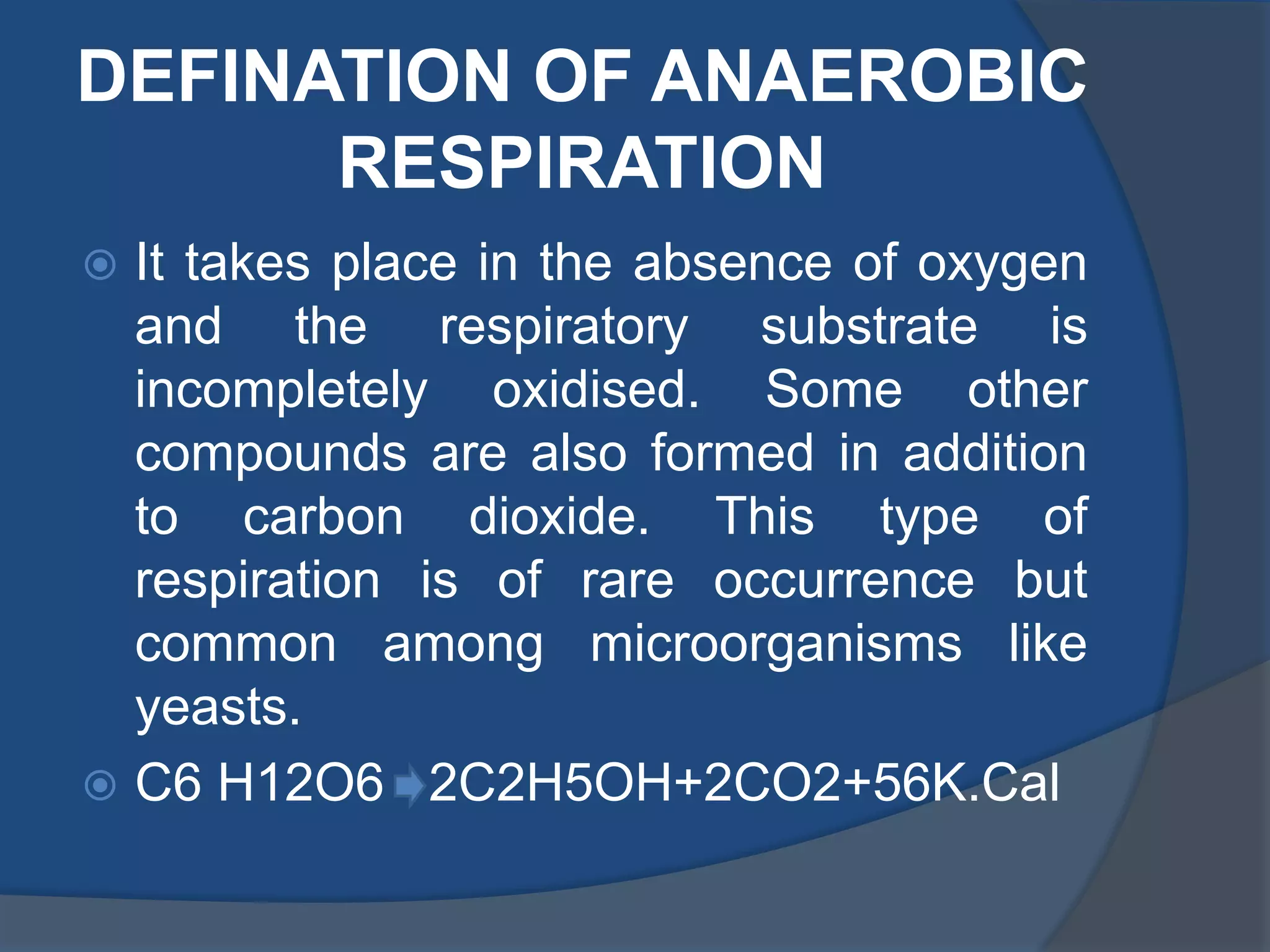
 It takes place in the absence of oxygen
and the respiratory substrate is
incompletely oxidised. Some other
compounds are also formed in addition
to carbon dioxide. This type of
respiration is of rare occurrence but
common among microorganisms like
yeasts.
 C6 H12O6 2C2H5OH+2CO2+56K.Cal
DIFFERENCES – AEROBIC AND
ANAEROBIC RESPIRATION
 The breakdown of glucose in the presence of
oxygen to produce more amount of energy is
called as aerobic respiration, whereas the
breakdown of glucose in the absence of
oxygen to produce energy is called as
anaerobic respiration.
 Chemical equation of aerobic respiration is
Glucose + Oxygen gives Carbon dioxide +
water + energy whereas the equation of
Glucose gives Lactic acid + energy.
 Aerobic respiration occurs in the cytoplasm to
mitochondria, while anaerobic respiration occurs
in the cytoplasm only.
 The high amount of energy is produced and 38
ATP released at a time in aerobic respiration,
Less amount of energy is produced and 2 ATP
are released at a time in anaerobic respiration.
 Final product in aerobic respiration are carbon
dioxide and water, whereas Lactic acid ( animal
cell), carbon dioxide and ethanol (plant cell) is
the final product in anaerobic respiration.
 Aerobic respiration requires oxygen and
glucose to produce energy whereas in
anaerobic respiration does not require oxygen
but uses glucose to produce energy.
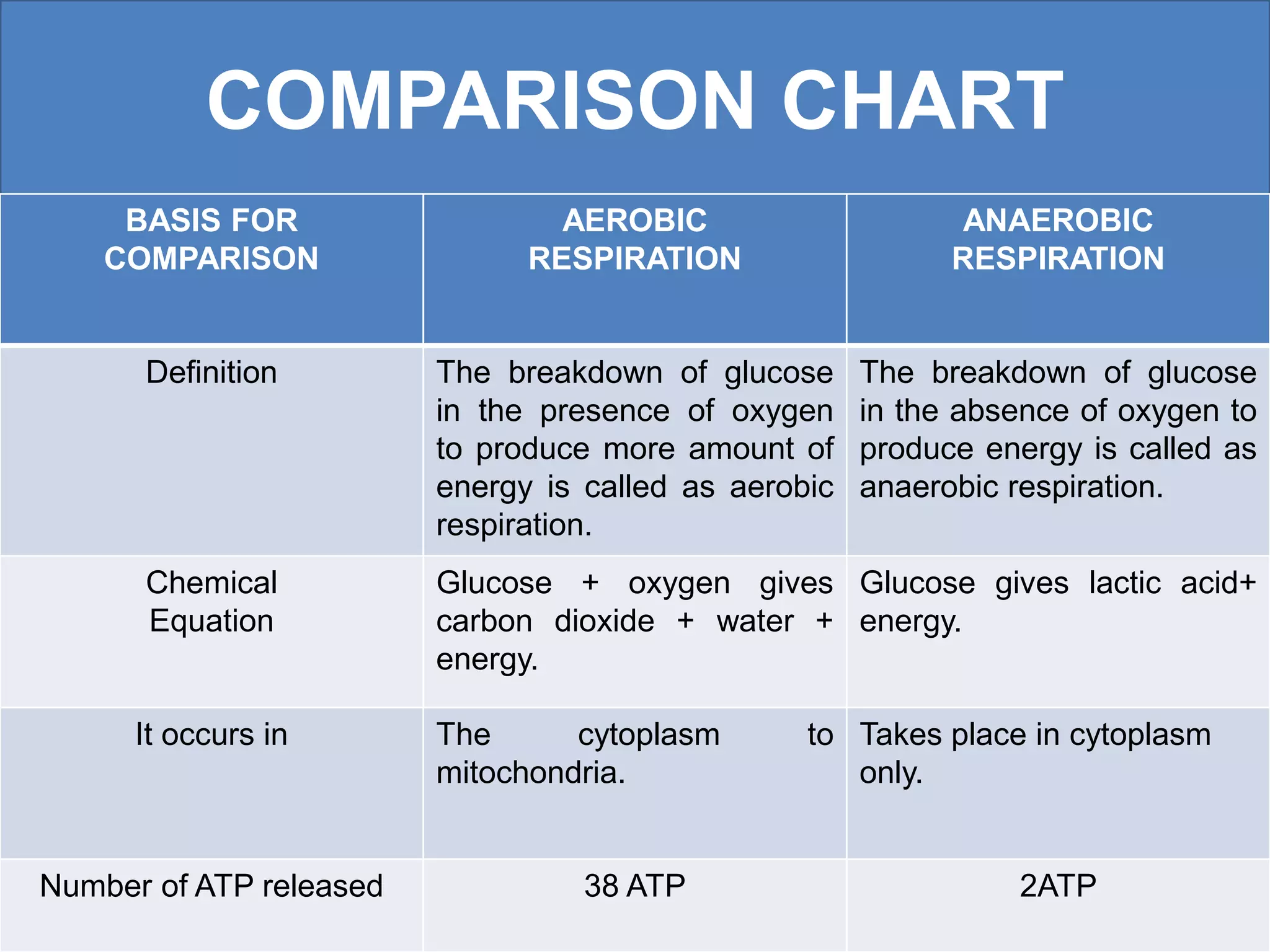
COMPARISON CHART
BASIS FOR
COMPARISON
AEROBIC
RESPIRATION
ANAEROBIC
RESPIRATION
Definition The breakdown of glucose
in the presence of oxygen
to produce more amount of
energy is called as aerobic
respiration.
The breakdown of glucose
in the absence of oxygen to
produce energy is called as
anaerobic respiration.
Chemical
Equation
Glucose + oxygen gives
carbon dioxide + water +
energy.
Glucose gives lactic acid+
energy.
It occurs in The cytoplasm to
mitochondria.
Takes place in cytoplasm
only.
Number of ATP released 38 ATP 2ATP
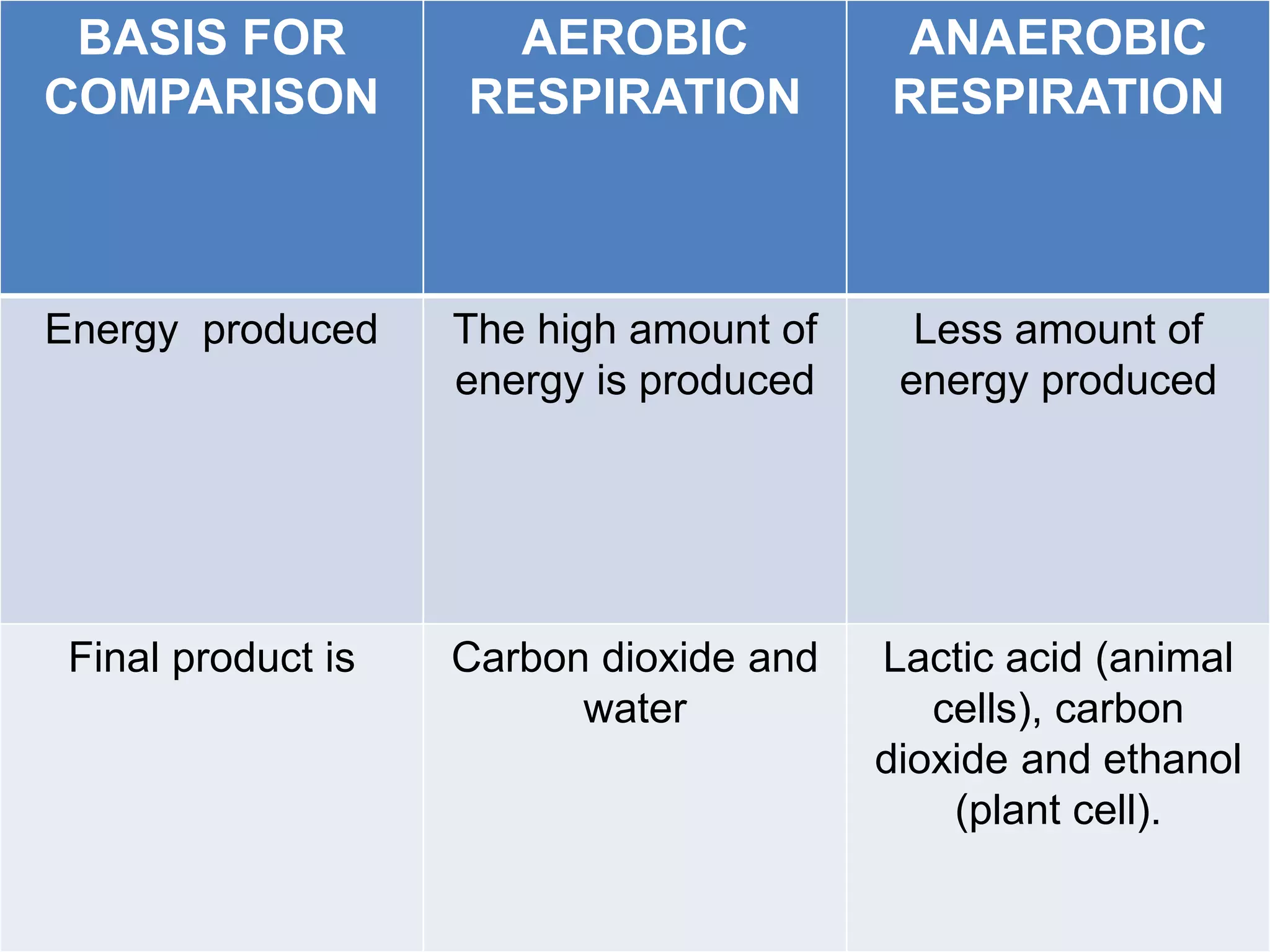
BASIS FOR
COMPARISON
AEROBIC
RESPIRATION
ANAEROBIC
RESPIRATION
Energy produced The high amount of
energy is produced
Less amount of
energy produced
Final product is Carbon dioxide and
water
Lactic acid (animal
cells), carbon
dioxide and ethanol
(plant cell).
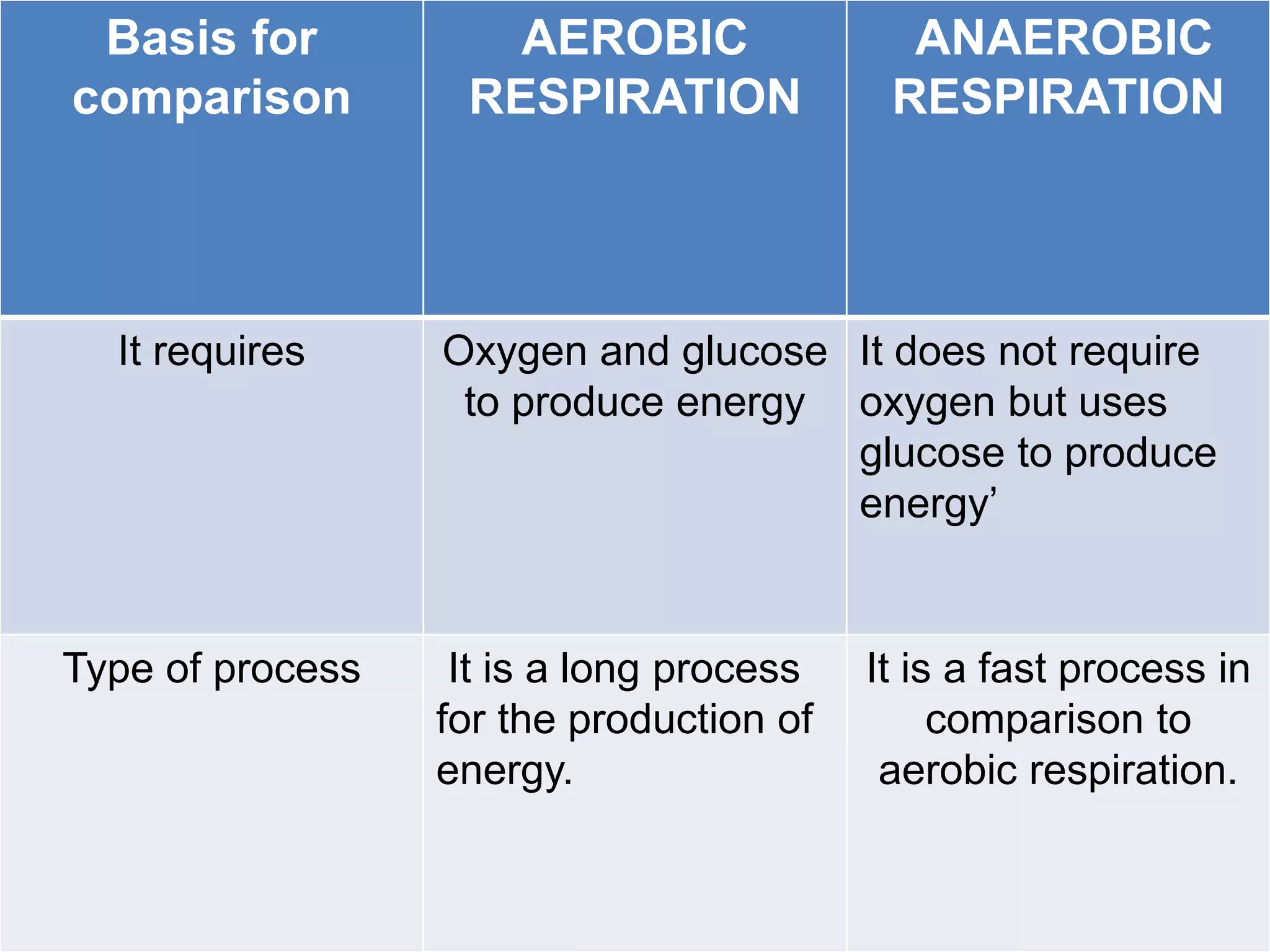
Basis for
comparison
AEROBIC
RESPIRATION
ANAEROBIC
RESPIRATION
It requires Oxygen and glucose
to produce energy
It does not require
oxygen but uses
glucose to produce
energy’
Type of process It is a long process
for the production of
energy.
It is a fast process in
comparison to
aerobic respiration.
BASIS FOR
COMPARISON
AEROBIC
RESPIRATION
ANAEROBIC
RESPIRATION
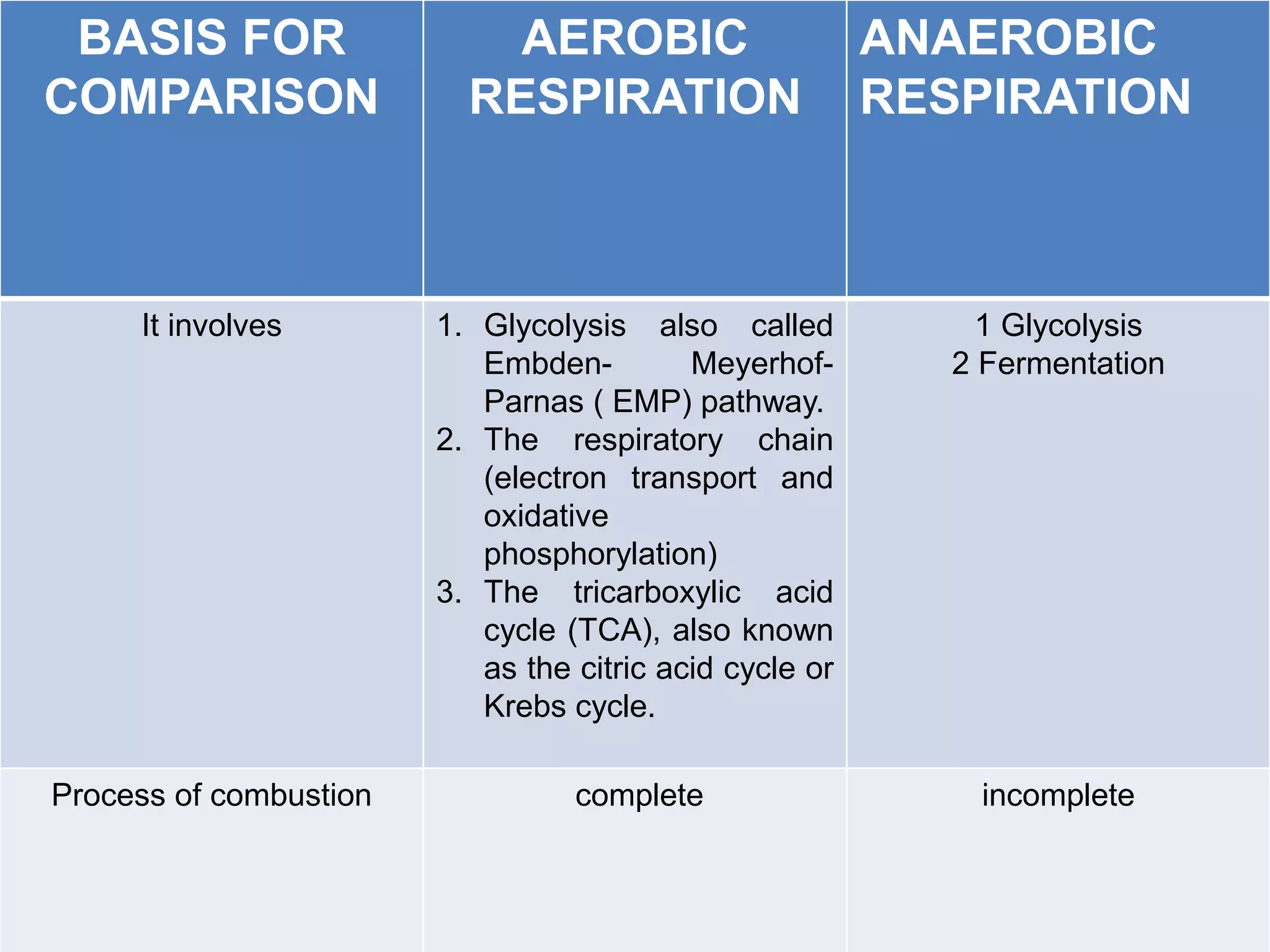
It involves 1. Glycolysis also called
Embden- Meyerhof-
Parnas ( EMP) pathway.
2. The respiratory chain
(electron transport and
oxidative
phosphorylation)
3. The tricarboxylic acid
cycle (TCA), also known
as the citric acid cycle or
Krebs cycle.
1 Glycolysis
2 Fermentation
Process of combustion complete incomplete
BASIS FOR
COMPARISON
AEROBIC
RESPIRATION
ANAEROBIC
RESPIRATION
Examples Aerobic
respiration occurs
in many plants
and animals
(eukaryotes).
Anaerobic
respiration occurs
in human muscle
cells
(eukaryotes),
bacteria, yeast
(prokaryotes),
etc.
CONCLUSION
 From the above article, we can say that
energy is an essential factor, concerning
the work performed by the body. The
energy requirement is fulfilled by the two
type of chemical reactions occurring
inside the cell within the body of all
kinds of living beings like
microorganisms, plants, animals. These
chemical reactions are of two types one
is called aerobic respiration and the
another is called anaerobic respiration,
which we discussed above.
 Respiration and breathing are the two
different kind of process, that takes place
simultaneously inside the body, where the
former (respiration) is related to the
production of energy, involving the
breakdown of nutrient and converting it to the
form of energy, while the latter ( breathing )
is linked to the inhalation and the exhalation
process of oxygen and carbon dioxide
relatively.
Arobic and anerobic respiration

Arobic and anerobic respiration

  • 1.
  • 2.
    CONTENTS  INTRODUCTION  DEFINITION–AEROBIC RESPIRATION AND ANAEROBIC RESPIRATION  DIFFERENCES  COMPARISON CHART  CONCLUSION
  • 3.
    INTRODUCTION  Aerobic denotesthe term ‘ in the presence of oxygen’ while the word anaerobic denotes the ‘absence of oxygen.  The respiration which occurs in the presence of oxygen is called as aerobic respiration, on the other hand, respiration occurring in the absence of oxygen is known anaerobic respiration.  So accordingly the chemical reaction involving the breakdown of the nutrient molecule with the aim of producing energy is called respiration.`
  • 4.
    o Thus theenergy required by the body to perform well which is produced by the chemical reaction. This process takes place in the mitochondria or in the cytoplasm of the cell either aerobically or anaerobically.
  • 5.
    DEFINITION OF AEROBIC RESPIRATION oAerobic respiration takes place in the presence of oxygen and the respiratory substrate gets completely oxidised to carbon dioxide and water as end products. This type of respiration is of common occurrence and it is often used as a synonym of respiration. o C6H12O6 + 6O2 6CO2 + 6H2O+686K.CAL
  • 6.
    DEFINATION OF ANAEROBIC RESPIRATION It takes place in the absence of oxygen and the respiratory substrate is incompletely oxidised. Some other compounds are also formed in addition to carbon dioxide. This type of respiration is of rare occurrence but common among microorganisms like yeasts.  C6 H12O6 2C2H5OH+2CO2+56K.Cal
  • 7.
    DIFFERENCES – AEROBICAND ANAEROBIC RESPIRATION  The breakdown of glucose in the presence of oxygen to produce more amount of energy is called as aerobic respiration, whereas the breakdown of glucose in the absence of oxygen to produce energy is called as anaerobic respiration.  Chemical equation of aerobic respiration is Glucose + Oxygen gives Carbon dioxide + water + energy whereas the equation of Glucose gives Lactic acid + energy.
  • 8.
     Aerobic respirationoccurs in the cytoplasm to mitochondria, while anaerobic respiration occurs in the cytoplasm only.  The high amount of energy is produced and 38 ATP released at a time in aerobic respiration, Less amount of energy is produced and 2 ATP are released at a time in anaerobic respiration.  Final product in aerobic respiration are carbon dioxide and water, whereas Lactic acid ( animal cell), carbon dioxide and ethanol (plant cell) is the final product in anaerobic respiration.
  • 9.
     Aerobic respirationrequires oxygen and glucose to produce energy whereas in anaerobic respiration does not require oxygen but uses glucose to produce energy.
  • 10.
    COMPARISON CHART BASIS FOR COMPARISON AEROBIC RESPIRATION ANAEROBIC RESPIRATION DefinitionThe breakdown of glucose in the presence of oxygen to produce more amount of energy is called as aerobic respiration. The breakdown of glucose in the absence of oxygen to produce energy is called as anaerobic respiration. Chemical Equation Glucose + oxygen gives carbon dioxide + water + energy. Glucose gives lactic acid+ energy. It occurs in The cytoplasm to mitochondria. Takes place in cytoplasm only. Number of ATP released 38 ATP 2ATP
  • 11.
    BASIS FOR COMPARISON AEROBIC RESPIRATION ANAEROBIC RESPIRATION Energy producedThe high amount of energy is produced Less amount of energy produced Final product is Carbon dioxide and water Lactic acid (animal cells), carbon dioxide and ethanol (plant cell).
  • 12.
    Basis for comparison AEROBIC RESPIRATION ANAEROBIC RESPIRATION It requiresOxygen and glucose to produce energy It does not require oxygen but uses glucose to produce energy’ Type of process It is a long process for the production of energy. It is a fast process in comparison to aerobic respiration.
  • 13.
    BASIS FOR COMPARISON AEROBIC RESPIRATION ANAEROBIC RESPIRATION It involves1. Glycolysis also called Embden- Meyerhof- Parnas ( EMP) pathway. 2. The respiratory chain (electron transport and oxidative phosphorylation) 3. The tricarboxylic acid cycle (TCA), also known as the citric acid cycle or Krebs cycle. 1 Glycolysis 2 Fermentation Process of combustion complete incomplete
  • 14.
    BASIS FOR COMPARISON AEROBIC RESPIRATION ANAEROBIC RESPIRATION Examples Aerobic respirationoccurs in many plants and animals (eukaryotes). Anaerobic respiration occurs in human muscle cells (eukaryotes), bacteria, yeast (prokaryotes), etc.
  • 15.
    CONCLUSION  From theabove article, we can say that energy is an essential factor, concerning the work performed by the body. The energy requirement is fulfilled by the two type of chemical reactions occurring inside the cell within the body of all kinds of living beings like microorganisms, plants, animals. These chemical reactions are of two types one is called aerobic respiration and the another is called anaerobic respiration, which we discussed above.
  • 16.
     Respiration andbreathing are the two different kind of process, that takes place simultaneously inside the body, where the former (respiration) is related to the production of energy, involving the breakdown of nutrient and converting it to the form of energy, while the latter ( breathing ) is linked to the inhalation and the exhalation process of oxygen and carbon dioxide relatively.