Respect Yourself &
Respect Others

source: http://otis.coe.uky.edu
Digital Etiquette
Technology users often see this area as one of the most
pressing problems when dealing with Digital Citizenship.
We recognize inappropriate behavior when we see it, but
before people use technology they do not learn digital
etiquette (i.e., appropriate conduct).
Many people feel uncomfortable talking to others about
their digital etiquette.
Often rules and regulations are created or the technology
is simply banned to stop inappropriate use.
It is not enough to create rules, we must teach everyone
(each other) to become responsible digital citizens in this
new society.
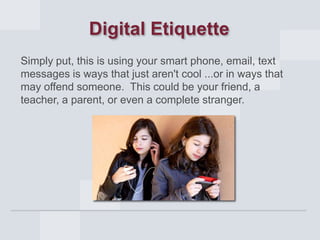
Digital Etiquette
Simply put, this is using your smart phone, email, text
messages is ways that just aren't cool ...or in ways that
may offend someone. This could be your friend, a
teacher, a parent, or even a complete stranger.
Digital Access
full electronic participation in society
Technology users need to be aware of and support
electronic access for all to create a foundation for Digital
Citizenship.
Digital exclusion of any kind does not enhance the growth
of users in an electronic society.
All people should have fair access to technology no
matter who they are.
Places or organizations with limited connectivity need to
be addressed as well.
To become productive citizens, we need to be committed
to equal digital access.
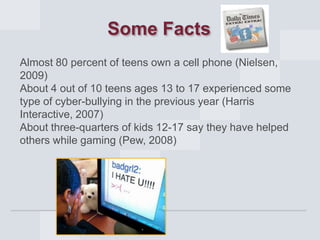
Some Facts
Almost 80 percent of teens own a cell phone (Nielsen,
2009)
About 4 out of 10 teens ages 13 to 17 experienced some
type of cyber-bullying in the previous year (Harris
Interactive, 2007)
About three-quarters of kids 12-17 say they have helped
others while gaming (Pew, 2008)
Our Connected Culture

Video was not exported from SlideRocket
Digital Law
electronic responsibility for actions and deeds
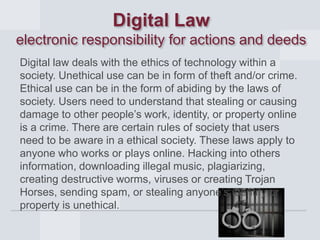
Digital law deals with the ethics of technology within a
society. Unethical use can be in form of theft and/or crime.
Ethical use can be in the form of abiding by the laws of
society. Users need to understand that stealing or causing
damage to other people’s work, identity, or property online
is a crime. There are certain rules of society that users
need to be aware in a ethical society. These laws apply to
anyone who works or plays online. Hacking into others
information, downloading illegal music, plagiarizing,
creating destructive worms, viruses or creating Trojan
Horses, sending spam, or stealing anyone’s identify or
property is unethical.
More on Digital Law
There are certain rules of society that users need to be
aware in a ethical society. These laws apply to anyone
who works or plays online.
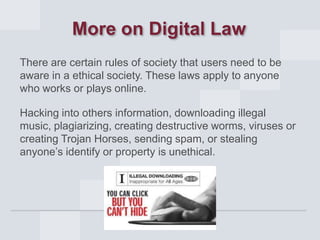
Hacking into others information, downloading illegal
music, plagiarizing, creating destructive worms, viruses or
creating Trojan Horses, sending spam, or stealing
anyone’s identify or property is unethical.
Digital Law
Adams Middle School

Video was not exported from SlideRocket
Digital Law
Cyber-Bullying
Remember...cyber-bullying, threatening and harassing
others is a crime, possibly resulting in fines and or jail
time!

Video was not exported from SlideRocket
Stacey's Story

Video was not exported from SlideRocket
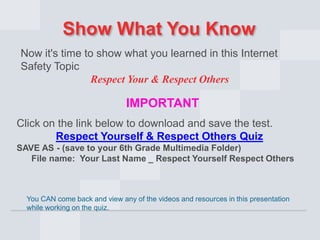
Show What You Know
Now it's time to show what you learned in this Internet
Safety Topic
Respect Your & Respect Others

IMPORTANT
Click on the link below to download and save the test.
Respect Yourself & Respect Others Quiz
SAVE AS - (save to your 6th Grade Multimedia Folder)
File name: Your Last Name _ Respect Yourself Respect Others

You CAN come back and view any of the videos and resources in this presentation
while working on the quiz.

6 kb respect_yourself_respect_others

  • 1.
    Respect Yourself & RespectOthers source: http://otis.coe.uky.edu
  • 2.
    Digital Etiquette Technology usersoften see this area as one of the most pressing problems when dealing with Digital Citizenship. We recognize inappropriate behavior when we see it, but before people use technology they do not learn digital etiquette (i.e., appropriate conduct). Many people feel uncomfortable talking to others about their digital etiquette. Often rules and regulations are created or the technology is simply banned to stop inappropriate use. It is not enough to create rules, we must teach everyone (each other) to become responsible digital citizens in this new society.
  • 3.
    Digital Etiquette Simply put,this is using your smart phone, email, text messages is ways that just aren't cool ...or in ways that may offend someone. This could be your friend, a teacher, a parent, or even a complete stranger.
  • 4.
    Digital Access full electronicparticipation in society Technology users need to be aware of and support electronic access for all to create a foundation for Digital Citizenship. Digital exclusion of any kind does not enhance the growth of users in an electronic society. All people should have fair access to technology no matter who they are. Places or organizations with limited connectivity need to be addressed as well. To become productive citizens, we need to be committed to equal digital access.
  • 5.
    Some Facts Almost 80percent of teens own a cell phone (Nielsen, 2009) About 4 out of 10 teens ages 13 to 17 experienced some type of cyber-bullying in the previous year (Harris Interactive, 2007) About three-quarters of kids 12-17 say they have helped others while gaming (Pew, 2008)
  • 6.
    Our Connected Culture Videowas not exported from SlideRocket
  • 7.
    Digital Law electronic responsibilityfor actions and deeds Digital law deals with the ethics of technology within a society. Unethical use can be in form of theft and/or crime. Ethical use can be in the form of abiding by the laws of society. Users need to understand that stealing or causing damage to other people’s work, identity, or property online is a crime. There are certain rules of society that users need to be aware in a ethical society. These laws apply to anyone who works or plays online. Hacking into others information, downloading illegal music, plagiarizing, creating destructive worms, viruses or creating Trojan Horses, sending spam, or stealing anyone’s identify or property is unethical.
  • 8.
    More on DigitalLaw There are certain rules of society that users need to be aware in a ethical society. These laws apply to anyone who works or plays online. Hacking into others information, downloading illegal music, plagiarizing, creating destructive worms, viruses or creating Trojan Horses, sending spam, or stealing anyone’s identify or property is unethical.
  • 9.
    Digital Law Adams MiddleSchool Video was not exported from SlideRocket
  • 10.
    Digital Law Cyber-Bullying Remember...cyber-bullying, threateningand harassing others is a crime, possibly resulting in fines and or jail time! Video was not exported from SlideRocket
  • 11.
    Stacey's Story Video wasnot exported from SlideRocket
  • 12.
    Show What YouKnow Now it's time to show what you learned in this Internet Safety Topic Respect Your & Respect Others IMPORTANT Click on the link below to download and save the test. Respect Yourself & Respect Others Quiz SAVE AS - (save to your 6th Grade Multimedia Folder) File name: Your Last Name _ Respect Yourself Respect Others You CAN come back and view any of the videos and resources in this presentation while working on the quiz.