DIGITAL         CITIZENSHIP
Andrew Cates,Anthony   Torres,and Paige Hurley
The      9    Elements

The 9 basic elements of digital citizenship
are:
● Digital Acess
● Digital Commerce
● Digital Law
● Digital Rights and Responsibilities
● Digital Health and Wellness
● Digital Communication
● Digital Literacy
This show will tell you about each of them.
Digital Access

■ Defined as full electronic
 participation in society.
■ All people should have fair
 access regardless of who they are.
■ To be productive citizens, we all should have
    equal digital access.
■   Free WiFi is now being offered in many public
    establishments around the country.
Digital                Commerce
■ The electronic buying and selling of goods.

■ A large part of the market economy comes
  from buying and selling online.

■ Many problems have risen that come into
  conflict with morals and laws of different
  country such as
  illegal downloading,
  pornography, and gambling.
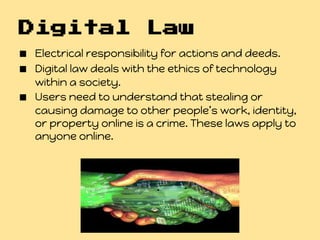
Digital Law
■ Electrical responsibility for actions and deeds.
■ Digital law deals with the ethics of technology
    within a society.
■   Users need to understand that stealing or
    causing damage to other people’s work, identity,
    or property online is a crime. These laws apply to
    anyone online.
Digital Rights and
Responsibilities


Those freedoms that everyday
technology users have are much like the
Constitution in our lives

Digital citizens have the right to privacy,
free speech, etc.
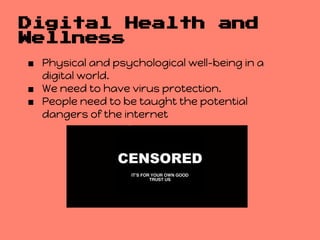
Digital Health                     and
Wellness
■ Physical and psychological well-being in a
  digital world.
■ We need to have virus protection.
■ People need to be taught the potential
  dangers of the internet
Digital                Security


■ There will always be individuals who steal, disrupt
    and hurt other in the digital world.
■   Just as we have to put locks on our doors, we
    need to have digital protection.
■   We need to have virus protection, backups of
    data and surge control of our equipment.
■   We need to be responsible for our information so
    that intruders cannot interfere to disrupt our
    information.
Digital
Communication
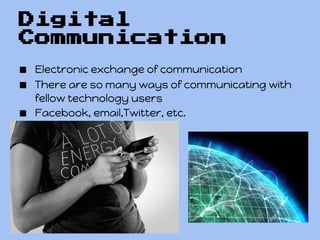
■ Electronic exchange of communication
■ There are so many ways of communicating with
    fellow technology users
■   Facebook, email,Twitter, etc.
Digital                Literacy
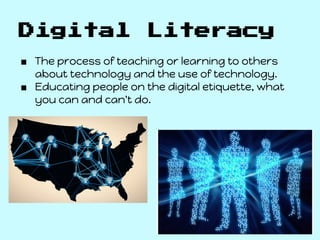
■ The process of teaching or learning to others
  about technology and the use of technology.
■ Educating people on the digital etiquette, what
  you can and can't do.
Digital               Etiquette

■ Electronic standards of conduct or procedure
■ Often rules and regulations are created or the
    technology is simply banned to stop
    inappropriate use.
■   It is not enough to create rules and policy.
■   We must teach everyone to become responsible
    digital citizens in this new society.
Thank You For Watching!

Digital Citizenship Andrew Cates Anthony Torres Paige Hurley

  • 1.
    DIGITAL CITIZENSHIP Andrew Cates,Anthony Torres,and Paige Hurley
  • 2.
    The 9 Elements The 9 basic elements of digital citizenship are: ● Digital Acess ● Digital Commerce ● Digital Law ● Digital Rights and Responsibilities ● Digital Health and Wellness ● Digital Communication ● Digital Literacy This show will tell you about each of them.
  • 3.
    Digital Access ■ Definedas full electronic participation in society. ■ All people should have fair access regardless of who they are. ■ To be productive citizens, we all should have equal digital access. ■ Free WiFi is now being offered in many public establishments around the country.
  • 4.
    Digital Commerce ■ The electronic buying and selling of goods. ■ A large part of the market economy comes from buying and selling online. ■ Many problems have risen that come into conflict with morals and laws of different country such as illegal downloading, pornography, and gambling.
  • 5.
    Digital Law ■ Electricalresponsibility for actions and deeds. ■ Digital law deals with the ethics of technology within a society. ■ Users need to understand that stealing or causing damage to other people’s work, identity, or property online is a crime. These laws apply to anyone online.
  • 6.
    Digital Rights and Responsibilities Thosefreedoms that everyday technology users have are much like the Constitution in our lives Digital citizens have the right to privacy, free speech, etc.
  • 7.
    Digital Health and Wellness ■ Physical and psychological well-being in a digital world. ■ We need to have virus protection. ■ People need to be taught the potential dangers of the internet
  • 8.
    Digital Security ■ There will always be individuals who steal, disrupt and hurt other in the digital world. ■ Just as we have to put locks on our doors, we need to have digital protection. ■ We need to have virus protection, backups of data and surge control of our equipment. ■ We need to be responsible for our information so that intruders cannot interfere to disrupt our information.
  • 9.
    Digital Communication ■ Electronic exchangeof communication ■ There are so many ways of communicating with fellow technology users ■ Facebook, email,Twitter, etc.
  • 10.
    Digital Literacy ■ The process of teaching or learning to others about technology and the use of technology. ■ Educating people on the digital etiquette, what you can and can't do.
  • 11.
    Digital Etiquette ■ Electronic standards of conduct or procedure ■ Often rules and regulations are created or the technology is simply banned to stop inappropriate use. ■ It is not enough to create rules and policy. ■ We must teach everyone to become responsible digital citizens in this new society.
  • 12.
    Thank You ForWatching!