Digital Access:
    Technology users need to be aware of and support
electronic access for all to create a foundation for Digital
                        Citizenship.

-Digital exclusion of any kind does not enhance the growth
                          of users.
     -All people should have fair access to technology.
 -Places or organizations with limited connectivity need to
                    be addressed as well.
EXAMPLE: Schools
Schools blocking websites online
Digital Commerce:
Technology users need to understand that a large share of
     market economy is being done electronically.

       -Legitimate and legal exchanges are occurring.
-The mainstream availability of Internet purchases of toys,
clothing, cars, food, etc. has become commonplace to many
                             users.
    -An equal amount of goods and services which are in
   conflict with the laws or morals of some countries are
     surfacing (Illegal downloading, pornography, and
                           gambling).
EXAMPLE:
Shopping for clothes, toys, etc. on the
Internet.
Digital Communication:
One of the significant changes within the digital revolution
 is a person’s ability to communicate with other people:

-In the 21st century, communication options have exploded
   to offer a wide variety of choices (e.g., e-mail, cellular
                 phones, instant messaging).
 -The options have changed everything because people are
 able to keep in constant communication with anyone else.
    -Everyone has the opportunity to communicate and
   collaborate with anyone from anywhere and anytime.
EXAMPLE:
Online chatting with other people from
around the world.
Digital Literacy
   - Although schools have done a lot in the area of
technology infusion, the how much technology permeates
an organization, there is still a lot to be done.
   - With all of the modern technology privileges, new
technological ideas are making their way into the world of
working.
   - In fact, because of our technological society, people
must be able to learn anything, anywhere, and at any time.
   - Jobs with many 21st century changes & examples
       > Military
       > Medicine
       > Business
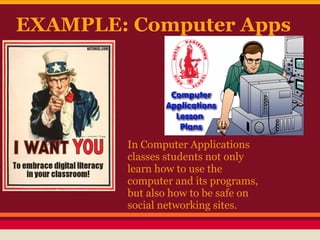
EXAMPLE: Computer Apps


        In Computer Applications
        classes students not only
        learn how to use the
        computer and its programs,
        but also how to be safe on
        social networking sites.
Digital Etiquette
   - This is basically the appropriate conduct that people
should have when on a specific social networking site.
   - Each site has its own specific digital etiquette.
   - This must be taught to people rather than simply
adding rules about it.
   - Many people may not even know what appropriate
conduct should be followed when online. That is why it
should be taught
EXAMPLE: Rules of Specific
Social Networking Sites
Facebook Digital Etiquette
Digital Law
   This means the responsibility you have to own up to
your own actions while online. Ethical use while online
means to follow the rules and unethical rules are the
opposite.
   Stealing or causing harm to another person's work,
identity, or property online is a crime. There are specific
rules of society that people need to know about in an ethical
society. The rules apply to all people that play or work
online.
EXAMPLE: Spoofing :(
              Spoofing: convincing someone
              to give you personal
              information so that you can
              cause them harm

              For Example: Someone gives
              you their credit card number
              and you steal all of their
              money
Digital Rights & Responsibilities

 Those freedoms extended to everyone in a digital world.
-There is a basic set of rights extended to every
                    digital citizen.
  -Digital citizens have the right to privacy, free
                     speech, etc.
 -Users must help define how the technology is
      to be used in an appropriate manner.
Example: Facebook
Good: PRIVACY
-Facebook has different privacy settings
which allows users to have a right to the
privacy they want.
Example:
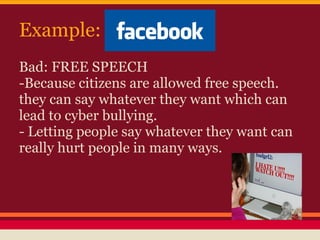
Bad: FREE SPEECH
-Because citizens are allowed free speech.
they can say whatever they want which can
lead to cyber bullying.
- Letting people say whatever they want can
really hurt people in many ways.
Digital Health & Wellness
Physical and psychological well-being in a digital
technology world.

    -With the new technological eye safety, repetitive stress
syndrome, and sound ergonomic practices have become
issues.
    -With physical issues there are also psychological issues
like Internet addiction.
    -Digital Citizenship includes technology users to be
taught how to protect themselves through education and
training.
Example: Email Stress
   -Email is constant stress for everyone. They can't catch
up because of constant emails from stores, buisnesses, and
people.
   -Emails also cause stress from people having multiple
emails for multiple things.
   -This stresses people out and makes people feel like they
are letting people down. That can then lead to depression
from letting people feel like they are hurting somebody or
doing something wrong.
Digital Security
electronic precautions to guarantee safety.

    -In any society, there are individuals who steal, deface,
or disrupt other people. The same is true for the digital
community.
    -We need to have virus protection, backups of data, and
surge control of our equipment.
-As responsible citizens, we must protect our information
from outside forces that might cause disruption or harm.
Example: Norton
-Norton is a virus protection software.
-This is extremely important.
-Viruses can hack information and ruin your
computer.
http://digitalcitizenship.net/Nine_Elements.html

http://digiteen09-1.flatclassroomproject.org/Digital+Law

http://www.library.illinois.edu/diglit/images/diglit.jpg

http://www.cyberlearning-world.com/lessons/ca.gif

http://youtu.be/iROYzrm5SBM

http://www.communicatto.com/share/Law-Enforcement-
Uses-Social-Media-214x300.jpg

http://www.grook.
net/sites/default/files/images/kettaneh/spoofing.jpg

http://netdna.webdesignerdepot.
com/uploads/social_media_icons/characterset.jpg
thanks       thanks   thanks

     thanks


thanks        thanks

Digital Citizenship123

  • 2.
    Digital Access: Technology users need to be aware of and support electronic access for all to create a foundation for Digital Citizenship. -Digital exclusion of any kind does not enhance the growth of users. -All people should have fair access to technology. -Places or organizations with limited connectivity need to be addressed as well.
  • 3.
  • 4.
    Digital Commerce: Technology usersneed to understand that a large share of market economy is being done electronically. -Legitimate and legal exchanges are occurring. -The mainstream availability of Internet purchases of toys, clothing, cars, food, etc. has become commonplace to many users. -An equal amount of goods and services which are in conflict with the laws or morals of some countries are surfacing (Illegal downloading, pornography, and gambling).
  • 5.
    EXAMPLE: Shopping for clothes,toys, etc. on the Internet.
  • 6.
    Digital Communication: One ofthe significant changes within the digital revolution is a person’s ability to communicate with other people: -In the 21st century, communication options have exploded to offer a wide variety of choices (e.g., e-mail, cellular phones, instant messaging). -The options have changed everything because people are able to keep in constant communication with anyone else. -Everyone has the opportunity to communicate and collaborate with anyone from anywhere and anytime.
  • 7.
    EXAMPLE: Online chatting withother people from around the world.
  • 8.
    Digital Literacy - Although schools have done a lot in the area of technology infusion, the how much technology permeates an organization, there is still a lot to be done. - With all of the modern technology privileges, new technological ideas are making their way into the world of working. - In fact, because of our technological society, people must be able to learn anything, anywhere, and at any time. - Jobs with many 21st century changes & examples > Military > Medicine > Business
  • 9.
    EXAMPLE: Computer Apps In Computer Applications classes students not only learn how to use the computer and its programs, but also how to be safe on social networking sites.
  • 10.
    Digital Etiquette - This is basically the appropriate conduct that people should have when on a specific social networking site. - Each site has its own specific digital etiquette. - This must be taught to people rather than simply adding rules about it. - Many people may not even know what appropriate conduct should be followed when online. That is why it should be taught
  • 11.
    EXAMPLE: Rules ofSpecific Social Networking Sites
  • 12.
  • 13.
    Digital Law This means the responsibility you have to own up to your own actions while online. Ethical use while online means to follow the rules and unethical rules are the opposite. Stealing or causing harm to another person's work, identity, or property online is a crime. There are specific rules of society that people need to know about in an ethical society. The rules apply to all people that play or work online.
  • 14.
    EXAMPLE: Spoofing :( Spoofing: convincing someone to give you personal information so that you can cause them harm For Example: Someone gives you their credit card number and you steal all of their money
  • 15.
    Digital Rights &Responsibilities Those freedoms extended to everyone in a digital world. -There is a basic set of rights extended to every digital citizen. -Digital citizens have the right to privacy, free speech, etc. -Users must help define how the technology is to be used in an appropriate manner.
  • 16.
    Example: Facebook Good: PRIVACY -Facebookhas different privacy settings which allows users to have a right to the privacy they want.
  • 17.
    Example: Bad: FREE SPEECH -Becausecitizens are allowed free speech. they can say whatever they want which can lead to cyber bullying. - Letting people say whatever they want can really hurt people in many ways.
  • 18.
    Digital Health &Wellness Physical and psychological well-being in a digital technology world. -With the new technological eye safety, repetitive stress syndrome, and sound ergonomic practices have become issues. -With physical issues there are also psychological issues like Internet addiction. -Digital Citizenship includes technology users to be taught how to protect themselves through education and training.
  • 19.
    Example: Email Stress -Email is constant stress for everyone. They can't catch up because of constant emails from stores, buisnesses, and people. -Emails also cause stress from people having multiple emails for multiple things. -This stresses people out and makes people feel like they are letting people down. That can then lead to depression from letting people feel like they are hurting somebody or doing something wrong.
  • 20.
    Digital Security electronic precautionsto guarantee safety. -In any society, there are individuals who steal, deface, or disrupt other people. The same is true for the digital community. -We need to have virus protection, backups of data, and surge control of our equipment. -As responsible citizens, we must protect our information from outside forces that might cause disruption or harm.
  • 21.
    Example: Norton -Norton isa virus protection software. -This is extremely important. -Viruses can hack information and ruin your computer.
  • 22.
  • 23.
    thanks thanks thanks thanks thanks thanks