How to be a friend
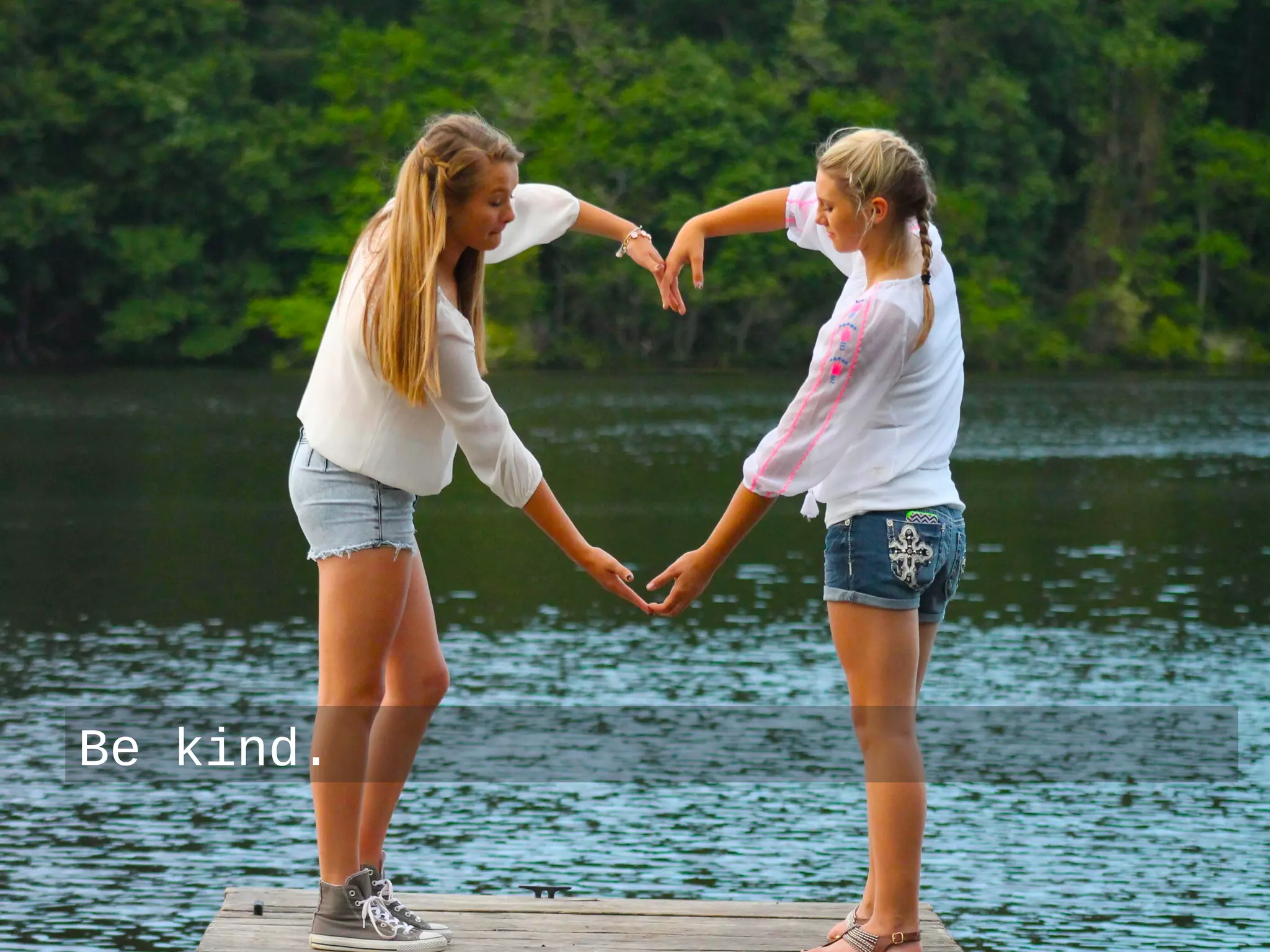
Be kind.
Set an example with your kindness
Look for opportunities to be kind.
Be of service
Share your talents, gifts, and
blessings.
Take care of yourself
mentally, physically, emotionally &
spiritually
Take care of yourself…
Don’t use your friends as therapists.
Turning to friends for emotional
support occasionally is okay, but not
as the basis for friendship.
Neither a lender nor a borrower be.
If a friend pays your way or you do
borrow – reciprocate!
Respect boundaries – your own & your
friends.
Don’t try to change your friend.
The only person you can change is yourself.
Communicate clearly.
Don’t make assumptions.
Speak to be understood.
Listen.
If a dispute occurs, begin with
yourself.
What is your part?
When difficulties arise, speak in
specifics when communicating about the
issue.
Avoid “always,” “never,” and other
black & white thinking when
communicating.
Make amends.
Once an amends is made, let it go.
Forgive.
Make the time to be with your friend.
Feed your friendship.
Feed your friendship...
Love.
Feed your friendship...
Laughter.
Feed your friendship...
Exciting times.
Feed your friendship...
Quiet times.
Feed your friendship...
Compassion & communication.
Science tells us strong friendships
lead to health and happiness.
Argyle, M. (2003). 18 Causes and Correlates of Happiness. Well-being: The foundations of
hedonic psychology, 353.
Seeman, T. E. (2000). Health promoting effects of friends and family on health outcomes in older
adults. American Journal of Health Promotion, 14(6), 362-370.
More tools for happiness at
www.happycounts.org

How To Be A Good Friend