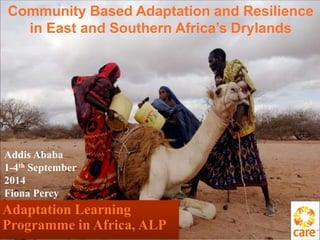
Community Based Adaptation and Resilience 
in East and Southern Africa’s Drylands 
Addis Ababa 
1-4th September 
2014 
Fiona Percy 
Adaptation Learning 
Programme in Africa, ALP
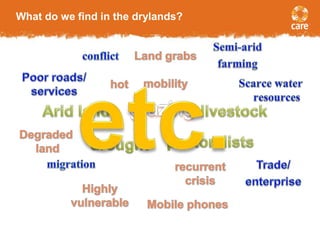
What do we find in the drylands?
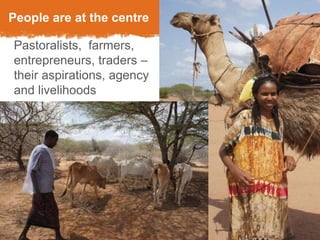
People are at the centre 
Pastoralists, farmers, 
entrepreneurs, traders – 
their aspirations, agency 
and livelihoods 
3 
September 3, 2014
The people who feel the impacts of climate 
change most : 
• depend on climate sensitive, natural resource based 
livelihoods – which are rapidly changing 
• live in areas exposed to climate risks – droughts, floods 
• are marginalised and vulnerable – 
o limited agency - voice, access or control over decisions that 
affect them 
o face multiple challenges and causes of vulnerability 
o Poor, isolated communities 
o Pervasive gender inequalities 
• Often excluded from ‘modern’ developments, which 
ignores or undermines or conflicts with the value of 
their knowledge and resources they use 
4 
SCeptemlbier m3, 2014ate change worsens existing risks
Resilience 
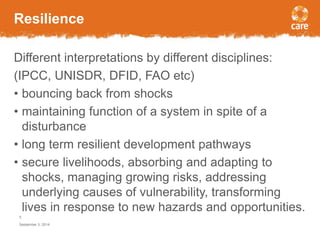
Different interpretations by different disciplines: 
(IPCC, UNISDR, DFID, FAO etc) 
• bouncing back from shocks 
• maintaining function of a system in spite of a 
disturbance 
• long term resilient development pathways 
• secure livelihoods, absorbing and adapting to 
shocks, managing growing risks, addressing 
underlying causes of vulnerability, transforming 
lives in response to new hazards and opportunities. 
5 
September 3, 2014
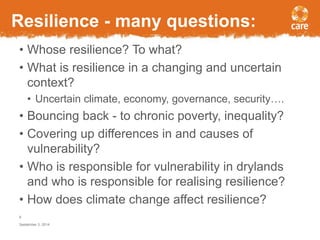
Resilience - many questions: 
• Whose resilience? To what? 
• What is resilience in a changing and uncertain 
context? 
• Uncertain climate, economy, governance, security…. 
• Bouncing back - to chronic poverty, inequality? 
• Covering up differences in and causes of 
vulnerability? 
• Who is responsible for vulnerability in drylands 
and who is responsible for realising resilience? 
• How does climate change affect resilience? 
6 
September 3, 2014
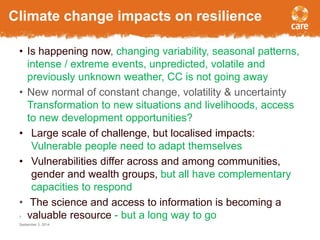
Climate change impacts on resilience 
• Is happening now, changing variability, seasonal patterns, 
intense / extreme events, unpredicted, volatile and 
previously unknown weather, CC is not going away 
• New normal of constant change, volatility & uncertainty 
Transformation to new situations and livelihoods, access 
to new development opportunities? 
• Large scale of challenge, but localised impacts: 
Vulnerable people need to adapt themselves 
• Vulnerabilities differ across and among communities, 
gender and wealth groups, but all have complementary 
capacities to respond 
• The science and access to information is becoming a 
valuable resource - but a long way to go 
7 
September 3, 2014
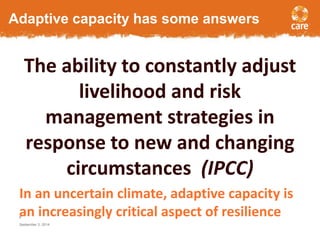
Adaptive capacity has some answers 
The ability to constantly adjust 
livelihood and risk 
management strategies in 
response to new and changing 
circumstances (IPCC) 
In an uncertain climate, adaptive capacity is 
an increasingly critical aspect of resilience 
8 
September 3, 2014
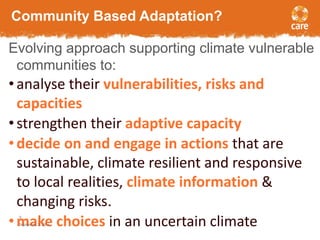
Community Based Adaptation? 
Evolving approach supporting climate vulnerable 
communities to: 
• analyse their vulnerabilities, risks and 
capacities 
• strengthen their adaptive capacity 
• decide on and engage in actions that are 
sustainable, climate resilient and responsive 
to local realities, climate information & 
changing risks. 
• make 9 
choices in an uncertain climate September 3, 2014
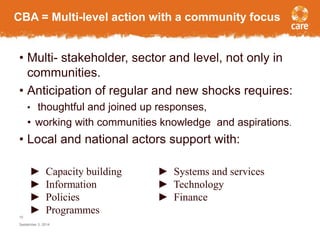
CBA = Multi-level action with a community focus 
• Multi- stakeholder, sector and level, not only in 
communities. 
• Anticipation of regular and new shocks requires: 
• thoughtful and joined up responses, 
• working with communities knowledge and aspirations. 
• Local and national actors support with: 
10 
► Capacity building ► Systems and services 
► Information ► Technology 
► Policies ► Finance 
► Programmes 
September 3, 2014
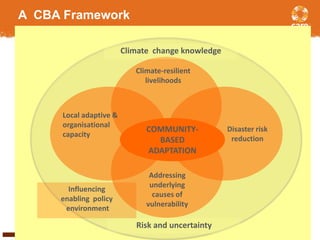
A CBA Framework 
COMMUNITY-BASED 
ADAPTATION 
WWW.CARECLIMATECHANGE.ORG 
Local adaptive & 
organisational 
capacity 
Addressing 
underlying 
causes of 
vulnerability 
Disaster risk 
reduction 
Climate-resilient 
livelihoods 
Influencing 
enabling policy 
environment 
Climate change knowledge 
Risk and uncertainty
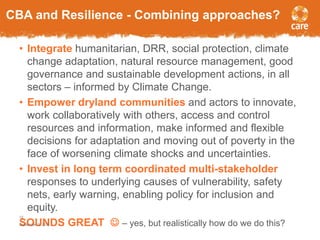
CBA and Resilience - Combining approaches? 
• Integrate humanitarian, DRR, social protection, climate 
change adaptation, natural resource management, good 
governance and sustainable development actions, in all 
sectors – informed by Climate Change. 
• Empower dryland communities and actors to innovate, 
work collaboratively with others, access and control 
resources and information, make informed and flexible 
decisions for adaptation and moving out of poverty in the 
face of worsening climate shocks and uncertainties. 
• Invest in long term coordinated multi-stakeholder 
responses to underlying causes of vulnerability, safety 
nets, early warning, enabling policy for inclusion and 
equity. 
12 
September SOUNDS 3, 2014 GREAT  – yes, but realistically how do we do this?
We have 4 days to combine our knowledge 
and generate answers to: 
• How / why vulnerabilities and opportunities are 
changing with the climate? 
• What does it take to achieve resilience for everyone 
in a changing climate? Is that enough? 
• Drivers and barriers to change & transformation, 
synergies and trade offs involved? 
• The added value can CBA bring to achieving 
resilience in dryland communities? 
• Working together, coordinating across silos - an 
integrated and coherent approach? 
13 
September 3, 2014
Thank you 
alp@careclimatechange.org 
www.careclimatechange.org/adaptation-initiatives/alp

Community Based Adaptation and Resilience in East and Southern Africa’s Drylands, by Fiona Percy Care International

  • 1.
    Community Based Adaptationand Resilience in East and Southern Africa’s Drylands Addis Ababa 1-4th September 2014 Fiona Percy Adaptation Learning Programme in Africa, ALP
  • 2.
    What do wefind in the drylands?
  • 3.
    People are atthe centre Pastoralists, farmers, entrepreneurs, traders – their aspirations, agency and livelihoods 3 September 3, 2014
  • 4.
    The people whofeel the impacts of climate change most : • depend on climate sensitive, natural resource based livelihoods – which are rapidly changing • live in areas exposed to climate risks – droughts, floods • are marginalised and vulnerable – o limited agency - voice, access or control over decisions that affect them o face multiple challenges and causes of vulnerability o Poor, isolated communities o Pervasive gender inequalities • Often excluded from ‘modern’ developments, which ignores or undermines or conflicts with the value of their knowledge and resources they use 4 SCeptemlbier m3, 2014ate change worsens existing risks
  • 5.
    Resilience Different interpretationsby different disciplines: (IPCC, UNISDR, DFID, FAO etc) • bouncing back from shocks • maintaining function of a system in spite of a disturbance • long term resilient development pathways • secure livelihoods, absorbing and adapting to shocks, managing growing risks, addressing underlying causes of vulnerability, transforming lives in response to new hazards and opportunities. 5 September 3, 2014
  • 6.
    Resilience - manyquestions: • Whose resilience? To what? • What is resilience in a changing and uncertain context? • Uncertain climate, economy, governance, security…. • Bouncing back - to chronic poverty, inequality? • Covering up differences in and causes of vulnerability? • Who is responsible for vulnerability in drylands and who is responsible for realising resilience? • How does climate change affect resilience? 6 September 3, 2014
  • 7.
    Climate change impactson resilience • Is happening now, changing variability, seasonal patterns, intense / extreme events, unpredicted, volatile and previously unknown weather, CC is not going away • New normal of constant change, volatility & uncertainty Transformation to new situations and livelihoods, access to new development opportunities? • Large scale of challenge, but localised impacts: Vulnerable people need to adapt themselves • Vulnerabilities differ across and among communities, gender and wealth groups, but all have complementary capacities to respond • The science and access to information is becoming a valuable resource - but a long way to go 7 September 3, 2014
  • 8.
    Adaptive capacity hassome answers The ability to constantly adjust livelihood and risk management strategies in response to new and changing circumstances (IPCC) In an uncertain climate, adaptive capacity is an increasingly critical aspect of resilience 8 September 3, 2014
  • 9.
    Community Based Adaptation? Evolving approach supporting climate vulnerable communities to: • analyse their vulnerabilities, risks and capacities • strengthen their adaptive capacity • decide on and engage in actions that are sustainable, climate resilient and responsive to local realities, climate information & changing risks. • make 9 choices in an uncertain climate September 3, 2014
  • 10.
    CBA = Multi-levelaction with a community focus • Multi- stakeholder, sector and level, not only in communities. • Anticipation of regular and new shocks requires: • thoughtful and joined up responses, • working with communities knowledge and aspirations. • Local and national actors support with: 10 ► Capacity building ► Systems and services ► Information ► Technology ► Policies ► Finance ► Programmes September 3, 2014
  • 11.
    A CBA Framework COMMUNITY-BASED ADAPTATION WWW.CARECLIMATECHANGE.ORG Local adaptive & organisational capacity Addressing underlying causes of vulnerability Disaster risk reduction Climate-resilient livelihoods Influencing enabling policy environment Climate change knowledge Risk and uncertainty
  • 12.
    CBA and Resilience- Combining approaches? • Integrate humanitarian, DRR, social protection, climate change adaptation, natural resource management, good governance and sustainable development actions, in all sectors – informed by Climate Change. • Empower dryland communities and actors to innovate, work collaboratively with others, access and control resources and information, make informed and flexible decisions for adaptation and moving out of poverty in the face of worsening climate shocks and uncertainties. • Invest in long term coordinated multi-stakeholder responses to underlying causes of vulnerability, safety nets, early warning, enabling policy for inclusion and equity. 12 September SOUNDS 3, 2014 GREAT  – yes, but realistically how do we do this?
  • 13.
    We have 4days to combine our knowledge and generate answers to: • How / why vulnerabilities and opportunities are changing with the climate? • What does it take to achieve resilience for everyone in a changing climate? Is that enough? • Drivers and barriers to change & transformation, synergies and trade offs involved? • The added value can CBA bring to achieving resilience in dryland communities? • Working together, coordinating across silos - an integrated and coherent approach? 13 September 3, 2014
  • 14.
    Thank you alp@careclimatechange.org www.careclimatechange.org/adaptation-initiatives/alp

Editor's Notes

  • #10 Short and long term : Addresses current vulnerability and prepares for anticipated longer-term climatic changes and their ‘chronic’ and ‘catastrophic’ impacts. Process of decision making to arrive at intervention
  • #12 CBA strengthens adaptive capacity of the most vulnerable supports local and national services, climate science and governance systems which provide an enabling environment for adaptation at local level Enables access to useful climate information and understanding of risks and uncertainty Grounded in comprehensive analysis of vulnerability, guiding identification of appropriate adaptation strategies for different groups; Community adaptation action is based on climate knowledge, local priorities, specific needs, capacities and knowledge of risk and uncertainty. Communities demonstrate increased adaptive capacity
  • #13 .... To support: empowerment and participation of the most vulnerable in resilient development and adaptation decisions/actions, strengthening adaptive capacity, access to climate information, responsive services safeguards which ensure inclusion and equitable responses, targeted social protection; risk anticipation, early warning    
  • #15 For publications, event updates, stories, and more information about our climate change work, please visit our website at www.careclimatechange.org. Thank you.