CLIMATE CHANGE &
COASTAL RESILIENCE
Our climate system is interconnected. This
means that actions and events happening
across the globe have local impacts. Our
climate system is also changing. The
accumulation of greenhouse gases in the
atmosphere have led to warming
temperatures, melting ice, a rising ocean,
shifting precipitation patterns, and changing
atmospheric winds.
Slide 3
STYLE/Presentation Template
GREENHOUSE
EFFECT
The greenhouse effect works
much the same way on Earth.
Gases in the atmosphere, such as
carbon dioxide, trap heat similar to
the glass roof of a greenhouse.
These heat-trapping gases are
called greenhouse gases.
Human activities are changing
each's natural greenhouse effect.
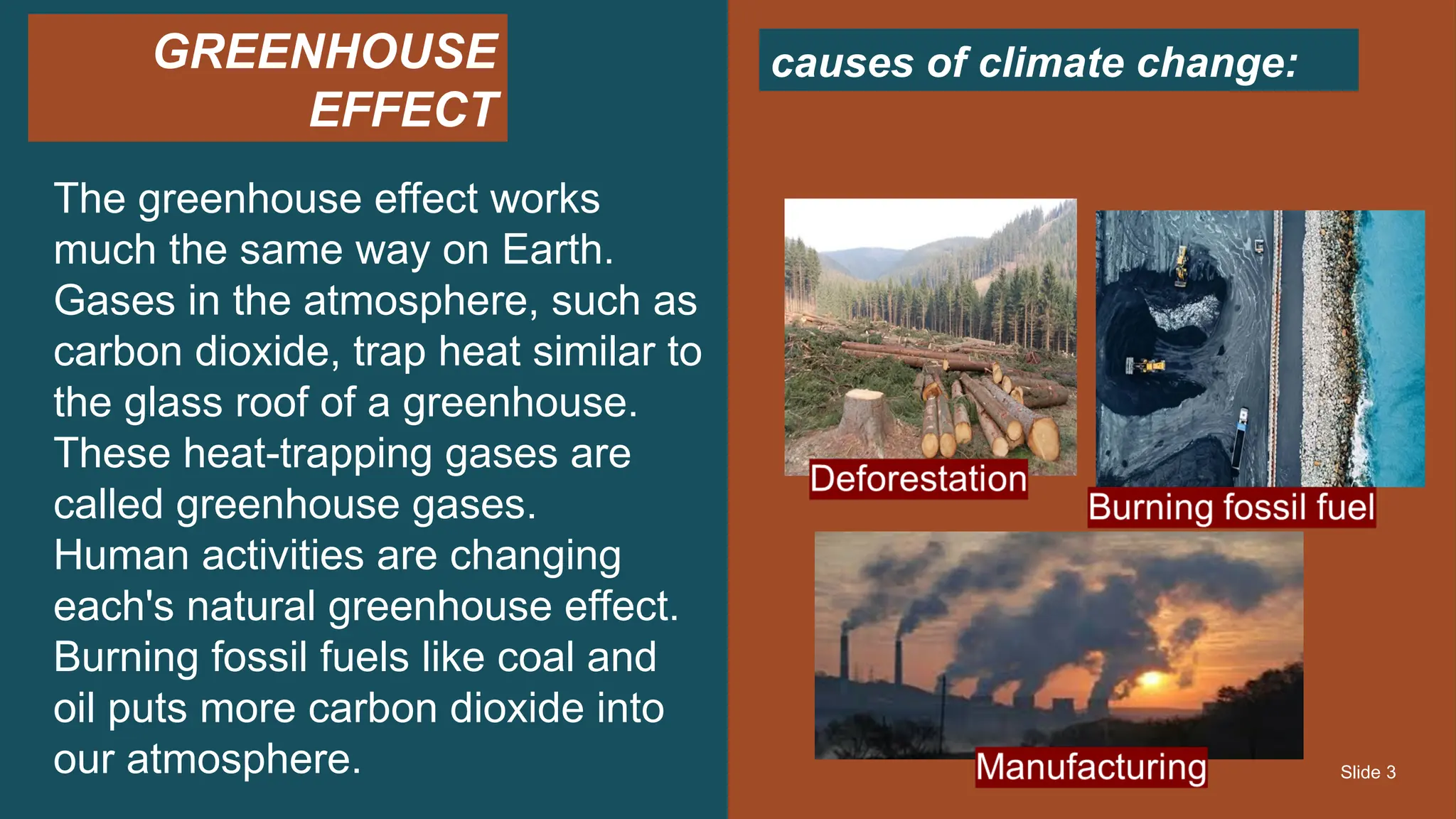
Burning fossil fuels like coal and
oil puts more carbon dioxide into
our atmosphere.
causes of climate change:
Impact of Climate
Change
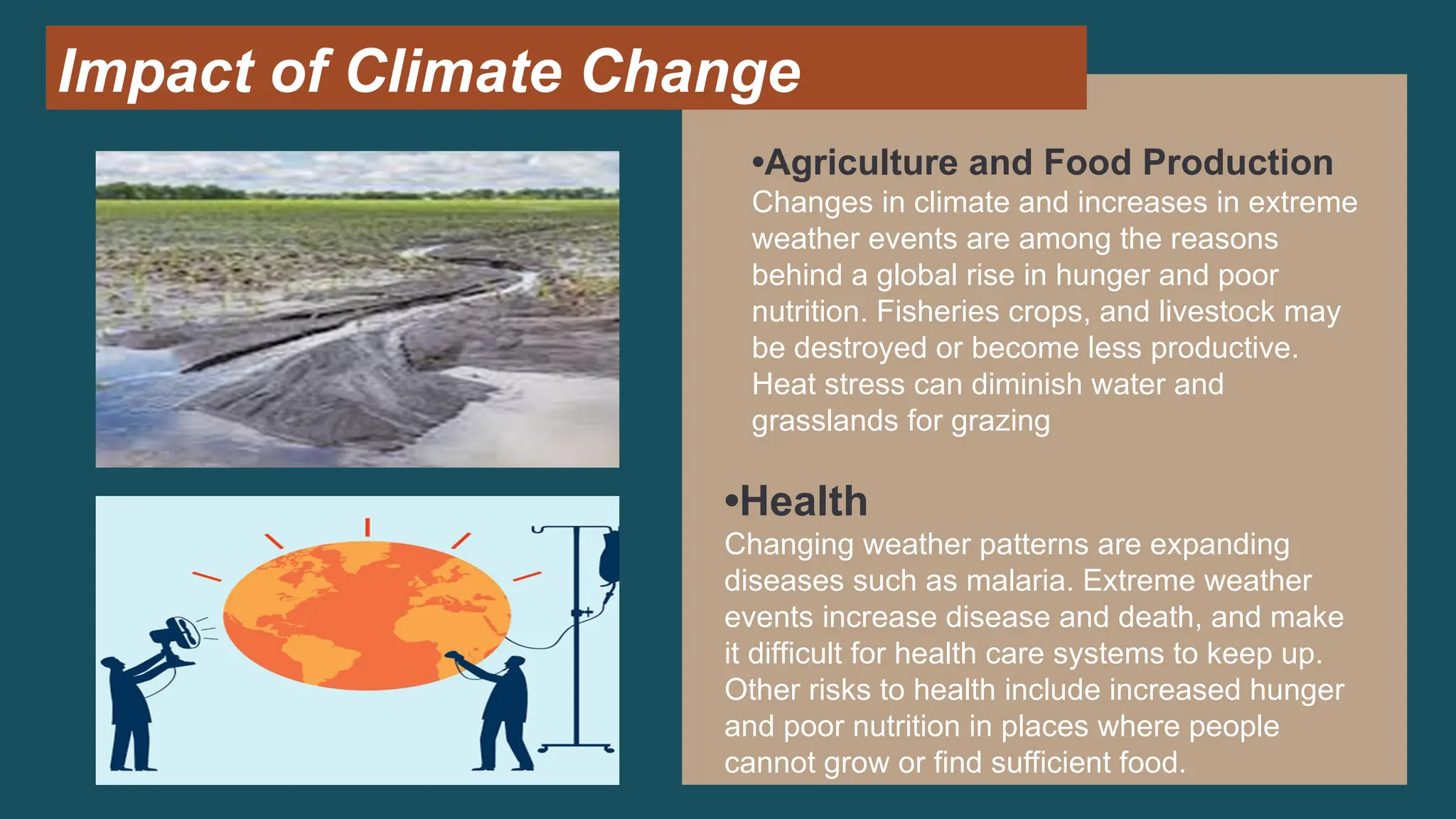
•Agriculture and Food Production
Changes in climate and increases in extreme
weather events are among the reasons
behind a global rise in hunger and poor
nutrition. Fisheries crops, and livestock may
be destroyed or become less productive.
Heat stress can diminish water and
grasslands for grazing
Impact of Climate Change
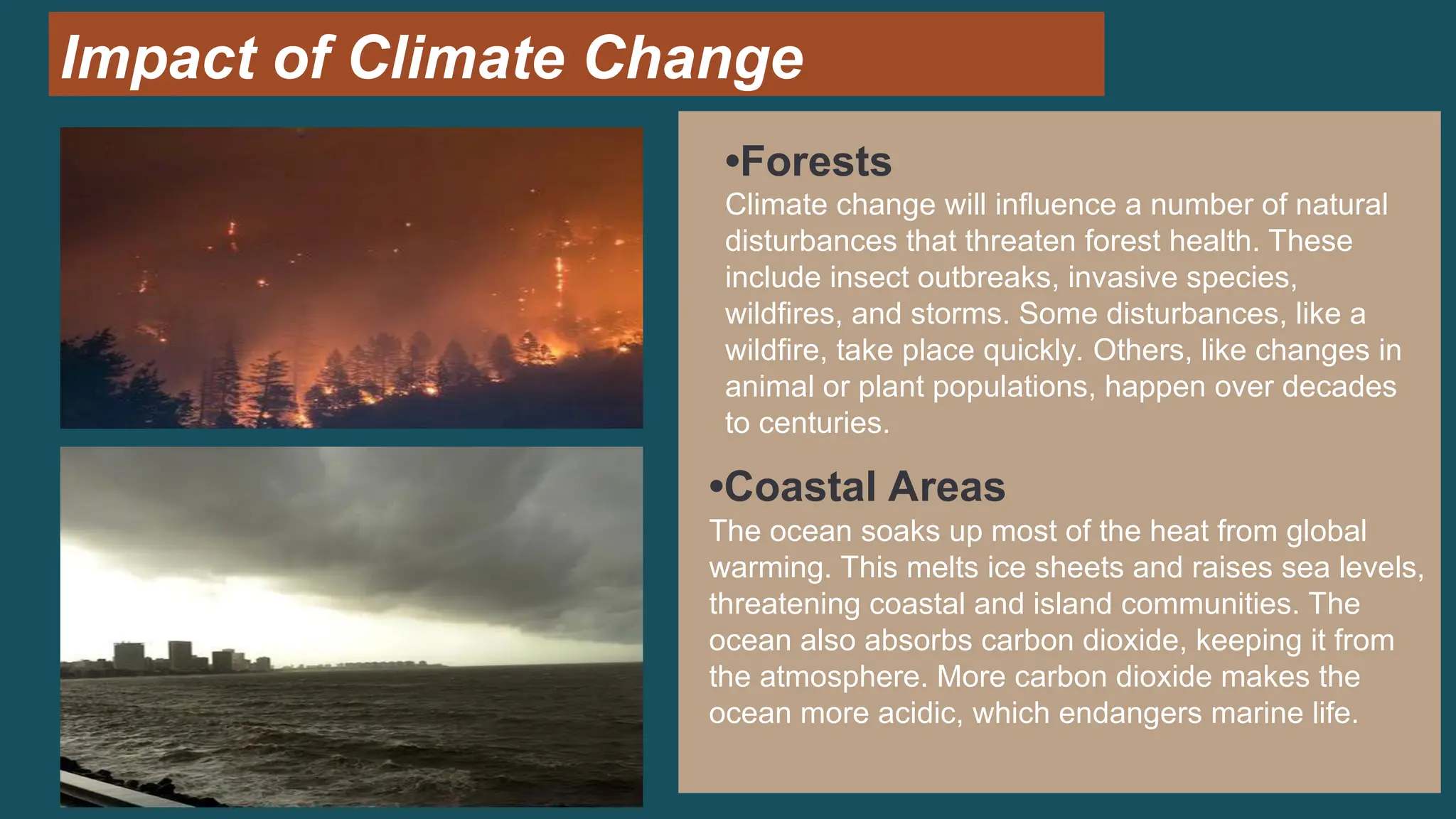
•Health
Changing weather patterns are expanding
diseases such as malaria. Extreme weather
events increase disease and death, and make
it difficult for health care systems to keep up.
Other risks to health include increased hunger
and poor nutrition in places where people
cannot grow or find sufficient food.
Impact of Climate Change
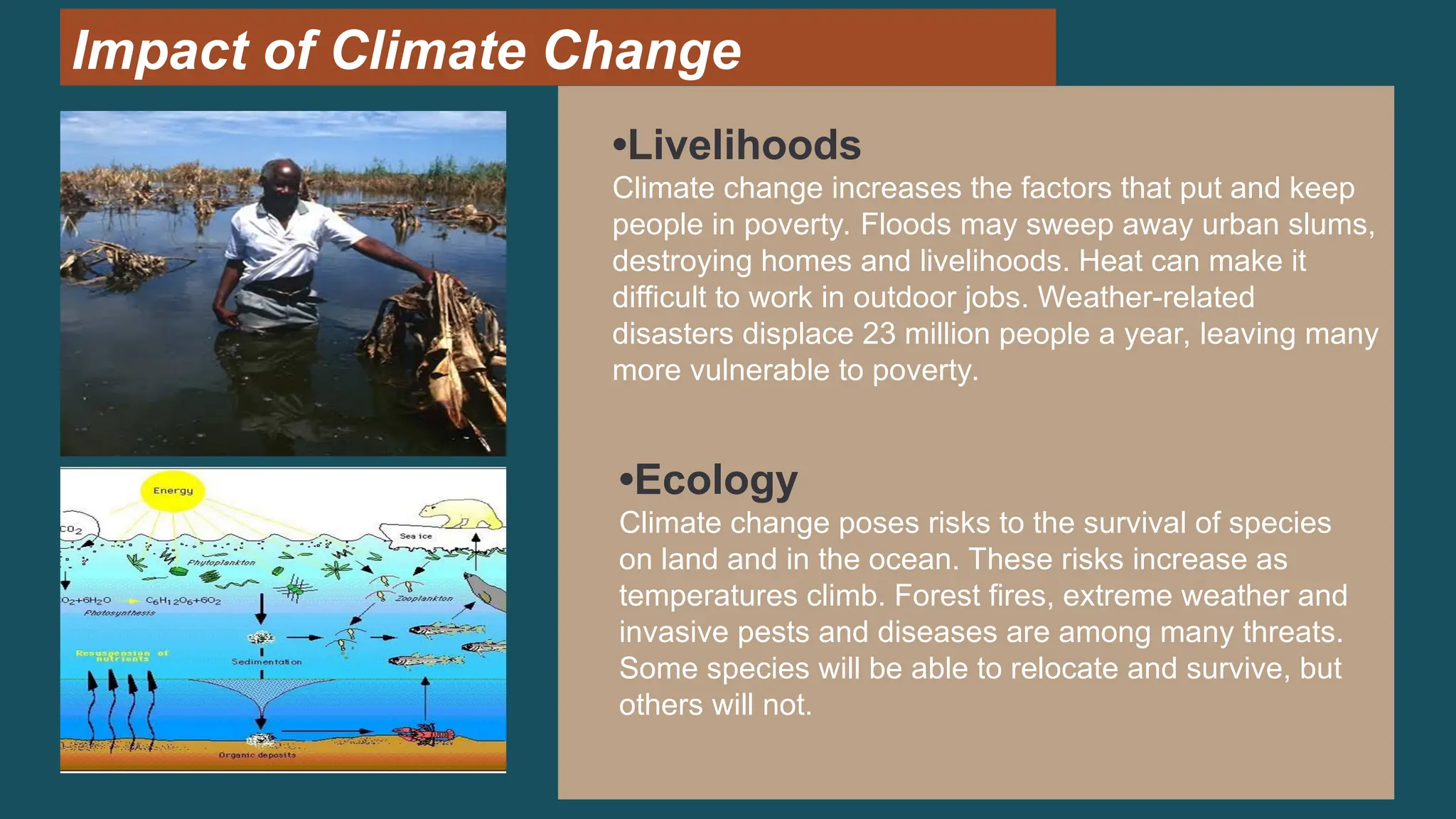
•Forests
Climate change will influence a number of natural
disturbances that threaten forest health. These
include insect outbreaks, invasive species,
wildfires, and storms. Some disturbances, like a
wildfire, take place quickly. Others, like changes in
animal or plant populations, happen over decades
to centuries.
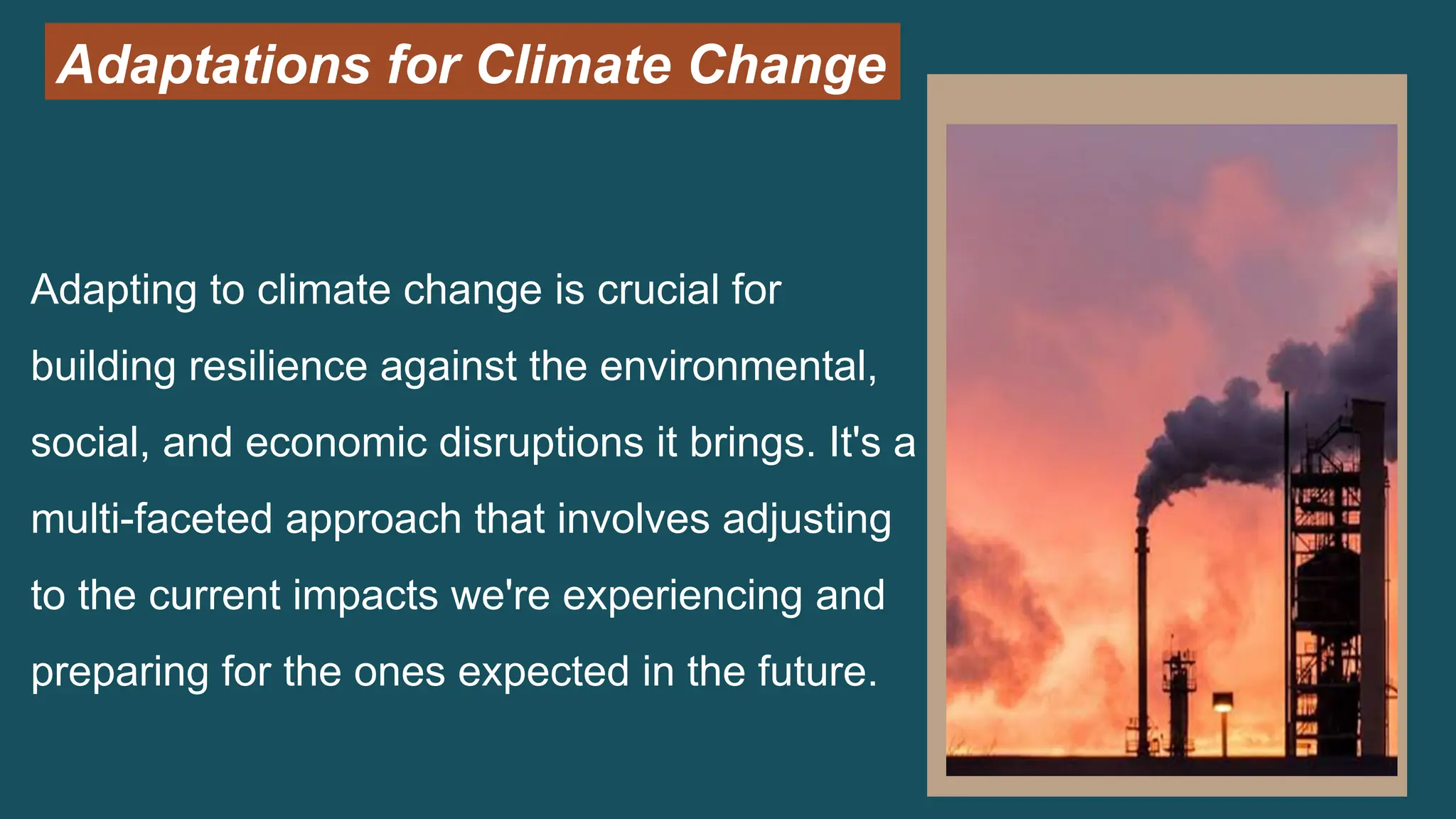
•Coastal Areas
The ocean soaks up most of the heat from global
warming. This melts ice sheets and raises sea levels,
threatening coastal and island communities. The
ocean also absorbs carbon dioxide, keeping it from
the atmosphere. More carbon dioxide makes the
ocean more acidic, which endangers marine life.
•Livelihoods
Climate change increases the factors that put and keep
people in poverty. Floods may sweep away urban slums,
destroying homes and livelihoods. Heat can make it
difficult to work in outdoor jobs. Weather-related
disasters displace 23 million people a year, leaving many
more vulnerable to poverty.
Impact of Climate Change
•Ecology
Climate change poses risks to the survival of species
on land and in the ocean. These risks increase as
temperatures climb. Forest fires, extreme weather and
invasive pests and diseases are among many threats.
Some species will be able to relocate and survive, but
others will not.
Adaptations for Climate Change
Adapting to climate change is crucial for
building resilience against the environmental,
social, and economic disruptions it brings. It's a
multi-faceted approach that involves adjusting
to the current impacts we're experiencing and
preparing for the ones expected in the future.
TYPES OF ADAPTATION
Autonomous adaptations or reactive adaptation is undertaken in
response to an effect of climate change that has already been
experienced. Example: Individual houses that are upgraded to new
building standards only after a cyclone destroys their roofs.
Anticipatory or proactive adaptation takes place before the impacts of
climate change are observed. Example: Local government prevents
new development on a greenfield site located in an area likely to be
affected during high tides in 50 years.
EXAMPLES
I
Infrastructure:
Shielding communities: Seawalls
and levees are being built in
coastal areas to buffer against
rising sea levels and storm
surges. Likewise, floodplains and
wetlands are being restored to
act as natural sponges, absorbing
excess water and mitigating
flooding risks.
Climate-resilient design:
Buildings are being constructed
with stronger materials and
improved insulation to withstand
extreme weather events like heat
waves and hurricanes.
Upgrading energy grids to be
more reliant on renewable
sources like solar and wind
power can also lessen the
vulnerability to disruptions
caused by extreme weather.
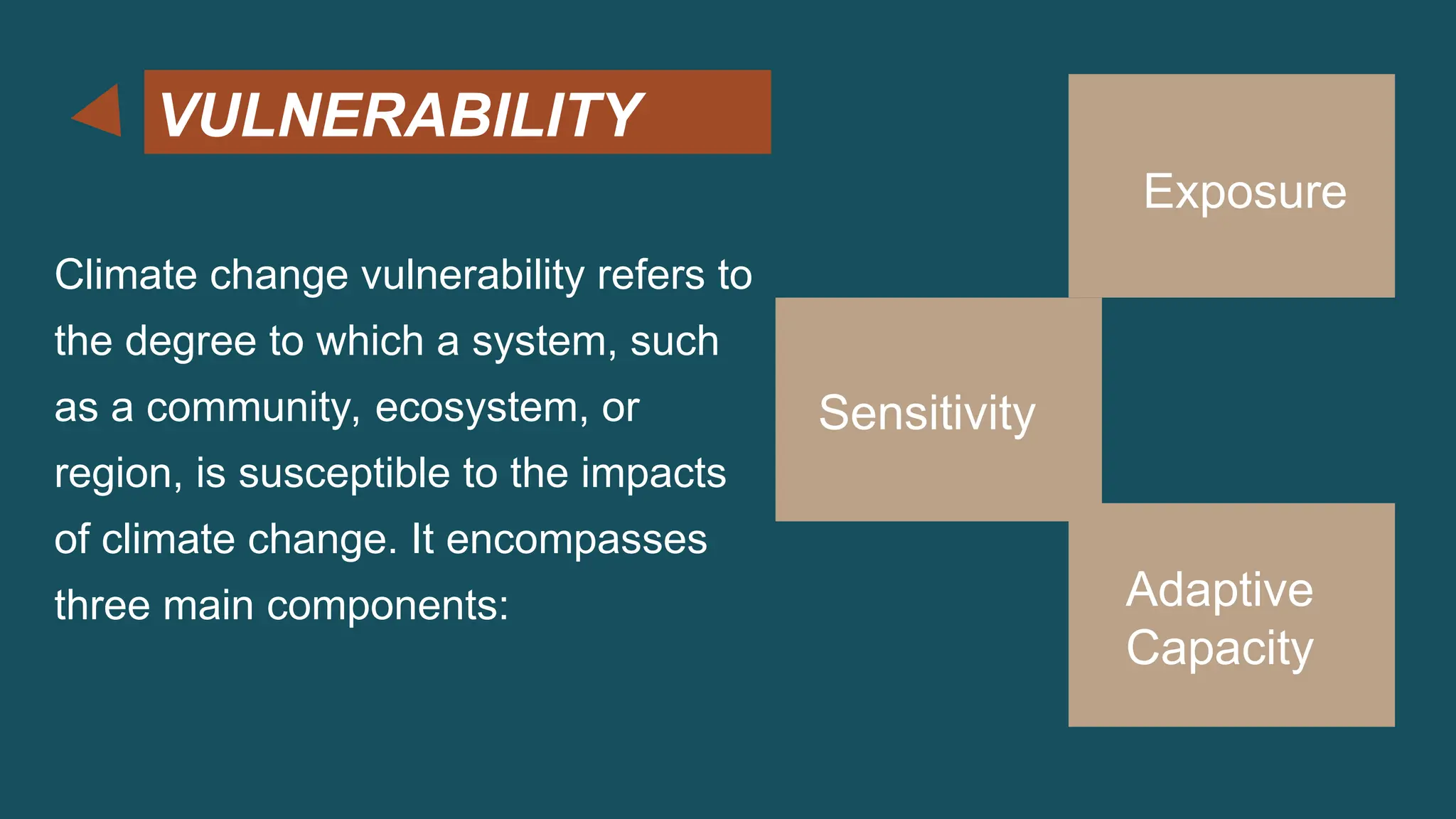
VULNERABILITY
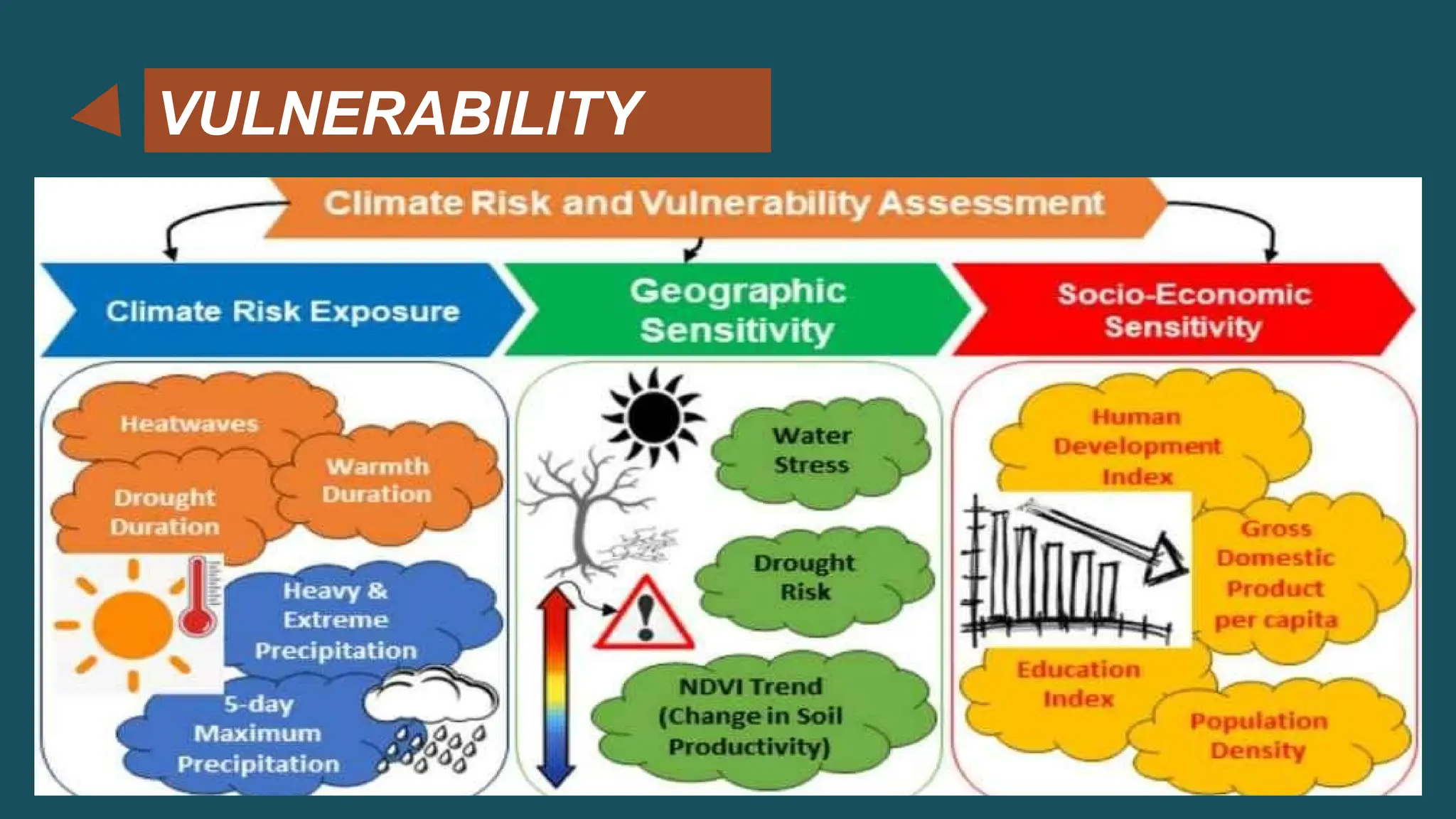
Climate change vulnerability refers to
the degree to which a system, such
as a community, ecosystem, or
region, is susceptible to the impacts
of climate change. It encompasses
three main components:
Exposure
Sensitivity
Adaptive
Capacity
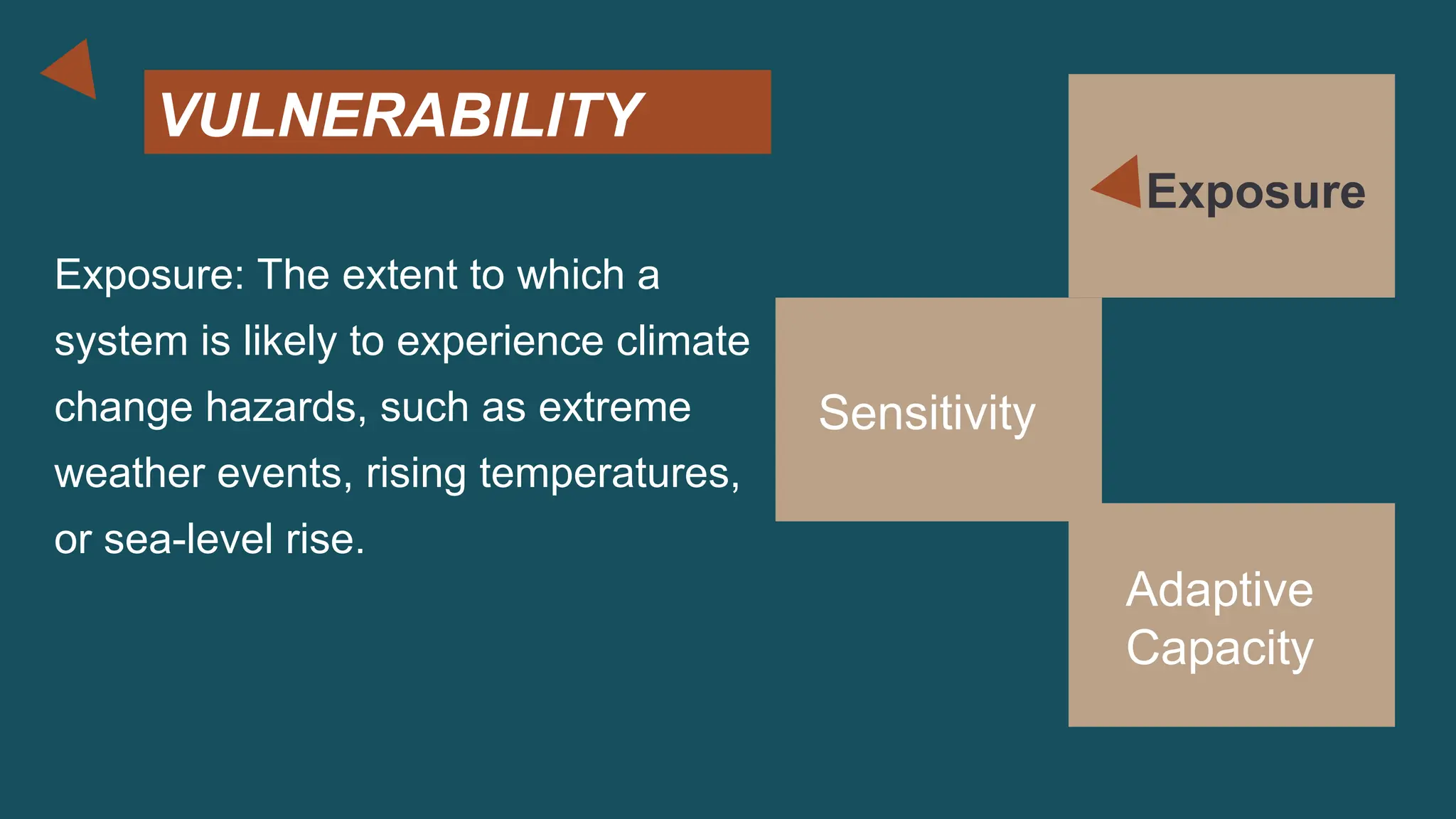
VULNERABILITY
Exposure: The extent to which a
system is likely to experience climate
change hazards, such as extreme
weather events, rising temperatures,
or sea-level rise.
Exposure
Sensitivity
Adaptive
Capacity
VULNERABILITY
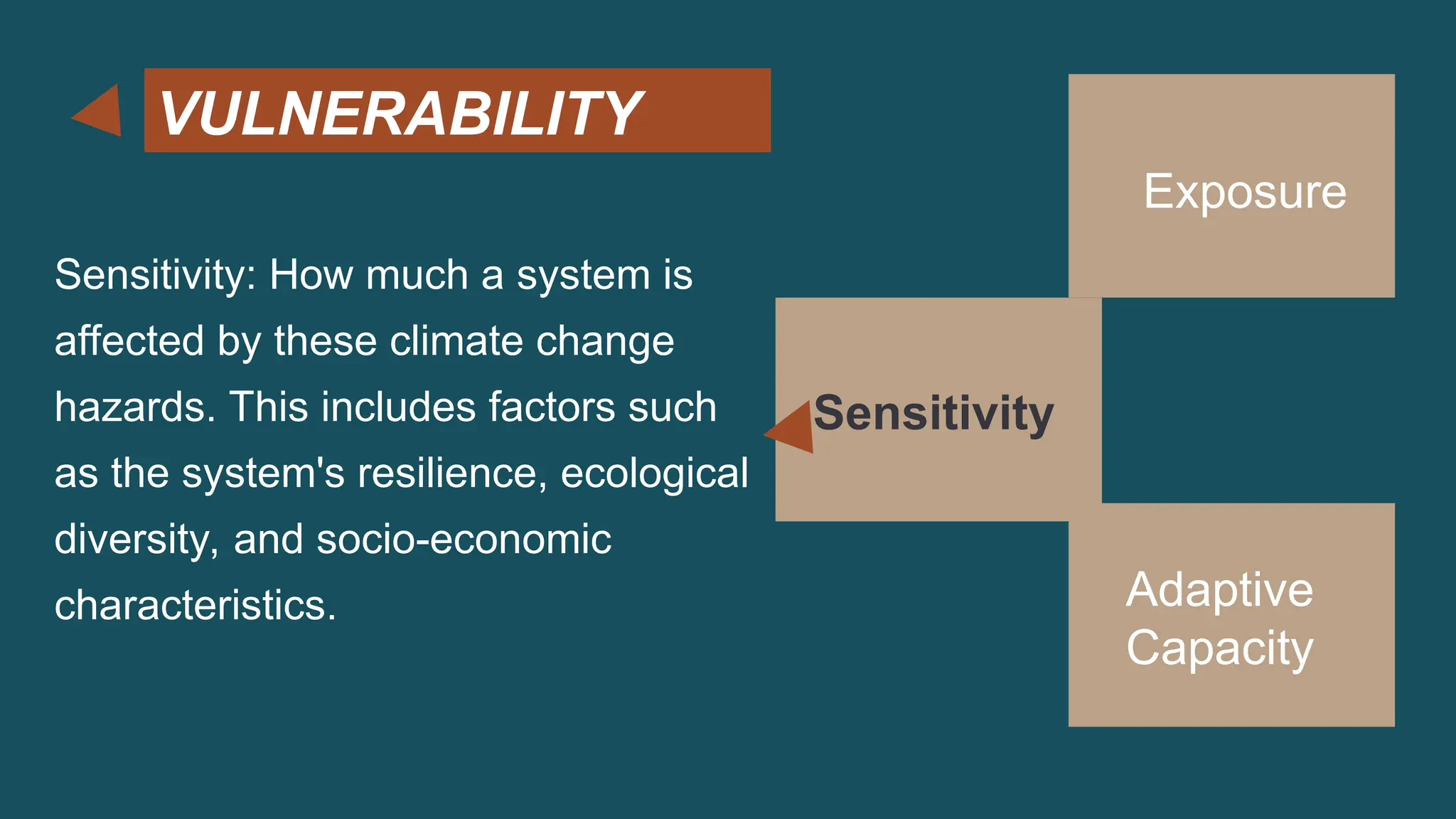
Sensitivity: How much a system is
affected by these climate change
hazards. This includes factors such
as the system's resilience, ecological
diversity, and socio-economic
characteristics.
Exposure
Sensitivity
Adaptive
Capacity
VULNERABILITY
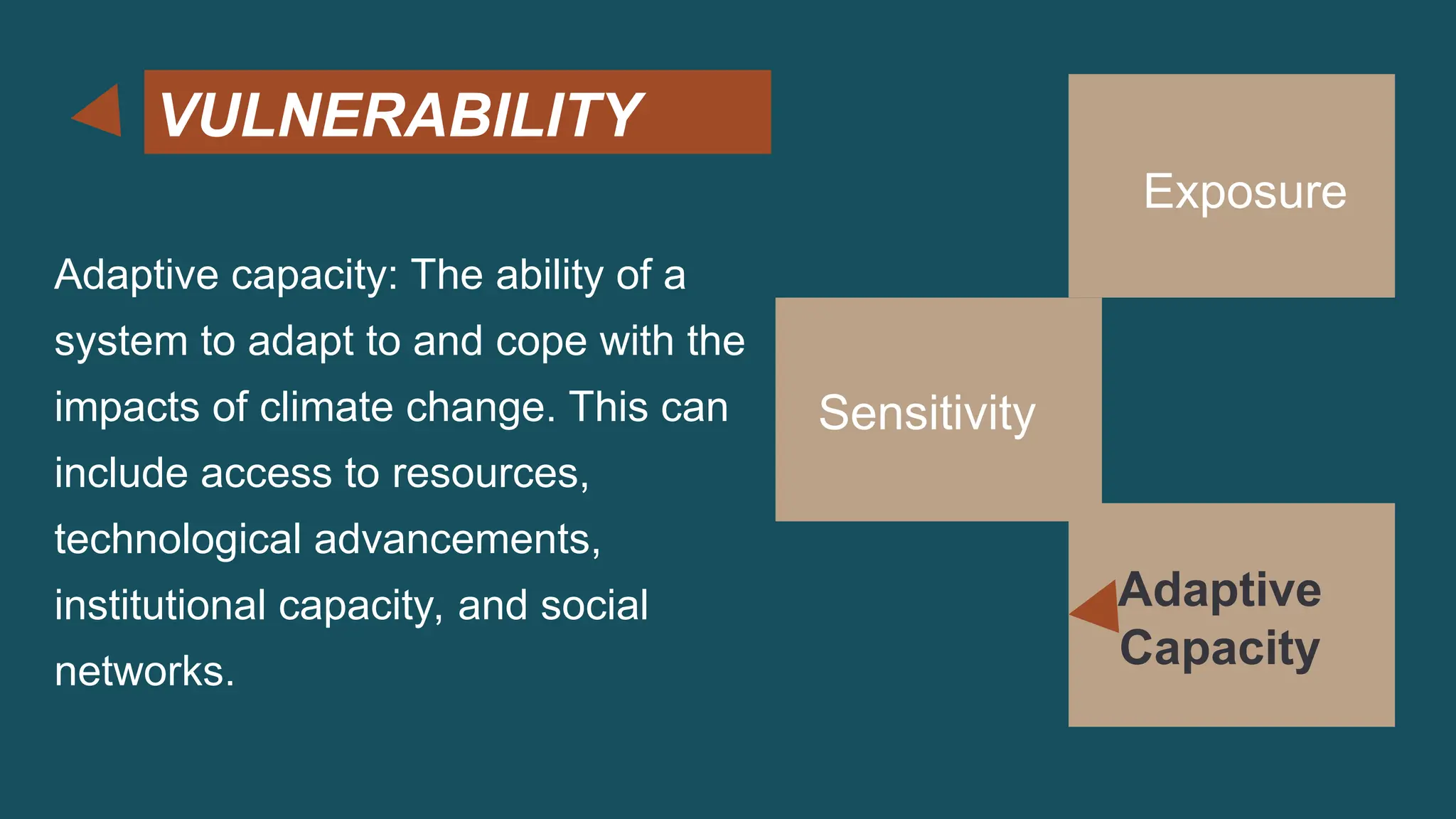
Adaptive capacity: The ability of a
system to adapt to and cope with the
impacts of climate change. This can
include access to resources,
technological advancements,
institutional capacity, and social
networks.
Exposure
Sensitivity
Adaptive
Capacity
VULNERABILITY
THANKS FOR LISTENING!
Presentation by Group
Member’s:
Galecia, Desiree Mae
Rendon, Melinda
Degaman, Clarissa
Betonio, Sherilyn
Bulfa, Rea Mae
Ampal, Aymie
Patayon, Nerizza
Mendoza, Julian Jr.
Jhon Francis, Heradura
Santuya, Kyle jason

CLIMATE CHANGE &COASTAL RESILIENCE G-2 - Copy.ppt

  • 1.
  • 2.
    Our climate systemis interconnected. This means that actions and events happening across the globe have local impacts. Our climate system is also changing. The accumulation of greenhouse gases in the atmosphere have led to warming temperatures, melting ice, a rising ocean, shifting precipitation patterns, and changing atmospheric winds.
  • 3.
    Slide 3 STYLE/Presentation Template GREENHOUSE EFFECT Thegreenhouse effect works much the same way on Earth. Gases in the atmosphere, such as carbon dioxide, trap heat similar to the glass roof of a greenhouse. These heat-trapping gases are called greenhouse gases. Human activities are changing each's natural greenhouse effect. Burning fossil fuels like coal and oil puts more carbon dioxide into our atmosphere. causes of climate change:
  • 4.
  • 5.
    •Agriculture and FoodProduction Changes in climate and increases in extreme weather events are among the reasons behind a global rise in hunger and poor nutrition. Fisheries crops, and livestock may be destroyed or become less productive. Heat stress can diminish water and grasslands for grazing Impact of Climate Change •Health Changing weather patterns are expanding diseases such as malaria. Extreme weather events increase disease and death, and make it difficult for health care systems to keep up. Other risks to health include increased hunger and poor nutrition in places where people cannot grow or find sufficient food.
  • 6.
    Impact of ClimateChange •Forests Climate change will influence a number of natural disturbances that threaten forest health. These include insect outbreaks, invasive species, wildfires, and storms. Some disturbances, like a wildfire, take place quickly. Others, like changes in animal or plant populations, happen over decades to centuries. •Coastal Areas The ocean soaks up most of the heat from global warming. This melts ice sheets and raises sea levels, threatening coastal and island communities. The ocean also absorbs carbon dioxide, keeping it from the atmosphere. More carbon dioxide makes the ocean more acidic, which endangers marine life.
  • 7.
    •Livelihoods Climate change increasesthe factors that put and keep people in poverty. Floods may sweep away urban slums, destroying homes and livelihoods. Heat can make it difficult to work in outdoor jobs. Weather-related disasters displace 23 million people a year, leaving many more vulnerable to poverty. Impact of Climate Change •Ecology Climate change poses risks to the survival of species on land and in the ocean. These risks increase as temperatures climb. Forest fires, extreme weather and invasive pests and diseases are among many threats. Some species will be able to relocate and survive, but others will not.
  • 8.
    Adaptations for ClimateChange Adapting to climate change is crucial for building resilience against the environmental, social, and economic disruptions it brings. It's a multi-faceted approach that involves adjusting to the current impacts we're experiencing and preparing for the ones expected in the future.
  • 9.
    TYPES OF ADAPTATION Autonomousadaptations or reactive adaptation is undertaken in response to an effect of climate change that has already been experienced. Example: Individual houses that are upgraded to new building standards only after a cyclone destroys their roofs. Anticipatory or proactive adaptation takes place before the impacts of climate change are observed. Example: Local government prevents new development on a greenfield site located in an area likely to be affected during high tides in 50 years.
  • 10.
    EXAMPLES I Infrastructure: Shielding communities: Seawalls andlevees are being built in coastal areas to buffer against rising sea levels and storm surges. Likewise, floodplains and wetlands are being restored to act as natural sponges, absorbing excess water and mitigating flooding risks. Climate-resilient design: Buildings are being constructed with stronger materials and improved insulation to withstand extreme weather events like heat waves and hurricanes. Upgrading energy grids to be more reliant on renewable sources like solar and wind power can also lessen the vulnerability to disruptions caused by extreme weather.
  • 11.
    VULNERABILITY Climate change vulnerabilityrefers to the degree to which a system, such as a community, ecosystem, or region, is susceptible to the impacts of climate change. It encompasses three main components: Exposure Sensitivity Adaptive Capacity
  • 12.
    VULNERABILITY Exposure: The extentto which a system is likely to experience climate change hazards, such as extreme weather events, rising temperatures, or sea-level rise. Exposure Sensitivity Adaptive Capacity
  • 13.
    VULNERABILITY Sensitivity: How mucha system is affected by these climate change hazards. This includes factors such as the system's resilience, ecological diversity, and socio-economic characteristics. Exposure Sensitivity Adaptive Capacity
  • 14.
    VULNERABILITY Adaptive capacity: Theability of a system to adapt to and cope with the impacts of climate change. This can include access to resources, technological advancements, institutional capacity, and social networks. Exposure Sensitivity Adaptive Capacity
  • 15.
  • 16.
    THANKS FOR LISTENING! Presentationby Group Member’s: Galecia, Desiree Mae Rendon, Melinda Degaman, Clarissa Betonio, Sherilyn Bulfa, Rea Mae Ampal, Aymie Patayon, Nerizza Mendoza, Julian Jr. Jhon Francis, Heradura Santuya, Kyle jason