1
Research Seminar for
Educational Sciences
Prof. Dr. Chang Zhu
Department of Educational Sciences
Vrije Universiteit Brussel
1
Mixed-methods research
Mixed methods research combines
quantitative and qualitative
approaches by including both
quantitative and qualitative data in
one study.
Mixed research (another name)
2
2
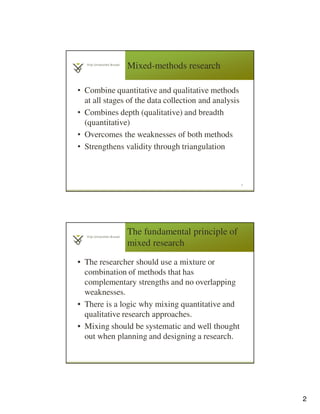
Mixed-methods research
• Combine quantitative and qualitative methods
at all stages of the data collection and analysis
• Combines depth (qualitative) and breadth
(quantitative)
• Overcomes the weaknesses of both methods
• Strengthens validity through triangulation
3
The fundamental principle of
mixed research
• The researcher should use a mixture or
combination of methods that has
complementary strengths and no overlapping
weaknesses.
• There is a logic why mixing quantitative and
qualitative research approaches.
• Mixing should be systematic and well thought
out when planning and designing a research.
3
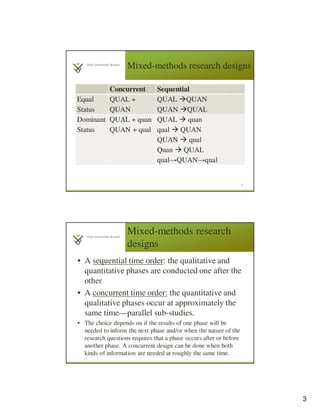
Mixed-methods research designs
Concurrent Sequential
Equal
Status
QUAL +
QUAN
QUAL QUAN
QUAN QUAL
Dominant
Status
QUAL + quan
QUAN + qual
QUAL quan
qual QUAN
QUAN qual
Quan QUAL
qual→QUAN→qual
5
Mixed-methods research
designs
• A sequential time order: the qualitative and
quantitative phases are conducted one after the
other
• A concurrent time order: the quantitative and
qualitative phases occur at approximately the
same time—parallel sub-studies.
• The choice depends on if the results of one phase will be
needed to inform the next phase and/or when the nature of the
research questions requires that a phase occurs after or before
another phase. A concurrent design can be done when both
kinds of information are needed at roughly the same time.
4
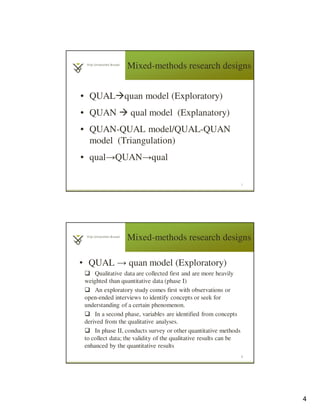
Mixed-methods research designs
• QUAL quan model (Exploratory)
• QUAN qual model (Explanatory)
• QUAN-QUAL model/QUAL-QUAN
model (Triangulation)
• qual→QUAN→qual
7
Mixed-methods research designs
• QUAL → quan model (Exploratory)
Qualitative data are collected first and are more heavily
weighted than quantitative data (phase I)
An exploratory study comes first with observations or
open-ended interviews to identify concepts or seek for
understanding of a certain phenomenon.
In a second phase, variables are identified from concepts
derived from the qualitative analyses.
In phase II, conducts survey or other quantitative methods
to collect data; the validity of the qualitative results can be
enhanced by the quantitative results
8
5
Mixed-methods research designs
• QUAN → qual model (Explanatory)
Quantitative data are collected first and weighted
more heavily than qualitative data (phase I)
Based on the findings of the quantitative data,
decides what type of qualitative data is needed in a
second study/ phase 2 as a source of
interpretation/explanation.
The qualitative data analysis and interpretation can
be used to help explain or elaborate on the
quantitative results.
9
Main types of mixed research
designs
• QUAN-QUAL/ QUAL-QUAN model
(Triangulation)
equally weighted and are collected at the same
time in the same study
the strengths of one method offsets the weaknesses
of the other method
the fully integrated QUAN-QUAL approach is the
most challenging
analyze and discuss if the sources from
quantitative and qualitative data revealed similar
findings or not 10
6
Main types of mixed research
designs
• qual→QUAN→qual
• Dominant status sequential design
• The quantitative paradigm is given major emphasis
• The design occurs in three separate phases
• A qualitative phase: exploratory qualitative
information
• A quantitative phase: primary research question is
to be addressed by a quantitative approach
• A qualitative phase: explanatory information
Main types of mixed research
designs
• qual→QUAN→qual: an example
Phase I: open-ended questions or
interviews/focus groups to help determine the
content of the survey instrument
Phase II: survey instrument to collect
quantitative data
Phase III: select typical persons/samples for in-
depth interviews
7
Research report with mixed-
methods
• The styles of writing: challenging to strike a
balance between the two forms of writing.
• Be clear about the research design, research
procedures
• Structure the reporting of results in a logic and
meaningful way
• Can be lengthy, so good structure is important
Example article
Title: Motivation beliefs of secondary school
teachers
Design: QUAN → qual (explanatory)
Study 1: quantitative: self-efficacy, academic
climate, collective efficacy
Study 2: in-depth semi-structured interviews
14
8
Example article
Title: Pre-service and beginning teachers’
professional identity
Design: QUAL-QUAN (Triangulation)
QUAL: semi-structured interviews
QUAN: survey questionnaire: value, self-
efficacy, commitment, emotion,
micropolitics
15
Assignment
• Read the example articles
• Prepare for your research proposal

Research seminar lecture_8_mixed_methods_research

  • 1.
    1 Research Seminar for EducationalSciences Prof. Dr. Chang Zhu Department of Educational Sciences Vrije Universiteit Brussel 1 Mixed-methods research Mixed methods research combines quantitative and qualitative approaches by including both quantitative and qualitative data in one study. Mixed research (another name) 2
  • 2.
    2 Mixed-methods research • Combinequantitative and qualitative methods at all stages of the data collection and analysis • Combines depth (qualitative) and breadth (quantitative) • Overcomes the weaknesses of both methods • Strengthens validity through triangulation 3 The fundamental principle of mixed research • The researcher should use a mixture or combination of methods that has complementary strengths and no overlapping weaknesses. • There is a logic why mixing quantitative and qualitative research approaches. • Mixing should be systematic and well thought out when planning and designing a research.
  • 3.
    3 Mixed-methods research designs ConcurrentSequential Equal Status QUAL + QUAN QUAL QUAN QUAN QUAL Dominant Status QUAL + quan QUAN + qual QUAL quan qual QUAN QUAN qual Quan QUAL qual→QUAN→qual 5 Mixed-methods research designs • A sequential time order: the qualitative and quantitative phases are conducted one after the other • A concurrent time order: the quantitative and qualitative phases occur at approximately the same time—parallel sub-studies. • The choice depends on if the results of one phase will be needed to inform the next phase and/or when the nature of the research questions requires that a phase occurs after or before another phase. A concurrent design can be done when both kinds of information are needed at roughly the same time.
  • 4.
    4 Mixed-methods research designs •QUAL quan model (Exploratory) • QUAN qual model (Explanatory) • QUAN-QUAL model/QUAL-QUAN model (Triangulation) • qual→QUAN→qual 7 Mixed-methods research designs • QUAL → quan model (Exploratory) Qualitative data are collected first and are more heavily weighted than quantitative data (phase I) An exploratory study comes first with observations or open-ended interviews to identify concepts or seek for understanding of a certain phenomenon. In a second phase, variables are identified from concepts derived from the qualitative analyses. In phase II, conducts survey or other quantitative methods to collect data; the validity of the qualitative results can be enhanced by the quantitative results 8
  • 5.
    5 Mixed-methods research designs •QUAN → qual model (Explanatory) Quantitative data are collected first and weighted more heavily than qualitative data (phase I) Based on the findings of the quantitative data, decides what type of qualitative data is needed in a second study/ phase 2 as a source of interpretation/explanation. The qualitative data analysis and interpretation can be used to help explain or elaborate on the quantitative results. 9 Main types of mixed research designs • QUAN-QUAL/ QUAL-QUAN model (Triangulation) equally weighted and are collected at the same time in the same study the strengths of one method offsets the weaknesses of the other method the fully integrated QUAN-QUAL approach is the most challenging analyze and discuss if the sources from quantitative and qualitative data revealed similar findings or not 10
  • 6.
    6 Main types ofmixed research designs • qual→QUAN→qual • Dominant status sequential design • The quantitative paradigm is given major emphasis • The design occurs in three separate phases • A qualitative phase: exploratory qualitative information • A quantitative phase: primary research question is to be addressed by a quantitative approach • A qualitative phase: explanatory information Main types of mixed research designs • qual→QUAN→qual: an example Phase I: open-ended questions or interviews/focus groups to help determine the content of the survey instrument Phase II: survey instrument to collect quantitative data Phase III: select typical persons/samples for in- depth interviews
  • 7.
    7 Research report withmixed- methods • The styles of writing: challenging to strike a balance between the two forms of writing. • Be clear about the research design, research procedures • Structure the reporting of results in a logic and meaningful way • Can be lengthy, so good structure is important Example article Title: Motivation beliefs of secondary school teachers Design: QUAN → qual (explanatory) Study 1: quantitative: self-efficacy, academic climate, collective efficacy Study 2: in-depth semi-structured interviews 14
  • 8.
    8 Example article Title: Pre-serviceand beginning teachers’ professional identity Design: QUAL-QUAN (Triangulation) QUAL: semi-structured interviews QUAN: survey questionnaire: value, self- efficacy, commitment, emotion, micropolitics 15 Assignment • Read the example articles • Prepare for your research proposal