Research
Process
Syeda Aqsa Gilani
M.Phil 1st
EN320221017
Content
What is Research Process?
Process of Research.
Summary
Research Process
 The research
process is the
process of multiple
steps in conducting
research work.
Research Process
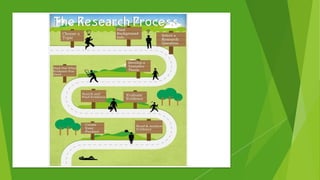
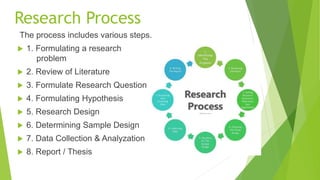
The process includes various steps.
 1. Formulating a research
problem
 2. Review of Literature
 3. Formulate Research Question
 4. Formulating Hypothesis
 5. Research Design
 6. Determining Sample Design
 7. Data Collection & Analyzation
 8. Report / Thesis
1. Formulating/
identifying a
Research
Problem:
 A good research always
starts with a good
problem.
 You identify a research
problem by first selecting
a general topic that’s
interesting to you and to
the interests of your
research advisor.
 Once identified, you’ll
need to narrow it.
 Find out what’s being asked or
what’s already been done in the
area by doing some exploratory
reading. Discuss the topic with your
advisor to gain additional insights,
explore novel approaches, and
begin to develop your research
question, purpose statement, and
hypothesis(es), if applicable.
2. Review the
Literature
3. Formulate research questions
Next, based on the problem statement, you need
to write one or more research questions.
These target exactly what you want to find out.
They might focus on describing, comparing,
evaluating, or explaining the research problem.
4. Formulating
Hypothesis
the next step is to formulate
your own hypothesis. A
hypothesis is a theoretical
statement in solving a logical
relationship between variables.
The role of hypothesis is to
guide the researcher by
delimiting the area of research
and to keep him/her on a right
track.
5. Research design
The research design is the blueprint or
framework for fulfilling objectives and
answering research questions.
It is a master plan specifying the methods
and procedures for collecting, processing,
and analyzing the collected data.
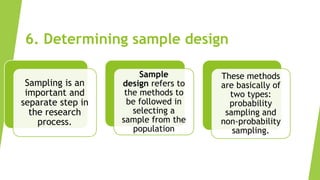
6. Determining sample design
Sampling is an
important and
separate step in
the research
process.
Sample
design refers to
the methods to
be followed in
selecting a
sample from the
population
These methods
are basically of
two types:
probability
sampling and
non-probability
sampling.
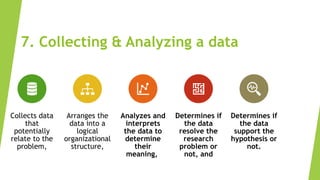
7. Collecting & Analyzing a data
Collects data
that
potentially
relate to the
problem,
Arranges the
data into a
logical
organizational
structure,
Analyzes and
interprets
the data to
determine
their
meaning,
Determines if
the data
resolve the
research
problem or
not, and
Determines if
the data
support the
hypothesis or
not.
8. Report / Thesis
 Finally, the researcher has to
prepare the report of what has
been done by him.
 Writing a report includes:
 1. the preliminary pages (title
page, date,
acknowledgement, table of
content)
 2. the main text (Introduction,
summary of findings, main
report, conclusion)
 3. the end matter (references,
Bibliography)
References
Kothari, C.R., Research Methodology,
Methods and Techniques, 2nd ed., New
Delhi: Vikas Publishing House Pvt. Ltd.,.
Research Process.pptx

Research Process.pptx

  • 1.
  • 2.
    Content What is ResearchProcess? Process of Research. Summary
  • 3.
    Research Process  Theresearch process is the process of multiple steps in conducting research work.
  • 5.
    Research Process The processincludes various steps.  1. Formulating a research problem  2. Review of Literature  3. Formulate Research Question  4. Formulating Hypothesis  5. Research Design  6. Determining Sample Design  7. Data Collection & Analyzation  8. Report / Thesis
  • 6.
    1. Formulating/ identifying a Research Problem: A good research always starts with a good problem.  You identify a research problem by first selecting a general topic that’s interesting to you and to the interests of your research advisor.  Once identified, you’ll need to narrow it.
  • 7.
     Find outwhat’s being asked or what’s already been done in the area by doing some exploratory reading. Discuss the topic with your advisor to gain additional insights, explore novel approaches, and begin to develop your research question, purpose statement, and hypothesis(es), if applicable. 2. Review the Literature
  • 8.
    3. Formulate researchquestions Next, based on the problem statement, you need to write one or more research questions. These target exactly what you want to find out. They might focus on describing, comparing, evaluating, or explaining the research problem.
  • 9.
    4. Formulating Hypothesis the nextstep is to formulate your own hypothesis. A hypothesis is a theoretical statement in solving a logical relationship between variables. The role of hypothesis is to guide the researcher by delimiting the area of research and to keep him/her on a right track.
  • 10.
    5. Research design Theresearch design is the blueprint or framework for fulfilling objectives and answering research questions. It is a master plan specifying the methods and procedures for collecting, processing, and analyzing the collected data.
  • 11.
    6. Determining sampledesign Sampling is an important and separate step in the research process. Sample design refers to the methods to be followed in selecting a sample from the population These methods are basically of two types: probability sampling and non-probability sampling.
  • 12.
    7. Collecting &Analyzing a data Collects data that potentially relate to the problem, Arranges the data into a logical organizational structure, Analyzes and interprets the data to determine their meaning, Determines if the data resolve the research problem or not, and Determines if the data support the hypothesis or not.
  • 13.
    8. Report /Thesis  Finally, the researcher has to prepare the report of what has been done by him.  Writing a report includes:  1. the preliminary pages (title page, date, acknowledgement, table of content)  2. the main text (Introduction, summary of findings, main report, conclusion)  3. the end matter (references, Bibliography)
  • 15.
    References Kothari, C.R., ResearchMethodology, Methods and Techniques, 2nd ed., New Delhi: Vikas Publishing House Pvt. Ltd.,.