RESEARCH METHODS
PICHANO KIKON
Central University of Gujarat
School of Library and Information Science
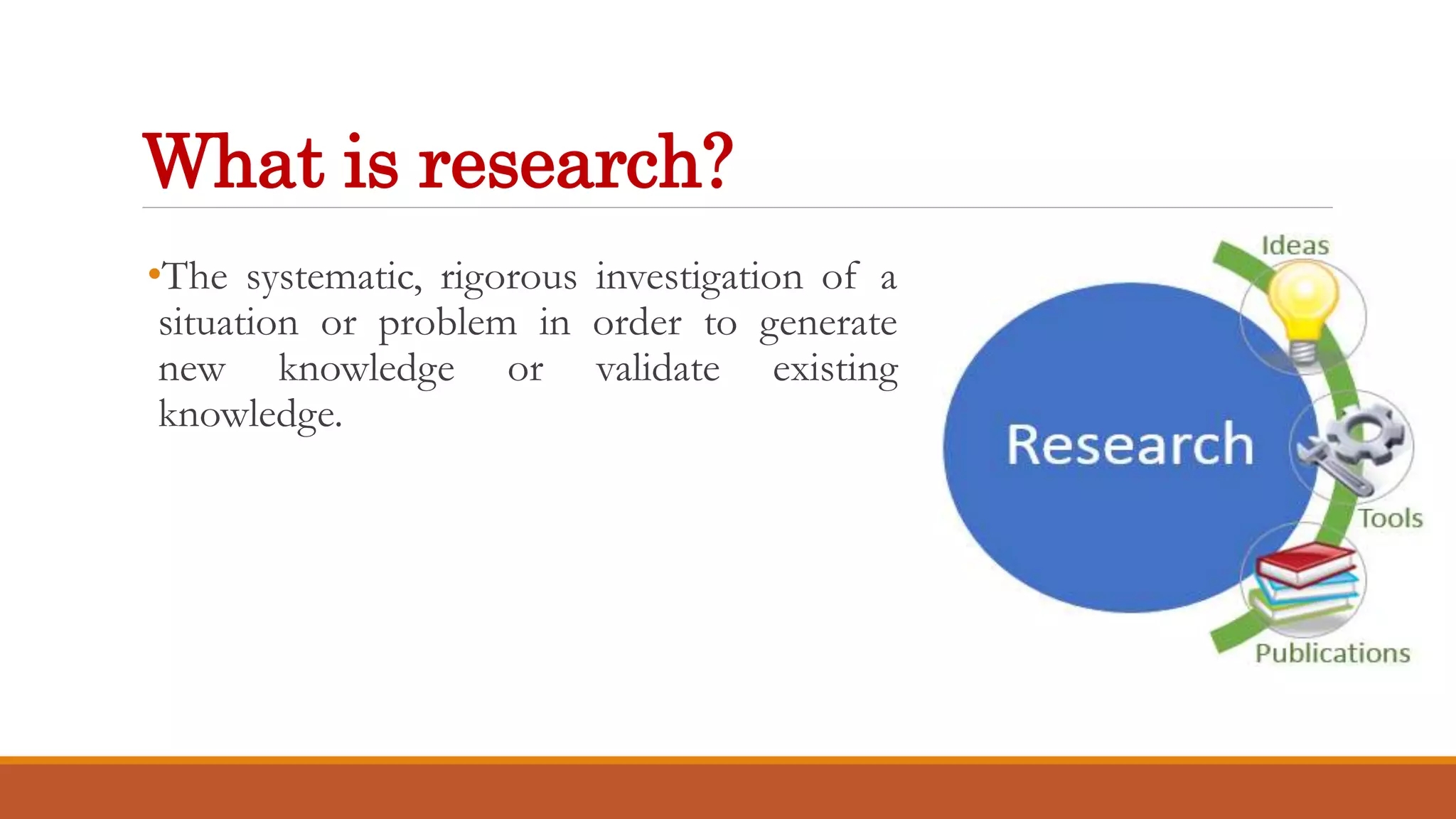
What is research?
•The systematic, rigorous investigation of a
situation or problem in order to generate
new knowledge or validate existing
knowledge.
BASIC RESEARCH METHODS
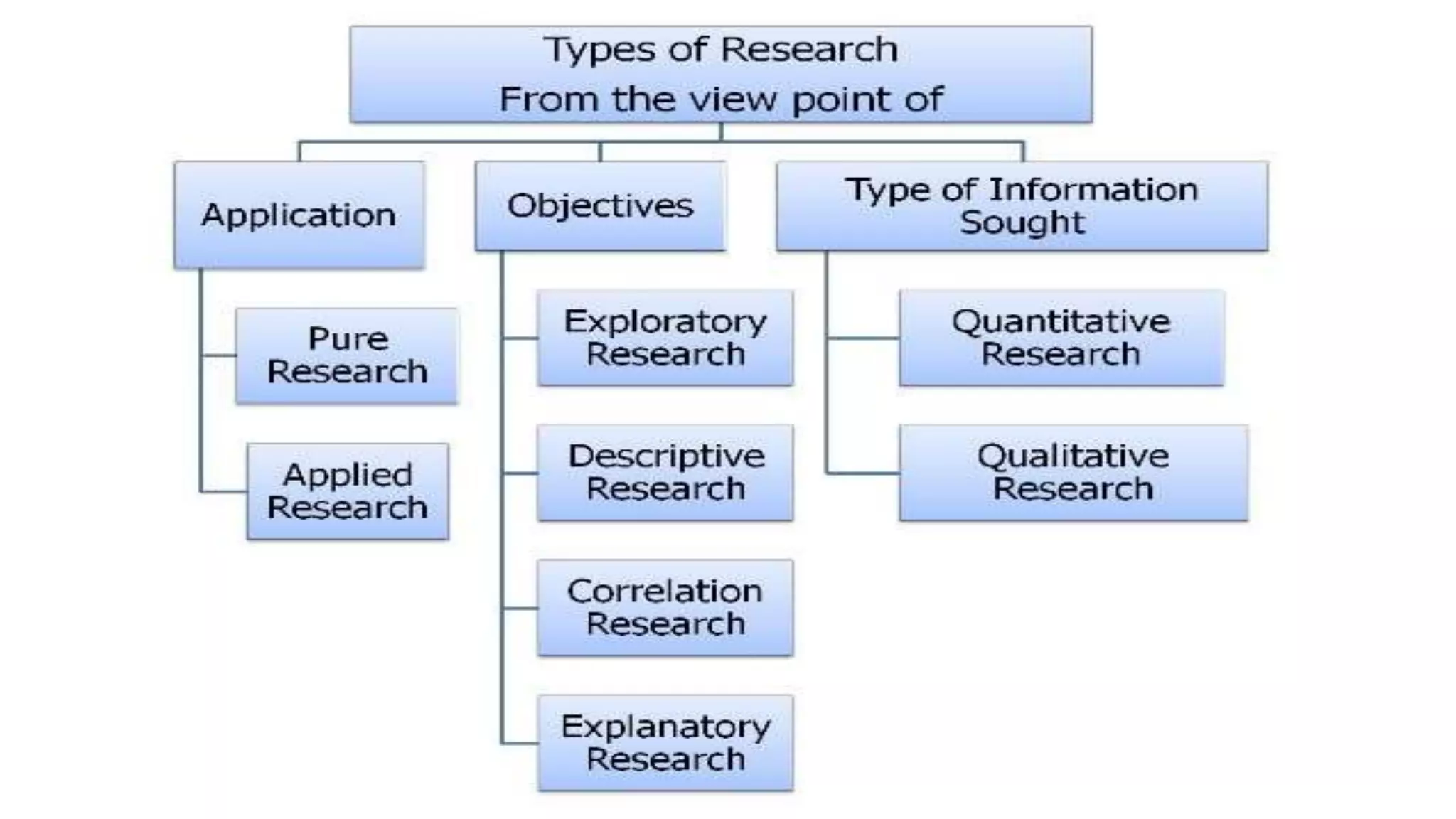
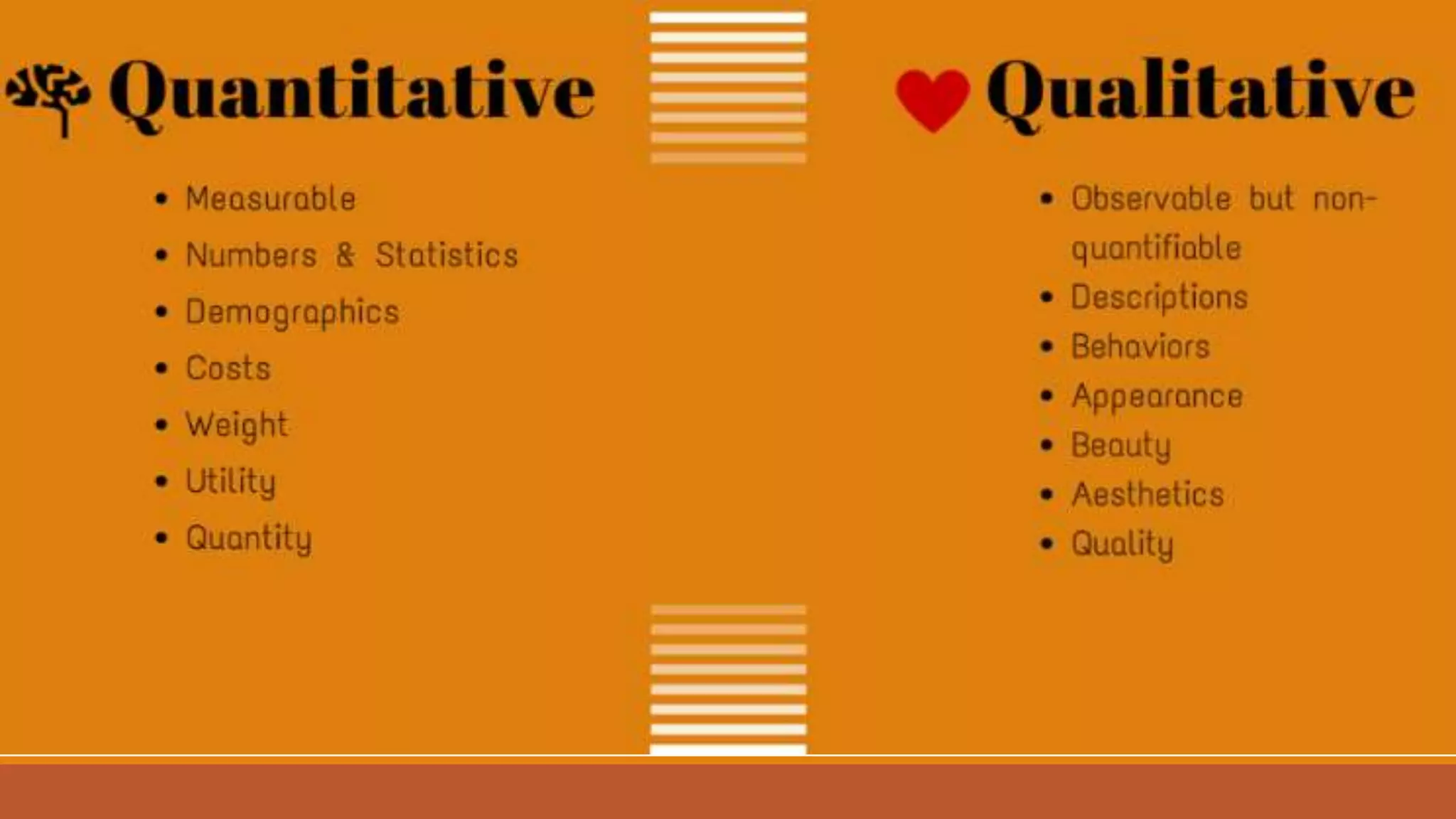
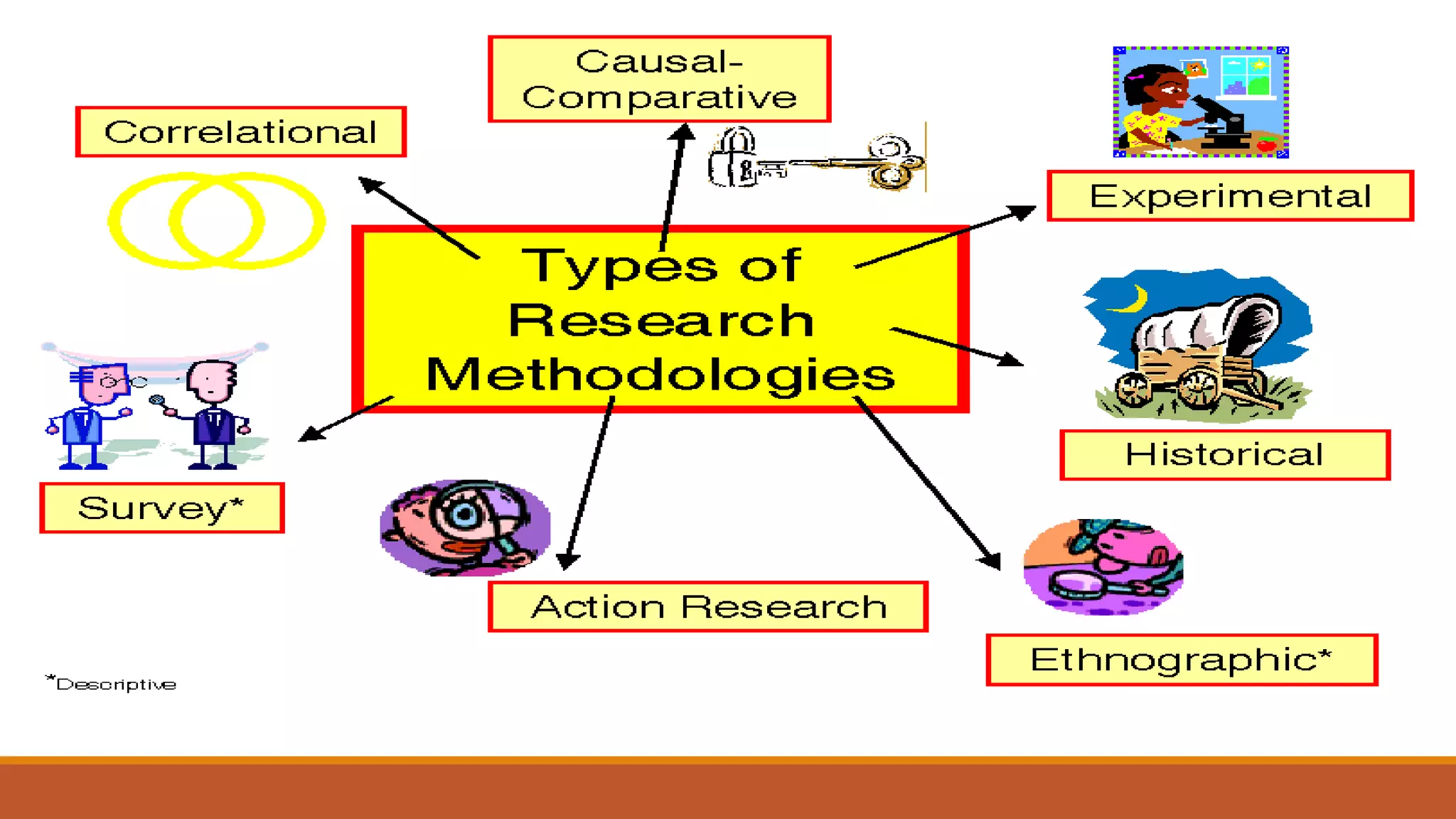
•Qualitative research
•Quantitative research
Qualitative research
•Qualitative research is research dealing with phenomena that are
difficult or impossible to quantify mathematically, such as beliefs,
meanings, attributes, and symbols
•Qualitative researchers aim to gather an in-depth understanding of
human behaviour and the reasons that govern such behaviour. The
qualitative method investigates the why and how of decision making,
not just what, where, when.
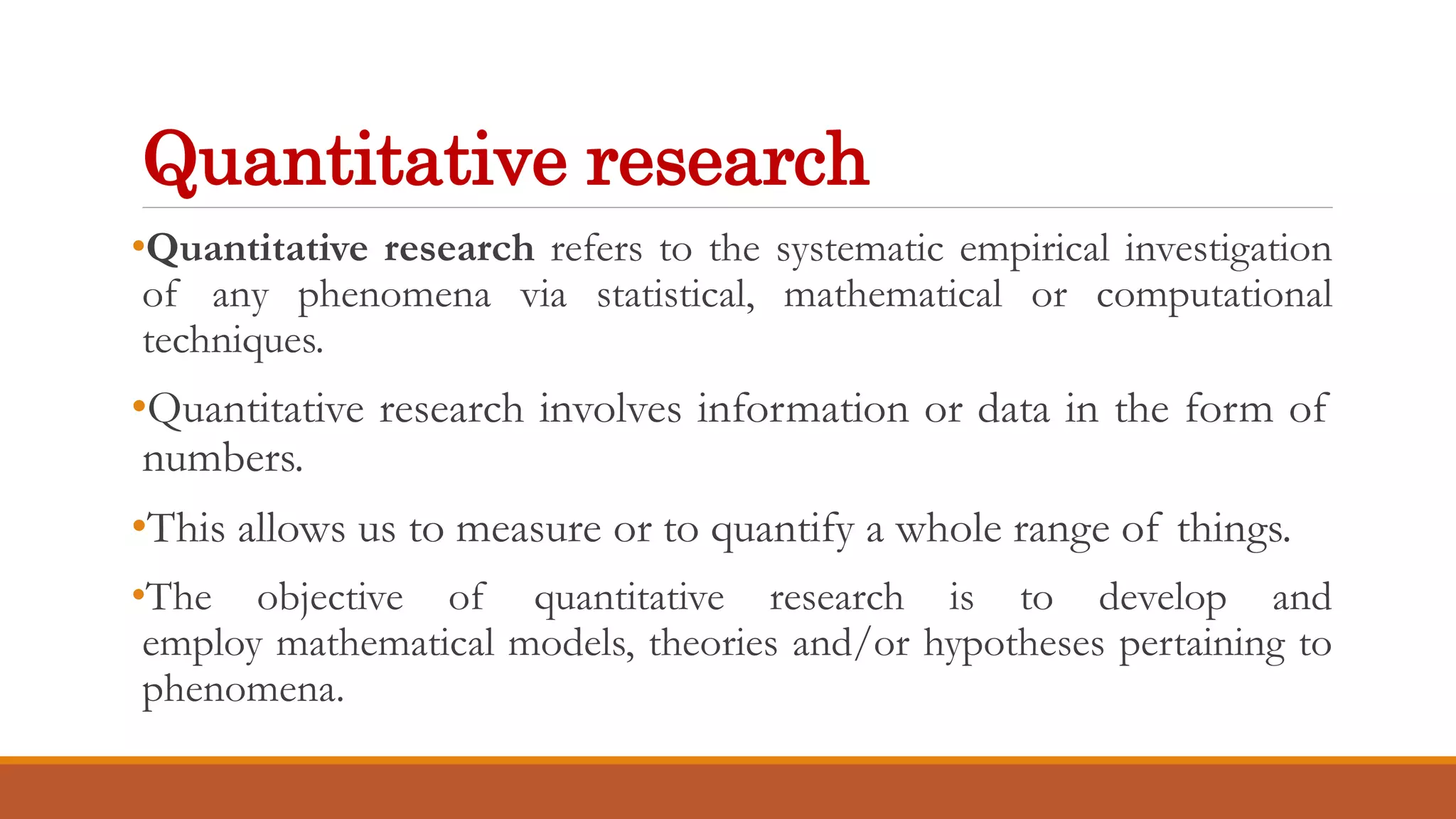
Quantitative research
•Quantitative research refers to the systematic empirical investigation
of any phenomena via statistical, mathematical or computational
techniques.
•Quantitative research involves information or data in the form of
numbers.
•This allows us to measure or to quantify a whole range of things.
•The objective of quantitative research is to develop and
employ mathematical models, theories and/or hypotheses pertaining to
phenomena.
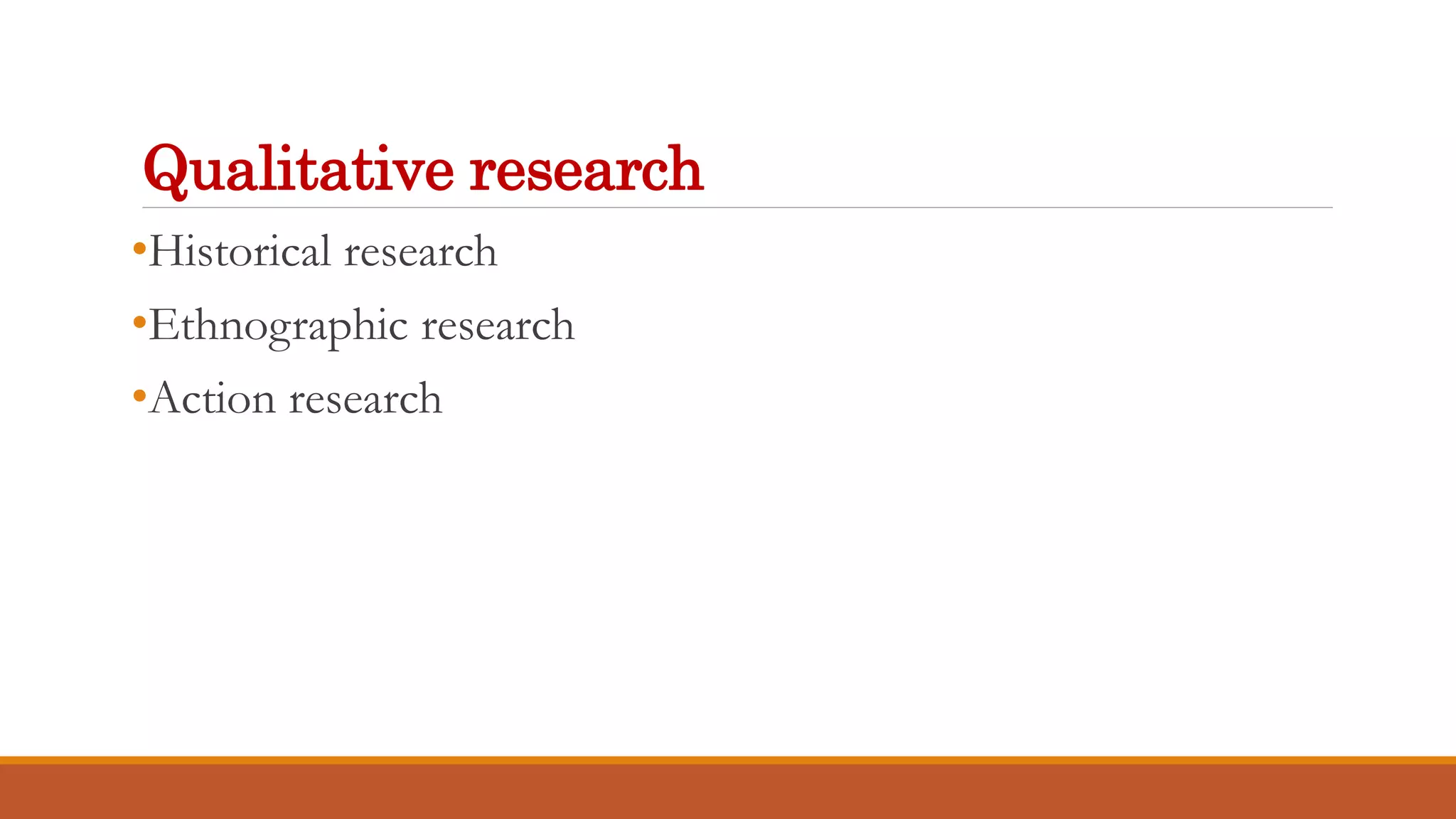
Qualitative research
•Historical research
•Ethnographic research
•Action research
Historical Research
•Historical research is the systematic collection and objective evaluation of
data related to past occurrences in order to test hypotheses concerning
causes, effects, or trends of those events to explain present events and
anticipate future events.” (Gay, 1996)
• It describe, explain, and understand actions or events that occurred
sometime in the past.
•An attempt is made to reconstruct what happened during a certain period
of time as completely and accurately as possible.
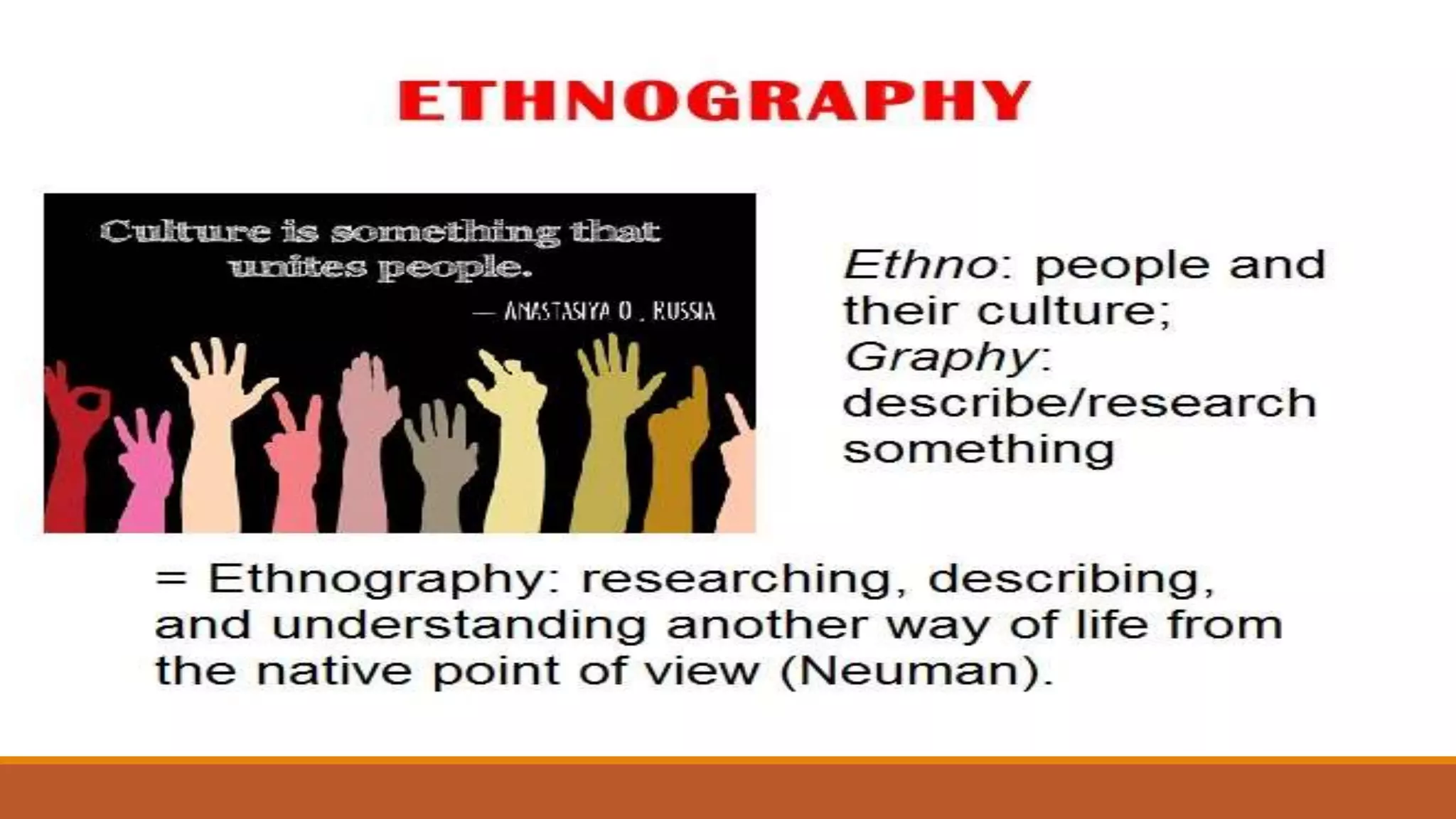
Ethnographic research
•Ethnography is the study of social interactions, behaviors, and perceptions that
occur within groups, teams, organizations, and communities.
•Ethnographic is an approach relying on the collection of data in the natural
environment.
•Ethnographers are interested in how the behaviour of individuals is influenced or
mediated by culture in which they live.
•So, human behaviour can only be understood if studied in the setting in which it
occurs. As people can influence and be influenced by the groups they live in.
•The purpose of ethnographic research is to attempt to understand what is
happening naturally in the setting and to interpret the data gathered to see what
implications could be informed from the data.
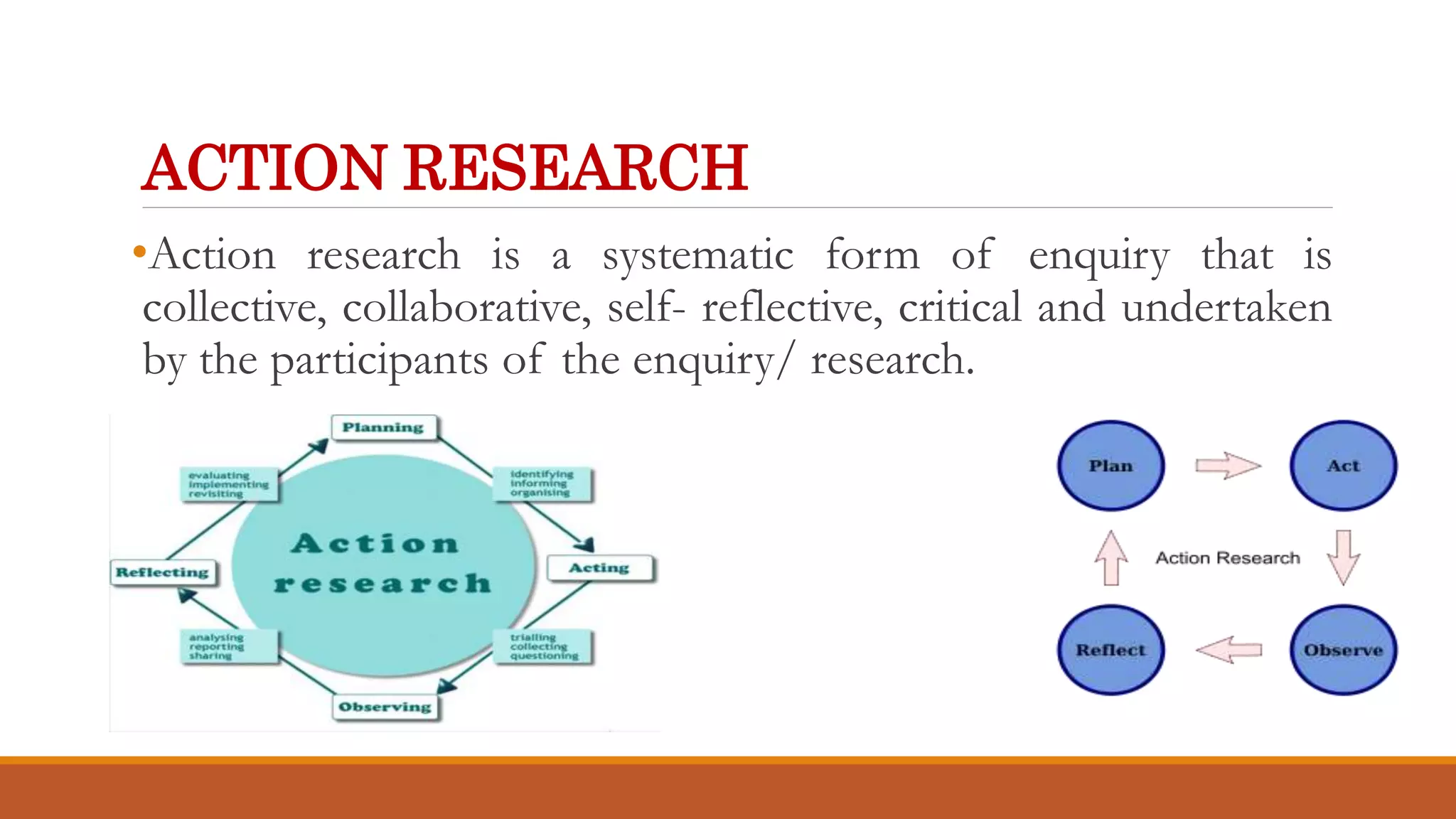
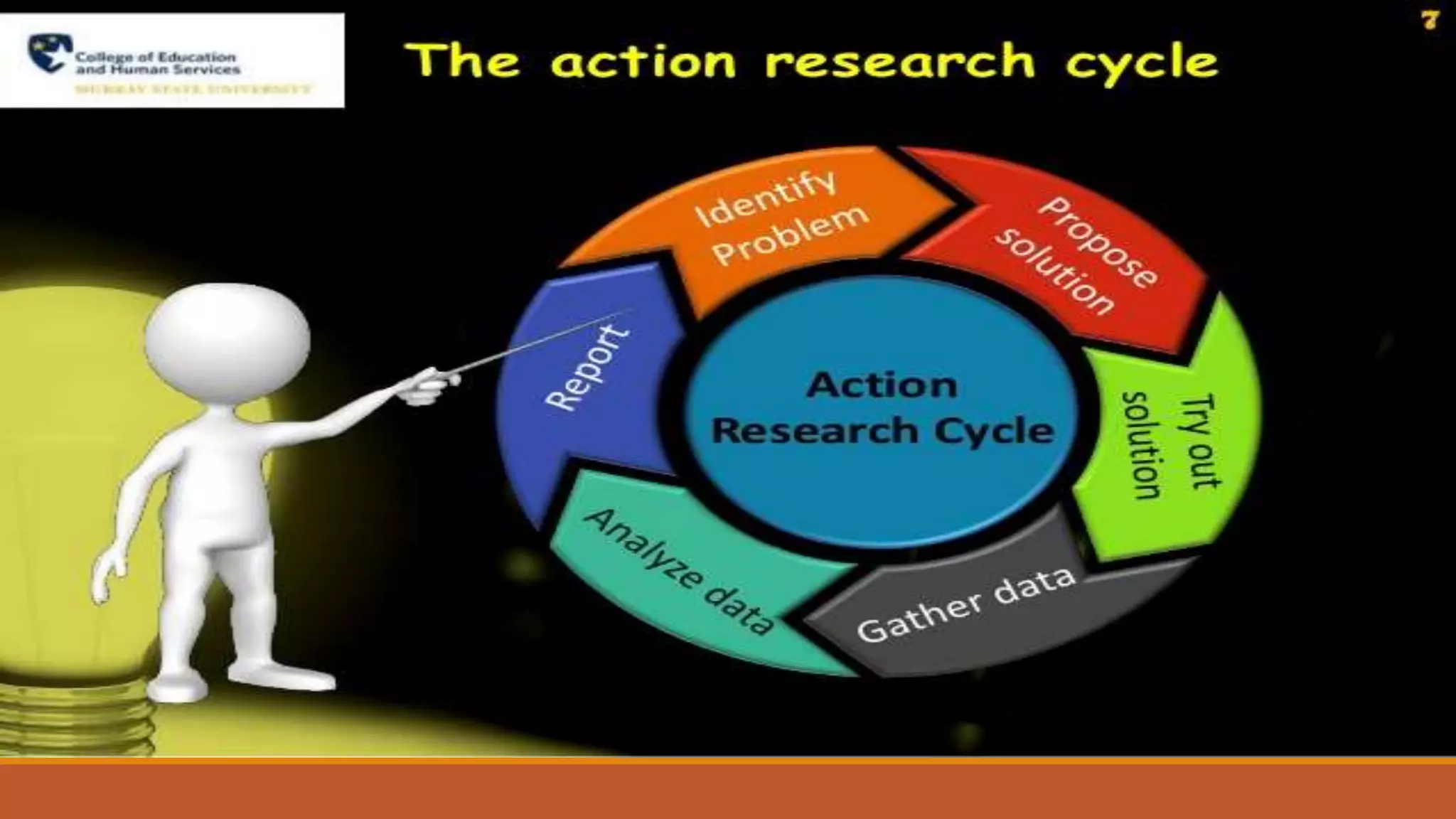
ACTION RESEARCH
•Action research is a systematic form of enquiry that is
collective, collaborative, self- reflective, critical and undertaken
by the participants of the enquiry/ research.
Quantitative Methods
•Survey research
•Correlational research
•Causal-comparative research
•Experimental research
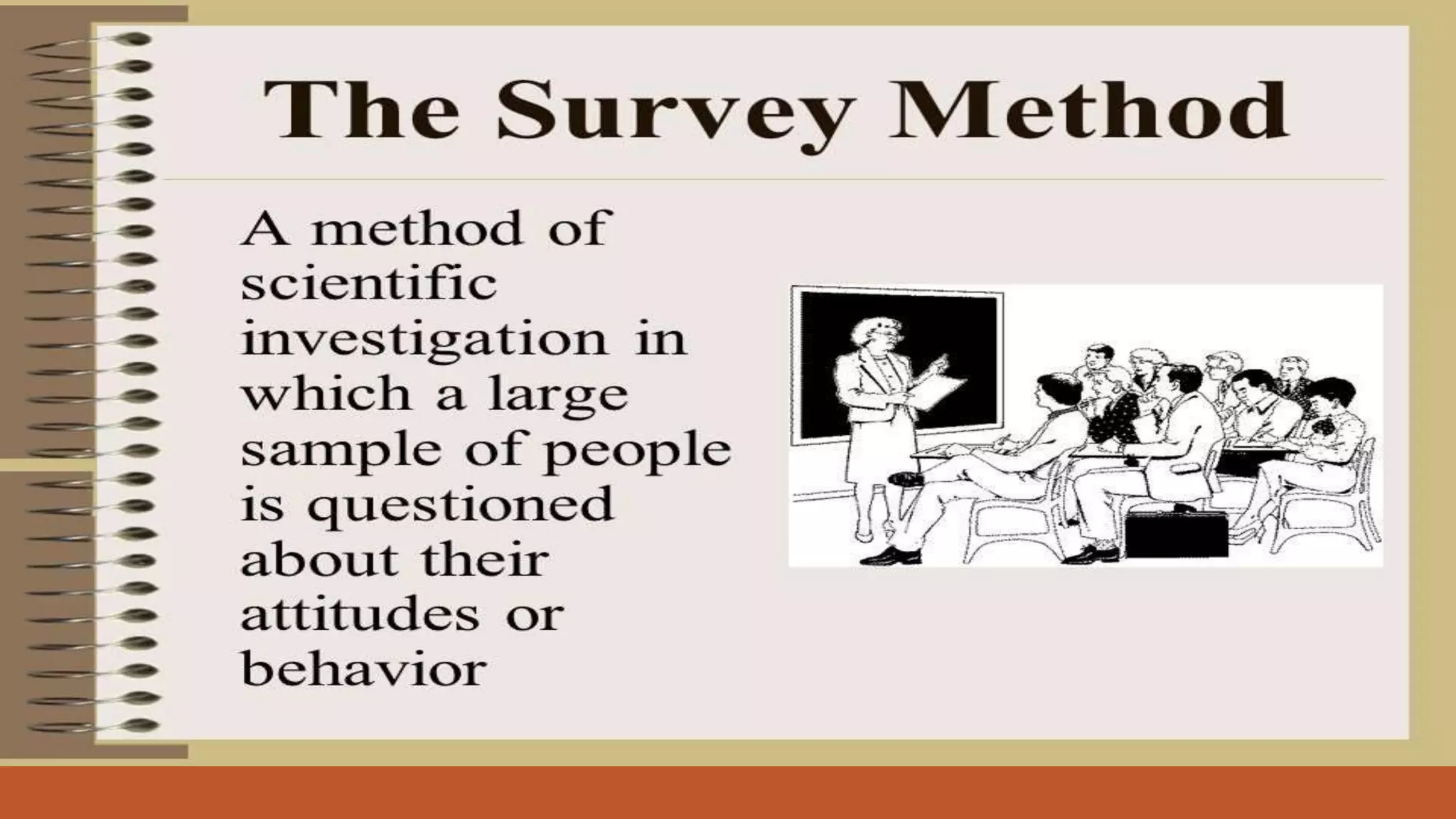
SURVEYS
•Surveys can be conducted in a number of ways.
BASIC SURVEY DESIGNS
1. Cross-Sectional Surveys:
 Data are collected at one point in time from a sample selected to represent a larger population.
2. Longitudinal Surveys = Trend, Cohort, and Panel
 Trend: Surveys of sample population at different points in time
 Cohort: Study of same population each time but different samples on different topic the data are collected.
 Panel: Collection of data with the same sample of respondents on the same topic at different point of
times.
Correlation Research Method
•It is a statistical measure of a relationship between two or more variables, gives an indication of how
one variable may predict another.
•Three possible Correlation Studies: a positive correlation, a negative correlation, and no correlation.
•The Correlation coefficient is a measure of correlation strength and can range from –1.00 to +1.00.
•Positive Correlations: Both variables increase or decrease at the same time. A correlation
coefficient close to +1.00 indicates a strong positive correlation.
•Negative Correlations: Indicates that as the amount of one variable increases, the
other decreases (and vice versa). A correlation coefficient close to -1.00 indicates a
strong negative correlation.
•No Correlation: Indicates no relationship between the two variables. A correlation
coefficient of 0 indicates no correlation.
Causal-Comparative Research
•Causal- comparative method is the simplest quantitative approach
to exploring cause and effect relationships between phenomena
•It involves a particular method of analysing data to detect
relationships between variables
•The correlational method is another approach to achieve the same
goal
Experimental research
•It is usually taken to be the most scientific of all methods.
•An experiment is a study of cause and effect.
•By changing one variable (the IV) while measuring another (the DV) while we control all others, as
far as possible.
•It allows us to draw conclusions with far more certainty than any non-experimental method.
•If (the IV) is the only thing that is changed then it must be responsible for any change in the
dependent variable.
REFERENCES
1. Kothari, C.R. (2014). Research Methodology: methods and techniques. 3nd ed. New
Delhi: New Age International Pvt. Ltd.,
2. Kumar, R. (2005). Research methodology: a step-by-step guide for beginners. 2nd ed.
Pearson Educational.
3. Kumar, P.S.G.(2004). Research Methods and Statistical Techniques. Delhi: B.R.
Publishing, 243-248.
4. Pickard, A.J. (2007). Research methods in Information. Facet Publishing.
Research methods

Research methods

  • 1.
    RESEARCH METHODS PICHANO KIKON CentralUniversity of Gujarat School of Library and Information Science
  • 2.
    What is research? •Thesystematic, rigorous investigation of a situation or problem in order to generate new knowledge or validate existing knowledge.
  • 4.
    BASIC RESEARCH METHODS •Qualitativeresearch •Quantitative research
  • 5.
    Qualitative research •Qualitative researchis research dealing with phenomena that are difficult or impossible to quantify mathematically, such as beliefs, meanings, attributes, and symbols •Qualitative researchers aim to gather an in-depth understanding of human behaviour and the reasons that govern such behaviour. The qualitative method investigates the why and how of decision making, not just what, where, when.
  • 6.
    Quantitative research •Quantitative researchrefers to the systematic empirical investigation of any phenomena via statistical, mathematical or computational techniques. •Quantitative research involves information or data in the form of numbers. •This allows us to measure or to quantify a whole range of things. •The objective of quantitative research is to develop and employ mathematical models, theories and/or hypotheses pertaining to phenomena.
  • 10.
  • 11.
    Historical Research •Historical researchis the systematic collection and objective evaluation of data related to past occurrences in order to test hypotheses concerning causes, effects, or trends of those events to explain present events and anticipate future events.” (Gay, 1996) • It describe, explain, and understand actions or events that occurred sometime in the past. •An attempt is made to reconstruct what happened during a certain period of time as completely and accurately as possible.
  • 13.
    Ethnographic research •Ethnography isthe study of social interactions, behaviors, and perceptions that occur within groups, teams, organizations, and communities. •Ethnographic is an approach relying on the collection of data in the natural environment. •Ethnographers are interested in how the behaviour of individuals is influenced or mediated by culture in which they live. •So, human behaviour can only be understood if studied in the setting in which it occurs. As people can influence and be influenced by the groups they live in. •The purpose of ethnographic research is to attempt to understand what is happening naturally in the setting and to interpret the data gathered to see what implications could be informed from the data.
  • 14.
    ACTION RESEARCH •Action researchis a systematic form of enquiry that is collective, collaborative, self- reflective, critical and undertaken by the participants of the enquiry/ research.
  • 16.
    Quantitative Methods •Survey research •Correlationalresearch •Causal-comparative research •Experimental research
  • 18.
    SURVEYS •Surveys can beconducted in a number of ways. BASIC SURVEY DESIGNS 1. Cross-Sectional Surveys:  Data are collected at one point in time from a sample selected to represent a larger population. 2. Longitudinal Surveys = Trend, Cohort, and Panel  Trend: Surveys of sample population at different points in time  Cohort: Study of same population each time but different samples on different topic the data are collected.  Panel: Collection of data with the same sample of respondents on the same topic at different point of times.
  • 19.
    Correlation Research Method •Itis a statistical measure of a relationship between two or more variables, gives an indication of how one variable may predict another. •Three possible Correlation Studies: a positive correlation, a negative correlation, and no correlation. •The Correlation coefficient is a measure of correlation strength and can range from –1.00 to +1.00. •Positive Correlations: Both variables increase or decrease at the same time. A correlation coefficient close to +1.00 indicates a strong positive correlation.
  • 20.
    •Negative Correlations: Indicatesthat as the amount of one variable increases, the other decreases (and vice versa). A correlation coefficient close to -1.00 indicates a strong negative correlation. •No Correlation: Indicates no relationship between the two variables. A correlation coefficient of 0 indicates no correlation.
  • 21.
    Causal-Comparative Research •Causal- comparativemethod is the simplest quantitative approach to exploring cause and effect relationships between phenomena •It involves a particular method of analysing data to detect relationships between variables •The correlational method is another approach to achieve the same goal
  • 24.
    Experimental research •It isusually taken to be the most scientific of all methods. •An experiment is a study of cause and effect. •By changing one variable (the IV) while measuring another (the DV) while we control all others, as far as possible. •It allows us to draw conclusions with far more certainty than any non-experimental method. •If (the IV) is the only thing that is changed then it must be responsible for any change in the dependent variable.
  • 25.
    REFERENCES 1. Kothari, C.R.(2014). Research Methodology: methods and techniques. 3nd ed. New Delhi: New Age International Pvt. Ltd., 2. Kumar, R. (2005). Research methodology: a step-by-step guide for beginners. 2nd ed. Pearson Educational. 3. Kumar, P.S.G.(2004). Research Methods and Statistical Techniques. Delhi: B.R. Publishing, 243-248. 4. Pickard, A.J. (2007). Research methods in Information. Facet Publishing.

Editor's Notes