
Development of
Working Hypothesis
Vinayak V
Khairnar
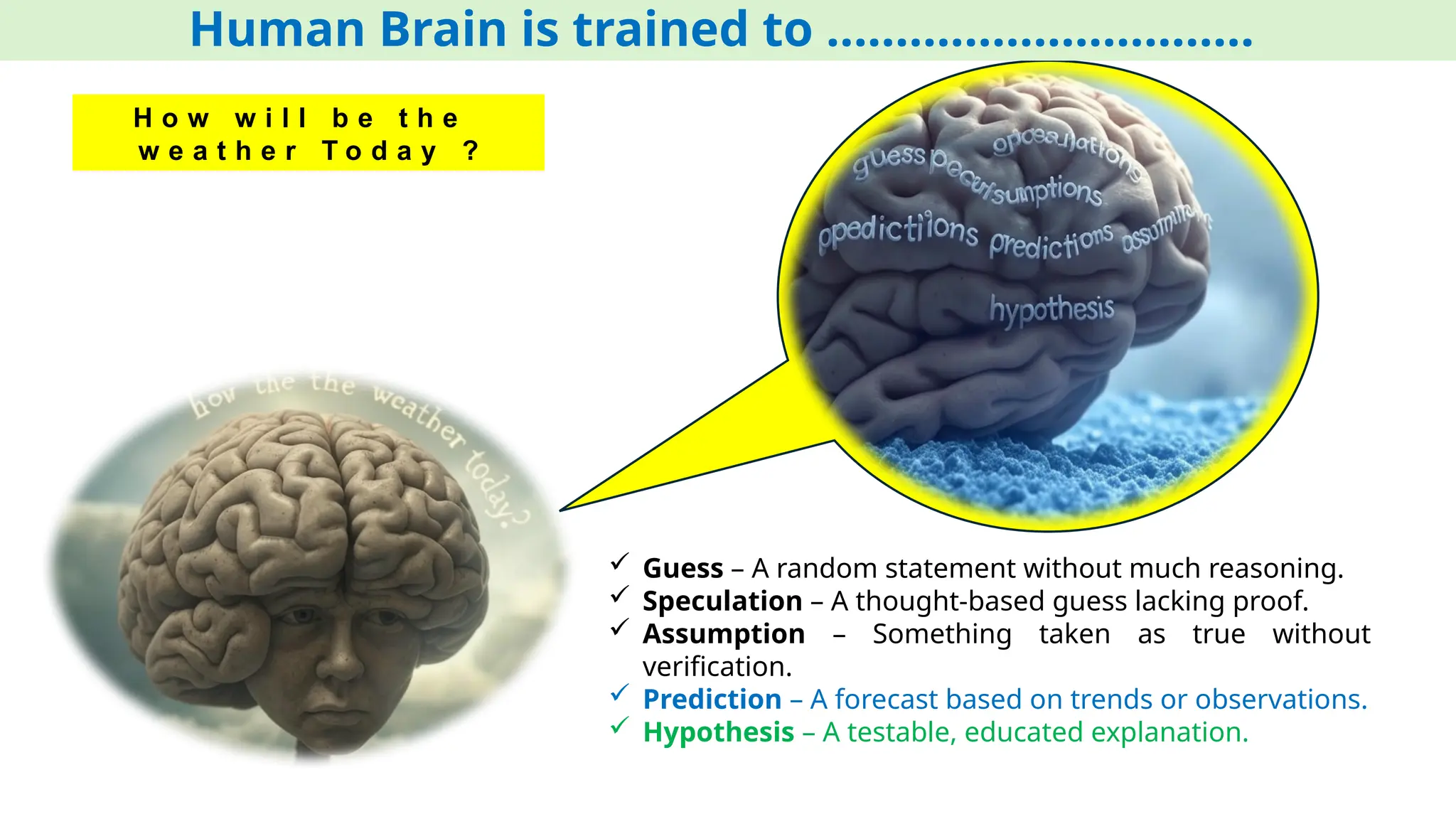
 Guess – A random statement without much reasoning.
 Speculation – A thought-based guess lacking proof.
 Assumption – Something taken as true without
verification.
 Prediction – A forecast based on trends or observations.
 Hypothesis – A testable, educated explanation.
H o w w i l l b e t h e
w e a t h e r T o d a y ?
Human Brain is trained to ………………………….
Aspect Hypothesis Prediction
Definition
A testable, educated guess
based on prior knowledge
and observation
A statement forecasting a
future event or outcome
based on patterns or
evidence
Purpose
Helps formulate research
questions and guide
experiments
Anticipates results based on
existing trends or known
variables
Testability
Must be testable through
experimentation or
observation
May or may not be testable,
often based on extrapolation
or expectation
Basis
Grounded in previous
research, logic, and theory
Derived from current data,
trends, or observable events
Flexibility
Can be refined or disproven
through testing
Can be adjusted as new
information becomes
available
Example
Increasing sunlight exposure
leads to faster plant growth
(Can be tested)
Tomorrow will be sunny
because the sky is clear today
(A projection based on
observation)
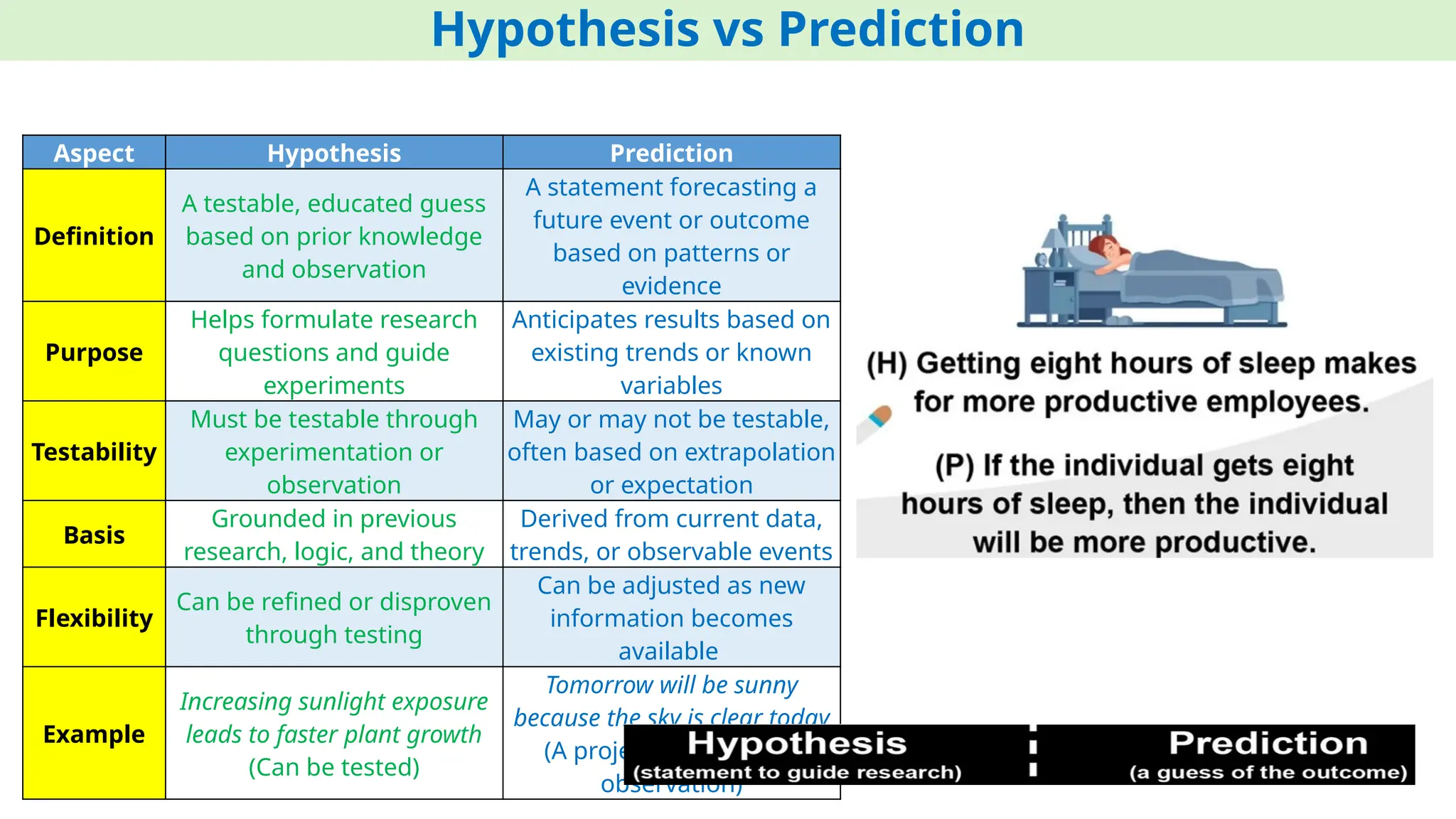
Hypothesis vs Prediction
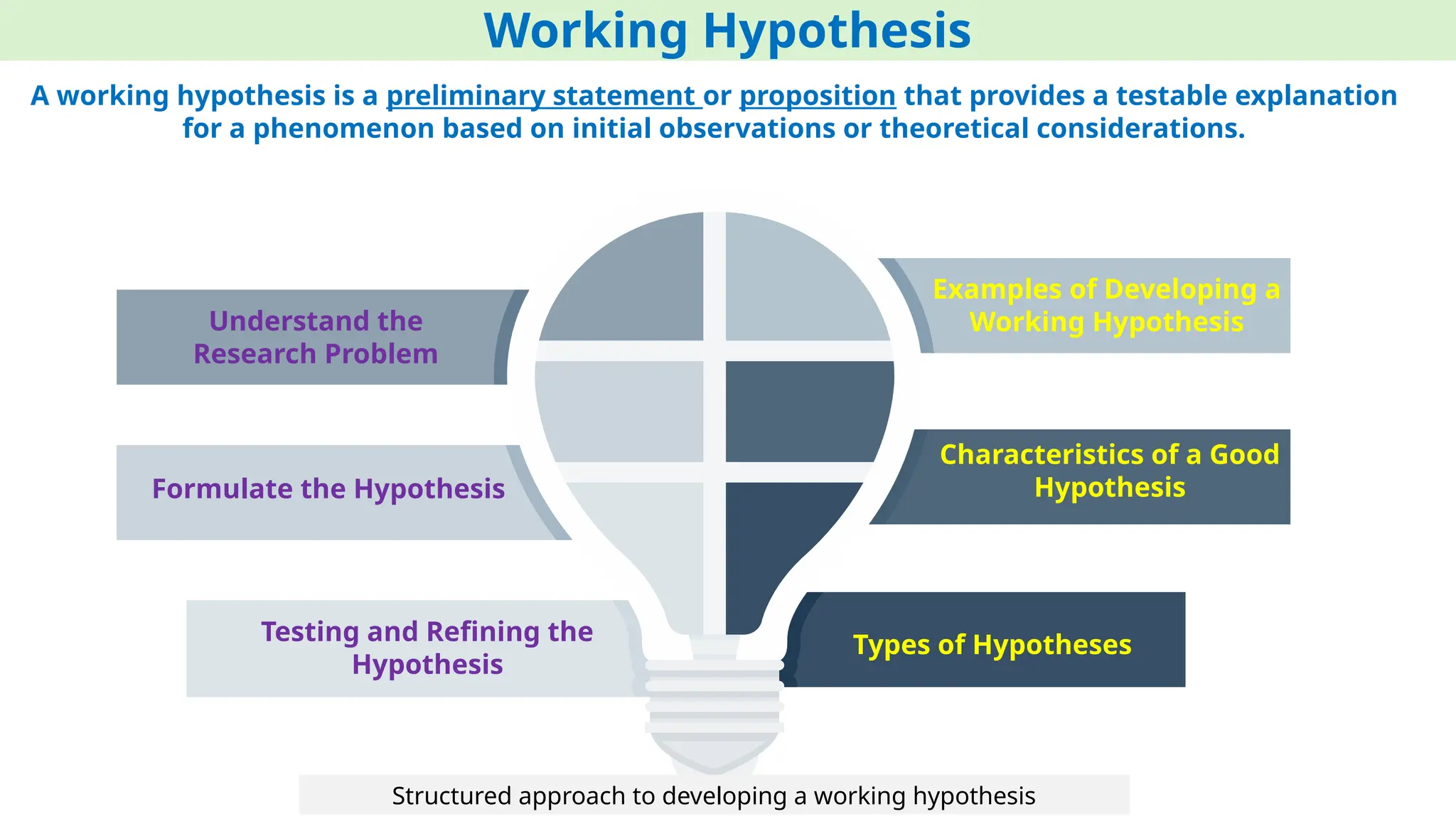
Understand the
Research Problem
Formulate the Hypothesis
Characteristics of a Good
Hypothesis
Types of Hypotheses
Testing and Refining the
Hypothesis
Examples of Developing a
Working Hypothesis
Working Hypothesis
A working hypothesis is a preliminary statement or proposition that provides a testable explanation
for a phenomenon based on initial observations or theoretical considerations.
Structured approach to developing a working hypothesis
1. Clarify the Research Question: Clearly define the specific question or problem you are
addressing. This helps in focusing the scope of your research.
2. Review Background Information: Gather and analyze relevant literature to understand
what has already been discovered and where gaps or unresolved issues exist.
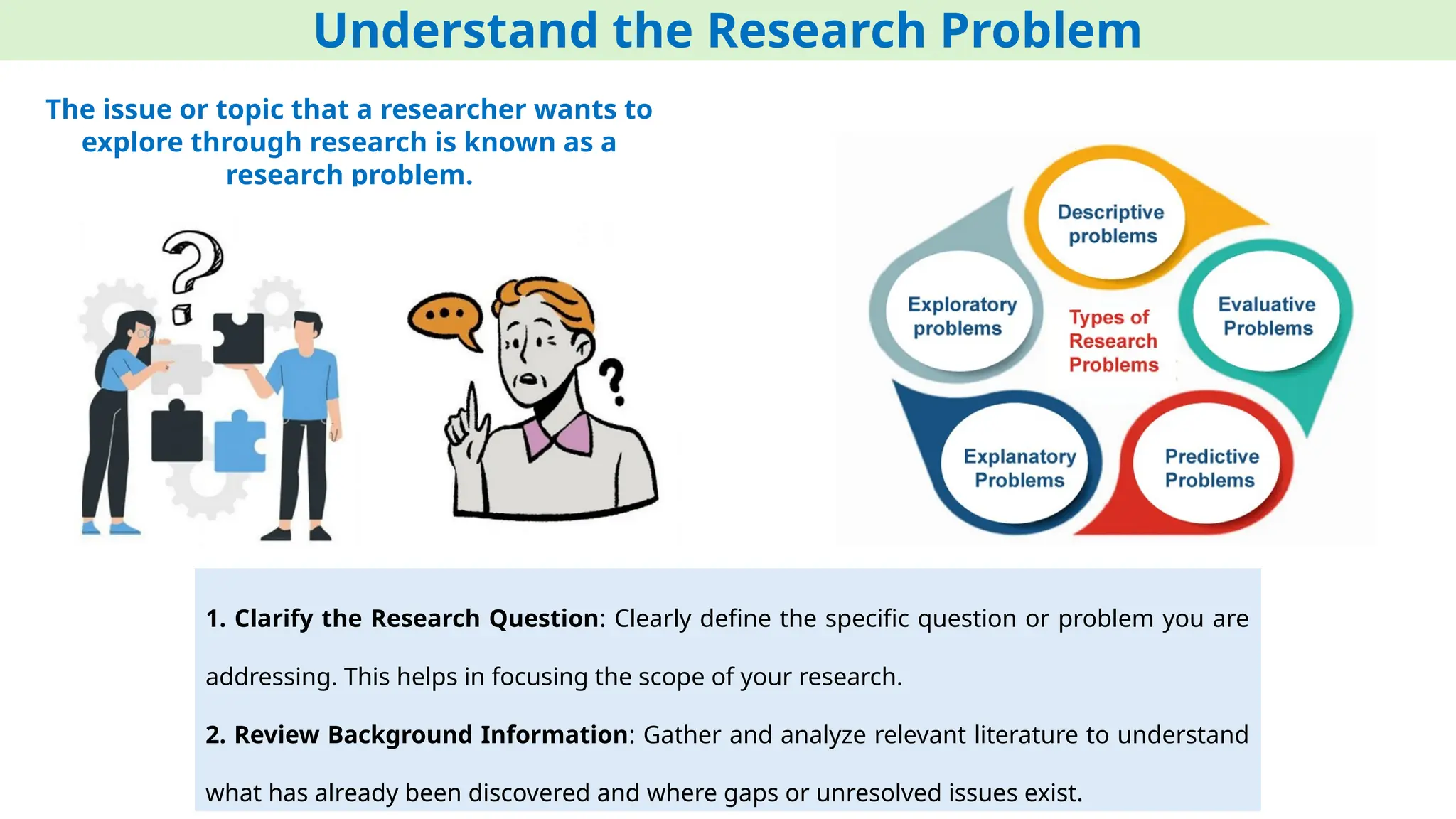
Understand the Research Problem
The issue or topic that a researcher wants to
explore through research is known as a
research problem.
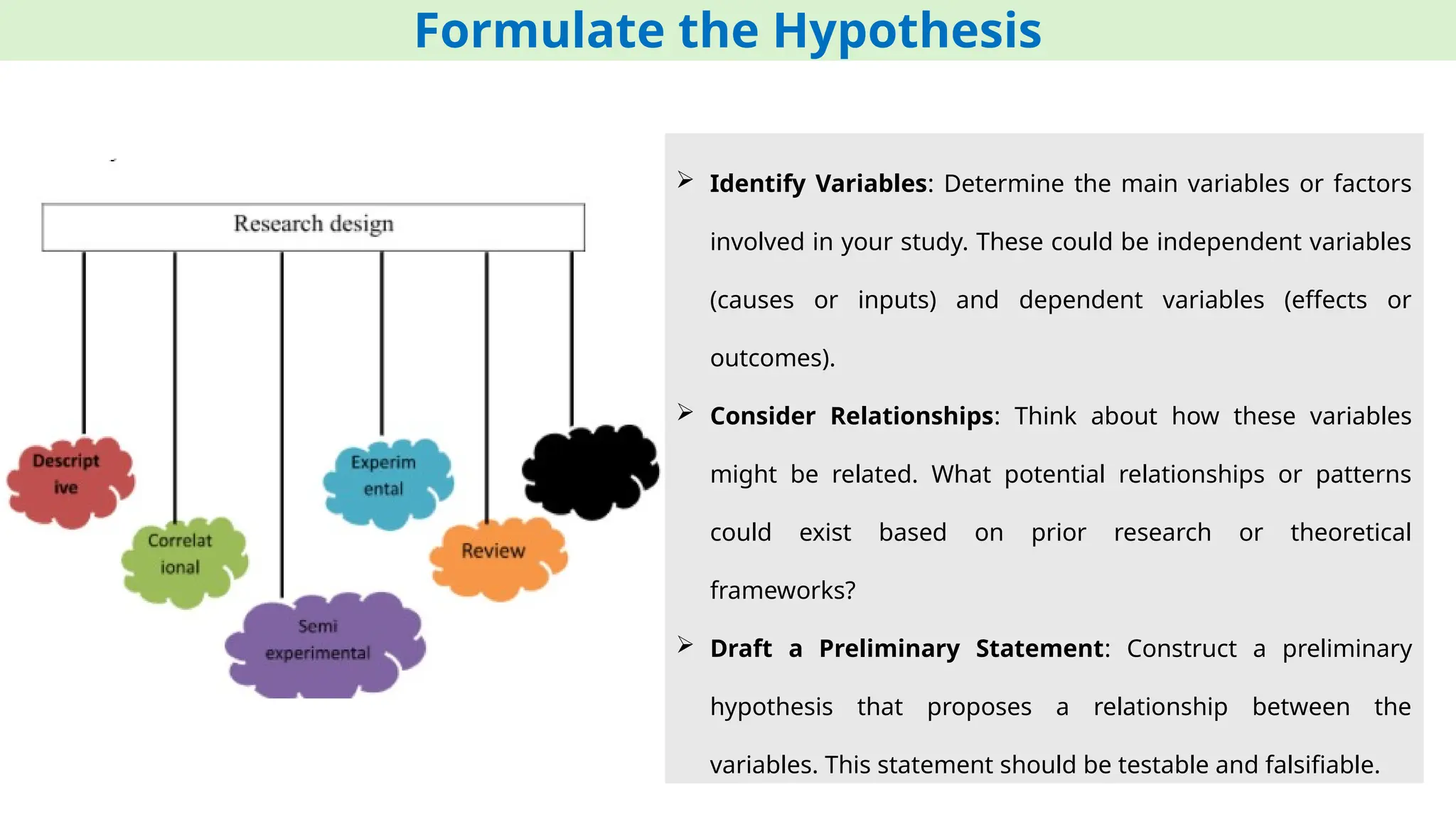
Formulate the Hypothesis
 Identify Variables: Determine the main variables or factors
involved in your study. These could be independent variables
(causes or inputs) and dependent variables (effects or
outcomes).
 Consider Relationships: Think about how these variables
might be related. What potential relationships or patterns
could exist based on prior research or theoretical
frameworks?
 Draft a Preliminary Statement: Construct a preliminary
hypothesis that proposes a relationship between the
variables. This statement should be testable and falsifiable.
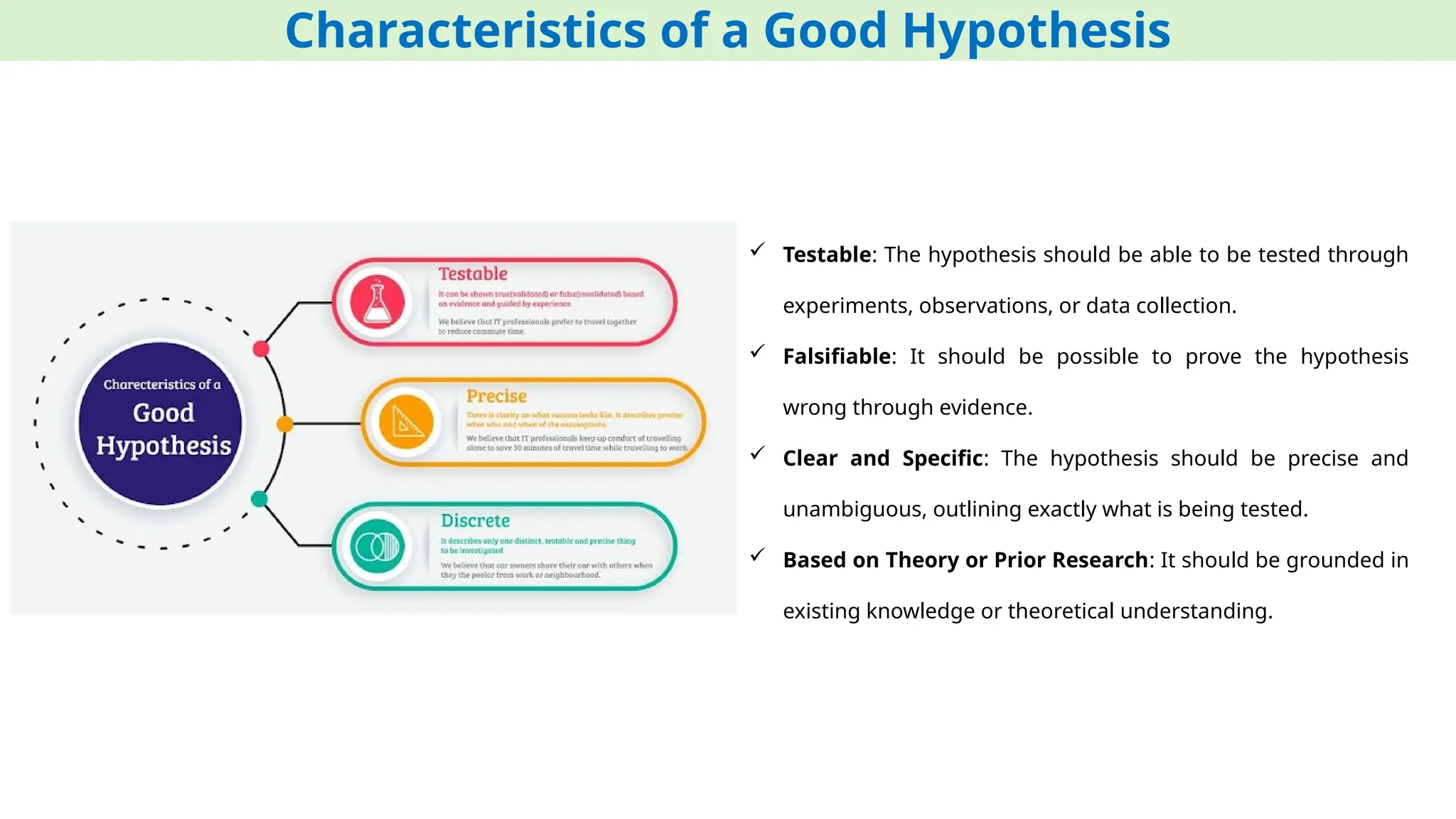
Characteristics of a Good Hypothesis
 Testable: The hypothesis should be able to be tested through
experiments, observations, or data collection.
 Falsifiable: It should be possible to prove the hypothesis
wrong through evidence.
 Clear and Specific: The hypothesis should be precise and
unambiguous, outlining exactly what is being tested.
 Based on Theory or Prior Research: It should be grounded in
existing knowledge or theoretical understanding.
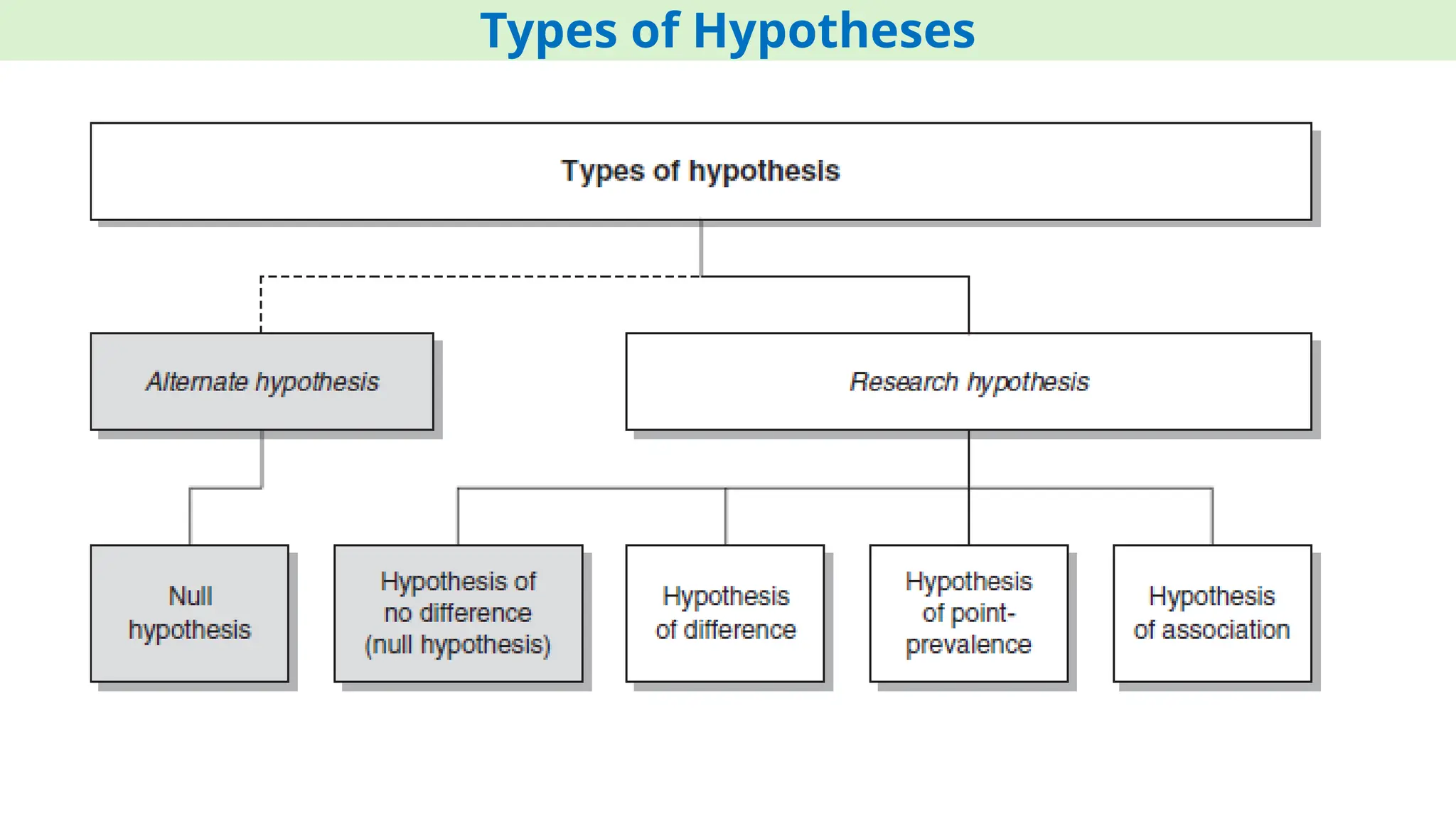
Types of Hypotheses
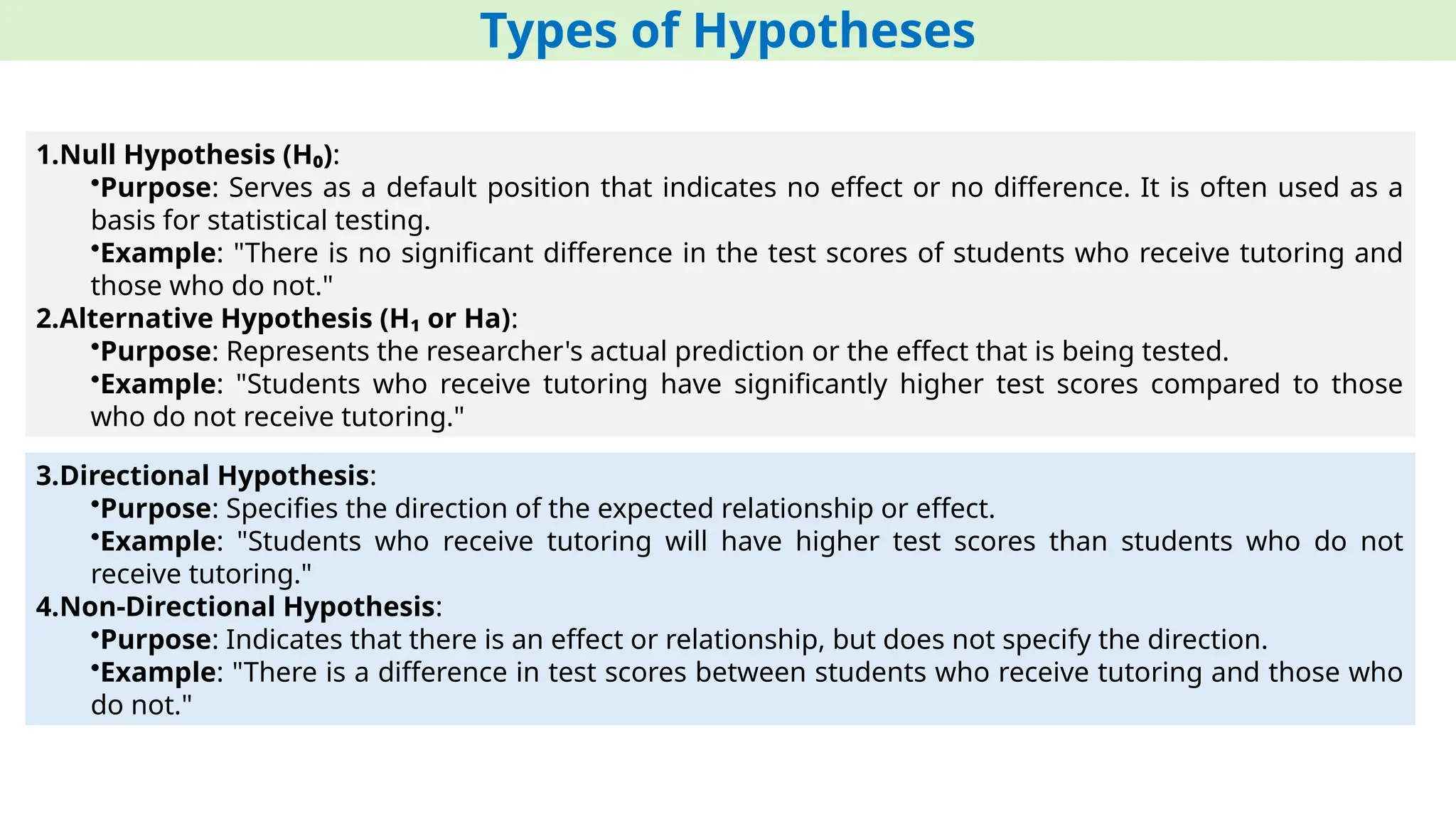
1.Null Hypothesis (H₀):
•Purpose: Serves as a default position that indicates no effect or no difference. It is often used as a
basis for statistical testing.
•Example: "There is no significant difference in the test scores of students who receive tutoring and
those who do not."
2.Alternative Hypothesis (H₁ or Ha):
•Purpose: Represents the researcher's actual prediction or the effect that is being tested.
•Example: "Students who receive tutoring have significantly higher test scores compared to those
who do not receive tutoring."
Types of Hypotheses
3.Directional Hypothesis:
•Purpose: Specifies the direction of the expected relationship or effect.
•Example: "Students who receive tutoring will have higher test scores than students who do not
receive tutoring."
4.Non-Directional Hypothesis:
•Purpose: Indicates that there is an effect or relationship, but does not specify the direction.
•Example: "There is a difference in test scores between students who receive tutoring and those who
do not."
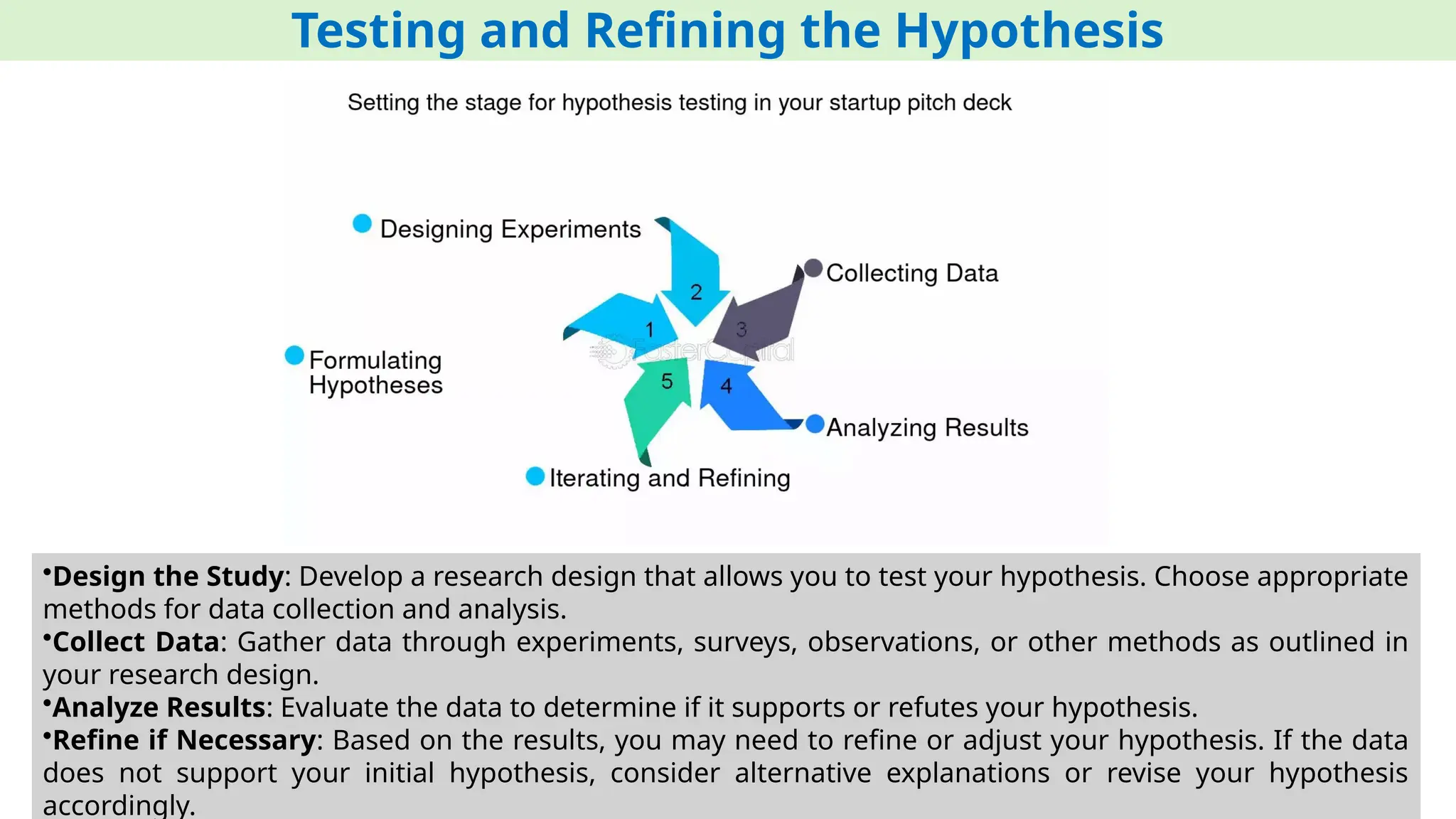
Testing and Refining the Hypothesis
•Design the Study: Develop a research design that allows you to test your hypothesis. Choose appropriate
methods for data collection and analysis.
•Collect Data: Gather data through experiments, surveys, observations, or other methods as outlined in
your research design.
•Analyze Results: Evaluate the data to determine if it supports or refutes your hypothesis.
•Refine if Necessary: Based on the results, you may need to refine or adjust your hypothesis. If the data
does not support your initial hypothesis, consider alternative explanations or revise your hypothesis
accordingly.
Examples of Developing a Working Hypothesis
Example in Chemistry:
•Research Problem: The effect of temperature on reaction rate.
•Initial Observation: Reactions appear to proceed faster at
higher temperatures.
•Working Hypothesis: "Increasing the temperature of a
chemical reaction will increase its rate of reaction."
Conclusion
Developing a working hypothesis involves careful consideration of the research problem, existing knowledge, and
the relationships between variables. By formulating a clear, testable, and falsifiable hypothesis, you provide a
focused direction for your research and establish a basis for empirical testing and analysis. This process is
essential for advancing knowledge and understanding in any field of study.
Thank You

Research Methodology: Development of Working Hypothesis.pptx

  • 1.
  • 2.
     Guess –A random statement without much reasoning.  Speculation – A thought-based guess lacking proof.  Assumption – Something taken as true without verification.  Prediction – A forecast based on trends or observations.  Hypothesis – A testable, educated explanation. H o w w i l l b e t h e w e a t h e r T o d a y ? Human Brain is trained to ………………………….
  • 3.
    Aspect Hypothesis Prediction Definition Atestable, educated guess based on prior knowledge and observation A statement forecasting a future event or outcome based on patterns or evidence Purpose Helps formulate research questions and guide experiments Anticipates results based on existing trends or known variables Testability Must be testable through experimentation or observation May or may not be testable, often based on extrapolation or expectation Basis Grounded in previous research, logic, and theory Derived from current data, trends, or observable events Flexibility Can be refined or disproven through testing Can be adjusted as new information becomes available Example Increasing sunlight exposure leads to faster plant growth (Can be tested) Tomorrow will be sunny because the sky is clear today (A projection based on observation) Hypothesis vs Prediction
  • 4.
    Understand the Research Problem Formulatethe Hypothesis Characteristics of a Good Hypothesis Types of Hypotheses Testing and Refining the Hypothesis Examples of Developing a Working Hypothesis Working Hypothesis A working hypothesis is a preliminary statement or proposition that provides a testable explanation for a phenomenon based on initial observations or theoretical considerations. Structured approach to developing a working hypothesis
  • 5.
    1. Clarify theResearch Question: Clearly define the specific question or problem you are addressing. This helps in focusing the scope of your research. 2. Review Background Information: Gather and analyze relevant literature to understand what has already been discovered and where gaps or unresolved issues exist. Understand the Research Problem The issue or topic that a researcher wants to explore through research is known as a research problem.
  • 6.
    Formulate the Hypothesis Identify Variables: Determine the main variables or factors involved in your study. These could be independent variables (causes or inputs) and dependent variables (effects or outcomes).  Consider Relationships: Think about how these variables might be related. What potential relationships or patterns could exist based on prior research or theoretical frameworks?  Draft a Preliminary Statement: Construct a preliminary hypothesis that proposes a relationship between the variables. This statement should be testable and falsifiable.
  • 7.
    Characteristics of aGood Hypothesis  Testable: The hypothesis should be able to be tested through experiments, observations, or data collection.  Falsifiable: It should be possible to prove the hypothesis wrong through evidence.  Clear and Specific: The hypothesis should be precise and unambiguous, outlining exactly what is being tested.  Based on Theory or Prior Research: It should be grounded in existing knowledge or theoretical understanding.
  • 8.
  • 9.
    1.Null Hypothesis (H₀): •Purpose:Serves as a default position that indicates no effect or no difference. It is often used as a basis for statistical testing. •Example: "There is no significant difference in the test scores of students who receive tutoring and those who do not." 2.Alternative Hypothesis (H₁ or Ha): •Purpose: Represents the researcher's actual prediction or the effect that is being tested. •Example: "Students who receive tutoring have significantly higher test scores compared to those who do not receive tutoring." Types of Hypotheses 3.Directional Hypothesis: •Purpose: Specifies the direction of the expected relationship or effect. •Example: "Students who receive tutoring will have higher test scores than students who do not receive tutoring." 4.Non-Directional Hypothesis: •Purpose: Indicates that there is an effect or relationship, but does not specify the direction. •Example: "There is a difference in test scores between students who receive tutoring and those who do not."
  • 10.
    Testing and Refiningthe Hypothesis •Design the Study: Develop a research design that allows you to test your hypothesis. Choose appropriate methods for data collection and analysis. •Collect Data: Gather data through experiments, surveys, observations, or other methods as outlined in your research design. •Analyze Results: Evaluate the data to determine if it supports or refutes your hypothesis. •Refine if Necessary: Based on the results, you may need to refine or adjust your hypothesis. If the data does not support your initial hypothesis, consider alternative explanations or revise your hypothesis accordingly.
  • 11.
    Examples of Developinga Working Hypothesis Example in Chemistry: •Research Problem: The effect of temperature on reaction rate. •Initial Observation: Reactions appear to proceed faster at higher temperatures. •Working Hypothesis: "Increasing the temperature of a chemical reaction will increase its rate of reaction." Conclusion Developing a working hypothesis involves careful consideration of the research problem, existing knowledge, and the relationships between variables. By formulating a clear, testable, and falsifiable hypothesis, you provide a focused direction for your research and establish a basis for empirical testing and analysis. This process is essential for advancing knowledge and understanding in any field of study.
  • 12.

Editor's Notes

  • #1 Vinayak V Khairnar