The Middle East Physical Landscape and The People
Physical Middle East Also known as “Southwest Asia” Sometimes also includes North Africa Islam Arabic language Oil
Physical Middle East
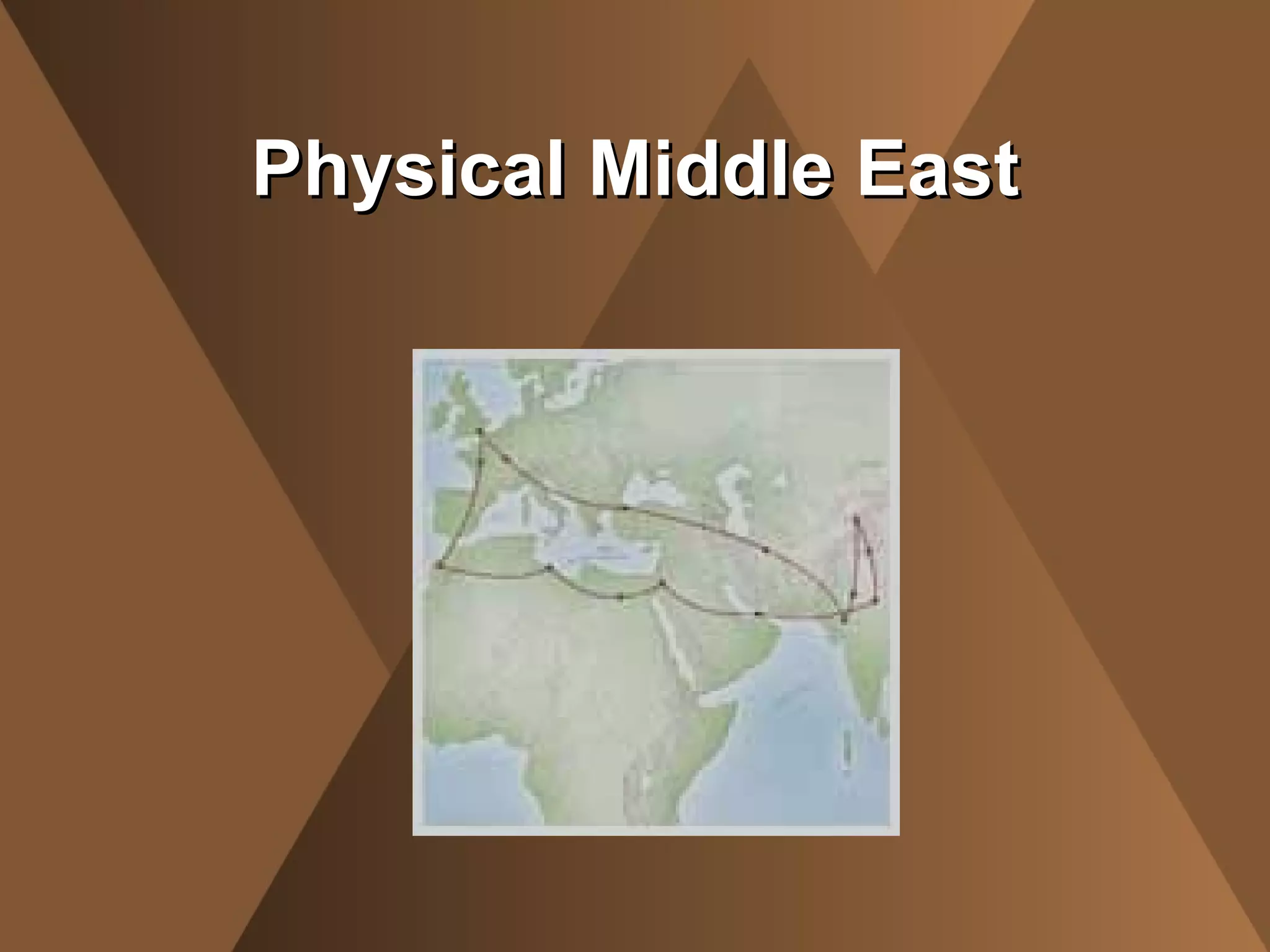
A crossroads of civilization Africa, Asia, and Europe are connected through trade routes Migrating people spread ideas, inventions, etc. Culture originating in the Middle East Iron making Alphabet Judaism, Christianity, Islam Physical Middle East
Physical Middle East
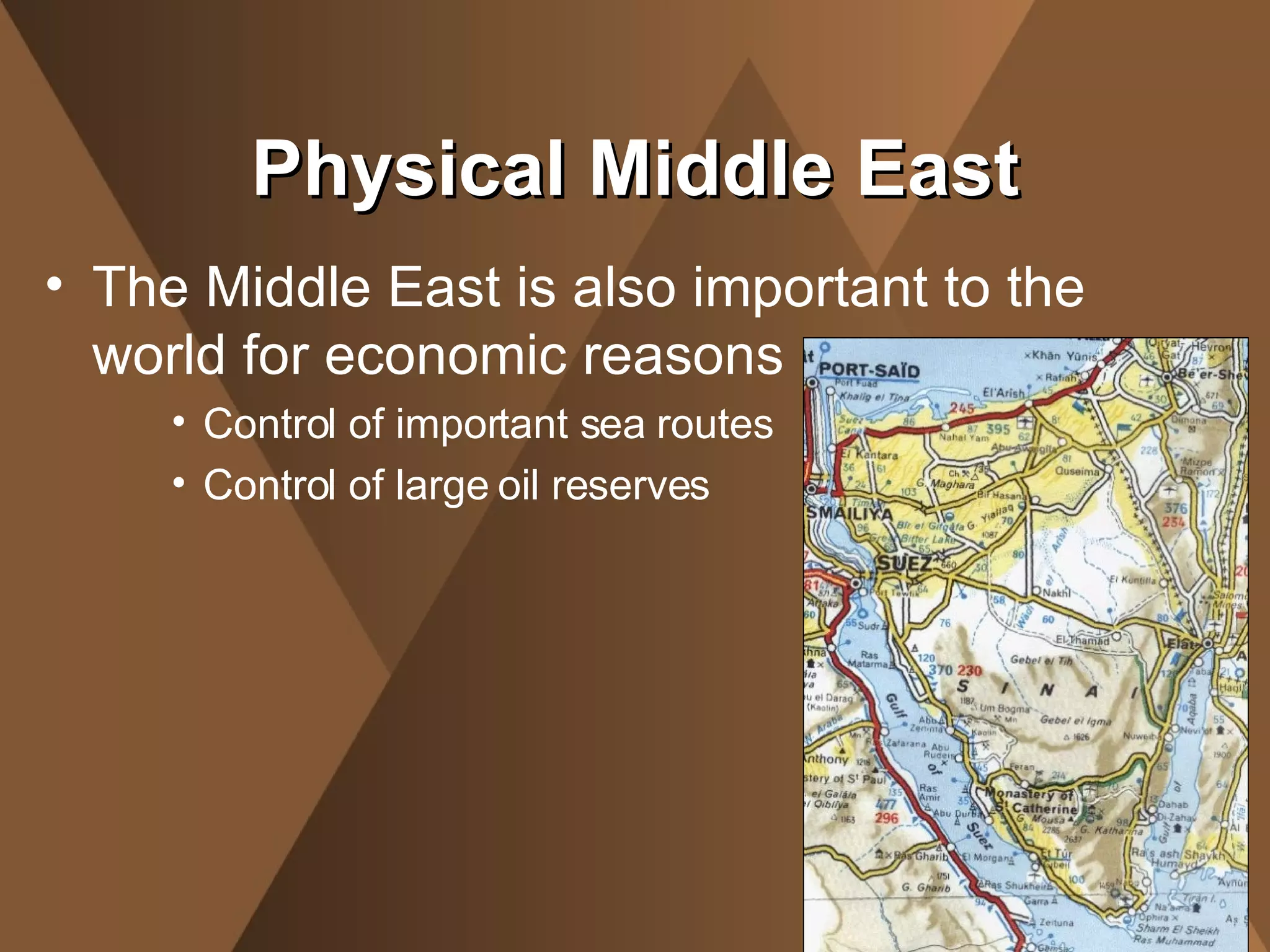
The Middle East is also important to the world for economic reasons Control of important sea routes Control of large oil reserves Physical Middle East
Five major regions Northern Tier Arabian Peninsula Fertile Crescent Nile Valley The Maghreb Major Regions
Northern Tier Turkey to Iran (pg. 552) Mountains and plateaus Diverse: Anatolian Plateau in Turkey : fertile soil, large population Iranian Plateau :  dry, small population Major Regions
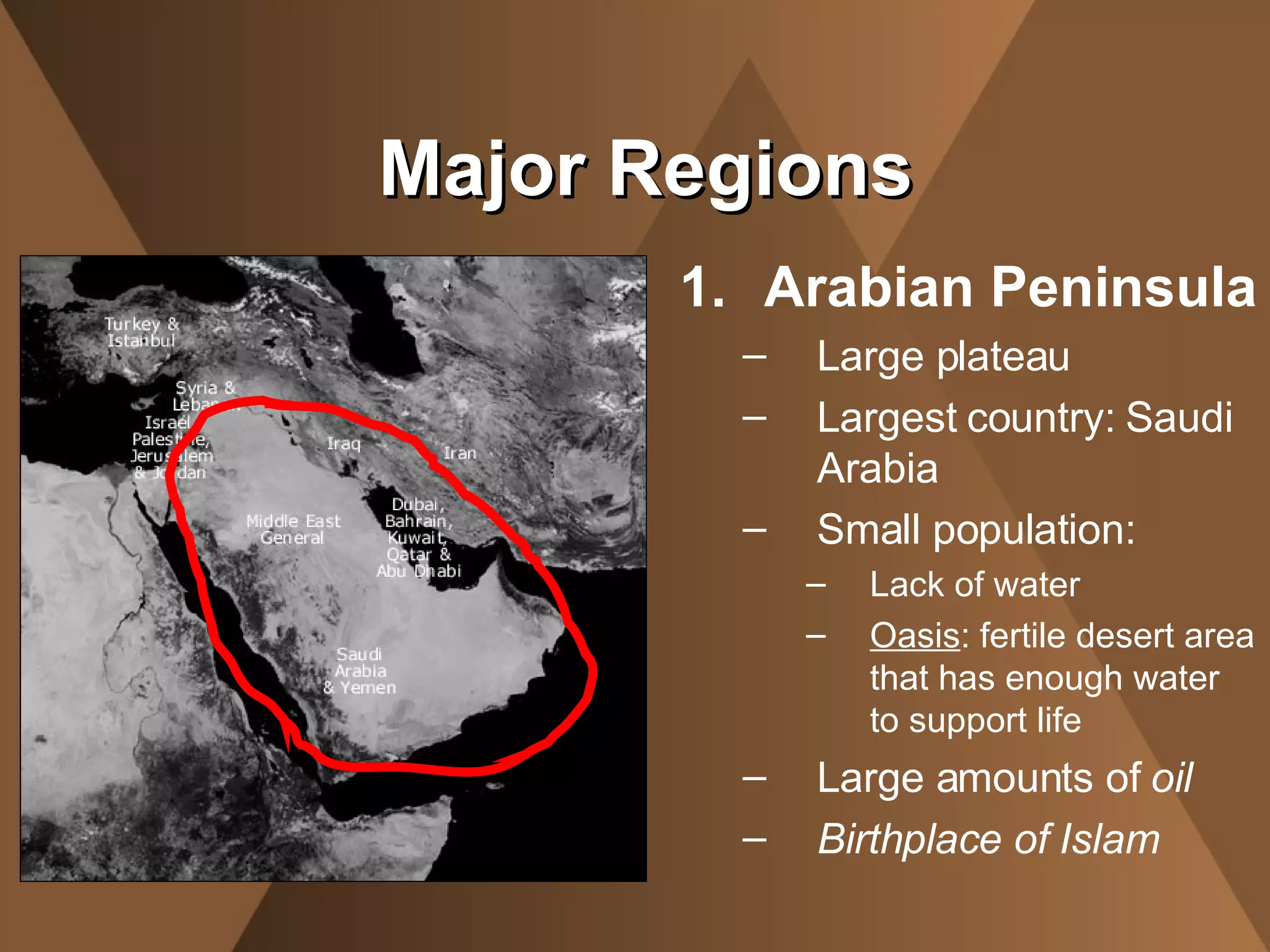
Arabian Peninsula Large plateau Largest country: Saudi Arabia Small population: Lack of water Oasis : fertile desert area that has enough water to support life Large amounts of  oil Birthplace of Islam Major Regions
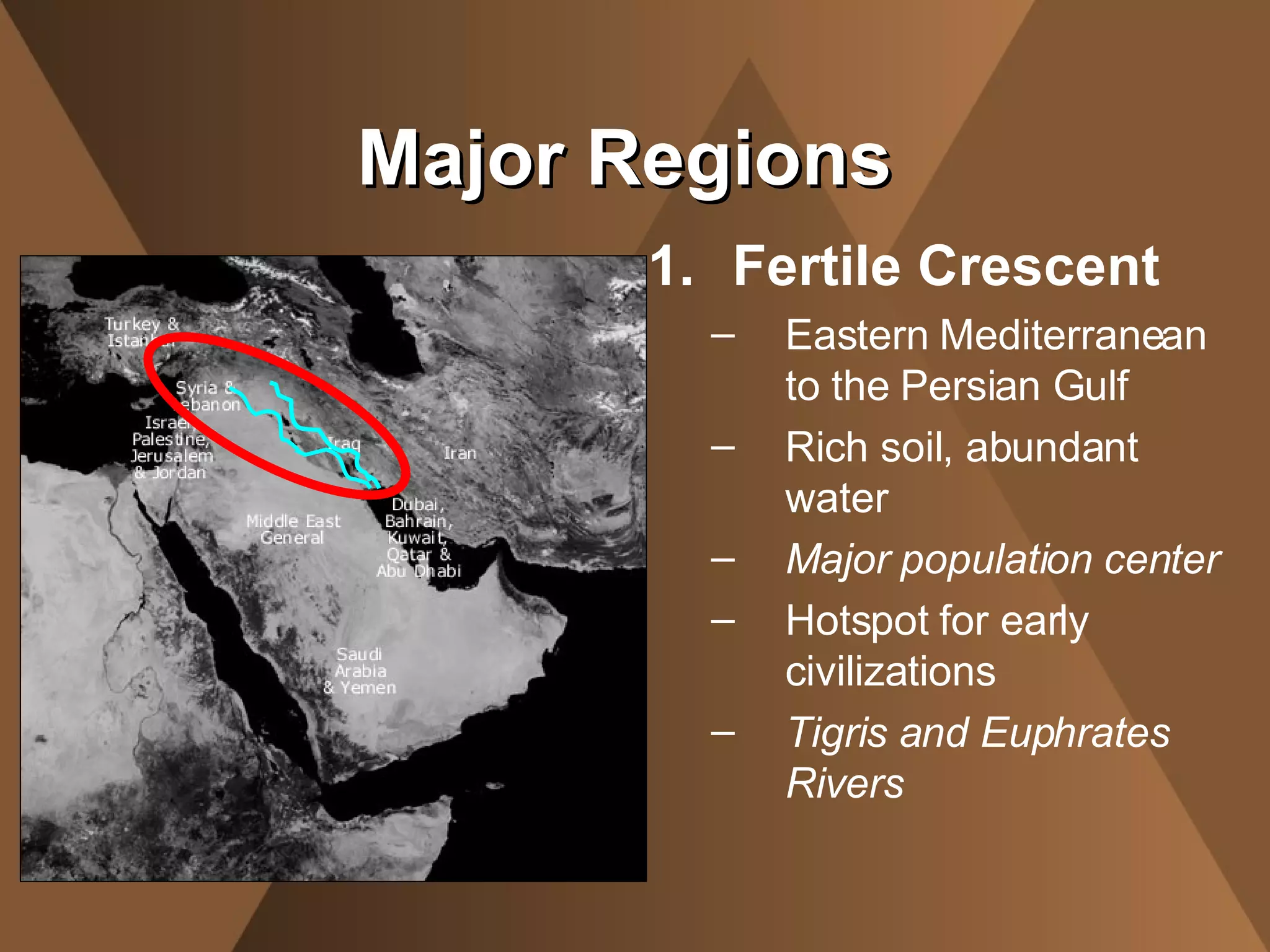
Fertile Crescent Eastern Mediterranean to the Persian Gulf Rich soil, abundant water Major population center Hotspot for early civilizations Tigris and Euphrates Rivers Major Regions
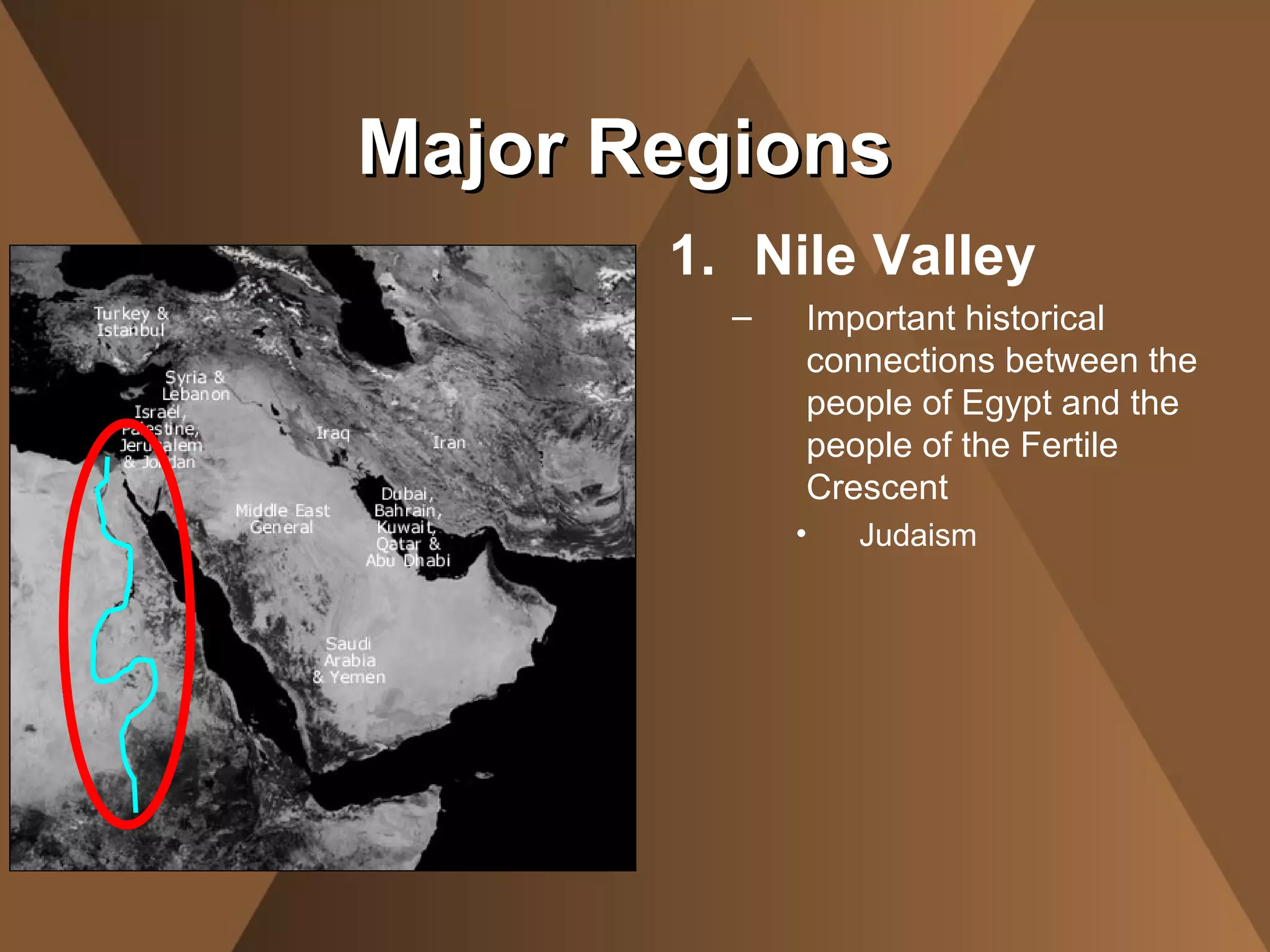
Nile Valley Important historical connections between the people of Egypt and the people of the Fertile Crescent Judaism Major Regions
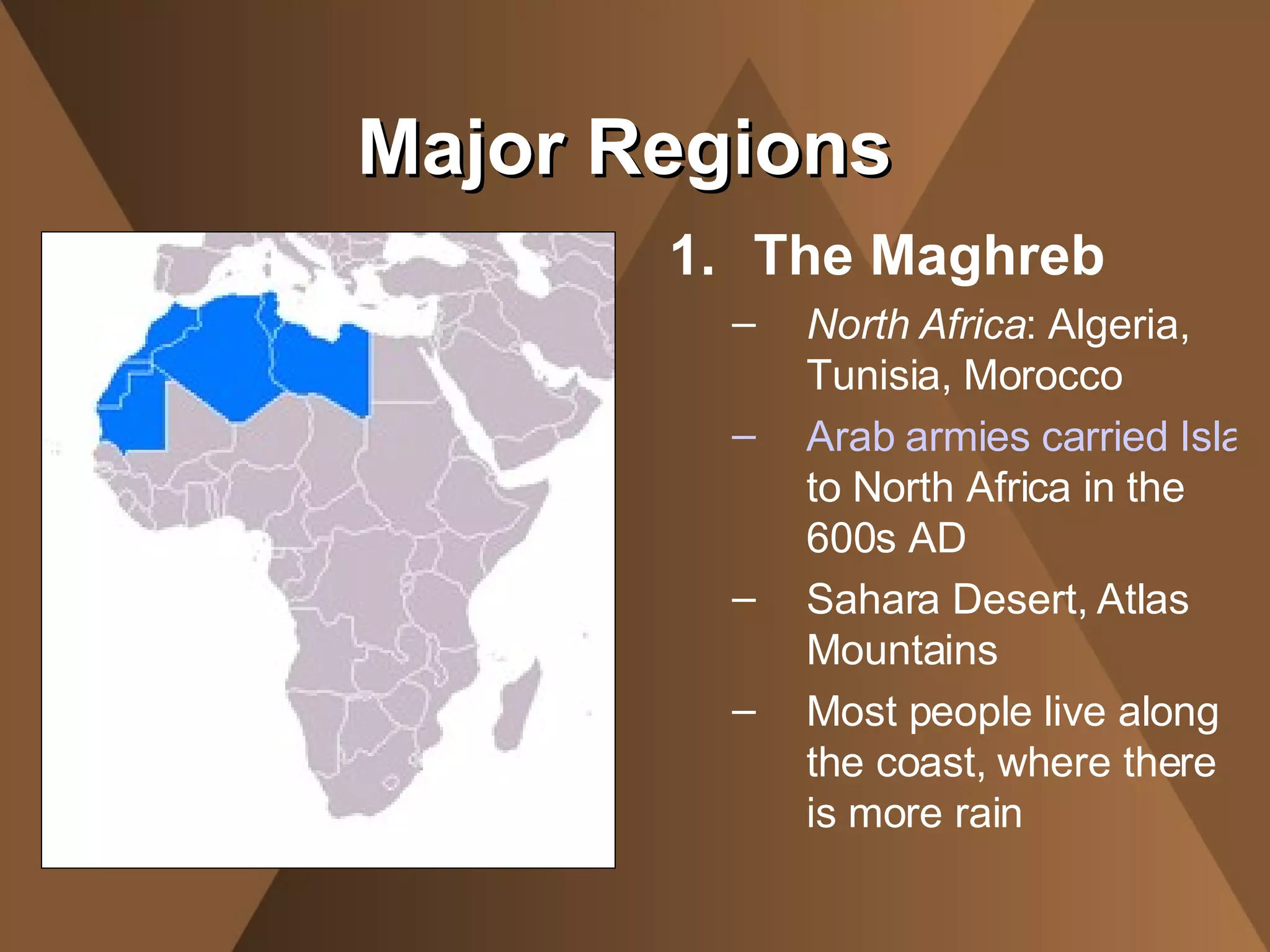
The Maghreb North Africa : Algeria, Tunisia, Morocco Arab armies carried Islam  to North Africa in the 600s AD Sahara Desert, Atlas Mountains Most people live along the coast, where there is more rain Major Regions
Climate and Resources Nearly all of the region is desert Lack of water caused some adaptations Building of irrigation systems Desalination :  taking the salt out of sea water to make it drinkable
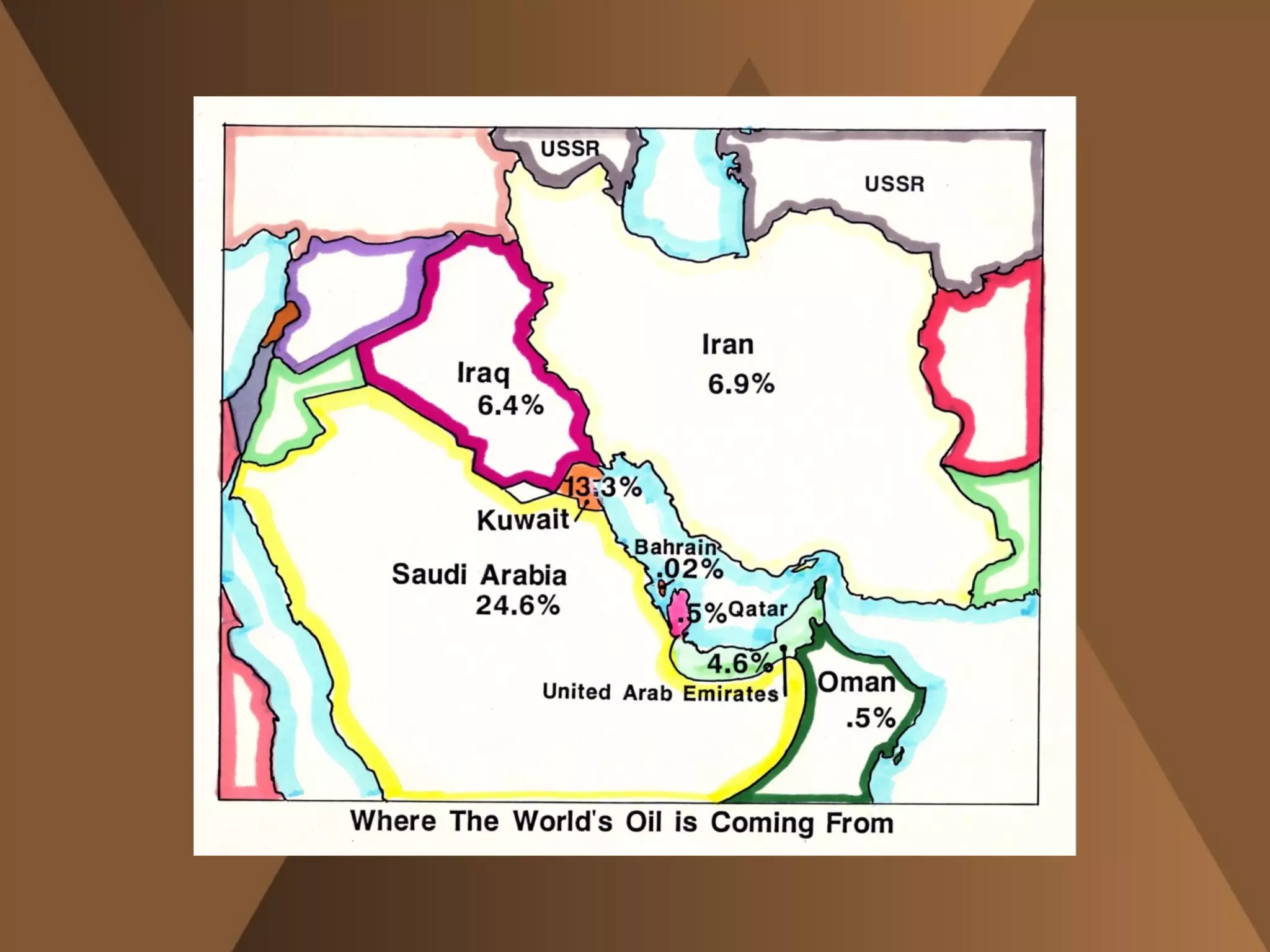
Climate and Resources Oil Most valuable resource in the Middle East Problem:  unevenly distributed
 
The People Ethnic diversity Arab :  anyone whose native language is Arabic Majority of people in Middle East are Arab Turks, Iranians, Kurds
The People Religious Diversity Islam is the majority religion Most  Arabs are Muslim Christianity, Judaism Judaism is the most ancient of the three religions from the region
Review The Middle East is a crossroads Five Major Regions:  Northern Tier, Arabian Peninsula, Fertile Crescent, Nile Valley, The Maghreb Resources:  Oil Vocabulary: Southwest Asia, oasis, desalination, Arab,
Early Civilizations You will be assigned a section of the text to read. Your objective is to fill in the chart on the board with information from your section of the textbook.

Physical Middle East

  • 1.
    The Middle EastPhysical Landscape and The People
  • 2.
    Physical Middle EastAlso known as “Southwest Asia” Sometimes also includes North Africa Islam Arabic language Oil
  • 3.
  • 4.
    A crossroads ofcivilization Africa, Asia, and Europe are connected through trade routes Migrating people spread ideas, inventions, etc. Culture originating in the Middle East Iron making Alphabet Judaism, Christianity, Islam Physical Middle East
  • 5.
  • 6.
    The Middle Eastis also important to the world for economic reasons Control of important sea routes Control of large oil reserves Physical Middle East
  • 7.
    Five major regionsNorthern Tier Arabian Peninsula Fertile Crescent Nile Valley The Maghreb Major Regions
  • 8.
    Northern Tier Turkeyto Iran (pg. 552) Mountains and plateaus Diverse: Anatolian Plateau in Turkey : fertile soil, large population Iranian Plateau : dry, small population Major Regions
  • 9.
    Arabian Peninsula Largeplateau Largest country: Saudi Arabia Small population: Lack of water Oasis : fertile desert area that has enough water to support life Large amounts of oil Birthplace of Islam Major Regions
  • 10.
    Fertile Crescent EasternMediterranean to the Persian Gulf Rich soil, abundant water Major population center Hotspot for early civilizations Tigris and Euphrates Rivers Major Regions
  • 11.
    Nile Valley Importanthistorical connections between the people of Egypt and the people of the Fertile Crescent Judaism Major Regions
  • 12.
    The Maghreb NorthAfrica : Algeria, Tunisia, Morocco Arab armies carried Islam to North Africa in the 600s AD Sahara Desert, Atlas Mountains Most people live along the coast, where there is more rain Major Regions
  • 13.
    Climate and ResourcesNearly all of the region is desert Lack of water caused some adaptations Building of irrigation systems Desalination : taking the salt out of sea water to make it drinkable
  • 14.
    Climate and ResourcesOil Most valuable resource in the Middle East Problem: unevenly distributed
  • 15.
  • 16.
    The People Ethnicdiversity Arab : anyone whose native language is Arabic Majority of people in Middle East are Arab Turks, Iranians, Kurds
  • 17.
    The People ReligiousDiversity Islam is the majority religion Most Arabs are Muslim Christianity, Judaism Judaism is the most ancient of the three religions from the region
  • 18.
    Review The MiddleEast is a crossroads Five Major Regions: Northern Tier, Arabian Peninsula, Fertile Crescent, Nile Valley, The Maghreb Resources: Oil Vocabulary: Southwest Asia, oasis, desalination, Arab,
  • 19.
    Early Civilizations Youwill be assigned a section of the text to read. Your objective is to fill in the chart on the board with information from your section of the textbook.