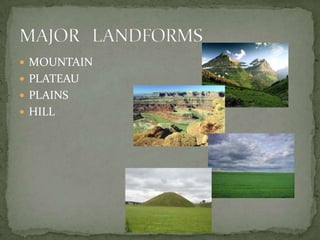
 MOUNTAIN
 PLATEAU
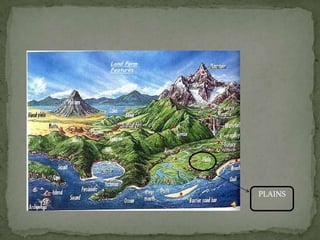
 PLAINS
 HILL
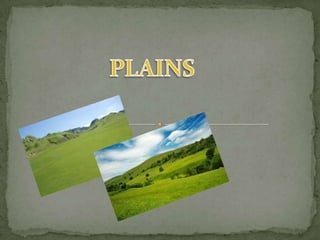
PLAINS
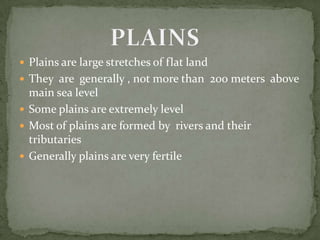
 Plains are large stretches of flat land
 They are generally , not more than 200 meters above
main sea level
 Some plains are extremely level
 Most of plains are formed by rivers and their
tributaries
 Generally plains are very fertile
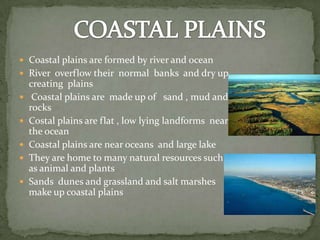
 Coastal plains are formed by river and ocean
 River overflow their normal banks and dry up
creating plains
 Coastal plains are made up of sand , mud and
rocks
 Costal plains are flat , low lying landforms near
the ocean
 Coastal plains are near oceans and large lake
 They are home to many natural resources such
as animal and plants
 Sands dunes and grassland and salt marshes
make up coastal plains
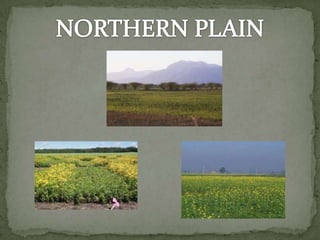
 The Northern Fertile Plain lies to the south of
Himalayan Region. It is also called the Gangetic
Plain. It is a vast plain and level land between the
Himalayas in the North and Deccan Plateau in the
South
 This plain is one of the largest and most fertile
plains of the World. It is the most thickly populated
plain
 This plain is drained by Sutlej, Ganga , Brahmaputra
and their tributaries
 This is also the major crop growing area in India.
 Major crops such as wheat, rice, sugarcane, pulses, oil
seeds and jute are grown here. This plain is the 'food
bowl1 of India.
 This plain gets sufficient rainfall. There are many
rivers, streams and lakes. There is also rich vegetation.
These factors affect the climate and make it tolerable
 This is one of the most thickly populated plain of the
world. The most thickly populated States of India —
Uttar Pradesh and Bihar — lie in this plain.
 This plain is very important for the economic development of India.
The land being even, the transportation and communication is easy.
This plain has a network of railways and roads. Some important
industries like iron and steel, jute, cement, sugar and textile are spread
evenly over the whole region.
 The Ganga is our most sacred river. Its water is regarded as
holy, but this holy water is getting polluted. Waste of many
cities and industries located along its banks is making the
water polluted. The water is no more fit for drinking. The
government has made up a plan known as the Ganga
Action Plan to clean the water from this pollution. Some
laws have been made to prohibit the throwing of wastes
into the rivers. We should try to keep its water clean.

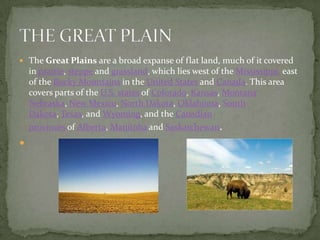
 The Great Plains are a broad expanse of flat land, much of it covered
in prairie, steppe and grassland, which lies west of the Mississippi east
of the Rocky Mountains in the United States and Canada. This area
covers parts of the U.S. states of Colorado, Kansas, Montana
Nebraska, New Mexico, North Dakota, Oklahoma, South
Dakota, Texas, and Wyoming, and the Canadian
provinces of Alberta, Manitoba and Saskatchewan.

Plains

Plains

  • 2.
  • 3.
  • 4.
     Plains arelarge stretches of flat land  They are generally , not more than 200 meters above main sea level  Some plains are extremely level  Most of plains are formed by rivers and their tributaries  Generally plains are very fertile
  • 6.
     Coastal plainsare formed by river and ocean  River overflow their normal banks and dry up creating plains  Coastal plains are made up of sand , mud and rocks  Costal plains are flat , low lying landforms near the ocean  Coastal plains are near oceans and large lake  They are home to many natural resources such as animal and plants  Sands dunes and grassland and salt marshes make up coastal plains
  • 7.
     The NorthernFertile Plain lies to the south of Himalayan Region. It is also called the Gangetic Plain. It is a vast plain and level land between the Himalayas in the North and Deccan Plateau in the South  This plain is one of the largest and most fertile plains of the World. It is the most thickly populated plain  This plain is drained by Sutlej, Ganga , Brahmaputra and their tributaries  This is also the major crop growing area in India.
  • 9.
     Major cropssuch as wheat, rice, sugarcane, pulses, oil seeds and jute are grown here. This plain is the 'food bowl1 of India.  This plain gets sufficient rainfall. There are many rivers, streams and lakes. There is also rich vegetation. These factors affect the climate and make it tolerable  This is one of the most thickly populated plain of the world. The most thickly populated States of India — Uttar Pradesh and Bihar — lie in this plain.
  • 10.
     This plainis very important for the economic development of India. The land being even, the transportation and communication is easy. This plain has a network of railways and roads. Some important industries like iron and steel, jute, cement, sugar and textile are spread evenly over the whole region.  The Ganga is our most sacred river. Its water is regarded as holy, but this holy water is getting polluted. Waste of many cities and industries located along its banks is making the water polluted. The water is no more fit for drinking. The government has made up a plan known as the Ganga Action Plan to clean the water from this pollution. Some laws have been made to prohibit the throwing of wastes into the rivers. We should try to keep its water clean. 
  • 11.
     The GreatPlains are a broad expanse of flat land, much of it covered in prairie, steppe and grassland, which lies west of the Mississippi east of the Rocky Mountains in the United States and Canada. This area covers parts of the U.S. states of Colorado, Kansas, Montana Nebraska, New Mexico, North Dakota, Oklahoma, South Dakota, Texas, and Wyoming, and the Canadian provinces of Alberta, Manitoba and Saskatchewan. 