Type           Public (BSE: 532743)

Industry       Petroleum and Gas

Founded        2008

Headquarters   Ahmedabad, India


Key people     Mukesh Ambani


Products       Petroleum

Revenue        3,678.00 crore (US$ 665.72 million)

Parent         Reliance Industries
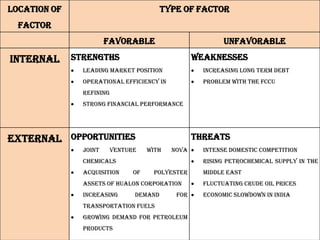
Location of                             TYPE OF FACTOR
  Factor
                        Favorable                          Unfavorable

Internal      Strengths                            Weaknesses
                Leading market position              Increasing long term debt
                Operational efficiency in            Problem with the FCCU
                refining
                Strong financial performance


External Opportunities                             Threats
                Joint    venture    with    NOVA     Intense domestic competition
                Chemicals                            Rising petrochemical supply in the
                Acquisition    of    polyester       Middle East
                assets of Hualon Corporation         Fluctuating crude oil prices
                Increasing     demand        for     Economic slowdown in India
                transportation fuels
                Growing demand for petroleum
                products
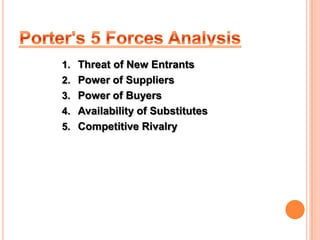
PORTER'S 5 FORCES ANALYSIS
1. Threat of New Entrants
2. Power of Suppliers
3. Power of Buyers
4. Availability of Substitutes
5. Competitive Rivalry
1. THREAT OF NEW ENTRANTS
 There is thousands of oil and oil services
  companies throughout the world, but the barriers to
  enter this industry are enough to scare away all but
  the serious companies. Barriers can vary
  depending on the area of the market in which the
  company is situated
 Need Ample cash

 Need specialized worker
2. P OWER   OF   S UPPLIERS
 While there are plenty of oil companies in the
 world, much of the oil and gas business is
 dominated by a small handful of powerful
 companies.
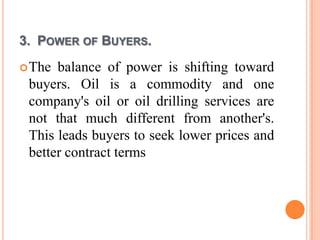
3. POWER OF BUYERS.
 The balance of power is shifting toward
 buyers. Oil is a commodity and one
 company's oil or oil drilling services are
 not that much different from another's.
 This leads buyers to seek lower prices and
 better contract terms
4. AVAILABILITY OF SUBSTITUTES
 Substitutesfor the oil industry in general
 include alternative fuels such as coal, gas,
 solar power, wind power, hydroelectricity
 and even nuclear energy.
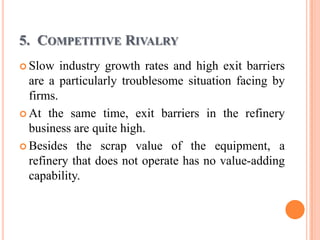
5. COMPETITIVE RIVALRY
 Slow   industry growth rates and high exit barriers
  are a particularly troublesome situation facing by
  firms.
 At the same time, exit barriers in the refinery
  business are quite high.
 Besides the scrap value of the equipment, a
  refinery that does not operate has no value-adding
  capability.
VALUE CHAIN ANALYSIS
Oil and Gas Value
      Chain
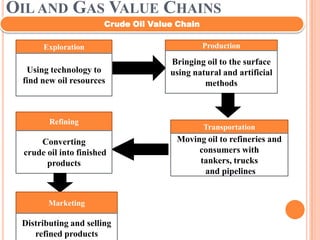
OIL AND GAS VALUE CHAINS
                       Crude Oil Value Chain

      Exploration                              Production

                                     Bringing oil to the surface
  Using technology to                using natural and artificial
 find new oil resources                       methods


        Refining
                                               Transportation
     Converting                       Moving oil to refineries and
 crude oil into finished                   consumers with
       products                            tankers, trucks
                                            and pipelines


        Marketing

 Distributing and selling
    refined products
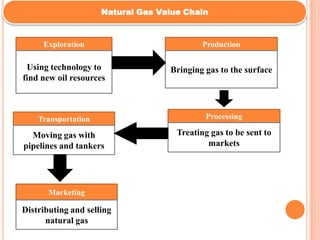
Natural Gas Value Chain


     Exploration                            Production

 Using technology to               Bringing gas to the surface
find new oil resources


    Transportation                           Processing

  Moving gas with                    Treating gas to be sent to
pipelines and tankers                        markets


       Marketing

Distributing and selling
      natural gas
Reliance petroleum ltd

Reliance petroleum ltd

  • 2.
    Type Public (BSE: 532743) Industry Petroleum and Gas Founded 2008 Headquarters Ahmedabad, India Key people Mukesh Ambani Products Petroleum Revenue 3,678.00 crore (US$ 665.72 million) Parent Reliance Industries
  • 4.
    Location of TYPE OF FACTOR Factor Favorable Unfavorable Internal Strengths Weaknesses Leading market position Increasing long term debt Operational efficiency in Problem with the FCCU refining Strong financial performance External Opportunities Threats Joint venture with NOVA Intense domestic competition Chemicals Rising petrochemical supply in the Acquisition of polyester Middle East assets of Hualon Corporation Fluctuating crude oil prices Increasing demand for Economic slowdown in India transportation fuels Growing demand for petroleum products
  • 5.
  • 6.
    1. Threat ofNew Entrants 2. Power of Suppliers 3. Power of Buyers 4. Availability of Substitutes 5. Competitive Rivalry
  • 7.
    1. THREAT OFNEW ENTRANTS  There is thousands of oil and oil services companies throughout the world, but the barriers to enter this industry are enough to scare away all but the serious companies. Barriers can vary depending on the area of the market in which the company is situated  Need Ample cash  Need specialized worker
  • 8.
    2. P OWER OF S UPPLIERS  While there are plenty of oil companies in the world, much of the oil and gas business is dominated by a small handful of powerful companies.
  • 9.
    3. POWER OFBUYERS.  The balance of power is shifting toward buyers. Oil is a commodity and one company's oil or oil drilling services are not that much different from another's. This leads buyers to seek lower prices and better contract terms
  • 10.
    4. AVAILABILITY OFSUBSTITUTES  Substitutesfor the oil industry in general include alternative fuels such as coal, gas, solar power, wind power, hydroelectricity and even nuclear energy.
  • 11.
    5. COMPETITIVE RIVALRY Slow industry growth rates and high exit barriers are a particularly troublesome situation facing by firms.  At the same time, exit barriers in the refinery business are quite high.  Besides the scrap value of the equipment, a refinery that does not operate has no value-adding capability.
  • 12.
  • 13.
    Oil and GasValue Chain
  • 14.
    OIL AND GASVALUE CHAINS Crude Oil Value Chain Exploration Production Bringing oil to the surface Using technology to using natural and artificial find new oil resources methods Refining Transportation Converting Moving oil to refineries and crude oil into finished consumers with products tankers, trucks and pipelines Marketing Distributing and selling refined products
  • 15.
    Natural Gas ValueChain Exploration Production Using technology to Bringing gas to the surface find new oil resources Transportation Processing Moving gas with Treating gas to be sent to pipelines and tankers markets Marketing Distributing and selling natural gas