Philippine (Luzon) Literature
Jade Svetlana Nicole de Guzman
ABLL-2
1st Semester, 2016-2017
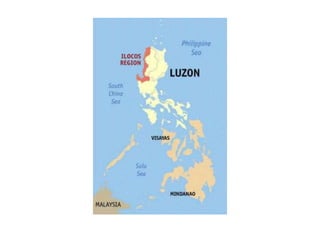
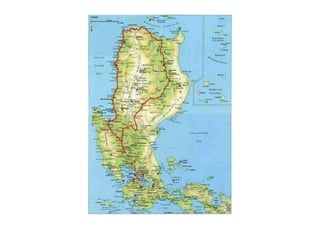
Region 1: Ilocos Region
• Its literature is known as one of the most
colorful regional Filipino literatures.
• Prior to Spanish colonial period, the
Ilocano literature is purely alive in form of
written and oral literature. Ancient poets
expressed themselves through folk and
war songs.
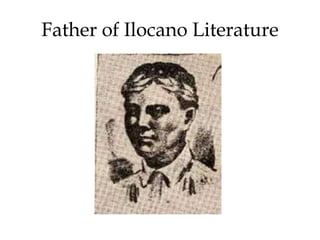
Father of Ilocano Literature
Pedro Buc(k)aneg
• Acknowledged author of the epic Biag ni
Lam-ang.
• A Filipino poet.
• Was a foundling, who shortly after floating
in a basket between Bantay and Vigan
was found by an old woman.
• Brought to Bantay Agustinijner priest who
baptised him as Pedro Bucaneg.
• Blind since birth, but grew up as smart and
talented.
• Took lessons in Latin and Spanish and also
learned the local dialects and Ilocano Isneg.
• Known to translate prayers and sermons in
local language.
• Although blind, he dictated the text of his
poems, songs and translations as someone
wrote it down.
• Translated Doctrina Cristiana to Ilocano
which was printed in 1593 as one of the
first book in the Philippines and was
intended for the use in the local
poplyaltion.
• 1621, the ilocano translation was printed in
the Augustinian Convent in Manila.
• Arte de Lengua Iloca, the first grammar
book, co-authored with Fr. Francisco
Lopez
• Born March 1592 and died circa 1630, his
works of literature are preserved to be
written in history.
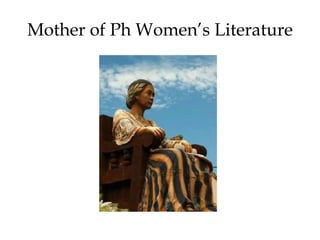
Mother of Ph Women’s Literature
Leonora Florentino
• April 19, 1849 - October 4, 1884
• Poet in Spanish and Ilocano.
• At the age of 10, she can write poems in
Ilocano and speak well in Spanish.
• Was really intelligent, yet she wasn’t
allowed to study due to her gender.
• She was instead tutored by her mother
and a series of private teachers.
• Fr. Evaristo Abaya flourished her Spanish
skills and help her voice out her thoughts
in poems.
• She married a politician, Elias de los
Reyes at the age of 14. Together had 5
children.
• Due to the feminist nature of her writings,
she was shunned by her husband and son,
she lived alone in exile and separated
from her family.
• She died at the age of 35
Works
• Her well knowns literary pieces are
Rucronoy (Dedication), Naangaway a
Cablaw (Good greetings), Nalpay a
Namnama (Vanishing Hope), Benigna,
Para ken Carmen, Panay Pacada
(Farewell) and more.
• Most of her works got lost but the
preserved ones are in the library of Madrid,
Londres at Paris.
• Although Florentino died at a young age,
her works are known not only in the
Philippines but through out Europe.
• She is believed to be the first Filipina
recognized as a lady poet.
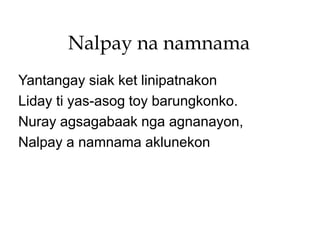
Nalpay na namnama
Yantangay siak ket linipatnakon
Liday ti yas-asog toy barungkonko.
Nuray agsagabaak nga agnanayon,
Nalpay a namnama aklunekon
Blasted hopes/Vanishing Hopes
But would it be my greatest joy
To know that it is you I love,
For to you do I vow and a promise I make
It’s you alone for whom I would lay my life.
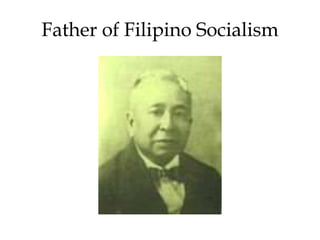
Father of Filipino Socialism
Isabelo de los Reyes
• Also known as Don Belong
• July 4, 1864 - October 10, 1938
• Prominent politician, writer and labor
activist
• Originally founder of Aglipayan Church, an
indepondent Christian protestant church in
the catholic tradition.
• Due to his anti-catholic writings, he
therefore got the nickname
• Pope Leo XIII formally excommunicated
Reyes in 1903 as an apostate
• He followed his mother’s footsteps by
initially turning to writing as a career.
• won an award at the age of 23 for his first
written book.
• Became a journalist, editor, and publisher
in Manila
• Imprisoned in 1897 for revolutionary
activities.
• Deported to Spain, and was jailed until
1898.
• While being there, he got influenced by the
writings of European socialists and
Marxists.
• Returning to Philippines in 1901, he
founded the first labor union in the country.
• Also active in seeking independence from
the US
• After serving the Ph in the 1920s, he
settled into private life and religious writing.
• Had a total of 27 children with 3
successive wives.
Works
• Mariquit the Tramp (bomba story)
• Sing sing ni Diego (horror story)
• Biblia Filipina (philippine bible)
• Oficio divino
• Catequesis (catechism)
• Plagerias(prayers)
• Genesis Cientifico y moderno
• Ang sing sing ng dalagang marmol (1905 novel)
• Calendario Aglipayano
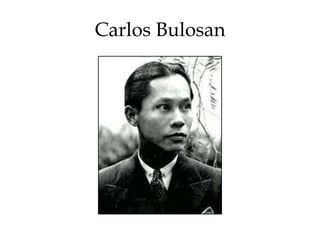
Carlos Bulosan
• Born to Ilocano parents in the Ph in
Binalonan, Pangasinan.
• November 2, 1913 (?)
• Most of his youth was spent in the
countryside as a farmer.
• his hometown is the starting point of his
famous semi-autobiographical novel,
America is in the Heart.
• Left for America on July 22, 1930 at the
age of 17.
• Upon arriving in Seattle, he met with
racism and was forced to work in a low
paying job.
• He worked as a farmworker, harvesting
grapes and asparagus, and doing other
types of hard work in the fields of
California. He also worked as a
dishwasher with his brother in the famous
Madonna Inn in San Luis Obispo.
Works
• America is in the Heart
• The Laughter of My Father
• The Cry and the Dedication
• My Father’s Tragedy
• The Romance of Magno Rubio
• If You Want To Know What We Are
America Is In the Heart
“The old world is dying, but a new world is
being born. It generates inspiration from the
chaos that beats upon us all. The false
grandeur and security, the unfulfilled promises
and illusory power, the number of the dead and
those about to die, will charge the forces of our
courage and determination. The old world will
die so that the new world will be born with less
sacrifice and agony on the living.”
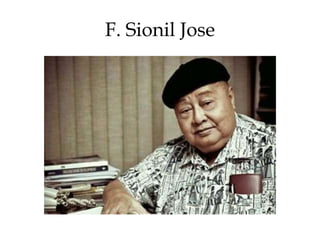
F. Sionil Jose
• December 3, 1924
• Born in Rosales, Pangasinan the setting of
his many stories.
• Ilocano descent whose family had
migrated to Pangasinan to flee from
poverty.
• His influences: his mother, Jose Rizal
• Critically acclaimed Filipino internationally
yet underrated in his own country.
Awards
• Pablo Neruda Centennial Award (2004)
Philippine National Artist for Literature (2001)
• Chevalier dans l'Ordre des Arts et Lettres
(2000)
• Ramon Magsaysay Award for Journalism,
Literature and Creative Communication Arts
(1980)
• City of Manila Award for Literature (1979
Carlos Palanca Memorial Award for Literature
(1959, 1979, 1980, 1981)
• Attended UST after WW2 but dropped out
and plunged into writing and journalism in
Manila.
• Edited various literaty and journalistic
publications, started a publishing house
and founded the Philippine branch of PEN,
an intr’l organization for writers.
• His writings talk about social justice and
change to better the lives of average
Filipino families.
• Inspired him to make the five volume
novels: Rosales Saga.
• is one of the most widely read Filipino
writers in the English Language. His
novels and short stories depict the social
underpinnings of class struggles and
colonialism of Filipino society.
• Jose’s works written in English have been
translated into 22 language ls including
Korean, Indonesian, Russian and Dutch.
• Owns a bookshop that sells hard to find
filipiniana reading materials.
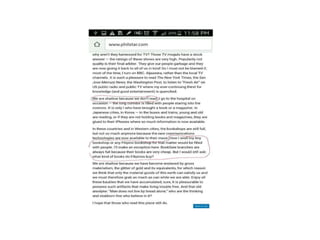
• ‘Why are we shallow’ Hindsight, The
Philippine Star September 12 2011
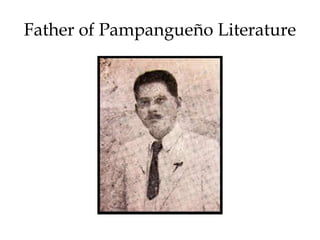
Father of Pampangueño Literature
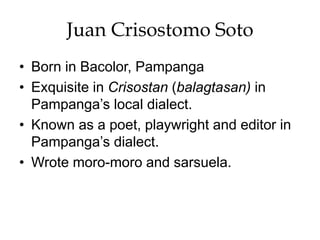
Juan Crisostomo Soto
• Born in Bacolor, Pampanga
• Exquisite in Crisostan (balagtasan) in
Pampanga’s local dialect.
• Known as a poet, playwright and editor in
Pampanga’s dialect.
• Wrote moro-moro and sarsuela.
Works
• Pula’t Puti
• Romeo and Juliet from Shakespeare
• Sigalot – considered the best and written
in jail
• Wrote an English-Spanish-Pampango
Dictionary with Modesto Joaquin
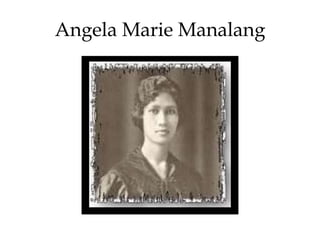
Angela Marie Manalang
• Born August 23, 10907 in Guagua,
Pampanga.
• Settled in Bicol Region in Albay.
• During her senior year, she moved to St.
Scholastica’s College in Malate, Manila
where her writing started to get noticed.
• Was among the first generation female
students of the UP
• Was the author of Revolt from Hymen, a
poem protesting against marital rape
which caused her denial by an all-male
jury from winning the Ph’s Commonwealth
Literary Awards in 1940.
• Poems, a poem collection published 1940
and was revised in 1950
Festivities through out Region
I
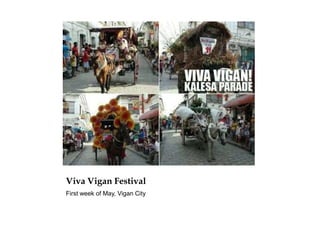
Viva Vigan Festival
First week of May, Vigan City
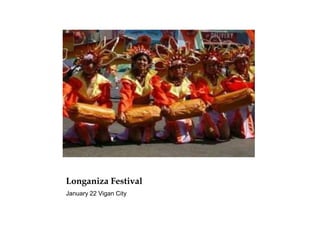
Longaniza Festival
January 22 Vigan City
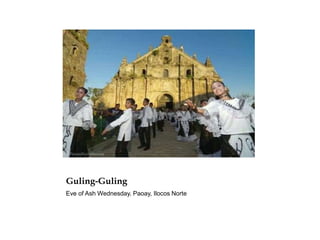
Guling-Guling
Eve of Ash Wednesday. Paoay, Ilocos Norte
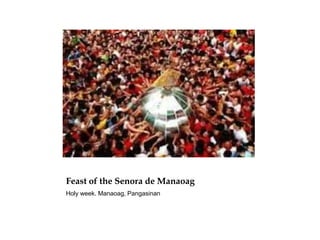
Feast of the Senora de Manaoag
Holy week. Manaoag, Pangasinan
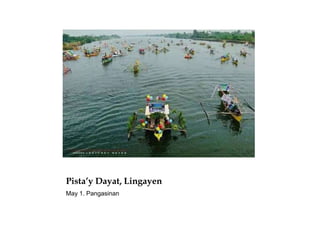
Pista’y Dayat, Lingayen
May 1. Pangasinan
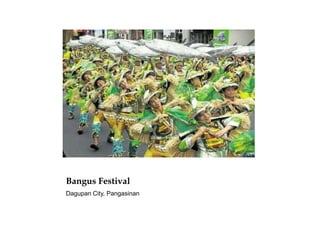
Bangus Festival
Dagupan City, Pangasinan
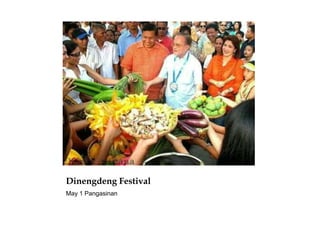
Dinengdeng Festival
May 1 Pangasinan
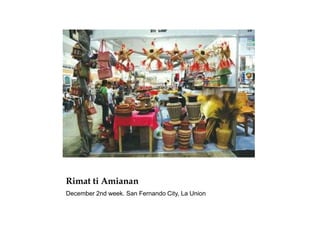
Rimat ti Amianan
December 2nd week. San Fernando City, La Union
Icons from Region I
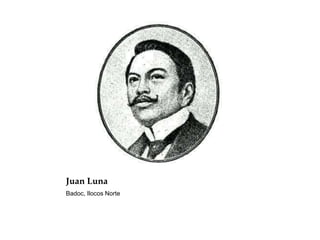
Juan Luna
Badoc, Ilocos Norte
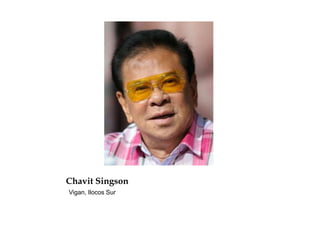
Chavit Singson
Vigan, Ilocos Sur
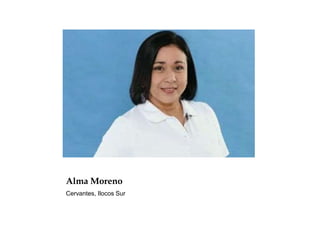
Alma Moreno
Cervantes, Ilocos Sur
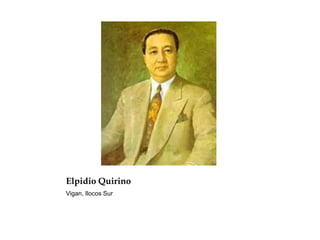
Elpidio Quirino
Vigan, Ilocos Sur
Ferdinand Marcos
Sarrat, Ilocos Norte
Tourist Spots from Region I
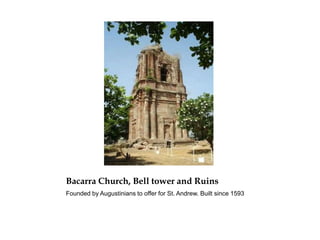
Bacarra Church, Bell tower and Ruins
Founded by Augustinians to offer for St. Andrew. Built since 1593
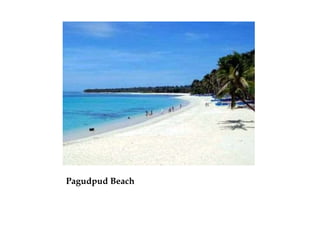
Pagudpud Beach
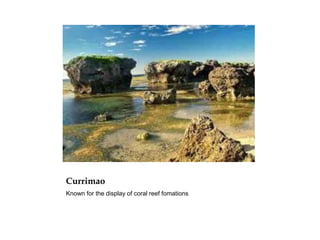
Currimao
Known for the display of coral reef fomations
Famous Foods of Region I
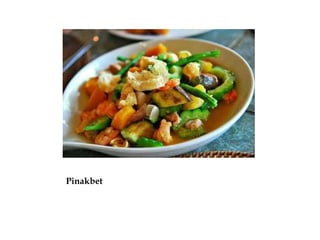
Pinakbet
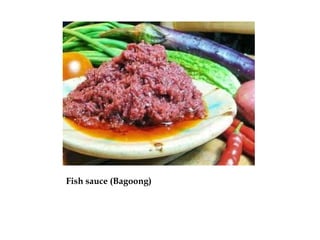
Fish sauce (Bagoong)
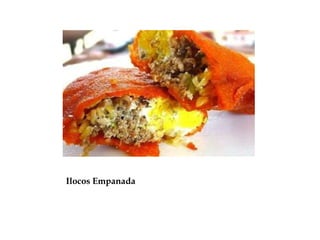
Ilocos Empanada
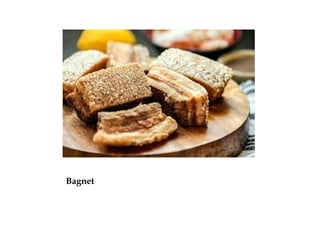
Bagnet

Region 1 Philippine Literature

  • 1.
    Philippine (Luzon) Literature JadeSvetlana Nicole de Guzman ABLL-2 1st Semester, 2016-2017
  • 3.
    Region 1: IlocosRegion • Its literature is known as one of the most colorful regional Filipino literatures. • Prior to Spanish colonial period, the Ilocano literature is purely alive in form of written and oral literature. Ancient poets expressed themselves through folk and war songs.
  • 5.
  • 6.
    Pedro Buc(k)aneg • Acknowledgedauthor of the epic Biag ni Lam-ang. • A Filipino poet. • Was a foundling, who shortly after floating in a basket between Bantay and Vigan was found by an old woman. • Brought to Bantay Agustinijner priest who baptised him as Pedro Bucaneg.
  • 7.
    • Blind sincebirth, but grew up as smart and talented. • Took lessons in Latin and Spanish and also learned the local dialects and Ilocano Isneg. • Known to translate prayers and sermons in local language. • Although blind, he dictated the text of his poems, songs and translations as someone wrote it down.
  • 8.
    • Translated DoctrinaCristiana to Ilocano which was printed in 1593 as one of the first book in the Philippines and was intended for the use in the local poplyaltion. • 1621, the ilocano translation was printed in the Augustinian Convent in Manila. • Arte de Lengua Iloca, the first grammar book, co-authored with Fr. Francisco Lopez
  • 9.
    • Born March1592 and died circa 1630, his works of literature are preserved to be written in history.
  • 10.
    Mother of PhWomen’s Literature
  • 11.
    Leonora Florentino • April19, 1849 - October 4, 1884 • Poet in Spanish and Ilocano. • At the age of 10, she can write poems in Ilocano and speak well in Spanish. • Was really intelligent, yet she wasn’t allowed to study due to her gender. • She was instead tutored by her mother and a series of private teachers.
  • 12.
    • Fr. EvaristoAbaya flourished her Spanish skills and help her voice out her thoughts in poems. • She married a politician, Elias de los Reyes at the age of 14. Together had 5 children. • Due to the feminist nature of her writings, she was shunned by her husband and son, she lived alone in exile and separated from her family. • She died at the age of 35
  • 13.
    Works • Her wellknowns literary pieces are Rucronoy (Dedication), Naangaway a Cablaw (Good greetings), Nalpay a Namnama (Vanishing Hope), Benigna, Para ken Carmen, Panay Pacada (Farewell) and more. • Most of her works got lost but the preserved ones are in the library of Madrid, Londres at Paris.
  • 14.
    • Although Florentinodied at a young age, her works are known not only in the Philippines but through out Europe. • She is believed to be the first Filipina recognized as a lady poet.
  • 15.
    Nalpay na namnama Yantangaysiak ket linipatnakon Liday ti yas-asog toy barungkonko. Nuray agsagabaak nga agnanayon, Nalpay a namnama aklunekon
  • 16.
    Blasted hopes/Vanishing Hopes Butwould it be my greatest joy To know that it is you I love, For to you do I vow and a promise I make It’s you alone for whom I would lay my life.
  • 17.
  • 18.
    Isabelo de losReyes • Also known as Don Belong • July 4, 1864 - October 10, 1938 • Prominent politician, writer and labor activist • Originally founder of Aglipayan Church, an indepondent Christian protestant church in the catholic tradition.
  • 19.
    • Due tohis anti-catholic writings, he therefore got the nickname • Pope Leo XIII formally excommunicated Reyes in 1903 as an apostate • He followed his mother’s footsteps by initially turning to writing as a career. • won an award at the age of 23 for his first written book. • Became a journalist, editor, and publisher in Manila
  • 20.
    • Imprisoned in1897 for revolutionary activities. • Deported to Spain, and was jailed until 1898. • While being there, he got influenced by the writings of European socialists and Marxists. • Returning to Philippines in 1901, he founded the first labor union in the country.
  • 21.
    • Also activein seeking independence from the US • After serving the Ph in the 1920s, he settled into private life and religious writing. • Had a total of 27 children with 3 successive wives.
  • 22.
    Works • Mariquit theTramp (bomba story) • Sing sing ni Diego (horror story) • Biblia Filipina (philippine bible) • Oficio divino • Catequesis (catechism) • Plagerias(prayers) • Genesis Cientifico y moderno • Ang sing sing ng dalagang marmol (1905 novel) • Calendario Aglipayano
  • 23.
  • 24.
    • Born toIlocano parents in the Ph in Binalonan, Pangasinan. • November 2, 1913 (?) • Most of his youth was spent in the countryside as a farmer. • his hometown is the starting point of his famous semi-autobiographical novel, America is in the Heart. • Left for America on July 22, 1930 at the age of 17.
  • 25.
    • Upon arrivingin Seattle, he met with racism and was forced to work in a low paying job. • He worked as a farmworker, harvesting grapes and asparagus, and doing other types of hard work in the fields of California. He also worked as a dishwasher with his brother in the famous Madonna Inn in San Luis Obispo.
  • 26.
    Works • America isin the Heart • The Laughter of My Father • The Cry and the Dedication • My Father’s Tragedy • The Romance of Magno Rubio • If You Want To Know What We Are
  • 27.
    America Is Inthe Heart “The old world is dying, but a new world is being born. It generates inspiration from the chaos that beats upon us all. The false grandeur and security, the unfulfilled promises and illusory power, the number of the dead and those about to die, will charge the forces of our courage and determination. The old world will die so that the new world will be born with less sacrifice and agony on the living.”
  • 29.
  • 30.
    • December 3,1924 • Born in Rosales, Pangasinan the setting of his many stories. • Ilocano descent whose family had migrated to Pangasinan to flee from poverty. • His influences: his mother, Jose Rizal • Critically acclaimed Filipino internationally yet underrated in his own country.
  • 31.
    Awards • Pablo NerudaCentennial Award (2004) Philippine National Artist for Literature (2001) • Chevalier dans l'Ordre des Arts et Lettres (2000) • Ramon Magsaysay Award for Journalism, Literature and Creative Communication Arts (1980) • City of Manila Award for Literature (1979 Carlos Palanca Memorial Award for Literature (1959, 1979, 1980, 1981)
  • 32.
    • Attended USTafter WW2 but dropped out and plunged into writing and journalism in Manila. • Edited various literaty and journalistic publications, started a publishing house and founded the Philippine branch of PEN, an intr’l organization for writers. • His writings talk about social justice and change to better the lives of average Filipino families.
  • 33.
    • Inspired himto make the five volume novels: Rosales Saga. • is one of the most widely read Filipino writers in the English Language. His novels and short stories depict the social underpinnings of class struggles and colonialism of Filipino society. • Jose’s works written in English have been translated into 22 language ls including Korean, Indonesian, Russian and Dutch.
  • 34.
    • Owns abookshop that sells hard to find filipiniana reading materials. • ‘Why are we shallow’ Hindsight, The Philippine Star September 12 2011
  • 37.
  • 38.
    Juan Crisostomo Soto •Born in Bacolor, Pampanga • Exquisite in Crisostan (balagtasan) in Pampanga’s local dialect. • Known as a poet, playwright and editor in Pampanga’s dialect. • Wrote moro-moro and sarsuela.
  • 39.
    Works • Pula’t Puti •Romeo and Juliet from Shakespeare • Sigalot – considered the best and written in jail • Wrote an English-Spanish-Pampango Dictionary with Modesto Joaquin
  • 40.
  • 41.
    • Born August23, 10907 in Guagua, Pampanga. • Settled in Bicol Region in Albay. • During her senior year, she moved to St. Scholastica’s College in Malate, Manila where her writing started to get noticed. • Was among the first generation female students of the UP
  • 42.
    • Was theauthor of Revolt from Hymen, a poem protesting against marital rape which caused her denial by an all-male jury from winning the Ph’s Commonwealth Literary Awards in 1940. • Poems, a poem collection published 1940 and was revised in 1950
  • 43.
  • 44.
    Viva Vigan Festival Firstweek of May, Vigan City
  • 45.
  • 46.
    Guling-Guling Eve of AshWednesday. Paoay, Ilocos Norte
  • 47.
    Feast of theSenora de Manaoag Holy week. Manaoag, Pangasinan
  • 48.
  • 49.
  • 50.
  • 51.
    Rimat ti Amianan December2nd week. San Fernando City, La Union
  • 52.
  • 53.
  • 54.
  • 55.
  • 56.
  • 57.
  • 58.
  • 59.
    Bacarra Church, Belltower and Ruins Founded by Augustinians to offer for St. Andrew. Built since 1593
  • 60.
  • 61.
    Currimao Known for thedisplay of coral reef fomations
  • 62.
  • 63.
  • 64.
  • 65.
  • 66.

Editor's Notes

  • #3 Iloko vs ilocano Ilocano literature
  • #4 Kasi active Mention the photo
  • #5 Due to the number of towns in Ilocos, there are also countless ilocano writers from the region. There are approximately 300+ from the wikipedia and other resources, and so I just picked
  • #7 Explain why acknowleged 1640
  • #9 Printed 1927 in UST
  • #25 Hoping that he would escape the poverty in the philippines
  • #26 He died in Seatlle due to bronchopneumonia. He is buried at Mt. Pleasant Cemetery on Queen Anne hill in Seattle
  • #42 Who initially enrolled in law as suggested by her father. However with the advice of his profesor who also became her mentor, she eventually transferred to literature
  • #63 Which we share as our neighboring region