REVIEW OF RELATED
LITERATURE AND STUDIES
Central Mindanao University
University Town, Musuan, Maramag, Bukidnon
College of Education
Graduate School
Reporter:
Jelmar S. Campion
Purposes of the Review of
Related Literature and Studies
The following are some of the
purposes and importance of the
review of related literature and
studies ( Lehmann & Mehrens ,
1979)
1. It provides the researcher
some information about the
status quo of knowledge in the
area he intends to study
2.It provides the researcher with
ideas of the type of study and
research design that he may
eventually employ in conducting
his research
3.It assists the researcher by
pointing out the strengths and
weaknesses in existing research
4. It helps the researcher avoid
errors that plagued other
researchers studying similar
problem
5.It helps the researcher in
developing a theoretical
framework.
According to Ary et al. ( 1985)
this aspect of research process
enables the researchers to:
1. Define the frontiers of his
fields
2.Place his question in
perspective
3. Learn which procedures have
proven useful and which seem
less promising.
4. Avoid unintentional
replication of previous studies
5. Better interpret the
significance of his own result
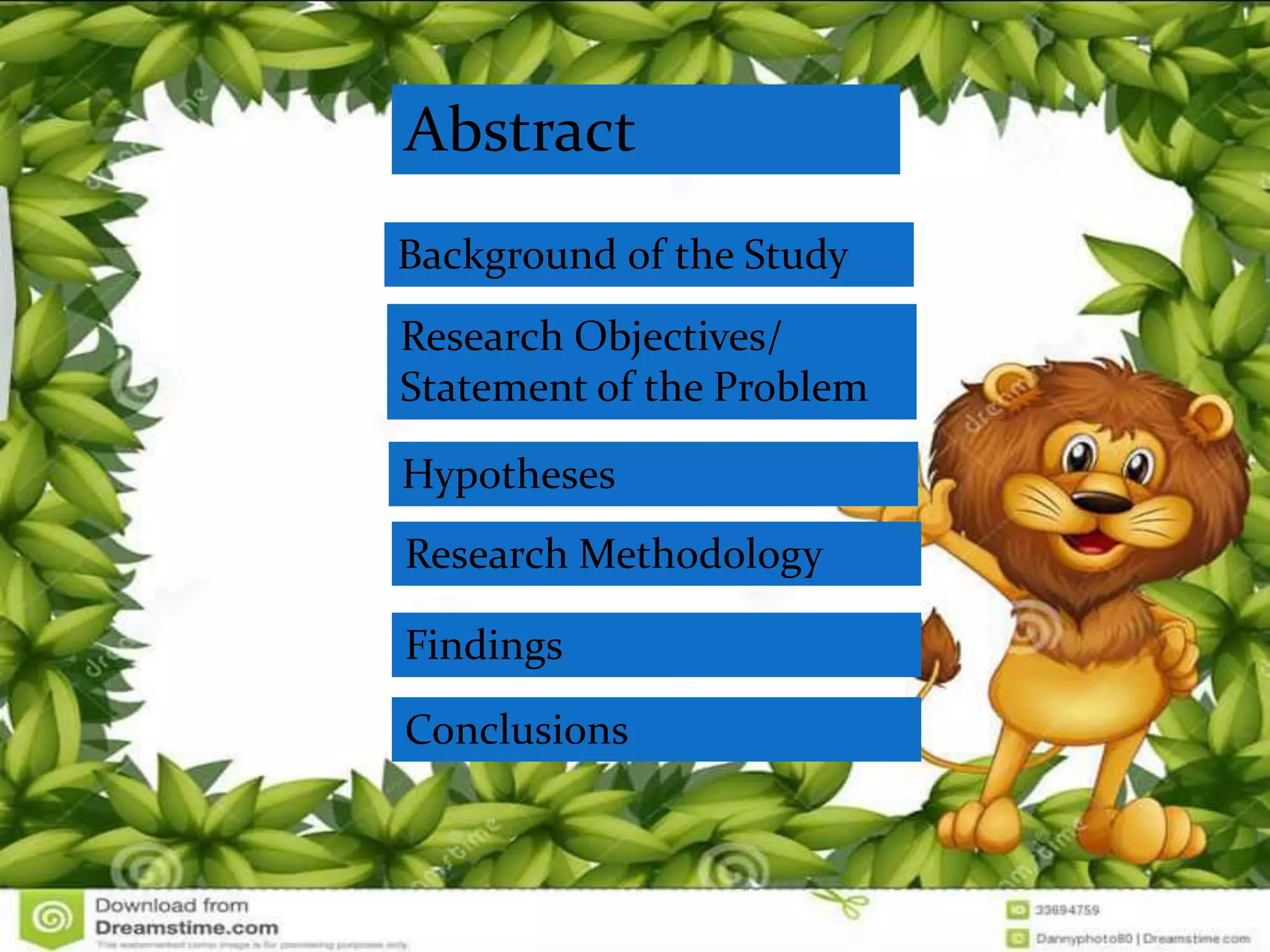
Abstract
Background of the Study
Research Objectives/
Statement of the Problem
Hypotheses
Research Methodology
Findings
Conclusions
Abstract
Copy exactly as written in
the manuscript or article
Background of the Study
Note the researcher’s
motivation and
justifications for
conducting the study
Research Objectives/
Statement of the Problem
List them exactly as stated
in the manuscript article
Hypotheses
List them exactly as stated in
the manuscript article
Research Methodology
List the research design ,research
environment,or locale of the study,the
respondents, sampling procedures, data
gathering procedures,research
instrument, and statistical treatment of
data.
Findings
List the major findings of the
study and indicate whether the
objectives of the study were
attained or whether the
hypotheses were supported
Conclusions
Describe the researcher’s
conclusion
NOTE TAKING
TIPS ON NOTE TAKING
Begin with the most recent studies in your field
and then work backward through earlier volumes
Read the abstract or summary section of a
report first to determine whether it is relevant
to your question
Make notes directly on the file cards as they are
easier to sort and organize than sheets of
paper, backs of envelopes and so on.
TIPS ON NOTE TAKING
For each work, write the complete
bibliographic references
To facilitate sorting and organizing, do not put
more than one reference on each card
Be sure to indicate which parts of the notes are
direct quotations from the author and which
are your paraphrases.
Thank you!

Educ 241 RESEARCH METHODS

  • 1.
    REVIEW OF RELATED LITERATUREAND STUDIES Central Mindanao University University Town, Musuan, Maramag, Bukidnon College of Education Graduate School Reporter: Jelmar S. Campion
  • 2.
    Purposes of theReview of Related Literature and Studies
  • 3.
    The following aresome of the purposes and importance of the review of related literature and studies ( Lehmann & Mehrens , 1979)
  • 4.
    1. It providesthe researcher some information about the status quo of knowledge in the area he intends to study
  • 5.
    2.It provides theresearcher with ideas of the type of study and research design that he may eventually employ in conducting his research
  • 6.
    3.It assists theresearcher by pointing out the strengths and weaknesses in existing research
  • 7.
    4. It helpsthe researcher avoid errors that plagued other researchers studying similar problem
  • 8.
    5.It helps theresearcher in developing a theoretical framework.
  • 9.
    According to Aryet al. ( 1985) this aspect of research process enables the researchers to:
  • 10.
    1. Define thefrontiers of his fields
  • 11.
    2.Place his questionin perspective
  • 12.
    3. Learn whichprocedures have proven useful and which seem less promising.
  • 13.
  • 14.
    5. Better interpretthe significance of his own result
  • 15.
    Abstract Background of theStudy Research Objectives/ Statement of the Problem Hypotheses Research Methodology Findings Conclusions
  • 16.
    Abstract Copy exactly aswritten in the manuscript or article
  • 17.
    Background of theStudy Note the researcher’s motivation and justifications for conducting the study
  • 18.
    Research Objectives/ Statement ofthe Problem List them exactly as stated in the manuscript article
  • 19.
    Hypotheses List them exactlyas stated in the manuscript article
  • 20.
    Research Methodology List theresearch design ,research environment,or locale of the study,the respondents, sampling procedures, data gathering procedures,research instrument, and statistical treatment of data.
  • 21.
    Findings List the majorfindings of the study and indicate whether the objectives of the study were attained or whether the hypotheses were supported
  • 22.
  • 23.
  • 24.
    TIPS ON NOTETAKING Begin with the most recent studies in your field and then work backward through earlier volumes Read the abstract or summary section of a report first to determine whether it is relevant to your question Make notes directly on the file cards as they are easier to sort and organize than sheets of paper, backs of envelopes and so on.
  • 25.
    TIPS ON NOTETAKING For each work, write the complete bibliographic references To facilitate sorting and organizing, do not put more than one reference on each card Be sure to indicate which parts of the notes are direct quotations from the author and which are your paraphrases.
  • 26.