HOW TO GET THE MOST OUT OF THE TIME AND EFFORT YOU DEVOTE TO READING Tips for Approaching Your Textbooks
Some Quotes About Reading Reading furnishes our mind only with materials of knowledge; it is thinking that makes what we read ours—John Locke …  there would seem to be almost no limit to what people can and will misunderstand when they are not doing their utmost to get at a writer’s meaning…Ezra Pound. Sometimes the only difference between a sleeping pill and a textbook is that the textbook doesn’t have a warning on the label about operating heavy machinery—David Ellis, Becoming a Master Student
Purposes for Reading WHAT WE READ DETERMINES HOW WE READ For Exams-- need to determine which information is important. For Lecture -- need to have general understanding. For an Essay-- need to prepare for a specific assignment. For Discussion-- need to form questions/form an opinion.
Logistics: The Stage is Set Environment/Setting Where?  In Dorm? In Library? Alone or with Others? Quiet or with Noise Sound (i.e. Music) Props Head Phones? Pillow? Food? Time Morning?  Day Time?  Evening? V x I =M Value x Interest = Motivation
Three phase technique: Before you read: Pry Out Questions Step 1: Preview Step 2: Outline Step 3: Question While you Read: Root up Answers Step 1: Read Step 2: Underline Step 3: Answer Root up answers Step 1: Recite Step 2: Review Step 3: Review again Muscle Reading
What is a passive reader? Disengaged Distracted Disinterested  How do I become an active reader? Annotate in margins Highlight Use Webbing Read Out Loud Work in Groups Paraphrase Narrow Your Search Make connections between text and course notes Active versus Passive Reading
When Reading Is Tough Read it again, Sam Look for essential words Hold a mini-review Read it out loud Use your instructor Find a tutor Use another text Pretend you understand, then explain it Stand Up
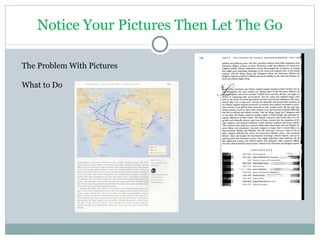
Notice Your Pictures Then Let The Go The Problem With Pictures What to Do
Tools of the Trade Introductory Information Provides suggestions, study strategies, and explanations of features Table of Contents Provides overview of organization of information Gives you an idea of time needed for each section of reading Glossary Provides you with definitions of unfamiliar words Appendix Provides addition material such as practice questions, answers, keys, charts, maps, and graphs Index Provides alphabetical listing of topics Dictionary A reader’s best friend
Final Thoughts Focus is Key!  Find a reading environment that works for you! One system may not work for everything Avoid just ,“Going Through the Motions”.  If you are not actively engaged in thinking about the material, you will not retain any information. You will become a more efficient reader with practice.
AIM participations  will receive credit for viewing this Power Point presentation  by answering the questions below and emailing your replies to  [email_address] . 1. Was this presentation useful? 2. Which part of the presentation did you find most useful? 3. Which part of the presentation was the least useful? 4. What are you going to do now based on what you have  learned from this  presentation?

Reading textbooks

  • 1.
    HOW TO GETTHE MOST OUT OF THE TIME AND EFFORT YOU DEVOTE TO READING Tips for Approaching Your Textbooks
  • 2.
    Some Quotes AboutReading Reading furnishes our mind only with materials of knowledge; it is thinking that makes what we read ours—John Locke … there would seem to be almost no limit to what people can and will misunderstand when they are not doing their utmost to get at a writer’s meaning…Ezra Pound. Sometimes the only difference between a sleeping pill and a textbook is that the textbook doesn’t have a warning on the label about operating heavy machinery—David Ellis, Becoming a Master Student
  • 3.
    Purposes for ReadingWHAT WE READ DETERMINES HOW WE READ For Exams-- need to determine which information is important. For Lecture -- need to have general understanding. For an Essay-- need to prepare for a specific assignment. For Discussion-- need to form questions/form an opinion.
  • 4.
    Logistics: The Stageis Set Environment/Setting Where? In Dorm? In Library? Alone or with Others? Quiet or with Noise Sound (i.e. Music) Props Head Phones? Pillow? Food? Time Morning? Day Time? Evening? V x I =M Value x Interest = Motivation
  • 5.
    Three phase technique:Before you read: Pry Out Questions Step 1: Preview Step 2: Outline Step 3: Question While you Read: Root up Answers Step 1: Read Step 2: Underline Step 3: Answer Root up answers Step 1: Recite Step 2: Review Step 3: Review again Muscle Reading
  • 6.
    What is apassive reader? Disengaged Distracted Disinterested How do I become an active reader? Annotate in margins Highlight Use Webbing Read Out Loud Work in Groups Paraphrase Narrow Your Search Make connections between text and course notes Active versus Passive Reading
  • 7.
    When Reading IsTough Read it again, Sam Look for essential words Hold a mini-review Read it out loud Use your instructor Find a tutor Use another text Pretend you understand, then explain it Stand Up
  • 8.
    Notice Your PicturesThen Let The Go The Problem With Pictures What to Do
  • 9.
    Tools of theTrade Introductory Information Provides suggestions, study strategies, and explanations of features Table of Contents Provides overview of organization of information Gives you an idea of time needed for each section of reading Glossary Provides you with definitions of unfamiliar words Appendix Provides addition material such as practice questions, answers, keys, charts, maps, and graphs Index Provides alphabetical listing of topics Dictionary A reader’s best friend
  • 10.
    Final Thoughts Focusis Key! Find a reading environment that works for you! One system may not work for everything Avoid just ,“Going Through the Motions”. If you are not actively engaged in thinking about the material, you will not retain any information. You will become a more efficient reader with practice.
  • 11.
    AIM participations will receive credit for viewing this Power Point presentation by answering the questions below and emailing your replies to [email_address] . 1. Was this presentation useful? 2. Which part of the presentation did you find most useful? 3. Which part of the presentation was the least useful? 4. What are you going to do now based on what you have learned from this presentation?