Theories in
reading
instruction
Maria Antonette C. Andres
Jeannel Soco
EFR3-4
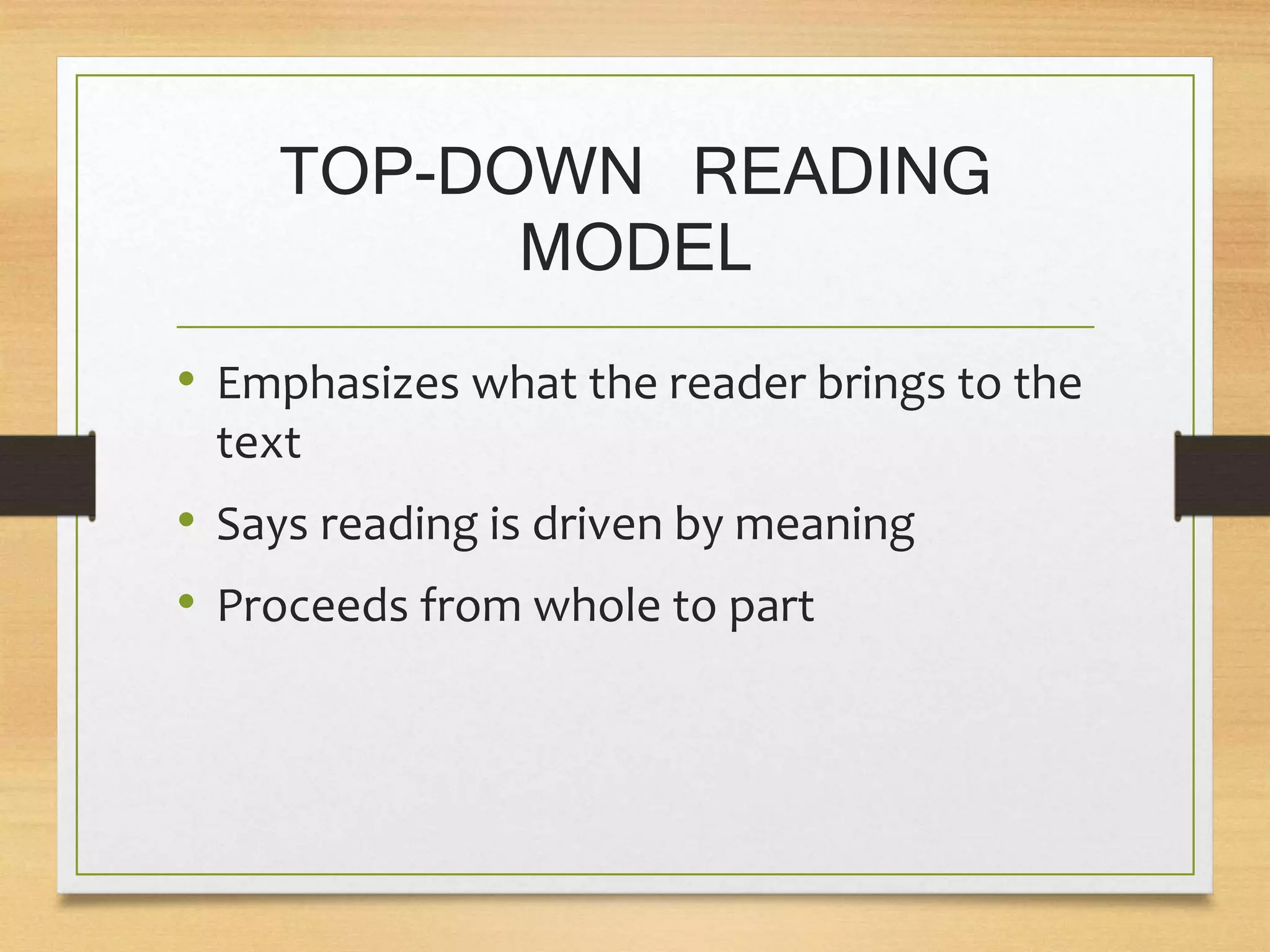
TOP-DOWN READING
MODEL
• Emphasizes what the reader brings to the
text
• Says reading is driven by meaning
• Proceeds from whole to part
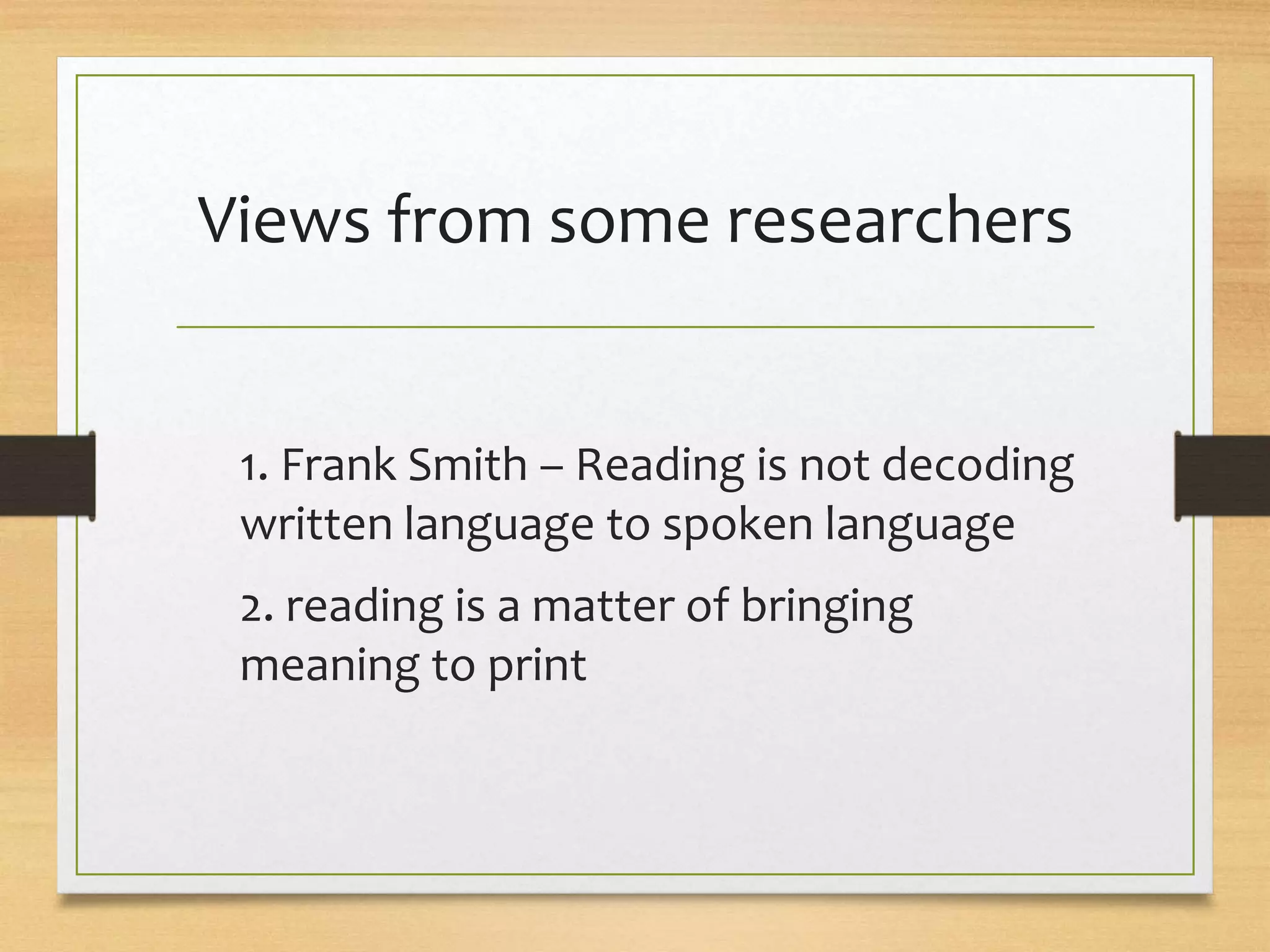
Views from some researchers
1. Frank Smith – Reading is not decoding
written language to spoken language
2. reading is a matter of bringing
meaning to print
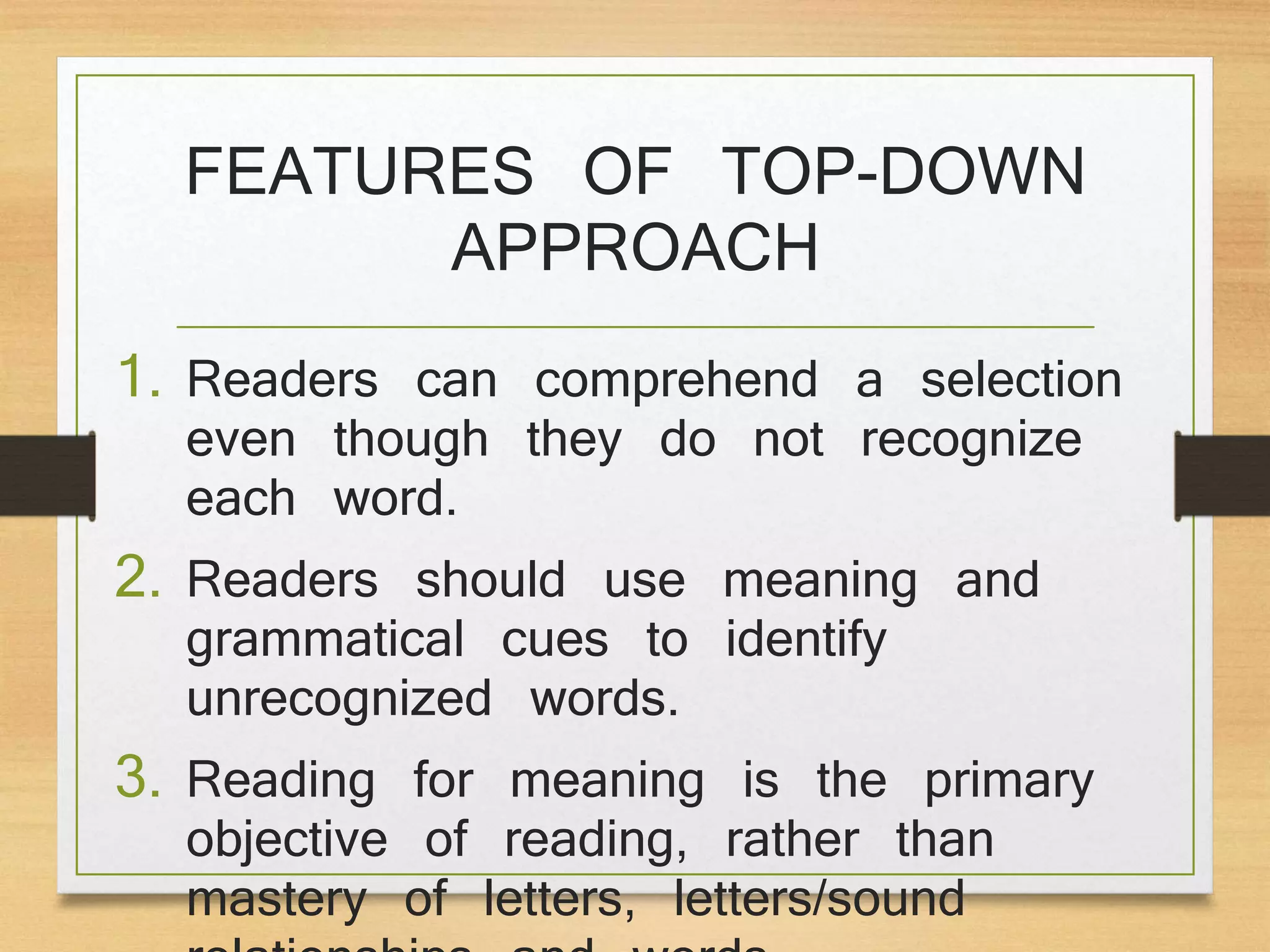
FEATURES OF TOP-DOWN
APPROACH
1. Readers can comprehend a selection
even though they do not recognize
each word.
2. Readers should use meaning and
grammatical cues to identify
unrecognized words.
3. Reading for meaning is the primary
objective of reading, rather than
mastery of letters, letters/sound
4. Reading requires the use of meaning
activities than the mastery of series
of word- recognition skills.
5. The primary focus of instruction
should be the reading of sentences,
paragraphs, and whole selections
6. The most important aspect about
reading is the amount and kind of
information gained through reading.
FEATURES OF TOP-DOWN
APPROACH
BOTTOM UP
• Emphasizes a single direction
• Emphasizes the written or printed texts
• Part to whole model
• Reading is driven by a process that
results in meaning
PROPONENTS OF THE BOTTOM
UP
1. Flesch 1955
2. Gough 1985
FEATURES OF BOTTOM-
UP
Believes the reader needs to:
1. Identify letter features
2. Link these features to recognize
letters
3. Combine letter to recognize spelling
patterns
4. Link spelling patterns to recognize
words
5. Proceed to sentence, paragraph,
and text- level processing
INTERACTIVE READING
MODEL
• It recognizes the interaction of bottom-
up and top-down processes
simultaneously throughout the reading
process.
• Reading as an active process that
depends on reader characteristics, the
text, and the reading situation
(Rumelhart, 1985)
• Attempts to combine the valid insights
of bottom-up and top-down models.
PROPONENTS OF THE
INTERACTIVE READING MODEL
1. Rumelhart, D. 1985
2. Barr, Sadow, and Blachowicz 1990
3. Ruddell and Speaker 1985

Three Reading Models

  • 1.
  • 2.
    TOP-DOWN READING MODEL • Emphasizeswhat the reader brings to the text • Says reading is driven by meaning • Proceeds from whole to part
  • 3.
    Views from someresearchers 1. Frank Smith – Reading is not decoding written language to spoken language 2. reading is a matter of bringing meaning to print
  • 4.
    FEATURES OF TOP-DOWN APPROACH 1.Readers can comprehend a selection even though they do not recognize each word. 2. Readers should use meaning and grammatical cues to identify unrecognized words. 3. Reading for meaning is the primary objective of reading, rather than mastery of letters, letters/sound
  • 5.
    4. Reading requiresthe use of meaning activities than the mastery of series of word- recognition skills. 5. The primary focus of instruction should be the reading of sentences, paragraphs, and whole selections 6. The most important aspect about reading is the amount and kind of information gained through reading. FEATURES OF TOP-DOWN APPROACH
  • 6.
    BOTTOM UP • Emphasizesa single direction • Emphasizes the written or printed texts • Part to whole model • Reading is driven by a process that results in meaning
  • 7.
    PROPONENTS OF THEBOTTOM UP 1. Flesch 1955 2. Gough 1985
  • 8.
    FEATURES OF BOTTOM- UP Believesthe reader needs to: 1. Identify letter features 2. Link these features to recognize letters 3. Combine letter to recognize spelling patterns 4. Link spelling patterns to recognize words 5. Proceed to sentence, paragraph, and text- level processing
  • 9.
    INTERACTIVE READING MODEL • Itrecognizes the interaction of bottom- up and top-down processes simultaneously throughout the reading process. • Reading as an active process that depends on reader characteristics, the text, and the reading situation (Rumelhart, 1985) • Attempts to combine the valid insights of bottom-up and top-down models.
  • 10.
    PROPONENTS OF THE INTERACTIVEREADING MODEL 1. Rumelhart, D. 1985 2. Barr, Sadow, and Blachowicz 1990 3. Ruddell and Speaker 1985

Editor's Notes

  • #3 In the classroom  Learners can be encouraged to use both bottom-up and top-down strategies to help them understand a text. For example in a reading comprehension learners use their knowledge of the genre to predict what will be in the text (top down), and their understanding of affixation to guess meaning (bottom up).
  • #7 In the classroom  Learners can be encouraged to use both bottom-up and top-down strategies to help them understand a text. For example in a reading comprehension learners use their knowledge of the genre to predict what will be in the text (top-down), and their understanding of affixation to guess meaning (bottom-up).