
REACTIVE
DISTILLATION
HISTORY
•Reactive distillation technique first applied for the
recovery of ammonia in the classic solvey process
during 1860s.
•Then in 1920s esterification process using
homogeneous liquid phase catalyst comes into the
picture.
•In 1970s, manufacturing of MTBE using
hetrogeneous catalyst comes into the consideration.
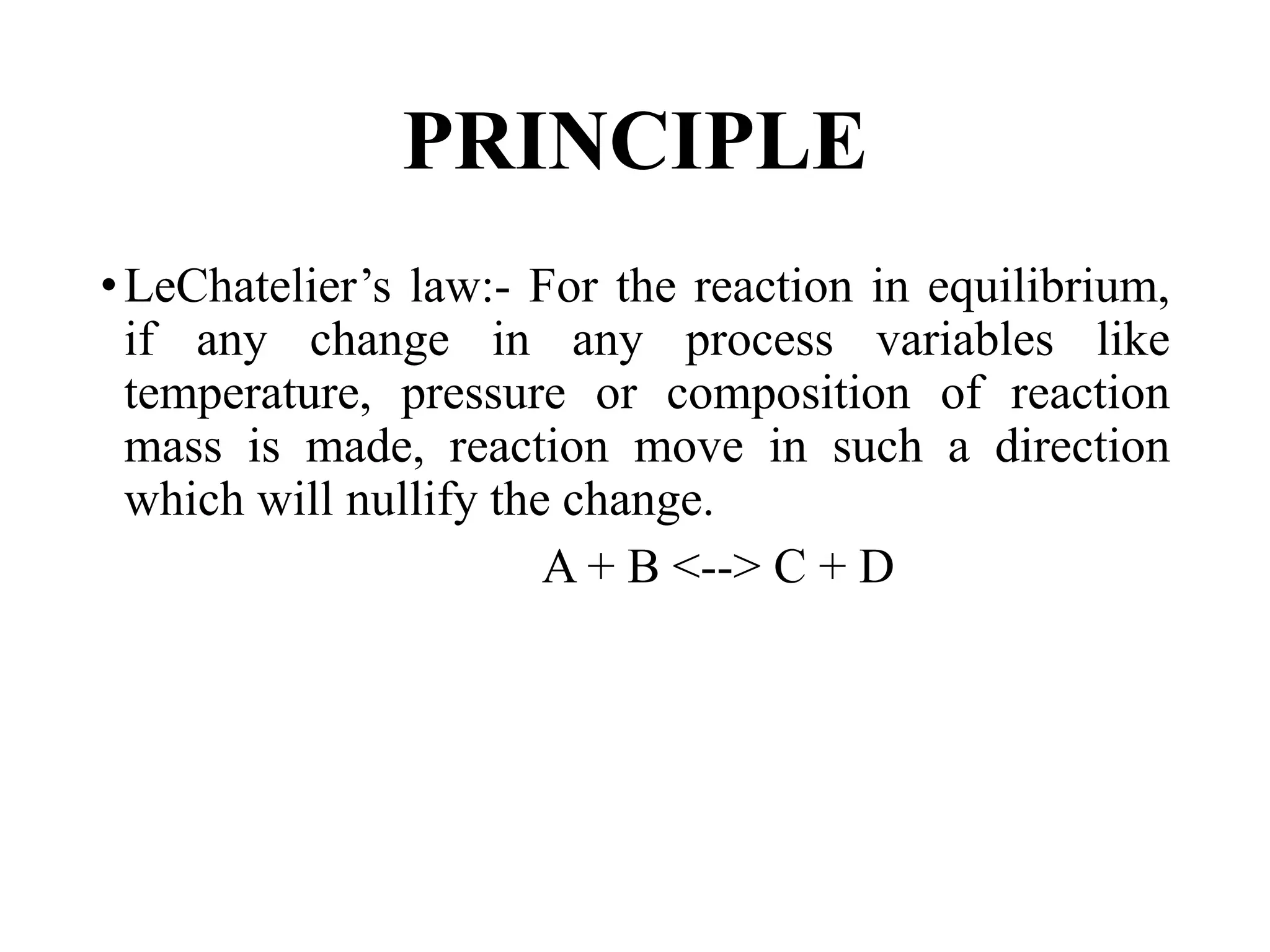
PRINCIPLE
•LeChatelier’s law:- For the reaction in equilibrium,
if any change in any process variables like
temperature, pressure or composition of reaction
mass is made, reaction move in such a direction
which will nullify the change.
A + B <--> C + D
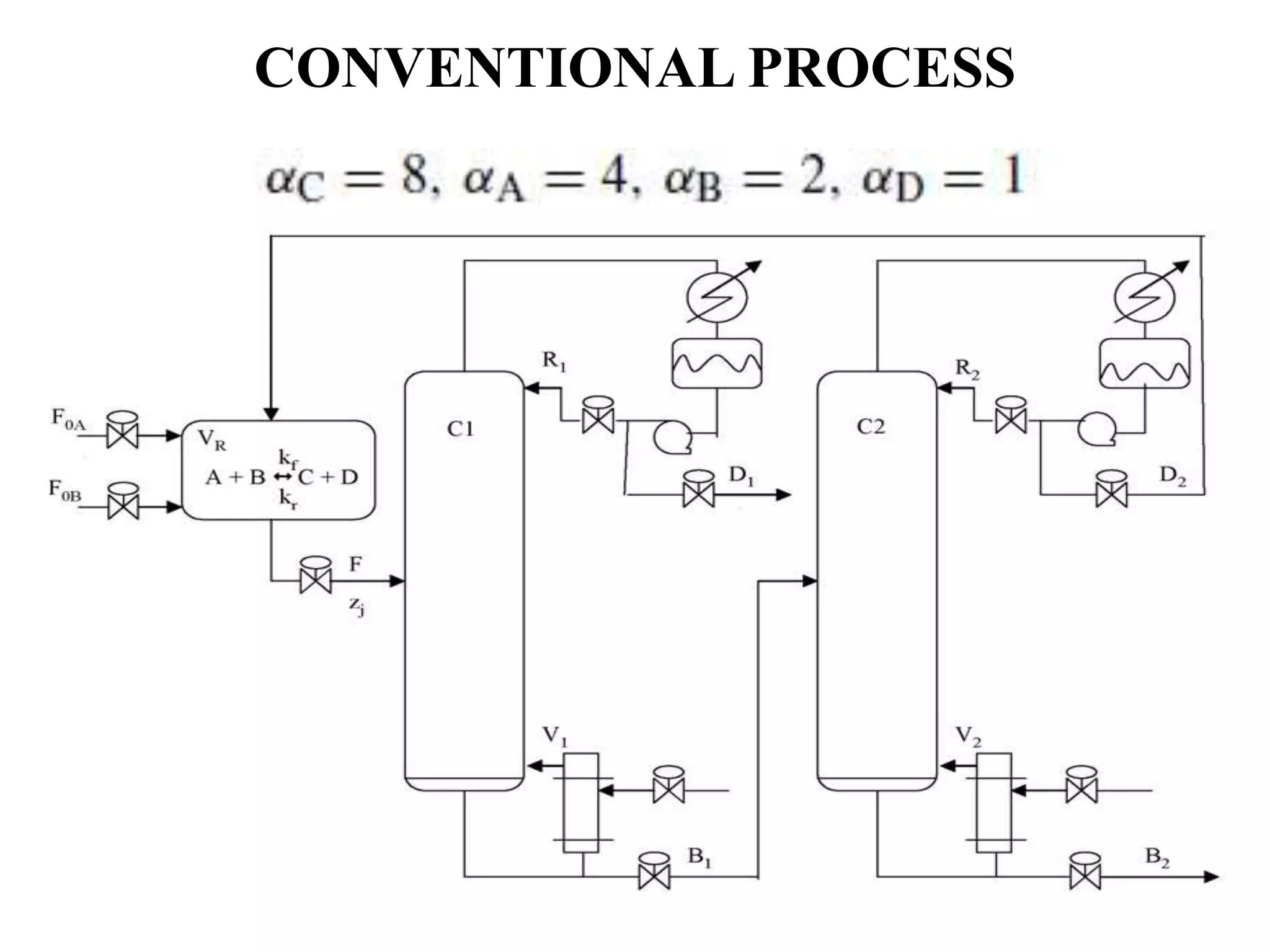
CONVENTIONAL PROCESS
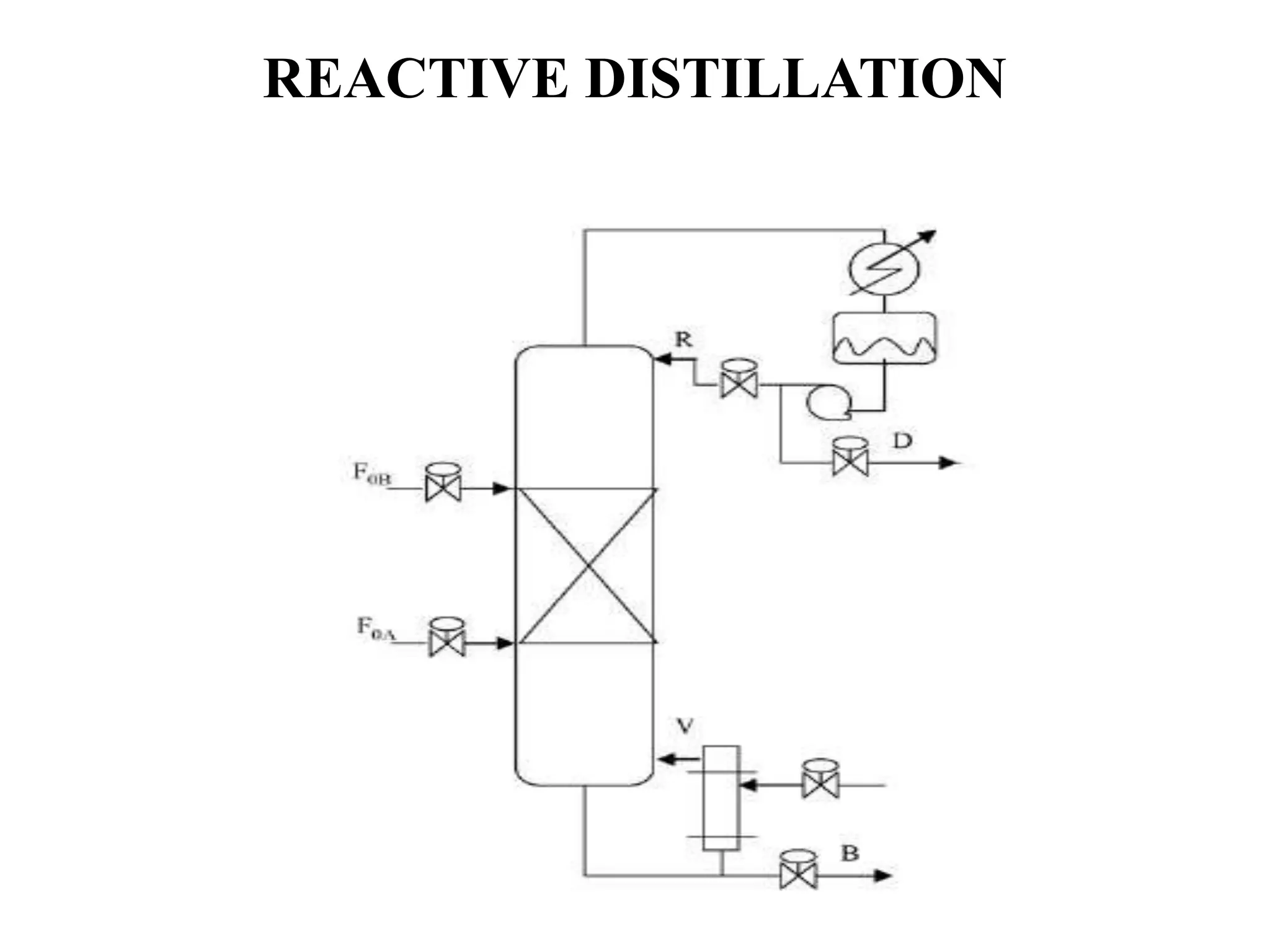
REACTIVE DISTILLATION
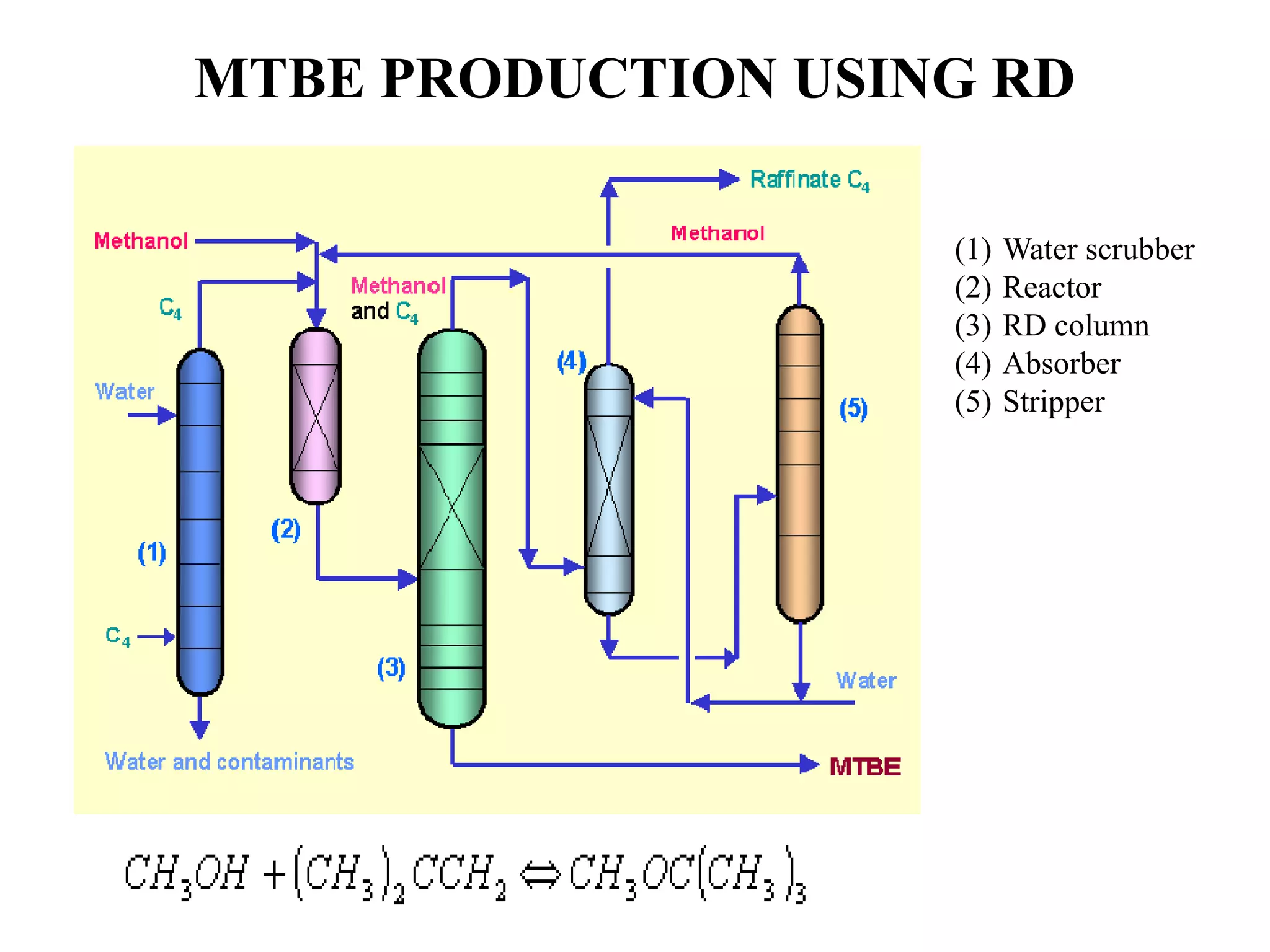
MTBE PRODUCTION USING RD
(1) Water scrubber
(2) Reactor
(3) RD column
(4) Absorber
(5) Stripper
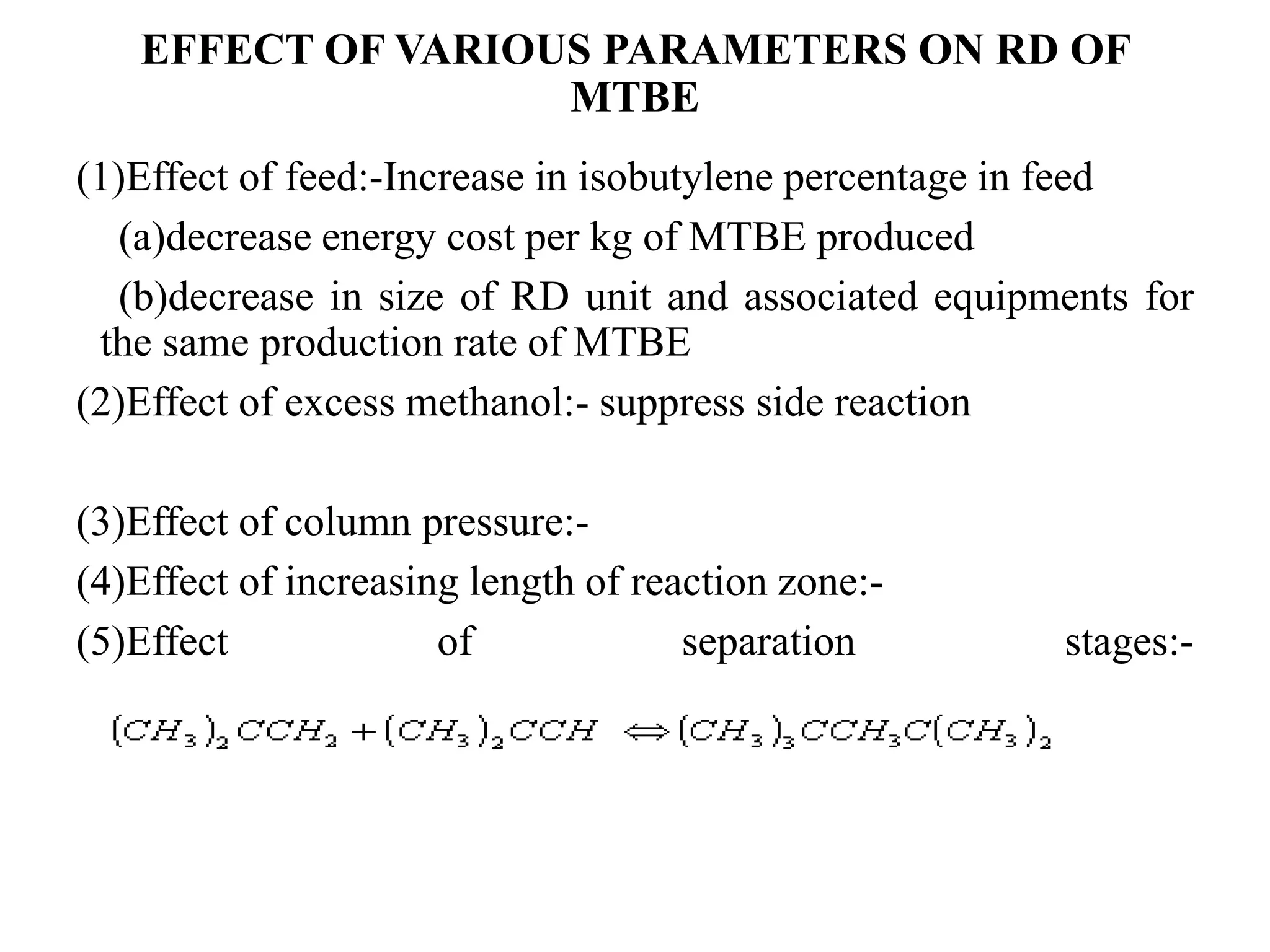
EFFECT OF VARIOUS PARAMETERS ON RD OF
MTBE
(1)Effect of feed:-Increase in isobutylene percentage in feed
(a)decrease energy cost per kg of MTBE produced
(b)decrease in size of RD unit and associated equipments for
the same production rate of MTBE
(2)Effect of excess methanol:- suppress side reaction
(3)Effect of column pressure:-
(4)Effect of increasing length of reaction zone:-
(5)Effect of separation stages:-
Cont…..
(6)Effect of reflux ratio:-
(a)reaction zone temperature reduces
(b)concentration of ether in reaction zone reduces. It
reduces catalytic cracking of MTBE
(7)Effect of feed point:-
VARIOUS CONTACT DEVICES USED FOR
RD
•Tray column in which bed of catalyst is placed either
in downcomers or above the trays.
•Packed tower using random packing elements which
contain the catalyst or which may be made of the
catalyst
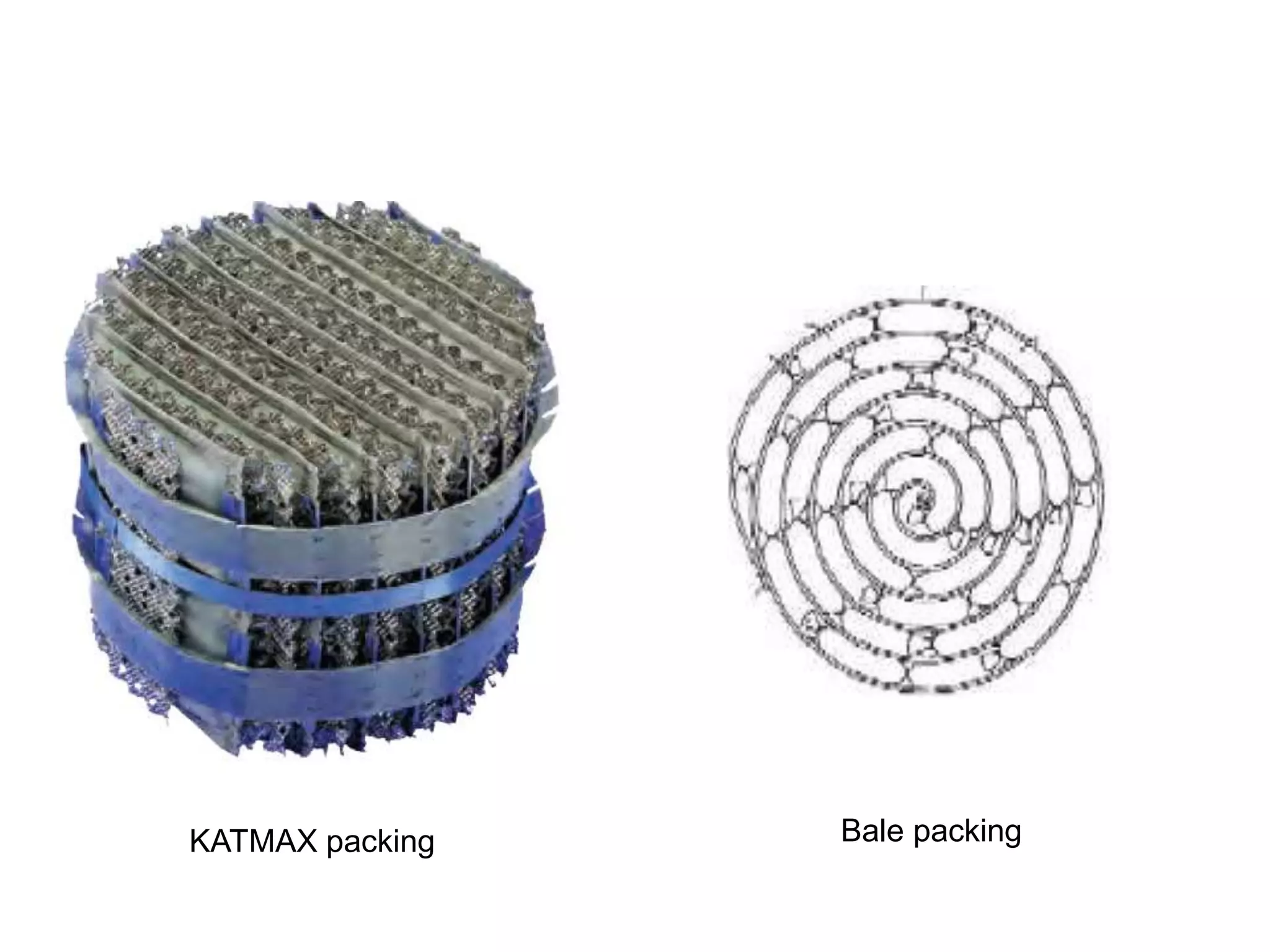
•Packed tower using ordered packing elements which
contain catalyst particles. In orderly packing element,
catalyst particles are sandwiched between two
supporting materials. Two types of ordered packings
are used.
KATMAX packing Bale packing
ADVANTAGES OF RD
•Shifting of equilibrium
•Reduction in plant cost
•Heat integration benefits
•Avoidance of azeotropes
•Improved selectivity
DISADVANTAGES OF RD
•Volatility constraints
•Residence time requirements
•Operating conditions for reaction and
distillation
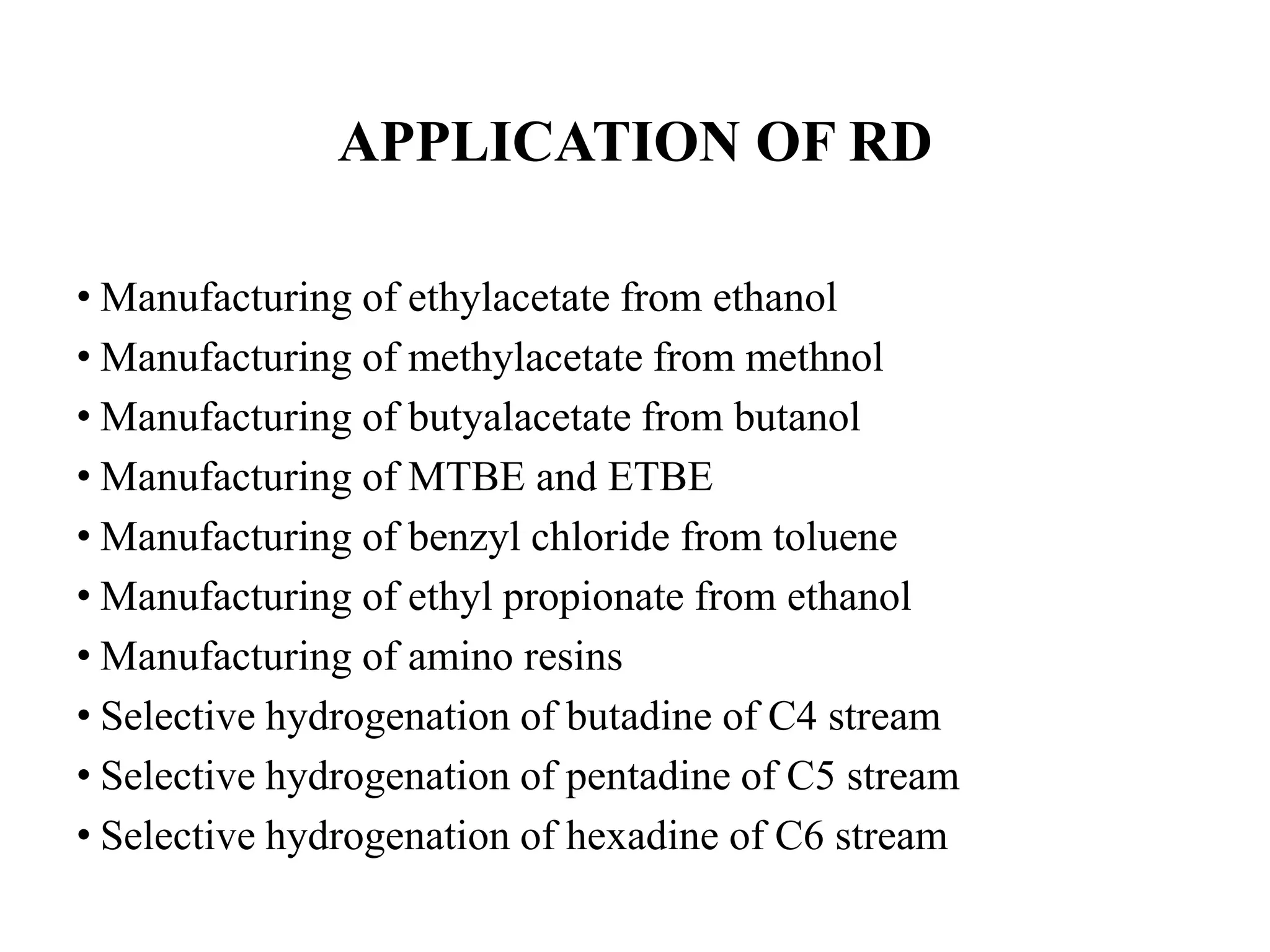
APPLICATION OF RD
• Manufacturing of ethylacetate from ethanol
• Manufacturing of methylacetate from methnol
• Manufacturing of butyalacetate from butanol
• Manufacturing of MTBE and ETBE
• Manufacturing of benzyl chloride from toluene
• Manufacturing of ethyl propionate from ethanol
• Manufacturing of amino resins
• Selective hydrogenation of butadine of C4 stream
• Selective hydrogenation of pentadine of C5 stream
• Selective hydrogenation of hexadine of C6 stream
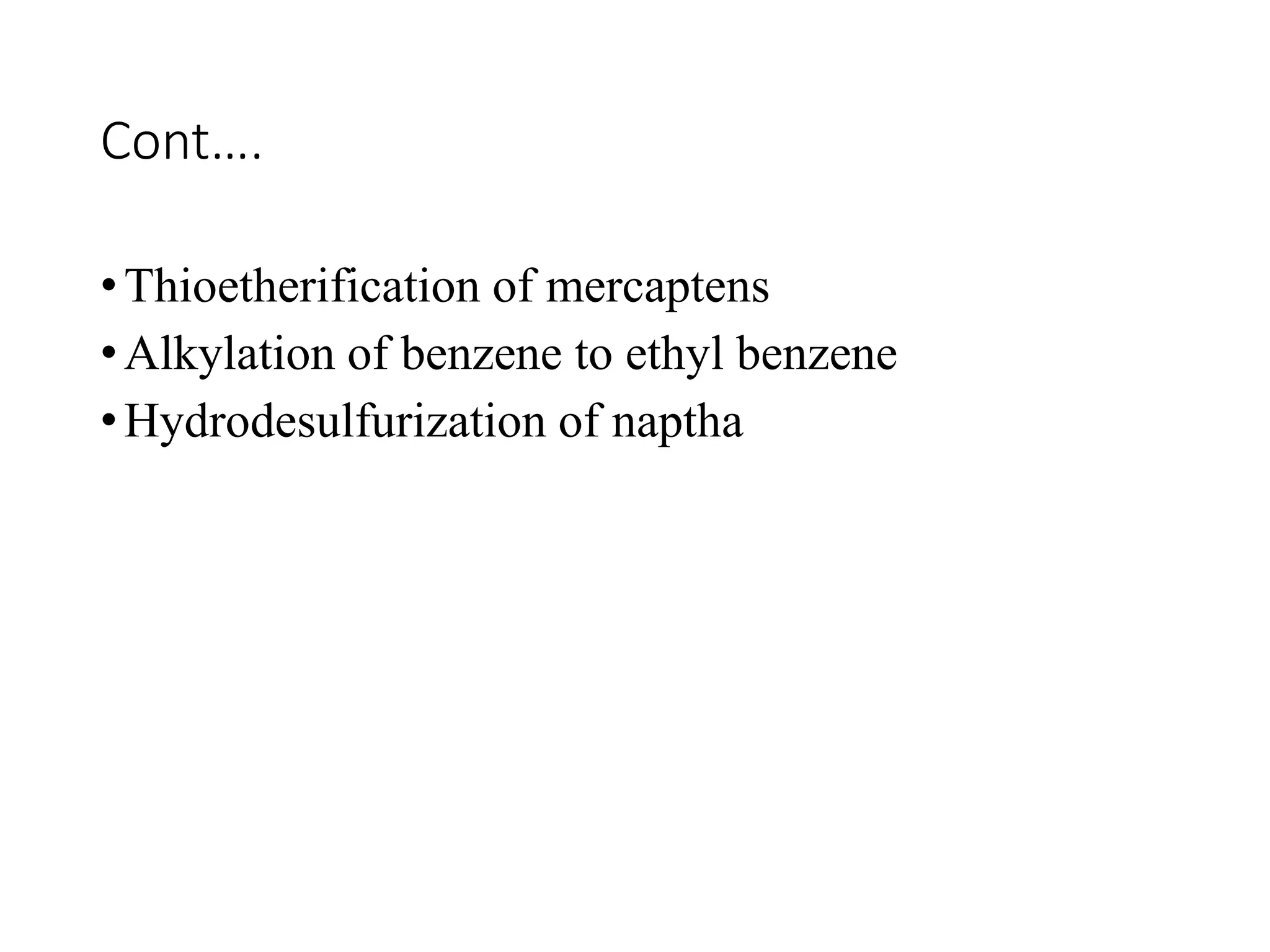
Cont….
•Thioetherification of mercaptens
•Alkylation of benzene to ethyl benzene
•Hydrodesulfurization of naptha
Reactive distillation

Reactive distillation

  • 1.
  • 2.
    HISTORY •Reactive distillation techniquefirst applied for the recovery of ammonia in the classic solvey process during 1860s. •Then in 1920s esterification process using homogeneous liquid phase catalyst comes into the picture. •In 1970s, manufacturing of MTBE using hetrogeneous catalyst comes into the consideration.
  • 3.
    PRINCIPLE •LeChatelier’s law:- Forthe reaction in equilibrium, if any change in any process variables like temperature, pressure or composition of reaction mass is made, reaction move in such a direction which will nullify the change. A + B <--> C + D
  • 4.
  • 5.
  • 6.
    MTBE PRODUCTION USINGRD (1) Water scrubber (2) Reactor (3) RD column (4) Absorber (5) Stripper
  • 7.
    EFFECT OF VARIOUSPARAMETERS ON RD OF MTBE (1)Effect of feed:-Increase in isobutylene percentage in feed (a)decrease energy cost per kg of MTBE produced (b)decrease in size of RD unit and associated equipments for the same production rate of MTBE (2)Effect of excess methanol:- suppress side reaction (3)Effect of column pressure:- (4)Effect of increasing length of reaction zone:- (5)Effect of separation stages:-
  • 8.
    Cont….. (6)Effect of refluxratio:- (a)reaction zone temperature reduces (b)concentration of ether in reaction zone reduces. It reduces catalytic cracking of MTBE (7)Effect of feed point:-
  • 9.
    VARIOUS CONTACT DEVICESUSED FOR RD •Tray column in which bed of catalyst is placed either in downcomers or above the trays. •Packed tower using random packing elements which contain the catalyst or which may be made of the catalyst •Packed tower using ordered packing elements which contain catalyst particles. In orderly packing element, catalyst particles are sandwiched between two supporting materials. Two types of ordered packings are used.
  • 10.
  • 11.
    ADVANTAGES OF RD •Shiftingof equilibrium •Reduction in plant cost •Heat integration benefits •Avoidance of azeotropes •Improved selectivity
  • 12.
    DISADVANTAGES OF RD •Volatilityconstraints •Residence time requirements •Operating conditions for reaction and distillation
  • 13.
    APPLICATION OF RD •Manufacturing of ethylacetate from ethanol • Manufacturing of methylacetate from methnol • Manufacturing of butyalacetate from butanol • Manufacturing of MTBE and ETBE • Manufacturing of benzyl chloride from toluene • Manufacturing of ethyl propionate from ethanol • Manufacturing of amino resins • Selective hydrogenation of butadine of C4 stream • Selective hydrogenation of pentadine of C5 stream • Selective hydrogenation of hexadine of C6 stream
  • 14.
    Cont…. •Thioetherification of mercaptens •Alkylationof benzene to ethyl benzene •Hydrodesulfurization of naptha