ROLE OF CARBON CAPTURE
TECHNOLOGIES IN GLOBAL
ENVIRONMENTAL MANAGEMENT
RAVI KUMAR
2009JE0618
WHAT IS CARBON CAPTURE AND STORAGE?
• CCS is a technology that will attempt to
prevent large quantities of CO2 from being
released into the atmosphere from the use of
fossil fuels in power generation and other
industries.
• It is often regarded as a means of mitigating
the contribution of fossil fuel emissions to
global warming.
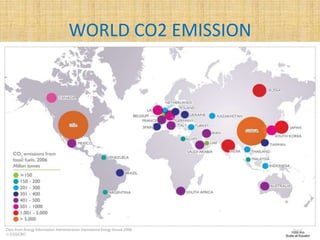
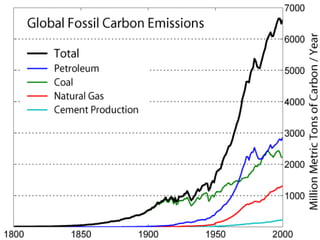
WORLD CO2 EMISSION
CAPTURING CARBON
• There are essentially three ways to capture
the carbon dioxide from a power plant:
• Before the fuel is burned (precombustion),
• After the fuel is burned (postcombustion), or
• By burning the fuel in more oxygen and
storing all the gases produced as a result
(oxyfuel).
PRECOMBUSTION
In precombustion, the aim is to
remove the carbon from coal
fuel before it's burned. The coal is
reacted with oxygen to
make syngas (synthesis gas), a
mixture of carbon monoxide and
hydrogen gases. The hydrogen
can be removed and either
burned directly as fuel or
compressed and stored for use
in fuel-cell cars. Water is added to
the carbon monoxide to make
carbon dioxide (which is stored)
and additional hydrogen, which is
added to the hydrogen previously
removed.
POSTCOMBUSTION
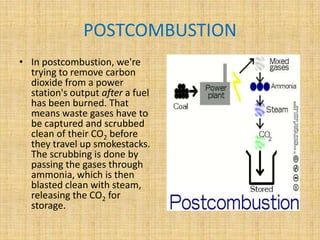
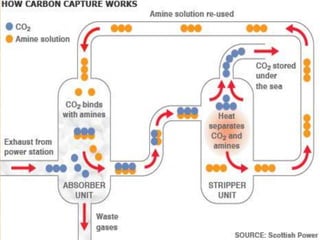
• In postcombustion, we're
trying to remove carbon
dioxide from a power
station's output after a fuel
has been burned. That
means waste gases have to
be captured and scrubbed
clean of their CO2 before
they travel up smokestacks.
The scrubbing is done by
passing the gases through
ammonia, which is then
blasted clean with steam,
releasing the CO2 for
storage.
OXYFUEL
• Power plants don't produce pure CO2: because
there's often not enough oxygen for complete
combustion they produce other pollutant gases
as well.
• One way to purify the exhaust is to blow extra
oxygen into the furnace so the fuel burns
completely producing relatively pure steam and
CO2.
• Once the steam is removed (by cooling and
condensing it to make water), the CO2 can be
stored.
TRANSPORTATION
• After capture, the CO2 would have to be
transported to suitable storage sites.
• This is done by pipeline, which is generally
the cheapest form of transport.
• A conveyor belt system or ship could also be
utilized for transport.
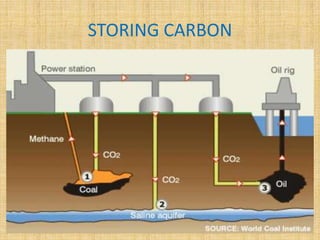
STORING CARBON
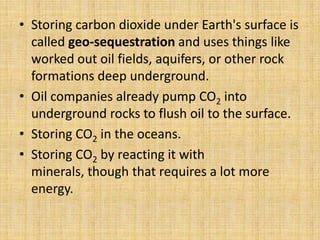
• Storing carbon dioxide under Earth's surface is
called geo-sequestration and uses things like
worked out oil fields, aquifers, or other rock
formations deep underground.
• Oil companies already pump CO2 into
underground rocks to flush oil to the surface.
• Storing CO2 in the oceans.
• Storing CO2 by reacting it with
minerals, though that requires a lot more
energy.
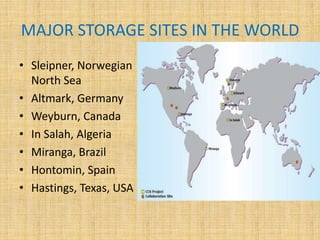
MAJOR STORAGE SITES IN THE WORLD
• Sleipner, Norwegian
North Sea
• Altmark, Germany
• Weyburn, Canada
• In Salah, Algeria
• Miranga, Brazil
• Hontomin, Spain
• Hastings, Texas, USA
ADVANTAGES
• CCS applied to a modern conventional power
plant could reduce CO2 emissions to the
atmosphere by 80-90 % compared to a plant
without CCS.
• the solvents used to capture CO2 from the
flue gases will remove some nitrogen oxides
and sulphur oxides.
DISADVANTAGES
• Increase significantly the emissions of acid gas
pollutants.
• Capturing and compressing C02 requires much
energy and would increase the fuel needs of a
coal-fired plant with CCS by 25-40%.
• These and other system costs are estimated to
increase the cost of energy from a new power
plant with CCS by 21-90 %.
• Water consumption, however, may be an issue
for carbon capture systems which rely on
solvents to remove CO2 from flue gases.
• This increase in water consumption may make
these systems less suited to dry regions.
CARBON CAPTURE: ENVIRONMENTAL
IMPACTS
• In ocean storage carbon dioxide reacts with
water to form acid, so the oceans could
become significantly more acidic .
• Another difficulty is that the CO2 would also
eventually return to the atmosphere.
• In addition to the global climate change
impact of CO2 returning to the atmosphere,
leakages pose local risks to health and
ecosystems.
• For storage sites under water, there are
concerns about chronic exposure of marine
ecosystems to raised CO2 levels, such as might
occur near injection sites.
• For CO2 storage sites on land, there are
concerns that large scale leakage could harm
people and wildlife in the immediate vicinity.
REFERENCES
• Gibbins, J., Chalmers, H. (2007). Preparing for global rollout: A ‘developed country first’
demonstration programme for rapid CCS deployment. Energy Policy.
doi:10.1016/j.enol.2007.10.021.
• Tzimas, T., Mercier, A., Cormos, C. and Petevas, S.D. (2007). Trade-off in emissions of acid gas
pollutants and of carbon dioxide in fossil fuel power plants with carbon capture. Energy
Policy. 35 (8):3991-3998.
• Bickle, M., Chadwick, A., Huppert, H. E., et al. (2007). Modelling carbon dioxide accumulation
at Sleipner: Implications for underground carbon storage. Earth and Planetary Science.
255, 164–176.
• Johansson, M., Mattisson, T., Lyngfelt, A. et al. (2008). Using continuous and pulse
experiments to compare two promising nickelbased oxygen carriers for use in
chemicallooping technologies. Fuel. 87 :988-1001.
• Race, J.M., Seevam, P. N., Downie, M.J. (2007). Challenges for offshore transport of
anthropogenic carbon dioxide. Proceedings of OMEA2007, 10-15 June, 2007, San
Diego, CA,USA.
Carbon Capture and Storage

Carbon Capture and Storage

  • 1.
    ROLE OF CARBONCAPTURE TECHNOLOGIES IN GLOBAL ENVIRONMENTAL MANAGEMENT RAVI KUMAR 2009JE0618
  • 2.
    WHAT IS CARBONCAPTURE AND STORAGE? • CCS is a technology that will attempt to prevent large quantities of CO2 from being released into the atmosphere from the use of fossil fuels in power generation and other industries. • It is often regarded as a means of mitigating the contribution of fossil fuel emissions to global warming.
  • 3.
  • 5.
    CAPTURING CARBON • Thereare essentially three ways to capture the carbon dioxide from a power plant: • Before the fuel is burned (precombustion), • After the fuel is burned (postcombustion), or • By burning the fuel in more oxygen and storing all the gases produced as a result (oxyfuel).
  • 6.
    PRECOMBUSTION In precombustion, theaim is to remove the carbon from coal fuel before it's burned. The coal is reacted with oxygen to make syngas (synthesis gas), a mixture of carbon monoxide and hydrogen gases. The hydrogen can be removed and either burned directly as fuel or compressed and stored for use in fuel-cell cars. Water is added to the carbon monoxide to make carbon dioxide (which is stored) and additional hydrogen, which is added to the hydrogen previously removed.
  • 7.
    POSTCOMBUSTION • In postcombustion,we're trying to remove carbon dioxide from a power station's output after a fuel has been burned. That means waste gases have to be captured and scrubbed clean of their CO2 before they travel up smokestacks. The scrubbing is done by passing the gases through ammonia, which is then blasted clean with steam, releasing the CO2 for storage.
  • 9.
    OXYFUEL • Power plantsdon't produce pure CO2: because there's often not enough oxygen for complete combustion they produce other pollutant gases as well. • One way to purify the exhaust is to blow extra oxygen into the furnace so the fuel burns completely producing relatively pure steam and CO2. • Once the steam is removed (by cooling and condensing it to make water), the CO2 can be stored.
  • 10.
    TRANSPORTATION • After capture,the CO2 would have to be transported to suitable storage sites. • This is done by pipeline, which is generally the cheapest form of transport. • A conveyor belt system or ship could also be utilized for transport.
  • 11.
  • 12.
    • Storing carbondioxide under Earth's surface is called geo-sequestration and uses things like worked out oil fields, aquifers, or other rock formations deep underground. • Oil companies already pump CO2 into underground rocks to flush oil to the surface. • Storing CO2 in the oceans. • Storing CO2 by reacting it with minerals, though that requires a lot more energy.
  • 13.
    MAJOR STORAGE SITESIN THE WORLD • Sleipner, Norwegian North Sea • Altmark, Germany • Weyburn, Canada • In Salah, Algeria • Miranga, Brazil • Hontomin, Spain • Hastings, Texas, USA
  • 14.
    ADVANTAGES • CCS appliedto a modern conventional power plant could reduce CO2 emissions to the atmosphere by 80-90 % compared to a plant without CCS. • the solvents used to capture CO2 from the flue gases will remove some nitrogen oxides and sulphur oxides.
  • 15.
    DISADVANTAGES • Increase significantlythe emissions of acid gas pollutants. • Capturing and compressing C02 requires much energy and would increase the fuel needs of a coal-fired plant with CCS by 25-40%. • These and other system costs are estimated to increase the cost of energy from a new power plant with CCS by 21-90 %.
  • 16.
    • Water consumption,however, may be an issue for carbon capture systems which rely on solvents to remove CO2 from flue gases. • This increase in water consumption may make these systems less suited to dry regions.
  • 17.
    CARBON CAPTURE: ENVIRONMENTAL IMPACTS •In ocean storage carbon dioxide reacts with water to form acid, so the oceans could become significantly more acidic . • Another difficulty is that the CO2 would also eventually return to the atmosphere. • In addition to the global climate change impact of CO2 returning to the atmosphere, leakages pose local risks to health and ecosystems.
  • 18.
    • For storagesites under water, there are concerns about chronic exposure of marine ecosystems to raised CO2 levels, such as might occur near injection sites. • For CO2 storage sites on land, there are concerns that large scale leakage could harm people and wildlife in the immediate vicinity.
  • 19.
    REFERENCES • Gibbins, J.,Chalmers, H. (2007). Preparing for global rollout: A ‘developed country first’ demonstration programme for rapid CCS deployment. Energy Policy. doi:10.1016/j.enol.2007.10.021. • Tzimas, T., Mercier, A., Cormos, C. and Petevas, S.D. (2007). Trade-off in emissions of acid gas pollutants and of carbon dioxide in fossil fuel power plants with carbon capture. Energy Policy. 35 (8):3991-3998. • Bickle, M., Chadwick, A., Huppert, H. E., et al. (2007). Modelling carbon dioxide accumulation at Sleipner: Implications for underground carbon storage. Earth and Planetary Science. 255, 164–176. • Johansson, M., Mattisson, T., Lyngfelt, A. et al. (2008). Using continuous and pulse experiments to compare two promising nickelbased oxygen carriers for use in chemicallooping technologies. Fuel. 87 :988-1001. • Race, J.M., Seevam, P. N., Downie, M.J. (2007). Challenges for offshore transport of anthropogenic carbon dioxide. Proceedings of OMEA2007, 10-15 June, 2007, San Diego, CA,USA.