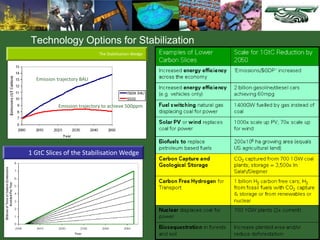
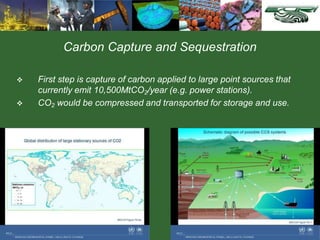
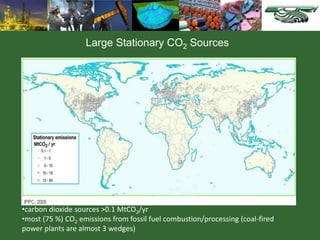
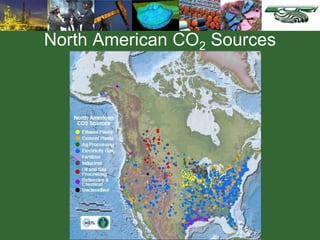
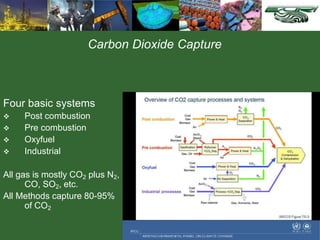
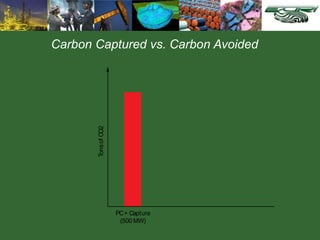
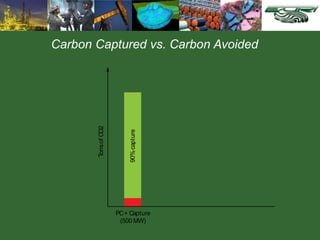
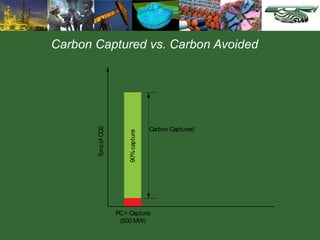
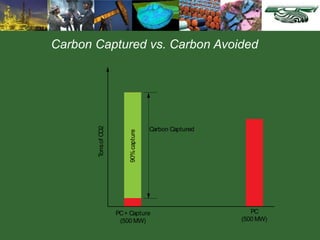
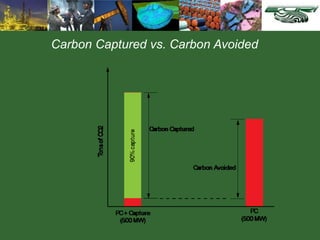
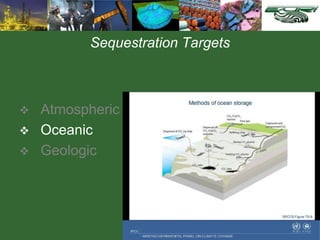
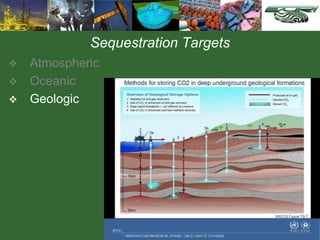
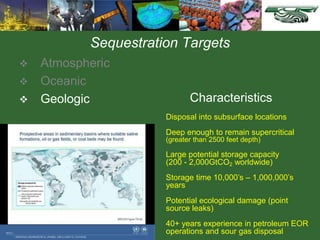
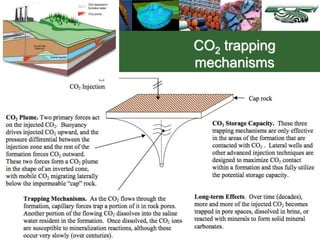
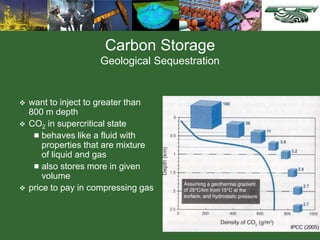
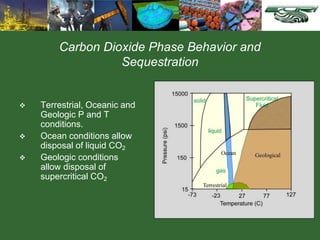
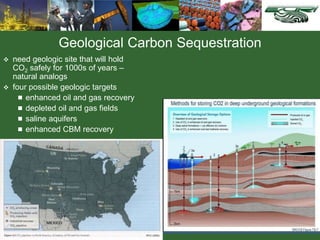
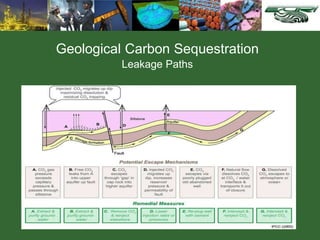
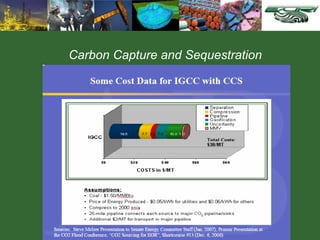
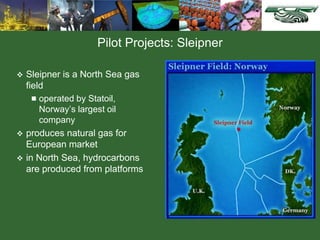
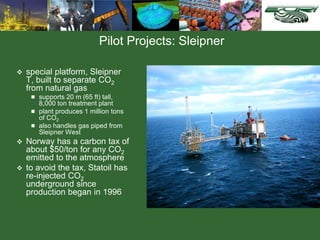
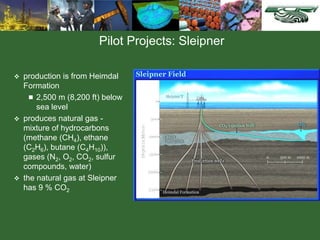
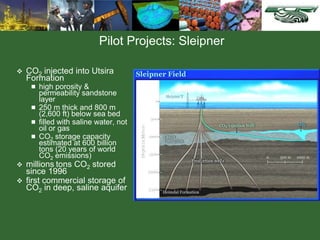
Carbon capture and storage has the potential to allow continued use of fossil fuels while mitigating climate change. It involves capturing carbon dioxide emissions from large point sources like power plants, compressing and transporting the CO2 via pipeline, and injecting it into deep geological formations for long-term storage. While the technology is possible with current knowledge, large-scale implementation faces challenges of high costs estimated at $1 trillion per year globally, an incomplete legal framework, and open questions about safety and permanent storage that require further study. Pilot projects demonstrate the technical feasibility of capturing CO2 and storing it underground, like the Sleipner gas field in Norway that has stored over 1 million tons of CO2 annually since 1996.