
PoojaK More
• Chapter – Rational Numbers Contents :
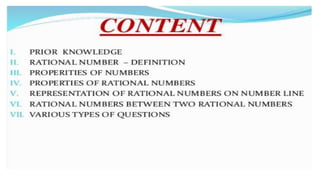
Introduction
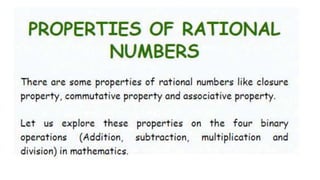
Properties of Rational Numbers
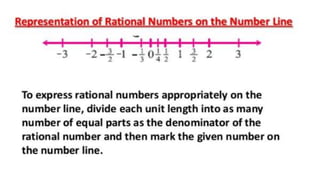
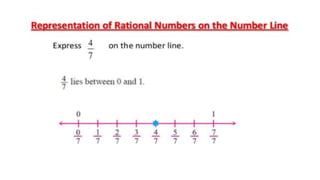
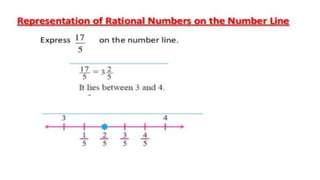
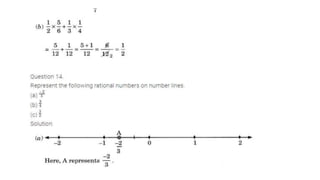
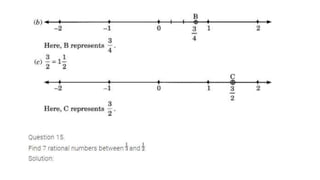
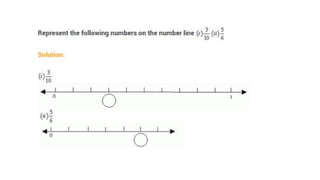
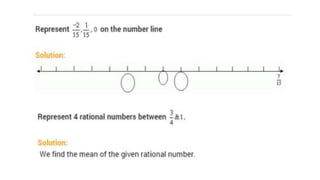
Representation of Rational Numbers on the Number line.
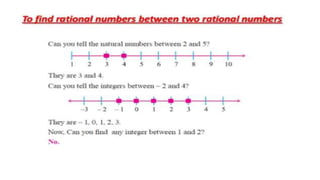
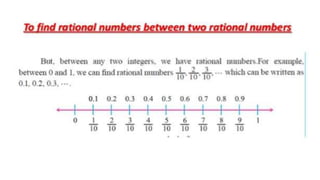
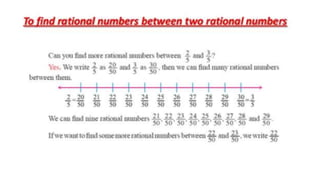
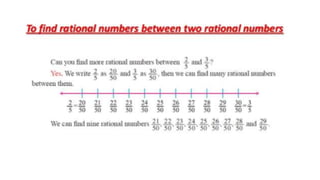
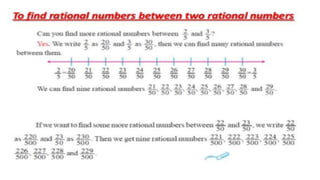
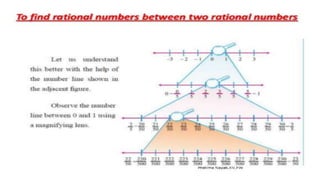
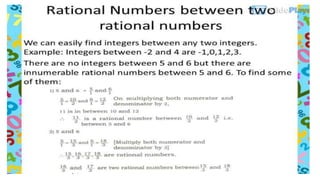
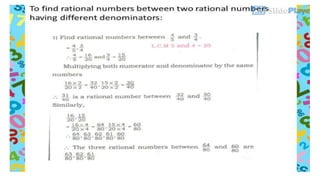
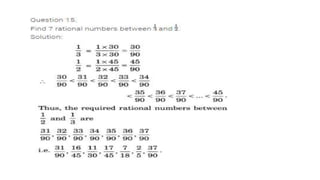
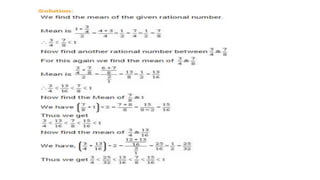
Rational Numbers between two rational numbers.
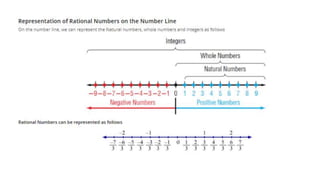
• Learning Objectives: The students learn to represent rational numbers on the
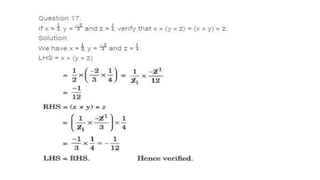
number line. They learn to verify various properties taking different values.
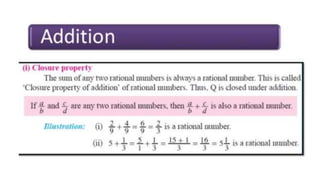
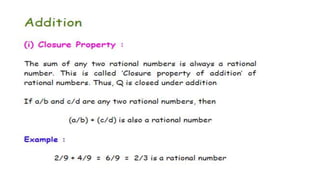
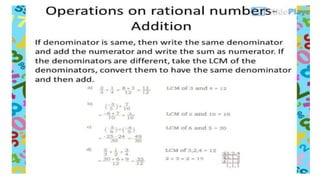
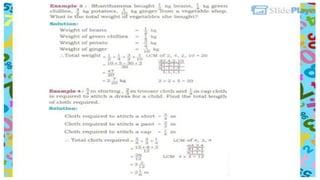
•The sum of any two rational numbers is always a rational number. This is
called ‘Closure property of addition’ of rational numbers.
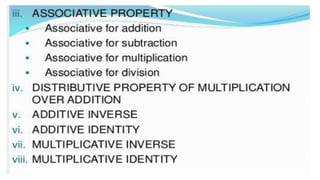
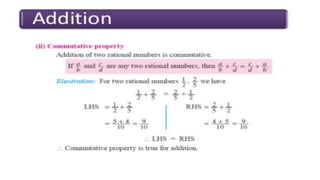
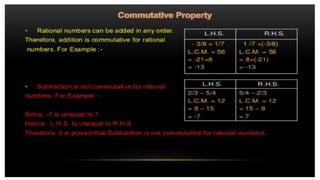
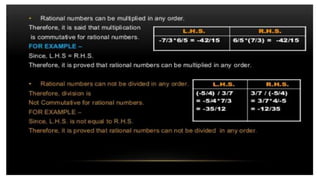
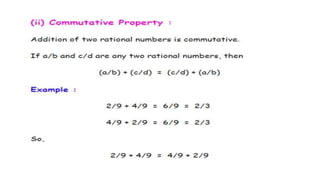
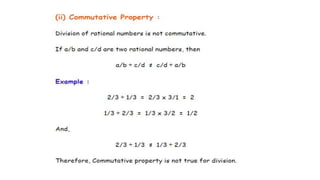
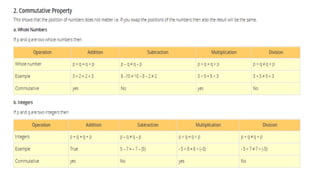
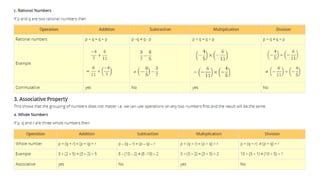
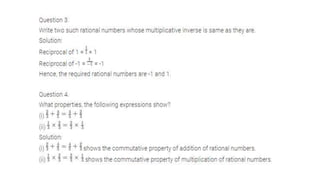
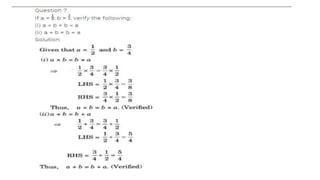
•Addition of two rational numbers is commutative. a/b + c/d = c/d + a/b
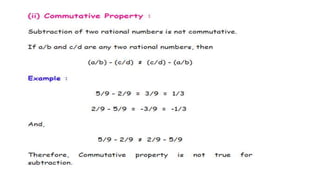
•Commutative property is true for addition and multiplication only
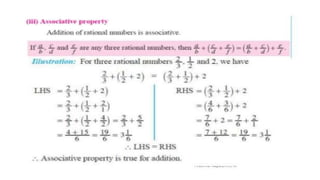
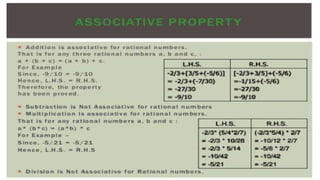
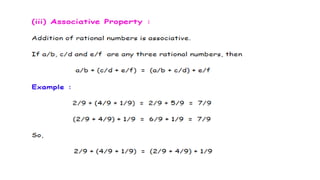
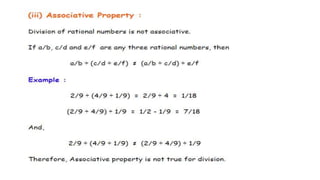
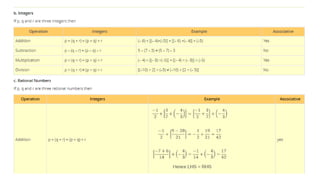
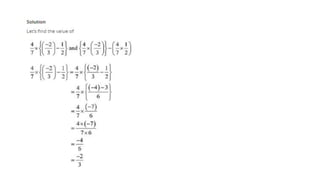
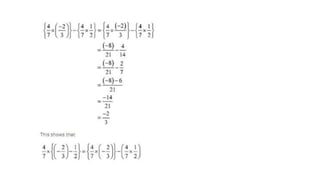
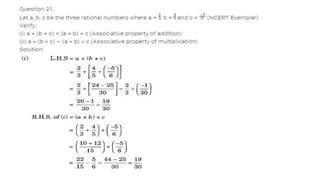
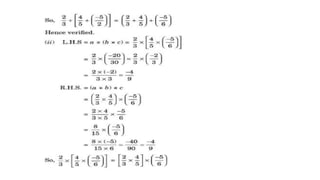
•Addition of rational numbers is associative. a/b + (c/d + e/f)= ( c/d + a/b) + e/f
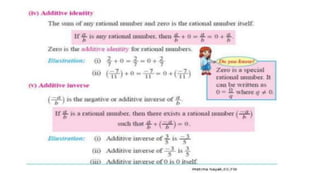
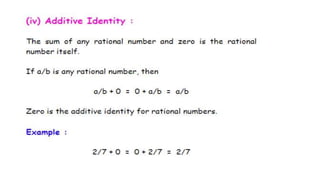
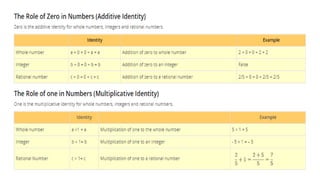
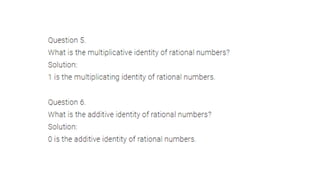
•The rational number 0 is the additive identity for rational numbers.
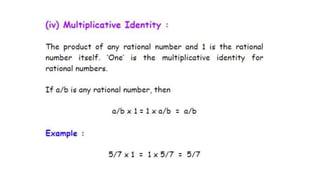
•The rational number 1 is the multiplicative identity for rational number.
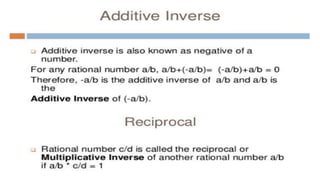
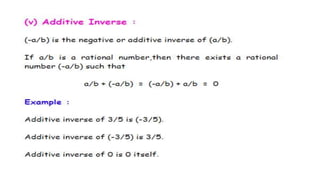
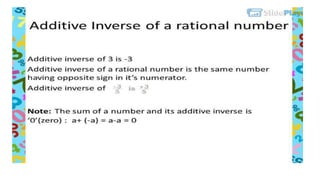
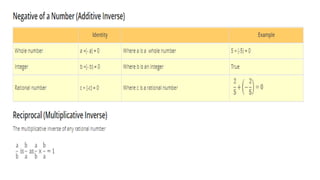
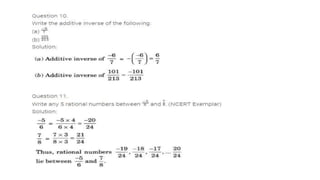
•The additive inverse of rational number a/b is –a/b and vice versa.
•Additive inverse of 0 is 0 itself
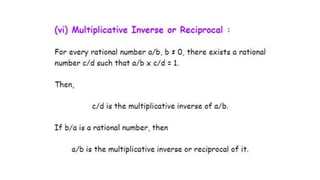
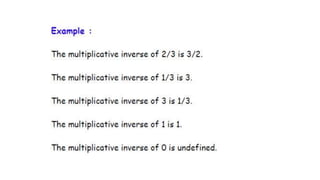
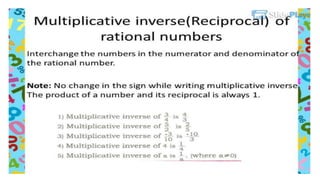
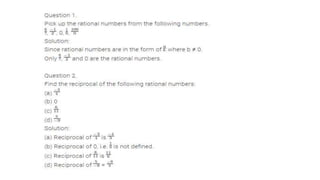
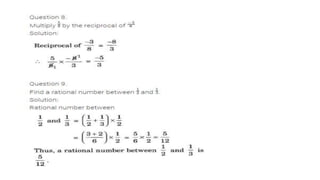
•The multiplicative inverse of the rational number is a/b is b/a and vice versa.
•Zero (0) has no reciprocal.
•1 and – 1 are the only rational numbers which are their own reciprocals.
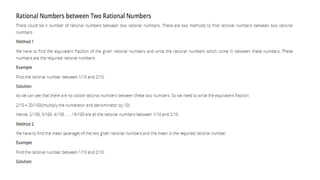
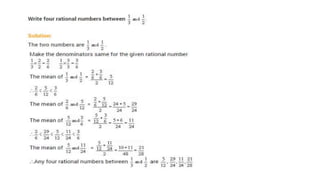
•Average of two numbers always lie between that numbers
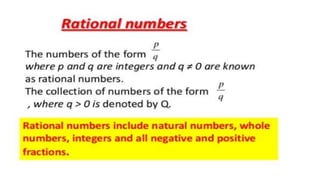
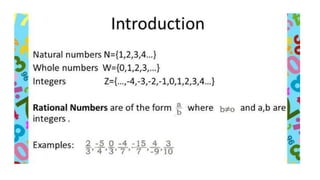
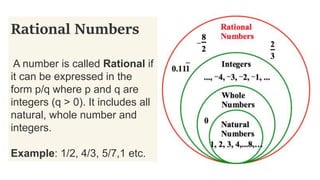
Rational Numbers
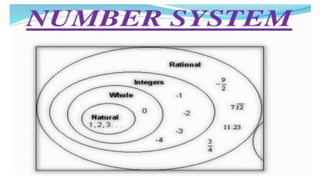
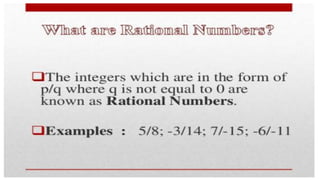
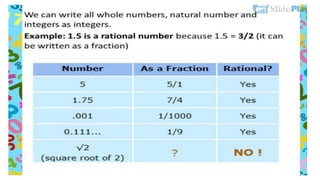
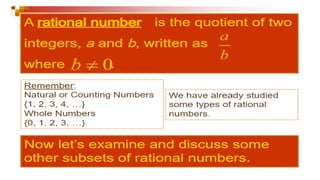
A number is called Rational if
it can be expressed in the
form p/q where p and q are
integers (q > 0). It includes all
natural, whole number and
integers.
Example: 1/2, 4/3, 5/7,1 etc.
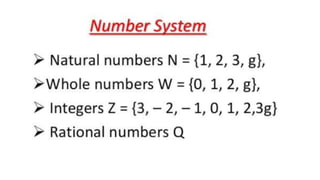
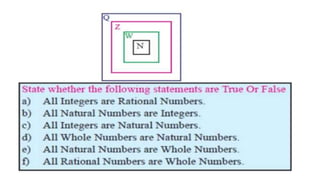
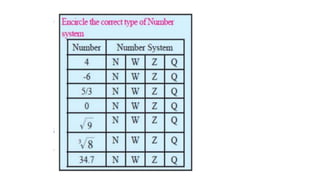
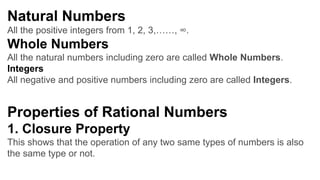
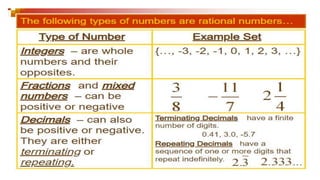
Natural Numbers
All the positive integers from 1, 2, 3,……, ∞.
Whole Numbers
All the natural numbers including zero are called Whole Numbers.
Integers
All negative and positive numbers including zero are called Integers.
Properties of Rational Numbers
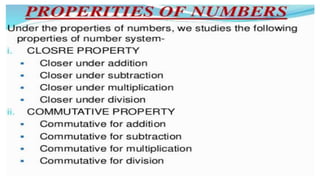
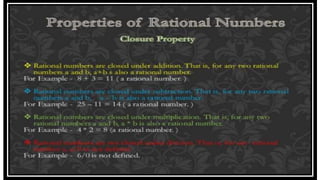
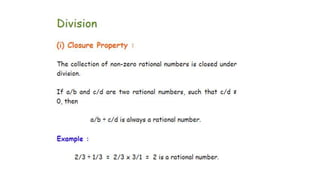
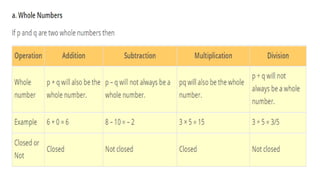
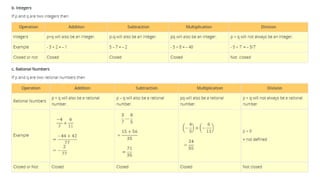
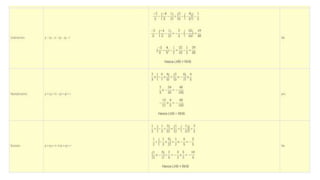
1. Closure Property
This shows that the operation of any two same types of numbers is also
the same type or not.
WHAT HAVE WE DISCUSSED?
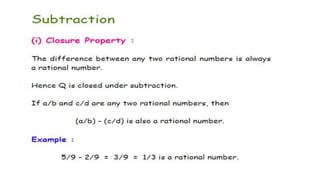
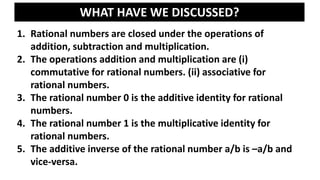
1. Rational numbers are closed under the operations of
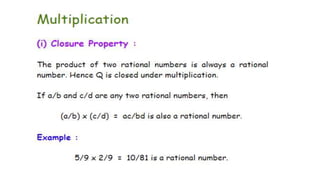
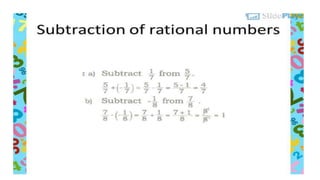
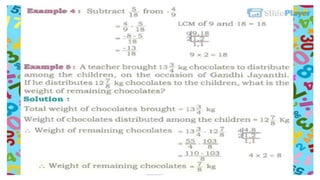
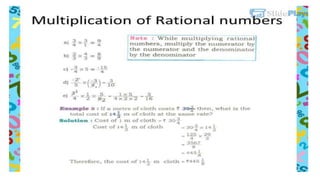
addition, subtraction and multiplication.
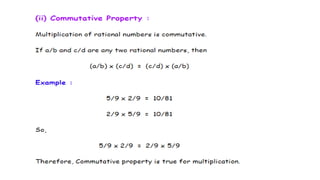
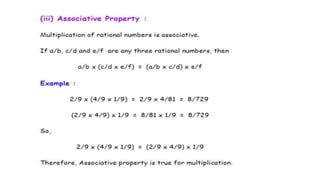
2. The operations addition and multiplication are (i)
commutative for rational numbers. (ii) associative for
rational numbers.
3. The rational number 0 is the additive identity for rational
numbers.
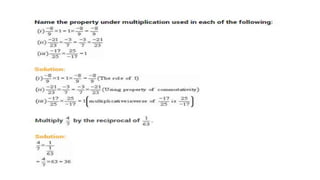
4. The rational number 1 is the multiplicative identity for
rational numbers.
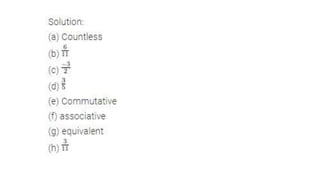
5. The additive inverse of the rational number a/b is –a/b and
vice-versa.
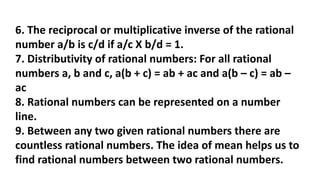
6. The reciprocal or multiplicative inverse of the rational
number a/b is c/d if a/c X b/d = 1.
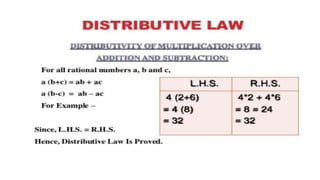
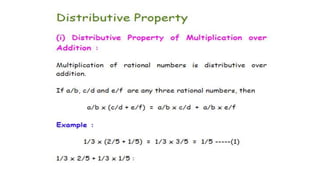
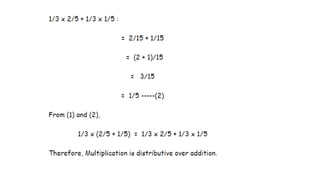
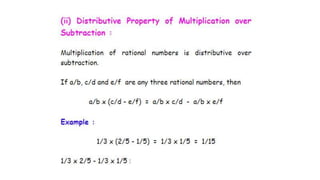
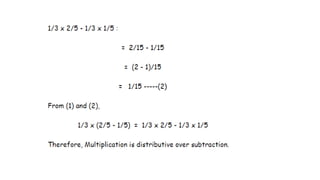
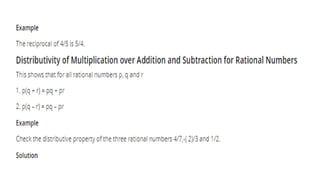
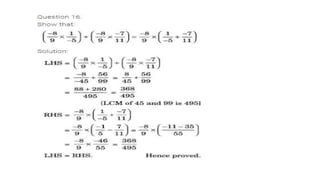
7. Distributivity of rational numbers: For all rational
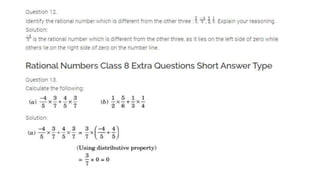
numbers a, b and c, a(b + c) = ab + ac and a(b – c) = ab –
ac
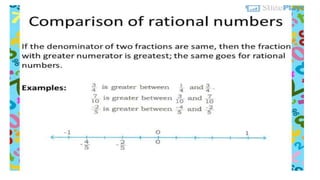
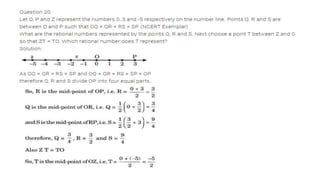
8. Rational numbers can be represented on a number
line.
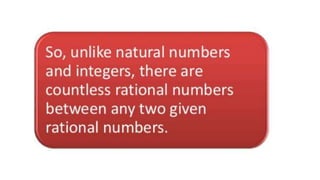
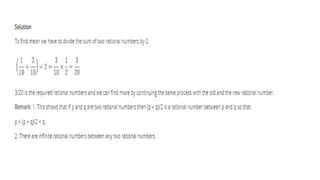
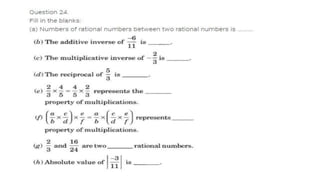
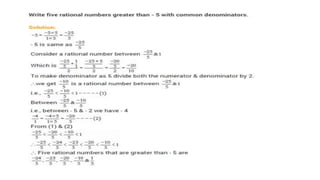
9. Between any two given rational numbers there are
countless rational numbers. The idea of mean helps us to
find rational numbers between two rational numbers.

Rational numbers

  • 1.
  • 8.
    • Chapter –Rational Numbers Contents : Introduction Properties of Rational Numbers Representation of Rational Numbers on the Number line. Rational Numbers between two rational numbers. • Learning Objectives: The students learn to represent rational numbers on the number line. They learn to verify various properties taking different values. •The sum of any two rational numbers is always a rational number. This is called ‘Closure property of addition’ of rational numbers. •Addition of two rational numbers is commutative. a/b + c/d = c/d + a/b •Commutative property is true for addition and multiplication only •Addition of rational numbers is associative. a/b + (c/d + e/f)= ( c/d + a/b) + e/f
  • 9.
    •The rational number0 is the additive identity for rational numbers. •The rational number 1 is the multiplicative identity for rational number. •The additive inverse of rational number a/b is –a/b and vice versa. •Additive inverse of 0 is 0 itself •The multiplicative inverse of the rational number is a/b is b/a and vice versa. •Zero (0) has no reciprocal. •1 and – 1 are the only rational numbers which are their own reciprocals. •Average of two numbers always lie between that numbers
  • 89.
    Rational Numbers A numberis called Rational if it can be expressed in the form p/q where p and q are integers (q > 0). It includes all natural, whole number and integers. Example: 1/2, 4/3, 5/7,1 etc.
  • 90.
    Natural Numbers All thepositive integers from 1, 2, 3,……, ∞. Whole Numbers All the natural numbers including zero are called Whole Numbers. Integers All negative and positive numbers including zero are called Integers. Properties of Rational Numbers 1. Closure Property This shows that the operation of any two same types of numbers is also the same type or not.
  • 154.
    WHAT HAVE WEDISCUSSED? 1. Rational numbers are closed under the operations of addition, subtraction and multiplication. 2. The operations addition and multiplication are (i) commutative for rational numbers. (ii) associative for rational numbers. 3. The rational number 0 is the additive identity for rational numbers. 4. The rational number 1 is the multiplicative identity for rational numbers. 5. The additive inverse of the rational number a/b is –a/b and vice-versa.
  • 155.
    6. The reciprocalor multiplicative inverse of the rational number a/b is c/d if a/c X b/d = 1. 7. Distributivity of rational numbers: For all rational numbers a, b and c, a(b + c) = ab + ac and a(b – c) = ab – ac 8. Rational numbers can be represented on a number line. 9. Between any two given rational numbers there are countless rational numbers. The idea of mean helps us to find rational numbers between two rational numbers.