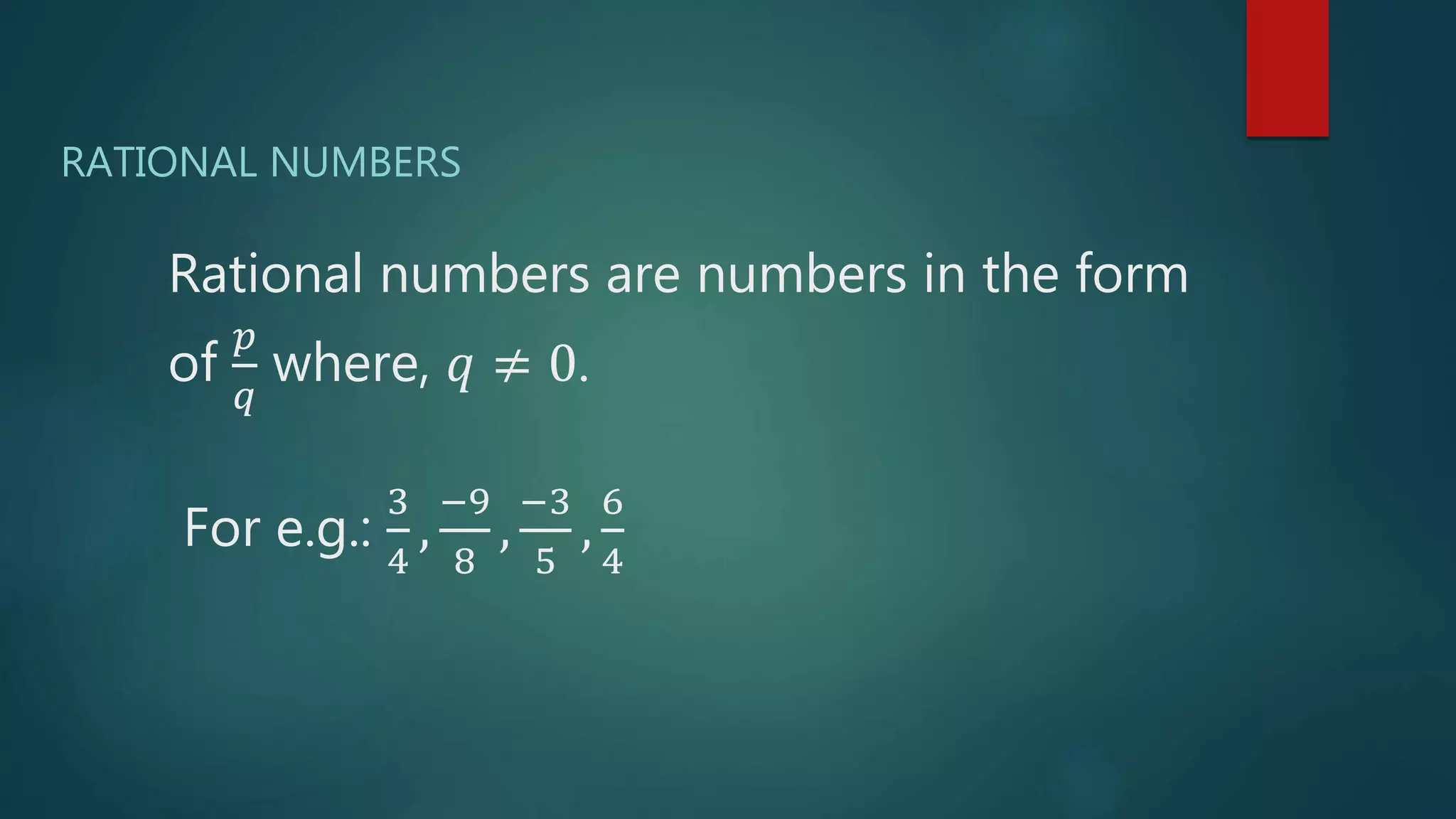
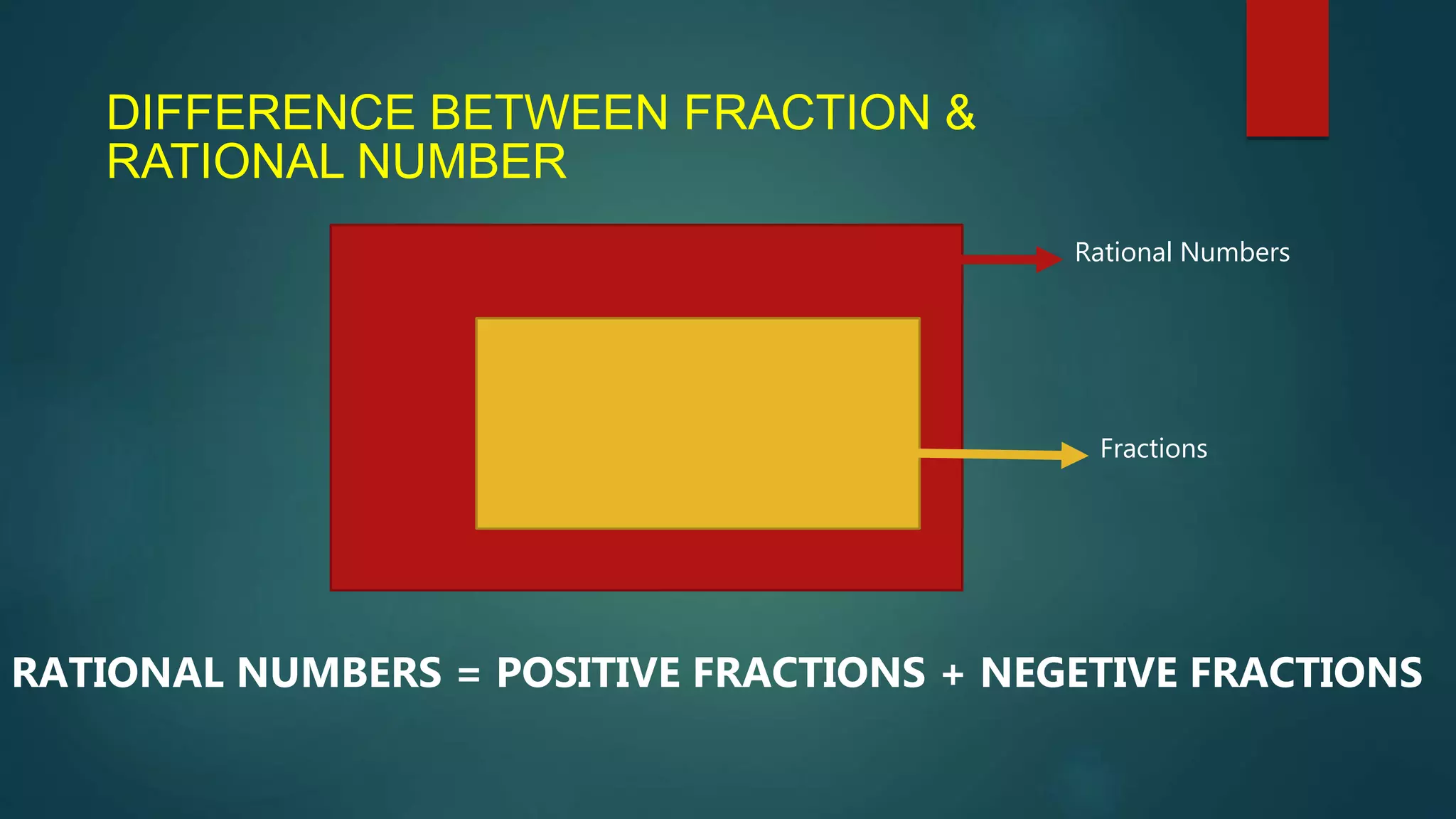
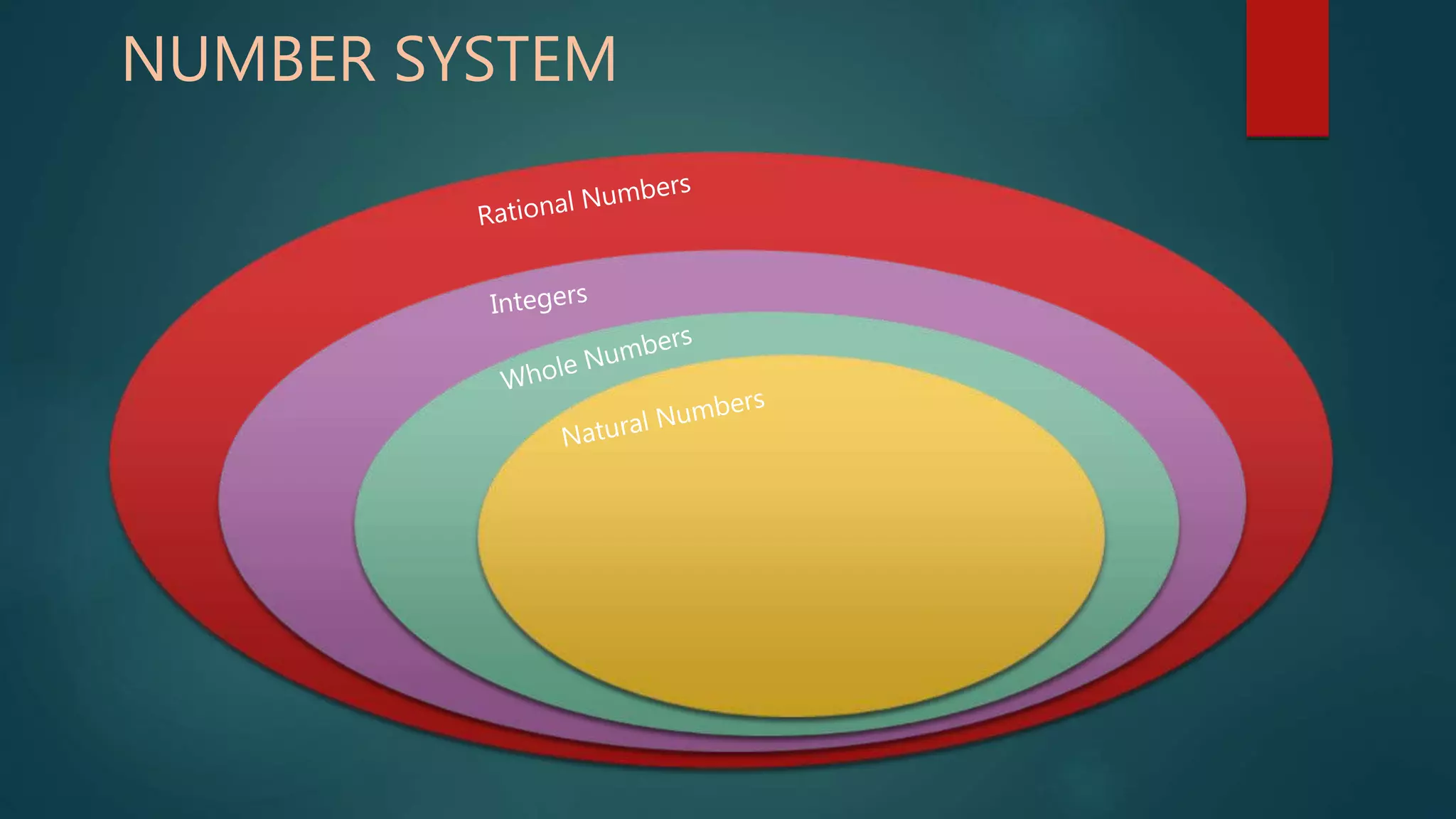
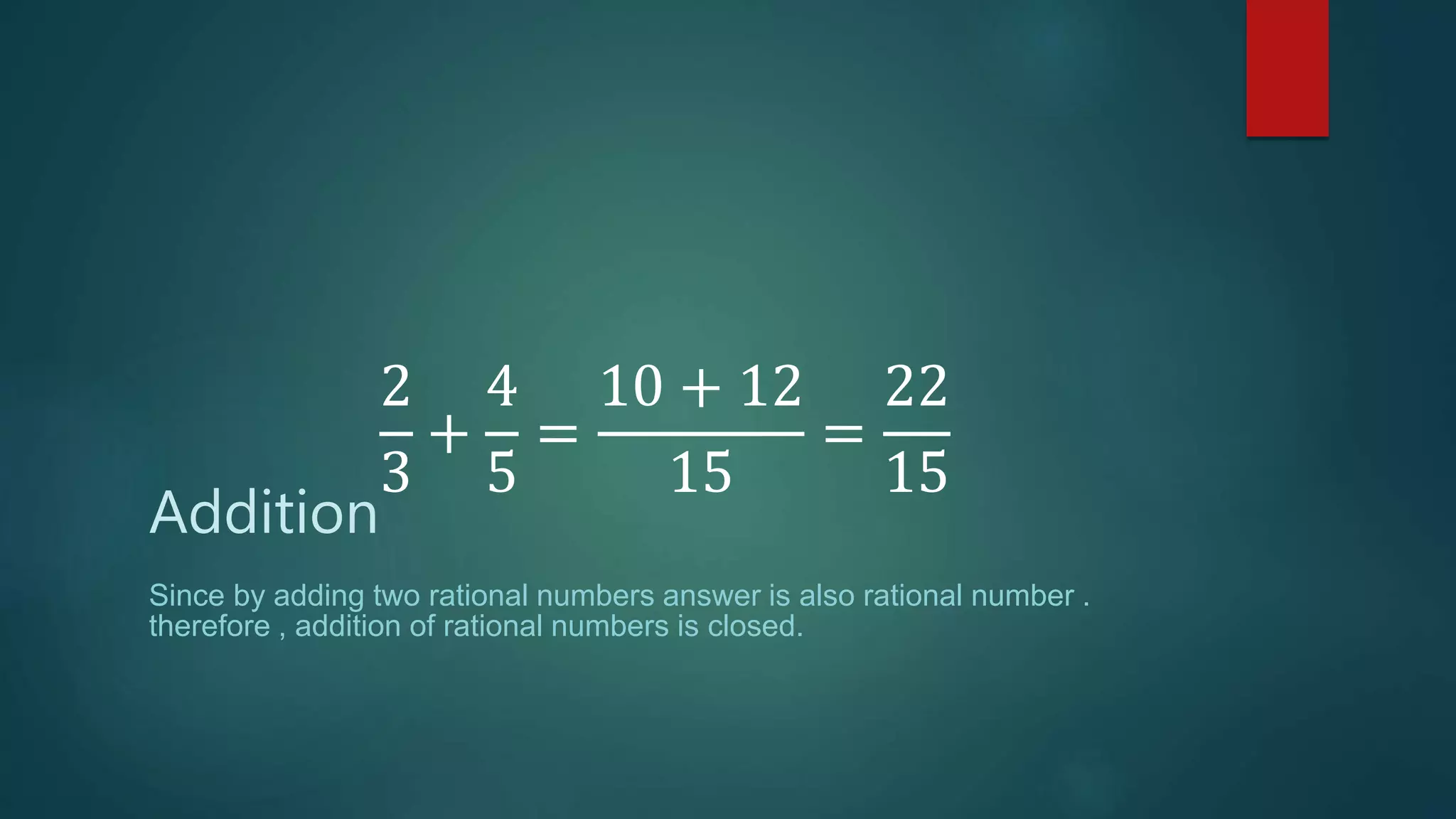
The document explains rational numbers, which are numbers in the form of p/q where q ≠ 0. It details properties of rational numbers such as closure, commutativity, associativity, and identities for addition and multiplication, along with how to find rational numbers between two values on a number line. Additionally, it includes practice questions to solidify understanding of these concepts.
CLOSURE PROPERTY
Closureproperty means that if we divide/ add/ subtract/ multiply a rational
number the answer should always be a rational number if one of the case
becomes wrong then the whole law is wrong.
COMMUTATIVE PROPERTY
Commutativeproperty means, that by interchanging
the position of rational numbers the answer should
be same.
𝑝
𝑤
+
𝑞
𝑛
=
𝑞
𝑛
+
𝑝
𝑤
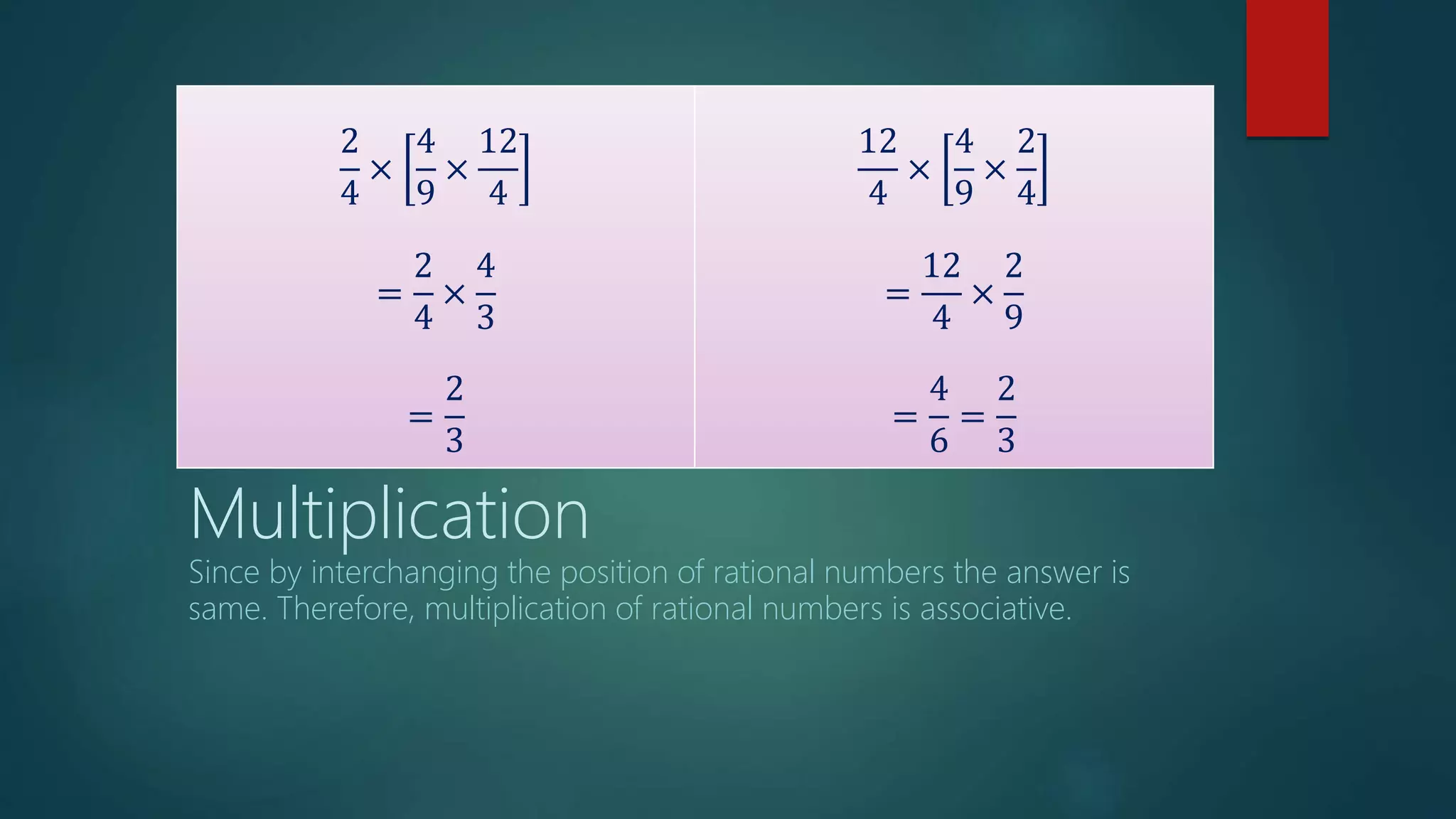
ASSOCIATIVE PROPERTY
Associativeproperty means that by interchanging the
position of three rational numbers the answer should
be same.
𝑝
𝑞
+
𝑛
𝑚
+
𝑥
𝑦
=
𝑥
𝑦
+
𝑛
𝑚
+
𝑝
𝑞
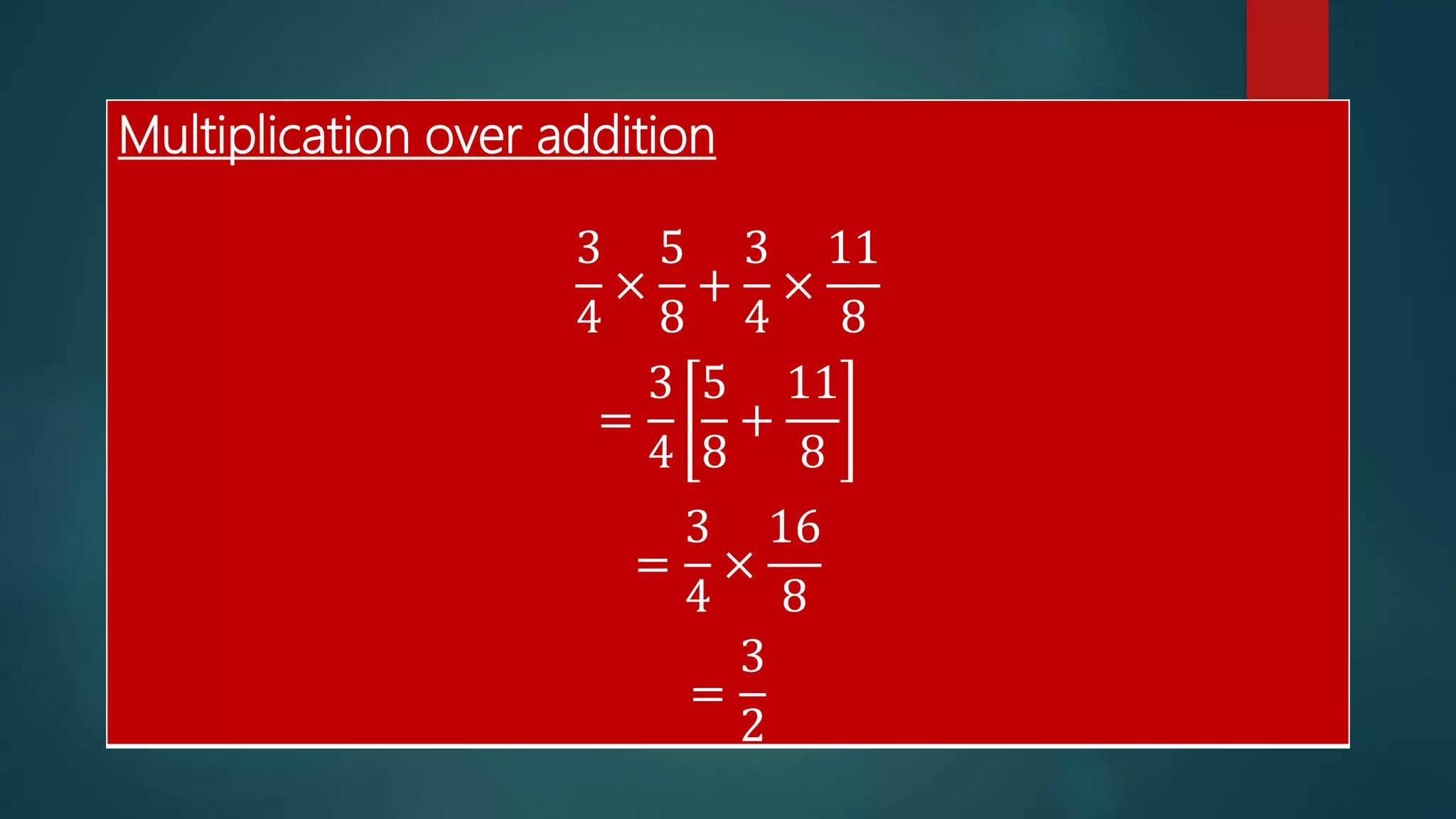
MULTIPLICATIVE IDENTITY
• Multiplicativeidentity means that if we will multiply any number
by a number the answer will always be same.
• 1 is the multiplicative identity for rational numbers. As it will not
change the identity of rational number or any integer.
• For example:
a.
1
2
× 1 =
1
2
b.
5
6
× 1 =
5
6
25.
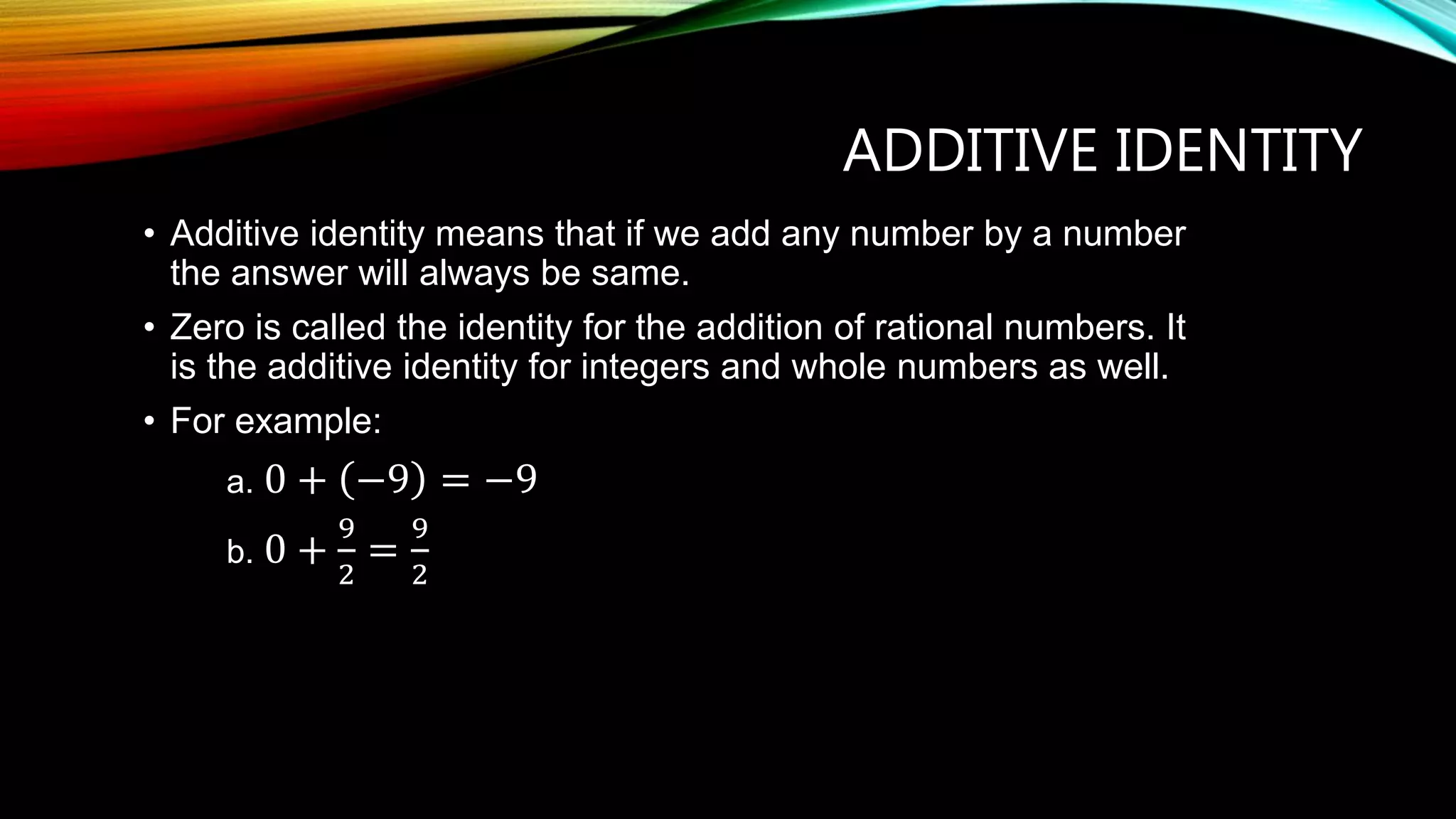
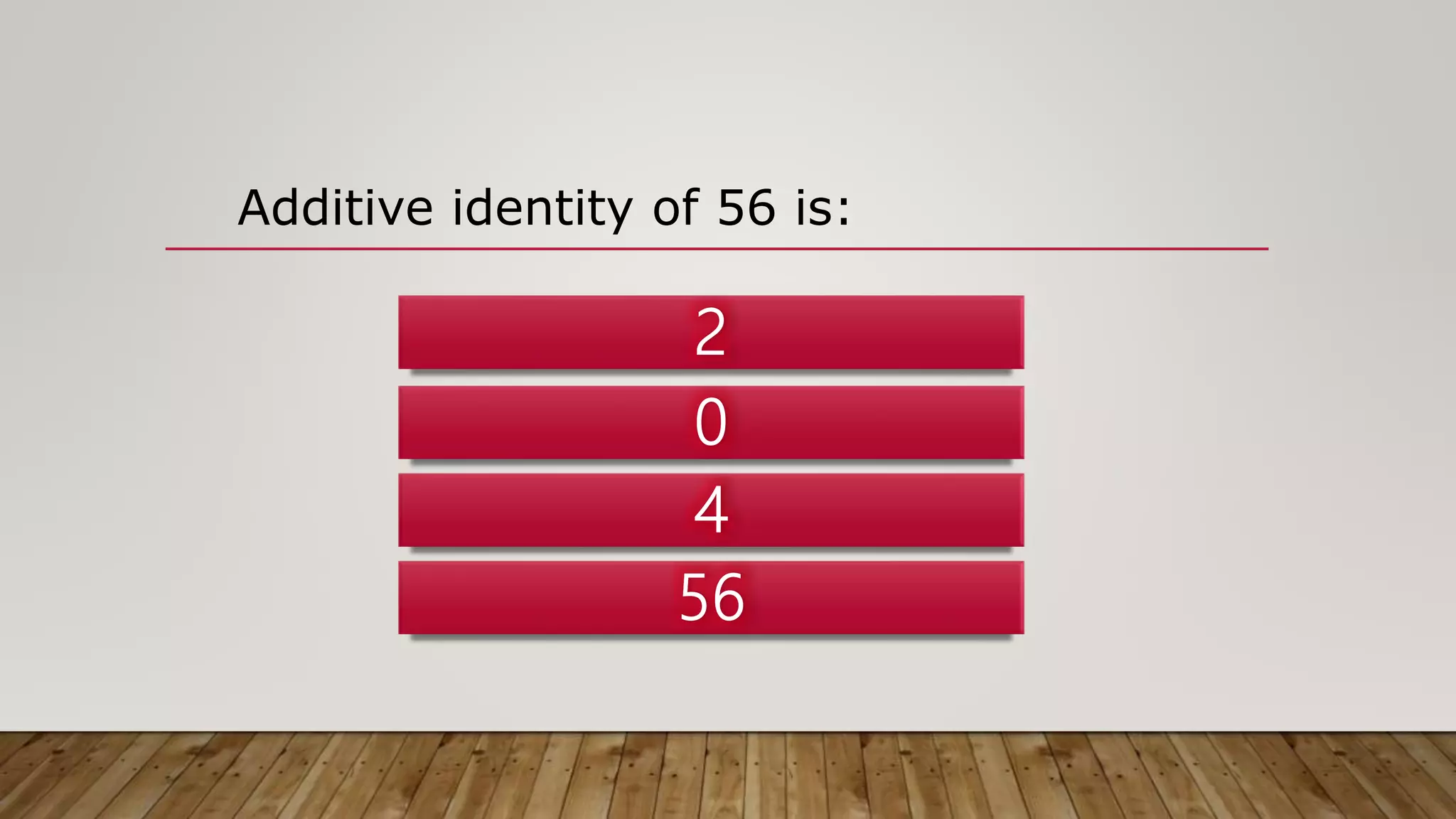
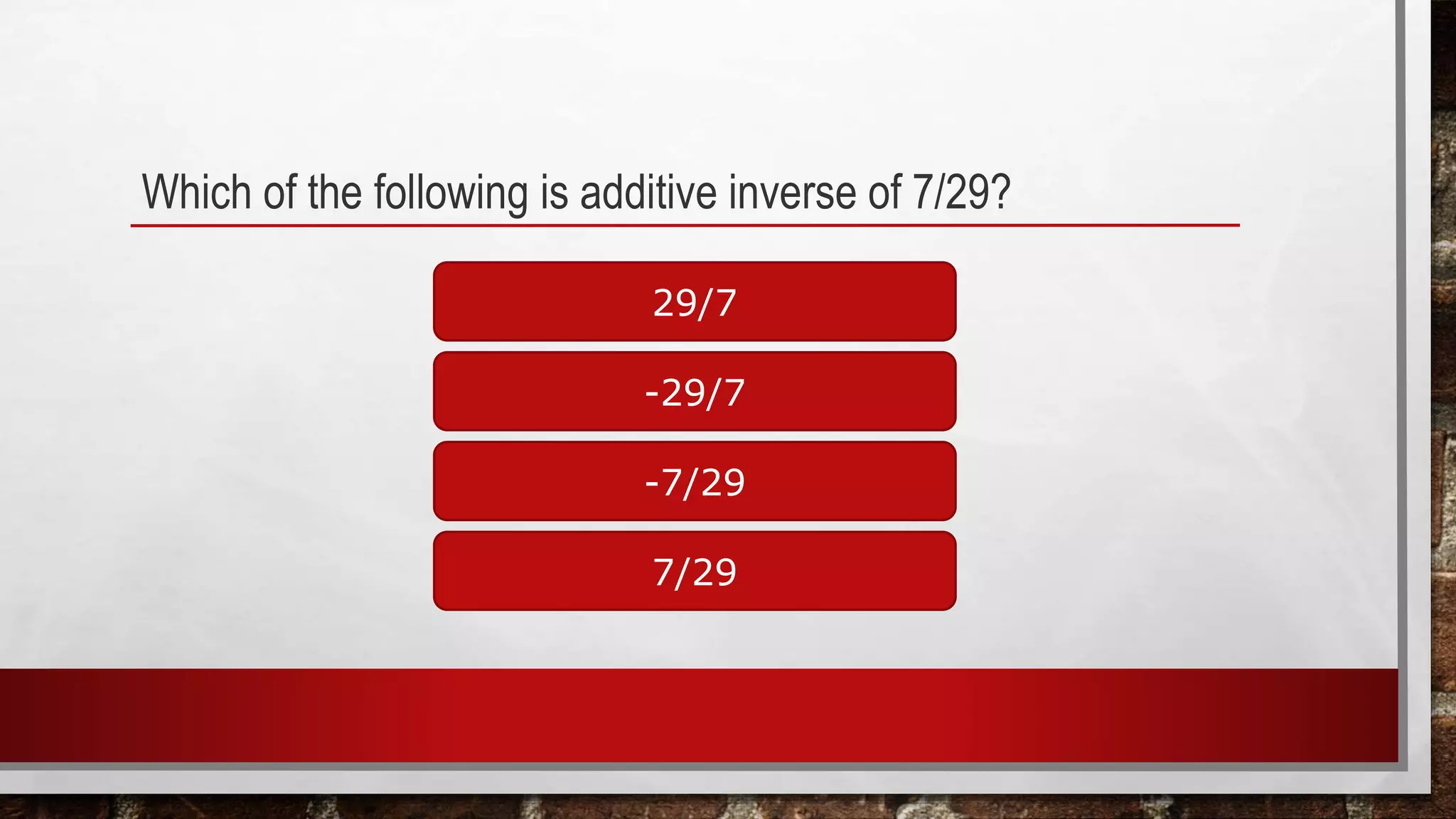
ADDITIVE IDENTITY
• Additiveidentity means that if we add any number by a number
the answer will always be same.
• Zero is called the identity for the addition of rational numbers. It
is the additive identity for integers and whole numbers as well.
• For example:
a. 0 + −9 = −9
b. 0 +
9
2
=
9
2
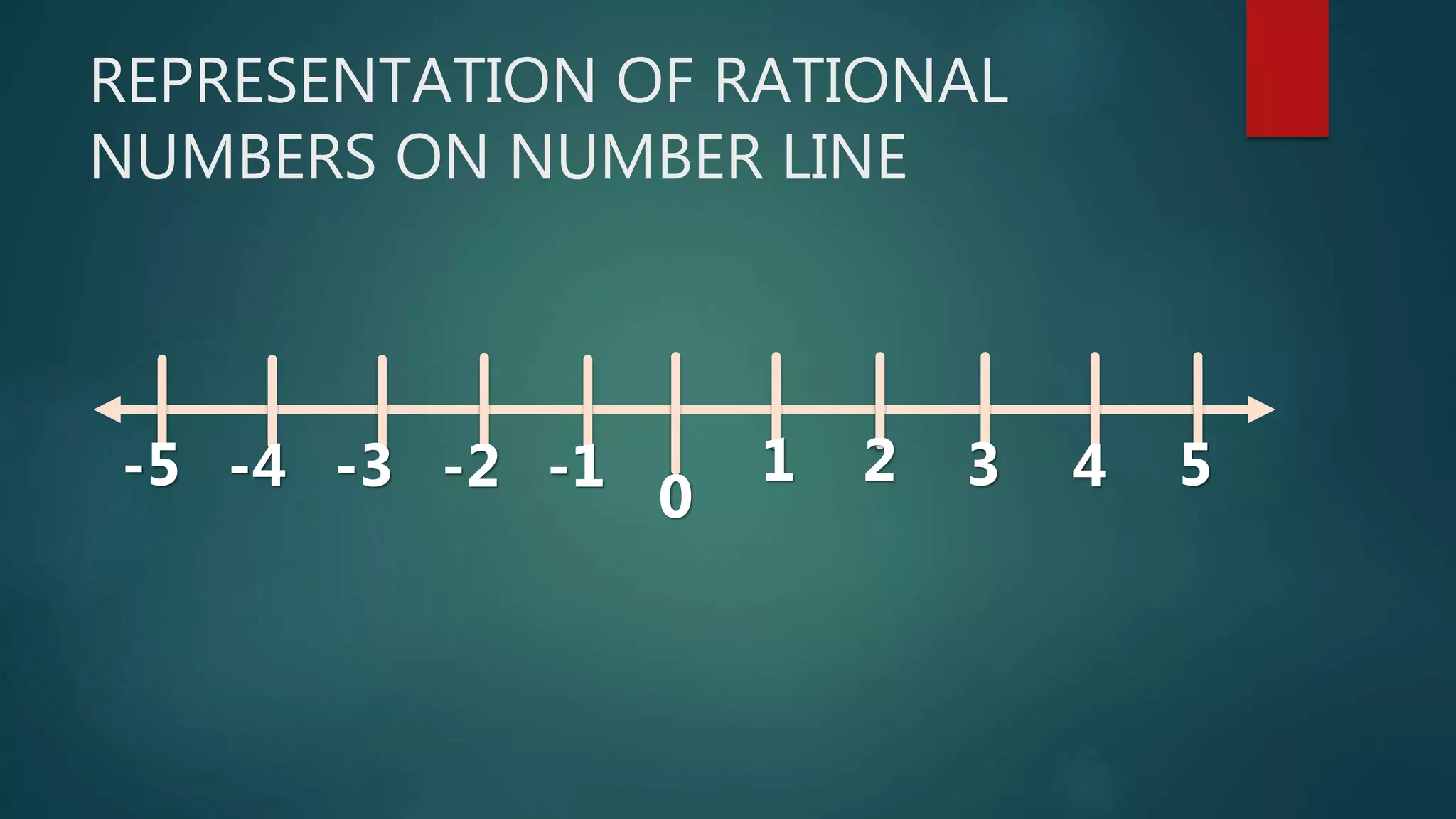
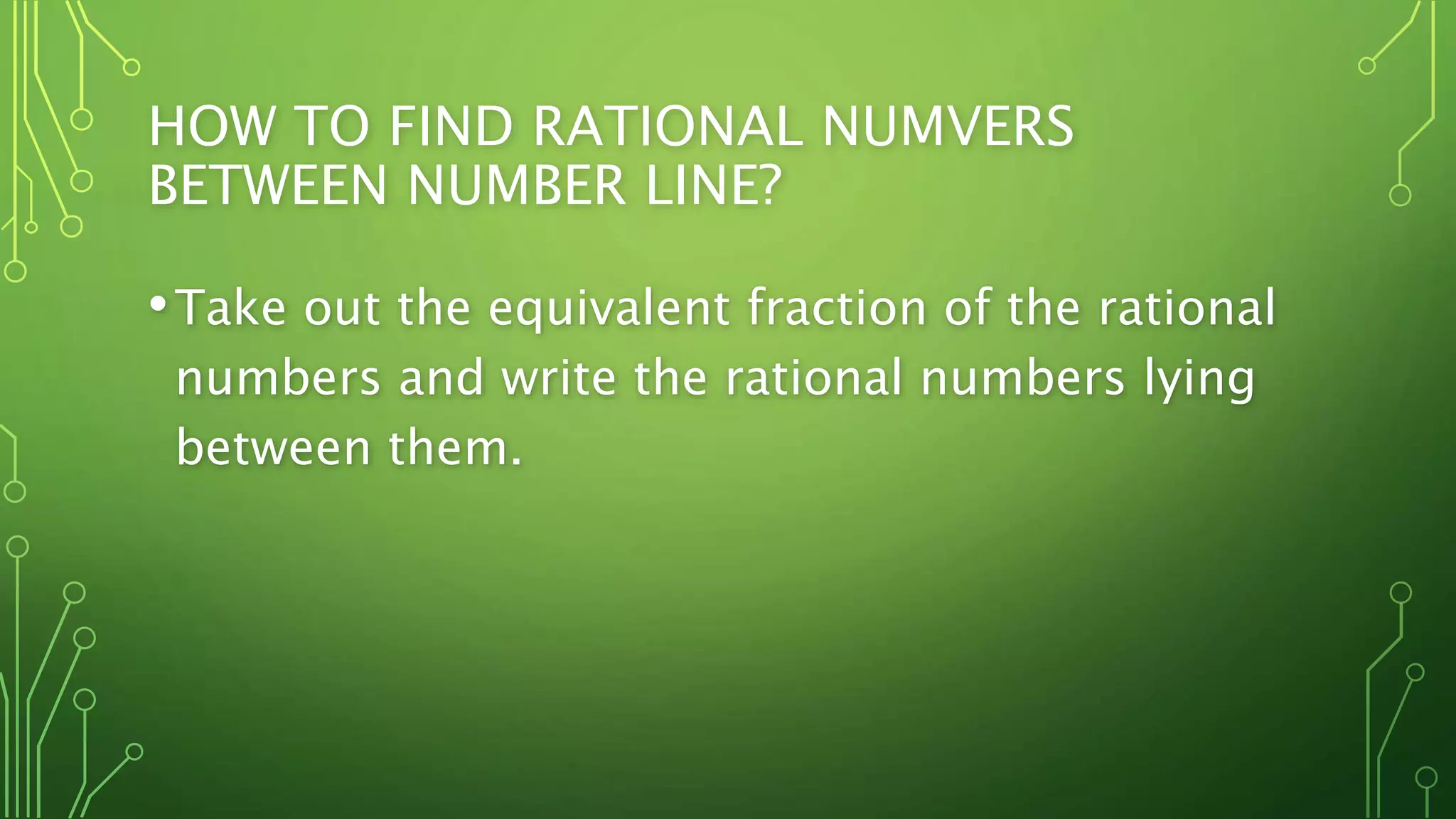
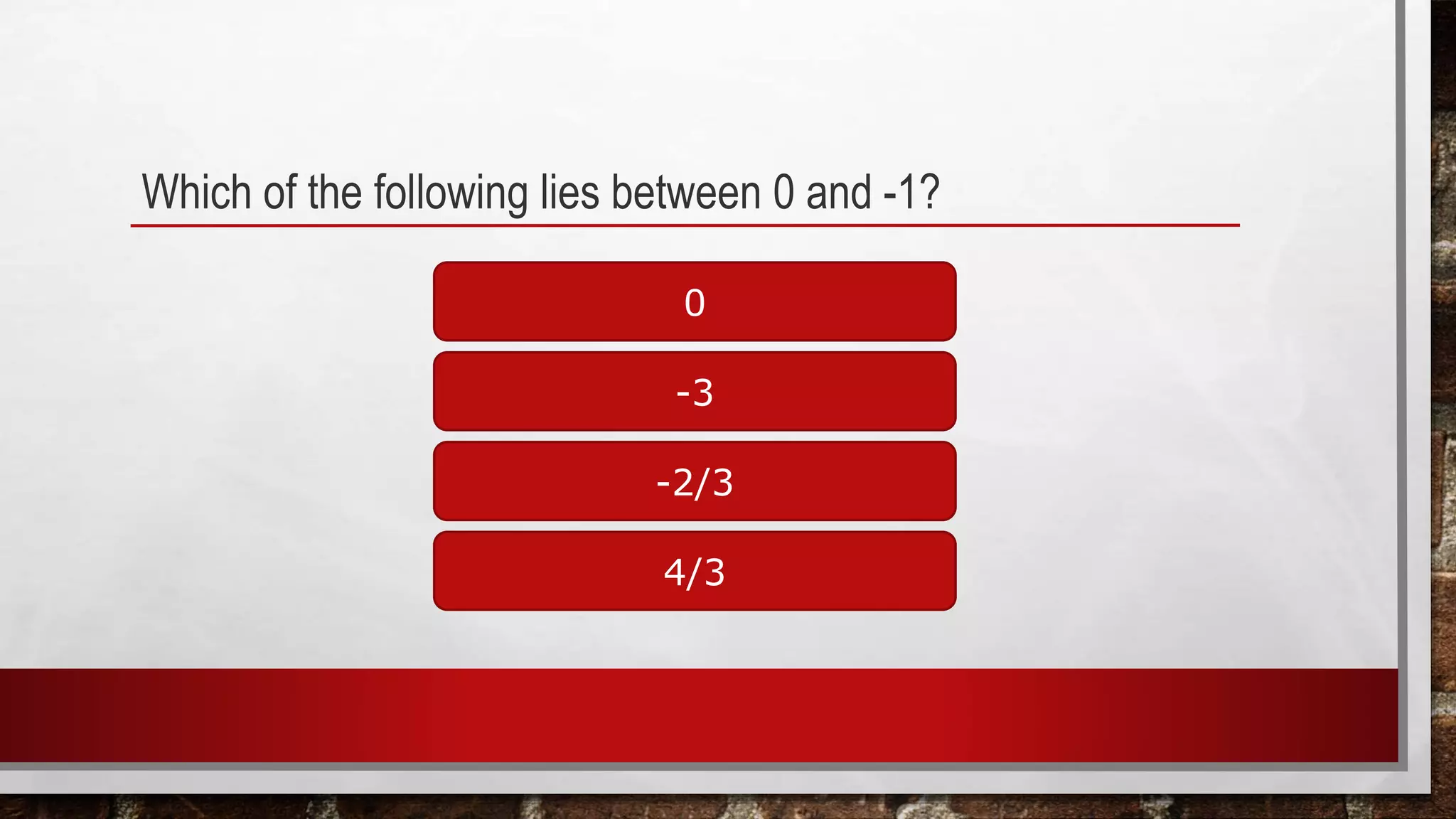
HOW TO FINDRATIONAL NUMVERS
BETWEEN NUMBER LINE?
•Take out the equivalent fraction of the rational
numbers and write the rational numbers lying
between them.
33.
a. −3 &− 4
−
36
12
& −
48
12
−37/12 , −38/12 , −39 /12 , −40/12 , −41
TO FIND RATIONAL NOS. IN BETWEEN RATIONAL NUMBERS.