UNIT-IV
Rapid Prototyping
Operations
3ME4A
Er. Mohit Ostwal
Assistant Professor
Department of Mechanical Engineering
Jodhpur Institute of Engineering and Technology, Jodhpur
Rapid Prototyping
• Prototyping is an early sample, model, release of a product
built to test a concept or process or to act as a thing to be
replicated or learned.
• Rapid prototyping is layer by layer material deposition –
fastest and economical and less time consuming method for
manufacturing of prototypes.
Classification of RP processes
1. Subtractive
2. Additive
3. Virtual
Subtractive Processes
• Material removal from workpiece – Larger than final part.
• Computer based technologies to speed up the processes
• Following are essential technologies:
1. Computer based drafting packages
2. Interpretation software's
3. Manufacturing software's
4. CNC Machinery
Additive Processes
• Build parts in layers.
• Tessellat ion is piecewise approximation of surfaces of CAD model
by using series of triangles.
Additive Processes
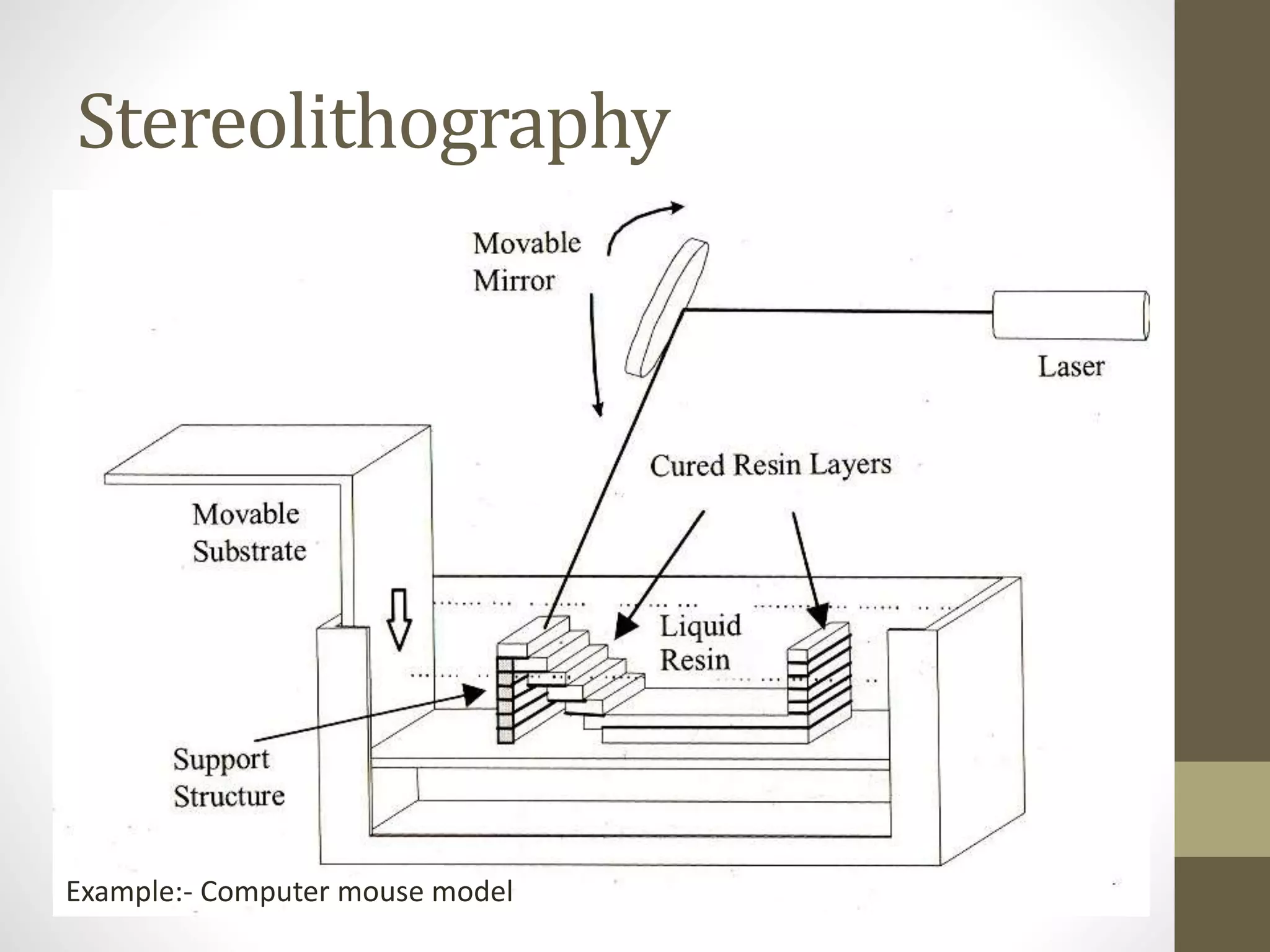
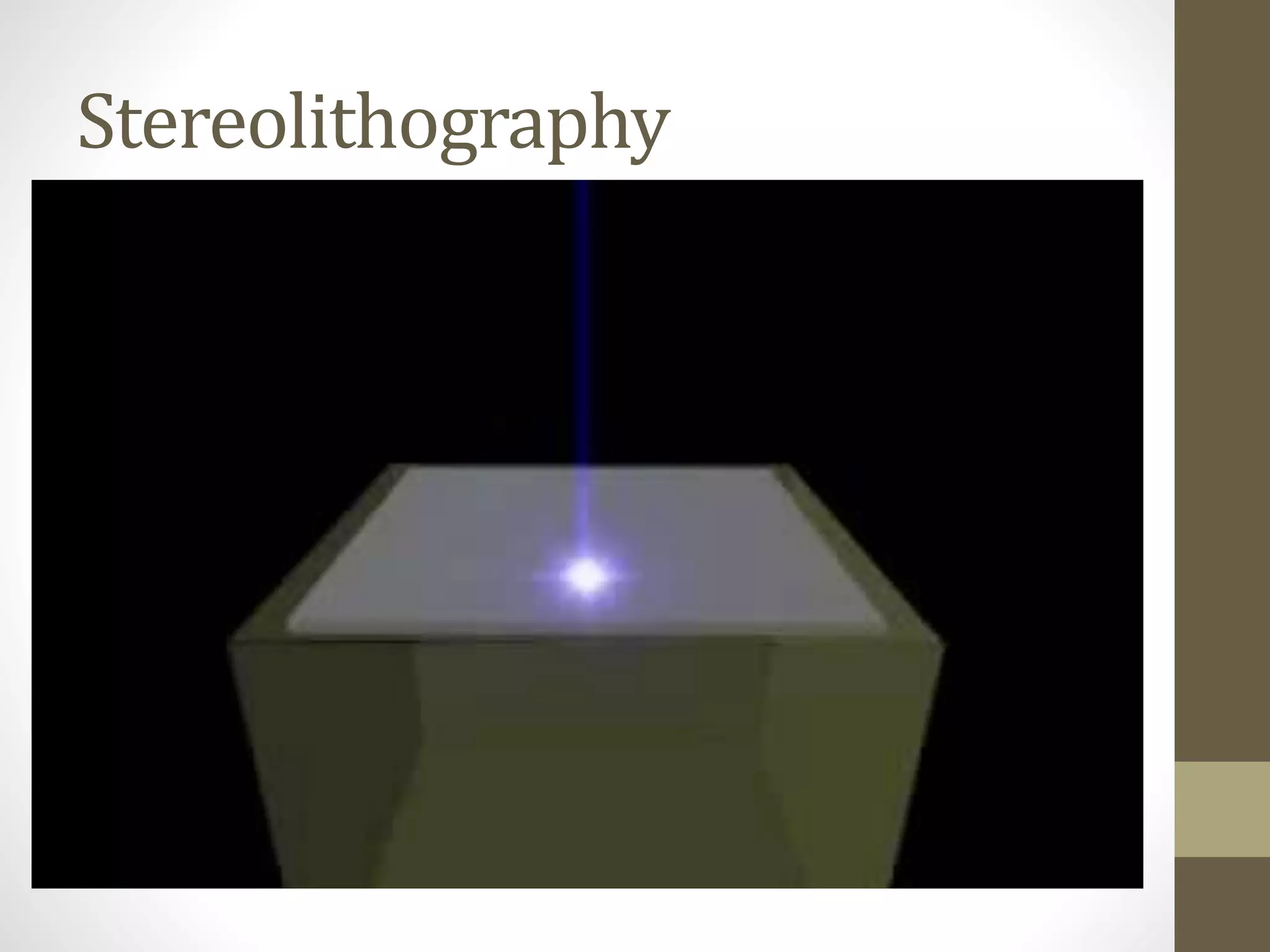
1. Liquid based: Stereolithography
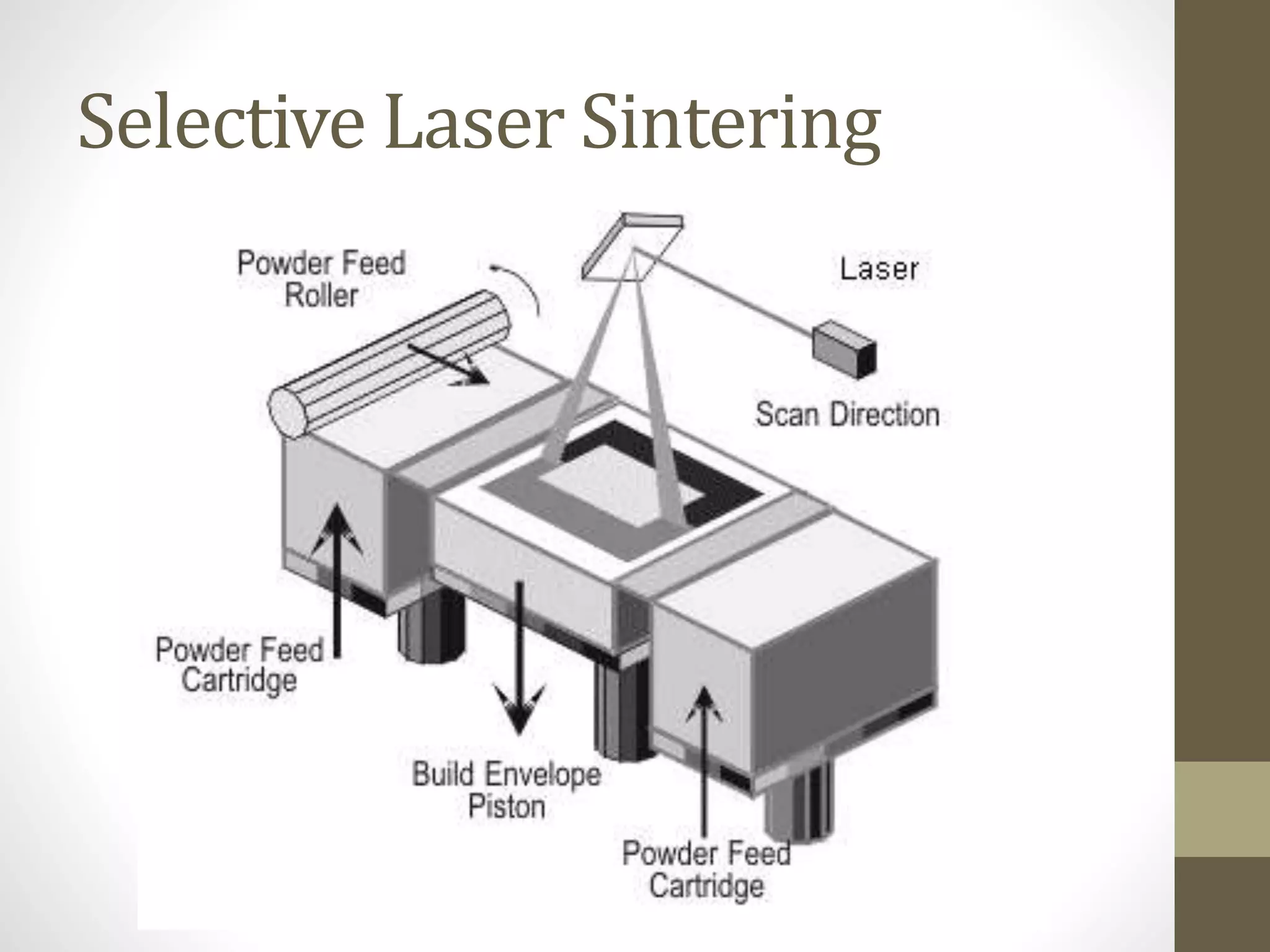
2. Powder based: Selective Laser Sintering
3. Solid based: Fused Deposition Modeling, Laminated Object
Manufacturing etc.
Stereolithography
Example:- Computer mouse model
Stereolithography
Selective Laser Sintering
Fused Deposition Modeling
• ABS – Acrylo Butadiene
Styrene/PVC/Nylon/Polyester/Polystyrene/Epoxy etc.
Fused Deposition Modelling
Laminated Object Manufacturing
Example:- Crankshaft model
LOM
Virtual Prototyping
• Software form of prototyping
• Advanced technology
• Used by CAD Packages to render a part
Applications
• Manufacturing and tooling
• Plastic mold parts
• Vacuum casting
• Metal spraying
• Casting
• Sand casting
• Investment casting
• Die casting
• EDM electrodes
• Master models
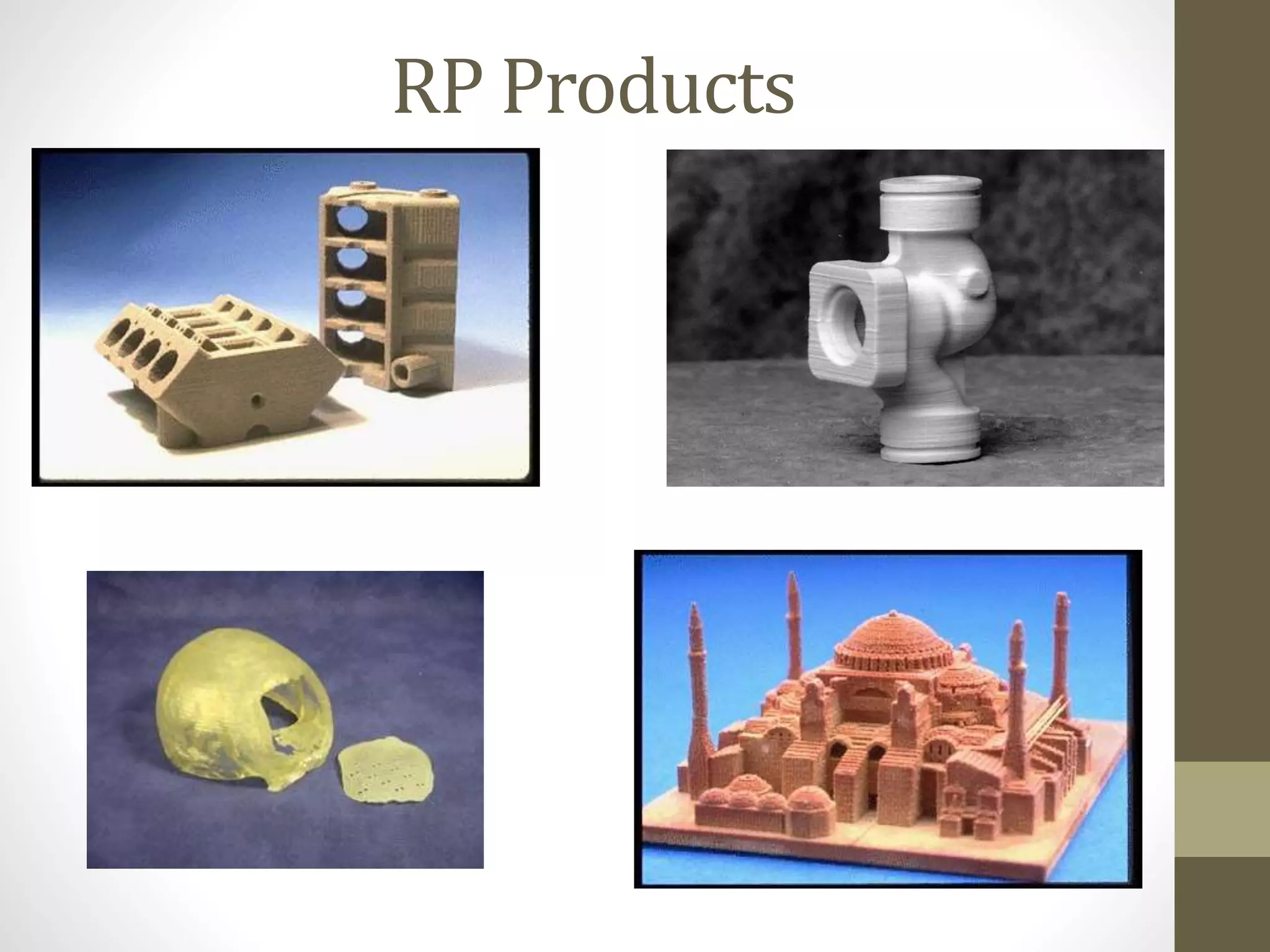
RP Products

Rapid prototyping operation