Presented by
R.Varshitha
Introduction
 Non-conventional machining system in which metal is removed by
electrochemical process.
 Characterized as ‘Reverse Electroplating’ means it removes metal instead of
adding it.
 Normally used for mass production and for hard materials that are difficult
to machine using conventional processes.
 Both external and internal be geometrirscan be machined.
 We can use both electrical energy and chemical energy to remove the
material.
 ECM can be depends on faradays laws of electrolysis process.
 For removing of material electrolyte will play essential role.
 Here, DC power supply is used i.e. 3-30V.
 Here, gap between tool and work piece is 0.5mm.
 Tool is –ve and work piece is +ve.
 Material removal rate(MRR) is 1600 mm
 Accuracy is +-0.02mm and surface finish is 0.4mm.
Principle
 Faraday’s law of electrolysis:
The weight of the substance produced during electrolysis process is directly
proportional to
1.The current which passes
2.The length of time of process
3.The equivalent weight of the material
 Two dissimilar metals are in contact with an electrolyte and anode loses metal
to cathode.
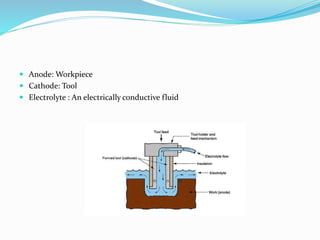
 Anode: Workpiece
 Cathode: Tool
 Electrolyte : An electrically conductive fluid
Main subsystems
 Power Supply
 Electrolyte
 Tool
 The Control System
 Work piece
Power Supply
1. Type: direct current
• Voltage: 2 to 35V
• Current: 50 to 40,000 A
• Current density: 20A/cm2 to 300 A/cm2
 A constant voltage has to be maintained and high density is required.
Electrolyte
 The main function of an electrolyte in ECM are:
1. It carries the current between tool and workpiece.
2. It removes the products of machining and other insoluble products from the
cutting region.
3. It dissipates heat produced in the operation.
 The essential characteristics of electroyte includes:
1. Good electrical conductivity.
2. Non-toxicity and chemical stability.
3. Low viscosity and high specific heat.
4. Non-corrosive property.
Tool
 The most commonly used tool materials are copper,brass,titanium,copper
tungsten and stainless steel.
 The accuracy of tool directly effects the workpiece accuracy.
 Requirements of tool for ECM:
 Good thermal conductivity.
 Strong enough to withstand highpressures.
 It should be easily machined
 It should be conductor of electricity.
 It should be chemically inert to the electrolyte.
The Control System
 Control Parameters include:
 Voltage
 Inlet and outlet pressure of electrolyte
 Temperature of electrolyte
 The current is dependent on above parameters and feed rate
Working of ECM
 In ECM ,tool is connected to negative terminal and work is connected to
positive terminal. When the current passes through electrode, reaction occur at
anode or workpiece and at the cathode or tool. As the electrolyte reaches the
gap between the anode and cathode and the electrical contact is established.
 When the positive ions flow from the workpiece towards the tool, the
electrolyte carries away the positive ions and stops it from reaching the tool.
 So the materials start removing from the workpiece due to the striking power of
the negative ions coming from the tool.
 So, in this way material is removed in the electrochemical machining process.
Types of ECM
 Electrochemical Grinding
 Electrochemical Deburring
 Electrochemical Honing
Electrochemical Grinding
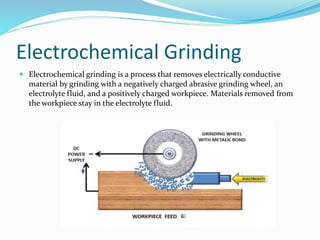
 Electrochemical grinding is a process that removes electrically conductive
material by grinding with a negatively charged abrasive grinding wheel, an
electrolyte fluid, and a positively charged workpiece. Materials removed from
the workpiece stay in the electrolyte fluid.
Electrochemical Deburring
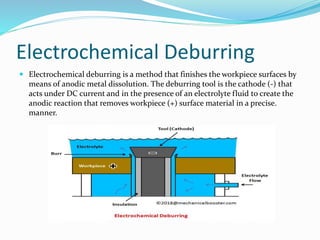
 Electrochemical deburring is a method that finishes the workpiece surfaces by
means of anodic metal dissolution. The deburring tool is the cathode (-) that
acts under DC current and in the presence of an electrolyte fluid to create the
anodic reaction that removes workpiece (+) surface material in a precise.
manner.
Electrochemical Honing
 Electrochemical Honing is a process in which material is removed with help of
electrical energy, chemical energy and honing process. For those who don't
know, honing is an abrasive machining process that produces a precision
surface on a metal workpiece by scrubbing an abrasive stone against it along a
controlled path.
Applications:-
 Die-sinking operations.
 Drilling jet engine turbine blades.
 Multiple hole drilling.
 Machining steam Turbine blades within close limit.
 Micro machining
 Profiling and contouring.
 Rifling barrel.
Advantages:-
 The rate of machining does not depend on the hardness of the work piece
material.
 The tool does not wear.
 High accuracy of the machining operation.
 No stresses are produced on the workpiece surface.
 No burrs form in the machining operation.
 High surface quality may be achieved.
Disadvantages:-
 Higher cost.
 Electrolyte may cause corrosion of the equipment.
 Large production floor is required.
 Only electrically conductive materials may be machined.
 Not environmentally friendly process
ELECTROCHEMICAL MACHINING-PPT.pptx

ELECTROCHEMICAL MACHINING-PPT.pptx

  • 1.
  • 2.
    Introduction  Non-conventional machiningsystem in which metal is removed by electrochemical process.  Characterized as ‘Reverse Electroplating’ means it removes metal instead of adding it.  Normally used for mass production and for hard materials that are difficult to machine using conventional processes.  Both external and internal be geometrirscan be machined.  We can use both electrical energy and chemical energy to remove the material.  ECM can be depends on faradays laws of electrolysis process.
  • 3.
     For removingof material electrolyte will play essential role.  Here, DC power supply is used i.e. 3-30V.  Here, gap between tool and work piece is 0.5mm.  Tool is –ve and work piece is +ve.  Material removal rate(MRR) is 1600 mm  Accuracy is +-0.02mm and surface finish is 0.4mm.
  • 4.
    Principle  Faraday’s lawof electrolysis: The weight of the substance produced during electrolysis process is directly proportional to 1.The current which passes 2.The length of time of process 3.The equivalent weight of the material  Two dissimilar metals are in contact with an electrolyte and anode loses metal to cathode.
  • 5.
     Anode: Workpiece Cathode: Tool  Electrolyte : An electrically conductive fluid
  • 6.
    Main subsystems  PowerSupply  Electrolyte  Tool  The Control System  Work piece
  • 7.
    Power Supply 1. Type:direct current • Voltage: 2 to 35V • Current: 50 to 40,000 A • Current density: 20A/cm2 to 300 A/cm2  A constant voltage has to be maintained and high density is required.
  • 8.
    Electrolyte  The mainfunction of an electrolyte in ECM are: 1. It carries the current between tool and workpiece. 2. It removes the products of machining and other insoluble products from the cutting region. 3. It dissipates heat produced in the operation.  The essential characteristics of electroyte includes: 1. Good electrical conductivity. 2. Non-toxicity and chemical stability. 3. Low viscosity and high specific heat. 4. Non-corrosive property.
  • 9.
    Tool  The mostcommonly used tool materials are copper,brass,titanium,copper tungsten and stainless steel.  The accuracy of tool directly effects the workpiece accuracy.  Requirements of tool for ECM:  Good thermal conductivity.  Strong enough to withstand highpressures.  It should be easily machined  It should be conductor of electricity.  It should be chemically inert to the electrolyte.
  • 10.
    The Control System Control Parameters include:  Voltage  Inlet and outlet pressure of electrolyte  Temperature of electrolyte  The current is dependent on above parameters and feed rate
  • 11.
    Working of ECM In ECM ,tool is connected to negative terminal and work is connected to positive terminal. When the current passes through electrode, reaction occur at anode or workpiece and at the cathode or tool. As the electrolyte reaches the gap between the anode and cathode and the electrical contact is established.  When the positive ions flow from the workpiece towards the tool, the electrolyte carries away the positive ions and stops it from reaching the tool.  So the materials start removing from the workpiece due to the striking power of the negative ions coming from the tool.  So, in this way material is removed in the electrochemical machining process.
  • 13.
    Types of ECM Electrochemical Grinding  Electrochemical Deburring  Electrochemical Honing
  • 14.
    Electrochemical Grinding  Electrochemicalgrinding is a process that removes electrically conductive material by grinding with a negatively charged abrasive grinding wheel, an electrolyte fluid, and a positively charged workpiece. Materials removed from the workpiece stay in the electrolyte fluid.
  • 15.
    Electrochemical Deburring  Electrochemicaldeburring is a method that finishes the workpiece surfaces by means of anodic metal dissolution. The deburring tool is the cathode (-) that acts under DC current and in the presence of an electrolyte fluid to create the anodic reaction that removes workpiece (+) surface material in a precise. manner.
  • 16.
    Electrochemical Honing  ElectrochemicalHoning is a process in which material is removed with help of electrical energy, chemical energy and honing process. For those who don't know, honing is an abrasive machining process that produces a precision surface on a metal workpiece by scrubbing an abrasive stone against it along a controlled path.
  • 17.
    Applications:-  Die-sinking operations. Drilling jet engine turbine blades.  Multiple hole drilling.  Machining steam Turbine blades within close limit.  Micro machining  Profiling and contouring.  Rifling barrel.
  • 18.
    Advantages:-  The rateof machining does not depend on the hardness of the work piece material.  The tool does not wear.  High accuracy of the machining operation.  No stresses are produced on the workpiece surface.  No burrs form in the machining operation.  High surface quality may be achieved.
  • 19.
    Disadvantages:-  Higher cost. Electrolyte may cause corrosion of the equipment.  Large production floor is required.  Only electrically conductive materials may be machined.  Not environmentally friendly process