Subject: RANDOM ACCESS MEMORY (RAM)
Presented by:
 Sheikh Remon Sarker
 Roll : PGD-0908
Mawlana Bhashani
Science and Technology University
Course Title : Computer Organization & Architecture
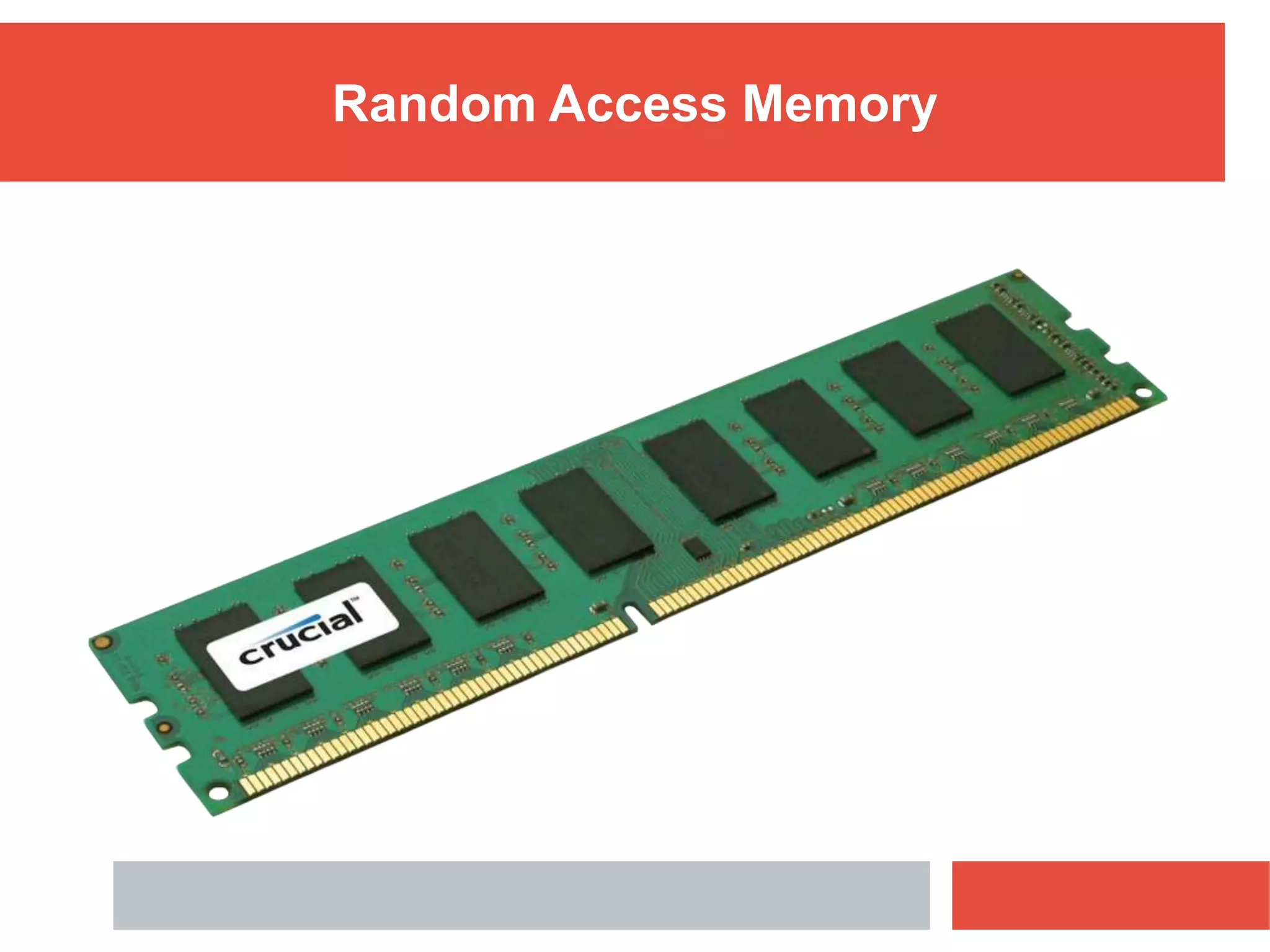
Random Access Memory
Index:
Introduction
History
Technology
Block Diagram
Position and Structure
Types of RAM
Difference
Capacity to store
Advantage and Disadvantage
Introduction:
Random Access Memory (RAM) is the best known from of computer
memory.
RAM is considered as volatile memory, which means that the stored
information is lost there is no power.
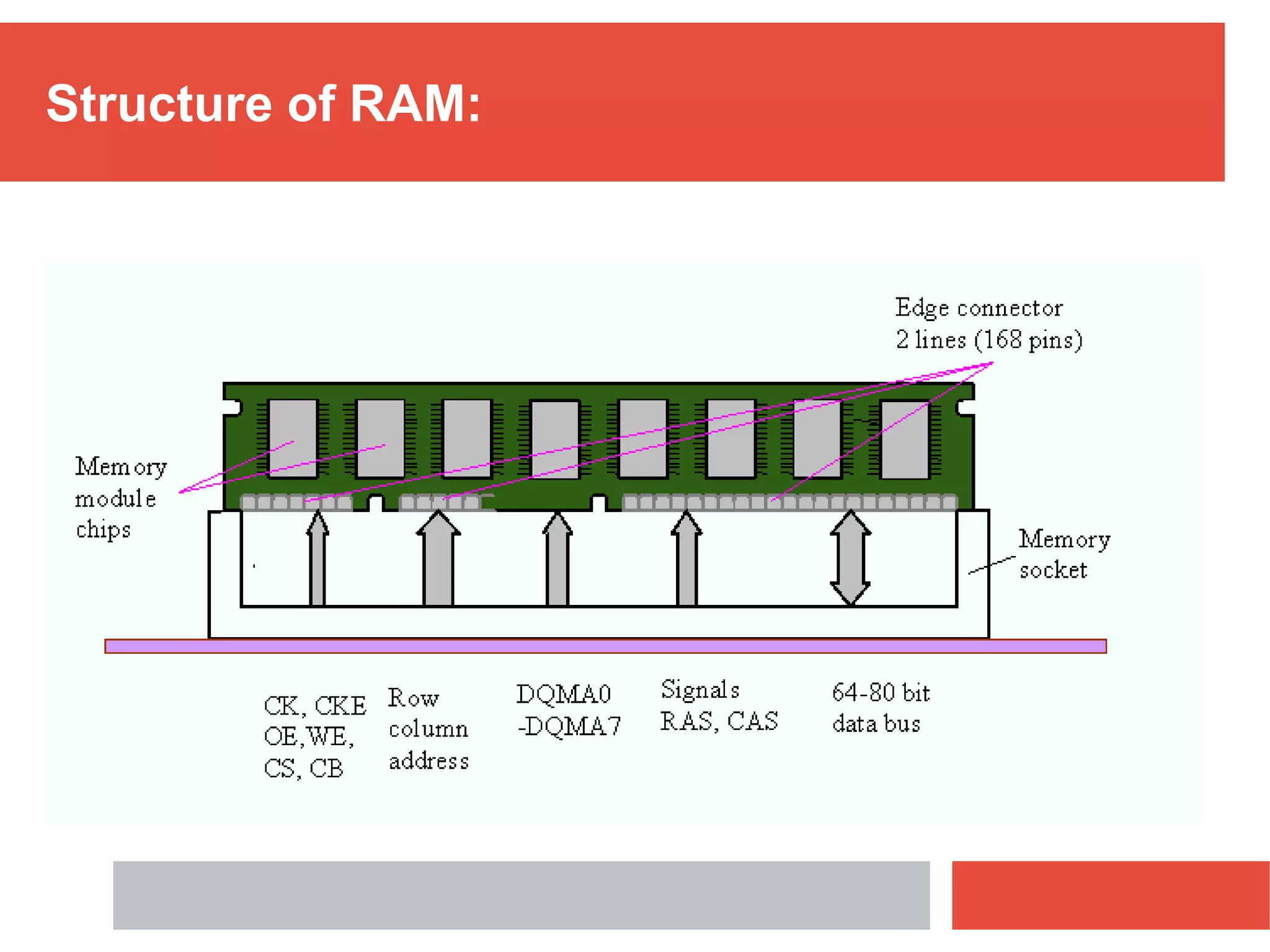
RAM is made up of small chips that from a memory module.
Whenever you open a program, it gets loaded from the SSD/HDD
into the RAM.
This is because reading data from the RAM is much faster than
reading data from the SSD/HDD.
History:
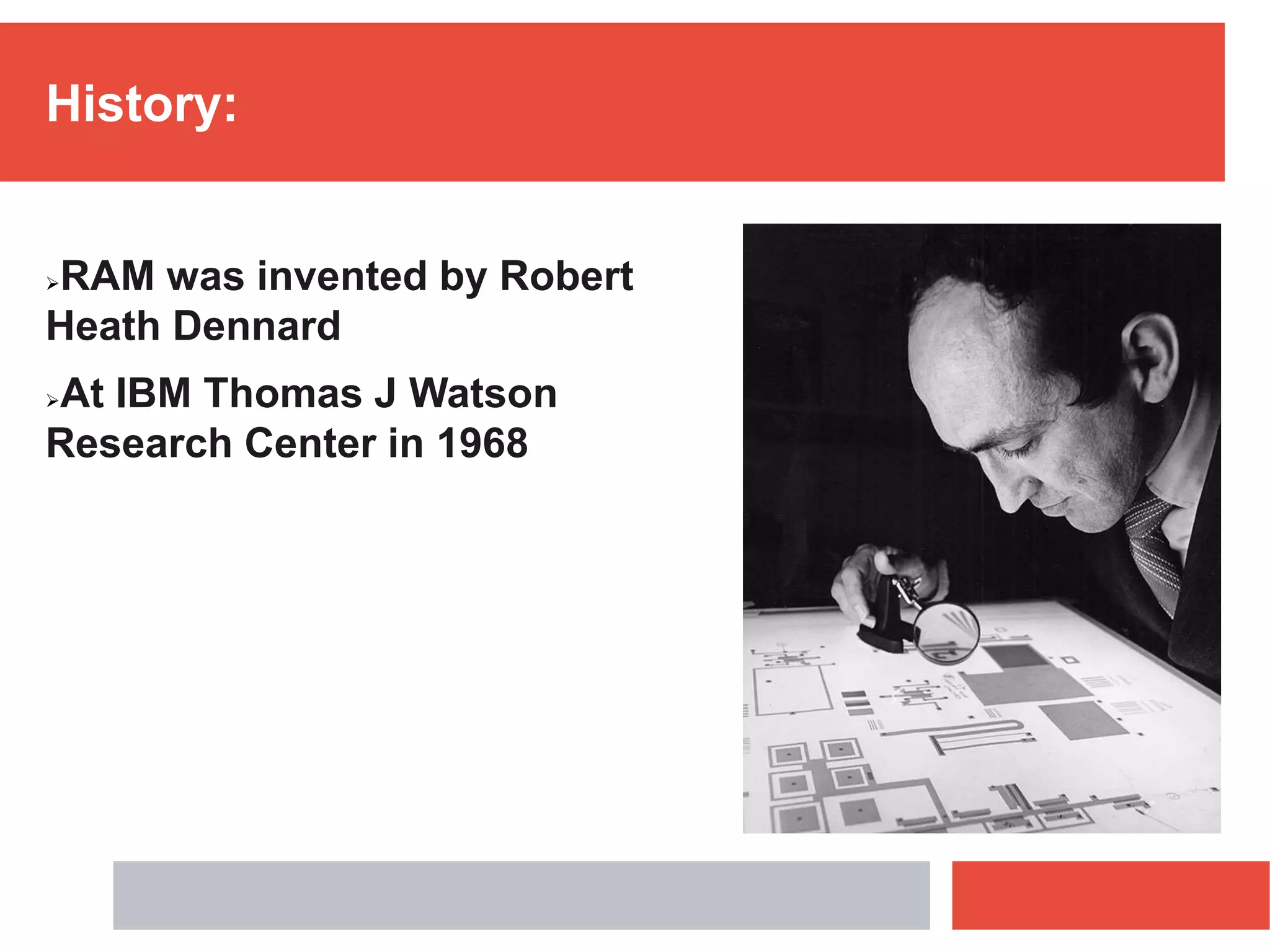
RAM was invented by Robert
Heath Dennard
At IBM Thomas J Watson
Research Center in 1968
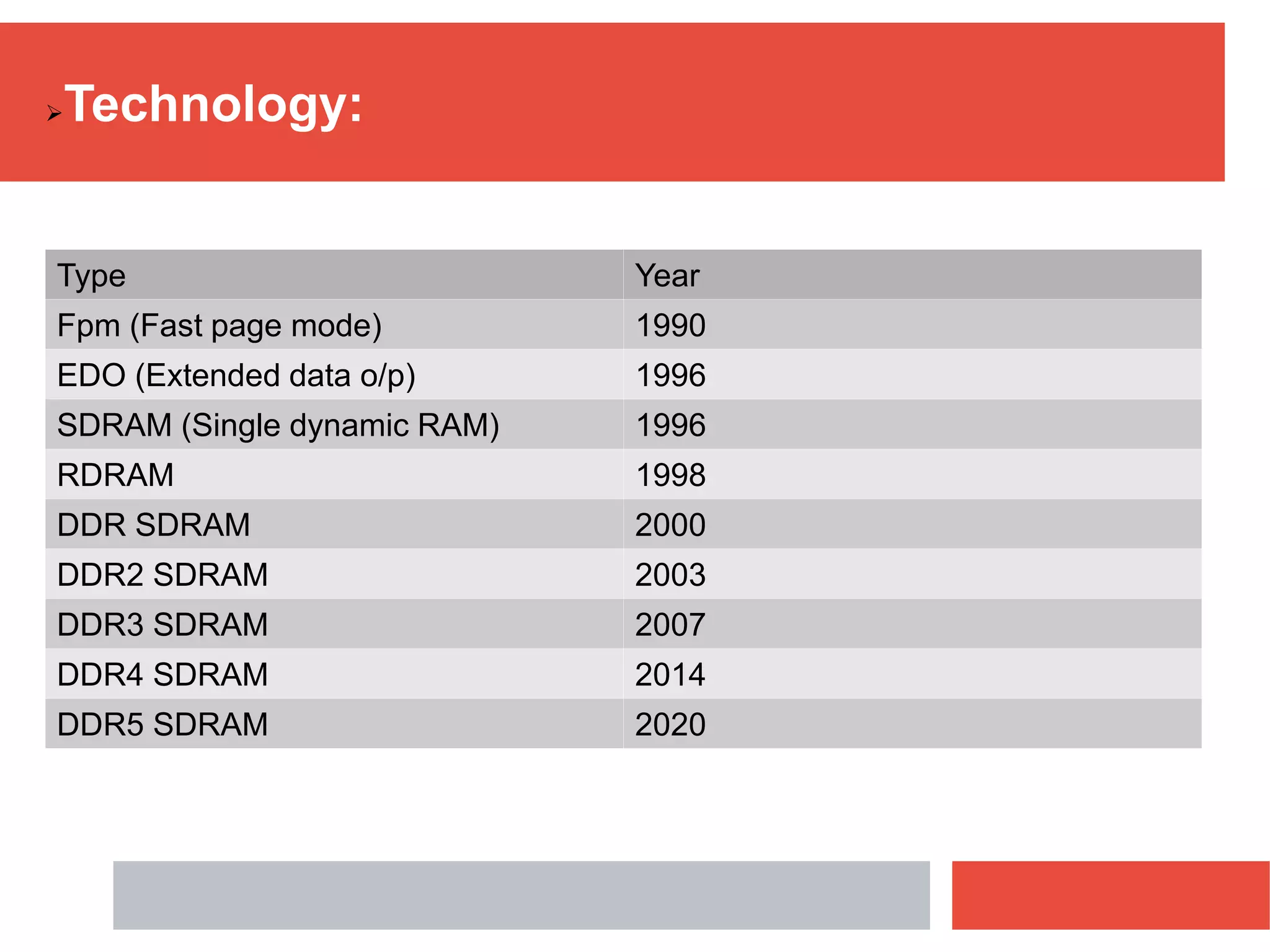
Technology:
Type Year
Fpm (Fast page mode) 1990
EDO (Extended data o/p) 1996
SDRAM (Single dynamic RAM) 1996
RDRAM 1998
DDR SDRAM 2000
DDR2 SDRAM 2003
DDR3 SDRAM 2007
DDR4 SDRAM 2014
DDR5 SDRAM 2020
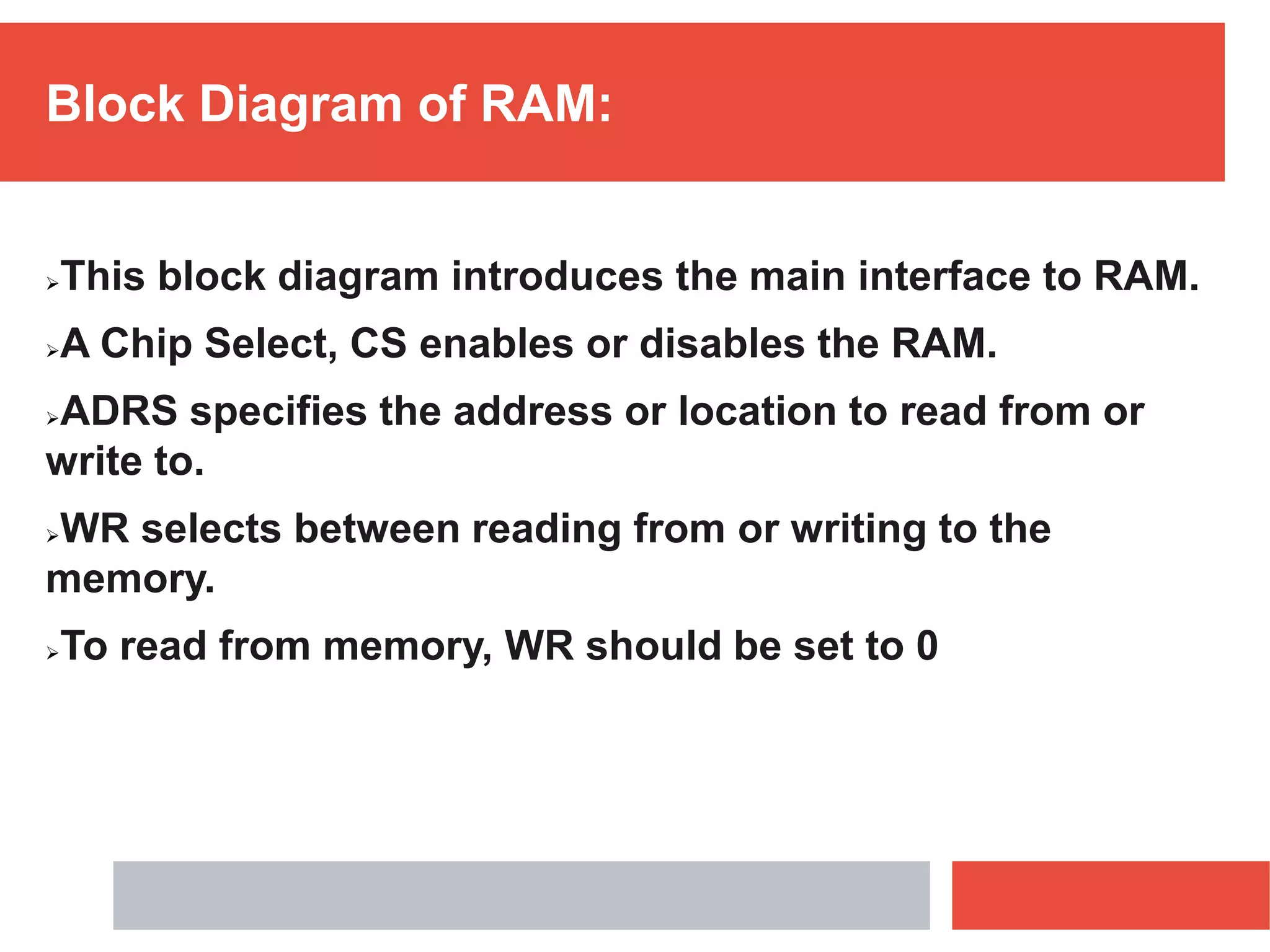
Block Diagram of RAM:
This block diagram introduces the main interface to RAM.
A Chip Select, CS enables or disables the RAM.
ADRS specifies the address or location to read from or
write to.
WR selects between reading from or writing to the
memory.
To read from memory, WR should be set to 0
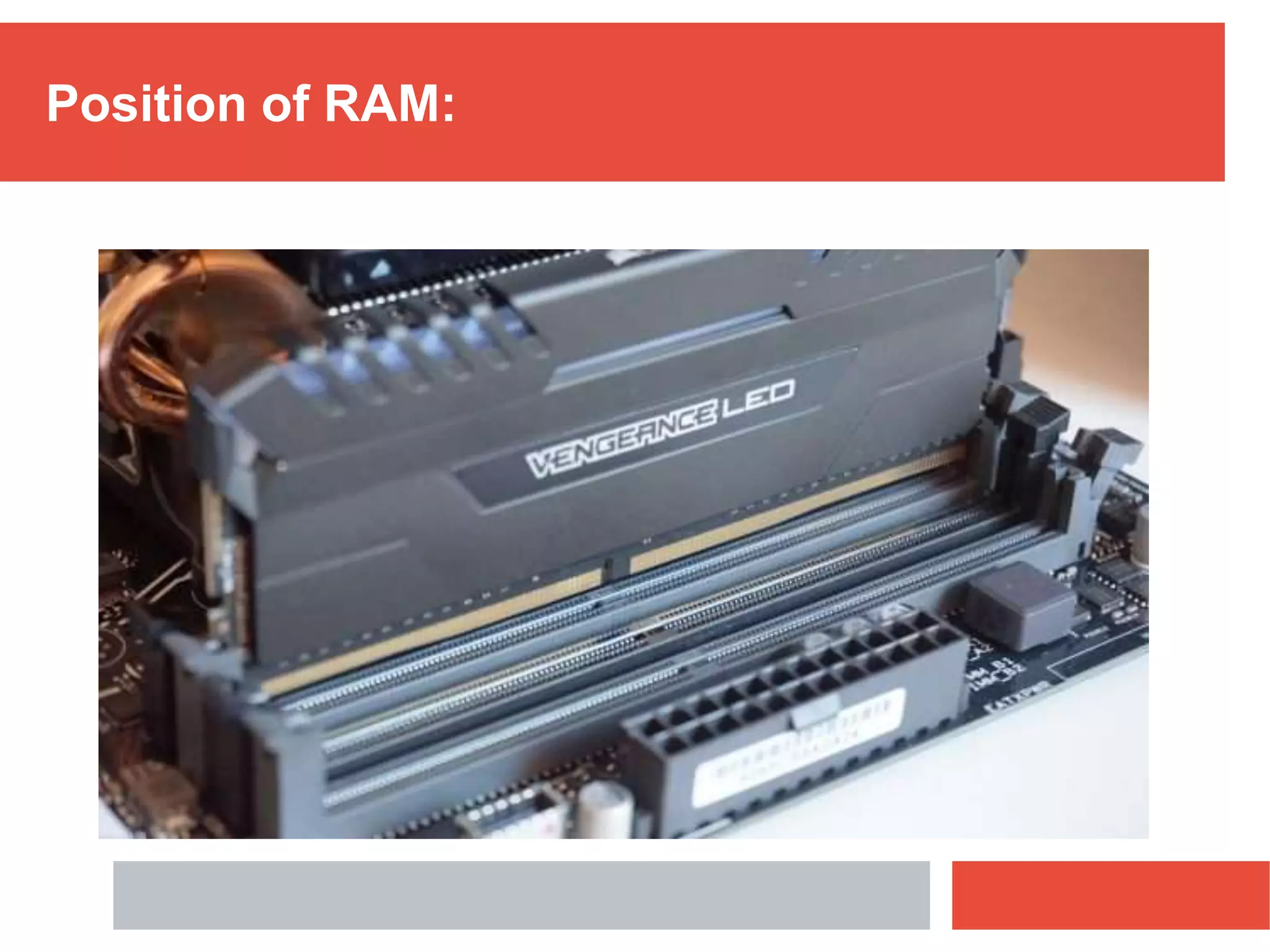
Position of RAM:
Structure of RAM:
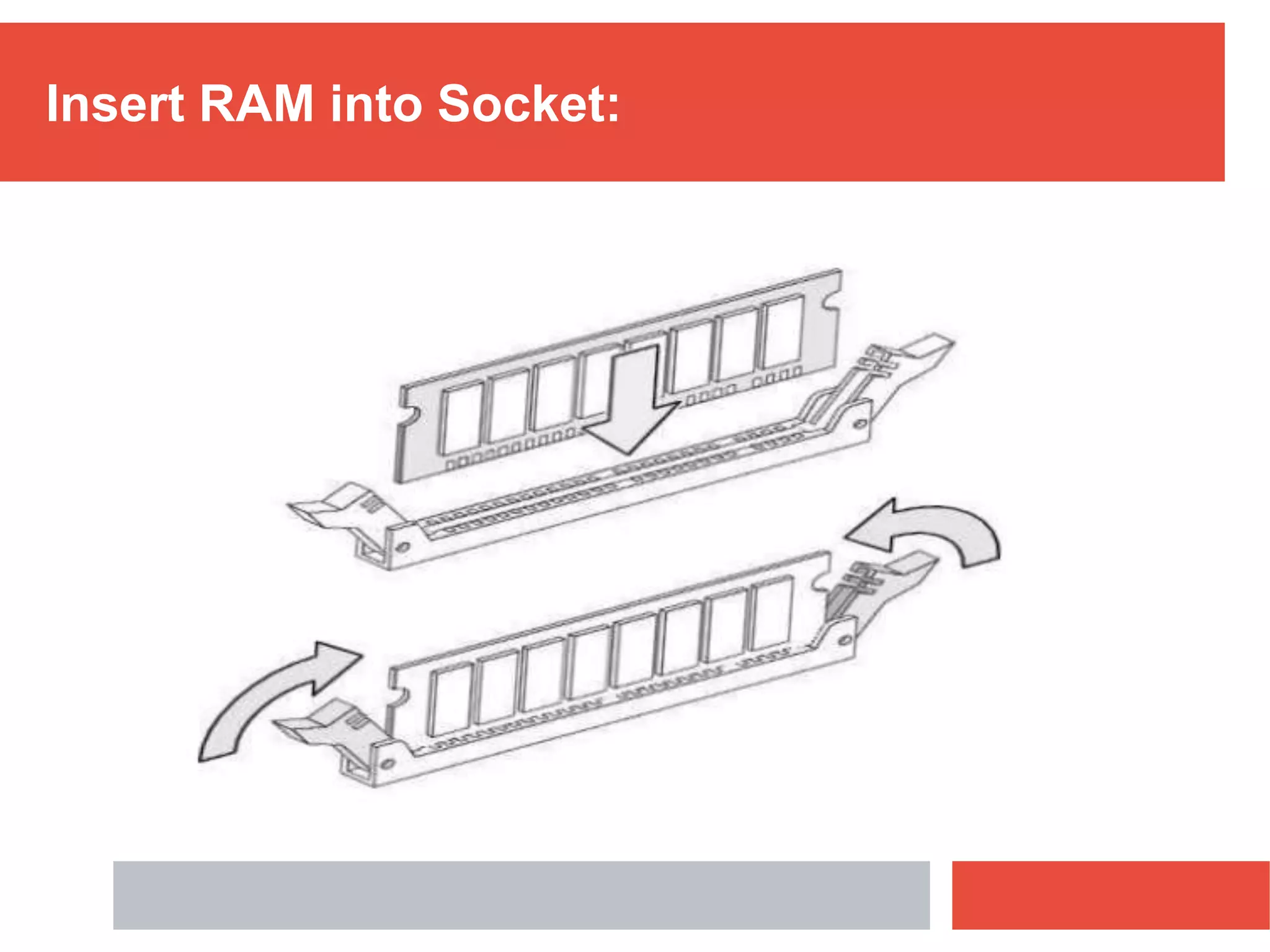
Insert RAM into Socket:
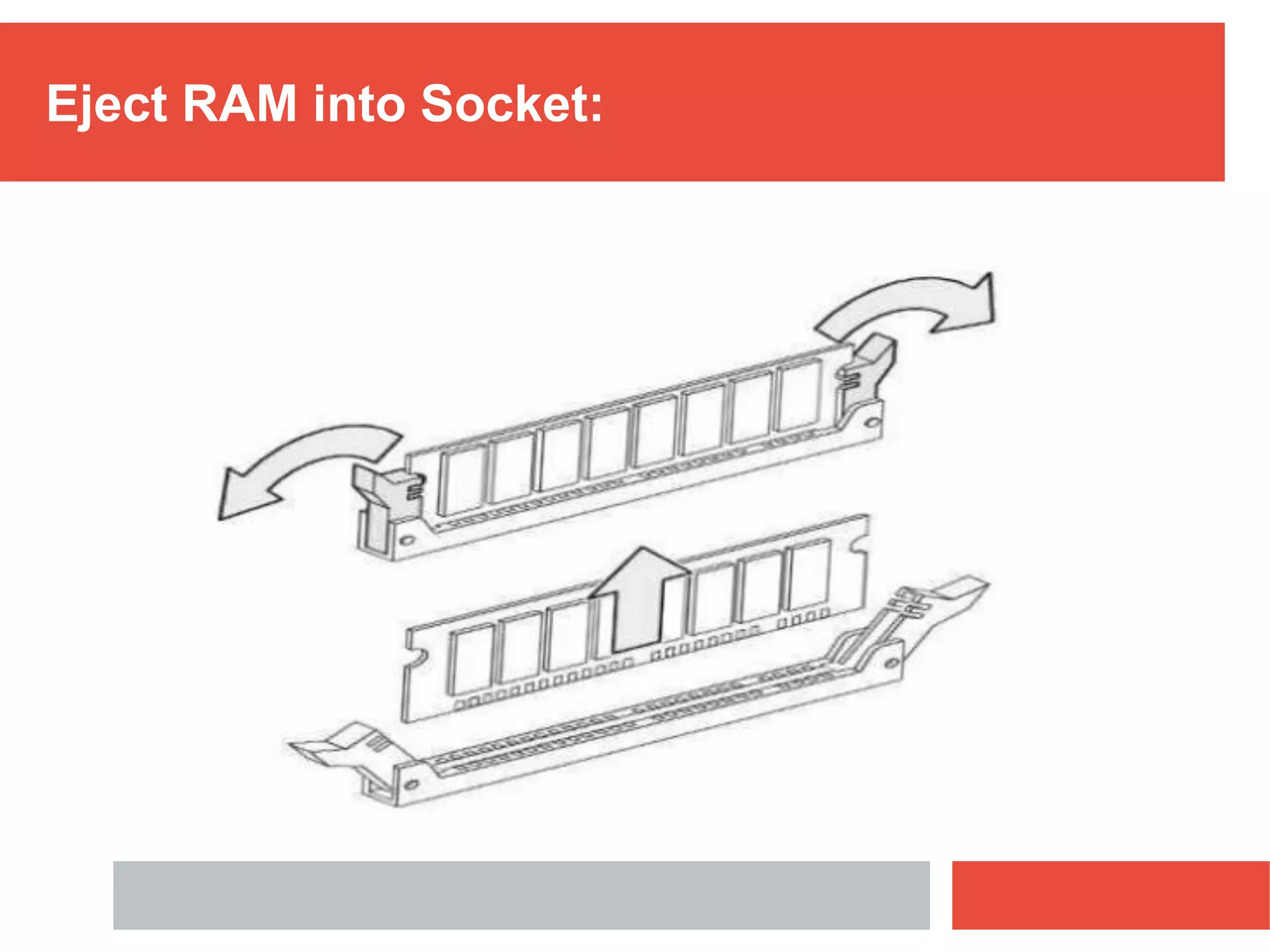
Eject RAM into Socket:
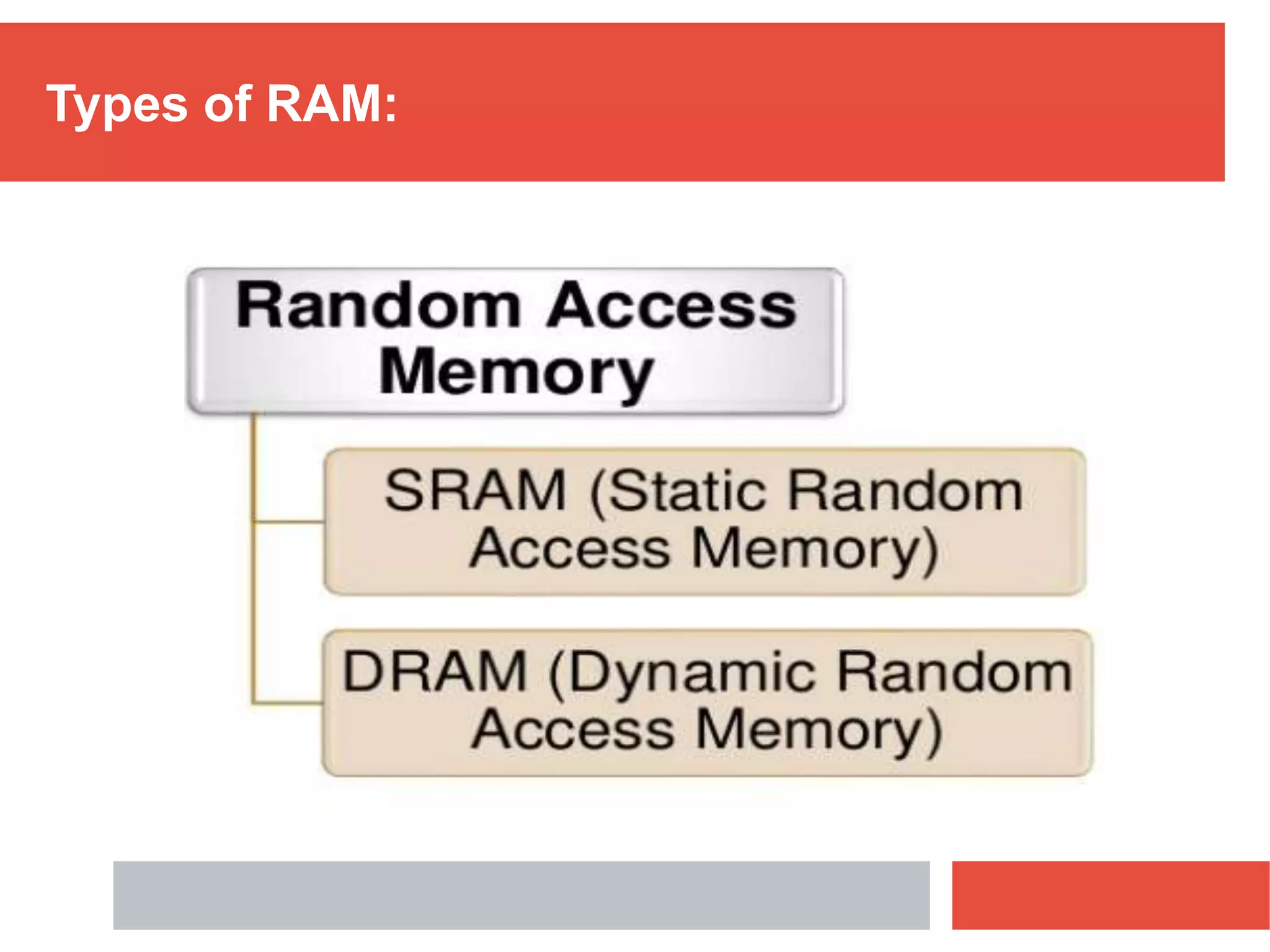
Types of RAM:
Types of RAM:
SRAM (Static Random Access Memory)
SRAM holds data in a static from, as long as the memory has
power.
Each bit is stored on four transistor that froms two cross
coupled inverters.
DRAM (Dynamic Random Access Memory)
DRAM is called dynamic because it must constantly be
refreshed and lose the data in very short time.
DRAM stores each bot of data in a separate capacitor within a
integrated circuit.
Difference:
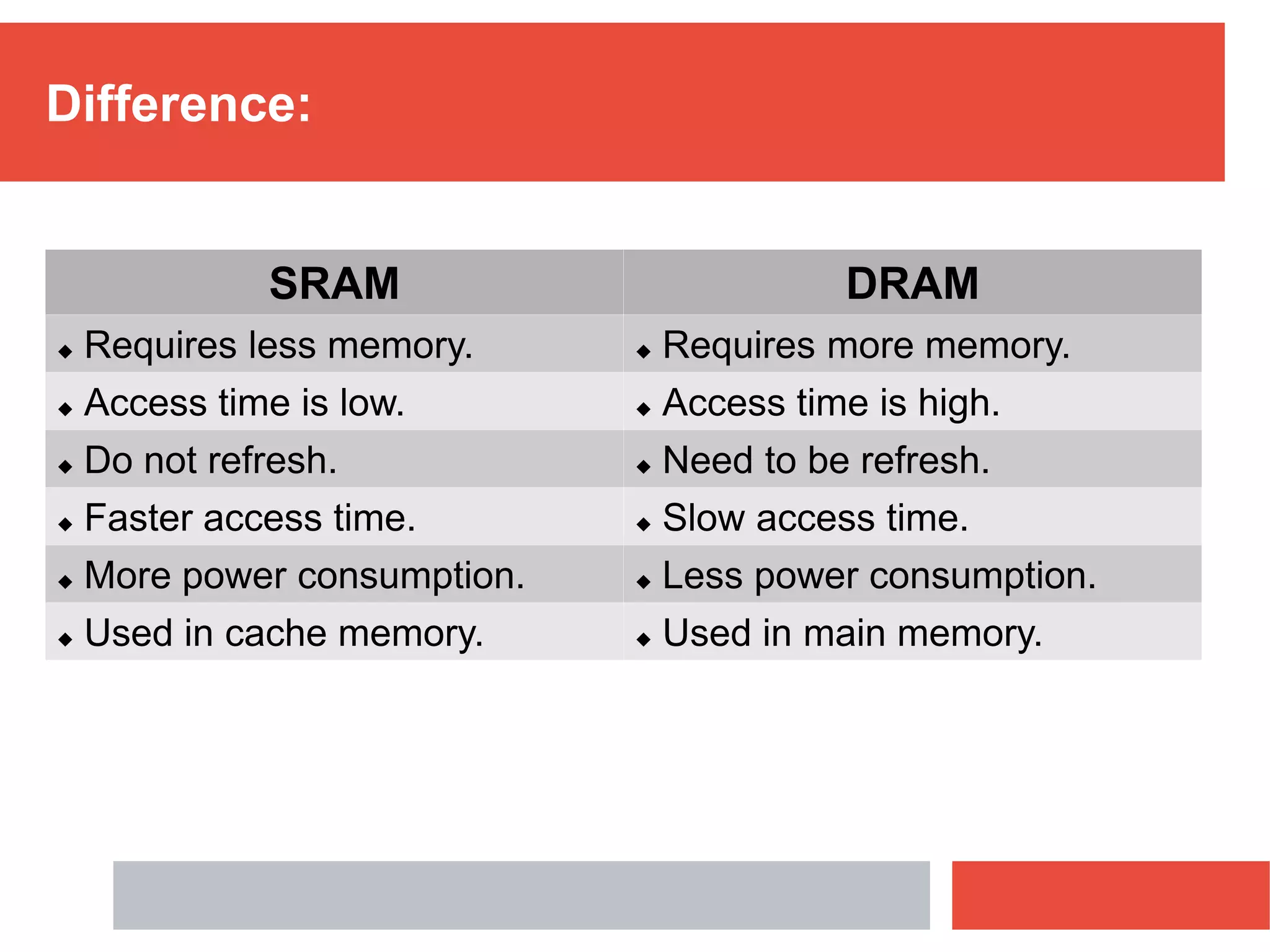
SRAM DRAM
 Requires less memory.  Requires more memory.
 Access time is low.  Access time is high.
 Do not refresh.  Need to be refresh.
 Faster access time.  Slow access time.
 More power consumption.  Less power consumption.
 Used in cache memory.  Used in main memory.
Capacity of RAM:
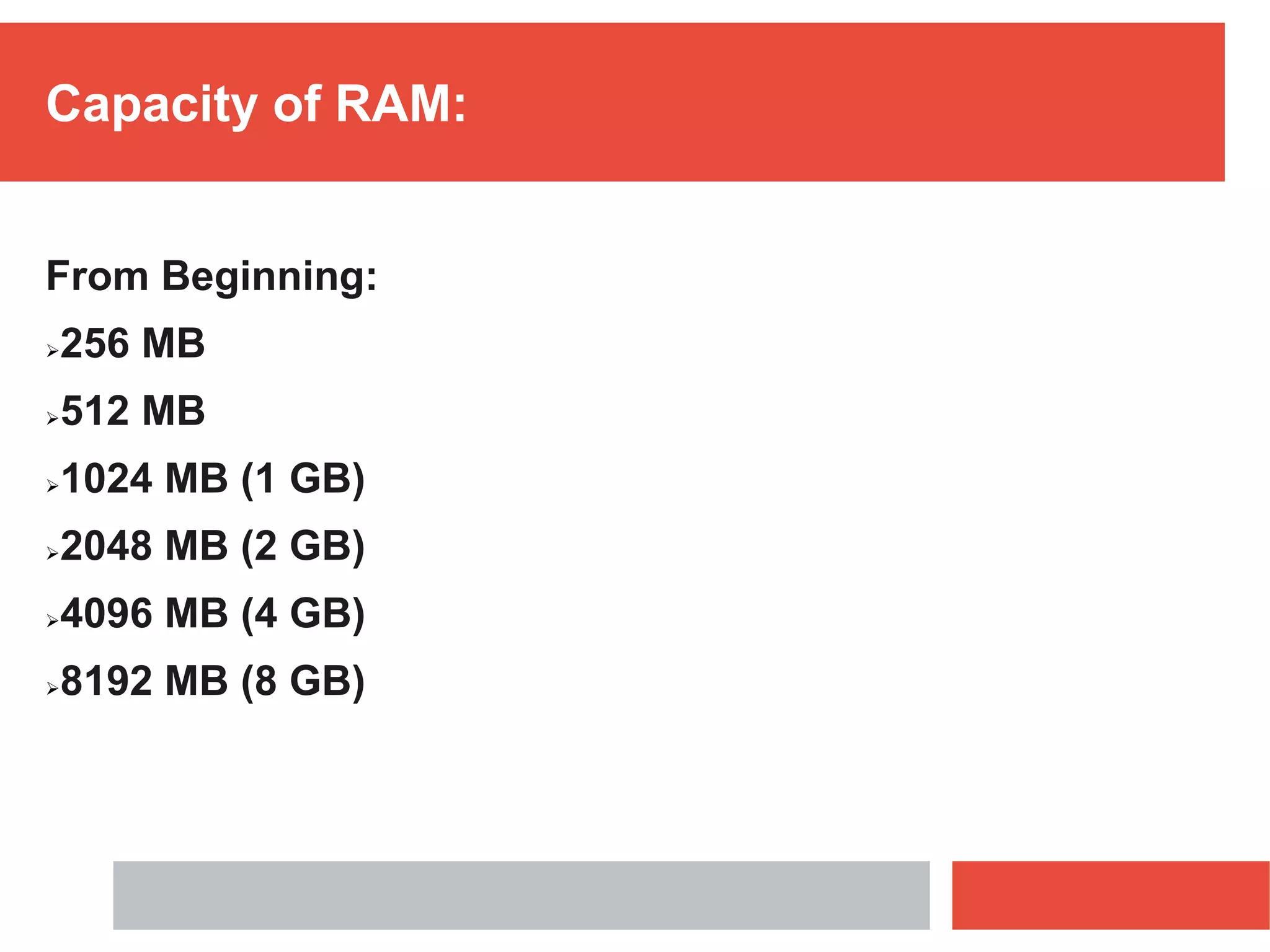
From Beginning:
256 MB
512 MB
1024 MB (1 GB)
2048 MB (2 GB)
4096 MB (4 GB)
8192 MB (8 GB)
Advantage and Disadvantage:
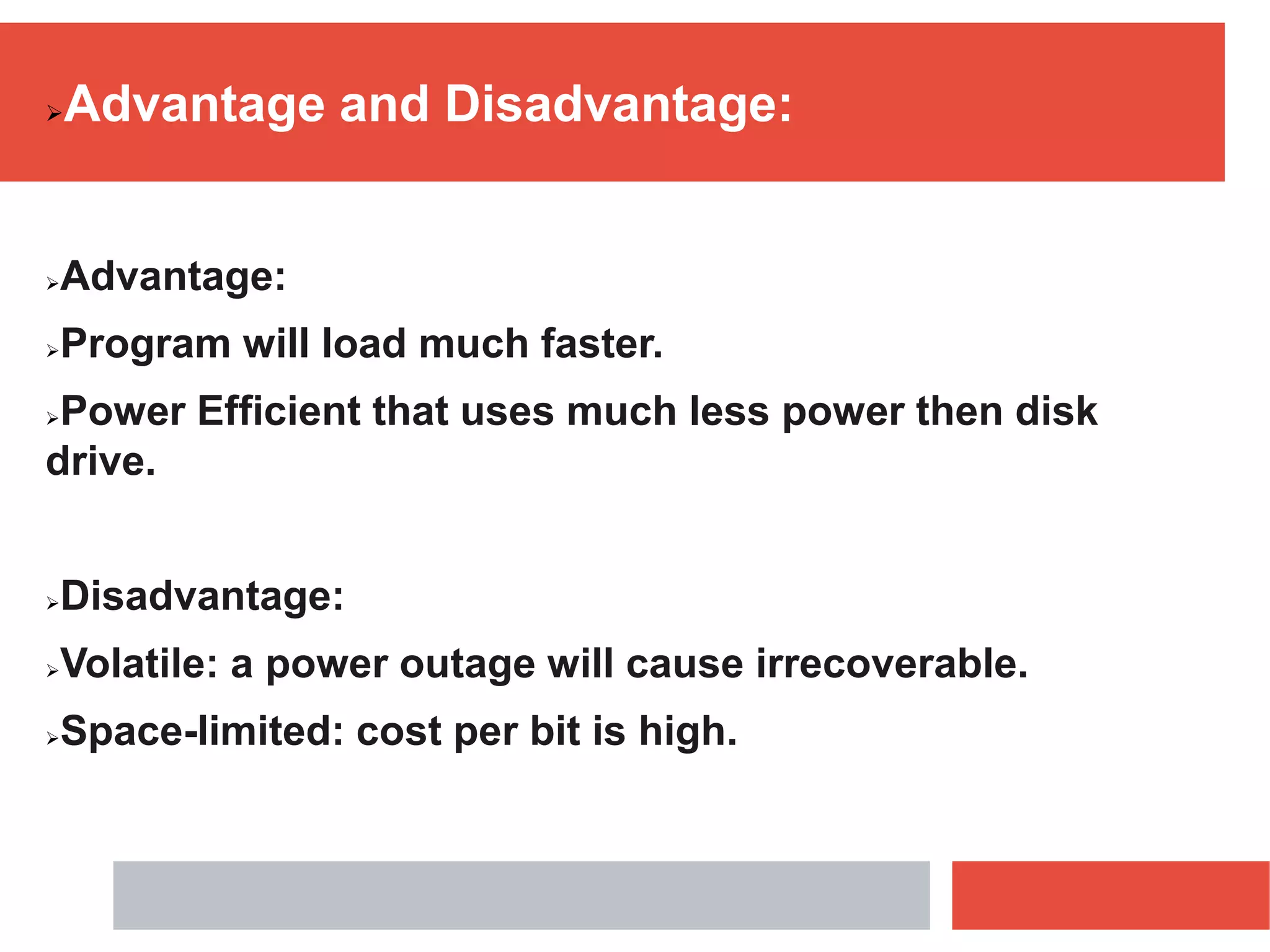
Advantage:
Program will load much faster.
Power Efficient that uses much less power then disk
drive.
Disadvantage:
Volatile: a power outage will cause irrecoverable.
Space-limited: cost per bit is high.

Random Access Memory (RAM)

  • 1.
    Subject: RANDOM ACCESSMEMORY (RAM) Presented by:  Sheikh Remon Sarker  Roll : PGD-0908 Mawlana Bhashani Science and Technology University Course Title : Computer Organization & Architecture
  • 2.
  • 3.
    Index: Introduction History Technology Block Diagram Position andStructure Types of RAM Difference Capacity to store Advantage and Disadvantage
  • 4.
    Introduction: Random Access Memory(RAM) is the best known from of computer memory. RAM is considered as volatile memory, which means that the stored information is lost there is no power. RAM is made up of small chips that from a memory module. Whenever you open a program, it gets loaded from the SSD/HDD into the RAM. This is because reading data from the RAM is much faster than reading data from the SSD/HDD.
  • 5.
    History: RAM was inventedby Robert Heath Dennard At IBM Thomas J Watson Research Center in 1968
  • 6.
    Technology: Type Year Fpm (Fastpage mode) 1990 EDO (Extended data o/p) 1996 SDRAM (Single dynamic RAM) 1996 RDRAM 1998 DDR SDRAM 2000 DDR2 SDRAM 2003 DDR3 SDRAM 2007 DDR4 SDRAM 2014 DDR5 SDRAM 2020
  • 7.
    Block Diagram ofRAM: This block diagram introduces the main interface to RAM. A Chip Select, CS enables or disables the RAM. ADRS specifies the address or location to read from or write to. WR selects between reading from or writing to the memory. To read from memory, WR should be set to 0
  • 8.
  • 9.
  • 10.
  • 11.
  • 12.
  • 13.
    Types of RAM: SRAM(Static Random Access Memory) SRAM holds data in a static from, as long as the memory has power. Each bit is stored on four transistor that froms two cross coupled inverters. DRAM (Dynamic Random Access Memory) DRAM is called dynamic because it must constantly be refreshed and lose the data in very short time. DRAM stores each bot of data in a separate capacitor within a integrated circuit.
  • 14.
    Difference: SRAM DRAM  Requiresless memory.  Requires more memory.  Access time is low.  Access time is high.  Do not refresh.  Need to be refresh.  Faster access time.  Slow access time.  More power consumption.  Less power consumption.  Used in cache memory.  Used in main memory.
  • 15.
    Capacity of RAM: FromBeginning: 256 MB 512 MB 1024 MB (1 GB) 2048 MB (2 GB) 4096 MB (4 GB) 8192 MB (8 GB)
  • 16.
    Advantage and Disadvantage: Advantage: Programwill load much faster. Power Efficient that uses much less power then disk drive. Disadvantage: Volatile: a power outage will cause irrecoverable. Space-limited: cost per bit is high.