Quality in Qualitative Research

Presented by:
Shams ud din pandrani
Reliability
- Applicative to the method used in your research
- the accuracy and comprehensiveness of their
observations and inferences
- Quantitative reliability is using pretested measures,
retests, and scales where as qualitative uses survey
questions and interviews
- quant you can replicate easily to test for reliability and
qualitative it is hard to reproduce the exact same test.
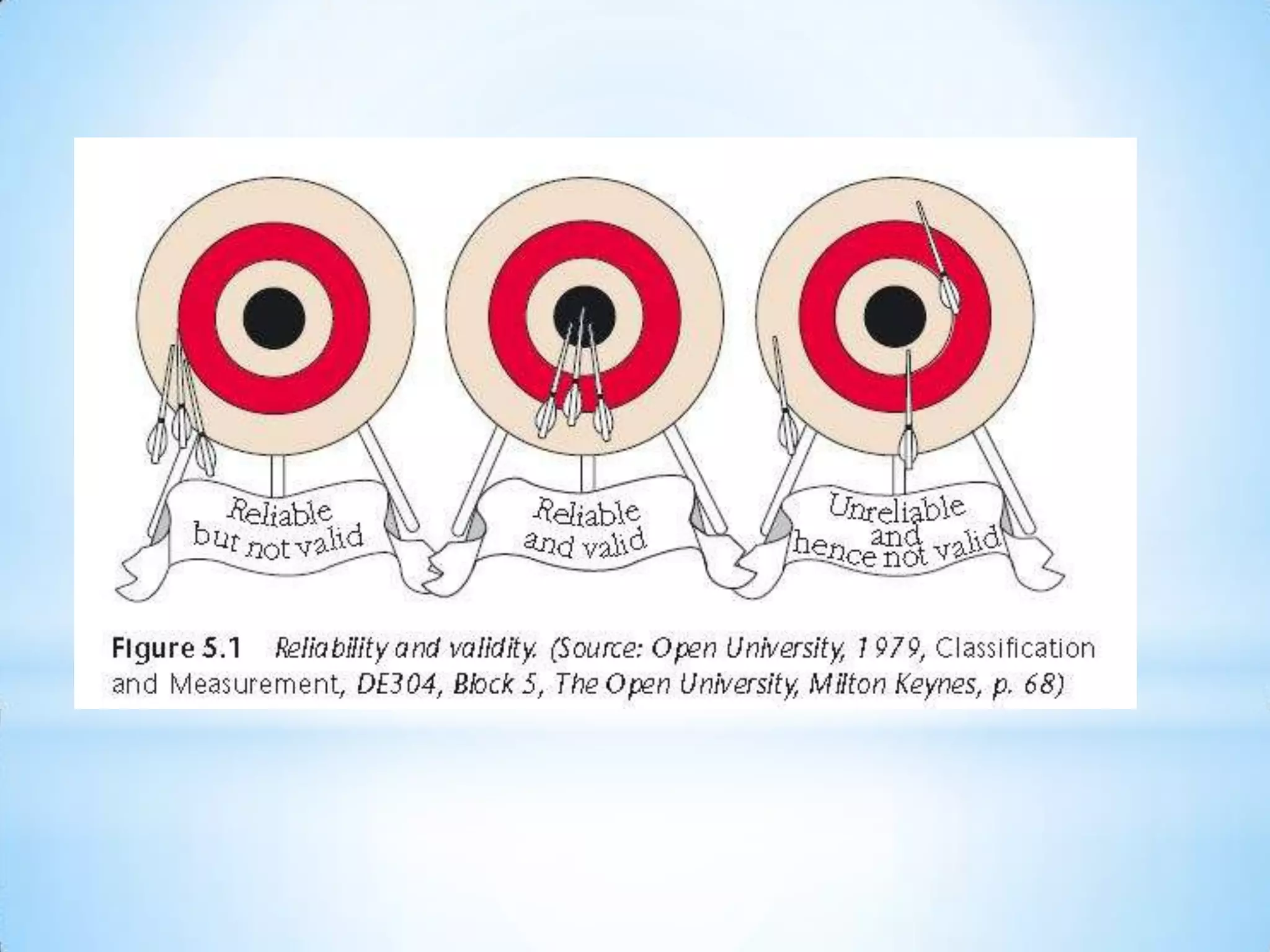
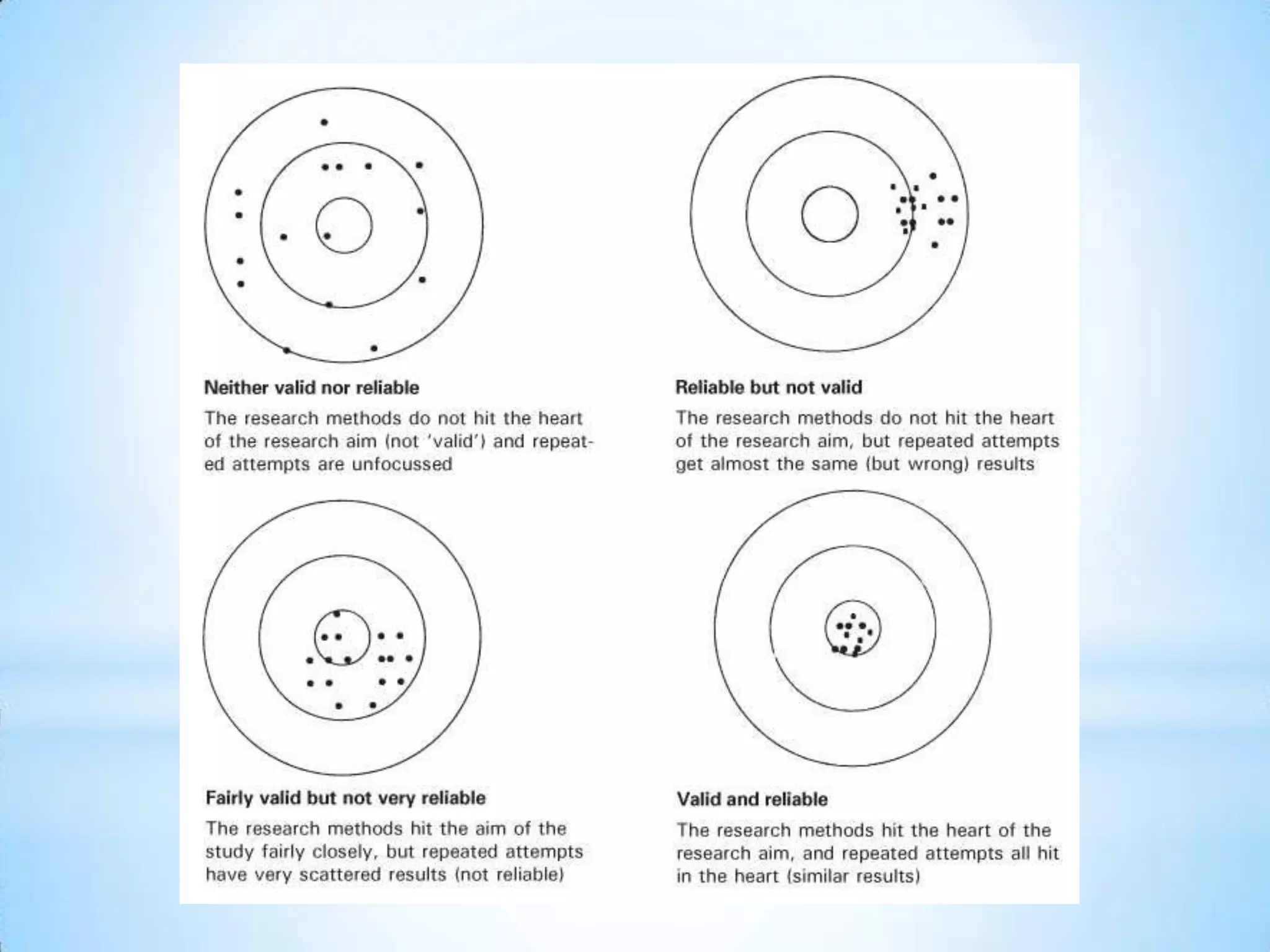
- A measure can be reliable but not valid.
Validity
- Another word for truth
- Validity refers to how well a test measures what it is
purported to measure.
- if something is valid then it doesn't necessarily mean its
reliable
- applicative to conclusions or results of your research

- Content of your research should be based on your objectives
- Interpretation of observations and

- whether or not the inferences are supported by the data
Validity (Cont…)

- Sensible in relation to earlier research
- Qualitative has a problem of anectdotalism where you
get a rich dataset but based on one observation
- To address the complaint of anectdotalism qualitative
research can incorporate triangulation
Triangulation
- compares the findings of different techniques
- use of different methods of gathering data or collecting
data with different samples, at different times, or in
different places to compare different approaches to the
same thing.
- if the results of several methods of collecting data agree,
the finding is judged to be credible
Refutability Principle
- addresses anectodotalism by seeking to refute the
initial assumptions about the data so to achieve
objectivity.
- constant comparative method- researcher should
always attempt to find out another case to test out a
provisional hypothesis.
- In practice we ignore some of our data to employ
this constant comparative method so we can later
compare with original, going from small to large
datasets
Conclusion
No sense in concluding a research
dissertation unless your methods are
reliable and your conclusion are valid.

Quality in qualitative research (1)

  • 1.
    Quality in QualitativeResearch Presented by: Shams ud din pandrani
  • 2.
    Reliability - Applicative tothe method used in your research - the accuracy and comprehensiveness of their observations and inferences - Quantitative reliability is using pretested measures, retests, and scales where as qualitative uses survey questions and interviews - quant you can replicate easily to test for reliability and qualitative it is hard to reproduce the exact same test. - A measure can be reliable but not valid.
  • 3.
    Validity - Another wordfor truth - Validity refers to how well a test measures what it is purported to measure. - if something is valid then it doesn't necessarily mean its reliable - applicative to conclusions or results of your research - Content of your research should be based on your objectives - Interpretation of observations and - whether or not the inferences are supported by the data
  • 4.
    Validity (Cont…) - Sensiblein relation to earlier research - Qualitative has a problem of anectdotalism where you get a rich dataset but based on one observation - To address the complaint of anectdotalism qualitative research can incorporate triangulation
  • 5.
    Triangulation - compares thefindings of different techniques - use of different methods of gathering data or collecting data with different samples, at different times, or in different places to compare different approaches to the same thing. - if the results of several methods of collecting data agree, the finding is judged to be credible
  • 6.
    Refutability Principle - addressesanectodotalism by seeking to refute the initial assumptions about the data so to achieve objectivity. - constant comparative method- researcher should always attempt to find out another case to test out a provisional hypothesis. - In practice we ignore some of our data to employ this constant comparative method so we can later compare with original, going from small to large datasets
  • 9.
    Conclusion No sense inconcluding a research dissertation unless your methods are reliable and your conclusion are valid.